Словари

Словарь английского языка | Значения слов, определения и примеры

adjective
/rɪˈmiːdiəbl/
исправимый (ispravimy)

capable of being corrected or cured

"The mistake was serious but still remediable."

"Ошибка была серьезной, но все еще исправимой." (Oshibka byla seryoznoy, no vse eshchyo ispravimoy.)
adjective
/rɪˈmiːdiəl/
исправительный (ispravitelnij)

intended to correct or improve a situation, especially related to learning or health

"The school offers remedial classes in mathematics."

"Школа предлагает дополнительные занятия по математике." (Shkola predlagaet dopolnitel'nye zanyatiya po matematike.)
noun
/ˈrɛmɪdi/
средство (sredstvo)

a treatment or solution for a problem or illness

"The doctor prescribed a remedy for the cough."

"Доктор прописал средство от кашля." (Doktor propisal sredstvo ot kashlya.)
remember definition card — visual illustration of the meaning
verb
/rɪˈmɛmbər/
помнить (pomnit')

to recall to the mind; to keep in memory

"I can't remember the last time we met."

"Я не могу вспомнить последний раз, когда мы встречались." (Ya ne mogu vspomnit' posledniy raz, kogda my vstrechalis'.)
noun
/rɪˈmɛmbrəns/
память (pamyat)

the act of remembering or honoring someone or something

"A service was held in remembrance of the fallen soldiers."

"Была проведена служба в память о погибших солдатах." (Byla provedena sluzhba v pamyat' o pogibshikh soldatakh.)
remind definition card — visual illustration of the meaning
verb
/rɪˈmaɪnd/
напоминать (napominat')

to cause someone to remember something

"Please remind me to call her tomorrow."

"Пожалуйста, напомни мне позвонить ей завтра." (Pozhaluysta, napomni mne pozvonit' yey zavtra.)
noun
/rɪˈmaɪndər/
напоминание (napominanie)

something that helps you remember a fact, event, or action that you need to do or recall

"He set a reminder to call his mother on her birthday."

"Он установил напоминание, чтобы позвонить своей матери на ее день рождения." (On ustanovil napominanie, chtoby pozvonit' svoey materi na yeyo den' rozhdeniya.)
noun
/ˌrɛmɪˈnɪsəns/
воспоминание (vospominanie)

a story or memory about past events

"He shared a reminiscence of his childhood days in the village."

"Он поделился воспоминанием о своих детских днях в деревне." (On podelilsya vospominaniem o svoikh detskikh dnyakh v derevne.)
adjective
/ˌrɛmɪˈnɪsənt/
напоминающий (napominayushchiy)

Tending to remind one of something; suggestive of something in the past.

"The smell of rain is reminiscent of my childhood in the village."

"Запах дождя напоминает мне о моем детстве в деревне." (Zapakh dozhdya napominaet mne o moyem detstve v derevne.)
adjective
/rɪˈmɪs/
небрежный (nebrezhnyy)

Negligent in performing a duty or responsibility.

"The manager was remiss in not checking the financial reports carefully."

"Менеджер был небрежен, не проверив финансовые отчеты тщательно." (Menedzher byl nebrezhen, ne proveryv finansovye otchety tchatel'no.)
noun
/rɪˈmɪʃən/

A temporary or permanent decrease or disappearance of disease symptoms; forgiveness of sins or debts.

"The patient’s cancer is in remission after the treatment."

verb
/rɪˈmɪt/
отправить деньги / прощать (otpravit' den'gi / proshchat')

To send money in payment or as a gift; to cancel or refrain from exacting a debt or punishment.

"He promised to remit the payment by the end of the week."
"Он пообещал перевести оплату до конца недели." (On poobeshchal perevesti oplatu do kontsa nedeli.)
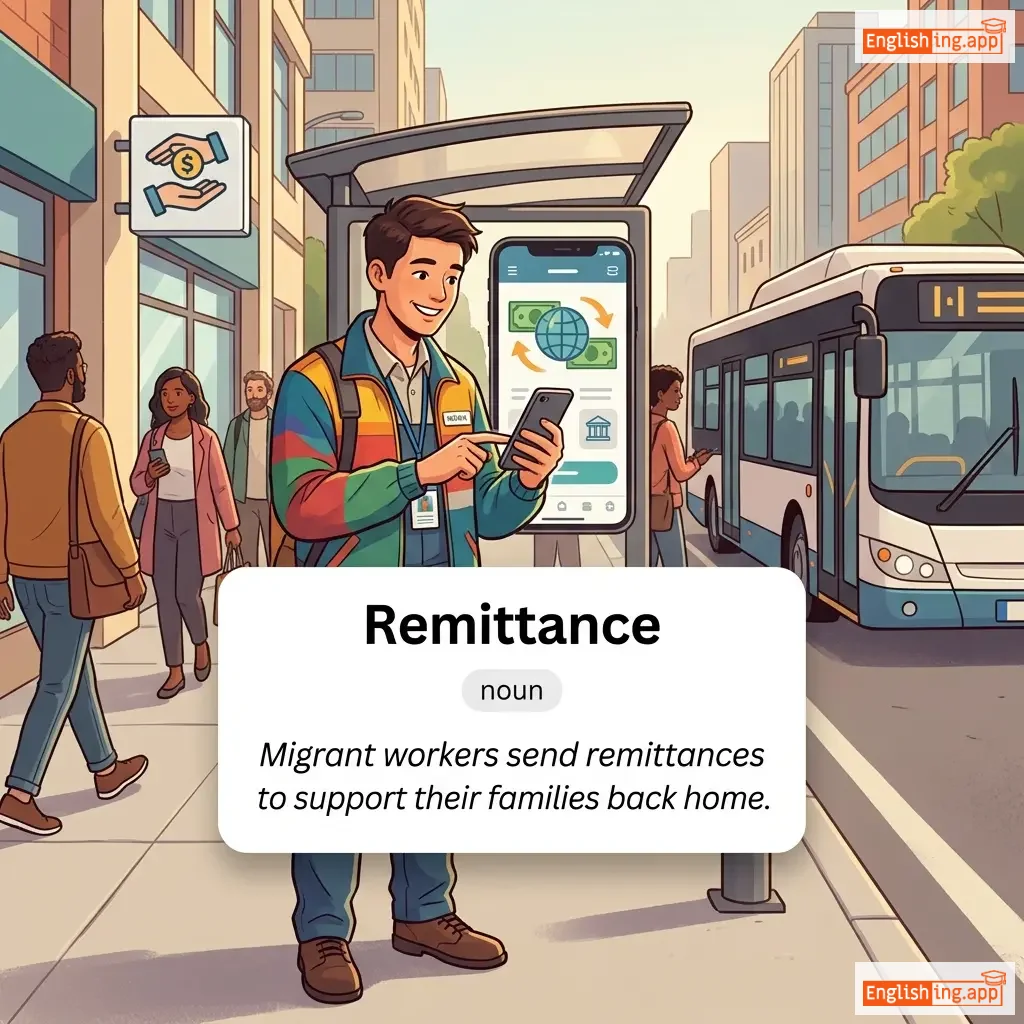
Remittance definition card — visual illustration of the meaning
noun
/rɪˈmɪtəns/
перевод / денежный перевод (perevod / denezhnyy perevod)

A sum of money sent, especially by mail or electronic transfer, as payment or gift.

"Migrant workers send remittances to support their families back home."

"Мигранты отправляют переводы, чтобы поддержать свои семьи на родине." (Migranti otpravlyayut perevody, chtoby podderzhat' svoi sem'i na rodine.)
noun
/ˈrɛmnənt/
остаток (ostatok)

A small remaining part of something that once existed or was larger.

"The old house still had remnants of its former glory."

"Старый дом всё ещё сохранял остатки своей былой славы." (Staryy dom vsyo eshchyo sokhranyal ostatki svoey byloy slavy.)
remnants definition card — visual illustration of the meaning
noun
ˈremnənts
останки (ostanki)

A small remaining quantity of something; a surviving trace.

"The remnants of the wall are still visible."

"Останки стены всё ещё видны." (Ostanki steny vsyo yeshchyo vidny.)
verb
/ˌriːˈmɒdəl/
перестроить (perestroit')

To change the structure or form of something, especially a building.

"They decided to remodel their kitchen last summer."

"Они решили переделать свою кухню прошлым летом." (Oni reshilí peredelat' svoju kukhnyu proshlym letom.)
noun
/rɪˈmɒnstrəns/
протест (protest)

A forceful protest or objection.

"The workers’ remonstrance against unfair treatment was ignored."

"Протест рабочих против несправедливого обращения был проигнорирован." (Protest rabochikh protiv nespravedlivogo obshcheniya byl proigнорirovan.)
noun/adjective
/rɪˈmɒnstrənt/
протестующий (protestuyushchiy)

A person who makes a forceful protest (noun); protesting or objecting (adjective).

"He was a remonstrant voice in the assembly."
"Он был протестующей голосом на собрании." (On byl protestuyushchey golosom na sobranie.)
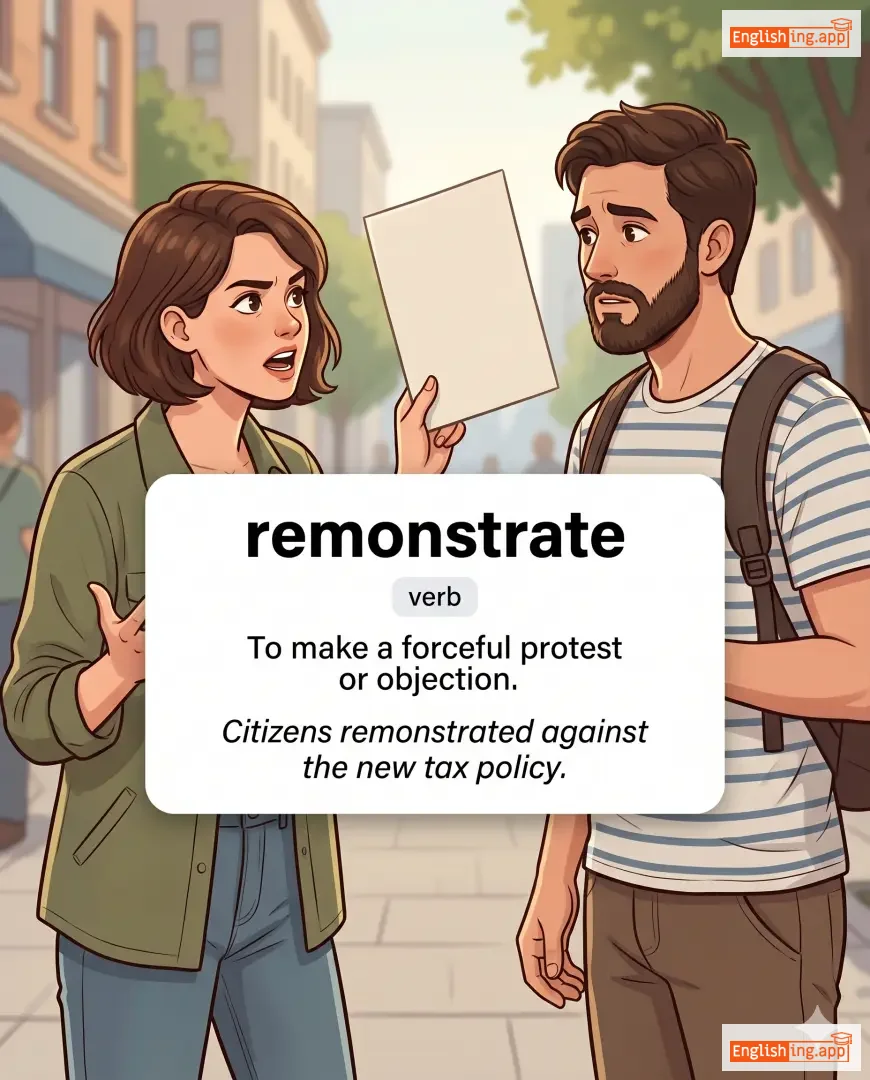
remonstrate definition card — visual illustration of the meaning
verb
/rɪˈmɒnstreɪt/
протестовать (protestovat)

To make a forceful protest or objection.

"Citizens remonstrated against the new tax policy."

"Граждане протестовали против новой налоговой политики." (Grazhdane protestovali protiv novoy nalogovoy politiki.)
noun
/rɪˈmɔːrs/
раскаяние (raskayanie)

A deep feeling of regret or guilt for a wrong committed.

"He was filled with remorse after lying to his friend."
"Он был полон раскаяния после того, как соврал своему другу." (On byl polon raskayaniya posle togo, kak sovral svoemu drugu.)
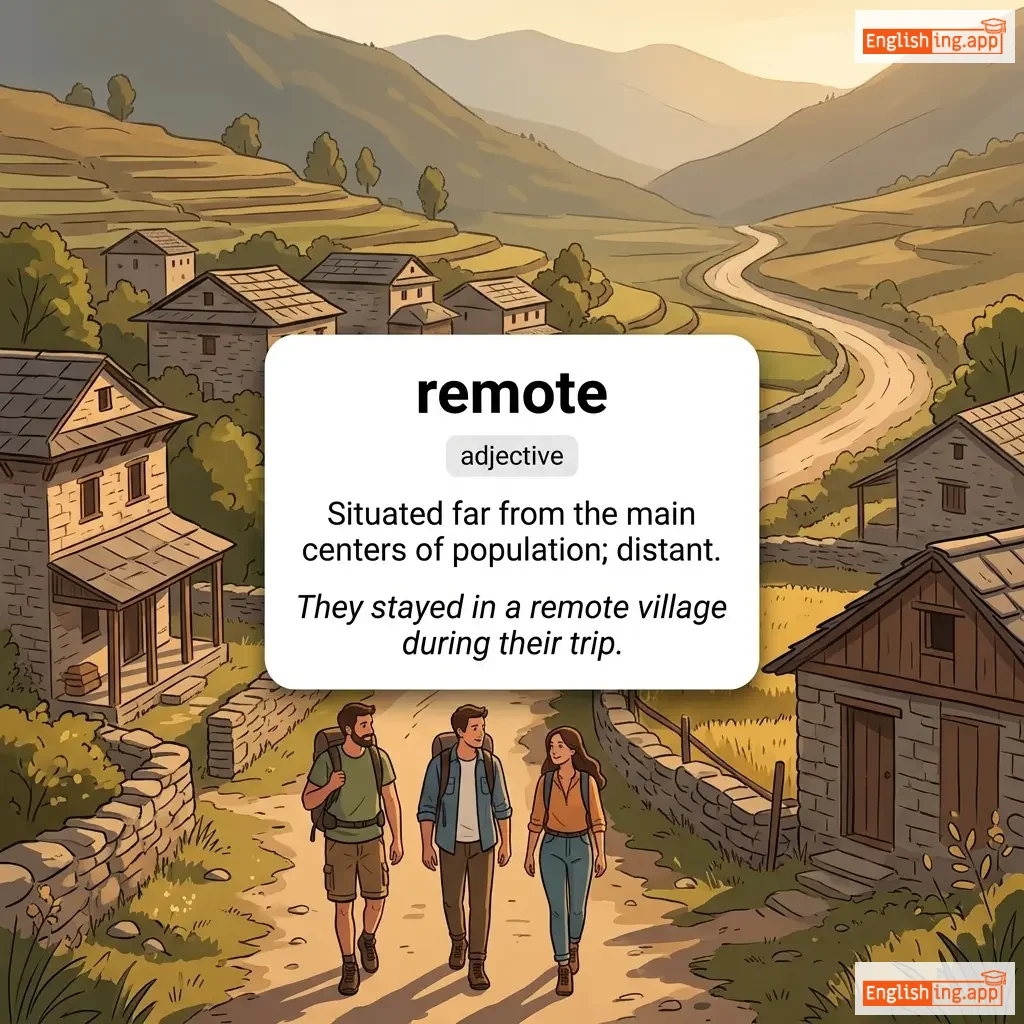
remote definition card — visual illustration of the meaning
adjective
/rɪˈmoʊt/
удалённый (udalyonny)

Situated far from the main centers of population; distant.

"They stayed in a remote village during their trip."

"Они остановились в удалённой деревне во время своей поездки." (Oni ostanovilis' v udalyonnoy derevne vo vremya svoey poezzdki.)
adjective
/rɪˈmoʊtɪd/
удаленный (udalennyy)

placed at a distance; made remote

"The system was remoted to a secure location."

"Система была удалена в безопасное место." (Sistema byla udalena v bezopasnoe mesto.)
adjective
/rɪˈmuːvəbəl/
съемный (syemny)

able to be removed or taken away

"This phone has a removable battery."

"У этого телефона съемная батарея." (U etogo telefona syomnaya batareya.)
noun
/rɪˈmuːvəl/
удаление (udaleniye)

the act of taking something or someone away or out of a place

"The removal of old furniture made the room look spacious."
"Удаление старой мебели сделало комнату более просторной." (Udalenie staroy mebeli sdelalo komnatu boleye prostornoy.)
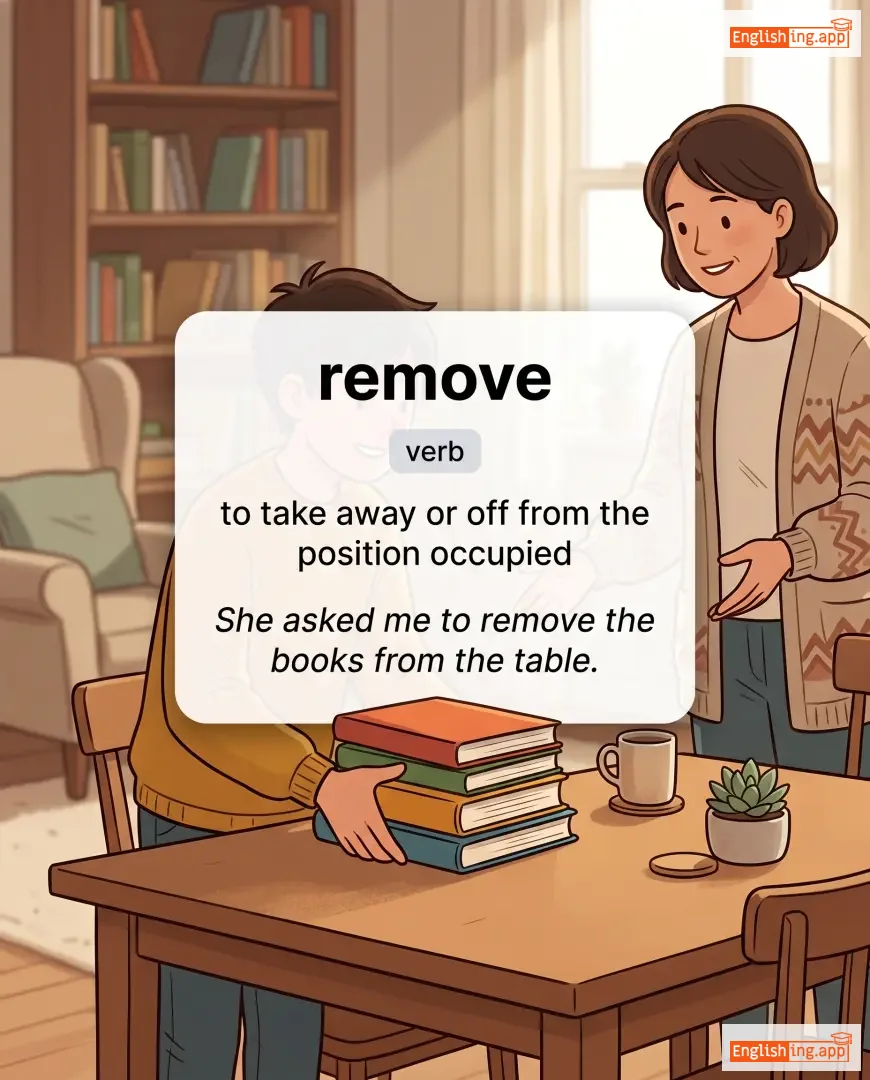
remove definition card — visual illustration of the meaning
verb
/rɪˈmuːv/
убирать (ubirat)

to take away or off from the position occupied

"She asked me to remove the books from the table."

"Она попросила меня убрать книги с стола." (Ona poprosila menya ubrat' knigi s stola.)
verb
/rɪˈmjuːnəreɪt/
оплачивать (oplachivat)

To pay someone for services or work done.

"The company will remunerate employees fairly for their overtime."

"Компания будет справедливо вознаграждать сотрудников за их сверхурочные." (Kompaniya budet spravedlivo voznagrazhdat' sotrudnikov za ikh sverkhurochnye.)
noun
/rɪˌmjuːnəˈreɪʃən/
вознаграждение (voznagrazhdenie)

Money paid for work or a service.

"The remuneration for this job is quite generous."

"Вознаграждение за эту работу довольно щедрое." (Voznagrazhdenie za etu rabotu dovol'no shchedroye.)
adjective
/rɪˈmjuːnərətɪv/
прибыльный (pribyl'nyy)

Financially rewarding or profitable.

"He chose a remunerative career in medicine."

"Он выбрал прибыльную карьеру в медицине." (On vybral pribyl'nuyu kar'yeru v meditsine.)
noun
/ˈrɛnəˌsɑːns/
ренессанс (renessans)

a revival of art, culture, or learning; a period of renewed interest and growth

"The city experienced a cultural renaissance during the 1990s."

"Город пережил культурный ренессанс в 1990-е годы." (Gorod perezhil kul'turnyi renessans v 1990-e gody.)
verb
/rɛnd/
разрывать (razryvat)

to tear something apart violently or forcefully

"The explosion rent the air with a deafening noise."

"Взрыв разорвал воздух оглушающим шумом." (Vzryv razorval vozdukh oglushayushchim shumom.)
render definition card — visual illustration of the meaning
verb
/ˈrɛndər/
оказывать (okazyvat')

to provide, give, or cause something to be in a certain state

"The service rendered great help to the community."

"Эта услуга оказала большую помощь обществу." (Eta usluga okazyvala bol'shuyu pomoshch' obshchestvu.)
noun
/ˈrɒndɪvuː/
встреча (vstrecha)

a meeting or appointment at an agreed time and place

"They arranged a secret rendezvous at the café."

"Они устроили секретное свидание в кафе." (Oni ustroili sekretnoye svidaniye v kafe.)
noun
/rɛnˈdɪʃən/
исполнение (ispolnenie)

a performance or interpretation of a piece of art, music, or text

"The singer gave a moving rendition of the classic song."

"Певец исполнил трогательное исполнение классической песни." (Pevets ispolnil trogatelnoye ispolneniye klassicheskoy pesni.)
noun
/ˈrɛnɪˌɡeɪd/
ренегат (renegat)

a person who deserts or betrays an organization, country, or principles

"He was labeled a renegade after leaving the party and criticizing its policies."

"Его назвали ренегатом после того, как он покинул партию и раскритиковал её политику." (Ego nazvali renegatom posle togo, kak on pokinul partiyu i raskritikoval yeye politiku.)
renege definition card — visual illustration of the meaning
verb
/rɪˈnɛɡ/
нарушить обещание (narushit' obeshchanie)

to go back on a promise, agreement, or commitment

"The company reneged on its promise to increase wages."

"Компания нарушила обещание повысить зарплаты." (Kompaniya narushila obeshchanie povysit' zarplaty.)
🔄

renew

verb
/rɪˈnuː/

to make something new again or extend its period of validity

"I need to renew my passport before traveling."
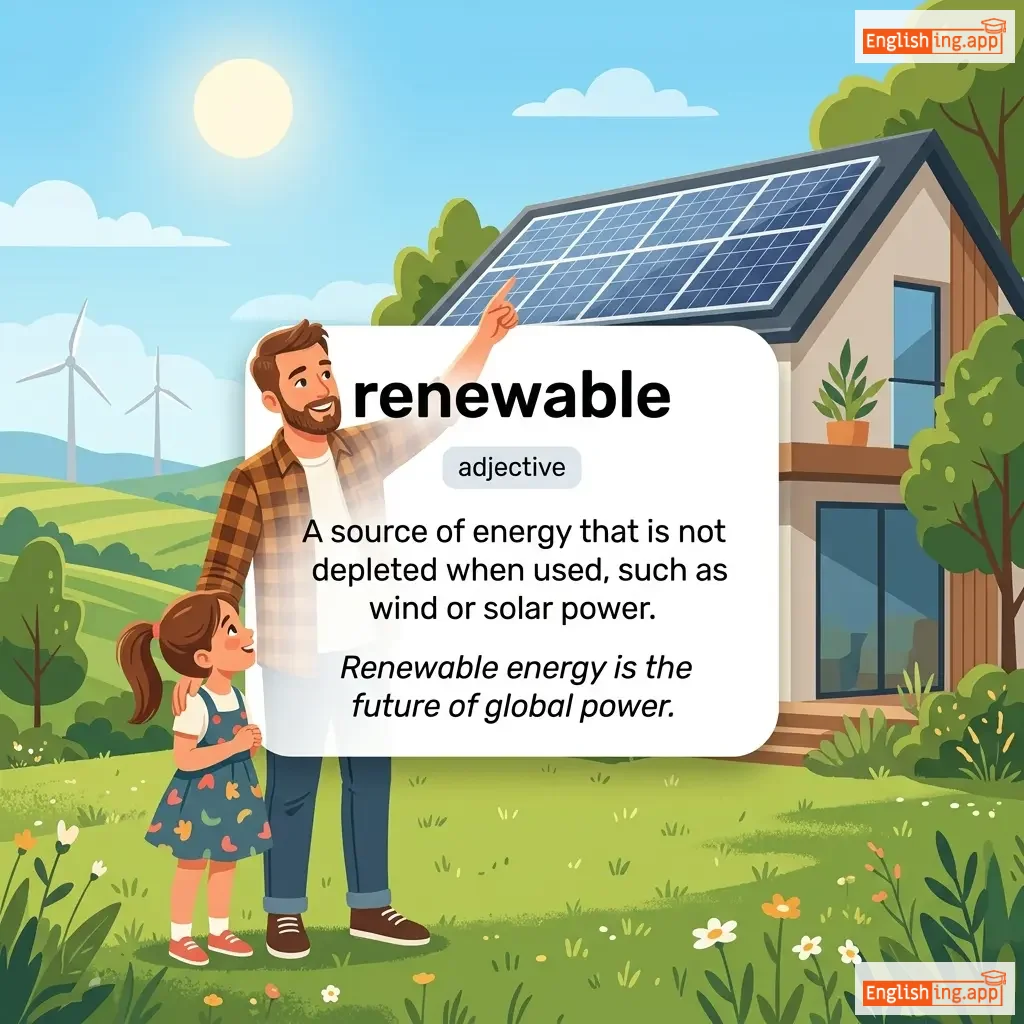
renewable definition card — visual illustration of the meaning
adjective
rɪˈnjuː.ə.bəl
возобновляемый (vozobnovlyayemy)

A source of energy that is not depleted when used, such as wind or solar power.

"Renewable energy is the future of global power."
"Возобновляемая энергия - это будущее глобальной энергии." (Vozobnovlyayemaya energiya - eto budushcheye global'noy energii.)
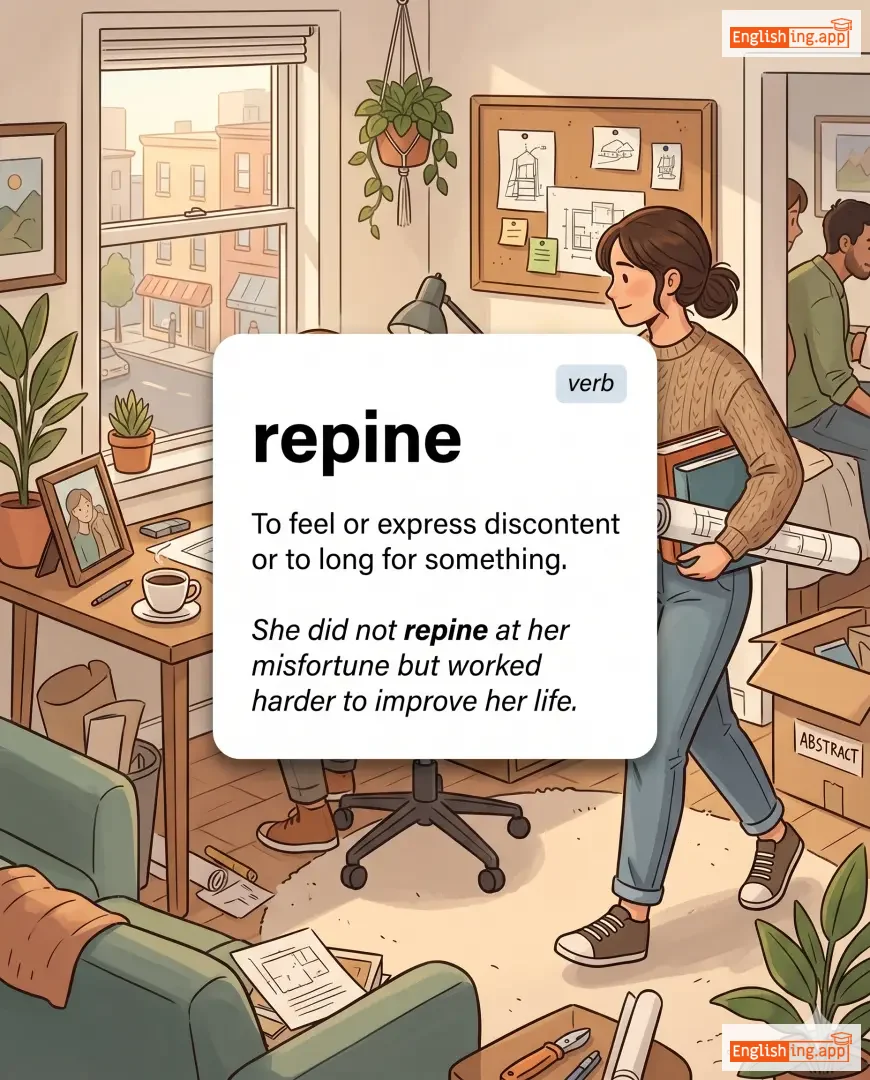
repine definition card — visual illustration of the meaning
verb
/rɪˈpaɪn/
горевать (gorevat)

To feel or express discontent or to long for something.

"She did not repine at her misfortune but worked harder to improve her life."
"Она не горевала по поводу своей беды, а работала усерднее, чтобы улучшить свою жизнь." (Ona ne gorevala po povodu svoey bedy, a rabotala usyerdnee, chtoby uluchshit' svoyu zhizn'.)
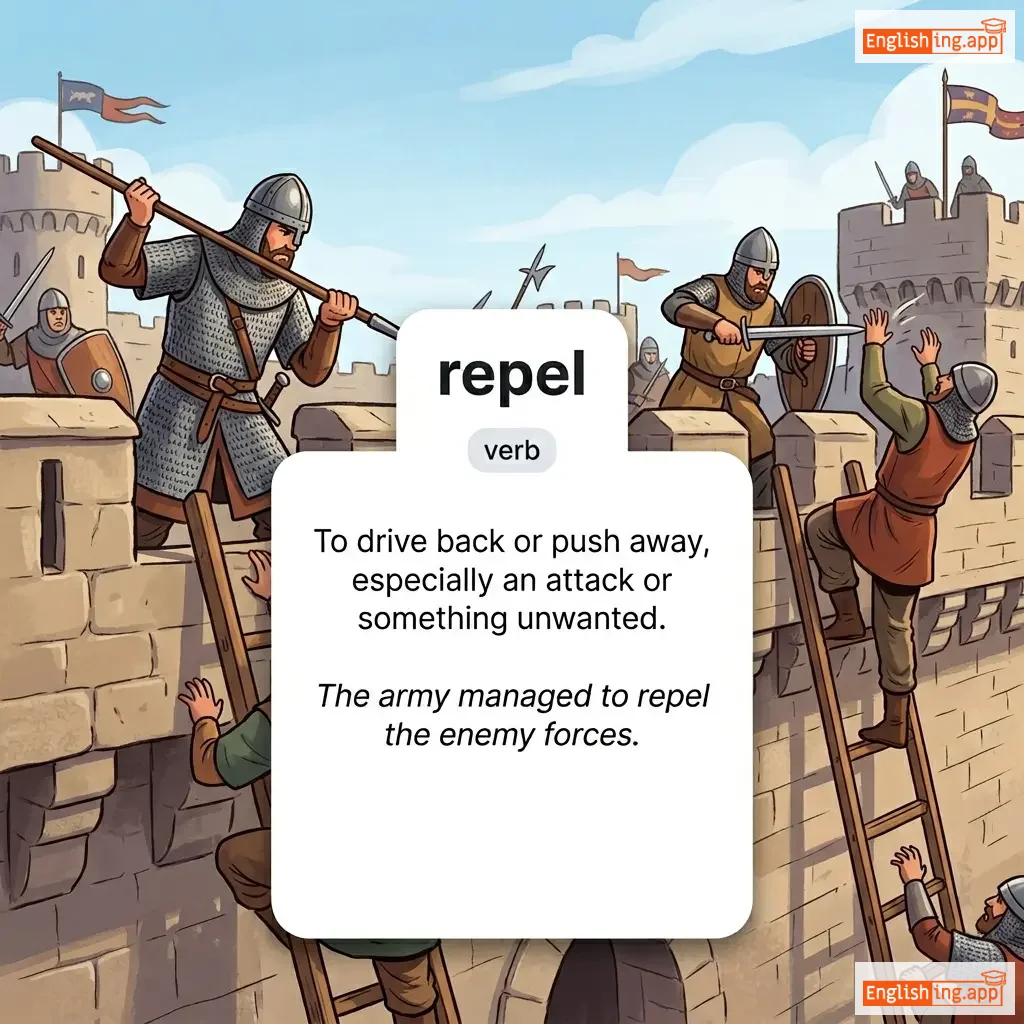
repel definition card — visual illustration of the meaning
verb
/rɪˈpɛl/
отражать (otrazhat)

To drive back or push away, especially an attack or something unwanted.

"The army managed to repel the enemy forces."

"Армия смогла отразить вражеские силы." (Armiya smogla otrazit' vragekiye sily.)
adjective
/rɪˈpɛlənt/
отпугивающий (otpugivayushchiy)

Able to drive away something, especially insects or unpleasant things; causing disgust or distaste.

"This cream is highly effective as a mosquito repellent."

"Этот крем очень эффективен как средство от комаров." (Etot krem ochen' effektiven kak sredstva ot komarov.)
noun
/rɪˈpɛntəns/
раскаяние (raskayanie)

Deep regret or remorse for wrongdoing; sincere sorrow for one's sins or mistakes.

"He showed true repentance after apologizing for his mistakes."

"Он продемонстрировал настоящее раскаяние после того, как извинился за свои ошибки." (On prodemonstriroval nastoyashchee raskayanie posle togo, kak izviniilsya za svoi oshibki.)
adjective
/rɪˈpen.tənt/
раскаявшийся; сожалеющий; виновный (raskayavshiysya; sozhaleyushchiy; vinovnyy)

feeling or expressing sincere regret and remorse; sorry for one's actions

"The repentant thief returned the stolen money."
"Раскаявшийся вор вернул украденные деньги." (Raskayavshiysya vor vernul ukradennyye den'gi.)
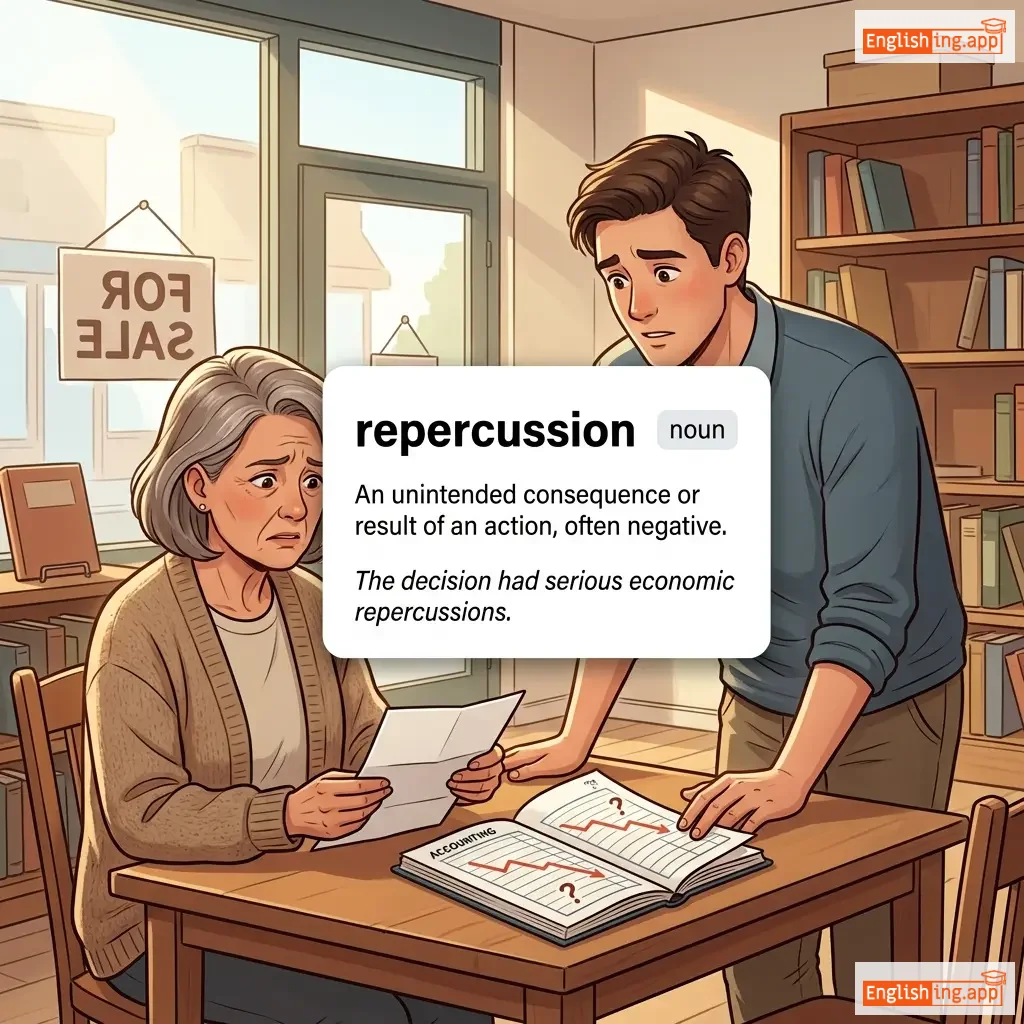
repercussion definition card — visual illustration of the meaning
noun
/ˌriːpərˈkʌʃən/
последствие (riperkushn)

An unintended consequence or result of an action, often negative.

"The decision had serious economic repercussions."
"Решение имело серьёзные экономические последствия." (Reshenie imelo seryoznyye ekonomicheskie posledstviya)
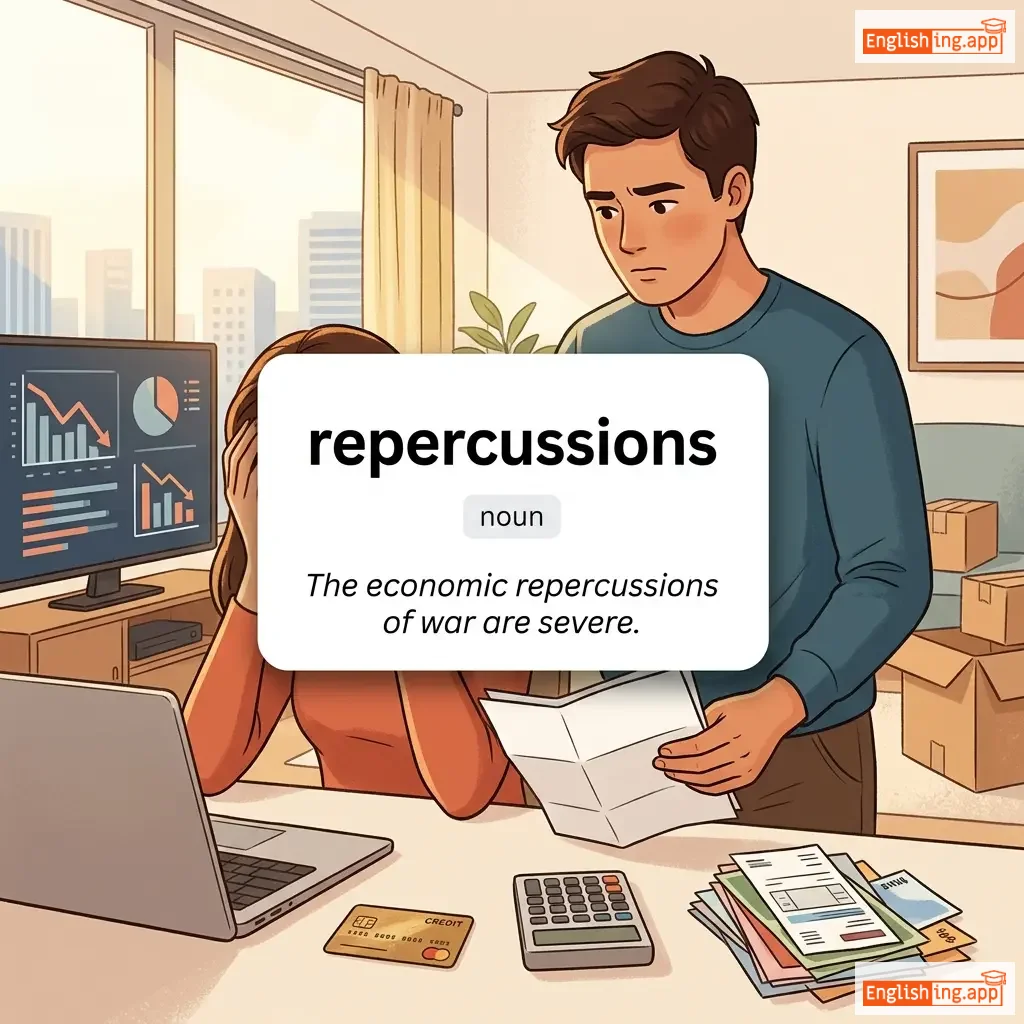
repercussions definition card — visual illustration of the meaning
noun
/ˌriː.pəˈkʌʃ.ənz/
последствия (posledstviya)

An unintended consequence occurring some time after an event or action; the effects or results of something.

"The economic repercussions of war are severe."
"Экономические последствия войны тяжелы." (Ekonomicheskie posledstviya voyny tyazhely.)
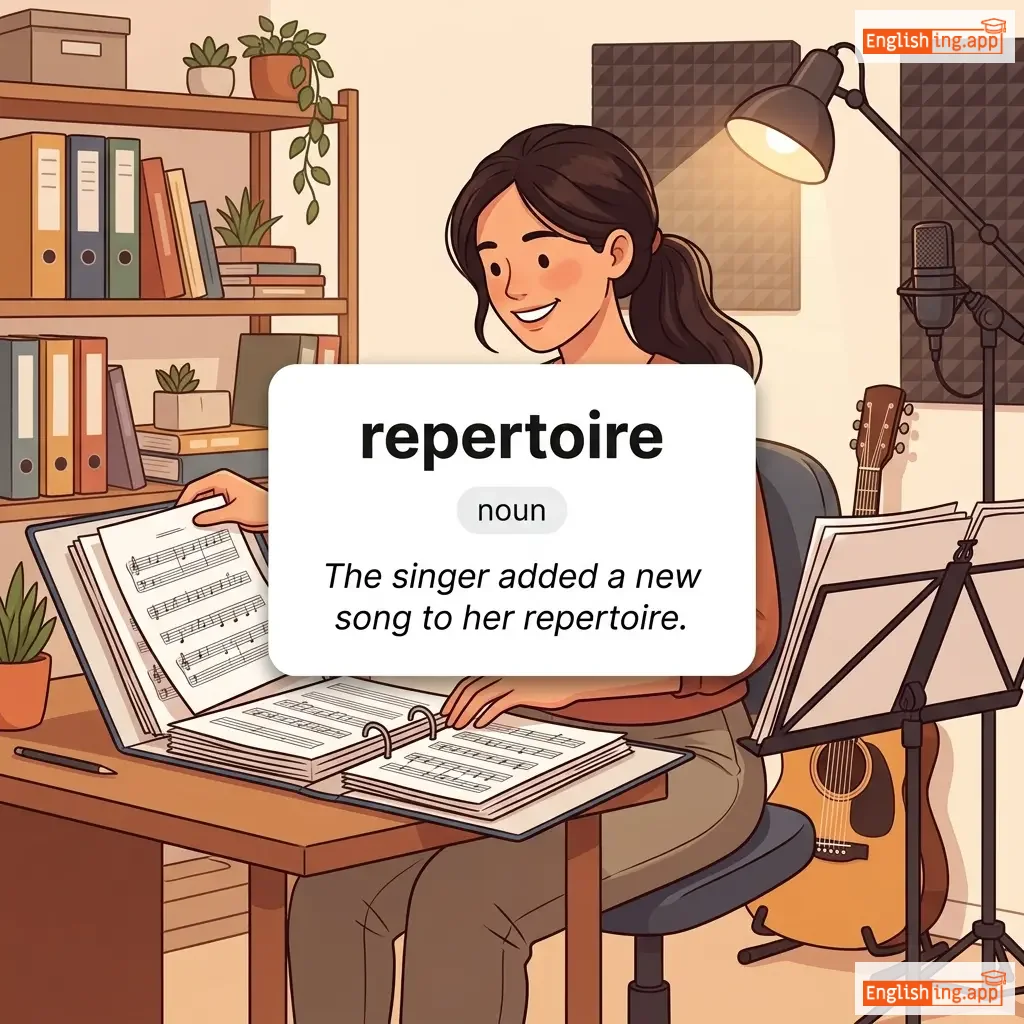
repertoire definition card — visual illustration of the meaning
noun
/ˈrɛpərˌtwɑːr/
репертуар (repertuar)

The entire range of skills, works, or pieces that a person or group is prepared to perform or use.

"The singer added a new song to her repertoire."

"Певица добавила новую песню в свой репертуар." (Pevitsa dobavila novuyu pesnyu v svoy repertuar.)
adjective
/ˌrɛpərˈtɔːriəl/
репортерский (reporterskiy)

Relating to or characteristic of a repertoire, especially in journalism or performance contexts.

"The journalist's repertorial style captured every detail of the unfolding story."

"Репортерский стиль журналиста запечатлел каждую деталь разворачивающейся истории." (Reporterkiy stil' zhurnalista zapechatlel kazhduyu detal' razvorachivayushcheysya istorii.)
noun
/ˈrɛpərˌtɔːri/
репертуар (repertuar)

A collection of works that a company, performer, or institution regularly performs; also a storehouse of information or skills.

"The theater has a repertory of classic plays."

"В театре есть репертуар классических пьес." (V teatre yest' repertuar klassicheskikh p'yes.)
noun
/ˌrɛpɪˈtɪʃən/
повторение (povtoreniye)

The action of repeating something that has already been said, written, or done.

"The teacher emphasized the importance of repetition in learning new vocabulary."
"Учитель подчеркнул важность повторения при изучении новых слов." (Uchitel' podcherknul vazhnost' povtoreniya pri izuchenii novykh slov.)
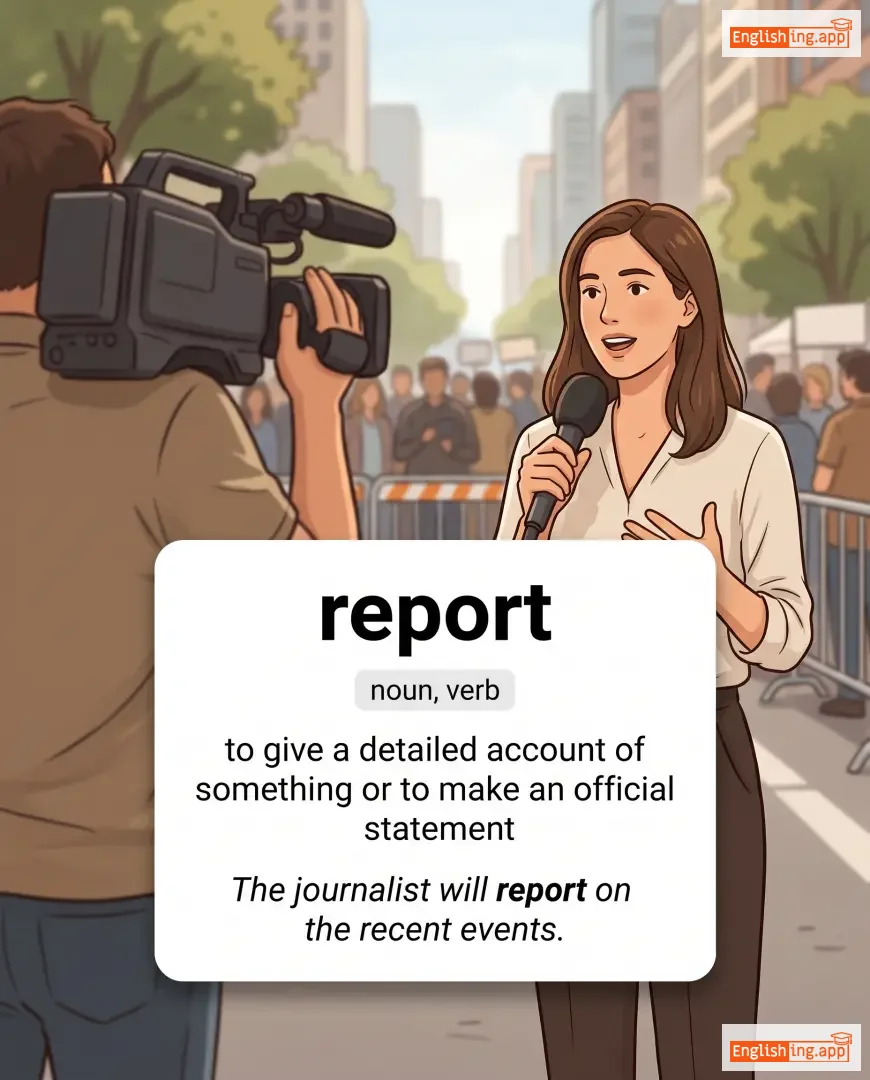
report definition card — visual illustration of the meaning
noun, verb
/rɪˈpɔːrt/
отчет (otchet)

to give a detailed account of something or to make an official statement

"The journalist will report on the recent events."

"Журналист будет сообщать о недавних событиях." (Zhurnalist budet soobshchat' o nedavnikh sobytiyakh.)
verb
/ˈrɛplɪkeɪt/
реплицировать (replitsirovat')

to copy, reproduce, or duplicate something exactly

"The scientist tried to replicate the experiment for accuracy."

"Учёный пытался реплицировать эксперимент для точности." (Uchyonyy pytalsya replitsirovat' eksperiment dlya tochnosti.)