Словари

Словарь английского языка | Значения слов, определения и примеры

noun
/rɪˈkwaɪə(r)mənt/
требование (trebovaniye)

something that is necessary or demanded

"The job has specific educational requirements."

"Работа имеет специфические образовательные требования." (Rabota imeyet spetsificheskiye obrazovatelnye trebovaniya.)
adjective
/rɪˈkwaɪəd/
необходимый (neobkhodimyy)

necessary or compulsory

"A visa is required to enter the country."

"Для въезда в страну необходима виза." (Dlya v'yezda v stranu neobkhodima viza.)
verb
/rɪˈkwaɪə(r)/
требовать (trebovat)

to need something or make something necessary

"This task requires your full attention."

"Эта задача требует вашего полного внимания." (Eta zadacha trebujet vashego polnogo vnimaniya.)
noun
/rɪˈmeɪnz/
остатки (ostatki)

the parts, pieces, or substances that are left after the rest has been used or removed

"The remains of the meal were left on the table."

"Остатки еды остались на столе." (Ostatki edy ostalis' na stole.)
noun
/ˈrɛkwiəm/
месса за упокой (messa za upokoy)

A mass, music, or ceremony for the repose of the souls of the dead.

"The choir performed a requiem in memory of the late leader."

"Хор исполнил реквием в память о покойном лидере." (Khor ispolnil rekviem v pamyat' o pokoynom lidere.)
noun
/rɪˈkwɛst/

a formal or polite demand for something

"She made a request for additional time to complete the project."

adjective
/rɪˈpjuːtɪd/
признанный (priznannyy)

Generally considered or believed to be something, often based on reputation rather than certainty.

"He is a reputed expert in financial management."

"Он признанный эксперт в области финансового управления." (On priznannyy eksperty v oblasti finansovogo upravleniya.)
noun
/rɪˈpjuːt/
репутация (reputatsiya)

the opinion generally held of someone or something; reputation

"He is a scholar of great repute in his field."
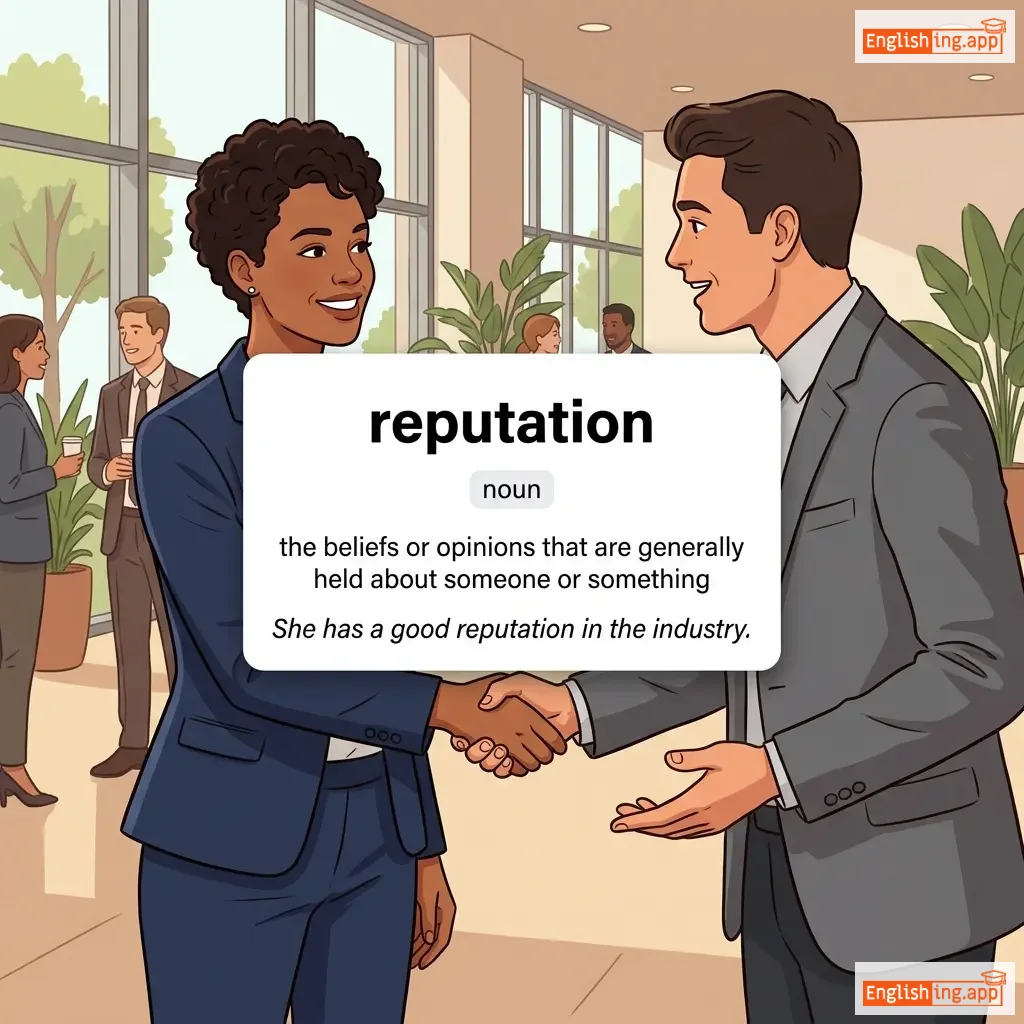
"Он учёный с большой репутацией в своей области." (On uchyonyy s bol'shoy reputatsiyey v svoey oblasti.)
reputation definition card — visual illustration of the meaning
noun
/ˌrɛpjuˈteɪʃən/
репутация (reputatsiya)

the beliefs or opinions that are generally held about someone or something

"She has a good reputation in the industry."

"У неё хорошая репутация в индустрии." (U nee khoroshaya reputatsiya v industrii.)
adjective
/ˈrɛpjətəbəl/
респектабельный (respektabel'nyy)

having a good reputation; respected

"They chose a reputable company to handle their finances."

"Они выбрали респектабельную компанию для управления своими финансами." (Oni vybrali respektabel'nuyu kompaniyu dlya upravleniya svoimi finansami.)
adjective
/rɪˈpʌlsɪv/
отталкивающий (ottalkivayushchiy)

arousing intense distaste or disgust

"The garbage gave off a repulsive smell."

"Мусор издавал отталкивающий запах." (Musor izdaval ottalkivayushchiy zapakh.)
noun
/rɪˈpʌlʃən/
отвращение (ripulshun)

a strong feeling of dislike or disgust

"She felt deep repulsion at the sight of cruelty to animals."

"Она почувствовала глубокое отвращение при виде жестокости к животным." (She felt deep repulsion at the sight of cruelty to animals.)
verb
/rɪˈpʌls/
отразить / вызывать отвращение (otrazit' / vyzyvat' otvrashchenie)

to drive back an attack or attacker by force; to cause intense dislike or disgust

"The army managed to repulse the enemy attack."

"Армия смогла отразить атаку врага." (Armiya smogla otrazit' ataku vraga.)
adjective
/rɪˈpʌɡ.nənt/
отвратительный (otvratitel'nyy)

causing strong dislike, disgust, or opposition

"The idea of cheating was repugnant to him."

"Идея обмана казалась ему отвратительной." (Ideya obmana kazalas' yemu otvratitel'noy.)
noun
/rɪˈpʌɡ.nəns/
отвращение (otvrashchenie)

intense disgust or strong aversion towards something

"She felt deep repugnance at the cruelty of the act."
"Она почувствовала глубокое отвращение к жестокости этого акта." (Ona pochuvstvovala glubokoe otvrashchenie k zhestokosti etogo akta.)
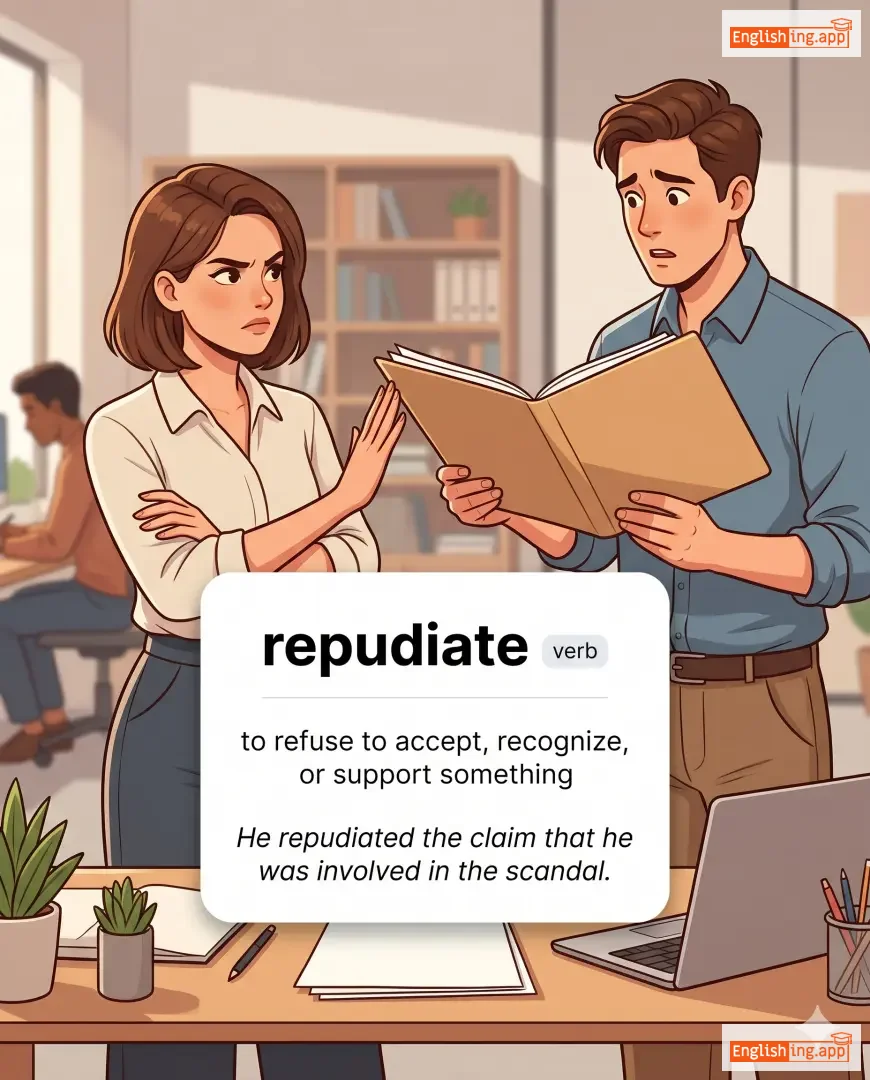
repudiate definition card — visual illustration of the meaning
verb
/rɪˈpjuː.di.eɪt/
отвергать (otvergat)

to refuse to accept, recognize, or support something

"He repudiated the claim that he was involved in the scandal."

"Он отверг утверждение, что он был вовлечен в скандал." (On otverg utverzhdenie, chto on byl vovlechen v skandal.)
noun/adjective
/rɪˈpʌblɪkən/
республиканец (respublikanets)

a member or supporter of a republican political party or system

"The republican candidate won the election."
"Республиканец победил на выборах." (Respublikanets pobedil na viborah.)
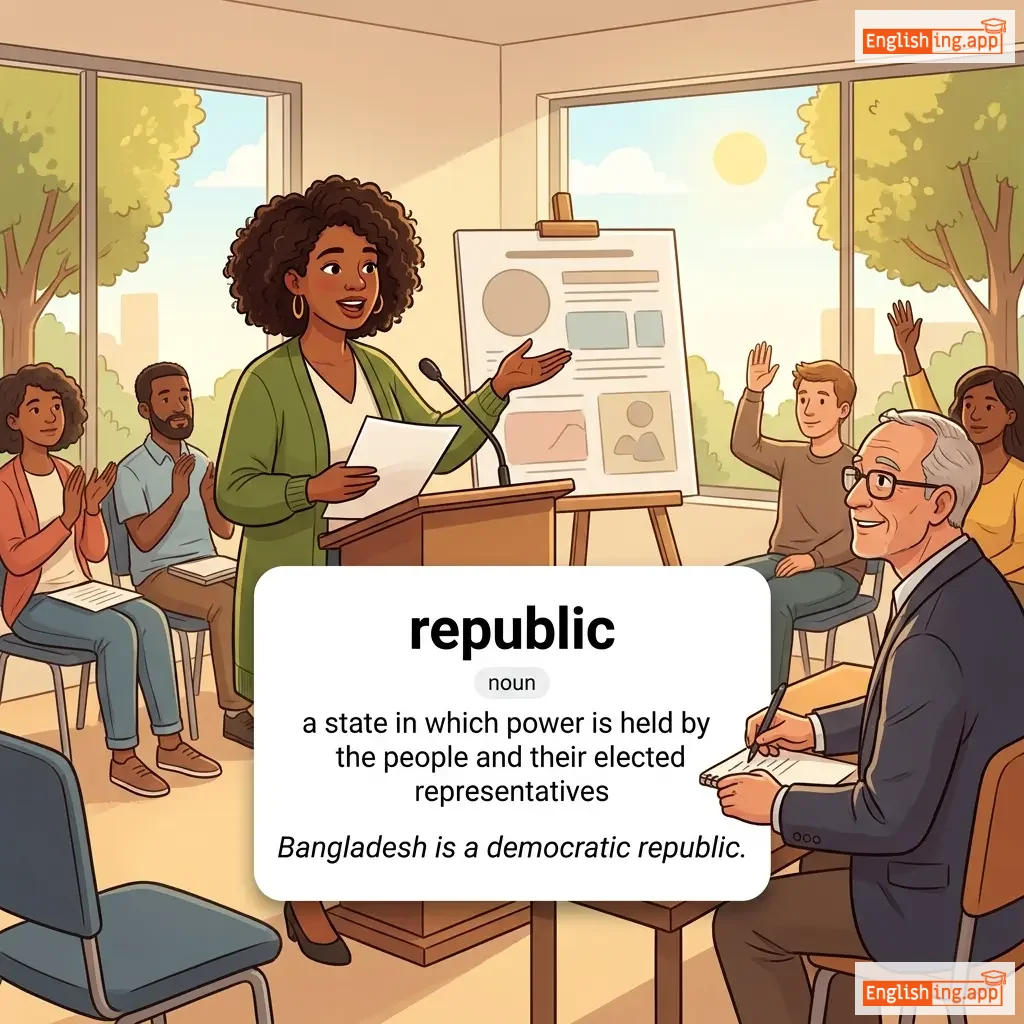
republic definition card — visual illustration of the meaning
noun
/rɪˈpʌblɪk/
республика (respublika)

a state in which power is held by the people and their elected representatives

"Bangladesh is a democratic republic."

"Бангладеш — демократическая республика." (Bangladesh — demokraticheskaya respublika.)
noun
/ˈrɛp.taɪl/
рептилия (reptiliya)

a cold-blooded animal with scales that lays eggs, such as snakes, lizards, turtles, or crocodiles

"The snake is a reptile that can be found in many parts of the world."

"Змея — это рептилия, которую можно найти во многих частях мира." (Zmeyya — eto reptiliya, kotoruyu mozhno nayti vo mnogikh chastyakh mira.)
verb
/rɪˈpruːv/
поругать (porugat)

to criticize or correct someone gently or disapprove of their actions

"The teacher reproved the student for being late."

"Учитель отругал ученика за опоздание." (Uchitel' otrugal uchenika za opozdanie.)
noun
/rɪˈpruːf/
критика, осуждение (kritika, osuzhdenie)

An expression of blame or disapproval.

"His careless words drew a sharp reproof from his mother."
"Его небрежные слова вызвали резкую критику со стороны его матери." (Ego nebrezhnie slova vyzvali rezkuyu kritiku so storony ego materi.)
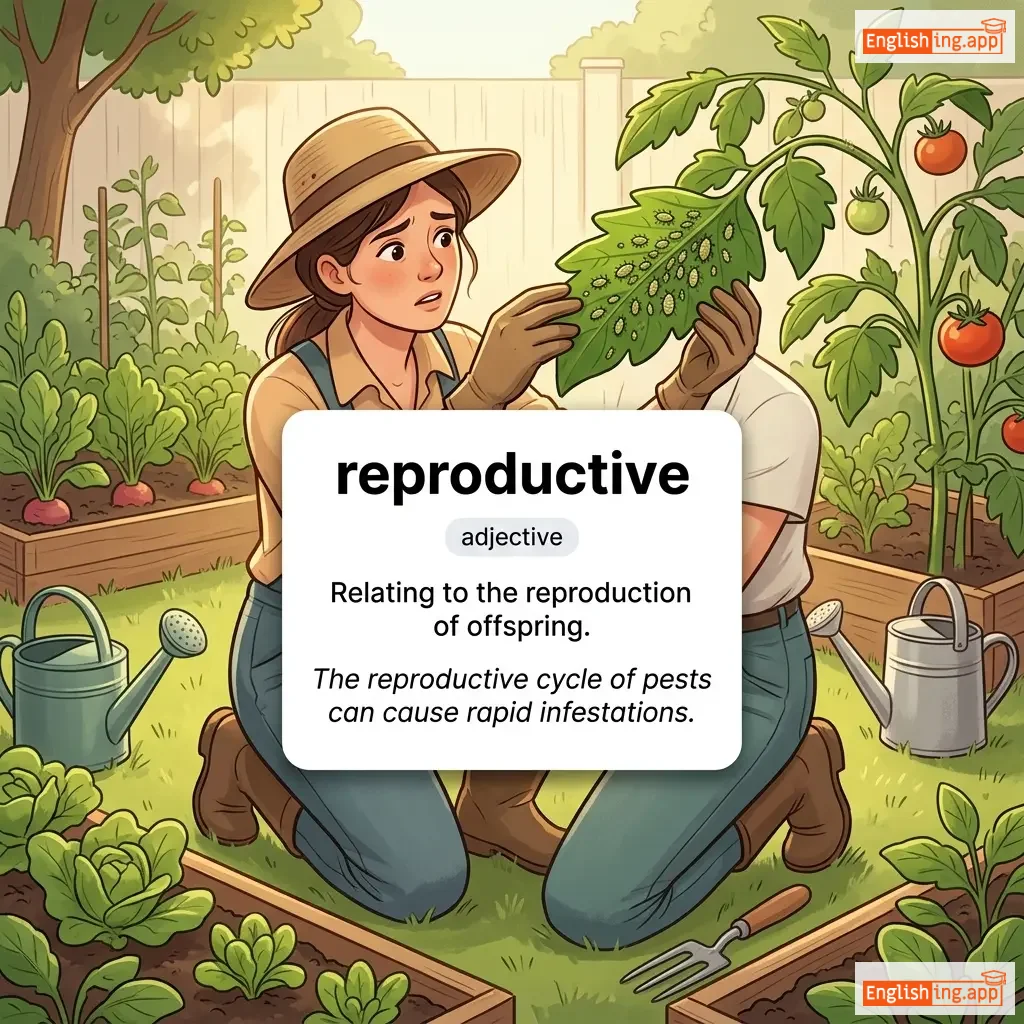
reproductive definition card — visual illustration of the meaning
adjective
ˌriːprəˈdʌktɪv
репродуктивный (reproduktyvny)

Relating to the reproduction of offspring.

"The reproductive cycle of pests can cause rapid infestations."

"Репродуктивный цикл вредителей может вызвать быстрые заражения." (Reproduktivnyy tsikl vreditelyey mozhet vyzvat' bystrye zaraženija.)
noun
/ˌriːprəˈdʌkʃən/
воспроизводство, размножение (vosproizvodstvo, razmnozhenie)

The process of producing offspring; the act of copying or duplicating.

"The textbook included a detailed diagram of human reproduction."

"Учебник включал подробную диаграмму человеческого воспроизводства." (Uchebnik vklyuchal podrobnuyu diagrammu chelovecheskogo vosproizvodstva.)
verb
/ˌriːprəˈdjuːs/
воспроизводить, производить потомство (vosproizvodit', proizvodit' potomstvo)

To make a copy of something; to generate offspring.

"Many animals reproduce rapidly in favorable conditions."

"Многие животные быстро воспроизводятся в благоприятных условиях." (Mnogie zhivotnye bistro vosproizvodyatsya v blagopriyatnykh usloviyakh.)
noun
/ˌrɛprəˈbeɪʃən/
осуждение (reprobeishn)

Strong disapproval or condemnation; rejection by God as beyond salvation.

"The teacher’s face showed clear reprobation at the student’s rude remark."
"Лицо учителя ясно выражало осуждение по поводу грубой реплики ученика." (Litso uchitelya yasno vyrazhalo osuzhdenie po povodu gruboy repliki uchenika.)
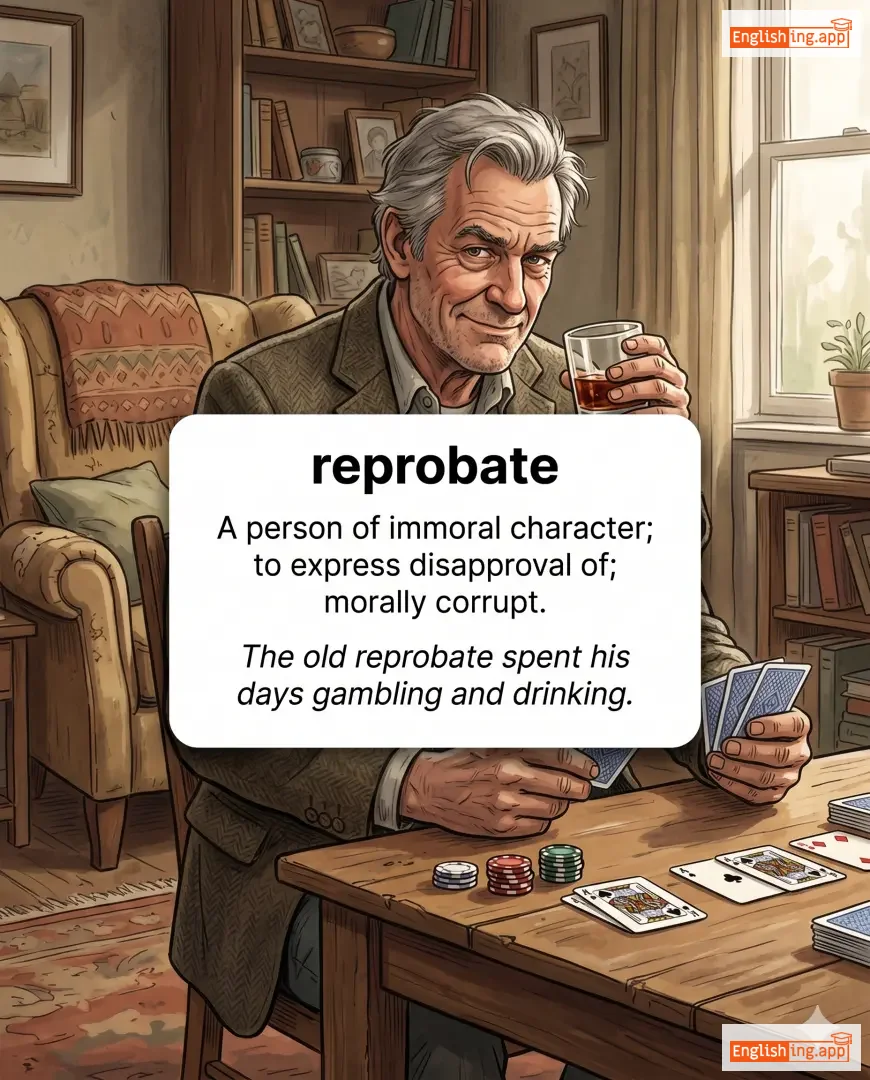
reprobate definition card — visual illustration of the meaning
noun, adjective, verb
/ˈrɛprəˌbeɪt/

A person of immoral character; to express disapproval of; morally corrupt.

"The old reprobate spent his days gambling and drinking."

reproach definition card — visual illustration of the meaning
noun/verb
/rɪˈproʊtʃ/
упрек / критика (uprek / kritika)

An expression of disapproval or disappointment; to criticize someone for doing wrong.

"She reproached him for arriving late to the meeting."
"Она упрекнула его за опоздание на встречу." (Ona upreknula ego za opozdanie na vstrechu.)
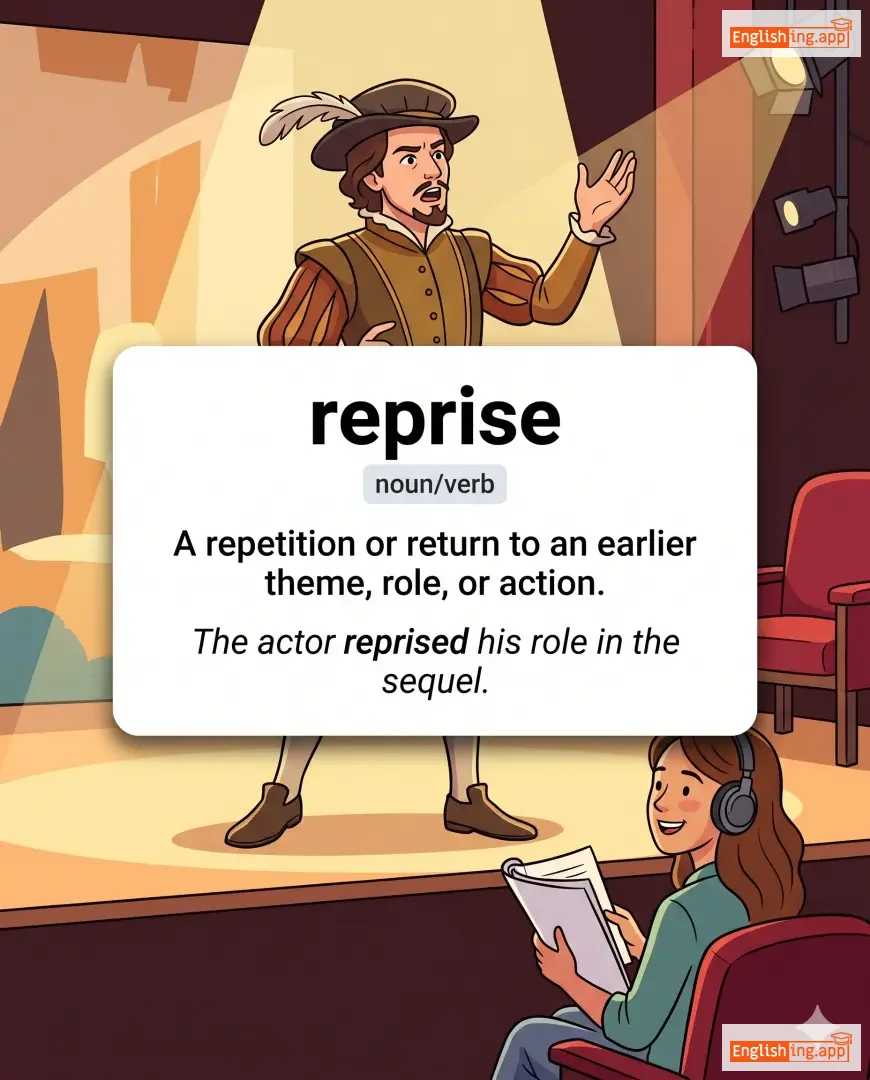
reprise definition card — visual illustration of the meaning
noun/verb
/rɪˈpriːz/
повторение (povtorenie)

A repetition or return to an earlier theme, role, or action.

"The actor reprised his role in the sequel."

"Актер исполнил свою роль в продолжении." (Aktor ispolnil svoyu rol' v prodolzhenii.)
noun
/rɪˈpraɪzəl/
репрессалия (repressaliya)

An act of retaliation or revenge, especially in a conflict.

"The attack was carried out as a reprisal for the bombing."

"Атака была проведена в ответ на бомбардировку." (Ataka byla provedena v otvet na bombirovku.)
noun/verb
/ˈrɛprɪˌmænd/
выговор (vygovor)

A formal expression of disapproval; to scold or criticize someone officially.

"The teacher reprimanded the student for being late."

"Учитель сделал выговор ученику за опоздание." (Uchitel' sdelal vygovor ucheniku za opozdanie.)
noun/verb
/rɪˈpriːv/
временное облегчение / отсрочка наказания (vremennoe oblegchenie / otsrochka nakazaniya)

A temporary relief or delay from something unpleasant; to postpone or cancel punishment.

"The prisoner was granted a last-minute reprieve from execution."

"Заключенному в последний момент предоставили отсрочку от казни." (Zaklyuchennomu v posledniy moment predostavili otsrochku ot kazni.)
adjective
/rɪˈpres.ɪv/
репрессивный (repressivnyy)

restraining freedom or preventing self-expression; oppressive

"The repressive government banned all forms of protest."

"Репрессивное правительство запретило все формы протеста." (Repressivnoye pravitel'stvo zapretilo vse formy protesta.)
noun
/rɪˈpreʃən/
репрессия (repressiya)

the action of subduing someone or something by force; the restraint, prevention, or inhibition of a feeling, impulse, etc.

"The government's repression of free speech sparked widespread protests."

"Подавление свободы слова правительством вызвало широкие протесты." (Podavlenie svobody slova pravitelstvom vyzvalo shirokie protesty)
adjective
/rɪˈprɛsəbl̩/
сдерживаемый (sderzhivayemyy)

Capable of being restrained or suppressed.

"The movement proved to be hardly repressible."

"Движение оказалось едва сдерживаемым." (Dvizhenie okazalos' edva sderzhivayemym.)
verb
/rɪˈprɛs/
подавлять (podavlyat')

To restrain, suppress, or keep under control, especially emotions or desires.

"He tried to repress his anger during the meeting."
"Он попытался подавить свой гнев на встрече." (On popytalsya podavit' svoy gnev na vstreche.)
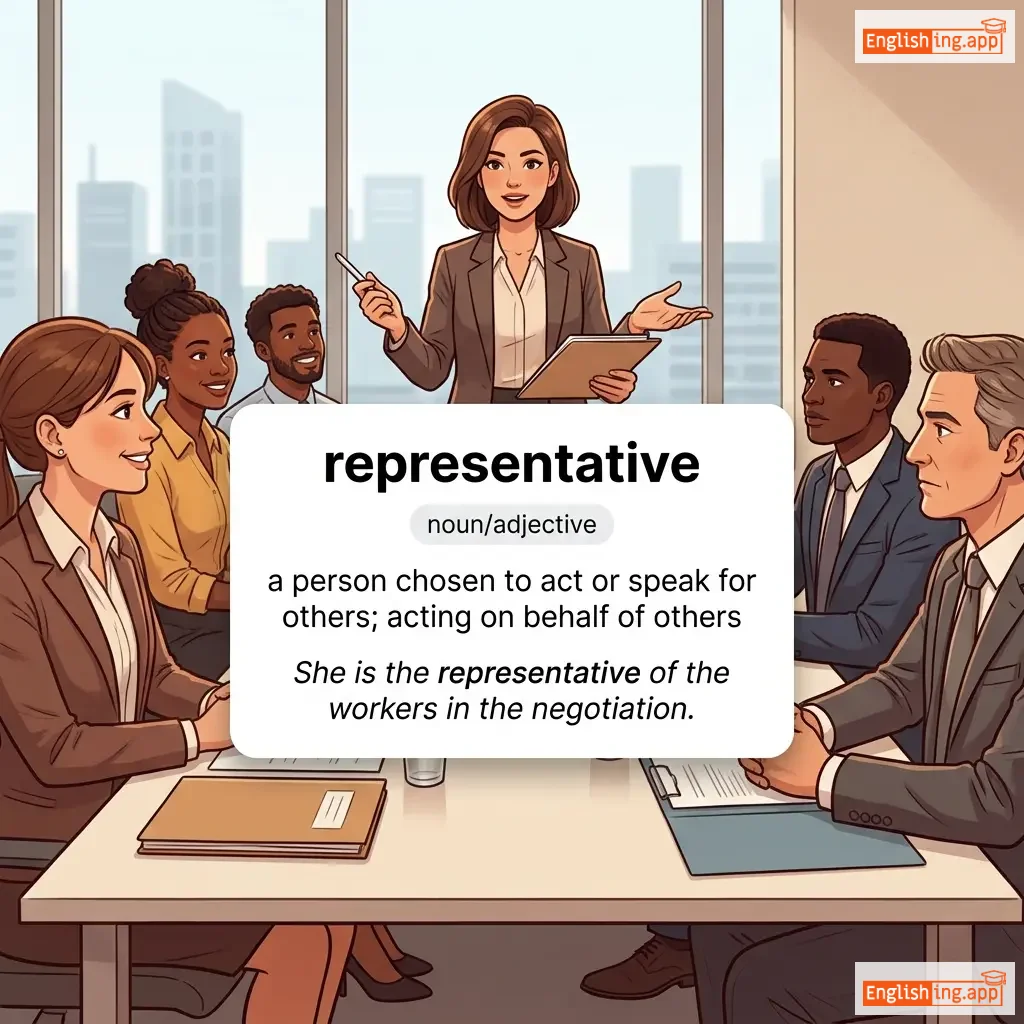
representative definition card — visual illustration of the meaning
noun/adjective
/ˌrɛprɪˈzɛntətɪv/
представитель (predstavitel)

a person chosen to act or speak for others; acting on behalf of others

"She is the representative of the workers in the negotiation."

"Она представитель работников на переговорах." (Ona predstavitel rabotnikov na peregovorakh.)
adjective
/ˌrɛprɪzɛnˈteɪʃənl̩/
представительный (predstavitel'nyy)

Relating to or depicting something in a realistic or symbolic way.

"The artist preferred a representational style of painting."

"Художник предпочитал репрезентативный стиль живописи." (Khudozhnik predpochital reprezentativnyy stil' zhivopisi.)
noun
/ˌrɛprɪzɛnˈteɪʃən/
представительство (predstavitel'stvo)

the action of speaking or acting on behalf of someone or something

"Her representation of the team was impeccable."

"Ее представительство команды было безупречным." (Eyo predstavitel'stvo komandy bylo bezuprechnoe.)
verb
/ˌrɛprɪˈzɛnt/
представлять (predstavlyat)

to act or speak on behalf of someone or something

"He will represent our company at the conference."

"Он будет представлять нашу компанию на конференции." (On budet predstavlyat' nashu kompaniyu na konferentsii.)
noun
/ˌrɛprɪˈhɛnʃən/
упрек (uprek)

The act of rebuking or criticizing severely.

"The teacher’s reprehension of the student’s behavior was justified."

"Упрек учителя в поведении студента был оправдан." (Uprek uchitelya v povedenii studenta byl opravdan.)
adjective
/ˌrɛprɪˈhɛnsəbl̩/
позорный (pozornyy)

Deserving strong criticism or blame.

"His dishonest actions were truly reprehensible."

"Его нечестные поступки были по-настоящему позорными." (Ego nechesnye postupki byli po-nastoyashchemu pozornymi.)
verb
/ˌrɛprɪˈhɛnd/
осуждать (osuzhdat)

to express disapproval or criticism of someone or something

"The teacher reprehended the student for being dishonest."

"Учитель осудил ученика за нечестность." (Uchitel' osudil uchenika za nechesnost'.)
noun
/rɪˈpɑːzɪtɔːri/
хранилище (khranyilishche)

a place where things are stored or kept for safekeeping

"The library serves as a repository of knowledge."

"Библиотека служит хранилищем знаний." (Biblioteka sluzhit khranyilishchem znanij.)
noun/verb
/rɪˈpoʊz/
покой (pokoy)

a state of rest, sleep, or tranquility; to rest or lie in a peaceful position

"After the long journey, she sought repose in the quiet garden."

"После долгого путешествия она искала покой в тихом саду." (Posle dolgogo puteshestviya ona iskala pokoy v tikhom sadu.)
noun
/rɪˈpɔːtɪŋ/
репортаж (reportazh)

the act of giving news or information about something

"Good reporting is essential for public awareness."

"Хороший репортаж важен для общественного сознания." (Khoroshiy reportazh vazhen dlya obshchestvennogo soznaniya.)
noun
/rɪˈpɔːrtər/
журналист (zhurnalist)

a person who reports news or information

"The reporter interviewed several people at the scene."
"Журналист взял интервью у нескольких людей на месте происшествия." (Zhurnalist vzyal interv'yu u neskol'kikh lyudey na meste proisshestviya.)
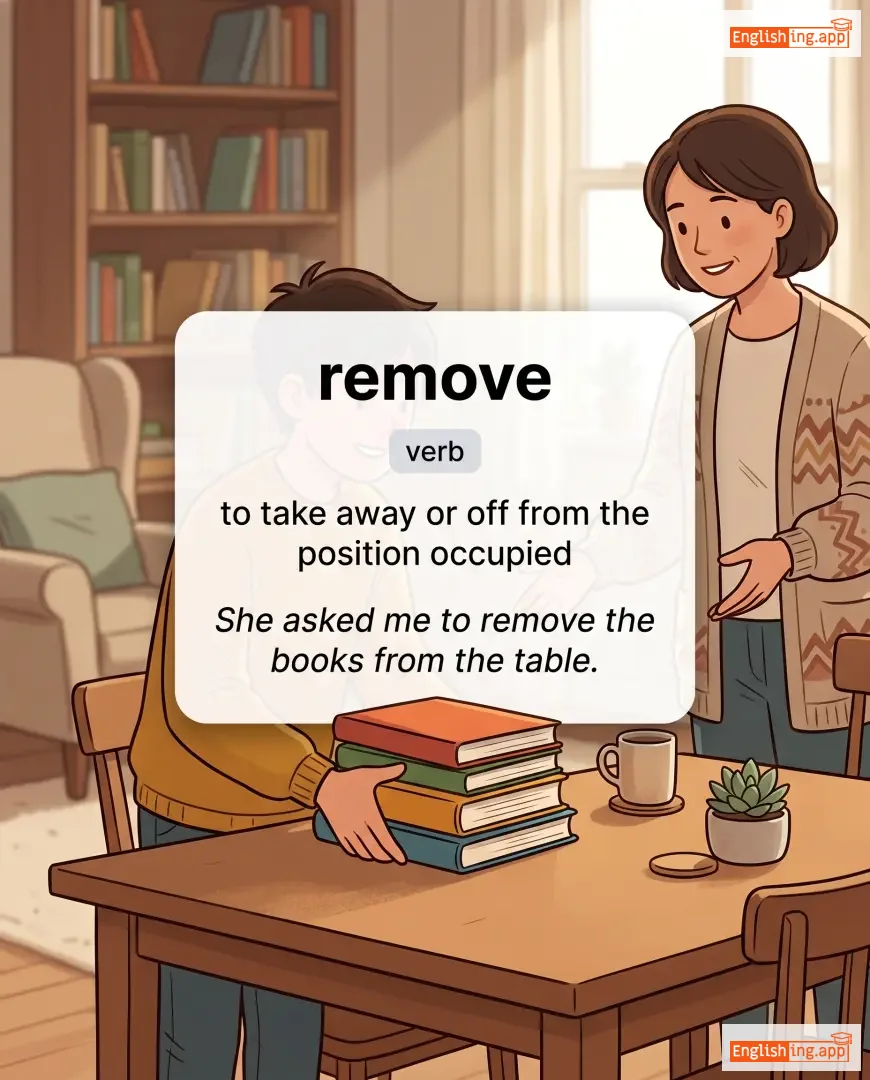
remove definition card — visual illustration of the meaning
verb
/rɪˈmuːv/
убирать (ubirat)

to take away or off from the position occupied

"She asked me to remove the books from the table."

"Она попросила меня убрать книги с стола." (Ona poprosila menya ubrat' knigi s stola.)
adjective
/rɪˈmuːvəbəl/
съемный (syemny)

able to be removed or taken away

"This phone has a removable battery."

"У этого телефона съемная батарея." (U etogo telefona syomnaya batareya.)
noun
/rɪˈmuːvəl/
удаление (udaleniye)

the act of taking something or someone away or out of a place

"The removal of old furniture made the room look spacious."

"Удаление старой мебели сделало комнату более просторной." (Udalenie staroy mebeli sdelalo komnatu boleye prostornoy.)
adjective
/rɪˈmoʊtɪd/
удаленный (udalennyy)

placed at a distance; made remote

"The system was remoted to a secure location."

"Система была удалена в безопасное место." (Sistema byla udalena v bezopasnoe mesto.)