वोकैबुलरीज

इंग्लिश वोकैबुलरी डिस्कवर, लर्न और मास्टर करें

adjective
/ˌrɛpərˈtɔːriəl/
रिपोर्ट संबंधी (report sambandhi)

Relating to or characteristic of a repertoire, especially in journalism or performance contexts.

"The journalist's repertorial style captured every detail of the unfolding story."

"पत्रकार की रिपोर्ट संबंधी शैली ने घटनाक्रम के हर विवरण को कैद कर लिया।" (Patrakar ki report sambandhi shaili ne ghatnakram ke har vivaran ko kaid kar liya.)
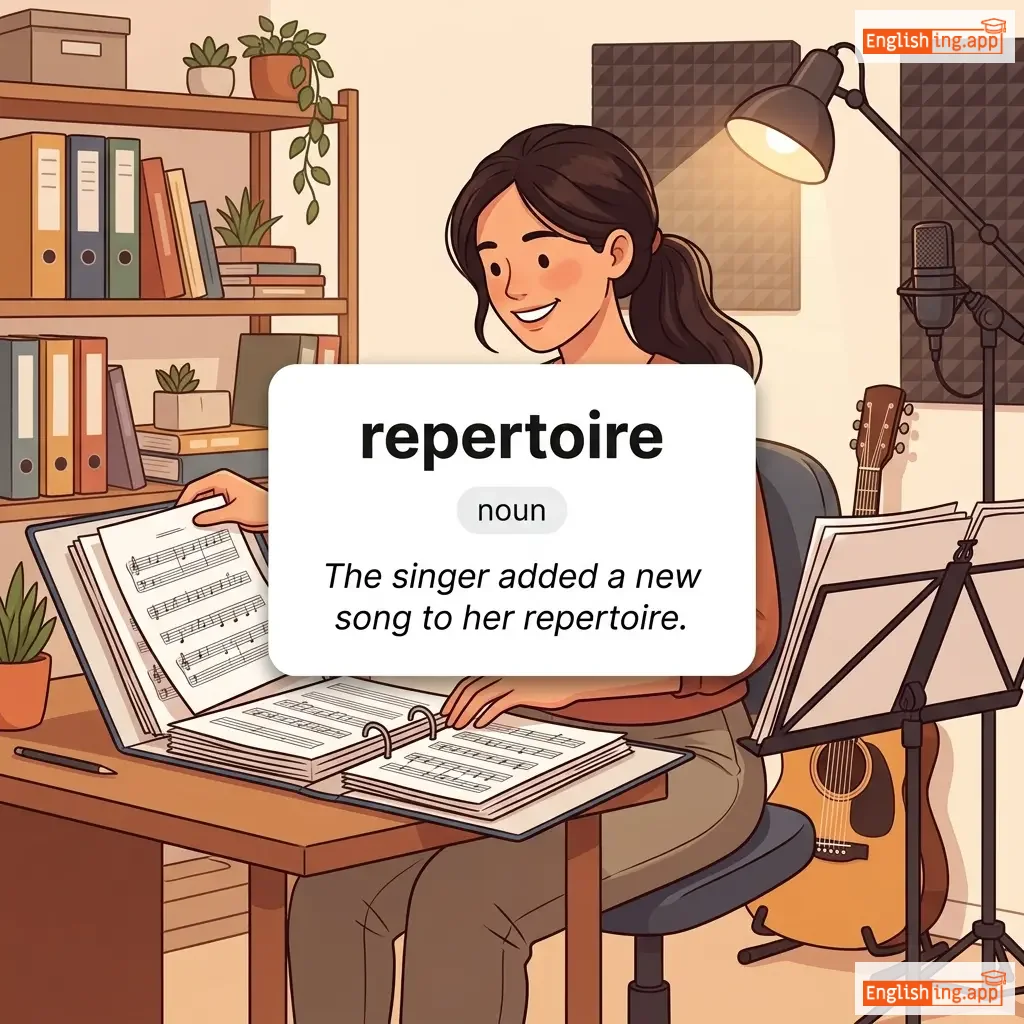
repertoire definition card — visual illustration of the meaning
noun
/ˈrɛpərˌtwɑːr/
संग्रह (sangrah)

The entire range of skills, works, or pieces that a person or group is prepared to perform or use.

"The singer added a new song to her repertoire."

"गायक ने अपने संग्रह में एक नया गीत जोड़ा।" (Gaayak ne apne sangrah mein ek naya geet joda.)
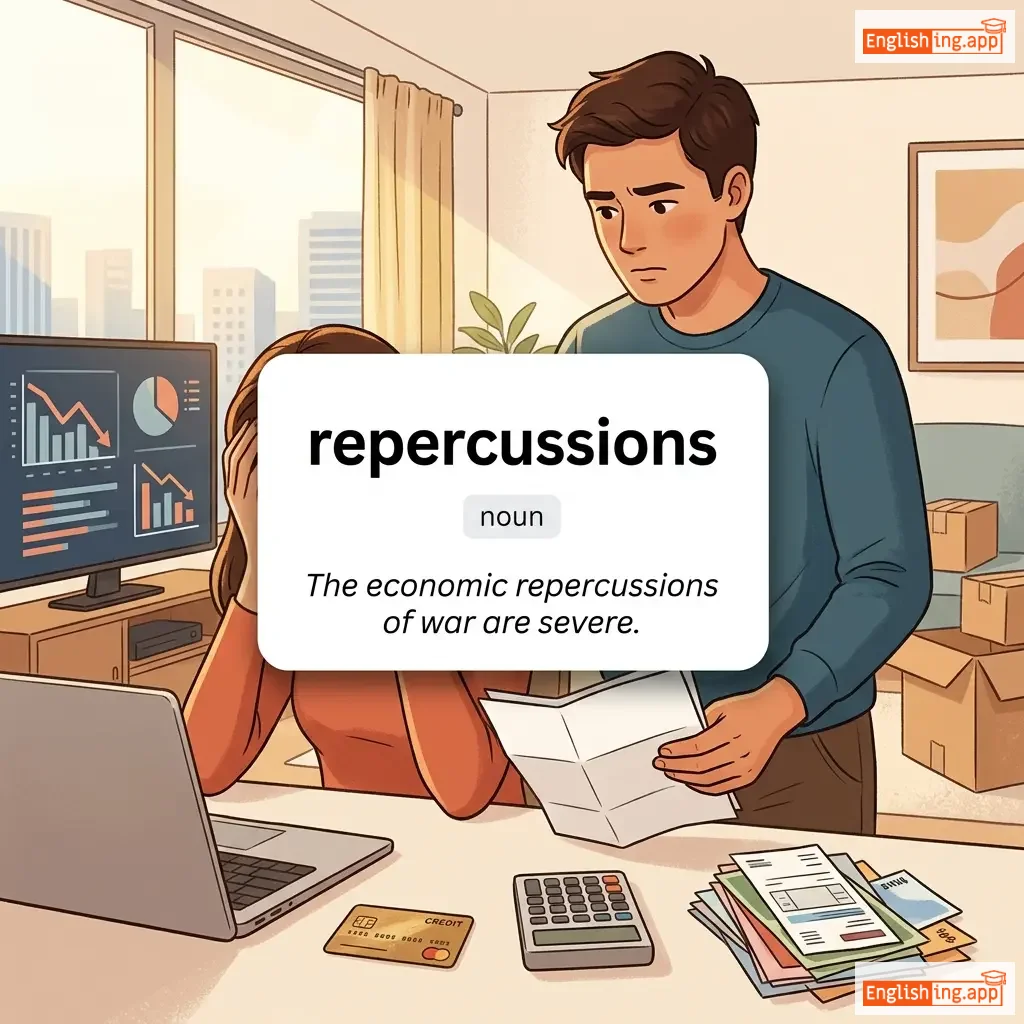
repercussions definition card — visual illustration of the meaning
noun
/ˌriː.pəˈkʌʃ.ənz/
प्रतिक्रिया (pratikriya)

An unintended consequence occurring some time after an event or action; the effects or results of something.

"The economic repercussions of war are severe."

"युद्ध के आर्थिक परिणाम गंभीर हैं।" (Yudh ke aarthik parinaam gambhir hain.)
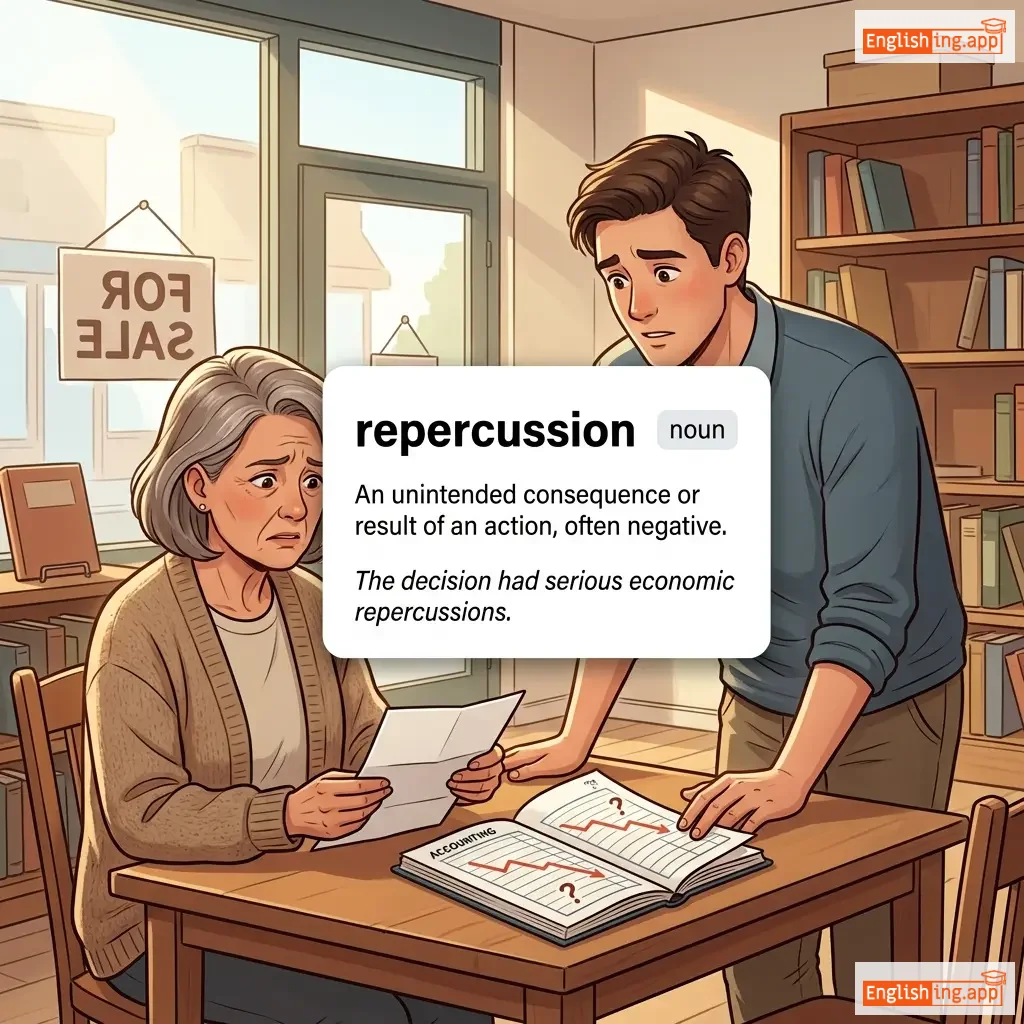
repercussion definition card — visual illustration of the meaning
noun
/ˌriːpərˈkʌʃən/
पश्चात प्रभाव (pashchaat prabhaav)

An unintended consequence or result of an action, often negative.

"The decision had serious economic repercussions."

"निर्णय के गंभीर आर्थिक परिणाम हुए" (nirnaya ke gambhir arthik parinaam hue)
adjective
/rɪˈpen.tənt/
पछताया हुआ; क्षमाप्रार्थी; खेदित (pachtaya hua; kshamaprathee; khedit)

feeling or expressing sincere regret and remorse; sorry for one's actions

"The repentant thief returned the stolen money."

"पछताया हुआ चोर चुराए गए पैसे वापस कर दिया" (pachtaya hua chor churaaye gaye paise wapas kar diya)
noun
/rɪˈpɛntəns/
पश्चाताप (pashchatap)

Deep regret or remorse for wrongdoing; sincere sorrow for one's sins or mistakes.

"He showed true repentance after apologizing for his mistakes."

"उसने अपनी गलतियों के लिए माफी मांगने के बाद सच्चा पछतावा दिखाया।" (Usne apni galtiyon ke liye maafi maangne ke baad sachcha pachhtawa dikhaya.)
adjective
/rɪˈpɛlənt/
रोकनेवाला (roknewala)

Able to drive away something, especially insects or unpleasant things; causing disgust or distaste.

"This cream is highly effective as a mosquito repellent."

"यह क्रीम मच्छर रोकनेवाले के रूप में बहुत प्रभावी है।" (Yeh cream machhar roknewale ke roop mein bahut prabhavi hai.)
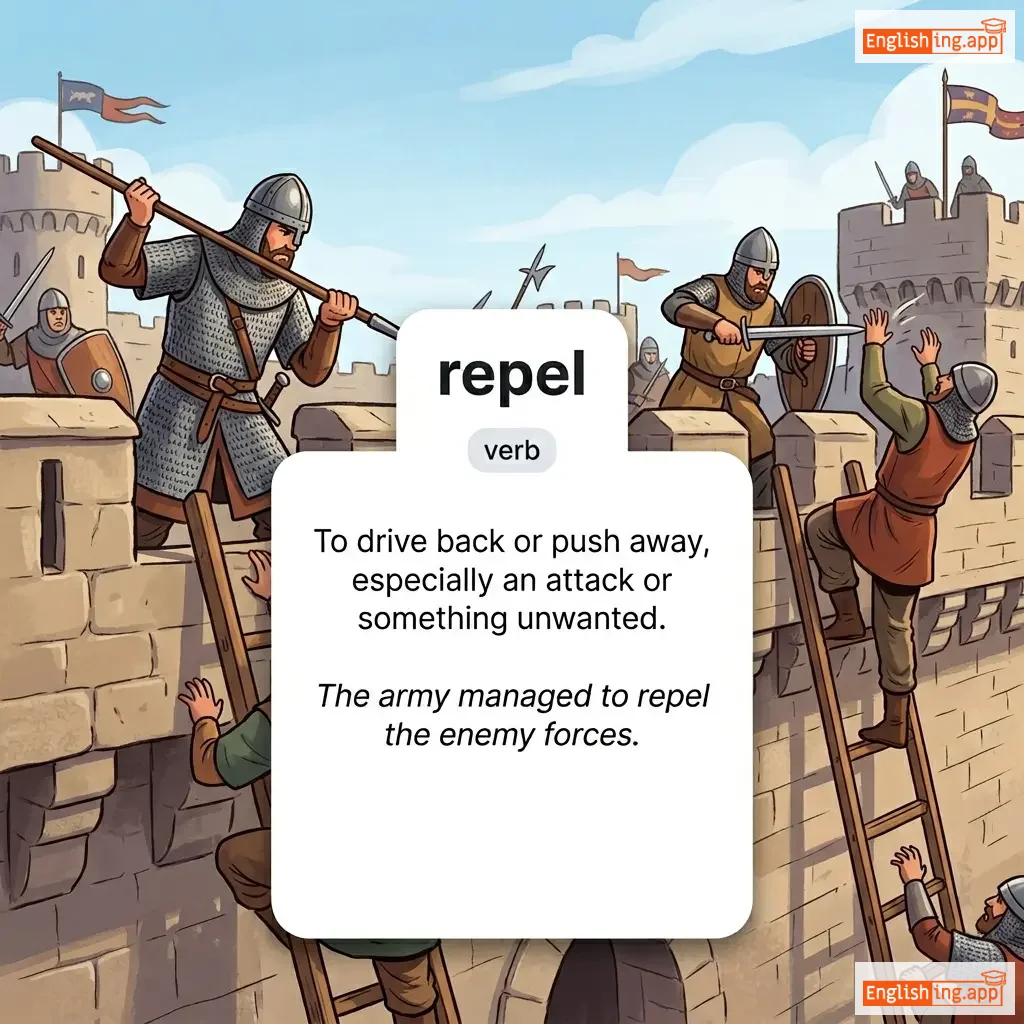
repel definition card — visual illustration of the meaning
verb
/rɪˈpɛl/
विपरीत करना (vipareet karna)

To drive back or push away, especially an attack or something unwanted.

"The army managed to repel the enemy forces."

"फौज ने दुश्मन की सेना को पराजित किया।" (Fauj ne dushman ki sena ko parajit kiya.)
adjective
/rɪˈpiː.tɪd/
दोहराया गया; बार-बार होने वाला; कई बार होने वाला (dohraya gaya; baar-baar hone wala; kai baar hone wala)

done again; happening again; occurring multiple times

"He made repeated attempts to contact her."

"उसने उसे संपर्क करने के लिए बार-बार प्रयास किए।" (usne use sampark karne ke liye baar-baar prayaas kiye)
verb
/rɪˈpiːt/
फिर से कहना (phir se kehna)

to say again or do again

"Could you please repeat that sentence?"

"क्या आप कृपया उस वाक्य को फिर से कह सकते हैं?" (kya aap kripya us vaakya ko phir se keh sakte hain?)
verb
/rɪˈpiːl/
रद्द करना (radd karna)

To officially cancel or revoke a law or decision.

"The government decided to repeal the outdated law."

"सरकार ने पुराने कानून को रद्द करने का निर्णय लिया।" (Sarkar ne purane kanoon ko radd karne ka nirnay liya.)
verb
/riːˈpeɪ.tri.eɪt/
स्वदेश लौटाना (swadesh lautana)

To return someone to their own country, often after war or imprisonment.

"The government worked to repatriate the refugees safely."

"सरकार ने शरणार्थियों को सुरक्षित रूप से उनके देश लौटने में मदद की।" (Sarkar ne sharanarthiyon ko surakshit roop se unke desh lautne mein madad ki.)
noun
/rɪˈpæst/
भोजन (bhojan)

A meal or the food eaten during a meal.

"They enjoyed a delicious repast by the riverside."

"उन्होंने नदी किनारे स्वादिष्ट भोजन का आनंद लिया।" (Unhone nadi kinare swadisht bhojan ka anand liya.)
noun
/ˌrɛpɑːrˈtiː/
चतुर जवाब (chatur jawab)

A quick, witty, and clever reply in conversation.

"The debate was full of sharp repartee between the two speakers."

"बहस में दो वक्ताओं के बीच तीव्र चतुर जवाबों का आदान-प्रदान हो रहा था।" (Bahas mein do vaktaon ke beech teevr chatur jawabon ka aadan-pradan ho raha tha.)
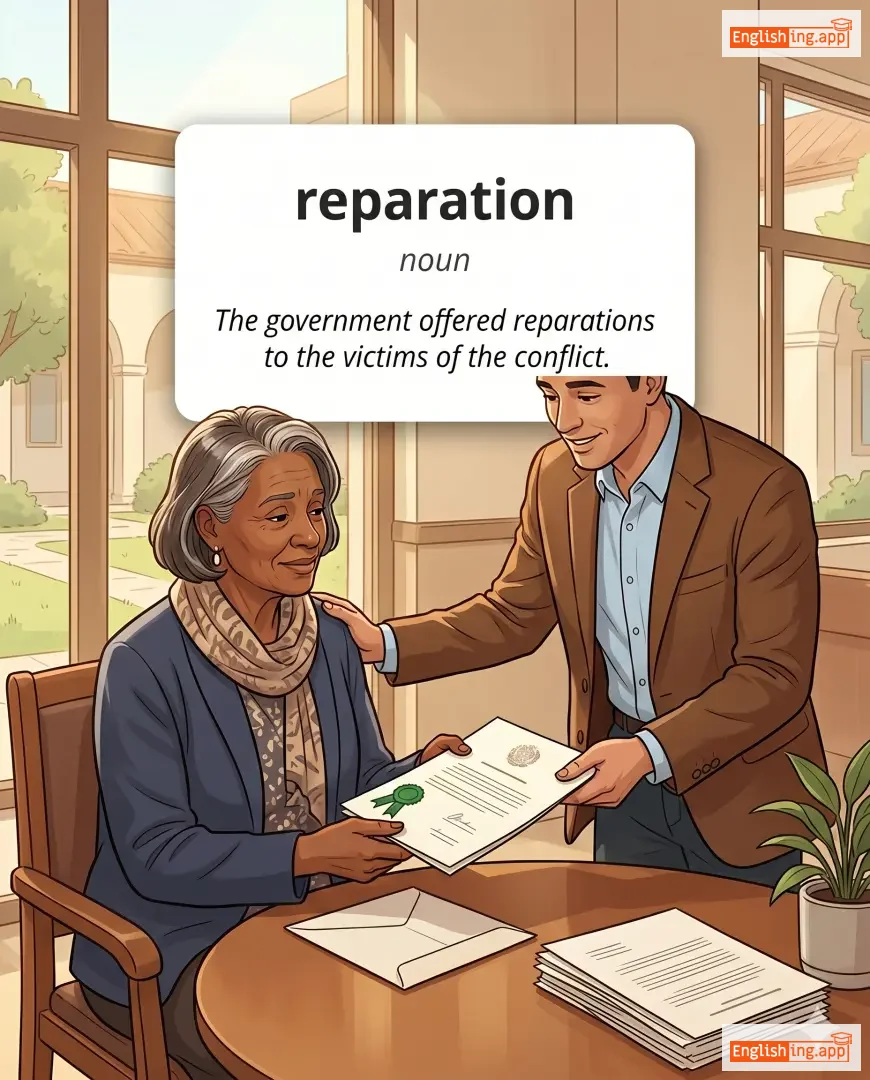
reparation definition card — visual illustration of the meaning
noun
/ˌrɛpəˈreɪʃən/
प्रत्यावृत्ति (pratyavritti)

the making of amends for a wrong done by paying money or helping those who were wronged

"The government offered reparations to the victims of the conflict."

"सरकार ने संघर्ष के शिकारों को पुनर्वास की पेशकश की।" (sarkar ne sangharsh ke shikar ko punarvas ki peshkash ki.)
adjective
/ˈrɛpərəbəl/
मरम्मत योग्य (marammat yogya)

able to be repaired or fixed

"The damage to the car was serious but still reparable."

"कार का नुकसान गंभीर था लेकिन फिर भी मरम्मत योग्य था।" (kaar ka nuksaan gambhir tha lekin phir bhi marammat yogya tha.)
noun
/rɪˈpɛərə/
मरम्मत करने वाला (marammat karne wala)

a person whose job is to fix damaged or broken things

"The repairer fixed the broken washing machine quickly."

"मरम्मत करने वाले ने टूटी वॉशिंग मशीन जल्दी ठीक कर दी।" (marammat karne wale ne tuti washing machine jaldi thik kar di)
adjective
/rɪˈper.ə.bəl/
मरम्मत योग्य (marammat yogya)

able to be fixed or mended; capable of being repaired

"The broken phone is repairable with the right parts."

"टूटे हुए फोन को सही हिस्सों के साथ मरम्मत किया जा सकता है।" (toote hue phone ko sahi hisso ke saath marammat kiya ja sakta hai)
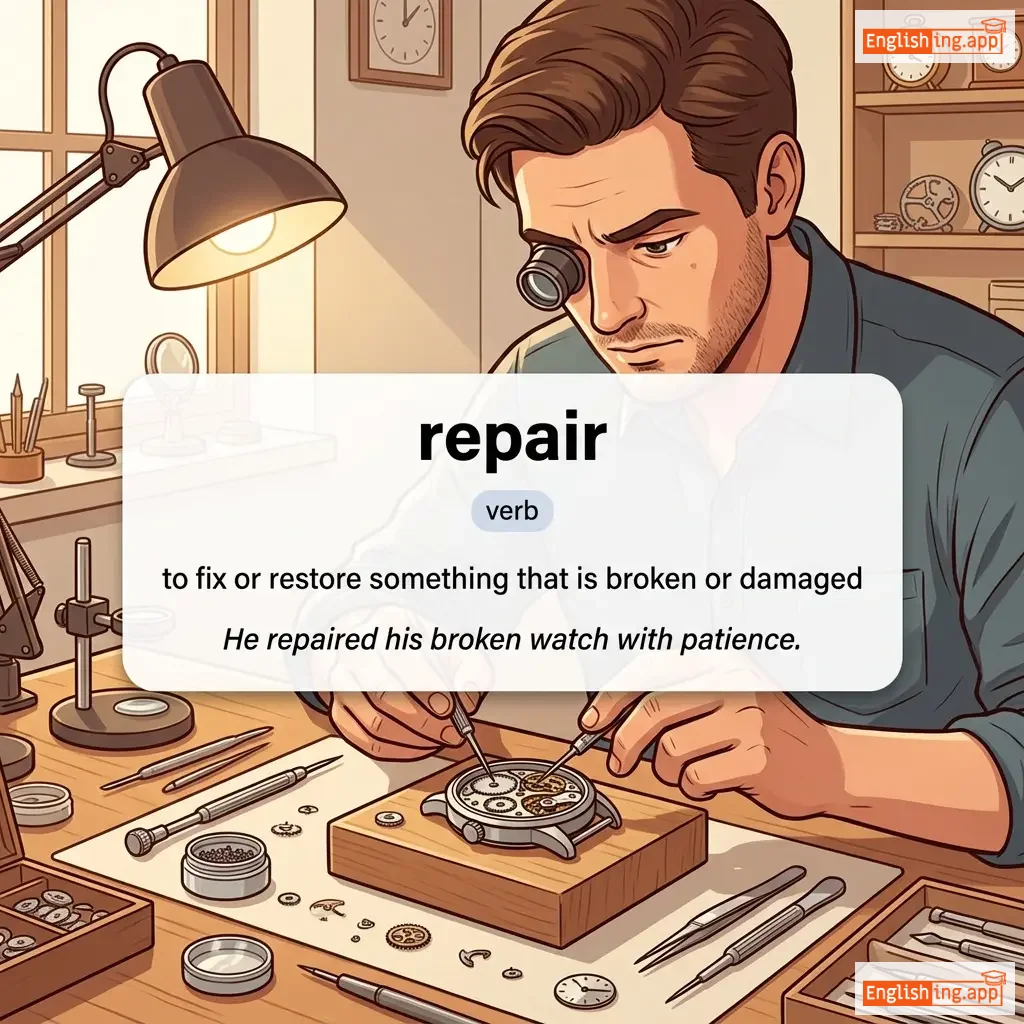
repair definition card — visual illustration of the meaning
verb
/rɪˈpɛər/
मरम्मत करना (marammat karna)

to fix or restore something that is broken or damaged

"He repaired his broken watch with patience."

"उसने धैर्यपूर्वक अपनी टूटी घड़ी मरम्मत की।" (Usne dhairypurvak apni tooti ghadi marammat ki.)
verb
/riːˈɔːrɡənaɪz/
पुनर्गठित करना (punargathit karna)

to arrange something again in a different way for greater efficiency or order

"The manager decided to reorganize the team structure."

"मैनेजर ने टीम संरचना को फिर से व्यवस्थित करने का निर्णय लिया।" (manager ne team sanrachna ko phir se vyavasthit karne ka nirnay liya.)
noun
/rɪˌnʌnsiˈeɪʃən/
परित्याग (parityag)

the formal rejection or giving up of something, usually a belief, claim, or way of life

"His renunciation of worldly pleasures impressed the monks."

"उसका सांसारिक सुखों से परित्याग भिक्षुओं को प्रभावित कर गया।" (uska sansarik sukhon se parityag bhikshuon ko prabhavit kar gaya.)
noun
/ˈrɛntəl/
किराया (kiraya)

an arrangement in which something is rented, or the amount paid for renting

"The car rental was more expensive than we expected."

"कार रेंटल हमारी उम्मीदों से महंगी थी।" (Car rental hamari ummeedon se mehngi thi.)
noun, verb
/rɛnt/
किराया (kiraya)

payment made regularly by a tenant to a landlord for the use of property or land; also to pay for the use of something

"They decided to rent an apartment in the city center."

"उन्होंने शहर के केंद्र में एक अपार्टमेंट किराए पर लेने का निर्णय लिया।" (unhone shahar ke kendre mein ek apartment kiraye par lene ka nirnay liya.)
renowned definition card — visual illustration of the meaning
adjective
/rɪˈnaʊnd/
प्रसिद्ध (prasiddh)

famous or well-known for a particular skill or achievement

"She is a renowned artist in the country."

"वह देश में एक प्रसिद्ध कलाकार हैं।" (Woh desh mein ek prasiddh kalakar hain.)
noun
/rɪˈnaʊn/
प्रतिष्ठा (pratishtha)

the condition of being widely known and highly respected

"The scientist gained international renown for his groundbreaking research."

"विज्ञानी ने अपनी क्रांतिकारी रिसर्च के लिए अंतर्राष्ट्रीय प्रतिष्ठा प्राप्त की।" (Vigyaani ne apni krantikaari research ke liye antarraashtreey pratishtha prapt ki.)
noun
/ˌren.əˈveɪ.ʃən/
नवीकरण; पुनर्निर्माण (navikaran; punarnirman)

the act of renovating; restoration to a former better state

"The old house underwent a complete renovation last year."

"पुराने घर में पिछले साल पूर्ण नवीकरण हुआ था।" (puraane ghar mein pichle saal poorn navikaran hua tha.)
adverb
/rɪˈpiːtɪdli/
बार-बार (bar-bar)

in a way that is repeated or done many times

"She apologized repeatedly for the mistake."

"उसने गलती के लिए बार-बार माफी मांगी।" (Usne galti ke liye bar-bar maafi maangi.)
adjective
/kwɪər/
अजीब (ajeeb)

Strange, odd, or unusual.

"He had a queer feeling that something was wrong."

"उसे यह अजीब सा महसूस हुआ कि कुछ गलत था।" (Use yeh ajeeb sa mehsoos hua ki kuch galat tha.)
verb
/kwɛl/
दबाना (dabaana)

To suppress or put an end to something, usually by force.

"The police were called to quell the violent protest."

"हिंसक विरोध को दबाने के लिए पुलिस को बुलाया गया था।" (Hinsak virodh ko dabaane ke liye police ko bulaaya gaya tha.)
quench definition card — visual illustration of the meaning
verb
/kwɛntʃ/
प्यास बुझाना (pyaas bujhaana)

To satisfy thirst or extinguish something like fire.

"He drank water to quench his thirst."

"उसने अपनी प्यास बुझाने के लिए पानी पिया।" (Usne apni pyaas bujhaane ke liye paani piya.)
verb
/ˈkwentʃɪŋ/
तृष्णा शान्त करना / आग बुझाना (trishna shant karna / aag bujhana)

The act of satisfying thirst or extinguishing something like fire.

"Drinking cold water was quenching her thirst."

"ठंडी पानी पीना उसकी तृष्णा शान्त कर रहा था।" (Thandi pani peena uski trishna shant kar raha tha.)
adjective
/ˈkwɛrʊləs/
शिकायती (shikayati)

Complaining in a whining or irritable manner.

"The querulous customer kept finding fault with every detail."

"शिकायती ग्राहक हर विवरण में दोष निकाल रहा था।" (Shikayati grahak har vivaran mein dosh nikaal raha tha.)
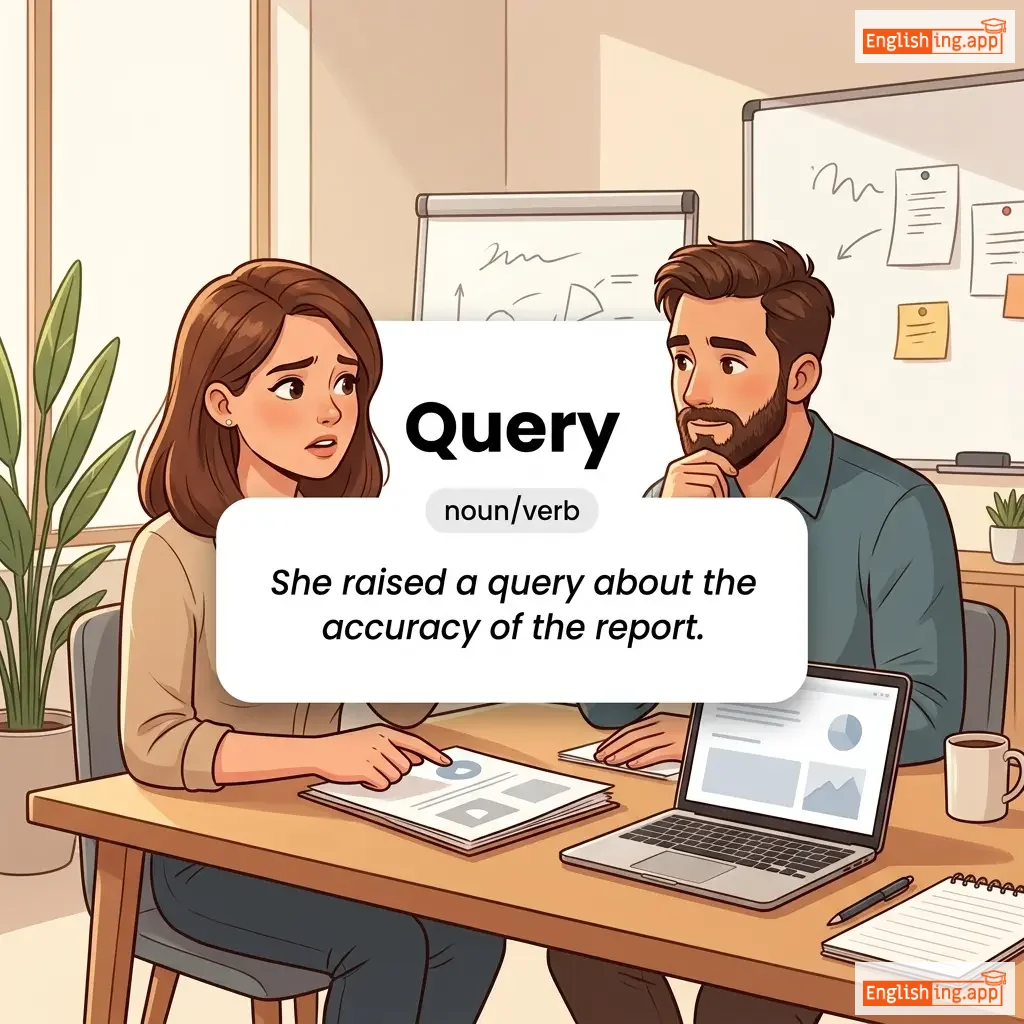
Query definition card — visual illustration of the meaning
noun/verb
/ˈkwɪəri/
प्रश्न (prashna)

A question, especially one addressed to an official or organization; to ask a question or express doubt.

"She raised a query about the accuracy of the report."

"उसने रिपोर्ट की सटीकता के बारे में एक प्रश्न उठाया।" (Usne report ki sathikta ke baare mein ek prashna uthaya.)
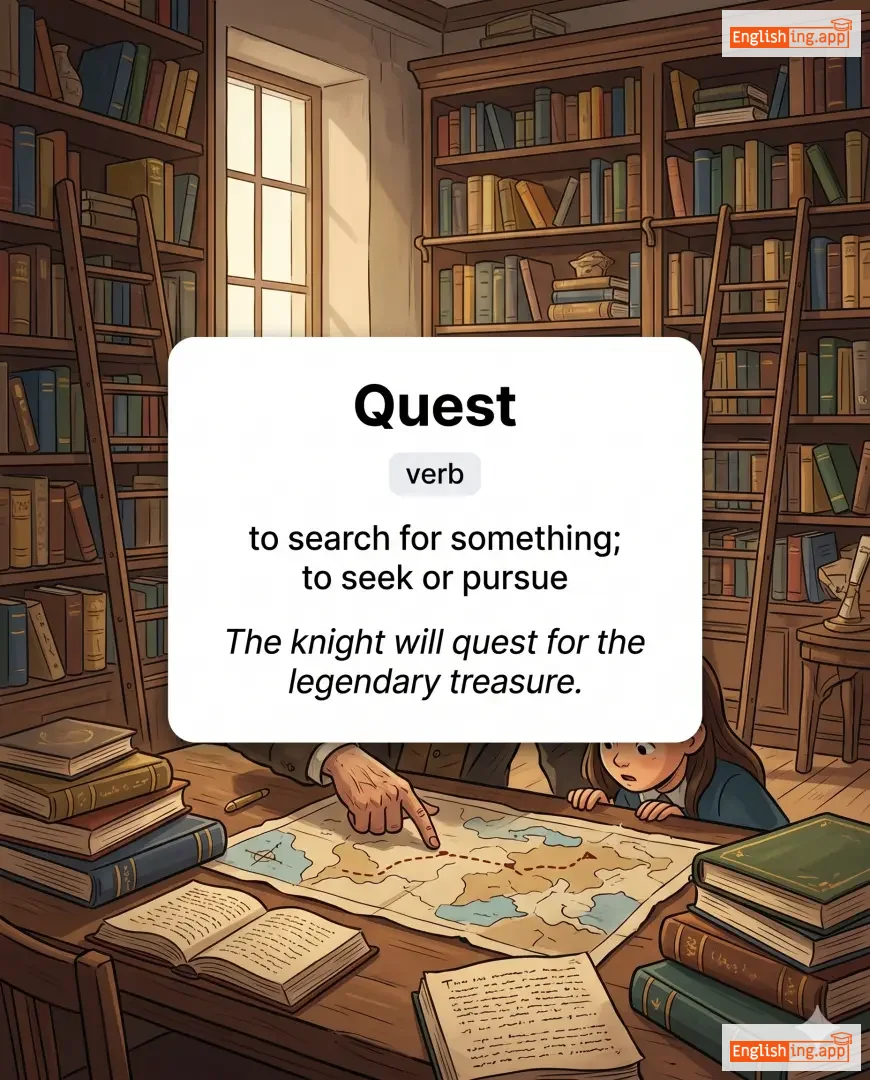
Quest definition card — visual illustration of the meaning
noun
/kwest/
खोज, अन्वेषण (khonj, anvashan)

a long search for something that is difficult to find

"They went on a quest to find the lost treasure."

"वे खोई हुई खजाने को खोजने के लिए एक यात्रा पर गए।" (ve khoi hui khazane ko khojne ke liye ek yatra par gaye.)
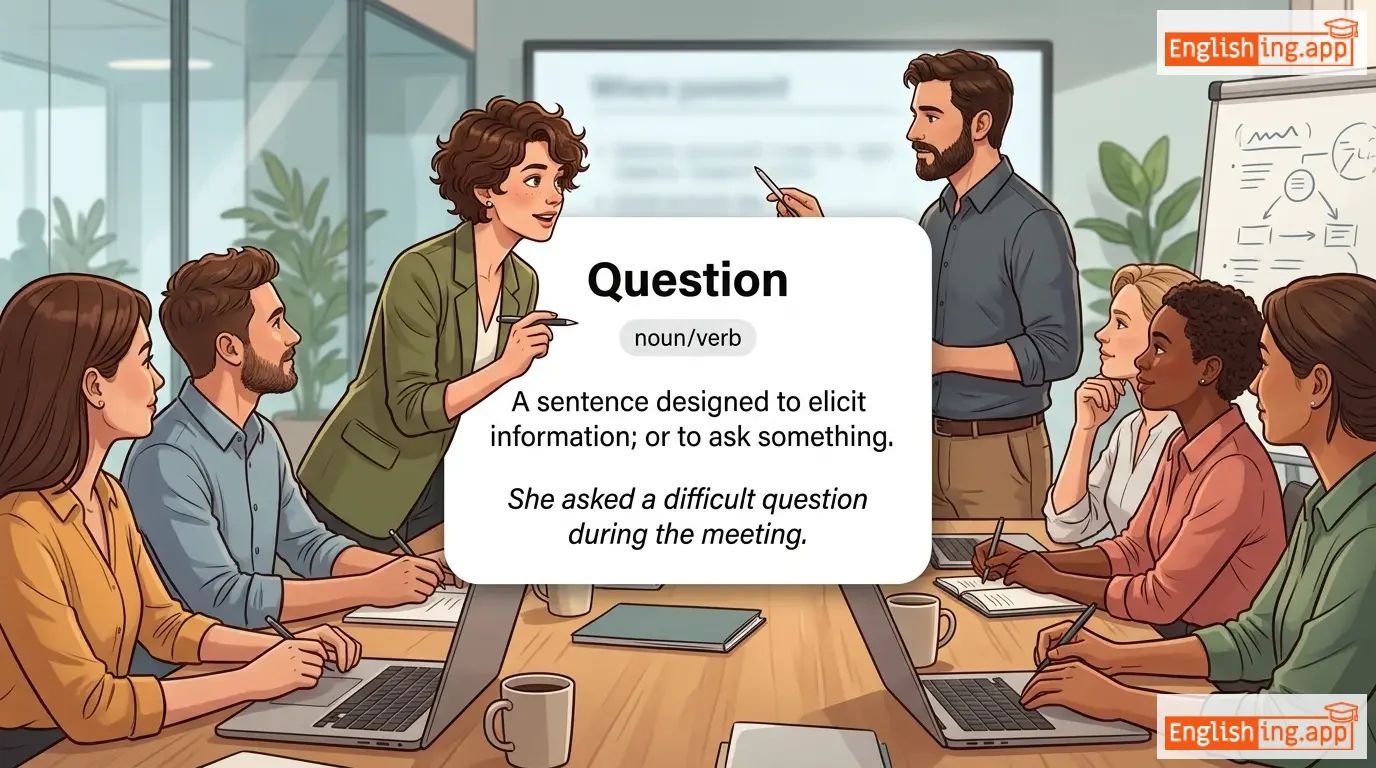
Question definition card — visual illustration of the meaning
noun/verb
/ˈkwes.tʃən/
प्रश्न (prashna)

A sentence designed to elicit information; or to ask something.

"She asked a difficult question during the meeting."

"उसने बैठक के दौरान एक कठिन प्रश्न पूछा।" (Usne baithak ke dauran ek kathin prashna poocha.)
adjective
/ˈkwestʃənəbl/
संदेहजनक (kveshchanel)

doubtful; dubious; suspicious; open to doubt or suspicion

"His questionable business practices led to an investigation."

"उनकी संदिग्ध व्यापारिक प्रथाओं के कारण एक जांच शुरू हुई।" (unki sandigdh vyaparik prathao ke karan ek jaanch shuru hui.)
noun
/ˌkwes.tʃəˈneər/
प्रश्नावली (prashnavali)

a set of written questions used to collect information or opinions

"Participants filled out a detailed questionnaire about their habits."

"प्रतिभागियों ने अपनी आदतों के बारे में एक विस्तृत प्रश्नावली पूरी की।" (Pratibhagiyon ne apni aadaton ke baare mein ek vistaarit prashnavali poori ki.)
🧍‍♂️🧍‍♀️

Queue (क्यू)

noun/verb
/kjuː/
लाइन (line)

A line or sequence of people or vehicles awaiting their turn; to wait in line.

"People queued outside the theater for tickets."

"लोग थिएटर के बाहर टिकट के लिए क्यू में खड़े थे।" (Log theater ke baahar ticket ke liye queue mein khade the.)
noun
/ˌkiː ˈviːv/
चेतावनी (chetavani)

A state of alertness or vigilance.

"The guards were on the qui vive during the night."

"गार्ड्स रात के दौरान चेतावनी की स्थिति में थे।" (Guards raat ke dauran chetavani ki sthiti mein the.)
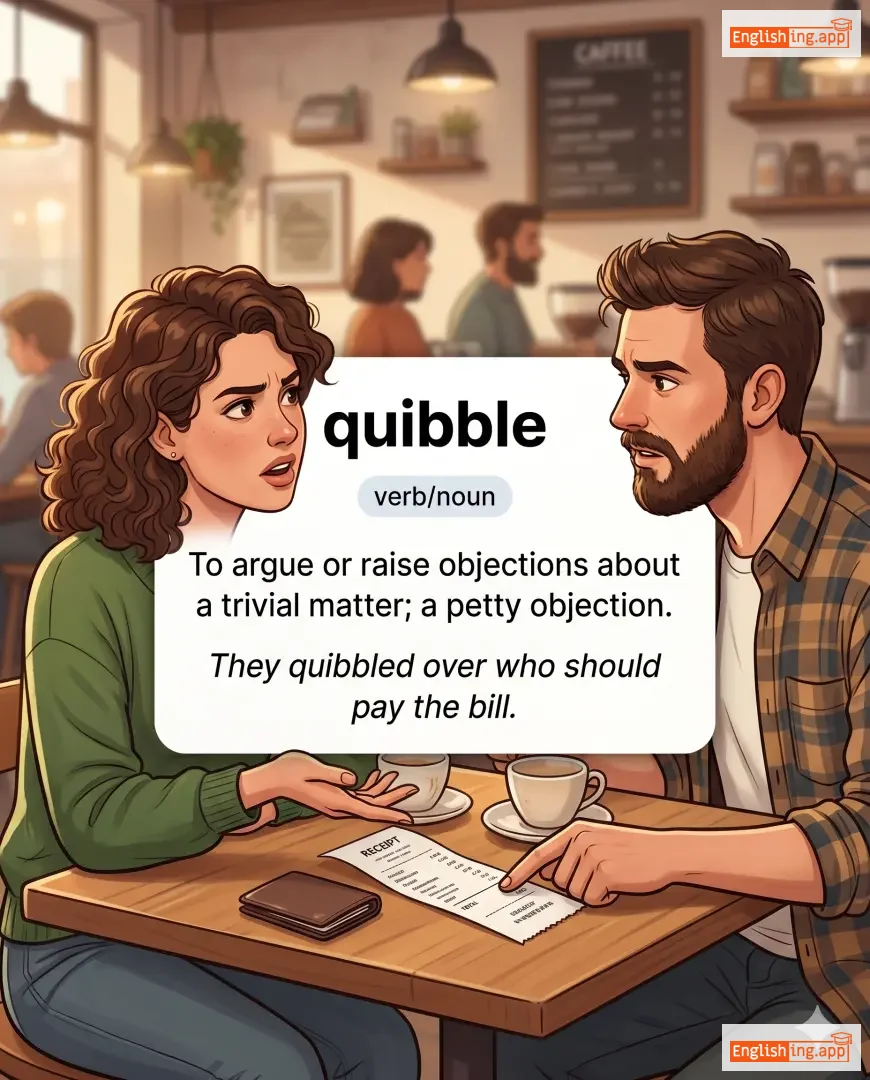
quibble definition card — visual illustration of the meaning
verb/noun
/ˈkwɪbəl/
नकली तर्क (nakli tark)

To argue or raise objections about a trivial matter; a petty objection.

"They quibbled over who should pay the bill."

"वे बिल का भुगतान कौन करेगा इस पर तर्क कर रहे थे।" (ve bil ka bhugtan kaun karega is par tark kar rahe the.)
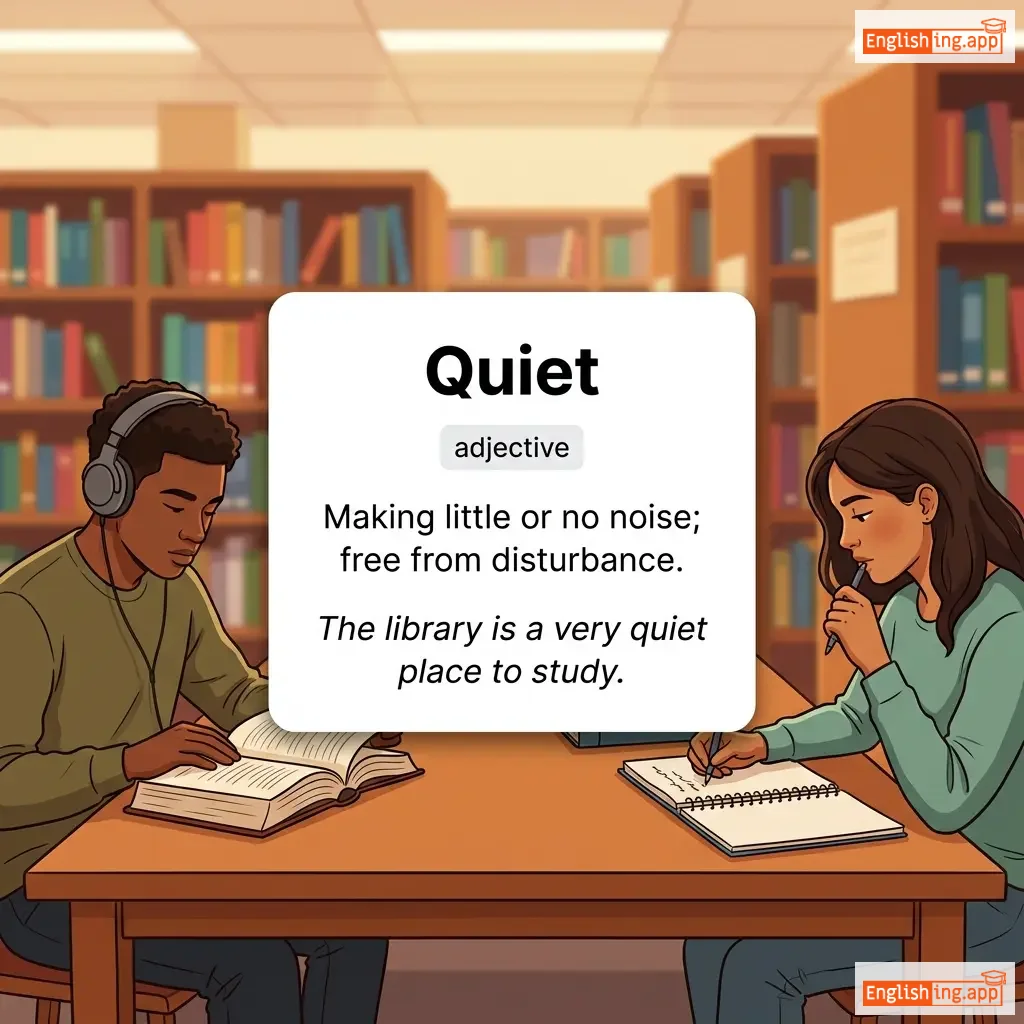
Quiet definition card — visual illustration of the meaning
adjective
/ˈkwaɪət/
शांत (shaant)

Making little or no noise; free from disturbance.

"The library is a very quiet place to study."

"पुस्तकालय अध्ययन करने के लिए एक बहुत शांत स्थान है।" (Pustakalay adhyayan karne ke liye ek bahut shaant sthan hai.)
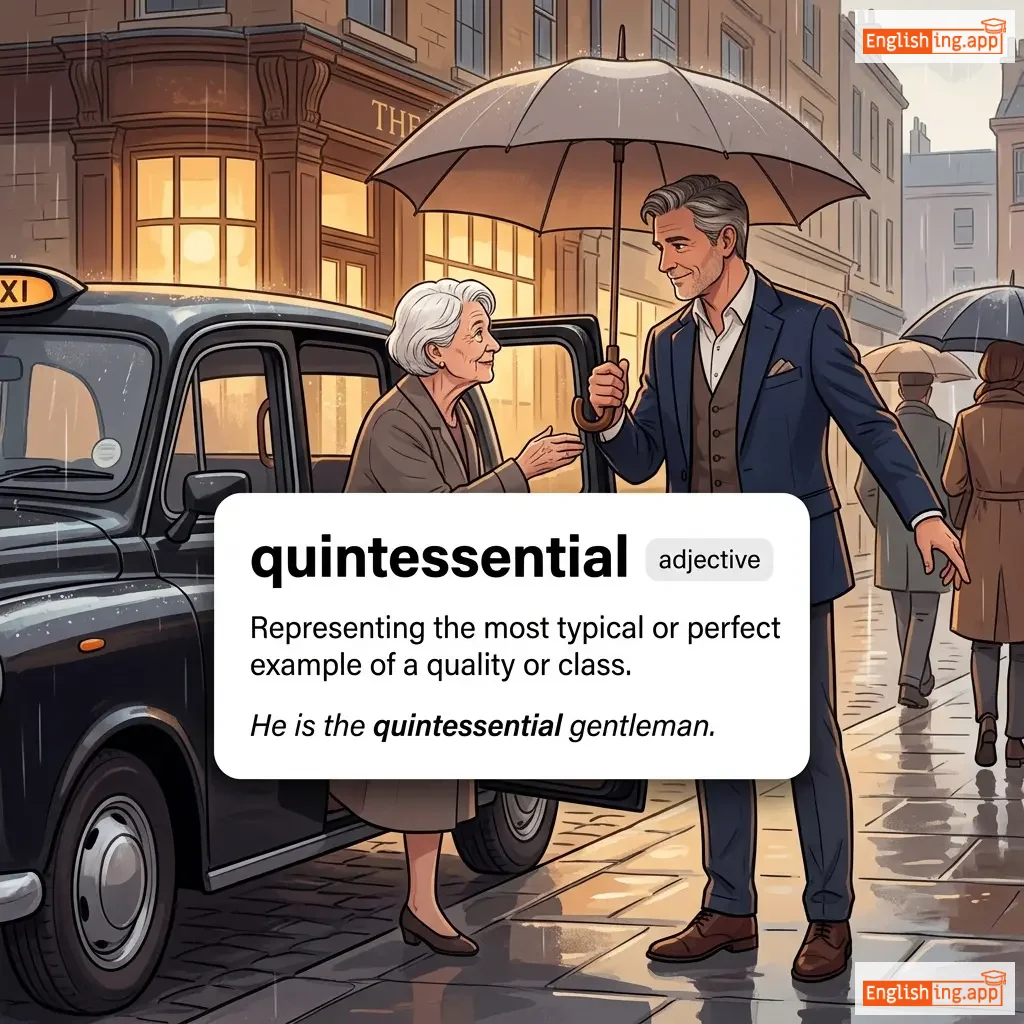
quintessential definition card — visual illustration of the meaning
adjective
/ˌkwɪntɪˈsɛnʃəl/
पूर्णत: आदर्श (poornat: aadarsh)

Representing the most typical or perfect example of a quality or class.

"He is the quintessential gentleman."

"वह पूर्णत: आदर्श सज्जन है।" (Vah poornat: aadarsh sajjan hai.)
noun
/kwɪnˈtɛsəns/
सर्वोत्तम उदाहरण (sarvottam udaharan)

The purest or most perfect example of something.

"She is the quintessence of elegance."

"वह शास्त्रीय संगीत की सर्वोत्तम उदाहरण है।" (Vah shastriya sangeet ki sarvottam udaharan hai.)
noun
/kwɪlt/
कंबल (kambal)

a warm bed covering made of padding enclosed between layers of fabric

"Grandmother made a beautiful quilt for my bed."

"दादी ने मेरे बिस्तर के लिए एक सुंदर कंबल बनाया।" (dadi ne mere bistar ke liye ek sundar kambal banaya.)
noun
/kwaɪˈiːtəs/
समाप्ति, मृत्यु (samaapti, mrityu)

Something that ends or settles a situation; release from life, death.

"The scandal brought a quietus to his political career."

"उसके राजनीतिक करियर की समाप्ति में वह घोटाला एक शांतिपूर्वक निर्णय था।" (Uske rajnaitik career ki samaapti mein wah ghotala ek shaantipoorvak nirnay tha.)
noun
/ˈkwaɪəˌtuːd/
शांति (shanti)

A state of stillness and tranquility.

"She enjoys the quietude of the countryside."

"वह गांव की शांति का आनंद लेती है।" (Woh gaon ki shanti ka anand leti hai.)
adverb
/ˈkwaɪətli/
धीरे से (dheere se)

in a silent or calm manner

"He spoke quietly so no one would hear."

"वह धीरे से बोला ताकि कोई न सुने।" (Wah dheere se bola taki koi na sune.)
verb
/ˈkwɪkən/
तेज करना (tej karna)

to make or become faster; to accelerate

"His pulse began to quicken as he approached the finish line."

"उसकी नाड़ी फिनिश लाइन के पास पहुंचते ही तेज़ होने लगी।" (Uski naadi finish line ke paas pahuchte hi tez hone lagi.)
adverb
/ˈkwɪkli/
तेज़ (tez)

at a fast speed

"She finished the test quickly."

"उसने परीक्षा को जल्दी पूरा किया।" (Usne pariksha ko jaldi poora kiya.)
noun
/ˈkwɪkˌsɪlvər/
पारा (para)

Mercury; a liquid metal, or something that is quick and unpredictable.

"His mood was as changeable as quicksilver."

"उसका मूड क्विकसिल्वर की तरह परिवर्तनशील था।" (Uska mood quicksilver ki tarah parivartansheel tha.)