वोकैबुलरीज

इंग्लिश वोकैबुलरी डिस्कवर, लर्न और मास्टर करें

adjective
/rɪˈliːvd/
मुक्त (mukta)

feeling happy and less worried after something stressful has been removed or resolved

"She felt relieved after hearing the good news."

"अच्छी खबर सुनने के बाद वह राहत महसूस कर रही थी।" (Acchi khabar sunne ke baad vah raahat mahsus kar rahi thi.)
noun
/rɪˈlɪdʒ.ən/
धर्म (dharm)

a system of faith and worship involving belief in a higher power

"Freedom of religion is a fundamental human right."

"धर्म की स्वतंत्रता एक मौलिक मानव अधिकार है।" (Dharm ki svatantrata ek maulik manav adhikar hai.)
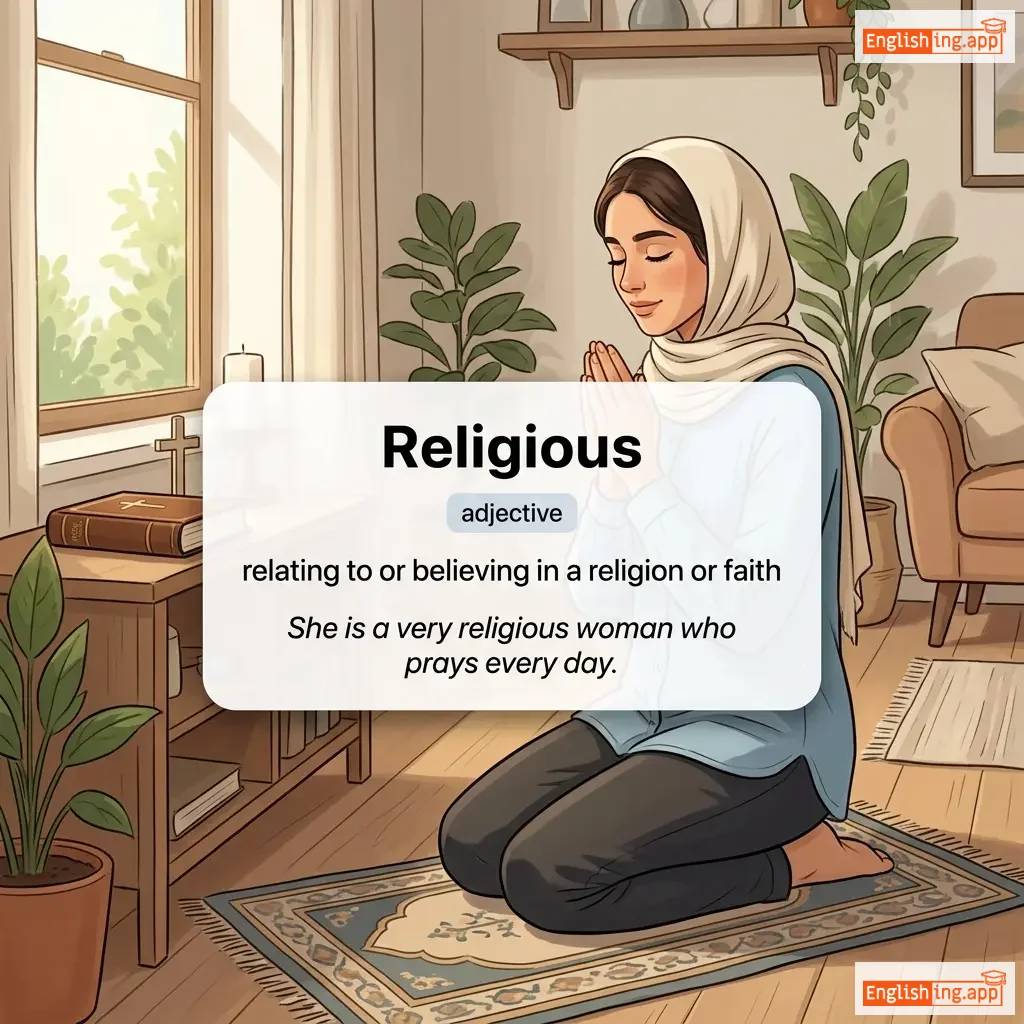
Religious definition card — visual illustration of the meaning
adjective
/rɪˈlɪdʒəs/
धार्मिक (dharmik)

relating to or believing in a religion or faith

"She is a very religious woman who prays every day."

"वह एक बहुत धार्मिक महिला है जो हर दिन प्रार्थना करती है।" (Vah ek bahut dharmik mahila hai jo har din prarthna karti hai.)
relinquish definition card — visual illustration of the meaning
verb
/rɪˈlɪŋkwɪʃ/
त्याग करना (tyag karna)

to give up or let go of something voluntarily

"He had to relinquish control of the company after the merger."

"विलय के बाद उसे कंपनी का नियंत्रण त्याग करना पड़ा।" (Vilyay ke baad use company ka niyantran tyag karna pada.)
noun
/ˈrɛlɪkwɛri/
पवित्र अवशेषों का पात्र (pavitra avasheshon ka patra)

a container for holy relics

"The ancient reliquary was decorated with gold and precious stones."

"प्राचीन रेलिक्वेरी को सोने और कीमती पत्थरों से सजाया गया था।" (Prachin reliquery ko sone aur keemti patharon se sajaya gaya tha.)
verb/noun
/ˈrɛlɪʃ/
आनंद लेना / चटनी (anand lena / chatni)

to greatly enjoy; also a condiment or sauce

"She relished the opportunity to travel abroad."

"वह विदेश यात्रा का अवसर बहुत आनंद से ले रही थी।" (Vah videsh yatra ka avsar bahut anand se le rahi thi.)
noun
/rɪˈlʌktəns/
अलमनीयता (almaniyata)

unwillingness or hesitation to do something

"His reluctance to speak made the meeting awkward."

"उसकी बोलने की अनिच्छा ने मीटिंग को अजीब बना दिया।" (Uski bolne ki anichchha ne meeting ko ajeeb bana diya.)
adjective
/rɪˈlʌktənt/
अनिच्छुक (anichchhuk)

unwilling or hesitant to do something

"She was reluctant to speak in front of the large audience."

"वह बड़े दर्शकों के सामने बोलने में अनिच्छुक थी।" (Vah bade darshako ke samne bolne mein anichchhuk thi.)
adverb
/rɪˈlʌk.tənt.li/
अनिच्छापूर्वक (anichchhapurvak)

in an unwilling manner; with hesitation or resistance

"She reluctantly agreed to help with the project."

"वह परियोजना में मदद करने के लिए अनिच्छा से सहमत हो गई।" (vah pariyojna mein madad karne ke liye anichchha se sahmat ho gayi.)
verb
/rɪˈlaɪ/
भरोसा करना (bharosa karna)

to depend on with confidence

"You can always rely on her to help you out."

"तुम हमेशा उस पर भरोसा कर सकते हो कि वह तुम्हारी मदद करेगी।" (Tum hamesha us par bharosa kar sakte ho ki wah tumhari madad karegi.)
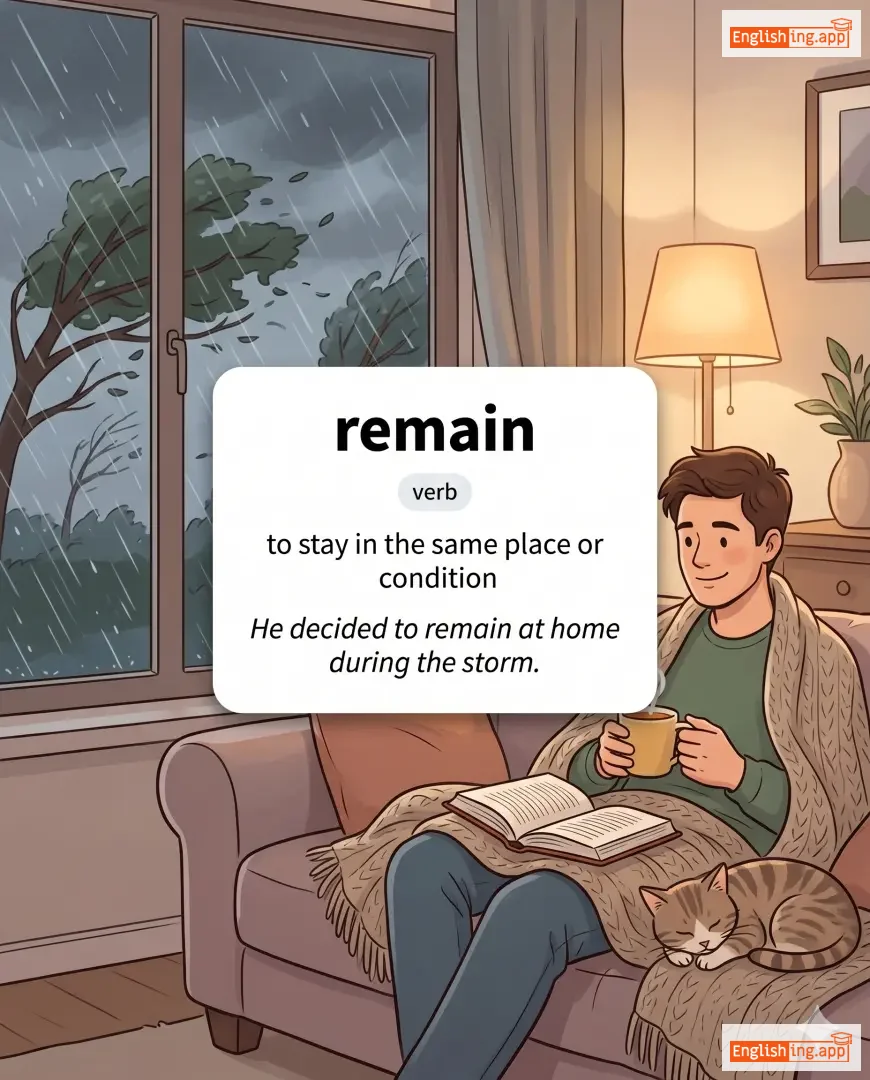
remain definition card — visual illustration of the meaning
verb
/rɪˈmeɪn/
रहना (rahna)

to stay in the same place or condition

"He decided to remain at home during the storm."

"उसने तूफान के दौरान घर पर रहने का निर्णय लिया।" (Usne toofan ke dauran ghar par rehne ka nirnay liya.)
noun
/rɪˈmeɪndər/
अवशिष्ट (avashisht)

the part that is left after the main part is gone or used

"He ate most of the cake and left the remainder on the plate."

"वह केक का अधिकांश हिस्सा खा चुका था और प्लेट पर अवशिष्ट छोड़ दिया था।" (Vah kek ka aksar hissa kha chuka tha aur plete par avashisht chhod diya tha.)
adjective
/rɪˈmeɪnɪŋ/
बाकी (baaki)

still existing or left after others are gone or dealt with

"There were only a few remaining tickets for the concert."

"संगीत कार्यक्रम के लिए केवल कुछ ही टिकट बाकी थे।" (Sangeet karyakram ke liye keval kuch hi tiket baaki the.)
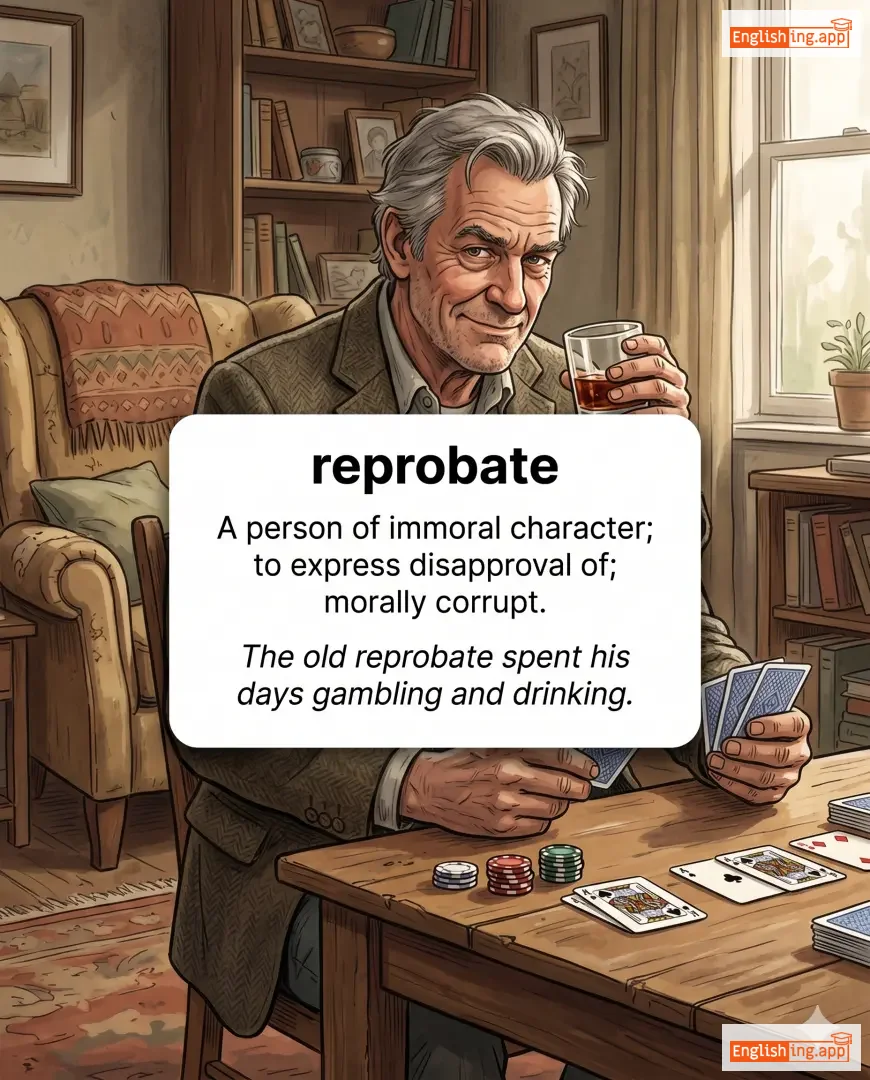
reprobate definition card — visual illustration of the meaning
noun, adjective, verb
/ˈrɛprəˌbeɪt/
बदचलन व्यक्ति (badchalan vyakti)

A person of immoral character; to express disapproval of; morally corrupt.

"The old reprobate spent his days gambling and drinking."

"वृद्ध बदचलन व्यक्ति अपने दिन जुआ खेलने और शराब पीने में बिताता था।" (Vruddh badchalan vyakti apne din jua khelne aur sharab pine mein bitaata tha.)
noun
/rɪˈkwɛst/
अनुरोध (anurodh)

a formal or polite demand for something

"She made a request for additional time to complete the project."

"उसने परियोजना को पूरा करने के लिए अतिरिक्त समय का अनुरोध किया।" (Usne pariyojana ko poora karne ke liye atirikta samay ka anurodh kiya.)
adjective
/rɪˈpjuːtɪd/
प्रसिद्ध (prasiddh)

Generally considered or believed to be something, often based on reputation rather than certainty.

"He is a reputed expert in financial management."

"वह वित्तीय प्रबंधन में एक प्रसिद्ध विशेषज्ञ हैं।" (Vah vittiya prabandhan mein ek prasiddh visheshagya hain.)
noun
/rɪˈpjuːt/
प्रतिष्ठा (pratishtha)

the opinion generally held of someone or something; reputation

"He is a scholar of great repute in his field."

"वह अपने क्षेत्र में एक महान प्रतिष्ठा के ज्ञाता हैं।" (Vah apne kshetra mein ek mahaan pratishtha ke gyaata hain.)
reputation definition card — visual illustration of the meaning
noun
/ˌrɛpjuˈteɪʃən/
प्रतिष्ठा (pratishtha)

the beliefs or opinions that are generally held about someone or something

"She has a good reputation in the industry."

"उसे उद्योग में एक अच्छी प्रतिष्ठा प्राप्त है।" (Use udyog mein ek achhi pratishtha prapt hai.)
adjective
/ˈrɛpjətəbəl/
प्रतिष्ठित (pratishthit)

having a good reputation; respected

"They chose a reputable company to handle their finances."

"वे अपनी वित्तीय गतिविधियों को संभालने के लिए एक प्रतिष्ठित कंपनी का चयन करते हैं।" (Ve apni vittiya gatividhiyon ko sambhalne ke liye ek pratishthit company ka chayan karte hain.)
adjective
/rɪˈpʌlsɪv/
घृणास्पद (ghrnaspad)

arousing intense distaste or disgust

"The garbage gave off a repulsive smell."

"कचरा एक घृणास्पद गंध दे रहा था।" (Kachra ek ghrnaspad gandh de raha tha.)
noun
/rɪˈpʌlʃən/
घृणा (repyulshan)

a strong feeling of dislike or disgust

"She felt deep repulsion at the sight of cruelty to animals."

"जानवरों के प्रति क्रूरता देखकर उसे गहरी घृणा हुई." (jaanvaron ke prati krurta dekhkar use gehri ghruna hui.)
verb
/rɪˈpʌls/
प्रतिक्रमण करना / घृणा उत्पन्न करना (pratikraman karna / ghrina utpann karna)

to drive back an attack or attacker by force; to cause intense dislike or disgust

"The army managed to repulse the enemy attack."

"सेना ने दुश्मन के हमले को सफलतापूर्वक प्रतिकार किया।" (Sena ne dushman ke hamle ko safaltapoorvak pratikar kiya.)
adjective
/rɪˈpʌɡ.nənt/
घृणास्पद (ghruṇāspad)

causing strong dislike, disgust, or opposition

"The idea of cheating was repugnant to him."

"धोखाधड़ी का विचार उसे घृणास्पद लगा।" (dhokhādhadī kā vicār use ghr̥ṇāspad lagā.)
noun
/rɪˈpʌɡ.nəns/
घृणा (ghrina)

intense disgust or strong aversion towards something

"She felt deep repugnance at the cruelty of the act."

"उसे उस कृत्य की क्रूरता के प्रति गहरी घृणा महसूस हुई।" (Use us kritya ki krurta ke prati gehri ghrina mahsus hui.)
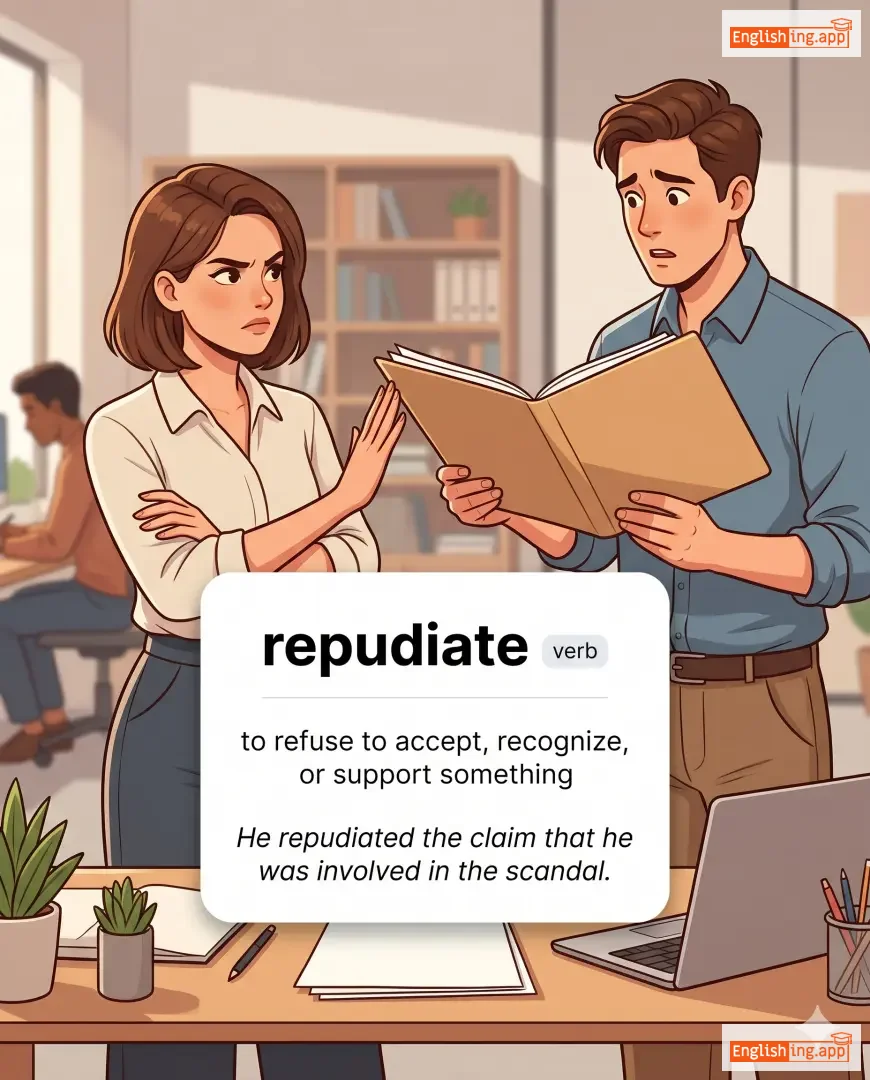
repudiate definition card — visual illustration of the meaning
verb
/rɪˈpjuː.di.eɪt/
अस्वीकार करना (asweekar karna)

to refuse to accept, recognize, or support something

"He repudiated the claim that he was involved in the scandal."

"उसने उस दावे को अस्वीकार कर दिया कि वह घोटाले में शामिल था।" (Usne us daave ko asweekar kar diya ki wah ghotale mein shamil tha.)
noun/adjective
/rɪˈpʌblɪkən/
गणराज्यवादी (ganrajyavadi)

a member or supporter of a republican political party or system

"The republican candidate won the election."

"रिपब्लिकन उम्मीदवार ने चुनाव जीत लिया।" (Republican ummidwar ne chunaav jeet liya.)
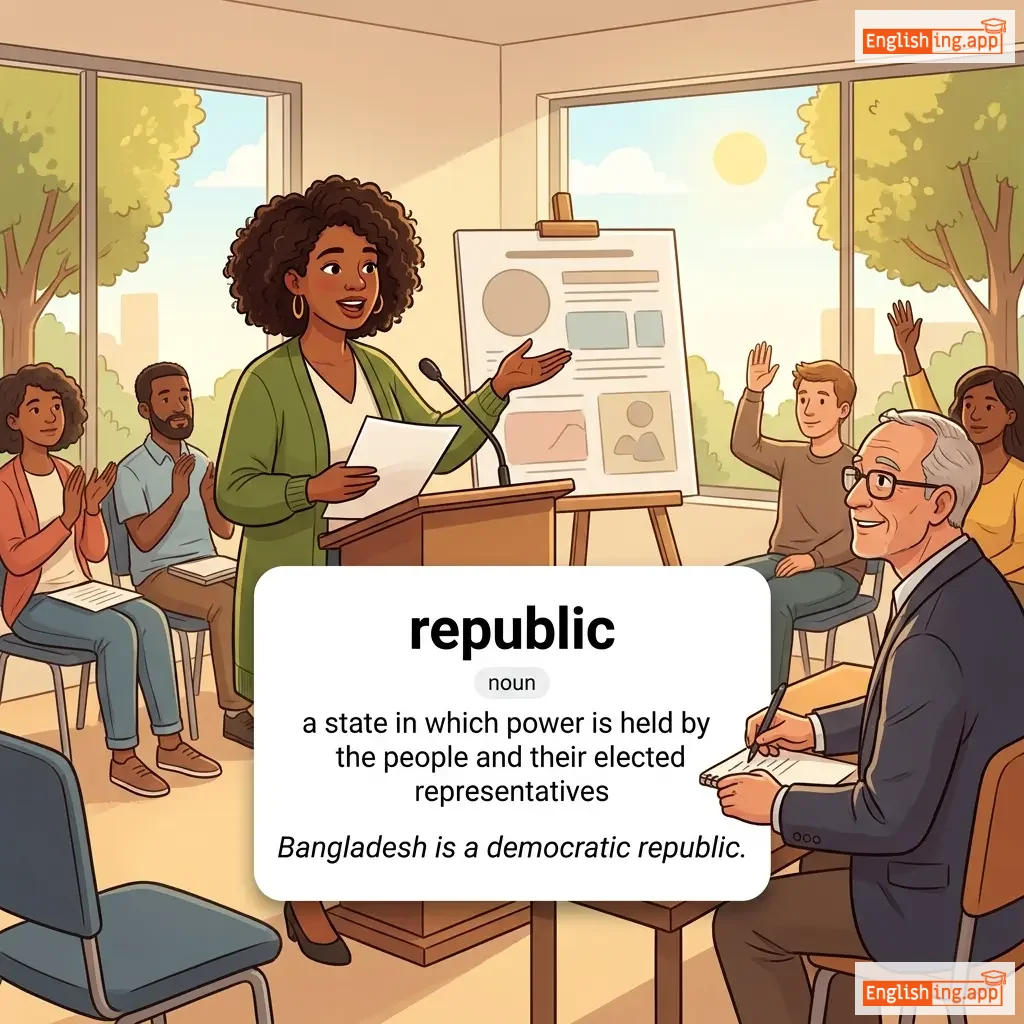
republic definition card — visual illustration of the meaning
noun
/rɪˈpʌblɪk/
गणराज्य (ganraajya)

a state in which power is held by the people and their elected representatives

"Bangladesh is a democratic republic."

"भारत एक गणराज्य है।" (Bharat ek ganraajya hai.)
noun
/ˈrɛp.taɪl/
सरीसृप (sarisrip)

a cold-blooded animal with scales that lays eggs, such as snakes, lizards, turtles, or crocodiles

"The snake is a reptile that can be found in many parts of the world."

"साँप एक सरीसृप है जिसे दुनिया के कई हिस्सों में पाया जा सकता है।" (Saap ek sarisrip hai jise duniya ke kai hisso mein paaya ja sakta hai.)
verb
/rɪˈpruːv/
डांटना (daantna)

to criticize or correct someone gently or disapprove of their actions

"The teacher reproved the student for being late."

"शिक्षक ने छात्र को देर होने पर डांटा।" (Shikshak ne chatra ko der hone par daanta.)
noun
/rɪˈpruːf/
आलोचना, निंदा (aalochana, ninda)

An expression of blame or disapproval.

"His careless words drew a sharp reproof from his mother."

"उसके लापरवाह शब्दों ने उसकी माँ से तीव्र आलोचना को आकर्षित किया।" (Uske laaparwah shabdon ne uski maan se teevr aalochana ko aakarshit kiya.)
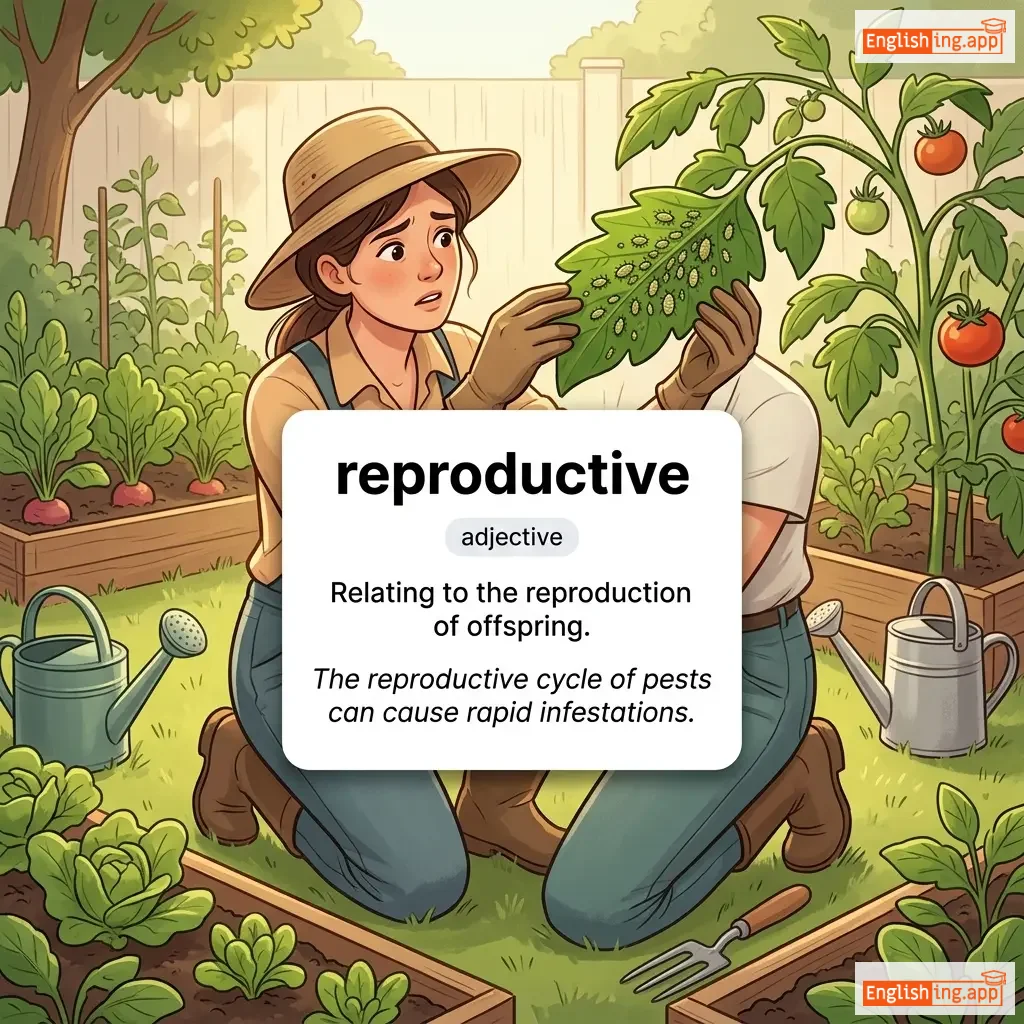
reproductive definition card — visual illustration of the meaning
adjective
ˌriːprəˈdʌktɪv
प्रजनन संबंधित (prajanan sambandhit)

Relating to the reproduction of offspring.

"The reproductive cycle of pests can cause rapid infestations."

"कीटों का प्रजनन चक्र तेजी से संक्रमण उत्पन्न कर सकता है।" (Keeton ka prajanan chakr tezi se sankraman utpann kar sakta hai.)
noun
/ˌriːprəˈdʌkʃən/
प्रजनन, पुनरुत्पादन (prajanan, punarutpadan)

The process of producing offspring; the act of copying or duplicating.

"The textbook included a detailed diagram of human reproduction."

"पाठ्यपुस्तक में मानव प्रजनन का एक विस्तृत चित्र शामिल था।" (Pathyapustak mein manav prajanan ka ek vistarit chitra shamil tha.)
verb
/ˌriːprəˈdjuːs/
पुनरुत्पादन करना, प्रजनन करना (punarutpadan karna, prajnan karna)

To make a copy of something; to generate offspring.

"Many animals reproduce rapidly in favorable conditions."

"कई जानवर अनुकूल परिस्थितियों में जल्दी पुनरुत्पादन करते हैं।" (Kai janwar anukool paristhitiyon mein jaldi punarutpadan karte hain.)
noun
/ˌrɛprəˈbeɪʃən/
कड़ी निंदा (reprobation)

Strong disapproval or condemnation; rejection by God as beyond salvation.

"The teacher’s face showed clear reprobation at the student’s rude remark."

"शिक्षक के चेहरे पर छात्र की अशिष्ट टिप्पणी पर स्पष्ट कड़ी निंदा दिखी।" (shikshak ke chehre par chhatra ki ashisht tippanni par spasht kadi ninda dikhi)
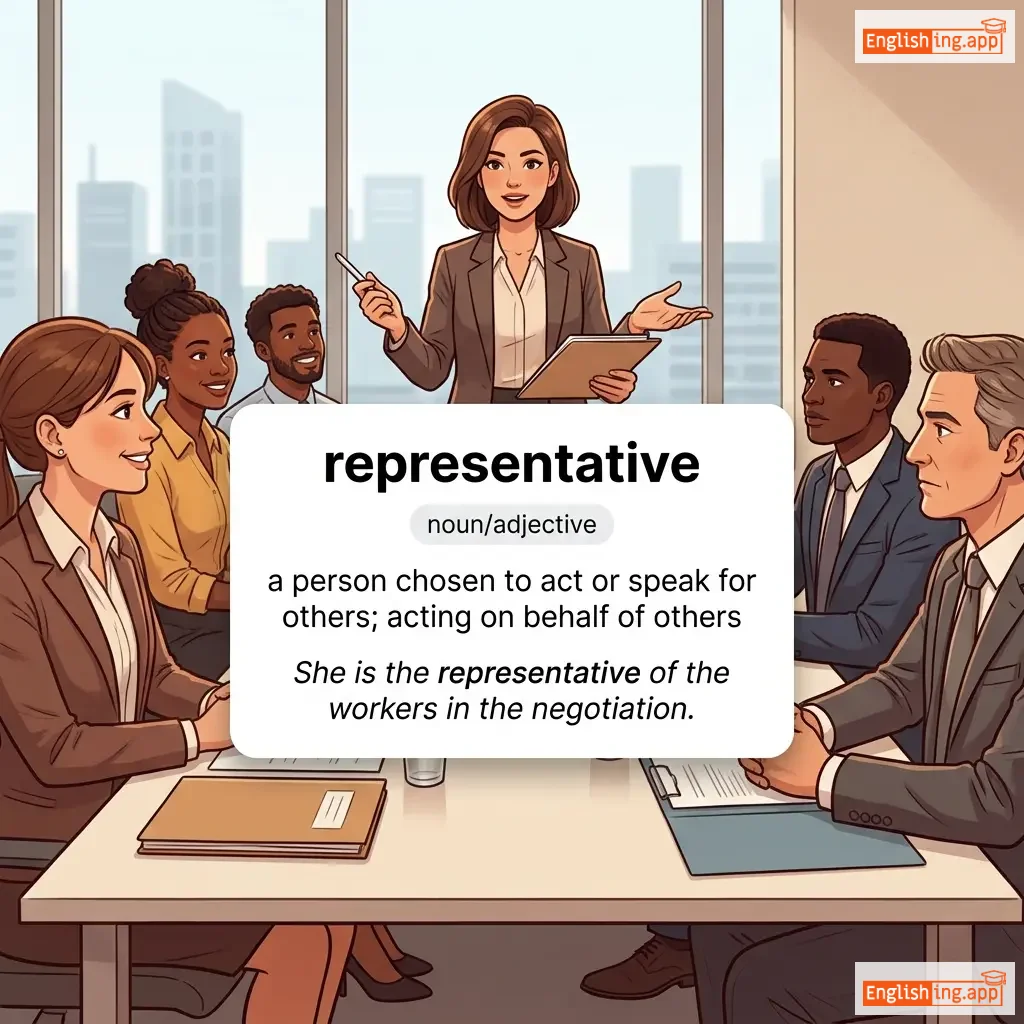
representative definition card — visual illustration of the meaning
noun/adjective
/ˌrɛprɪˈzɛntətɪv/
प्रतिनिधि (pratinidhi)

a person chosen to act or speak for others; acting on behalf of others

"She is the representative of the workers in the negotiation."

"वह वार्ता में श्रमिकों का प्रतिनिधित्व कर रही है।" (Wah vartā mein shramikon kā pratinidhitva kar rahī hai.)
noun
/rɪˈpɔːrtər/
पत्रकार (patrakar)

a person who reports news or information

"The reporter interviewed several people at the scene."

"पत्रकार ने घटनास्थल पर कई लोगों से साक्षात्कार किया।" (Patrakar ne ghatnasthal par kai logon se sakshatkar kiya.)
noun
/rɪˈpɔːtɪŋ/
रिपोर्टिंग (reporting)

the act of giving news or information about something

"Good reporting is essential for public awareness."

"अच्छी रिपोर्टिंग जन जागरूकता के लिए आवश्यक है।" (Achhi reporting jan jagrookta ke liye aavashyak hai.)
noun/verb
/rɪˈpoʊz/
विश्राम (vishram)

a state of rest, sleep, or tranquility; to rest or lie in a peaceful position

"After the long journey, she sought repose in the quiet garden."

"लंबी यात्रा के बाद, उसने शांत बाग में विश्राम लिया।" (Lambi yatra ke baad, usne shaant baag mein vishram liya.)
noun
/rɪˈpɑːzɪtɔːri/
भंडार (bhandar)

a place where things are stored or kept for safekeeping

"The library serves as a repository of knowledge."

"पुस्तकालय ज्ञान का भंडार है।" (Pustakalay gyaan ka bhandar hai.)
verb
/ˌrɛprɪˈhɛnd/
आलोचना करना (aalochna karna)

to express disapproval or criticism of someone or something

"The teacher reprehended the student for being dishonest."

"शिक्षक ने बेईमानी करने पर छात्र को डांटा।" (Shikshak ne beemani karne par chhaatr ko daanta.)
adjective
/ˌrɛprɪˈhɛnsəbl̩/
निंदनीय (nindanīya)

Deserving strong criticism or blame.

"His dishonest actions were truly reprehensible."

"उसके धोखेबाज कृत्य वास्तव में निंदनीय थे।" (Uske dhokhebaaj krity vastav mein nindanīya the.)
noun
/ˌrɛprɪˈhɛnʃən/
निंदा (ninda)

The act of rebuking or criticizing severely.

"The teacher’s reprehension of the student’s behavior was justified."

"शिक्षक का छात्र के व्यवहार की निंदा उचित थी।" (Shikshak ka chhatra ke vyavhaar ki ninda uchit thi.)
verb
/ˌrɛprɪˈzɛnt/
प्रतिनिधित्व करना (pratinidhitv karna)

to act or speak on behalf of someone or something

"He will represent our company at the conference."

"वह सम्मेलन में हमारी कंपनी का प्रतिनिधित्व करेगा।" (Vah sammelan mein hamari company ka pratinidhitv karega.)
noun
/ˌrɛprɪzɛnˈteɪʃən/
प्रतिनिधित्व (pratinidhitva)

the action of speaking or acting on behalf of someone or something

"Her representation of the team was impeccable."

"उसकी टीम का प्रतिनिधित्व अतुलनीय था।" (Uski team ka pratinidhitva atulniya tha.)
adjective
/ˌrɛprɪzɛnˈteɪʃənl̩/
प्रतिनिधित्वात्मक (pratinidhitvatmak)

Relating to or depicting something in a realistic or symbolic way.

"The artist preferred a representational style of painting."

"कलाकार ने चित्रकला की एक प्रतिनिधित्वात्मक शैली को प्राथमिकता दी।" (Kalakar ne chitrakala ki ek pratinidhitvatmak shaili ko prathmikta di.)
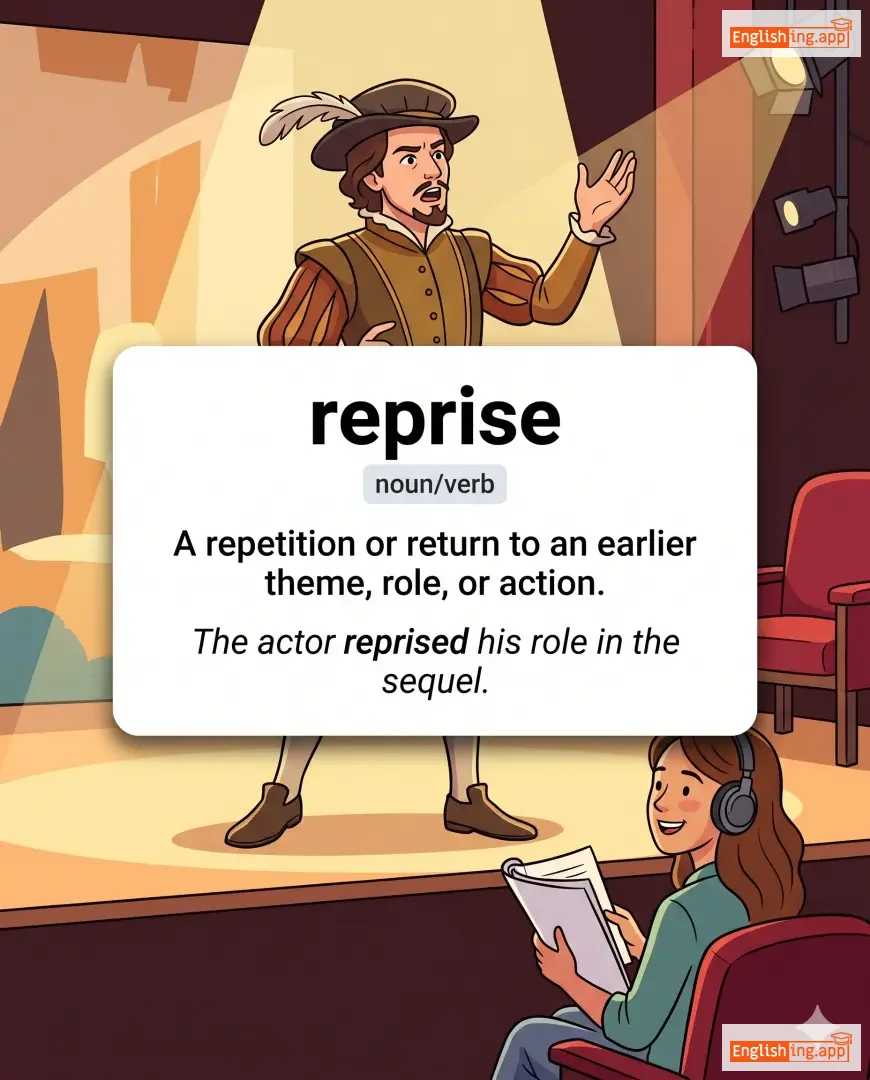
reprise definition card — visual illustration of the meaning
noun/verb
/rɪˈpriːz/
पुनरावृत्ति (punaravrtti)

A repetition or return to an earlier theme, role, or action.

"The actor reprised his role in the sequel."

"अभिनेता ने सीक्वल में अपनी भूमिका को पुनः निभाया।" (Abhinetā ne sequel mein apnī bhūmikā ko punah nibhāyā.)
noun/verb
/ˈrɛprɪˌmænd/
निंदा / फटकार (ninda / fatkar)

A formal expression of disapproval; to scold or criticize someone officially.

"The teacher reprimanded the student for being late."

"शिक्षक ने छात्र को देर करने के लिए फटकारा।" (Shikshak ne chatra ko der karne ke liye fatkara.)
noun
/rɪˈpraɪzəl/
प्रतिशोध (pratishodh)

An act of retaliation or revenge, especially in a conflict.

"The attack was carried out as a reprisal for the bombing."

"बम हमले के प्रतिशोध में यह हमला किया गया।" (Bam hamle ke pratishodh mein yah hamla kiya gaya.)
noun/verb
/rɪˈpriːv/
अस्थायी राहत / सजा की टालमटोल (asthaayi raahat / saza ki taalmatol)

A temporary relief or delay from something unpleasant; to postpone or cancel punishment.

"The prisoner was granted a last-minute reprieve from execution."

"क़ैदी को मृत्युदंड से आखिरी पल में अस्थायी राहत दी गई।" (qaidi ko mrityudand se aakhiri pal mein asthaayi raahat di gayi.)
reproach definition card — visual illustration of the meaning
noun/verb
/rɪˈproʊtʃ/
निंदा / आलोचना (ninda / alochana)

An expression of disapproval or disappointment; to criticize someone for doing wrong.

"She reproached him for arriving late to the meeting."

"उसने मीटिंग में देर से आने के लिए उसे निंदा की।" (Usne meeting mein der se aane ke liye use ninda ki.)