Vocabulaires

Découvrez, apprenez et maîtrisez le vocabulaire anglais

adjective
/rɪˈliːvd/
soulagé (soulagé)

feeling happy and less worried after something stressful has been removed or resolved

"She felt relieved after hearing the good news."

"Elle s'est sentie soulagée après avoir entendu la bonne nouvelle." (Elle s'est sentie soulagée après avoir entendu la bonne nouvelle.)
noun
/rɪˈlɪdʒ.ən/
religion (religion)

a system of faith and worship involving belief in a higher power

"Freedom of religion is a fundamental human right."

"La liberté de religion est un droit humain fondamental." (La liberté de religion est un droit humain fondamental.)
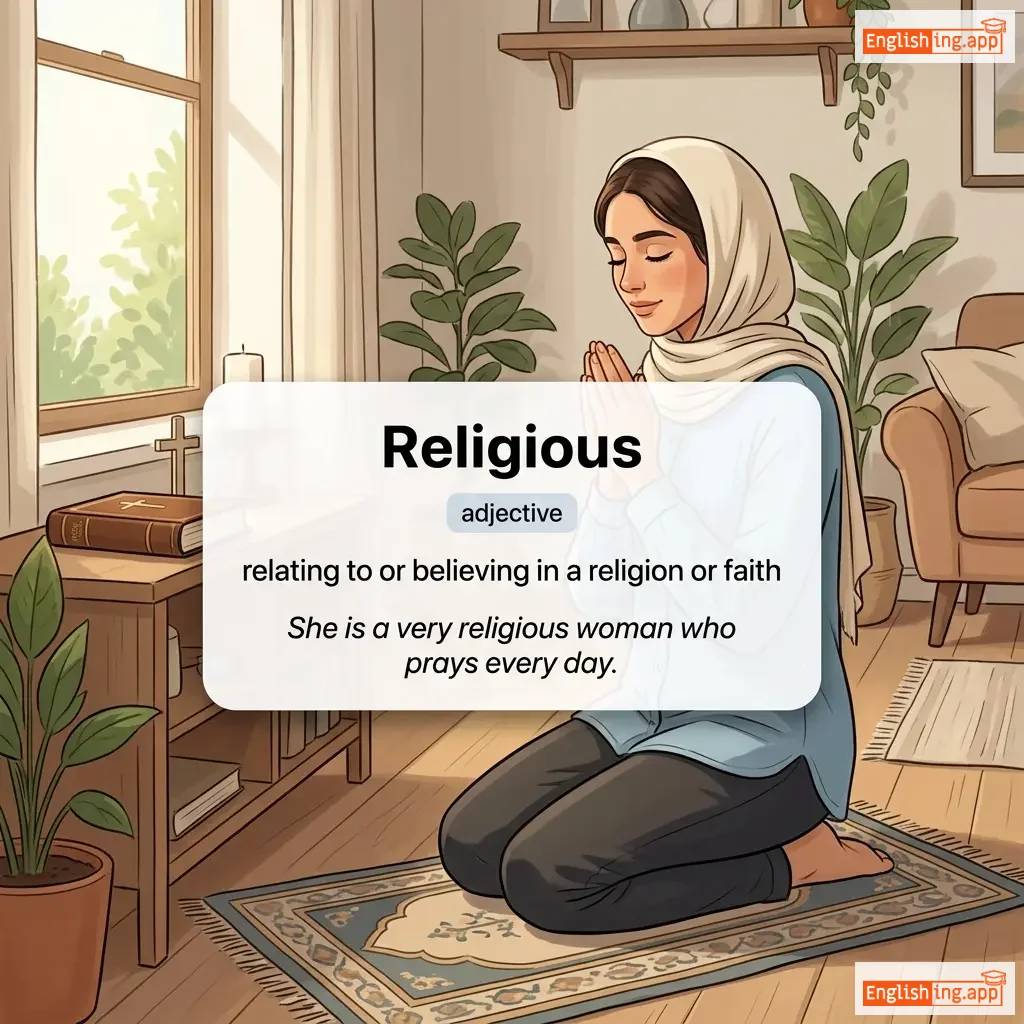
Religious definition card — visual illustration of the meaning
adjective
/rɪˈlɪdʒəs/
religieux (religieux)

relating to or believing in a religion or faith

"She is a very religious woman who prays every day."

"Elle est une femme très religieuse qui prie tous les jours." (Elle est une femme très religieuse qui prie tous les jours.)
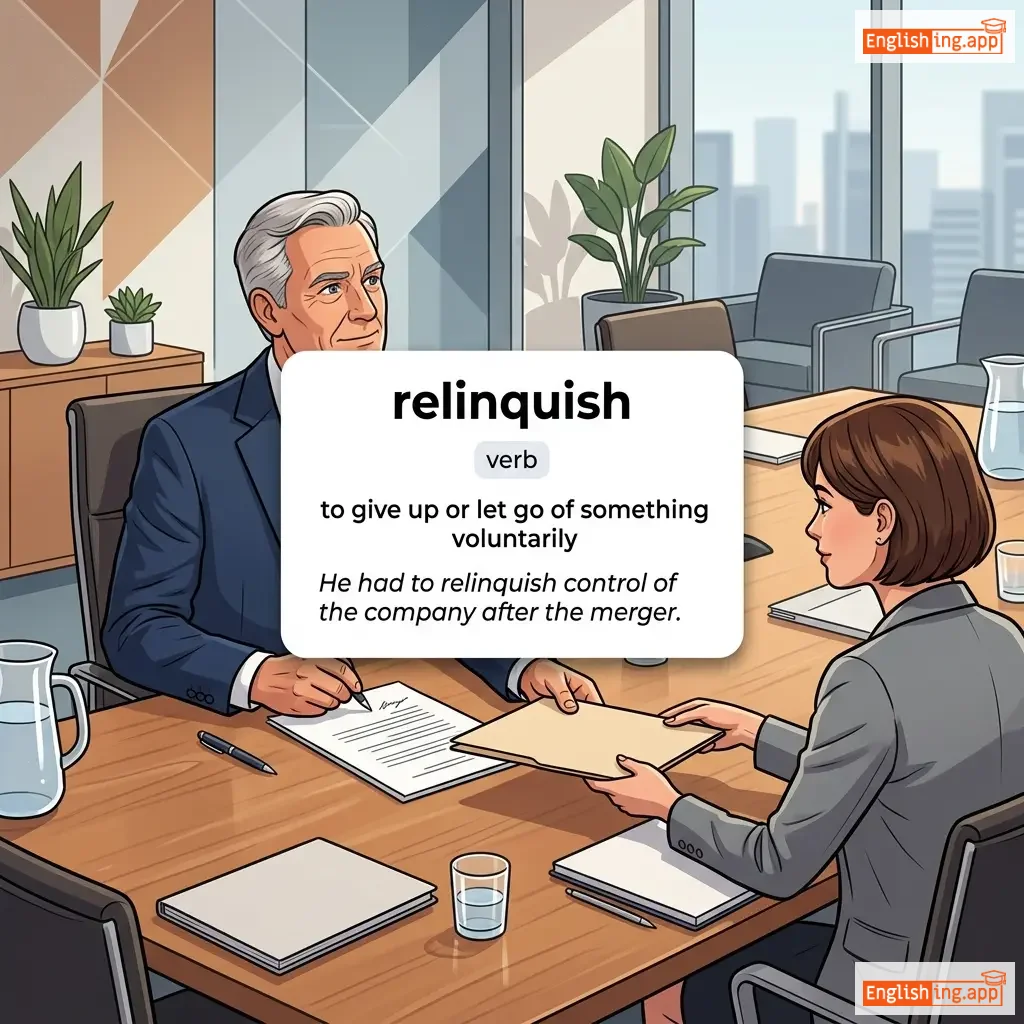
relinquish definition card — visual illustration of the meaning
verb
/rɪˈlɪŋkwɪʃ/
abandonner (abandonner)

to give up or let go of something voluntarily

"He had to relinquish control of the company after the merger."

"Il a dû abandonner le contrôle de l'entreprise après la fusion." (Il a du abandonner le controle de l'entreprise apres la fusion.)
noun
/ˈrɛlɪkwɛri/
reliquaire (reliquaire)

a container for holy relics

"The ancient reliquary was decorated with gold and precious stones."

"Le reliquaire ancien était décoré d'or et de pierres précieuses." (Le reliquaire ancien était décoré d'or et de pierres précieuses.)
verb/noun
/ˈrɛlɪʃ/
apprécier / condiment (apprecier / condiment)

to greatly enjoy; also a condiment or sauce

"She relished the opportunity to travel abroad."

"Elle a beaucoup apprécié l'occasion de voyager à l'étranger." (Elle a beaucoup apprecie l'occasion de voyager à l'étranger.)
noun
/rɪˈlʌktəns/
réticence (reticence)

unwillingness or hesitation to do something

"His reluctance to speak made the meeting awkward."

"Sa réticence à parler a rendu la réunion gênante." (Sa reticence a parler a rendu la reunion genante.)
adjective
/rɪˈlʌktənt/
réticent (reticent)

unwilling or hesitant to do something

"She was reluctant to speak in front of the large audience."

"Elle était réticente à parler devant le grand public." (Elle etait reticente a parler devant le grand public.)
adverb
/rɪˈlʌk.tənt.li/
à contrecœur (a contrecœur)

in an unwilling manner; with hesitation or resistance

"She reluctantly agreed to help with the project."

"Elle a accepté d'aider au projet à contrecœur." (Elle a accepté d'aider au projet à contrecœur.)
verb
/rɪˈlaɪ/
compter sur (compter sur)

to depend on with confidence

"You can always rely on her to help you out."

"Tu peux toujours compter sur elle pour t'aider." (Tu peux toujours compter sur elle pour t'aider.)
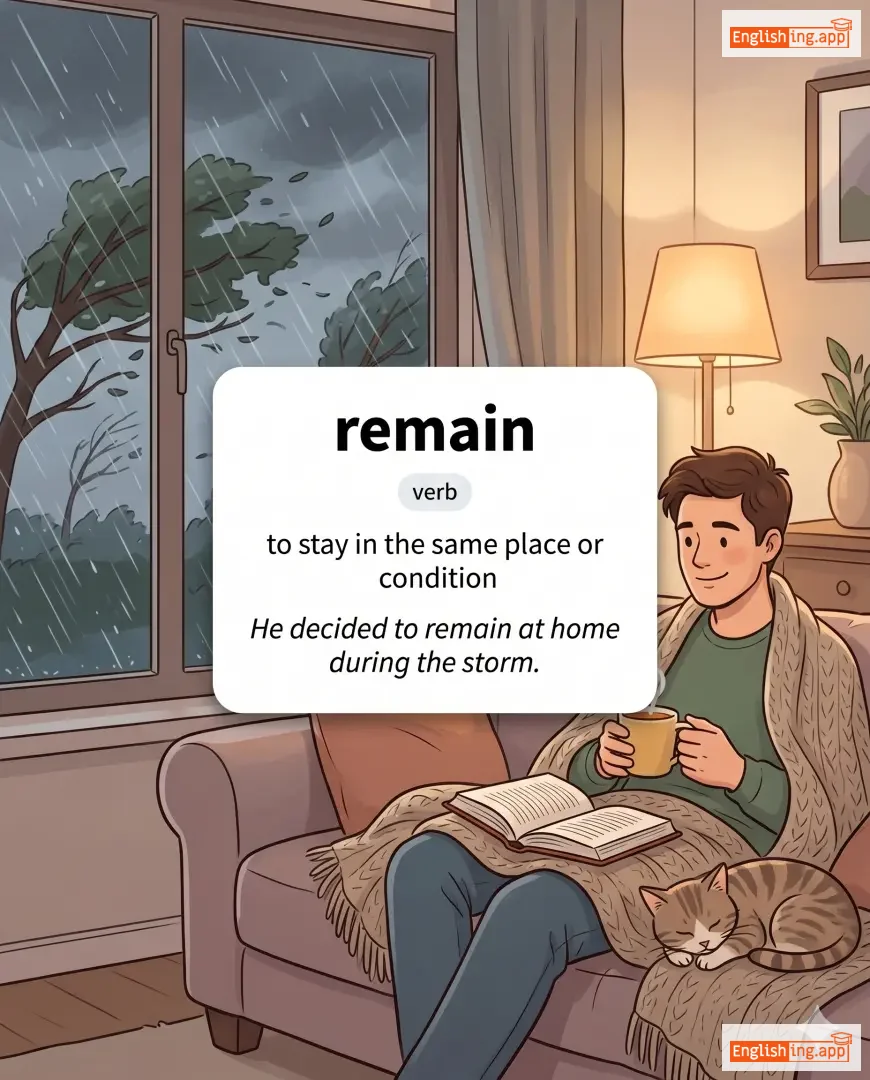
remain definition card — visual illustration of the meaning
verb
/rɪˈmeɪn/
rester (rester)

to stay in the same place or condition

"He decided to remain at home during the storm."

"Il a décidé de rester à la maison pendant la tempête." (Il a decide de rester a la maison pendant la tempete.)
noun
/rɪˈmeɪndər/
reste (reste)

the part that is left after the main part is gone or used

"He ate most of the cake and left the remainder on the plate."

"Il a mangé la plupart du gâteau et a laissé le reste dans l'assiette." (Il a mangé la plupart du gâteau et a laissé le reste dans l'assiette.)
adjective
/rɪˈmeɪnɪŋ/
restant (restant)

still existing or left after others are gone or dealt with

"There were only a few remaining tickets for the concert."

"Il ne restait que quelques billets pour le concert." (Il ne restait que quelques billets pour le concert.)
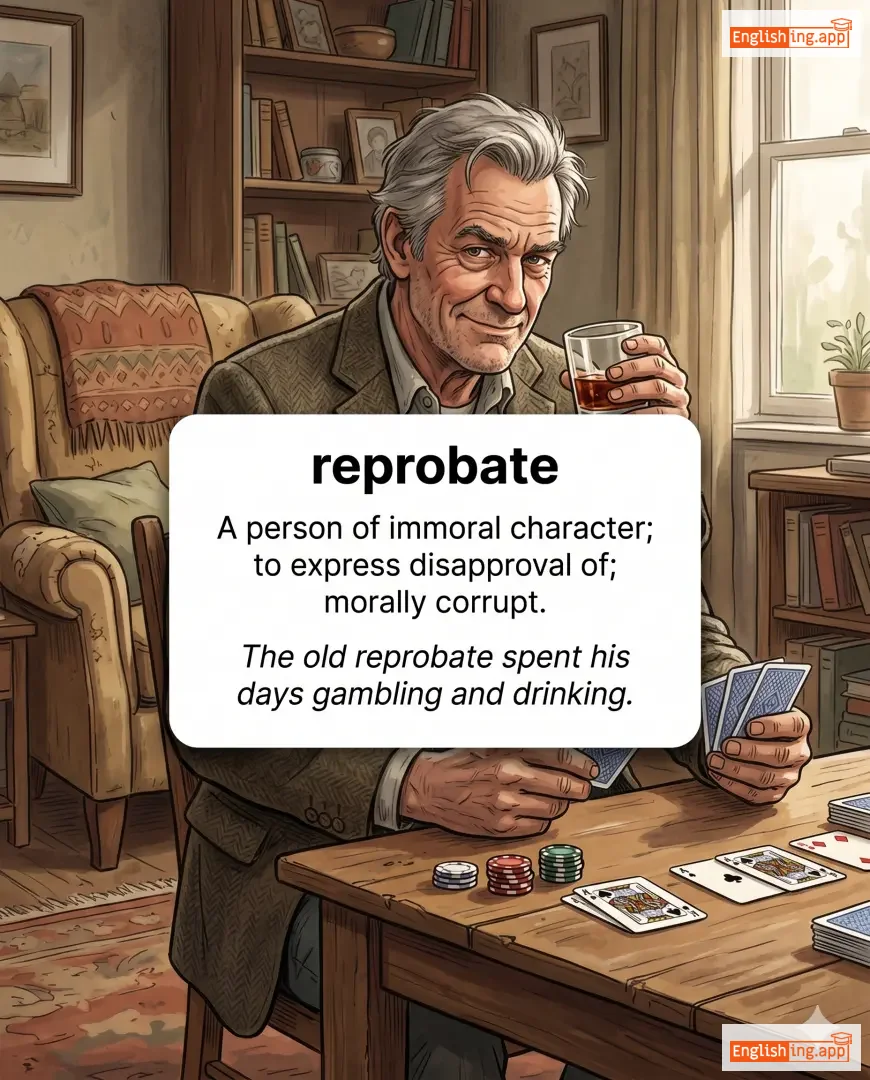
reprobate definition card — visual illustration of the meaning
noun, adjective, verb
/ˈrɛprəˌbeɪt/
personne immorale (personne immorale)

A person of immoral character; to express disapproval of; morally corrupt.

"The old reprobate spent his days gambling and drinking."

"Le vieux réprouvé passait ses journées à parier et à boire." (Le vieux réprouvé passait ses journées à parier et à boire.)
noun
/rɪˈkwɛst/

a formal or polite demand for something

"She made a request for additional time to complete the project."

adjective
/rɪˈpjuːtɪd/
réputé (repute)

Generally considered or believed to be something, often based on reputation rather than certainty.

"He is a reputed expert in financial management."

"Il est un expert réputé en gestion financière." (Il est un expert reputé en gestion financière.)
noun
/rɪˈpjuːt/
réputation (reputation)

the opinion generally held of someone or something; reputation

"He is a scholar of great repute in his field."

"Il est un érudit de grande réputation dans son domaine." (Il est un erudit de grande reputation dans son domaine.)
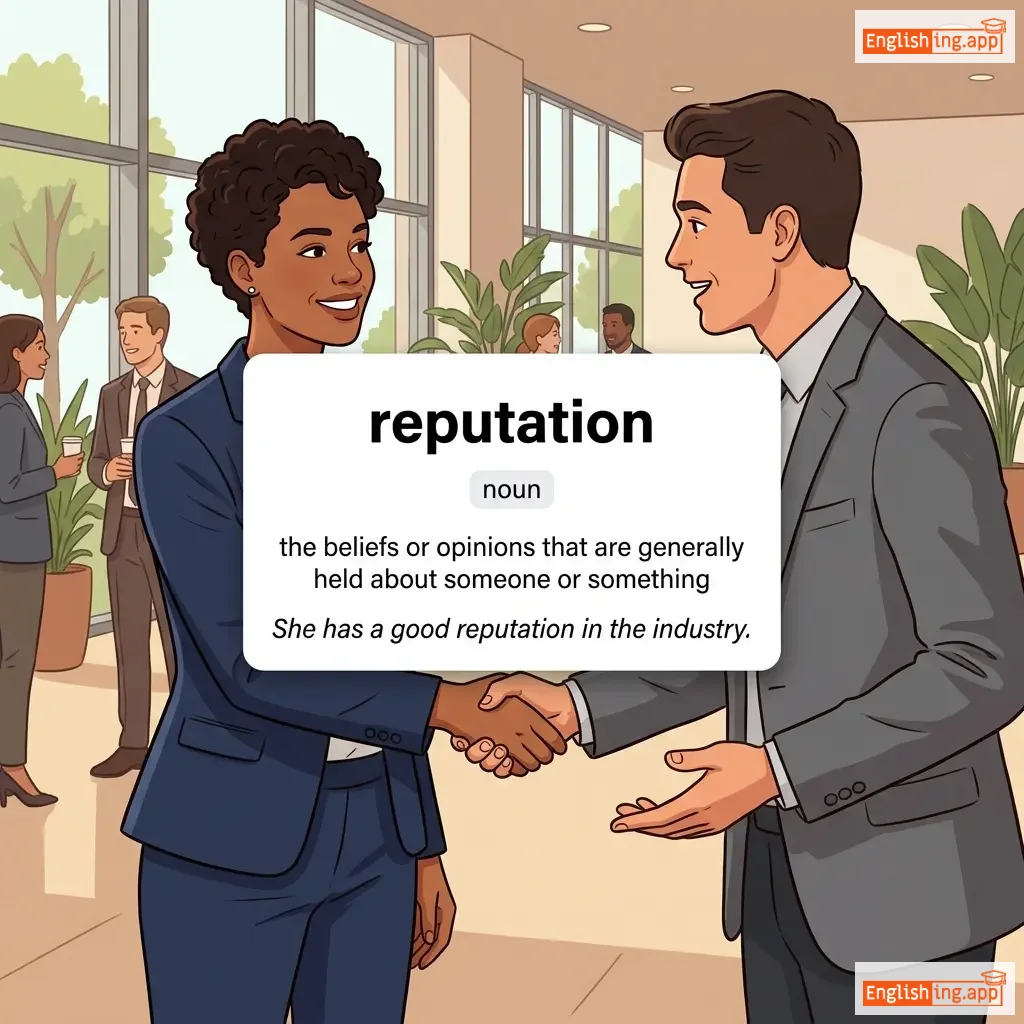
reputation definition card — visual illustration of the meaning
noun
/ˌrɛpjuˈteɪʃən/
réputation (reputation)

the beliefs or opinions that are generally held about someone or something

"She has a good reputation in the industry."

"Elle a une bonne réputation dans l'industrie." (Elle a une bonne réputation dans l'industrie.)
adjective
/ˈrɛpjətəbəl/
réputé (repute)

having a good reputation; respected

"They chose a reputable company to handle their finances."

"Ils ont choisi une entreprise réputée pour gérer leurs finances." (Ils ont choisi une entreprise réputée pour gérer leurs finances.)
adjective
/rɪˈpʌlsɪv/
répugnant (repugnant)

arousing intense distaste or disgust

"The garbage gave off a repulsive smell."

"Les déchets ont dégagé une odeur répugnante." (Les dechets ont degage une odeur repugnante.)
noun
/rɪˈpʌlʃən/
répulsion (repulsion)

a strong feeling of dislike or disgust

"She felt deep repulsion at the sight of cruelty to animals."

"Elle éprouva une profonde répulsion à la vue de la cruauté envers les animaux." (Elle eprouva une profonde repulsion a la vue de la cruauté envers les animaux.)
verb
/rɪˈpʌls/
repousser / provoquer du dégoût (repousser / provoquer du dégoût)

to drive back an attack or attacker by force; to cause intense dislike or disgust

"The army managed to repulse the enemy attack."

"L'armée a réussi à repousser l'attaque ennemie." (L'armée a réussi à repousser l'attaque ennemie.)
adjective
/rɪˈpʌɡ.nənt/
répugnant (repugnant)

causing strong dislike, disgust, or opposition

"The idea of cheating was repugnant to him."

"L'idée de tricher lui semblait répugnante." (L'idée de tricher lui semblait répugnante.)
noun
/rɪˈpʌɡ.nəns/
répulsion (repulsion)

intense disgust or strong aversion towards something

"She felt deep repugnance at the cruelty of the act."

"Elle ressentit une profonde répulsion envers la cruauté de l'acte." (Elle ressentit une profonde repulsion envers la cruauté de l'acte.)
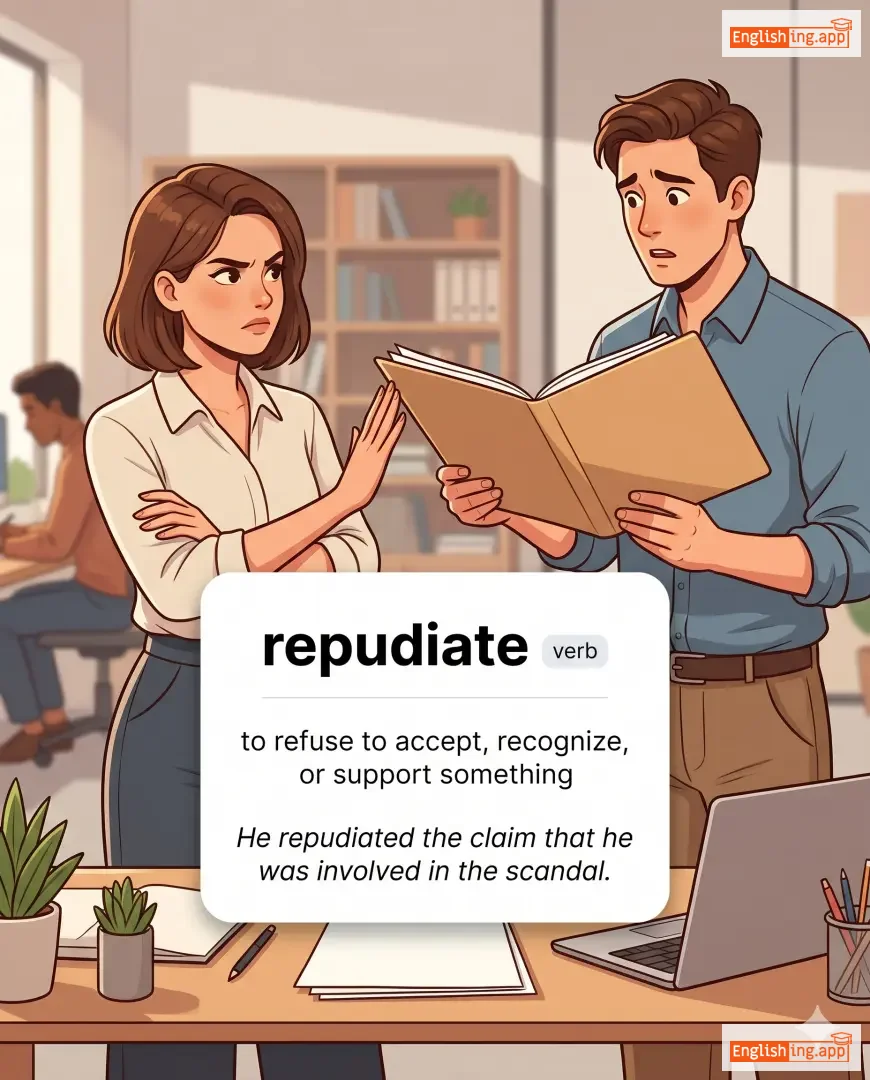
repudiate definition card — visual illustration of the meaning
verb
/rɪˈpjuː.di.eɪt/
répudier (repudier)

to refuse to accept, recognize, or support something

"He repudiated the claim that he was involved in the scandal."

"Il a répudié l'affirmation qu'il était impliqué dans le scandale." (Il a répudié l'affirmation qu'il était impliqué dans le scandale.)
noun/adjective
/rɪˈpʌblɪkən/
républicain (republicain)

a member or supporter of a republican political party or system

"The republican candidate won the election."

"Le candidat républicain a remporté l'élection." (Le candidat républicain a remporté l'élection.)
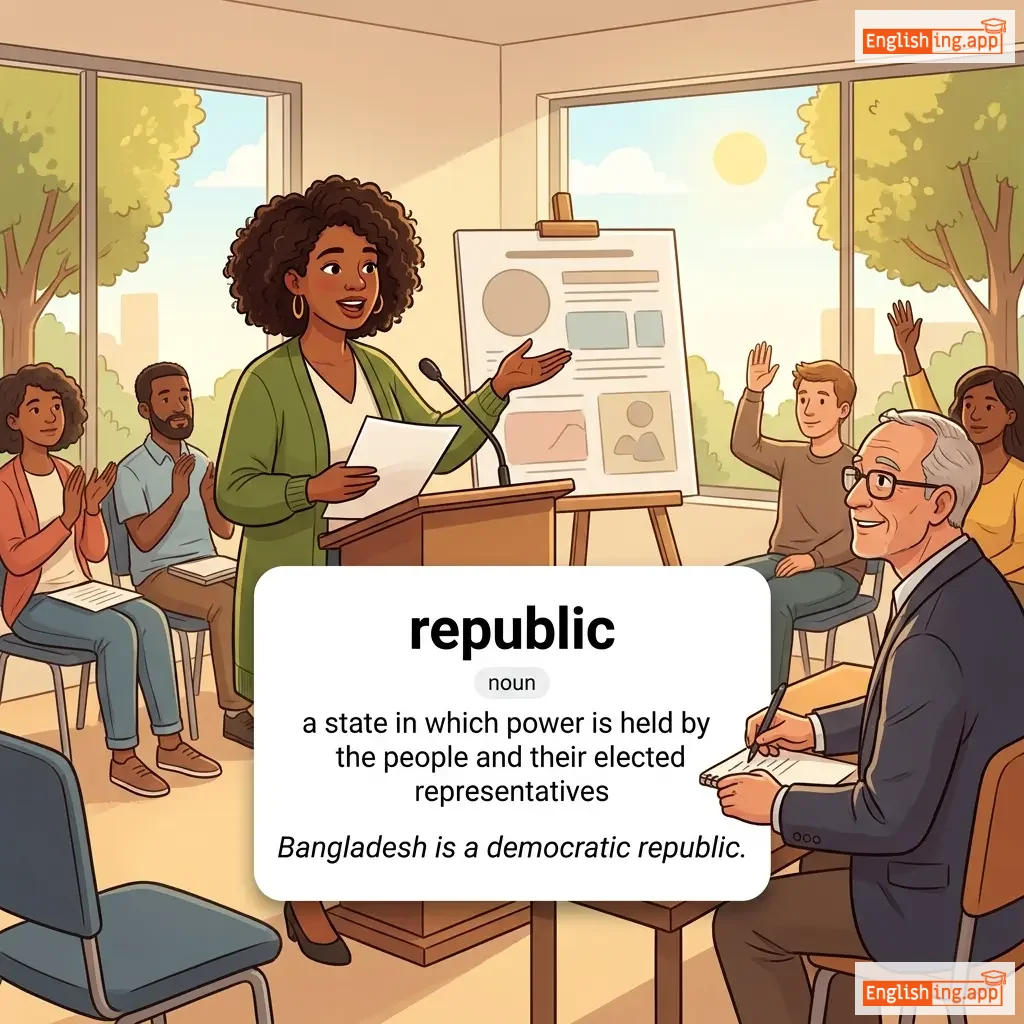
republic definition card — visual illustration of the meaning
noun
/rɪˈpʌblɪk/
république (republique)

a state in which power is held by the people and their elected representatives

"Bangladesh is a democratic republic."

"Le Bangladesh est une république démocratique." (Le Bangladesh est une republique democratique.)
noun
/ˈrɛp.taɪl/
reptile (reptil)

a cold-blooded animal with scales that lays eggs, such as snakes, lizards, turtles, or crocodiles

"The snake is a reptile that can be found in many parts of the world."

"Le serpent est un reptile que l'on trouve dans de nombreuses régions du monde." (Le serpent est un reptile que l'on trouve dans de nombreuses regions du monde.)
verb
/rɪˈpruːv/
réprimander (reprimander)

to criticize or correct someone gently or disapprove of their actions

"The teacher reproved the student for being late."

"L'enseignant a réprimandé l'élève pour son retard." (L'enseignant a réprimandé l'élève pour son retard.)
noun
/rɪˈpruːf/
réprobation, censure (reprobation, censure)

An expression of blame or disapproval.

"His careless words drew a sharp reproof from his mother."

"Ses paroles imprudentes ont provoqué une vive réprobation de sa mère." (Ses paroles imprudentes ont provoqué une vive reprobation de sa mere.)
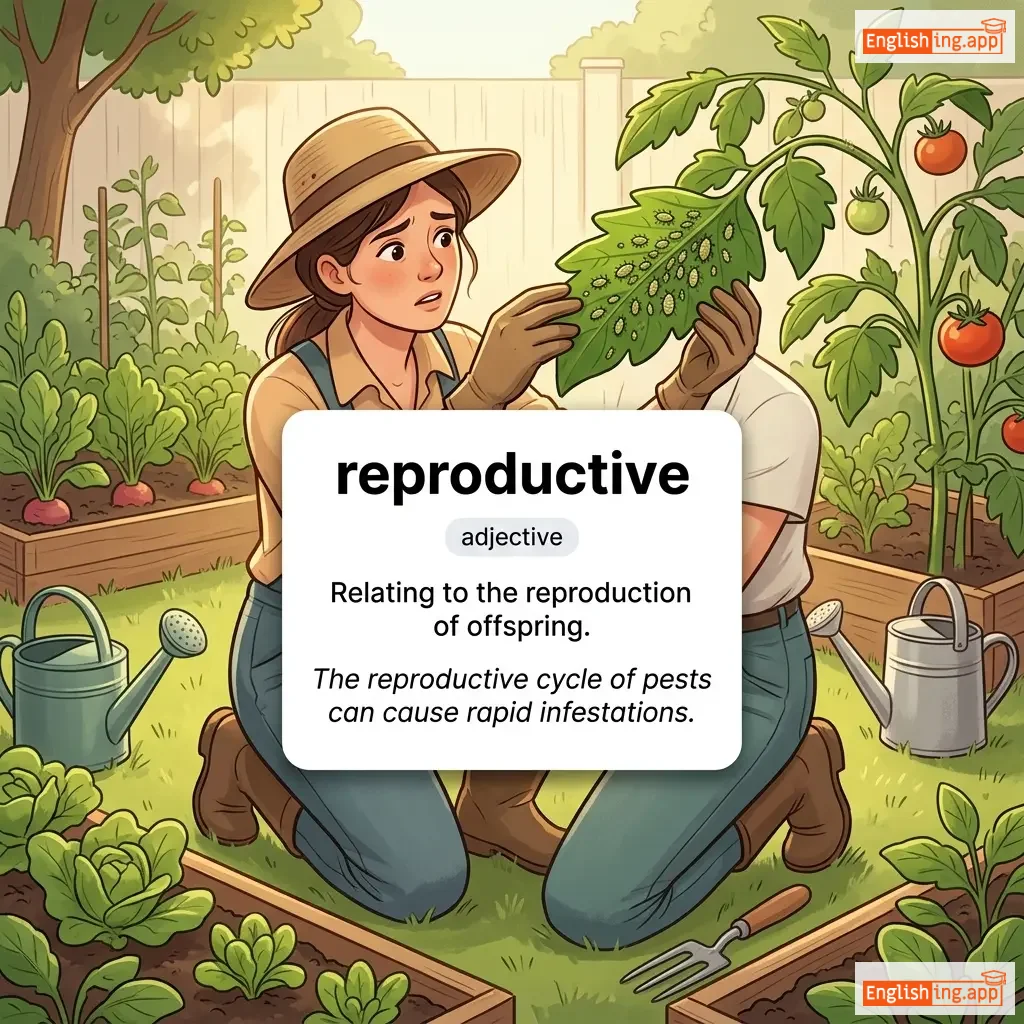
reproductive definition card — visual illustration of the meaning
adjective
ˌriːprəˈdʌktɪv
reproductif (reproductif)

Relating to the reproduction of offspring.

"The reproductive cycle of pests can cause rapid infestations."

"Le cycle reproductif des nuisibles peut provoquer des infestations rapides." (Le cycle reproductif des nuisibles peut provoquer des infestations rapides.)
noun
/ˌriːprəˈdʌkʃən/
reproduction, reproduction (reproduction, reproduction)

The process of producing offspring; the act of copying or duplicating.

"The textbook included a detailed diagram of human reproduction."

"Le manuel comprenait un diagramme détaillé de la reproduction humaine." (Le manuel comprenait un diagramme détaillé de la reproduction humaine.)
verb
/ˌriːprəˈdjuːs/
reproduire, engendrer (reproduire, engendrer)

To make a copy of something; to generate offspring.

"Many animals reproduce rapidly in favorable conditions."

"Beaucoup d'animaux se reproduisent rapidement dans des conditions favorables." (Beaucoup d'animaux se reproduisent rapidement dans des conditions favorables.)
noun
/ˌrɛprəˈbeɪʃən/
réprobation (reprobation)

Strong disapproval or condemnation; rejection by God as beyond salvation.

"The teacher’s face showed clear reprobation at the student’s rude remark."

"Le visage du professeur montrait une réprobation nette face à la remarque impolie de l'étudiant." (Le visage du professeur montrait une reprobation nette face a la remarque impolie de letudiant)
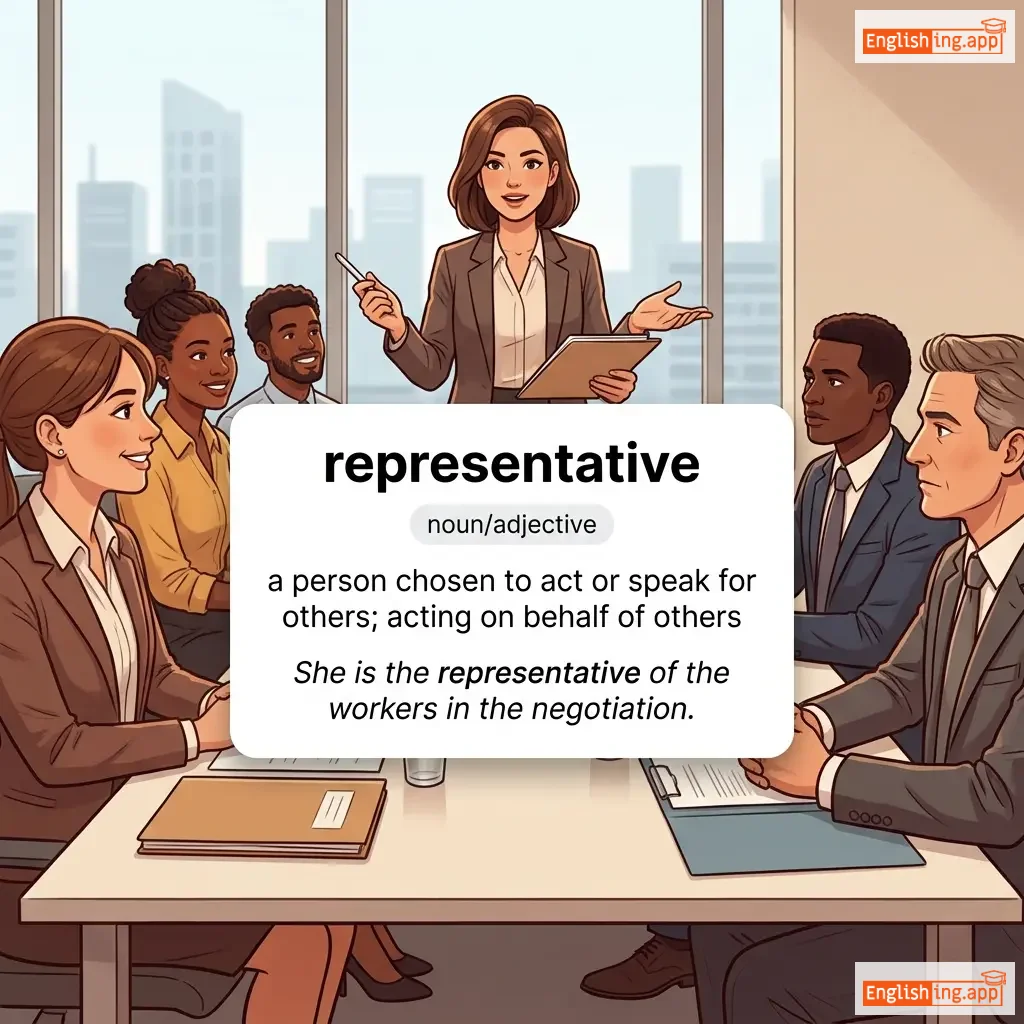
representative definition card — visual illustration of the meaning
noun/adjective
/ˌrɛprɪˈzɛntətɪv/
représentant (representant)

a person chosen to act or speak for others; acting on behalf of others

"She is the representative of the workers in the negotiation."

"Elle est la représentante des travailleurs lors de la négociation." (Elle est la représentante des travailleurs lors de la négociation.)
noun
/rɪˈpɔːrtər/
journaliste (journaliste)

a person who reports news or information

"The reporter interviewed several people at the scene."

"Le journaliste a interviewé plusieurs personnes sur les lieux." (Le journaliste a interviewé plusieurs personnes sur les lieux.)
noun
/rɪˈpɔːtɪŋ/
reportage (reportage)

the act of giving news or information about something

"Good reporting is essential for public awareness."

"Un bon reportage est essentiel pour la sensibilisation du public." (Un bon reportage est essentiel pour la sensibilisation du public.)
noun/verb
/rɪˈpoʊz/
repos (repos)

a state of rest, sleep, or tranquility; to rest or lie in a peaceful position

"After the long journey, she sought repose in the quiet garden."

"Après le long voyage, elle chercha le repos dans le jardin tranquille." (Apres le long voyage, elle chercha le repos dans le jardin tranquille.)
noun
/rɪˈpɑːzɪtɔːri/
dépôt (depot)

a place where things are stored or kept for safekeeping

"The library serves as a repository of knowledge."

"La bibliothèque sert de dépôt de savoir." (La bibliothèque sert de dépôt de savoir.)
verb
/ˌrɛprɪˈhɛnd/
réprimander (reprimander)

to express disapproval or criticism of someone or something

"The teacher reprehended the student for being dishonest."

"L'enseignant a réprimandé l'élève pour avoir été malhonnête." (L'enseignant a réprimandé l'élève pour avoir été malhonnête.)
adjective
/ˌrɛprɪˈhɛnsəbl̩/
répréhensible (reprehensible)

Deserving strong criticism or blame.

"His dishonest actions were truly reprehensible."

"Ses actions malhonnêtes étaient véritablement répréhensibles." (Ses actions malhonnêtes étaient véritablement répréhensibles.)
noun
/ˌrɛprɪˈhɛnʃən/
réprimande (reprimande)

The act of rebuking or criticizing severely.

"The teacher’s reprehension of the student’s behavior was justified."

"La réprimande du comportement de l'élève par le professeur était justifiée." (La réprimande du comportement de l'élève par le professeur était justifiée.)
verb
/ˌrɛprɪˈzɛnt/
représenter (représenter)

to act or speak on behalf of someone or something

"He will represent our company at the conference."

"Il représentera notre entreprise à la conférence." (Il représentera notre entreprise à la conférence.)
noun
/ˌrɛprɪzɛnˈteɪʃən/
représentation (representation)

the action of speaking or acting on behalf of someone or something

"Her representation of the team was impeccable."

"Sa représentation de l'équipe était impeccable." (Sa representation de l'equipe etait impeccable.)
adjective
/ˌrɛprɪzɛnˈteɪʃənl̩/
représentationnel (representationnel)

Relating to or depicting something in a realistic or symbolic way.

"The artist preferred a representational style of painting."

"L'artiste préférait un style de peinture représentationnel." (L'artiste préférait un style de peinture représentationnel.)
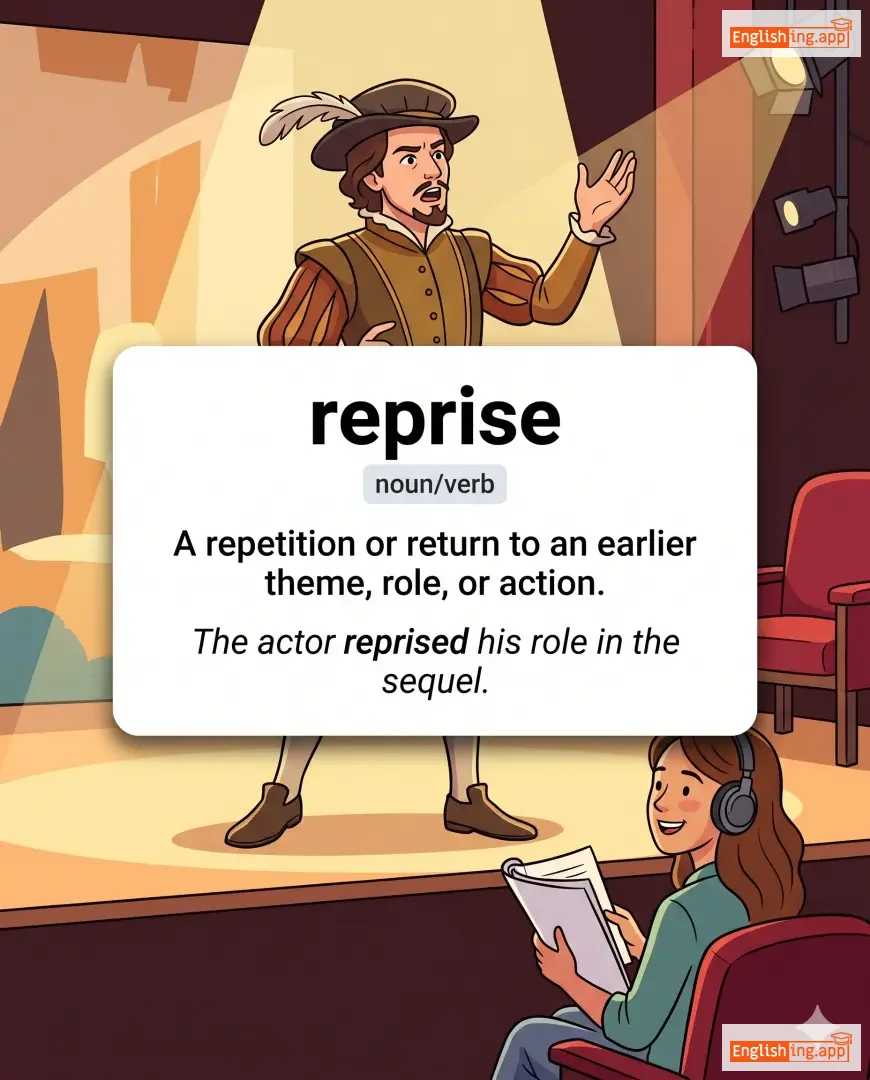
reprise definition card — visual illustration of the meaning
noun/verb
/rɪˈpriːz/
reprise (reprise)

A repetition or return to an earlier theme, role, or action.

"The actor reprised his role in the sequel."

"L'acteur a repris son rôle dans la suite." (L'acteur a repris son role dans la suite.)
noun/verb
/ˈrɛprɪˌmænd/
réprimande (reprimande)

A formal expression of disapproval; to scold or criticize someone officially.

"The teacher reprimanded the student for being late."

"Le professeur a réprimandé l'élève pour son retard." (Le professeur a réprimandé l'élève pour son retard.)
noun
/rɪˈpraɪzəl/
représailles (représailles)

An act of retaliation or revenge, especially in a conflict.

"The attack was carried out as a reprisal for the bombing."

"L'attaque a été menée en représailles pour le bombardement." (L'attaque a été menée en représailles pour le bombardement.)
noun/verb
/rɪˈpriːv/
délai temporaire / suspension de la punition (delai temporaire / suspension de la punition)

A temporary relief or delay from something unpleasant; to postpone or cancel punishment.

"The prisoner was granted a last-minute reprieve from execution."

"Le prisonnier a obtenu un sursis de dernière minute avant l'exécution." (Le prisonnier a obtenu un sursis de derniere minute avant l'execution.)
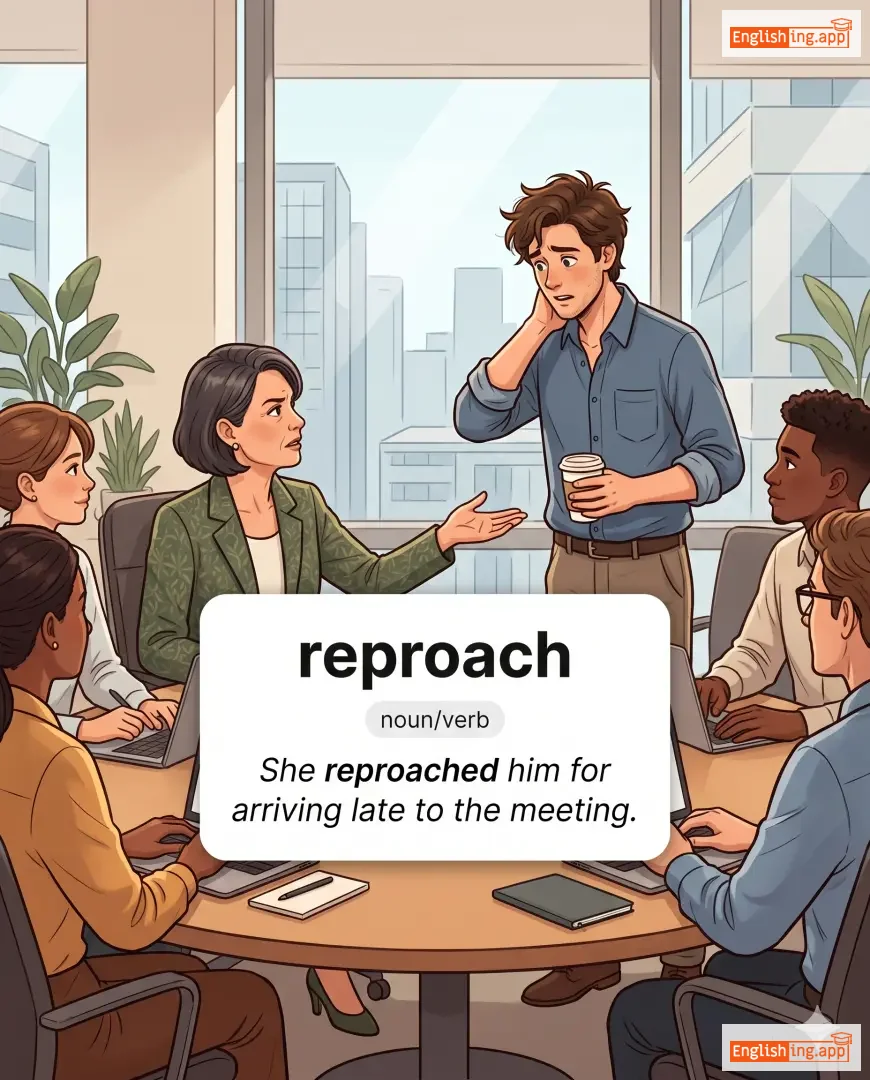
reproach definition card — visual illustration of the meaning
noun/verb
/rɪˈproʊtʃ/
reproche / critique (reproche / critique)

An expression of disapproval or disappointment; to criticize someone for doing wrong.

"She reproached him for arriving late to the meeting."

"Elle lui a reproché d'arriver en retard à la réunion." (Elle lui a reproché d'arriver en retard à la réunion.)