वोकैबुलरीज

इंग्लिश वोकैबुलरी डिस्कवर, लर्न और मास्टर करें

noun
/ˈpʌblɪʃɪŋ/
प्रकाशन (publishing)

the business or activity of preparing and issuing books, journals, or other material for sale

"He works in the publishing industry as an editor."

"वह प्रकाशन उद्योग में एक संपादक के रूप में काम करता है।" (vah prakashan udyog mein ek sampadak ke roop mein kaam karta hai.)
verb
/ˈpʌkər/
कुचकाना (kuchkana)

to tighten or contract into small folds or wrinkles

"She puckered her lips before kissing the child."

"उसने बच्चे को किस करने से पहले अपने होठों को सिकोड़ लिया।" (Usne bachche ko kiss karne se pehle apne hothon ko sikod liya.)
adjective
/ˈpʌkɪʃ/
चुलबुला (chulbula)

playfully mischievous

"The child gave a puckish grin before hiding the toy."

"बच्चे ने खिलौना छिपाने से पहले चुलबुली मुस्कान दी।" (Bacche ne khilona chhupane se pehle chulbuli muskaan di.)
noun
/ˈpʊdɪŋ/
पुडिंग (puding)

a sweet or savory dish, often soft and creamy, eaten as dessert

"She made chocolate pudding for dessert."

"उसने डेसर्ट के लिए चॉकलेट पुडिंग बनाई।" (Usne dessert ke liye chocolate pudding banayi.)
adjective
/ˈpʌdʒi/
थोड़ा मोटा (thoda mota)

slightly fat or chubby in a way that is often cute

"The baby had pudgy cheeks that everyone adored."

"बेबी के गाल थोड़े मोटे थे जिन्हें हर कोई पसंद करता था।" (Baby ke gaal thode mota the jinhen har koi pasand karta tha.)
adjective
/ˈpjʊəraɪl/
बालसुलभ (baalsulabh)

childishly silly or immature

"His puerile jokes annoyed the audience."

"उसकी बालसुलभ जोक्स ने दर्शकों को परेशान कर दिया।" (Uski baalsulabh jokes ne darshako ko pareshan kar diya.)
noun
/ˈpjuːdʒɪlɪzəm/
मुक्केबाजी (mukkebaazi)

The practice or sport of boxing.

"He studied the art of pugilism in his youth."

"उसने अपने युवावस्था में मुक्केबाजी की कला का अध्ययन किया।" (Usne apne yuvaavastha mein mukkebaazi ki kala ka adhyayan kiya.)
noun
/ˈpjuːdʒɪlɪst/
पहलवान (pehalwan)

A professional or skilled boxer.

"The pugilist entered the ring with confidence."

"पहलवान आत्मविश्वास के साथ रिंग में प्रवेश किया।" (Pehalwan atmvishwas ke saath ring mein pravesh kiya.)
adjective
/pʌɡˈneɪʃəs/
झगड़ालू (jhagdaalu)

Having a quarrelsome or combative nature; eager to fight.

"His pugnacious attitude often got him into trouble."

"उसका झगड़ालू व्यवहार अक्सर उसे मुसीबत में डालता था।" (Uska jhagdaalu vyavhaar aksar use musibat mein daalta tha.)
noun
/pʌɡˈnæsɪti/
लड़ाई-झगड़े की प्रवृत्ति (ladai-jhagde ki pravritti)

A natural disposition to be combative or aggressive.

"The coach admired the player's pugnacity on the field."

"कोच ने मैदान में खिलाड़ी की पगनैसिटी की सराहना की।" (Coach ne maidan mein kheladi ki pugnacity ki sarahna ki.)
noun
/ˈpjuːɪsəns/
शक्ति (shakti)

Great power, strength, or influence.

"The empire showed its puissance through vast armies."

"सम्राज्य ने विशाल सेनाओं के माध्यम से अपनी शक्ति दिखायी।" (Samraajya ne vishal senaon ke madhyam se apni shakti dikhayi.)
adjective
/ˈpjuːɪsənt/
शक्तिशाली (shaktishali)

having great power or influence; mighty

"The king was a puissant ruler whose word was law."

"राजा एक शक्तिशाली शासक था जिसकी बात कानून मानी जाती थी।" (Raja ek shaktishali shasak tha jiske baat kanoon maani jaati thi.)
noun
/ˈpʌlkrɪˌtjuːd/
सौंदर्य (soundarya)

physical beauty

"The actress was admired for her pulchritude as well as her talent."

"अभिनेत्री को उसकी सौंदर्य और प्रतिभा के लिए प्रशंसा की गई थी।" (Abhinetri ko uski soundarya aur pratibha ke liye prashansa ki gayi thi.)
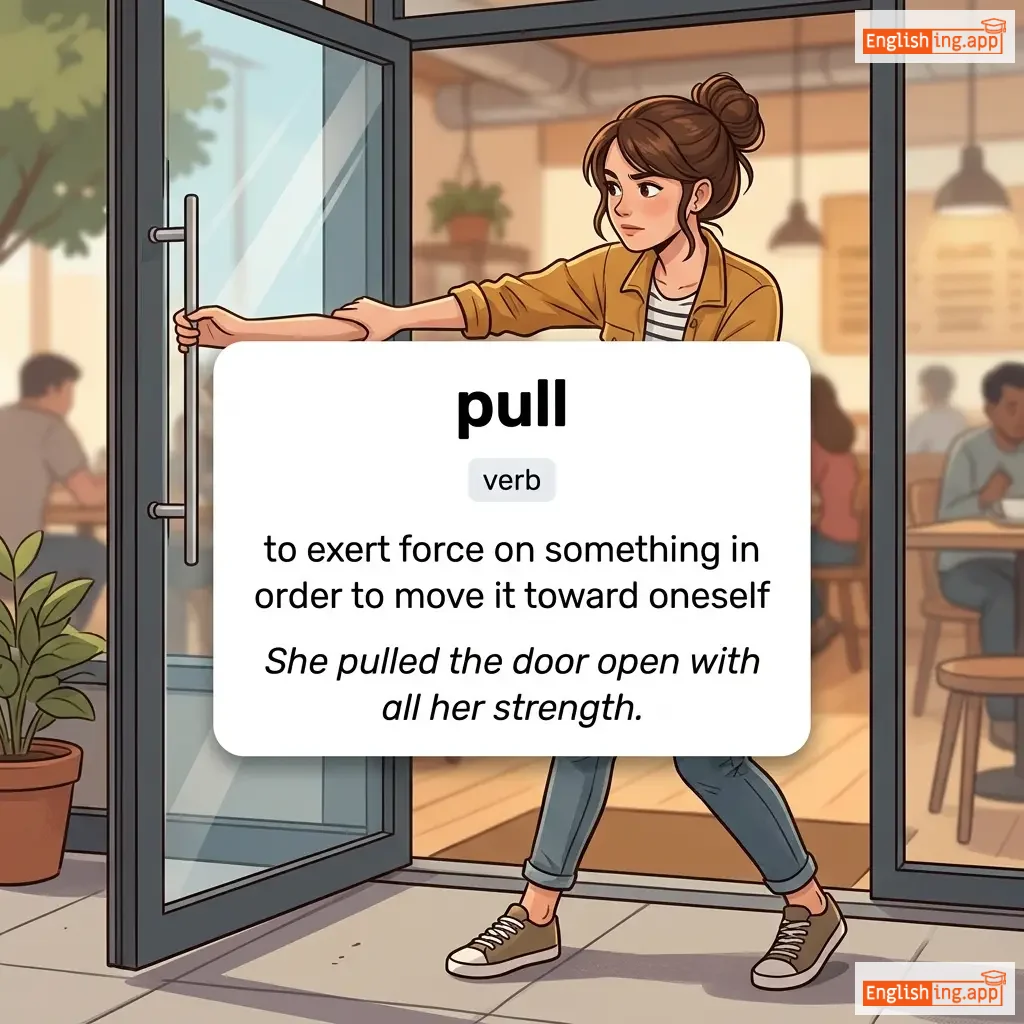
pull definition card — visual illustration of the meaning
verb
/pʊl/
खींचना (kheenchna)

to exert force on something in order to move it toward oneself

"She pulled the door open with all her strength."

"उसने अपनी सारी ताकत से दरवाज़ा खोला।" (Usne apni saari taakat se darwaza khola.)
noun
/ˈpʊl.oʊ.vər/
स्वेटर (sweter)

a knitted garment worn on the upper body, typically pulled on over the head

"She wore a warm pullover during the cold winter evening."

"उसने ठंडी सर्दी की शाम में एक गर्म स्वेटर पहना था।" (usne thandi sardi ki shaam mein ek garm sweter pehna tha.)
adjective
/ˈpʌlməˌneri/
फेफड़ों से सम्बन्धित (fephdon se sambandhit)

relating to the lungs

"The patient suffered from a serious pulmonary infection."

"रोगी को एक गंभीर पल्मोनरी संक्रमण हुआ।" (rogi ko ek gambhir pulmonary sankraman hua)
noun
/ˈpʊlpɪt/
धर्मोपदेश मञ्च (dharmopadesh manch)

a raised platform in a church from which the preacher delivers a sermon

"The pastor stood at the pulpit to address the congregation."

"पादरी ने मंडली से संबोधित करने के लिए पलपिट पर खड़ा हुआ।" (Padri ne mandali se sambodhit karne ke liye palpit par khada hua.)
verb
/ˈpʌlseɪt/
धड़कना (dhadakna)

to expand and contract rhythmically; to throb or beat

"The neon lights pulsated with a steady rhythm."

"नियॉन लाइट्स एक स्थिर लय में धड़क रही थीं।" (Niyon lights ek sthir lay mein dhadak rahi thin.)
noun/verb
/pʌls/
नाड़ी (naadi)

A rhythmic beat or vibration, especially the heartbeat; to throb or move with a rhythm.

"The doctor checked her pulse after the long run."

"दौड़ने के बाद डॉक्टर ने उसकी नाड़ी चेक की।" (Daudne ke baad doctor ne uski naadi check ki.)
verb
/ˈpʌlvəraɪz/
पिसना (pisna)

To crush or grind something into a fine powder; to completely defeat or destroy.

"The machine can pulverize stones into dust."

"मशीन पत्थरों को धूल में पल्वराइज़ कर सकती है।" (Machine patharon ko dhool mein pulverize kar sakti hai.)
verb
/ˈpʌməl/
पीटना (peetna)

To strike repeatedly with the fists; to beat or hit forcefully.

"The boxer pummeled his opponent in the final round."

"अंतिम राउंड में बॉक्सर ने अपने प्रतिद्वंद्वी को बुरी तरह पीटा।" (antim round me boxer ne apne pratidvandvi ko buri tarah peeta.)
verb
/pʌmp/
पंप करना (pamp karna)

to force liquid or gas to move in a particular direction using a device

"They pumped water from the well into the tank."

"उन्होंने कुएं से पानी पंप किया।" (Unhone kuen se pani pamp kiya.)
noun
/'pʌmp.kɪn/
कद्दू (kaddu)

a large round orange fruit with thick skin and edible flesh

"We carved a jack-o'-lantern from a big pumpkin."

"हमने एक बड़े कद्दू से जैक-ओ'-लैंटर्न उकेरा।" (hamne ek bade kaddu se jack-o'-lantern ukeyra)
noun
/pʌn/
शब्दविन्यास (shabdvinyas)

A humorous use of words that suggests different meanings or words that sound alike.

"He made a clever pun about the bakery's bread rising."

"उसने बेकरी की ब्रेड उठने के बारे में एक चतुर शब्दविन्यास किया।" (Usne bakery ki bread uthne ke baare mein ek chatur shabdvinyas kiya.)
verb
/pʌntʃ/
घूंसा मारना (ghoonsa maarna)

to hit someone or something hard with your fist

"He punched the wall in frustration."

"उसने निराशा में दीवार पर पंच मारा।" (Usne niraasha mein deewar par punch maara.)
noun
/ˈpʌntʃ laɪn/
पंच लाइन (panch line)

The final part of a joke or story that makes it funny.

"Everyone laughed loudly at the punch line of his joke."

"सभी ने उसकी मजाक के पंच लाइन पर जोर से हंसी मारी।" (Sabhi ne uski mazaak ke panch line par zor se hansi maari.)
adjective
/pʌŋkˈtɪliəs/
विवरण पर विशेष ध्यान देने वाला (vivaran par vishesh dhyan dene wala)

Showing great attention to detail or correct behavior.

"She was punctilious in her attention to etiquette."

"वह शिष्टाचार के प्रति अपनी अत्यधिक ध्यान देने वाली थी।" (Vah shishtachar ke prati apni atyadhik dhyan dene wali thi.)
adjective
/ˈpʌŋktʃuəl/
समय के पाबंद (punctual)

Happening or doing something at the agreed or proper time; on time.

"He is always punctual for meetings."

"वह बैठकों के लिए हमेशा समय पर रहता है।" (vah baithakon ke liye hamesha samay par rahta hai)
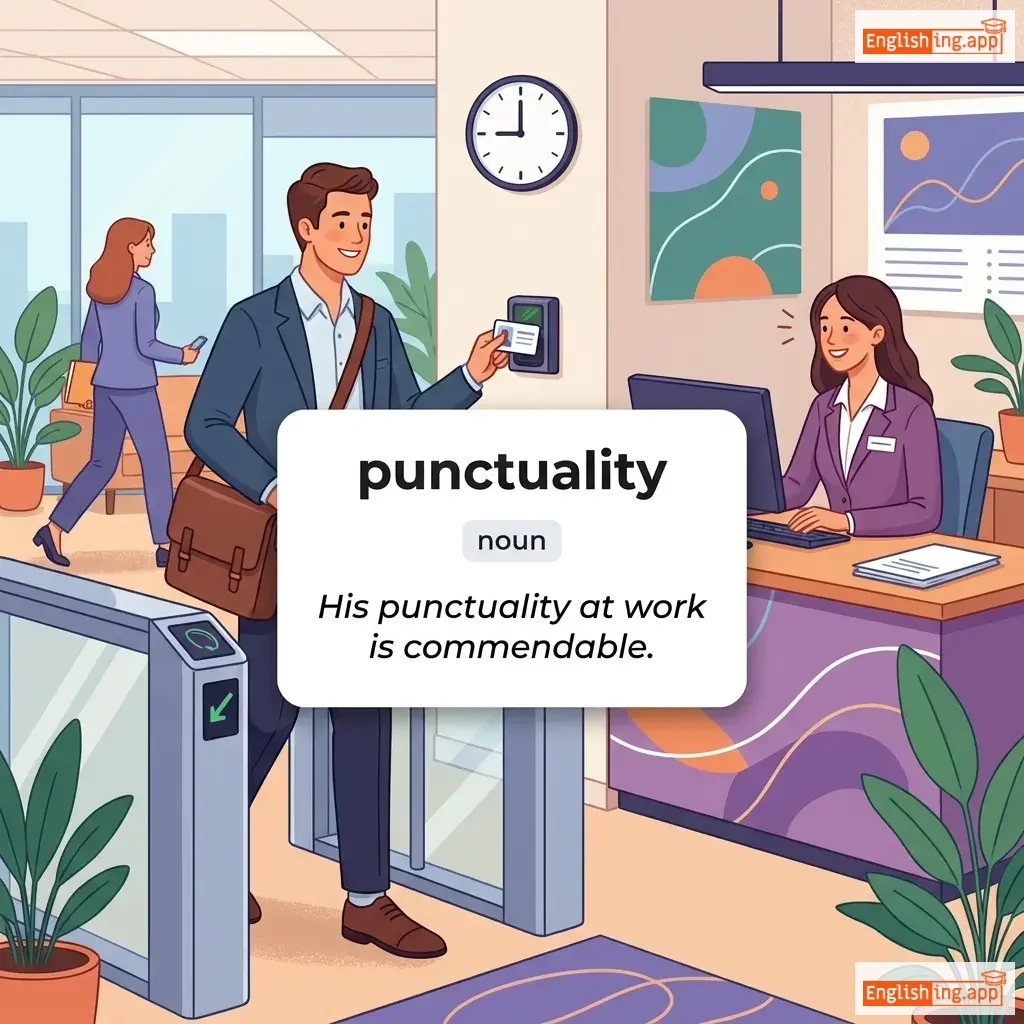
punctuality definition card — visual illustration of the meaning
noun
/ˌpʌŋk.tʃuˈæl.ə.ti/
समय पालन (samay paalan)

The quality or habit of being on time; arriving or occurring at the scheduled time.

"His punctuality at work is commendable."

"उसकी कार्यस्थल पर समय पालन सराहनीय है।" (Uski karyasthal par samay paalan sarahniya hai.)
adverb
/ˈpʌŋk.tʃu.əl.i/
समय पर (samay par)

at the exact time arranged; on time; not late

"She always arrives punctually for meetings."

"वह हमेशा बैठकों के लिए समय पर पहुँचती है।" (vah hamesha baithako ke liye samay par pahuchti hai)
noun
/ˈpʌŋk.tʃər/
टायर में छेद (tayar mein chhed)

a small hole in a tire that causes air to escape

"I had to fix a puncture in my bicycle tire this morning."

"मैंने इस सुबह अपनी साइकिल के टायर में पंक्चर ठीक किया।" (maine is subah apni cycle ke tire mein puncture theek kiya.)
noun
/ˈpʌndɪt/
पंडित (pundit)

An expert in a particular subject or field who is frequently called upon to give opinions to the public.

"Political pundits debated the election results on television."

"राजनीतिक पंडितों ने टेलीविज़न पर चुनाव परिणामों पर बहस की।" (Rajnaitik panditon ne television par chunav parinaamon par bahas ki.)
noun
/ˈpʌndʒənsi/
तीव्रता (teevrata)

The quality of having a strong, sharp taste or smell.

"The pungency of garlic filled the kitchen."

"लहसुन की तीव्रता ने रसोई को भर दिया।" (Lahsun ki teevrata ne rasoi ko bhar diya.)
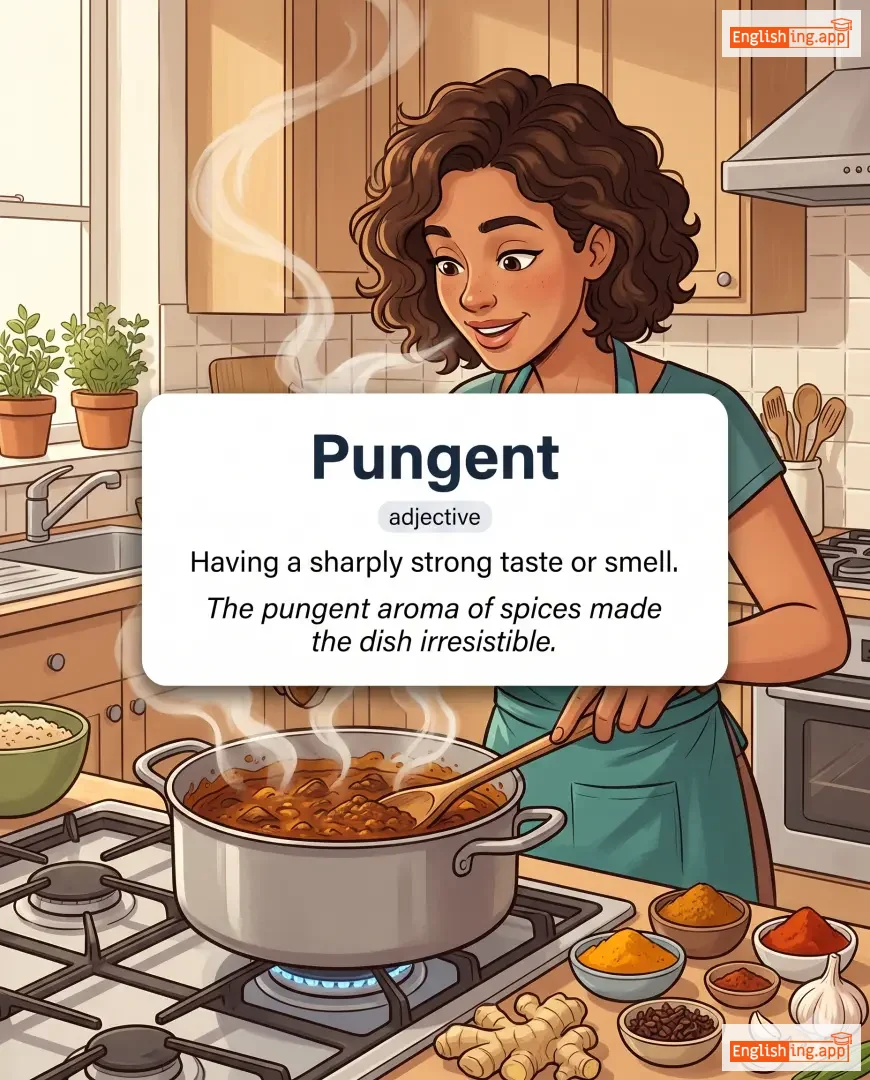
Pungent definition card — visual illustration of the meaning
adjective
/ˈpʌndʒənt/
तीव्र गंध या स्वाद (teevr gandh ya swaad)

Having a sharply strong taste or smell.

"The pungent aroma of spices made the dish irresistible."

"मसालों की तीव्र गंध ने व्यंजन को अपरिहार्य बना दिया।" (Masalon ki teevr gandh ne vyanjan ko aparihary bana diya.)
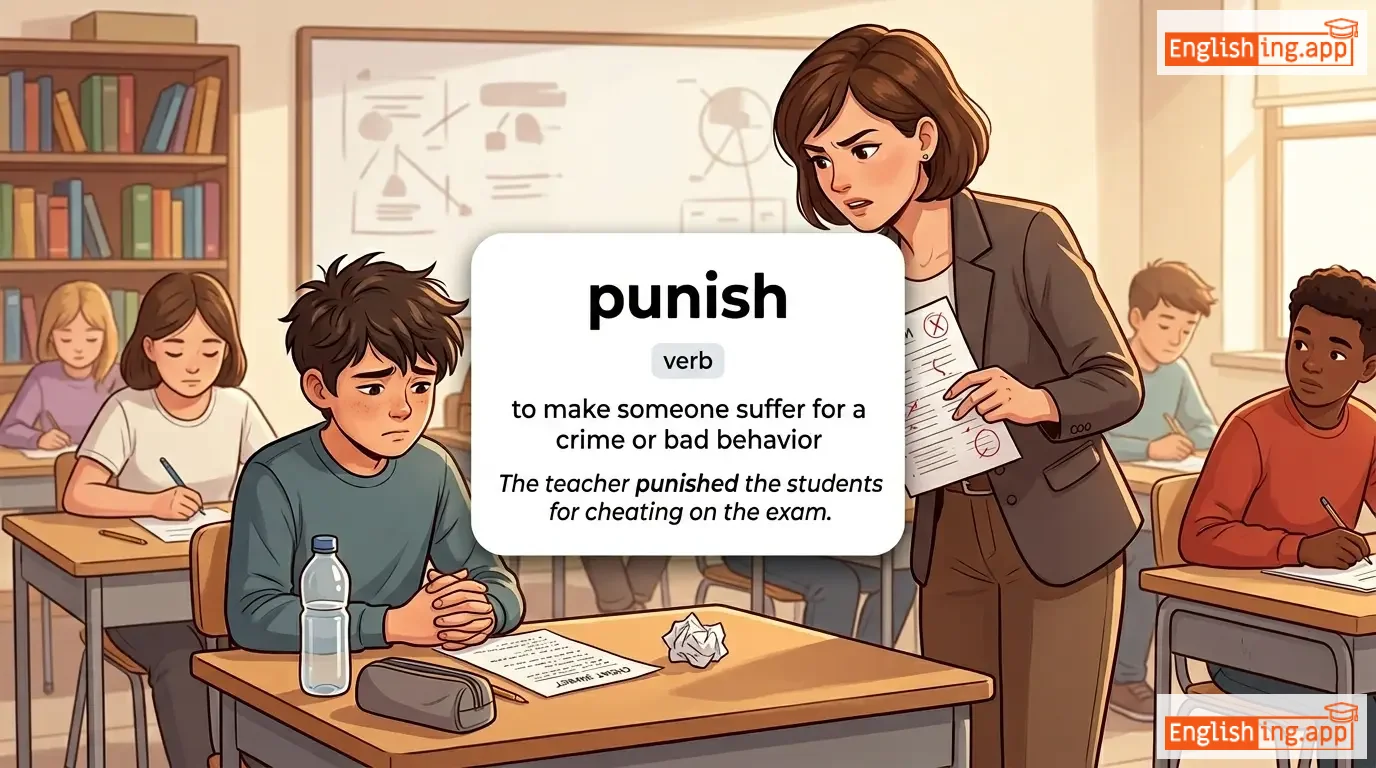
punish definition card — visual illustration of the meaning
verb
/ˈpʌnɪʃ/
सजा देना (saza dena)

to make someone suffer for a crime or bad behavior

"The teacher punished the students for cheating on the exam."

"अध्यापक ने परीक्षा में धोखाधड़ी के लिए छात्रों को सजा दी।" (Adhyapak ne pareeksha mein dhokhaadhadi ke liye chatron ko saza di.)
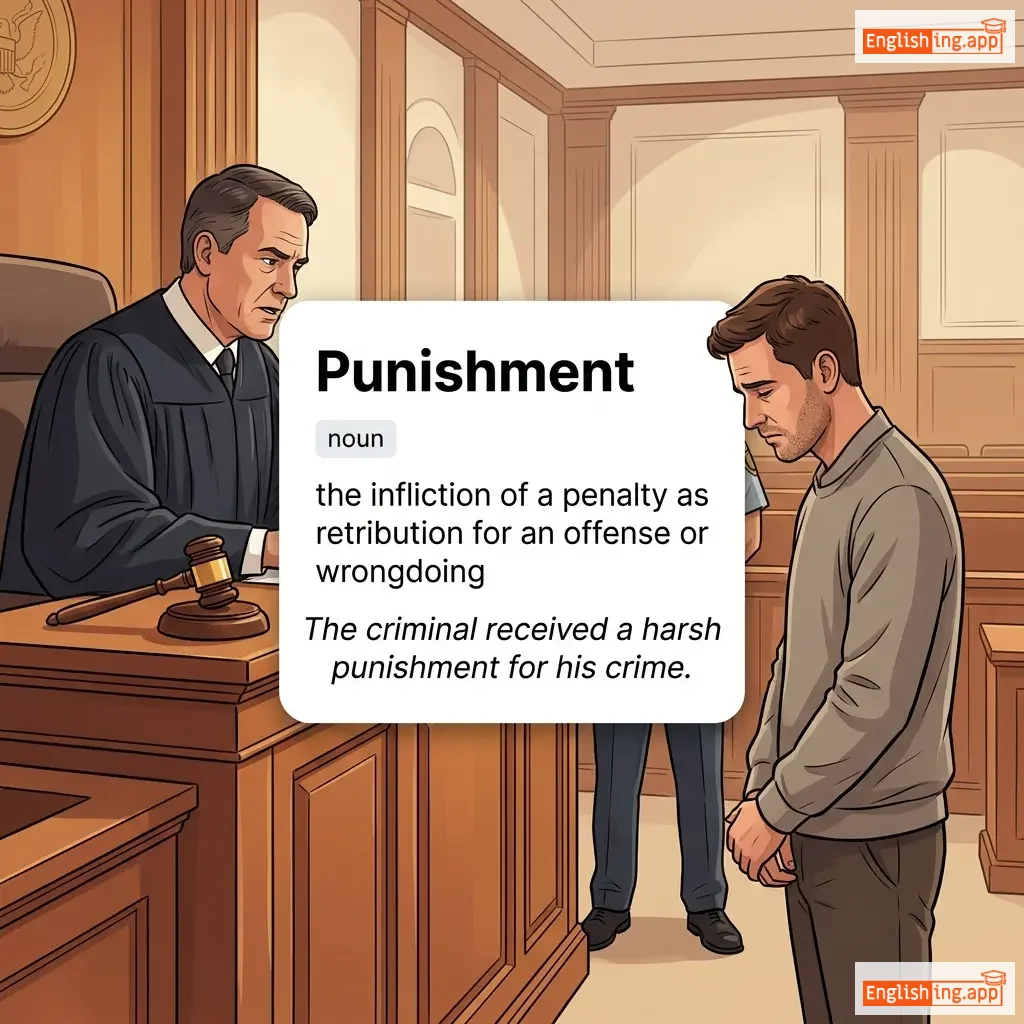
Punishment definition card — visual illustration of the meaning
noun
/ˈpʌnɪʃmənt/
सजा (saza)

the infliction of a penalty as retribution for an offense or wrongdoing

"The criminal received a harsh punishment for his crime."

"अपराधी ने अपने अपराध के लिए कठोर सजा प्राप्त की।" (Aparadhi ne apne aparadh ke liye kathor saza praapt ki.)
adjective
/ˈpjuː.nɪ.tɪv/
दंडात्मक (dantatmak)

Inflicting or intended as punishment.

"The company faced punitive measures for violating the law."

"कंपनी को कानून का उल्लंघन करने के लिए दंडात्मक कदमों का सामना करना पड़ा।" (Kampani ko kanoon ka ullanghan karne ke liye dantatmak kadmon ka samna karna pada.)
noun
/pʌnˈdʒɑː.bi/
पंजाबी (punjabi)

a traditional long shirt worn in South Asia, typically loose-fitting

"He wore a white punjabi for the festival celebration."

"उसने त्योहार के अवसर पर सफेद पंजाबी पहना।" (usne tyohaar ke avsar par safed punjabi pehna.)
noun
/pʌŋk/
पंक (punk)

a type of popular music, or the culture associated with it, characterized by loud, fast rhythms and rebellious attitudes

"He’s always been into punk music and fashion."

"वह हमेशा पंक संगीत और फैशन में रुचि रखते थे।" (Woh hamesha punk sangeet aur fashion mein ruchi rakhte the.)
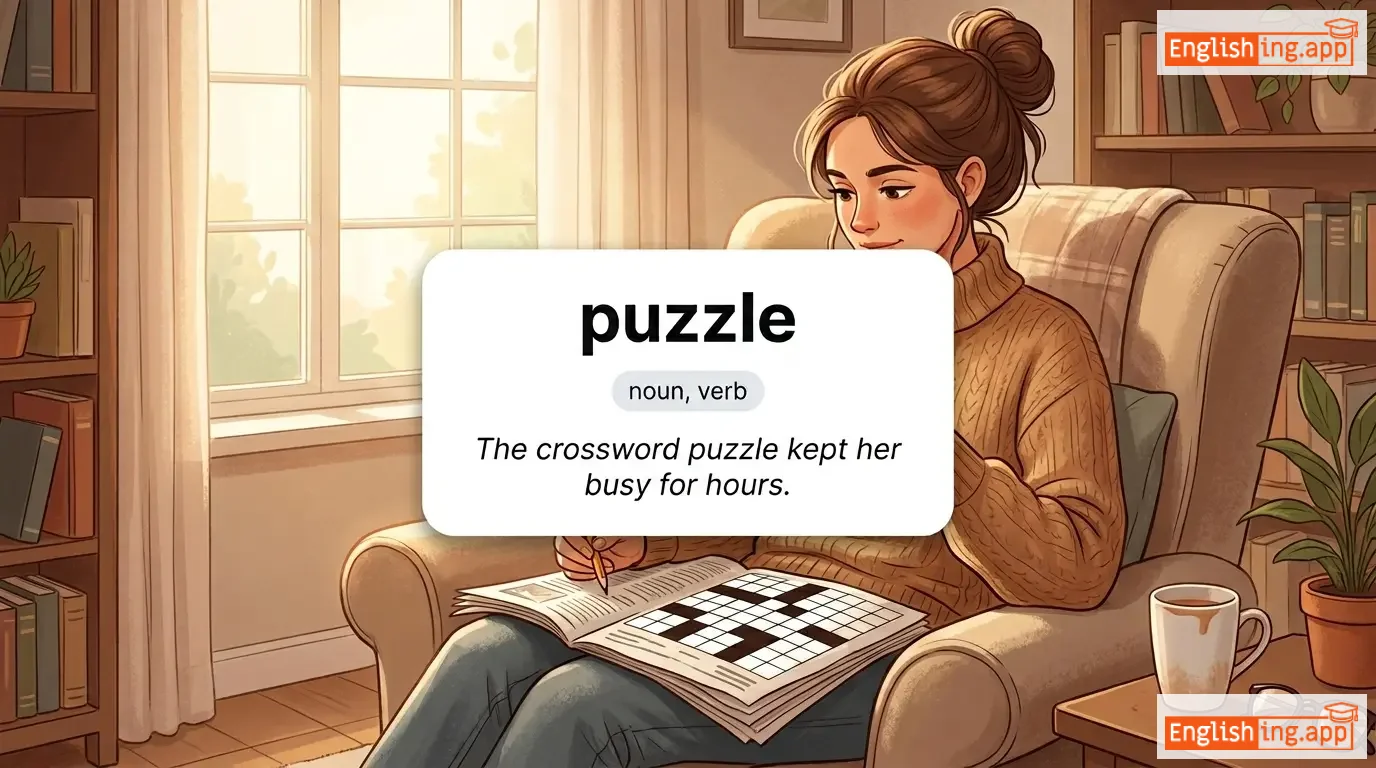
puzzle definition card — visual illustration of the meaning
noun, verb
/ˈpʌzl/
पहेली / भ्रमित करना (paheli / bhramit karna)

a game, toy, or problem designed to test ingenuity; to cause someone to be confused

"The crossword puzzle kept her busy for hours."

"क्रॉसवर्ड पहेली ने उसे घंटों तक व्यस्त रखा।" (Crossword paheli ne use ghanton tak vyast rakha.)
adjective
/ˈpɪrɪk/
पीर्रिक विजय (pirrik vijay)

A victory won at such a great cost that it is almost equivalent to defeat.

"The general declared the battle a pyrrhic victory due to heavy losses."

"जनरल ने भारी नुकसान के कारण युद्ध को एक पीर्रिक विजय घोषित किया।" (Janral ne bhaari nuksan ke karan yudh ko ek pirrik vijay ghoshit kiya.)
adjective
/ˌpaɪroʊˈtɛknɪk/
आतिशबाज़ी से संबंधित (atishbazi se sambandhit)

Relating to fireworks or spectacular displays involving fire.

"The city celebrated with a grand pyrotechnic display on New Year's Eve."

"शहर ने नए साल की पूर्व संध्या पर एक शानदार आतिशबाज़ी प्रदर्शनी का आयोजन किया।" (Shahar ne naye saal ki poorv sandhya par ek shandaar atishbazi pradarshani ka aayojan kiya.)
noun
/ˌpaɪroʊˈmeɪniæk/
आगजनी का आदी व्यक्ति (aagjani ka aadi vyakti)

A person with an uncontrollable desire to set things on fire.

"The pyromaniac was arrested for setting several buildings ablaze."

"आगजनी के आदी व्यक्ति को कई इमारतों में आग लगाने के लिए गिरफ्तार किया गया।" (Aagjani ke aadi vyakti ko kai imaaraton mein aag lagane ke liye giraftaar kiya gaya.)
noun
/ˌpaɪrəˈmeɪniə/
आग लगाने की अनियंत्रित इच्छा (aag lagane ki aniyantrit ichcha)

An uncontrollable desire to set things on fire.

"The suspect was diagnosed with pyromania after repeated incidents of arson."

"संदिग्ध को बार-बार आगजनी की घटनाओं के बाद पाइरोमेनिया का निदान किया गया था।" (Sandigdh ko bar-bar aagjani ki ghatnaon ke baad pyromania ka nidhan kiya gaya tha.)
noun
/paɪər/
चिता (chita)

A heap of combustible material, especially one used for burning a corpse as part of a funeral ceremony.

"The villagers built a pyre to honor the deceased."

"गाँववालों ने मृतक को सम्मान देने के लिए एक चिता बनाई।" (Gaanwalon ne mrtak ko samman dene ke liye ek chita banayi.)
adjective
/ˈpʌz.lɪŋ/
पेचीदा (pazling)

confusing; perplexing;

"The scientist found the results puzzling."

"वैज्ञानिक ने परिणामों को पेचीदा पाया।" (vaigyanik ne parinaamon ko peechida paaya.)
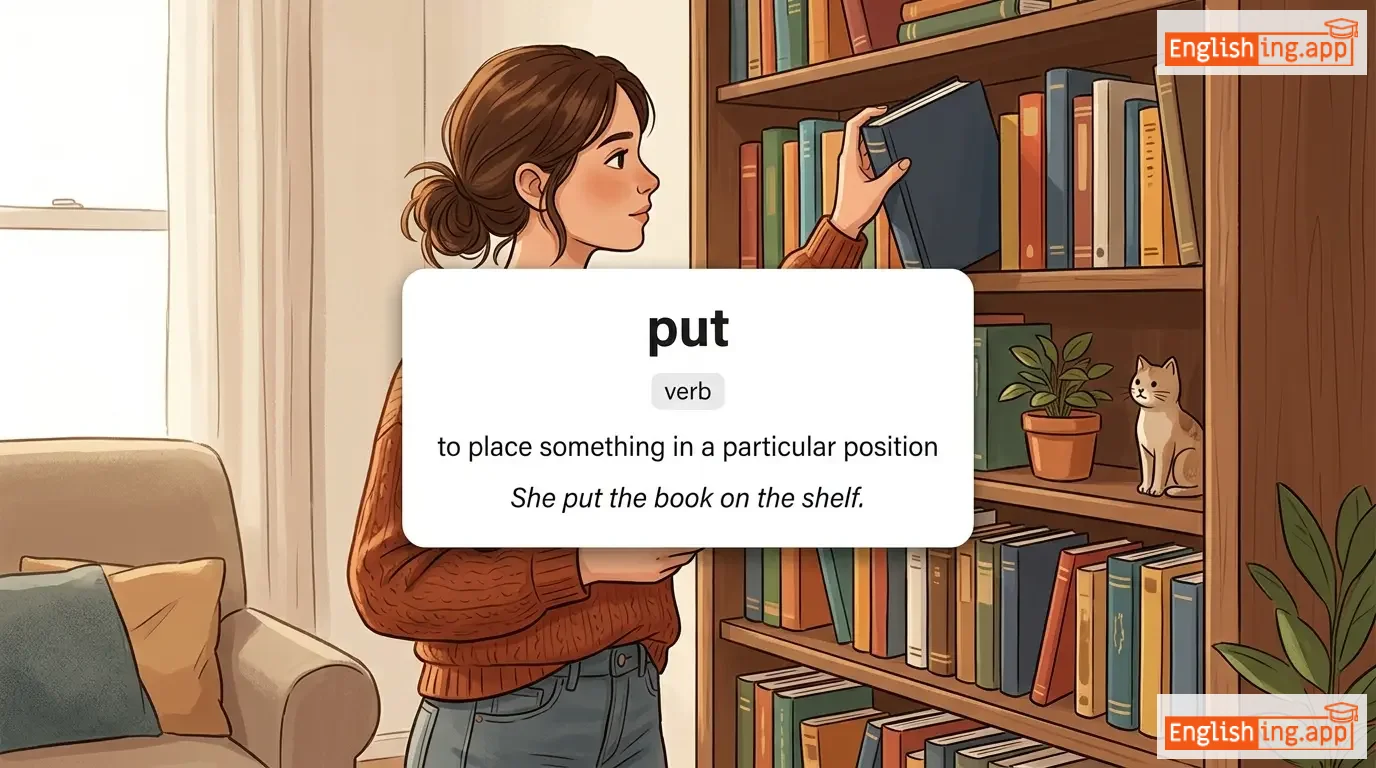
put definition card — visual illustration of the meaning
verb
/pʊt/
रखना (rakhna)

to place something in a particular position

"She put the book on the shelf."

"उसने किताब को शेल्फ पर रखा।" (Usne kitaab ko shelf par rakha.)
adjective
/ˈpjuːtətɪv/
अनुमानित (anumanit)

commonly accepted or supposed; generally regarded as such

"He is the putative father of the child."

"वह बच्चे का अनुमानित पिता है।" (Vah bachche ka anumanit pita hai.)
verb
/ˈpjuːtrɪfaɪ/
सड़ना (sadna)

to decay or rot, producing a foul smell

"The meat began to putrefy in the heat."

"मांस गर्मी में सड़ने लगा।" (Mans garmi mein sadne laga.)
adjective
/ˌpjuːsɪˈlænɪməs/
नपुंसक (napunsak)

showing a lack of courage or determination; timid

"The pusillanimous leader avoided making tough decisions."

"नपुंसक नेता कठिन निर्णय लेने से बचते थे।" (Napunsak neta kathin nirnay lene se bachte the.)