词汇表

英语词汇词典 | 单词含义、定义和示例

noun
/ˌsɛlfsəˈfɪʃənsi/
自给自足 (zì jǐ zì zú)

the ability to supply one's own needs without external assistance; independence

"The farm achieved complete self-sufficiency in food production."

"农场在食品生产中实现了完全的自给自足。" (Nongchang zai shipin shengchan zhong shixian le wanquan de ziji zizu.)
adjective
/ˌsɛlf ˈraɪtʃəs/
自以为是 (zì yǐ wéi shì)

Having or showing an attitude of moral superiority; believing one’s own beliefs are the only right ones.

"His self-righteous comments made everyone uncomfortable."
"他的自以为是的评论让每个人都感到不舒服。" (Tā de zì yǐ wéi shì de píng lùn ràng měi gè rén dōu gǎn dào bù shū fu.)
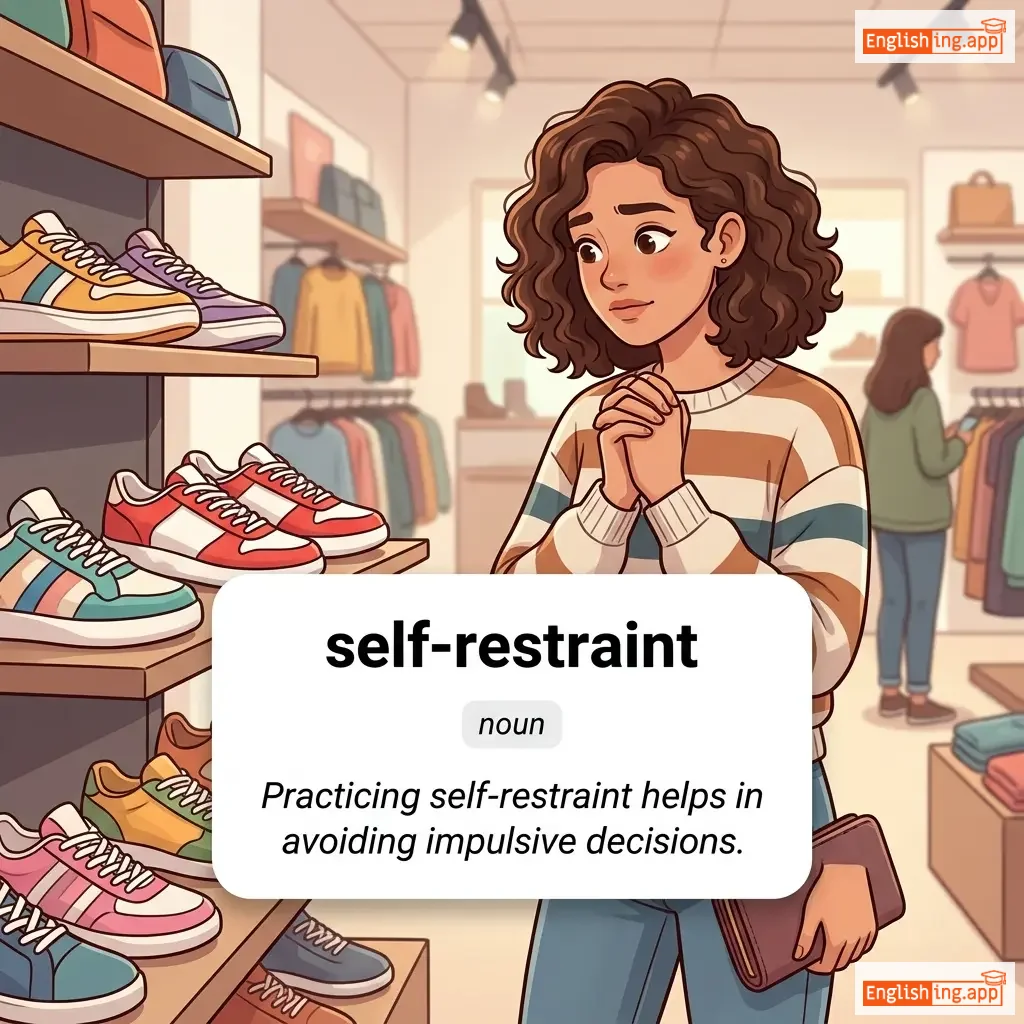
self-restraint definition card — visual illustration of the meaning
noun
ˌsɛlf.rɪˈstreɪnt
自我克制 (zi wo ke zhi)

The practice of restraining oneself from indulging in something, typically an impulse or desire.

"Practicing self-restraint helps in avoiding impulsive decisions."

"实践自我克制有助于避免冲动的决策。" (Shíjiàn zìwǒ kèzhì yǒu zhù yú bìmiǎn chōngdòng de juécè.)
noun
/ˌsɛlf rɪˈspɛkt/
自尊 (zizun)

A feeling of pride and confidence in oneself; self-worth.

"She refused to compromise her self-respect by accepting unfair treatment."

"她拒绝通过接受不公平的待遇来妥协自己的自尊。" (Tā jùjué tōngguò jiēshòu bù gōngpíng de dàiyù lái tuǒxié zìjǐ de zìzūn.)
self-reliance definition card — visual illustration of the meaning
noun
sɛlf rɪˈlaɪ.əns
自给自足 (zì jǐ zì zú)

Reliance on one's own powers and resources rather than those of others; independence.

"Self-reliance helps build confidence."

"自给自足帮助建立自信。" (Zì jǐ zì zú bāngzhù jiànlì zìxìn.)
self-possession definition card — visual illustration of the meaning
noun
ˈsɛlf pəˈzɪʃən
自控力 (zì kòng lì)

The quality of being calm and confident and in control of one's emotions; composure.

"His self-possession during the crisis was remarkable."

"他在危机中的自控力令人钦佩。" (Tā zài wēijī zhōng de zì kòng lì lìng rén qīn pèi.)
noun
/ˌsɛlf ɪnˈdʌldʒəns/
自我纵容 (zì wǒ zòng rónɡ)

The act of allowing oneself to enjoy pleasures or desires excessively.

"His weekend of self-indulgence included eating sweets and watching movies nonstop."

"他的自我纵容周末包括吃糖果和不停地看电影。" (Tā de zì wǒ zòng rónɡ zhōumò bāokuò chī tángguǒ hé bùtíng de kàn diànyǐng.)
noun
/ˌsɛlf ɪˈstiːm/
自尊 (zizun)

confidence in one's own worth or abilities; self-respect

"Building self-esteem takes time and consistent effort."

"建立自尊需要时间和持续的努力。" (Jianli zizun xuyao shijian he chixu de nuli.)
adjective
/ˌsɛlf ɪˈfeɪsɪŋ/
谦虚的 (qianxu de)

not drawing attention to oneself; modest

"Despite his success, he remained self-effacing and humble."

"尽管他取得了成功,他仍然保持谦虚和谦逊。" (Jingguan ta qude le chenggong, ta rengran baochi qianxu he qianxun.)
self-discipline definition card — visual illustration of the meaning
noun
/ˈsɛlf ˈdɪsɪplɪn/
自律 (zì lǜ)

The ability to control one's feelings and overcome one's weaknesses; the ability to pursue what one thinks is right despite temptations to abandon it.

"Self-discipline is essential for achieving long-term goals."

"自律对实现长期目标至关重要。" (Zì lǜ duì shíxiàn chángqī mùbiāo zhìguān zhòngyào.)
self-control definition card — visual illustration of the meaning
noun
ˌsɛlf.kənˈtrəʊl
自我控制 (zi wo kong zhi)

The ability to control one's emotions, behavior, and desires in order to obtain some reward, or avoid some punishment, typically in the longer term.

"Self-control is important for maintaining a balanced life."
"自我控制对保持平衡的生活很重要。" (Zi wo kong zhi dui bao chi ping heng de sheng huo hen zhong yao.)
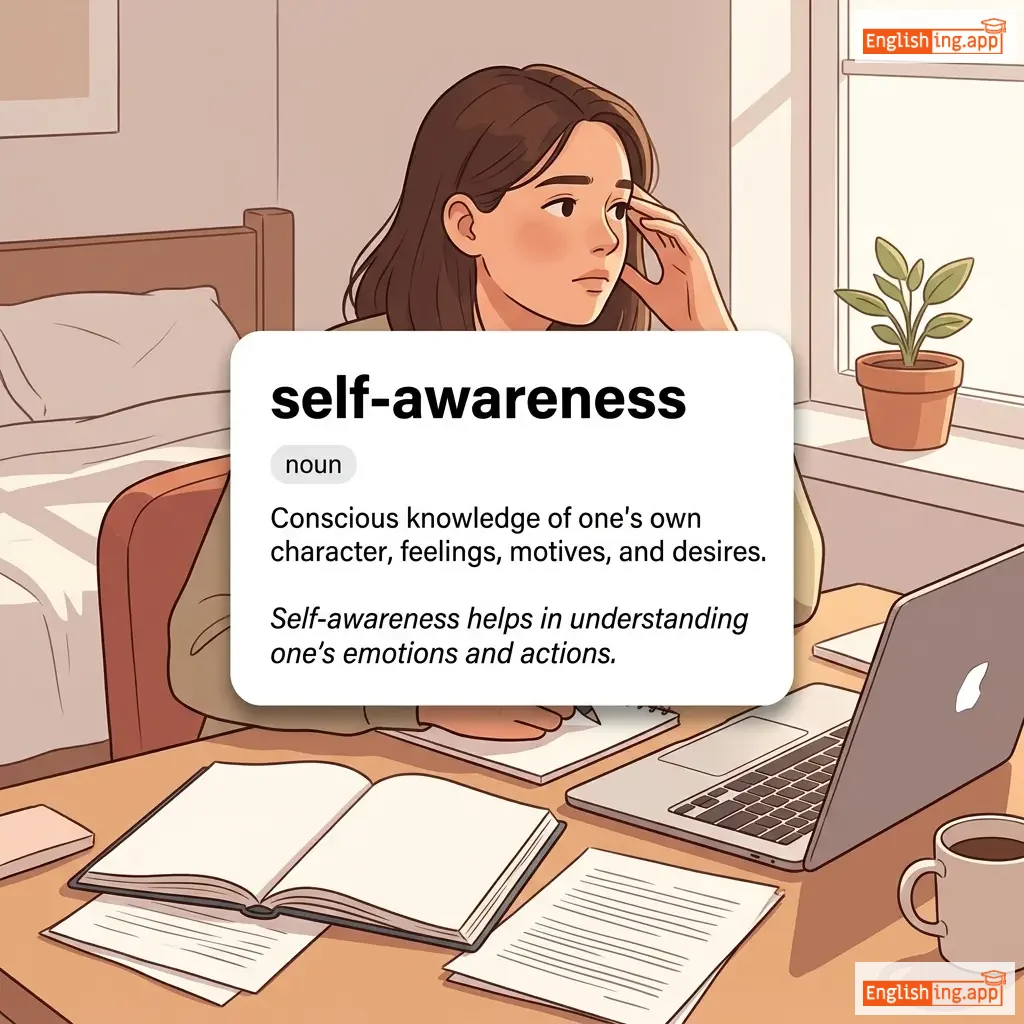
self-awareness definition card — visual illustration of the meaning
noun
/ˌsɛlf əˈwɛə.nəs/
自我意识 (zì wǒ yì shí)

Conscious knowledge of one's own character, feelings, motives, and desires.

"Self-awareness helps in understanding one's emotions and actions."

"自我意识有助于理解一个人的情感和行为。" (Zì wǒ yì shí yǒu zhù yú lǐjiě yīgè rén de qínggǎn hé xíngwéi.)
self-affirmation definition card — visual illustration of the meaning
noun
/ˌsɛlf əˌfɜːˈmeɪʃən/
自我肯定 (ziwo kending)

The practice of affirming one's own worthiness and value as an individual.

"Daily self-affirmation can boost your confidence."

"每日自我肯定可以增强你的自信。" (Meiri ziwo kending keyi zengqiang nide zixin.)
adjective
/ˌsɛlf əbˈzɔːrbd/
自我中心 (zìwǒ zhōngxīn)

Excessively preoccupied with oneself and one’s own thoughts, feelings, or interests.

"He was too self-absorbed to notice his friend's distress."

"他太过自我中心,没注意到朋友的困扰。" (Tā tài guò zìwǒ zhōngxīn, méi zhùyì dào péngyǒu de kùnrǎo.)
noun
/ˌself əˈbeɪs.mənt/
自我贬低 (zi wo bian di)

The act of belittling or humiliating oneself.

"His constant self-abasement made others uncomfortable."

"他不断的自我贬低让其他人感到不舒服。" (Ta buduan de zi wo bian di rang qita ren gan dao bu shufu.)
🧑‍💼

self (self)

noun
/sɛlf/
自我 (ziwo)

a person's essential being that distinguishes them from others, especially considered as the object of introspection or reflexive action

"She has a strong sense of self."

"她有强烈的自我意识。" (Tā yǒu qiángliè de zìwǒ yìshí.)
adjective
/sɪˈlek.tɪv/
选择性 (xuǎnzéxìng)

Characterized by careful choice; choosing only the best or most suitable.

"She is very selective about the clothes she buys."

"她在购买衣服时非常选择性。" (Tā zài gòumǎi yīfú shí fēicháng xuǎnzéxìng.)
selection definition card — visual illustration of the meaning
noun
/sɪˈlɛkʃən/
选择 (xuanze)

the act of choosing or the thing that is chosen

"The final selection will be announced tomorrow."

"最终选择将在明天宣布。" (Zuihou xuanze jiang zai mingtian xuānbù.)
adjective
/sɪˈlek.tɪd/
选定的 (xuǎn dìng de)

carefully chosen from a group for a particular purpose

"He was one of the selected candidates for the scholarship."
"他是获得奖学金的选定候选人之一。" (Tā shì huòde jiǎngxuéjīn de xuǎn dìng hòuxuǎn rén zhī yī.)
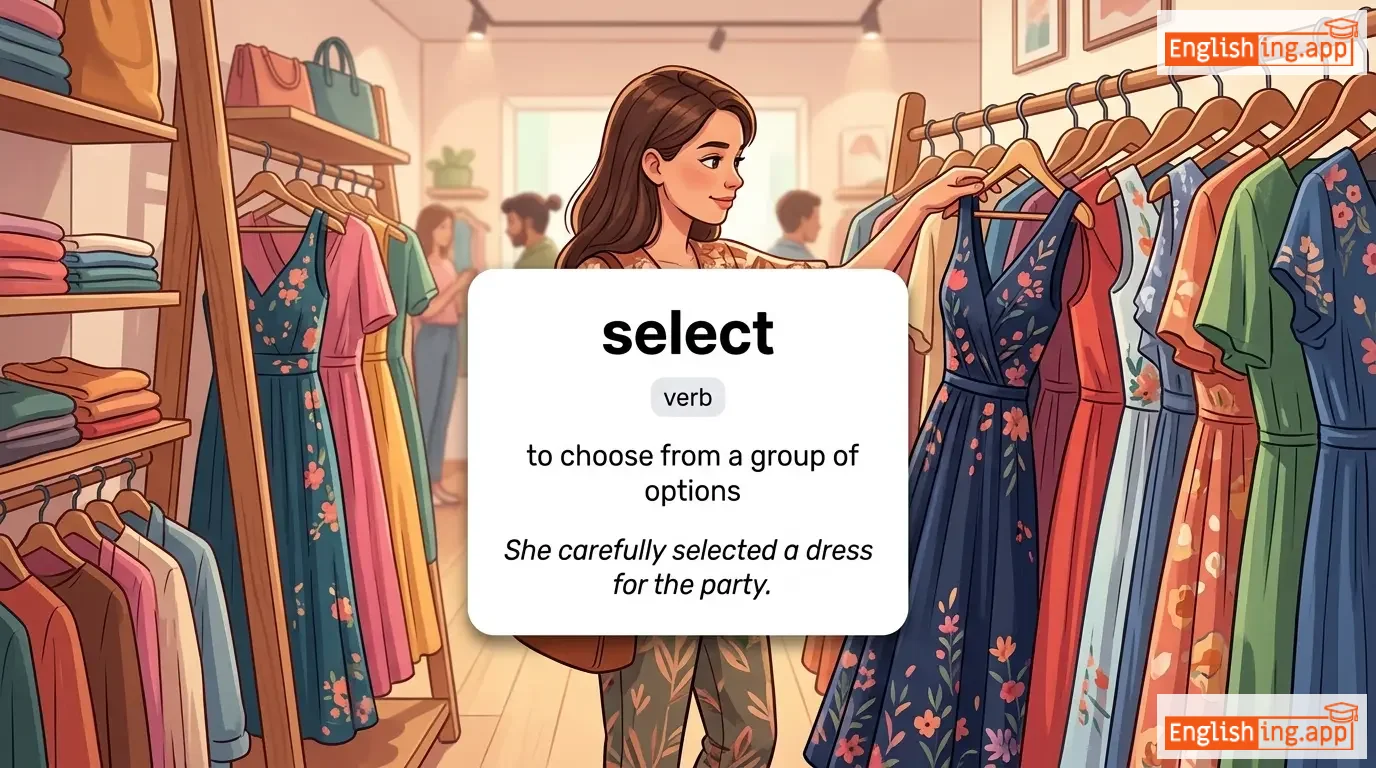
select definition card — visual illustration of the meaning
verb
/sɪˈlɛkt/
选择 (xuanze)

to choose from a group of options

"She carefully selected a dress for the party."

"她小心地为聚会选择了一件裙子。" (Tā xiǎoxīn de wèi jùhuì xuǎnzéle yī jiàn qúnzi.)
adverb
/ˈsel.dəm/
很少 (hěn shǎo)

not often; rarely

"She seldom visits her hometown nowadays."

"她现在很少回她的家乡。" (Tā xiànzài hěn shǎo huí tā de jiāxiāng.)
verb
/siːz/
夺取 (duóqǔ)

To take hold of suddenly and forcibly.

"The police managed to seize the stolen goods."

"警察成功没收了被盗的货物。" (Jǐngchá chénggōng mòshōule bèi dào de huòwù.)
noun
/sɪv/
筛子 (shaizi)

a utensil consisting of a wire or plastic mesh held in a frame, used for straining solids from liquids

"She used a sieve to separate the flour from lumps."

"她使用筛子将面粉与结块分开。" (Ta shiyong shaizi jiang mianfen yu jiekuai fenkai.)
noun
/ˈsaɪz.mə.ɡræf/
地震仪 (dizhenyi)

An instrument that measures and records details of earthquakes, such as force and duration.

"The seismograph detected a strong tremor in the area."
"地震仪检测到该地区的强烈震动。" (Dizhenyi jiance dao gai diqu de qianglie zhendong.)
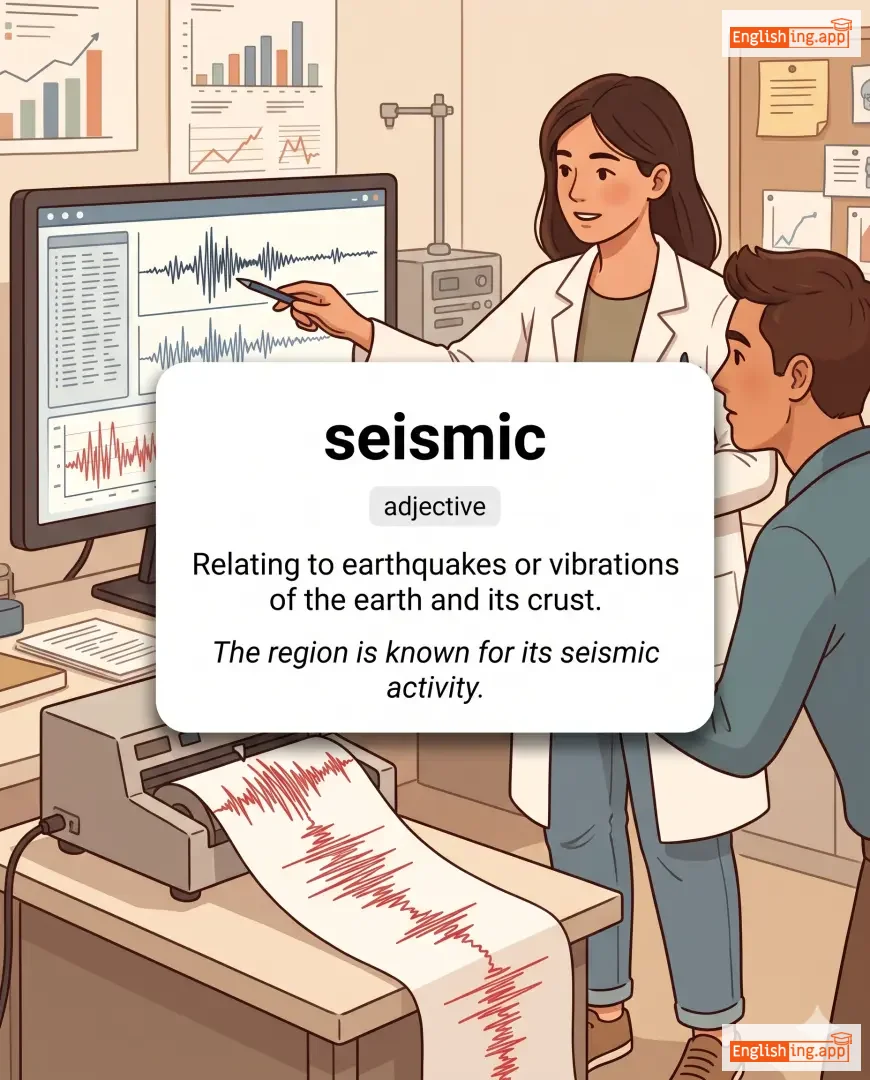
seismic definition card — visual illustration of the meaning
adjective
/ˈsaɪz.mɪk/
地震的 (dìzhèndè)

Relating to earthquakes or vibrations of the earth and its crust.

"The region is known for its seismic activity."

"该地区以其地震活动而闻名。" (Gāi dìqū yǐ qí dìzhèn huódòng ér wénmíng.)
noun
/seɪn/
大网 (dà wǎng)

A large fishing net that hangs vertically in the water.

"The fishermen cast their seine into the river."

"渔民把他们的大网扔进了河里。" (Yúmín bǎ tāmen de dà wǎng rēng jìnle hé lǐ.)
noun
/ˈseɪnjər/
封建领主 (fēngjiàn lǐngzhǔ)

A feudal lord; a man of authority in medieval Europe.

"The seignior demanded taxes from the peasants."

"封建领主向农民征税。" (Fēngjiàn lǐngzhǔ xiàng nóngmín zhēngshuì.)
noun
/ˈsɛɡmənt/
(duan)

A part or section of something that is divided.

"Each segment of the market has different needs."

"市场的每个段都有不同的需求。" (Shìchǎng de měi gè duàn dōu yǒu bùtóng de xūqiú.)
verb
/siːð/
怒火中烧 (nù huǒ zhōng shāo)

To be filled with intense but unexpressed anger or agitation.

"She was seething with anger after the unfair decision."

"她在不公平的决定后怒火中烧。" (Tā zài bù gōngpíng de juédìng hòu nù huǒ zhōng shāo.)
noun
/sɪr/
预言者 (yùyán zhě)

A person who is supposed to be able to see what will happen in the future; a prophet.

"The seer predicted a great change in the kingdom."

"预言者预测了王国的重大变化。" (Yùyán zhě yùcèle wángguó de zhòngdà biànhuà.)
verb
/siːp/
渗透 (shentou)

to flow or leak slowly through small openings or pores

"Water began to seep through the cracks in the wall."

"水开始通过墙上的裂缝渗透。" (Shui kaishi tongguo qiang shang de liefeng shentou.)
adjective
/ˈsiːmli/
得体 (deti)

proper or appropriate in behavior or appearance

"It was not seemly to argue loudly during the ceremony."

"在仪式期间大声争论是不合适的。" (Zai yishi qijian dasheng zhenglun shi bu heshi de.)
adverb
/ˈsiː.mɪŋ.li/
表面上, 看起来平静 (biaomianshang, kanqilai pingjing)

appearing to be true, but not necessarily so

"He was seemingly calm despite the chaos around him."

"尽管周围一片混乱,他看起来平静。" (Jǐnguǎn zhōuwéi yīpiàn hùnluàn, tā kàn qǐlái píngjìng.)
verb
/siːm/
看起来 (kàn qǐlái)

to give the impression of being something or having a particular quality

"He seems tired after the long journey."

"他看起来在长时间的旅程后很累。" (Tā kàn qǐlái zài cháng shíjiān de lǚchéng hòu hěn lèi.)
noun
/ˈsiːkər/
寻求者 (xúnqiú zhě)

a person who is looking for something, especially knowledge or truth

"The seeker traveled far to find the answers to his questions."

"寻求者远行去寻找他问题的答案。" (Xúnqiú zhě yuǎn xíng qù xúnzhǎo tā wèntí de dá'àn.)
verb
/siːk/
寻找 (xunzhao)

to try to find or obtain something; to attempt or desire to achieve

"He decided to seek advice from his mentor."

"他决定向他的导师寻求建议。" (Tā juédìng xiàng tā de dǎoshī xúnqiú jiànyì.)
adjective
/ˈsiːdi/
肮脏 / 破旧 (āngzāng / pòjiù)

dirty, shabby, or in bad condition; also feeling slightly unwell

"He stayed in a seedy motel near the bus station."

"他住在离汽车站很近的破旧旅馆里。" (Tā zhù zài lí qìchē zhàn hěn jìn de pòjiù lǚguǎn lǐ.)
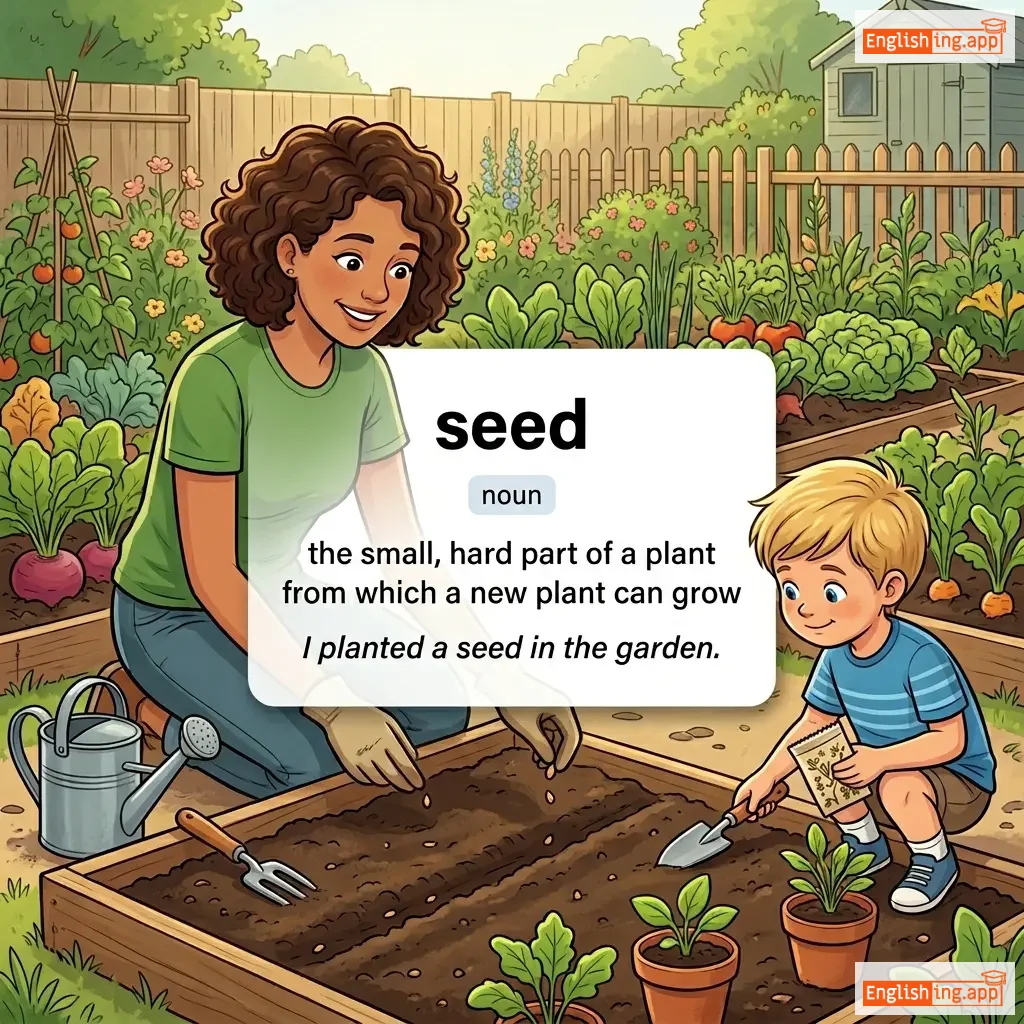
seed definition card — visual illustration of the meaning
noun
/siːd/
种子 (zhǒngzi)

the small, hard part of a plant from which a new plant can grow

"I planted a seed in the garden."

"我在花园里种了一颗种子。" (Wǒ zài huāyuán lǐ zhòngle yī kē zhǒngzi.)
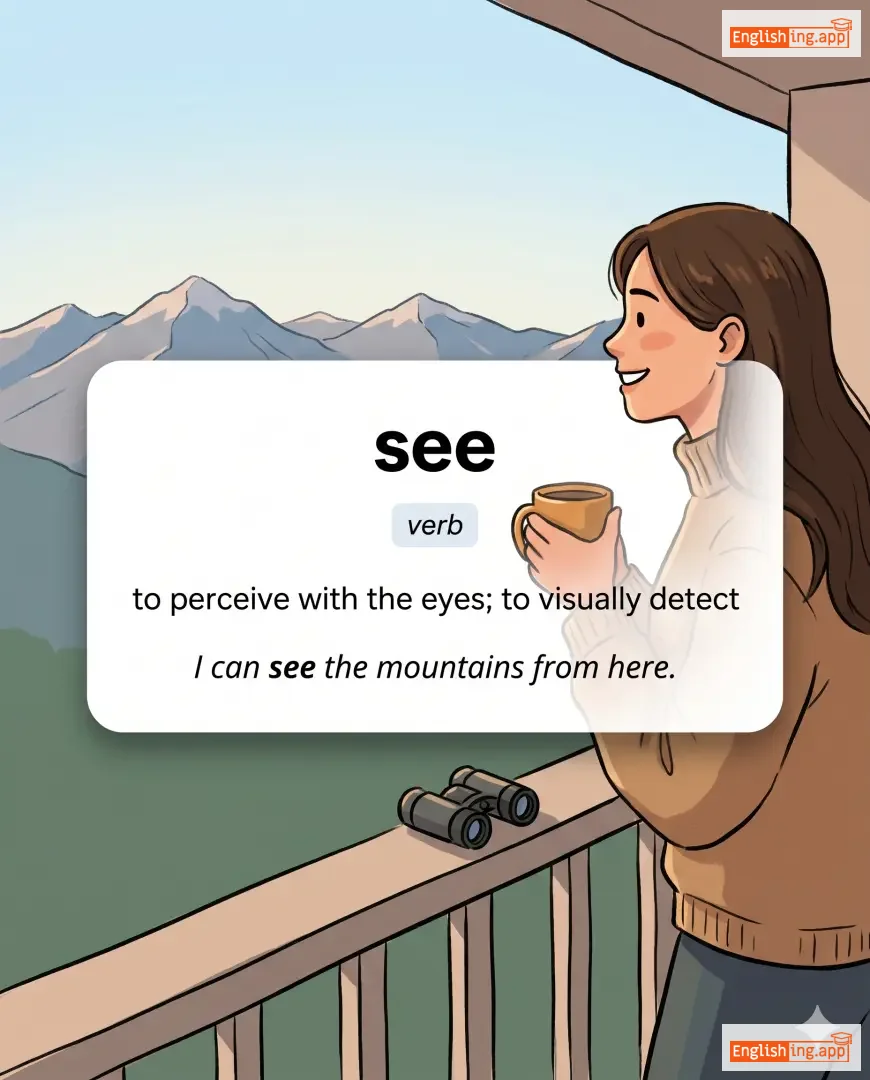
see definition card — visual illustration of the meaning
verb
/siː/
(kan)

to perceive with the eyes; to visually detect

"I can see the mountains from here."

"我可以从这里看到山。" (Wo keyi cong zheli kandao shan.)
Sedulous definition card — visual illustration of the meaning
adjective
/ˈsɛdʒʊləs/
勤勉 (qínmiǎn)

showing great care, attention, and diligence in work or tasks

"She was admired for her sedulous efforts in completing the project on time."

"她因在按时完成项目时展现的勤勉努力而受到赞赏。" (Tā yīn zài ànshí wánchéng xiàngmù shí zhǎnxiàn de qínmiǎn nǔlì ér shòudào zànshǎng.)
noun
/sɪˈdʌk.ʃən/
色诱; 诱惑 (seyou; youhua)

the action of seducing someone; temptation to do something wrong

"He fell victim to the seduction of easy money."

"他成为了快速赚钱诱惑的受害者。" (Ta chengwei le kuaisu zhuanqian youhua de shouhaizhe.)
verb
/sɪˈdjuːs/

to attract someone into doing something, especially something they might not normally do

"The advertisement was designed to seduce customers into buying luxury products."

adjective
/sɪˈdɪʃəs/
煽动叛乱的 (shāndòng pànluàn de)

Encouraging rebellion against authority.

"The activist spread seditious pamphlets among the crowd."

"活动家在群众中散发了煽动叛乱的传单。" (Huódòngjiā zài qúnzhòng zhōng sànfāle shāndòng pànluàn de chuándān.)
adjective
/ˈskrɪptʃərəl/
圣经的 (shèngjīng de)

Relating to or contained in the scriptures or holy writings.

"The priest gave a scriptural reference during the sermon."

"牧师在布道中引用了圣经的参考。" (Mùshī zài bùdào zhōng yǐnyòngle shèngjīng de cānkǎo.)
noun
/skraɪb/
抄写员 (chāo xiě yuán)

a person who writes documents, especially in ancient times; a professional copyist

"In ancient Egypt, scribes recorded important events."

"在古埃及,抄写员记录了重要的事件。" (Zài gǔ āijí, chāo xiě yuán jìlùle zhòngyào de shìjiàn.)
noun
/ˈskrɪmɪdʒ/
练习赛 (liànxí sài)

A practice game or informal match, often in sports, especially football.

"The team had a scrimmage before the official season started."

"在正式赛季开始之前,球队进行了一场练习赛。" (Zài zhèngshì sàijì kāishǐ zhīqián, qiúduì jìnxíngle yī chǎng liànxí sài.)
noun
/skrɪpt/
剧本 (juben)

The written text of a play, film, or broadcast; handwriting style.

"The actor memorized his lines from the script."

"演员从剧本中背诵了台词。" (Yanyuan cong juben zhong beisong le taici.)
verb
/ˈskrɪbəl/
乱涂乱画 (luàn tú luàn huà)

to write or draw carelessly or quickly

"The child scribbled all over the wall."
"孩子在墙上乱涂乱画。" (Háizi zài qiáng shàng luàn tú luàn huà.)
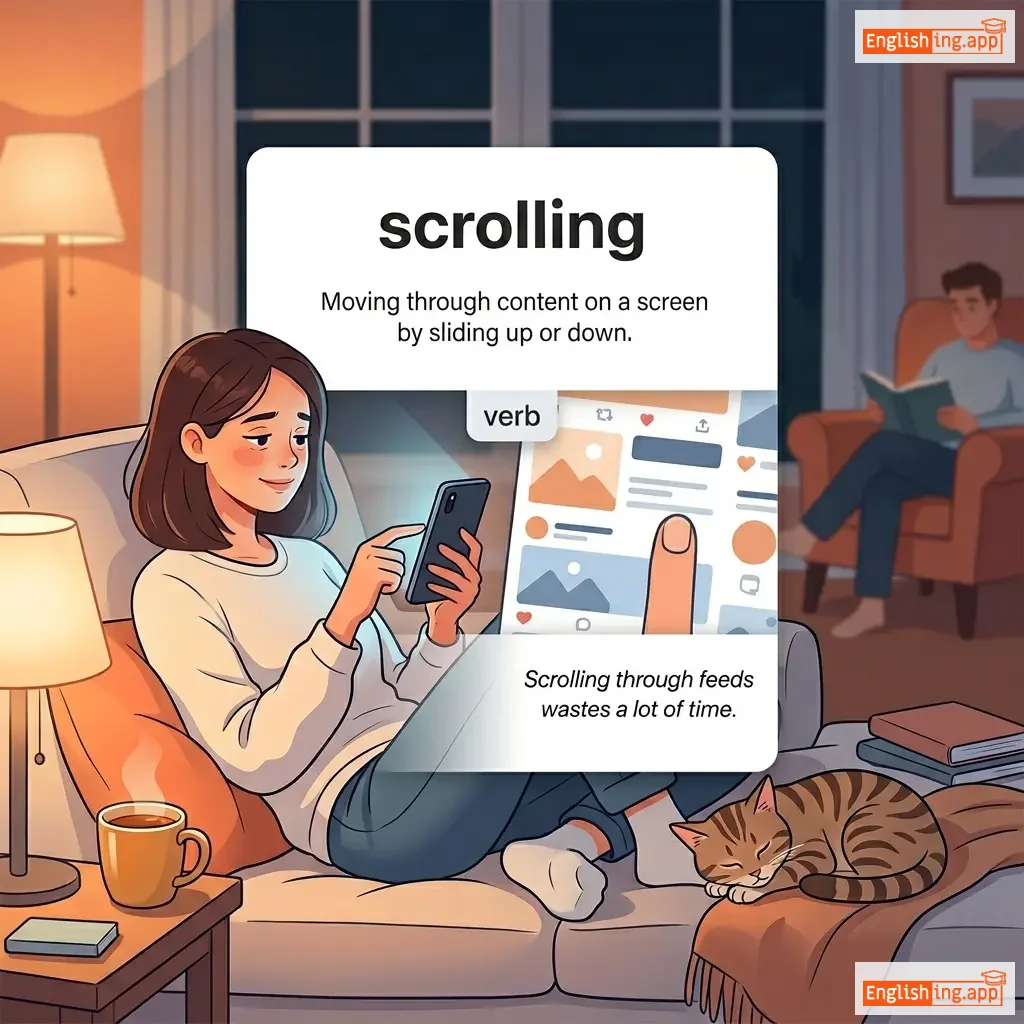
scrolling definition card — visual illustration of the meaning
verb
/ˈskroʊlɪŋ/
滚动 (gundong)

Moving through content on a screen by sliding up or down.

"Scrolling through feeds wastes a lot of time."

"在信息流中滚动浪费了很多时间。" (Zài xìnxī liú zhōng gǔndòng làngfèi le hěn duō shíjiān.)
scrolling addiction definition card — visual illustration of the meaning
noun
স্ক্রোলিং অ্যাডিকশন
滚动成瘾 (gǔn dòng chéng yǐn)

A compulsive need to continuously scroll through content on digital devices, particularly smartphones and social media platforms.

"Scrolling addiction is a growing concern among smartphone users."

"滚动成瘾在智能手机用户中是一个日益严重的问题。" (Gǔn dòng chéng yǐn zài zhìnéng shǒujī yònghù zhōng shì yīgè rìyì yánzhòng de wèntí.)