🐐satyr (স্যাটার)

noun
/ˈsætər/
গ্রিক পুরাণের অর্ধমানব-অর্ধছাগল বনদেব; কামুক ব্যক্তি (grik puraner ardhomanob-ardhochagol bonodebo; kamuk bekti)

অর্থ

a creature from Greek mythology depicted as a lustful being, often half-man and half-goat; by extension, a lecherous man
মিনিং ট্রানস্লেশন
গ্রিক পুরাণে বর্ণিত এক ধরনের বনদেবতা, যাকে প্রায়ই অর্ধমানব-অর্ধছাগল রূপে দেখানো হয়; রূপকভাবে, অতিরিক্ত কামুক ব্যক্তি।
grik purane bornito ek dhoroner bonodebota, jake prayoi ardhomanob-ardhochagol rupe dekhano hoy; rupokbhabe, otirikto kamuk bekti.

উদাহরণ বাক্য

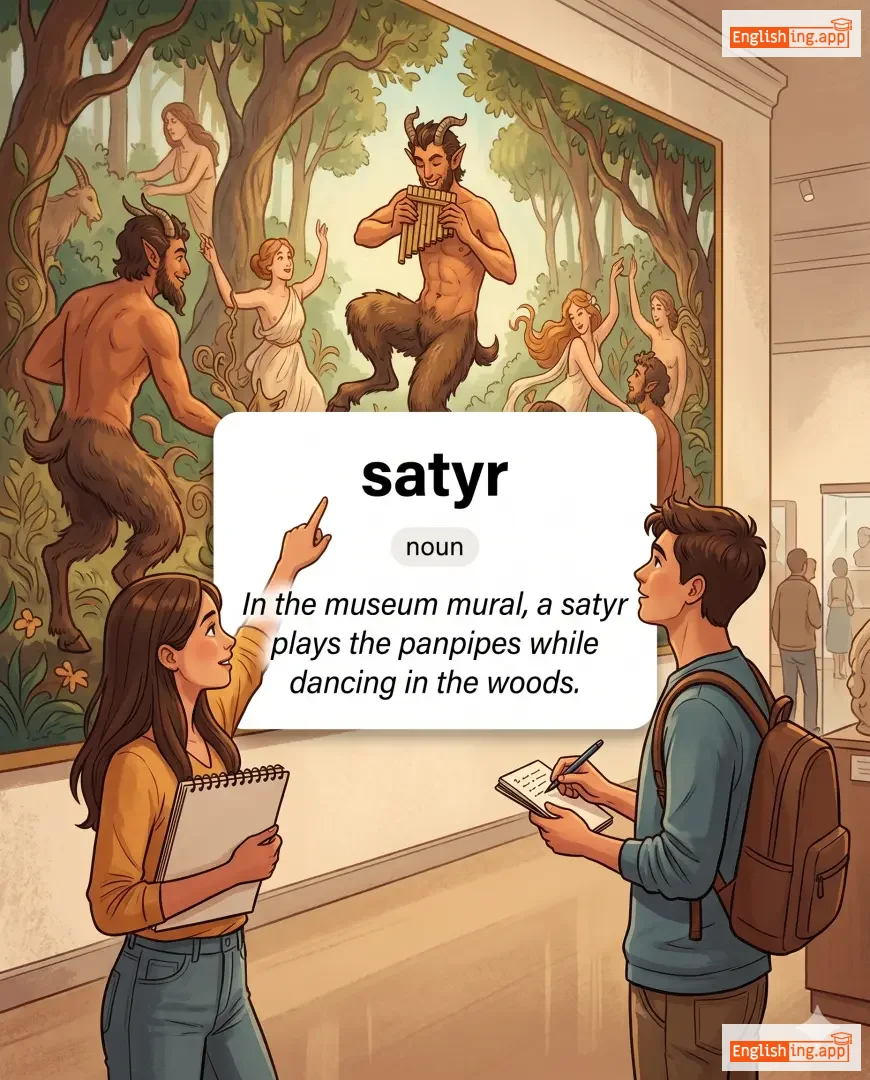
In the museum mural, a satyr plays the panpipes while dancing in the woods.

মিউজিয়ামের দেয়ালচিত্রে এক স্যাটার জঙ্গলে নেচে নেচে প্যানপাইপস বাজাচ্ছে।
miujiyamer deyalchitre ek satyr jangle neche neche panpipes bajachchhe.

সিনোনিমস

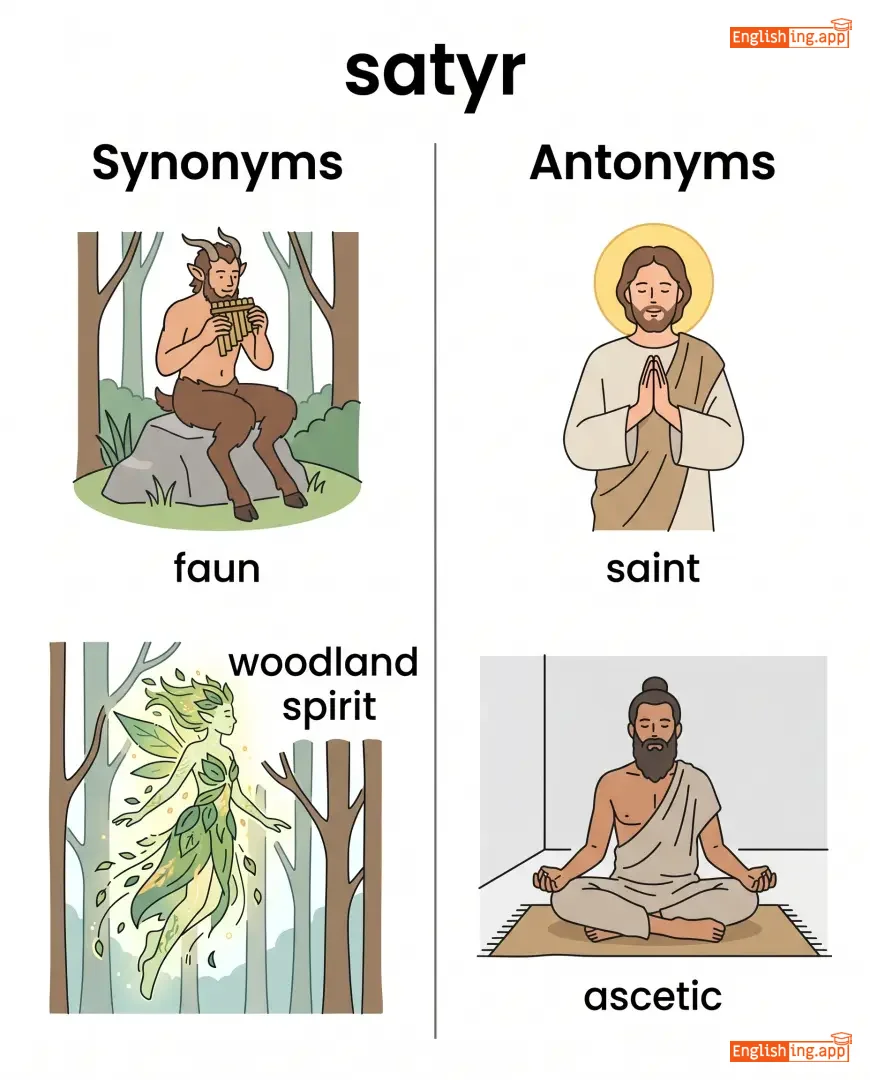
faun, woodland spirit, lecher, rake

অ্যান্টোনিমস

saint, ascetic

কলোকেশনস

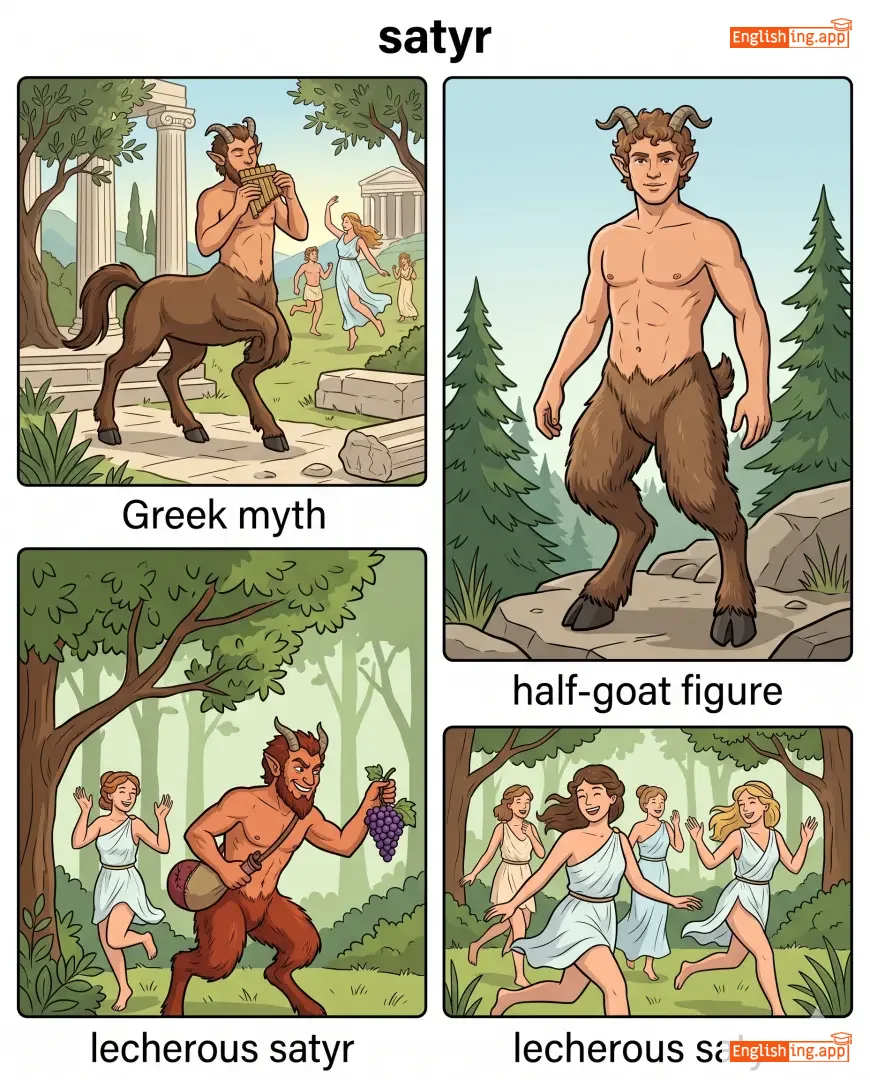
Greek myth, half-goat figure, lecherous satyr, satyr plays

সম্পর্কিত ভোকাবুলারি

the practice of making money by producing or buying and selling goods or services
A state of balance or stability between opposing forces.
Guidance or recommendations offered with regard to prudent future action.
The chemical processes that occur within a living organism in order to maintain life.
The action of saving or being saved from sin, error, or evil.
something that is difficult or impossible to understand or explain

এক্সপ্লোর আরো