词汇表

英语词汇词典 | 单词含义、定义和示例

noun
/ʃiːf/
麦束 (mài shù)

a bundle of grain stalks laid lengthwise and tied together after reaping; a bundle of objects tied together

"The farmer carried a sheaf of wheat on his shoulder."

"农民肩上背着一捆小麦。" (Nóngmín jiān shàng bèizhe yī kǔn xiǎomài.)
pronoun
/ʃi/
(ta)

a female person or animal previously mentioned or easily identified

"She is going to the market to buy vegetables."

"她去市场买蔬菜。" (Ta qu shichang mai shucai.)
noun
/ˈsɛvərəns/
离职补偿 (lízhí bǔcháng)

the act of ending something, especially a relationship or employment; compensation paid upon termination

"The company offered him severance pay after his job ended."

"公司在他工作结束后提供了离职补偿。" (Gōngsī zài tā gōngzuò jiéshù hòu tígōngle lízhí bǔcháng.)
showcase definition card — visual illustration of the meaning
noun
/ˈʃəʊ.keɪs/
展示柜,吸引或有利地展示某物 (zhanshigui, xīyǐn huò yǒulì de zhǎnshì mǒuwù)

A display case or exhibition; to present something in an attractive or favorable way.

"The exhibition showcased the artist's best works."

"展览展示了艺术家的最佳作品。" (Zhǎnlǎn zhǎnshìle yìshùjiā de zuì jiā zuòpǐn.)
adjective
/səˈræfɪk/
天使般的 (tianshiban de)

Of or like a seraph; angelic, pure, and blissful.

"She gave him a seraphic smile that calmed his fears."

"她给了他一个天使般的微笑,安抚了他的恐惧。" (Ta gei le ta yi ge tianshiban de weixiao, anfu le ta de kongju.)
adjective
/sɪər/
干枯 (gān kū)

Dry or withered, especially vegetation.

"The sere leaves crumbled under his feet."

"干枯的叶子在他的脚下碎裂。" (Gān kū de yèzi zài tā de jiǎo xià suì liè.)
adjective
/ˌsɛrənˈdɪpɪtəs/
幸运的偶然 (xìngyùn de ǒurán)

Occurring or discovered by chance in a happy or beneficial way.

"Their meeting at the café was purely serendipitous."

"他们在咖啡馆的相遇完全是幸运的偶然。" (Tāmen zài kāfēi guǎn de xiāngyù wánquán shì xìngyùn de ǒurán.)
noun
/ˌsɛrənˈdɪpɪti/
意外的好运 (yìwài de hǎoyùn)

The occurrence of events by chance in a happy or beneficial way.

"Finding that old photo album was pure serendipity."
"找到那本旧照片集是纯粹的意外的好运。" (Zhǎodào nà běn jiù zhàopiàn jí shì chúncuì de yìwài de hǎoyùn.)
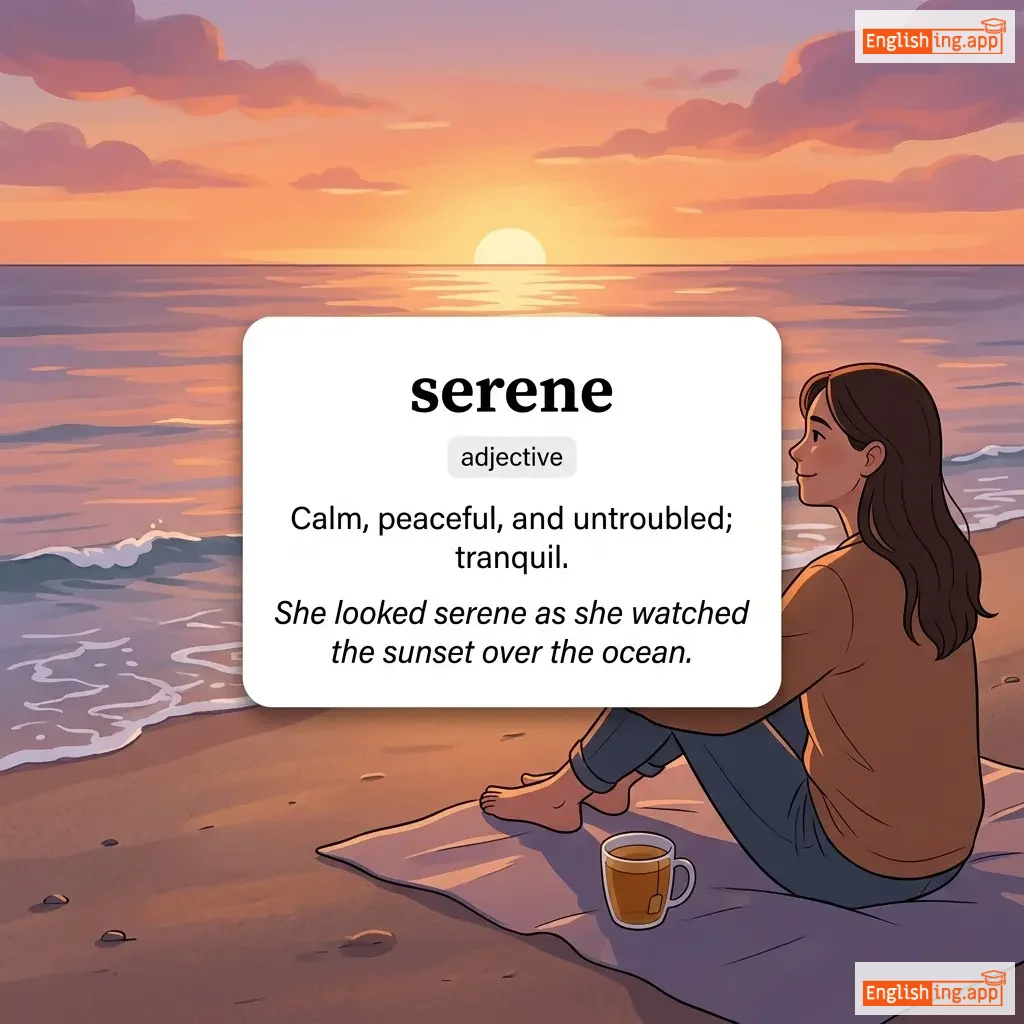
serene definition card — visual illustration of the meaning
adjective
/səˈriːn/
宁静 (ningjing)

Calm, peaceful, and untroubled; tranquil.

"She looked serene as she watched the sunset over the ocean."
"她在观看海上日落时看起来宁静。" (Ta zai guankan haishang riluo shi kanqilai ningjing.)
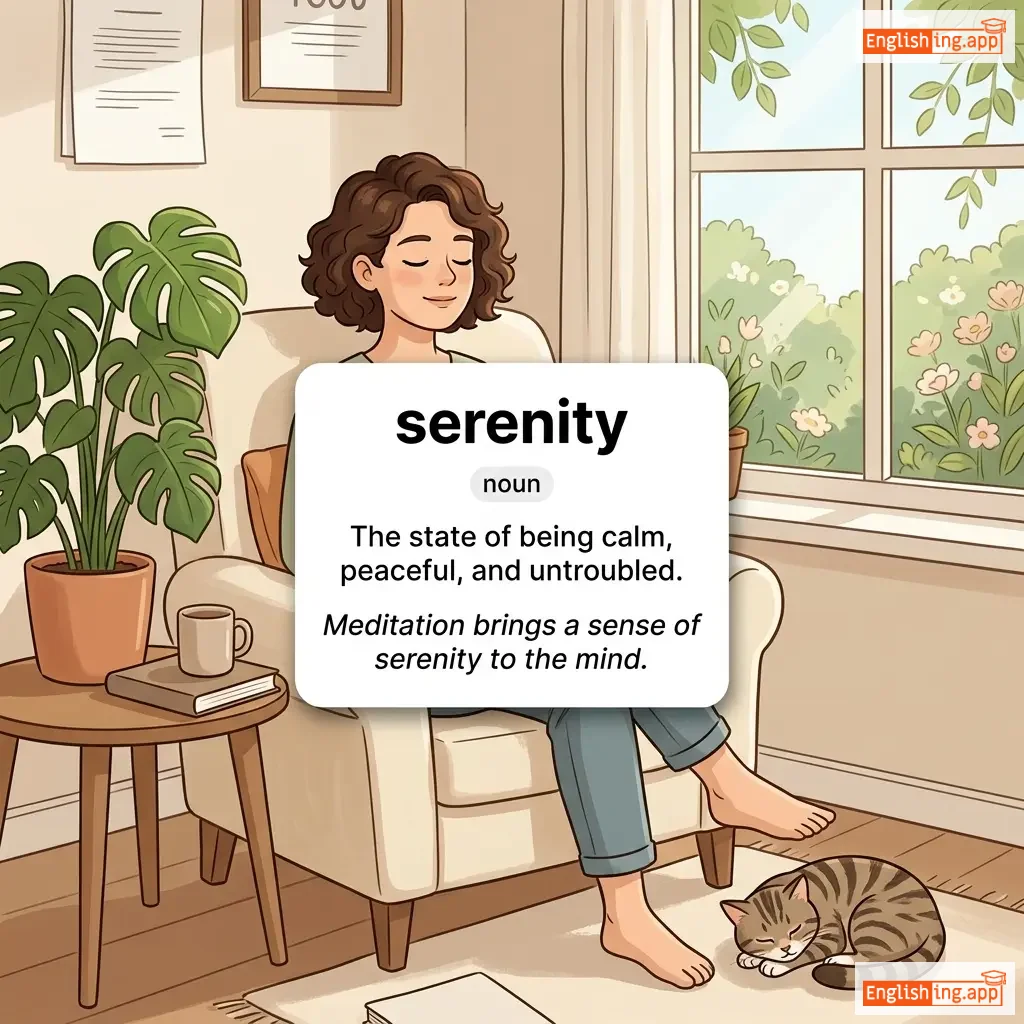
serenity definition card — visual illustration of the meaning
noun
/səˈrɛnɪti/
宁静 (ningjing)

The state of being calm, peaceful, and untroubled.

"Meditation brings a sense of serenity to the mind."

"冥想为大脑带来宁静的感觉。" (Míngxiǎng wèi dànǎo dàilái níngjìng de gǎnjué.)
noun
/ˈsɜːfdəm/
农奴制 (nóngnǚ zhì)

The status or condition of being a serf, bound to work for a lord.

"Many peasants in medieval Europe lived under serfdom."

"许多中世纪欧洲的农民生活在农奴制下。" (Xǔduō zhōngshìjì Ōuzhōu de nóngmín shēnghuó zài nóngnǚ zhì xià.)
noun
/ˈsɑːrdʒənt/
中士 (zhong shi)

A rank of non-commissioned officer in the armed forces or police.

"The sergeant gave orders to the soldiers before the mission."

"中士在任务前向士兵发出命令。" (Zhong shi zai renwu qian xiang shibing fachu mingling.)
noun
/ˈsɑːrdʒənt ət ɑːrmz/
警卫员 (jǐngwèi yuán)

An officer responsible for maintaining order during meetings or legislative sessions.

"The sergeant-at-arms escorted the disruptive member out of the hall."

"警卫员把扰乱秩序的成员从大厅带了出去。" (Jǐngwèi yuán bǎ rǎoluàn zhìxù de chéngyuán cóng dàtīng dài le chūqù.)
noun
/ˌsɑːrdʒənt ˈmeɪdʒər/
军士长 (jūnshì zhǎng)

A senior non-commissioned officer in the army responsible for discipline and administration within a unit.

"The sergeant-major inspected the troops before the parade."

"军士长在游行前检查了部队。" (Jūnshì zhǎng zài yóuxíng qián jiǎnchále bùduì.)
adjective
/ˈsɪəriəl/
连续 (lianxu)

occurring in a series or sequence

"The serial killer was apprehended after a long investigation."

"连环杀手在长时间调查后被捕。" (Lianhuan shashou zai chang shijian diaocha hou bei bu.)
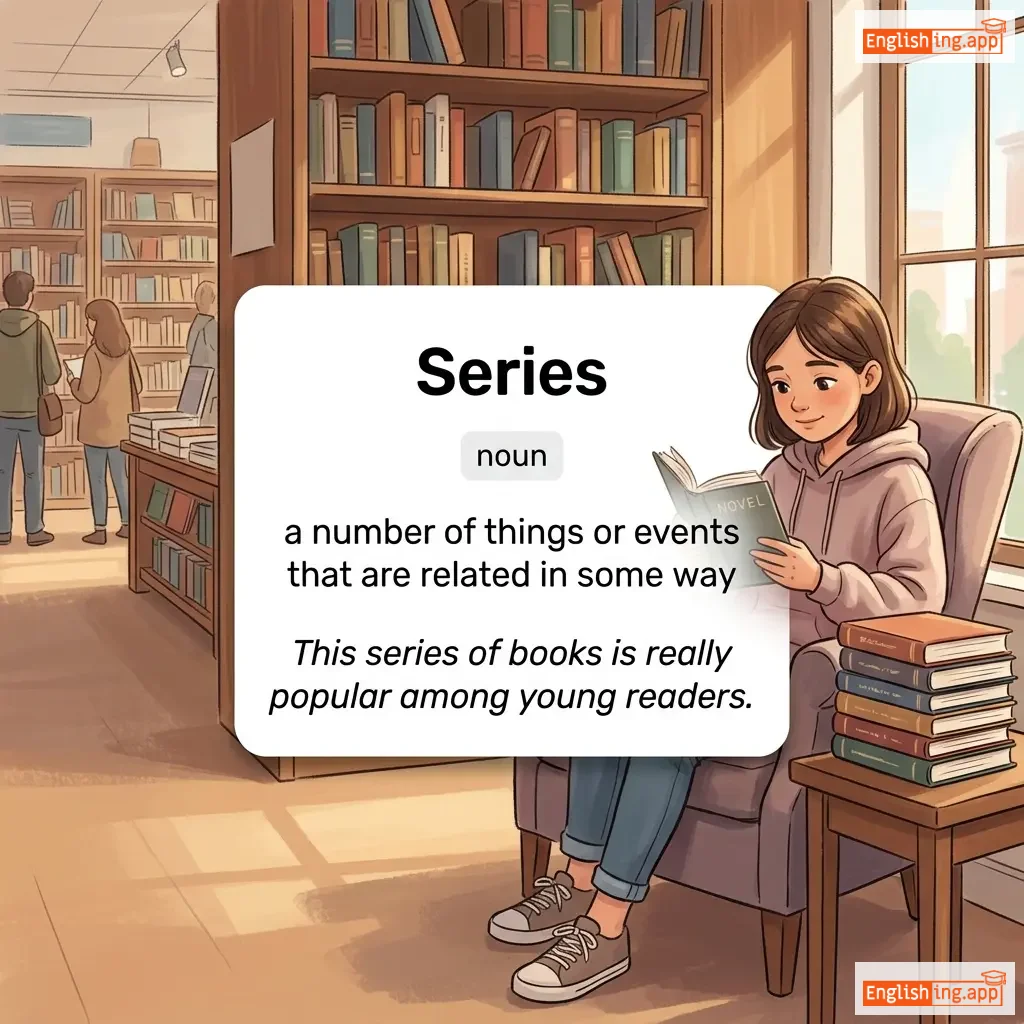
Series definition card — visual illustration of the meaning
noun
/ˈsɪəriːz/

a number of things or events that are related in some way

"This series of books is really popular among young readers."

adjective
/ˈsɪəriəs/
严肃 (yán sù)

showing deep thought, sincerity, or importance; not joking

"She gave me a serious look before making her decision."

"在做出决定之前,她给了我一个严肃的眼神。" (Zài zuò chū juédìng zhīqián, tā gěi le wǒ yīgè yánsù de yǎnshén.)
adverb
/ˈsɪə.ri.əs.li/
认真地 (rènzhēn de)

in a solemn or thoughtful manner

"She took the matter very seriously."

"她非常认真地对待了这个问题。" (Tā fēicháng rènzhēn de duìdài le zhège wèntí.)
noun
/ˈsɪr.i.əs.nəs/
严肃; 重要 (yánsù; zhòngyào)

the quality of being serious; gravity; importance

"The seriousness of the situation became clear when the doctor spoke."

"当医生说话时,情况的严肃性变得明显。" (dāng yīshēng shuōhuà shí, qíngkuàng de yánsùxìng biàn dé míngxiǎn.)
noun
/ˈsɜːrmən/
讲道 (jiangdao)

A religious discourse delivered by a preacher, often offering moral instruction or spiritual guidance.

"The pastor gave a moving sermon about compassion and forgiveness."

"牧师做了一个关于同情和宽恕的感人讲道。" (Mùshī zuòle yīgè guānyú tóngqíng hé kuānshù de gǎnrén jiǎngdào.)
adjective
/ˈsɜːrpənˌtiːn/
蛇形的 (shé xíng de)

Having the shape, movement, or qualities of a serpent; winding or twisting.

"The road took a serpentine path through the mountains."

"这条路穿过山脉,呈蛇形蜿蜒。" (Zhè tiáo lù chuānguò shānmài, chéng shé xíng wān yán.)
verb
/ˈsɛreɪt/
锯齿边缘 (jùchǐ biānyuán)

To make a saw-toothed edge or notched margin.

"The craftsman serrated the knife blade for better cutting."

"工匠将刀片锯齿化,以提高切割效果。" (Gōngjiàng jiāng dāopiàn jùchǐ huà, yǐ tígāo qiēgē xiàoguǒ.)
adjective
/ˈsɛreɪtɪd/
锯齿状的 (jùchǐ zhuàng de)

Having a notched or saw-toothed edge.

"The bread knife had a serrated blade."

"面包刀有一把锯齿刀片。" (Miànbāo dāo yǒu yī bǎ jùchǐ dāopiàn.)
adjective
/ˈsɛrid/
紧密排列 (jǐn mì pái liè)

pressed or crowded together, often in rows or ranks

"The soldiers stood in serried ranks, ready for inspection."

"士兵们站在紧密排列的队列中,准备接受检查。" (Shì bīng men zhàn zài jǐn mì pái liè de duì liè zhōng, zhǔn bèi jiē shòu jiǎn chá.)
noun
/ˈsɜːvənt/
仆人 (púrén)

a person who performs duties for others, especially in a household

"The servant opened the door for the guests."

"仆人为客人开门。" (Púrén wèi kèren kāi mén.)
serve definition card — visual illustration of the meaning
verb
/sɜːv/
服务 (fuwu)

to provide service or assistance to others

"He serves the customers with a smile."

"他带着微笑为顾客服务。" (Tā dàizhe wēixiào wèi gùkè fúwù.)
service definition card — visual illustration of the meaning
noun
/ˈsɜːrvɪs/
服务 (fuwu)

the action of helping or doing work for someone; a system providing a public need

"The hotel provides excellent customer service."

"酒店提供卓越的客户服务。" (Jiǔdiàn tígōng zhuóyuè de kèhù fúwù.)
adjective
/ˈsɜːrvɪsəbl/
可用 (keyong)

fit for use; usable; in working order

"The old bicycle is still serviceable despite its age."

"那辆旧自行车尽管年久失修,仍然可用。" (Nà liàng jiù zìxíngchē jǐnguǎn nián jiǔ shīxiū, réngrán kěyòng.)
services definition card — visual illustration of the meaning
noun
ˈsɜːvɪsɪz
服务 (fuwu)

The action of helping or doing work for someone.

"Services in the healthcare industry are essential for well-being."
"医疗行业的服务对于健康至关重要。" (Yiliao hangye de fuwu dui yu jiankang zhiguan zhongyao.)
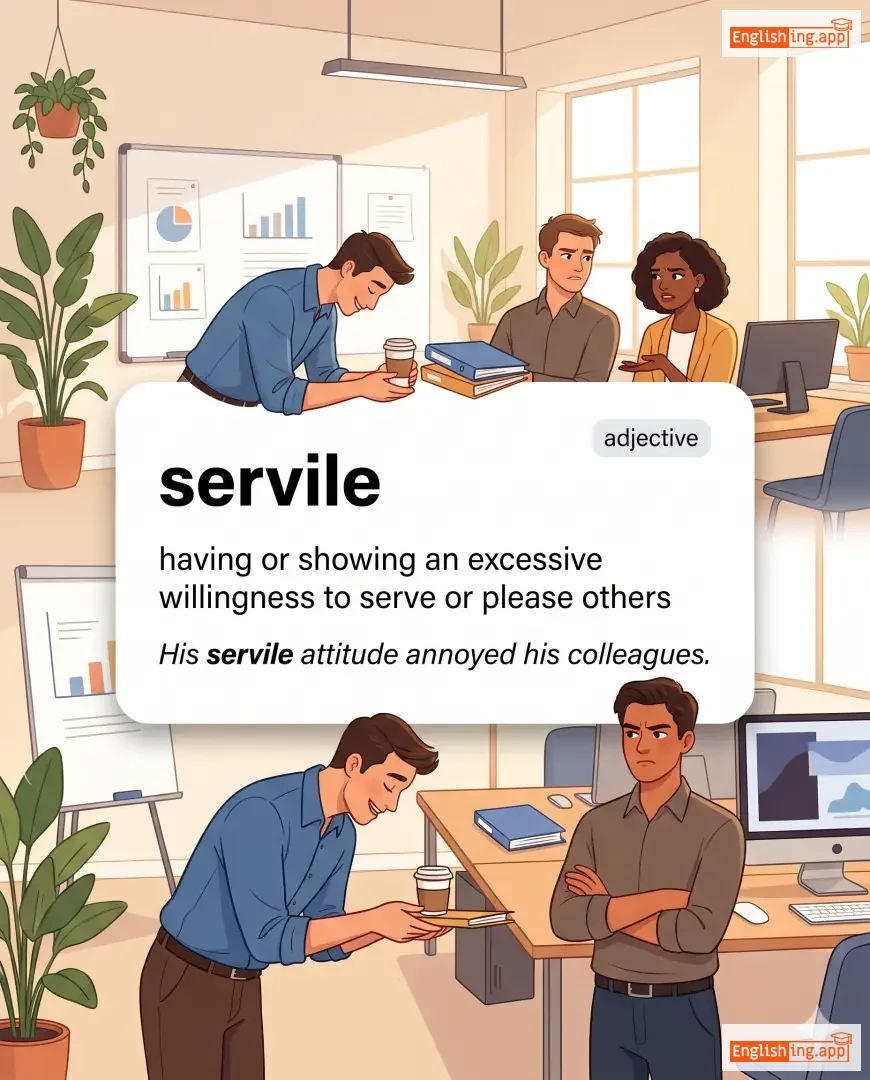
servile definition card — visual illustration of the meaning
adjective
/ˈsɜːrvaɪl/ or /ˈsɜːrvəl/
奴颜婢膝 (nú yán bì xī)

having or showing an excessive willingness to serve or please others

"His servile attitude annoyed his colleagues."

"他的奴颜婢膝的态度让同事们感到烦恼。" (Tā de nú yán bì xī de tàidù ràng tóngshìmen gǎndào fánnǎo.)
noun
/ˈsɜːvɪŋ/
(fen)

a portion of food for one person; the act of giving food or drink to someone

"He ate a large serving of rice and curry."

"他吃了一大份米饭和咖喱。" (Ta chi le yi da fen mifan he gali.)
noun
/ˈsɜːrvɪtuːd/
奴役 (nuyi)

the state of being a slave or completely subject to someone more powerful

"The prisoners were forced into servitude."

"囚犯们被迫进入了奴隶制。" (Qiufanmeng bei po jinru le nuli zhi.)
noun
/ˈsɛsəmi sidz/
芝麻种子 (zhī má zhǒng zǐ)

small edible seeds from the sesame plant used in cooking and baking

"Sprinkle sesame seeds on top of the bread before baking."

"在面包上撒上芝麻种子,然后烘烤。" (Zài miànbāo shàng sā shàng zhī má zhǒng zǐ, ránhòu hōng kǎo.)
session definition card — visual illustration of the meaning
noun
/ˈsɛʃ.ən/
会议 (huiyi)

a meeting or a period of time devoted to a specific activity

"The session will begin at 10 AM."
"会议将在上午10点开始。" (Huiyi jiang zai shangwu 10 dian kaishi.)
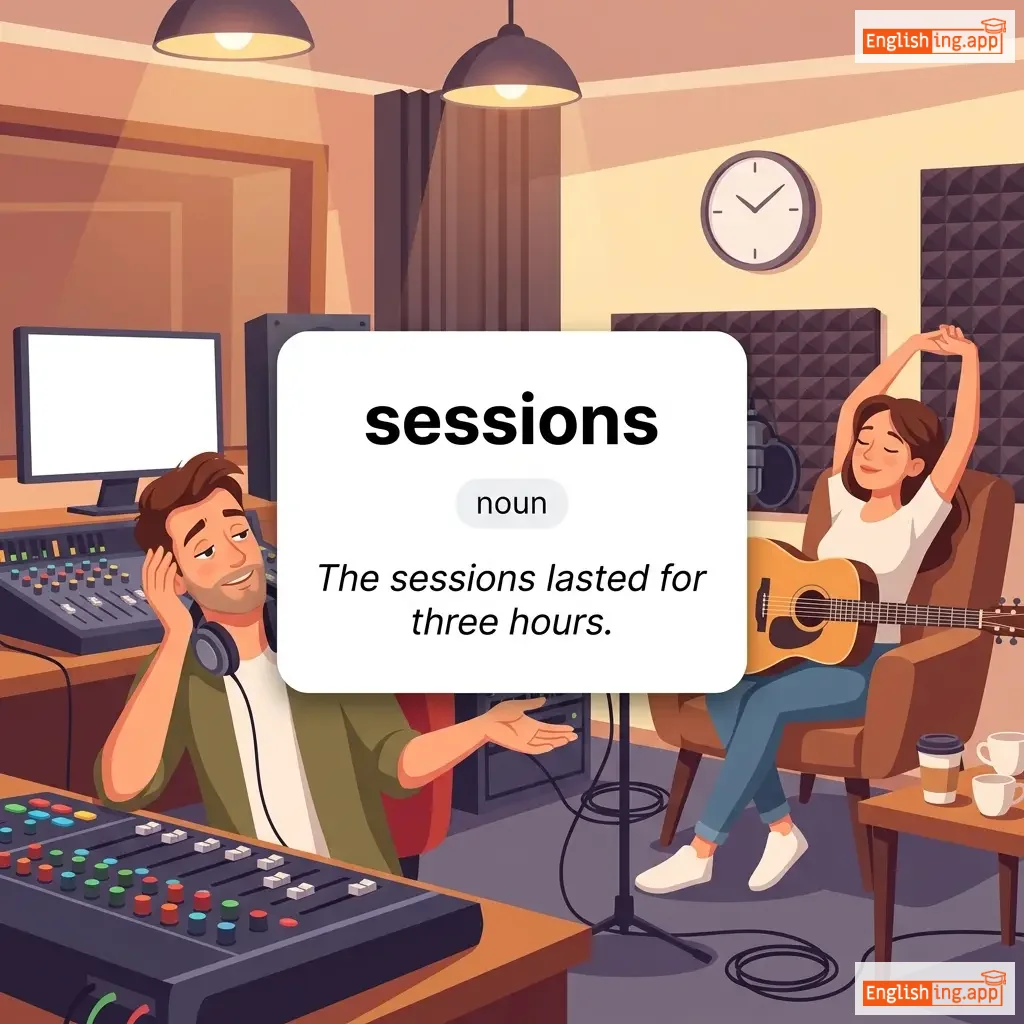
sessions definition card — visual illustration of the meaning
noun
ˈsɛʃənz
会议, 会议期, 时段 (huiyi, huiyiqi, shiduan)

A meeting of an official body, especially a court of law, to conduct its business; a period devoted to a particular activity.

"The sessions lasted for three hours."

"会议持续了三个小时。" (Huiyi chixu le san ge xiaoshi.)
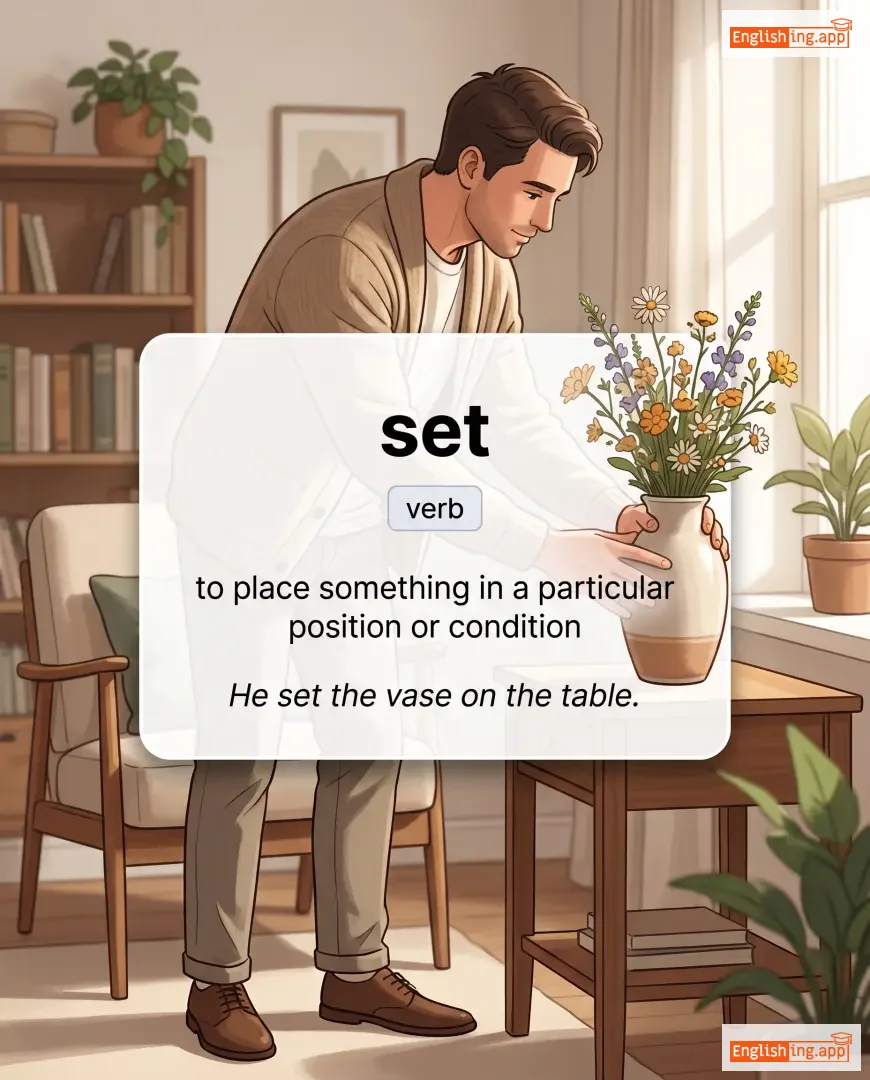
set definition card — visual illustration of the meaning
verb
/sɛt/
放置 (fangzhi)

to place something in a particular position or condition

"He set the vase on the table."

"他把花瓶放在桌子上。" (Ta ba huaping fang zai zhuozi shang.)
noun
/ˈsɛt ʌp/
设置 (shezhi)

The arrangement or organization of something; a planned structure or scheme

"The company presented a new set-up for the office layout."

"公司为办公室布局提出了一个新的设定。" (Gongsi wei bangongshi buju tichule yige xin de sheding.)
setting definition card — visual illustration of the meaning
noun
/ˈsɛtɪŋ/
背景 (bèijǐng)

the environment or place where something happens

"The setting of the movie was a beautiful beach."

"电影的背景是一个美丽的海滩。" (Diànyǐng de bèijǐng shì yīgè měilì de hǎitān.)
settle definition card — visual illustration of the meaning
verb
/ˈsɛtl/
解决 (jiějué)

to resolve or come to an agreement about something; to establish a residence or position

"After a long negotiation, they were able to settle the dispute."

"经过长时间的谈判,他们终于解决了争端。" (Jīngguò cháng shíjiān de tánpàn, tāmen zhōngyú jiějuéle zhēngduān.)
noun
/ˈsɛtlmənt/
协议 (xieyi)

an agreement reached after a dispute, or a community or area where people establish a home

"The settlement between the companies was finalized after months of talks."

"公司之间的协议在几个月的谈判后最终达成。" (Gongsi zhijian de xieyi zai ji ge yue de tanpan hou zhongyao dacheng.)
noun
/ˈsɛtlər/
定居者 (dìngjū zhě)

a person who settles in a new area or land

"The settlers arrived in the new town and started building homes."

"定居者们抵达新城市并开始建造房屋。" (Dìngjū zhěmen dǐdá xīn chéngshì bìng kāishǐ jiànzào fángwū.)
noun
/ˈsɛtʌp/
设置 (shezhi)

an arrangement of things or the way in which something is organized or prepared

"The setup of the event took hours to complete."
"事件的设置花了几个小时完成。" (Shìjiàn de shèzhì huāle jǐ gè xiǎoshí wánchéng.)
7️⃣

seven

noun
/ˈsɛvən/

the number following six and preceding eight

"She has seven apples in her basket."

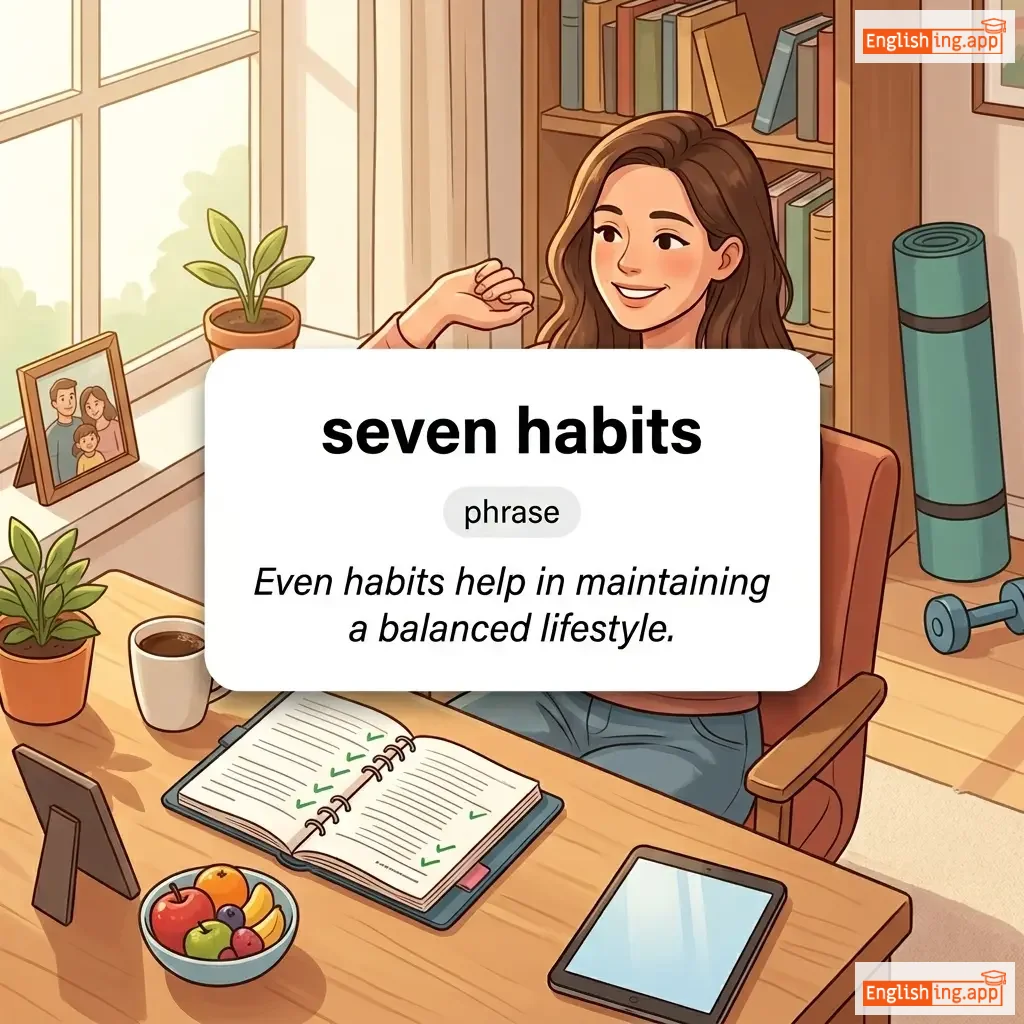
seven habits definition card — visual illustration of the meaning
phrase
ˈsɛvən ˈhæbɪts
七个习惯 (qī gè xíguàn)

Regular behaviors or actions that are done consistently over time, specifically referring to a set of seven key practices.

"Even habits help in maintaining a balanced lifestyle."

"即使是习惯也有助于保持平衡的生活方式。" (Jíshǐ shì xíguàn yě yǒuzhù yú bǎochí pínghéng de shēnghuó fāngshì.)
Seven Wonders definition card — visual illustration of the meaning
noun
ˈsɛv.ən ˈwʌn.dərz
世界七大奇迹 (shìjiè qī dà qíjì)

The seven most remarkable and famous structures in the world, representing architectural feats and cultural significance.

"The Seven Wonders of the world reflect human brilliance."

"世界七大奇迹反映了人类的辉煌。" (Shìjiè qī dà qíjì fǎnyìng le rénlèi de huīhuáng.)
adjective
/ˈsɛvənθ/
第七 (diqi)

constituting number seven in a sequence; coming after the sixth

"Her birthday is on the seventh of July."

"她的生日是七月七日。" (Ta de shengri shi qiyue qiri.)
verb
/ˈsɛvər/
切断,断绝关系 (qiēduàn, duànjué guānxì)

to cut off or separate, especially by cutting; to end a connection or relationship

"He had to sever ties with the company after the dispute."

"在争执之后,他不得不与公司断绝关系。" (Zài zhēngzhí zhīhòu, tā bùdé bù yǔ gōngsī duànjué guānxì.)
adjective
/ˈsɛvrəl/
几个 (jǐ ge)

more than one but not many; a few

"Several people attended the meeting yesterday."

"几个昨天参加了会议的人。" (Jǐ ge zuótiān cānjiāle huìyì de rén.)
noun
/ˌʃæŋɡriˈlɑː/
虚构的乐园 (xūgòu de lèyuán)

a remote, beautiful, imaginary place where life is perfect and peaceful

"They described the island as a modern-day Shangri-La."

"他们将这个岛屿描述为现代版的香格里拉。" (Tāmen jiāng zhège dǎoyǔ miáoshù wéi xiàndài bǎn de xiānggélǐlā.)
adjective
/ˈʃeɪm.fəl/
可耻的; 不光彩的; 令人尴尬的 (kěchǐ de; bù guāngcǎi de; lìng rén gāngà de)

causing shame; disgraceful; embarrassing

"His shameful behavior embarrassed the entire family."

"他可耻的行为让整个家庭感到尴尬。" (Tā kěchǐ de xíngwéi ràng zhěnggè jiātíng gǎndào gāngà.)