語彙集

英単語辞書 | 単語の意味、定義、例文

noun
/ʃiːf/
麦の束 (mugi no taba)

a bundle of grain stalks laid lengthwise and tied together after reaping; a bundle of objects tied together

"The farmer carried a sheaf of wheat on his shoulder."

"農夫は肩に小麦の束を運んでいました。" (Nōfu wa kata ni komugi no taba o hakonde imashita.)
pronoun
/ʃi/
彼女 (kanojo)

a female person or animal previously mentioned or easily identified

"She is going to the market to buy vegetables."

"彼女は市場に行って野菜を買います。" (Kanojo wa ichiba ni itte yasai o kaimasu.)
noun
/ˈsɛvərəns/
退職金 (taishokukin)

the act of ending something, especially a relationship or employment; compensation paid upon termination

"The company offered him severance pay after his job ended."

"会社は彼の仕事が終了した後、退職金を提供しました。" (Kaisha wa kare no shigoto ga shūryō shita ato, taishokukin o teikyō shimashita.)
showcase definition card — visual illustration of the meaning
noun
/ˈʃəʊ.keɪs/
ショーケース、何かを魅力的または有利な方法で提示する (shōkēsu, nanika o miryokuteki matawa yūri na hōhō de teiji suru)

A display case or exhibition; to present something in an attractive or favorable way.

"The exhibition showcased the artist's best works."

"展示会はアーティストの最高の作品を展示しました。" (Tenjikai wa ātisuto no saikō no sakuhin o tenjishimashita.)
adjective
/səˈræfɪk/
天使のような (tenshi no you na)

Of or like a seraph; angelic, pure, and blissful.

"She gave him a seraphic smile that calmed his fears."

"彼女は彼に天使のような微笑みをくれて、彼の恐れを和らげた。" (Kanojo wa kare ni tenshi no you na bishou wo kurete, kare no osore wo yawarageteta.)
adjective
/sɪər/
枯れた (kareta)

Dry or withered, especially vegetation.

"The sere leaves crumbled under his feet."

"枯れた葉が彼の足元で崩れた。" (Kareta ha ga kare no ashimoto de kuzureta.)
adjective
/ˌsɛrənˈdɪpɪtəs/
偶然の幸運 (gūzen no kōun)

Occurring or discovered by chance in a happy or beneficial way.

"Their meeting at the café was purely serendipitous."

"カフェでの彼らの出会いは完全に偶然の幸運でした。" (Kafe de no karera no deai wa kanzen ni gūzen no kōun deshita.)
noun
/ˌsɛrənˈdɪpɪti/
幸運な偶然 (kouun na guuzen)

The occurrence of events by chance in a happy or beneficial way.

"Finding that old photo album was pure serendipity."
"その古い写真アルバムを見つけたのはまさに幸運な偶然だった。" (Sono furui shashin arubamu o mitsuketa no wa masani kouun na guuzen datta.)
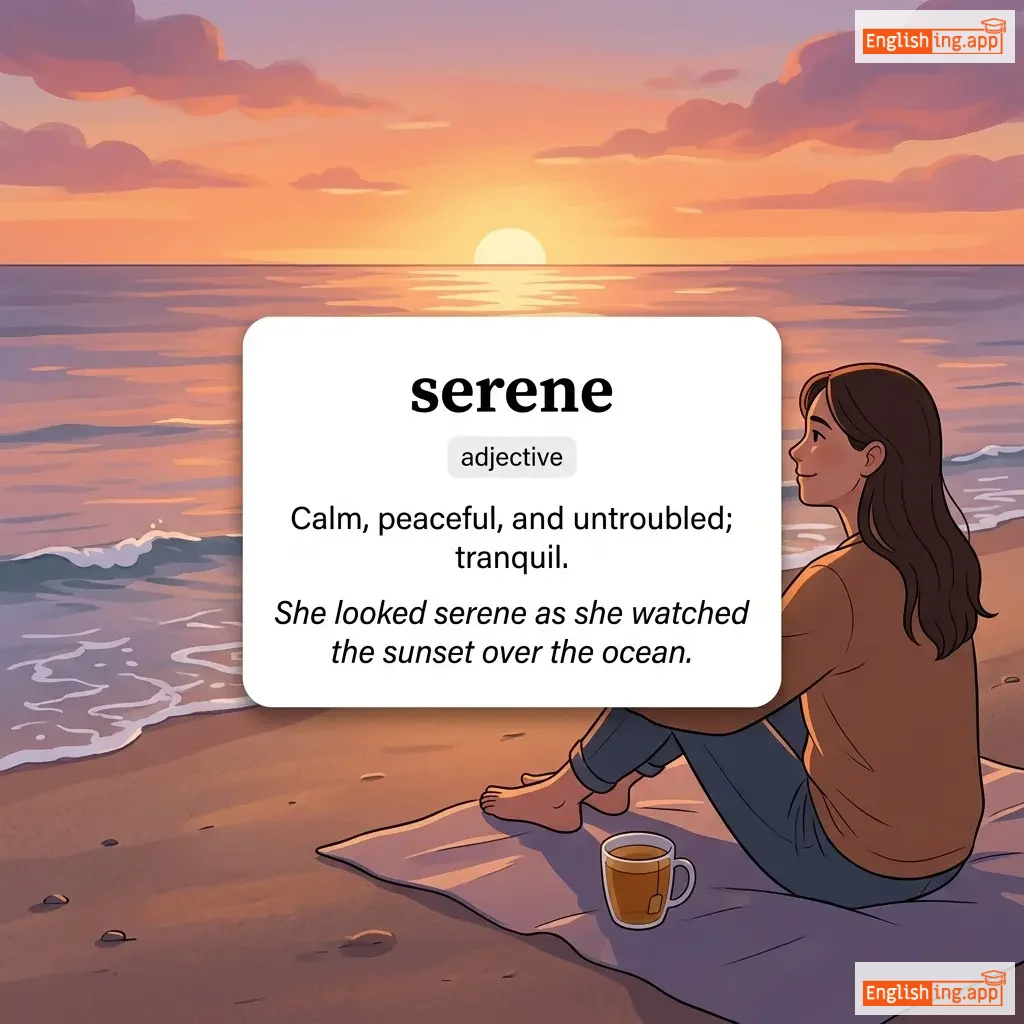
serene definition card — visual illustration of the meaning
adjective
/səˈriːn/
静かな (shizukana)

Calm, peaceful, and untroubled; tranquil.

"She looked serene as she watched the sunset over the ocean."
"彼女は海の上の夕日を見ながら静かに見えた。" (Kanojo wa umi no ue no yūhi o minagara shizuka ni mieta.)
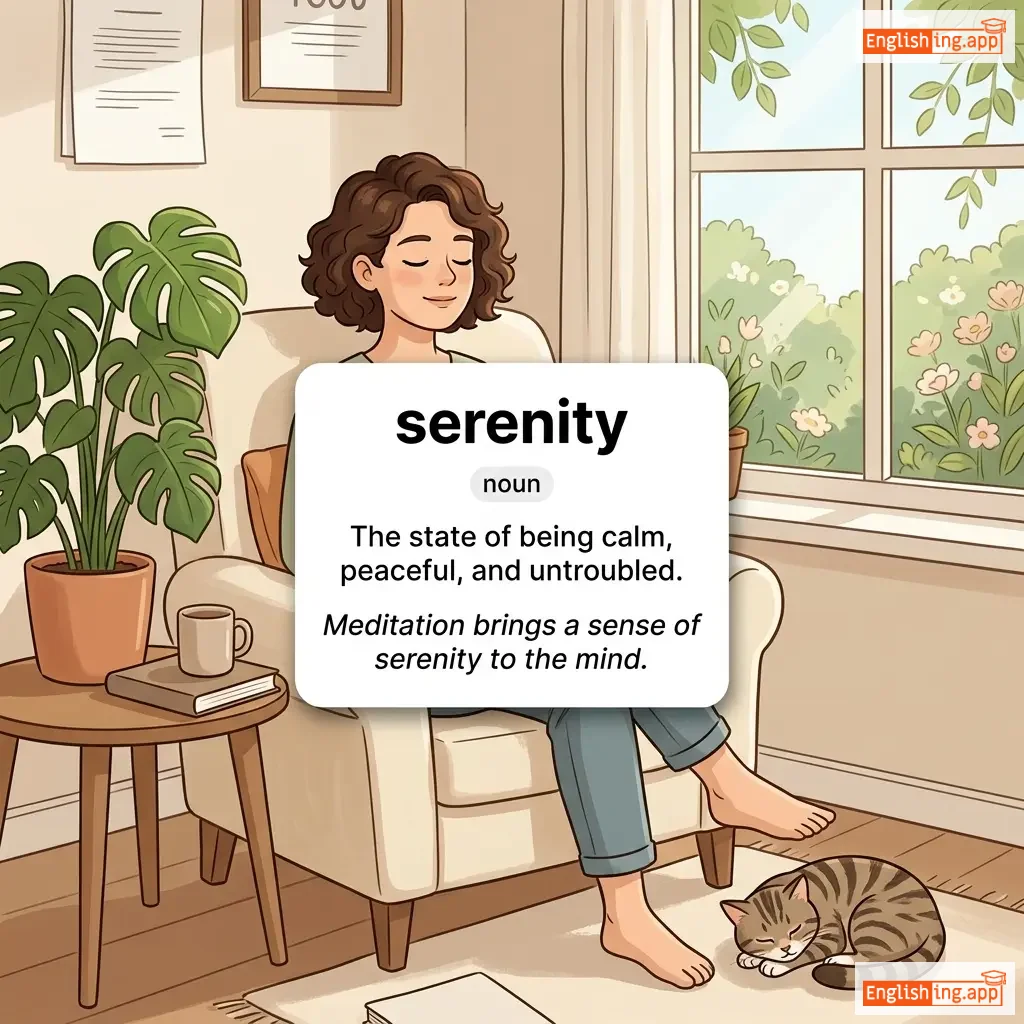
serenity definition card — visual illustration of the meaning
noun
/səˈrɛnɪti/
静けさ (shizukesa)

The state of being calm, peaceful, and untroubled.

"Meditation brings a sense of serenity to the mind."

"瞑想は心に静けさをもたらします。" (Meisou wa kokoro ni shizukesa wo motarashimasu.)
noun
/ˈsɜːfdəm/
農奴制 (nōdosei)

The status or condition of being a serf, bound to work for a lord.

"Many peasants in medieval Europe lived under serfdom."

"中世ヨーロッパの多くの農民は農奴制の下で生活していた。" (Chūsei Yōroppa no ōku no nōmin wa nōdosei no moto de seikatsu shite ita.)
noun
/ˈsɑːrdʒənt/
軍曹 (gunsou)

A rank of non-commissioned officer in the armed forces or police.

"The sergeant gave orders to the soldiers before the mission."

"軍曹は任務の前に兵士たちに命令を出した。" (Gunsou wa ninmu no mae ni heishitachi ni meirei wo dashita.)
noun
/ˈsɑːrdʒənt ət ɑːrmz/
会議警備員 (kaigi keibiin)

An officer responsible for maintaining order during meetings or legislative sessions.

"The sergeant-at-arms escorted the disruptive member out of the hall."

"会議警備員は、秩序を乱すメンバーを会場から退場させました。" (Kaigi keibiin wa, chitsujo o midasu menbā o kaijō kara taijō saseshimashita.)
noun
/ˌsɑːrdʒənt ˈmeɪdʒər/
サージェント・メイジャー (saajento-meijaa)

A senior non-commissioned officer in the army responsible for discipline and administration within a unit.

"The sergeant-major inspected the troops before the parade."

"サージェント・メイジャーはパレード前に部隊を点検しました。" (Saajento-meijaa wa pareedo mae ni butai o tenken shimashita.)
adjective
/ˈsɪəriəl/
連続 (renzoku)

occurring in a series or sequence

"The serial killer was apprehended after a long investigation."

"シリアルキラーは長い調査の後、逮捕された。" (Shiriarukiraa wa nagai chousa no ato, taiho sareta.)
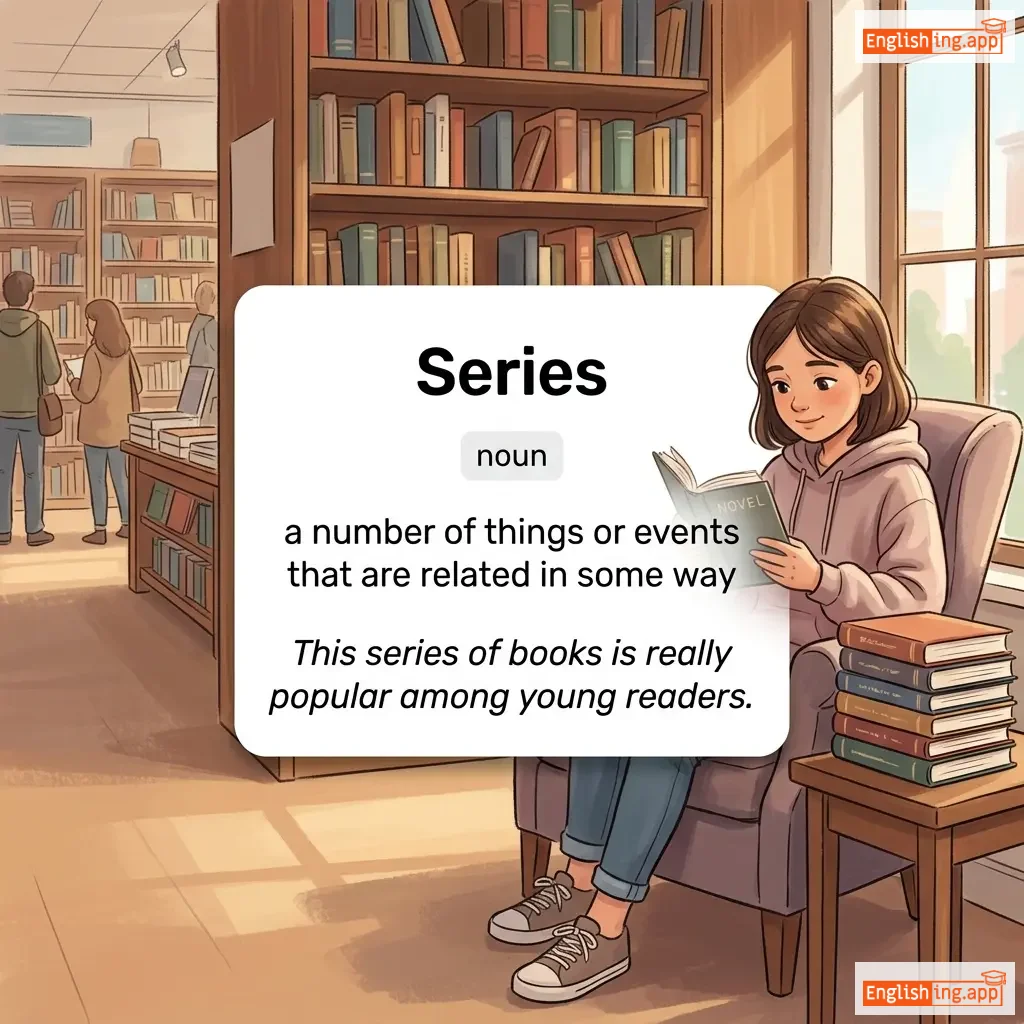
Series definition card — visual illustration of the meaning
noun
/ˈsɪəriːz/

a number of things or events that are related in some way

"This series of books is really popular among young readers."

adjective
/ˈsɪəriəs/
真剣 (shinken)

showing deep thought, sincerity, or importance; not joking

"She gave me a serious look before making her decision."

"彼女は決定を下す前に真剣な目で私を見ました。" (Kanojo wa kettei o kudasu mae ni shinken na me de watashi o mimashita.)
adverb
/ˈsɪə.ri.əs.li/
真剣に (shinken ni)

in a solemn or thoughtful manner

"She took the matter very seriously."

"彼女はその問題を非常に真剣に取り扱った。" (Kanojo wa sono mondai o hijō ni shinken ni toriatsukatta.)
noun
/ˈsɪr.i.əs.nəs/
真剣さ; 重要性 (shinkensa; jūyōsei)

the quality of being serious; gravity; importance

"The seriousness of the situation became clear when the doctor spoke."

"その状況の真剣さは、医者が話すときに明らかになりました。" (Sono jōkyō no shinkensa wa, isha ga hanasu toki ni akiraka ni narimashita.)
noun
/ˈsɜːrmən/
説教 (sekkyou)

A religious discourse delivered by a preacher, often offering moral instruction or spiritual guidance.

"The pastor gave a moving sermon about compassion and forgiveness."

"牧師は思いやりと許しについて感動的な説教をしました。" (Bokushi wa omoiyari to yurushi ni tsuite kandō-tekina sekkyō o shimashita.)
adjective
/ˈsɜːrpənˌtiːn/
蛇行の (daikou no)

Having the shape, movement, or qualities of a serpent; winding or twisting.

"The road took a serpentine path through the mountains."

"その道は山を通り、蛇行する道を取った。" (Sono michi wa yama o tōri, dakō suru michi o totta.)
verb
/ˈsɛreɪt/
ギザギザの縁を作る (gizagiza no fuchi o tsukuru)

To make a saw-toothed edge or notched margin.

"The craftsman serrated the knife blade for better cutting."

"職人はより良い切断のためにナイフの刃をセレイトしました。" (Shokunin wa yori yoi setsudan no tame ni naifu no ha o sereito shimashita.)
adjective
/ˈsɛreɪtɪd/
鋸歯状の (nokogirashō no)

Having a notched or saw-toothed edge.

"The bread knife had a serrated blade."

"パンナイフは鋸歯状の刃を持っていた。" (Pannaihu wa nokogirashō no ha o motte ita.)
adjective
/ˈsɛrid/
整列した (seiretsu shita)

pressed or crowded together, often in rows or ranks

"The soldiers stood in serried ranks, ready for inspection."

"兵士たちは整列した行列で立って、点検の準備ができていました。" (Heishi-tachi wa seiretsu shita gyōretsu de tatte, tenken no junbi ga dekiteimashita.)
noun
/ˈsɜːvənt/
召使い (meshi-tsukai)

a person who performs duties for others, especially in a household

"The servant opened the door for the guests."

"召使いは客のためにドアを開けました。" (Meshi-tsukai wa kyaku no tame ni doa o akemashita.)
serve definition card — visual illustration of the meaning
verb
/sɜːv/
サービスする (saabisu suru)

to provide service or assistance to others

"He serves the customers with a smile."

"彼は笑顔でお客様にサービスを提供しています。" (Kare wa egao de okyakusama ni sābisu o teikyō shiteimasu.)
service definition card — visual illustration of the meaning
noun
/ˈsɜːrvɪs/
サービス (sābisu)

the action of helping or doing work for someone; a system providing a public need

"The hotel provides excellent customer service."

"ホテルは優れた顧客サービスを提供しています。" (Hoteru wa sugureta kokyaku sābisu o teikyō shiteimasu.)
adjective
/ˈsɜːrvɪsəbl/
使用可能 (shiyou kanou)

fit for use; usable; in working order

"The old bicycle is still serviceable despite its age."
"その古い自転車は年齢に関係なく、まだ使用可能です。" (Sono furui jitensha wa nenrei ni kankeinaku, mada shiyou kanou desu.)
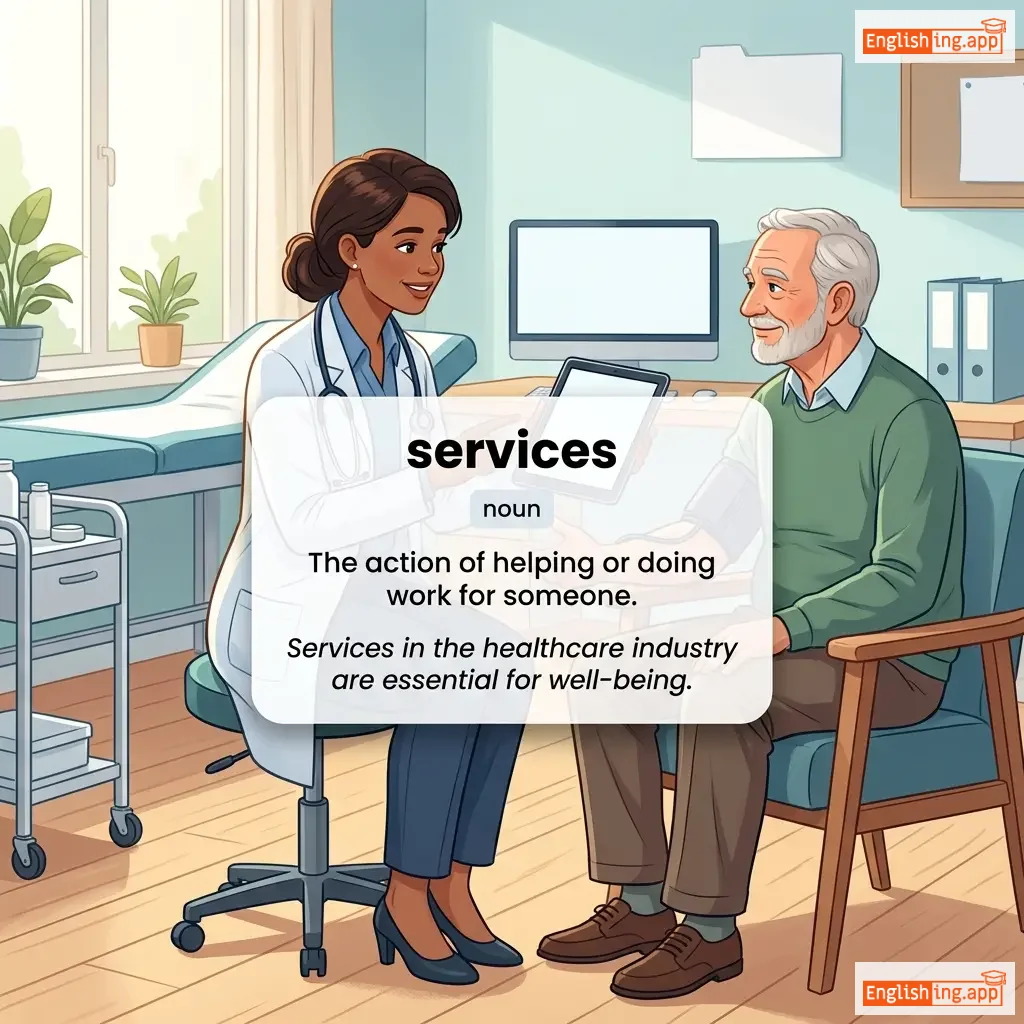
services definition card — visual illustration of the meaning
noun
ˈsɜːvɪsɪz
サービス (sābisu)

The action of helping or doing work for someone.

"Services in the healthcare industry are essential for well-being."
"医療業界のサービスは、福祉に不可欠です。" (Iryō gyōkai no sābisu wa, fukushi ni fukaketsu desu.)
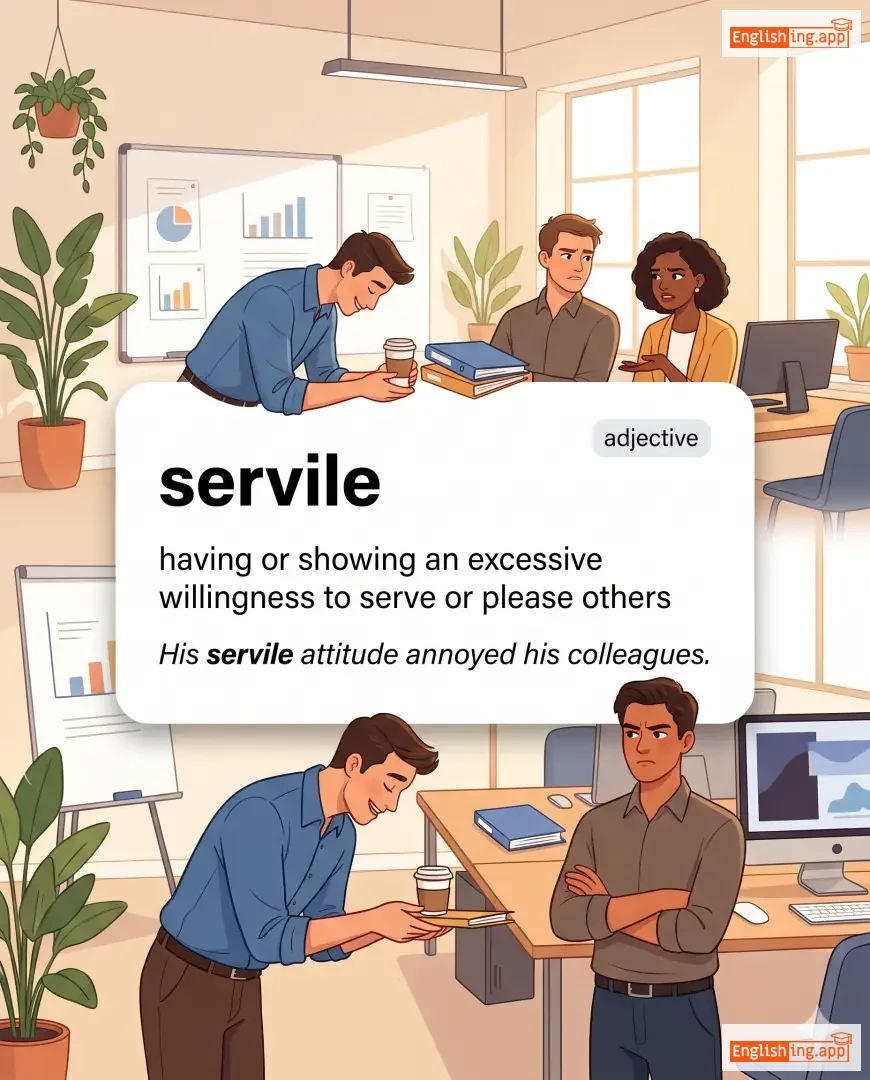
servile definition card — visual illustration of the meaning
adjective
/ˈsɜːrvaɪl/ or /ˈsɜːrvəl/
卑屈な (hikutsuna)

having or showing an excessive willingness to serve or please others

"His servile attitude annoyed his colleagues."

"彼の卑屈な態度は同僚を困らせていました。" (Kare no hikutsuna taido wa dōryō o komarasete imashita.)
noun
/ˈsɜːvɪŋ/
ポーション (poshon)

a portion of food for one person; the act of giving food or drink to someone

"He ate a large serving of rice and curry."

"彼は大きなポーションのご飯とカレーを食べました。" (Kare wa ōkina poshon no gohan to karē o tabemashita.)
noun
/ˈsɜːrvɪtuːd/
隷属 (reisoku)

the state of being a slave or completely subject to someone more powerful

"The prisoners were forced into servitude."

"囚人たちは強制的に隷属させられました。" (Shūjin-tachi wa kyōseiteki ni reisoku saseraremashita.)
noun
/ˈsɛsəmi sidz/
ゴマの種 (goma no tane)

small edible seeds from the sesame plant used in cooking and baking

"Sprinkle sesame seeds on top of the bread before baking."

"パンの上にゴマの種を振りかけてから焼いてください。" (Pan no ue ni goma no tane o furikakete kara yaite kudasai.)
session definition card — visual illustration of the meaning
noun
/ˈsɛʃ.ən/
セッション (sesshon)

a meeting or a period of time devoted to a specific activity

"The session will begin at 10 AM."
"セッションは午前10時に開始します。" (Sesshon wa gozen 10-ji ni kaishi shimasu.)
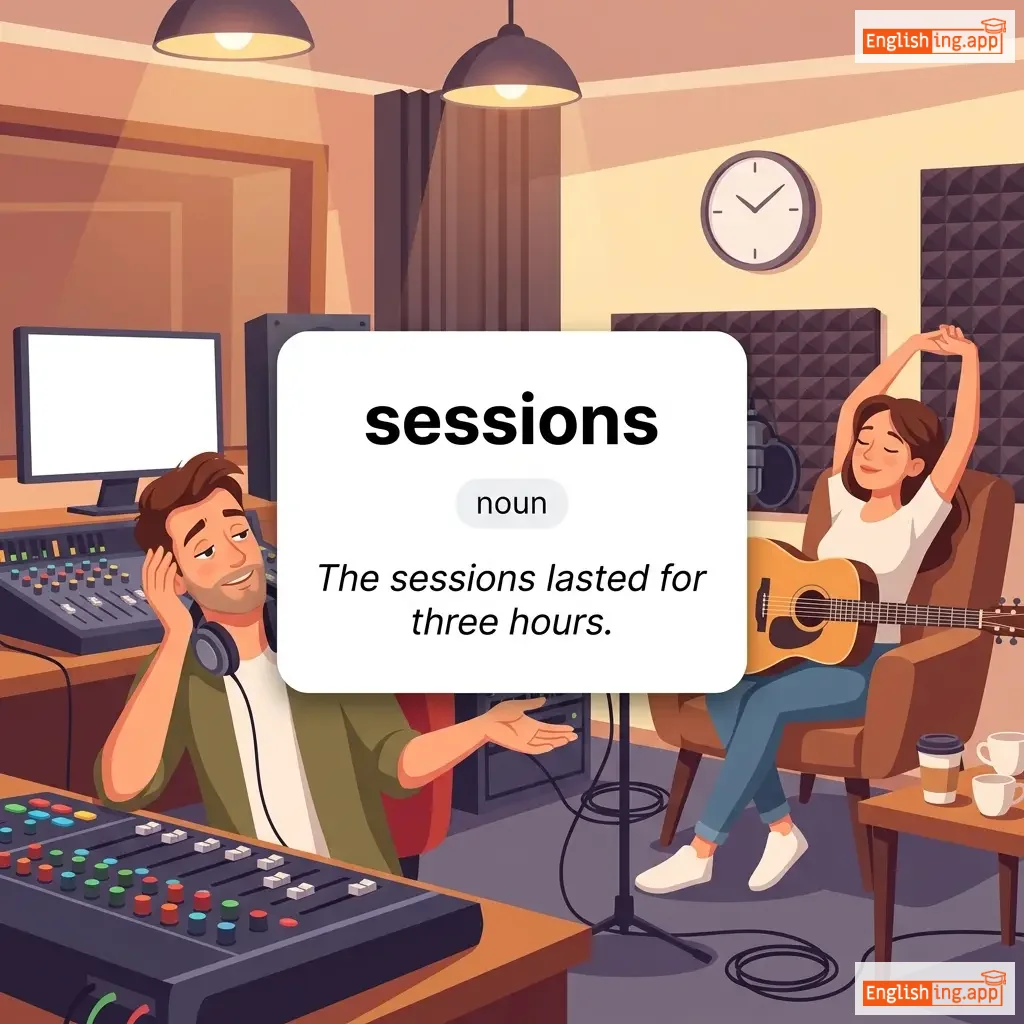
sessions definition card — visual illustration of the meaning
noun
ˈsɛʃənz
セッション, 会議, 時間帯 (sesshon, kaigi, jikan-tai)

A meeting of an official body, especially a court of law, to conduct its business; a period devoted to a particular activity.

"The sessions lasted for three hours."

"セッションは3時間続きました。" (Sesshon wa san jikan tsuzukimashita.)
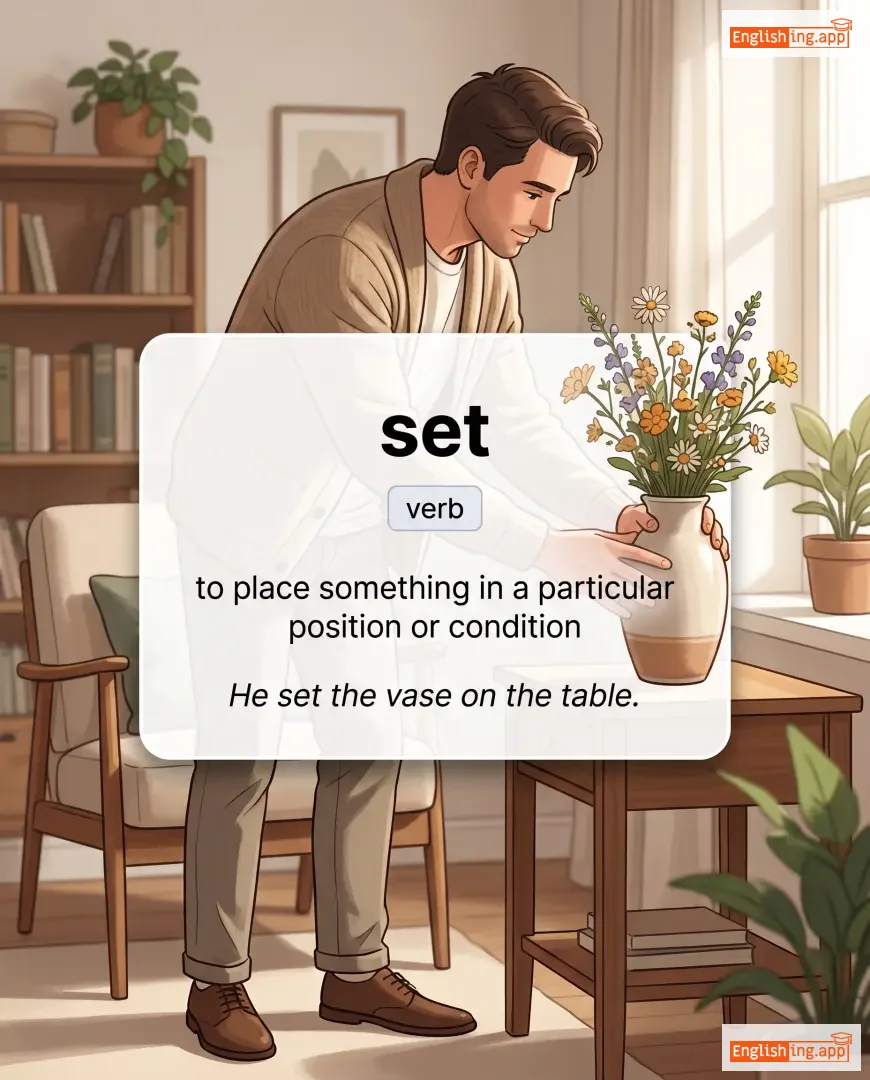
set definition card — visual illustration of the meaning
verb
/sɛt/
置く (oku)

to place something in a particular position or condition

"He set the vase on the table."

"彼は花瓶をテーブルの上にセットした。" (Kare wa kabin o tēburu no ue ni setto shita.)
noun
/ˈsɛt ʌp/
構成 (kousei)

The arrangement or organization of something; a planned structure or scheme

"The company presented a new set-up for the office layout."
"会社はオフィスレイアウトのために新しいセットアップを発表した。" (Kaisha wa ofisu reiauto no tame ni atarashii settoappu o happyou shita.)
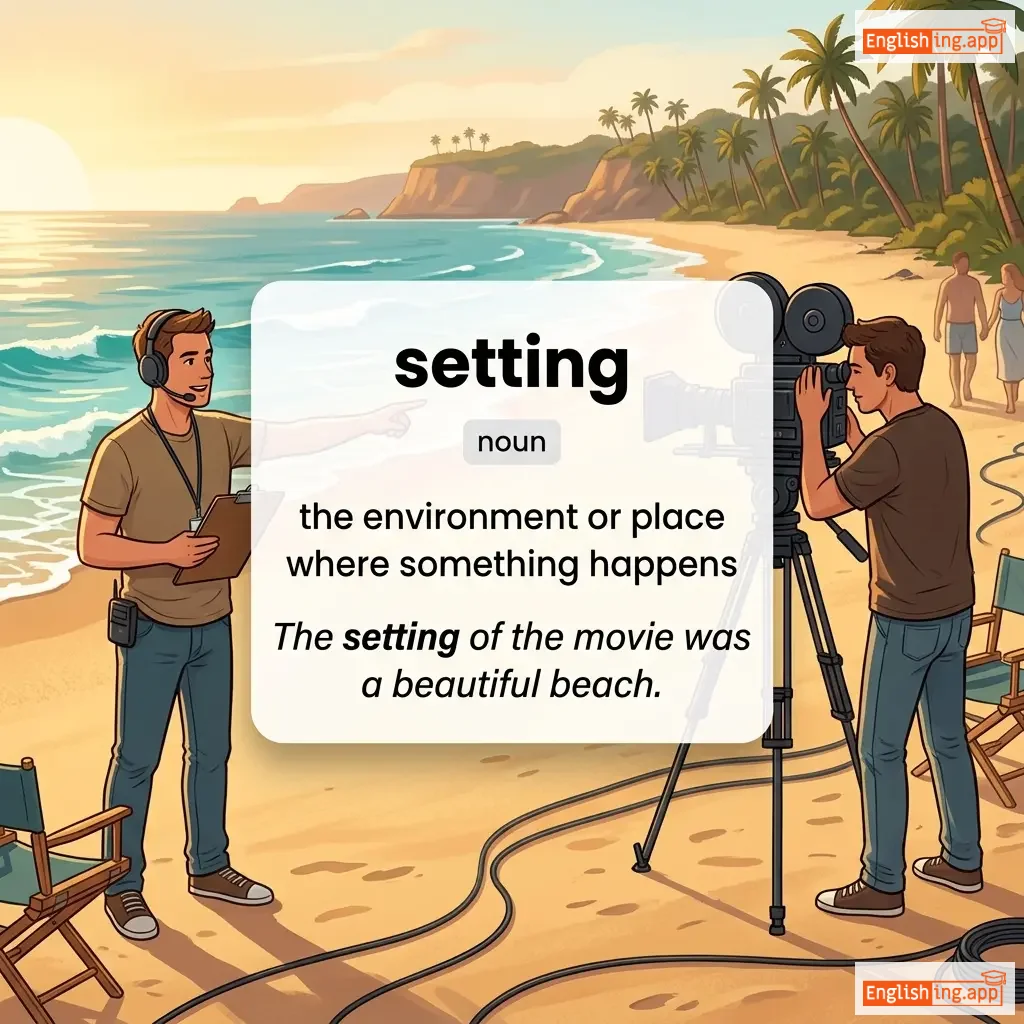
setting definition card — visual illustration of the meaning
noun
/ˈsɛtɪŋ/
セット (setto)

the environment or place where something happens

"The setting of the movie was a beautiful beach."

"映画の舞台は美しいビーチでした。" (Eiga no butai wa utsukushī bīchi deshita.)
settle definition card — visual illustration of the meaning
verb
/ˈsɛtl/
解決する (kaiketsu suru)

to resolve or come to an agreement about something; to establish a residence or position

"After a long negotiation, they were able to settle the dispute."

"長い交渉の後、彼らはついに争いを解決することができました。" (Nagai kōshō no ato, karera wa tsuini arasoi o kaiketsu suru koto ga dekimashita.)
noun
/ˈsɛtlmənt/
合意 (goi)

an agreement reached after a dispute, or a community or area where people establish a home

"The settlement between the companies was finalized after months of talks."

"企業間の合意は、数ヶ月にわたる交渉の後に最終的に決定されました。" (Kigyōkan no gōi wa, sū kagetsu ni wataru kōshō no ato ni saishūteki ni kettei saremashita.)
noun
/ˈsɛtlər/
入植者 (nyūshokusha)

a person who settles in a new area or land

"The settlers arrived in the new town and started building homes."

"入植者たちは新しい町に到着し、家を建て始めました。" (Nyūshokusha-tachi wa atarashī machi ni tōchaku shi, ie o tatehajimemashita.)
noun
/ˈsɛtʌp/
設置 (setchi)

an arrangement of things or the way in which something is organized or prepared

"The setup of the event took hours to complete."
"イベントのセットアップには数時間かかりました。" (Ibento no settoappu ni wa suujikan kakarimashita.)
7️⃣

seven

noun
/ˈsɛvən/

the number following six and preceding eight

"She has seven apples in her basket."

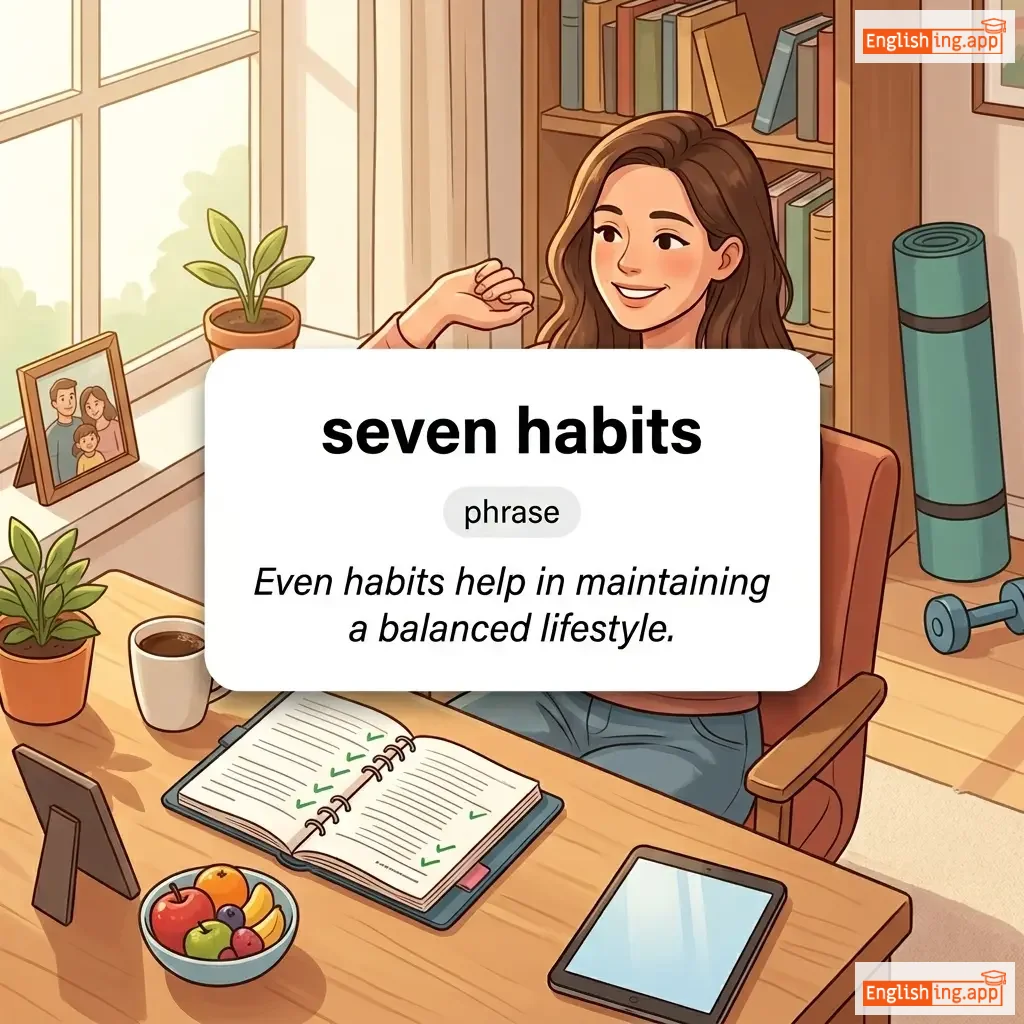
seven habits definition card — visual illustration of the meaning
phrase
ˈsɛvən ˈhæbɪts
七つの習慣 (nanatsu no shūkan)

Regular behaviors or actions that are done consistently over time, specifically referring to a set of seven key practices.

"Even habits help in maintaining a balanced lifestyle."
"習慣はバランスの取れたライフスタイルを維持するのに役立ちます。" (Shūkan wa baransu no toreta raifusutairu o iji suru no ni yakudachimasu.)
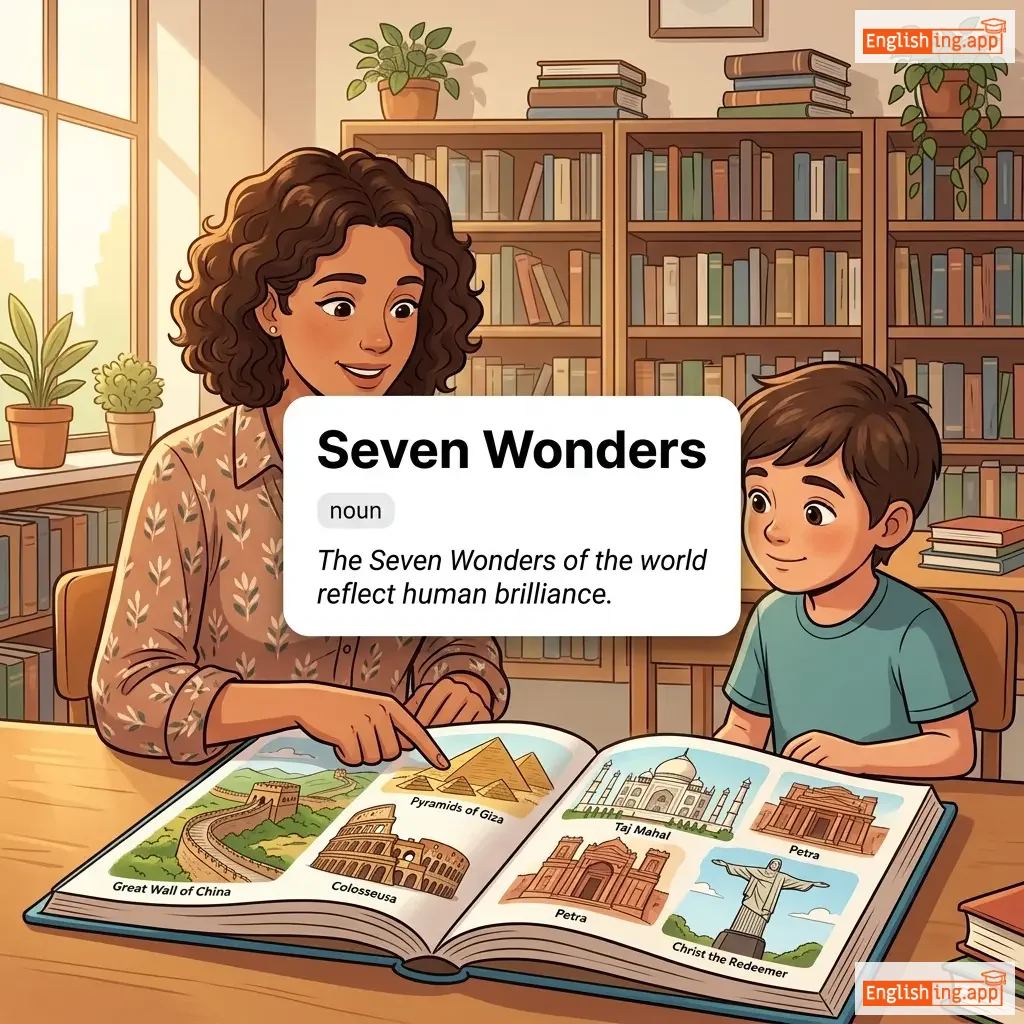
Seven Wonders definition card — visual illustration of the meaning
noun
ˈsɛv.ən ˈwʌn.dərz
七不思議 (shichi fushigi)

The seven most remarkable and famous structures in the world, representing architectural feats and cultural significance.

"The Seven Wonders of the world reflect human brilliance."

"世界の七不思議は人類の素晴らしさを反映しています。" (Sekai no shichi fushigi wa jinrui no subarashisa o han'ei shiteimasu.)
adjective
/ˈsɛvənθ/
七番目 (nanabanme)

constituting number seven in a sequence; coming after the sixth

"Her birthday is on the seventh of July."

"彼女の誕生日は7月7日です。" (Kanojo no tanjoubi wa shichigatsu nanoka desu.)
verb
/ˈsɛvər/
切る、関係を断つ (kiru, kankei wo tatsu)

to cut off or separate, especially by cutting; to end a connection or relationship

"He had to sever ties with the company after the dispute."

"彼は争いの後、会社との関係を断たなければならなかった。" (Kare wa arasoi no ato, kaisha to no kankei wo tatanakereba naranakatta.)
adjective
/ˈsɛvrəl/
いくつか (ikutsuka)

more than one but not many; a few

"Several people attended the meeting yesterday."

"数人が昨日の会議に出席した。" (Sūnin ga kinō no kaigi ni shusseki shita.)
noun
/ˌʃæŋɡriˈlɑː/
架空の楽園 (kakū no rakuen)

a remote, beautiful, imaginary place where life is perfect and peaceful

"They described the island as a modern-day Shangri-La."

"彼らはその島を現代版シャングリ・ラとして描写しました。" (Karera wa sono shima o gendai-ban Shangri-La to shite byōsha shimashita.)
adjective
/ˈʃeɪm.fəl/
恥ずかしい; 不名誉な; 恥ずかしい (hazukashii; fumeiyo na; hazukashii)

causing shame; disgraceful; embarrassing

"His shameful behavior embarrassed the entire family."

"彼の恥ずかしい行動は家族全員を困惑させました。" (Kare no hazukashii kōdō wa kazoku zen'in o konwaku sasemashita.)