ভোকাবুলারিসমূহ

ইংরেজি শব্দের বাংলা অর্থ | English to Bangla Word Meaning Dictionary

noun
/ʃɔːrts/
ছোট প্যান্ট (chhoto pant)

a short garment worn on the lower half of the body that covers each leg separately, usually above the knees.

"He wore a pair of blue shorts to the beach."

"সে সমুদ্র সৈকতে একটি নীল শর্টস পরেছিল।" (Se somudro soikote ekti nil shorts porechhilo.)
noun, verb
/ʃɒt/
শট (shot)

a single attempt to hit something, usually with a weapon or a ball

"He took a shot at the goal."

"সে গোলের দিকে একটি শট নিয়েছিল।" (Se goler dike ekti shot niechhilo.)
modal verb
/ʃʊd/
উচিত (uchit)

used to indicate obligation or duty

"You should study for your exams."

"তুমি তোমার পরীক্ষার জন্য পড়াশোনা উচিত।" (Tumi tomar porikkhar jonno porashona uchit.)
noun
/ˈʃoʊldər/
কাঁধ (kandha)

the upper joint of the human arm and the part of the body to which it is attached

"He hurt his shoulder while lifting weights."

"সে ওজন তোলার সময় তার কাঁধে আঘাত করেছে।" (Se ojhon tolar shomoy tar kandhe aghat korechhe.)
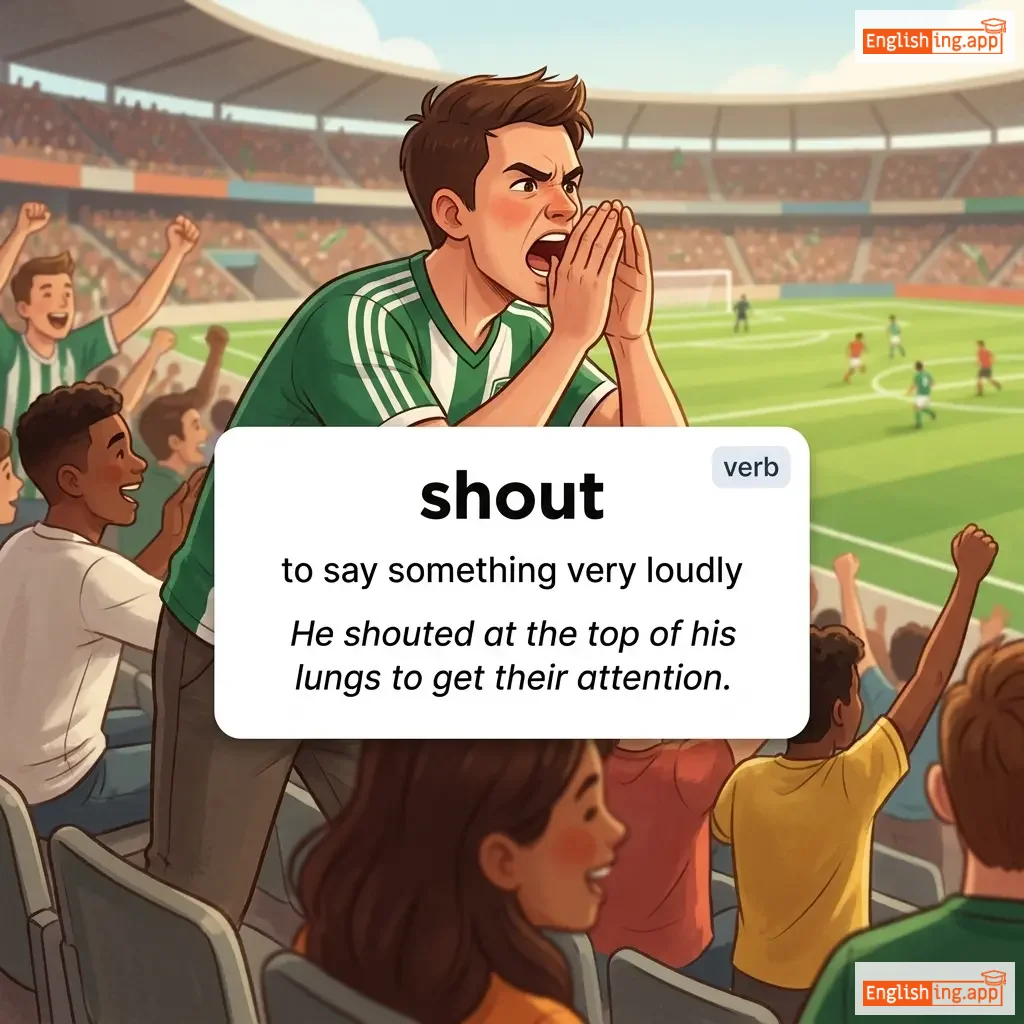
shout definition card — visual illustration of the meaning
verb
/ʃaʊt/
চিৎকার করা (chitkar kora)

to say something very loudly

"He shouted at the top of his lungs to get their attention."

"সে তাদের মনোযোগ আকর্ষণ করার জন্য তার ফুসফুসের সর্বোচ্চ অংশ থেকে চিৎকার করেছিল।" (Se tader monojog akorshon korar jonno tar fushfusher shorbosho angsho theke chitkar korechhe.)
verb
/ʃʌv/
ধাক্কা দেওয়া (dhakka deowa)

to push someone or something roughly

"He shoved the box into the corner."

"সে বাক্সটিকে কোণায় ঠেলে দিল।" (Se bakstike konay thele dilo.)
noun
/ˈʃʌv.əl/
বেলচা (belcha)

a tool with a broad flat blade and long handle used for digging and moving earth, snow, or other materials

"He grabbed a shovel to clear the snow from the driveway."

"সে গাড়ি চালার পথ থেকে বরফ পরিষ্কার করার জন্য একটি বেলচা নিয়েছিল।" (she gari chalar path theke borof porishkar korar jonno ekti belcha niyechilo.)
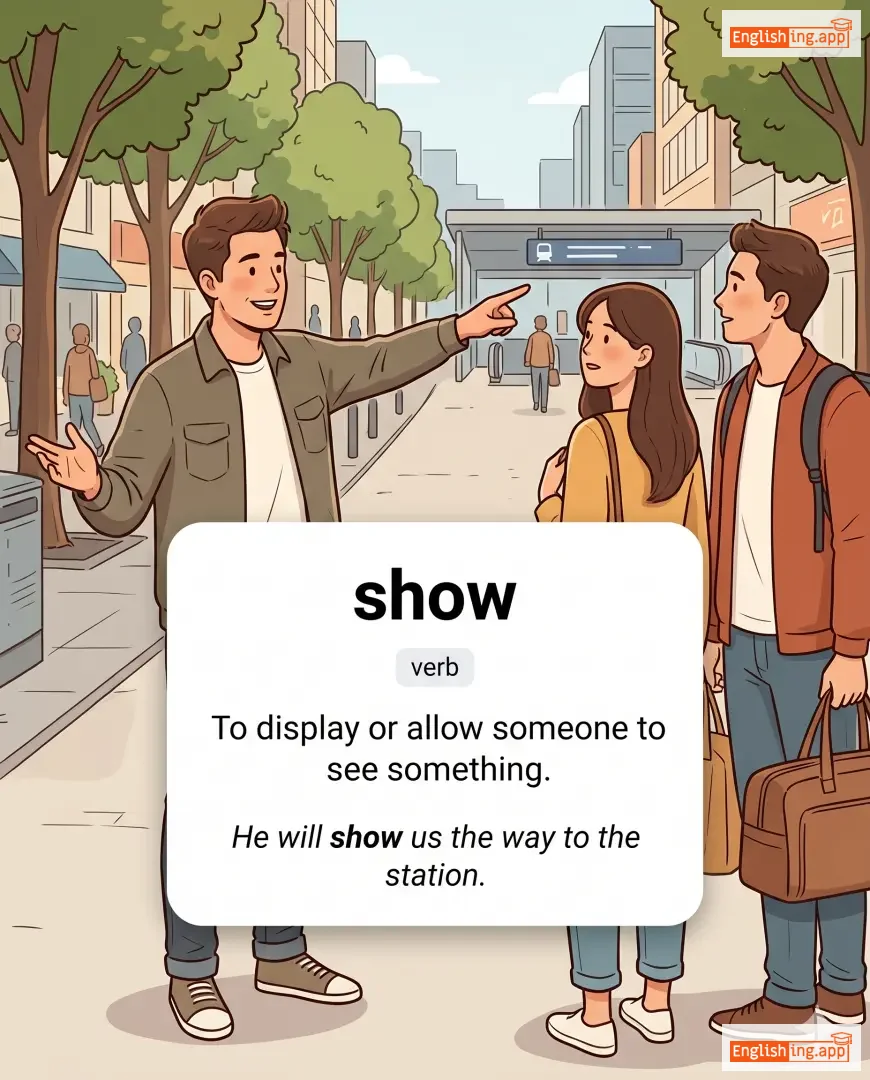
show definition card — visual illustration of the meaning
verb
/ʃoʊ/
দেখানো (dekhao)

To display or allow someone to see something.

"He will show us the way to the station."

"সে আমাদের স্টেশনের রাস্তা দেখাবে।" (Se amader station er rastaa dekhabe.)
noun
/ˈʃaʊər/
স্নান (snan)

a brief fall of rain or snow or a device for taking a bath or washing oneself

"After the workout, I took a quick shower to refresh myself."

"ওয়ার্কআউটের পর, আমি নিজেকে রিফ্রেশ করতে দ্রুত একটি স্নান নিয়েছিলাম।" (Workout-er por, ami nijeke refresh korte druto ekti snan niyechhilam.)
/ʃrɛd/
ছিন্নভিন্ন করা (chinnobhinnno kora)

to tear or cut something into small pieces

"She shredded the old documents before throwing them away."

"সে পুরোনো কাগজপত্র ছিঁড়ে ফেলে দিল।" (Se purono kagojpotro chire fele dilo.)
noun
/ʃruː/
ঝগড়াটে মহিলা / ছোট ইঁদুর জাতীয় প্রাণী (jhograto mohila / choto idur jatio prani)

a small mouse-like animal; also a woman with a bad temper

"The play describes a strong-willed woman as a shrew."

"নাটকটি এক জেদী মহিলাকে শ্রু হিসাবে বর্ণনা করেছে।" (Natokti ek jodi mohila ke shrew hisabe bornona koreche.)
adjective
/ʃruːd/
চতুর (chotur)

having sharp judgment and practical intelligence

"She made a shrewd investment in real estate."

"সে রিয়েল এস্টেটে চতুর বিনিয়োগ করেছে।" (Se real estate e chotur binioyog koreche.)
verb
/ʃriːk/
চিৎকার করা (chitkar kora)

to make a loud, high-pitched cry

"She shrieked when she saw the spider."

"সে মাকড়সা দেখে চিৎকার করে উঠল।" (Se makorsa dekhe chitkar kore uthlo.)
adjective
/ʃrɪl/
তীক্ষ্ণ শব্দ (tikshno shobdo)

High-pitched and piercing in sound.

"The shrill whistle startled everyone in the room."

"তীক্ষ্ণ বাঁশির শব্দে সবাই ভয় পেয়েছিল।" (Tikshno bashir shobde shobai bhoy peyechhilo.)
noun
/ʃrɪmp/
চিংড়ি (chingri)

a small marine crustacean that is often used as food.

"We ordered grilled shrimp for dinner."

"আমরা রাতের খাবারের জন্য গ্রিলড চিংড়ি অর্ডার করেছিলাম।" (Amra rater khabarer jonno grilled chingri order korechhilam.)
noun
/ʃraɪn/
পবিত্র স্থান (pobitro sthan)

A place regarded as holy, often associated with a saint or deity.

"Thousands of pilgrims visit the shrine each year."

"প্রতি বছর হাজার হাজার তীর্থযাত্রী সেই পবিত্র স্থানে যান।" (Proti bochor hajar hajar tirthojatri sei pobitro sthane jan.)
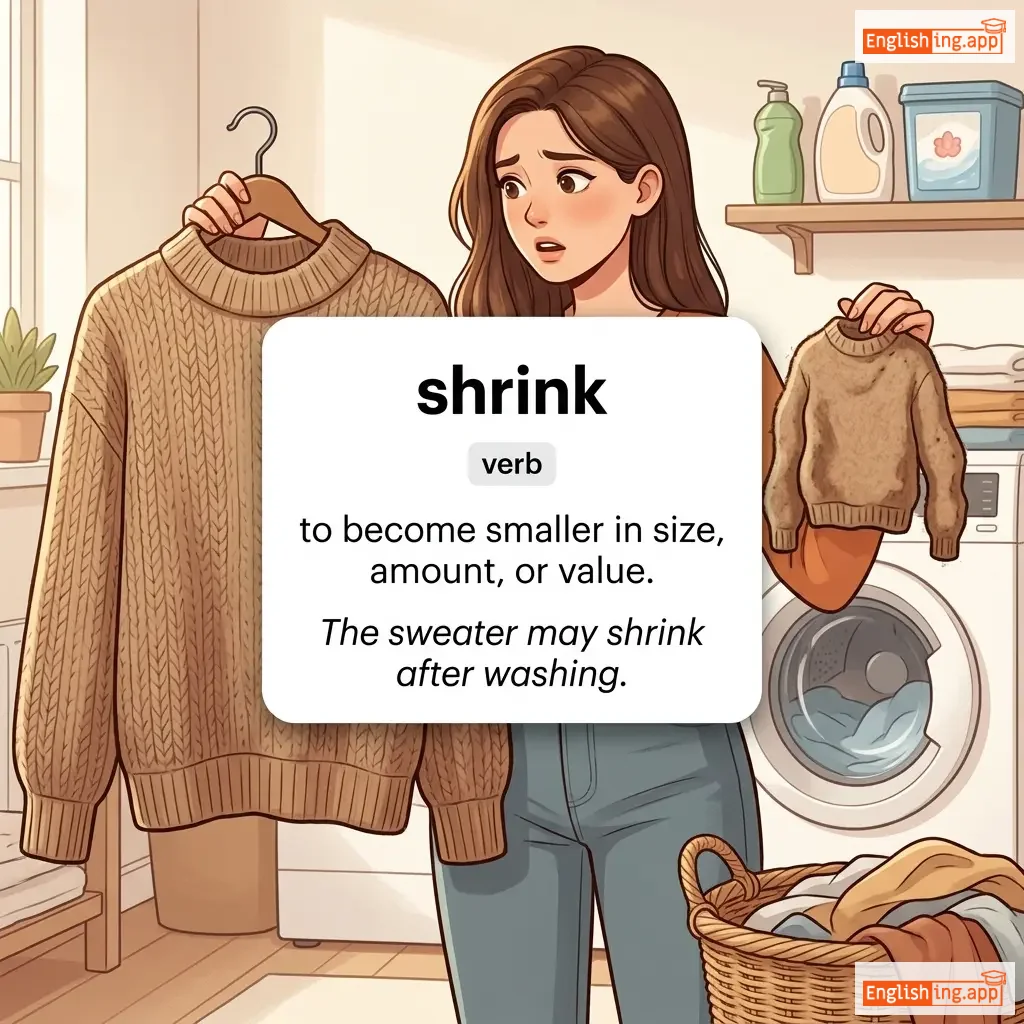
shrink definition card — visual illustration of the meaning
verb
/ʃrɪŋk/
সঙ্কুচিত হওয়া (sonkuchito howa)

to become smaller in size, amount, or value.

"The sweater may shrink after washing."

"সুইটারটি ধোয়ার পর সঙ্কুচিত হতে পারে।" (Sweaterti dhowar por sonkuchito hote pare.)
noun
/ˈʃrɪŋkɪdʒ/
সঙ্কোচন (sonkochon)

The process of becoming smaller in size, amount, or value.

"The company reported a shrinkage in profits this quarter."

"এই ত্রৈমাসিকে কোম্পানি মুনাফার হ্রাস রিপোর্ট করেছে।" (Ei troimasike company munafar hras report koreche.)
verb
/ˈʃrɪvəl/
কুঁচকে যাওয়া (kuchke jaoa)

To become dry, wrinkled, and smaller due to lack of moisture.

"The flowers shriveled under the hot sun."

"ফুলগুলো রোদের তাপে কুঁচকে গিয়েছিল।" (Phulgulo roder tape kuchke giechhilo.)
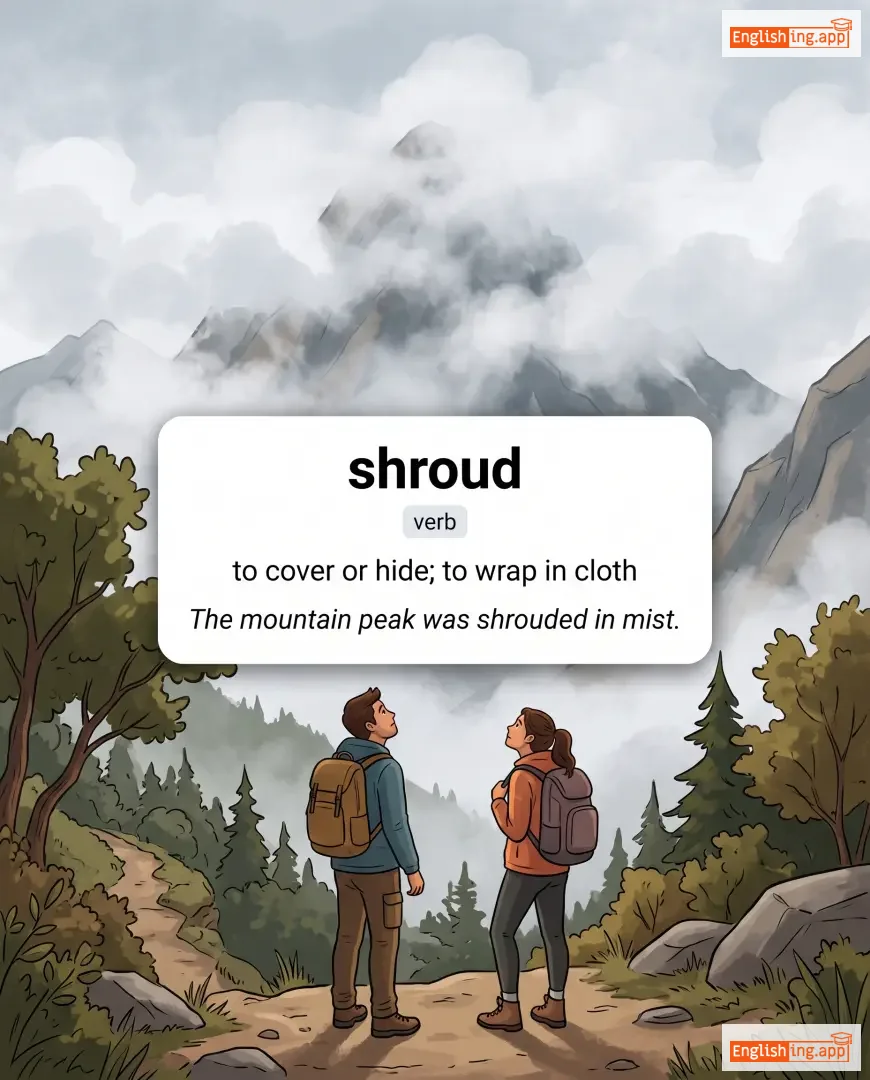
shroud definition card — visual illustration of the meaning
verb
/ʃraʊd/
আবৃত করা (abrito kora)

to cover or hide; to wrap in cloth

"The mountain peak was shrouded in mist."

"পর্বতশৃঙ্গটি কুয়াশায় আবৃত ছিল।" (Porbotoshringoti kuyashay abrito chhilo)
verb
/ʃrʌɡ/
কাঁধ ঝাঁকানো (kandh jhakano)

To raise and lower the shoulders to express uncertainty or indifference.

"He shrugged when asked about the missing file."

"হারানো ফাইল নিয়ে প্রশ্ন করলে সে কাঁধ ঝাঁকালো।" (Harano file niye proshno korle se kandh jhakalo.)
verb
/ʃʌk/
খোসা ছাড়ানো (khosa charano)

To remove the outer covering, such as the husk of corn or shell of shellfish.

"She learned how to shuck oysters quickly."

"সে দ্রুত কিভাবে ঝিনুকের খোসা ছাড়াতে হয় তা শিখেছিল।" (Se druto kivabe jhinuker khosa charate hoy ta shikhechhilo.)
verb
/ˈʃʌdər/
কাঁপা (kapa)

to tremble or shake suddenly, often due to fear, cold, or strong emotion

"She shuddered at the thought of walking alone in the dark forest."

"অন্ধকার বনে একা হাঁটার চিন্তায় সে কেঁপে উঠল।" (Ondhokar bone eka hatar chintay se kempe uthlo.)
verb
/ˈʃʌfəl/
পা টেনে হাঁটা / এলোমেলো করা (pa tene hata / elomelo kora)

to walk by dragging one's feet along or without lifting them fully; to mix or rearrange

"He shuffled the cards before dealing them."

"সে কার্ডগুলো বিলি করার আগে মিশিয়ে নিল।" (Se kardgulo bili korar age mishiye nilo.)
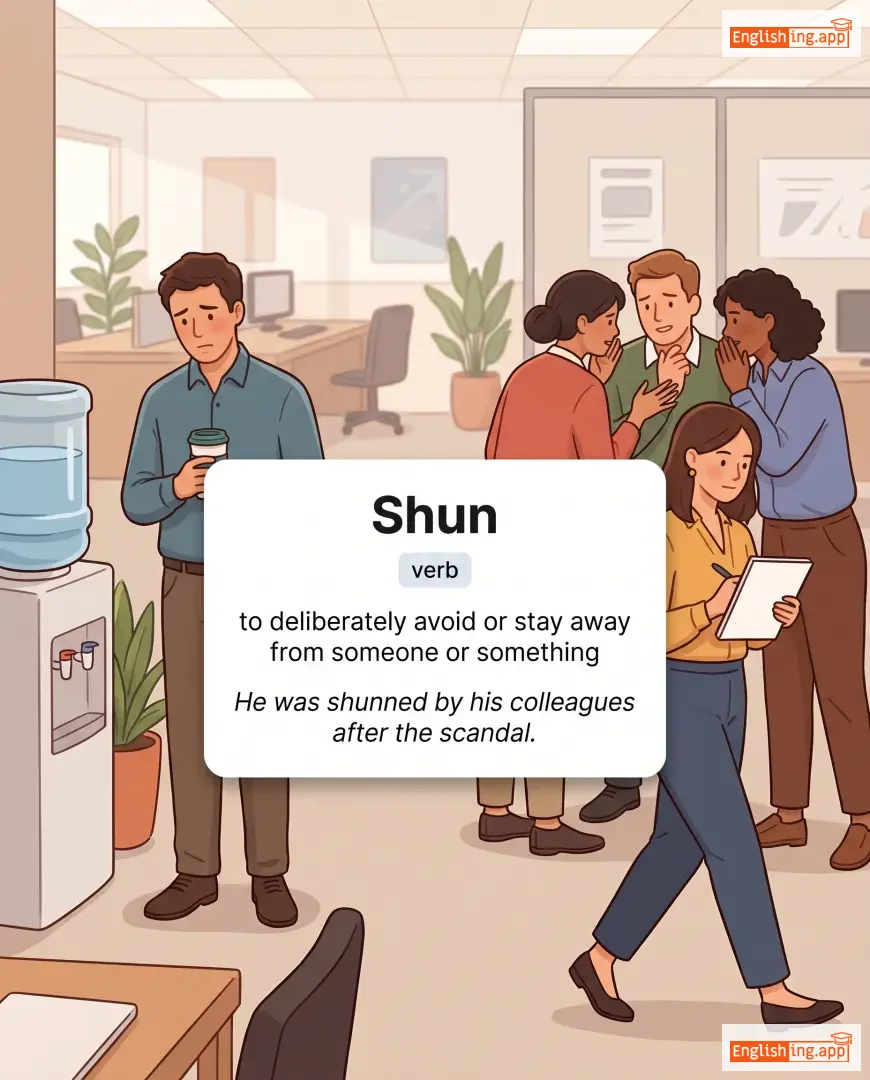
Shun definition card — visual illustration of the meaning
verb
/ʃʌn/
এড়িয়ে চলা (eriye chola)

to deliberately avoid or stay away from someone or something

"He was shunned by his colleagues after the scandal."

"কেলেঙ্কারির পর সহকর্মীরা তাকে এড়িয়ে চলত।" (Kelenkarir por sohokormira take eriye cholo.)
verb
/ʃʌnt/
পাশে সরানো / অন্যদিকে সরানো (pashe sorano / onnodike sorano)

to move or turn aside; to push or divert from one track to another

"The train was shunted onto a different track."

"ট্রেনটি অন্য লাইনে সরিয়ে নেওয়া হয়েছিল।" (Trenti onno line sorie neowa hoyechhilo.)
verb
/ʃʌt/
বন্ধ করা (bondho kora)

to close something, especially a door or window

"Please shut the door before you leave."

"অনুগ্রহ করে দরজা বন্ধ করুন যেদিকে আপনি চলে যাবেন।" (Onugroho kore dorja bondho korun jedike apni chole jaben.)
noun
/ˈʃʌtəl/
দুই স্থানের মধ্যে চলাচলকারী যানবাহন (dui sthaner modhye cholacholkari janbahon)

a vehicle or craft that travels regularly between two places.

"The airport shuttle runs every 30 minutes."

"বিমানবন্দরের শাটলটি প্রতি ৩০ মিনিটে চলে।" (Bimanbondorer shuttleti proti 30 minute chole.)
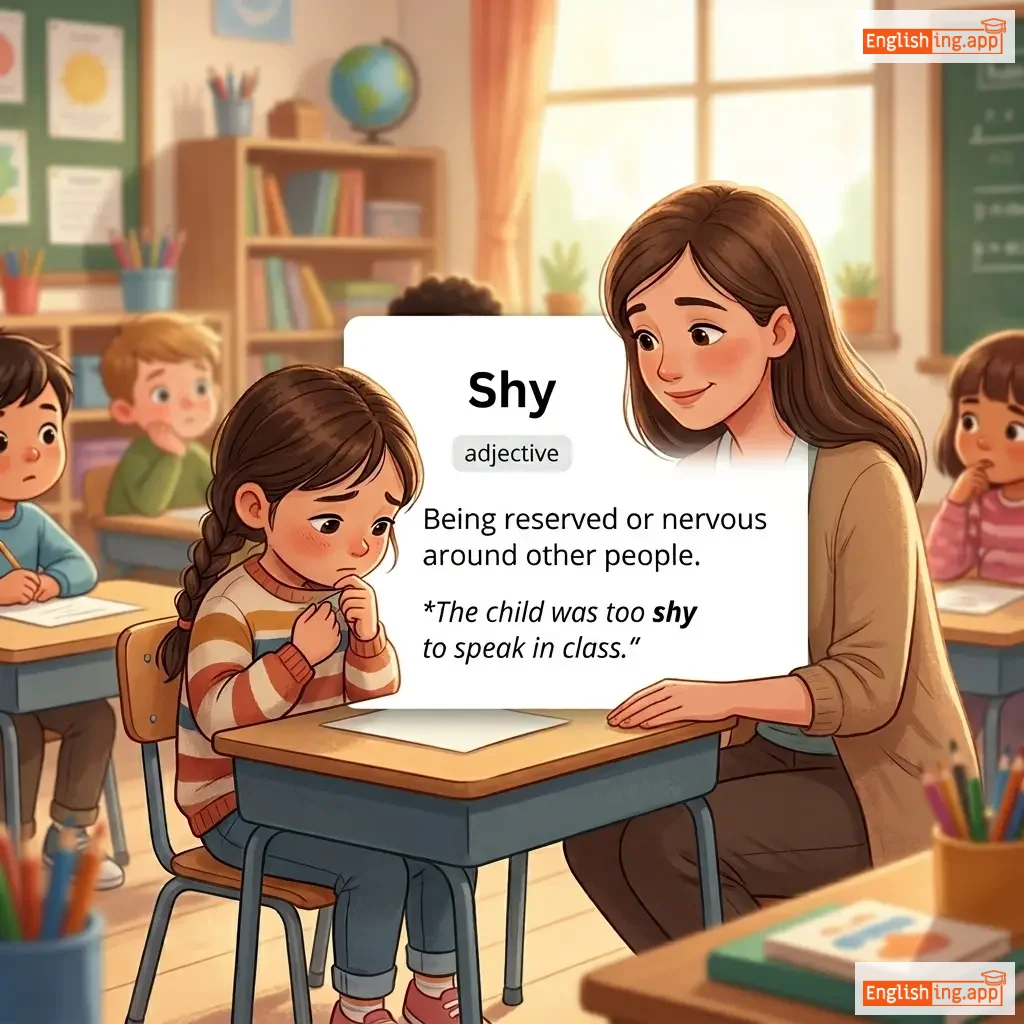
Shy definition card — visual illustration of the meaning
adjective
/ʃaɪ/
লাজুক (lajuk)

Being reserved or nervous around other people.

"The child was too shy to speak in class."

"শিশুটি ক্লাসে কথা বলার জন্য খুব লাজুক ছিল।" (Shishuti klase kotha bolar jonno khub lajuk chhilo.)
noun
/ˈʃaɪstər/
প্রতারক (protarok)

a person, especially a lawyer, who uses unscrupulous or dishonest methods

"The businessman was exposed as a shyster who cheated clients."

"ব্যবসায়ীটিকে প্রতারক হিসেবে ধরা হয়েছিল, যে ক্লায়েন্টদের ঠকাত।" (Byabshayitike protarok hisebe dhora hoyechhilo, je clientder thokato.)
noun
/ˈsɪbɪləns/
সিসকার শব্দ (siskar shobdo)

A hissing or hushing sound, especially in speech with 's' or 'sh'.

"The poet used sibilance to create a soft, hissing effect in the verse."

"কবি কবিতায় নরম, হিসিং ধ্বনি তৈরি করতে সিবিল্যান্স ব্যবহার করেছিলেন।" (Kobi kobitay norom, hissing dhoni toiri korte sibilance byabohar korechilen.)
adjective
/ˈsɪbɪlənt/
হিসিং ধ্বনিযুক্ত (hissing dhoniyukto)

Making or characterized by a hissing sound.

"The word 'snake' starts with a sibilant sound."

"'স্নেক' শব্দটি একটি সিবিল্যান্ট ধ্বনিতে শুরু হয়।" ('Snake' shobdoti ekti sibilant dhonite shuru hoy.)
verb
/ˈsɪbəleɪt/
সিসকার ধ্বনি করা (siskar dhoni kora)

To pronounce with a hissing sound.

"The actor sibilated his lines for dramatic effect."

"অভিনেতা নাটকীয় প্রভাবের জন্য তাঁর সংলাপ সিসকার ধ্বনিতে উচ্চারণ করেছিলেন।" (Abhineta natokiyo probhaper jonno tar songlap siskar dhonite uchcharon korechilen.)
noun
/ˈsɪblɪŋ/
ভাইবোন (bhaibon)

A brother or sister.

"She has three siblings, two brothers and one sister."

"তার তিনজন ভাইবোন আছে, দুই ভাই এবং এক বোন।" (Tar tinjon bhaibon ache, dui bhai ebong ek bon.)
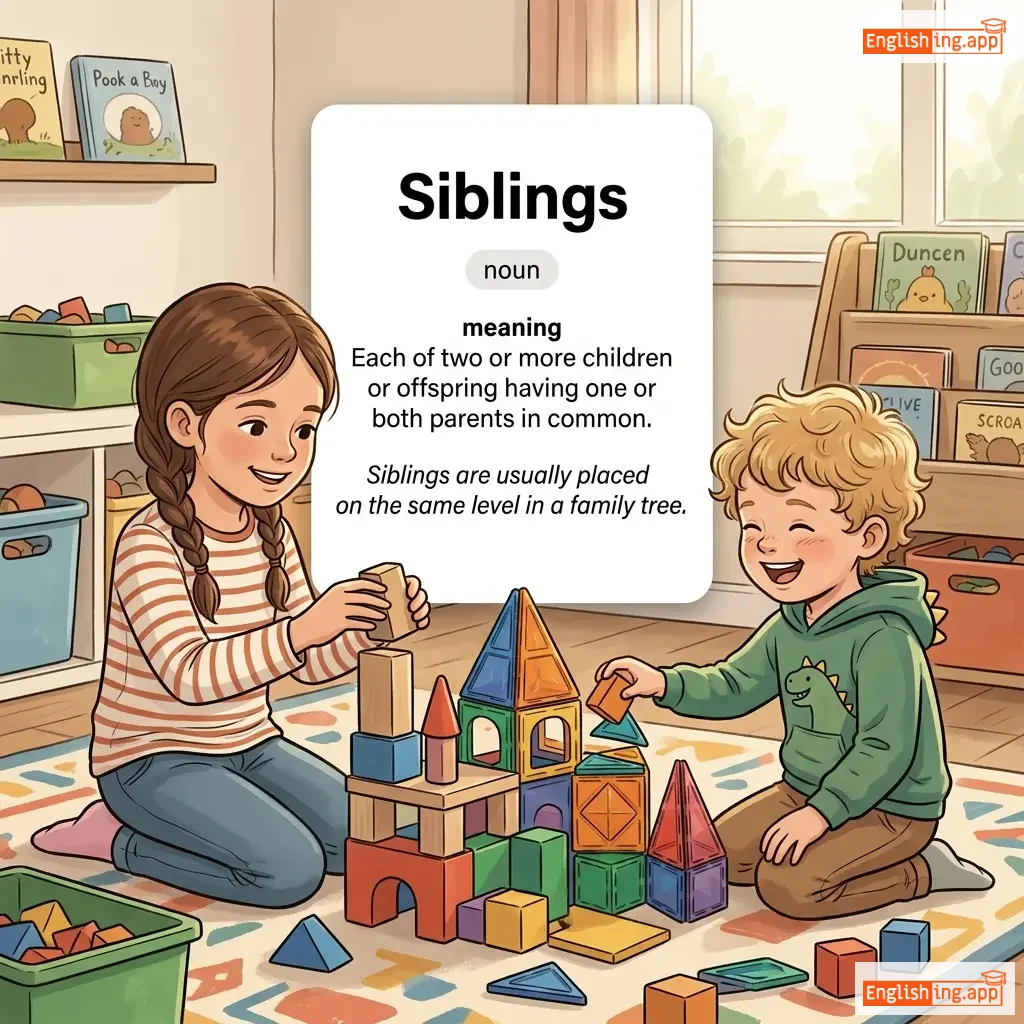
Siblings definition card — visual illustration of the meaning
noun
ˈsɪblɪŋz
ভাই-বোন (bhaai-bon)

Each of two or more children or offspring having one or both parents in common.

"Siblings are usually placed on the same level in a family tree."

"পারিবারিক গাছে ভাই-বোনদের সাধারণত একই স্তরে রাখা হয়।" (Paribaarik gaachhe bhaai-bondder shaadharonoto ekee sstore raakhaa hoy.)
adjective
/ˈsɪbɪlaɪn/
ভবিষ্যদ্বাণীমূলক (bhobisshodbanimulok)

Prophetic, mysterious, or cryptic in meaning.

"The old woman gave a sibylline warning about the future."

"বৃদ্ধা ভবিষ্যৎ সম্পর্কে একটি ভবিষ্যদ্বাণীমূলক সতর্কবার্তা দিয়েছিলেন।" (Briddha bhobishshot somporke ekti bhobisshodbanimulok sotorko barta diyechilen.)
Sick definition card — visual illustration of the meaning
adjective
/sɪk/
অসুস্থ (osustho)

feeling unwell or suffering from illness

"She stayed home because she was feeling sick."

"সে বাড়িতে ছিল কারণ সে অসুস্থ বোধ করছিল।" (Se barite chilo karon se osustho bodh korchilo.)
noun
/ˈsɪk.əl/
হাঁসুয়া (hanshuya)

a tool with a curved metal blade and short handle used for cutting grain crops

"The farmer harvested wheat using a traditional sickle."

"কৃষক ঐতিহ্যবাহী হাঁসুয়া ব্যবহার করে গম কাটলেন।" (krishok oitihyabahi hanshuya byabohar kore gom katlen.)
adjective
/ˈsɪk.li/
দুর্বল; রোগা; অসুস্থপ্রবণ; (durbol)

weak and unhealthy; prone to illness; appearing weak or pale

"The sickly child needed extra care and attention."

"দুর্বল শিশুটির অতিরিক্ত যত্ন ও মনোযোগের প্রয়োজন ছিল।" (durbol shishutir otirikto jotno o monojog er proyojon chhilo)
noun
/ˈsɪk.nəs/
অসুস্থতা; রোগ; (sickness)

the state of being ill; a disease or illness

"She took time off work due to sickness."

"অসুস্থতার কারণে সে কাজ থেকে ছুটি নিয়েছে।" (osusthotar karone she kaj theke chhuti niyeche)
noun
/saɪd/
পাশ (pash)

a position to the left or right of something

"The store is on the side of the road."

"দোকানটি রাস্তায় পাশে রয়েছে।" (Dokan ti rastay pashe royeche.)
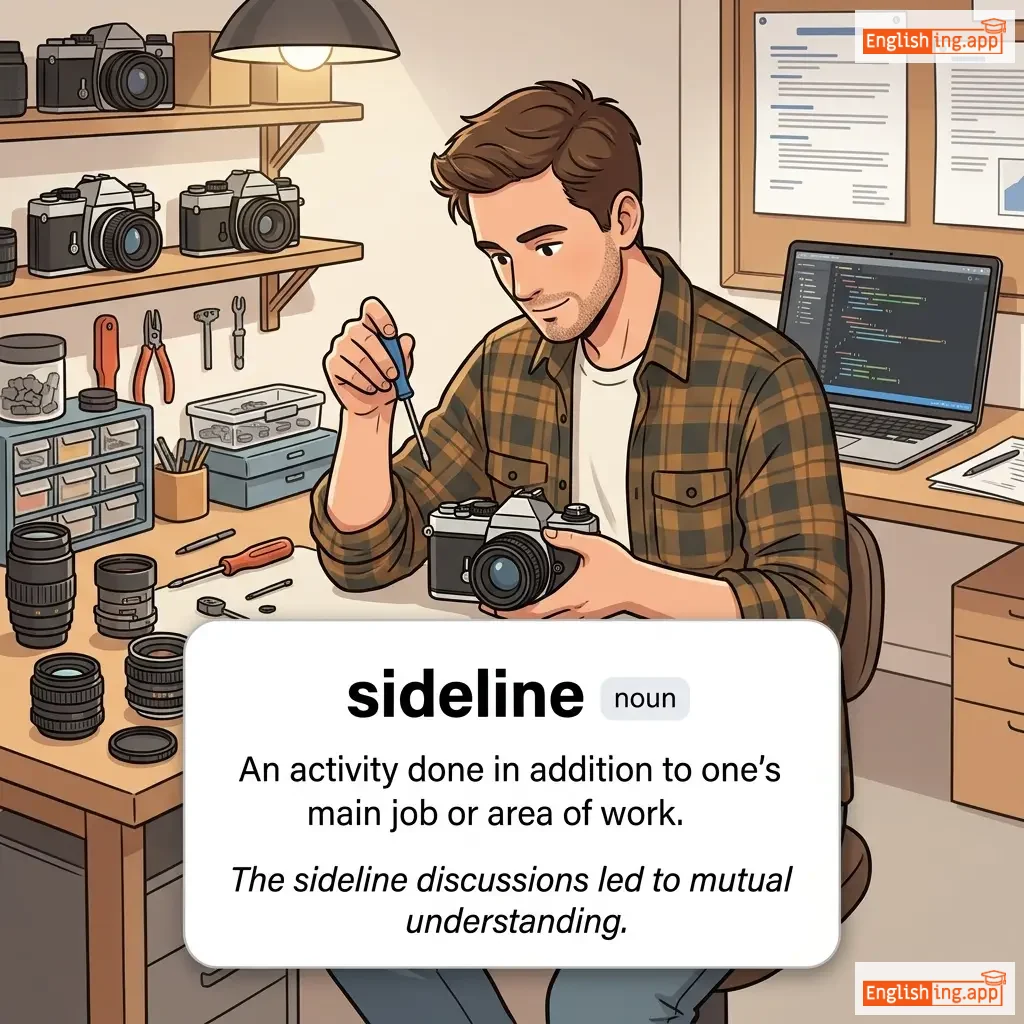
sideline definition card — visual illustration of the meaning
noun
/ˈsaɪd.laɪn/
পার্শ্ব (parshbo)

An activity done in addition to one's main job or area of work.

"The sideline discussions led to mutual understanding."

"পার্শ্ব আলোচনা পারস্পরিক বোঝাপড়া বাড়িয়েছে।" (Parshbo alochona parasporik bojhapora bariyechhe.)
sideline discussions definition card — visual illustration of the meaning
noun
/ˈsaɪd.laɪn dɪˈskʌʃənz/
পার্শ্ব আলোচনা (parshbo alochona)

Informal or secondary conversations that occur outside the main agenda of a formal meeting.

"Sideline discussions often lead to agreements."

"পার্শ্ব আলোচনা প্রায়ই চুক্তিতে পৌঁছায়।" (Parshbo alochona prayoi chuktite pouchaye.)
adjective, adverb
/ˈsaɪdlɔːŋ/
তির্যক (tirjak)

Directed to the side; indirect, furtive, or not straightforward.

"She gave him a sidelong glance across the room."

"সে ঘরের ওপারে তাকে তির্যক দৃষ্টি দিল।" (Se ghorer opar e take tirjak drishti dilo.)
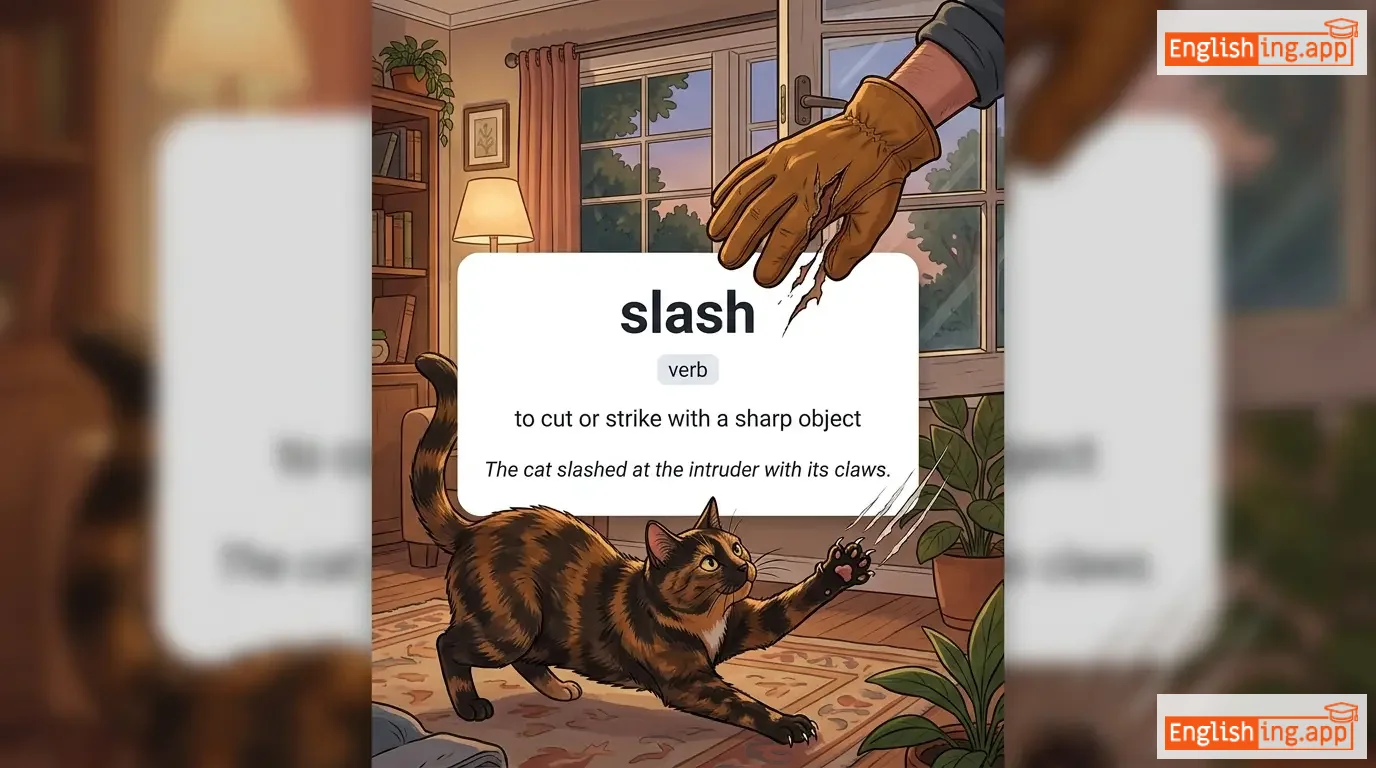
slash definition card — visual illustration of the meaning
verb
/slæʃ/
কাটা (kata)

to cut or strike with a sharp object

"The cat slashed at the intruder with its claws."

"বিড়ালটি আক্রমণকারীর দিকে তার পাঁজর দিয়ে স্ল্যাশ করেছিল।" (Biralti akromonkari dike tar panjar diye slashed korechhilo.)
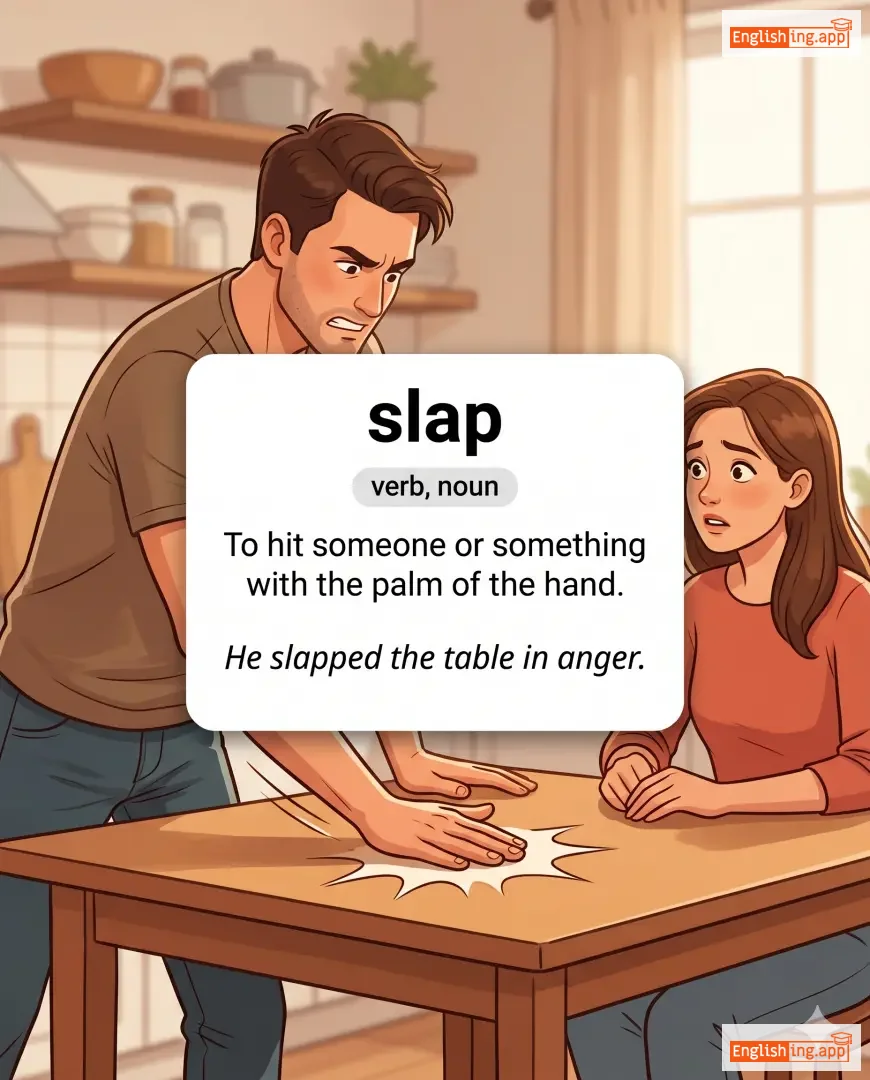
slap definition card — visual illustration of the meaning
verb, noun
/slæp/
চড় মারা (chor mara)

To hit someone or something with the palm of the hand.

"He slapped the table in anger."

"সে রাগে টেবিলে চড় মেরেছিল।" (Se rage tebile chor merechilo.)
adjective
/ˈslæp.dæʃ/
অযত্নে করা (ojotne kora)

done too quickly and carelessly; hasty and careless

"The report was written in a slapdash manner, full of errors."

"রিপোর্টটি স্ল্যাপড্যাশভাবে লেখা হয়েছিল, যেখানে অনেক ভুল ছিল।" (Reportti slapdashbhabe lekha hoyechilo, jekhane onek bhul chhilo.)
noun, verb
/slænt/
ঢাল বা পক্ষপাত (dhal ba pokkhopat)

A particular point of view; to slope or lean in a particular direction.

"The article had a political slant."

"প্রবন্ধটির রাজনৈতিক পক্ষপাত ছিল।" (Probandhoti rajnoitik pokkhopat chilo.)
noun/verb
/sleɪt/
স্লেট / নির্ধারণ করা (slet / nirdharon kora)

a fine-grained rock used for roofing or writing; to schedule or designate for a task

"The meeting is slated for next Monday."

"মিটিংটি আগামী সোমবারের জন্য নির্ধারিত হয়েছে।" (Meetingti agami sombarer jonno nirdharito hoyeche.)
noun
/ˈslæt.ən/
অপরিচ্ছন্ন নারী (oparichchhonna nari)

a woman who is untidy or slovenly in appearance or habits

"The house looked as if a slattern lived there."

"বাড়িটি এমন লাগছিল যেন সেখানে এক অপরিচ্ছন্ন নারী বাস করে।" (Bariti emon lagchhilo jeno sekhane ek oparichchhonna nari bas kore.)