词汇表

英语词汇词典 | 单词含义、定义和示例

🏷️

tag

noun, verb
/tæɡ/

a label attached to something for identification or information; or to attach such a label

"She tagged her luggage before boarding the plane."

synergize definition card — visual illustration of the meaning
verb
ˈsɪnərdʒaɪz
协同合作, 合作 (xiétóng hézuò, hézuò)

To combine in such a way that the total effect is greater than the sum of the individual effects; to work together cooperatively.

"The two companies plan to synergize their efforts for greater success."
"这两家公司计划协同合作,以取得更大的成功。" (Zhè liǎng jiā gōngsī jìhuà xiétóng hézuò, yǐ qǔdé gèng dà de chénggōng.)
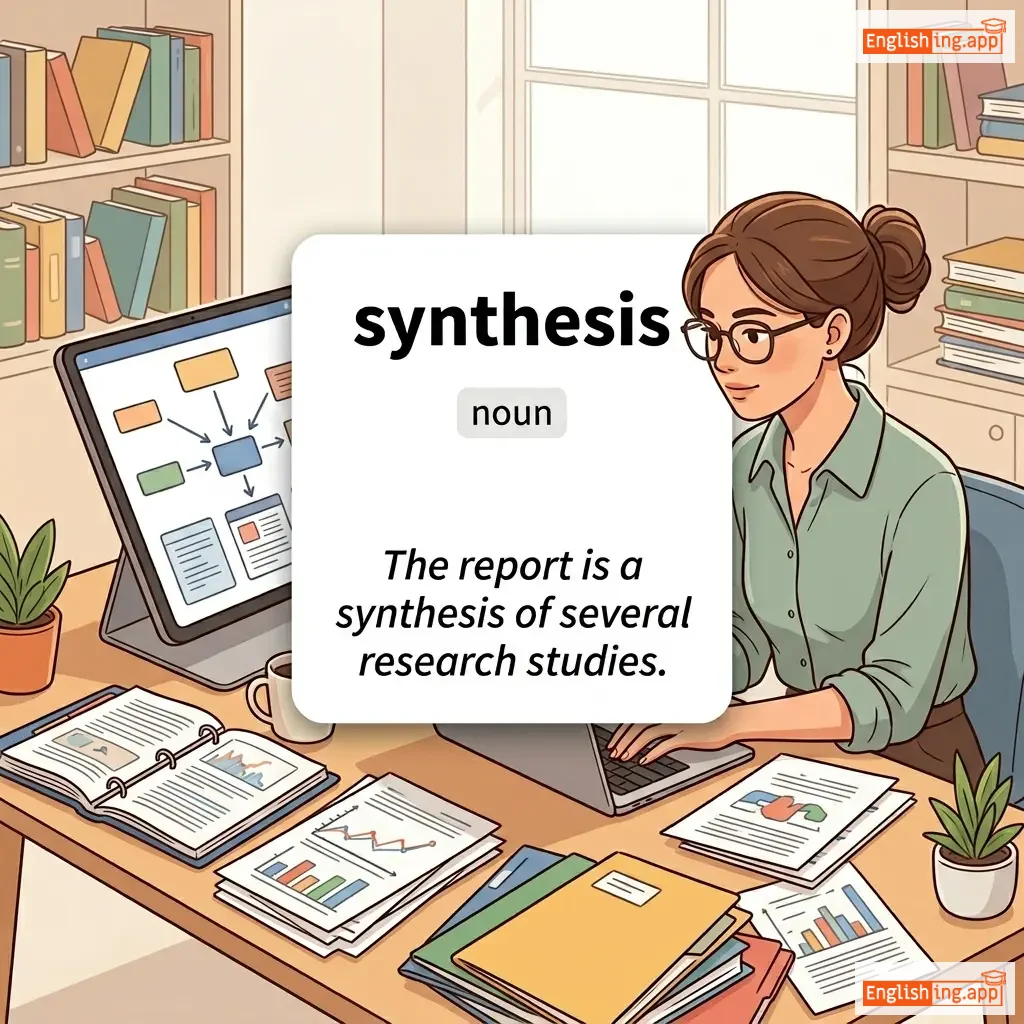
synergized definition card — visual illustration of the meaning
verb
/ˈsɪnɚdʒaɪzd/
协同, 协调, 合作 (xiétóng, xiétiáo, hézuò)

Combine in such a way that the total effect is greater than the sum of the individual effects.

"The teams were synergized to maximize productivity."

"团队被协同工作以最大化生产力。" (Tuánduì bèi xiétóng gōngzuò yǐ zuìdà huà shēngchǎnlì.)
synergy definition card — visual illustration of the meaning
noun
/ˈsɪnərdʒi/
协同作用 (xiétóng zuòyòng)

The increased effectiveness that results when two or more people or organizations work together.

"The merger created synergy between the two companies."

"合并创造了两家公司之间的协同作用。" (Hébìng chuàngzàole liǎng jiā gōngsī zhījiān de xiétóng zuòyòng.)
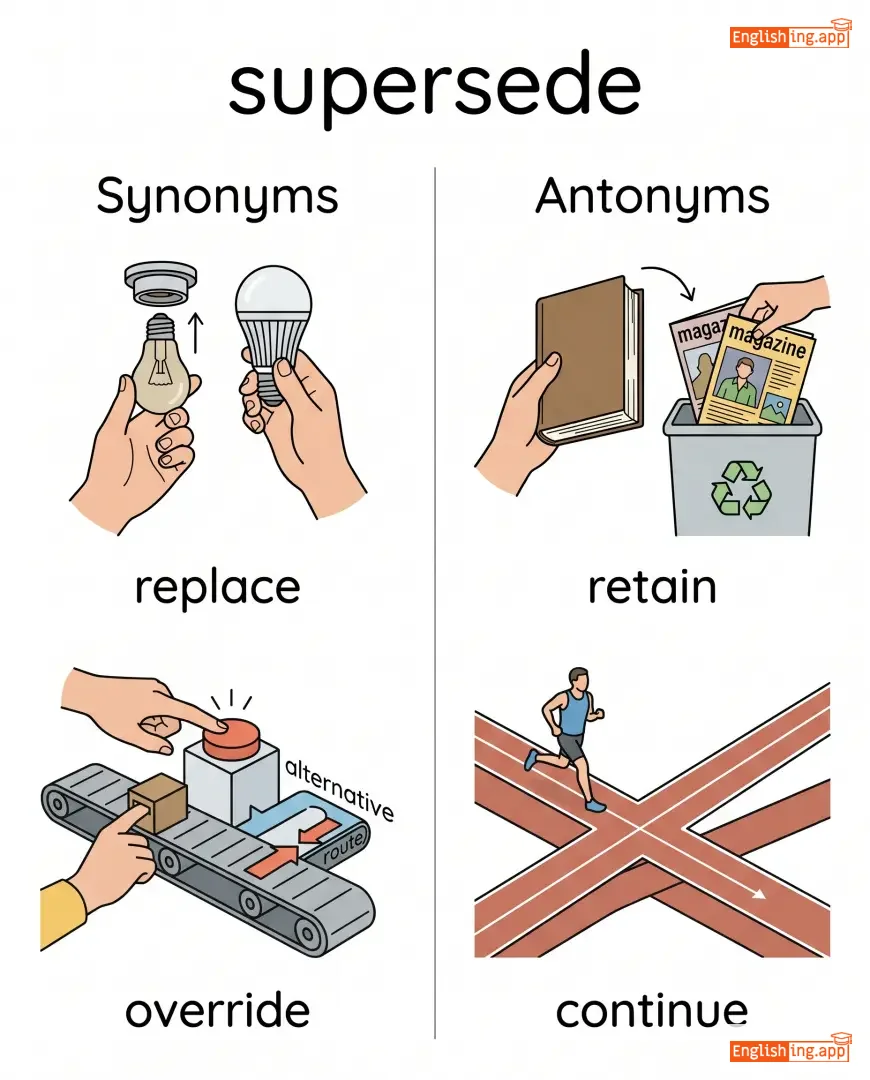
noun
/ˈsɪnəd/
主教会议 (zhǔjiàohuìyì)

An assembly of the clergy in a Christian church convened to decide on issues of doctrine or administration.

"The synod gathered to discuss reforms in the church."

"主教会议聚集在一起讨论教会的改革。" (Zhǔjiàohuì jùjí zài yīqǐ tǎolùn jiàohuì de gǎigé.)
noun
/ˈsɪnənɪm/
同义词 (tongyici)

a word or phrase that has the same or nearly the same meaning as another word

"In this sentence, 'big' is a synonym of 'large'."

"在这个句子中,'大'是'巨大的'的同义词。" (zai zhege juzi zhong, 'da' shi 'juda de' de tongyici.)
adjective
/sɪˈnɒnɪməs/
同义词 (tongyici)

having the same or nearly the same meaning; closely associated with something

"For many people, her name is synonymous with generosity."

"对于许多人来说,她的名字是慷慨的同义词。" (dui yu xu duo ren lai shuo, ta de mingzi shi kangkai de tongyici.)
noun
/sɪˈnɒpsɪs/
概述 (gàishù)

a brief summary of the main points of a text, film, or research

"The publisher asked the author to submit a one-page synopsis of the novel."

"出版商要求作者提交小说的单页概述。" (chūbǎn shāng yāoqiú zuòzhě tíjiāo xiǎoshuō de dānyè gàishù.)
adjective
/sɪˈnɒptɪk/
概括性的 (gàikuòxìng de)

giving a general overview or summary; presenting a broad view

"The report offers a synoptic view of climate trends over the past century."

"报告提供了过去一个世纪气候趋势的概括性视图。" (bàogào tígōngle guòqù yīgè shìjì qìhòu qūshì de gàikuòxìng shìtú.)
syntax definition card — visual illustration of the meaning
noun
/ˈsɪntæks/
语法 (yufa)

the rules for arranging words and phrases to create well-formed sentences in a language or code

"Clear syntax helps readers understand complex ideas quickly."
"清晰的语法帮助读者快速理解复杂的思想。" (qīngxī de yǔfǎ bāngzhù dúzhě kuàisù lǐjiě fùzá de sīxiǎng.)
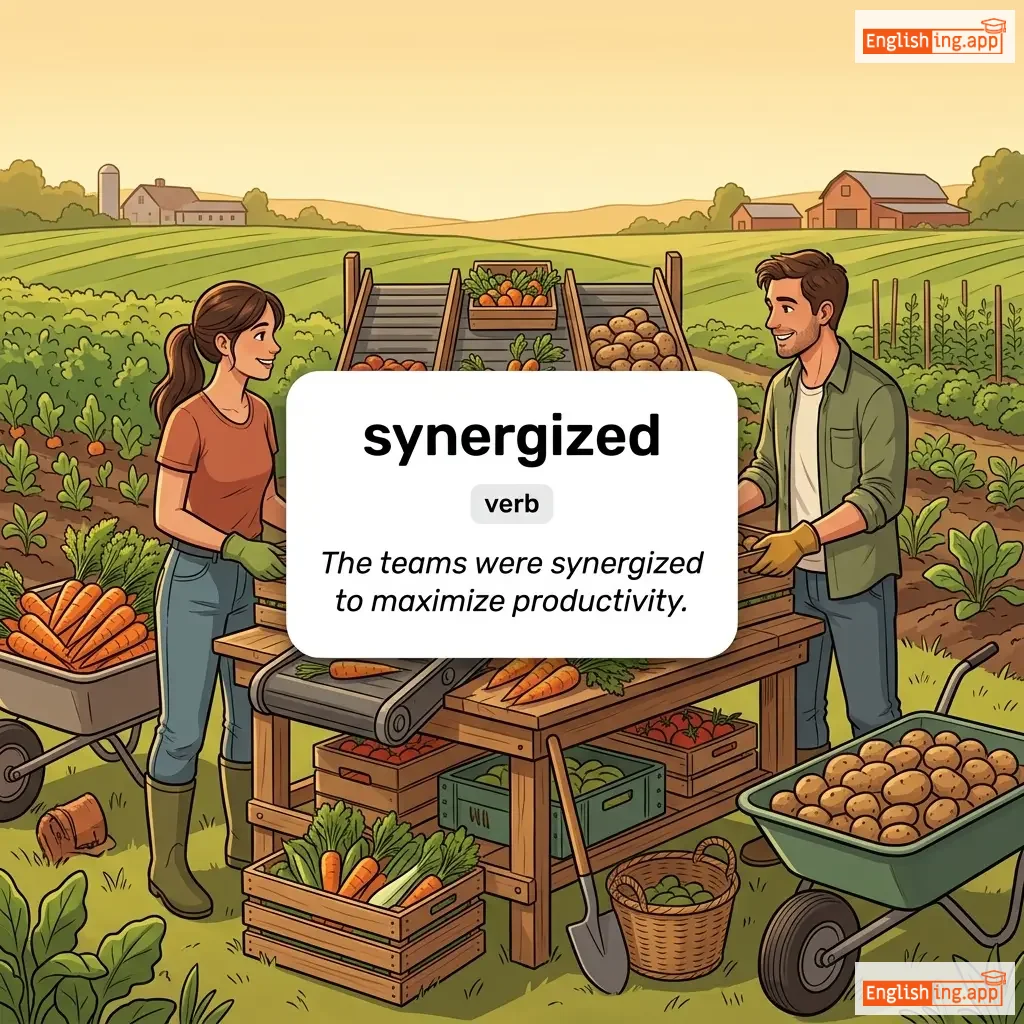
synthesis definition card — visual illustration of the meaning
noun
/ˈsɪnθəsɪs/

The combination of different ideas, elements, or substances into a coherent whole.

"The report is a synthesis of several research studies."

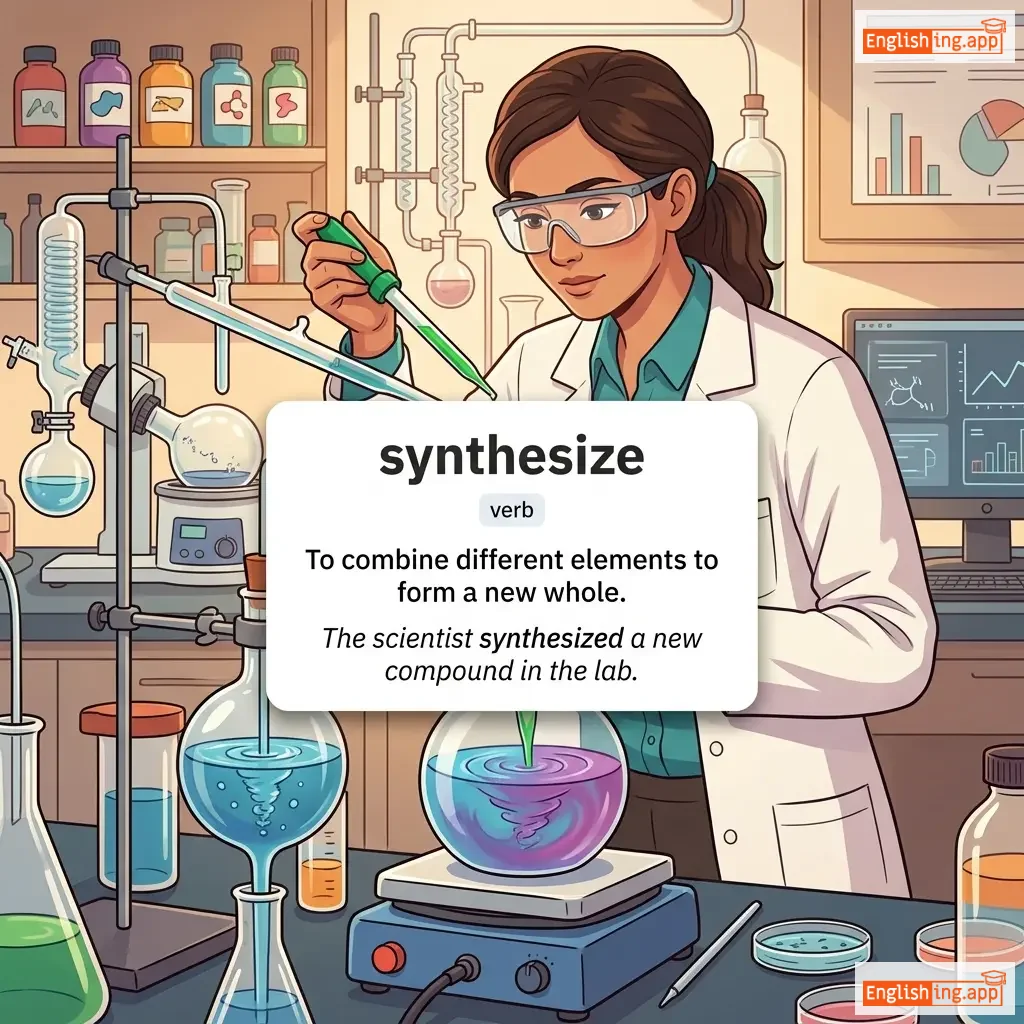
synthesize definition card — visual illustration of the meaning
verb
/ˈsɪnθəsaɪz/
合成 (héchéng)

To combine different elements to form a new whole.

"The scientist synthesized a new compound in the lab."
"科学家在实验室合成了一种新化合物。" (Kēxuéjiā zài shíyànshì héchéngle yī zhǒng xīn huàhéwù.)
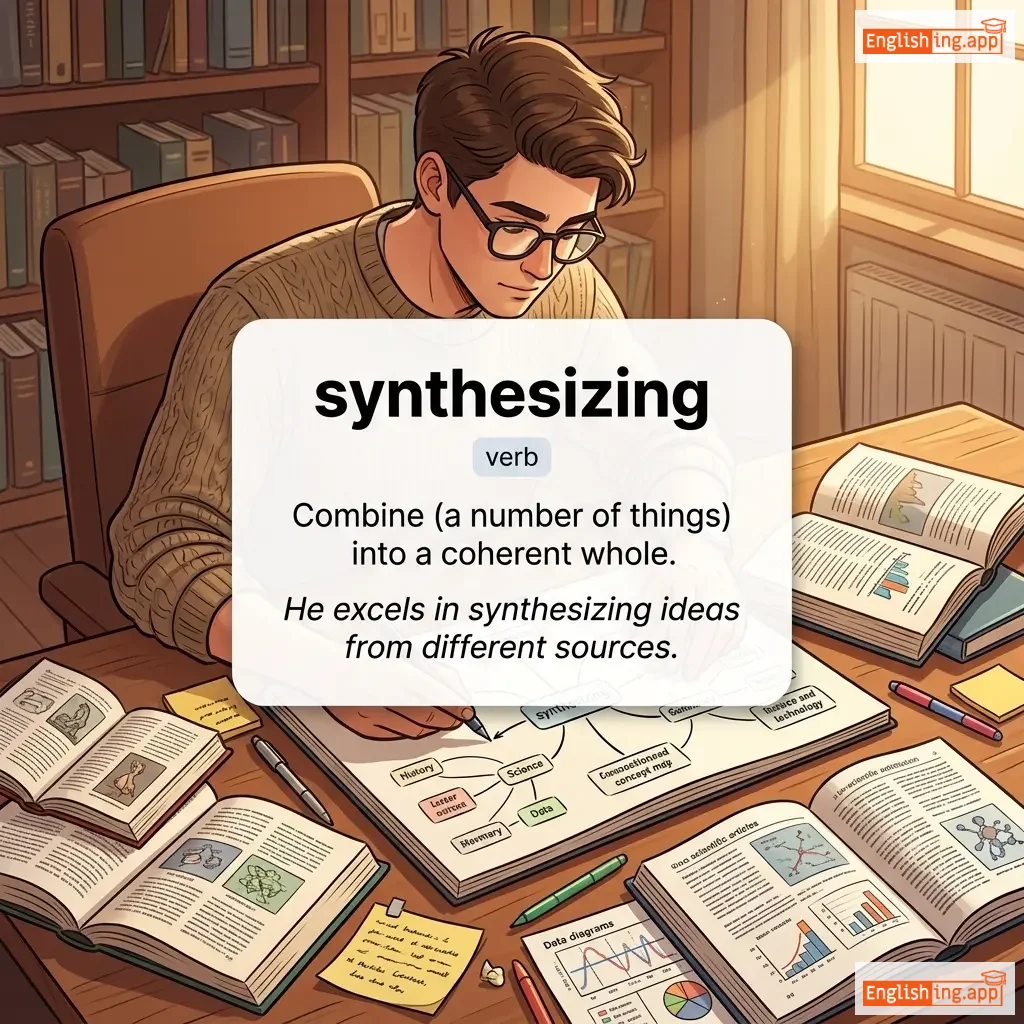
synthesizing definition card — visual illustration of the meaning
verb
ˈsɪn.θə.saɪ.zɪŋ
合成, 结合, 以一致的方式呈现 (héchéng, jiéhé, yǐ yīzhì de fāngshì chéngxiàn)

Combine (a number of things) into a coherent whole.

"He excels in synthesizing ideas from different sources."

"他擅长将不同来源的想法进行合成。" (Tā shàncháng jiāng bùtóng láiyuán de xiǎngfǎ jìnxíng héchéng.)
synthetic definition card — visual illustration of the meaning
adjective
/sɪnˈθetɪk/
合成的 (hecheng de)

Made by chemical synthesis, especially to imitate a natural product.

"The shoes are made from synthetic leather."
"这些鞋子是用合成皮革做的。" (Zhèxiē xiézi shì yòng héchéng pígé zuò de.)
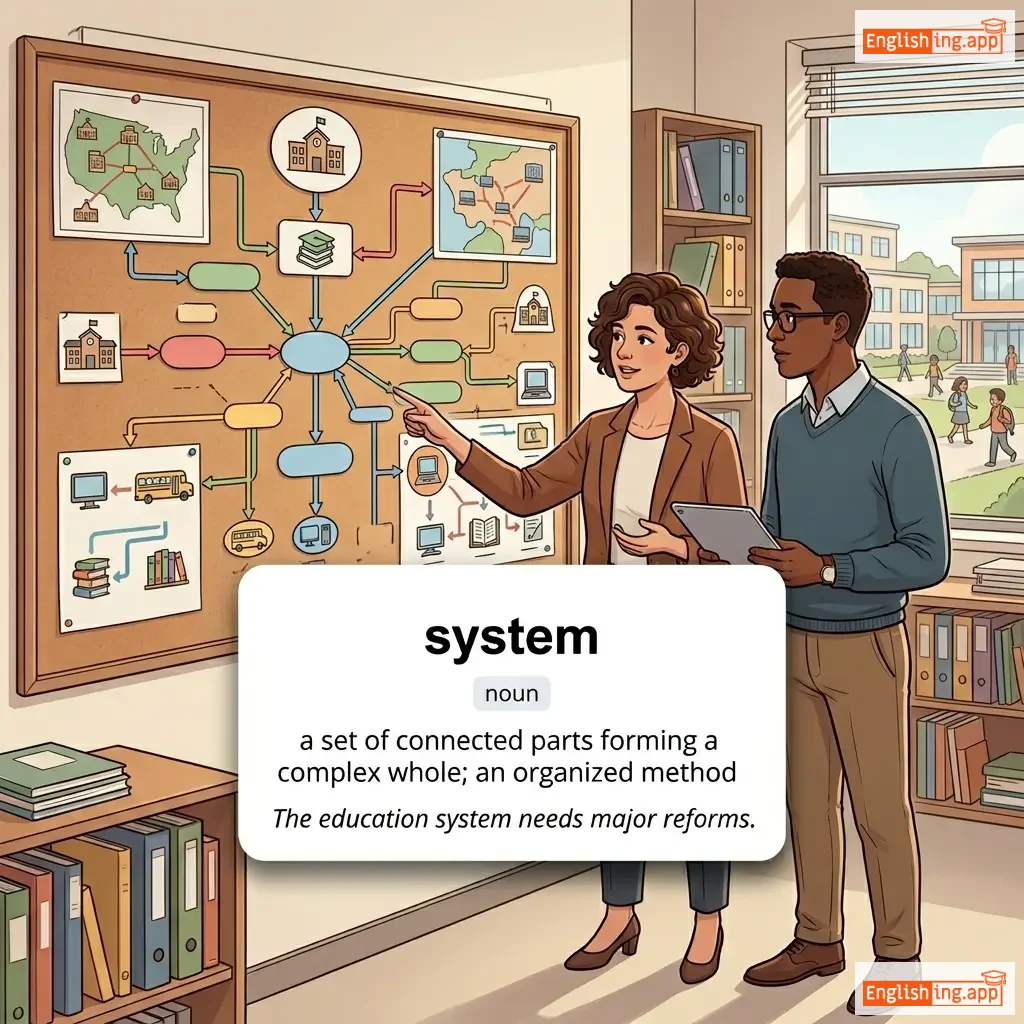
system definition card — visual illustration of the meaning
noun
/ˈsɪstəm/
系统 (xitong)

a set of connected parts forming a complex whole; an organized method

"The education system needs major reforms."

"教育系统需要重大改革。" (Jiaoyu xitong xuyao zhongda gaige.)
adjective
/ˌsɪstəˈmætɪk/
系统的 (xitongde)

Done or acting according to a fixed plan or system; methodical.

"The company took a systematic approach to solving the issue."

"公司采取了系统的方法来解决问题。" (Gōngsī cǎiqǔle xìtǒng de fāngfǎ lái jiějué wèntí.)
systematic savings definition card — visual illustration of the meaning
noun
ˌsɪstəˈmætɪk ˈseɪvɪŋz
系统化储蓄 (xitonghua chuxu)

A structured and organized approach to regularly saving money according to a planned schedule

"Systematic savings can mitigate financial crises in old age."
"系统化储蓄可以减轻老年时期的财务危机。" (Xitonghua chuxu keyi jianqing laonian shiqi de caiwu weiji.)
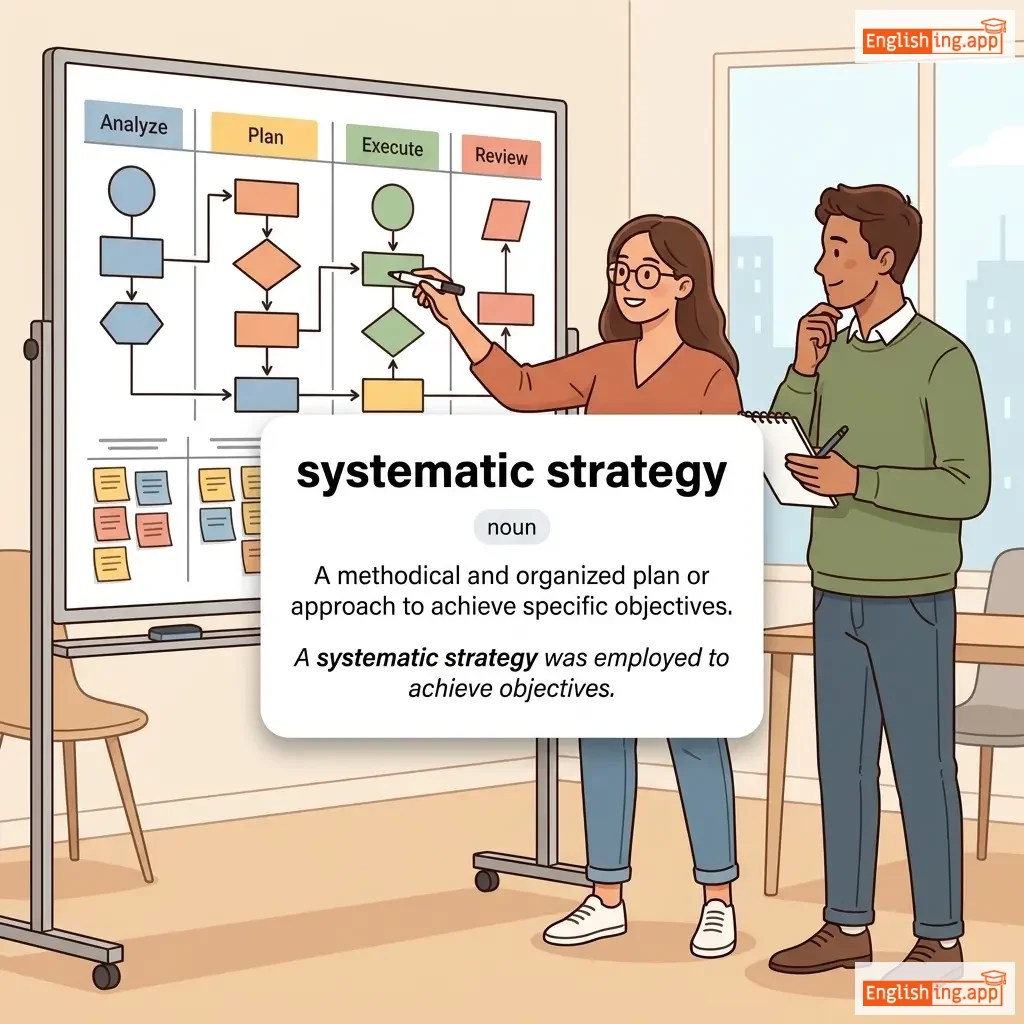
systematic strategy definition card — visual illustration of the meaning
noun
ˌsɪs.təˈmæt.ɪk ˈstræt.ə.dʒi
系统策略 (xitong celue)

A methodical and organized plan or approach to achieve specific objectives.

"A systematic strategy was employed to achieve objectives."

"采取了系统策略来实现目标。" (Caiqu le xitong celue lai shixian mubiao.)
systems definition card — visual illustration of the meaning
noun
ˈsɪs.təmz
系统 (xitong)

A set of connected things or parts forming a complex whole.

"Effective systems improve productivity."

"有效的系统提高了生产力。" (Youxiao de xitong tigao le shengchanli.)
noun
/ˈtiː ʃɜːt/
T恤 (T-xu)

a casual short-sleeved cotton shirt with no collar

"He wore a white t-shirt and jeans to the party."

"他穿了一件白色T恤和牛仔裤参加派对。" (Tā chuānle yī jiàn báisè T-xu hé niúzǎikù cānjiā pàiduì.)
noun
/ˈteɪbəl/
桌子 (zhuōzi)

A piece of furniture with a flat top and legs, used for working at or placing items on.

"They placed the documents on the table."

"他们把文件放在桌子上。" (Tāmen bǎ wénjiàn fàng zài zhuōzi shàng.)
noun
/ˈtæbloʊ/
定格画面 (dìnggé huàmiàn)

a striking or artistic scene or arrangement of people or objects, often presented on stage or in art

"The actors froze in a tableau that captured the final moment of the play."

"演员们定格在一个塔布劳中,捕捉到了戏剧的最后一刻。" (Yǎnyuánmen dìnggé zài yīgè tǎbùláo zhōng, bǔzhuō dào le xìjù de zuìhòu yī kè.)
noun
/ˈteɪbəlˌspun/
汤匙 (tangchi)

a spoon used for serving or eating food, typically holding about 15 milliliters

"She stirred the soup with a tablespoon."

"她用汤匙搅拌了汤。" (Ta yong tangchi jiaobanle tang.)
noun
/ˈtæblət/

a small flat computer or a small solid dose of medicine

"She took a tablet to relieve her headache."

🚫

taboo

noun
/təˈbuː/

a social or cultural prohibition against certain practices or discussions

"Talking about money is considered a taboo in some cultures."

noun
/ˈteɪbər/
小鼓 (xiaogu)

a small side drum or tambourine used especially in folk music

"The folk musician played a lively tune on his tabour."
"民间音乐家在他的手鼓上演奏了一首生动的旋律。" (Minjian yinyuejia zai tade shougu shang yanzou le yishou shengdong de xuanlü.)
tacit definition card — visual illustration of the meaning
adjective
/ˈtæsɪt/
默契 (moqi)

understood or implied without being stated

"There was a tacit agreement to avoid the subject."

"有一个默契的协议,避免讨论这个话题。" (You yi ge moqi de xieyi, bianmi taolun zhege huati.)
adjective
/ˈtæsɪtɜrn/
寡言 (guǎ yán)

reserved or uncommunicative in speech; saying little

"He was a taciturn man who rarely spoke in meetings."

"他是一个寡言的人,在会议上很少发言。" (Tā shì yīgè guǎ yán de rén, zài huìyì shàng hěn shǎo fāyán.)
📌

tack

noun/verb
/tæk/

a small sharp nail; or to change direction in sailing or approach something differently

"She used a tack to pin the paper on the wall."

verb, noun
/ˈtæk.əl/

to try to deal with or solve a difficult problem; to physically stop someone in sports by knocking them down

"The coach taught the players how to tackle properly."

tact definition card — visual illustration of the meaning
noun
/tækt/
机智, 圆滑 (jizhi, yuanhua)

the ability to say or do the right thing without offending others

"She handled the situation with great tact."

"她以极大的机智处理了这件事情。" (Ta yi jidada de jizhi chuli le zhe jian shiqing.)
adjective
/ˈtækt.fəl/
圆滑 (yuán huá)

showing skill and sensitivity in dealing with others

"He is always tactful when giving feedback."
"他在给出反馈时总是很圆滑。" (Tā zài gěi chū fǎnkuì shí zǒng shì hěn yuán huá.)
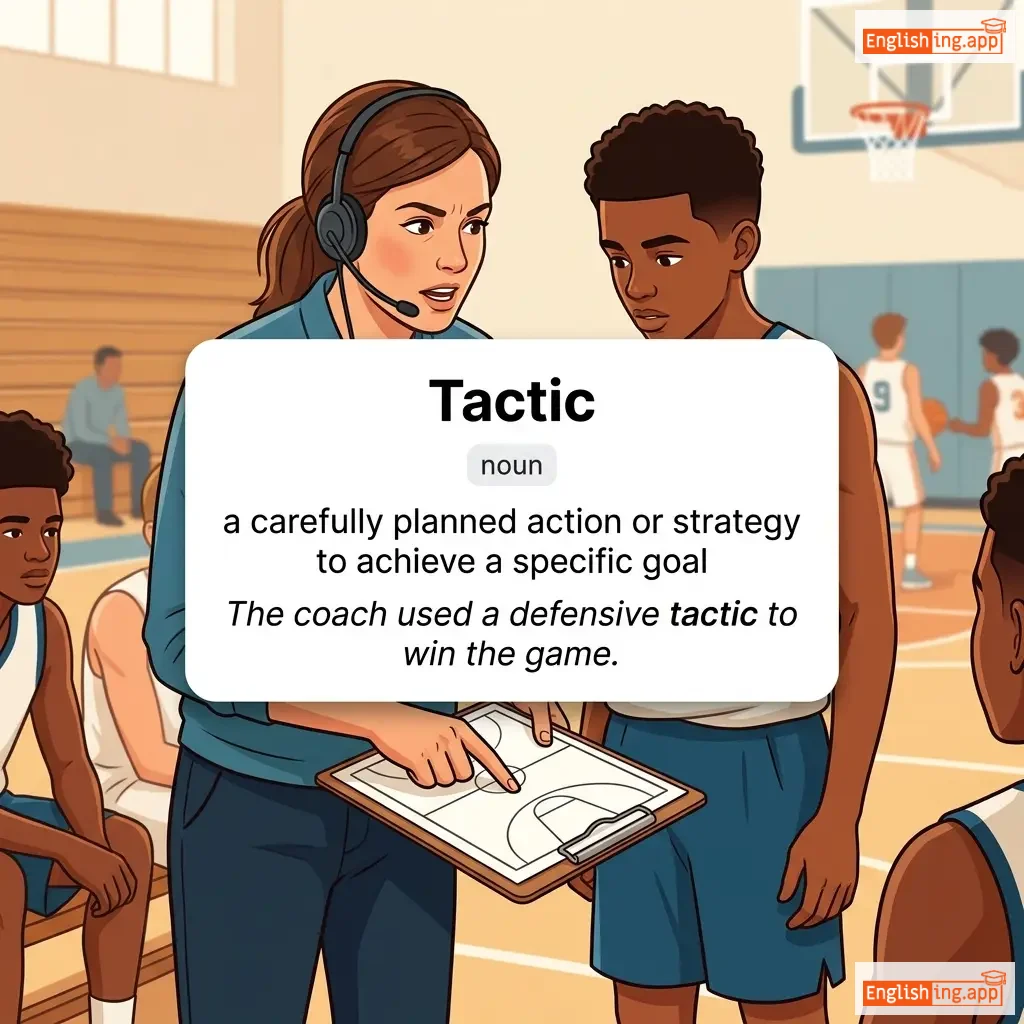
Tactic definition card — visual illustration of the meaning
noun
/ˈtæktɪk/
战术 (zhànshù)

a carefully planned action or strategy to achieve a specific goal

"The coach used a defensive tactic to win the game."

"教练使用了一种防守战术来赢得比赛。" (Jiàoliàn shǐyòngle yī zhǒng fángshǒu zhànshù lái yíngdé bǐsài.)
adjective
/ˈtæktɪkəl/
与战略有关 (yu zhanlüe youguan)

relating to or involving tactics or strategy

"The team had a tactical plan for the final match."

"团队有一个针对最后比赛的战术计划。" (Tuandui you yige zhendui zuihou bisai de zhanshu jihua.)
noun
/tækˈtɪʃ.ən/
战术家 (zhànshù jiā)

a person who is skilled at planning and achieving goals, especially in military or business

"Napoleon was a brilliant tactician."

"拿破仑是一个杰出的战术家。" (Ná pò lún shì yīgè jiéchū de zhànshù jiā.)
noun (plural)
/ˈtæk.tɪks/
战术 (zhànshù)

specific methods or actions used to achieve a goal, especially in military or competition

"The team changed their tactics to win the game."

"团队改变了他们的战术以赢得比赛。" (tuánduì gǎibiànle tāmen de zhànshù yǐ yíngdé bǐsài.)
tactile definition card — visual illustration of the meaning
adjective
/ˈtæk.taɪl/
触觉的 (chùjué de)

related to or involving the sense of touch

"The fabric had a pleasant tactile quality."

"这块布料具有愉快的触觉品质。" (Zhè kuài bùliào jùyǒu yúkuài de chùjué pǐnzhì.)
adjective
/ˈtækt.ləs/
失礼 (shīlǐ)

showing a lack of sensitivity in dealing with others

"His tactless remark embarrassed everyone at the meeting."

"他的失礼评论让会议中的每个人都感到尴尬。" (Tā de shīlǐ pínglùn ràng huìyì zhōng de měi gèrén dōu gǎndào gāngà.)
noun
/ˈtæd.poʊl/
蝌蚪 (kē dǒu)

the larval stage of a frog or toad, living in water with gills and a tail

"The children watched the tadpoles swimming in the pond."

"孩子们看见了在池塘里游泳的蝌蚪。" (Háizimen kànjiàn le zài chítáng lǐ yóuyǒng de kēdǒu.)
noun
/ˈtændʒənt/

a straight line or plane that touches a curve or curved surface at a point but does not cross it

"The teacher drew a tangent to the circle on the board."

noun
/ˈtæm.ə.rɪnd/
罗望子 (luowangzi)

tropical fruit with a brown pod containing a sour pulp used in cooking

"The chef used tamarind paste to add tangy flavor to the curry."

"厨师使用了罗望子酱来给咖喱增添酸味。" (chúshī shǐyòngle luowangzi jiàng lái gěi gālí zēngtiān suānwèi.)
noun
/ˌtæmbəˈriːn/
铃鼓 (linggu)

A musical instrument with a circular frame, metal jingles, and a drumhead, played by shaking or striking.

"She played the tambourine during the festival parade."
"她在节日游行中演奏了铃鼓。" (Tā zài jiérì yóuxíng zhōng yǎnzòu le línggǔ.)
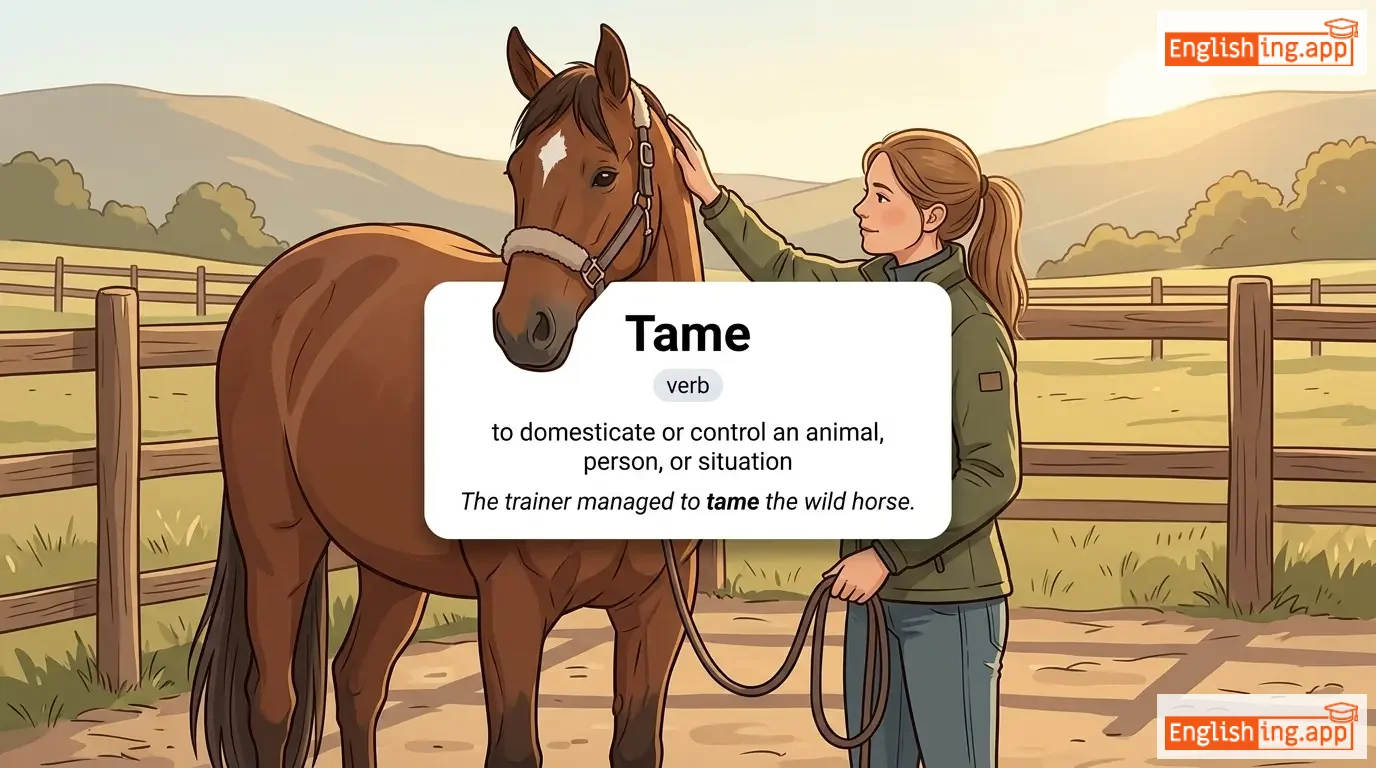
Tame definition card — visual illustration of the meaning
verb
/teɪm/
驯服 (xunfu)

to domesticate or control an animal, person, or situation

"The trainer managed to tame the wild horse."

"教练成功地驯服了那匹野马。" (Jiaolian chenggong de xunfu le na pi yemǎ.)
verb
/tæmp/
压实 (yā shí)

to press down tightly by packing

"He tamped the soil around the plant to secure it."
"他将植物周围的土壤压实以固定它。" (Tā jiāng zhíwù zhōuwéi de tǔrǎng yā shí yǐ gùdìng tā.)
⚠️

tamper

verb
/ˈtæmpər/

To interfere with something in a harmful, unauthorized, or improper way.

"The evidence was tampered with before the trial."

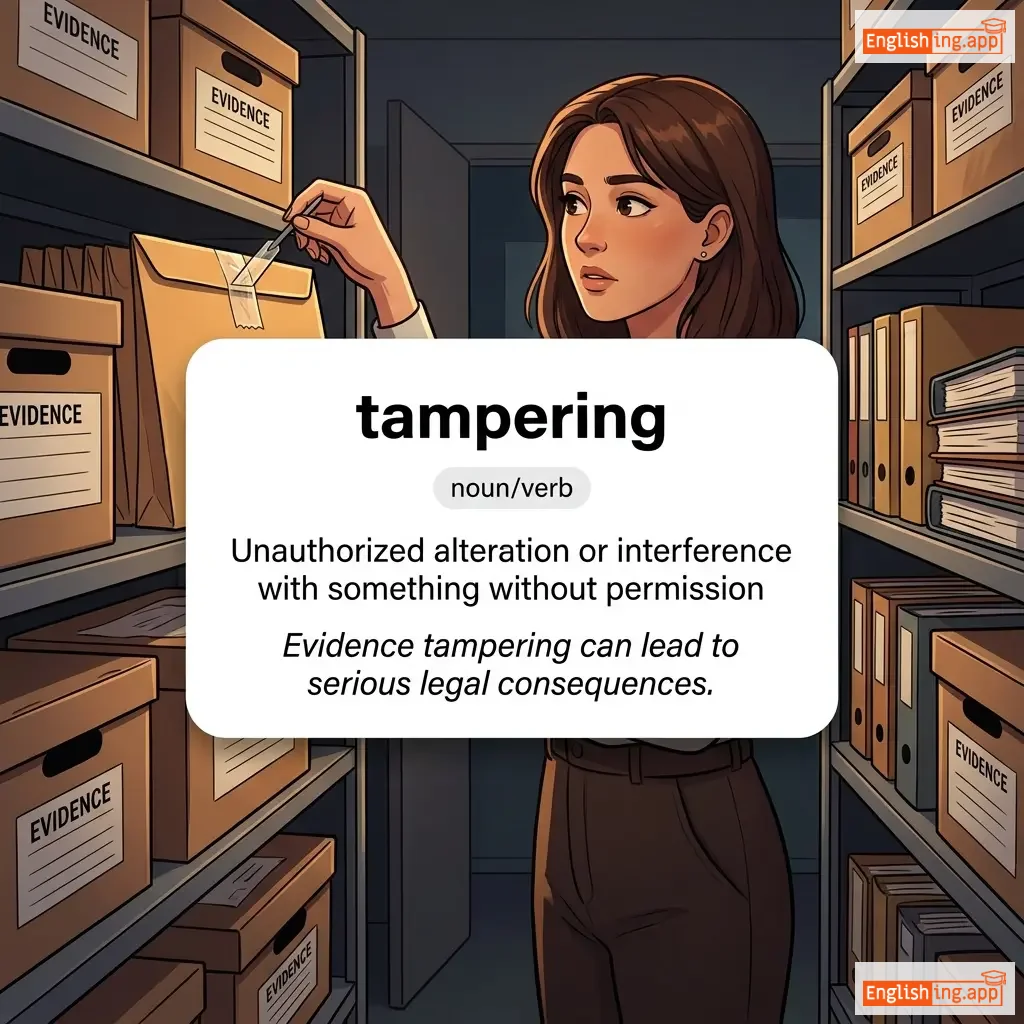
tampering definition card — visual illustration of the meaning
noun/verb
/ˈtæm.pər.ɪŋ/
未经授权的篡改或干预 (wei jing shouquan de cuangai huo ganyu)

Unauthorized alteration or interference with something without permission

"Evidence tampering can lead to serious legal consequences."

"证据篡改可能导致严重的法律后果。" (zhengju cuangai keneng daozhi yanzhong de falü houguo.)
🌞

tan

verb
/tæn/

to make skin or a hide brown by exposure to the sun or by using chemicals

"She tanned her skin after spending the summer at the beach."

noun
/ˈtæn.dəm/
双人自行车 (shuangren zixingche)

a bicycle built for two riders, one behind the other

"The couple enjoyed riding their tandem bicycle through the park."

"这对情侣在公园骑着他们的双人自行车享受着骑行。" (Zhe dui qinglv zai gongyuan qizhe tamen de shuangren zixingche xiangshouzhe qixing.)
noun
/ˈtændʒənsi/
相切 (xiangqie)

the condition of touching but not intersecting, especially in geometry

"The circle and the line are in a state of tangency at one point."

"圆和直线在一个点上处于相切状态。" (Yuan he zhixian zai yi ge dian shang chǔyú xiāngqiē zhuàngtài.)
adjective
/ˈtæn.tə.laɪ.zɪŋ/
诱人的 (you ren de)

Something that excites desire or interest, often by being just out of reach.

"She wore a tantalizing perfume that caught everyone's attention."

"她穿了一种诱人的香水,吸引了所有人的注意。" (Tā chuānle yī zhǒng yòu rén de xiāngshuǐ, xīyǐnle suǒyǒu rén de zhùyì.)