語彙集

英単語辞書 | 単語の意味、定義、例文

📌

tack

noun/verb
/tæk/

a small sharp nail; or to change direction in sailing or approach something differently

"She used a tack to pin the paper on the wall."

adjective
/ˈtæsɪtɜrn/
寡黙 (kamoku)

reserved or uncommunicative in speech; saying little

"He was a taciturn man who rarely spoke in meetings."
"彼は会議でほとんど話さない寡黙な人だった。" (Kare wa kaigi de hotondo hanasanai kamoku na hito datta.)
tacit definition card — visual illustration of the meaning
adjective
/ˈtæsɪt/
暗黙の了解 (anmoku no ryōkai)

understood or implied without being stated

"There was a tacit agreement to avoid the subject."

"そのテーマを避けるために暗黙の了解があった。" (Sono tēma o yokeru tame ni anmoku no ryōkai ga atta.)
noun
/ˈteɪbər/
タムボール (tamboo-ru)

a small side drum or tambourine used especially in folk music

"The folk musician played a lively tune on his tabour."

"フォークミュージシャンは自分のタムボールで生き生きとしたメロディーを演奏しました。" (Fooku myu-jishan wa jibun no tambooru de ikikito shita merodii o ensou shimashita.)
🚫

taboo

noun
/təˈbuː/

a social or cultural prohibition against certain practices or discussions

"Talking about money is considered a taboo in some cultures."

noun
/ˈtæblət/

a small flat computer or a small solid dose of medicine

"She took a tablet to relieve her headache."

noun
/ˈteɪbəlˌspun/
テーブルスプーン (teeburusu pun)

a spoon used for serving or eating food, typically holding about 15 milliliters

"She stirred the soup with a tablespoon."

"彼女はテーブルスプーンでスープをかき混ぜました。" (Kanojo wa teeburusu pun de suupu o kakimazemashita.)
noun
/ˈtæbloʊ/
タブロー (taburo)

a striking or artistic scene or arrangement of people or objects, often presented on stage or in art

"The actors froze in a tableau that captured the final moment of the play."

"俳優たちは、舞台の最後の瞬間を捉えたタブローで凍りつきました。" (Haiyū-tachi wa, butai no saigo no shunkan o toraeta taburō de kōritsukimashita.)
noun
/ˈteɪbəl/
テーブル (teeburu)

A piece of furniture with a flat top and legs, used for working at or placing items on.

"They placed the documents on the table."

"彼らは書類をテーブルに置きました。" (Karera wa shorui o teeburu ni okimashita.)
noun
/ˈtiː ʃɜːt/
Tシャツ (T-shatsu)

a casual short-sleeved cotton shirt with no collar

"He wore a white t-shirt and jeans to the party."
"彼はパーティーに白いTシャツとジーンズを着て行った。" (Kare wa pātii ni shiroi T-shatsu to jīnzu o kite itta.)
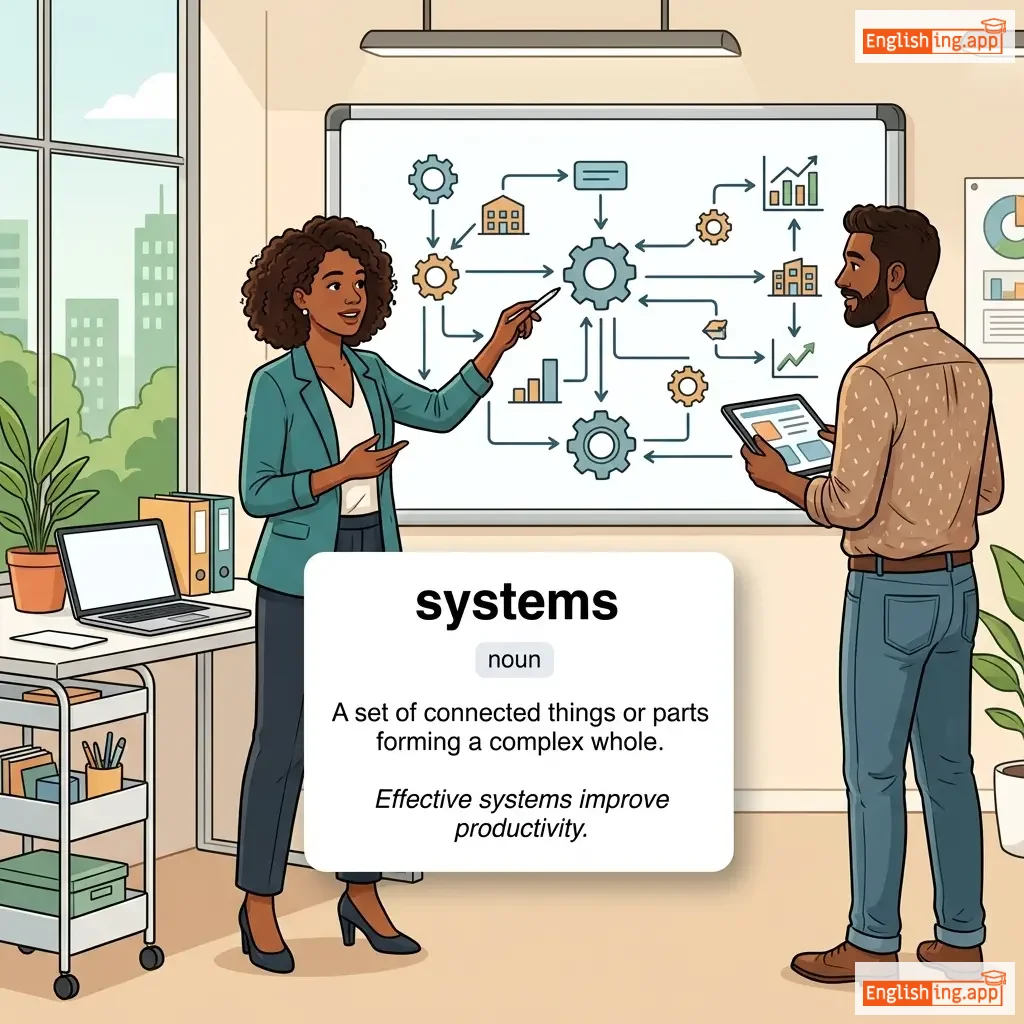
systems definition card — visual illustration of the meaning
noun
ˈsɪs.təmz
システム (shisutemu)

A set of connected things or parts forming a complex whole.

"Effective systems improve productivity."
"効果的なシステムは生産性を向上させます。" (Kōka-teki na shisutemu wa seisansei o kōjō sasemasu.)
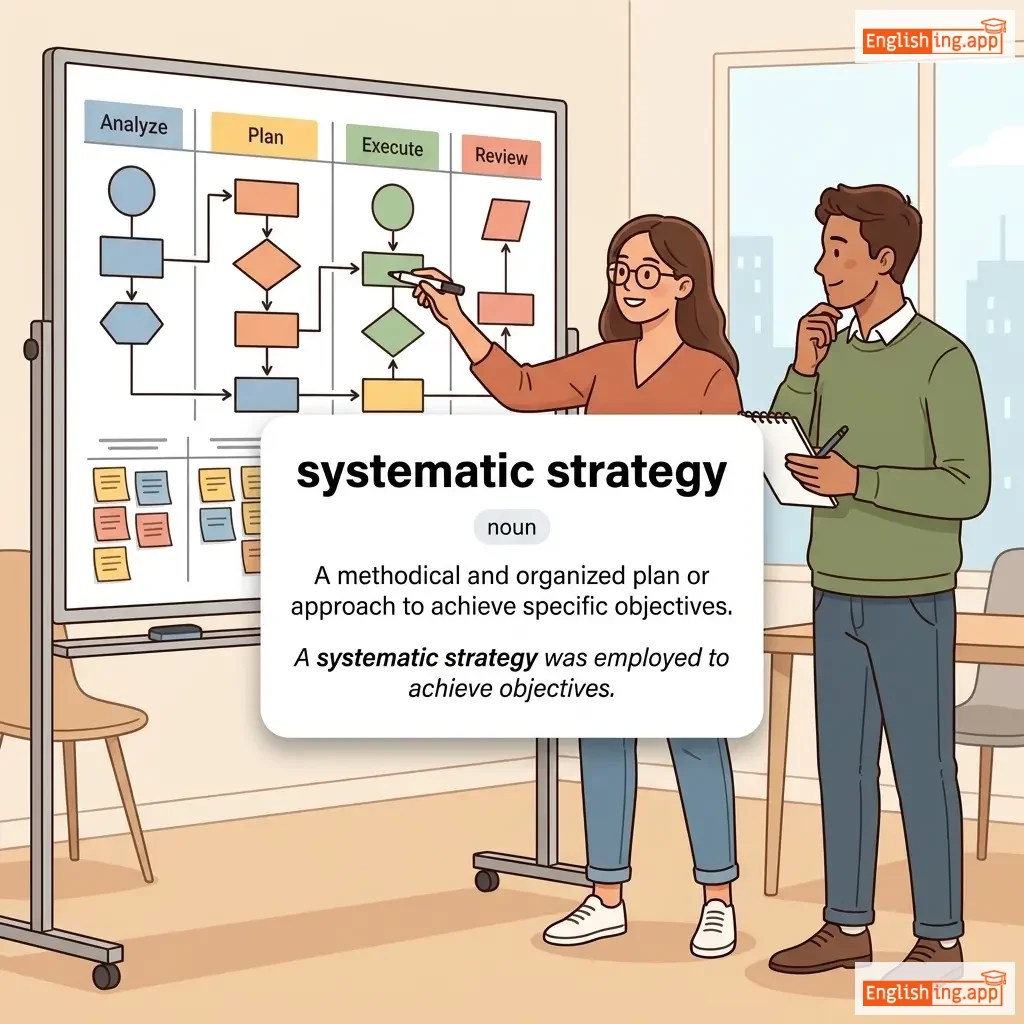
systematic strategy definition card — visual illustration of the meaning
noun
ˌsɪs.təˈmæt.ɪk ˈstræt.ə.dʒi
体系的戦略 (taikeiteki senryaku)

A methodical and organized plan or approach to achieve specific objectives.

"A systematic strategy was employed to achieve objectives."

"目標を達成するために体系的戦略が採用されました。" (Mokuhyō o tassei suru tame ni taikeiteki senryaku ga saiyō saremashita.)
systematic savings definition card — visual illustration of the meaning
noun
ˌsɪstəˈmætɪk ˈseɪvɪŋz
計画的貯蓄 (keikakuteki chochiku)

A structured and organized approach to regularly saving money according to a planned schedule

"Systematic savings can mitigate financial crises in old age."

"計画的貯蓄は高齢期の財務危機を軽減することができます。" (Keikakuteki chochiku wa kōreiki no zaimu kiki o keigen suru koto ga dekimasu.)
adjective
/ˌsɪstəˈmætɪk/
体系的 (taikeiteki)

Done or acting according to a fixed plan or system; methodical.

"The company took a systematic approach to solving the issue."
"その会社は問題を解決するために体系的なアプローチを採用しました。" (Sono kaisha wa mondai o kaiketsu suru tame ni taikeiteki na apurōchi o sai yō shimashita.)
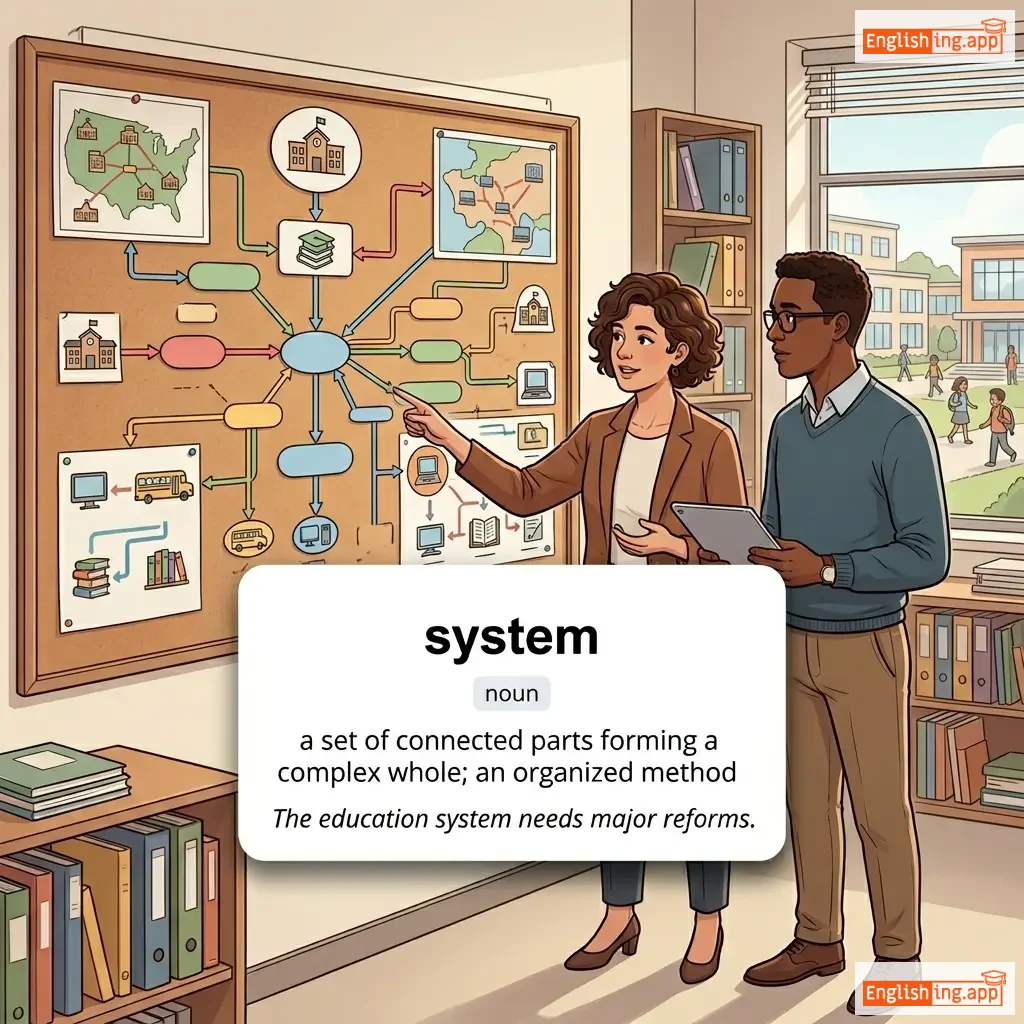
system definition card — visual illustration of the meaning
noun
/ˈsɪstəm/
システム (shisutemu)

a set of connected parts forming a complex whole; an organized method

"The education system needs major reforms."

"教育システムには大きな改革が必要です。" (Kyōiku shisutemu ni wa ōkina kaikaku ga hitsuyō desu.)
synthetic definition card — visual illustration of the meaning
adjective
/sɪnˈθetɪk/
合成 (gousei)

Made by chemical synthesis, especially to imitate a natural product.

"The shoes are made from synthetic leather."
"その靴は合成皮革で作られています。" (Sono kutsu wa gousei hikaku de tsukurareteimasu.)
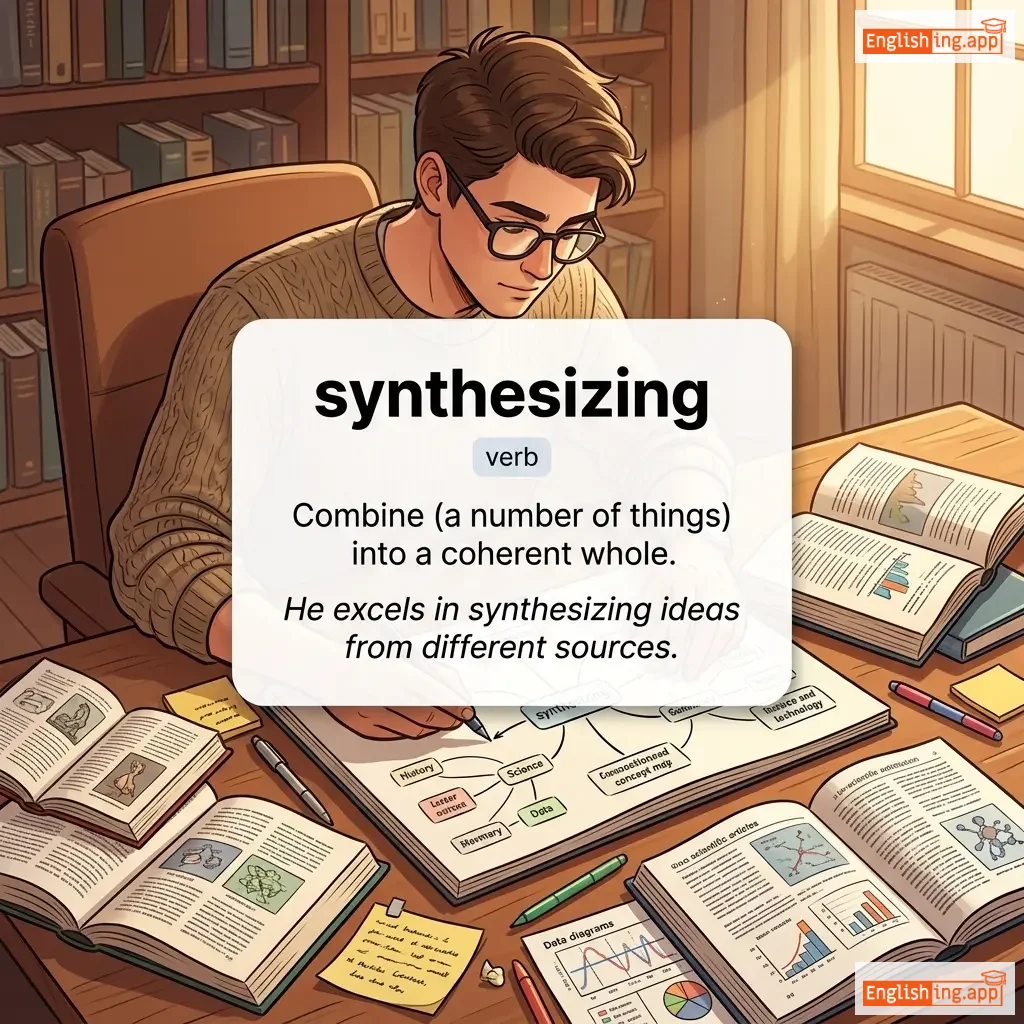
synthesizing definition card — visual illustration of the meaning
verb
ˈsɪn.θə.saɪ.zɪŋ
合成する, 組み合わせる, 論理的に提示する (gōsei suru, kumiawaseru, ronriteki ni teiji suru)

Combine (a number of things) into a coherent whole.

"He excels in synthesizing ideas from different sources."
"彼は異なるソースからアイデアを合成するのが得意です。" (Kare wa kotonaru sōsu kara aidea o gōsei suru no ga tokui desu.)
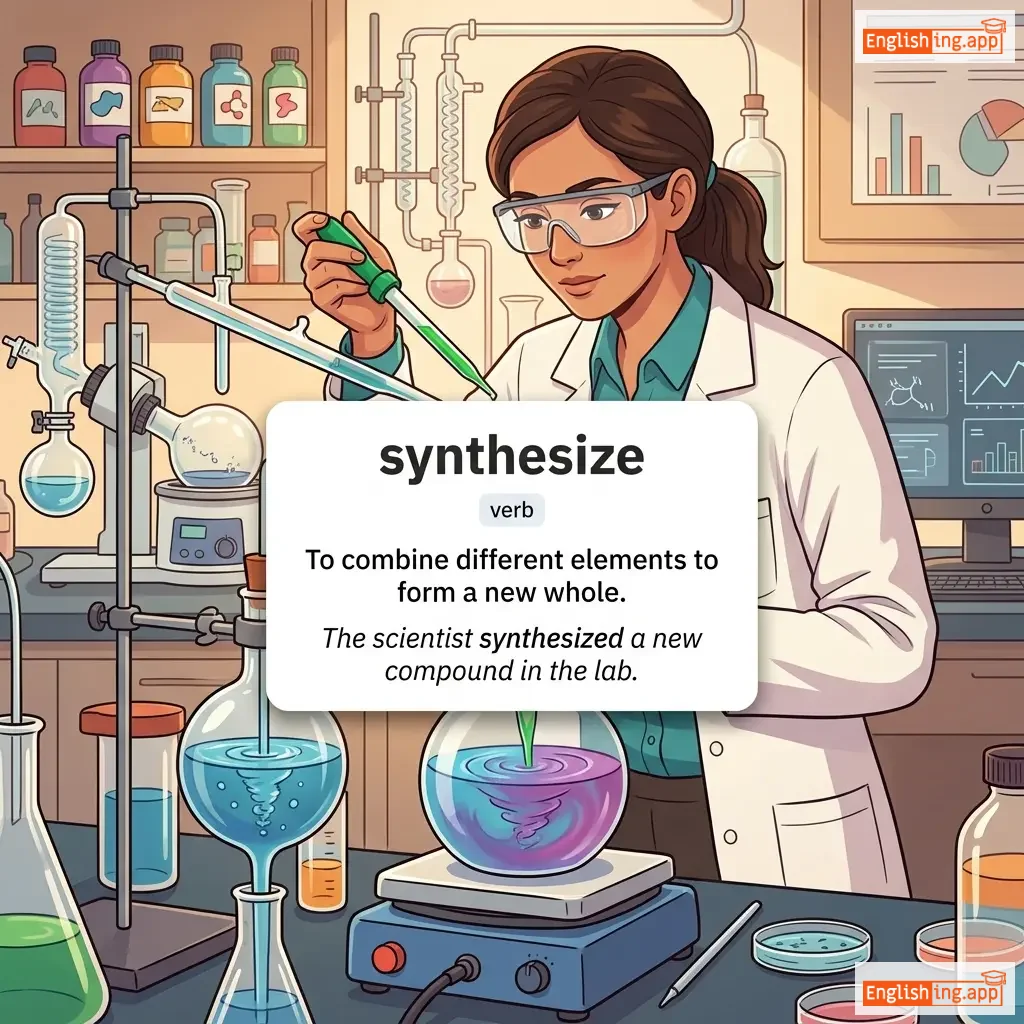
synthesize definition card — visual illustration of the meaning
verb
/ˈsɪnθəsaɪz/
合成する (gōsei suru)

To combine different elements to form a new whole.

"The scientist synthesized a new compound in the lab."

"科学者は実験室で新しい化合物を合成しました。" (Kagakusha wa jikken-shitsu de atarashī kagōbutsu o gōsei shimashita.)
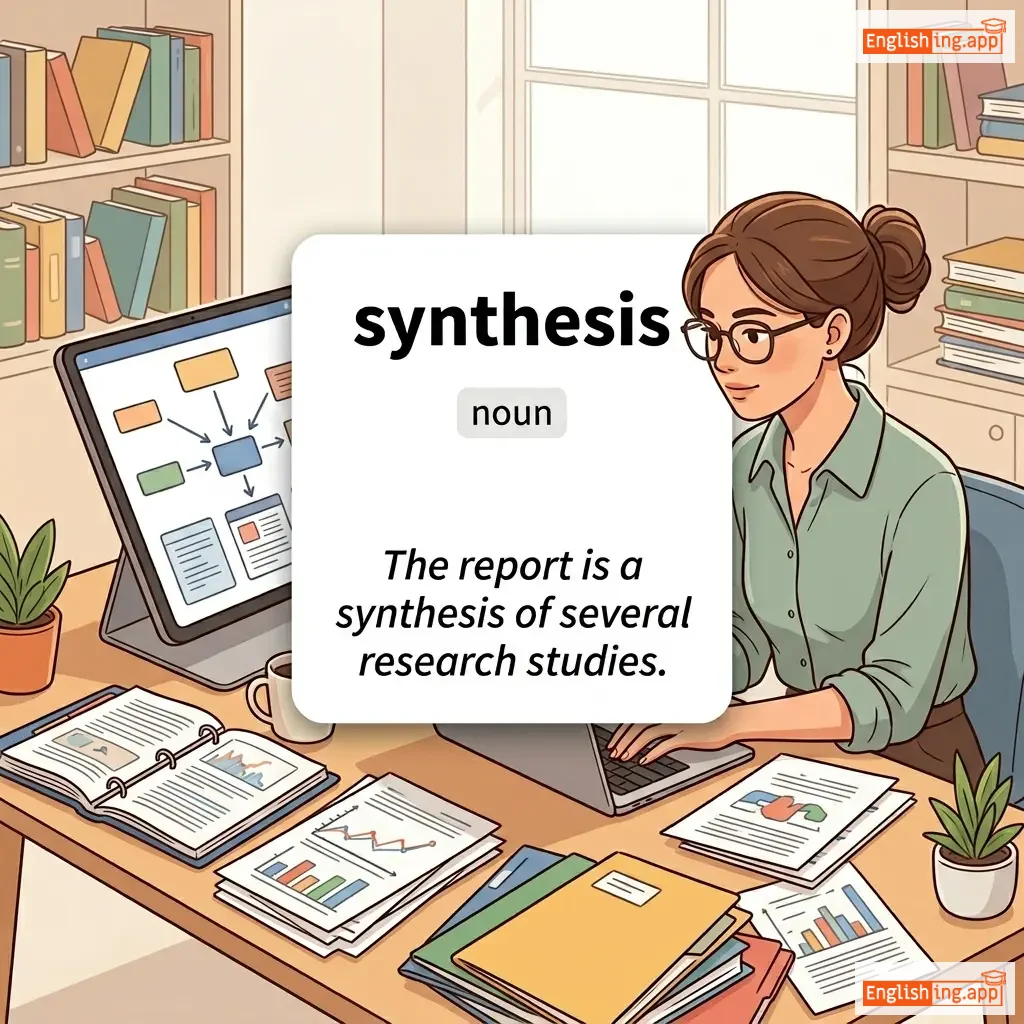
synthesis definition card — visual illustration of the meaning
noun
/ˈsɪnθəsɪs/

The combination of different ideas, elements, or substances into a coherent whole.

"The report is a synthesis of several research studies."

syntax definition card — visual illustration of the meaning
noun
/ˈsɪntæks/
構文 (koubun)

the rules for arranging words and phrases to create well-formed sentences in a language or code

"Clear syntax helps readers understand complex ideas quickly."

"明確な構文は、読者が複雑なアイデアを迅速に理解するのに役立ちます。" (Meikaku na kōbun wa, dokusha ga fukuzatsu na aidea o jinsoku ni rikai suru no ni yakudachimasu.)
adjective
/sɪˈnɒptɪk/
総括的 (soukatsuteki)

giving a general overview or summary; presenting a broad view

"The report offers a synoptic view of climate trends over the past century."

"報告書は過去の世紀の気候の傾向について総括的な視点を提供しています。" (hōkokusho wa kako no seiki no kikō no keikō ni tsuite soukatsuteki na shiten o teikyō shiteimasu.)
noun
/sɪˈnɒpsɪs/
概要 (gaiyō)

a brief summary of the main points of a text, film, or research

"The publisher asked the author to submit a one-page synopsis of the novel."

"出版社は著者に小説の1ページ分の概要を提出するよう依頼しました。" (shuppansha wa chosha ni shōsetsu no 1 pēji bun no gaiyō o teishutsu suru yō irai shimashita.)
adjective
/sɪˈnɒnɪməs/
同義語 (dougigo)

having the same or nearly the same meaning; closely associated with something

"For many people, her name is synonymous with generosity."

"多くの人にとって、彼女の名前は寛大さの同義語です。" (ooku no hito ni totte, kanojo no namae wa kandaisa no dougigo desu.)
noun
/ˈsɪnənɪm/
同義語 (dougigo)

a word or phrase that has the same or nearly the same meaning as another word

"In this sentence, 'big' is a synonym of 'large'."

"この文では、「大きい」が「巨大な」の同義語です。" (kono bun de wa, 'ookii' ga 'kyodaina' no dougigo desu.)
noun
/ˈsɪnəd/
シノド (shinodo)

An assembly of the clergy in a Christian church convened to decide on issues of doctrine or administration.

"The synod gathered to discuss reforms in the church."
"シノドは教会での改革について議論するために集まった。" (Shinodo wa kyōkai de no kaikaku ni tsuite giron suru tame ni atsumatta.)
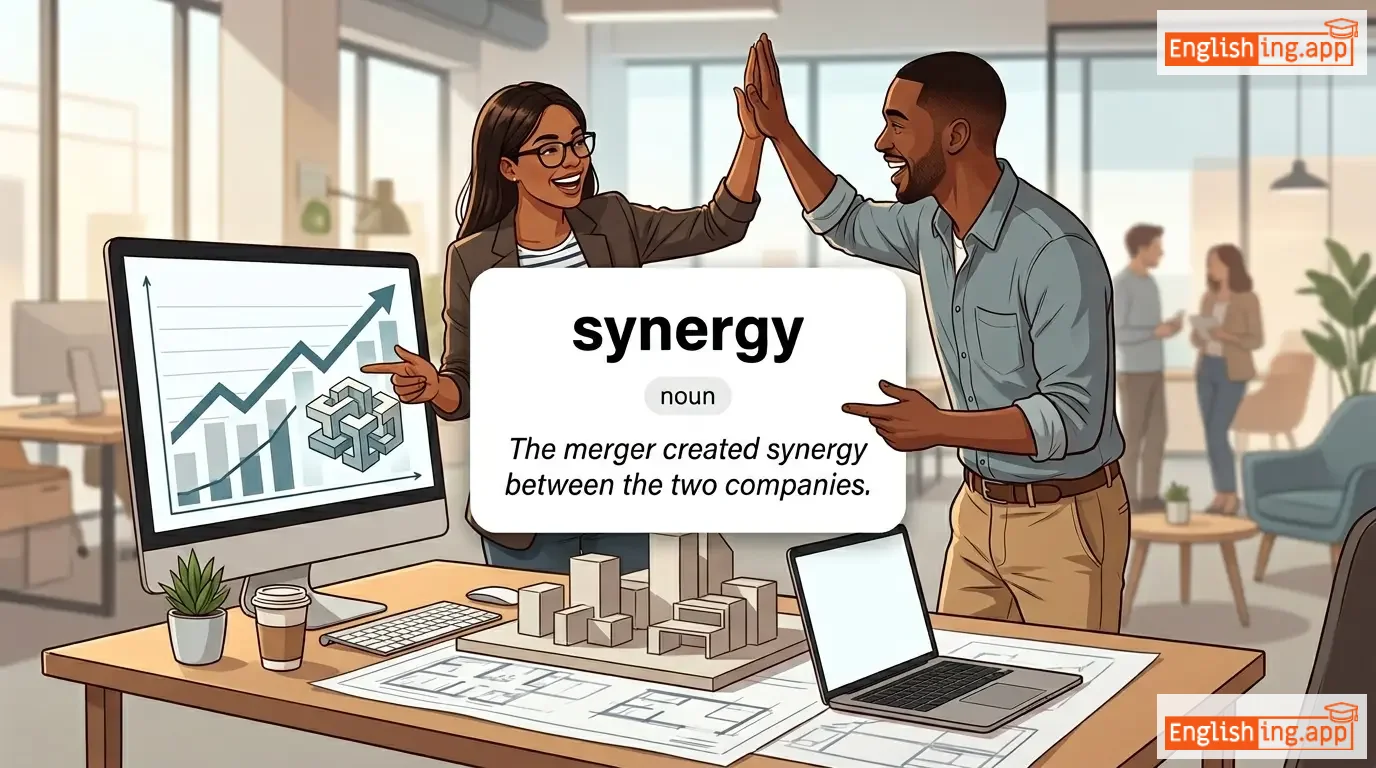
synergy definition card — visual illustration of the meaning
noun
/ˈsɪnərdʒi/
シナジー (shinajī)

The increased effectiveness that results when two or more people or organizations work together.

"The merger created synergy between the two companies."
"合併は二つの企業間にシナジーを生み出した。" (Gōbetsu wa futatsu no kigyō-kan ni shinajī o umidashita.)
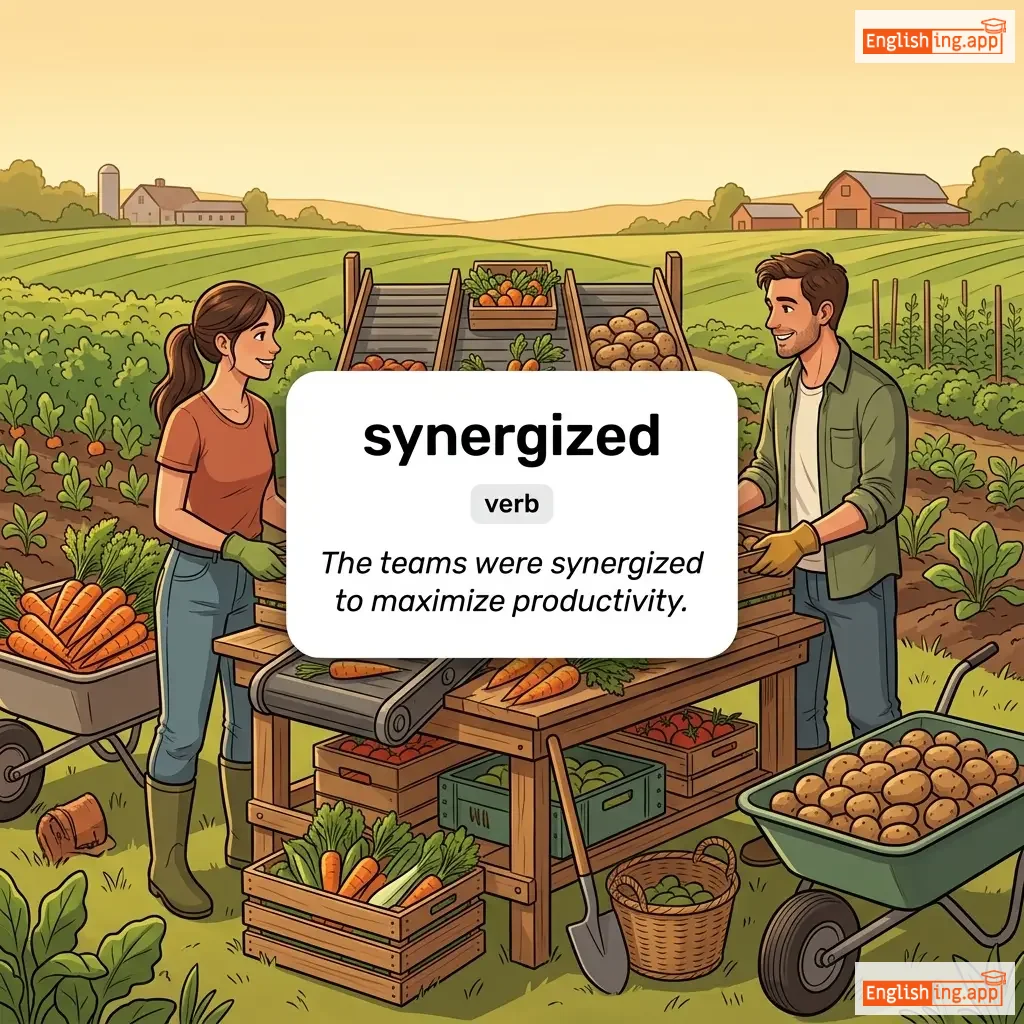
synergized definition card — visual illustration of the meaning
verb
/ˈsɪnɚdʒaɪzd/
シナジー効果が得られるようにする, 力を合わせる, 協力する (shinajī kōka ga erareru yō ni suru, chikara o awaseru, kyōryoku suru)

Combine in such a way that the total effect is greater than the sum of the individual effects.

"The teams were synergized to maximize productivity."

"チームは生産性を最大化するために協力しました。" (Chīmu wa seisan-sei o saidaika suru tame ni kyōryoku shimashita.)
synergize definition card — visual illustration of the meaning
verb
ˈsɪnərdʒaɪz
協力する, 一緒に働く (kyōryoku suru, issho ni hataraku)

To combine in such a way that the total effect is greater than the sum of the individual effects; to work together cooperatively.

"The two companies plan to synergize their efforts for greater success."

"2つの企業は、より大きな成功を収めるために協力する計画です。" (Futatsu no kigyō wa, yori ōkina seikō o osameru tame ni kyōryoku suru keikaku desu.)
noun
/ˈswiː.pər/
掃除人 (soujinin)

a person whose job is to clean floors and streets by sweeping

"The sweeper cleaned the school corridor every morning."

"掃除人は毎朝学校の廊下を掃除しました。" (soujinin wa mai asa gakkou no rouka o souji shimashita.)
adjective
/ˈswoʊlən/
腫れた (hareta)

Enlarged or puffed up, usually due to injury, inflammation, or fluid accumulation

"Her ankle was swollen after she twisted it during the hike."
"ハイキング中に足首をひねった後、足首が腫れていました。" (Haikingu-chuu ni ashikubi o hinetta ato, ashikubi ga harete imashita.)
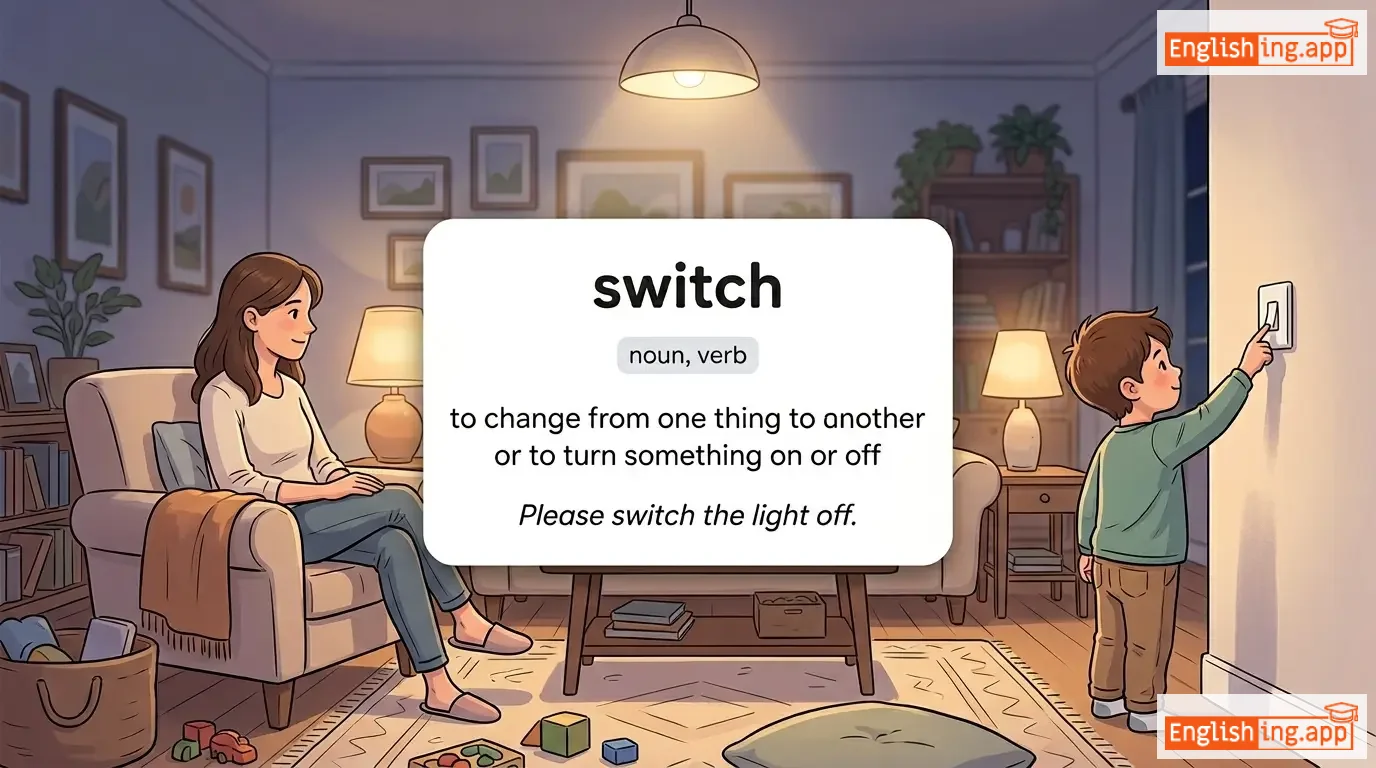
switch definition card — visual illustration of the meaning
noun, verb
/swɪtʃ/
スイッチ (suicchi)

to change from one thing to another or to turn something on or off

"Please switch the light off."

"ライトを消してください。" (Raito o keshite kudasai.)
verb
/swaɪp/
スワイプする (suaipu suru)

to move your finger across a touch screen or to hit with a sweeping motion

"He swiped left on the photo."
"彼は写真で左にスワイプしました。" (Kare wa shashin de hidari ni suaipu shimashita.)
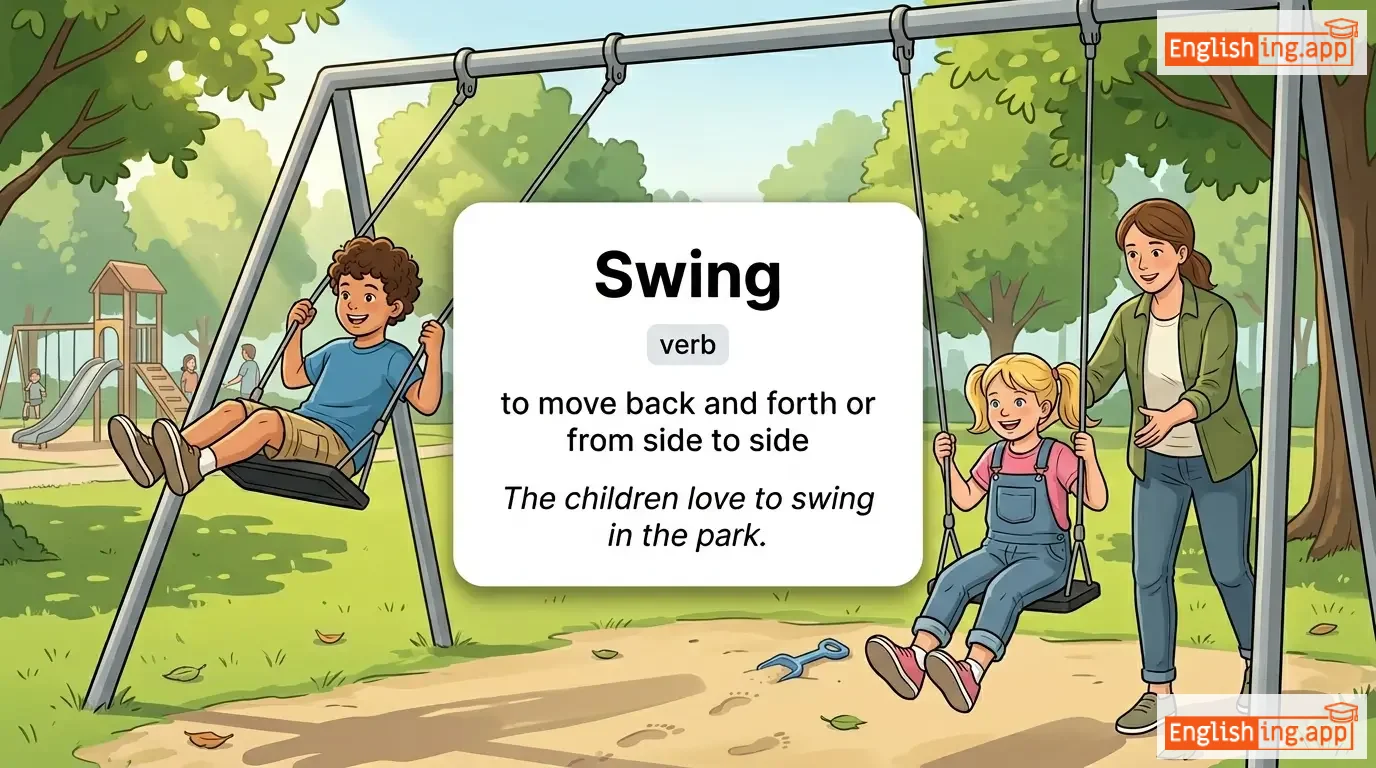
Swing definition card — visual illustration of the meaning
verb
/swɪŋ/
ブランコをする (buranko wo suru)

to move back and forth or from side to side

"The children love to swing in the park."

"子供たちは公園でブランコをするのが大好きです。" (Kodomotachi wa kōen de buranko o suru no ga daisuki desu.)
noun
/ˈswɪndlɚ/
詐欺師 (sagishi)

a person who cheats or deceives others for money or gain

"The police finally caught the notorious swindler."

"警察はついに悪名高い詐欺師を捕まえた。" (Keisatsu wa tsuini akumei takai sagishi o tsukamaeta.)
verb
/ˈswɪndl/
詐欺する (sagi suru)

to cheat someone out of money or possessions by deceit

"The con artist tried to swindle the old man out of his savings."

"コンアーティストは、老人の貯金を騙し取ろうとした。" (kon ātisuto wa, rōjin no chokin o damashitorō to shita.)
noun
/ˈswɪmɪŋ/
水泳 (suiei)

the activity or sport of moving through water using the limbs

"Swimming is a great way to stay fit and healthy."

"水泳は健康でフィットな状態を保つための素晴らしい方法です。" (Suiei wa kenko de fitto na jōtai wo tamotsu tame no subarashii hōhō desu.)
sustainable technology definition card — visual illustration of the meaning
noun
səˈsteɪ.nə.bəl tekˈnɒl.ə.dʒi
持続可能な技術 (jizoku kanou na gijutsu)

Technology designed to meet present needs without compromising future generations' ability to meet their needs.

"Sustainable technology ensures a cleaner future."
"持続可能な技術は、よりクリーンな未来を保証します。" (Jizoku kanou na gijutsu wa, yori kurīn na mirai o hoshō shimasu.)
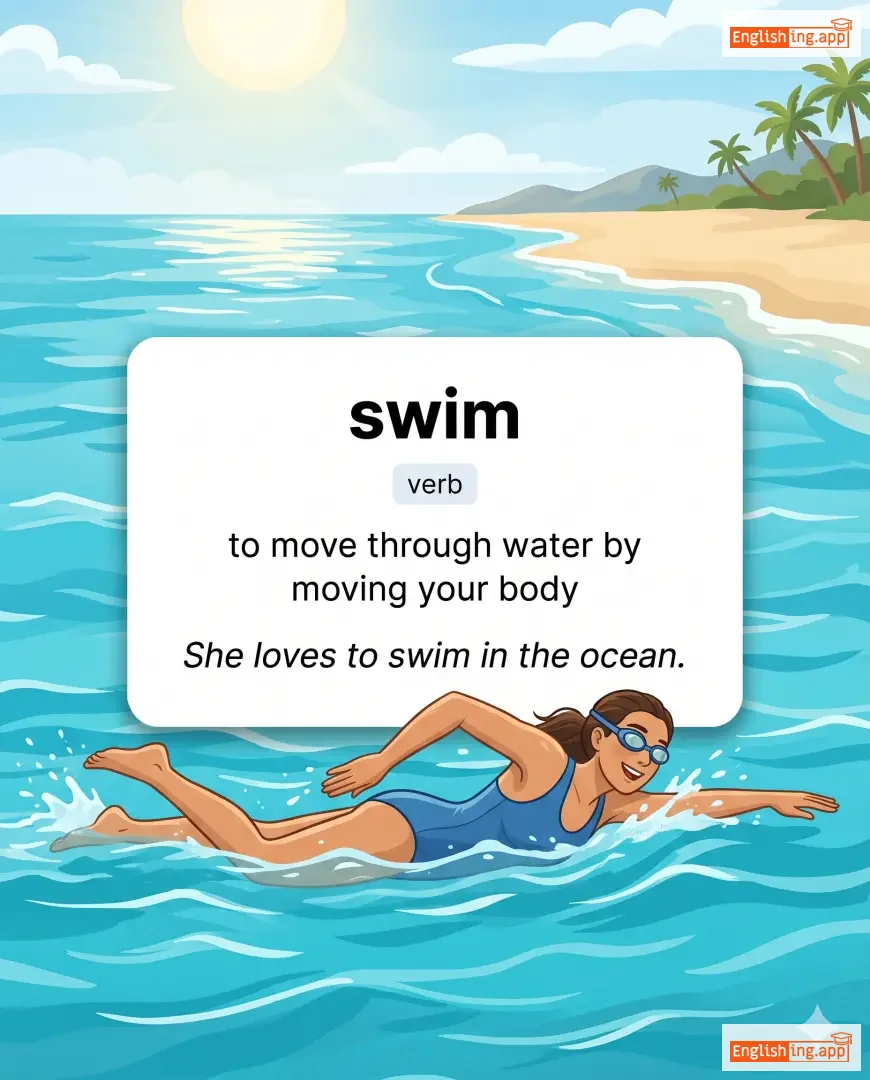
swim definition card — visual illustration of the meaning
verb
/swɪm/
泳ぐ (oyogu)

to move through water by moving your body

"She loves to swim in the ocean."

"彼女は海で泳ぐのが大好きです。" (Kanojo wa umi de oyogu no ga daisuki desu.)
verb
/swɪl/
がぶがぶ飲む (gabugabu nomu)

to drink something greedily or in large amounts

"He swilled down the beer in seconds."

"彼は数秒でビールを飲み干した。" (Kare wa suubyou de biiru o nomihoshita.)
adjective
/swɪft/

moving very quickly; happening promptly

"The river current was swift after the heavy rain."

verb
/swɜːrv/
急に方向を変える (kyūni hōkō o kaeru)

to change direction suddenly, especially to avoid hitting something

"The car swerved to avoid the dog."

"車は犬を避けるために急に方向を変えた。" (Kuruma wa inu o yokeru tame ni kyūni hōkō o kaeta.)
adjective
/ˈswɛltərɪŋ/
うだるような暑さ (udaru you na atsusa)

uncomfortably hot

"The sweltering heat made it hard to work."

"うだるような暑さで仕事が難しくなった。" (Udaru you na atsusa de shigoto ga muzukashiku natta.)
verb
/ˈswɛltər/
強烈な暑さで苦しむ (kyōretsu na atsusa de kurushimu)

to suffer from intense heat

"We began to swelter in the midday sun."

"私たちは真昼の太陽の下で汗だくになり始めました。" (Watashitachi wa mahiru no taiyō no shita de ase-daku ni nari hajimemashita.)
verb
/swɛl/
膨れる (fukurero)

to increase in size or volume, often due to internal pressure or emotional intensity

"Her ankle began to swell after the injury."

"怪我をした後、彼女の足首が腫れ始めた。" (Kega o shita ato, kanojo no ashi kubi ga hare hajimeta.)
noun
/ˈswiːt.miːt/
お菓子 (okashi)

a small piece of confectionery or candy; a sweet delicacy

"The children enjoyed the traditional sweetmeats during the festival."

"子供たちは祭りの間に伝統的なスイートミートを楽しみました。" (Kodomotachi wa matsuri no aida ni dentouteki na suītomīto o tanoshimimashita.)
noun
/swiːt.laɪm/
スイートライム (suīto raimu)

a citrus fruit that is sweeter and less acidic than regular lime

"The sweetlime juice was refreshing on a hot day."

"スイートライムジュースは暑い日にさわやかでした。" (Suīto raimu jūsu wa atsui hi ni sawayaka deshita.)
noun
/swiːt pəˈteɪtoʊ/
さつまいも (satsumaimo)

A root vegetable with sweet flesh, typically orange or purple in color

"Roasted sweet potato makes a healthy and delicious side dish."
"ローストさつまいもは健康的でおいしいサイドディッシュを作ります。" (Roosuto satsumaimo wa kenkou-teki de oishii saido disshu o tsukurimasu.)
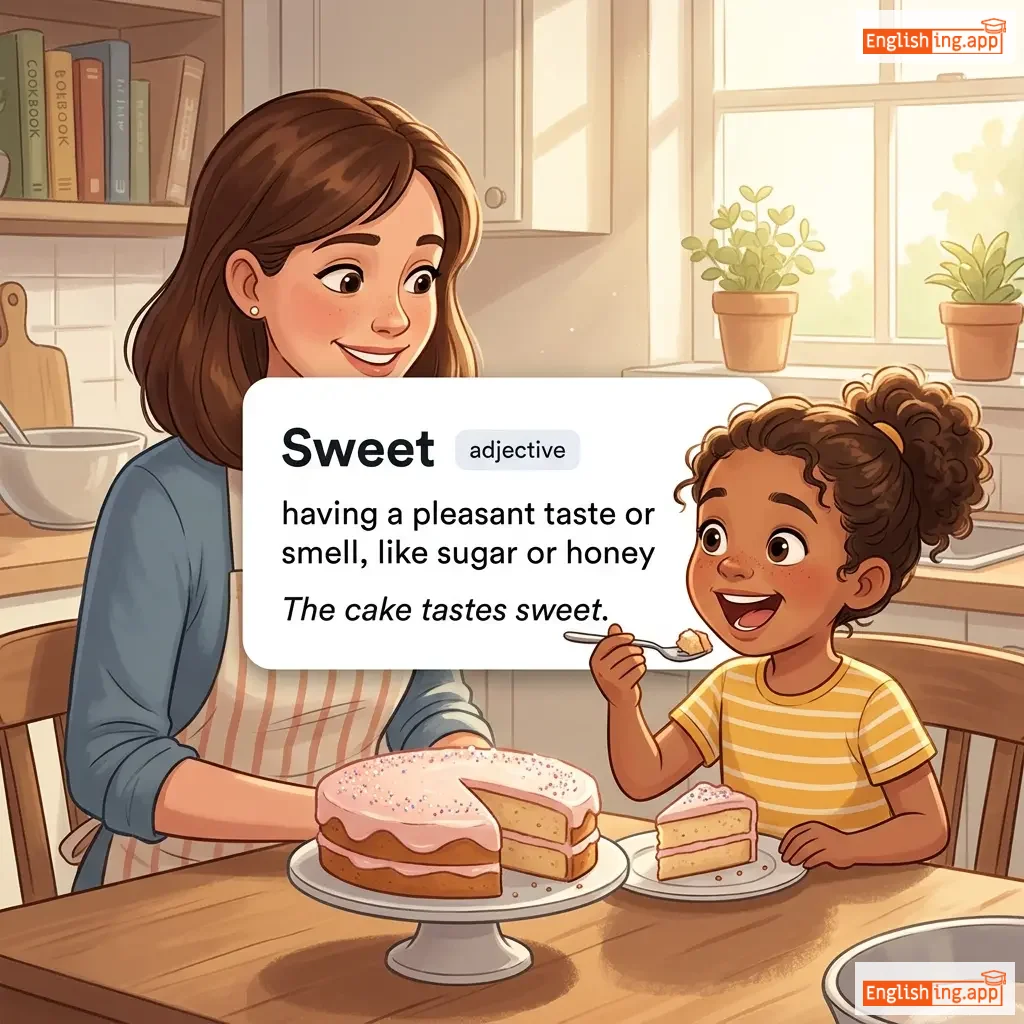
Sweet definition card — visual illustration of the meaning
adjective
/swiːt/
甘い (amai)

having a pleasant taste or smell, like sugar or honey

"The cake tastes sweet."

"ケーキは甘い味がします。" (Keeki wa amai aji ga shimasu.)
noun
/swɒn/
白鳥 (hakuchou)

a large waterbird with a long curved neck and usually white plumage

"The elegant swan glided silently across the water."

"優雅な白鳥が水面を静かに滑っていきました。" (Yūga na hakuchou ga suimen o shizuka ni subette ikimashita.)
verb
/ˈswɒloʊ/
飲み込む (nomikomu)

to make food or drink go down your throat into your stomach

"He swallowed the pill with a glass of water."

"彼は薬を水で飲み込みました。" (Kare wa kusuri o mizu de nomikomimashita.)