語彙集

英単語辞書 | 単語の意味、定義、例文

adjective
/səˈprɛsəbl̩/
抑制可能な (yokusei kanou na)

capable of being restrained, controlled, or prevented

"The symptoms of the disease are suppressible with medication."
"病気の症状は薬で抑制可能です。" (Byouki no shoujou wa kusuri de yokusei kanou desu.)
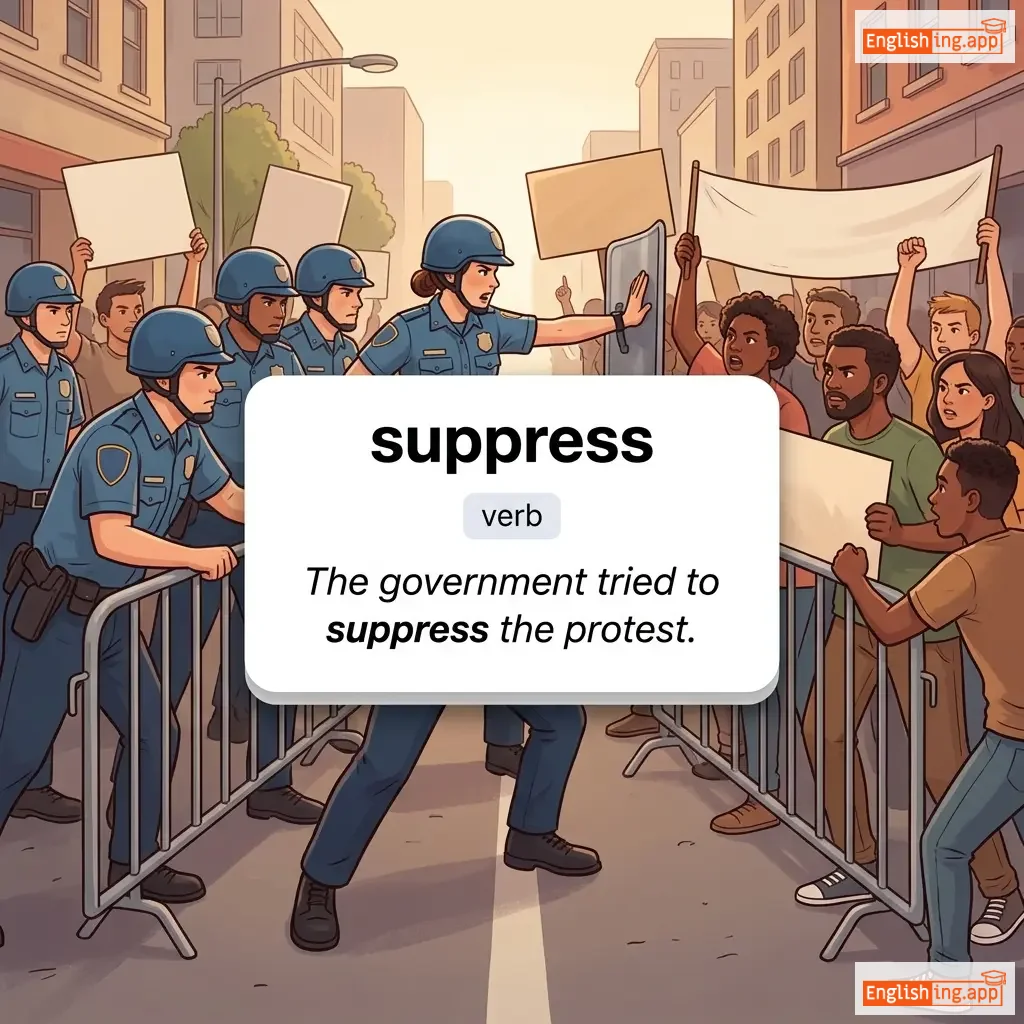
suppress definition card — visual illustration of the meaning
verb
/səˈprɛs/
抑える (osaeru)

to forcibly put an end to something; to restrain or hold back an action, feeling, or development

"The government tried to suppress the protest."

"政府は抗議を抑え込もうとした。" (Seifu wa kougi o osaekomou to shita.)
adjective
/ˌsʌpəzɪˈtɪʃəs/
仮定的 (kateiteki)

Based on assumption rather than fact; not genuine or authentic.

"The story turned out to be supposititious, with no evidence to support it."
"その話は仮定的であり、それを支持する証拠はありませんでした。" (Sono hanashi wa kateiteki de ari, sore o shiji suru shōko wa arimasen deshita.)
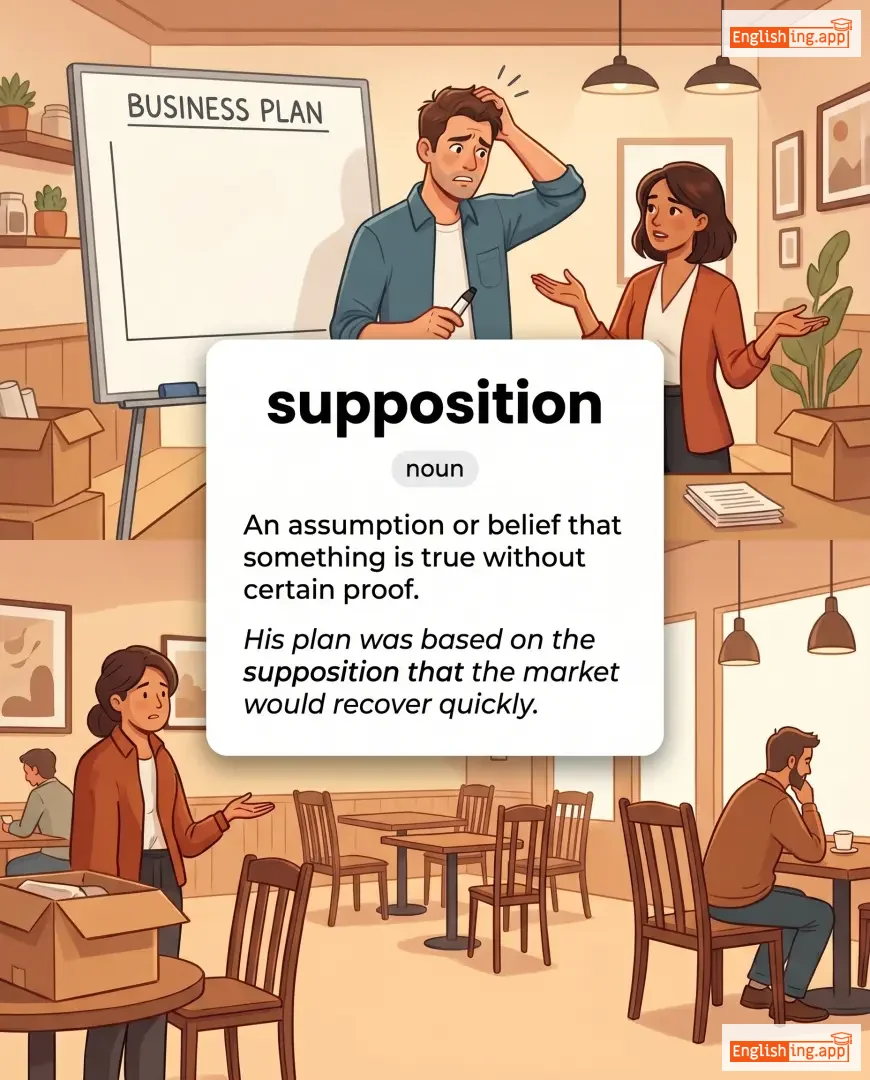
supposition definition card — visual illustration of the meaning
noun
/ˌsʌpəˈzɪʃən/
仮定 (katei)

An assumption or belief that something is true without certain proof.

"His plan was based on the supposition that the market would recover quickly."

"彼の計画は、市場がすぐに回復するという仮定に基づいていました。" (Kare no keikaku wa, shijō ga sugu ni kaifuku suru to iu katei ni motozuite imashita.)
adverb
/səˈpəʊzɪdli/
いわゆる (iwayuru)

used to show that something is believed or claimed to be true, though it may not be

"He is supposedly the best player on the team."

"彼はチームで一番うまい選手だと言われている。" (Kare wa chīmu de ichiban umai senshu da to iwarete iru.)
adjective
/səˈpəʊzd/
仮定された (katei sareta)

generally believed or assumed, but not necessarily true

"This is the supposed solution to the problem."

"これは問題の仮定された解決策です。" (Kore wa mondai no katei sareta kaiketsusaku desu.)
verb
/səˈpəʊz/
仮定する (katei suru)

to assume or believe something is true without proof

"I suppose she will be here soon."

"私は彼女がすぐにここに来ると思います。" (Watashi wa kanojo ga sugu ni koko ni kuru to omoimasu.)
adjective
/səˈpɔːtɪv/
支援的な (shien-teki na)

providing encouragement or emotional help to someone

"She was very supportive during my difficult times."
"彼女は私の困難な時期に非常に支援的でした。" (Kanojo wa watashi no konnan na jiki ni hijō ni shien-teki deshita.)
supporting definition card — visual illustration of the meaning
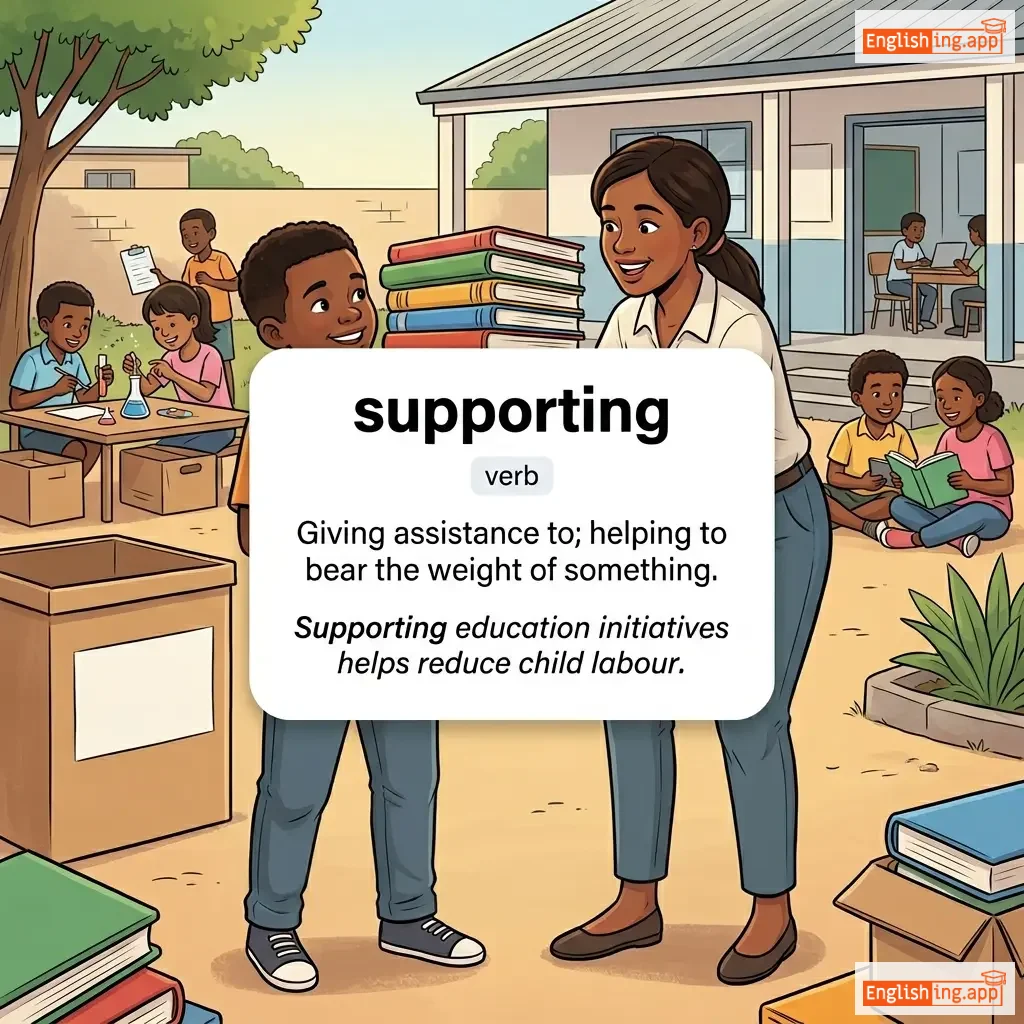
verb
səˈpɔːrtɪŋ
支援する (shien suru)

Giving assistance to; helping to bear the weight of something.

"Supporting education initiatives helps reduce child labour."

"教育の取り組みを支援することは、児童労働を減らすのに役立ちます。" (Kyōiku no torikumi o shien suru koto wa, jidō rōdō o herasu no ni yakudachimasu.)
noun
/səˈpɔːtər/
サポーター (sapōtā)

a person who supports someone or something

"She is a strong supporter of the local animal shelter."
"彼女は地元の動物シェルターの強力なサポーターです。" (Kanojo wa jimoto no dōbutsu shertā no kyōryokuna sapōtā desu.)
support definition card — visual illustration of the meaning
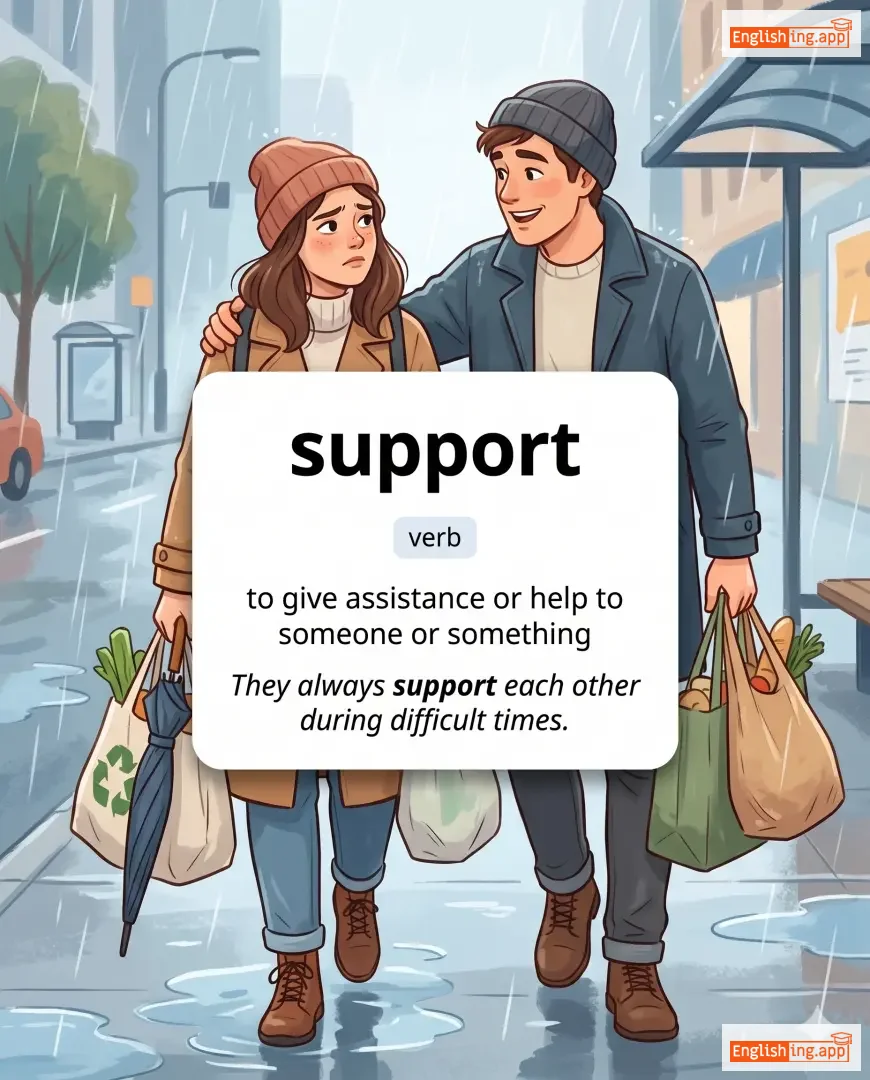
verb
/səˈpɔːrt/
サポート (sapōto)

to give assistance or help to someone or something

"They always support each other during difficult times."

"彼らはいつも困難な時にお互いをサポートしています。" (Karera wa itsumo konnan na toki ni otagai o sapōto shiteimasu.)
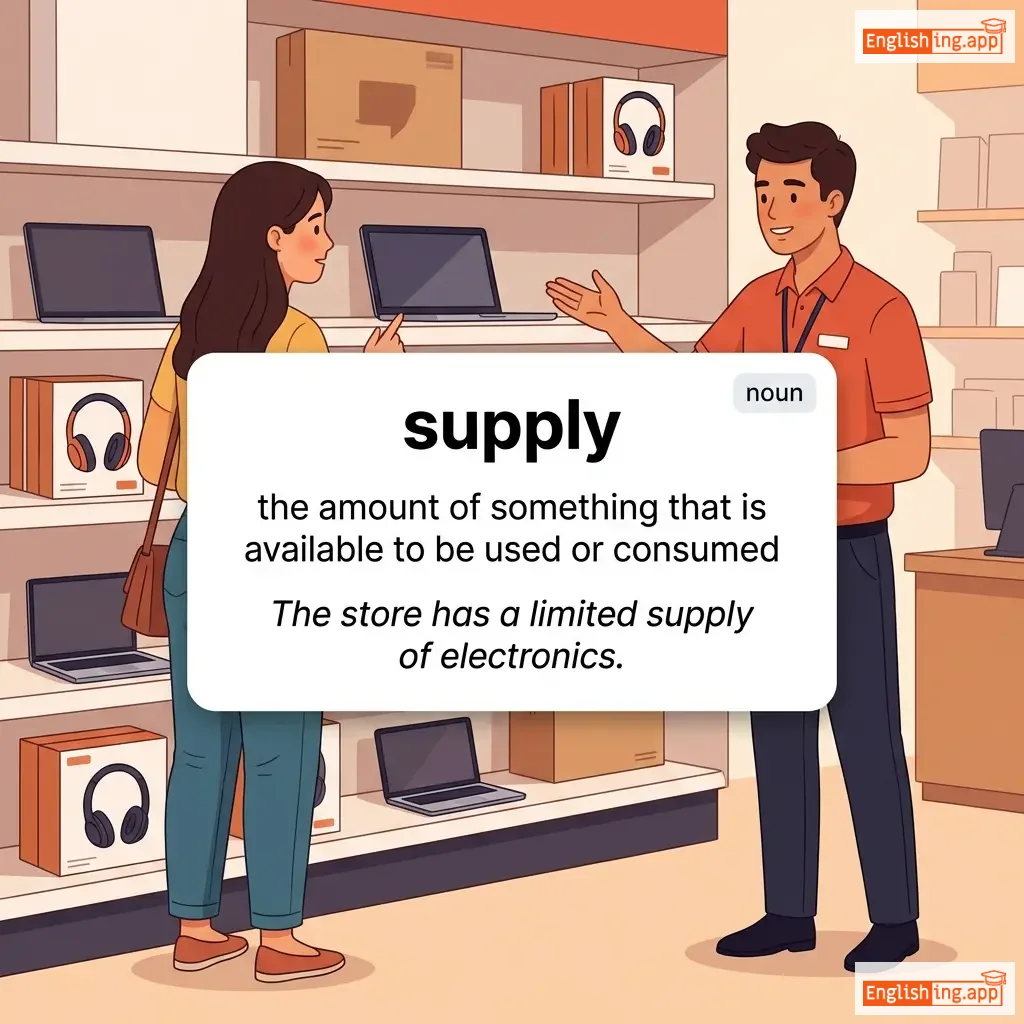
supply definition card — visual illustration of the meaning
noun
/səˈplaɪ/

the amount of something that is available to be used or consumed

"The store has a limited supply of electronics."

noun
/səˈplaɪə(r)/
供給者 (kyoukyuusha)

a person or company that provides goods or services

"The supplier delivered the products on time."

"供給者は時間通りに商品を納品しました。" (Kyoukyuusha wa jikan doori ni shouhin wo nouhin shimashita.)
verb
/ˈsʌplɪˌkeɪt/
お願いする (onegai suru)

To ask for something earnestly or humbly, often in a religious context.

"The villagers supplicated the gods for rain during the drought."
"村人たちは干ばつの間、雨を求めて神々にお願いした。" (Murabito-tachi wa kanbatsu no aida, ame o motomete kamigami ni onegai shita.)
supplicant definition card — visual illustration of the meaning
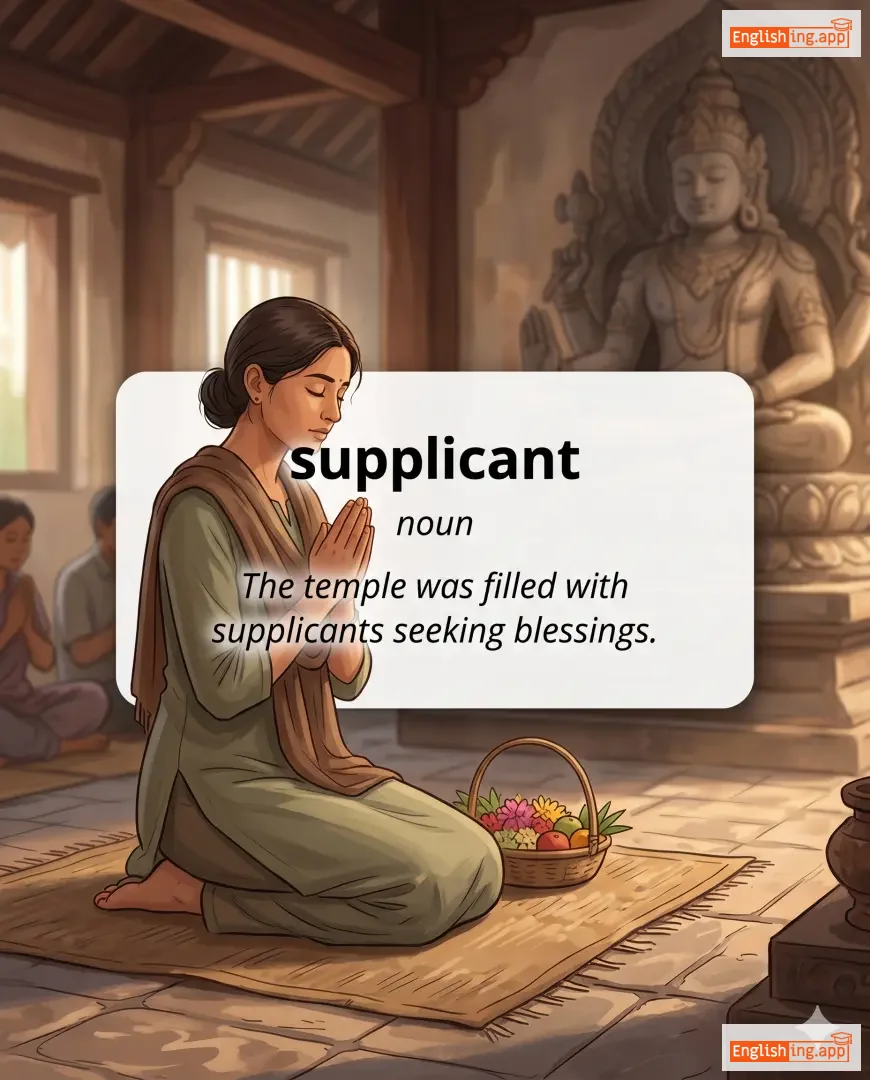
noun
/ˈsʌplɪkənt/
請願者 (seigan-sha)

A person who humbly or earnestly asks for something, usually from a person of authority.

"The temple was filled with supplicants seeking blessings."
"寺院には祝福を求める請願者で溢れていました。" (Jiin ni wa shukufuku o motomeru seigan-sha de afurete imashita.)
suppliant definition card — visual illustration of the meaning
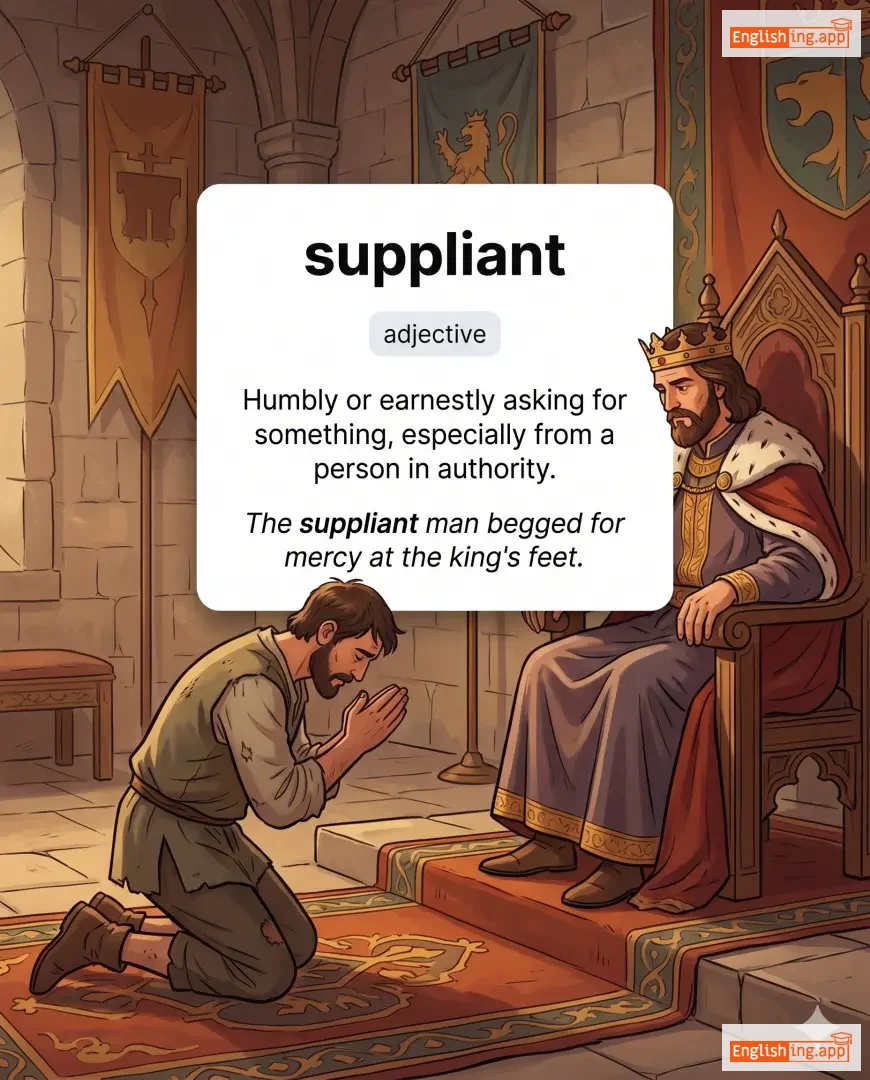
adjective
/ˈsʌpliənt/
請願者 (seigan-sha)

Humbly or earnestly asking for something, especially from a person in authority.

"The suppliant man begged for mercy at the king's feet."

"請願者は王の足元で慈悲を乞いました。" (Seigansha wa ō no ashimoto de jihī o koimashita.)
adjective
/ˌsʌplɪˈmɛntəri/
補足的な (hosokuteki na)

Additional, completing, or enhancing something else.

"The teacher gave supplementary materials to help the students prepare for exams."

"教師は生徒が試験の準備をするために補助教材を提供しました。" (Kyōshi wa seito ga shiken no junbi o suru tame ni hosoku kyōzai o teikyō shimashita.)
noun/verb
/ˈsʌplɪmənt/
補助食品 (hojosyokuhin)

Something added to complete or enhance; to add extra to make up for a deficiency.

"She takes vitamin supplements to improve her health."

"彼女は健康を改善するためにビタミンサプリメントを取ります。" (Kanojo wa kenko o kaizen suru tame ni bitamin sapurimento o torimasu.)
adjective
/ˈsʌpl/
柔軟な (jūnan na)

Easily bending or moving without breaking; flexible and adaptable.

"The gymnast’s body was remarkably supple."
"その体操選手の体は驚くほど柔軟だった。" (Sono taisō senshu no karada wa odoroku hodo jūnan datta.)
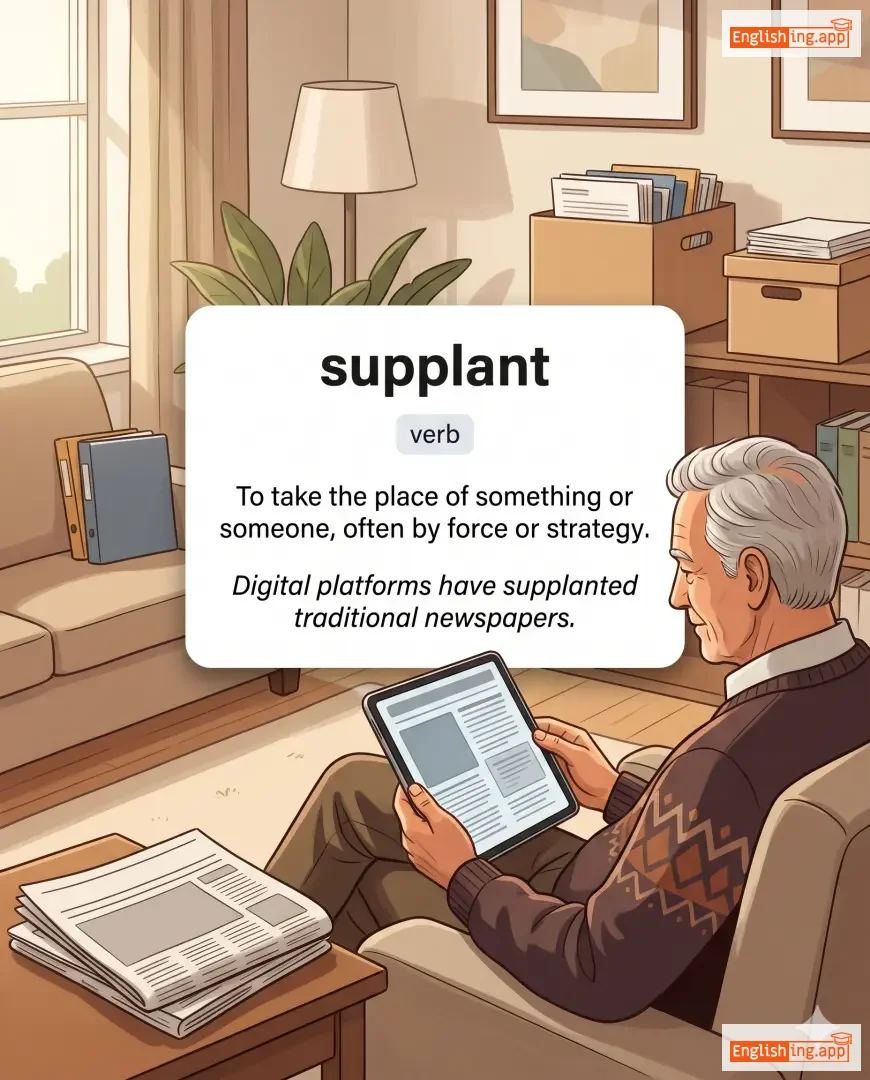
supplant definition card — visual illustration of the meaning
verb
/səˈplænt/
取って代わる (totte kawaru)

To take the place of something or someone, often by force or strategy.

"Digital platforms have supplanted traditional newspapers."

"デジタルプラットフォームは伝統的な新聞を取って代わった。" (Dejitaru purattofōmu wa dentō-teki na shinbun o totte kawatta.)
noun
/ˈsʌp.ər/
晩ご飯 (bangohan)

an evening meal, typically a light or informal one

"We usually have supper around seven o'clock."
"私たちは通常、七時ごろに晩ご飯を食べます。" (Watashitachi wa tsuujou, shichiji goro ni bangohan o tabemasu.)
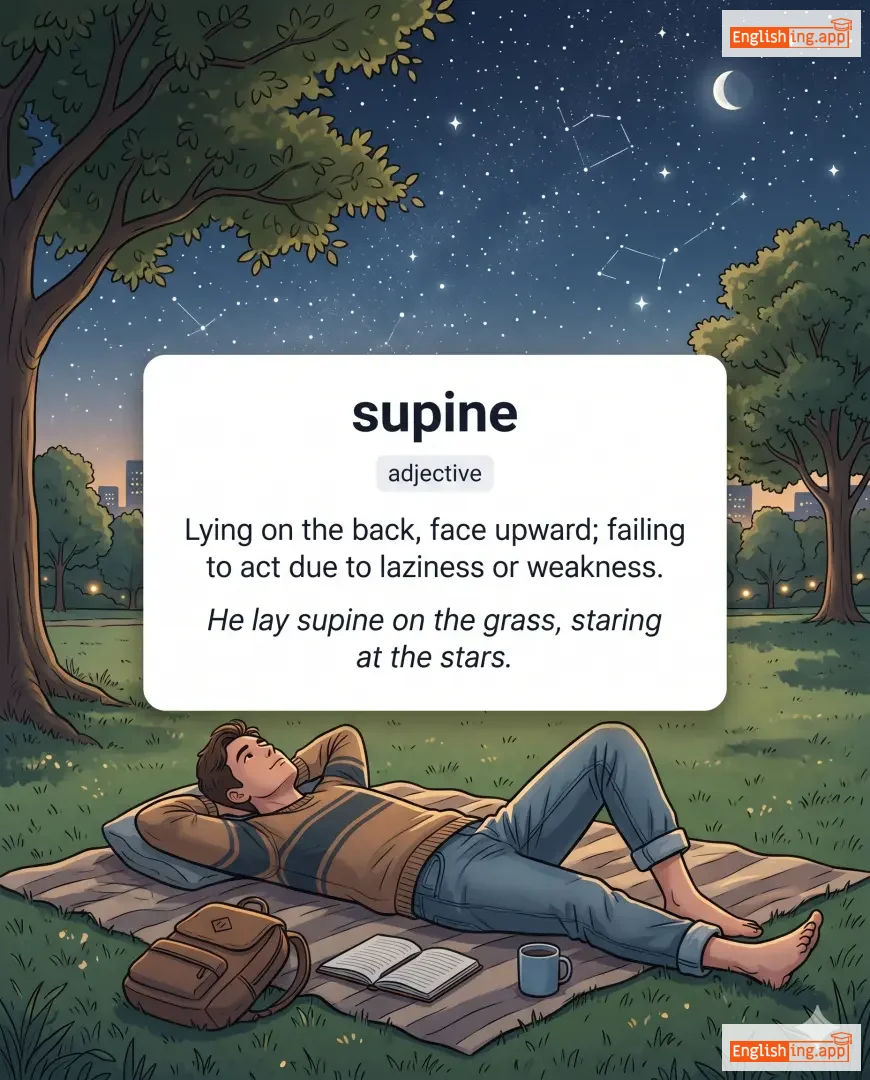
supine definition card — visual illustration of the meaning
adjective
/ˈsuːpaɪn/
仰向けで横たわる (aomuke de yokotawaru)

Lying on the back, face upward; failing to act due to laziness or weakness.

"He lay supine on the grass, staring at the stars."

"彼は草の上に仰向けで横たわり、星を見ていた。" (Kare wa kusa no ue ni aomuke de yokotawari, hoshi o mite ita.)
noun
/swiːt/
スイート (suīto)

a set of rooms designated for one person's or family's use or for a particular purpose

"They stayed in the presidential suite at the hotel."

"彼らはホテルの大統領スイートに宿泊していました。" (Karera wa hoteru no daitōryō suīto ni shukuhaku shite imashita.)
noun
/ˈsʌn.deɪ/
日曜日 (nichiyoubi)

The day of the week between Saturday and Monday; often considered a day of rest or worship.

"We usually relax at home on Sunday."

"私たちは通常、日曜日は家でゆっくりします。" (Watashitachi wa tsuujou, nichiyoubi wa ie de yukkuri shimasu.)
noun
/ˈsʌn.flaʊər/
ひまわり (himawari)

a large yellow flower that turns to face the sun

"The sunflower field looked amazing in the bright sunlight."

"ひまわり畑は明るい日差しの中で素晴らしく見えました。" (himawari batake wa akarui hizashi no naka de subarashiku miemashita)
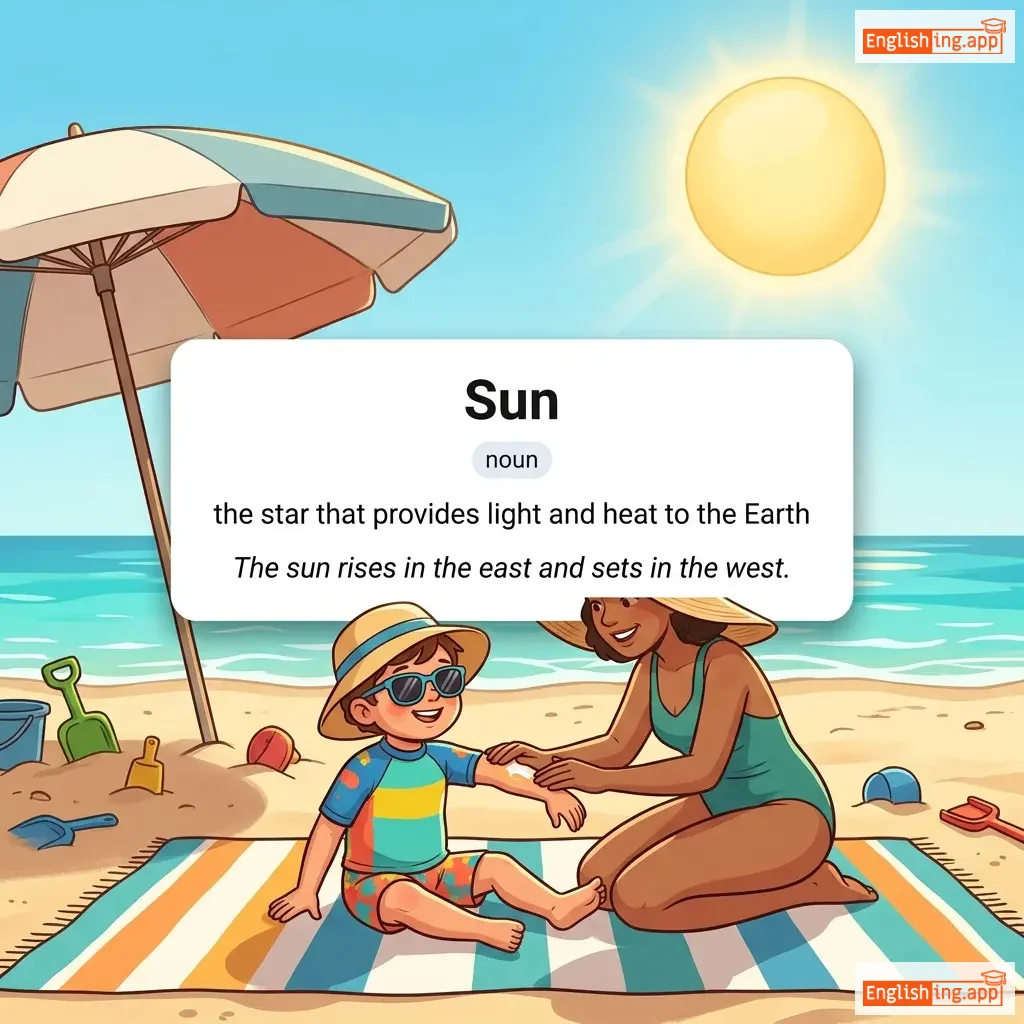
Sun definition card — visual illustration of the meaning
noun
/sʌn/
太陽 (taiyo)

the star that provides light and heat to the Earth

"The sun rises in the east and sets in the west."

"太陽は東から昇り、西に沈みます。" (Taiyo wa higashi kara nobori, nishi ni shizumimasu.)
adjective
/ˈsʌmp.tʃu.əs/
豪華な (gōka na)

Splendid and expensive-looking; luxurious.

"The guests were treated to a sumptuous banquet."

"ゲストは豪華な晩餐にもてなされました。" (Gesuto wa gōka na bansan ni motenasaremashita.)
adjective
/ˈsʌmp.tʃuˌɛr.i/
贅沢品の個人的な支出を制限する法律または規制に関連する (zeitakuhin no kojinteki na shishutsu o seigen suru hōritsu matawa kisei ni kanren suru)

Relating to laws or regulations intended to limit personal spending on luxury goods.

"In medieval Europe, sumptuary laws restricted the wearing of expensive fabrics to the nobility."

"中世ヨーロッパでは、贅沢品法が高価な布地の着用を貴族に限定していました。" (Chūsei Yōroppa de wa, zeitakuhin-hō ga kōka na nuno no chakuyō o kizoku ni gentei shite imashita.)
verb
/ˈsʌmən/

To order someone to come or to gather courage or strength.

"The king summoned his advisors to the court."

Summit of the Future definition card — visual illustration of the meaning
noun
/ˈsʌm.ɪt əv ðə ˈfjuː.tʃər/
未来のサミット (Mirai no samitto)

A high-level conference focused on addressing future challenges and opportunities.

"The Summit of the Future addressed global challenges."

"未来のサミットは世界的な課題を取り上げました。" (Mirai no samitto wa sekaiteki na kadai o toriagemashita.)
summit definition card — visual illustration of the meaning
noun
/ˈsʌmɪt/
頂点, サミット (tōten, samitto)

The highest point of a hill or mountain; a meeting between heads of state or leaders.

"The leaders met at the summit to discuss global issues."
"リーダーたちはサミットで世界的な問題について話し合いました。" (Rīdā-tachi wa samitto de sekaiteki na mondai ni tsuite hanashimashita.)
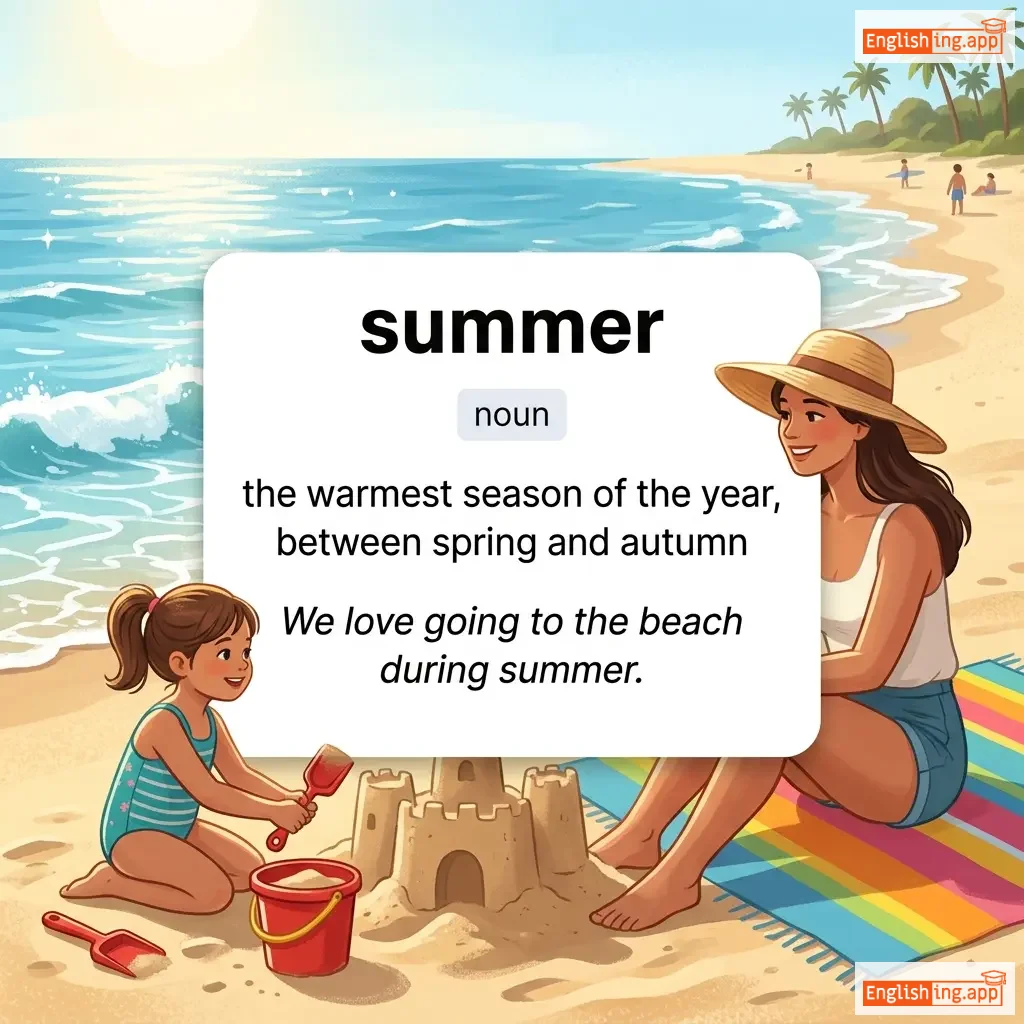
summer definition card — visual illustration of the meaning
noun
/ˈsʌmər/
(natsu)

the warmest season of the year, between spring and autumn

"We love going to the beach during summer."

"夏はビーチに行くのが大好きです。" (Natsu wa bīchi ni iku no ga daisuki desu.)
noun
/sʌˈmeɪʃən/
合計, 要約 (goukei, youyaku)

The process of adding things together; a summary of points.

"The lawyer gave a powerful summation of the case."

"弁護士は事件の強力な要約を行った。" (Bengoshi wa jiken no kyouryoku na youyaku wo okonatta.)
noun
/ˈsʌməri/
要約 (yōyaku)

A brief statement of the main points of something.

"She wrote a summary of the book for her class."

"彼女はクラスのためにその本の要約を書きました。" (Kanojo wa kurasu no tame ni sono hon no yōyaku o kakimashita.)
verb
/ˈsʌməraɪz/
要約する (youyaku suru)

To give a brief statement of the main points of something

"She summarized the report in just a few minutes."

"彼女は数分で報告書を要約した。" (Kanojo wa suufun de houkokusho o youyaku shita)
noun
/sʌm/
合計 (goukei)

the total amount resulting from the addition of two or more numbers or items

"The sum of 8 and 12 is 20."

"8と12の合計は20です。" (8 to 12 no goukei wa 20 desu.)
adjective
/ˈsʌltri/
蒸し暑く湿った、魅力的な (mushi atsuku shimetta, miryokuteki na)

Uncomfortably hot and humid; also describes someone attractive in a passionate or sensual way.

"The sultry weather made it hard to focus on work."

"蒸し暑い天気は仕事に集中するのを難しくしました。" (Mushi atsui tenki wa shigoto ni shūchū suru no o muzukashiku shimashita.)
verb
/ˈsʌli/
汚す (yogosu)

to damage the purity, integrity, or reputation of something

"The scandal sullied the politician’s reputation."

"スキャンダルは政治家の評判を汚した。" (Sukyandaru wa seijika no hyōban o yogoshita.)
adjective
/ˈsʌlən/
むっつりした (muttsuri shita)

bad-tempered and gloomy; silently resentful

"She gave him a sullen look and walked away."

"彼女はむっつりした表情を見せて、立ち去った。" (Kanojo wa muttsuri shita hyōjō o misete, tachisatta.)
adjective
/ˈsʌl.ki/
不機嫌で無口; 気分屋 (fukigen de mukuchi; kibunya)

bad-tempered and sullen; moody

"The child became sulky when he couldn't get his favorite toy."

"その子供はお気に入りのおもちゃが手に入らなかったとき、不機嫌になった。" (Sono kodomo wa okiniiri no omocha ga te ni hairanakatta toki, fukigen ni natta.)
sulk definition card — visual illustration of the meaning
verb
/sʌlk/
すねる (suneru)

to be silently resentful or moody

"He went to his room to sulk after the argument."

"彼は議論の後、部屋に行ってすねました。" (Kare wa giron no ato, heya ni itte sunemashita.)
noun
/ˈsuːtər/
求婚者 (kyuukonsha)

a man who pursues a relationship with a woman, often with the intent to marry

"She had many suitors vying for her attention."
"彼女には彼女の注意を争う求婚者がたくさんいた。" (kanojo ni wa kanojo no chuui o arasou kyuukonsha ga takusan ita)
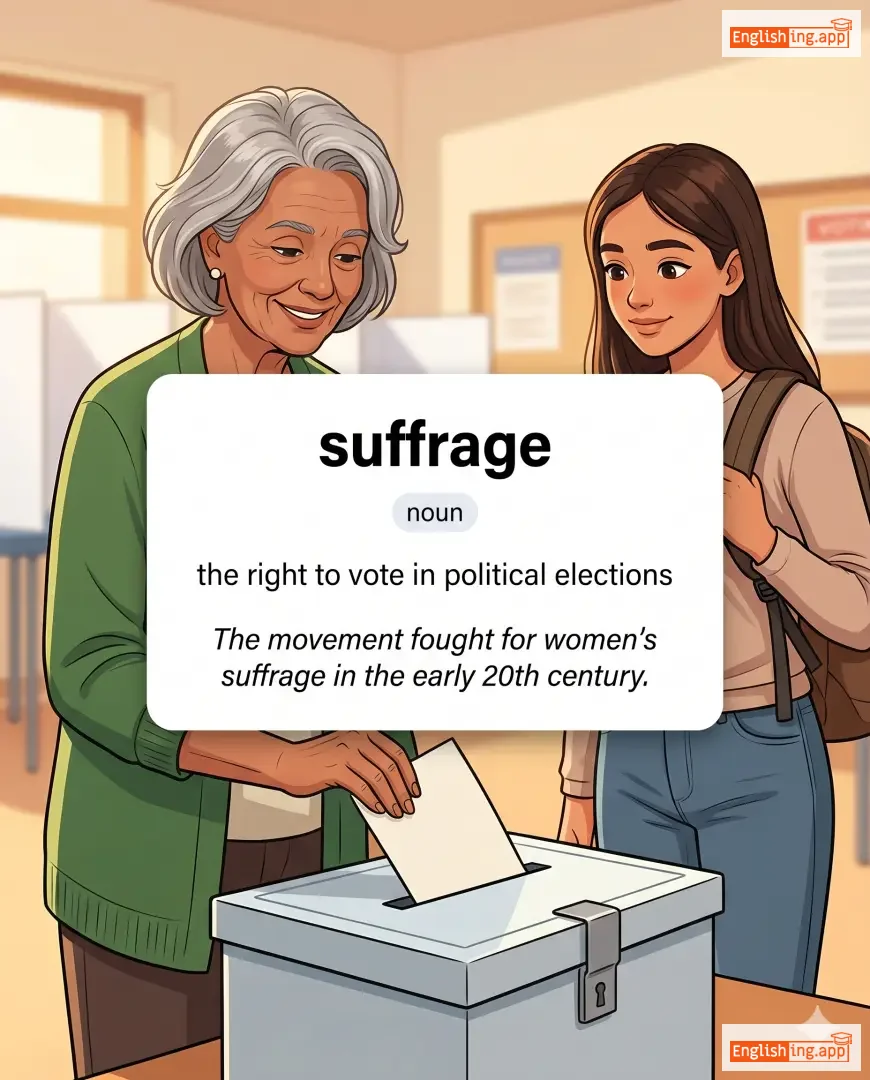
suffrage definition card — visual illustration of the meaning
noun
/ˈsʌfrɪdʒ/
参政権 (sanseiken)

the right to vote in political elections

"The movement fought for women’s suffrage in the early 20th century."

"その運動は20世紀初頭に女性の参政権のために戦った。" (sono undou wa nijusseiki shotou ni josei no sanseiken no tame ni tatakatta.)
noun
/ˈʃʊɡ.ər ˈkæn.di/
シュガーキャンディ (shugā kyandi)

crystallized sugar formed into small pieces; rock candy made from sugar syrup

"The children enjoyed eating colorful sugar candy at the festival."

"子供たちは祭りでカラフルなシュガーキャンディを食べて楽しみました。" (Kodomo-tachi wa matsuri de karafuru na shugā kyandi o tabete tanoshimimashita)
noun
/ˈʃʊɡər/
砂糖 (satou)

a sweet substance made from plants or produced synthetically

"She added two spoons of sugar to her tea."

"彼女はお茶に砂糖を二匙加えました。" (Kanojo wa ocha ni satou o nishaku kuwaemashita.)
verb
/səˈfjuːz/
広がる (hirogaru)

to gradually spread through or over something

"A warm glow suffused her face as she smiled."

"彼女が微笑んだとき、暖かい輝きが彼女の顔に広がった。" (Kanojo ga hohoenda toki, atatakai kagayaki ga kanojo no kao ni hirogatta.)
noun
/ˈsʌfrədʒɪst/
女性参政権運動家 (josei senseiken undōka)

a person advocating the extension of suffrage, especially to women

"The suffragists organized rallies to demand voting rights for women."

"女性参政権運動家たちは女性の投票権を求めて集会を開いた。" (Josei senseiken undōka-tachi wa josei no tōhyōken o motomete shūkai o hiraita.)
adverb
/səˈfɪʃəntli/
十分に (jūbun ni)

to an adequate degree or extent

"She studied sufficiently to pass the exam."

"彼女は試験に合格するために十分に勉強した。" (Kanojo wa shiken ni gōkaku suru tame ni jūbun ni benkyō shita.)
adjective
/səˈpraɪzd/
驚いた (odoroita)

feeling or showing astonishment or shock

"She was surprised by the news."

"彼女はそのニュースに驚きました。" (Kanojo wa sono nyūsu ni odoroimashita.)
adjective
/səˈfɪʃənt/
十分な (jūbun na)

enough; adequate for a purpose

"She had sufficient money to buy the dress."

"彼女はドレスを買うために十分なお金を持っていました。" (Kanojo wa doresu o kau tame ni jūbun na okane o motte imashita.)