Словари

Словарь английского языка | Значения слов, определения и примеры

noun
/ˈtoʊ.pæz/
топаз (topaz)

a precious stone, typically colorless, yellow, or blue, used in jewelry

"The queen's crown was adorned with a magnificent blue topaz."

"Корона королевы была украшена великолепным синим топазом." (Korona korolevy byla ukrashena velikolepnym sinim topazom.)
noun
/tɒp/
вершина (vershina)

the highest or uppermost point, part, or surface of something

"The book is on the top shelf."

"Книга на верхней полке." (Kniga na verkhney polke.)
noun
/tuːθ/
зуб (zub)

each of the hard, pointed structures in the mouth used for biting and chewing food

"He has a toothache and needs to see the dentist."
"У него болит зуб, и ему нужно пойти к стоматологу." (U nego bolit zub, i emu nuzhno poyti k stomatologu.)
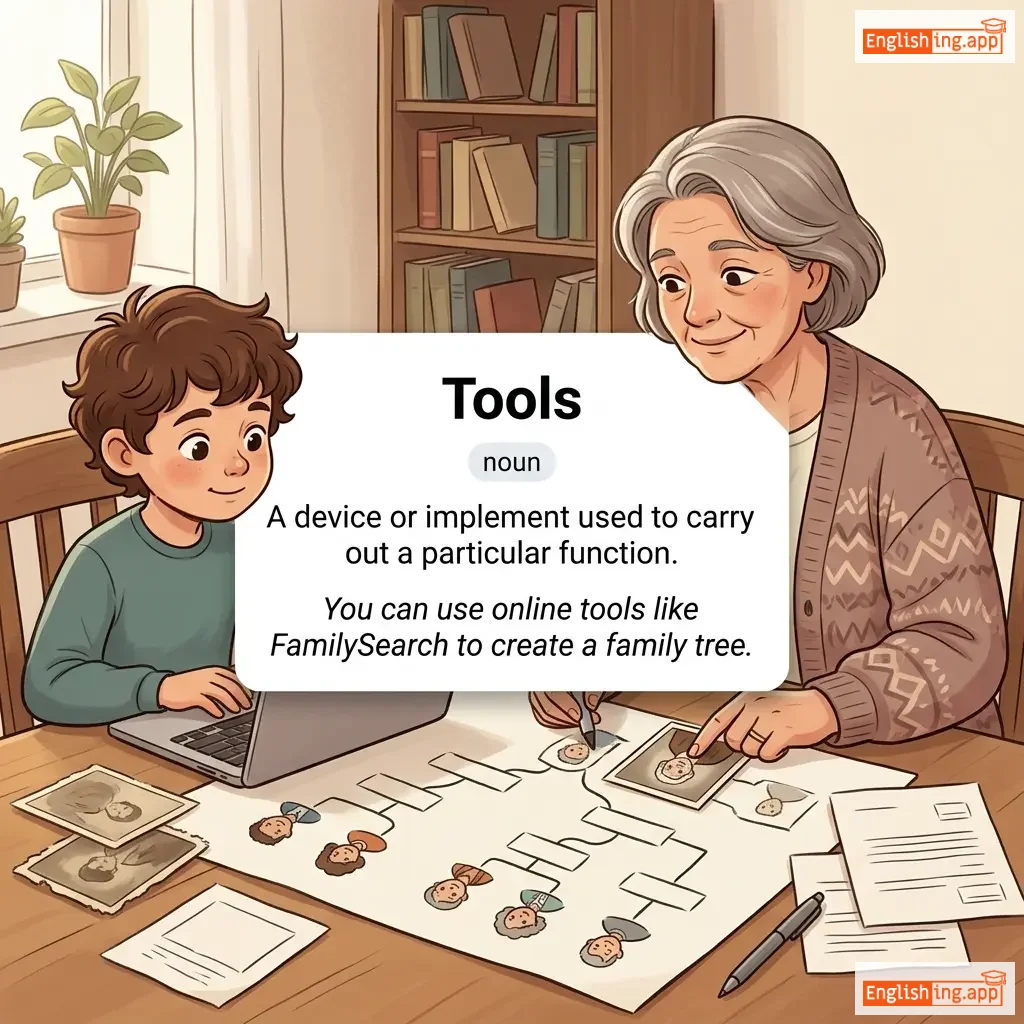
Tools definition card — visual illustration of the meaning
noun
tuːlz
инструменты (instrumenty)

A device or implement used to carry out a particular function.

"You can use online tools like FamilySearch to create a family tree."
"Вы можете использовать онлайн-инструменты, такие как FamilySearch, для создания генеалогического древа." (Vy mozhete ispol'zovat' onlayn-instrumenty, takie kak FamilySearch, dlya sozdaniya genealogicheskogo dreva.)
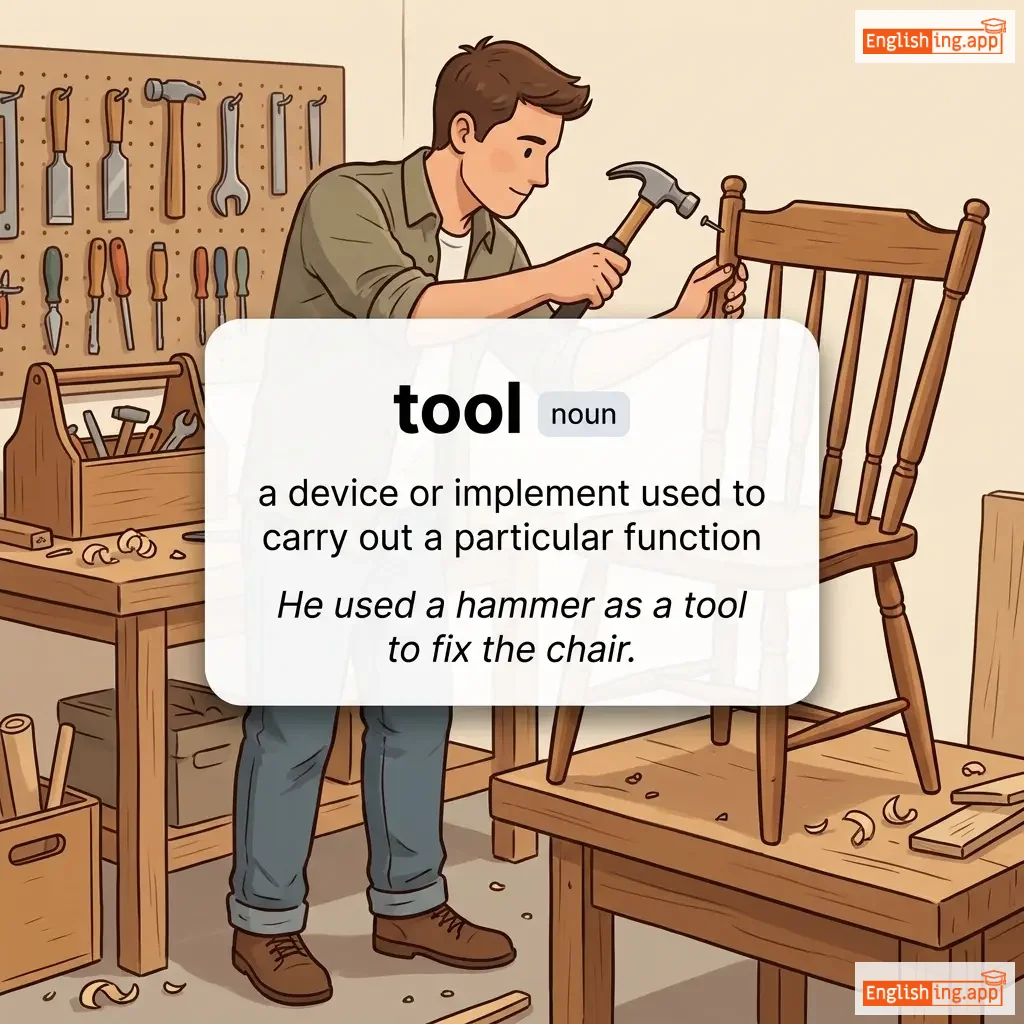
tool definition card — visual illustration of the meaning
noun
/tuːl/
инструмент (instrument)

a device or implement used to carry out a particular function

"He used a hammer as a tool to fix the chair."

"Он использовал молоток как инструмент для починки стула." (On ispol'zoval molotok kak instrument dlya pochinki stula.)
adverb
/tuː/
слишком (slishkom)

to a higher degree than is desirable, permissible, or possible

"She is too tired to continue working."

"Она слишком устала, чтобы продолжить работать." (Ona slishkom ustala, chtoby prodolzhit' rabotat'.)
noun
/ˈtɒnʃər/
тону́зура (tonuzura)

the practice of shaving or cutting the hair on the scalp, especially in a religious context

"The monk received his tonsure as part of his religious initiation."

"Монах получил свою тонзуру как часть своей религиозной инициации." (Monakh poluchil svoju tonuzuru kak chast' svoej religioznoj initsiatsii.)
adjective
/tɒnˈsɔːriəl/
относящийся к парикмахеру (otnosyashchiesya k parikmakheru)

relating to barbers or hairdressing

"The town's new barber offered a wide range of tonsorial services."

"Новый парикмахер города предложил широкий ассортимент парикмахерских услуг." (Novyy parikmakher goroda predlozhil shirokiy assortiment parikmakherskikh uslug.)
adverb, noun
/təˈnaɪt/
сегодня ночью (segodnya nochyu)

on or during the night of the current day

"We're going to the party tonight."

"Мы идем на вечеринку сегодня ночью." (My idyom na vecherinku segodnya nochyu.)
noun
/ˈtɒnɪk/
тоник (tonik)

a medicine or drink that restores or refreshes health and energy

"A glass of lemonade was the perfect tonic on a hot day."

"Стакан лимонада был идеальным тоником в жаркий день." (Stakan limonada byl ideal'nym tonikom v zharkiy den'.)
noun
/tʌŋ/
язык (yazyk)

a fleshy muscular organ in the mouth used for tasting, swallowing, and speaking

"She stuck out her tongue playfully."

"Она игриво высунула язык." (Ona igryvo vysunula yazyk.)
noun
/tɒŋz/
щипцы (shchiptsy)

a tool consisting of two movable arms that are joined at one end, used for picking up and holding things

"Use the tongs to pick up the hot pieces of meat from the grill."

"Используйте щипцы, чтобы поднять горячие куски мяса с гриля." (Ispol'zuyte shchiptsy, chtoby podnyat' goryachie kuski myasa s grilya.)
noun
/tɒŋ/
щипцы (shchiptsy)

a tool with two movable arms used to pick up and hold objects

"He used the tong to pick up the hot coal."

"Он использовал щипцы, чтобы поднять горячий уголь." (On ispol'zoval shchiptsy, chtoby podnyat' goryachiy ugol'.)
noun, verb
/toʊn/
тон (ton)

the general character or attitude of a place, piece of writing, situation, etc.

"The tone of the letter was very formal."

"Тон письма был очень формальным." (Ton pis'ma byl ochen' formal'nym.)
noun
/tʌn/
тонна (tonna)

A unit of weight equal to 2,000 pounds (US) or 1,000 kilograms (metric); a large amount of something

"The truck carried a ton of apples to the market."

"Грузовик перевез тонну яблок на рынок." (Gruzovik perevez tonnu yablok na rynok.)
noun, adverb
/təˈmɒroʊ/
завтра (zavtra)

the day after today

"We are meeting tomorrow for the project discussion."

"Мы встречаемся завтра для обсуждения проекта." (My vstrechayemsya zavtra dlya obsuzhdeniya proekta.)
tome definition card — visual illustration of the meaning
noun
/toʊm/
толстая книга (tolstaya kniga)

a large, heavy book, often scholarly or serious in nature

"She spent the afternoon reading an old tome on medieval history."

"Она провела послеобеденное время, читая старую толстую книгу по средневековой истории." (Ona provela posleobedennoye vremya, chitaya staruyu tolstuyu knigu po srednevekovoy istorii.)
noun
/təˈmeɪtoʊ/
помидор (pomidor)

a red or yellowish fruit that is typically eaten as a vegetable

"I added some tomato to the salad."

"Я добавил немного помидора в салат." (Ya dobavil nemnogo pomidora v salat.)
noun
/toʊl/
пошлина / ущерб (poshlina / ushcherb)

A charge payable for using a road or bridge; also the extent of damage or suffering caused by something.

"The flood took a heavy toll on the village."

"Наводнение нанесло большой ущерб деревне." (Navodnenie naneslo bol'shoy ushcherb derevne.)
noun
/ˌtɒləˈreɪʃən/
терпимость (terpimost)

The practice of allowing something that one does not necessarily agree with.

"The government promoted religious toleration."
"Правительство продвигало религиозную терпимость." (Pravitel'stvo prodvigalo religioznuyu terpinost.)
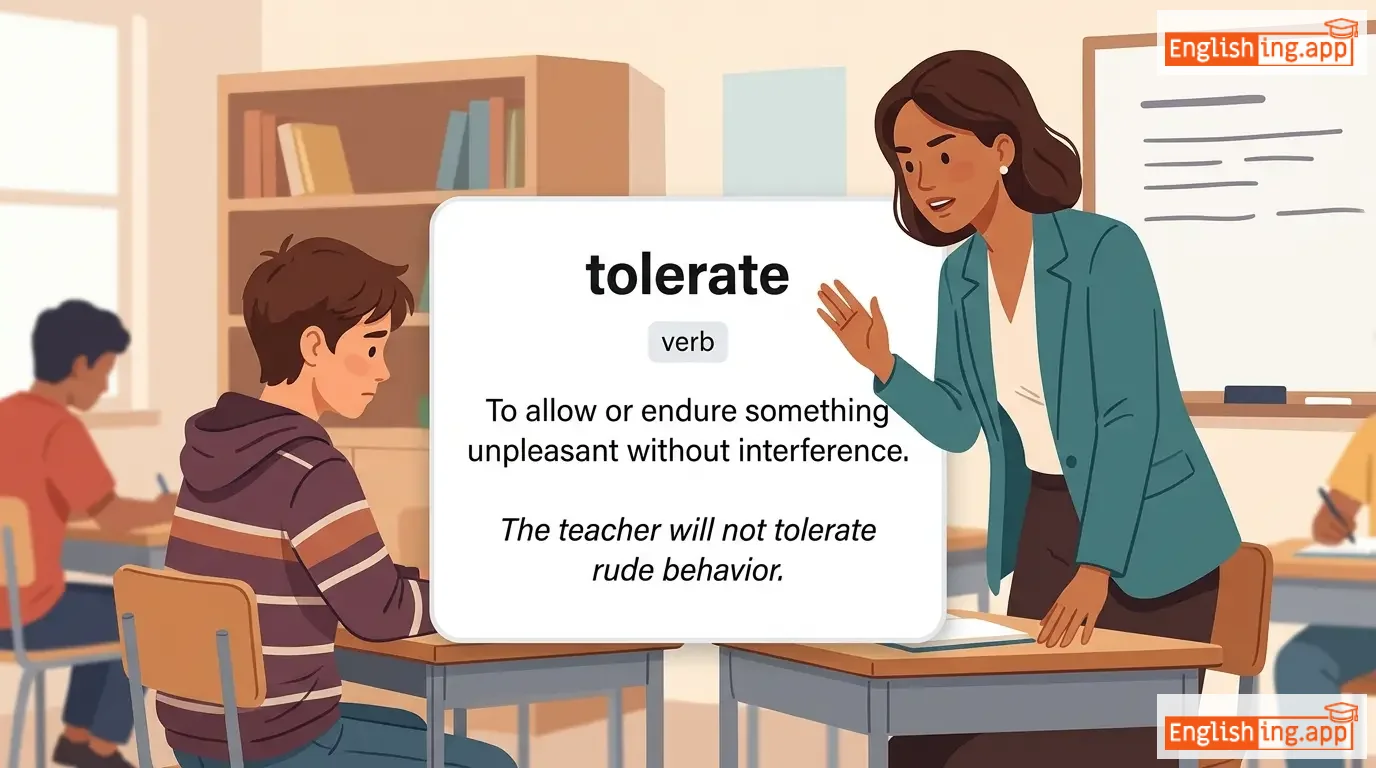
tolerate definition card — visual illustration of the meaning
verb
/ˈtɒləreɪt/
терпеть (terpet')

To allow or endure something unpleasant without interference.

"The teacher will not tolerate rude behavior."

"Учитель не потерпит грубого поведения." (Uchitel' ne poterpit grubogo povedeniya.)
adjective
/ˈtɒlərənt/
терпимый (terpimy)

Showing willingness to allow the existence of opinions or behaviors that one dislikes or disagrees with.

"He is very tolerant of other people's beliefs."

"Он очень терпим к убеждениям других людей." (On ochen' terpim k ubezhdeniyam drugikh lyudey.)
noun
/ˈtɒlərəns/
терпимость (terpimost)

The ability or willingness to accept or endure differences, behaviors, or opinions without hostility.

"Her tolerance for different cultures impressed everyone."

"Её терпимость к разным культурам впечатлила всех." (Yeyo terpimost' k raznym kul'turam vpechatlila vsekh.)
adjective
/ˈtɒl.ər.ə.bəl/
терпимый (terpimy)

Able to be endured or put up with; fairly acceptable.

"The pain was tolerable after the medicine."
"Боль была терпимой после лекарства." (Bol' byla terpimoy posle lekarstva.)
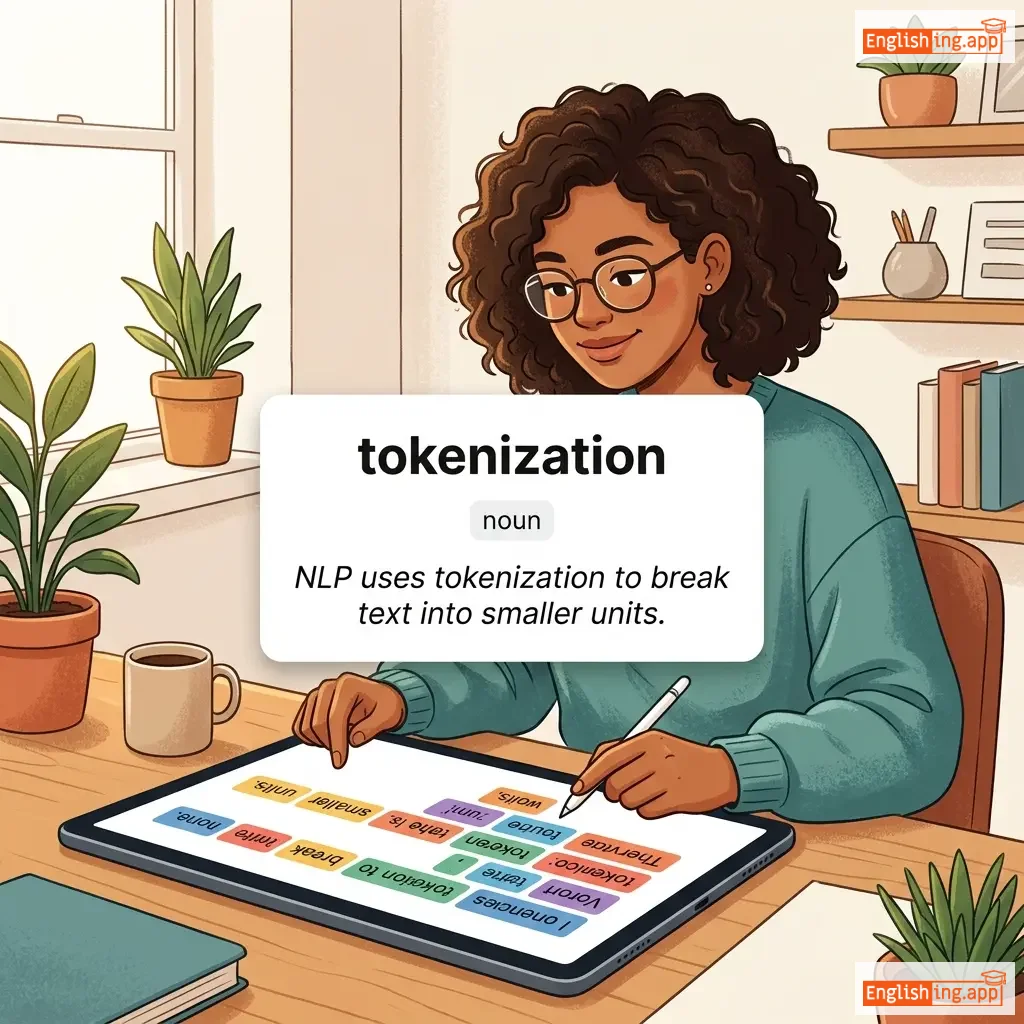
tokenization definition card — visual illustration of the meaning
noun
ˌtoʊ.kə.nɪˈzeɪ.ʃən
Процесс разбивки текста на меньшие единицы, такие как слова, фразы или символы, для анализа. (tokenization)

The process of breaking text into smaller units like words, phrases, or symbols for analysis.

"NLP uses tokenization to break text into smaller units."

"NLP использует токенизацию для разбиения текста на более мелкие единицы." (NLP ispol'zuyet tokenizatsiyu dlya razbieniya teksta na boleye melkiye yedinitsy.)
noun
/ˈtoʊ.kən/
символ / жетон (simvol / zheton)

A symbol or object that represents something, often given as a sign of appreciation or as a substitute for money.

"She gave him a small gift as a token of gratitude."

"Она дала ему маленький подарок как токен благодарности." (Ona dala yemu malen'kiy podarok kak token blagodarnosti.)
adjective
/ˈtɔɪl.səm/
трудный (trudnyy)

Involving hard or exhausting work; laborious.

"The workers had a toilsome day in the hot sun."

"Рабочие провели трудный день на жарком солнце." (Rabochie proveli trudnyy den' na zharkom solntse.)
noun
/ˈtɔɪlət/
туалет (tualet)

a fixture used for the disposal of human waste

"The public toilet was clean and well maintained."

"Общественный туалет был чистым и хорошо обслуживаемым." (Obshchestvennyy tualet byl chistym i khorosho obsluzhivayemym.)
Toil definition card — visual illustration of the meaning
verb
/tɔɪl/
трудиться (trudit'sya)

To work extremely hard and continuously, often with difficulty.

"He had to toil for years to achieve success."

"Он должен был трудиться годами, чтобы достичь успеха." (On dolzhen byl trudit'sya godami, chtoby dostich' uspekha.)
Together definition card — visual illustration of the meaning
adverb
/təˈɡɛðər/
вместе (vmeste)

with each other; in a group or combined form

"They worked together to solve the problem."

"Они работали вместе, чтобы решить проблему." (Oni rabotali vmeste, chtoby reshit' problemy.)
adverb
/ðʌs/
так (tak)

as a result or consequence of something previously stated

"He was late, thus he missed the meeting."

"Он опоздал, так что пропустил встречу." (On opozdal, tak chto propustil vstrechu.)
Thrill definition card — visual illustration of the meaning
verb
/θrɪl/
волнует (volnuet)

to cause someone to feel very excited and pleased

"The roller coaster ride thrills adventure seekers."

"Американские горки волнуют любителей приключений." (Amerikanskie gorki volnuyut lyubiteley priklyucheniy.)
adjective
/θrɪld/
в восторге (v vostorge)

extremely happy or excited

"She was thrilled with the surprise party."

"Она была в восторге от сюрприз-вечеринки." (Ona byla v vostorge ot syurpriz-vecherinki.)
thrive definition card — visual illustration of the meaning
verb
/θraɪv/

to grow, develop, or be successful

"Small businesses can thrive with proper support."

noun
/θroʊt/
горло (gorlo)

the front part of the neck, containing the pharynx and larynx

"He felt a lump in his throat while speaking."

"Он почувствовал комок в горле, когда говорил." (On pochuvstvoval komok v gorle, kogda govoril.)
verb
/θrɒb/
пульсировать (pul'sirovat')

to beat or pulse strongly, often with pain

"His head began to throb after the long day."

"Его голова начала пульсировать после долгого дня." (Ego golova nachala pul'sirovat' posle dolgogo dnya.)
noun
/θroʊz/
сильная боль (sil'naya bol')

intense or violent pain and struggle, often at the beginning or end of something

"The country was in the throes of a political crisis."

"Страна была в сильной боли от политического кризиса." (Strana byla v sil'noy boli ot politicheskogo krizisa.)
noun/verb
/θrɒŋ/

A large, densely packed crowd of people or animals; to fill or be present in a place in large numbers.

"Tourists thronged the streets during the festival."

verb/noun
/ˈθrɒt.əl/
задушить/контролировать скорость (zadushit/kontrol'irovat' skorost')

To choke or strangle; to control the flow of fuel or power in an engine.

"The driver throttled the engine to slow down the car."

"Водитель уменьшил скорость, чтобы замедлить автомобиль." (Voditel' umenshil skorost', chtoby zamedlit' avtomobil'.)
preposition
/θruː/
через (cherez)

moving in one side and out the other side of something

"The train passed through the tunnel."

"Поезд прошел через туннель." (Poezd proshel cherez tunnel.)
preposition
/θruːˈaʊt/
в течение всего (v techenie vsego)

in every part of a place or during the whole time of an event

"She worked throughout the night."
"Она работала всю ночь." (Ona rabotala vsyu noch.)
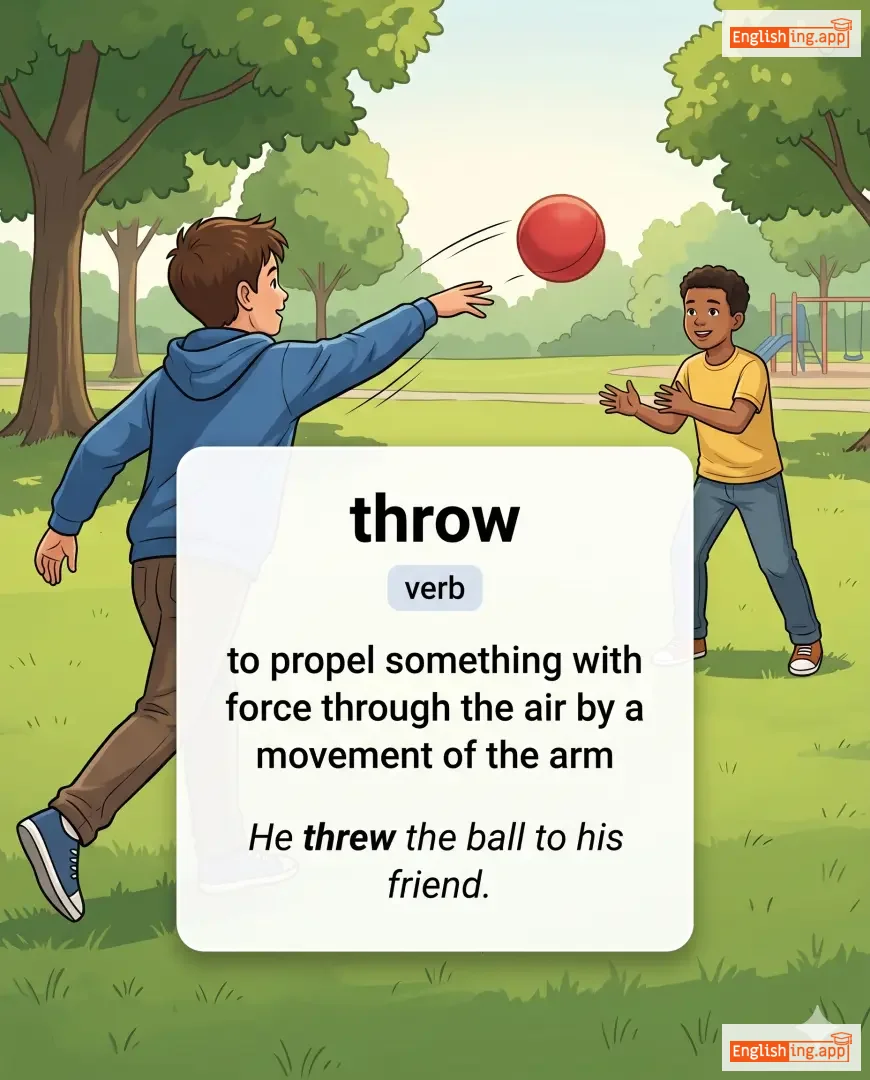
throw definition card — visual illustration of the meaning
verb
/θroʊ/
бросать (brosat)

to propel something with force through the air by a movement of the arm

"He threw the ball to his friend."

"Он бросил мяч своему другу." (On brosil myach svoemu drugu.)
noun
/θʌm/
большой палец (bolshoy palets)

the short, thick finger on the side of the hand, used for gripping and holding things

"He gave a thumbs-up to show his approval."
"Он поднял большой палец, чтобы показать свое одобрение." (On podnyal bol'shoy palets, chtoby pokazat' svoe odobrenie.)
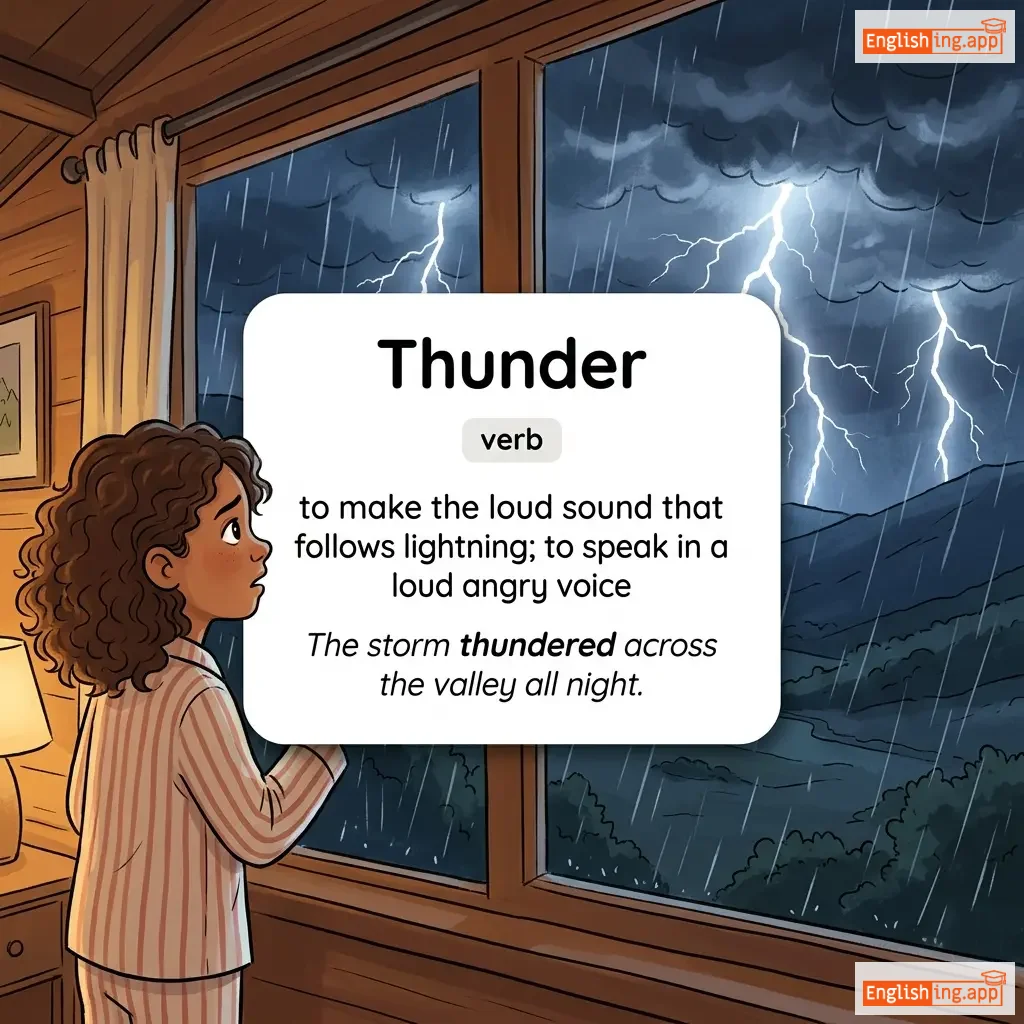
Thunder definition card — visual illustration of the meaning
noun
/ˈθʌn.dər/
гром (grom)

the loud rumbling or crashing noise heard after a lightning flash

"We heard thunder during the storm last night."

"Мы услышали гром во время шторма прошлой ночью." (My uslyshali grom vo vremya shtorma proshloy noch'yu.)
noun
/ˈθɜːrzdeɪ/
четверг (chetverg)

The fifth day of the week, following Wednesday and preceding Friday.

"We have a meeting scheduled for Thursday."
"У нас встреча запланирована на четверг." (U nas vstrecha zaplanirovana na chetverg.)
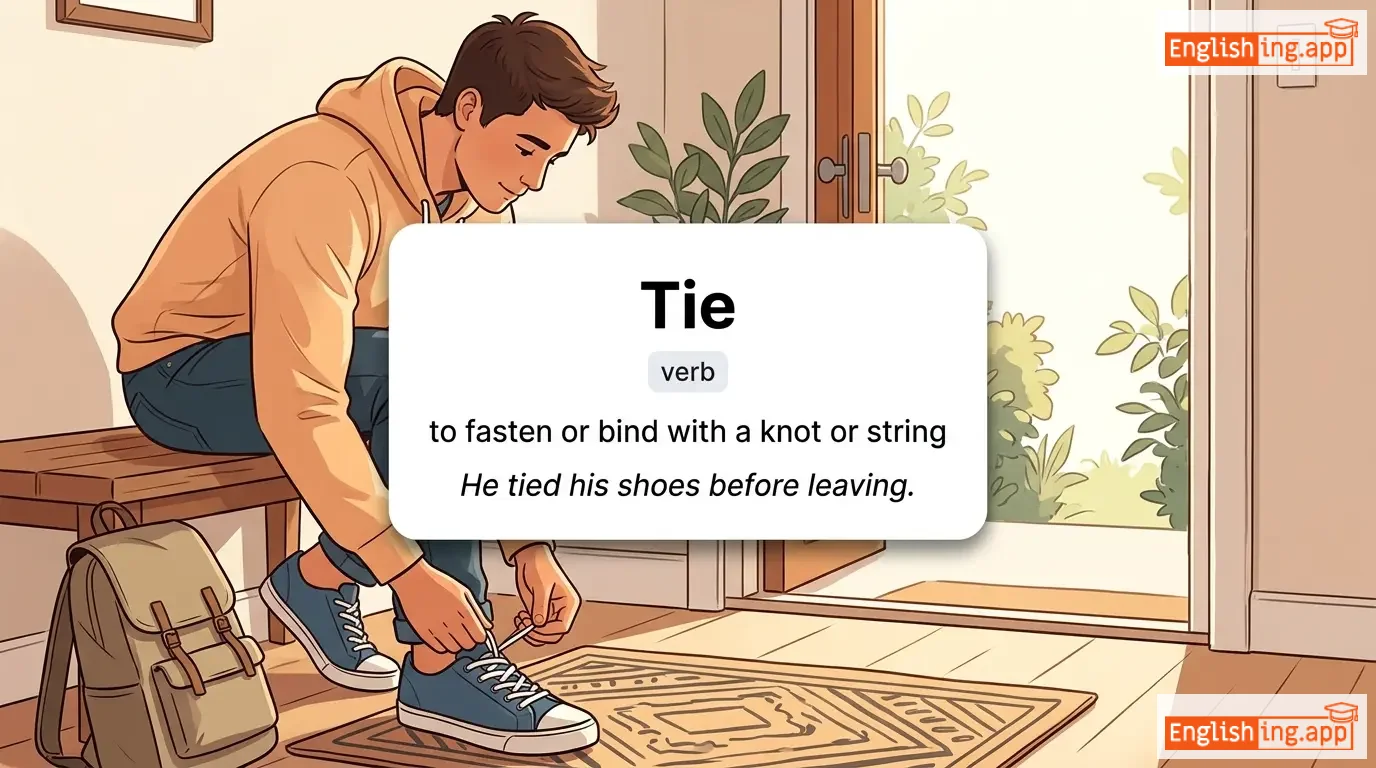
Tie definition card — visual illustration of the meaning
verb
/taɪ/
завязывать (zavyazyvat)

to fasten or bind with a knot or string

"He tied his shoes before leaving."

"он завязал свои туфли перед тем как уйти." (on zavyazal svoi tufli pered tem kak uiti.)
adjective
/ˈtɪd.li/
слегка пьяный; маленький или крошечный (tiddli)

slightly drunk; small or tiny

"After a few drinks, he felt a bit tiddley."

"После нескольких напитков он почувствовал себя немного тидли." (Posle nekotorykh napitkov on pochuvstvoval sebya nemnogo tiddli.)
noun
/taɪd/
прилив и отлив (priliv i otiliv)

the regular rise and fall of the sea caused by the moon and sun's gravity; a powerful flow or movement

"The fisherman waited for the tide to come in."

"Рыбак ждал, когда начнется прилив." (Rybak zhdal, kogda nachnyotsya prilev.)
adjective
/ˈtaɪ.di/
аккуратный; чистый (akkuratny; chisty)

arranged neatly and in order; clean and organized

"She keeps her room very tidy and organized."

"Она держит свою комнату очень аккуратно и чисто." (Ona derzhit svoyu komnatu ochen' akkuratno i chisto.)
adjective
/ˈtɪklɪʃ/

easily made to laugh by being touched lightly; easily upset or sensitive

"She is very ticklish and bursts into laughter when touched on her feet."