Словари

Словарь английского языка | Значения слов, определения и примеры

noun
/ˈtɛknɪk/
техника (tekhnika)

A method, skill, or art in a particular field, especially in the arts or sciences.

"The artist’s technic in watercolor impressed the judges."

"Техника художника в акварели впечатлила судей." (Tekhnika khudozhnika v akvareli vpechatlila sudej.)
adjective
/ˈtɛknɪkəl/
технический (tekhnicheskiy)

relating to a specific subject, art, or craft, or its techniques.

"He has a technical background in engineering."

"У него техническое образование в области инженерии." (U nego tekhnicheskoe obrazovanie v oblasti inzhenerii.)
noun
/ˌtɛknɪˈkæləti/
технический момент (tekhnicheskiy moment)

A small detail of law, rule, or procedure; a minor point that affects an outcome.

"The case was dismissed on a technicality."

"Дело было отклонено из-за технического момента." (Delo bylo otkloneno iz-za tekhnicheskogo momenta.)
noun
/tɛkˈnɪʃən/
техник (tekhnik)

a person skilled in the practical aspects of a particular science, art, or job

"The technician repaired the computer within an hour."

"Техник отремонтировал компьютер за час." (Tekhnik otremontiroval komp'yuter za chas.)
noun
/tɛkˈniːk/
техника (tekhnika)

A particular way of carrying out a task, especially with skill.

"She learned a new breathing technique in yoga class."

"Она изучила новую технику дыхания на занятиях йогой." (Ona izuchila novuyu tekhniku dykhaniya na zanyatiyakh yogoy.)
noun
/tɛkˈnɒɡrəfi/
технография (tekhnohrafiya)

the descriptive study or writing about the practical arts, technologies, or technical methods of a society

"The anthropologist specialized in technography to understand indigenous tool-making traditions."

"Антрополог специализировался на технографии, чтобы понять традиции создания орудий у коренных народов." (Antropolog spetsializirovalsya na tekhnografii, chtoby ponyat' traditsii sozdaniya orudiy u korennykh narodov.)
technological definition card — visual illustration of the meaning
adjective
/ˌteknəˈlɒdʒɪkəl/

relating to or involving technology or technical processes

"The company is investing heavily in technological innovation."
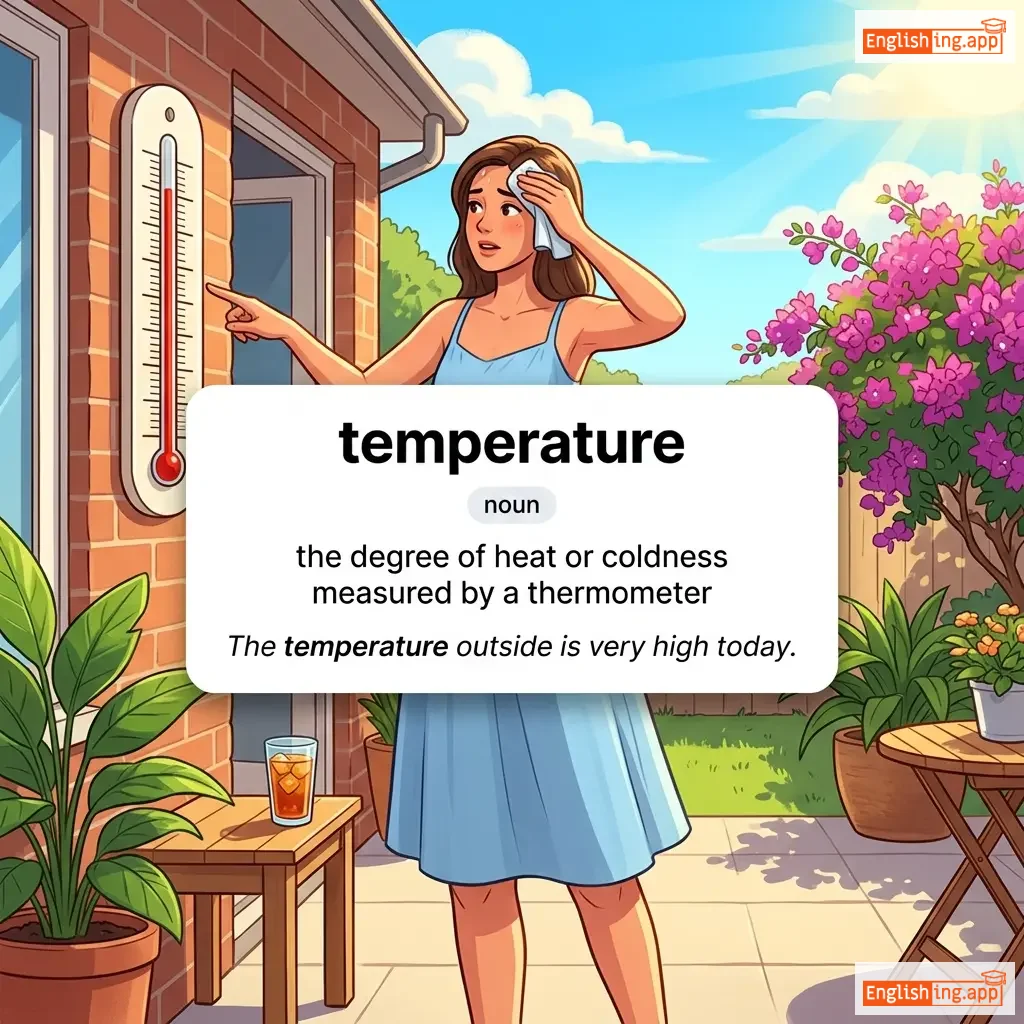
temperature definition card — visual illustration of the meaning
noun
/ˈtɛmpərətʃər/
температура (temperatura)

the degree of heat or coldness measured by a thermometer

"The temperature outside is very high today."

"Сегодня температура на улице очень высокая." (Segodnya temperatura na ulitse ochen' vysokaya.)
tenet definition card — visual illustration of the meaning
noun
/ˈtɛnɪt/
принцип (printsip)

a principle, belief, or doctrine held to be true

"Honesty is a central tenet of their philosophy."

"Честность — это основной принцип их философии." (Chestnost' — eto osnovnoy printsip ikh filosofii.)
noun
/ˈtɛnəmənt/
арендованное жилье (arendovannoe zhilye)

a large building divided into separate apartments, often in poor condition

"The family lived in a crowded tenement in the city."

"Семья жила в переполненном арендованном жилье в городе." (Sem'ya zhila v perepovlennom arendovannom zhilye v gorode.)
adjective
/ˈtɛnɪbrəs/
мрак (mrak)

dark, shadowy, or obscure

"The cave was damp and tenebrous, filled with eerie sounds."

"Пещера была влажной и тенисто-ужасной, наполненной странными звуками." (Peshchera byla vlazhnoy i tenistoy-uzhasnoy, napolnennoy strannymi zvukami.)
noun
/ˈten.dər.nəs/
нежность (nezhnost')

gentleness and kindness; the quality of being easily hurt or damaged

"The mother showed great tenderness while caring for her sick child."

"Мать проявила большую нежность, заботясь о своем больном ребенке." (Mat' proyavila bol'shuyu nezhnost', zabotyas' o svoem bol'nom rebenke.)
verb, noun, adjective
/ˈtɛndər/
предложение / нежный (predlozhenie / nezhnyy)

to offer formally; soft and delicate in texture or character; a formal offer or proposal

"The company tendered its resignation to the board."

"Компания подала свою отставку в совет директоров." (Kompaniya podala svoiu otstavku v sovet direktorov.)
adjective
/tɛnˈdɛnʃəs/
тенденциозный (tendentsiozny)

Expressing or promoting a particular cause or point of view, often biased.

"The article was criticized for its tendentious tone."

"Статья была раскритикована за ее тенденциозный тон." (Stat'ya byla raskritikovana za yey tendentsiozny ton.)
noun
/ˈtɛndənsi/
тенденция (tendentsiya)

An inclination or likelihood to behave in a certain way.

"He has a tendency to forget small details."

"У него есть тенденция забывать мелкие детали." (U nego yest' tendentsiya zabyvat' melkiye detali.)
verb
/tɛnd/
склоняться/заботиться (sklonyatsya/zabotitsya)

To regularly behave in a particular way or to take care of something.

"She tends to wake up early in the morning."

"Она склонна вставать рано утром." (Ona sklonna vstavayt' rano utrom.)
noun
/ˈtɛnənt/
арендатор (arendator)

A person who occupies land or property rented from a landlord.

"The tenant paid the rent on time every month."

"Арендатор платил аренду вовремя каждый месяц" (Arendator platil arendu vovremja kazhdyj mesjac)
noun
/ˈtɛnənsi/
аренда (arenda)

The possession or occupation of land or property as a tenant.

"The tenancy agreement was signed for two years."

"Договор аренды был подписан на два года." (Dogovor arendy byl podpisan na dva goda.)
tenacity definition card — visual illustration of the meaning
noun
/təˈnæsəti/
упорство (uporstvo)

the quality of being persistent, determined, and not easily giving up

"His tenacity helped him succeed despite many failures."

"Его упорство помогло ему добиться успеха, несмотря на множество неудач." (Ego uporstvo pomoglo emu dobitsya uspekha, nesmotrya na mnogochislennoe neudachi.)
tenacious definition card — visual illustration of the meaning
adjective
/təˈneɪʃəs/
упорный (upornyy)

holding firmly to something; persistent and determined

"She was tenacious in pursuing her goals."

"Она была упорна в достижении своих целей." (Ona byla uporna v dostizhenii svoikh tseley.)
adjective
/ˈtɛnəbl/
защищаемый (zashchishchayemyy)

able to be defended or maintained against attack or objection

"His argument was strong and tenable in court."

"Его аргумент был сильным и защитимым в суде." (Ego argument byl sil'nym i zashchishchayemym v sude.)
noun
/tɛn/
десять (dyesyat)

the number following nine and preceding eleven

"I have ten apples in the basket."

"У меня десять яблок в корзине." (U menya desyat yablok v korzine.)
adjective
/ˈtemptɪŋ/
заманчивый (zamanchivyy)

appealing to or attracting someone, even if wrong or inadvisable; alluring

"The chocolate cake looked very tempting in the bakery window."

"Шоколадный торт выглядел очень заманчиво в витрине пекарни." (Shokoladnyy tort vygledel ochen' zamanchivo v vitrine pekarni.)
noun
/ˈtɛmptər/
искуситель (iskusitel)

a person or thing that entices someone into doing something wrong

"The tempter whispered false promises into his ear."

"Искуситель шептал ложные обещания ему на ухо." (Iskusitel sheptal lozhnye obeshchaniya yemu na ukho.)
noun
/temp.ˈteɪ.ʃən/
искушение (iskushenie)

the desire to do something wrong or unwise; an urge to have or do something

"He resisted the temptation to eat the entire chocolate cake."

"Он сопротивлялся искушению съесть весь шоколадный торт." (On soprotivlyalsya iskusheniyu s'yest' ves' shokoladnyy tort.)
verb
/tɛmpt/
соблазнять (soblaznyat)

to entice or attract someone to do something, often something wrong or unwise

"The smell of fresh bread tempted him to enter the bakery."

"Запах свежего хлеба соблазнил его войти в пекарню." (Zapakh svezhего khleba soblaznil ego voyti v pekarnyu.)
verb
/ˈtɛmpəˌraɪz/
откладывать (otkladyvat)

To delay making a decision or taking action in order to gain time.

"The politician temporized when asked about the controversial issue."
"Политик откладывал, когда его спрашивали о спорном вопросе." (Politik otkladyval, kogda ego sprashivali o spornom voprose.)
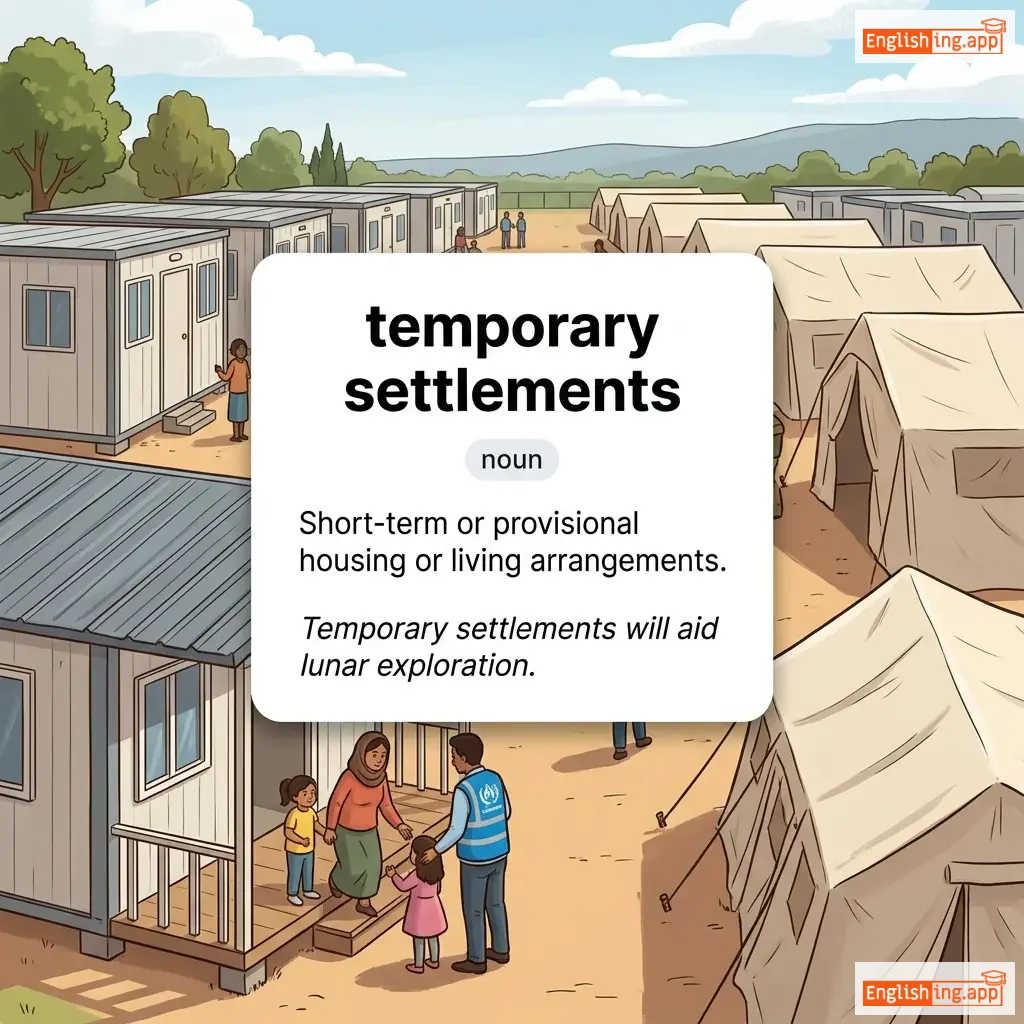
temporary settlements definition card — visual illustration of the meaning
noun
ˈtempəreri ˈsetlmənts
временные поселения (vremennye poseleniya)

Short-term or provisional housing or living arrangements.

"Temporary settlements will aid lunar exploration."

"Временные поселения помогут исследованию Луны." (Vremennye poseleniya pomogut issledovaniyu Luny.)
adjective
/ˈtɛmpərɛri/
временный (vremennyy)

Lasting for only a limited period of time; not permanent.

"She found a temporary job during the summer break."

"Она нашла временную работу во время летних каникул." (Ona nashla vremennuyu rabotu vo vremya letnikh kanikul.)
adverb
/ˈtɛmpərɛrɪli/
временно (vremenno)

for a limited time; not permanently

"The road is closed temporarily for repairs."

"Дорога закрыта временно для ремонта." (Doroga zakryta vremenno dlya remonta.)
adjective
/ˈtɛmpərəl/
временной (vremennoy)

Relating to worldly affairs or to time rather than spiritual matters.

"The monk gave up his temporal possessions to live a simple life."

"Монах отказался от своих временных possessions, чтобы вести простую жизнь." (Monakh otkazalsya ot svoikh vremennykh possessions, chtoby vesti prostuyu zhizn'.)
noun
/ˈtɛmpoʊ/
темп, ритм (temp, ritm)

The speed or pace at which a piece of music or activity is performed.

"The band played the song at a faster tempo than usual."

"Группа сыграла песню с более быстрым темпом, чем обычно." (Gruppa sygrala pesnyu s boleye bystrym tempom, chem obychno.)
temple definition card — visual illustration of the meaning
noun
/ˈtɛmpəl/
храм (khram)

a building used for the worship of a god or gods

"They visited an ancient temple during their trip to India."

"Они посетили древний храм во время своей поездки в Индию." (Oni posetili drevniy khram vo vremya svoey poezdki v Indiyu.)
adjective
/tɛmˈpɛstjuəs/
бурный (burniy)

Characterized by strong and turbulent emotions or stormy conditions.

"Their tempestuous relationship often swung between love and anger."

"Их бурные отношения часто колебались между любовью и гневом." (Ikh burnye otnosheniya chasto kolebalis mezhdu lyubovyu i gnevom.)
noun
/ˈtem.pɪst/
шторм (shtorm)

a violent storm with strong winds; a state of great disturbance or tumult

"The sailors struggled to navigate through the fierce tempest."

"Моряки боролись с тем, чтобы пройти через яростный шторм." (Moryaki borolis' s tem, chtoby proyti cherez yarostnyy shtorm.)
adjective
/ˈtɛmpərd/
умеренный (umerennyy)

having a specified temper or disposition; strengthened or moderated.

"She gave a tempered response to the criticism."

"Она дала умеренный ответ на критику." (Ona dala umerenyy otvet na kritiku.)
noun
/tiːn/
подросток (podrostok)

a person aged between 13 and 19 years.

"He's a teenager who loves sports."

"Он подросток, который любит спорт." (On podrostok, kotoryj lyubit sport.)
noun
/təˈlɛpəθi/
телепатия (telepatia)

the supposed communication of thoughts or ideas by means other than the known senses

"The twins claimed to share telepathy with each other."

"Близнецы заявили, что между ними существует телепатия." (Bliznetsy zayavili, chto mezhdu nimi sushchestvuet telepatia.)
noun
/ˌtɛliˈɒlədʒi/
телеология (teleologiya)

the explanation of phenomena by the purpose they serve rather than by cause

"Aristotle is often associated with the concept of teleology in philosophy."

"Аристотель часто ассоциируется с концепцией телеологии в философии." (Aristotel' chasto assotsiirovetsya s kontseptsiey teleologii v filosofii.)
telemetry definition card — visual illustration of the meaning
noun
ˈtɛlɪˌmɛtri
телеметрия (telemetriya)

The process of recording and transmitting the readings of an instrument.

"The spacecraft transmitted telemetry data back to Earth."

"Космический аппарат передал данные телеметрии на Землю." (Kosmicheskiy apparat peredal dannye telemetrii na Zemlyu.)
noun
/tiːˈtoʊtəlɪzəm/
полное воздержание от алкоголя (polnoe vozderzhanie ot alkogolya)

the practice or principle of abstaining completely from alcoholic drinks

"He practiced teetotalism throughout his life."

"Он практиковал титотализм всю свою жизнь." (On praktikovav titotalizm vsyu svoyu zhizn.)
verb
/ˈtiːtər/
шататься (shatatsya)

to move or balance unsteadily; to wobble

"The glass began to teeter on the edge of the table."

"Стакан начал шататься на краю стола." (Stakan nachal shatatsya na krayu stola.)
noun
/ˈtiːneɪdʒər/
подросток (podrostok)

a person aged between 13 and 19 years.

"Teenagers often enjoy hanging out with friends."

"Подростки часто любят проводить время с друзьями." (Podrostki chasto lyubyat provodit vremya s druz'yami.)
adjective
/ˈtiːnˌeɪdʒ/
подростковый (podrostkovyj)

relating to or characteristic of people aged between 13 and 19 years old

"She spent her teenage years in a small town."

"Она провела свои подростковые годы в маленьком городе." (Ona provela svoi podrostkovye gody v malen'kom gorode.)
noun
/ˈtiːdiəm/
тоска (toska)

the state of being tedious; monotony or boredom

"The tedium of long meetings often drains motivation."

"Тоска от долгих встреч часто истощает мотивацию." (Toska ot dolgikh vstrech chasto istochayut motivatsiyu.)
technology definition card — visual illustration of the meaning
noun
/tɛkˈnɒlədʒi/
технология (tekhnologiya)

the application of scientific knowledge for practical purposes, especially in industry

"Modern technology has revolutionized communication."
"Современные технологии произвели революцию в коммуникациях." (Sovremennye tekhnologii prozveli revolyutsiyu v kommunikatsiyakh.)
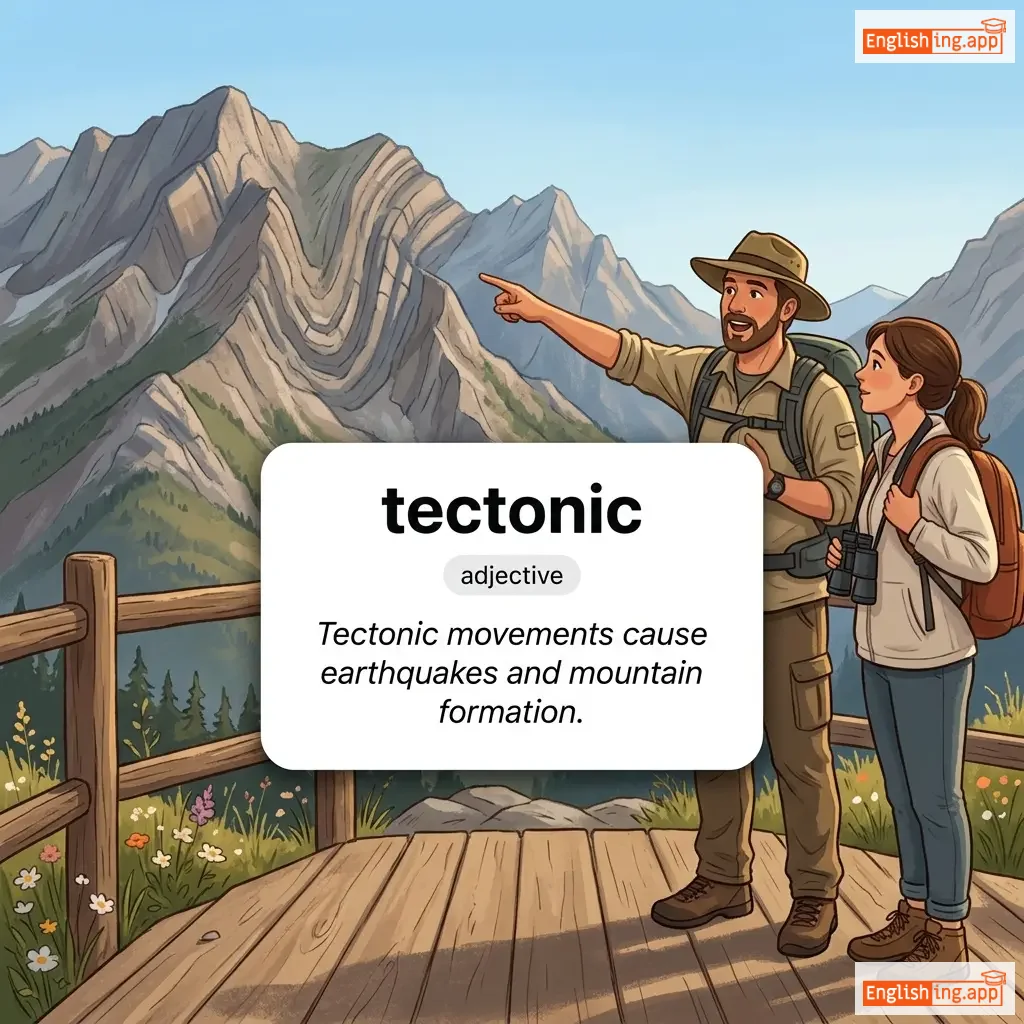
tectonic definition card — visual illustration of the meaning
adjective
/tɛkˈtɑː.nɪk/
тектонический (tektonicheskiy)

Relating to the structure of the earth's crust and the large-scale processes that take place within it.

"Tectonic movements cause earthquakes and mountain formation."

"Тектонические движения вызывают землетрясения и образование гор." (Tektonicheskie dviženiya vyzyvayut zemletryaseniya i obrazovanie gor.)
adjective
/ˈtiːdiəs/
скучный (skuchnyy)

too long, slow, or dull; tiresome or monotonous

"Filling out endless forms can be a tedious task."

"Заполнение бесконечных форм может быть скучным занятием." (Zapolnenie beskonechnykh form mozhet byt' skuchnym zanyatiem.)
noun
/ˈtɛlɪfəʊn/
телефон (telefon)

a system for transmitting voices over a distance using wire or radio, typically for communication.

"I need to make a telephone call to my friend."

"Мне нужно сделать телефонный звонок другу." (Mne nuzhno sdelat' telefonnyy zvonok drugu.)
verb
/tiːm/
кишеть (kishet')

to be full of or swarming with

"The forest teems with wildlife."

"Лес кишит дикой природой." (Les kishit dikoy prirodoy.)