語彙集

英単語辞書 | 単語の意味、定義、例文

noun
/ˈtɛknɪk/
技術 (gijutsu)

A method, skill, or art in a particular field, especially in the arts or sciences.

"The artist’s technic in watercolor impressed the judges."

"水彩画のアーティストのテクニックは審査員に感銘を与えた。" (Suisaiga no ātisuto no tekunikku wa shinsain ni kanmei o ataeta.)
adjective
/ˈtɛknɪkəl/
技術的 (gijutsuteki)

relating to a specific subject, art, or craft, or its techniques.

"He has a technical background in engineering."

"彼は工学の技術的なバックグラウンドを持っています。" (Kare wa kougaku no gijutsuteki na bakkuraundo wo motteimasu.)
noun
/ˌtɛknɪˈkæləti/
テクニカルリティ (tekunikariti)

A small detail of law, rule, or procedure; a minor point that affects an outcome.

"The case was dismissed on a technicality."

"その事件はテクニカルリティで却下された。" (Sono jiken wa tekunikariti de kyakka sareta.)
noun
/tɛkˈnɪʃən/
技術者 (gijutsusha)

a person skilled in the practical aspects of a particular science, art, or job

"The technician repaired the computer within an hour."

"技術者は1時間以内にコンピュータを修理しました。" (Gijutsusha wa 1 jikan inai ni konpyūta o shūri shimashita.)
noun
/tɛkˈniːk/
技術 (gijutsu)

A particular way of carrying out a task, especially with skill.

"She learned a new breathing technique in yoga class."

"彼女はヨガのクラスで新しい呼吸法を学びました。" (Kanojo wa yoga no kurasu de atarashī kokyūhō o manabimashita.)
noun
/tɛkˈnɒɡrəfi/
テクノグラフィー (tekunogurafii)

the descriptive study or writing about the practical arts, technologies, or technical methods of a society

"The anthropologist specialized in technography to understand indigenous tool-making traditions."
"人類学者は土着の道具作りの伝統を理解するためにテクノグラフィーを専門としました。" (jinruigakusha wa dochaku no dougu tsukuri no dentou o rikai suru tame ni tekunogurafii o senmon to shimashita.)
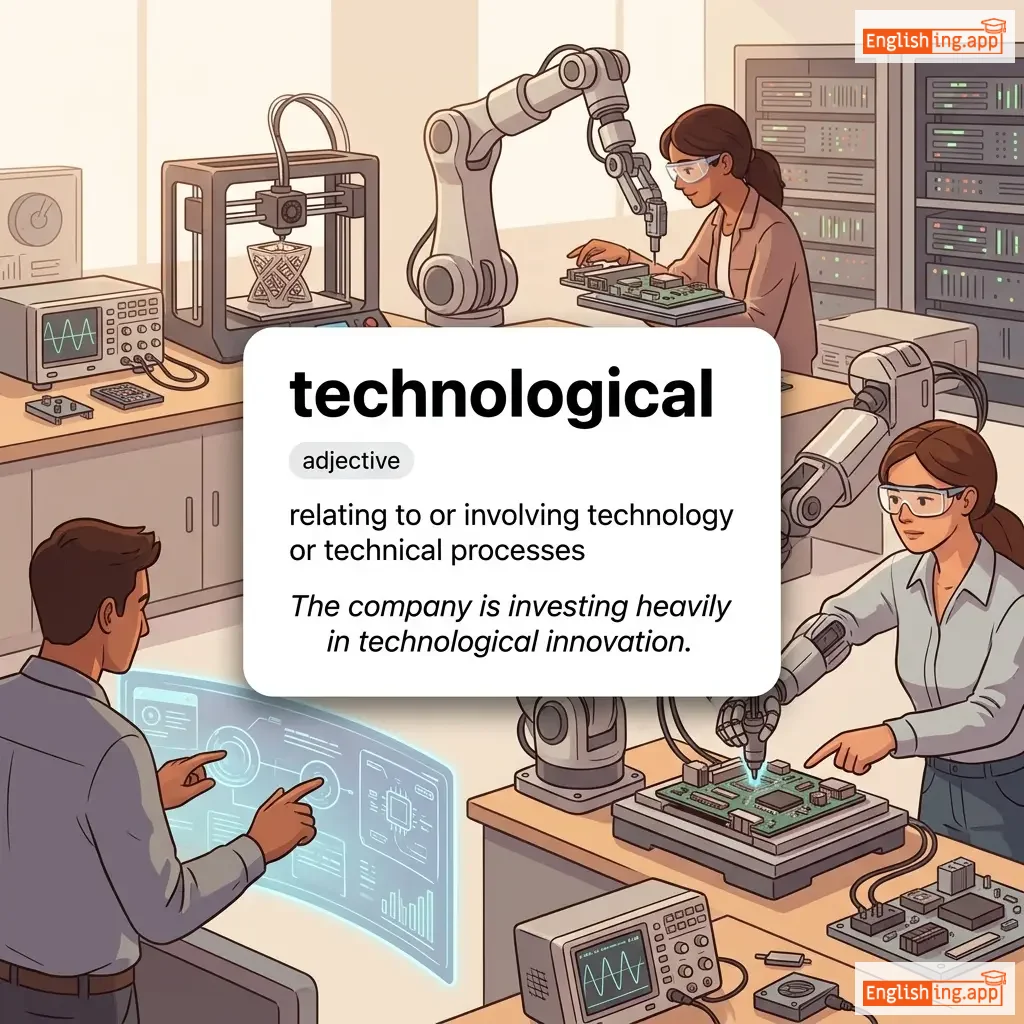
technological definition card — visual illustration of the meaning
adjective
/ˌteknəˈlɒdʒɪkəl/

relating to or involving technology or technical processes

"The company is investing heavily in technological innovation."
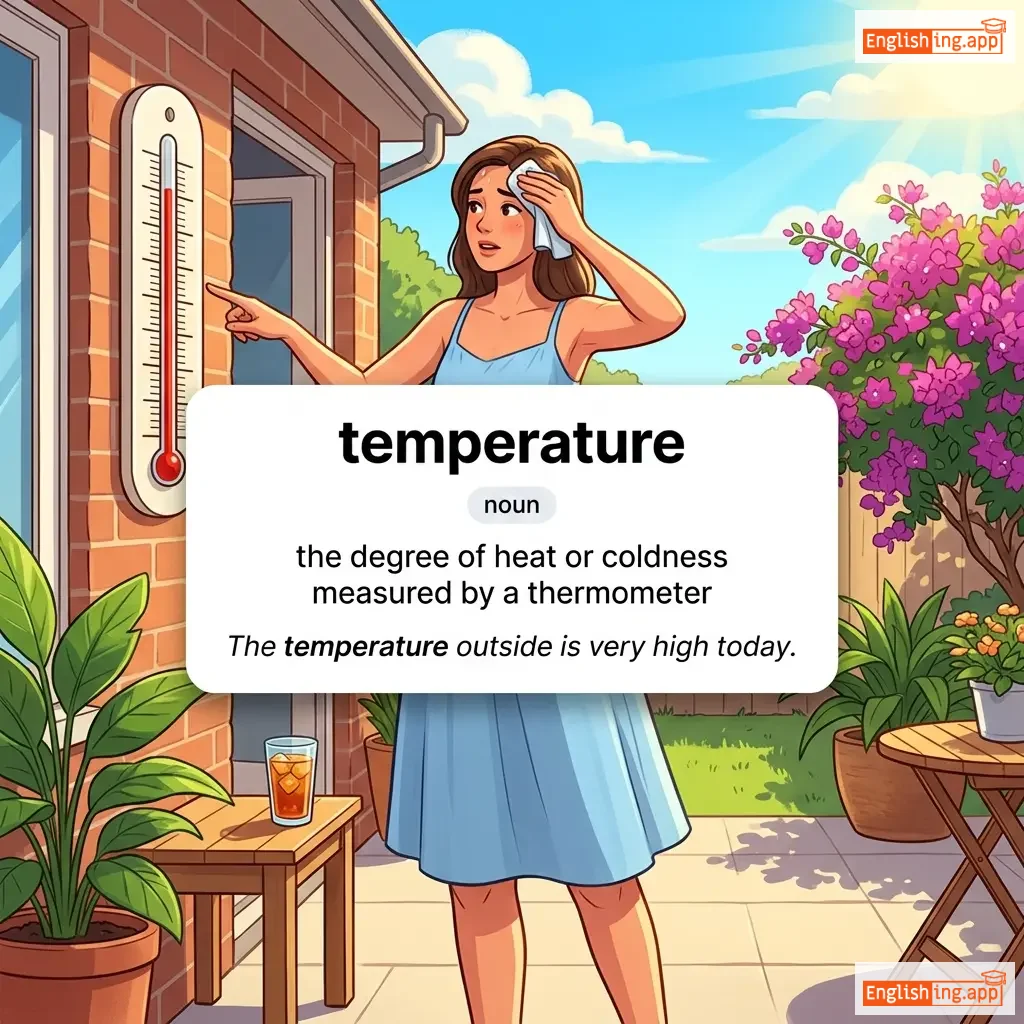
temperature definition card — visual illustration of the meaning
noun
/ˈtɛmpərətʃər/
温度 (ondo)

the degree of heat or coldness measured by a thermometer

"The temperature outside is very high today."

"今日は外の気温が非常に高いです。" (Kyou wa soto no kion ga hijou ni takai desu.)
tenet definition card — visual illustration of the meaning
noun
/ˈtɛnɪt/
原則 (gensoku)

a principle, belief, or doctrine held to be true

"Honesty is a central tenet of their philosophy."

"誠実は彼らの哲学の中心的な原則です。" (Seijitsu wa karera no tetsugaku no chūshin-tekina gensoku desu.)
noun
/ˈtɛnəmənt/
アパートメント (apātomento)

a large building divided into separate apartments, often in poor condition

"The family lived in a crowded tenement in the city."

"その家族は街の混雑したアパートメントに住んでいました。" (Sono kazoku wa machi no konzatsu shita apātomento ni sunde imashita.)
adjective
/ˈtɛnɪbrəs/
陰鬱な (in'utsu na)

dark, shadowy, or obscure

"The cave was damp and tenebrous, filled with eerie sounds."

"洞窟は湿っぽくて、陰気で不気味な音が響いていました。" (Doukutsu wa shippo kutte, in'ki de bukimi na oto ga hibiiteimashita.)
noun
/ˈten.dər.nəs/
優しさ (yasashisa)

gentleness and kindness; the quality of being easily hurt or damaged

"The mother showed great tenderness while caring for her sick child."

"母親は病気の子供を世話しながら大きな優しさを示しました。" (Hahaoya wa byōki no kodomo o sewa shinagara ōkina yasashisa o shimeshimashita.)
verb, noun, adjective
/ˈtɛndər/
提案 / 優しい (teian / yasashii)

to offer formally; soft and delicate in texture or character; a formal offer or proposal

"The company tendered its resignation to the board."

"会社は取締役会に辞表を提出しました。" (Kaisha wa torishimariyakukai ni jihyō o teishutsu shimashita.)
adjective
/tɛnˈdɛnʃəs/
偏向的 (henkō-teki)

Expressing or promoting a particular cause or point of view, often biased.

"The article was criticized for its tendentious tone."

"その記事は偏向的な口調で批判されました。" (Sono kiji wa henko-teki na kuchō de hihan saremashita.)
noun
/ˈtɛndənsi/
傾向 (keikou)

An inclination or likelihood to behave in a certain way.

"He has a tendency to forget small details."

"彼は小さな詳細を忘れる傾向があります。" (Kare wa chiisana shousai o wasureru keikou ga arimasu.)
verb
/tɛnd/
傾向がある/世話をする (keikou ga aru/sewa o suru)

To regularly behave in a particular way or to take care of something.

"She tends to wake up early in the morning."

"彼女は朝早く起きる傾向があります。" (Kanojo wa asa hayaku okiru keikou ga arimasu.)
noun
/ˈtɛnənt/
テナント (tenanto)

A person who occupies land or property rented from a landlord.

"The tenant paid the rent on time every month."

"テナントは毎月時間通りに家賃を支払った" (Tenanto wa maitsuki jikan dōri ni yachin o shiharatta)
noun
/ˈtɛnənsi/
賃貸契約 (chintai keiyaku)

The possession or occupation of land or property as a tenant.

"The tenancy agreement was signed for two years."

"賃貸契約は2年間で署名されました。" (Chintai keiyaku wa 2-nenkan de shomei saremashita.)
tenacity definition card — visual illustration of the meaning
noun
/təˈnæsəti/
粘り強さ (nebarizuyosa)

the quality of being persistent, determined, and not easily giving up

"His tenacity helped him succeed despite many failures."

"彼の粘り強さが、数々の失敗を乗り越え成功に導いた。" (Kare no nebarizuyosa ga, kazukazu no shippai o norikoete seikou ni michibita.)
tenacious definition card — visual illustration of the meaning
adjective
/təˈneɪʃəs/
粘り強い (nebarizuyoi)

holding firmly to something; persistent and determined

"She was tenacious in pursuing her goals."

"彼女は目標を追求するのに粘り強かった。" (Kanojo wa mokuhyou wo tsuikyuu suru no ni nebarizuyokatta.)
adjective
/ˈtɛnəbl/
防御可能な (bōgyo kanō na)

able to be defended or maintained against attack or objection

"His argument was strong and tenable in court."

"彼の主張は強力で、法廷で防御可能だった。" (Kare no shuchō wa kyōryoku de, hōtei de bōgyo kanō datta.)
noun
/tɛn/
(juu)

the number following nine and preceding eleven

"I have ten apples in the basket."

"バスケットには十個のリンゴがあります。" (Basuketto ni wa juu ko no ringo ga arimasu.)
adjective
/ˈtemptɪŋ/
魅力的 (miryokuteki)

appealing to or attracting someone, even if wrong or inadvisable; alluring

"The chocolate cake looked very tempting in the bakery window."

"ベーカリーの窓にチョコレートケーキがとても魅力的に見えた。" (Beekarii no mado ni chokoreeto keeki ga totemo miryokuteki ni mieta.)
noun
/ˈtɛmptər/
誘惑者 (yūwaku-sha)

a person or thing that entices someone into doing something wrong

"The tempter whispered false promises into his ear."

"誘惑者は彼の耳に嘘の約束をささやいた。" (Yūwaku-sha wa kare no mimi ni uso no yakusoku o sasayaita.)
noun
/temp.ˈteɪ.ʃən/
誘惑 (yūwaku)

the desire to do something wrong or unwise; an urge to have or do something

"He resisted the temptation to eat the entire chocolate cake."

"彼は全てのチョコレートケーキを食べる誘惑に抵抗した。" (Kare wa subete no chokorēto kēki o taberu yūwaku ni teikō shita.)
verb
/tɛmpt/
誘惑する (yūwaku suru)

to entice or attract someone to do something, often something wrong or unwise

"The smell of fresh bread tempted him to enter the bakery."

"新鮮なパンの匂いが彼をパン屋に入らせました。" (Shinsen na pan no nioi ga kare o panya ni irasemashita.)
verb
/ˈtɛmpəˌraɪz/
先延ばしにする (saki nobashi ni suru)

To delay making a decision or taking action in order to gain time.

"The politician temporized when asked about the controversial issue."
"政治家はその論争の的になっている問題について質問されると、先延ばしにした。" (Seijika wa sono ronsō no mato ni natte iru mondai ni tsuite shitsumon sareru to, saki nobashi ni shita.)
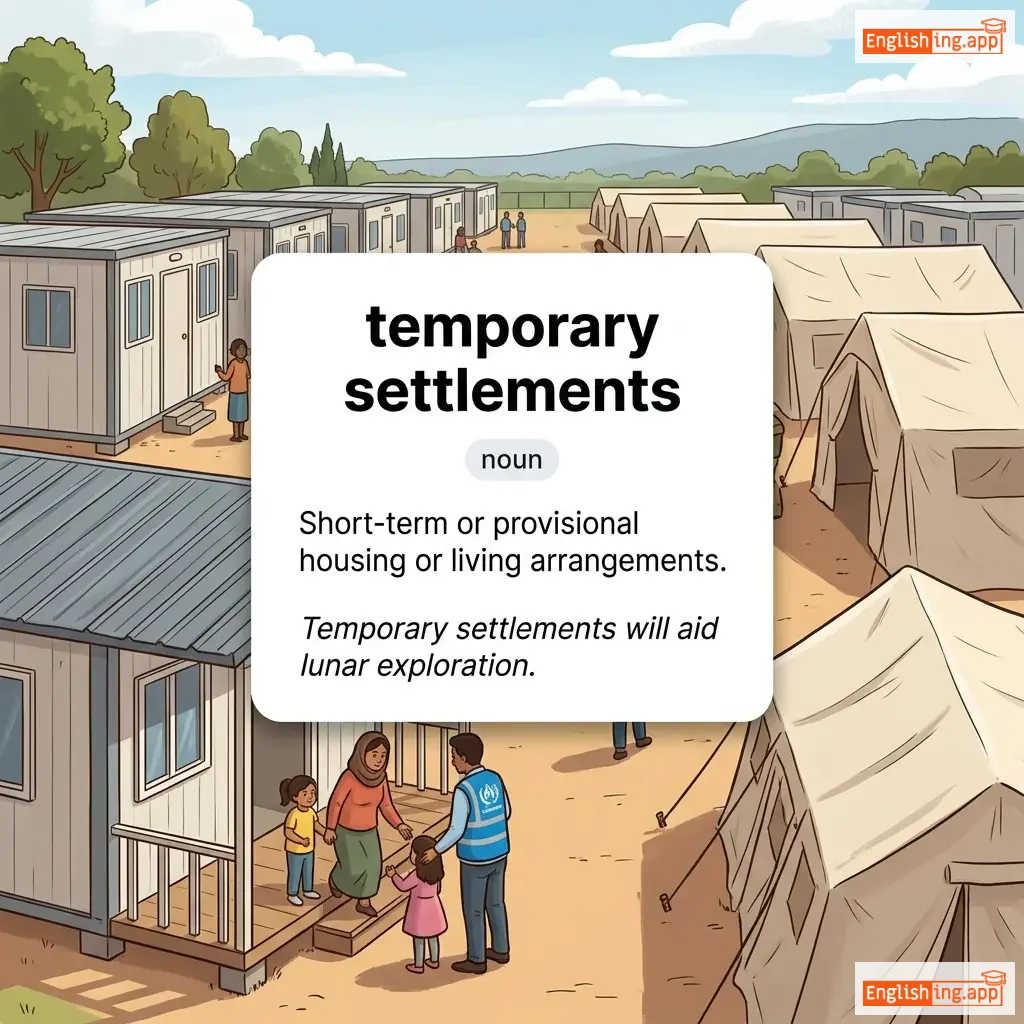
temporary settlements definition card — visual illustration of the meaning
noun
ˈtempəreri ˈsetlmənts
一時的な集落 (ichijiteki na shūraku)

Short-term or provisional housing or living arrangements.

"Temporary settlements will aid lunar exploration."

"一時的な集落は月面探査を支援するでしょう。" (Ichijiteki na shūraku wa getsumen tansa o shien suru deshō.)
adjective
/ˈtɛmpərɛri/
一時的な (ichijiteki na)

Lasting for only a limited period of time; not permanent.

"She found a temporary job during the summer break."

"彼女は夏休み中に一時的な仕事を見つけました。" (Kanojo wa natsuyasumi chū ni ichijiteki na shigoto o mitsukemashita.)
adverb
/ˈtɛmpərɛrɪli/
一時的に (ichijiteki ni)

for a limited time; not permanently

"The road is closed temporarily for repairs."

"道路は修理のため一時的に閉鎖されています。" (Dōro wa shūri no tame ichijiteki ni heisa sareteimasu.)
adjective
/ˈtɛmpərəl/
世俗的な、時間的な (sesokuteki na, jikan teki na)

Relating to worldly affairs or to time rather than spiritual matters.

"The monk gave up his temporal possessions to live a simple life."

"僧侶は彼の世俗的な所有物を放棄して、簡素な生活を送りました。" (Sōryo wa kare no sesokuteki na shoyūbutsu o hōki shite, kanso na seikatsu o okurimashita.)
noun
/ˈtɛmpoʊ/
テンポ, リズム (tenpo, rizumu)

The speed or pace at which a piece of music or activity is performed.

"The band played the song at a faster tempo than usual."

"バンドは普段よりも速いテンポで曲を演奏しました。" (Bando wa fudan yori mo hayai tenpo de kyoku wo ensou shimashita.)
noun
/ˈtɛmpəl/
寺院 (jiin)

a building used for the worship of a god or gods

"They visited an ancient temple during their trip to India."

"インディアへの旅行中に古代の寺院を訪れました。" (India e no ryokou-chuu ni kodai no jiin o otozuremashita.)
adjective
/tɛmˈpɛstjuəs/

Characterized by strong and turbulent emotions or stormy conditions.

"Their tempestuous relationship often swung between love and anger."

noun
/ˈtem.pɪst/
(arashi)

a violent storm with strong winds; a state of great disturbance or tumult

"The sailors struggled to navigate through the fierce tempest."

"船員たちは激しい嵐を乗り越えようと戦った。" (Sen'in-tachi wa hageshī arashi o norikoeyō to tatakatta.)
adjective
/ˈtɛmpərd/
調整された (chousei sareta)

having a specified temper or disposition; strengthened or moderated.

"She gave a tempered response to the criticism."

"彼女は批判に調整された反応を示しました。" (Kanojo wa hihan ni chōsei sareta hannō o shimashita.)
noun
/tiːn/
ティーンエイジャー (tiin'eijaa)

a person aged between 13 and 19 years.

"He's a teenager who loves sports."

"彼はスポーツが好きなティーンエイジャーです。" (Kare wa supootsu ga sukina tiin'eijaa desu.)
noun
/təˈlɛpəθi/

the supposed communication of thoughts or ideas by means other than the known senses

"The twins claimed to share telepathy with each other."

noun
/ˌtɛliˈɒlədʒi/
目的論 (mokutekiron)

the explanation of phenomena by the purpose they serve rather than by cause

"Aristotle is often associated with the concept of teleology in philosophy."
"アリストテレスは哲学における目的論の概念としばしば関連付けられます。" (Arisutoteresu wa tetsugaku ni okeru mokutekiron no gainen to shibashiba kanrenzukeraremasu.)
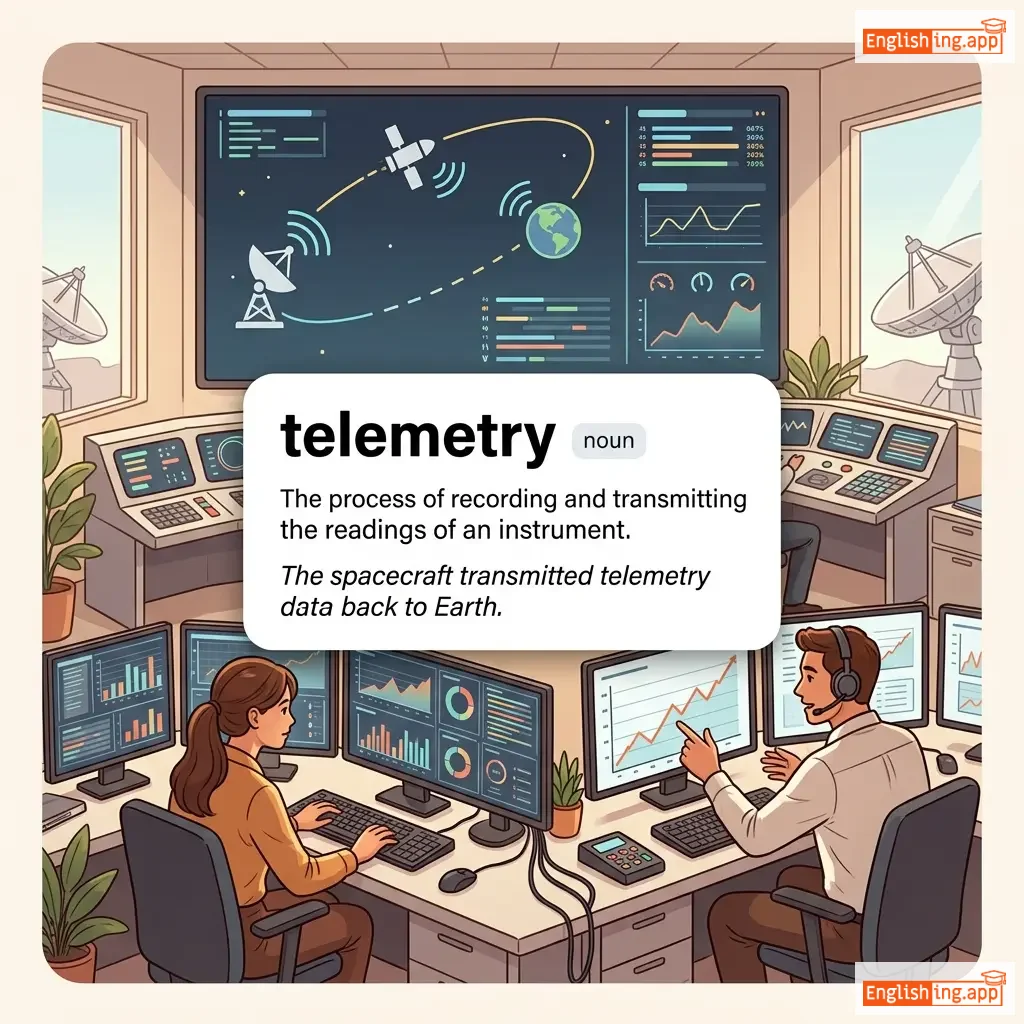
telemetry definition card — visual illustration of the meaning
noun
ˈtɛlɪˌmɛtri
テレメトリー (teremetorii)

The process of recording and transmitting the readings of an instrument.

"The spacecraft transmitted telemetry data back to Earth."

"宇宙船はテレメトリーデータを地球に送信しました。" (Uchūsen wa tere metorī dēta wo chikyū ni sōshin shimashita.)
noun
/tiːˈtoʊtəlɪzəm/
アルコール完全断絶主義 (arukōru kanzen dande tsu shugi)

the practice or principle of abstaining completely from alcoholic drinks

"He practiced teetotalism throughout his life."

"彼は一生涯ティートタリズムを実践した。" (Kare wa isshōgai tītotarizumu o jissen shita.)
verb
/ˈtiːtər/
揺れる (yureru)

to move or balance unsteadily; to wobble

"The glass began to teeter on the edge of the table."

"グラスがテーブルの端で揺れ始めた。" (Gurasu ga teeburu no hashi de yurehajimeta.)
noun
/ˈtiːneɪdʒər/
ティーンエイジャー (tīn'eijā)

a person aged between 13 and 19 years.

"Teenagers often enjoy hanging out with friends."

"ティーンエイジャーは友達と一緒に過ごすのが好きです。" (Tīn'eijā wa tomodachi to issho ni sugosu no ga suki desu.)
adjective
/ˈtiːnˌeɪdʒ/
ティーンエイジャー (tīn'eijā)

relating to or characteristic of people aged between 13 and 19 years old

"She spent her teenage years in a small town."

"彼女は小さな町でティーンエイジャー時代を過ごした。" (Kanojo wa chīsana machi de tīneijā jidai o sugoshita.)
noun
/ˈtiːdiəm/
退屈 (taikutsu)

the state of being tedious; monotony or boredom

"The tedium of long meetings often drains motivation."
"長時間の会議の退屈さはしばしばモチベーションを奪います。" (Chou jikan no kaigi no taikutsu-sa wa shibashiba mochibēshon o ubai masu.)
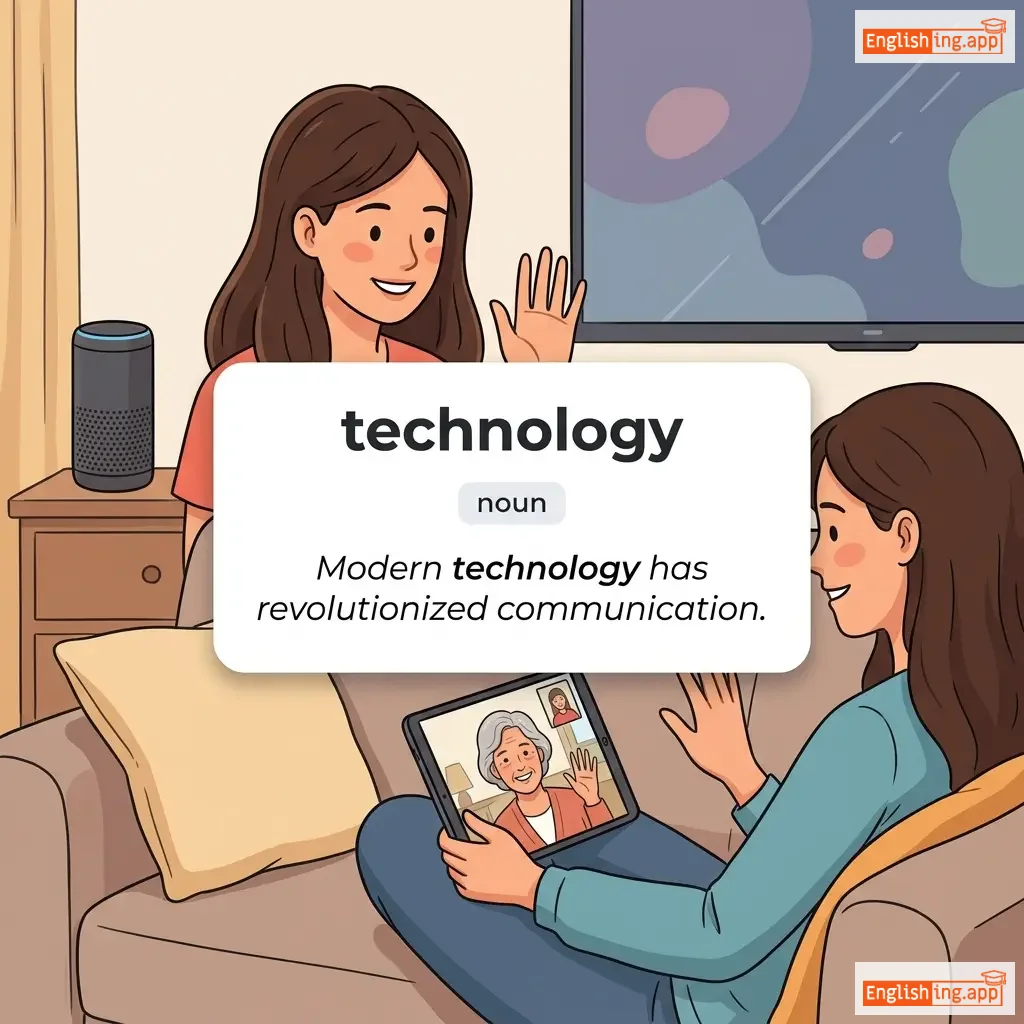
technology definition card — visual illustration of the meaning
noun
/tɛkˈnɒlədʒi/
技術 (gijutsu)

the application of scientific knowledge for practical purposes, especially in industry

"Modern technology has revolutionized communication."
"現代技術は通信に革命をもたらしました。" (Gendai gijutsu wa tsūshin ni kakumei o motarashimashita.)
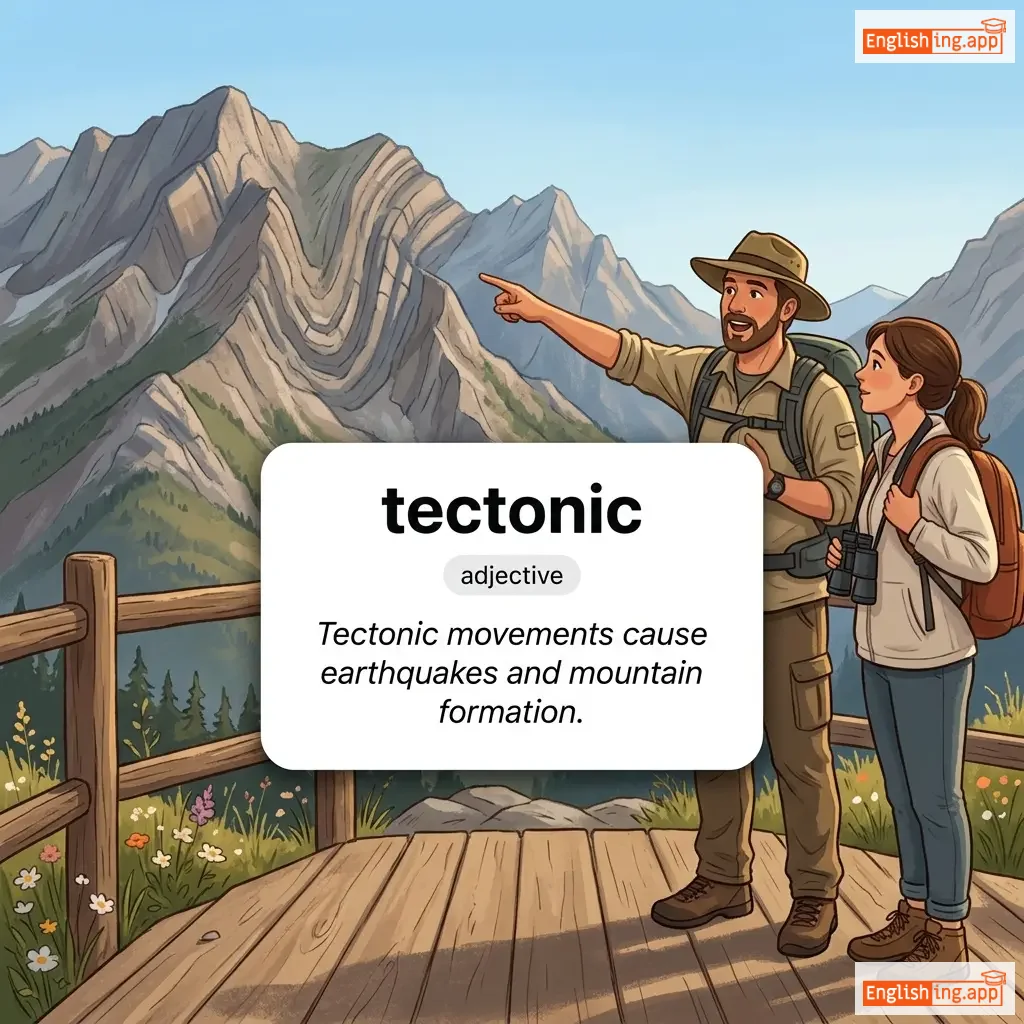
tectonic definition card — visual illustration of the meaning
adjective
/tɛkˈtɑː.nɪk/
構造的 (kōzō-teki)

Relating to the structure of the earth's crust and the large-scale processes that take place within it.

"Tectonic movements cause earthquakes and mountain formation."

"テクトニック運動は地震や山の形成を引き起こします。" (Tekutonikku undō wa jishin ya yama no keisei o hikiokoshimasu.)
adjective
/ˈtiːdiəs/
退屈な (taikutsuna)

too long, slow, or dull; tiresome or monotonous

"Filling out endless forms can be a tedious task."

"終わりのないフォームに記入するのは退屈な作業です。" (Owari no nai fōmu ni kinyū suru no wa taikutsuna sagyō desu.)
noun
/ˈtɛlɪfəʊn/
電話 (denwa)

a system for transmitting voices over a distance using wire or radio, typically for communication.

"I need to make a telephone call to my friend."

"友達に電話をかけなければならない。" (Tomodachi ni denwa o kakenakereba naranai.)
verb
/tiːm/
溢れる (afureru)

to be full of or swarming with

"The forest teems with wildlife."

"森は動物で溢れている。" (Mori wa dōbutsu de afurete iru.)