Словари

Словарь английского языка | Значения слов, определения и примеры

noun
/ˌtɜːrməˈnɑːlədʒi/
терминология (terminologiya)

the set of technical or special words used in a particular subject

"Medical terminology can be difficult for new students to understand."

"Медицинская терминология может быть сложной для понимания новичками." (Meditsinskaya terminologiya mozhet byt' slozhnoy dlya ponimaniya novichkami.)
noun
/ˈtɜːrmɪnəs/
конечная станция (konechnaya stantsiya)

the final point or end of something, especially the final station on a railway line

"The train finally arrived at the terminus after a long journey."

"Поезд наконец-то приехал на конечную станцию после долгого путешествия." (Poyezd nakonechno-to priekhal na konechnuyu stantsiyu posle dolgogo puteshestviya.)
noun
/tɜːmz/
условия (usloviya)

plural of term; conditions or rules in a contract or agreement

"The terms of the agreement are clearly outlined in the contract."

"Условия соглашения ясно изложены в контракте." (Usloviya soglasheniya yasno izlozheny v kontrakte.)
noun
/təˈreɪn/
местность (mestnost)

a stretch of land, especially with regard to its physical features

"The soldiers had to cross rough terrain during the mission."

"Солдаты должны были преодолеть трудную местность во время миссии." (Soldaty dolzhny byli preodolet' trudnuyu mestnost' vo vremya missii.)
noun
/ˈterəpɪn/
небольшая пресноводная черепаха (nebol'shaya presnovodnaya cherepakha)

a small freshwater turtle, especially one found in North America

"The terrapin slowly crawled into the pond."
"Тэра́пин медленно пополз в пруд." (Terapin medlenno popolz v prud.)
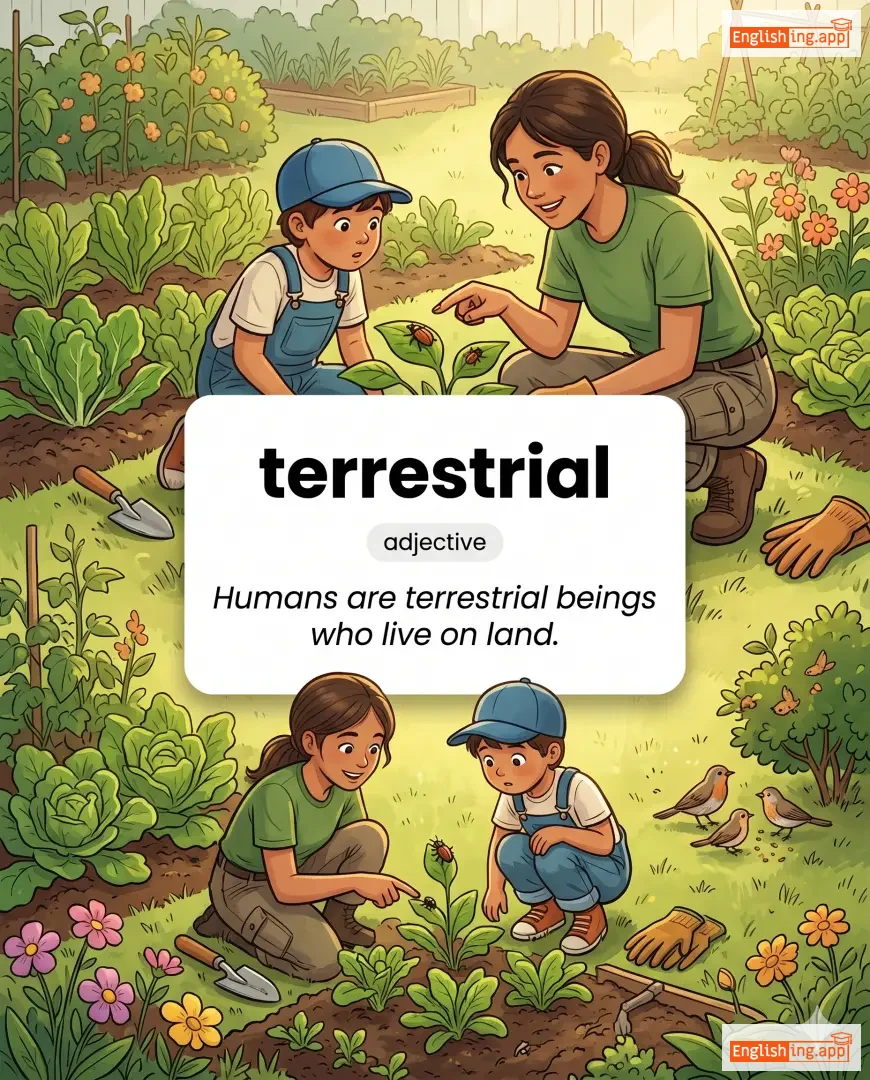
terrestrial definition card — visual illustration of the meaning
adjective
/təˈrɛstriəl/
земной (zemnoy)

Relating to the Earth or land as opposed to the sea or air; living or growing on land.

"Humans are terrestrial beings who live on land."

"Люди — земные существа, которые живут на земле." (Lyudi — zemnye sushchestva, kotorye zhivut na zemle.)
adjective
/ˈtɛrɪbəl/

extremely bad or unpleasant

"The food at that restaurant was terrible."

adverb
/ˈtɛrəbli/
ужасно (uzhasno)

to a very great or extreme degree; very badly or unpleasantly

"He felt terribly sad after hearing the news."

"Он чувствовал себя ужасно грустным после того, как услышал новость." (On chuvstvoval sebya uzhasno grustnym posle togo, kak uslyshal novost'.)
adjective
/təˈrɪfɪk/
потрясающий (potryasayushchiy)

extremely good or excellent; very great or intense

"The concert last night was absolutely terrific."

"Концерт прошлой ночью был абсолютно потрясающий." (Kontsert proshloy noch'yu byl absolyutno potryasayushchiy.)
verb
/ˈtɛrəˌfaɪ/
пугать (pugat)

To cause someone to feel extreme fear.

"The loud thunder terrified the children."

"Громкий гром напугал детей." (Gromkiy grom napugal detey.)
adjective
/ˌtɛrɪˈtɔːriəl/
территориальный (territorial'nyy)

Relating to the ownership or control of land or territory.

"The two countries had a territorial dispute over the island."
"Два государства имели территориальный спор по поводу острова." (Dva gosudarstva imeli territorial'nyy spor po povodu ostrova.)
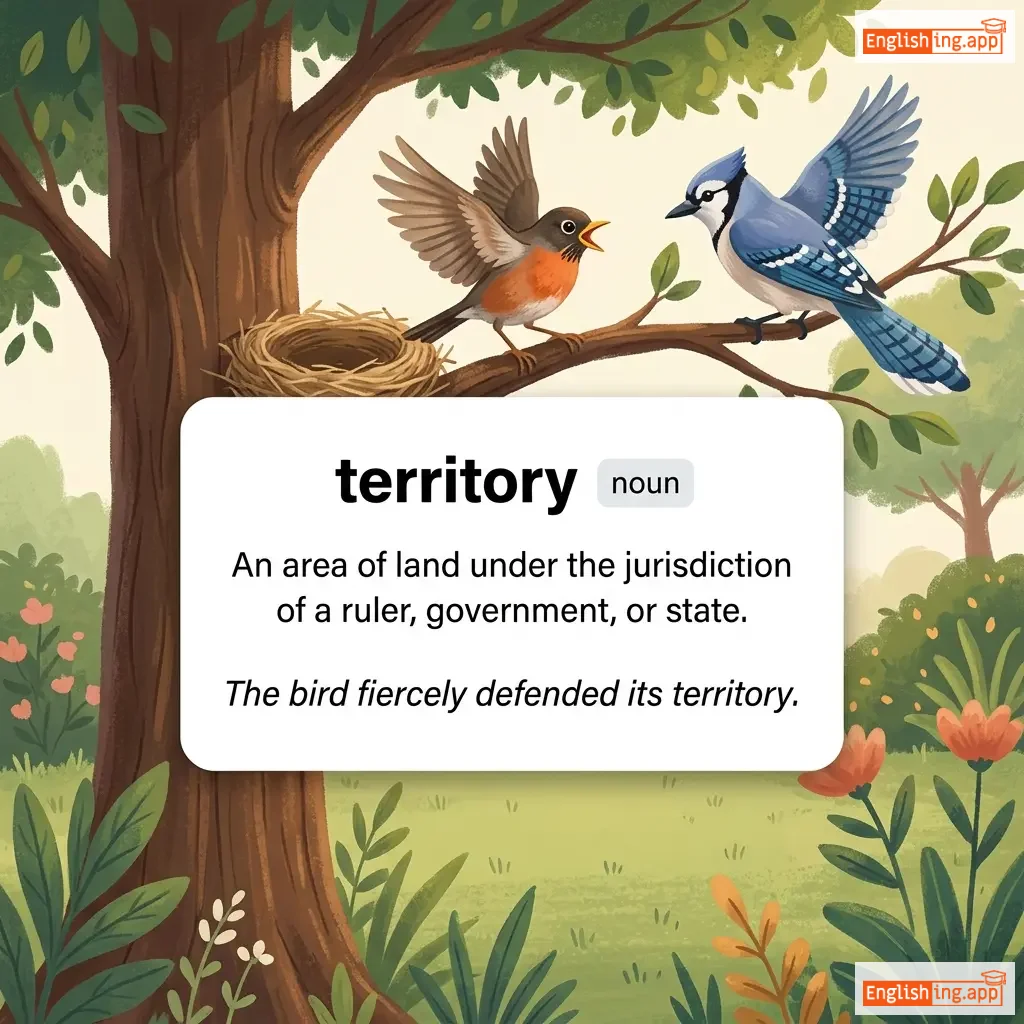
territory definition card — visual illustration of the meaning
noun
/ˈtɛrɪˌtɔːri/
территория (territoriya)

An area of land under the jurisdiction of a ruler, government, or state.

"The bird fiercely defended its territory."

"Птица яростно защищала свою территорию." (Ptitsa yarostno zashchishchala svoyu territoriyu.)
noun
/ˈtɛrər/
террор (terror)

Extreme fear or dread.

"The villagers fled in terror during the attack."

"Жители деревни бежали в ужасе во время нападения." (Zhiteli derevni bezhali v uzhasye vo vremya napadeniya.)
noun
/ˈtɛrərɪzəm/
терроризм (terrorizm)

the use of violence or threats to intimidate or coerce, especially for political purposes

"Terrorism is a serious threat to global peace and security."

"Терроризм — серьезная угроза глобальному миру и безопасности." (Terrorizm — seryozhnaya ugroza global'nomu miru i bezopasnosti.)
noun
/ˈtɛrərɪst/
террорист (terrorist)

a person who uses violence or threats to intimidate or coerce, especially for political purposes

"The terrorist was arrested by the police after the attack."

"Террорист был арестован полицией после атаки." (Terrrorist byl arestovan politsey posle ataki.)
adjective
/tɜːrs/
краткий (kratkiy)

brief and to the point; sparing in the use of words

"His reply was terse and ended the conversation quickly."

"Его ответ был кратким и быстро завершил разговор." (ego otvet byl kratkim i bystro zavershil razgovor.)
adjective
/ˈtɜːrʃieri/
терциарный (tertiary)

third in order, rank, or level

"He is pursuing his tertiary education at the university."

"Он получает высшее образование в университете." (On poluchaet vysshee obrazovanie v universitete.)
adjective
/ˈtɛsəleɪtɪd/
мозаичный (mozaichnyy)

arranged in a pattern of repeated shapes fitting together without gaps

"The tessellated floor was made of colorful tiles arranged in perfect symmetry."
"Мозаичный пол был покрыт цветными плитками, расположенными в идеальной симметрии." (Mozaichnyy pol byl pokryt tsvetnymi plitkami, raspolozhennymi v ideal'noy simmetrii.)
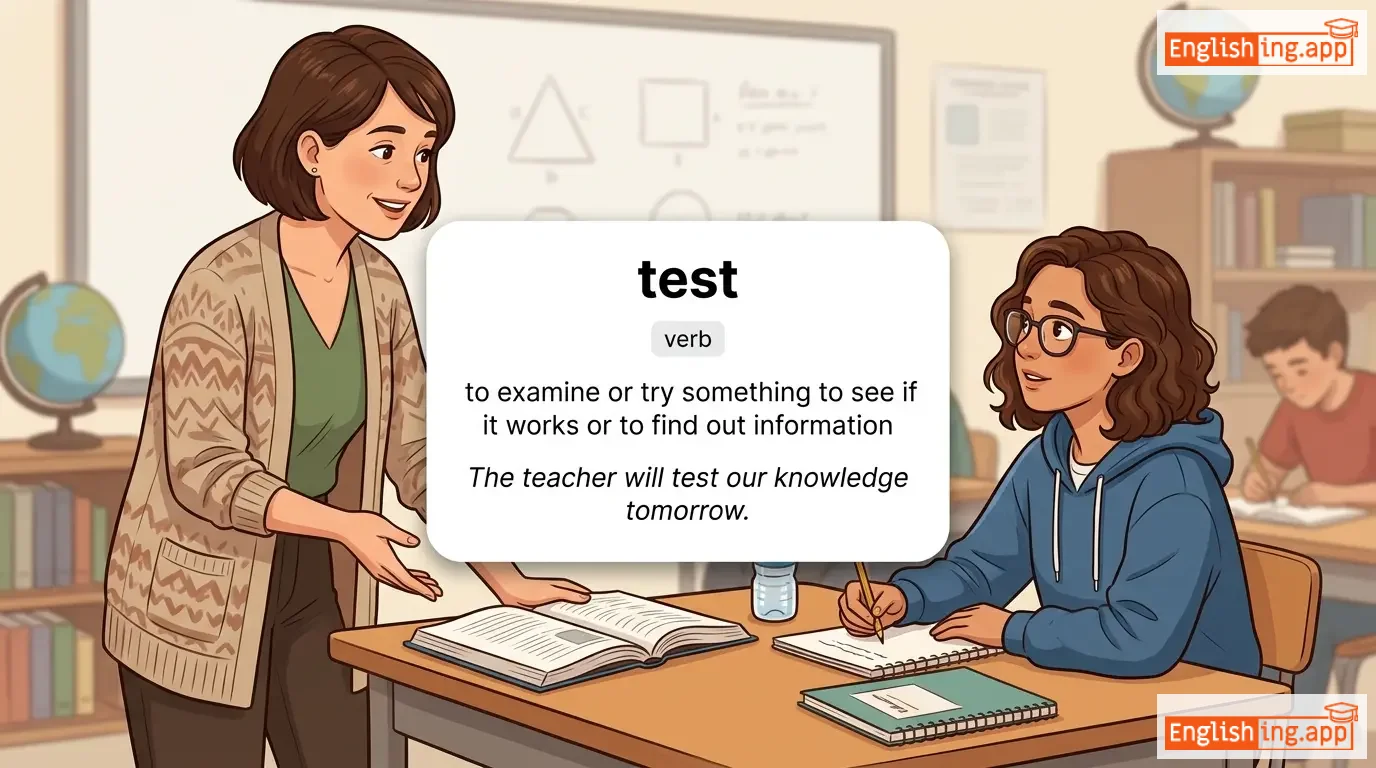
test definition card — visual illustration of the meaning
noun
/tɛst/
тест (test)

a procedure intended to establish the quality, performance, or reliability of something

"The test results will determine whether the treatment is effective."

"Результаты теста определят, является ли лечение эффективным." (Rezultaty testa opredelyat, yavlyaetsya li lechenie effektinym.)
noun
/ˈtɛstəmənt/
завещание / доказательство (zaveshchanie / dokazatel'stvo)

a person's will; or strong evidence of something

"His success is a testament to his hard work and dedication."

"Его успех — это завещание его усердной работы и преданности." (Yego uspex — eto zaveshchanie ego usyerdnoy raboty i predannosti.)
noun
/ˈtɛsteɪtər/
завещатель (zaveshchatel)

a person who has made a will

"The lawyer read the will of the deceased testator."

"Адвокат прочитал завещание умершего завещателя." (Advokat prochital zaveshchanie umershego zaveshchatelya.)
verb
/ˈtɛstəfaɪ/
давать показания (davat' pokazaniya)

to make a statement or declaration under oath or to give evidence

"She was called to testify in court about the accident."

"Её вызвали дать показания в суде по делу об аварии." (Eyo vyzvali dat' pokazaniya v sude po delu ob avarii.)
noun
/ˌtɛstɪˈmoʊniəl/
рекомендация (rekomendatsiya)

A formal statement testifying to someone's character, qualifications, or the quality of a product or service.

"The company shared a glowing testimonial from a satisfied customer."

"Компания поделилась ярким отзывом от довольного клиента." (Kompanija podelilas' yarkim otzyvom ot dovol'nogo kliyenta.)
testimonials definition card — visual illustration of the meaning
noun
/ˌtɛstɪˈməʊnɪəlz/
отзывы, рекомендации (otzyvy, rekomendatsii)

Written or spoken statements of praise or recommendation from clients or customers.

"Positive testimonials can enhance a company's reputation."

"Положительные отзывы могут улучшить репутацию компании." (Polozhitelnye otzyvy mogut uluchshit' reputatsiyu kompanii.)
noun
/ˈtɛstəˌmoʊni/
свидетельство (svidetelstvo)

A formal statement given in a court of law or evidence supporting a fact.

"Her testimony in court helped convict the criminal."

"Ее свидетельство в суде помогло осудить преступника." (Eeyo svidetel'stvo v sude pomoglo osudit' prestupnika.)
noun
/ˈtɛstɪŋ/
тест (test)

the process of assessing or evaluating something, often by trying it out

"The testing of the new software is still ongoing."

"Тестирование нового программного обеспечения все еще продолжается." (Testirovanie novogo programmnogo obespecheniya vse eshche prodolzhaetsya.)
adjective
/ˈtɛsti/
раздражительный (razdrazhitel'nyj)

Easily irritated or annoyed.

"He became testy when asked the same question repeatedly."

"Он стал раздражительным, когда ему задавали тот же вопрос снова и снова." (On stal razdrazhitel'nym, kogda emu zadavali tot zhe vopros snova i snova.)
verb
/ˈtɛðər/
привязывать (privyazyvat)

To tie an animal with a rope or chain so it cannot move far.

"The farmer tethered the goat to a post."

"Фермер привязал козу к столбу." (Fermer privyazal kozu k stolbu.)
noun
/tɛkst/
текст (tekst)

a written or printed work or passage, especially a book or document

"The teacher asked us to read the text on page 50."

"Учитель попросил нас прочитать текст на странице 50." (Uchitel' poprosil nas prochitat' tekst na stranitse 50.)
noun
/ˈtɛkstbʊk/
учебник (uchebnik)

a book used for studying a subject in school or college

"She bought a new biology textbook for her class."

"Она купила новый учебник по биологии для своего класса." (Ona kupila novyy uchebnik po biologii dlya svoego klassa.)
noun
/ˈtek.staɪl/
ткань (tkan')

a type of cloth or woven fabric made by knitting or weaving fibers

"Bangladesh is famous for its high-quality textile industry."

"Бангладеш славится своей высококачественной текстильной промышленностью." (Bangladesh slavyatsya svoey vysokokachestvennoy tekstil'noy promyshlennost'yu.)
noun
/ˈtɛkstʃər/
текстура (tekstura)

the way something feels when you touch it; the quality of a surface or substance

"The fabric has a soft and smooth texture."

"Ткань имеет мягкую и гладкую текстуру." (Tkan' imeet myagkuyu i gladkuyu teksturu.)
conjunction
/ðæn/
чем (chem)

used to introduce the second element in a comparison

"She is taller than her brother."

"Она выше своего брата." (Ona vyshe svoego brata.)
Thank definition card — visual illustration of the meaning
verb
/θæŋk/
благодарить (blagodarit)

to express gratitude to someone

"I want to thank you for your help."

"Я хочу поблагодарить тебя за помощь." (Ya khochu poblagodarit' tebya za pomoshch.)
adjective
/ˈθæŋk.fəl/
благодарный (blagodarnyy)

pleased and relieved; expressing gratitude; appreciative

"I am thankful for all your help and support."

"Я благодарен за всю твою помощь и поддержку." (Ya blagodaren za vsyu tvoyu pomoshch i podderzhku.)
adverb
/ˈθæŋkfəli/
к счастью (k schast'yu)

used to express relief or gratitude

"Thankfully, she arrived just in time for the meeting."

"К счастью, она приехала как раз вовремя для встречи." (K schast'yu, ona priekhala kak raz vovremya dlya vstrechi.)
noun
/θæŋks/
спасибо (spasibo)

an expression of gratitude

"Thanks for helping me with the project."

"Спасибо за помощь с проектом." (Spasibo za pomoshch' s proyektom.)
noun
/ˈθæŋksˌɡɪvɪŋ/
День благодарения (Den' blagodareniya)

an annual holiday in the US for giving thanks, celebrated with a meal

"We spent Thanksgiving dinner with our family."

"Мы провели ужин в День благодарения с нашей семьей." (My proveli uzhin v Den' blagodareniya s nashey sem'yey.)
pronoun
/ðæt/
это (eto)

used to identify a specific person or thing observed or heard

"That is my book on the table."

"Это моя книга на столе." (Eto moya kniga na stole.)
noun
/ˈθɔːməˌtɜrdʒɪst/
тауматург (taumaturg)

A worker of miracles or magician.

"The thaumaturgist amazed the audience with his tricks."

"Тауматург удивил публику своими трюками." (Taumaturg udivil publiku svoimi tryukami.)
verb
/θɔː/
таять (tayat)

to melt or cause to melt after being frozen

"The ice began to thaw in the sun."

"Лед начал таять на солнце." (Led nachal tayat' na solntse.)
adverb
/ˌðeərˈwɪð/
с этим; (s etim)

together with that; in addition to that

"He handed me the contract and the pen therewith."

"Он передал мне контракт и ручку с этим." (On peredal mne kontrakt i ruchku s etim.)
noun
/ˈθiːsɪs/
тезис (tezis)

A long piece of writing on a particular subject, usually for a degree at a university.

"She spent two years writing her doctoral thesis."

"Она потратила два года на написание своей докторской диссертации." (Ona potratila dva goda na napisanie svoey doktorskoy dissertatsii.)
pronoun
/ðiːz/
эти (eti)

used to refer to things or people that are near or present

"These are my friends."

"Это мои друзья." (Eto moi druz'ya.)
adjective
/θɜrd/
третий (tretiy)

constituting number three in a sequence

"She finished in third place."

"Она заняла третье место." (Ona zanyala tretye mesto.)
thermogenesis definition card — visual illustration of the meaning
noun
/ˌθɜː.məʊˈdʒen.ɪ.sɪs/
процесс производства тепла (process proizvodstva tepla)

The process of heat production in living organisms, often associated with burning calories and energy expenditure.

"Spicy foods can enhance thermogenesis and calorie burning."
"Острые продукты могут улучшить термогенез и сжигание калорий." (Ostrye produkty mogut uluchshit' termogenez i szhiganie kaloriy.)
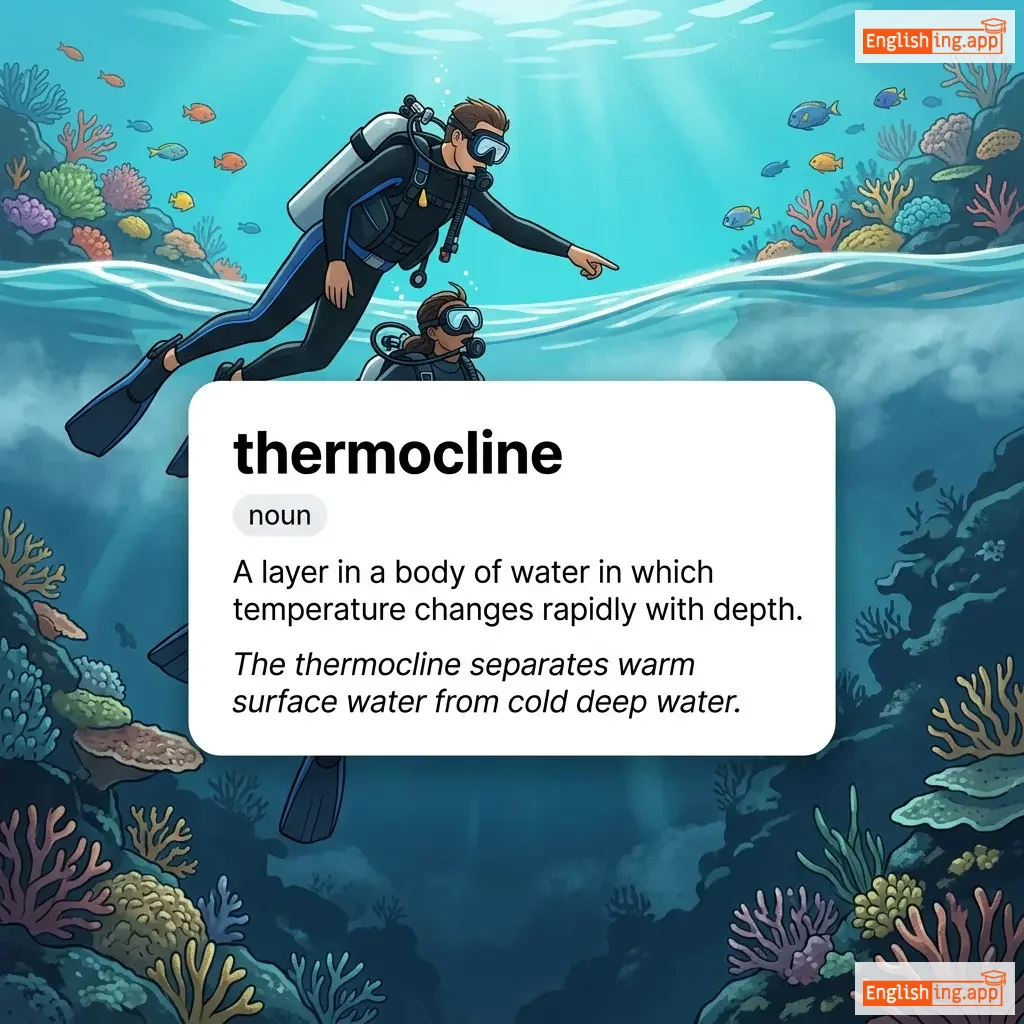
thermocline definition card — visual illustration of the meaning
noun
/ˈθɝː.moʊ.klaɪn/
термоклин (termoklin)

A layer in a body of water in which temperature changes rapidly with depth.

"The thermocline separates warm surface water from cold deep water."
"Термоклин разделяет тёплую поверхностную воду от холодной глубокой воды." (Termoklin razdelyayet tyopluyu poverkhnostnuyu vodu ot kholodnoy glubokoy vody.)
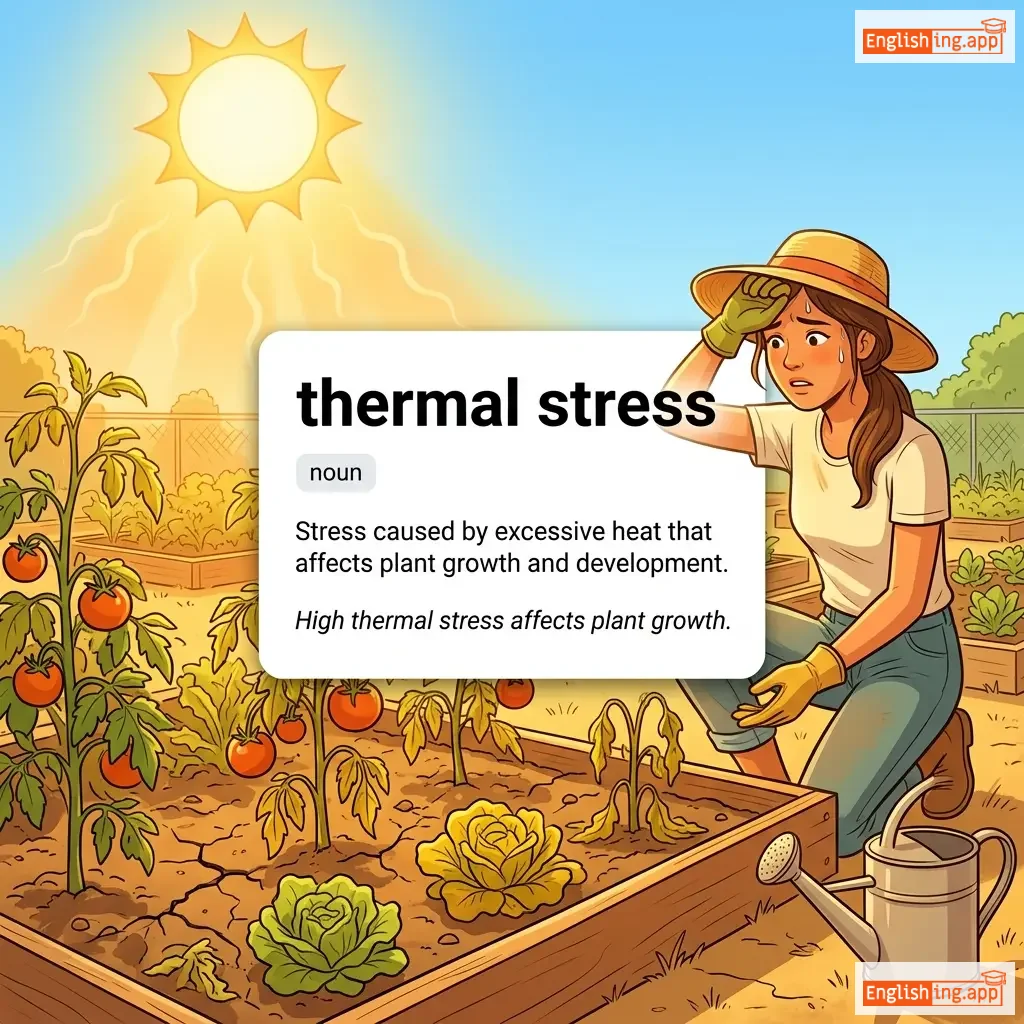
thermal stress definition card — visual illustration of the meaning
noun
ˈθɜː.məl stres
тепловой стресс (teplovoy stress)

Stress caused by excessive heat that affects plant growth and development.

"High thermal stress affects plant growth."

"Высокий тепловой стресс влияет на рост растений." (Vysokiy teplovoy stress vliyayet na rost rasteniy.)
adjective
/ˈθɜːrməl/
термический (termicheskiy)

Related to heat or temperature.

"She wore a thermal jacket to stay warm in winter."

"Она носила термическую куртку, чтобы оставаться в тепле зимой." (Ona nosila termicheskuyu kurtku, chtoby ostavat'sya v teple zimoy.)
conjunction
/ðɛəˈfɔː/

for that reason; because of that

"She was tired; therefore, she went to bed early."