Словари

Словарь английского языка | Значения слов, определения и примеры
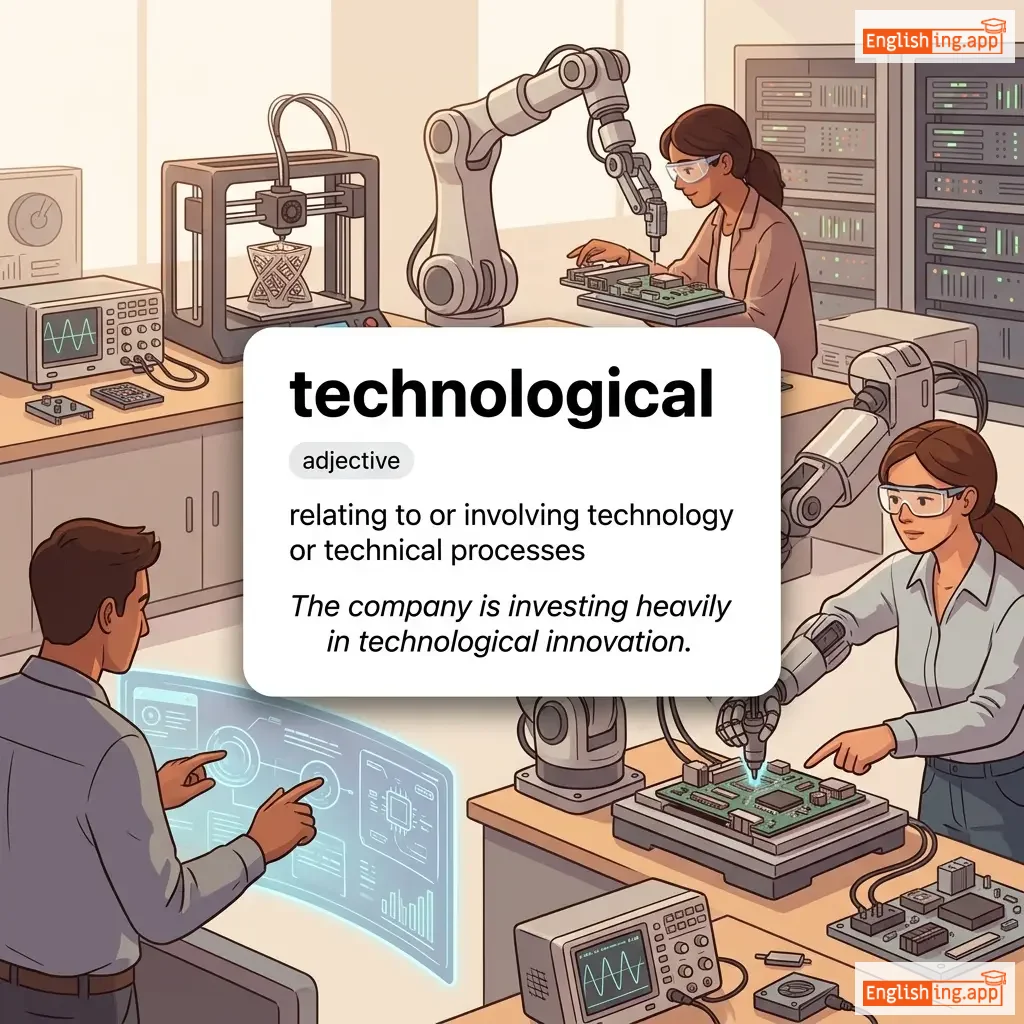
technological definition card — visual illustration of the meaning
adjective
/ˌteknəˈlɒdʒɪkəl/

relating to or involving technology or technical processes

"The company is investing heavily in technological innovation."

noun
/tɛkˈnɒɡrəfi/
технография (tekhnohrafiya)

the descriptive study or writing about the practical arts, technologies, or technical methods of a society

"The anthropologist specialized in technography to understand indigenous tool-making traditions."

"Антрополог специализировался на технографии, чтобы понять традиции создания орудий у коренных народов." (Antropolog spetsializirovalsya na tekhnografii, chtoby ponyat' traditsii sozdaniya orudiy u korennykh narodov.)
noun
/tɛkˈniːk/
техника (tekhnika)

A particular way of carrying out a task, especially with skill.

"She learned a new breathing technique in yoga class."

"Она изучила новую технику дыхания на занятиях йогой." (Ona izuchila novuyu tekhniku dykhaniya na zanyatiyakh yogoy.)
noun
/tɛkˈnɪʃən/
техник (tekhnik)

a person skilled in the practical aspects of a particular science, art, or job

"The technician repaired the computer within an hour."

"Техник отремонтировал компьютер за час." (Tekhnik otremontiroval komp'yuter za chas.)
noun
/ˌtɛknɪˈkæləti/
технический момент (tekhnicheskiy moment)

A small detail of law, rule, or procedure; a minor point that affects an outcome.

"The case was dismissed on a technicality."

"Дело было отклонено из-за технического момента." (Delo bylo otkloneno iz-za tekhnicheskogo momenta.)
adjective
/ˈtɛknɪkəl/
технический (tekhnicheskiy)

relating to a specific subject, art, or craft, or its techniques.

"He has a technical background in engineering."

"У него техническое образование в области инженерии." (U nego tekhnicheskoe obrazovanie v oblasti inzhenerii.)
noun
/ˈtɛknɪk/
техника (tekhnika)

A method, skill, or art in a particular field, especially in the arts or sciences.

"The artist’s technic in watercolor impressed the judges."
"Техника художника в акварели впечатлила судей." (Tekhnika khudozhnika v akvareli vpechatlila sudej.)
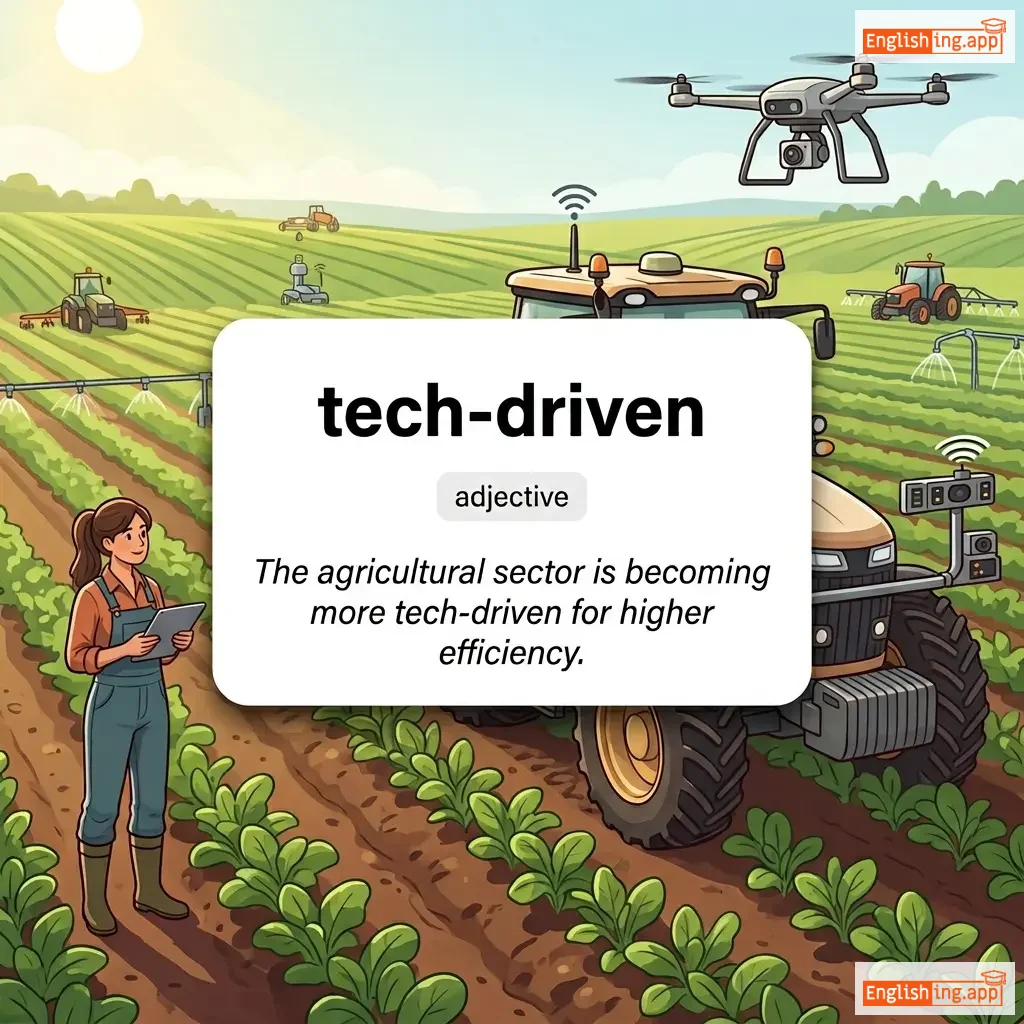
tech-driven definition card — visual illustration of the meaning
adjective
/tɛk ˈdrɪv.ən/
зависящий от технологий (zavisyashchiy ot tekhnologiy)

Powered or guided by technology; dependent on technological advancement for operation.

"The agricultural sector is becoming more tech-driven for higher efficiency."

"Сельское хозяйство становится всё более технологически зависимым для повышения эффективности." (Sel'skoye khozyaystvo stanovitsya vse bolee tekhnologicheski zavisimym dlya povysheniya effektivnosti.)
noun
/ˈtiːspuːn/
счастье (schast'ye)

a small spoon used for stirring drinks or eating soft foods, or for measuring small amounts of ingredients.

"Add a teaspoon of sugar to the tea."

"Она не могла скрыть своего счастья, когда получила награду." (Ona ne mogla skryt' svoego schast'ya, kogda poluchila nagradu.)
verb
/tiːz/
дразнить (draznit)

to make fun of someone in a playful or unkind way

"Children often tease their younger siblings playfully."

"Дети часто дразнят своих младших братьев и сестер игриво." (Deti chasto draznyat svoikh mladsikh brat'yev i sestroy igrivo.)
adjective
/ˈtɪərfəl/
со слезами; склонный к плачу (so slezami; sklony k plachu)

expressing or showing sadness and sorrow; inclined to weep

"She gave a tearful goodbye to her friends at the airport."
"Она попрощалась с друзьями, прослезившись в аэропорту." (Ona poproshchalas' s druz'yami, proslezhivshis' v aeroportu.)
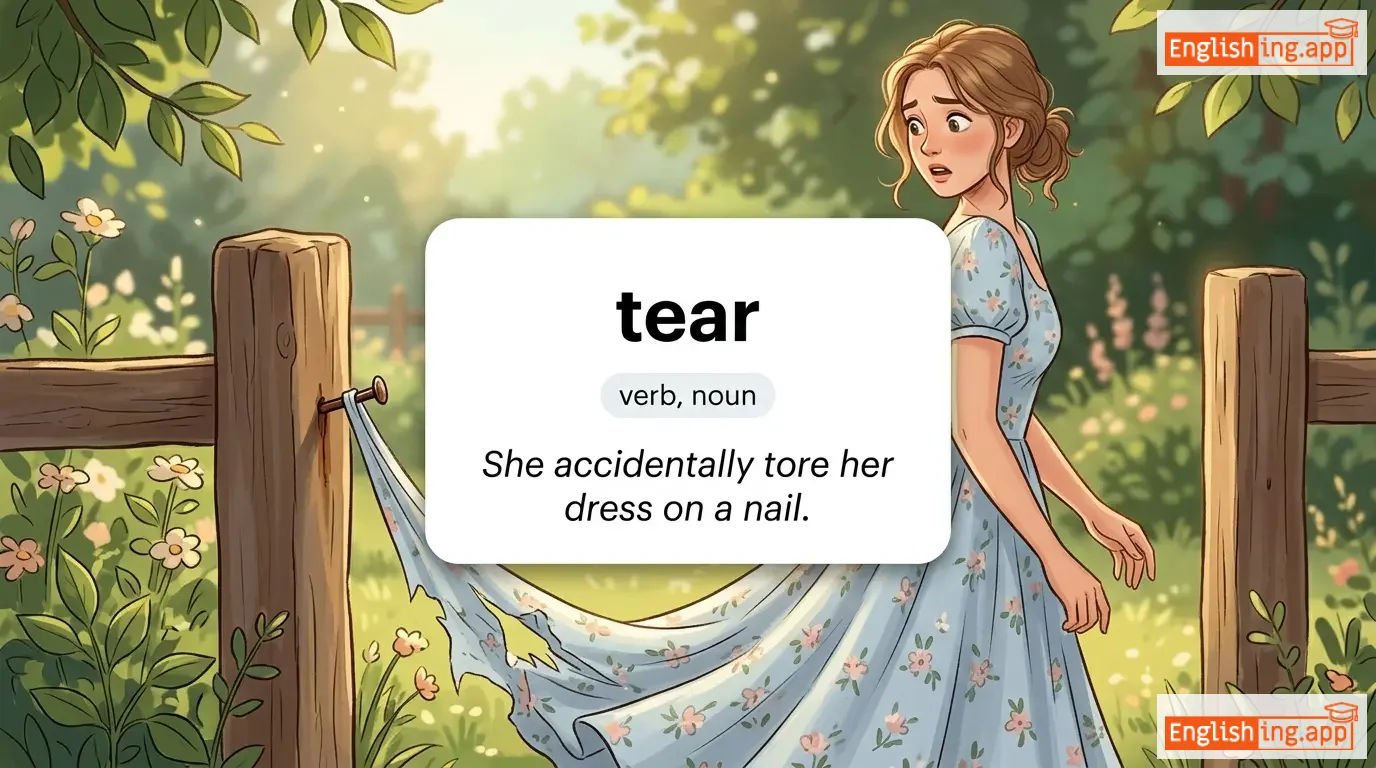
tear definition card — visual illustration of the meaning
💧

tear

verb, noun
/tɪər/ (noun: liquid) /tɛər/ (verb: rip)

As a verb: to pull apart or rip something. As a noun: a drop of clear salty liquid produced by glands in your eyes.

"She accidentally tore her dress on a nail."

noun
/ˈtiːmmeɪt/
товарищ по команде (tovarishtch po komande)

a member of the same team

"He congratulated his teammate after scoring the goal."

"Он поздравил своего товарища по команде после того, как забил гол." (On pozdravil svoego tovarishcha po komande posle togo, kak zabil gol.)
team definition card — visual illustration of the meaning
noun
/tiːm/
команда (komanda)

a group of people working together towards a common goal

"Our team won the match after a great effort."

"Наша команда выиграла матч после больших усилий." (Nasha komanda viygrala match posle bol'shikh usiliy.)
noun
/ˈtiːtʃɪŋ/
преподавание (prepodavanie)

the profession or practice of teaching

"Teaching is a noble profession."

"Преподавание - благородная профессия." (Prepodavanie - blagorodnaya professiya.)
Teacher definition card — visual illustration of the meaning
👩‍🏫

Teacher (tichar)

noun
/ˈtiːtʃər/
учитель (uchitel)

a person who teaches, especially in a school

"Mr. Smith is the teacher of the math class."

"Мистер Смит - учитель математического класса." (Mister Smit - uchitel matematicheskogo klassa.)
teach definition card — visual illustration of the meaning
verb
/tiːʧ/
учить (uchit)

to impart knowledge or skill to someone by instruction or example

"She teaches English to students at the local school."

"Она преподает английский язык студентам местной школы." (Ona prepodayet angliyskiy yazyk studentam mestnoy shkoly.)
noun
/tiː ˈstreɪnər/
чайный сито (chaynyy sito)

a small perforated device used to strain tea leaves from brewed tea

"I always use a tea-strainer when pouring tea into cups."

"Я всегда использую чайное сито, когда наливаю чай в чашки." (Ya vsegda ispol'zuyu chaynoe sito, kogda nalivayu chay v chashki.)
noun
/ˈtiː.pɒt/
чайник (chaynik)

a container with a lid, handle, and spout for brewing and serving tea

"She poured hot water into the tea-pot to make tea."

"Она наливала горячую воду в чайник, чтобы заварить чай." (Ona nalivala goryachuyu vodu v chaynik, chtoby zavarit' chay.)
noun
/tiː/
чай (chay)

a hot drink made by infusing the dried, crushed leaves of the tea plant in boiling water

"I drink tea every morning to start my day."

"Я пью чай каждое утро, чтобы начать свой день." (Ya p'yu chay kazhdoye utro, chtoby nachat' svoy den'.)
noun
/ˈtæksˌpeɪər/
налогоплательщик (nalogoplatel'shchik)

a person who pays tax to the government

"The taxpayers' money is used to fund public services."

"Деньги налогоплательщиков используются для финансирования общественных услуг." (Dengi nalogoplatel'shchikov ispol'zuyutsya dlya finansirovaniya obshchestvennykh uslug.)
taxonomy definition card — visual illustration of the meaning
noun
/tækˈsɒnəmi/
наука о классификации (nauka o klassifikatsii)

The science or practice of classifying things, especially organisms.

"Modern taxonomy helps scientists organize and study biodiversity."

"Современная таксономия помогает ученым организовывать и изучать биологическое разнообразие." (Sovremennaya taksonomiya pomogaet uchenym organizovyvat' i izuchat' biologicheskoe raznoobrazie.)
noun
/tækˈsɒnəmɪst/
таксономист (taksonomist)

A scientist who classifies organisms into groups based on their characteristics.

"The taxonomist discovered a new species of insect."

"Таксономист обнаружил новый вид насекомых." (Taksonomist obnaruzhil novyy vid nasekomykh.)
adjective
/ˈtæksɪŋ/
изнурительный (iznuryitel'nyy)

Requiring a lot of effort; physically or mentally demanding.

"Preparing for the exam was a taxing experience."

"Подготовка к экзамену была изнурительным опытом." (Podgotovka k ekzameny byla iznuryitel'nym opytom.)
noun
/ˈtæksɪˌdɜːrmi/
таксидермия (taksidermiya)

The art of preparing, stuffing, and mounting the skins of animals for display.

"The museum had a large collection of taxidermy animals."

"В музее была большая коллекция чучел животных." (V muzeye byla bol'shaya kollektsiya chuchel zhivotnykh.)
noun
/ˈtæk.si kæb/
такси (taksi)

A car that carries passengers for a fare, usually in cities

"We took a taxi cab to the restaurant."

"Мы поехали на такси в ресторан." (my poekhali na taksi v restoran.)
noun
/ˈtæksi/
такси (taksi)

A car licensed to transport passengers in exchange for payment of a fare.

"We hailed a taxi to get to the airport."

"Мы вызвали такси, чтобы доехать до аэропорта." (My vyzvali taksi, chtoby doyekhat do aeroporta.)
noun
/tækˈseɪʃən/
налогообложение (nalogooblozhenie)

The system of imposing and collecting taxes.

"Taxation is necessary for funding public services."

"Налогообложение необходимо для финансирования общественных услуг." (Nalogooblozhenie neobkhodimo dlya finansirovaniya obshchestvennykh uslug.)
task definition card — visual illustration of the meaning
noun
/tɑːsk/
задача (zadacha)

a piece of work or duty to be done

"He completed the task before the deadline."

"Он завершил задачу до срока." (On zavershil zadachu do sroka.)
noun
/ˈtæntrəm/
истерика (isterika)

An uncontrolled outburst of anger and frustration, typically in a young child.

"The child threw a tantrum when he didn’t get the toy."

"Ребёнок устроил истерику, когда не получил игрушку." (Rebyonok ustroil isteriku, kogda ne poluchil igrooshku.)
verb
/tæp/
постучать (postuchat)

to strike something lightly, usually with a quick, sharp sound

"He tapped on the door to get her attention."

"Он постучал в дверь, чтобы привлечь её внимание." (On postuchal v dver', chtoby privlech' yeye vnimanie.)
noun
/teɪp/
скотч (skotch)

a long, narrow strip of material, often sticky on one side, used for fastening or sticking things together

"I need some tape to seal this box."

"Мне нужно немного скотча, чтобы запечатать эту коробку." (Mne nuzhno nemnogo skotcha, chtoby zapechatat' etu korobku.)
verb
/ˈteɪpər/
сужаться (sujatsya)

To gradually decrease in width, thickness, or intensity.

"The road tapers off as it reaches the mountains."

"Дорога сужается по мере того, как она достигает гор." (Doroga suzhayetsya po mere togo, kak ona dostigaet gor.)
noun
/ˈtæpəstri/
гобелен (gobelen)

A piece of thick textile fabric with pictures or designs woven into it, often hung on walls.

"The museum displayed an ancient tapestry from the 15th century."

"Музей выставил древний гобелен XV века." (Muzei vystavil drevniy gobelen XV veka.)
noun
/təˈræntjʊlə/
тарантула (tarantula)

A large hairy spider found in warm regions.

"The tarantula crawled across the desert floor."

"Тарантула ползла по песчаному полу пустыни." (Tarantula polzla po peschanomuu polu pustyni.)
adjective
/ˈtɑːrdi/
опоздавший (opozdavshiy)

Delayed; arriving or happening late.

"The student received a warning for being tardy to class."

"Студент получил предупреждение за опоздание в класс." (Student poluchil preduprezhdenie za opozdanie v klass.)
target definition card — visual illustration of the meaning
noun
/ˈtɑːɡɪt/
цель (tsel)

a goal or objective that one aims to achieve

"The team set a target to increase sales by 20%."

"Команда установила цель увеличить продажи на 20%." (Komanda ustanovila tsel' uvelichit' prodazhi na 20%.)
tariff definition card — visual illustration of the meaning
noun
/ˈtær.ɪf/
тариф (tarif)

A tax imposed by the government on imported or exported goods, also known as duty, customs tax, or levy.

"The new tariff increased the cost of imported goods."

"Новый тариф увеличил стоимость импортированных товаров." (Novyj tarif uvelichil stoimost' importirovannyh tovarov.)
noun
/tɑːrn/
горное озеро (gornoye ozero)

A small mountain lake or pool.

"We camped near a tranquil tarn in the highlands."

"Мы разбили лагерь рядом с тихим горным озером в высокогорье." (My razbili lager' ryadom s tikhim gornym ozerom v vysokogorye.)
verb
/ˈtɑːrnɪʃ/
потускнеть (potusknet')

To lose luster, especially as a result of exposure to air or moisture; to damage reputation.

"The silver jewelry tarnished quickly when left in the open air."

"Серебряные украшения быстро потускнели, когда их оставили на воздухе." (Serebryanye ukrasheniya bystro potuskneli, kogda ikh ostavili na vozdukhe.)
noun
/tɑːrˈpɔːlɪn/
брезент (brezent)

A large sheet of strong, flexible, water-resistant material used for covering or protecting things.

"The workers used a tarpaulin to cover the construction materials from rain."

"Рабочие использовали брезент, чтобы накрыть строительные материалы от дождя." (Rabochie ispolzovali brezent chtoby nakryt stroitelnyye materialy ot dozhdya.)
verb
/ˈtæri/
задерживаться (zaderzhivat'sya)

To delay or linger; to stay longer than intended.

"Do not tarry, or you will miss the train."

"Не задерживайся, иначе опоздаешь на поезд." (Ne zaderzhivaysya, inache opozdaesh' na poezd.)
noun, adjective
/tɑːrt/
пирог (tart)

A small pie with a sweet or savory filling; or having a sharp, sour taste.

"She served a delicious apple tart for dessert."
"Она подала на десерт вкусный яблочный пирог." (Ona podala na desert vkusnyy yablochnyy pirog.)
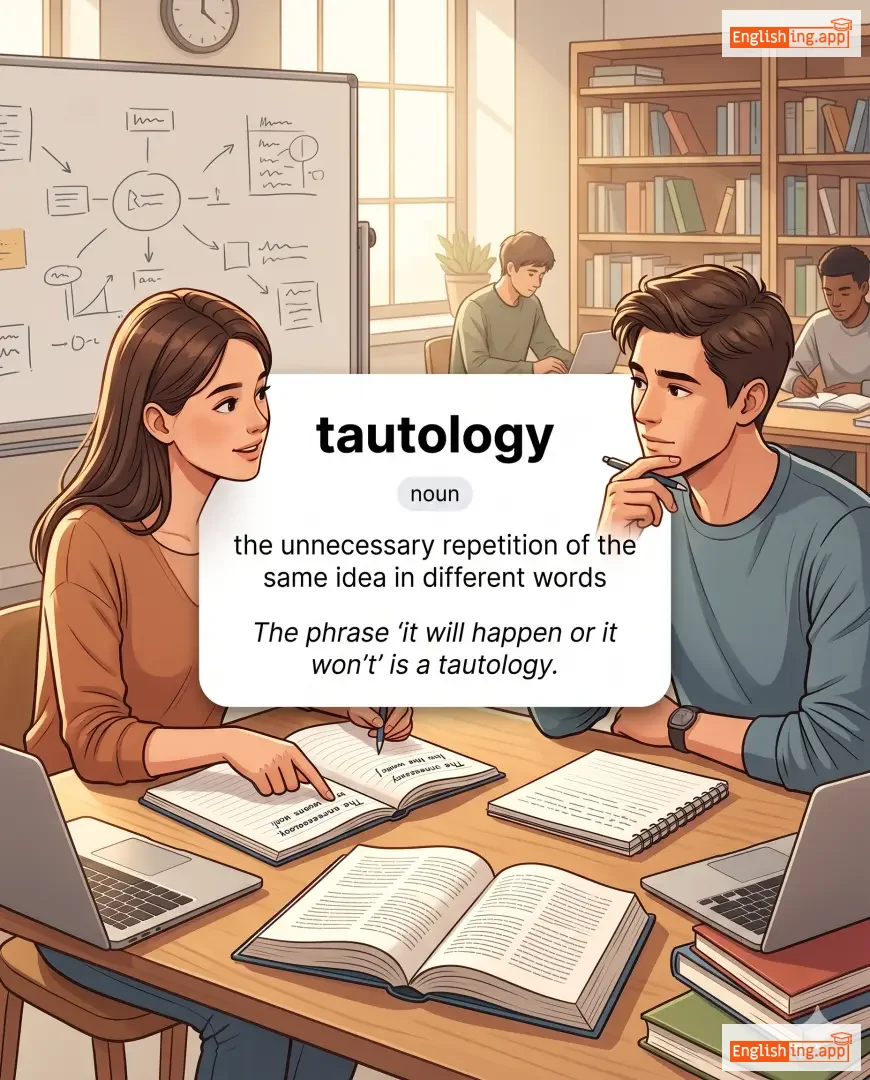
tautology definition card — visual illustration of the meaning
noun
/tɔːˈtɒlədʒi/
ненужное повторение (nenuzhnoe povtorenie)

the unnecessary repetition of the same idea in different words

"The phrase 'it will happen or it won’t' is a tautology."

"Фраза 'это случится или не случится' — это тавтология." (Fraza 'eto sluchitsya ili ne sluchitsya' — eto tautologiya.)
verb
/tɔːnt/
дразнить (draznit)

to provoke or challenge someone with insulting remarks

"The bully tried to taunt him with cruel words."

"Задира пытался дразнить его жестокими словами." (Zadira pytalsya draznit ego zhestokimi slovami.)
adjective
/tɔːt/
натянутый (natyanutyj)

stretched or pulled tight; tense

"The rope was pulled taut between the two poles."

"Веревка была натянута между двумя столбами." (Veriovka byla natianuta mezhdu dvumia stolbami.)
adjective
/ˌtɔːtəˈlɒdʒɪkəl/
тавтологичный (tavtologichnyy)

expressing something by repeating the same idea in different words; redundant

"Saying 'free gift' is considered tautological."

"Сказать 'бесплатный подарок' считается тавтологией." (Skazat' 'besplatnyy podarok' schitayetsya tavtologiyey.)
adjective
/ˈtæti/
потрепанный (potrepyanniy)

Worn out, shabby, or in poor condition.

"The sofa looked old and tatty after years of use."

"Диван выглядел старым и потрепанным после многих лет использования." (Divan viglyadel starym i potrepyannym posle mnogikh let ispol'zovaniya.)
adjective
/ˈtɔːdri/
дешевый и показной, но низкого качества (deshevyy i pokaznoy, no nizkogo kachestva)

cheap and showy but of poor quality

"She wore a tawdry necklace that broke easily."

"Она носила дешевое и показное ожерелье, которое легко сломалось." (Ona nosila deshevoye i pokaznoye ozherelye, kotoroye legko slomalos'.)
adjective
/ˈtɔːni/
жёлто-коричневый цвет (zhelto-korichnevyy tsvet)

A warm, sandy or golden-brown color.

"The owl's tawny feathers blended with the tree bark."

"Жёлто-коричневые перья совы сливались с корой дерева." (Zhelto-korichnevye per'ya sovy slivalis' s koroy dereva.)