Словари

Словарь английского языка | Значения слов, определения и примеры

🙅‍♀️

Unable (ʌˈneɪbl)

adjective
/ʌˈneɪbl/
не способный (ne sposobnyy)

not able to do something

"She was unable to attend the meeting."

"Она не смогла посетить встречу." (Ona ne smogla posetit' vstrechu.)
noun
/ʌnəˈbɪləti/
неспособность (nesposobnost)

the state of being unable to do something; incapacity

"His unability to solve the problem caused delays in the project."

"Его неспособность решить проблему вызвала задержки в проекте." (Ego nesposobnost reshit problemu vyzvala zaderzhki v proekte)
noun
/ʌmˈbrɛlə/
зонт (zont)

A device used for protection against rain or sun, typically consisting of a collapsible canopy mounted on a central rod.

"She opened her umbrella as it started to rain."

"Она раскрыла свой зонт, когда начался дождь." (Ona raskryla svoi zont, kogda nachalsya dozhd.)
noun
/ˈʌmbrɪdʒ/
негодование, оскорбление (negodovanie, oskorblenie)

A feeling of resentment or offense.

"She took umbrage at his rude remark."

"Она обиделась на его грубое замечание." (Ona obidelas' na ego gruboje zamechanije.)
noun
/ˈʌm.brə/
полная тень, темная область солнечного пятна (polnaya ten, temnaya oblast' solnechnogo pyatna)

the fully shaded inner region of a shadow cast by an opaque object; the dark center of a sunspot

"During the eclipse, we stood in the moon's umbra."

"Во время солнечного затмения мы стояли в тени Луны." (Vo vremya solnechnogo zatmeniya my stoyali v teni Luny)
adjective
/ˌʌltrəˈmʌndeɪn/
ультрамунданный (ultramundanny)

Relating to things beyond the physical world; supernatural or transcendental.

"Philosophers often discuss ultramundane realities beyond human perception."

"Философы часто обсуждают ультрамундальные реальности за пределами человеческого восприятия." (Filosofy chasto obsuzhdayut ultramundalnye real'nosti za predelami chelovecheskogo vospriyatiya.)
adjective
/ˌʌltrəˈmɒnteɪn/
папист (papist)

beyond the mountains, especially referring to support for the Pope over local church authority

"The debate highlighted the ultramontane position in church politics."

"Дебаты подчеркнули ультрамонтанскую позицию в церковной политике." (Debaty podcherknuli ultramontanskuyu pozitsiyu v tserkovnoy politike.)
noun
/ˌʌltɪˈmeɪtəm/
ультиматум (ultimatum)

a final demand or statement of terms

"The workers gave the company an ultimatum to raise their wages."

"Рабочие поставили компании ультиматум, чтобы повысить их зарплаты." (Rabochie postavili kompanii ultimatum, chtoby povysit' ikh zarplaty.)
adverb
/ˈʌltəmətli/
в конце концов (v kontse kontsov)

in the end, after everything else

"Ultimately, we decided to go ahead with the project."

"В конце концов мы решили продолжить проект." (V kontse kontsov my reshili prodolzhit' proyekt.)
adjective
/ˈʌltɪmət/
крайний (krayniy)

being the best, final, or most extreme

"Success is the ultimate goal of hard work."

"Успех — это крайняя цель усердной работы." (Uspekh — eto kraynyaya tsel' usyernoy raboty.)
adjective
/ʌlˈtɪəriər/
скрытый мотив (skrytyy motiv)

hidden or secret, often with a selfish motive

"He invited her with an ulterior motive."

"Он пригласил её с скрытым мотивом." (On priglasil yeye s skrytym motivom.)
noun
/ˈʌlsər/
язва (yazva)

a sore on the skin or a mucous membrane that does not heal easily

"The doctor prescribed medicine to treat the stomach ulcer."

"Доктор выписал лекарства для лечения язвы желудка." (Doktor vypisal lekarstva dlya lecheniya yazvy zheludka.)
interjection
/ʌ/
э (e)

a sound people make when they hesitate or are unsure what to say next.

"Uh, I’m not sure if that’s the right answer."

"Э, я не уверен, что это правильный ответ." (E, ya ne uveren, chto eto pravil'nyy otvet.)
adjective
/ˈʌɡli/
уродливый (urodlivyy)

unpleasant or repulsive in appearance

"The house had an ugly view of the street."
"Дом имел уродливый вид на улицу." (Dom imel urodlivyy vid na ulitsu.)
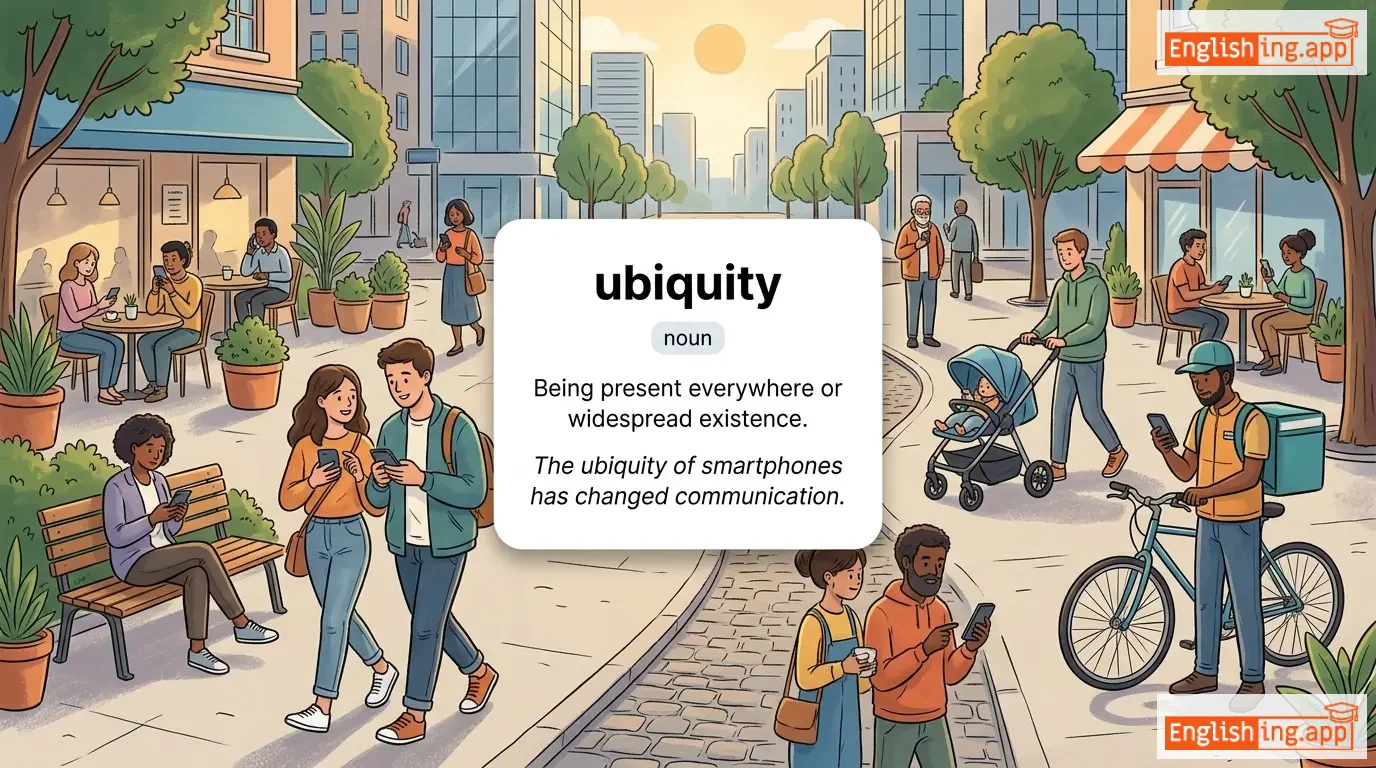
ubiquity definition card — visual illustration of the meaning
noun
/juːˈbɪk.wɪ.ti/
убиквитет (ubikvitet)

Being present everywhere or widespread existence.

"The ubiquity of smartphones has changed communication."

"Убиквитность смартфонов изменила коммуникацию." (Ubikvitnost' smartphone-ov izmenila kommunikatsiyu.)
adjective
/juːˈbɪkwɪtəs/
вездесущий (vezdesushchiy)

Existing or being everywhere at the same time.

"Social media has become ubiquitous among young people."

"Социальные сети стали повсеместными среди молодежи." (Sotsial'nye seti stali povsemestnymi sredi molodezhi.)
adjective
/juːˈbɪkwɪtəs/
вездесущий (vezdesushchij)

Present, appearing, or found everywhere.

"Smartphones have become ubiquitous in modern society."

"Смартфоны стали повсеместными в современном обществе." (Smartfony stali povsemeshtnymi v sovremennom obshchestve.)
noun
/ˈtaɪroʊ/
новичок (novichok)

A beginner or novice in a field or activity.

"As a tyro in programming, she needed constant guidance."

"Как новичок в программировании, ей нужна была постоянная поддержка." (Kak novichok v programmirovanii, yey nuzhna byla postoyannaya podderzhka.)
noun
/ˈtaɪ.rənt/
тиран (tiran)

a cruel and oppressive ruler; a person who exercises power in a harsh manner

"The people rebelled against the cruel tyrant."

"Люди восстали против жестокого тирана." (Lyudi vosstali protiv zhestokogo tirana)
noun
/ˈtɪrəni/
тирания (tiraniya)

Cruel and oppressive government or rule by a tyrant.

"The people revolted against the tyranny of their ruler."

"Люди восстали против тирании их правителя." (Lyudi vosstali protiv tiranii ikh pravitelya.)
adjective
/tɪˈrænɪkəl/
тиранический (tiranicheskiy)

exercising power in a cruel or arbitrary way

"The tyrannical ruler silenced all opposition."

"Тиранический правитель заставил молчать всю оппозицию." (Tiranicheskiy pravitel' zastavil molchat' vsyu oppozitsiyu.)
noun
/taɪˈpɒɡrəfi/
типография (tipografiya)

the art and technique of arranging type to make written language legible and visually appealing

"Good typography improves the readability of a website."

"Хорошая типография улучшает читаемость веб-сайта." (Khoroshaya tipografiya uluchshayut chitaemost' veb-sayta.)
adjective
/ˌtaɪpəˈɡræfɪkəl/
типографический (tipograficheskiy)

relating to the style, arrangement, or appearance of printed text

"There was a typographical error in the book."

"В книге была типографическая ошибка." (V knige byla tipograficheskaya oshibka.)
noun
/ˈtaɪpoʊ/
опечатка (opichatka)

a mistake made in typing

"The report was full of typos."

"Отчет был полон опечаток." (Otchet byl polon opichatok.)
verb
/ˈtɪpɪfaɪ/
представлять (predstavlyat)

to represent or be a typical example of something

"His leadership style typifies the new corporate culture."

"Его стиль лидерства олицетворяет новую корпоративную культуру." (Ego stil' liderstva olicetvorjaet novuju korporativnuju kul'turu.)
adverb
/ˈtɪpɪkli/
обычно (obychno)

in a way that is typical of a particular person, thing, or group

"She typically arrives at work at 9 AM."

"Она обычно приходит на работу в 9 утра." (Ona obychno prikhodit na rabotu v 9 utra.)
adjective
/ˈtɪpɪkəl/
связанный с обычными характеристиками определенного типа человека или вещи (svyazannyy s obychnymi kharakteristikami opredelennogo tipa cheloveka ili veshchi)

having the usual qualities of a particular type of person or thing

"It was a typical summer day, hot and humid."

"Это был типичный летний день, жаркий и влажный." (Eto byl tipichnyy letniy den', zharkiy i vlazhnyy.)
noun
/taɪˈfuːn/
тайфун (tayfun)

a tropical storm in the region of the Indian or western Pacific oceans

"The typhoon caused severe flooding in the coastal areas."
"Тайфун вызвал сильные наводнения в прибрежных районах." (Tayfun vyzval sil'nye navodneniya v pribrizhnye rayony.)
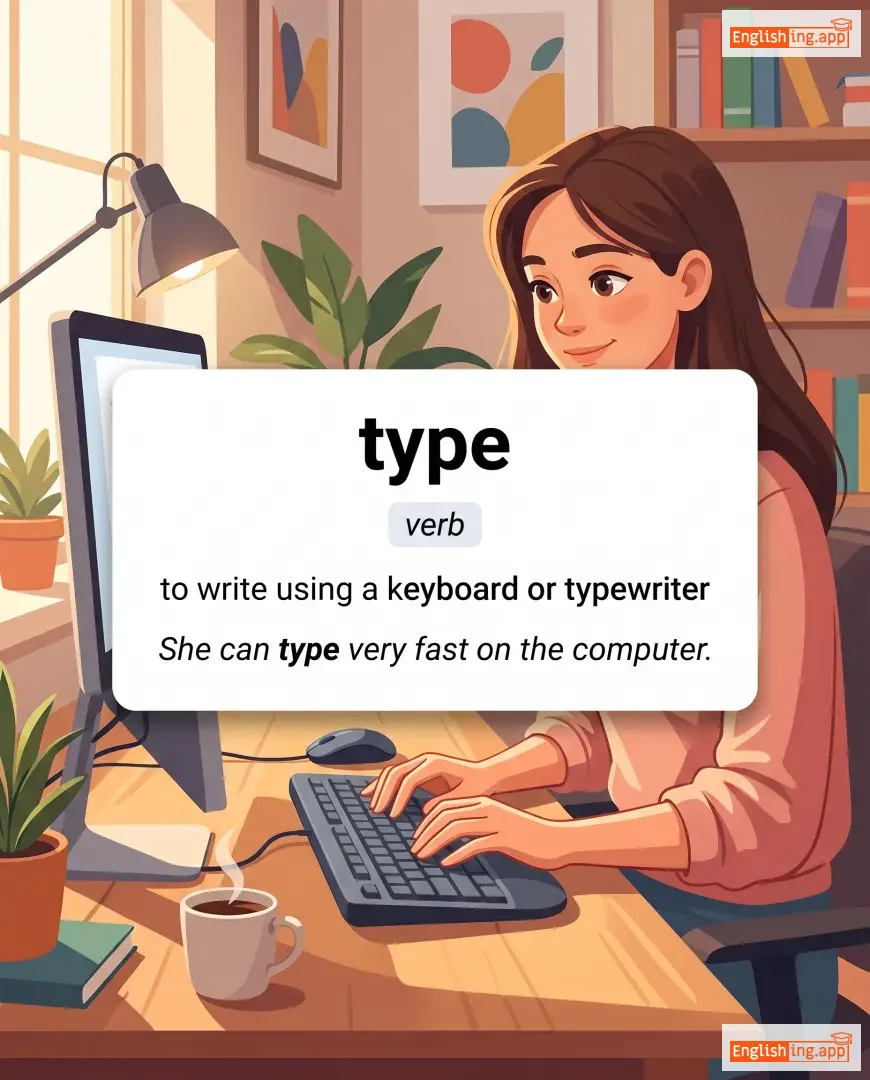
type definition card — visual illustration of the meaning
noun
/taɪp/
тип (tip)

a category of people or things having common characteristics

"What type of music do you like?"

"Какой тип музыки вам нравится?" (Kakoy tip muzyki vam nravitsya?)
noun
/taɪˈkuːn/
магнат (magnat)

a wealthy, powerful businessperson

"The real estate tycoon invested in several skyscrapers."

"Риэлторский магнат инвестировал в несколько небоскрёбов." (Riel'torskiy magnat investiroval v neskol'ko neboskryobov.)
noun
/ˈtuːsəm/
пара (para)

A pair of people considered together, often in a romantic or competitive context.

"They entered the dance competition as a twosome."

"Они вошли в танцевальное соревнование как пара." (Oni voshli v tantseval'noe sorevnovanie kak para.)
noun
/tuː θɜːrdz/
две трети (dve treti)

a fraction equal to two parts of three; 2/3.

"Two-thirds of the students passed the exam."

"Две трети студентов сдали экзамен." (Dve treti studentov sdali ekzamen.)
2️⃣

two (ту)

noun
/tuː/
два (dva)

the number following one

"She has two children."

"У неё двое детей." (U nee dvoje detey.)
noun
/juːˈkeɪs/
указ (ukaz)

An authoritative decree or order, especially one issued by a sovereign or government.

"The czar issued a ukase restricting the freedom of the press."

"Царь издал указ, ограничивающий свободу прессы." (Tsar' izdal ukaz, ogranichivayushchiy svobodu pressy.)
noun
/ˈtɛrərɪzəm/
терроризм (terrorizm)

the use of violence or threats to intimidate or coerce, especially for political purposes

"Terrorism is a serious threat to global peace and security."

"Терроризм — серьезная угроза глобальному миру и безопасности." (Terrorizm — seryozhnaya ugroza global'nomu miru i bezopasnosti.)
noun
/ˈtɛrərɪst/
террорист (terrorist)

a person who uses violence or threats to intimidate or coerce, especially for political purposes

"The terrorist was arrested by the police after the attack."

"Террорист был арестован полицией после атаки." (Terrrorist byl arestovan politsey posle ataki.)
adjective
/tɜːrs/
краткий (kratkiy)

brief and to the point; sparing in the use of words

"His reply was terse and ended the conversation quickly."

"Его ответ был кратким и быстро завершил разговор." (ego otvet byl kratkim i bystro zavershil razgovor.)
adjective
/ˈtɜːrʃieri/
терциарный (tertiary)

third in order, rank, or level

"He is pursuing his tertiary education at the university."

"Он получает высшее образование в университете." (On poluchaet vysshee obrazovanie v universitete.)
adjective
/ˈtɛsəleɪtɪd/
мозаичный (mozaichnyy)

arranged in a pattern of repeated shapes fitting together without gaps

"The tessellated floor was made of colorful tiles arranged in perfect symmetry."
"Мозаичный пол был покрыт цветными плитками, расположенными в идеальной симметрии." (Mozaichnyy pol byl pokryt tsvetnymi plitkami, raspolozhennymi v ideal'noy simmetrii.)
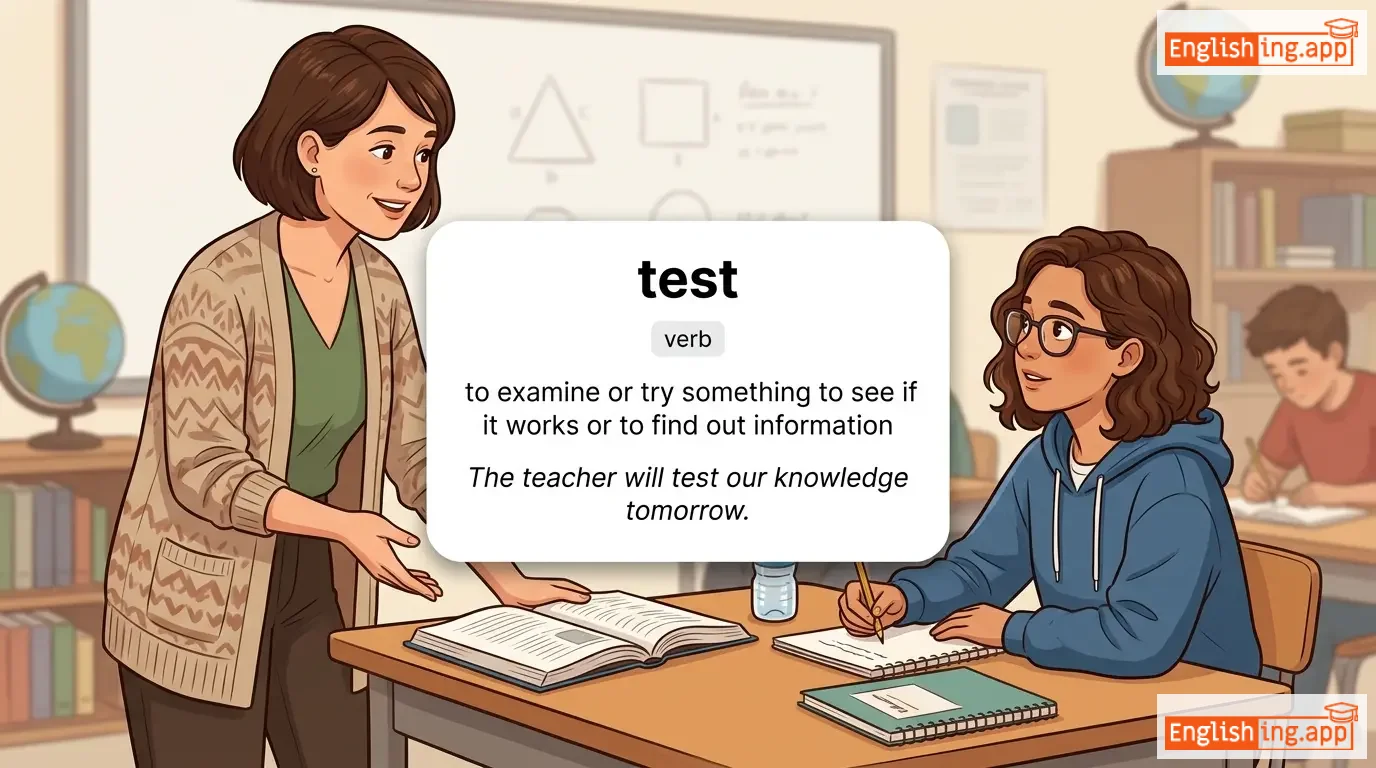
test definition card — visual illustration of the meaning
noun
/tɛst/
тест (test)

a procedure intended to establish the quality, performance, or reliability of something

"The test results will determine whether the treatment is effective."

"Результаты теста определят, является ли лечение эффективным." (Rezultaty testa opredelyat, yavlyaetsya li lechenie effektinym.)
noun
/ˈtɛstəmənt/
завещание / доказательство (zaveshchanie / dokazatel'stvo)

a person's will; or strong evidence of something

"His success is a testament to his hard work and dedication."

"Его успех — это завещание его усердной работы и преданности." (Yego uspex — eto zaveshchanie ego usyerdnoy raboty i predannosti.)
noun
/ˈtɛsteɪtər/
завещатель (zaveshchatel)

a person who has made a will

"The lawyer read the will of the deceased testator."

"Адвокат прочитал завещание умершего завещателя." (Advokat prochital zaveshchanie umershego zaveshchatelya.)
verb
/ˈtɛstəfaɪ/
давать показания (davat' pokazaniya)

to make a statement or declaration under oath or to give evidence

"She was called to testify in court about the accident."

"Её вызвали дать показания в суде по делу об аварии." (Eyo vyzvali dat' pokazaniya v sude po delu ob avarii.)
noun
/ˌtɛstɪˈmoʊniəl/
рекомендация (rekomendatsiya)

A formal statement testifying to someone's character, qualifications, or the quality of a product or service.

"The company shared a glowing testimonial from a satisfied customer."

"Компания поделилась ярким отзывом от довольного клиента." (Kompanija podelilas' yarkim otzyvom ot dovol'nogo kliyenta.)
testimonials definition card — visual illustration of the meaning
noun
/ˌtɛstɪˈməʊnɪəlz/
отзывы, рекомендации (otzyvy, rekomendatsii)

Written or spoken statements of praise or recommendation from clients or customers.

"Positive testimonials can enhance a company's reputation."

"Положительные отзывы могут улучшить репутацию компании." (Polozhitelnye otzyvy mogut uluchshit' reputatsiyu kompanii.)
noun
/ˈtɛstəˌmoʊni/
свидетельство (svidetelstvo)

A formal statement given in a court of law or evidence supporting a fact.

"Her testimony in court helped convict the criminal."

"Ее свидетельство в суде помогло осудить преступника." (Eeyo svidetel'stvo v sude pomoglo osudit' prestupnika.)
noun
/ˈtɛstɪŋ/
тест (test)

the process of assessing or evaluating something, often by trying it out

"The testing of the new software is still ongoing."

"Тестирование нового программного обеспечения все еще продолжается." (Testirovanie novogo programmnogo obespecheniya vse eshche prodolzhaetsya.)
adjective
/ˈtɛsti/
раздражительный (razdrazhitel'nyj)

Easily irritated or annoyed.

"He became testy when asked the same question repeatedly."

"Он стал раздражительным, когда ему задавали тот же вопрос снова и снова." (On stal razdrazhitel'nym, kogda emu zadavali tot zhe vopros snova i snova.)
noun
/θæŋks/
спасибо (spasibo)

an expression of gratitude

"Thanks for helping me with the project."

"Спасибо за помощь с проектом." (Spasibo za pomoshch' s proyektom.)
noun
/ˈθæŋksˌɡɪvɪŋ/
День благодарения (Den' blagodareniya)

an annual holiday in the US for giving thanks, celebrated with a meal

"We spent Thanksgiving dinner with our family."

"Мы провели ужин в День благодарения с нашей семьей." (My proveli uzhin v Den' blagodareniya s nashey sem'yey.)