वोकैबुलरीज

इंग्लिश वोकैबुलरी डिस्कवर, लर्न और मास्टर करें

adjective
/ʌˈneɪbl/
असमर्थ (asamarth)

not able to do something

"She was unable to attend the meeting."

"वह बैठक में भाग लेने में असमर्थ थी।" (Vah baithak mein bhag lene mein asamarth thi.)
noun
/ʌnəˈbɪləti/
असक्षमता (askshamata)

the state of being unable to do something; incapacity

"His unability to solve the problem caused delays in the project."

"समस्या हल करने में उसकी असक्षमता ने परियोजना में देरी कर दी।" (samasya hal karne me uski askshamata ne pariyojana me deri kar di)
noun
/ʌmˈbrɛlə/
छाता (chhata)

A device used for protection against rain or sun, typically consisting of a collapsible canopy mounted on a central rod.

"She opened her umbrella as it started to rain."

"बारिश होने पर उसने अपना छाता खोला।" (Barish hone par usne apna chhata khola.)
noun
/ˈʌmbrɪdʒ/
नाराज़गी, अपमान (narazgi, apman)

A feeling of resentment or offense.

"She took umbrage at his rude remark."

"वह उसकी रude टिप्पणी पर नाराज हो गई।" (Woh uski rude tipanni par naraz ho gayi.)
noun
/ˈʌm.brə/
छाया का पूर्ण अंधेरा, कोई ओपेक वस्तु द्वारा डाली गई छाया का आंतरिक भाग (chhaya ka poorn andhera, koi opek vastu dwara daali gayi chhaya ka antarik bhaag)

the fully shaded inner region of a shadow cast by an opaque object; the dark center of a sunspot

"During the eclipse, we stood in the moon's umbra."

"ग्रहण के दौरान, हम चाँद के अंब्राः में खड़े थे।" (grahan ke dauran, hum chaand ke ambraa mein khade the)
adjective
/ˌʌltrəˈmʌndeɪn/
अतिलौकिक (atiloukik)

Relating to things beyond the physical world; supernatural or transcendental.

"Philosophers often discuss ultramundane realities beyond human perception."

"दार्शनिक अक्सर मानव धारणा से परे अल्ट्रामंडेन वास्तविकताओं पर चर्चा करते हैं।" (Darshanik aksar manav dharana se pare ultramundane vastaviktaon par charcha karte hain.)
adjective
/ˌʌltrəˈmɒnteɪn/
पोप समर्थक (pop samarthak)

beyond the mountains, especially referring to support for the Pope over local church authority

"The debate highlighted the ultramontane position in church politics."

"बहस में चर्च राजनीति में अल्ट्रामोंटेन स्थिति को उजागर किया गया।" (Bahas mein church rajneeti mein ultramontane sthiti ko ujagar kiya gaya.)
noun
/ˌʌltɪˈmeɪtəm/
अंतिम प्रस्ताव (antim prastaav)

a final demand or statement of terms

"The workers gave the company an ultimatum to raise their wages."

"कर्मचारियों ने कंपनी को उनके वेतन बढ़ाने के लिए एक अंतिम प्रस्ताव दिया।" (Karmachariyon ne company ko unke vetan badhane ke liye ek antim prastaav diya.)
adverb
/ˈʌltəmətli/
अंततः (antatah)

in the end, after everything else

"Ultimately, we decided to go ahead with the project."

"अंततः, हमने परियोजना के साथ आगे बढ़ने का निर्णय लिया।" (Antatah, humne pariyojna ke saath aage badhne ka nirnay liya.)
adjective
/ˈʌltɪmət/
अंतिम (antim)

being the best, final, or most extreme

"Success is the ultimate goal of hard work."

"सफलता कठिन परिश्रम का अंतिम लक्ष्य है।" (Safalta kathin parishram ka antim lakshya hai.)
adjective
/ʌlˈtɪəriər/
गुप्त उद्देश्य (gupt uddeshya)

hidden or secret, often with a selfish motive

"He invited her with an ulterior motive."

"उसने एक गुप्त उद्देश्य के साथ उसे आमंत्रित किया।" (Usne ek gupt uddeshya ke saath use amantrit kiya.)
noun
/ˈʌlsər/
अल्सर (alsar)

a sore on the skin or a mucous membrane that does not heal easily

"The doctor prescribed medicine to treat the stomach ulcer."

"डॉक्टर ने पेट के अल्सर का उपचार करने के लिए दवा लिखी." (doktar ne pet ke alsar ka upchar karne ke liye dawa likhi.)
interjection
/ʌ/
उह (uh)

a sound people make when they hesitate or are unsure what to say next.

"Uh, I’m not sure if that’s the right answer."

"उह, मुझे नहीं पता अगर यह सही उत्तर है।" (Uh, mujhe nahin pata agar yeh sahi uttar hai.)
adjective
/ˈʌɡli/
भद्दा (bhadda)

unpleasant or repulsive in appearance

"The house had an ugly view of the street."

"घर की सड़क का दृश्य बदसूरत था।" (Ghar ki sadak ka drishya badsurat tha.)
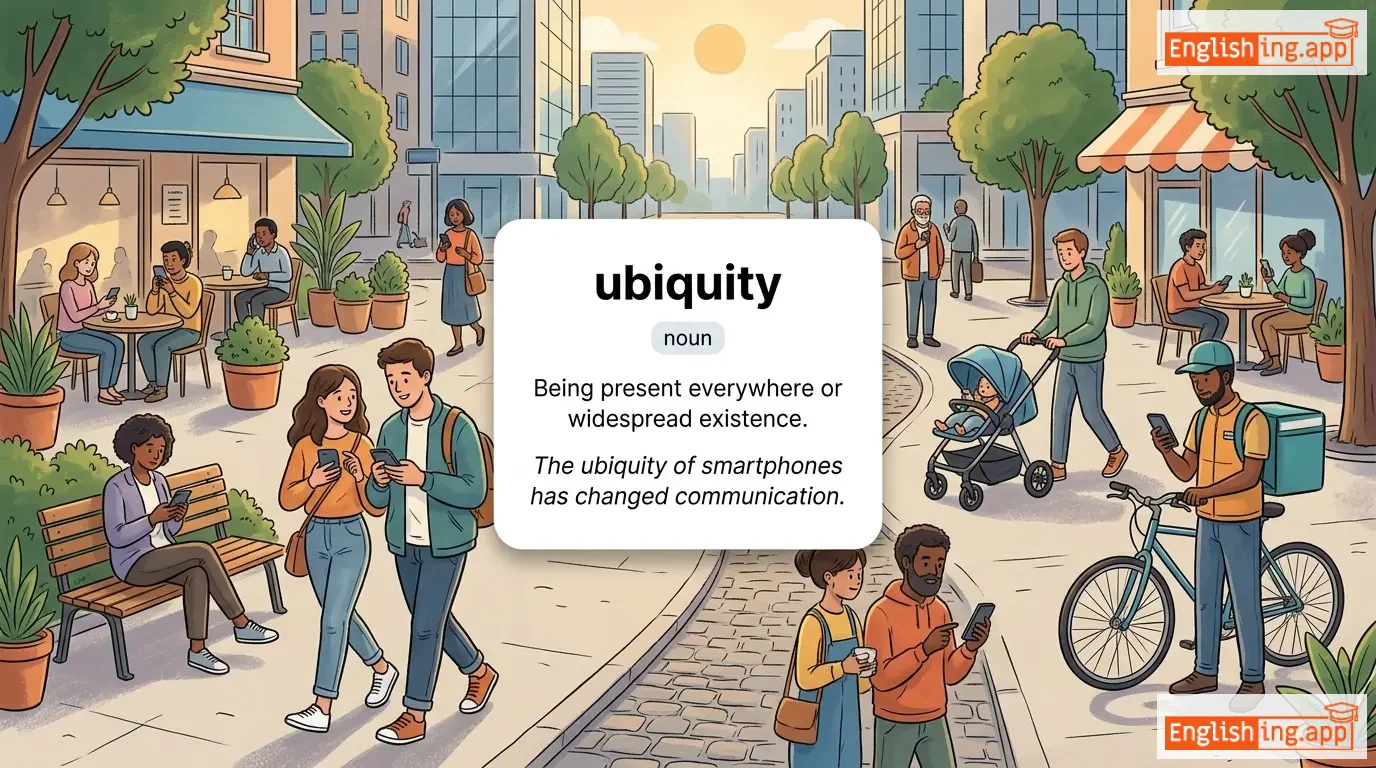
ubiquity definition card — visual illustration of the meaning
noun
/juːˈbɪk.wɪ.ti/
व्यापकता (vyapaktaa)

Being present everywhere or widespread existence.

"The ubiquity of smartphones has changed communication."

"स्मार्टफोन की व्यापकता ने संचार को बदल दिया है।" (Smartphone ki vyapaktaa ne sanchar ko badal diya hai.)
adjective
/juːˈbɪkwɪtəs/
सर्वव्यापी (sarvavyapi)

Existing or being everywhere at the same time.

"Social media has become ubiquitous among young people."

"सोशल मीडिया युवा लोगों के बीच सर्वव्यापी हो गया है।" (Social media yuva logon ke beech sarvavyapi ho gaya hai.)
adjective
/juːˈbɪkwɪtəs/
सर्वव्यापी (sarvavyaapi)

Present, appearing, or found everywhere.

"Smartphones have become ubiquitous in modern society."

"स्मार्टफोन आधुनिक समाज में सर्वव्यापी हो गए हैं।" (Smartphone aadhunik samaaj mein sarvavyaapi ho gaye hain.)
noun
/ˈtaɪroʊ/
नवोदित (navodit)

A beginner or novice in a field or activity.

"As a tyro in programming, she needed constant guidance."

"प्रोग्रामिंग में एक नवोदित के रूप में, उसे लगातार मार्गदर्शन की आवश्यकता थी।" (Programming mein ek navodit ke roop mein, use lagataar maargdarshan ki avashyakta thi.)
noun
/ˈtaɪ.rənt/
तानाशाह (tanashaah)

a cruel and oppressive ruler; a person who exercises power in a harsh manner

"The people rebelled against the cruel tyrant."

"लोगों ने क्रूर तानाशाह के खिलाफ विद्रोह किया।" (logon ne kroor tanashaah ke khilaaf vidroh kiya)
noun
/ˈtɪrəni/
तानाशाही (tanashaahi)

Cruel and oppressive government or rule by a tyrant.

"The people revolted against the tyranny of their ruler."

"लोगों ने अपने शासक की तानाशाही के खिलाफ विद्रोह किया।" (Logon ne apne shasak ki tanaashahi ke khilaaf vidroh kiya.)
adjective
/tɪˈrænɪkəl/
तानाशाही (taanaashaahi)

exercising power in a cruel or arbitrary way

"The tyrannical ruler silenced all opposition."

"तानाशाही शासक ने सभी विपक्षी आवाज़ों को चुप कर दिया।" (taanaashaahi shaasak ne sabhi vipakshi aavaazon ko chup kar diya.)
noun
/taɪˈpɒɡrəfi/
टाइपोग्राफी (typography)

the art and technique of arranging type to make written language legible and visually appealing

"Good typography improves the readability of a website."

"अच्छी टाइपोग्राफी एक वेबसाइट की पठनीयता को सुधारती है।" (achhi typography ek website ki pathaniyata ko sudharti hai.)
adjective
/ˌtaɪpəˈɡræfɪkəl/
टाइपोग्राफिकल (taipograafikal)

relating to the style, arrangement, or appearance of printed text

"There was a typographical error in the book."

"किताब में एक टाइपोग्राफिकल गलती थी।" (kitaab mein ek taipograafikal galti thi.)
noun
/ˈtaɪpoʊ/
टाइप त्रुटि (type truti)

a mistake made in typing

"The report was full of typos."

"रिपोर्ट में कई टाइप त्रुटियाँ थीं।" (report mein kai type trutiyan thin.)
verb
/ˈtɪpɪfaɪ/
प्रतिनिधित्व करना (pratinidhitva karna)

to represent or be a typical example of something

"His leadership style typifies the new corporate culture."

"उसकी नेतृत्व शैली नई कॉर्पोरेट संस्कृति का उदाहरण प्रस्तुत करती है।" (uski netritva shaili nai corporate sanskriti ka udaharan prastut karti hai.)
adverb
/ˈtɪpɪkli/
सामान्यत: (saamanyaṭa)

in a way that is typical of a particular person, thing, or group

"She typically arrives at work at 9 AM."

"वह सामान्यत: 9 बजे काम पर पहुँचती है।" (Vah saamaanyaṭa 9 baje kaam par pahuchti hai.)
adjective
/ˈtɪpɪkəl/
विशेष रूप से एक प्रकार के व्यक्ति या वस्तु की सामान्य विशेषताओं से संबंधित (vishesh roop se ek prakar ke vyakti ya vastu ki samanya visheshataon se sambandhit)

having the usual qualities of a particular type of person or thing

"It was a typical summer day, hot and humid."

"यह एक सामान्य समर दिन था, गर्म और आर्द्र।" (Yeh ek samanya summer din tha, garm aur aadr.)
noun
/taɪˈfuːn/
तूफ़ान (toofan)

a tropical storm in the region of the Indian or western Pacific oceans

"The typhoon caused severe flooding in the coastal areas."

"तूफ़ान ने तटीय क्षेत्रों में भारी बाढ़ ला दी।" (Toofan ne tatiya kshetron mein bhaari baadh la dee.)
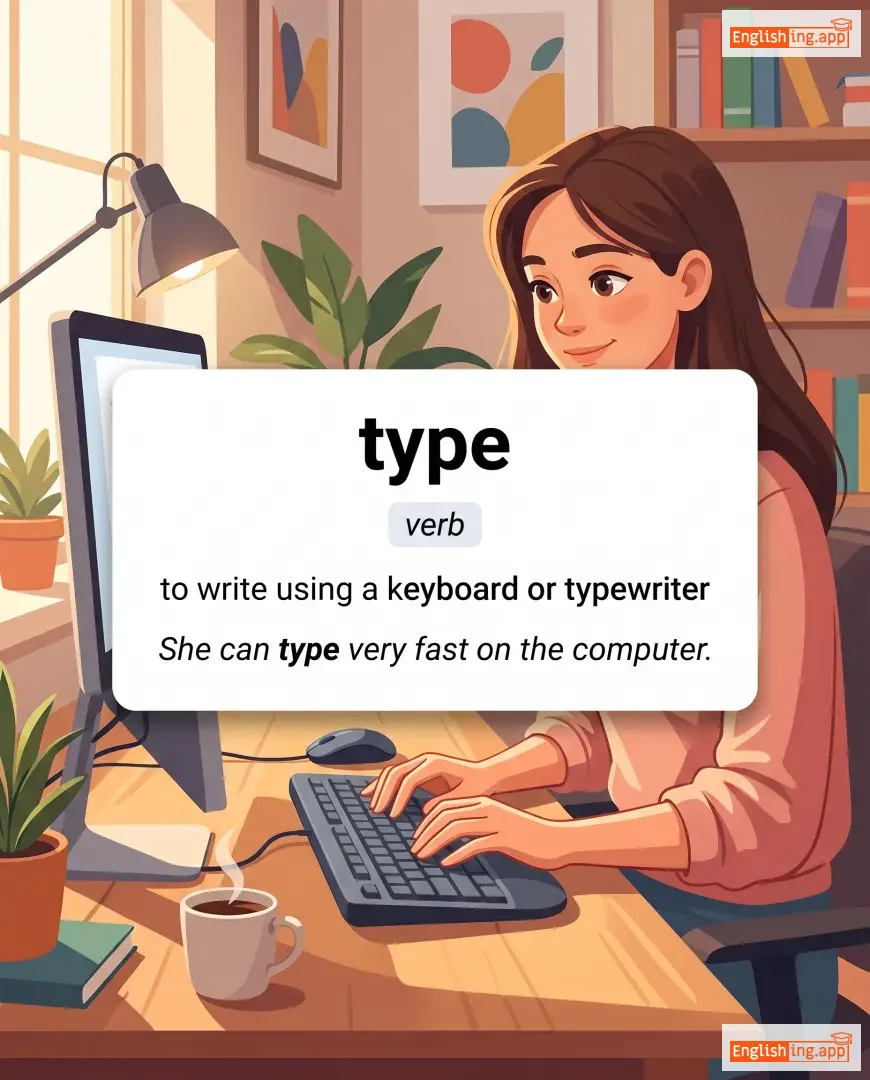
type definition card — visual illustration of the meaning
noun
/taɪp/
प्रकार (prakār)

a category of people or things having common characteristics

"What type of music do you like?"

"आप किस प्रकार का संगीत पसंद करते हैं?" (Aap kis prakār kā sangeet pasand karte hain?)
noun
/taɪˈkuːn/
धनी व्यापारी (dhani vyapari)

a wealthy, powerful businessperson

"The real estate tycoon invested in several skyscrapers."

"रियल एस्टेट टाइ्कून ने कई स्काईस्क्रैपर्स में निवेश किया।" (Real estate tycoon ne kai skyscrapers mein nivesh kiya.)
noun
/ˈtuːsəm/
जोड़ी (jodi)

A pair of people considered together, often in a romantic or competitive context.

"They entered the dance competition as a twosome."

"उन्होंने नृत्य प्रतियोगिता में एक जोड़ी के रूप में भाग लिया।" (Unhone nritya pratiyogita mein ek jodi ke roop mein bhag liya.)
noun
/tuː θɜːrdz/
दो-तिहाई (do-tihai)

a fraction equal to two parts of three; 2/3.

"Two-thirds of the students passed the exam."

"दो-तिहाई छात्र परीक्षा में उत्तीर्ण हुए।" (Do-tihai chhatra pariksha mein uttirn hue.)
noun
/tuː/
दो (do)

the number following one

"She has two children."

"उसके दो बच्चे हैं।" (Uske do bachche hain.)
noun
/juːˈkeɪs/
निर्देश (nirdesh)

An authoritative decree or order, especially one issued by a sovereign or government.

"The czar issued a ukase restricting the freedom of the press."

"जार ने प्रेस की स्वतंत्रता को सीमित करने वाला एक निर्देश जारी किया।" (Zar ne press ki svatantrata ko seemit karne wala ek nirdesh jari kiya.)
noun
/ˈtɛrərɪzəm/
आतंकवाद (aantankvaad)

the use of violence or threats to intimidate or coerce, especially for political purposes

"Terrorism is a serious threat to global peace and security."

"आतंकवाद वैश्विक शांति और सुरक्षा के लिए एक गंभीर खतरा है।" (Aantankvaad vaishwik shanti aur suraksha ke liye ek gambheer khatra hai.)
noun
/ˈtɛrərɪst/
आतंकी (aantki)

a person who uses violence or threats to intimidate or coerce, especially for political purposes

"The terrorist was arrested by the police after the attack."

"आतंकी को हमले के बाद पुलिस ने गिरफ्तार किया।" (Aantki ko hamle ke baad pulis ne giraftaar kiya.)
adjective
/tɜːrs/
संक्षिप्त (sankshipt)

brief and to the point; sparing in the use of words

"His reply was terse and ended the conversation quickly."

"उसकी प्रतिक्रिया संक्षिप्त थी और उसने जल्दी से बातचीत समाप्त कर दी।" (uski pratikriya sankshipt thi aur usne jaldi se baatcheet samaapt kar di.)
3️⃣

tertiary

adjective
/ˈtɜːrʃieri/

third in order, rank, or level

"He is pursuing his tertiary education at the university."

adjective
/ˈtɛsəleɪtɪd/
आकृति युक्त (aakriti yukt)

arranged in a pattern of repeated shapes fitting together without gaps

"The tessellated floor was made of colorful tiles arranged in perfect symmetry."

"टेसलेटीड फर्श रंगीन टाइल्स से सुसज्जित था, जो परिपूर्ण सममिति में व्यवस्थित थे।" (tessellated farsh rangeen tiles se susajjit tha, jo paripurn sammiti mein vyavasthit the.)
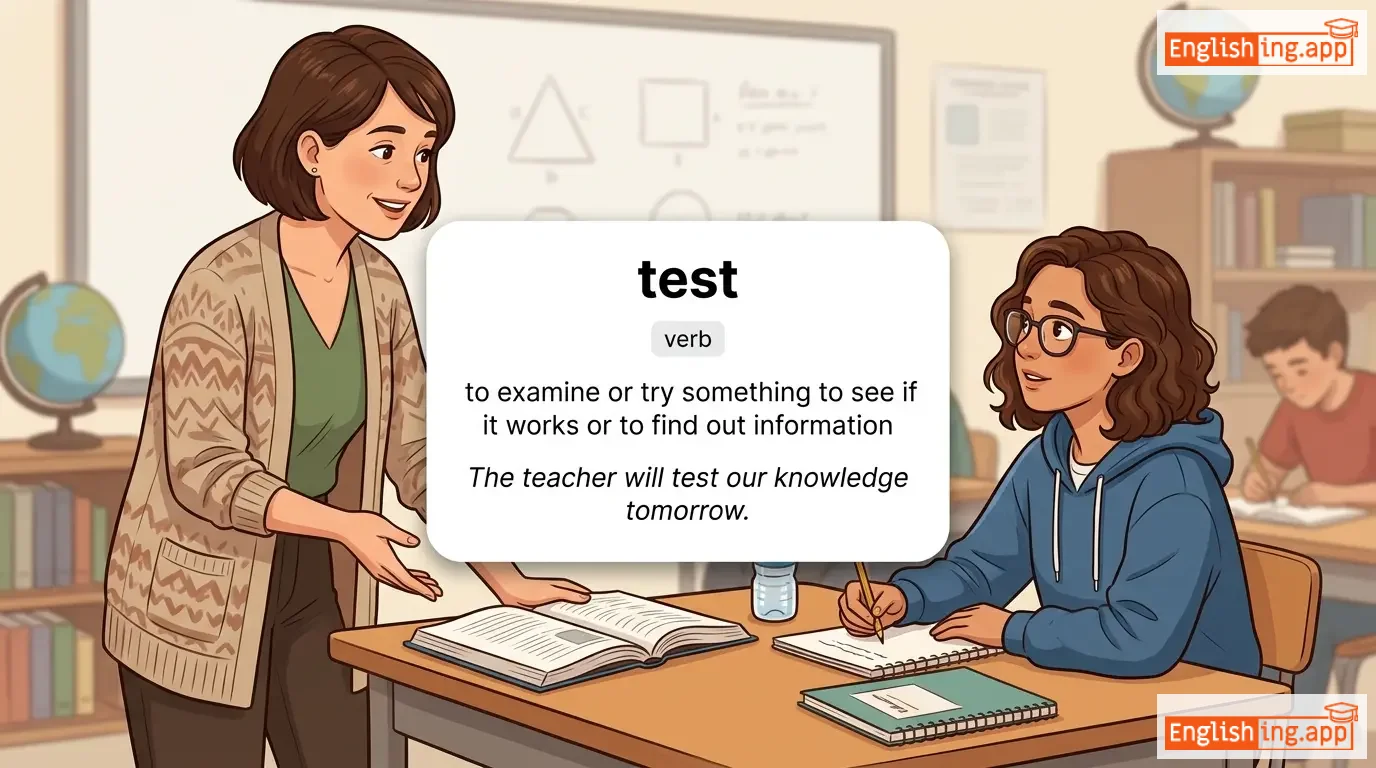
test definition card — visual illustration of the meaning
noun
/tɛst/
परीक्षा (pariksha)

a procedure intended to establish the quality, performance, or reliability of something

"The test results will determine whether the treatment is effective."

"परीक्षा के परिणाम यह निर्धारित करेंगे कि उपचार प्रभावी है या नहीं।" (Pariksha ke parinaam yah nirdharit karenge ki upchaar prabhavi hai ya nahi.)
noun
/ˈtɛstəmənt/
वसीयत / प्रमाण (vasiayat / praman)

a person's will; or strong evidence of something

"His success is a testament to his hard work and dedication."

"उसकी सफलता उसकी कठिन मेहनत और समर्पण का प्रमाण है।" (uski safalta uski kathin mehnat aur samarpan ka praman hai.)
noun
/ˈtɛsteɪtər/
वसीयतकर्ता (vaseeyatkartaa)

a person who has made a will

"The lawyer read the will of the deceased testator."

"वकील ने मृत वसीयतकर्ता की वसीयत पढ़ी।" (vakil ne mrt vaseeyatkartaa ki vaseeyat padhi.)
verb
/ˈtɛstəfaɪ/
गवाही देना (gawahi dena)

to make a statement or declaration under oath or to give evidence

"She was called to testify in court about the accident."

"उसे अदालत में दुर्घटना के बारे में गवाही देने के लिए बुलाया गया था।" (Use adalat mein durghatna ke baare mein gawahi dene ke liye bulaya gaya tha.)
noun
/ˌtɛstɪˈmoʊniəl/
प्रशंसापत्र (prashansapatra)

A formal statement testifying to someone's character, qualifications, or the quality of a product or service.

"The company shared a glowing testimonial from a satisfied customer."

"कंपनी ने एक संतुष्ट ग्राहक से एक प्रशंसापत्र साझा किया।" (Company ne ek santusht grahak se ek prashansapatra saanjha kiya.)
testimonials definition card — visual illustration of the meaning
noun
/ˌtɛstɪˈməʊnɪəlz/
साक्षात्कार, प्रशंसा पत्र (saakshaatkaar, prashansa patra)

Written or spoken statements of praise or recommendation from clients or customers.

"Positive testimonials can enhance a company's reputation."

"सकारात्मक साक्षात्कार एक कंपनी की प्रतिष्ठा बढ़ा सकते हैं।" (Sakaraatmak saakshaatkaar ek company ki pratishtha badha sakte hain.)
noun
/ˈtɛstəˌmoʊni/
गवाही (gavaahi)

A formal statement given in a court of law or evidence supporting a fact.

"Her testimony in court helped convict the criminal."

"उसकी गवाही ने अदालत में अपराधी को दोषी ठहराने में मदद की।" (Uski gavaahi ne adalat mein apradhi ko doshi thahrane mein madad ki.)
noun
/ˈtɛstɪŋ/
परीक्षण (parikshan)

the process of assessing or evaluating something, often by trying it out

"The testing of the new software is still ongoing."

"नई सॉफ़्टवेयर का परीक्षण अभी भी चल रहा है।" (Nayi software ka parikshan abhi bhi chal raha hai.)
adjective
/ˈtɛsti/
चिड़चिड़ा (chichida)

Easily irritated or annoyed.

"He became testy when asked the same question repeatedly."

"वह बार-बार एक ही सवाल पूछे जाने पर चिढ़ गए।" (Vah baar-baar ek hi sawaal poochhe jaane par chid gaye.)
noun
/θæŋks/
धन्यवाद (dhanyavaad)

an expression of gratitude

"Thanks for helping me with the project."

"प्रोजेक्ट में मदद करने के लिए धन्यवाद।" (Project mein madad karne ke liye dhanyavaad.)
noun
/ˈθæŋksˌɡɪvɪŋ/
धन्यवाद दिवस (dhanyavaad divas)

an annual holiday in the US for giving thanks, celebrated with a meal

"We spent Thanksgiving dinner with our family."

"हमने थैंक्सगिविंग डिनर अपने परिवार के साथ बिताया।" (Hamne Thanksgiving dinner apne parivar ke saath bitaya.)