वोकैबुलरीज

इंग्लिश वोकैबुलरी डिस्कवर, लर्न और मास्टर करें

noun
/ˈtʌnəl/
सुरंग (surang)

an underground passage or shaft

"They dug a tunnel under the river."

"वे नदी के नीचे एक सुरंग खोद रहे थे।" (Ve nadi ke neeche ek surang khod rahe the.)
noun
/ˈtɜːrbən/
पगड़ी (pagdi)

a head covering made by wrapping a long piece of cloth around the head

"The Sikh man wore a colorful turban."

"सिख आदमी ने एक रंगीन पगड़ी पहनी थी।" (sikh aadmi ne ek rangeen pagdi pehni thi.)
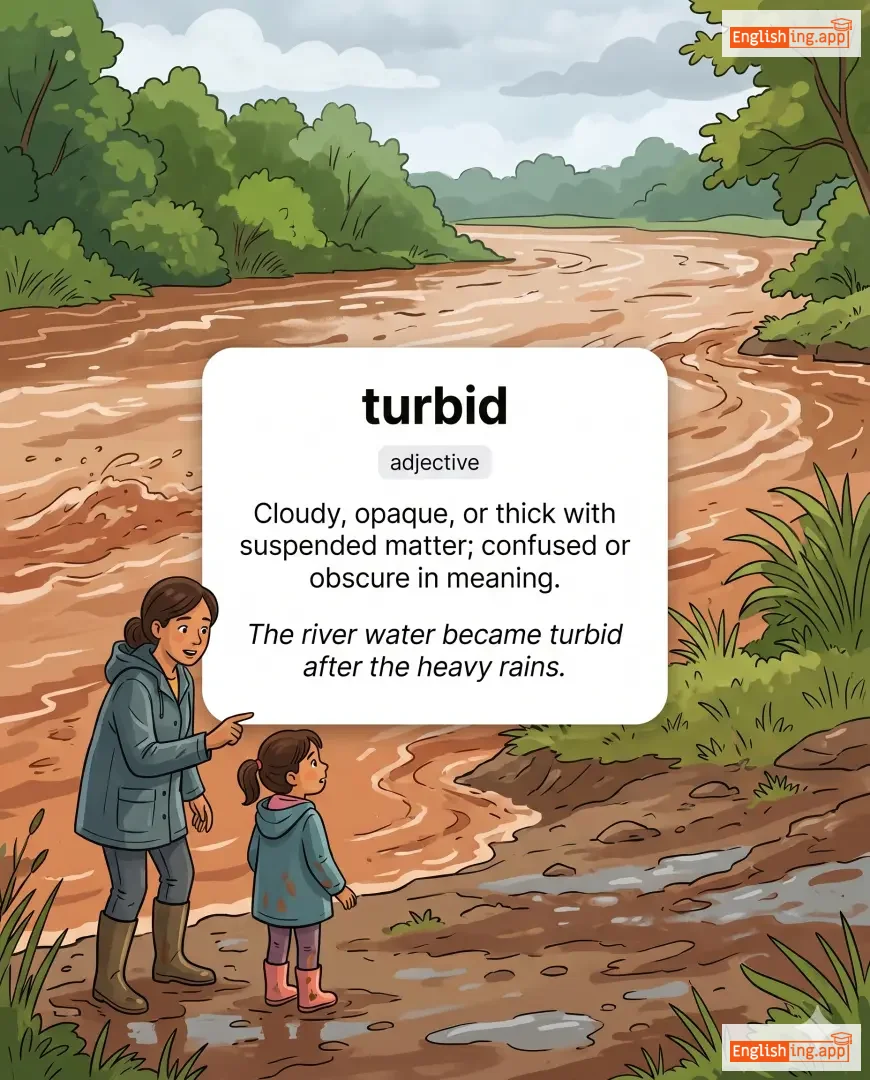
turbid definition card — visual illustration of the meaning
adjective
/ˈtɜːrbɪd/
मलिन (malin)

Cloudy, opaque, or thick with suspended matter; confused or obscure in meaning.

"The river water became turbid after the heavy rains."

"भारी बारिश के बाद नदी का पानी मलिन हो गया था।" (Bari barish ke baad nadi ka pani malin ho gaya tha.)
noun
/ˈtɜːrbjələns/
अशांत प्रवाह (turbulence)

Violent or unsteady movement of air, water, or some other fluid; disorder or conflict.

"The plane experienced severe turbulence during the flight."

"उड़ान के दौरान विमान ने तीव्र अशांत प्रवाह का अनुभव किया।" (udan ke dauran viman ne teevra ashant pravah ka anubhav kiya)
adjective
/ˈtɜːrbjələnt/
उथल-पुथल (uthal-puthal)

Characterized by conflict, disorder, or confusion; not stable or calm.

"The country went through a turbulent period of political change."

"देश एक उथल-पुथल के दौर से गुजरा।" (Desh ek uthal-puthal ke daur se guzra.)
noun
/tʊˈriːn/
तुरीन (tureen)

A large deep dish with a cover, used for serving soups or stews.

"She brought the hot soup to the table in a silver tureen."

"उसने रजत ट्यूरिन में गर्म सूप मेज पर रखा।" (Usne rajat tureen mein garam soup mej par rakha.)
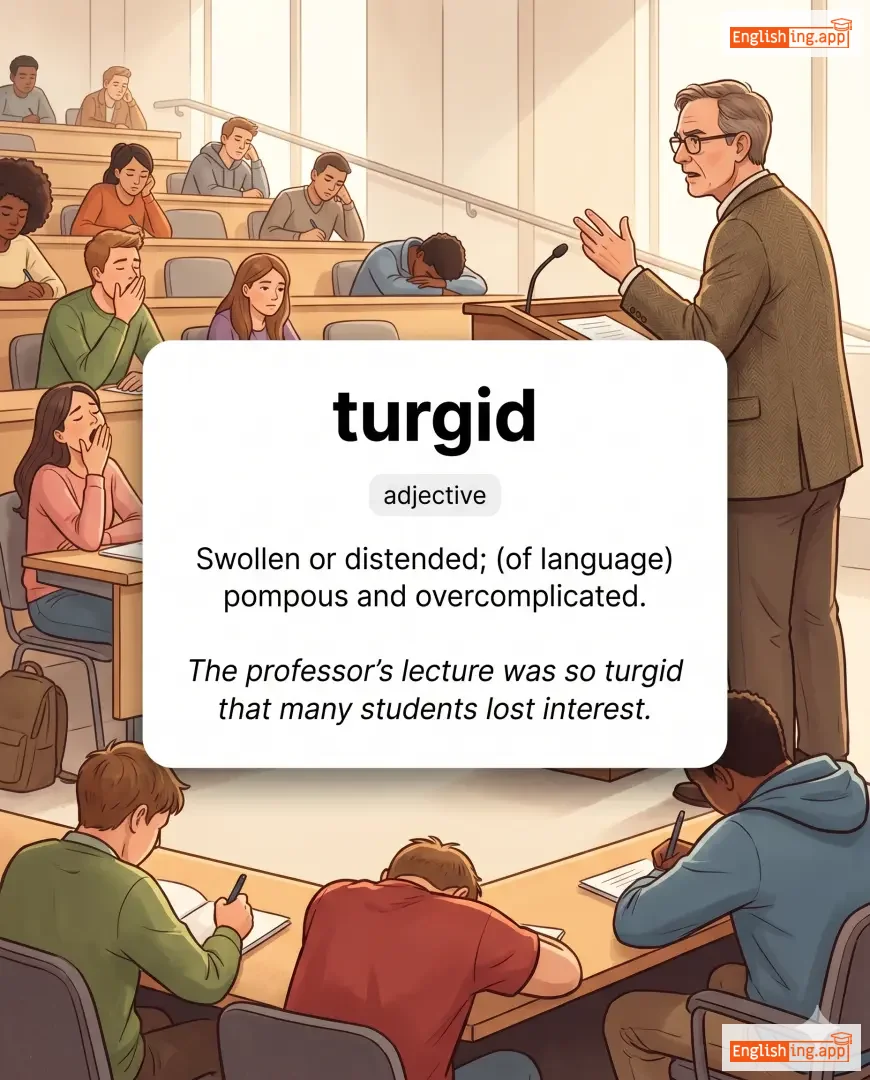
turgid definition card — visual illustration of the meaning
adjective
/ˈtɜːrdʒɪd/
सूजा हुआ, जटिल (suja hua, jatil)

Swollen or distended; (of language) pompous and overcomplicated.

"The professor’s lecture was so turgid that many students lost interest."

"प्रोफेसर की व्याख्यान इतनी जटिल थी कि कई छात्रों ने रुचि खो दी।" (Professor ki vyakhyan itni jatil thi ki kai chhatron ne ruchi kho di.)
noun
/ˈtɜːrki/
टर्की (एक प्रकार का बड़ा पक्षी) (tarki)

a large bird native to North America, often eaten at special occasions like Thanksgiving; also the meat of this bird.

"We roasted a turkey for Thanksgiving dinner."

"हमने थैंक्सगिविंग डिनर के लिए एक टर्की सेंका।" (Humne Thanksgiving dinner ke liye ek turkey senka.)
noun
/ˈtɜr.mər.ɪk/
हल्दी (haldi)

A bright yellow spice powder made from the root of a tropical plant, used in cooking and medicine

"Add turmeric to the curry for color and flavor."

"रंग और स्वाद के लिए करी में हल्दी डालें।" (kari mein rang aur swad ke liye haldi daalein)
noun
/ˈtɜːr.mər.ɪk ˈpaʊ.dər/
हल्दी पाउडर (haldi powder)

ground turmeric root used as a spice and for its medicinal properties

"Add a pinch of turmeric powder to the curry for color and flavor."

"करी में रंग और स्वाद के लिए हल्दी पाउडर की एक चुटकी डालें।" (kari mein rang aur swad ke liye haldi powder ki ek chutki daalen.)
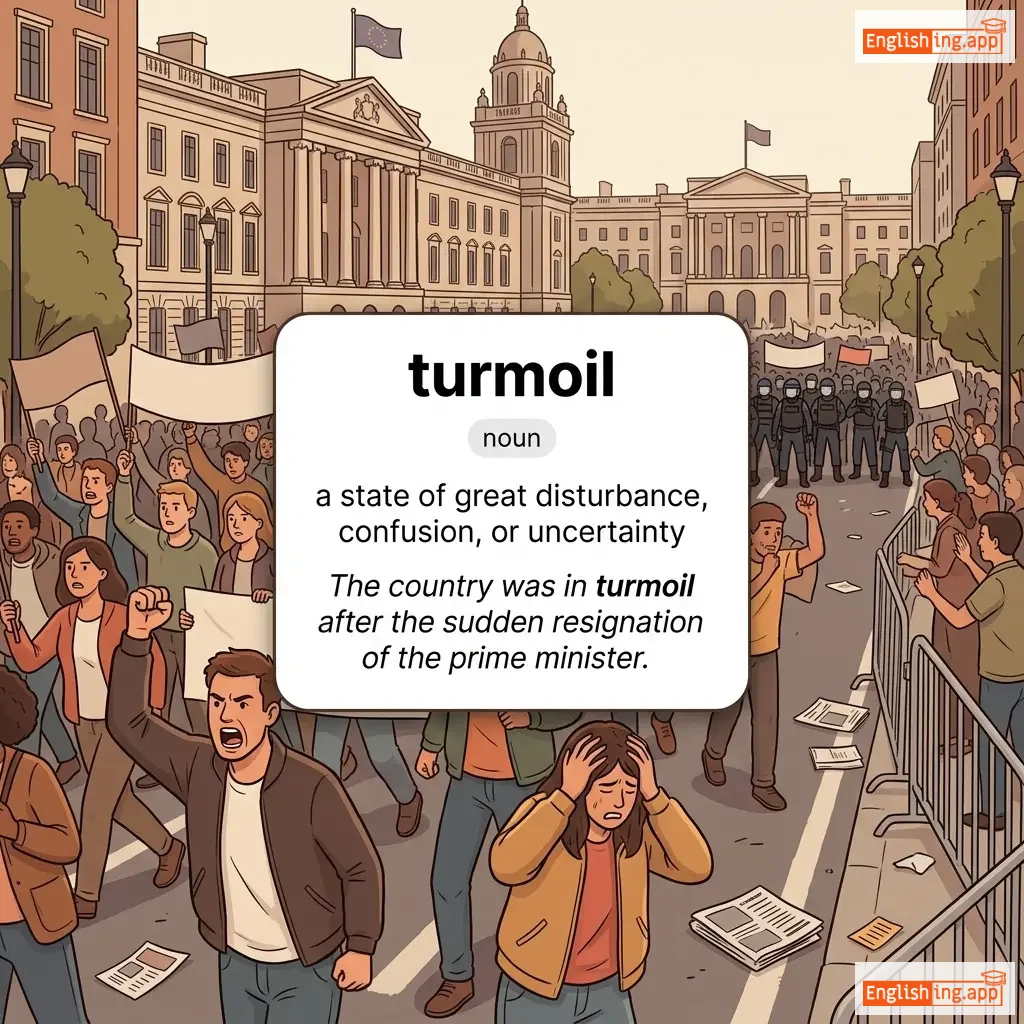
turmoil definition card — visual illustration of the meaning
noun
/ˈtɜːrmɔɪl/
उथल-पुथल (uthal-puthal)

a state of great disturbance, confusion, or uncertainty

"The country was in turmoil after the sudden resignation of the prime minister."

"प्रधानमंत्री के अचानक इस्तीफे के बाद देश में उथल-पुथल मच गई थी।" (Pradhanmantri ke achanak isteefe ke baad desh mein uthal-puthal mach gayi thi.)
Turn definition card — visual illustration of the meaning
verb
/tɜːrn/
घुमाना (ghumana)

to change direction or position

"Turn right at the next intersection."

"अगली चौराहे पर दाएँ मुड़ें।" (Agli chaurahe par daaye muden.)
noun
/ˈtɜːrnkoʊt/
धोखेबाज (dhokhebaaz)

a person who switches allegiance, often betraying a cause or group

"He was branded a turncoat after joining the rival political party."

"उसे विरोधी राजनीतिक दल से जुड़ने के बाद धोखेबाज करार दिया गया था।" (Use virodhi raajnitik dal se judne ke baad dhokhebaaz karar diya gaya tha.)
noun
/ˈtɜːr.nɪŋ/
मोड़; साइड रोड (mod; said rod)

a place where a road branches off from another; a side road

"Take the first turning on the left."

"पहले मोड़ पर बाएं मुड़ें।" (pehle mod par baen mudein.)
noun
/ˈtɜːr.nɪp/
शलगम (shalgam)

a round root vegetable with white or purple skin and white flesh

"We grew turnips in our vegetable garden."

"हमने अपने बागीचे में शलगम उगाए।" (hamne apne bageeche mein shalgam ugaaye.)
adjective
/ˈtɜːrnkiː/
पूर्णतया तैयार (poornataya tayar)

ready for immediate use; a complete product or solution

"The company provides turnkey solutions for small businesses."

"कंपनी छोटे व्यवसायों के लिए टर्नकी समाधान प्रदान करती है।" (Company chhote vyavsayon ke liye turnkey samadhan pradan karti hai.)
noun
/ˈtɜːr.naʊt/
हाज़िरी (hazeeri)

the number of people who attend or participate in an event or activity

"The turnout at the rally was impressive, with thousands showing up."

"रैली में हाज़िरी प्रभावशाली थी, हजारों लोग पहुंचे थे।" (Raily mein hazeeri prabhavshali thi, hazaron log pahuche the.)
noun
/ˈtɜːnˌəʊvə/
टर्नओवर (turnover)

the amount of business conducted during a particular period, or the rate at which employees leave a company

"The company reported a high turnover in its sales department."

"कंपनी ने अपनी बिक्री विभाग में एक उच्च टर्नओवर रिपोर्ट किया।" (Kampani ne apni bikri vibhag mein ek uchch turnover report kiya.)
noun
/ˈtɜːrpɪtuːd/
दुष्टता (dushtata)

depraved or wicked behavior or character

"The judge condemned the criminal’s act of moral turpitude."

"न्यायाधीश ने अपराधी के नैतिक दुष्टता कृत्य की निंदा की।" (Nyayadhish ne apradhi ke naitik dushtata krutya ki ninda ki.)
noun
/ˈtɜːrkwɔɪz/
फ़िरोज़ा (firoza)

a greenish-blue color or gemstone

"She wore a necklace with a beautiful turquoise stone."

"वह एक सुंदर फ़िरोज़ा पत्थर की हार पहने हुए थी।" (Vah ek sundar firoza patthar ki haar pehne hue thi.)
noun
/ˈtʌrɪt/
किलें या किलों पर स्थित छोटा टावर (kilen ya kilon par sthit chhota towar)

A small tower on top of a larger tower or building, often used in castles or fortifications.

"The castle was guarded by soldiers stationed in the turret."

"किले की रक्षा टुरेट में तैनात सैनिकों द्वारा की जाती थी।" (Kile ki raksha turret mein tainat sainikon dvara ki jati thi.)
noun
/ˈtɜːrtl/
कछुआ (kachhua)

A slow-moving reptile with a hard shell that lives in water or on land

"The turtle slowly crossed the sandy beach."

"कछुआ धीरे-धीरे रेत वाले समुद्र तट को पार कर गया।" (kachhua dhire-dhire ret wale samudra tat ko paar kar gaya)
noun
/ˈtjuːtɪlɪdʒ/
शिक्षण (shikshan)

The act of guarding, protecting, or guiding; instruction or teaching.

"She studied painting under the tutelage of a famous artist."

"वह एक प्रसिद्ध कलाकार के मार्गदर्शन में चित्रकला का अध्ययन कर रही थी।" (Wah ek prasiddh kalakar ke margdarshan mein chitrakala ka adhyayan kar rahi thi.)
adjective
/ˈtjuːtɪlɑːr/
पालक (paalak)

Serving as a guardian or protector.

"The tutelar spirit of the forest was believed to protect travelers."

"वन का ट्यूटेलर आत्मा यात्रियों की रक्षा करने के लिए माना जाता था।" (Van ka tutelar atma yatrion ki raksha karne ke liye maana jaata tha.)
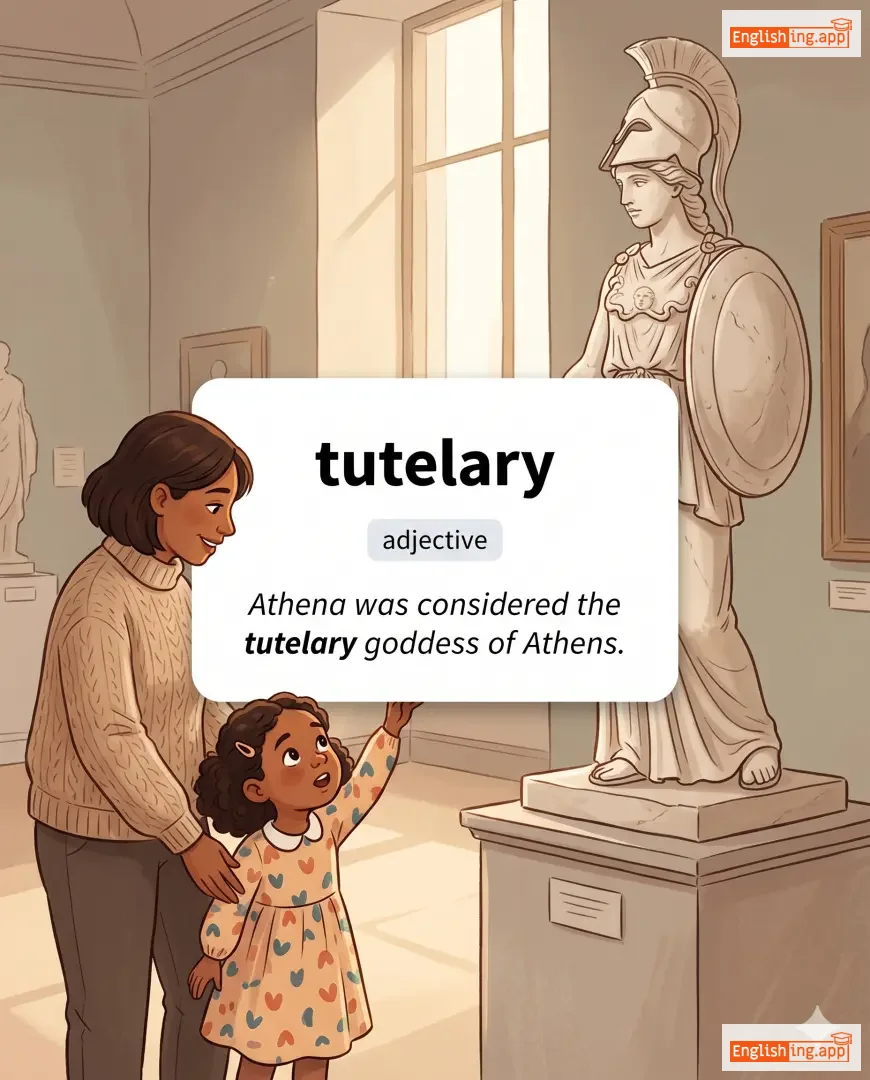
tutelary definition card — visual illustration of the meaning
adjective
/ˈtjuːtɪləri/
पालक (paalak)

Relating to or serving as a guardian or protector, often used for deities or spirits.

"Athena was considered the tutelary goddess of Athens."

"एथेना को एथेंस की पालक देवी माना जाता था।" (Athena ko Athens ki paalak devi mana jata tha.)
noun
/ˈtjuːtərʃɪp/
शिक्षकत्व (shikshaktva)

The office or position of a tutor; guidance or instruction given by a tutor.

"He thrived under the tutorship of his mentor."

"वह अपने मेंटर के शिक्षकत्व में फलफूल रहा था।" (Vah apne mentor ke shikshaktva mein phalphool raha tha.)
noun
/ˈtiːˈviː/
टेलीविजन (ṭelīvizhan)

a device used to receive television broadcasts

"I watch my favorite shows on TV every evening."

"मैं हर शाम टीवी पर अपने पसंदीदा शो देखता हूँ।" (Main har śām ṭīvī par apnē pasandīdā śō dēkhtā hūn.)
tweak definition card — visual illustration of the meaning
verb
/twiːk/
स्मॉल सुधार करना (small sudhaar karna)

to make small adjustments; to fine-tune something

"We need to tweak the design slightly."

"हमें डिज़ाइन में थोड़ा सा ट्वीक करना होगा।" (Humein design mein thoda sa tweak karna hoga)
noun
/twiːt/
चहचहाना (chahchahana)

a short high-pitched sound made by a small bird; a post on Twitter

"I heard the sweet tweet of a sparrow this morning."

"मैंने आज सुबह एक गौरैया की मीठी ट्वीट सुनी।" (maine aaj subah ek gauraiya ki meethee tweet suni.)
adjective
/twɛlv/
बारह (baara)

the number equivalent to 12

"There are twelve months in a year."

"एक वर्ष में बारह महीने होते हैं।" (ek varsh mein baarah mahine hote hain.)
adjective
/ˈtwɛntiəθ/
बीसवां (beeswan)

coming after the nineteenth in order; being one of twenty equal parts.

"She was born on the twentieth of April."

"वह अप्रैल की बीसवीं तारीख को पैदा हुई थी।" (Woh April ki beesvi tareekh ko paida hui thi.)
adjective
/ˈtwɛnti/
बीस (bees)

the number equivalent to 20

"He is twenty years old."

"वह बीस साल का है।" (Vah bees sāla kā hai.)
adverb
/twaɪs/
दो बार (do baar)

two times

"I have seen that movie twice."

"मैंने वह फिल्म दो बार देखी है।" (Mainne wah film do baar dekhi hai.)
noun
/twɪɡ/
टहनी (tahani)

a small thin branch of a tree or bush

"She broke a twig off the tree to use as a stick."

"उसने लकड़ी की छड़ी बनाने के लिए पेड़ से एक टहनी तोड़ी।" (Usne lakdi ki chhadi banane ke liye ped se ek tahani todi.)
noun
/ˈtwaɪ.laɪt/
गोधूलि (godhuli)

the soft glowing light from the sky when the sun is below the horizon; a period of decline

"We walked along the beach at twilight."

"हम समुद्र तट पर गोधूलि में चल रहे थे।" (ham samudra tat par godhuli mein chal rahe the.)
noun
/twɪn/
जुड़वां (judwa)

either of two children born at the same time to the same mother

"They have twin girls."

"उनके पास जुड़वां लड़कियाँ हैं।" (Unke paas judwa ladkiyaan hain.)
noun
/twɪndʒ/
चोट (chot)

a sudden, sharp pain or an emotional pang

"He felt a twinge of guilt after lying to his friend."

"उसने अपने दोस्त से झूठ बोलने के बाद अपराधबोध का अचानक दर्द महसूस किया।" (Usne apne dost se jhooth bolne ke baad apradhbodh ka achanak dard mehsoos kiya.)
verb
/twɪst/
मोड़ना, घुमाना (modna, ghumana)

to bend or turn something into a coil or spiral shape; to distort.

"He twisted the rope tightly around the pole."

"उसने रस्सी को पोल के चारों ओर कसकर घुमा दिया।" (Usne rassi ko pol ke charon or kaskar ghooma diya.)
adjective
/ˌʌltrəˈmɒnteɪn/
पोप समर्थक (pop samarthak)

beyond the mountains, especially referring to support for the Pope over local church authority

"The debate highlighted the ultramontane position in church politics."

"बहस में चर्च राजनीति में अल्ट्रामोंटेन स्थिति को उजागर किया गया।" (Bahas mein church rajneeti mein ultramontane sthiti ko ujagar kiya gaya.)
noun
/ʌnəˈbɪləti/
असक्षमता (askshamata)

the state of being unable to do something; incapacity

"His unability to solve the problem caused delays in the project."

"समस्या हल करने में उसकी असक्षमता ने परियोजना में देरी कर दी।" (samasya hal karne me uski askshamata ne pariyojana me deri kar di)
noun
/ʌmˈbrɛlə/
छाता (chhata)

A device used for protection against rain or sun, typically consisting of a collapsible canopy mounted on a central rod.

"She opened her umbrella as it started to rain."

"बारिश होने पर उसने अपना छाता खोला।" (Barish hone par usne apna chhata khola.)
noun
/ˈʌmbrɪdʒ/
नाराज़गी, अपमान (narazgi, apman)

A feeling of resentment or offense.

"She took umbrage at his rude remark."

"वह उसकी रude टिप्पणी पर नाराज हो गई।" (Woh uski rude tipanni par naraz ho gayi.)
noun
/ˈʌm.brə/
छाया का पूर्ण अंधेरा, कोई ओपेक वस्तु द्वारा डाली गई छाया का आंतरिक भाग (chhaya ka poorn andhera, koi opek vastu dwara daali gayi chhaya ka antarik bhaag)

the fully shaded inner region of a shadow cast by an opaque object; the dark center of a sunspot

"During the eclipse, we stood in the moon's umbra."

"ग्रहण के दौरान, हम चाँद के अंब्राः में खड़े थे।" (grahan ke dauran, hum chaand ke ambraa mein khade the)
adjective
/ˌʌltrəˈmʌndeɪn/
अतिलौकिक (atiloukik)

Relating to things beyond the physical world; supernatural or transcendental.

"Philosophers often discuss ultramundane realities beyond human perception."

"दार्शनिक अक्सर मानव धारणा से परे अल्ट्रामंडेन वास्तविकताओं पर चर्चा करते हैं।" (Darshanik aksar manav dharana se pare ultramundane vastaviktaon par charcha karte hain.)
adjective
/ˈʌltɪmət/
अंतिम (antim)

being the best, final, or most extreme

"Success is the ultimate goal of hard work."

"सफलता कठिन परिश्रम का अंतिम लक्ष्य है।" (Safalta kathin parishram ka antim lakshya hai.)
noun
/ˈʌlsər/
अल्सर (alsar)

a sore on the skin or a mucous membrane that does not heal easily

"The doctor prescribed medicine to treat the stomach ulcer."

"डॉक्टर ने पेट के अल्सर का उपचार करने के लिए दवा लिखी." (doktar ne pet ke alsar ka upchar karne ke liye dawa likhi.)
adjective
/ʌlˈtɪəriər/
गुप्त उद्देश्य (gupt uddeshya)

hidden or secret, often with a selfish motive

"He invited her with an ulterior motive."

"उसने एक गुप्त उद्देश्य के साथ उसे आमंत्रित किया।" (Usne ek gupt uddeshya ke saath use amantrit kiya.)
adjective
/ʌˈneɪbl/
असमर्थ (asamarth)

not able to do something

"She was unable to attend the meeting."

"वह बैठक में भाग लेने में असमर्थ थी।" (Vah baithak mein bhag lene mein asamarth thi.)
adverb
/ˈʌltəmətli/
अंततः (antatah)

in the end, after everything else

"Ultimately, we decided to go ahead with the project."

"अंततः, हमने परियोजना के साथ आगे बढ़ने का निर्णय लिया।" (Antatah, humne pariyojna ke saath aage badhne ka nirnay liya.)
noun
/ˌʌltɪˈmeɪtəm/
अंतिम प्रस्ताव (antim prastaav)

a final demand or statement of terms

"The workers gave the company an ultimatum to raise their wages."

"कर्मचारियों ने कंपनी को उनके वेतन बढ़ाने के लिए एक अंतिम प्रस्ताव दिया।" (Karmachariyon ne company ko unke vetan badhane ke liye ek antim prastaav diya.)