語彙集

英単語辞書 | 単語の意味、定義、例文

noun
/ˈtʌnəl/
トンネル (tonneru)

an underground passage or shaft

"They dug a tunnel under the river."

"彼らは川の下にトンネルを掘った。" (Karera wa kawa no shita ni tonneru o hotta.)
noun
/ˈtɜːrbən/
ターバン (tāban)

a head covering made by wrapping a long piece of cloth around the head

"The Sikh man wore a colorful turban."
"シク教の男性はカラフルなターバンを着けていました。" (Shiku-kyō no dansei wa karafuru na tāban o tsukete imashita.)
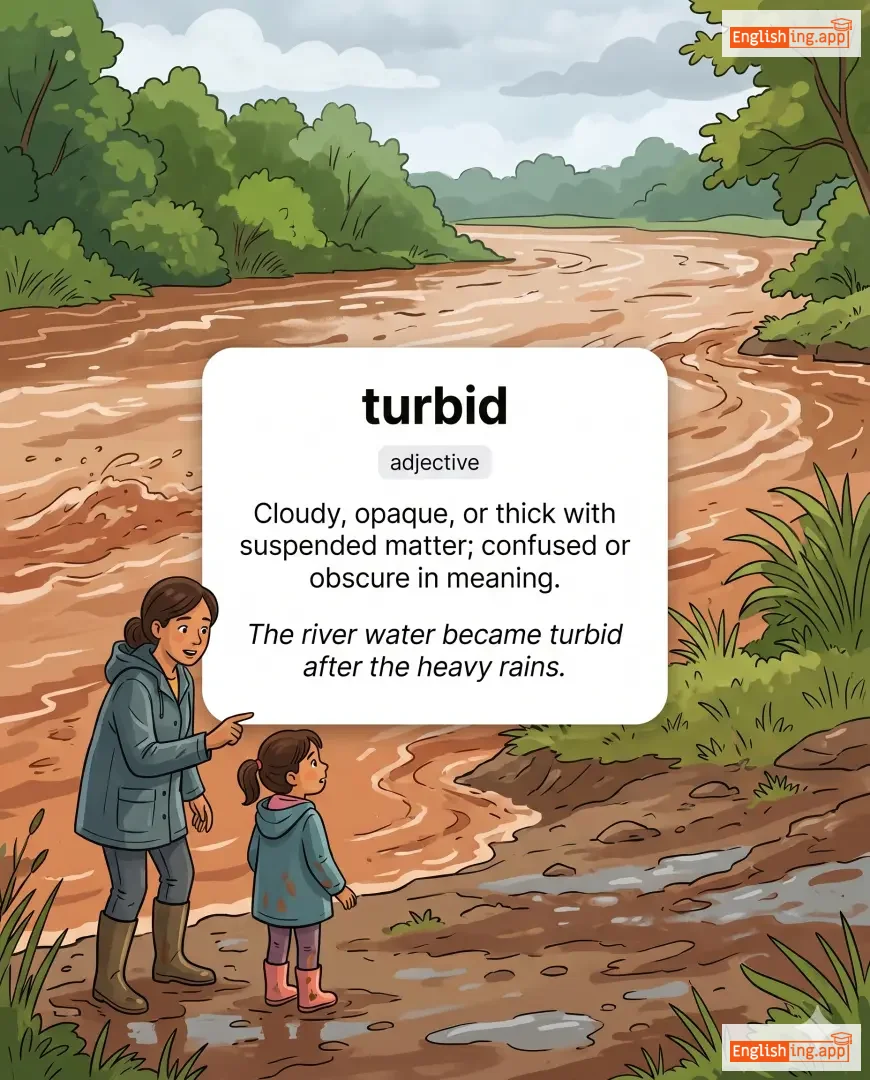
turbid definition card — visual illustration of the meaning
adjective
/ˈtɜːrbɪd/
濁った (nigotta)

Cloudy, opaque, or thick with suspended matter; confused or obscure in meaning.

"The river water became turbid after the heavy rains."

"激しい雨の後、川の水は濁った。" (Hageshī ame no ato, kawa no mizu wa nigotta.)
noun
/ˈtɜːrbjələns/

Violent or unsteady movement of air, water, or some other fluid; disorder or conflict.

"The plane experienced severe turbulence during the flight."

adjective
/ˈtɜːrbjələnt/
動揺 (dōyō)

Characterized by conflict, disorder, or confusion; not stable or calm.

"The country went through a turbulent period of political change."

"その国は政治的変革の動揺した時期を経ました。" (Sono kuni wa seijiteki henka no dōyō shita jiki o emashita.)
noun
/tʊˈriːn/
ターリーン (tārin)

A large deep dish with a cover, used for serving soups or stews.

"She brought the hot soup to the table in a silver tureen."
"彼女は銀色のターリーンで熱いスープをテーブルに運びました。" (Kanojo wa giniro no tārin de atsui sūpu o tēburu ni hakobimashita.)
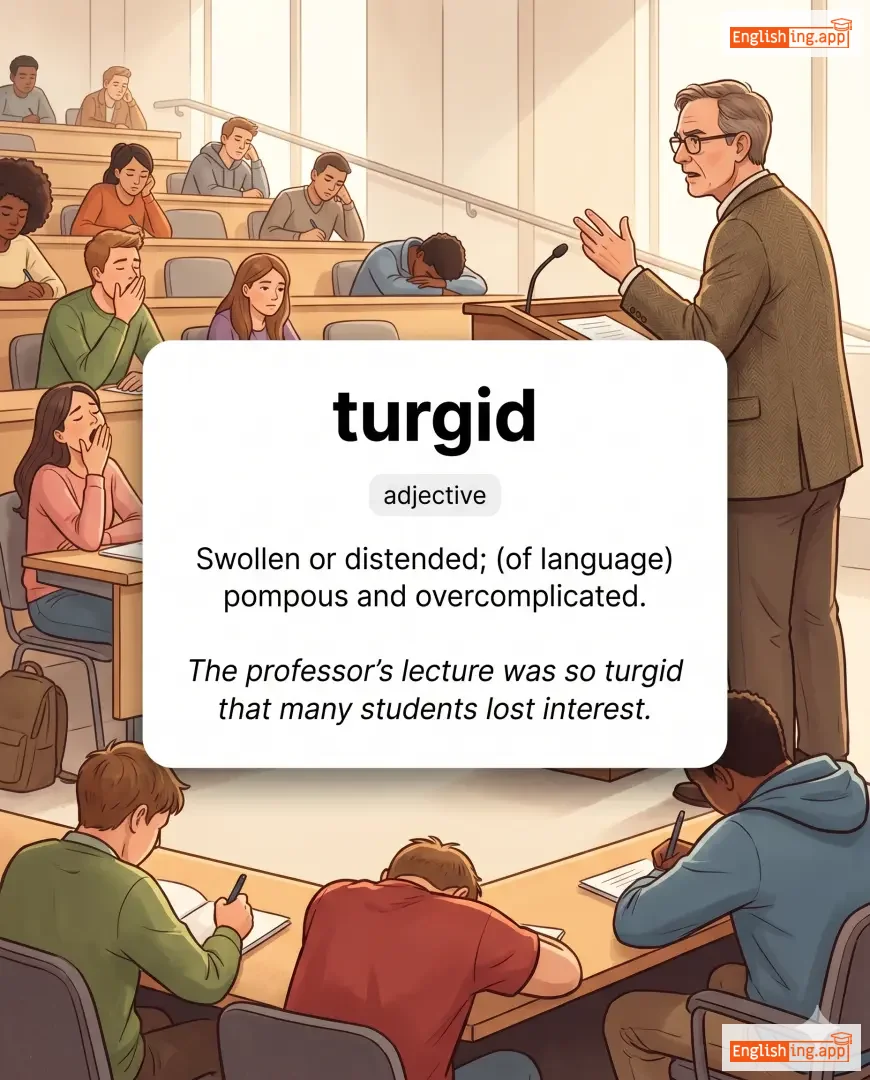
turgid definition card — visual illustration of the meaning
adjective
/ˈtɜːrdʒɪd/
膨らんだ, 大げさな (fukuranda, oogesana)

Swollen or distended; (of language) pompous and overcomplicated.

"The professor’s lecture was so turgid that many students lost interest."

"教授の講義はあまりにも大げさすぎて、多くの学生が興味を失いました。" (Kyoushu no kougi wa amari ni mo oogesa sugite, ooku no gakusei ga kyomi o ushinai mashita.)
noun
/ˈtɜːrki/
七面鳥 (大きな鳥) (shichimenchou)

a large bird native to North America, often eaten at special occasions like Thanksgiving; also the meat of this bird.

"We roasted a turkey for Thanksgiving dinner."

"感謝祭の夕食に七面鳥を焼きました。" (Kanshasai no yūshoku ni shichimenchou o yakimashita.)
noun
/ˈtɜr.mər.ɪk/
ターメリック (tāmerikku)

A bright yellow spice powder made from the root of a tropical plant, used in cooking and medicine

"Add turmeric to the curry for color and flavor."

"カレーに色と風味を加えるためにターメリックを加えます。" (Karē ni iro to fūmi o kuwaeru tame ni tāmerikku o kuwaemasu)
noun
/ˈtɜːr.mər.ɪk ˈpaʊ.dər/
ターメリックパウダー (tāmerikku paudā)

ground turmeric root used as a spice and for its medicinal properties

"Add a pinch of turmeric powder to the curry for color and flavor."
"カレーにターメリックパウダーを一つまみ加えて、色と風味を加えます。" (Karē ni tāmerikku paudā o hitotsumami kuwaete, iro to fūmi o kuwaemasu.)
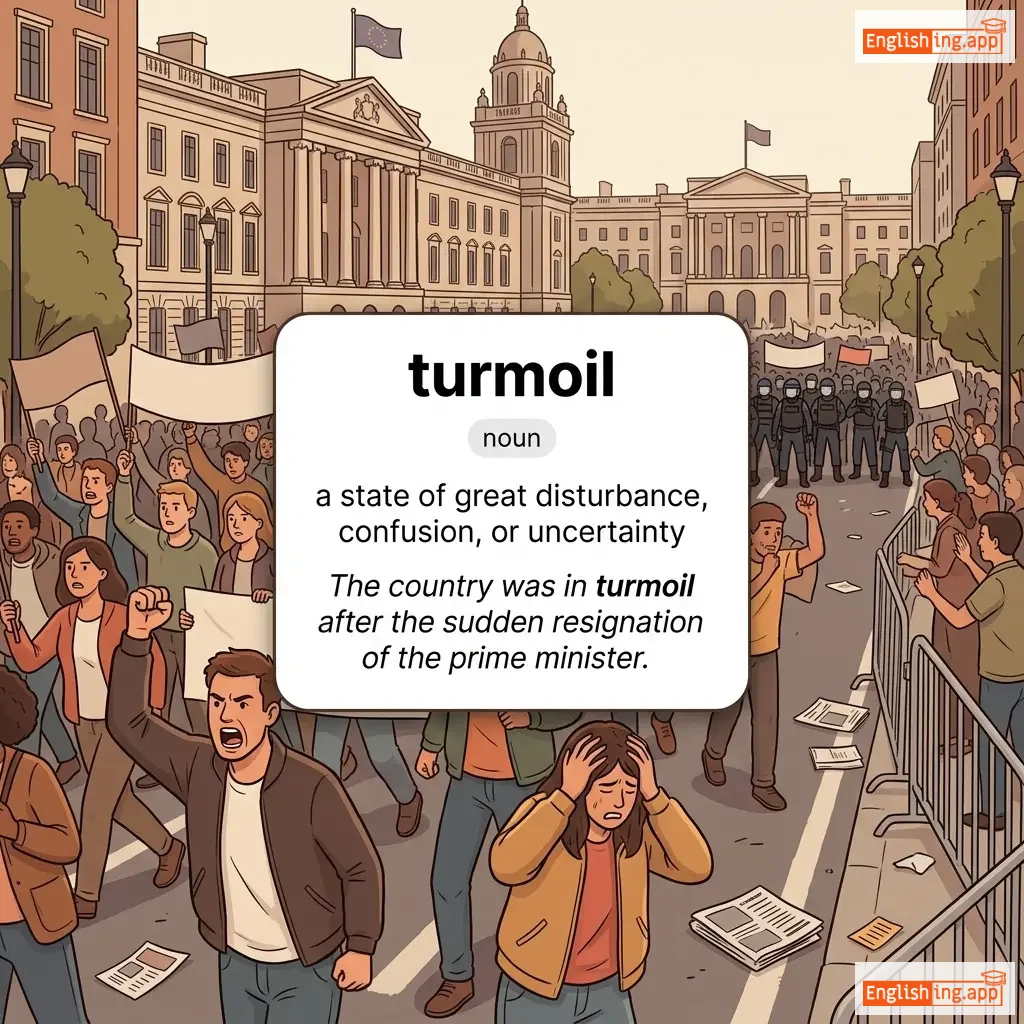
turmoil definition card — visual illustration of the meaning
noun
/ˈtɜːrmɔɪl/
混乱 (konran)

a state of great disturbance, confusion, or uncertainty

"The country was in turmoil after the sudden resignation of the prime minister."
"首相の突然の辞任後、国は混乱状態に陥った。" (Shushou no totsuzen no jinin go, kuni wa konran joutai ni ochitta.)
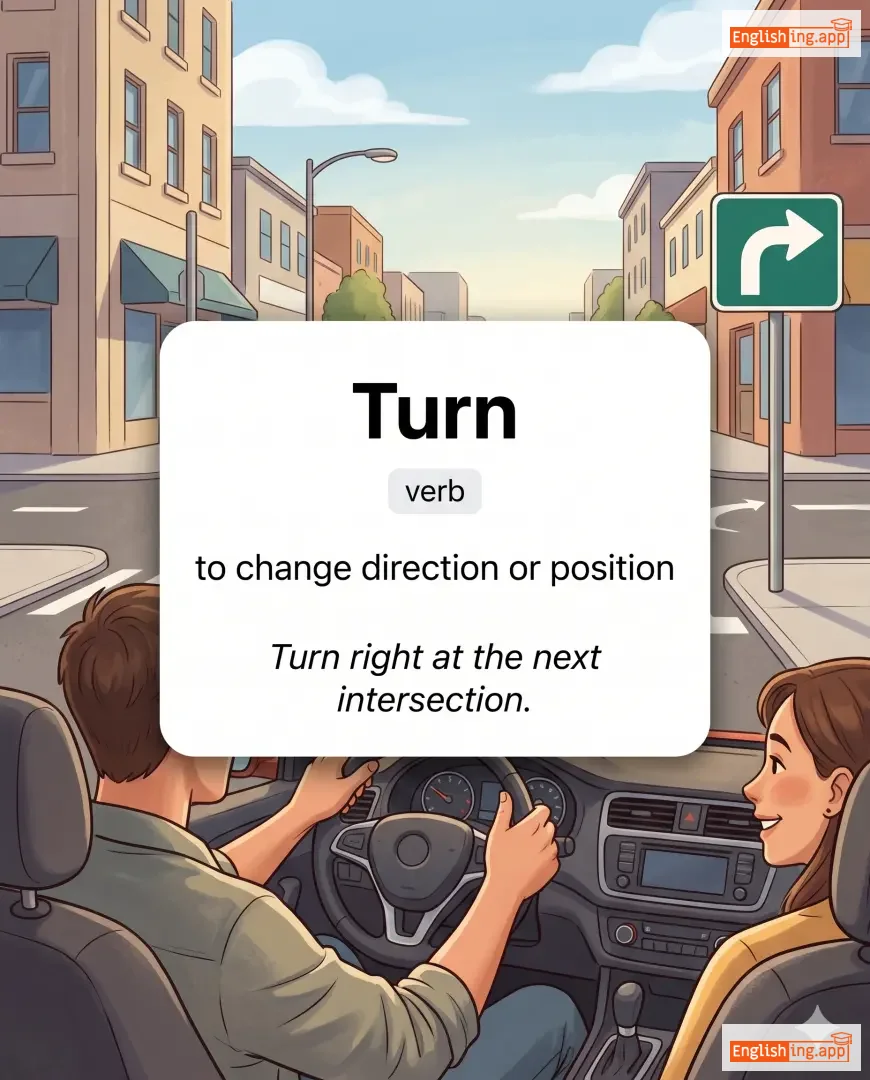
Turn definition card — visual illustration of the meaning
verb
/tɜːrn/
回す (mawasu)

to change direction or position

"Turn right at the next intersection."

"次の交差点で右に曲がってください。" (Tsugi no kousaten de migi ni magatte kudasai.)
noun
/ˈtɜːrnkoʊt/
裏切り者 (uragirimono)

a person who switches allegiance, often betraying a cause or group

"He was branded a turncoat after joining the rival political party."

"彼はライバルの政治党に参加した後、裏切り者と呼ばれました。" (Kare wa raibaru no seiji tō ni sanka shita ato, uragirimono to yobaremashita.)
noun
/ˈtɜːr.nɪŋ/
曲がり角; サイドロード (magarikado; saidorōdo)

a place where a road branches off from another; a side road

"Take the first turning on the left."

"最初の交差点を左に曲がってください。" (saisho no kōsaten o hidari ni magatte kudasai.)
noun
/ˈtɜːr.nɪp/
カブ (kabu)

a round root vegetable with white or purple skin and white flesh

"We grew turnips in our vegetable garden."

"私たちは野菜畑でカブを育てました。" (Watashitachi wa yasai hatake de kabu o sodatemashita.)
adjective
/ˈtɜːrnkiː/
ターンキー (taanki)

ready for immediate use; a complete product or solution

"The company provides turnkey solutions for small businesses."

"その会社は小規模なビジネス向けのターンキーソリューションを提供しています。" (Sono kaisha wa shokibo na bijinesu muke no taanki soriushon wo teikyō shiteimasu.)
noun
/ˈtɜːr.naʊt/
参加者数 (sankasha suu)

the number of people who attend or participate in an event or activity

"The turnout at the rally was impressive, with thousands showing up."

"集会の参加者数は印象的で、何千人もの人々が参加しました。" (Shukai no sankasha suu wa inshouteki de, nansen nin mono hitobito ga sankashimashita.)
noun
/ˈtɜːnˌəʊvə/
売上高 (uriagedaka)

the amount of business conducted during a particular period, or the rate at which employees leave a company

"The company reported a high turnover in its sales department."

"会社は販売部門で高い売上高を報告しました。" (Kaisha wa hanbai bumon de takai uriagedaka wo houkoku shimashita.)
noun
/ˈtɜːrpɪtuːd/
堕落 (daraku)

depraved or wicked behavior or character

"The judge condemned the criminal’s act of moral turpitude."

"裁判官は犯罪者の道徳的堕落行為を非難した。" (Saibankan wa hanzai-sha no dōtoku-teki daraku kōi o hinan shita.)
noun
/ˈtɜːrkwɔɪz/
ターコイズ (taakoizu)

a greenish-blue color or gemstone

"She wore a necklace with a beautiful turquoise stone."

"彼女は美しいターコイズの石を使ったネックレスをしていました。" (Kanojo wa utsukushii taakoizu no ishi wo tsukatta nekkuresu wo shiteimashita.)
noun
/ˈtʌrɪt/
大きな塔や建物の上にある小さな塔 (ookina to ya tatemono no ue ni aru chiisana tou)

A small tower on top of a larger tower or building, often used in castles or fortifications.

"The castle was guarded by soldiers stationed in the turret."

"城はタレットに駐留している兵士によって守られていた。" (Shiro wa toretto ni chūryū shiteiru heishi ni yotte mamorarete ita.)
noun
/ˈtɜːrtl/
(kame)

A slow-moving reptile with a hard shell that lives in water or on land

"The turtle slowly crossed the sandy beach."

"カメは砂浜をゆっくり横切った。" (Kame wa sunahama o yukkuri yokogitta)
noun
/ˈtjuːtɪlɪdʒ/
指導 (shidou)

The act of guarding, protecting, or guiding; instruction or teaching.

"She studied painting under the tutelage of a famous artist."

"彼女は有名なアーティストの指導の下で絵を学びました。" (Kanojo wa yuumei na aatisuto no shidou no moto de e o manabimashita.)
adjective
/ˈtjuːtɪlɑːr/
守護的 (shugodēki)

Serving as a guardian or protector.

"The tutelar spirit of the forest was believed to protect travelers."
"森の守護霊は旅行者を守ると信じられていました。" (Mori no shugorei wa ryokōsha o mamoru to shinjirarete imashita.)
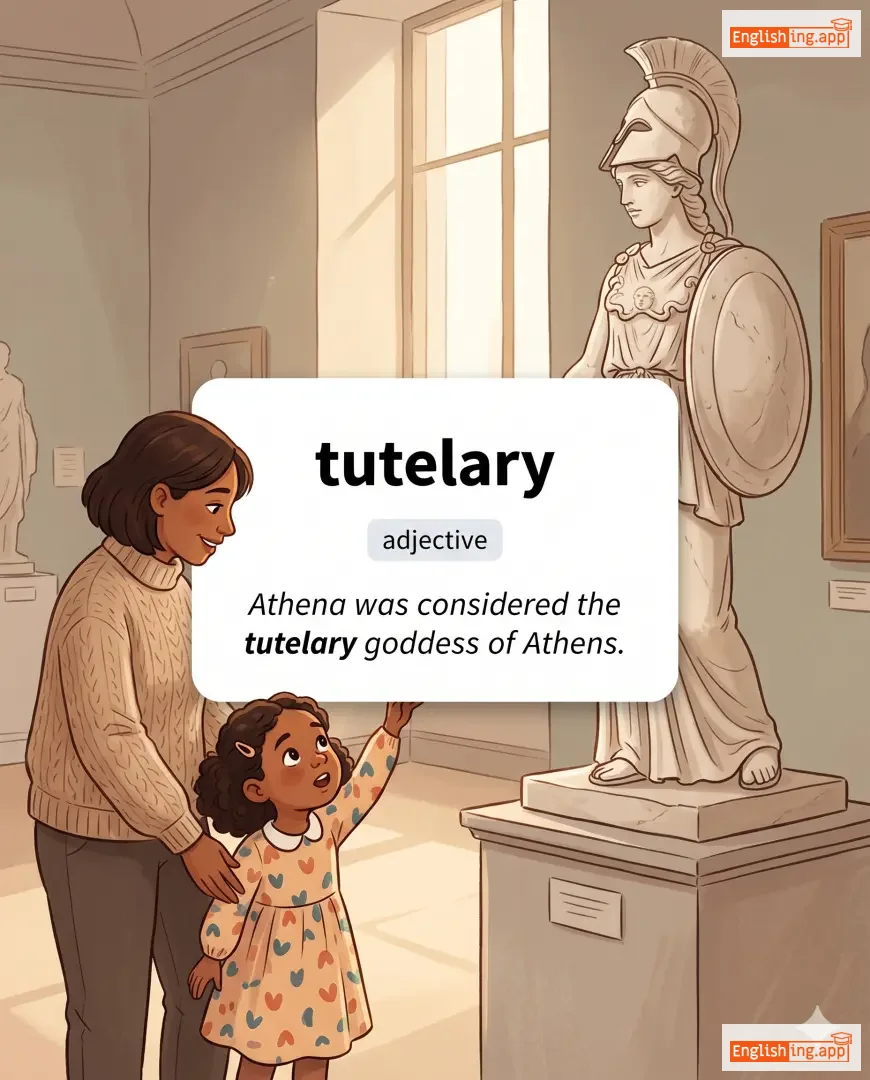
tutelary definition card — visual illustration of the meaning
adjective
/ˈtjuːtɪləri/
守護神 (shugoshin)

Relating to or serving as a guardian or protector, often used for deities or spirits.

"Athena was considered the tutelary goddess of Athens."

"アテナはアテネの守護神と見なされていました。" (Atena wa Atene no shugoshin to minasarete imashita.)
noun
/ˈtjuːtərʃɪp/
指導 (shidō)

The office or position of a tutor; guidance or instruction given by a tutor.

"He thrived under the tutorship of his mentor."

"彼はメンターの指導のもとで成功した。" (Kare wa mentā no shidō no moto de seikō shita.)
noun
/ˈtiːˈviː/
テレビ (terebi)

a device used to receive television broadcasts

"I watch my favorite shows on TV every evening."

"毎晩、テレビでお気に入りの番組を見ています。" (Maiban, terebi de okiniiri no bangumi o miteimasu.)
tweak definition card — visual illustration of the meaning
verb
/twiːk/
微調整 (bichōsei)

to make small adjustments; to fine-tune something

"We need to tweak the design slightly."

"デザインを少し調整する必要があります。" (Dezain wo sukoshi chōsei suru hitsuyō ga arimasu)
noun
/twiːt/
さえずり (saezuri)

a short high-pitched sound made by a small bird; a post on Twitter

"I heard the sweet tweet of a sparrow this morning."

"今朝、スズメの甘いツイートを聞きました。" (Kesa, suzume no amai tsuito wo kikimashita.)
adjective
/twɛlv/
十二 (juuni)

the number equivalent to 12

"There are twelve months in a year."

"一年には十二か月があります。" (Ichi-nen ni wa juuni kagetsu ga arimasu.)
adjective
/ˈtwɛntiəθ/
二十番目 (nijūbanme)

coming after the nineteenth in order; being one of twenty equal parts.

"She was born on the twentieth of April."

"彼女は四月二十日に生まれました。" (Kanojo wa shigatsu nijū-nichi ni umaremashita.)
adjective
/ˈtwɛnti/
二十 (nijū)

the number equivalent to 20

"He is twenty years old."

"彼は20歳です。" (Kare wa nijū sai desu.)
adverb
/twaɪs/
二回 (nikai)

two times

"I have seen that movie twice."

"その映画を二回見ました。" (Sono eiga o nikai mimashita.)
noun
/twɪɡ/
小枝 (koeda)

a small thin branch of a tree or bush

"She broke a twig off the tree to use as a stick."

"彼女は棒として使うために木から小枝を折った。" (Kanojo wa bou to shite tsukau tame ni ki kara koeda o totta.)
noun
/ˈtwaɪ.laɪt/
黄昏 (tasogare)

the soft glowing light from the sky when the sun is below the horizon; a period of decline

"We walked along the beach at twilight."

"私たちは黄昏時にビーチを歩いていました。" (Watashitachi wa tasogare-ji ni biichi o aruiteimashita.)
👯‍♂️

twin (ツイン)

noun
/twɪn/
双子 (futago)

either of two children born at the same time to the same mother

"They have twin girls."

"彼らには双子の女の子がいます。" (Karera ni wa futago no onnanoko ga imasu.)
noun
/twɪndʒ/
鋭い痛み (surudoi itami)

a sudden, sharp pain or an emotional pang

"He felt a twinge of guilt after lying to his friend."

"彼は友達に嘘をついた後、罪悪感の鋭い痛みを感じた。" (Kare wa tomodachi ni uso o tsuita ato, zaiakukan no surudoi itami o kanjita.)
verb
/twɪst/
ねじる, 回す (nejiru, mawasu)

to bend or turn something into a coil or spiral shape; to distort.

"He twisted the rope tightly around the pole."

"彼はロープを柱の周りにしっかりと巻きつけました。" (Kare wa roopu o hashira no mawari ni shikkari to makitsukemashita.)
adjective
/ˌʌltrəˈmɒnteɪn/
教皇支持者 (kyoukou shishisha)

beyond the mountains, especially referring to support for the Pope over local church authority

"The debate highlighted the ultramontane position in church politics."

"その討論は教会政治におけるウルトラモンタンの立場を浮き彫りにした。" (Sono touron wa kyoukai seiji ni okeru urutoramontan no tachiba wo ukibori ni shita.)
noun
/ʌnəˈbɪləti/
無能力 (munouryoku)

the state of being unable to do something; incapacity

"His unability to solve the problem caused delays in the project."

"彼の問題を解決する無能力はプロジェクトの遅延を引き起こした。" (Kare no mondai wo kaiketsu suru munouryoku wa purojekuto no chien wo hikiokoshita)
noun
/ʌmˈbrɛlə/
(kasa)

A device used for protection against rain or sun, typically consisting of a collapsible canopy mounted on a central rod.

"She opened her umbrella as it started to rain."

"雨が降り始めたので、彼女は傘を開いた。" (Ame ga furi hajimeta node, kanojo wa kasa o hiraita.)
noun
/ˈʌmbrɪdʒ/
怒り, 不満 (ikari, fuman)

A feeling of resentment or offense.

"She took umbrage at his rude remark."

"彼女は彼の無礼な発言に怒りを感じた。" (Kanojo wa kare no burei na hatsugen ni ikari wo kanjita.)
noun
/ˈʌm.brə/
完全な影、太陽黒点の暗い中心 (kanzen na kage, taiyō kokuten no kurai chūshin)

the fully shaded inner region of a shadow cast by an opaque object; the dark center of a sunspot

"During the eclipse, we stood in the moon's umbra."

"日食の際、私たちは月のアンブラの中に立っていました。" (nisshoku no sai, watashitachi wa tsuki no anburā no naka ni tatteimashita)
adjective
/ˌʌltrəˈmʌndeɪn/
超越的 (chouetsuteki)

Relating to things beyond the physical world; supernatural or transcendental.

"Philosophers often discuss ultramundane realities beyond human perception."

"哲学者たちはしばしば人間の知覚を超えたウルトラムンデインな現実について議論します。" (Tetsugakusha-tachi wa shibashiba ningen no chikaku o koeta urutoramundein na genjitsu ni tsuite giron shimasu.)
adjective
/ˈʌltɪmət/
究極 (kyuukyoku)

being the best, final, or most extreme

"Success is the ultimate goal of hard work."

"成功は努力の究極的な目標です。" (Seikou wa doryoku no kyuukyokuteki na mokuhyou desu.)
🤕

ulcer

noun
/ˈʌlsər/

a sore on the skin or a mucous membrane that does not heal easily

"The doctor prescribed medicine to treat the stomach ulcer."

adjective
/ʌlˈtɪəriər/
隠された動機 (kakusareta dōki)

hidden or secret, often with a selfish motive

"He invited her with an ulterior motive."

"彼は隠された動機で彼女を招待した。" (Kare wa kakusareta dōki de kanojo o shōtai shita.)
🙅‍♀️

Unable (ʌˈneɪbl)

adjective
/ʌˈneɪbl/
できない (dekinai)

not able to do something

"She was unable to attend the meeting."

"彼女は会議に出席できませんでした。" (Kanojo wa kaigi ni shusseki dekimasen deshita.)
adverb
/ˈʌltəmətli/
最終的に (saishūteki ni)

in the end, after everything else

"Ultimately, we decided to go ahead with the project."

"最終的に、私たちはプロジェクトを進めることに決めました。" (Saishūteki ni, watashitachi wa purojekuto o susumeru koto ni kimemashita.)
noun
/ˌʌltɪˈmeɪtəm/
最終通告 (saishuu tsuukoku)

a final demand or statement of terms

"The workers gave the company an ultimatum to raise their wages."

"労働者は会社に賃金を引き上げるよう最終通告を出しました。" (Roudousha wa kaisha ni chingin o hikiageru you saishuu tsuukoku o dashimashita.)