語彙集

英単語辞書 | 単語の意味、定義、例文

🙅‍♀️

Unable (ʌˈneɪbl)

adjective
/ʌˈneɪbl/
できない (dekinai)

not able to do something

"She was unable to attend the meeting."

"彼女は会議に出席できませんでした。" (Kanojo wa kaigi ni shusseki dekimasen deshita.)
noun
/ʌnəˈbɪləti/
無能力 (munouryoku)

the state of being unable to do something; incapacity

"His unability to solve the problem caused delays in the project."

"彼の問題を解決する無能力はプロジェクトの遅延を引き起こした。" (Kare no mondai wo kaiketsu suru munouryoku wa purojekuto no chien wo hikiokoshita)
noun
/ʌmˈbrɛlə/
(kasa)

A device used for protection against rain or sun, typically consisting of a collapsible canopy mounted on a central rod.

"She opened her umbrella as it started to rain."

"雨が降り始めたので、彼女は傘を開いた。" (Ame ga furi hajimeta node, kanojo wa kasa o hiraita.)
noun
/ˈʌmbrɪdʒ/
怒り, 不満 (ikari, fuman)

A feeling of resentment or offense.

"She took umbrage at his rude remark."

"彼女は彼の無礼な発言に怒りを感じた。" (Kanojo wa kare no burei na hatsugen ni ikari wo kanjita.)
noun
/ˈʌm.brə/
完全な影、太陽黒点の暗い中心 (kanzen na kage, taiyō kokuten no kurai chūshin)

the fully shaded inner region of a shadow cast by an opaque object; the dark center of a sunspot

"During the eclipse, we stood in the moon's umbra."

"日食の際、私たちは月のアンブラの中に立っていました。" (nisshoku no sai, watashitachi wa tsuki no anburā no naka ni tatteimashita)
adjective
/ˌʌltrəˈmʌndeɪn/
超越的 (chouetsuteki)

Relating to things beyond the physical world; supernatural or transcendental.

"Philosophers often discuss ultramundane realities beyond human perception."

"哲学者たちはしばしば人間の知覚を超えたウルトラムンデインな現実について議論します。" (Tetsugakusha-tachi wa shibashiba ningen no chikaku o koeta urutoramundein na genjitsu ni tsuite giron shimasu.)
adjective
/ˌʌltrəˈmɒnteɪn/
教皇支持者 (kyoukou shishisha)

beyond the mountains, especially referring to support for the Pope over local church authority

"The debate highlighted the ultramontane position in church politics."

"その討論は教会政治におけるウルトラモンタンの立場を浮き彫りにした。" (Sono touron wa kyoukai seiji ni okeru urutoramontan no tachiba wo ukibori ni shita.)
noun
/ˌʌltɪˈmeɪtəm/
最終通告 (saishuu tsuukoku)

a final demand or statement of terms

"The workers gave the company an ultimatum to raise their wages."

"労働者は会社に賃金を引き上げるよう最終通告を出しました。" (Roudousha wa kaisha ni chingin o hikiageru you saishuu tsuukoku o dashimashita.)
adverb
/ˈʌltəmətli/
最終的に (saishūteki ni)

in the end, after everything else

"Ultimately, we decided to go ahead with the project."

"最終的に、私たちはプロジェクトを進めることに決めました。" (Saishūteki ni, watashitachi wa purojekuto o susumeru koto ni kimemashita.)
adjective
/ˈʌltɪmət/
究極 (kyuukyoku)

being the best, final, or most extreme

"Success is the ultimate goal of hard work."

"成功は努力の究極的な目標です。" (Seikou wa doryoku no kyuukyokuteki na mokuhyou desu.)
adjective
/ʌlˈtɪəriər/
隠された動機 (kakusareta dōki)

hidden or secret, often with a selfish motive

"He invited her with an ulterior motive."

"彼は隠された動機で彼女を招待した。" (Kare wa kakusareta dōki de kanojo o shōtai shita.)
🤕

ulcer

noun
/ˈʌlsər/

a sore on the skin or a mucous membrane that does not heal easily

"The doctor prescribed medicine to treat the stomach ulcer."

interjection
/ʌ/
ああ (aa)

a sound people make when they hesitate or are unsure what to say next.

"Uh, I’m not sure if that’s the right answer."

"ああ、それが正しい答えかどうかはわからない。" (Aa, sore ga tadashii kotae ka dō ka wa wakaranai.)
adjective
/ˈʌɡli/
醜い (minikui)

unpleasant or repulsive in appearance

"The house had an ugly view of the street."
"その家は通りに醜い景色を持っていた。" (Sono ie wa tōri ni minikui keshiki o motte ita.)
ubiquity definition card — visual illustration of the meaning
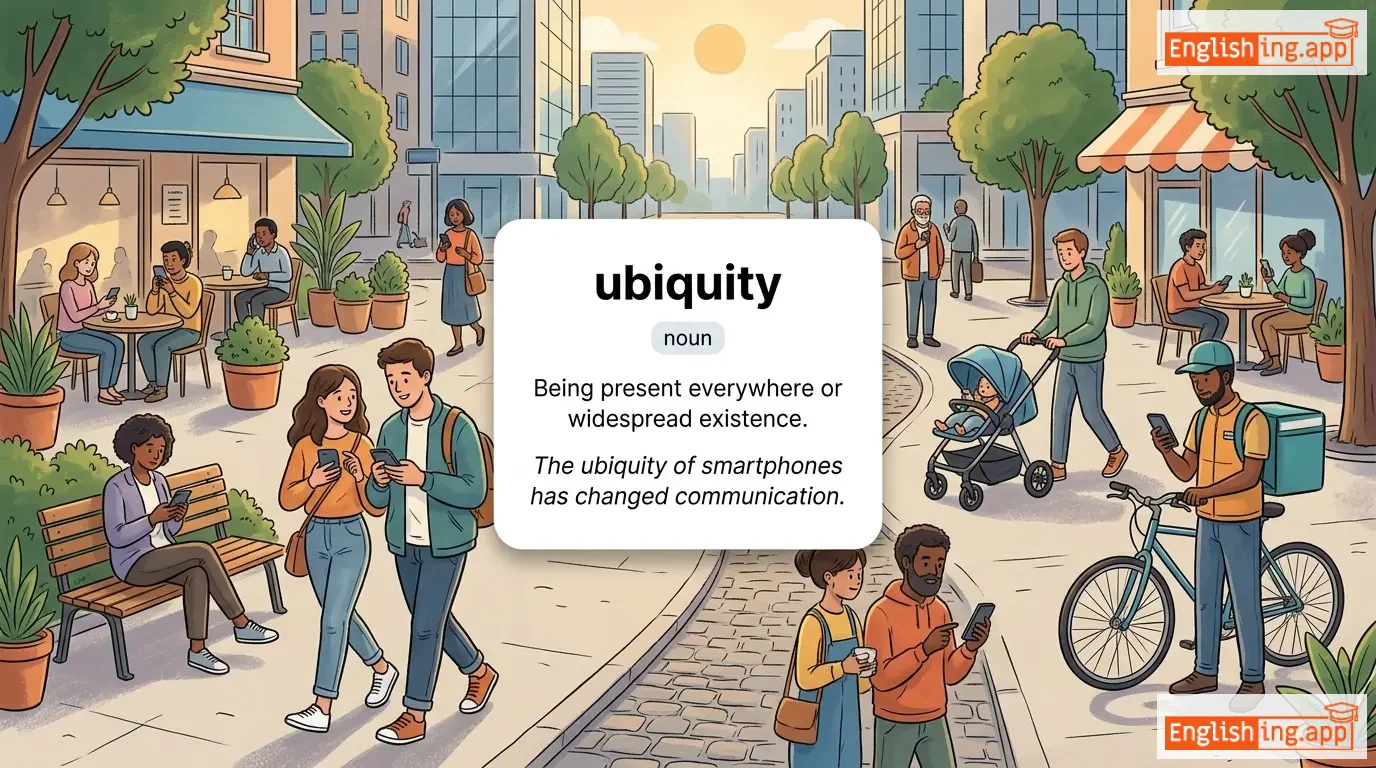
noun
/juːˈbɪk.wɪ.ti/
遍在 (henzai)

Being present everywhere or widespread existence.

"The ubiquity of smartphones has changed communication."

"スマートフォンの遍在はコミュニケーションを変えました。" (Sumātofon no henzai wa komyunikēshon o kaemashita.)
adjective
/juːˈbɪkwɪtəs/
普遍的 (fuhenteki)

Existing or being everywhere at the same time.

"Social media has become ubiquitous among young people."

"ソーシャルメディアは若者の間で普及しています。" (Sōsharumedia wa wakamono no aida de fukyū shiteimasu.)
adjective
/juːˈbɪkwɪtəs/
遍在 (henzai)

Present, appearing, or found everywhere.

"Smartphones have become ubiquitous in modern society."

"スマートフォンは現代社会で遍在しています。" (Sumātofon wa gendai shakai de henzai shiteimasu.)
noun
/ˈtaɪroʊ/
初心者 (shoshinsha)

A beginner or novice in a field or activity.

"As a tyro in programming, she needed constant guidance."

"プログラミングの初心者として、彼女は常に指導を必要としていた。" (Puroguramingu no shoshinsha toshite, kanojo wa jōnī shidō o hitsuyō toshite ita.)
noun
/ˈtaɪ.rənt/
暴君 (bōkun)

a cruel and oppressive ruler; a person who exercises power in a harsh manner

"The people rebelled against the cruel tyrant."

"人々は残酷な暴君に反乱を起こしました。" (hitobito wa zankoku na bōkun ni hanran o okoshimashita)
noun
/ˈtɪrəni/
圧政 (asshō)

Cruel and oppressive government or rule by a tyrant.

"The people revolted against the tyranny of their ruler."

"人々は支配者の圧政に反抗しました。" (Hitobito wa shihai-sha no asshō ni hankō shimashita.)
adjective
/tɪˈrænɪkəl/
暴君的 (bōkunteki)

exercising power in a cruel or arbitrary way

"The tyrannical ruler silenced all opposition."

"暴君の支配者はすべての反対意見を黙らせた。" (Bōkun no shihaisha wa subete no hantai iken o damaraseta.)
noun
/taɪˈpɒɡrəfi/
タイポグラフィ (taipogurafi)

the art and technique of arranging type to make written language legible and visually appealing

"Good typography improves the readability of a website."

"良いタイポグラフィはウェブサイトの読みやすさを改善します。" (Yoi taipogurafi wa webusaito no yomiyasusa o kaizen shimasu.)
adjective
/ˌtaɪpəˈɡræfɪkəl/
印刷ミス (insatsu misu)

relating to the style, arrangement, or appearance of printed text

"There was a typographical error in the book."

"本に印刷ミスがありました。" (Hon ni insatsu misu ga arimashita.)
noun
/ˈtaɪpoʊ/
タイプミス (taipu misu)

a mistake made in typing

"The report was full of typos."

"レポートはタイプミスだらけだった。" (repōto wa taipu misu darake datta.)
verb
/ˈtɪpɪfaɪ/
代表する (daihyou suru)

to represent or be a typical example of something

"His leadership style typifies the new corporate culture."

"彼のリーダーシップスタイルは新しい企業文化を体現しています。" (Kare no rīdāshippu sutairu wa atarashī kigyō bunka o taigen shiteimasu.)
adverb
/ˈtɪpɪkli/
通常 (tsūjō)

in a way that is typical of a particular person, thing, or group

"She typically arrives at work at 9 AM."

"彼女は通常、午前9時に仕事に到着します。" (Kanojo wa tsūjō, gozen 9 ji ni shigoto ni tōchaku shimasu.)
adjective
/ˈtɪpɪkəl/
特定の種類の人や物の通常の特徴を持つ (tokutei no shurui no hito ya mono no tsūjō no tokuchō o motsu)

having the usual qualities of a particular type of person or thing

"It was a typical summer day, hot and humid."

"それは典型的な夏の日で、暑くて湿気がありました。" (Sore wa tenkeiteki na natsu no hi de, atsukute shikke ga arimashita.)
noun
/taɪˈfuːn/
台風 (taifū)

a tropical storm in the region of the Indian or western Pacific oceans

"The typhoon caused severe flooding in the coastal areas."
"台風は沿岸地域に甚大な洪水を引き起こしました。" (Taifū wa engan chiiki ni jindaina kōzui o hikiokoshimashita.)
type definition card — visual illustration of the meaning
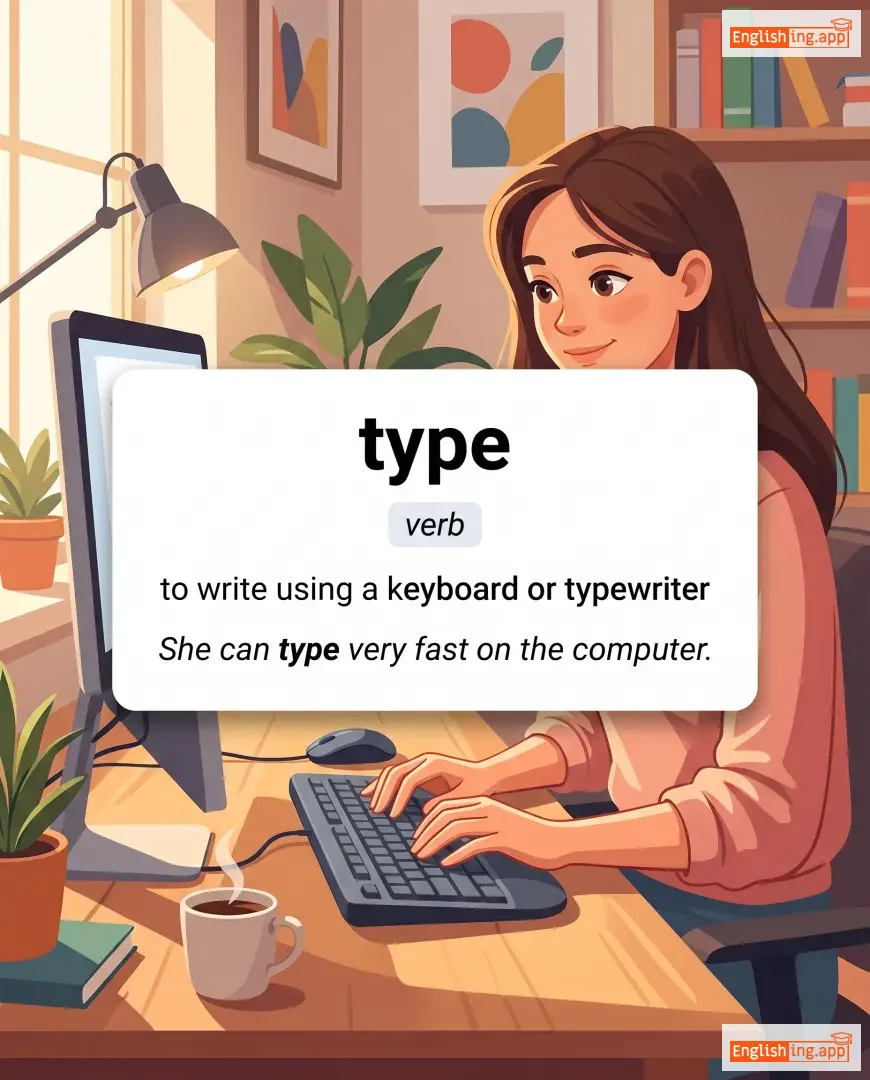
noun
/taɪp/
タイプ (taipu)

a category of people or things having common characteristics

"What type of music do you like?"

"どのタイプの音楽が好きですか?" (Dono taipu no ongaku ga suki desu ka?)
noun
/taɪˈkuːn/
大富豪 (dai fugo)

a wealthy, powerful businessperson

"The real estate tycoon invested in several skyscrapers."

"不動産の大富豪は複数の超高層ビルに投資しました。" (Fudōsan no dai fugo wa fukusū no chō kōsō biru ni tōshi shimashita.)
noun
/ˈtuːsəm/
ツーサム (tsū sam)

A pair of people considered together, often in a romantic or competitive context.

"They entered the dance competition as a twosome."

"彼らはツーサムとしてダンスコンペティションに参加した。" (Karera wa tsū sam toshite dansu konpetishon ni sanka shita.)
noun
/tuː θɜːrdz/
三分の二 (sanbun no ni)

a fraction equal to two parts of three; 2/3.

"Two-thirds of the students passed the exam."

"学生の三分の二が試験に合格しました。" (Gakusei no sanbun no ni ga shiken ni goukaku shimashita.)
noun
/tuː/
(ni)

the number following one

"She has two children."

"彼女には二人の子供がいます。" (Kanojo ni wa futari no kodomo ga imasu.)
noun
/juːˈkeɪs/
命令 (meirei)

An authoritative decree or order, especially one issued by a sovereign or government.

"The czar issued a ukase restricting the freedom of the press."

"ツァーは報道の自由を制限する命令を出しました。" (Tsuā wa hōdō no jiyū o seigen suru meirei o dashimashita.)
noun
/ˈtɛrərɪzəm/
テロリズム (terorizumu)

the use of violence or threats to intimidate or coerce, especially for political purposes

"Terrorism is a serious threat to global peace and security."

"テロリズムは、世界の平和と安全に対する深刻な脅威です。" (Terorizumu wa, sekai no heiwa to anzen ni taisuru shinkoku na kyōi desu.)
noun
/ˈtɛrərɪst/
テロリスト (terorisuto)

a person who uses violence or threats to intimidate or coerce, especially for political purposes

"The terrorist was arrested by the police after the attack."

"テロリストは攻撃後、警察に逮捕されました。" (Terorisuto wa kōgeki go, keisatsu ni taiho saremashita.)
adjective
/tɜːrs/
簡潔 (kanketsu)

brief and to the point; sparing in the use of words

"His reply was terse and ended the conversation quickly."

"彼の返答は簡潔で、すぐに会話を終わらせた。" (kare no hentou wa kanketsu de, sugu ni kaiwa o owaraseta.)
3️⃣

tertiary

adjective
/ˈtɜːrʃieri/

third in order, rank, or level

"He is pursuing his tertiary education at the university."

adjective
/ˈtɛsəleɪtɪd/
タイル模様 (tairu moyou)

arranged in a pattern of repeated shapes fitting together without gaps

"The tessellated floor was made of colorful tiles arranged in perfect symmetry."
"テセレイテッドな床はカラフルなタイルで作られ、完璧な対称性で配置されていました。" (Tesserated na yuka wa karafuru na tairu de tsukurare, kanpeki na taishō-sei de haichi sarete imashita.)
test definition card — visual illustration of the meaning
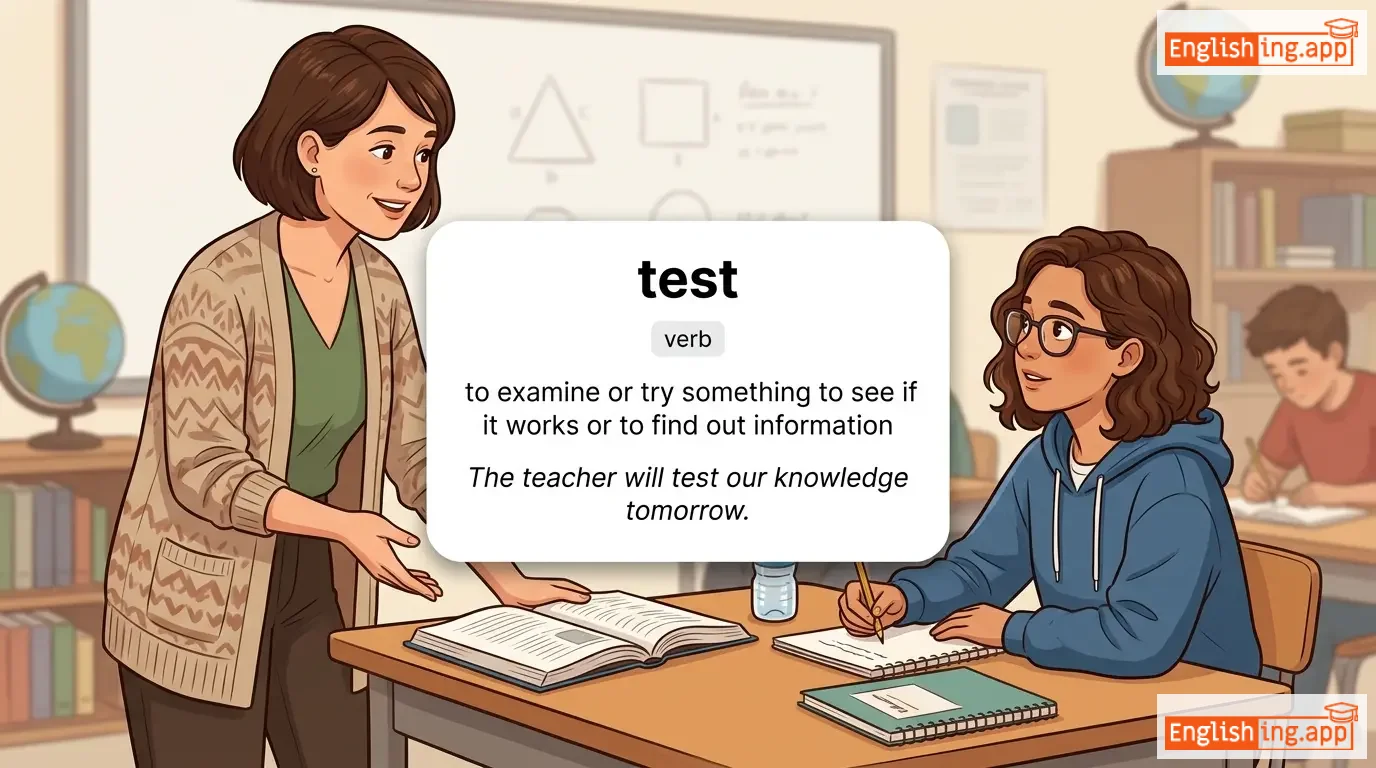
noun
/tɛst/
テスト (tesuto)

a procedure intended to establish the quality, performance, or reliability of something

"The test results will determine whether the treatment is effective."

"テストの結果は、治療が効果的かどうかを決定します。" (Tesuto no kekka wa, chiryō ga kōka-teki ka dō ka o kettei shimasu.)
noun
/ˈtɛstəmənt/
遺言 / 証拠 (igon / shouko)

a person's will; or strong evidence of something

"His success is a testament to his hard work and dedication."

"彼の成功は彼の努力と献身の証です。" (kare no seikou wa kare no doryoku to kenshin no shouko desu.)
noun
/ˈtɛsteɪtər/
遺言者 (yigonsha)

a person who has made a will

"The lawyer read the will of the deceased testator."

"弁護士は故人の遺言を読みました。" (Bengoshi wa kojin no yigon o yomimashita.)
verb
/ˈtɛstəfaɪ/
証言する (shougen suru)

to make a statement or declaration under oath or to give evidence

"She was called to testify in court about the accident."

"彼女は事故について証言するために裁判所に呼ばれました。" (Kanojo wa jiko ni tsuite shougen suru tame ni saibansho ni yoba remashita.)
noun
/ˌtɛstɪˈmoʊniəl/
推薦状 (suishenjō)

A formal statement testifying to someone's character, qualifications, or the quality of a product or service.

"The company shared a glowing testimonial from a satisfied customer."

"その会社は満足した顧客からの輝かしい推薦状を共有しました。" (Sono kaisha wa manzoku shita kokyaku kara no kagayakashī suishenjō o kyōyū shimashita.)
testimonials definition card — visual illustration of the meaning
noun
/ˌtɛstɪˈməʊnɪəlz/
推薦状, 証言 (suishenjou, shougen)

Written or spoken statements of praise or recommendation from clients or customers.

"Positive testimonials can enhance a company's reputation."

"ポジティブなテスティモニアルは企業の評判を高めることができます。" (Pojitibu na tesutimoniaru wa kigyou no hyouban wo takameru koto ga dekimasu.)
noun
/ˈtɛstəˌmoʊni/
証言 (shōgen)

A formal statement given in a court of law or evidence supporting a fact.

"Her testimony in court helped convict the criminal."

"彼女の証言は裁判で犯人を有罪にするのに役立ちました。" (Kanojo no shōgen wa saiban de han'nin o yūzai ni suru no ni yakudachimashita.)
noun
/ˈtɛstɪŋ/
テスト (tesuto)

the process of assessing or evaluating something, often by trying it out

"The testing of the new software is still ongoing."

"新しいソフトウェアのテストはまだ進行中です。" (Atarashī sofutōwēa no tesuto wa mada shinkōchū desu.)
adjective
/ˈtɛsti/
イライラした (iraira shita)

Easily irritated or annoyed.

"He became testy when asked the same question repeatedly."

"同じ質問を繰り返し聞かれると、彼はイライラしてきた。" (Onaji shitsumon o kurikaeshi kikareru to, kare wa iraira shite kita.)
noun
/θæŋks/
ありがとう (arigatou)

an expression of gratitude

"Thanks for helping me with the project."

"プロジェクトを手伝ってくれてありがとう。" (Purojekuto wo tetsudatte kurete arigatou.)
noun
/ˈθæŋksˌɡɪvɪŋ/
感謝祭 (kanshasai)

an annual holiday in the US for giving thanks, celebrated with a meal

"We spent Thanksgiving dinner with our family."

"私たちは家族と一緒に感謝祭の夕食を過ごしました。" (Watashitachi wa kazoku to issho ni kanshasai no yūshoku o sugoshimashita.)