词汇表

英语词汇词典 | 单词含义、定义和示例

🙅‍♀️

Unable (ʌˈneɪbl)

adjective
/ʌˈneɪbl/
无法 (wúfǎ)

not able to do something

"She was unable to attend the meeting."

"她无法参加会议。" (Tā wúfǎ cānjiā huìyì.)
noun
/ʌnəˈbɪləti/
无能 (wuneng)

the state of being unable to do something; incapacity

"His unability to solve the problem caused delays in the project."

"他解决问题的无能导致了项目的延误。" (Ta jiejue wenti de wuneng daozhule xiangmu de yanwu)
noun
/ʌmˈbrɛlə/
(san)

A device used for protection against rain or sun, typically consisting of a collapsible canopy mounted on a central rod.

"She opened her umbrella as it started to rain."

"下雨时她打开了她的伞。" (Xia yu shi ta dakai le ta de san.)
noun
/ˈʌmbrɪdʒ/
冒犯,愤怒 (maofan, fennu)

A feeling of resentment or offense.

"She took umbrage at his rude remark."

"她对他的粗鲁言论感到愤怒。" (Tā duì tā de cūlǔ yánlùn gǎndào fènnù.)
noun
/ˈʌm.brə/
完全的阴影,太阳黑子的黑暗中心 (wánquán de yīnyǐng, tàiyáng hēizǐ de hēi'àn zhōngxīn)

the fully shaded inner region of a shadow cast by an opaque object; the dark center of a sunspot

"During the eclipse, we stood in the moon's umbra."

"在日食期间,我们站在月亮的本影中。" (zài rìshí qījiān, wǒmen zhàn zài yuèliàng de běn yǐng zhōng)
adjective
/ˌʌltrəˈmʌndeɪn/
超凡 (chaofan)

Relating to things beyond the physical world; supernatural or transcendental.

"Philosophers often discuss ultramundane realities beyond human perception."

"哲学家们常常讨论超越人类感知的超凡现实。" (Zhexueshi men changchang taolun chaoyue renlei ganzhi de chaofan xianshi.)
adjective
/ˌʌltrəˈmɒnteɪn/
教皇支持者 (jiaohuang zhichi zhe)

beyond the mountains, especially referring to support for the Pope over local church authority

"The debate highlighted the ultramontane position in church politics."

"辩论突出了教会政治中超山的立场。" (Bianlun tuchu le jiaohui zhengzhi zhong chaoshan de lichang.)
noun
/ˌʌltɪˈmeɪtəm/
最后通牒 (zuìhòu tōngdié)

a final demand or statement of terms

"The workers gave the company an ultimatum to raise their wages."

"工人们向公司提出了一个要求,要求提高工资。" (Gōngrénmen xiàng gōngsī tíchūle yīgè yāoqiú, yāoqiú tígāo gōngzī.)
adverb
/ˈʌltəmətli/
最终 (zuì zhōng)

in the end, after everything else

"Ultimately, we decided to go ahead with the project."

"最终,我们决定继续推进该项目。" (Zuì zhōng, wǒmen juédìng jìxù tuījin gāi xiàngmù.)
adjective
/ˈʌltɪmət/
终极 (zhongji)

being the best, final, or most extreme

"Success is the ultimate goal of hard work."

"成功是辛勤工作中的终极目标。" (Chenggong shi xinqin gongzuo zhong de zhongji mubiao.)
adjective
/ʌlˈtɪəriər/
隐藏的动机 (yǐn cáng de dòng jī)

hidden or secret, often with a selfish motive

"He invited her with an ulterior motive."

"他带着隐藏的动机邀请了她。" (Tā dàizhe yǐn cáng de dòng jī yāo qǐng le tā.)
🤕

ulcer

noun
/ˈʌlsər/

a sore on the skin or a mucous membrane that does not heal easily

"The doctor prescribed medicine to treat the stomach ulcer."

interjection
/ʌ/
(e)

a sound people make when they hesitate or are unsure what to say next.

"Uh, I’m not sure if that’s the right answer."

"呃,我不确定这是不是正确的答案。" (E, wǒ bù quèdìng zhè shì bùshì zhèngquè de dá'àn.)
adjective
/ˈʌɡli/
丑陋 (chǒulòu)

unpleasant or repulsive in appearance

"The house had an ugly view of the street."
"这房子有一处丑陋的街景。" (Zhè fángzi yǒu yī chù chǒulòu de jiējiǐng.)
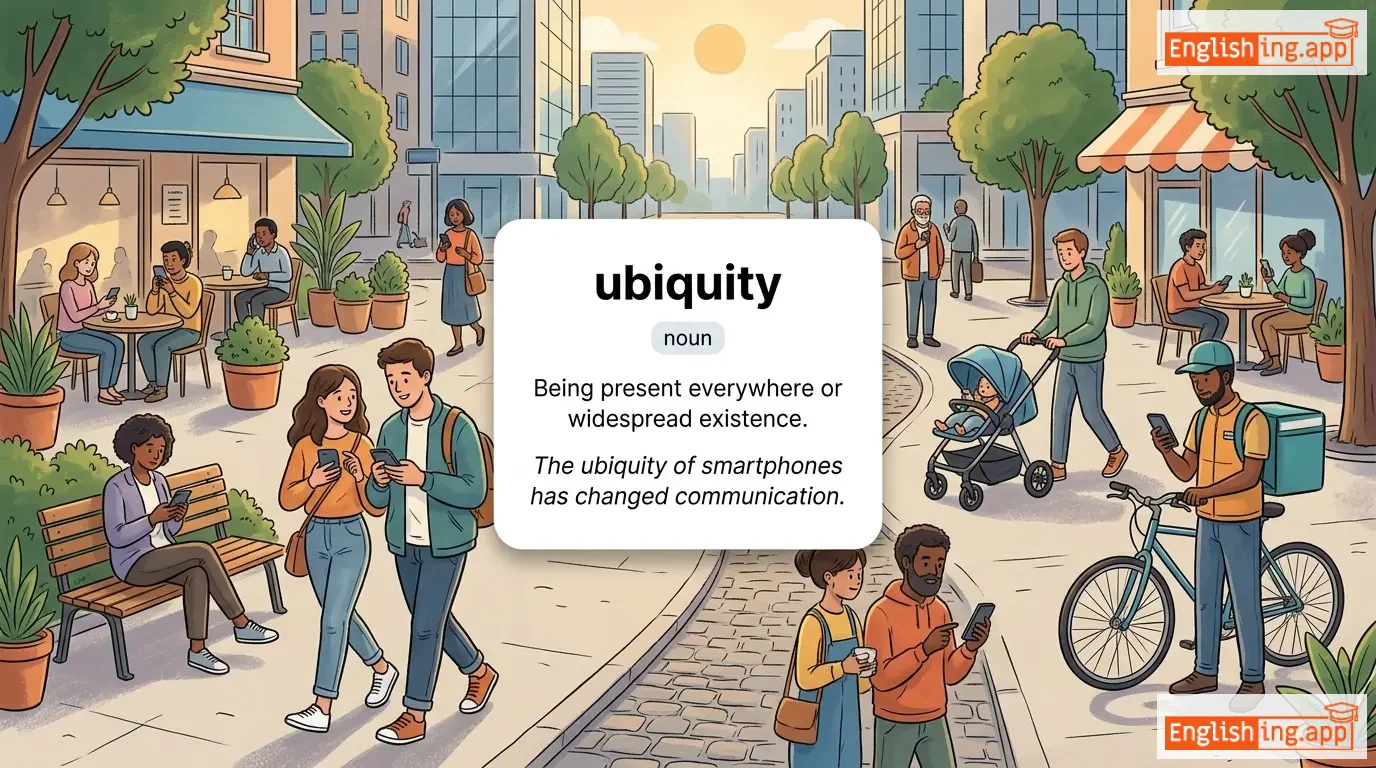
ubiquity definition card — visual illustration of the meaning
noun
/juːˈbɪk.wɪ.ti/
普遍性 (pǔbiàn xìng)

Being present everywhere or widespread existence.

"The ubiquity of smartphones has changed communication."

"智能手机的普遍性改变了沟通方式。" (Zhìnéng shǒujī de pǔbiàn xìng gǎibiànle gōutōng fāngshì.)
adjective
/juːˈbɪkwɪtəs/
无处不在 (wuchubuzai)

Existing or being everywhere at the same time.

"Social media has become ubiquitous among young people."

"社交媒体在年轻人中变得无处不在。" (Shejiao meiti zai nianqingren zhong biande wuchubuzai.)
adjective
/juːˈbɪkwɪtəs/
无处不在 (wuchubuzai)

Present, appearing, or found everywhere.

"Smartphones have become ubiquitous in modern society."

"智能手机已经在现代社会中无处不在。" (Zhìnéng shǒujī yǐjīng zài xiàndài shèhuì zhōng wú chù bù zài.)
noun
/ˈtaɪroʊ/
新手 (xinshou)

A beginner or novice in a field or activity.

"As a tyro in programming, she needed constant guidance."

"作为编程的新手,她需要不断的指导。" (Zuòwéi biānchéng de xīnshǒu, tā xūyào bùduàn de zhǐdǎo.)
noun
/ˈtaɪ.rənt/
暴君 (baojun)

a cruel and oppressive ruler; a person who exercises power in a harsh manner

"The people rebelled against the cruel tyrant."

"人民反抗了残忍的暴君。" (rénmín fǎnkàngle cánrěn de bàojūn)
noun
/ˈtɪrəni/
暴政 (baozheng)

Cruel and oppressive government or rule by a tyrant.

"The people revolted against the tyranny of their ruler."

"人民反抗他们统治者的暴政。" (Rénmín fǎnkàng tāmen tǒngzhì zhě de bàozhèng.)
adjective
/tɪˈrænɪkəl/
暴虐 (bàonuè)

exercising power in a cruel or arbitrary way

"The tyrannical ruler silenced all opposition."

"暴虐的统治者让所有的反对派都沉默了。" (Bàonuè de tǒngzhì zhě ràng suǒyǒu de fǎnduì pài dōu chénmòle.)
noun
/taɪˈpɒɡrəfi/
排版 (paiban)

the art and technique of arranging type to make written language legible and visually appealing

"Good typography improves the readability of a website."

"良好的排版提高了网站的可读性。" (Lianghao de paiban tigao le wangzhan de kexuduxing.)
adjective
/ˌtaɪpəˈɡræfɪkəl/
印刷错误 (yinshua cuowu)

relating to the style, arrangement, or appearance of printed text

"There was a typographical error in the book."

"书中有一个印刷错误。" (Shū zhōng yǒu yīgè yìnshuā cuòwù.)
noun
/ˈtaɪpoʊ/
打字错误 (da zi cuo wu)

a mistake made in typing

"The report was full of typos."

"报告中充满了打字错误。" (baogao zhong chongmanle dazi cuowu.)
verb
/ˈtɪpɪfaɪ/
代表 (dàibiǎo)

to represent or be a typical example of something

"His leadership style typifies the new corporate culture."

"他的领导风格体现了新的企业文化。" (Tā de lǐngdǎo fēnggé tǐxiànle xīn de qǐyè wénhuà.)
adverb
/ˈtɪpɪkli/
通常 (tōngcháng)

in a way that is typical of a particular person, thing, or group

"She typically arrives at work at 9 AM."

"她通常在早上9点到达工作。" (Tā tōngcháng zài zǎoshang 9 diǎn dào dá gōngzuò.)
adjective
/ˈtɪpɪkəl/
具有某一特定类型的人或事物的常见特征 (jùyǒu mǒu yī tèdìng lèixíng de rén huò shìwù de chángjiàn tèzhēng)

having the usual qualities of a particular type of person or thing

"It was a typical summer day, hot and humid."

"这是一个典型的夏日炎热而潮湿的日子。" (Zhè shì yīgè diǎnxíng de xiàrì yánrè ér cháoshī de rìzi.)
noun
/taɪˈfuːn/
台风 (taifeng)

a tropical storm in the region of the Indian or western Pacific oceans

"The typhoon caused severe flooding in the coastal areas."

"台风在沿海地区造成了严重的洪水。" (Taifeng zai yanhai diqu zaochengle yanzhong de hongshui.)
type definition card — visual illustration of the meaning
noun
/taɪp/
类型 (lèixíng)

a category of people or things having common characteristics

"What type of music do you like?"

"你喜欢什么类型的音乐?" (Nǐ xǐhuān shénme lèixíng de yīnyuè?)
noun
/taɪˈkuːn/
富豪 (fù háo)

a wealthy, powerful businessperson

"The real estate tycoon invested in several skyscrapers."

"房地产富豪投资了多座摩天大楼。" (Fáng dìchǎn fù háo tóuzī le duō zuò mótiān dàlóu.)
noun
/ˈtuːsəm/
一对 (yī duì)

A pair of people considered together, often in a romantic or competitive context.

"They entered the dance competition as a twosome."

"他们作为一对参加了舞蹈比赛。" (Tāmen zuòwéi yī duì cānjiāle wǔdǎo bǐsài.)
noun
/tuː θɜːrdz/
三分之二 (san fen zhi er)

a fraction equal to two parts of three; 2/3.

"Two-thirds of the students passed the exam."

"三分之二的学生通过了考试。" (San fen zhi er de xuesheng tongguo le kaoshi.)
2️⃣

two (tū)

noun
/tuː/
(èr)

the number following one

"She has two children."

"她有两个孩子。" (Tā yǒu liǎng gè háizi.)
noun
/juːˈkeɪs/
法令 (faling)

An authoritative decree or order, especially one issued by a sovereign or government.

"The czar issued a ukase restricting the freedom of the press."

"沙皇发布了一项限制新闻自由的法令。" (Shahuang fabule yixiang xianzhi xinwen ziyou de faling.)
noun
/ˈtɛrərɪzəm/
恐怖主义 (kǒngbù zhǔyì)

the use of violence or threats to intimidate or coerce, especially for political purposes

"Terrorism is a serious threat to global peace and security."

"恐怖主义是对全球和平与安全的严重威胁。" (Kǒngbù zhǔyì shì duì quánqiú hépíng yǔ ānquán de yánzhòng wēixié.)
noun
/ˈtɛrərɪst/
恐怖分子 (kongbufenzi)

a person who uses violence or threats to intimidate or coerce, especially for political purposes

"The terrorist was arrested by the police after the attack."

"恐怖分子在袭击后被警察逮捕。" (Kongbufenzi zai xiji hou bei jingcha daibu.)
adjective
/tɜːrs/
简洁 (jianjie)

brief and to the point; sparing in the use of words

"His reply was terse and ended the conversation quickly."

"他的回答简洁,迅速结束了对话。" (tade huida jianjie, xunxu jieshu le duihua.)
3️⃣

tertiary

adjective
/ˈtɜːrʃieri/

third in order, rank, or level

"He is pursuing his tertiary education at the university."

adjective
/ˈtɛsəleɪtɪd/
马赛克 (mǎsàikè)

arranged in a pattern of repeated shapes fitting together without gaps

"The tessellated floor was made of colorful tiles arranged in perfect symmetry."

"马赛克地板由色彩斑斓的瓷砖组成,完美对称地排列。" (mǎsàikè dìbǎn yóu sècǎi bānlán de cí zhuān zǔchéng, wánměi duìchèn de páiliè.)
test definition card — visual illustration of the meaning
noun
/tɛst/
测试 (ceshi)

a procedure intended to establish the quality, performance, or reliability of something

"The test results will determine whether the treatment is effective."

"测试结果将决定治疗是否有效。" (Cèshì jiéguǒ jiāng juédìng zhìliáo shìfǒu yǒuxiào.)
noun
/ˈtɛstəmənt/
遗嘱 / 证明 (yízhǔ / zhèngmíng)

a person's will; or strong evidence of something

"His success is a testament to his hard work and dedication."

"他的成功是他辛勤工作和奉献精神的证明。" (tā de chénggōng shì tā xīnqín gōngzuò hé fèngxiàn jīngshén de zhèngmíng.)
noun
/ˈtɛsteɪtər/
立遗嘱人 (lì yízhǔ rén)

a person who has made a will

"The lawyer read the will of the deceased testator."

"律师朗读了已故立遗嘱人的遗嘱。" (Lǜshī lǎngdúle yǐgù lì yízhǔ rén de yízhǔ.)
verb
/ˈtɛstəfaɪ/
作证 (zuò zhèng)

to make a statement or declaration under oath or to give evidence

"She was called to testify in court about the accident."

"她被叫到法庭作证,关于那起事故。" (Tā bèi jiào dào fǎtíng zuò zhèng, guānyú nà qǐ shìgù.)
noun
/ˌtɛstɪˈmoʊniəl/
推荐信 (tuījiànxìn)

A formal statement testifying to someone's character, qualifications, or the quality of a product or service.

"The company shared a glowing testimonial from a satisfied customer."

"公司分享了来自满意客户的热情推荐信。" (Gōngsī fēnxiǎngle láizì mǎnyì kèhù de rèqíng tuījiànxìn.)
testimonials definition card — visual illustration of the meaning
noun
/ˌtɛstɪˈməʊnɪəlz/
见证, 推荐信 (jianzheng, tuijianshin)

Written or spoken statements of praise or recommendation from clients or customers.

"Positive testimonials can enhance a company's reputation."

"积极的见证可以提升公司的声誉。" (Jījí de jiànzhèng kěyǐ tíshēng gōngsī de shēngyù.)
noun
/ˈtɛstəˌmoʊni/
证词 (zhèngcí)

A formal statement given in a court of law or evidence supporting a fact.

"Her testimony in court helped convict the criminal."

"她在法庭上的证词帮助定罪了罪犯。" (Tā zài fǎtíng shàng de zhèngcí bāngzhù dìngzuì le zuìfàn.)
noun
/ˈtɛstɪŋ/
测试 (ceshi)

the process of assessing or evaluating something, often by trying it out

"The testing of the new software is still ongoing."

"新软件的测试仍在进行。" (Xin ruanjian de ceshi reng zai jinxing.)
adjective
/ˈtɛsti/
暴躁 (bàozào)

Easily irritated or annoyed.

"He became testy when asked the same question repeatedly."

"当他一再被问到相同的问题时,他变得易怒。" (Dāng tā yīzài bèi wèn dào xiāngtóng de wèntí shí, tā biàn dé yìnù.)
noun
/θæŋks/
谢谢 (xièxiè)

an expression of gratitude

"Thanks for helping me with the project."

"谢谢你帮我做这个项目。" (Xièxiè nǐ bāng wǒ zuò zhège xiàngmù.)
noun
/ˈθæŋksˌɡɪvɪŋ/
感恩节 (gan'en jie)

an annual holiday in the US for giving thanks, celebrated with a meal

"We spent Thanksgiving dinner with our family."

"我们与家人一起度过了感恩节晚餐。" (Women yu jia ren yiqi duguo le Gan'en jie wanshan.)