词汇表

英语词汇词典 | 单词含义、定义和示例

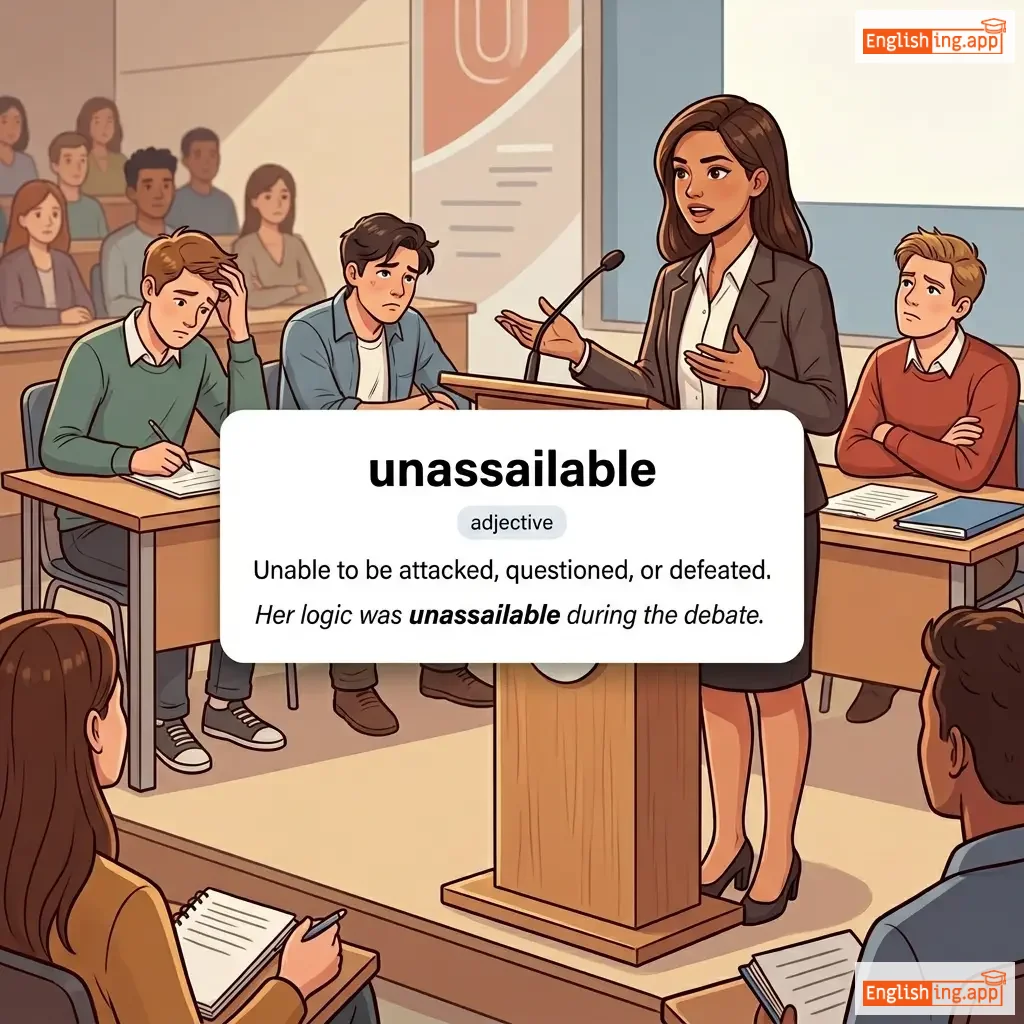
unassailable definition card — visual illustration of the meaning
adjective
/ˌʌnəˈseɪləbl/
不可攻击 (bù kě gōng jī)

Unable to be attacked, questioned, or defeated.

"Her logic was unassailable during the debate."

"她的逻辑在辩论中是不可攻击的。" (Tā de luójí zài biànlùn zhōng shì bù kě gōng jī de.)
adjective
/ˌʌnəˈsweɪdʒd/
未缓解 (wei huanjie)

Not made less intense or relieved; unrelieved.

"His grief remained unassuaged despite the passage of time."

"他的痛苦尽管时间流逝依然未缓解。" (Tā de tòngkǔ jǐnguǎn shíjiān liúshì yīrán wèi huǎnjiě.)
adjective
/ˌʌnəˈsjuːmɪŋ/
谦虚 (qianxu)

Not pretentious or arrogant; modest.

"Despite his success, he remained unassuming and humble."

"尽管他取得了成功,他仍然谦虚和谦逊。" (Jǐnguǎn tā qǔdéle chénggōng, tā réngrán qiānxū hé qiānxùn.)
adjective
/ˌʌnəˈʃʊəd/
不确定的 (bù què dìng de)

Lacking confidence or certainty.

"She gave an unassured answer during the interview."

"她在面试中给出了一个不确定的答案。" (Tā zài miànshì zhōng gěichūle yīgè bù quèdìng de dá'àn.)
adjective
/ˌʌnəˈteɪnəbl/
无法实现的 (wufa shixian de)

impossible to achieve, reach, or accomplish

"For many, becoming a professional athlete remains an unattainable dream."

"对许多人来说,成为职业运动员仍然是一个无法实现的梦想。" (Dui xuduo ren laishuo, chengwei zhiye yundongyuan rengran shi yige wufa shixian de mengxiang.)
noun
/ˌʌnəˌveɪləˈbɪləti/
不可用性 (buke yong xing)

The state of being not available or not accessible.

"The unavailability of the manager caused a delay in the project."

"经理的不可用性导致了项目的延误。" (jingli de bu keyong xing daozhule xiangmu de yanwu)
adjective
/ˌʌnəˈveɪləbəl/
不可用 (buke yong)

Not able to be obtained, reached, or used; not present or accessible.

"The manager was unavailable to take calls during the meeting."

"经理在会议期间不可用,无法接听电话。" (Jingli zai huiyi qijian buke yong, wufa jieting dianhua.)
adjective
/ˌʌnəˈvɔɪdəbl/
不可避免的 (bù kě bì miǎn de)

Impossible to avoid or prevent.

"Delays were unavoidable due to heavy rain."

"由于大雨,延误是不可避免的。" (yóu yú dàyǔ, yánwù shì bù kě bì miǎn de.)
adjective
/ˌʌnəˈweər/
无意识的; 不知道的; 没有意识 (wú yìshí de; bù zhīdào de; méiyǒu yìshí)

not knowing or realizing; having no knowledge of something

"She was completely unaware of the danger."

"她完全没有意识到危险。" (Tā wánquán méiyǒu yìshí dào wēixiǎn.)
adjective
/ʌnˈbæləns/
不平衡的; 不稳定的 (bù pínghéng de; bù wěndìng de)

not balanced; lacking stability or equilibrium; mentally unstable

"The unbalanced table kept wobbling."

"不平衡的桌子摇晃着。" (Bù pínghéng de zhuōzi yáo huàng zhe.)
adjective
/ʌnˈbeərəbl/
无法忍受的 (wúfǎ rěnshòu de)

Too difficult or unpleasant to endure.

"The heat was unbearable in the afternoon."

"下午的热度是无法忍受的。" (Xiàwǔ de rèdù shì wúfǎ rěnshòu de.)
adjective
/ʌnˈbiːtən/
不败的; 未被击败的 (bùbài de; wèi bèi jībài de)

not defeated; having never lost; undefeated

"The team remains unbeaten this season."

"这个团队本赛季保持不败。" (Zhège tuánduì běn sài jì bǎochí bùbài.)
adjective
/ˌʌnbɪˈkʌmɪŋ/
不合适的 (bu he shi de)

Not proper or appropriate for a person; unsuitable.

"His rude behavior was unbecoming of a leader."

"他的粗鲁行为对于一个领导者来说是不合适的。" (Ta de cu lu xing wei dui yu yi ge ling dao zhe lai shuo shi bu he shi de.)
noun
/ˌʌnbɪˈliːf/
不信 (buxin)

A lack of belief, especially in religious faith.

"His heart was full of doubt and unbelief."

"他的心充满了怀疑和不信。" (Ta de xin chongmanle huaiji he buxin.)
adjective
/ˌʌnbɪˈliːvəbəl/
难以置信 (nan yi zhi xin)

impossible to believe; extremely surprising or remarkable

"The magician's performance was absolutely unbelievable."

"魔术师的表演简直令人难以置信。" (Mó shù shī de biǎo yǎn jiǎn zhí lìng rén nán yǐ zhì xìn.)
adjective
/ˌʌnbɪˈliːvɪŋ/
不相信的 (bu xiangxin de)

Not willing or able to believe; skeptical or doubtful

"She gave him an unbelieving look when he claimed to have met a celebrity."

"当他声称见过一位名人时,她给了他一个不相信的眼神。" (Dang ta shengcheng jian guo yi wei mingren shi, ta gei le ta yi ge bu xiangxin de yanshen.)
adjective
/ʌnˈbaɪəst/
公正 (gongzheng)

Not showing prejudice; impartial and fair.

"The report gave an unbiased view of the situation."

"报告提供了该情况的公正观点。" (bàogào tígōngle gāi qíngkuàng de gōngzhèng guāndiǎn.)
adjective
/ʌnˈblʌʃɪŋ/
厚颜无耻的; 放肆的 (hòu yán wú chǐ de; fàng sì de)

showing no shame or embarrassment; boldly shameless

"He told the unblushing lie without any hesitation."

"他毫不犹豫地说了那个无耻的谎言。" (Tā háo bù yóuyù de shuō le nàgè wúchǐ de huǎngyán.)
adjective
/ʌnˈbreɪkəbəl/
不能被打破或损坏;非常强大和耐用 (bùnéng bèi dǎpò huò sǔnhuài; fēicháng qiángdà hé nàiyòng)

not able to be broken or damaged; very strong and durable

"Their friendship formed an unbreakable bond."

"他们的友谊形成了一个坚不可摧的纽带。" (tāmen de yǒuyì xíngchéngle yīgè jiānbùkěcuī de niǔdài.)
adjective
/ʌnˈbraɪdld/
无法控制的 (wúfǎ kòngzhì de)

Uncontrolled and unrestrained.

"The protesters showed unbridled enthusiasm for change."
"抗议者展示了对改变的无法抑制的热情。" (Kangyizhe zhanshile dui gaibian de wufa yizhi de reqing.)
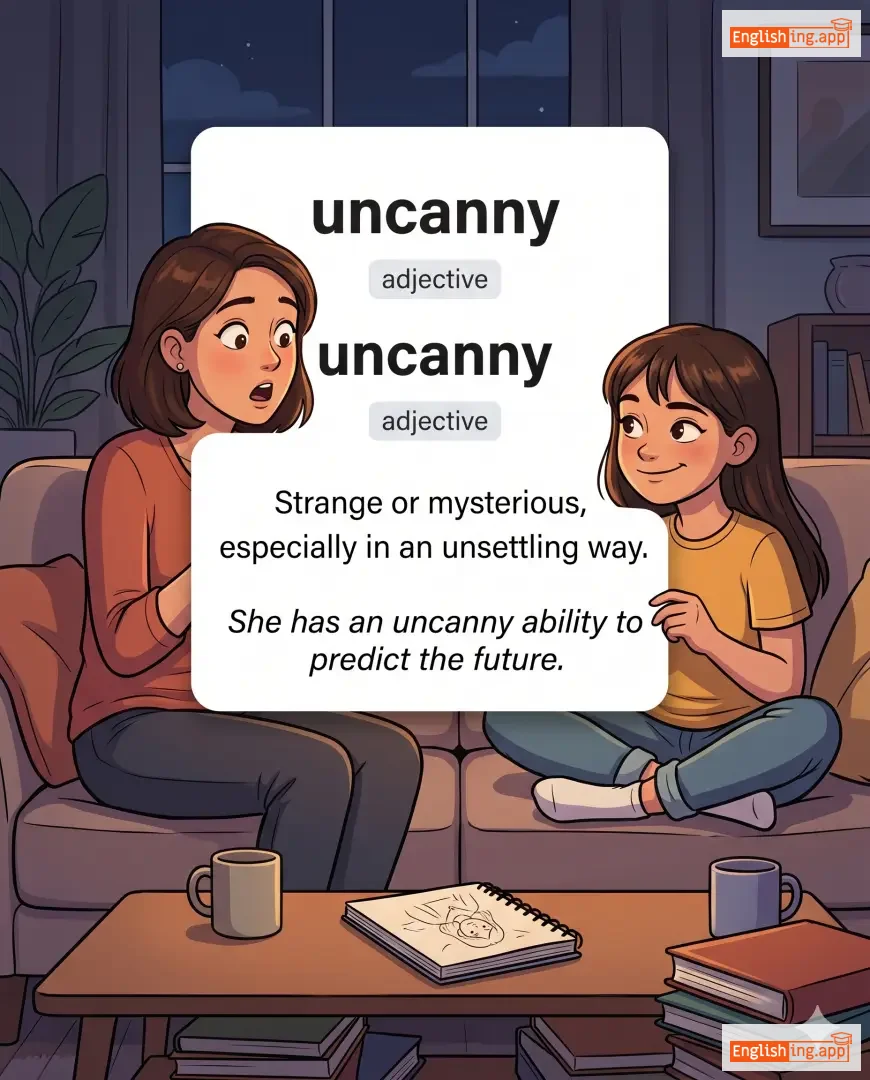
uncanny definition card — visual illustration of the meaning
adjective
/ʌnˈkæni/
不可思议 (bù kě sī yì)

Strange or mysterious, especially in an unsettling way.

"She has an uncanny ability to predict the future."

"她有一种不可思议的能力来预测未来。" (tā yǒu yī zhǒng bù kě sī yì de néng lì lái yù cè wèi lái.)
adjective
/ˌʌnsɛrəˈmoʊniəs/
不拘礼节/粗鲁 (bù jū lǐ jié/cū lǔ)

Done without formality or courtesy; abrupt or rude.

"He made an unceremonious exit from the party."

"他从派对上不拘礼节地离开。" (Tā cóng pàiduì shàng bù jū lǐjié de líkāi.)
adjective
/ʌnˈsɜːtən/
不确定 (bù què dìng)

not sure or confident about something; not clearly known or decided

"She felt uncertain about her future after graduation."

"毕业后,她对自己的未来感到不确定。" (bì yè hòu, tā duì zì jǐ de wèi lái gǎn dào bù què dìng.)
adverb
/ʌnˈsɜːrtənli/
不确定地 (bu que ding de)

in a way that shows doubt or lack of certainty

"She glanced uncertainly at the complicated instructions."

"她不确定地看着复杂的说明。" (Ta bu que ding de kan zhe fuza de shuoming.)
noun
/ʌnˈsɜːtənti/
不确定性 (bù què dìng xìng)

the state of being unsure or not knowing what will happen

"Economic uncertainty affects business investments."

"经济不确定性影响着商业投资。" (Jīngjì bù què dìng xìng yǐng xiǎng zhe shāng yè tóu zī.)
adjective
/ʌnˈtʃælɪndʒd/
无可争议的; 被接受的没有反对; 没有对手 (wú kě zhēngyì de; bèi jiēshòu de méiyǒu fǎnduì; méiyǒu duìshǒu)

not disputed or questioned; accepted without opposition; having no rival

"He remained the unchallenged champion for five years."

"他五年保持不败的冠军。" (Tā wǔ nián bǎochí bùbài de guànjūn.)
adjective
/ʌnˈtʃeɪndʒəbəl/
不可改变的; 固定的; (bùkě gǎibiàn de; gùdìng de;)

not able to be changed or altered; fixed and permanent

"The laws of physics are unchangeable principles that govern the universe."

"物理法则是不变的原则,支配着宇宙。" (wùlǐ fǎzé shì bùbiàn de yuánzé, zhīpèizhe yǔzhòu.)
adjective
/ʌnˈtʃeɪndʒɪŋ/
不变的 (bubian de)

remaining the same over time; not changing

"Her love for her family was unchanging throughout the years."
"她对家人的爱多年来始终不变。" (Ta dui jiaren de ai duonian lai shizhong bubian.)
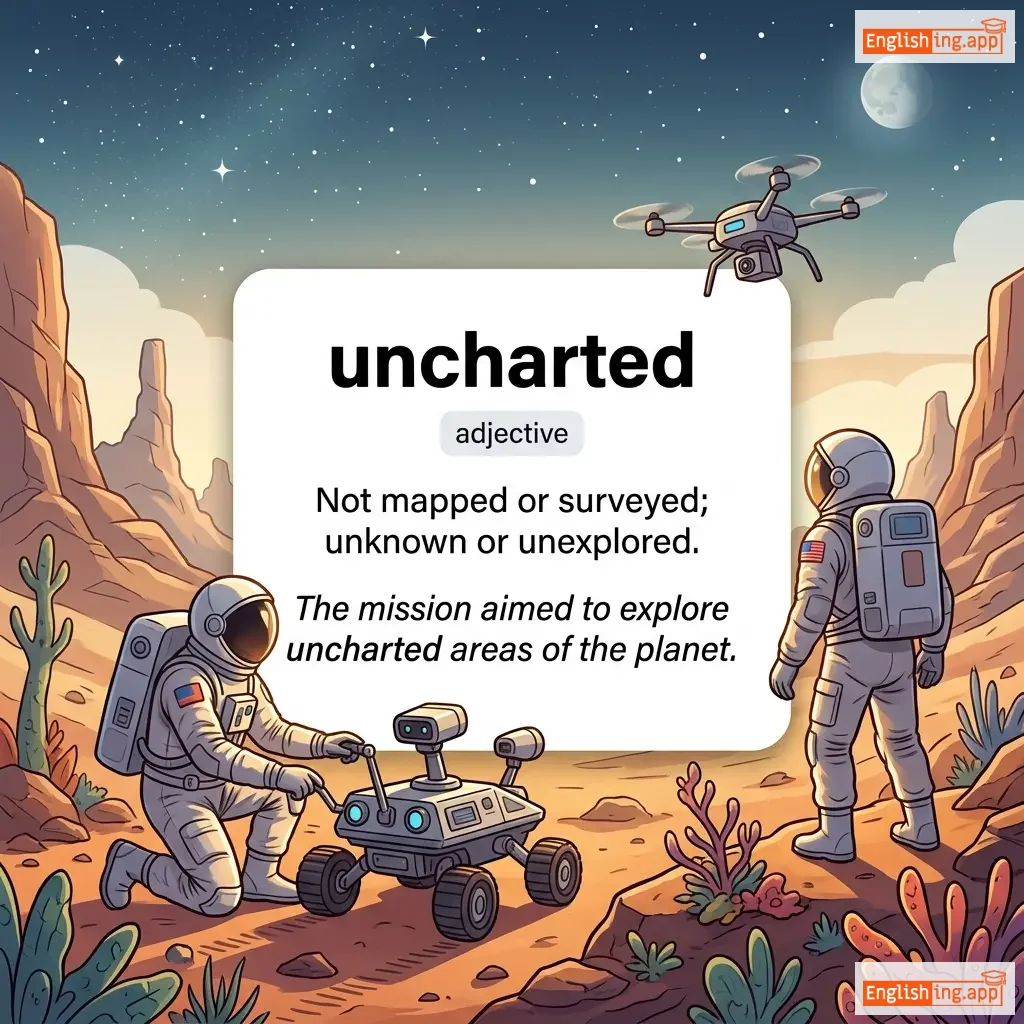
uncharted definition card — visual illustration of the meaning
adjective
ʌnˈtʃɑːtɪd
未标记 (wèi biāo jì)

Not mapped or surveyed; unknown or unexplored.

"The mission aimed to explore uncharted areas of the planet."

"该任务旨在探索星球上未标记的区域。" (Gāi rènwu zhǐ zài tàn suǒ xīng qiú shàng wèi biāo jì de qū yù.)
adjective
/ʌnˈtʃeɪst/
不道德的; 不纯洁的; (bù dàodé de; bù chúnjié de;)

not celibate; having engaged in sexual relations; lacking moral purity

"The conservative society considered her behavior unchaste and improper."

"保守的社会认为她的行为不道德和不合适。" (Bǎoshǒu de shèhuì rènwéi tā de xíngwéi bù dàodé hé bù héshì.)
adjective
/ʌnˈsɪvəl/
不文明的; 粗鲁的; (bù wénmíng de; cū lǔ de)

not polite or courteous; rude and discourteous in behavior

"His uncivil remarks during the meeting offended everyone present."

"他在会议上的不文明言论冒犯了在场的每一个人。" (Tā zài huìyì shàng de bù wénmíng yánlùn màofàn le zài chǎng de měi yīgè rén.)
adjective
/ʌnˈsɪvəlaɪzd/
未开化的; 野蛮的; (wèikāihuà de; yěmán de;)

not developed in terms of civilization; lacking social organization and culture; barbarous

"The explorers encountered an uncivilized tribe deep in the Amazon rainforest."

"探险者在亚马逊雨林深处遇到一个未开化的部落。" (Tànxiǎn zhě zài Yàmǎxùn yǔlín shēnchù yùdào yīgè wèikāihuà de bùluò.)
adjective
/ʌnˈkleɪmd/
未认领的; 未要求的; 被遗弃或无主的 (wei renling de; wei yaoqiu de; bei yiqu de huo wu zhu de)

not claimed by anyone; not demanded or requested; abandoned or ownerless

"The unclaimed luggage was stored in the airport's lost property department."

"未认领的行李被存放在机场的失物招领处。" (Wei renling de xingli bei cunfang zai jichang de shiwu zhaoling chu.)
noun
/ˈʌŋkəl/
叔叔/舅舅 (shūshu/jiùjiu)

the brother of one's father or mother

"My uncle is visiting us next week."

"我的叔叔下周会来看我们。" (Wǒ de shūshu xià zhōu huì lái kàn wǒmen.)
adjective
/ʌnˈklɪər/
不清楚 (bu qingchu)

not easy to understand; vague or ambiguous

"The instructions were unclear, so I asked for clarification."

"说明不清楚,所以我要求澄清。" (Shuoming bu qingchu, suoyi wo yaoqiu chengqing)
verb
/ʌnˈkloʊð/
脱衣; 脱掉衣服 (tuoyi; tuo diao yifu)

to remove clothing from someone or something

"The nurse helped unclothe the patient for the examination."

"护士帮助病人脱衣进行检查。" (hushi bangzhu bingren tuoyi jinxing jiancha)
noun
/ʌnˈkloʊðɪŋ/
脱衣 (tuoyi)

the act or process of removing clothing

"The child quickly ran inside for unclothing after playing in the mud."

"孩子在泥地玩耍后迅速跑进去脱衣。" (haizi zai nidi wanshua hou xunsu pao jinqu tuoyi)
adjective
/ʌnˈkʌmfətəbl/
不舒服 (bù shūfu)

causing or feeling physical or emotional discomfort

"He felt uncomfortable during the long meeting."

"在长时间的会议中,他感到不舒服。" (Zài cháng shíjiān de huìyì zhōng, tā gǎndào bù shūfu.)
adjective
/ʌnˈkɒmən/
不常见 (buchangjian)

rare, unusual, or remarkable

"It is uncommon to see snow in this region."

"在这个地区看到雪是不常见的。" (Zai zhege diqu kandao xue shi buchangjian de.)
adjective
/ʌnˈkɒmprəmaɪzɪŋ/
坚定 (jianding)

not willing to make concessions; firm and resolute

"She remained uncompromising in her principles."

"她在原则上坚持不懈。" (Ta zai yuanze shang jianchi buxie.)
noun
/ʌnkənˈsɜːrn/
漠不关心 (mò bù guān xīn)

lack of worry or interest; indifference

"She showed complete unconcern about the criticism."

"她对批评表现出了完全的漠不关心。" (Tā duì pīpíng biǎoxiàn chūle wánquán de mò bù guān xīn.)
adjective
/ʌnˌkənˈdɪʃ.ən.əl/
无条件的 (wú tiáojiàn de)

not subject to any conditions; complete and absolute

"She offered her unconditional support to her friend in need."

"她在朋友需要时提供了无条件的支持。" (Tā zài péngyǒu xūyào shí tígōngle wú tiáojiàn de zhīchí.)
adjective
/ʌnˌkənˈfɜːmd/
未确认; 未验证; (wei que ren, wei yan zheng)

not confirmed as true or definite; not verified or substantiated

"The report remains unconfirmed until we receive official verification."

"报告在我们收到官方验证之前保持未确认状态。" (Baogao zai women shoudao guanfang yanzheng zhiqian baochi wei queren zhuangtai.)
adjective
/ʌnˈkɒnʃənəbl/
不合理的 (bù hélǐ de)

shockingly unfair or unreasonable

"The company made unconscionable profits from the crisis."

"公司从危机中获得了不合理的利润。" (Gōngsī cóng wēijī zhōng huò déle bù hélǐ de lìrùn.)
verb
/ˌʌndərˈɡɜːrd/
支持,强化 (zhīchí, qiánghuà)

to provide support or foundation for; to strengthen

"Strong values undergird a healthy society."

"强大的价值观支撑着一个健康的社会。" (Qiángdà de jiàzhíguān zhīchēngzhe yīgè jiànkāng de shèhuì.)
adjective
/ˌʌndərɪkˈspoʊzd/
曝光不足,忽视的 (pùguāng bùzú, hūshì de)

insufficiently exposed to light (in photography) or not given enough attention

"The photo was underexposed and looked too dark."

"照片曝光不足,看起来太暗了。" (Zhàopiàn pùguāng bùzú, kàn qǐlái tài ànle.)
noun
/ˈʌndərˌɡɑːrmənt/
内衣 (neiyi)

a piece of clothing worn under outer clothes, usually next to the skin

"He bought new undergarments for the wedding."

"他为婚礼买了新的内衣。" (Tā wèi hūnlǐ mǎile xīn de nèiyī.)
verb
/ˌʌndərˈɛstɪmeɪt/
低估 (dī gū)

To judge something as less important or smaller than it really is.

"Never underestimate the power of teamwork."

"永远不要低估团队合作的力量。" (Yǒngyuǎn bùyào dīgū tuánduì hézuò de lìliàng.)
verb
/ˌʌndərˈɡoʊ/
经历 (jingli)

to go through something, especially something unpleasant or difficult

"She had to undergo surgery to recover."

"她不得不接受手术以恢复。" (Ta bude bu jie shou shoushu yi huifu.)
noun
/ˌʌndəˈɡrædʒuət/
本科生 (benke sheng)

a student who has not yet earned a bachelor's degree

"She is an undergraduate studying computer science."

"她是一个学习计算机科学的本科生。" (Ta shi yige xuexi jisuanji kexue de benke sheng)