词汇表

英语词汇词典 | 单词含义、定义和示例

noun
/ˈtrɒli/
电车 (dianche)

an electric vehicle that runs on rails or tracks in the street

"The trolley runs through the city center every fifteen minutes."

"电车每十五分钟通过市中心。" (Dianche mei shiwu fenzhong tongguo shizhongxin.)
noun
/truːp/
队伍 (duìwǔ)

a group of people, animals, or things moving together

"A troop of soldiers marched down the street."

"一支士兵队伍沿着街道行进。" (Yī zhī shìbīng duìwǔ yánzhe jiēdào xíngjìn.)
noun
/troʊp/
文学陈词滥调 (wénxué chéncí làntiáo)

A common or overused theme, idea, or device in literature, film, or speech.

"The film avoided the usual superhero tropes."

"这部电影避免了常见的超级英雄陈词滥调。" (Zhè bù diànyǐng bìmiǎnle chángjiàn de chāojí yīngxióng chéncí làntiáo.)
noun
/ˈtroʊfi/
奖杯 (jiangbei)

An object awarded as a prize for a victory or achievement.

"She proudly displayed the trophy she won in the competition."
"她骄傲地展示了她在比赛中赢得的奖杯。" (Tā jiāo'ào de zhǎnshìle tā zài bǐsài zhōng yíngdé de jiǎngbēi.)
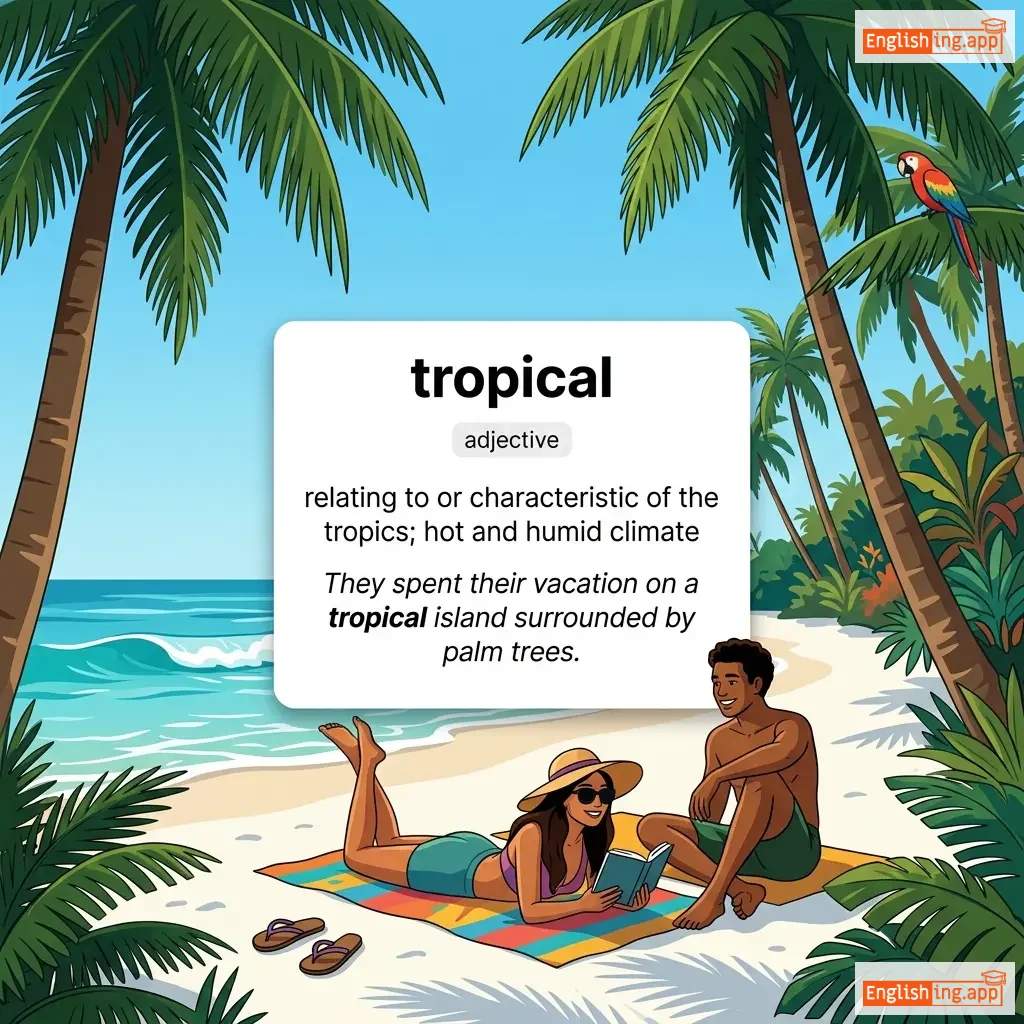
tropical definition card — visual illustration of the meaning
adjective
/ˈtrɒpɪkəl/
热带的 (rèdài de)

relating to or characteristic of the tropics; hot and humid climate

"They spent their vacation on a tropical island surrounded by palm trees."
"他们在一个热带岛屿上度过了假期,四周被棕榈树包围。" (Tāmen zài yīgè rèdài dǎoyǔ shàng dùguòle jiàqī, sìzhōu bèi zōnglǘ shù bāowéi.)
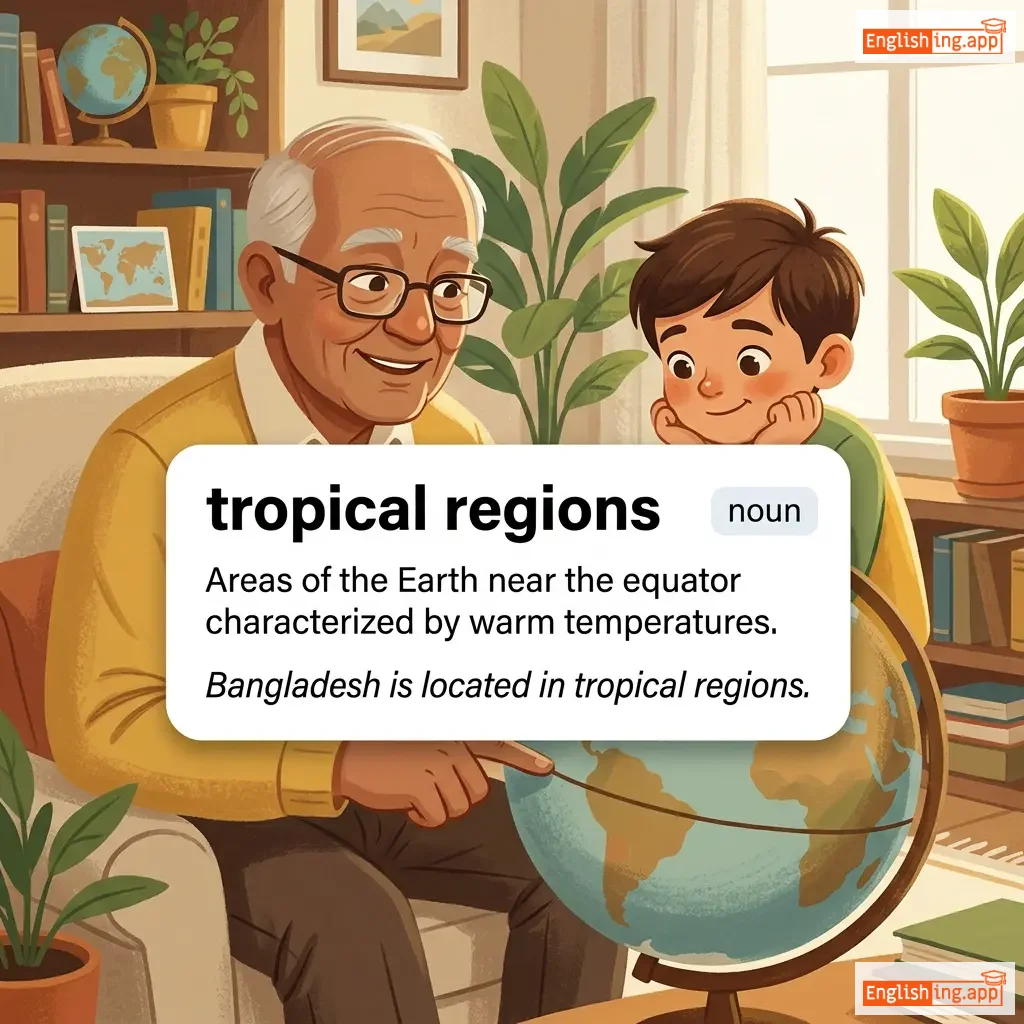
tropical regions definition card — visual illustration of the meaning
noun
ট্রপিক্যাল রিজিওনস
热带地区 (rèdài dìqū)

Areas of the Earth near the equator characterized by warm temperatures.

"Bangladesh is located in tropical regions."
"孟加拉国位于热带地区。" (Mèngjiālāguó wèiyú rèdài dìqū.)
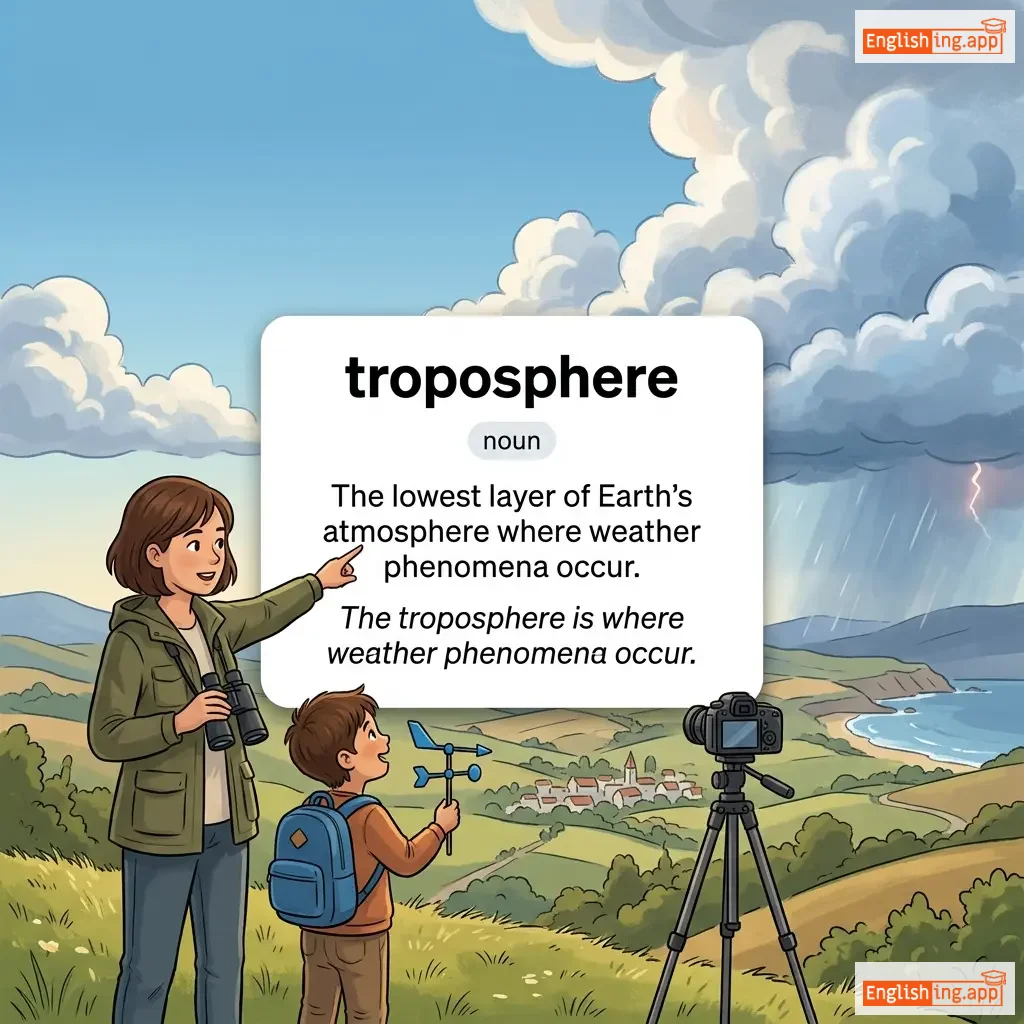
troposphere definition card — visual illustration of the meaning
noun
ট্রোপোস্ফিয়ার
对流层 (duìliú céng)

The lowest layer of Earth's atmosphere where weather phenomena occur.

"The troposphere is where weather phenomena occur."

"对流层是天气现象发生的地方。" (Duìliú céng shì tiānqì xiànxiàng fāshēng de dìfāng.)
🤵‍♀️

troth (特羅斯)

noun
/troʊθ/
誓言, 忠誠 (shiyan, zhongcheng)

Faith or loyalty when pledged in a solemn agreement or vow, especially in marriage.

"He pledged his troth to her before the gathering."

"他在集會前向她許下了他的誓言。" (Ta zai jihui qian xiang ta xu xiala ta de shiyan.)
noun
/ˈtrʌbəl/
问题 (wenti)

difficulty or problems that cause distress or inconvenience

"She had a lot of trouble finding her keys."

"她在找钥匙时遇到了很多问题。" (Ta zai zhao yaoshi shi yudao le henduo wenti.)
adjective
/ˈtrʌbəld/
困扰 (kùnrǎo)

experiencing or showing distress, anxiety, or worry

"He looked deeply troubled after hearing the bad news."

"听到坏消息后,他看起来非常困扰。" (Tīngdào huài xiāoxī hòu, tā kàn qǐlái fēicháng kùnrǎo.)
adjective
/ˈtrʌb.əl.səm/
麻烦的,令人烦恼的 (mafan de, lingren fannao de)

Causing difficulty, annoyance, or worry.

"The troublesome child refused to follow the rules."

"这个麻烦的孩子拒绝遵守规则。" (Zhège mafan de háizi jùjué zūnshǒu guīzé.)
noun
/trɔːf/
槽, 低谷 (cáo, dī gǔ)

A long, narrow container from which animals eat or drink; also, a low point between waves or in business cycles.

"The cows drank water from the wooden trough."

"奶牛从木槽里喝水。" (nǎi niú cóng mù cáo lǐ hē shuǐ.)
noun
/truːp/
剧团 (jutuan)

A group of dancers, actors, or performers who work together.

"The theater troupe performed brilliantly on stage."

"剧团在舞台上表现出色。" (Jutuan zai wutai shang biaoxian chuse.)
noun
/traʊt/
鳟鱼 (zunyu)

a freshwater fish species known for its delicate flavor and often found in cold, clear waters

"Rainbow trout is popular among anglers for sport fishing."

"虹鳟鱼在运动钓鱼者中很受欢迎。" (hóng zun yu zài yùn dòng diào yú zhě zhōng hěn shòu huān yíng.)
noun
/ˈtruː.ənt/
逃学的学生 (tao xue de xuesheng)

A student who stays away from school without permission.

"The teacher punished the truant for skipping class."

"老师因为学生逃课而惩罚了他。" (laoshi yinwei xuesheng taoke er chengfa le ta.)
noun
/truːs/
停战 (ting zhan)

An agreement between enemies or opponents to stop fighting for a certain time.

"The two countries agreed to a truce after weeks of intense fighting."

"经过几周激烈的战斗后,两国同意了停战协议。" (Jīngguò jǐ zhōu jīliè de zhàndòu hòu, liǎng guó tóngyì le tíngzhàn xiéyì.)
noun
/trʌk/
卡车 (kǎchē)

a large motor vehicle for transporting goods

"The truck was loaded with boxes for the warehouse."

"卡车装满了仓库的箱子。" (Kǎchē zhuāng mǎnle cāngkù de xiāngzi.)
verb
/ˈtrʌk.əl/
屈服 (qufu)

To submit or yield obsequiously to someone in power.

"He refused to truckle to the demands of the corrupt officials."

"他拒绝屈服于腐败官员的要求。" (Ta jujue qufu yu fubai guanyuan de yaoqiu.)
truculence definition card — visual illustration of the meaning
noun
/ˈtrʌk.jʊ.ləns/
好斗性 (haodouxing)

Aggressiveness or eagerness to fight.

"His speech was full of truculence and threats."

"他的演讲充满了好斗性和威胁。" (Tā de yǎnjiǎng chōngmǎn le hǎodòuxìng hé wēixié.)
adjective
/ˈtrʌk.jʊ.lənt/
好斗的 (haodoude)

Eager or quick to argue, fight, or show aggression.

"She became truculent when her ideas were challenged."

"当她的想法被挑战时,她变得好斗。" (Dang ta de xiangfa bei tiaozhan shi, ta biande haodou.)
verb
/trʌdʒ/
艰难行走 (jian nan xing zou)

To walk slowly and with heavy steps, typically because of exhaustion or harsh conditions.

"They had to trudge through the snow to reach the village."

"他们不得不在雪中艰难地行走才能到达村庄。" (Tamen bude bu zai xue zhong jian nan de xing zou cai neng dao da cun zhuang.)
adjective
/truː/
真实 (zhen shi)

in accordance with fact or reality; correct

"His story was true, and everyone believed him."
"他的故事是真的,大家都相信他。" (Tā de gùshì shì zhēn de, dàjiā dōu xiāngxìn tā.)
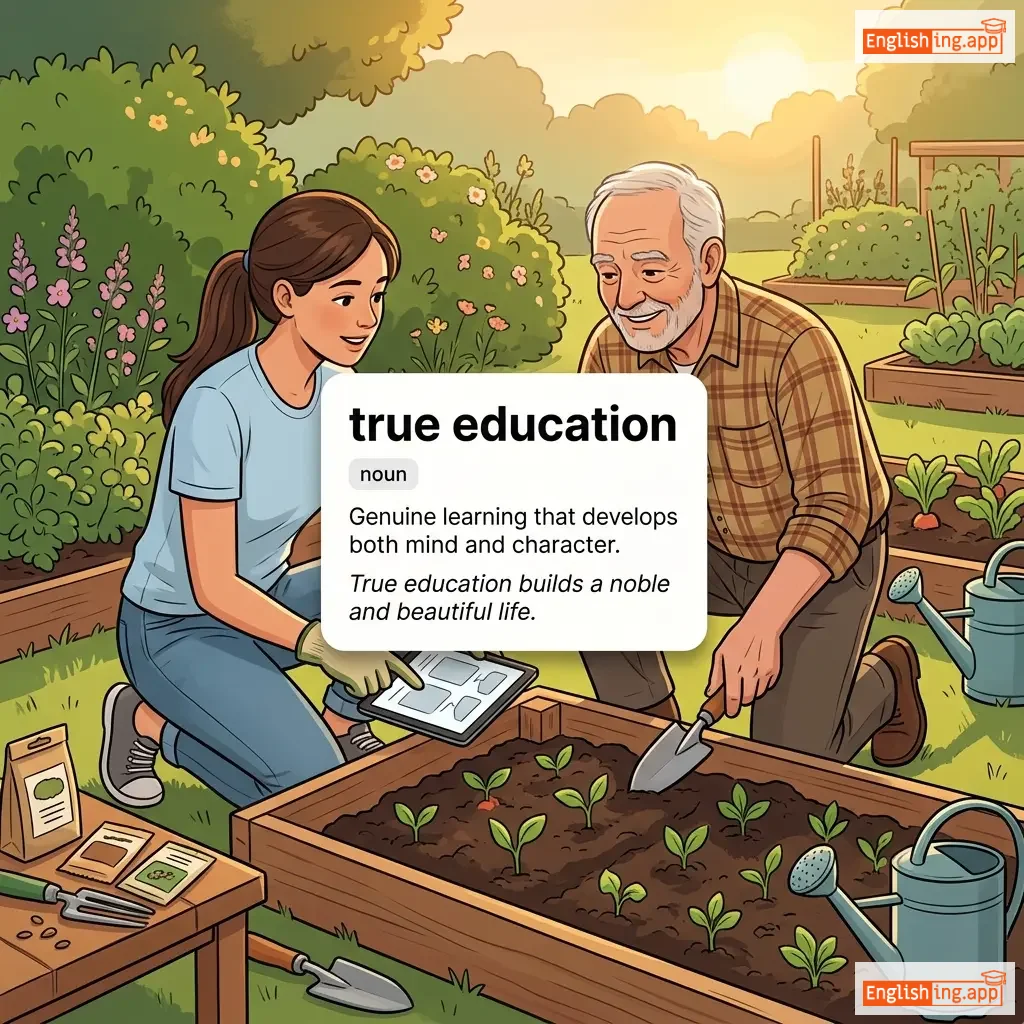
true education definition card — visual illustration of the meaning
noun
truː ˌɛdjuˈkeɪʃən
真正的教育 (zhenzheng de jiaoyu)

Genuine learning that develops both mind and character.

"True education builds a noble and beautiful life."

"真正的教育塑造了崇高而美丽的生活。" (Zhenzheng de jiaoyu suzao le chonggao er mei li de shenghuo.)
noun
/ˈtruːɪzəm/
陈词滥调 (chén cí làn diào)

a statement that is obviously true and says nothing new or interesting

"It is a truism that hard work leads to success."

"努力工作带来成功,这是一条陈词滥调。" (nǔ lì gōng zuò dài lái chéng gōng, zhè shì yī tiáo chén cí làn diào.)
adverb
/ˈtruːli/
真的 (zhēn de)

in a truthful, genuine, or sincere manner

"She truly believed in the power of kindness."

"她真的相信善良的力量。" (Tā zhēn de xiāng xìn shàn liáng de lì liàng.)
noun
/ˈtrʌmpəri/
毫无价值的废话或浮华但无价值的东西 (háo wú jià zhí de fèihuà huò fú huá dàn wú jià zhí de dōngxī)

worthless nonsense or showy but worthless things

"The speech was full of political trumpery."

"这个演讲充满了政治废话。" (Zhège yǎnjiǎng chōngmǎn le zhèngzhì fèihuà.)
noun/verb
/ˈtrʌmpɪt/

a brass musical instrument with a bright sound; to proclaim loudly

"The band played the trumpet loudly at the parade."

verb
/ˈtrʌŋkeɪt/
截断 (jie duan)

to shorten something by cutting off the top or the end

"The article was truncated to fit the limited space."

"这篇文章被截断以适应有限的空间。" (Zhe pian wen zhang bei jie duan yi shi ying you xian de kong jian.)
adjective
/ˈtrʌŋkeɪtɪd/
缩短 (suōduǎn)

shortened by cutting off a part; cut short

"The meeting was truncated due to time constraints."

"由于时间限制,会议被缩短了。" (Yóuyú shíjiān xiànzhì, huìyì bèi suōduǎnle.)
🌳

Trunk

noun
/trʌŋk/

the main woody stem of a tree; also a large, strong container for storage or travel; the enclosed space at the back of a car

"She packed her clothes into a trunk before leaving for college."

🏗️

truss

noun
/trʌs/

a framework, typically consisting of rafters, posts, and struts, supporting a roof, bridge, or other structure

"The engineer designed a strong truss for the new bridge."

trust definition card — visual illustration of the meaning
🤝

trust

verb
/trʌst/

to believe in the reliability, truth, ability, or strength of someone or something

"I trust you to handle this situation carefully."

noun
/trʌsˈtiː/
受托人 (shòutuōrén)

a person who holds or manages property or assets for the benefit of others

"She was appointed as the trustee of the family estate."

"她被任命为家庭财产的受托人。" (Tā bèi rènmìng wéi jiātíng cáichǎn de shòutuōrén.)
adjective
/ˈtrʌst.fəl/
信任的; 表现出对某人或某事的信任 (xìnrèn de)

having or showing trust in someone or something; trusting

"She was too trustful and believed everything he said."

"她太信任了,什么都相信他说的。" (Tā tài xìnrèn le, shénme dōu xiāngxìn tā shuō de.)
adjective
/ˈtrʌstˌwɜːrði/
可信赖 (kěxìn lài)

Able to be relied on as honest or truthful.

"She is a trustworthy friend who never lies."

"她是一个值得信赖的朋友,从不说谎。" (Tā shì yīgè zhídé xìnlài de péngyǒu, cóng bù shuō huǎng.)
🧭

Truth

noun
/truːθ/

the quality or state of being true; facts or reality

"The truth will always come out in the end."

adjective
/ˈtruːθfʊl/
诚实 (chengshi)

telling or expressing the truth; honest

"He gave a truthful account of the incident."

"他给出了一个诚实的事件描述。" (Ta gei chu le yi ge chengshi de shijian miaoshu.)
noun
/ˈtruːθ.fəl.nəs/
诚实 (chengshi)

the quality of being truthful; honesty and accuracy in what one says or does

"Her truthfulness in the investigation helped solve the case quickly."
"她在调查中的诚实帮助迅速解决了案件。" (Ta zai diaocha zhong de chengshi bangzhu xunsu jiejue le anjian.)
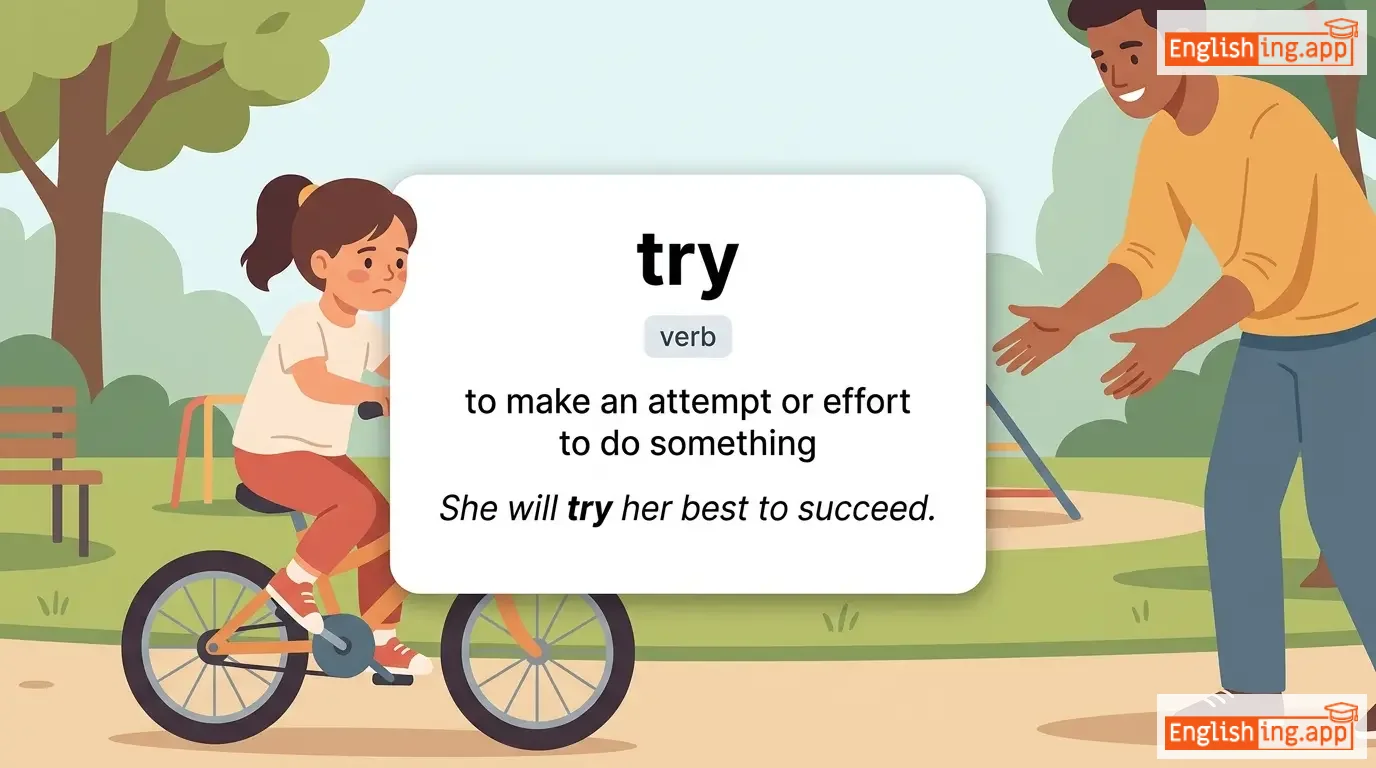
try definition card — visual illustration of the meaning
verb
/traɪ/
尝试 (chángshì)

to make an attempt or effort to do something

"She will try her best to succeed."
"她会尽全力去成功。" (Tā huì jìn quánlì qù chénggōng.)
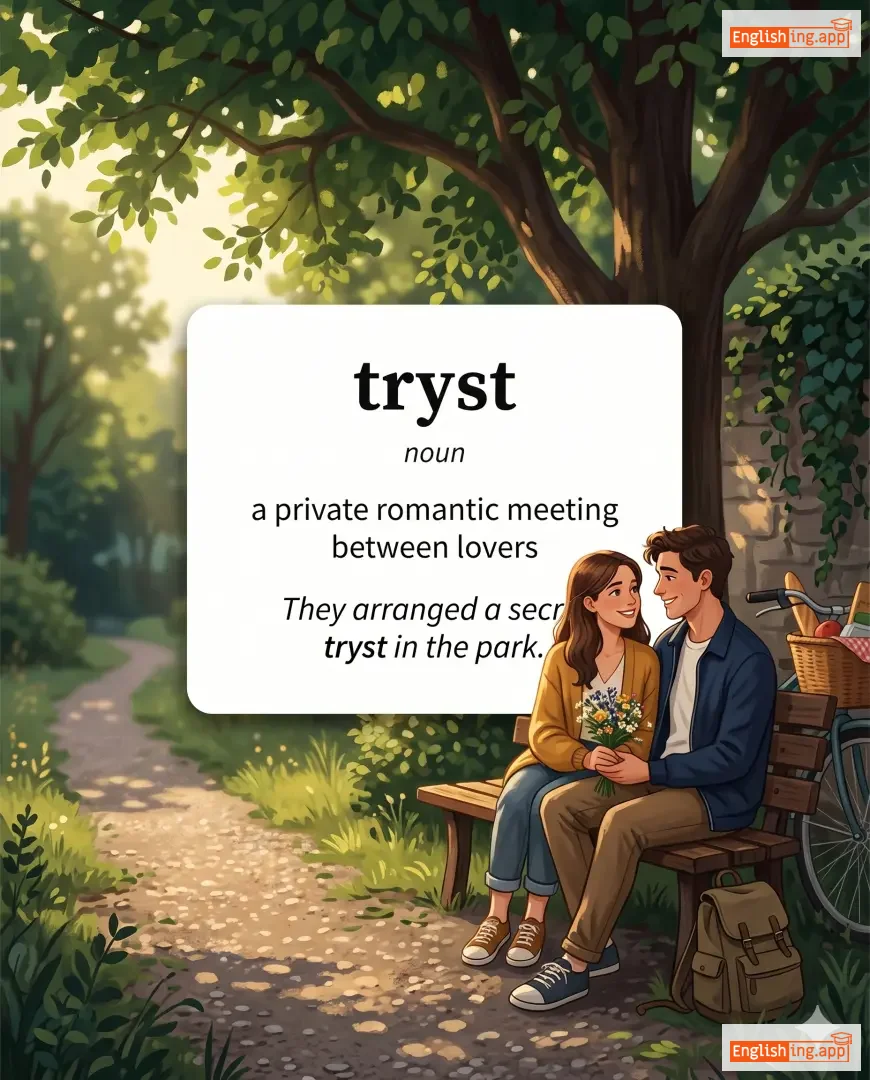
tryst definition card — visual illustration of the meaning
noun
/traɪst/
秘密约会 (mimi yuehui)

a private romantic meeting between lovers

"They arranged a secret tryst in the park."

"他们在公园里安排了一个秘密约会。" (Tamen zai gongyuan li anpai le yige mimi yuehui.)
noun
/tsuːˈnɑː.mi/
海啸 (hai xiao)

a large sea wave caused by an underwater earthquake or volcanic eruption

"The tsunami devastated the coastal town, leaving thousands homeless."

"海啸摧毁了沿海城市,导致成千上万的人无家可归。" (Hai xiao cuihui le yanhai chengshi, daozhi chengqian shangwan de ren wu jia ke gui.)
noun
/tjuːb/
管子 (guǎnzi)

a hollow cylinder used to convey something, typically fluid

"He used a tube to measure the liquid."

"他使用管子来测量液体。" (Tā shǐyòng guǎnzi lái cèliàng yètǐ.)
noun
/ˈtuːb.roʊz/
夜来香 (yè lái xiāng)

a night-blooming flower with an intensely sweet fragrance, native to Mexico

"The tuberose flowers filled the evening air with their heavenly scent."

"夜来香的花朵充满了夜晚空气中的天国香气。" (Yè lái xiāng de huā duǒ chōng mǎn le yè wǎn kōng qì zhōng de tiānguó xiāng qì.)
🛏️

tuck (tak)

verb
/tʌk/
塞进 (saijin)

to push or fold something neatly into a particular place

"She tucked the blanket around the baby to keep him warm."

"她把毯子围绕着婴儿,这样他就保持温暖。" (Ta ba tanzi weirao zhe ying'er, zheyang ta jiu baochi wennuan.)
noun
/ˈtjuːzdeɪ/
星期二 (xingqi er)

The second day of the week, following Monday and preceding Wednesday.

"We have a meeting scheduled for Tuesday."

"我们定于星期二开会。" (Wo men ding yu xingqi er kai hui.)
adjective
/ˈtʌf.tɪd/
有小束的; 装饰着小束 (you xiao shu de; zhuangshi zhe xiao shu)

having a tuft or tufts; furnished with a tuft or clump of threads, hairs, or other material

"The tufted sofa looked elegant in the living room."

"有小束的沙发在客厅里看起来很优雅。" (Yǒu xiǎo shù de shāfā zài kètīng lǐ kàn qǐlái hěn yōuyǎ.)
noun
/ˈtʌɡboʊt/
拖船 (tuō chuán)

a small, powerful boat used for towing or pushing ships

"The tugboat guided the massive ship safely into the harbor."

"拖船将巨大的船只安全地引导进港口。" (Tuō chuán jiāng jù dà de chuán zhī ān quán de yǐn dǎo jìn gǎng kǒu.)
adjective
/ʌnˈtʃeɪst/
不道德的; 不纯洁的; (bù dàodé de; bù chúnjié de;)

not celibate; having engaged in sexual relations; lacking moral purity

"The conservative society considered her behavior unchaste and improper."

"保守的社会认为她的行为不道德和不合适。" (Bǎoshǒu de shèhuì rènwéi tā de xíngwéi bù dàodé hé bù héshì.)
adjective
/ʌnˈtʃeɪndʒɪŋ/
不变的 (bubian de)

remaining the same over time; not changing

"Her love for her family was unchanging throughout the years."
"她对家人的爱多年来始终不变。" (Ta dui jiaren de ai duonian lai shizhong bubian.)
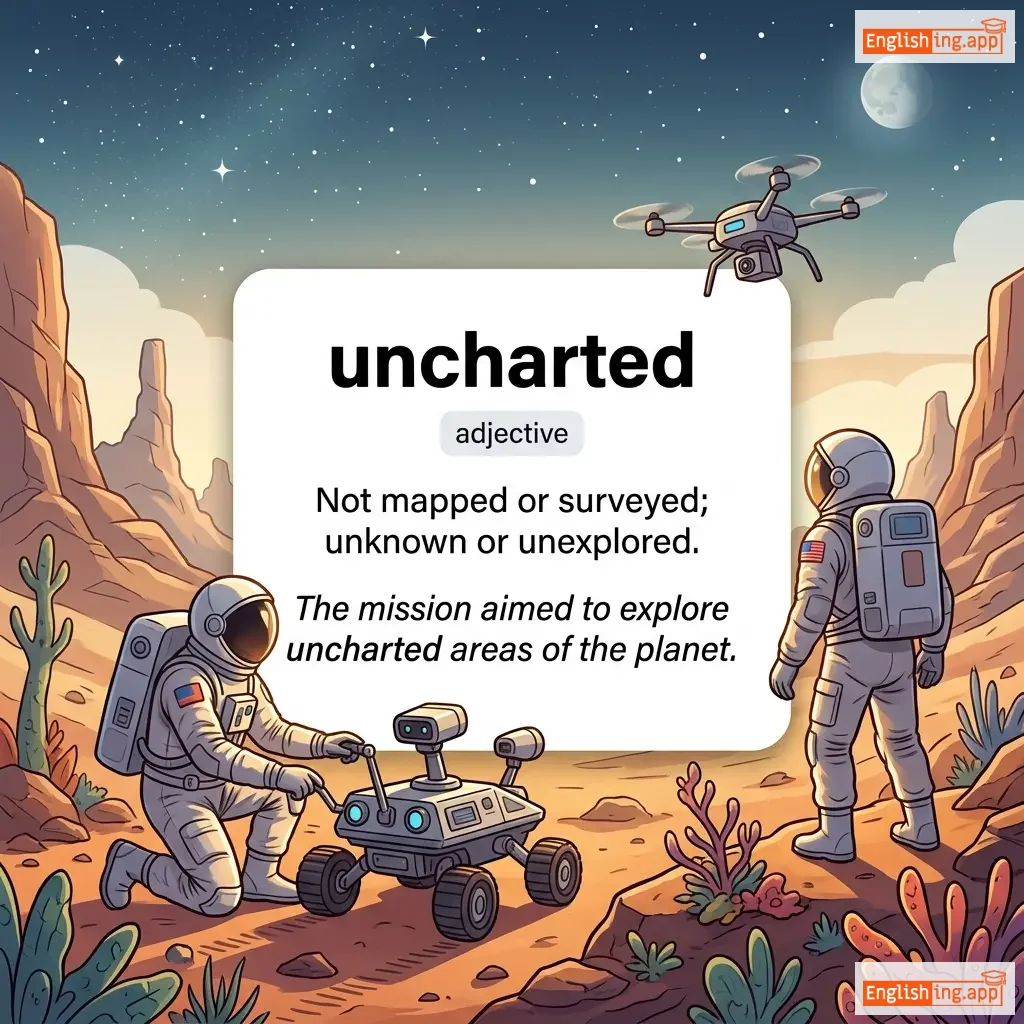
uncharted definition card — visual illustration of the meaning
adjective
ʌnˈtʃɑːtɪd
未标记 (wèi biāo jì)

Not mapped or surveyed; unknown or unexplored.

"The mission aimed to explore uncharted areas of the planet."

"该任务旨在探索星球上未标记的区域。" (Gāi rènwu zhǐ zài tàn suǒ xīng qiú shàng wèi biāo jì de qū yù.)