Vocabularios

Descubra, aprenda y domine el vocabulario en inglés

noun
/ˈtrɒli/
tranvía (tranvia)

an electric vehicle that runs on rails or tracks in the street

"The trolley runs through the city center every fifteen minutes."

"El tranvía pasa por el centro de la ciudad cada quince minutos." (El tranvia pasa por el centro de la ciudad cada quince minutos.)
noun
/truːp/
tropa (tropa)

a group of people, animals, or things moving together

"A troop of soldiers marched down the street."

"Un tropa de soldados marchaba por la calle." (Un tropa de soldados marchaba por la calle.)
noun
/troʊp/
tropo literario (tropo literario)

A common or overused theme, idea, or device in literature, film, or speech.

"The film avoided the usual superhero tropes."

"La película evitó los típicos tropos de superhéroes." (La película evitó los típicos tropos de superhéroes.)
noun
/ˈtroʊfi/
trofeo (trofeo)

An object awarded as a prize for a victory or achievement.

"She proudly displayed the trophy she won in the competition."

"Ella mostró con orgullo el trofeo que ganó en la competencia." (Ella mostró con orgullo el trofeo que ganó en la competencia.)
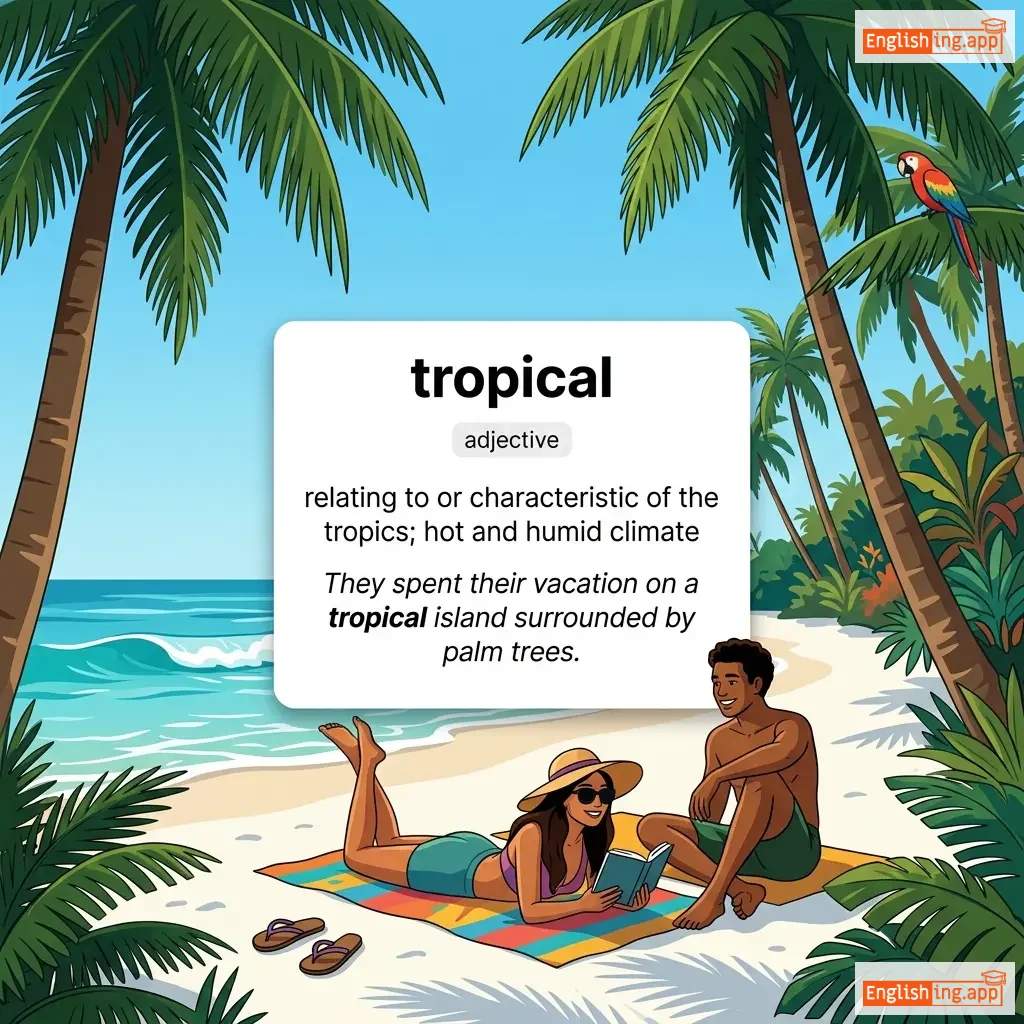
tropical definition card — visual illustration of the meaning
adjective
/ˈtrɒpɪkəl/
tropical (tropical)

relating to or characteristic of the tropics; hot and humid climate

"They spent their vacation on a tropical island surrounded by palm trees."

"Pasaron sus vacaciones en una isla tropical rodeada de palmeras." (Pasaron sus vacaciones en una isla tropical rodeada de palmeras.)
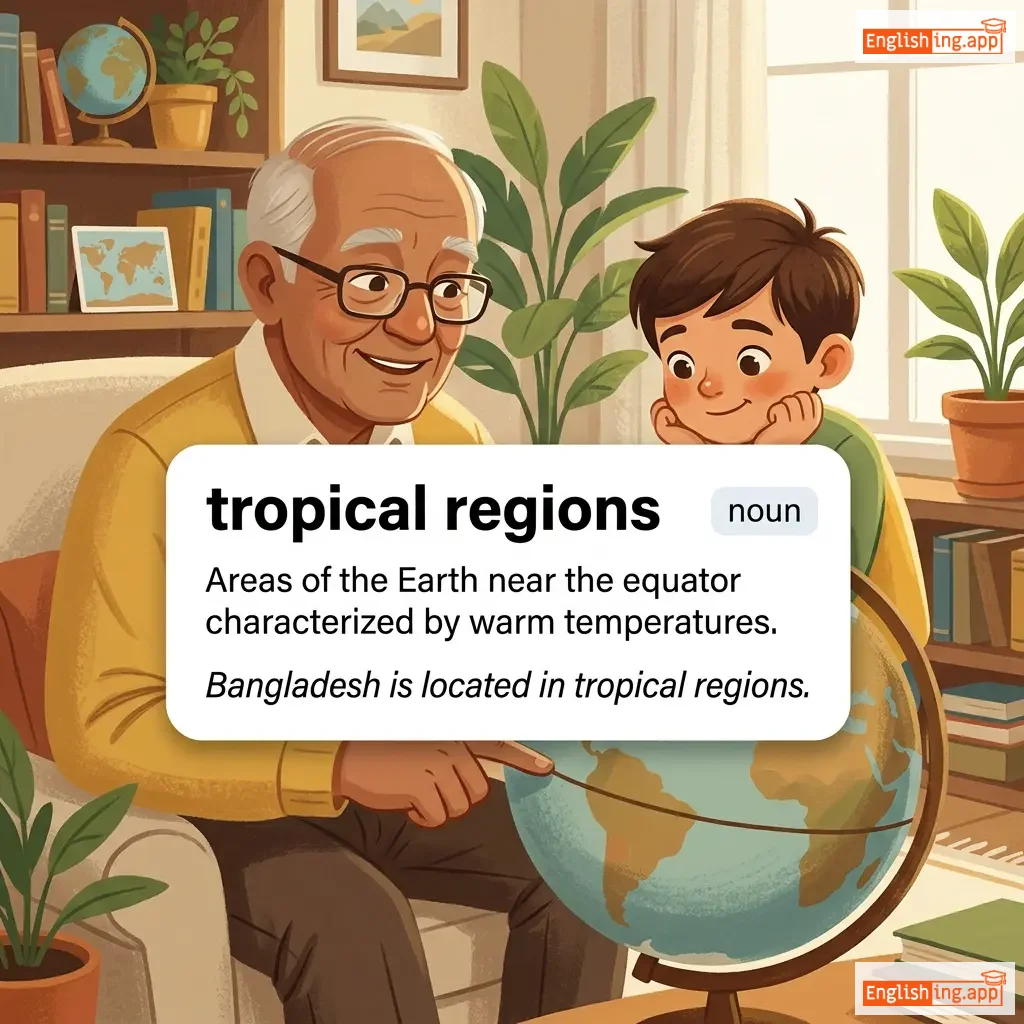
tropical regions definition card — visual illustration of the meaning
noun
ট্রপিক্যাল রিজিওনস
zonas tropicales (zonas tropicales)

Areas of the Earth near the equator characterized by warm temperatures.

"Bangladesh is located in tropical regions."

"Bangladesh está ubicado en zonas tropicales." (Bangladesh está ubicado en zonas tropicales.)
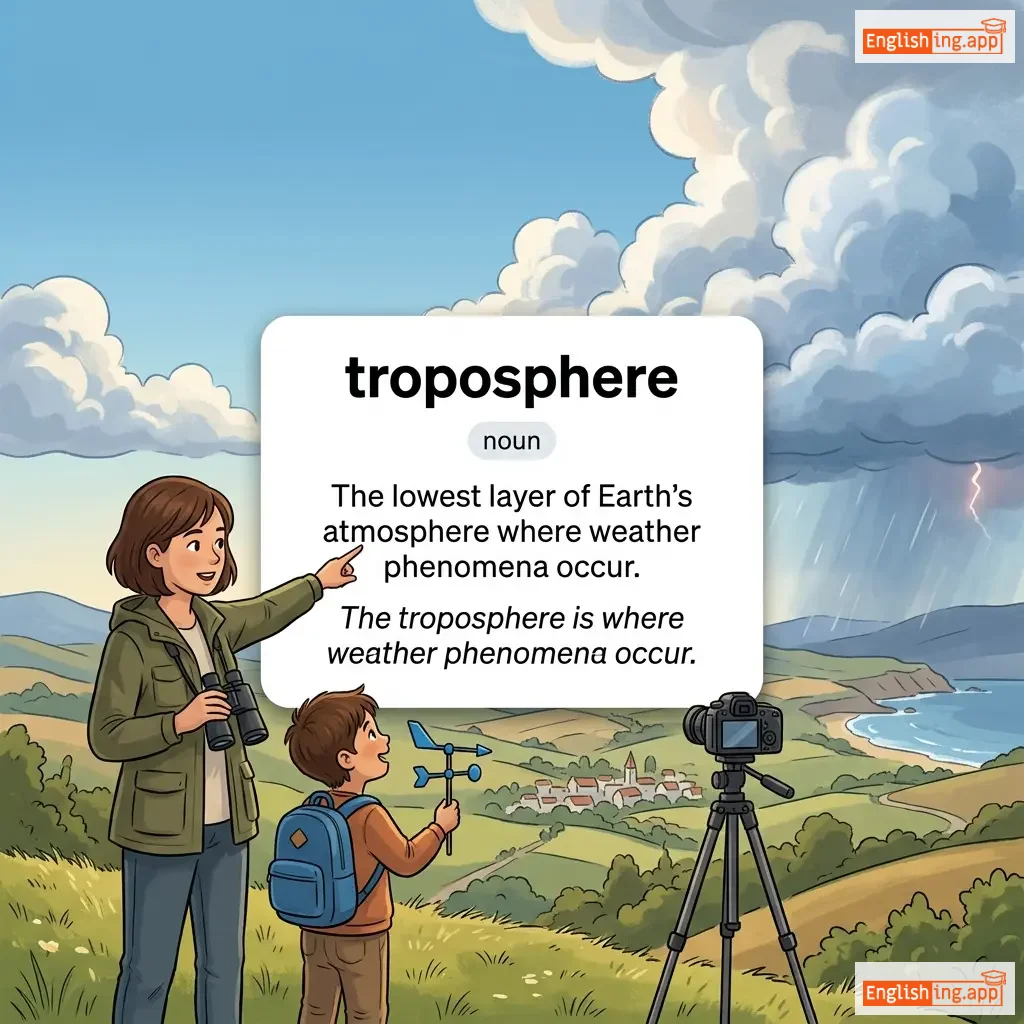
troposphere definition card — visual illustration of the meaning
noun
ট্রোপোস্ফিয়ার
troposfera (troposfera)

The lowest layer of Earth's atmosphere where weather phenomena occur.

"The troposphere is where weather phenomena occur."

"La troposfera es donde ocurren los fenómenos meteorológicos." (La troposfera es donde ocurren los fenómenos meteorológicos.)
🤵‍♀️

troth (tróz)

noun
/troʊθ/
promesa, fidelidad (promesa, fidelidad)

Faith or loyalty when pledged in a solemn agreement or vow, especially in marriage.

"He pledged his troth to her before the gathering."

"Él le prometió su troth antes de la reunión." (Él le prometió su troth antes de la reunión.)
noun
/ˈtrʌbəl/
problema (problema)

difficulty or problems that cause distress or inconvenience

"She had a lot of trouble finding her keys."

"Tuvo muchos problemas para encontrar sus llaves." (Tuvo muchos problemas para encontrar sus llaves.)
adjective
/ˈtrʌbəld/
preocupado (preocupado)

experiencing or showing distress, anxiety, or worry

"He looked deeply troubled after hearing the bad news."

"Parecía profundamente preocupado después de escuchar las malas noticias." (Parecia profundamente preocupado despues de escuchar las malas noticias.)
adjective
/ˈtrʌb.əl.səm/
problemático, molesto (problematico, molesto)

Causing difficulty, annoyance, or worry.

"The troublesome child refused to follow the rules."

"El niño problemático se negó a seguir las reglas." (El niño problematico se nego a seguir las reglas.)
noun
/trɔːf/
comederos, punto bajo (comederos, punto bajo)

A long, narrow container from which animals eat or drink; also, a low point between waves or in business cycles.

"The cows drank water from the wooden trough."

"Las vacas bebieron agua del comedero de madera." (Las vacas bebieron agua del comedero de madera.)
noun
/truːp/
grupo, compañía de teatro (grupo, compania de teatro)

A group of dancers, actors, or performers who work together.

"The theater troupe performed brilliantly on stage."

"La compañía de teatro actuó brillantemente en el escenario." (La compania de teatro actuo brillantemente en el escenario.)
noun
/traʊt/
trucha (trucha)

a freshwater fish species known for its delicate flavor and often found in cold, clear waters

"Rainbow trout is popular among anglers for sport fishing."

"La trucha arcoíris es popular entre los pescadores deportivos." (La trucha arcoiris es popular entre los pescadores deportivos.)
noun
/ˈtruː.ənt/
estudiante irregular (estudiante irregular)

A student who stays away from school without permission.

"The teacher punished the truant for skipping class."

"El maestro castigó al estudiante irregular por saltarse la clase." (El maestro castigó al estudiante irregular por saltarse la clase.)
noun
/truːs/
tregua (tregua)

An agreement between enemies or opponents to stop fighting for a certain time.

"The two countries agreed to a truce after weeks of intense fighting."

"Los dos países acordaron una tregua después de semanas de intensos combates." (Los dos países acordaron una tregua después de semanas de intensos combates.)
noun
/trʌk/
camión (kamion)

a large motor vehicle for transporting goods

"The truck was loaded with boxes for the warehouse."

"El camión estaba cargado con cajas para el almacén." (El camión estaba cargado con cajas para el almacén.)
verb
/ˈtrʌk.əl/
humillarse (humillarse)

To submit or yield obsequiously to someone in power.

"He refused to truckle to the demands of the corrupt officials."

"Él se negó a humillarse ante las demandas de los funcionarios corruptos." (Él se negó a humillarse ante las demandas de los funcionarios corruptos.)
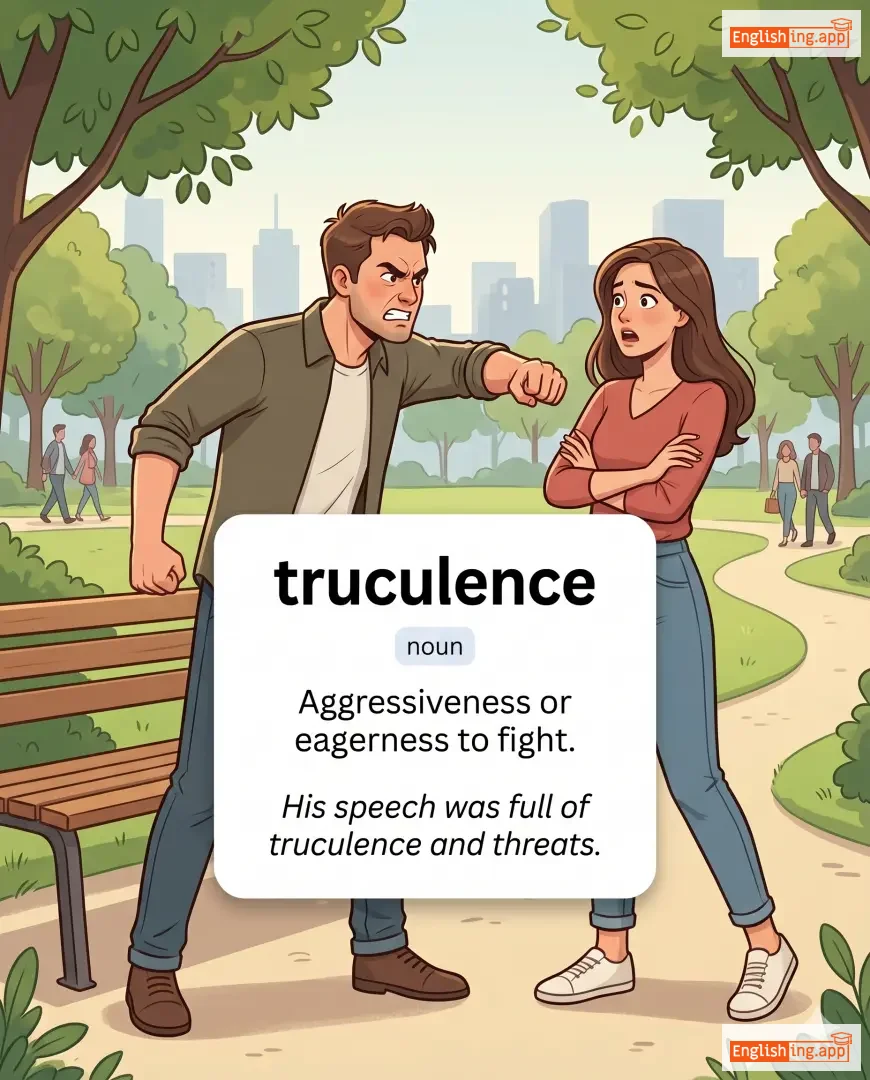
truculence definition card — visual illustration of the meaning
noun
/ˈtrʌk.jʊ.ləns/
agresividad (agresividad)

Aggressiveness or eagerness to fight.

"His speech was full of truculence and threats."

"Su discurso estaba lleno de agresividad y amenazas." (Su discurso estaba lleno de agresividad y amenazas.)
adjective
/ˈtrʌk.jʊ.lənt/
agresivo (agresivo)

Eager or quick to argue, fight, or show aggression.

"She became truculent when her ideas were challenged."

"Se volvió agresiva cuando desafiaron sus ideas." (Se volvio agresiva cuando desafiaron sus ideas.)
verb
/trʌdʒ/
caminar con esfuerzo (caminar con esfuerzo)

To walk slowly and with heavy steps, typically because of exhaustion or harsh conditions.

"They had to trudge through the snow to reach the village."

"Tuvieron que caminar con esfuerzo por la nieve para llegar al pueblo." (Tuvieron que caminar con esfuerzo por la nieve para llegar al pueblo.)
adjective
/truː/
verdadero (verdadero)

in accordance with fact or reality; correct

"His story was true, and everyone believed him."

"Su historia era verdadera, y todos le creyeron." (Su historia era verdadera, y todos le creyeron.)
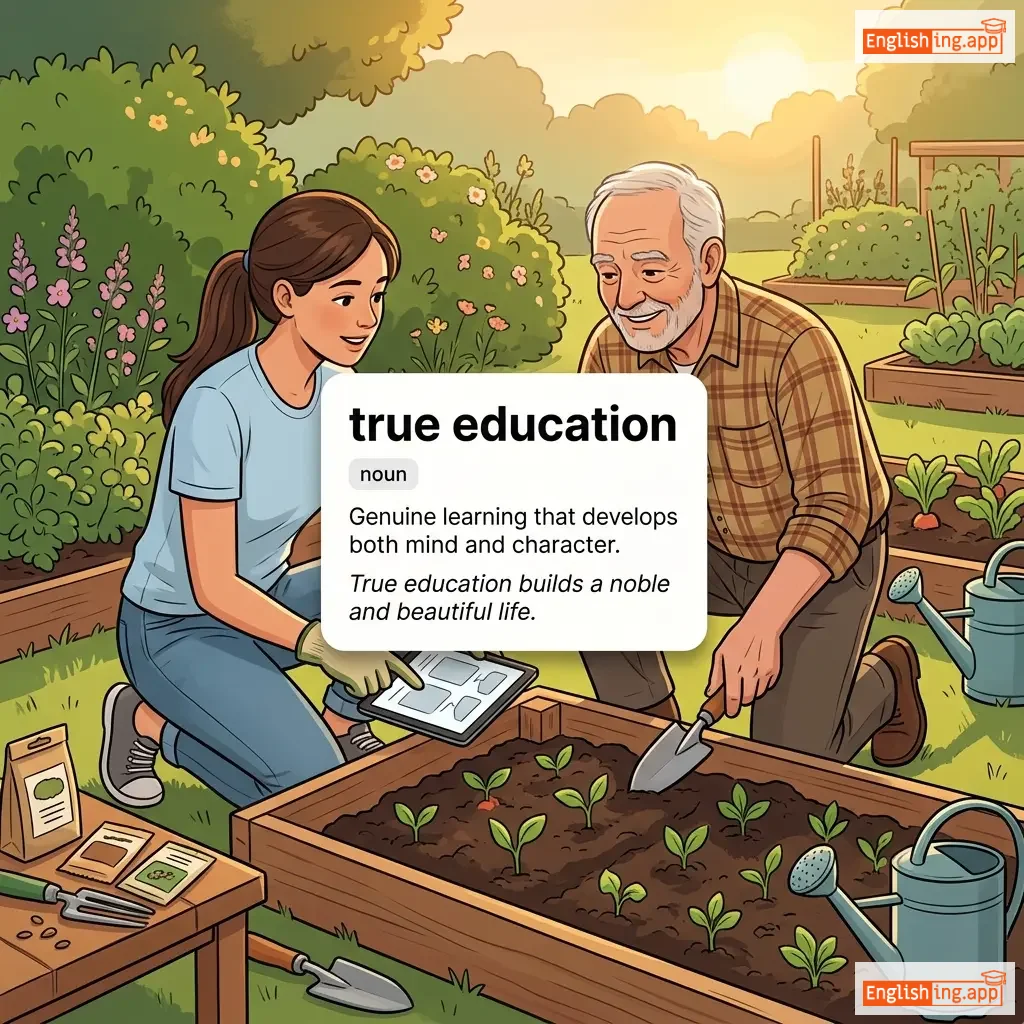
true education definition card — visual illustration of the meaning
noun
truː ˌɛdjuˈkeɪʃən
educación verdadera (educacion verdadera)

Genuine learning that develops both mind and character.

"True education builds a noble and beautiful life."

"La educación verdadera construye una vida noble y hermosa." (La educacion verdadera construye una vida noble y hermosa.)
noun
/ˈtruːɪzəm/
verdad de Perogrullo (verdad de perogrullo)

a statement that is obviously true and says nothing new or interesting

"It is a truism that hard work leads to success."

"Es una verdad de Perogrullo que el trabajo duro lleva al éxito." (Es una verdad de Perogrullo que el trabajo duro lleva al exito.)
adverb
/ˈtruːli/
realmente (realmente)

in a truthful, genuine, or sincere manner

"She truly believed in the power of kindness."

"Ella realmente creía en el poder de la bondad." (Ella realmente creía en el poder de la bondad.)
noun
/ˈtrʌmpəri/
tonterías sin valor o cosas ostentosas pero sin valor (tonterias sin valor o cosas ostentosas pero sin valor)

worthless nonsense or showy but worthless things

"The speech was full of political trumpery."

"El discurso estaba lleno de tonterías políticas." (El discurso estaba lleno de tonterías políticas.)
noun/verb
/ˈtrʌmpɪt/
trompeta, proclamar (trompeta, proclamar)

a brass musical instrument with a bright sound; to proclaim loudly

"The band played the trumpet loudly at the parade."

"La banda tocó la trompeta fuerte en el desfile." (La banda tocó la trompeta fuerte en el desfile.)
verb
/ˈtrʌŋkeɪt/
truncar (truncar)

to shorten something by cutting off the top or the end

"The article was truncated to fit the limited space."

"El artículo fue truncado para encajar en el espacio limitado." (El artículo fue truncado para encajar en el espacio limitado.)
adjective
/ˈtrʌŋkeɪtɪd/
abreviado (abreviado)

shortened by cutting off a part; cut short

"The meeting was truncated due to time constraints."

"La reunión fue abreviada debido a las limitaciones de tiempo." (La reunion fue abreviada debido a las limitaciones de tiempo.)
noun
/trʌŋk/
tronco; baúl; maletero (trunk)

the main woody stem of a tree; also a large, strong container for storage or travel; the enclosed space at the back of a car

"She packed her clothes into a trunk before leaving for college."

"Ella empacó su ropa en un baúl antes de irse a la universidad." (Ella empaco su ropa en un baul antes de irse a la universidad.)
noun
/trʌs/
cercha (sercha)

a framework, typically consisting of rafters, posts, and struts, supporting a roof, bridge, or other structure

"The engineer designed a strong truss for the new bridge."

"El ingeniero diseñó una cercha fuerte para el nuevo puente." (El ingeniero diseno una cercha fuerte para el nuevo puente.)
trust definition card — visual illustration of the meaning
verb
/trʌst/
confiar (confiar)

to believe in the reliability, truth, ability, or strength of someone or something

"I trust you to handle this situation carefully."

"Confío en ti para manejar esta situación con cuidado." (Confío en ti para manejar esta situación con cuidado.)
noun
/trʌsˈtiː/
fideicomisario (fideicomisario)

a person who holds or manages property or assets for the benefit of others

"She was appointed as the trustee of the family estate."

"Ella fue nombrada fideicomisaria de la propiedad familiar." (Ella fue nombrada fideicomisaria de la propiedad familiar.)
adjective
/ˈtrʌst.fəl/
confiado; que tiene o muestra confianza (confiado)

having or showing trust in someone or something; trusting

"She was too trustful and believed everything he said."

"Ella era demasiado confiada y creía todo lo que él decía." (Ella era demasiado confiada y creía todo lo que él decía.)
adjective
/ˈtrʌstˌwɜːrði/
confiable (confiable)

Able to be relied on as honest or truthful.

"She is a trustworthy friend who never lies."

"Ella es una amiga confiable que nunca miente." (Ella es una amiga confiable que nunca miente.)
noun
/truːθ/
verdad (truhth)

the quality or state of being true; facts or reality

"The truth will always come out in the end."

"La verdad siempre saldrá a la luz al final." (La verdad siempre saldra a la luz al final.)
adjective
/ˈtruːθfʊl/
veraz (veraz)

telling or expressing the truth; honest

"He gave a truthful account of the incident."

"Él dio una versión veraz del incidente." (Él dio una versión veraz del incidente.)
noun
/ˈtruːθ.fəl.nəs/
verdad (verdad)

the quality of being truthful; honesty and accuracy in what one says or does

"Her truthfulness in the investigation helped solve the case quickly."

"Su verdad en la investigación ayudó a resolver el caso rápidamente." (Su verdad en la investigacion ayudo a resolver el caso rapidamente.)
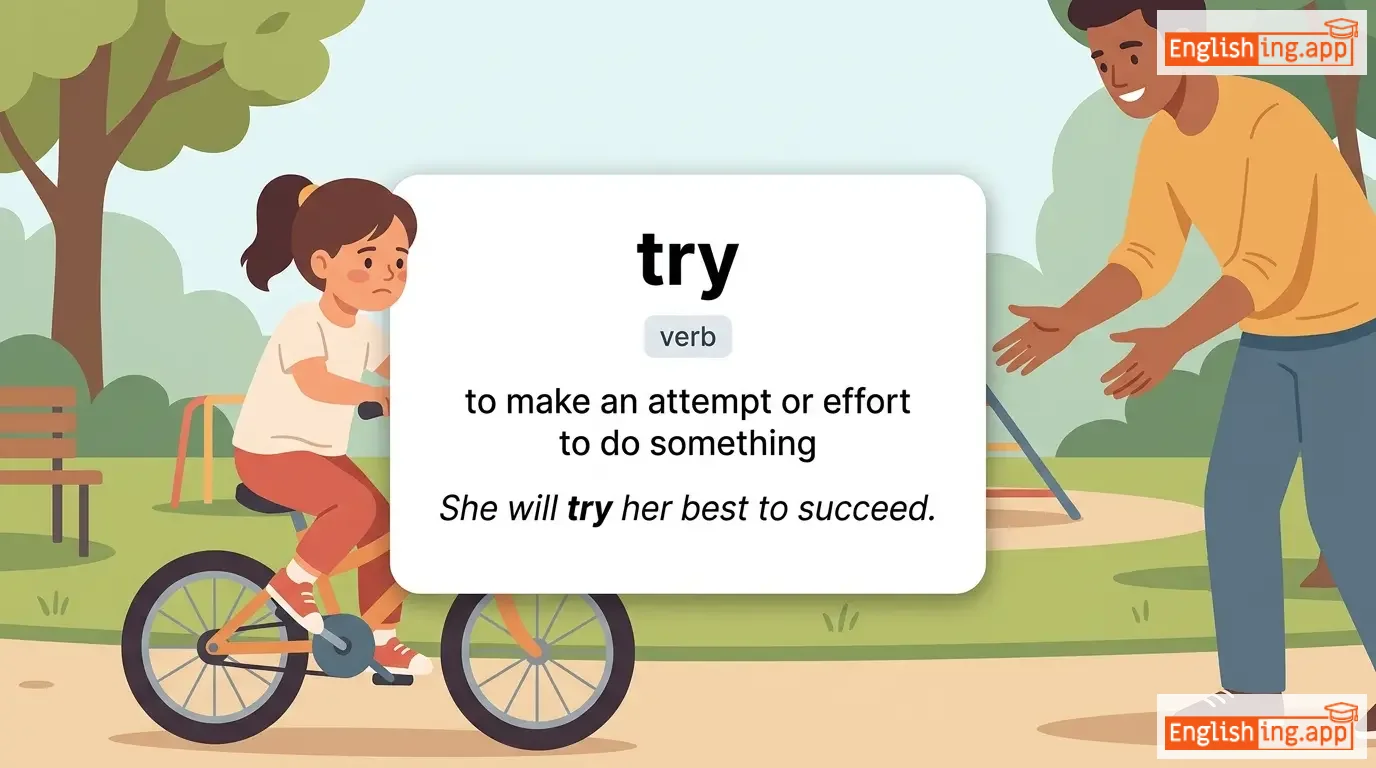
try definition card — visual illustration of the meaning
verb
/traɪ/
intentar (intentar)

to make an attempt or effort to do something

"She will try her best to succeed."

"Ella intentará dar lo mejor de sí misma para tener éxito." (Ella intentará dar lo mejor de sí misma para tener éxito.)
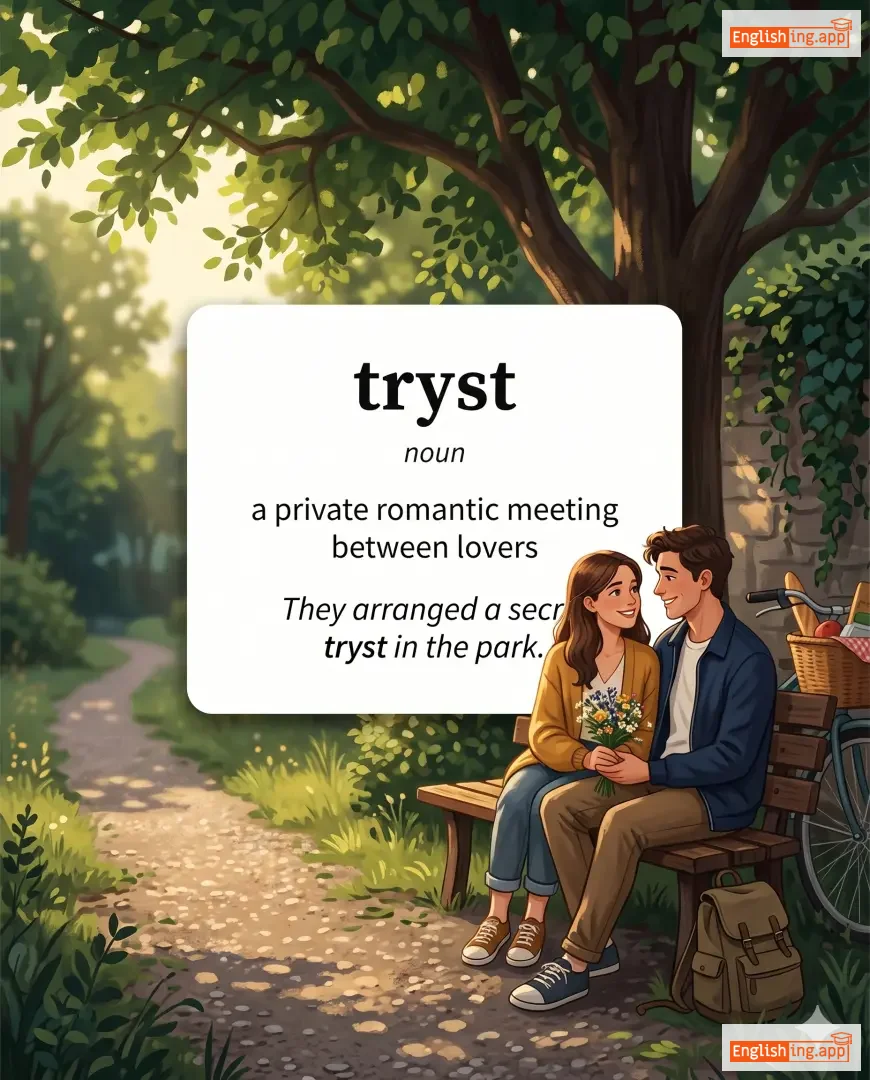
tryst definition card — visual illustration of the meaning
noun
/traɪst/
encuentro secreto (encuentro secreto)

a private romantic meeting between lovers

"They arranged a secret tryst in the park."

"Arreglaron un encuentro secreto en el parque." (Arreglaron un encuentro secreto en el parque.)
noun
/tsuːˈnɑː.mi/
tsunami (tsunami)

a large sea wave caused by an underwater earthquake or volcanic eruption

"The tsunami devastated the coastal town, leaving thousands homeless."

"El tsunami devastó la ciudad costera, dejando a miles de personas sin hogar." (El tsunami devastó la ciudad costera, dejando a miles de personas sin hogar.)
noun
/tjuːb/
tubo (tubo)

a hollow cylinder used to convey something, typically fluid

"He used a tube to measure the liquid."

"Usó un tubo para medir el líquido." (Uso un tubo para medir el liquido.)
noun
/ˈtuːb.roʊz/
tuberosa (tuberosa)

a night-blooming flower with an intensely sweet fragrance, native to Mexico

"The tuberose flowers filled the evening air with their heavenly scent."

"Las flores de tuberosa llenaron el aire de la tarde con su dulce fragancia celestial." (Las flores de tuberosa llenaron el aire de la tarde con su dulce fragancia celestial.)
🛏️

tuck (tak)

verb
/tʌk/
meter (meter)

to push or fold something neatly into a particular place

"She tucked the blanket around the baby to keep him warm."

"Ella metió la manta alrededor del bebé para mantenerlo caliente." (Ella metió la manta alrededor del bebé para mantenerlo caliente.)
noun
/ˈtjuːzdeɪ/
martes (martes)

The second day of the week, following Monday and preceding Wednesday.

"We have a meeting scheduled for Tuesday."

"Tenemos una reunión programada para el martes." (Tenemos una reunion programada para el martes.)
adjective
/ˈtʌf.tɪd/
con mechones; cubierto de mechones (con mechones; cubierto de mechones)

having a tuft or tufts; furnished with a tuft or clump of threads, hairs, or other material

"The tufted sofa looked elegant in the living room."

"El sofá con mechones se veía elegante en la sala de estar." (El sofá con mechones se veía elegante en la sala de estar.)
noun
/ˈtʌɡboʊt/
remolcador (remolcador)

a small, powerful boat used for towing or pushing ships

"The tugboat guided the massive ship safely into the harbor."

"El remolcador guió el enorme barco de forma segura hacia el puerto." (El remolcador guió el enorme barco de forma segura hacia el puerto.)
adjective
/ʌnˈtʃeɪst/
inmoral; impuro; (inmoral; impuro;)

not celibate; having engaged in sexual relations; lacking moral purity

"The conservative society considered her behavior unchaste and improper."

"La sociedad conservadora consideró su comportamiento inmoral e inapropiado." (La sociedad conservadora consideró su comportamiento inmoral e inapropiado.)
adjective
/ʌnˈtʃeɪndʒɪŋ/
inmutable (inmutable)

remaining the same over time; not changing

"Her love for her family was unchanging throughout the years."

"Su amor por su familia fue inmutable a lo largo de los años." (Su amor por su familia fue inmutable a lo largo de los años.)
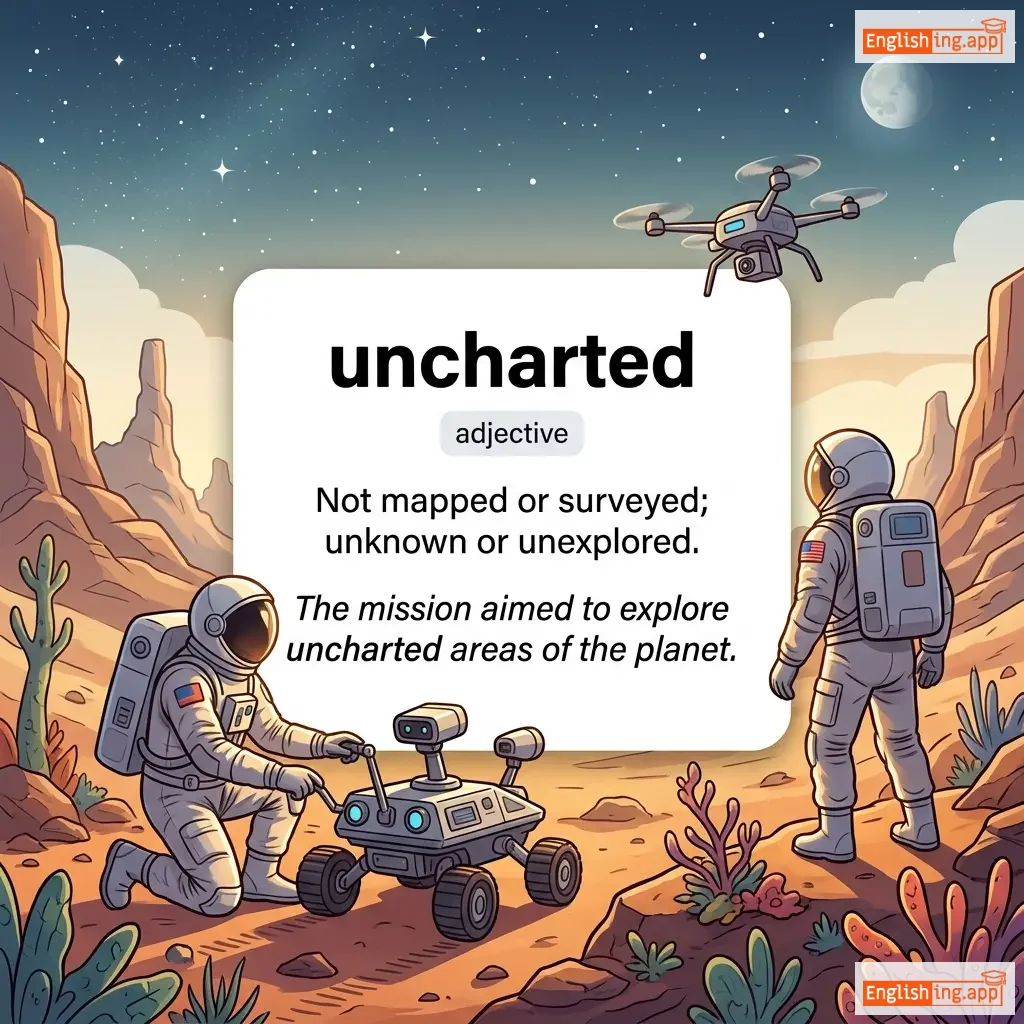
uncharted definition card — visual illustration of the meaning
adjective
ʌnˈtʃɑːtɪd
inexplorado (inexplorado)

Not mapped or surveyed; unknown or unexplored.

"The mission aimed to explore uncharted areas of the planet."

"La misión tenía como objetivo explorar áreas inexploradas del planeta." (La mision tenia como objetivo explorar areas inexploradas del planeta.)