Vocabulaires

Découvrez, apprenez et maîtrisez le vocabulaire anglais

noun
/ˈtrɒli/
trolley (trolley)

an electric vehicle that runs on rails or tracks in the street

"The trolley runs through the city center every fifteen minutes."

"Le trolley traverse le centre-ville toutes les quinze minutes." (Le trolley traverse le centre-ville toutes les quinze minutes.)
noun
/truːp/
troupe (troupe)

a group of people, animals, or things moving together

"A troop of soldiers marched down the street."

"Une troupe de soldats marchait dans la rue." (Une troupe de soldats marchait dans la rue.)
noun
/troʊp/
trop littéraire (trop littéraire)

A common or overused theme, idea, or device in literature, film, or speech.

"The film avoided the usual superhero tropes."

"Le film a évité les tropes habituels des super-héros." (Le film a évité les tropes habituels des super-héros.)
noun
/ˈtroʊfi/
trophée (trophée)

An object awarded as a prize for a victory or achievement.

"She proudly displayed the trophy she won in the competition."

"Elle a fièrement exposé le trophée qu'elle a gagné lors de la compétition." (Elle a fièrement exposé le trophée qu'elle a gagné lors de la compétition.)
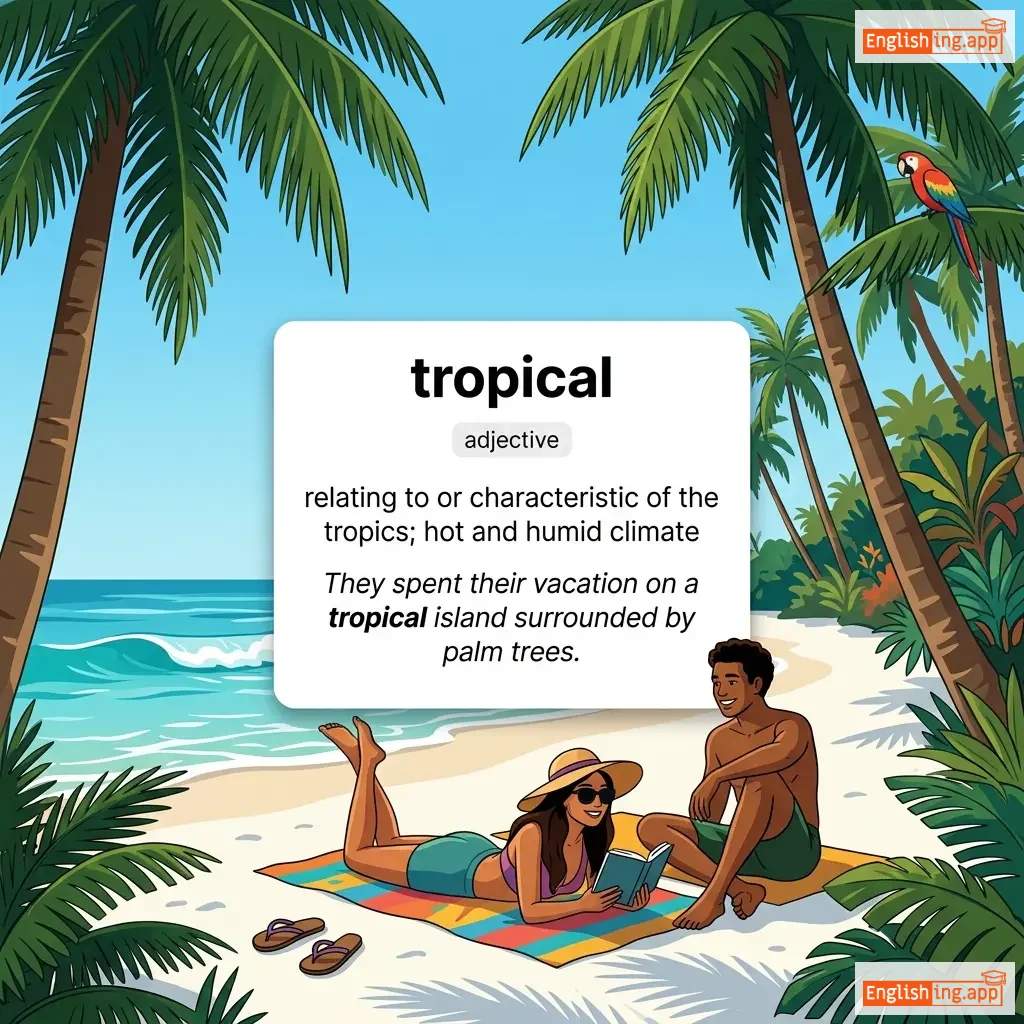
tropical definition card — visual illustration of the meaning
adjective
/ˈtrɒpɪkəl/
tropical (tropical)

relating to or characteristic of the tropics; hot and humid climate

"They spent their vacation on a tropical island surrounded by palm trees."

"Ils ont passé leurs vacances sur une île tropicale entourée de palmiers." (Ils ont passé leurs vacances sur une île tropicale entourée de palmiers.)
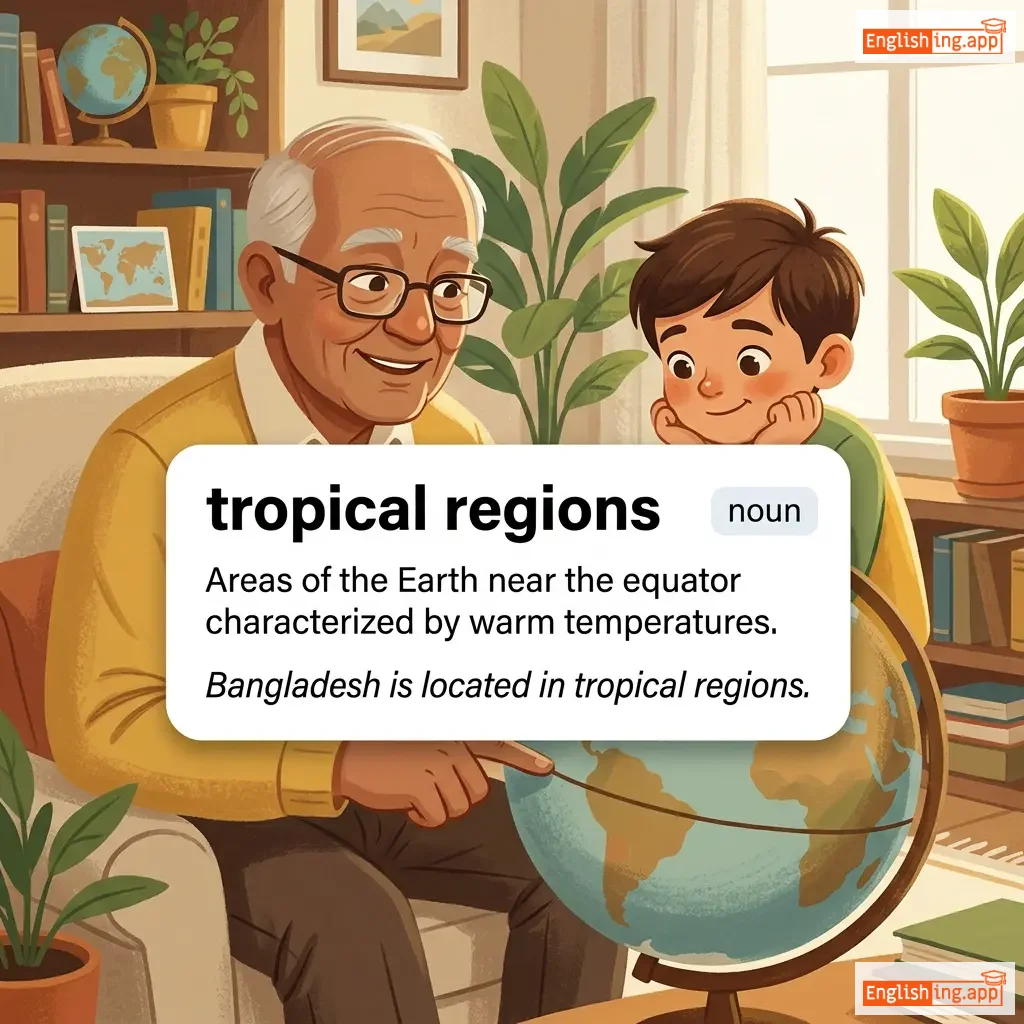
tropical regions definition card — visual illustration of the meaning
noun
ট্রপিক্যাল রিজিওনস
régions tropicales (regions tropicales)

Areas of the Earth near the equator characterized by warm temperatures.

"Bangladesh is located in tropical regions."

"Le Bangladesh est situé dans les régions tropicales." (Le Bangladesh est situé dans les régions tropicales.)
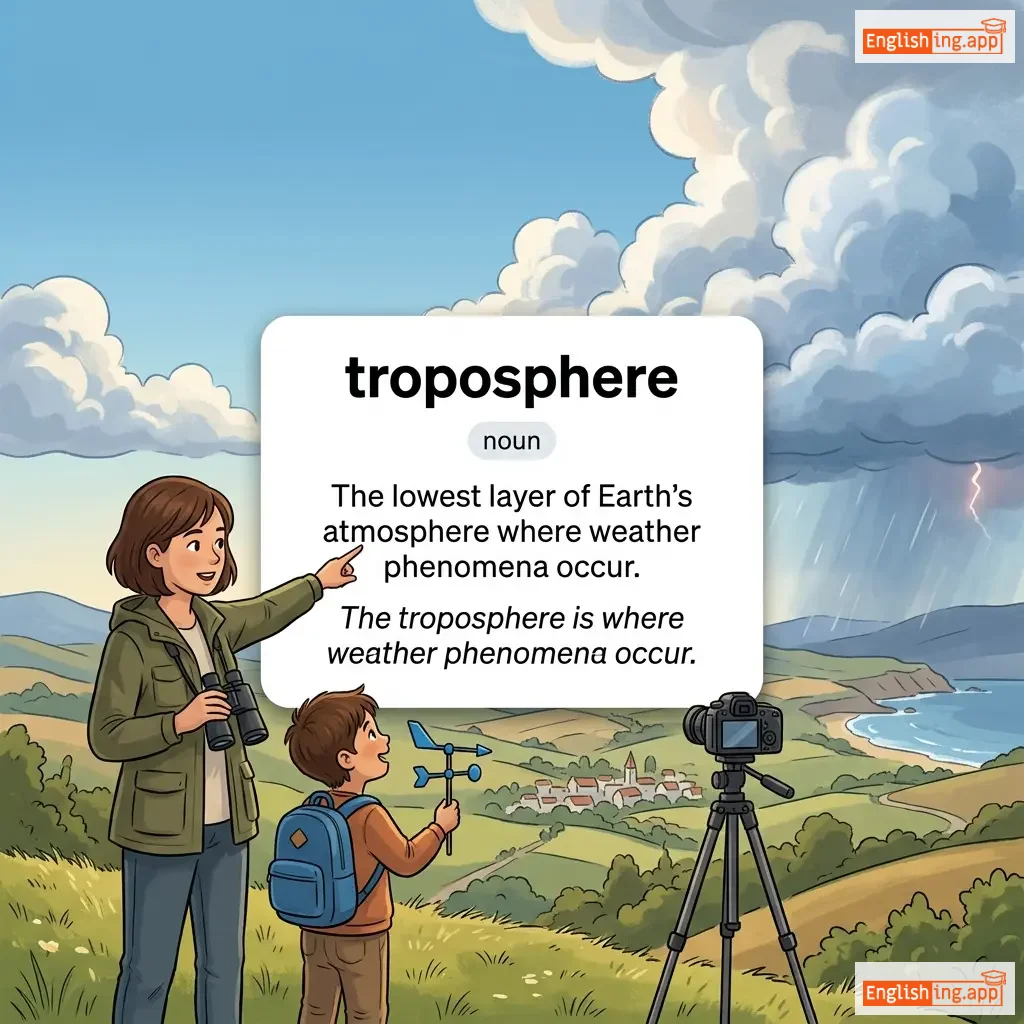
troposphere definition card — visual illustration of the meaning
noun
ট্রোপোস্ফিয়ার
trophosphère (trophosphère)

The lowest layer of Earth's atmosphere where weather phenomena occur.

"The troposphere is where weather phenomena occur."

"La troposphère est là où se produisent les phénomènes météorologiques." (La troposphère est là où se produisent les phénomènes météorologiques.)
🤵‍♀️

troth (troʊθ)

noun
/troʊθ/
engagement, fidélité (engagement, fidélité)

Faith or loyalty when pledged in a solemn agreement or vow, especially in marriage.

"He pledged his troth to her before the gathering."

"Il a promis sa fidélité avant la réunion." (Il a promis sa fidélité avant la réunion.)
noun
/ˈtrʌbəl/
problème (probleme)

difficulty or problems that cause distress or inconvenience

"She had a lot of trouble finding her keys."

"Elle a eu beaucoup de problèmes pour trouver ses clés." (Elle a eu beaucoup de problèmes pour trouver ses clés.)
adjective
/ˈtrʌbəld/
troublé (trouble)

experiencing or showing distress, anxiety, or worry

"He looked deeply troubled after hearing the bad news."

"Il semblait profondément troublé après avoir entendu la mauvaise nouvelle." (Il semblait profondément trouble apres avoir entendu la mauvaise nouvelle.)
adjective
/ˈtrʌb.əl.səm/
dérangeant, gênant (derangeant, genant)

Causing difficulty, annoyance, or worry.

"The troublesome child refused to follow the rules."

"L'enfant dérangeant a refusé de suivre les règles." (L'enfant derangeant a refuse de suivre les regles.)
noun
/trɔːf/
abreuvoir, creux (abreuvoir, creux)

A long, narrow container from which animals eat or drink; also, a low point between waves or in business cycles.

"The cows drank water from the wooden trough."

"Les vaches ont bu de l'eau dans l'abreuvoir en bois." (Les vaches ont bu de l'eau dans l'abreuvoir en bois.)
noun
/truːp/
groupe, troupe de théâtre (groupe, troupe de theatre)

A group of dancers, actors, or performers who work together.

"The theater troupe performed brilliantly on stage."

"La troupe de théâtre a joué brillamment sur scène." (La troupe de theatre a joue brillamment sur scene.)
noun
/traʊt/
truite (truite)

a freshwater fish species known for its delicate flavor and often found in cold, clear waters

"Rainbow trout is popular among anglers for sport fishing."

"La truite arc-en-ciel est populaire parmi les pêcheurs sportifs." (La truite arc-en-ciel est populaire parmi les pecheurs sportifs.)
noun
/ˈtruː.ənt/
élève absent (eleve absent)

A student who stays away from school without permission.

"The teacher punished the truant for skipping class."

"Le professeur a puni l'élève absent pour avoir séché la classe." (Le professeur a puni l'eleve absent pour avoir seche la classe.)
noun
/truːs/
trêve (treve)

An agreement between enemies or opponents to stop fighting for a certain time.

"The two countries agreed to a truce after weeks of intense fighting."

"Les deux pays ont accepté une trêve après des semaines de combats intenses." (Les deux pays ont accepté une trêve après des semaines de combats intenses.)
noun
/trʌk/
camion (kamion)

a large motor vehicle for transporting goods

"The truck was loaded with boxes for the warehouse."

"Le camion était chargé de boîtes pour l'entrepôt." (Le camion était chargé de boîtes pour l'entrepôt.)
verb
/ˈtrʌk.əl/
se soumettre (se soumettre)

To submit or yield obsequiously to someone in power.

"He refused to truckle to the demands of the corrupt officials."

"Il a refusé de se soumettre aux demandes des fonctionnaires corrompus." (Il a refusé de se soumettre aux demandes des fonctionnaires corrompus.)
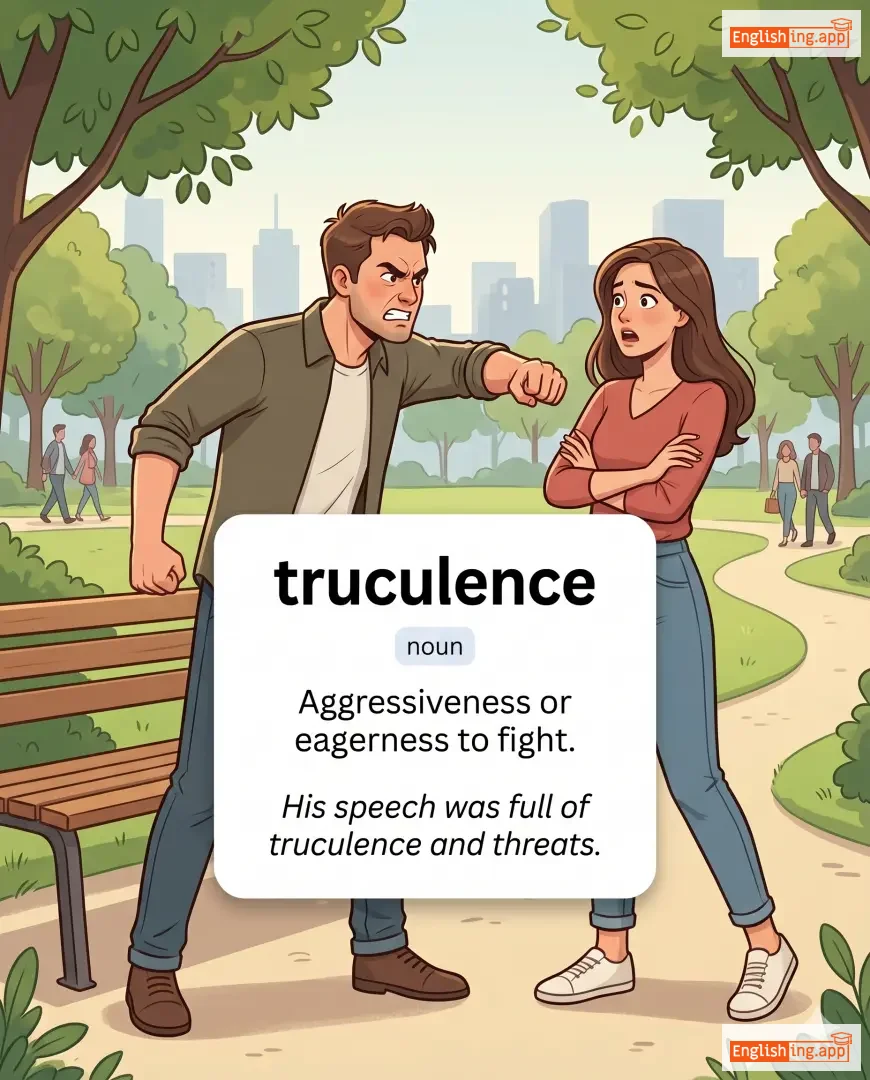
truculence definition card — visual illustration of the meaning
noun
/ˈtrʌk.jʊ.ləns/
agressivité (agressivite)

Aggressiveness or eagerness to fight.

"His speech was full of truculence and threats."

"Son discours était plein d'agressivité et de menaces." (Son discours etait plein d'agressivite et de menaces.)
adjective
/ˈtrʌk.jʊ.lənt/
agressif (agressif)

Eager or quick to argue, fight, or show aggression.

"She became truculent when her ideas were challenged."

"Elle est devenue agressive lorsque ses idées ont été contestées." (Elle est devenue agressive lorsque ses idees ont ete contestées.)
verb
/trʌdʒ/
marcher péniblement (marcher peniblement)

To walk slowly and with heavy steps, typically because of exhaustion or harsh conditions.

"They had to trudge through the snow to reach the village."

"Ils ont dû marcher péniblement dans la neige pour atteindre le village." (Ils ont dû marcher péniblement dans la neige pour atteindre le village.)
adjective
/truː/
vrai (vrai)

in accordance with fact or reality; correct

"His story was true, and everyone believed him."

"Son histoire était vraie, et tout le monde l'a cru." (Son histoire était vraie, et tout le monde l'a cru.)
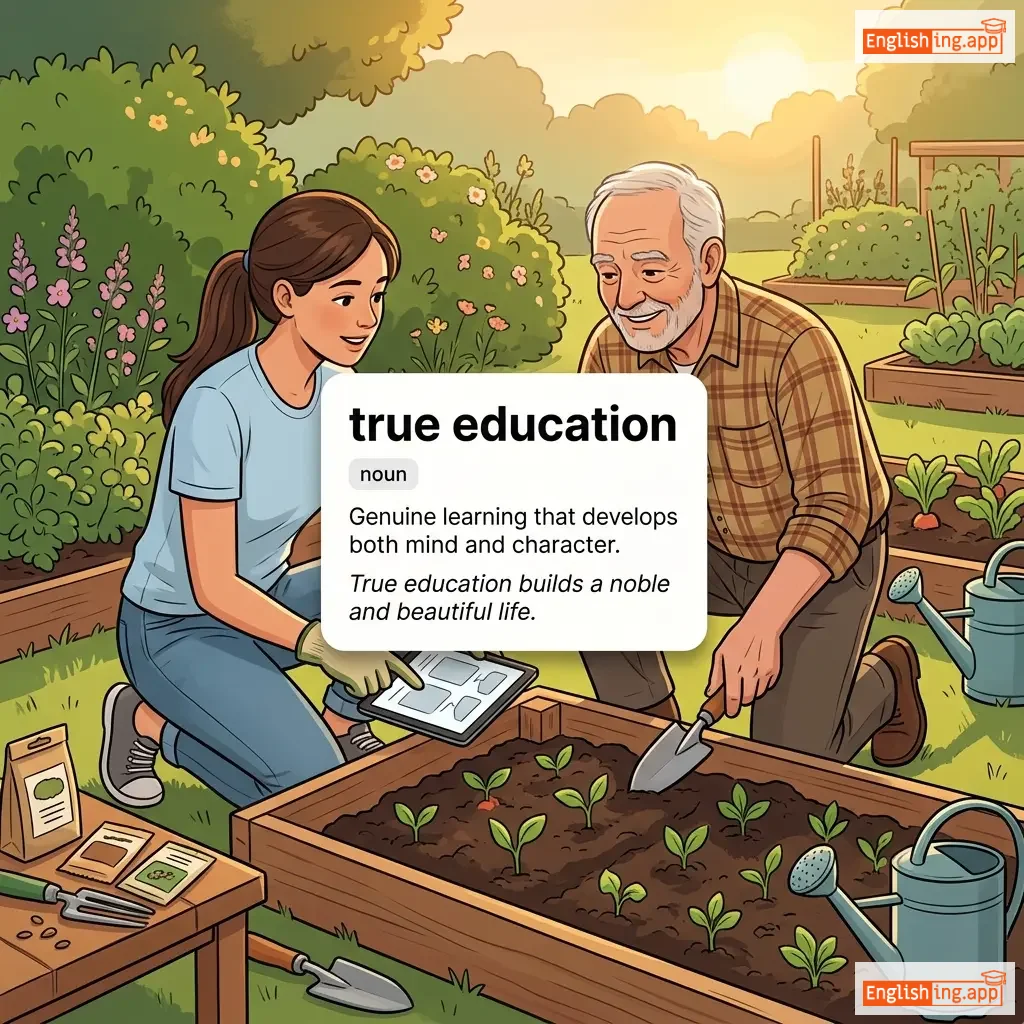
true education definition card — visual illustration of the meaning
noun
truː ˌɛdjuˈkeɪʃən
éducation véritable (education veritable)

Genuine learning that develops both mind and character.

"True education builds a noble and beautiful life."

"L'éducation véritable construit une vie noble et belle." (L'éducation véritable construit une vie noble et belle.)
noun
/ˈtruːɪzəm/
vérité banale (verite banale)

a statement that is obviously true and says nothing new or interesting

"It is a truism that hard work leads to success."

"C'est une vérité banale que le travail acharné mène au succès." (C'est une verite banale que le travail acharne mene au succes.)
adverb
/ˈtruːli/
vraiment (vraiment)

in a truthful, genuine, or sincere manner

"She truly believed in the power of kindness."

"Elle croyait vraiment en la puissance de la bonté." (Elle croyait vraiment en la puissance de la bonté.)
noun
/ˈtrʌmpəri/
nonsense sans valeur ou des choses ostentatoires mais sans valeur (nonsense sans valeur ou des choses ostentatoires mais sans valeur)

worthless nonsense or showy but worthless things

"The speech was full of political trumpery."

"Le discours était plein de balivernes politiques." (Le discours était plein de balivernes politiques.)
noun/verb
/ˈtrʌmpɪt/
trompette, proclamer (trompette, proclamer)

a brass musical instrument with a bright sound; to proclaim loudly

"The band played the trumpet loudly at the parade."

"Le groupe a joué de la trompette bruyamment lors du défilé." (Le groupe a joué de la trompette bruyamment lors du défilé.)
verb
/ˈtrʌŋkeɪt/
tronquer (tronker)

to shorten something by cutting off the top or the end

"The article was truncated to fit the limited space."

"L'article a été tronqué pour tenir dans l'espace limité." (L'article a été tronqué pour tenir dans l'espace limité.)
adjective
/ˈtrʌŋkeɪtɪd/
raccourci (raccourci)

shortened by cutting off a part; cut short

"The meeting was truncated due to time constraints."

"La réunion a été raccourcie en raison des contraintes de temps." (La reunion a ete raccourcie en raison des contraintes de temps.)
🌳

Trunk

noun
/trʌŋk/

the main woody stem of a tree; also a large, strong container for storage or travel; the enclosed space at the back of a car

"She packed her clothes into a trunk before leaving for college."

noun
/trʌs/
treillis (trus)

a framework, typically consisting of rafters, posts, and struts, supporting a roof, bridge, or other structure

"The engineer designed a strong truss for the new bridge."

"L'ingénieur a conçu un solide treillis pour le nouveau pont." (Lingenieur a concu un solide treillis pour le nouveau pont.)
trust definition card — visual illustration of the meaning
verb
/trʌst/
faire confiance (faire confiance)

to believe in the reliability, truth, ability, or strength of someone or something

"I trust you to handle this situation carefully."

"Je vous fais confiance pour gérer cette situation avec soin." (Je vous fais confiance pour gérer cette situation avec soin.)
noun
/trʌsˈtiː/
fiduciaire (fiduciaire)

a person who holds or manages property or assets for the benefit of others

"She was appointed as the trustee of the family estate."

"Elle a été nommée fiduciaire de la propriété familiale." (Elle a été nommée fiduciaire de la propriété familiale.)
adjective
/ˈtrʌst.fəl/
confiant; qui a ou montre de la confiance (confiant)

having or showing trust in someone or something; trusting

"She was too trustful and believed everything he said."

"Elle était trop confiante et croyait tout ce qu'il disait." (Elle était trop confiante et croyait tout ce qu'il disait.)
adjective
/ˈtrʌstˌwɜːrði/
fiable (fiable)

Able to be relied on as honest or truthful.

"She is a trustworthy friend who never lies."

"Elle est une amie fiable qui ne ment jamais." (Elle est une amie fiable qui ne ment jamais.)
noun
/truːθ/
vérité (truth)

the quality or state of being true; facts or reality

"The truth will always come out in the end."

"La vérité finit toujours par éclater au grand jour." (La verite finit toujours par eclater au grand jour.)
adjective
/ˈtruːθfʊl/
véridique (veridique)

telling or expressing the truth; honest

"He gave a truthful account of the incident."

"Il a donné un récit véridique de l'incident." (Il a donné un récit véridique de l'incident.)
noun
/ˈtruːθ.fəl.nəs/
vérité (verite)

the quality of being truthful; honesty and accuracy in what one says or does

"Her truthfulness in the investigation helped solve the case quickly."

"Sa vérité dans l'enquête a permis de résoudre rapidement l'affaire." (Sa verite dans l'enquete a permis de resoudre rapidement l'affaire.)
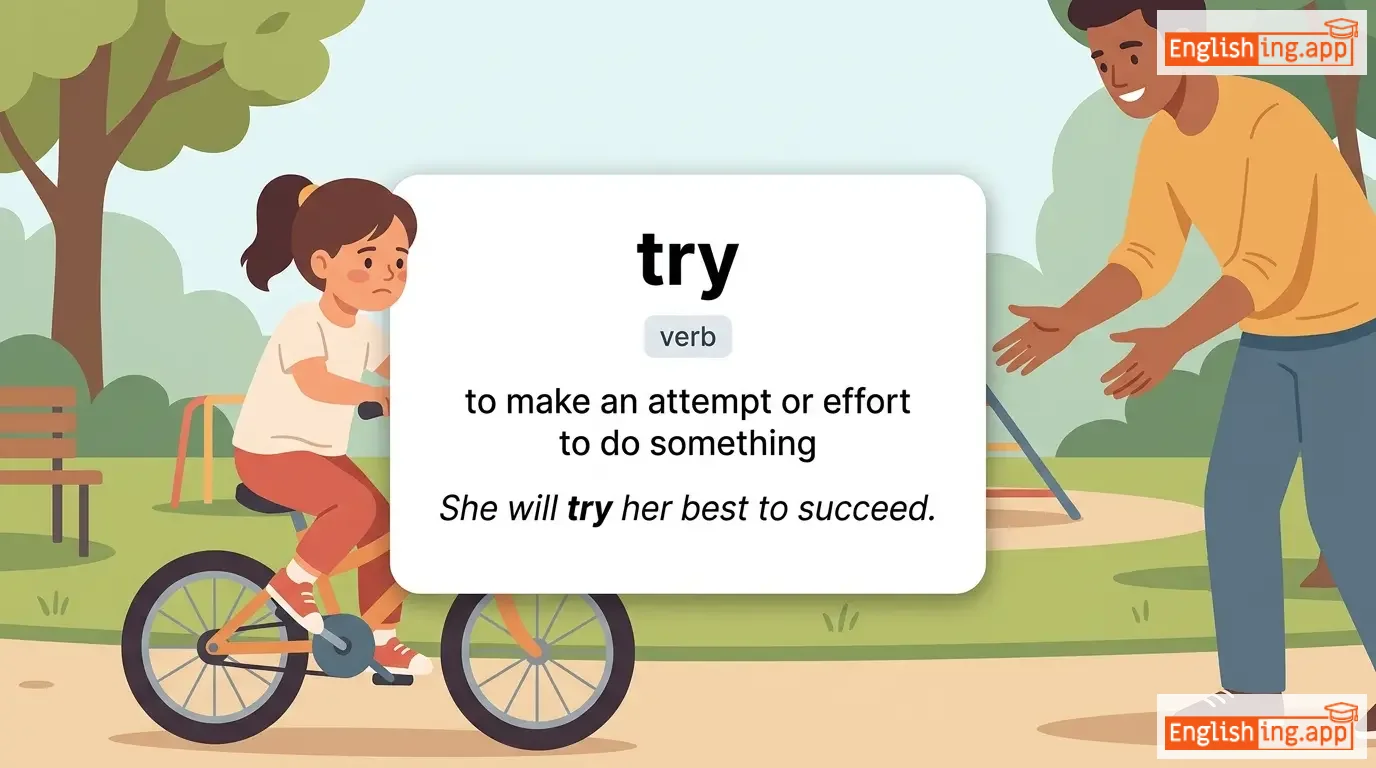
try definition card — visual illustration of the meaning
verb
/traɪ/
essayer (essayer)

to make an attempt or effort to do something

"She will try her best to succeed."

"Elle essaiera de donner le meilleur d'elle-même pour réussir." (Elle essaiera de donner le meilleur d'elle-même pour réussir.)
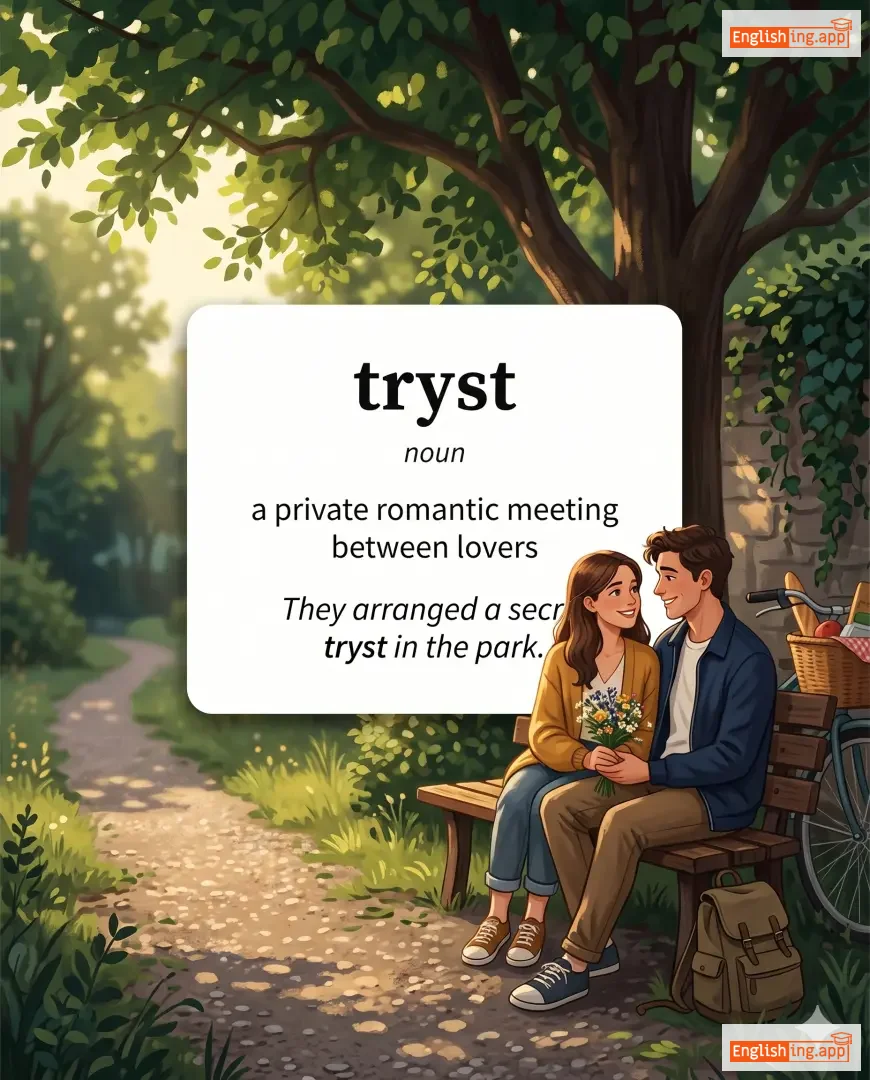
tryst definition card — visual illustration of the meaning
noun
/traɪst/
rendez-vous secret (rendez-vous secret)

a private romantic meeting between lovers

"They arranged a secret tryst in the park."

"Ils ont organisé un rendez-vous secret dans le parc." (Ils ont organise un rendez-vous secret dans le parc.)
noun
/tsuːˈnɑː.mi/
tsunami (tsunami)

a large sea wave caused by an underwater earthquake or volcanic eruption

"The tsunami devastated the coastal town, leaving thousands homeless."

"Le tsunami a dévasté la ville côtière, laissant des milliers de personnes sans abri." (Le tsunami a dévasté la ville côtière, laissant des milliers de personnes sans abri.)
noun
/tjuːb/
tube (tube)

a hollow cylinder used to convey something, typically fluid

"He used a tube to measure the liquid."

"Il a utilisé un tube pour mesurer le liquide." (Il a utilise un tube pour mesurer le liquide.)
noun
/ˈtuːb.roʊz/
tubéreuse (tubereuse)

a night-blooming flower with an intensely sweet fragrance, native to Mexico

"The tuberose flowers filled the evening air with their heavenly scent."

"Les fleurs de tubéreuse ont rempli l'air du soir de leur parfum céleste." (Les fleurs de tubéreuse ont rempli l'air du soir de leur parfum céleste.)
🛏️

tuck (tak)

verb
/tʌk/
replier (replier)

to push or fold something neatly into a particular place

"She tucked the blanket around the baby to keep him warm."

"Elle a replié la couverture autour du bébé pour le garder au chaud." (Elle a replié la couverture autour du bébé pour le garder au chaud.)
noun
/ˈtjuːzdeɪ/
mardi (mardi)

The second day of the week, following Monday and preceding Wednesday.

"We have a meeting scheduled for Tuesday."

"Nous avons une réunion prévue mardi." (Nous avons une reunion prevue mardi.)
adjective
/ˈtʌf.tɪd/
avec des touffes; orné de touffes (avec des touffes; orné de touffes)

having a tuft or tufts; furnished with a tuft or clump of threads, hairs, or other material

"The tufted sofa looked elegant in the living room."

"Le canapé avec des touffes avait l'air élégant dans le salon." (Le canapé avec des touffes avait l'air élégant dans le salon.)
noun
/ˈtʌɡboʊt/
remorqueur (remorqueur)

a small, powerful boat used for towing or pushing ships

"The tugboat guided the massive ship safely into the harbor."

"Le remorqueur a guidé le grand navire en toute sécurité dans le port." (Le remorqueur a guidé le grand navire en toute sécurité dans le port.)
adjective
/ʌnˈtʃeɪst/
immoral; impur; (immoral; impur;)

not celibate; having engaged in sexual relations; lacking moral purity

"The conservative society considered her behavior unchaste and improper."

"La société conservatrice a jugé son comportement immoral et inapproprié." (La société conservatrice a jugé son comportement immoral et inapproprié.)
adjective
/ʌnˈtʃeɪndʒɪŋ/
inchangé (inchangé)

remaining the same over time; not changing

"Her love for her family was unchanging throughout the years."

"Son amour pour sa famille est resté inchangé au fil des ans." (Son amour pour sa famille est reste inchange au fil des ans.)
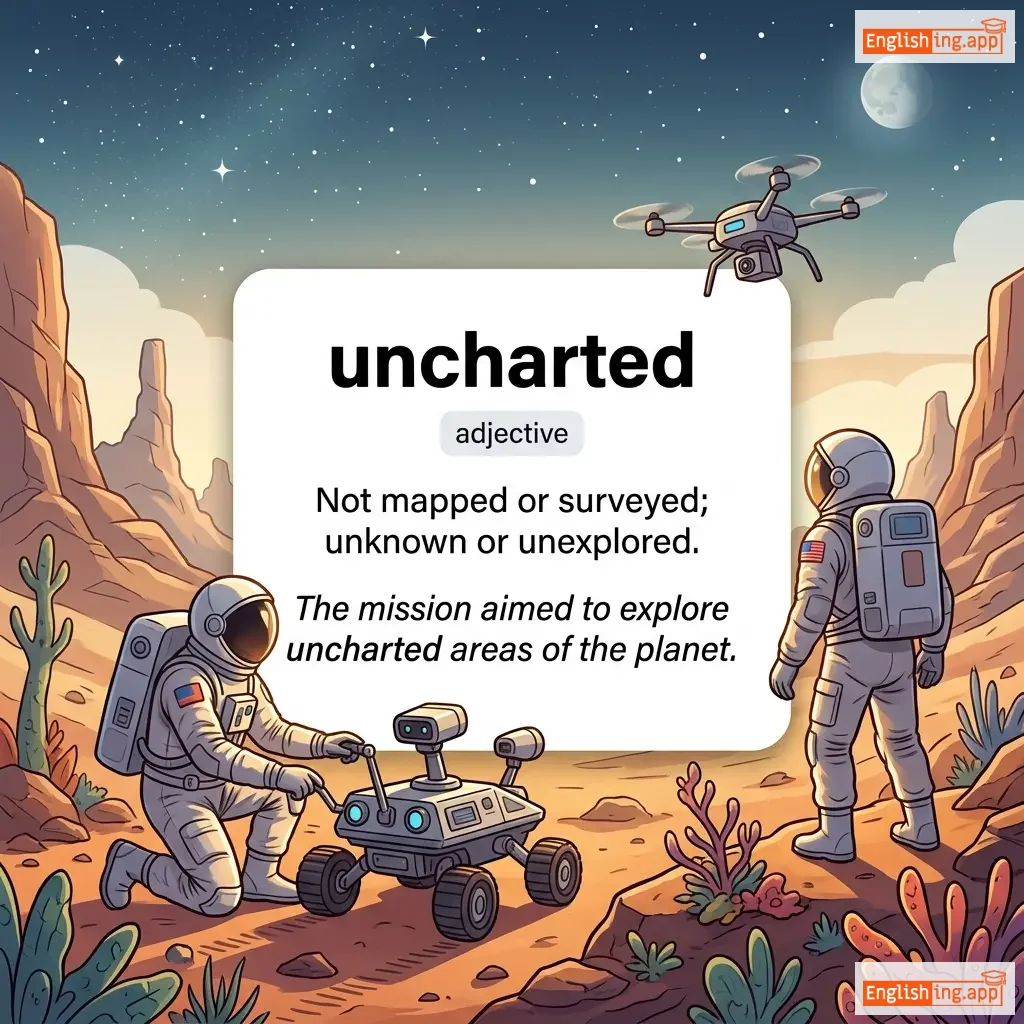
uncharted definition card — visual illustration of the meaning
adjective
ʌnˈtʃɑːtɪd
inexploré (inexplore)

Not mapped or surveyed; unknown or unexplored.

"The mission aimed to explore uncharted areas of the planet."

"La mission visait à explorer des zones inexplorées de la planète." (La mission visait à explorer des zones inexplorées de la planète.)