Vocabulaires

Découvrez, apprenez et maîtrisez le vocabulaire anglais

noun
/ˈtʌnəl/
tunnel (tunel)

an underground passage or shaft

"They dug a tunnel under the river."

"Ils ont creusé un tunnel sous la rivière." (Ils ont creusé un tunnel sous la rivière.)
noun
/ˈtɜːrbən/
turban (turban)

a head covering made by wrapping a long piece of cloth around the head

"The Sikh man wore a colorful turban."

"L'homme sikh portait un turban coloré." (L'homme sikh portait un turban coloré.)
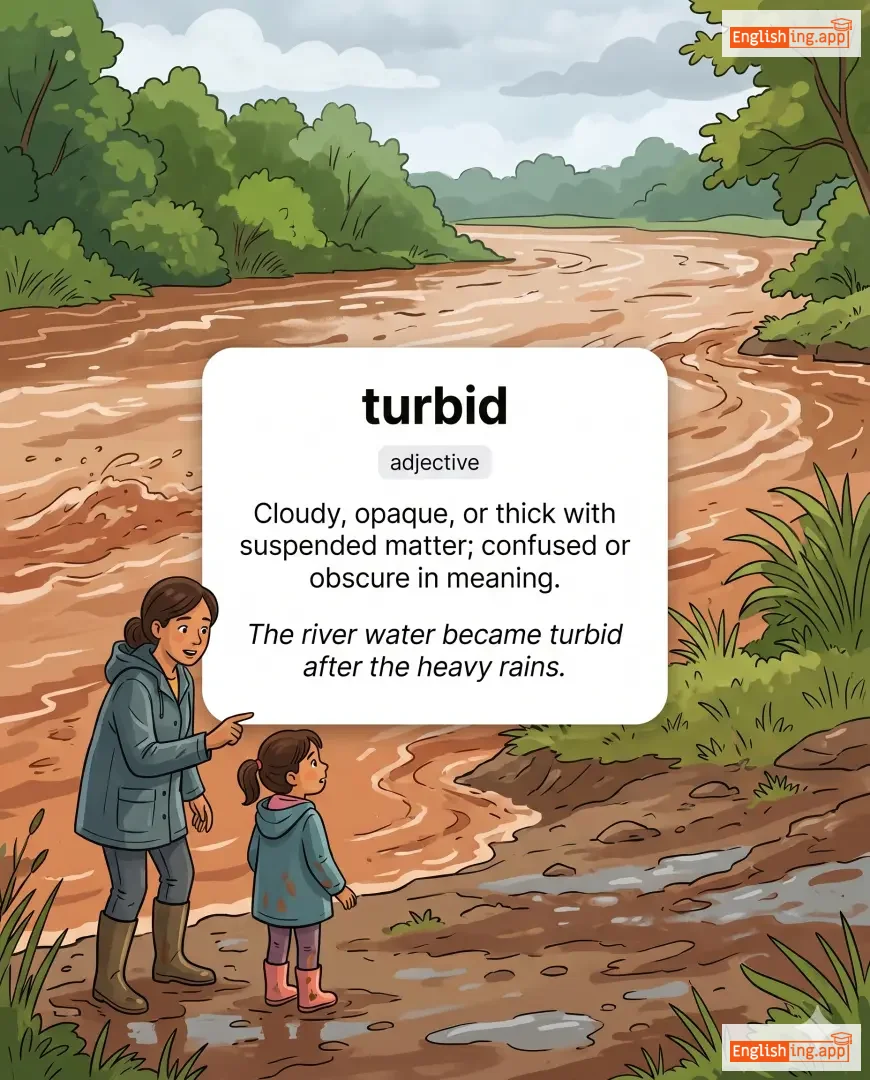
turbid definition card — visual illustration of the meaning
adjective
/ˈtɜːrbɪd/
trouble (trouble)

Cloudy, opaque, or thick with suspended matter; confused or obscure in meaning.

"The river water became turbid after the heavy rains."

"L'eau de la rivière est devenue trouble après les fortes pluies." (L'eau de la rivière est devenue trouble après les fortes pluies.)
noun
/ˈtɜːrbjələns/
turbulence (turbulence)

Violent or unsteady movement of air, water, or some other fluid; disorder or conflict.

"The plane experienced severe turbulence during the flight."

"L'avion a connu une turbulence sévère pendant le vol." (L avion a connu une turbulence severe pendant le vol)
adjective
/ˈtɜːrbjələnt/
turbulent (turbulent)

Characterized by conflict, disorder, or confusion; not stable or calm.

"The country went through a turbulent period of political change."

"Le pays a traversé une période turbulente de changement politique." (Le pays a traversé une période turbulente de changement politique.)
noun
/tʊˈriːn/
terrine (terrine)

A large deep dish with a cover, used for serving soups or stews.

"She brought the hot soup to the table in a silver tureen."

"Elle apporta la soupe chaude à la table dans une terrine argentée." (Elle apporta la soupe chaude à la table dans une terrine argentée.)
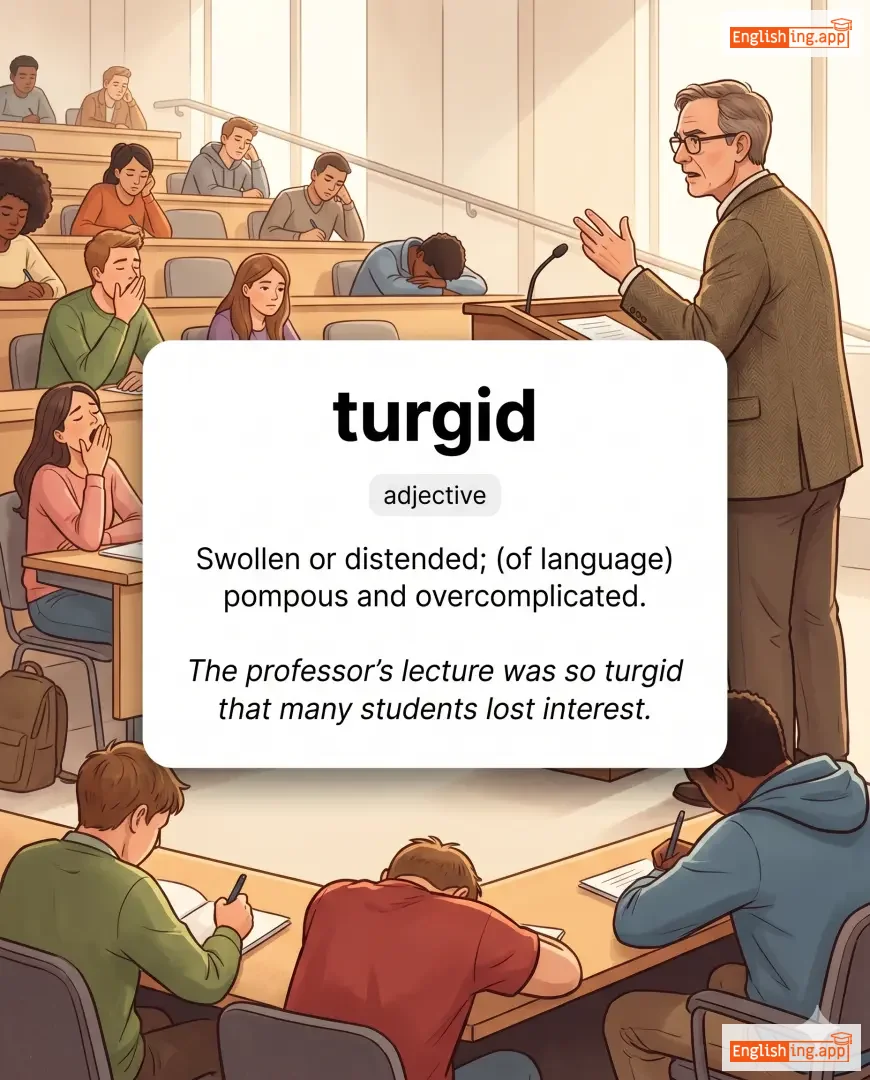
turgid definition card — visual illustration of the meaning
adjective
/ˈtɜːrdʒɪd/
gonflé, pompeux (gonfle, pompeux)

Swollen or distended; (of language) pompous and overcomplicated.

"The professor’s lecture was so turgid that many students lost interest."

"Le cours du professeur était si pompeux que beaucoup d’étudiants ont perdu leur intérêt." (Le cours du professeur était si pompeux que beaucoup d’étudiants ont perdu leur intérêt.)
noun
/ˈtɜːrki/
dinde (un type d'oiseau grand) (dinde)

a large bird native to North America, often eaten at special occasions like Thanksgiving; also the meat of this bird.

"We roasted a turkey for Thanksgiving dinner."

"Nous avons rôti une dinde pour le dîner de Thanksgiving." (Nous avons roti une dinde pour le diner de Thanksgiving.)
noun
/ˈtɜr.mər.ɪk/
curcuma (curcuma)

A bright yellow spice powder made from the root of a tropical plant, used in cooking and medicine

"Add turmeric to the curry for color and flavor."

"Ajoutez du curcuma au curry pour la couleur et la saveur." (Ajoutez du curcuma au curry pour la couleur et la saveur.)
noun
/ˈtɜːr.mər.ɪk ˈpaʊ.dər/
poudre de curcuma (poudre de curcuma)

ground turmeric root used as a spice and for its medicinal properties

"Add a pinch of turmeric powder to the curry for color and flavor."

"Ajoutez une pincée de poudre de curcuma au curry pour la couleur et la saveur." (Ajoutez une pincee de poudre de curcuma au curry pour la couleur et la saveur.)
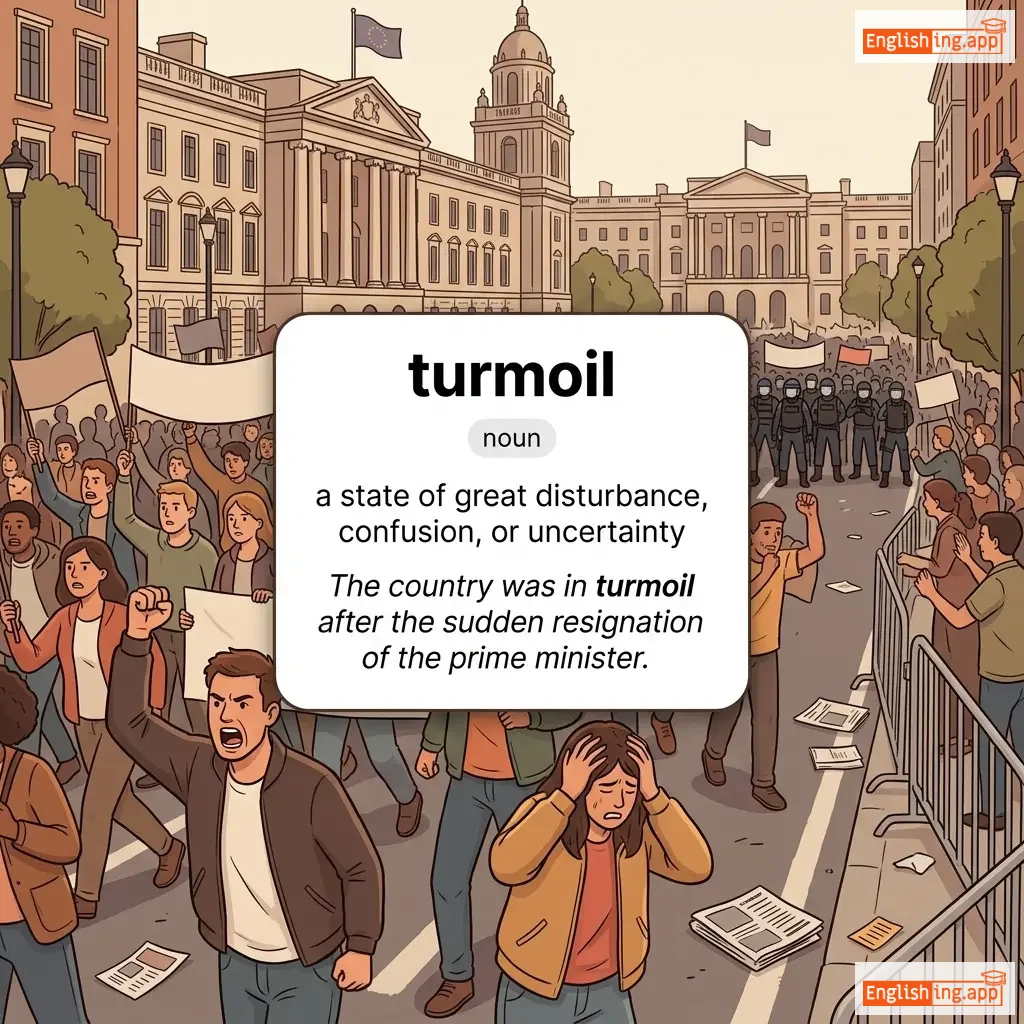
turmoil definition card — visual illustration of the meaning
noun
/ˈtɜːrmɔɪl/
trouble (trouble)

a state of great disturbance, confusion, or uncertainty

"The country was in turmoil after the sudden resignation of the prime minister."

"Le pays était en trouble après la démission soudaine du Premier ministre." (Le pays etait en trouble apres la demission soudaine du Premier ministre.)
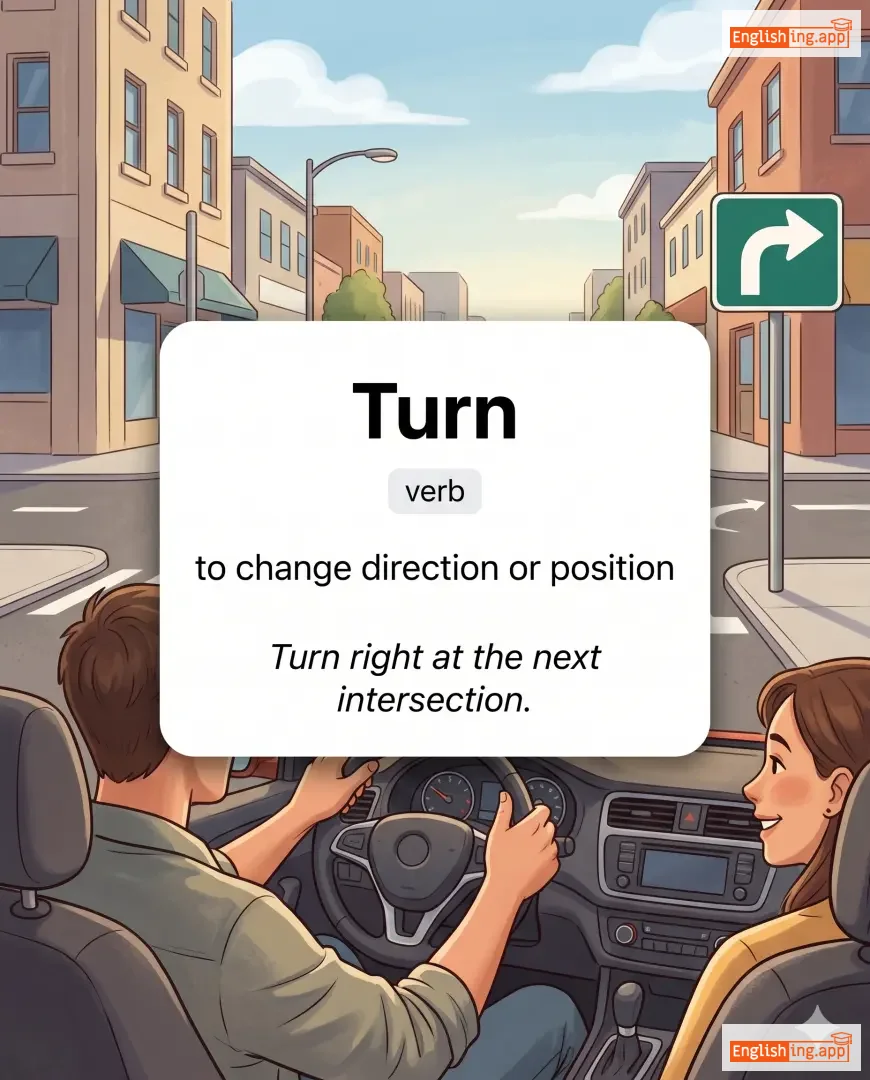
Turn definition card — visual illustration of the meaning
verb
/tɜːrn/
tourner (tourner)

to change direction or position

"Turn right at the next intersection."

"Tournez à droite à la prochaine intersection." (Tournez à droite à la prochaine intersection.)
noun
/ˈtɜːrnkoʊt/
traître (traitre)

a person who switches allegiance, often betraying a cause or group

"He was branded a turncoat after joining the rival political party."

"Il a été qualifié de traître après avoir rejoint le parti politique rival." (Il a été qualifié de traître après avoir rejoint le parti politique rival.)
noun
/ˈtɜːr.nɪŋ/
virage; route latérale (virage; route latérale)

a place where a road branches off from another; a side road

"Take the first turning on the left."

"Prenez le premier virage à gauche." (prenez le premier virage à gauche.)
noun
/ˈtɜːr.nɪp/
navet (navet)

a round root vegetable with white or purple skin and white flesh

"We grew turnips in our vegetable garden."

"Nous avons cultivé des navets dans notre jardin de légumes." (Nous avons cultive des navets dans notre jardin de legumes.)
adjective
/ˈtɜːrnkiː/
clé en main (cle en main)

ready for immediate use; a complete product or solution

"The company provides turnkey solutions for small businesses."

"L'entreprise fournit des solutions clés en main pour les petites entreprises." (L'entreprise fournit des solutions clés en main pour les petites entreprises.)
noun
/ˈtɜːr.naʊt/
participation (participation)

the number of people who attend or participate in an event or activity

"The turnout at the rally was impressive, with thousands showing up."

"La participation à la manifestation était impressionnante, avec des milliers de personnes présentes." (La participation a la manifestation etait impressionnante, avec des milliers de personnes presentes.)
noun
/ˈtɜːnˌəʊvə/
chiffre d'affaires (chiffre d'affaire)

the amount of business conducted during a particular period, or the rate at which employees leave a company

"The company reported a high turnover in its sales department."

"L'entreprise a rapporté un chiffre d'affaires élevé dans son département des ventes." (L'entreprise a rapporte un chiffre d'affaire eleve dans son departement des ventes.)
noun
/ˈtɜːrpɪtuːd/
dépravation (depravation)

depraved or wicked behavior or character

"The judge condemned the criminal’s act of moral turpitude."

"Le juge a condamné l'acte de dépravation morale du criminel." (Le juge a condamné l'acte de dépravation morale du criminel.)
noun
/ˈtɜːrkwɔɪz/
turquoise (turquoise)

a greenish-blue color or gemstone

"She wore a necklace with a beautiful turquoise stone."

"Elle portait un collier avec une magnifique pierre turquoise." (Elle portait un collier avec une magnifique pierre turquoise.)
noun
/ˈtʌrɪt/
petite tour sur le sommet d'une tour ou d'un bâtiment plus grand (petite tour sur le sommet d'une tour ou d'un batiment plus grand)

A small tower on top of a larger tower or building, often used in castles or fortifications.

"The castle was guarded by soldiers stationed in the turret."

"Le château était gardé par des soldats postés dans la tourelle." (Le chateau etait garde par des soldats postes dans la tourelle.)
noun
/ˈtɜːrtl/
tortue (tortue)

A slow-moving reptile with a hard shell that lives in water or on land

"The turtle slowly crossed the sandy beach."

"La tortue a traversé lentement la plage de sable." (La tortue a traverse lentement la plage de sable)
noun
/ˈtjuːtɪlɪdʒ/
tutelle (tutelle)

The act of guarding, protecting, or guiding; instruction or teaching.

"She studied painting under the tutelage of a famous artist."

"Elle a étudié la peinture sous la tutelle d'un artiste célèbre." (Elle a étudié la peinture sous la tutelle d'un artiste célèbre.)
adjective
/ˈtjuːtɪlɑːr/
tutélaire (tutelaire)

Serving as a guardian or protector.

"The tutelar spirit of the forest was believed to protect travelers."

"On croyait que l'esprit tutélaire de la forêt protégeait les voyageurs." (On croyait que l'esprit tutélaire de la forêt protégeait les voyageurs.)
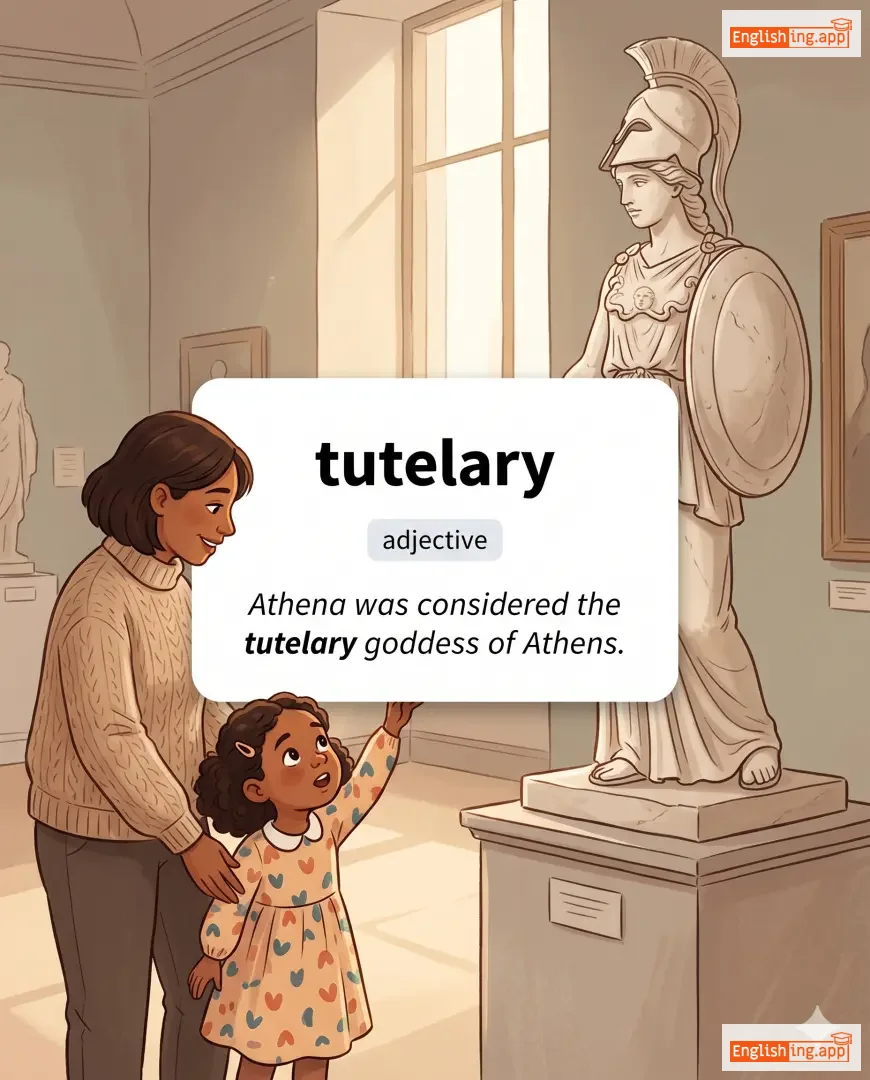
tutelary definition card — visual illustration of the meaning
adjective
/ˈtjuːtɪləri/
tutélaire (tutelaire)

Relating to or serving as a guardian or protector, often used for deities or spirits.

"Athena was considered the tutelary goddess of Athens."

"Athéna était considérée comme la déesse tutélaire d'Athènes." (Athéna était considérée comme la déesse tutélaire d'Athènes.)
noun
/ˈtjuːtərʃɪp/
tutorat (tutorat)

The office or position of a tutor; guidance or instruction given by a tutor.

"He thrived under the tutorship of his mentor."

"Il a prospéré sous le tutorat de son mentor." (Il a prospéré sous le tutorat de son mentor.)
noun
/ˈtiːˈviː/
télévision (television)

a device used to receive television broadcasts

"I watch my favorite shows on TV every evening."

"Je regarde mes émissions préférées à la télévision chaque soir." (Je regarde mes émissions préférées à la télévision chaque soir.)
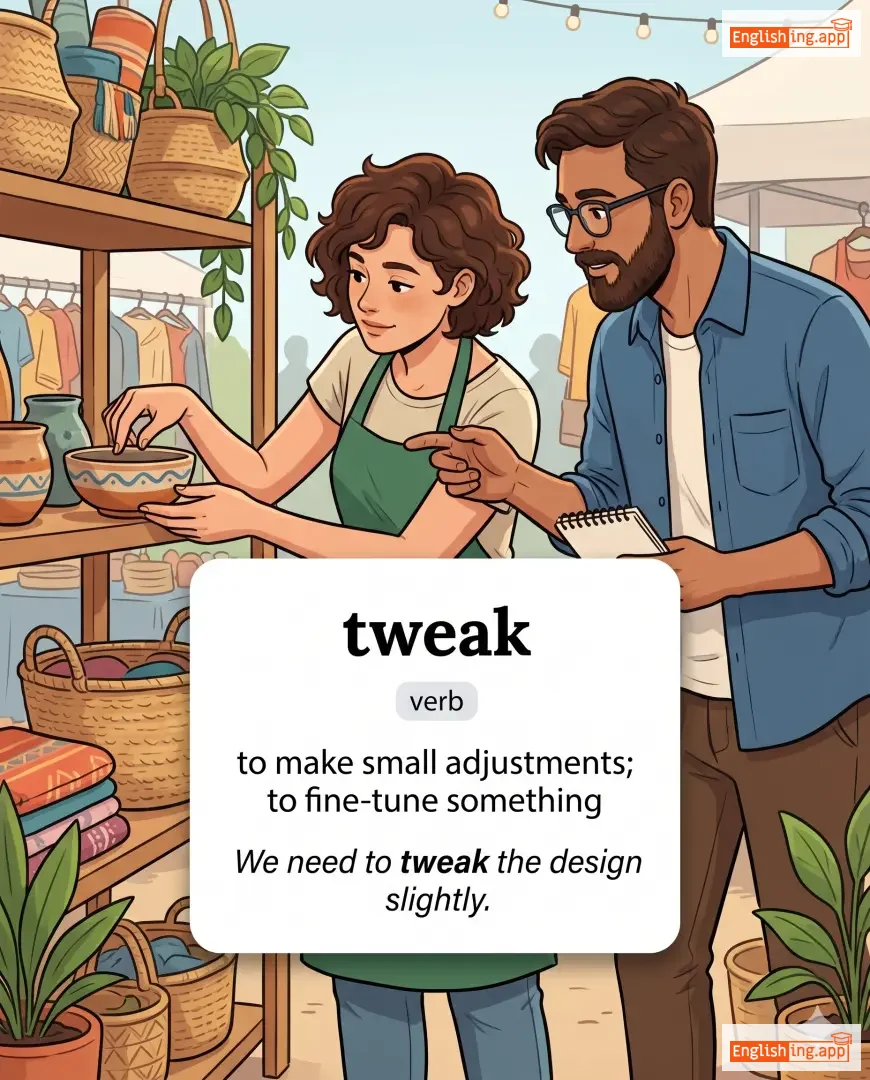
tweak definition card — visual illustration of the meaning
verb
/twiːk/
ajuster (ajuster)

to make small adjustments; to fine-tune something

"We need to tweak the design slightly."

"Nous devons ajuster légèrement le design." (Nous devons ajuster légèrement le design)
noun
/twiːt/
gazouiller (gazouiller)

a short high-pitched sound made by a small bird; a post on Twitter

"I heard the sweet tweet of a sparrow this morning."

"J'ai entendu le doux tweet d'un moineau ce matin." (J'ai entendu le doux tweet d'un moineau ce matin.)
adjective
/twɛlv/
douze (dooz)

the number equivalent to 12

"There are twelve months in a year."

"Il y a douze mois dans une année." (Il y a douze mois dans une année.)
adjective
/ˈtwɛntiəθ/
vingtième (vingtieme)

coming after the nineteenth in order; being one of twenty equal parts.

"She was born on the twentieth of April."

"Elle est née le vingtième avril." (Elle est nee le vingtieme avril.)
2️⃣0️⃣

twenty (vɛ̃t)

adjective
/ˈtwɛnti/
vingt (vingt)

the number equivalent to 20

"He is twenty years old."

"Il a vingt ans." (Il a vingt ans.)
adverb
/twaɪs/
deux fois (deux fois)

two times

"I have seen that movie twice."

"J'ai vu ce film deux fois." (J'ai vu ce film deux fois.)
noun
/twɪɡ/
rameau (rameau)

a small thin branch of a tree or bush

"She broke a twig off the tree to use as a stick."

"Elle a cassé une petite branche de l'arbre pour l'utiliser comme bâton." (Elle a cassé une petite branche de l'arbre pour l'utiliser comme bâton.)
noun
/ˈtwaɪ.laɪt/
crépuscule (crepuscule)

the soft glowing light from the sky when the sun is below the horizon; a period of decline

"We walked along the beach at twilight."

"Nous avons marché sur la plage au crépuscule." (Nous avons marche sur la plage au crepuscule.)
👯‍♂️

twin (twɛ̃)

noun
/twɪn/
jumeau (jumeau)

either of two children born at the same time to the same mother

"They have twin girls."

"Ils ont des filles jumelles." (Ils ont des filles jumelles.)
noun
/twɪndʒ/
douleur aiguë (douleur aiguë)

a sudden, sharp pain or an emotional pang

"He felt a twinge of guilt after lying to his friend."

"Il a ressenti une douleur aiguë de culpabilité après avoir menti à son ami." (Il a ressenti une douleur aiguë de culpabilité après avoir menti à son ami.)
verb
/twɪst/
tordre, tourner (tordre, tourner)

to bend or turn something into a coil or spiral shape; to distort.

"He twisted the rope tightly around the pole."

"Il a tordu la corde autour du poteau." (Il a tordu la corde autour du poteau.)
adjective
/ˌʌltrəˈmɒnteɪn/
partisan du Pape (partisan du Pape)

beyond the mountains, especially referring to support for the Pope over local church authority

"The debate highlighted the ultramontane position in church politics."

"Le débat a mis en lumière la position ultramontaine dans la politique ecclésiastique." (Le debat a mis en lumiere la position ultramontaine dans la politique ecclesiastique.)
noun
/ʌnəˈbɪləti/
incapacité (incapacite)

the state of being unable to do something; incapacity

"His unability to solve the problem caused delays in the project."

"Son incapacité à résoudre le problème a causé des retards dans le projet." (Son incapacite a resoudre le probleme a cause des retards dans le projet)
noun
/ʌmˈbrɛlə/
parapluie (parapluie)

A device used for protection against rain or sun, typically consisting of a collapsible canopy mounted on a central rod.

"She opened her umbrella as it started to rain."

"Elle a ouvert son parapluie quand il a commencé à pleuvoir." (Elle a ouvert son parapluie quand il a commence a pleuvoir.)
noun
/ˈʌmbrɪdʒ/
mécontentement, offense (mécontentement, offense)

A feeling of resentment or offense.

"She took umbrage at his rude remark."

"Elle s'est vexée par sa remarque grossière." (Elle s'est vexée par sa remarque grossière.)
noun
/ˈʌm.brə/
ombre totale, région sombre d'une tache solaire (ombre totale, region sombre d'une tache solaire)

the fully shaded inner region of a shadow cast by an opaque object; the dark center of a sunspot

"During the eclipse, we stood in the moon's umbra."

"Pendant l'éclipse, nous nous sommes tenus dans l'ombre de la lune." (Pendant l'éclipse, nous nous sommes tenus dans l'ombre de la lune.)
adjective
/ˌʌltrəˈmʌndeɪn/
ultramondain (ultramondain)

Relating to things beyond the physical world; supernatural or transcendental.

"Philosophers often discuss ultramundane realities beyond human perception."

"Les philosophes discutent souvent des réalités ultramondaines au-delà de la perception humaine." (Les philosophes discutent souvent des realites ultramondaines au-dela de la perception humaine.)
adjective
/ˈʌltɪmət/
ultime (ultim)

being the best, final, or most extreme

"Success is the ultimate goal of hard work."

"Le succès est le but ultime du travail acharné." (Le succes est le but ultime du travail acharne.)
noun
/ˈʌlsər/
ulcère (ulcere)

a sore on the skin or a mucous membrane that does not heal easily

"The doctor prescribed medicine to treat the stomach ulcer."

"Le médecin a prescrit des médicaments pour traiter l'ulcère de l'estomac." (Le medecin a prescrit des medicaments pour traiter l ulcere de lestomac)
adjective
/ʌlˈtɪəriər/
motif caché (motif cache)

hidden or secret, often with a selfish motive

"He invited her with an ulterior motive."

"Il l'a invitée avec un motif caché." (Il l'a invitee avec un motif cache.)
🙅‍♀️

Unable (ʌˈneɪbl)

adjective
/ʌˈneɪbl/
incapable (incapable)

not able to do something

"She was unable to attend the meeting."

"Elle n'a pas pu assister à la réunion." (Elle n'a pas pu assister à la réunion.)
adverb
/ˈʌltəmətli/
finalement (finalement)

in the end, after everything else

"Ultimately, we decided to go ahead with the project."

"Finalement, nous avons décidé de poursuivre le projet." (Finalement, nous avons decide de poursuivre le projet.)
noun
/ˌʌltɪˈmeɪtəm/
ultimatum (ultimatum)

a final demand or statement of terms

"The workers gave the company an ultimatum to raise their wages."

"Les travailleurs ont donné à l'entreprise un ultimatum pour augmenter leurs salaires." (Les travailleurs ont donne a l'entreprise un ultimatum pour augmenter leurs salaires.)