語彙集

英単語辞書 | 単語の意味、定義、例文

adjective
/ʌnˈkɒmən/
珍しい (mezurashii)

rare, unusual, or remarkable

"It is uncommon to see snow in this region."

"この地域で雪を見るのは珍しい。" (Kono chiiki de yuki o miru no wa mezurashii.)
adjective
/ʌnˈkʌmfətəbl/
不快 (fukai)

causing or feeling physical or emotional discomfort

"He felt uncomfortable during the long meeting."

"長い会議の間、彼は不快に感じました。" (Nagai kaigi no aida, kare wa fukai ni kanjimashita.)
noun
/ʌnˈkloʊðɪŋ/
服を脱ぐこと (fuku o nugu koto)

the act or process of removing clothing

"The child quickly ran inside for unclothing after playing in the mud."

"子供は泥遊びの後、服を脱ぐことのためにすぐに家の中に走った。" (kodomo wa doroyubi no ato, fuku o nugu koto no tame ni sugu ni ie no naka ni hashitta)
verb
/ʌnˈkloʊð/
服を脱がせる; 衣服を取り除く (fuku o nugaseru; ifuku o torinozoku)

to remove clothing from someone or something

"The nurse helped unclothe the patient for the examination."

"看護師は検査のために患者の服を脱がせる手伝いをした。" (Kangoshi wa kensa no tame ni kanja no fuku o nugaseru tetsudai o shita)
adjective
/ʌnˈklɪər/
不明確 (fumeikaku)

not easy to understand; vague or ambiguous

"The instructions were unclear, so I asked for clarification."

"指示が不明確だったので、私は説明を求めました。" (Shiji ga fumeikaku datta node, watashi wa setsumei o motomemashita)
noun
/ˈʌŋkəl/
おじ/おじさん (oji/ojisan)

the brother of one's father or mother

"My uncle is visiting us next week."

"私のおじさんは来週私たちを訪ねてきます。" (Watashi no ojisan wa raishū watashitachi o tazunetekimasu.)
adjective
/ʌnˈkleɪmd/
未請求; 未要求; 捨てられたまたは所有者なし (mikkei; mikoukyuu; suterareta matawa shoyuusha nashi)

not claimed by anyone; not demanded or requested; abandoned or ownerless

"The unclaimed luggage was stored in the airport's lost property department."

"未請求の荷物は空港の遺失物係に保管されました。" (Mikkei no nimotsu wa kuukou no ishitsubutsu kakari ni hokan saremashita.)
adjective
/ʌnˈsɪvəlaɪzd/
未開の; 野蛮な; (mikai no; yabanna;)

not developed in terms of civilization; lacking social organization and culture; barbarous

"The explorers encountered an uncivilized tribe deep in the Amazon rainforest."

"探検家たちはアマゾンの雨林の奥深くで未開の部族に出会った。" (Tankenka-tachi wa Amazon no urin no okufukaku de mikai no buzoku ni deatta.)
adjective
/ʌnˈsɪvəl/
無礼な; 不作法な; (burei na; fusahou na)

not polite or courteous; rude and discourteous in behavior

"His uncivil remarks during the meeting offended everyone present."

"会議中の彼の無礼な発言は、出席者全員を不快にさせた。" (Kaigi chuu no kare no burei na hatsugen wa, shusseki sha zen'in o fukai ni saseta.)
adjective
/ʌnˈtʃeɪst/
不道徳な; 不潔な; (fudōtoku na; fuketsu na;)

not celibate; having engaged in sexual relations; lacking moral purity

"The conservative society considered her behavior unchaste and improper."
"保守的な社会は彼女の行動を不道徳で不適切だと考えた。" (Hoshū-teki na shakai wa kanojo no kōdō o fudōtoku de futekisetsu da to kangaeta.)
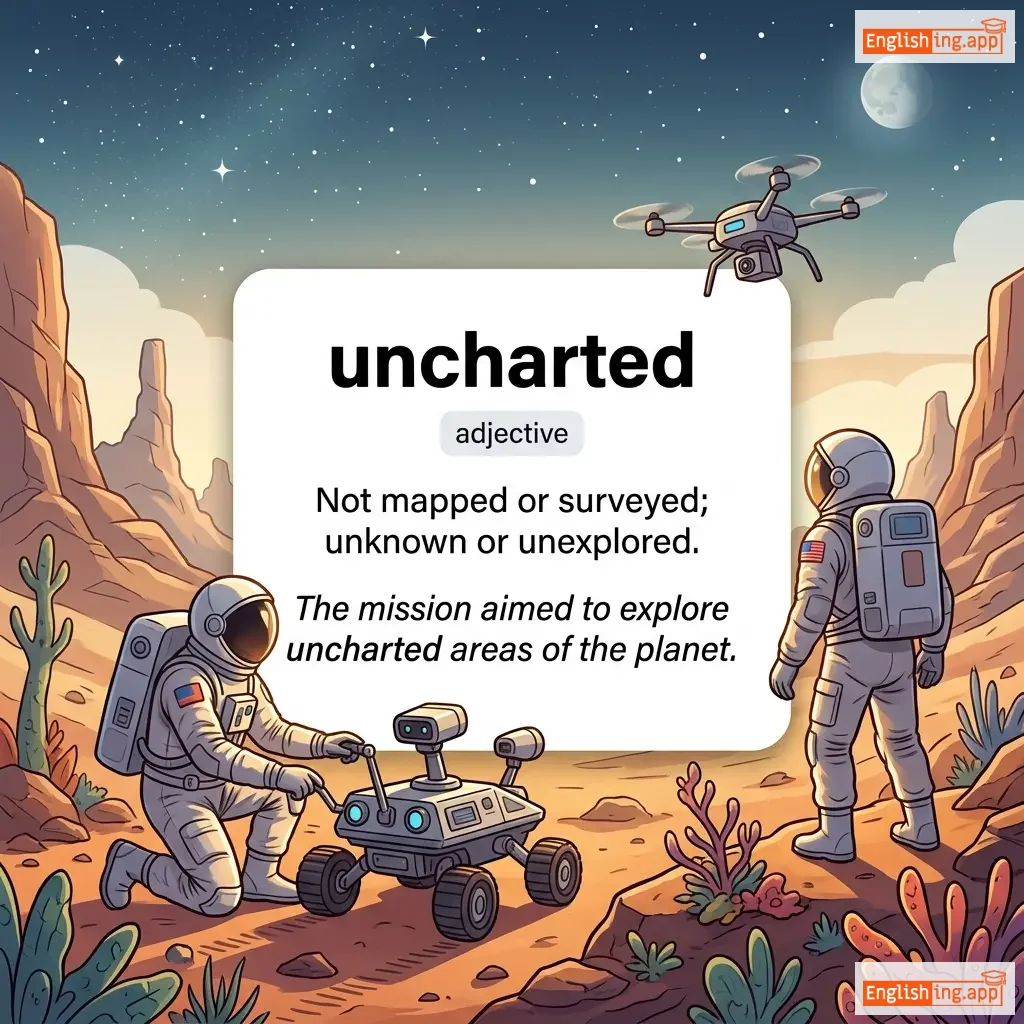
uncharted definition card — visual illustration of the meaning
adjective
ʌnˈtʃɑːtɪd
未開拓 (mikai taku)

Not mapped or surveyed; unknown or unexplored.

"The mission aimed to explore uncharted areas of the planet."

"そのミッションは惑星の未開拓の地域を探査することを目的としていました。" (Sono misshon wa wakusei no mikaitaku no chiiki wo tansa suru koto wo mokuteki to shite imashita.)
adjective
/ʌnˈtʃeɪndʒɪŋ/
変わらない (kawaranai)

remaining the same over time; not changing

"Her love for her family was unchanging throughout the years."

"彼女の家族への愛は何年にもわたって変わらなかった。" (Kanojo no kazoku e no ai wa nannen ni mo watatte kawaranakatta.)
adjective
/ʌnˈtʃeɪndʒəbəl/
変更不可能な; 固定された; (henkou fukanou na; kotei sareta;)

not able to be changed or altered; fixed and permanent

"The laws of physics are unchangeable principles that govern the universe."

"物理法則は変更不可能な原則であり、宇宙を支配しています。" (butsurihōsoku wa henkou fukanou na gensoku de ari, uchū o shihai shiteimasu.)
adjective
/ʌnˈtʃælɪndʒd/
挑戦されていない; 反対なしに受け入れられた; ライバルなし (chousen sarete inai; hantai nashi ni ukeirerareta; raibaru nashi)

not disputed or questioned; accepted without opposition; having no rival

"He remained the unchallenged champion for five years."

"彼は5年間、挑戦されていないチャンピオンであり続けました。" (Kare wa 5 nenkan, chousen sarete inai chanpion de aritsuzukemashita.)
noun
/ʌnˈsɜːtənti/
不確実性 (fukakujitsusei)

the state of being unsure or not knowing what will happen

"Economic uncertainty affects business investments."

"経済的不確実性は、ビジネス投資に影響を与えます。" (Keizai-teki fukakujitsusei wa, bijinesu toshi ni eikyou o ataemasu.)
adverb
/ʌnˈsɜːrtənli/
不確かに (futashika ni)

in a way that shows doubt or lack of certainty

"She glanced uncertainly at the complicated instructions."

"彼女は複雑な指示を不確かに見つめた。" (Kanojo wa fukuzatsu na shiji o futashika ni mitsumeta.)
adjective
/ʌnˈsɜːtən/
不確実 (fukakujitsu)

not sure or confident about something; not clearly known or decided

"She felt uncertain about her future after graduation."

"卒業後、彼女は自分の未来について不確実に感じていた。" (sotsugyōgo, kanojo wa jibun no mirai ni tsuite fukakujitsu ni kanjite ita.)
adjective
/ˌʌnsɛrəˈmoʊniəs/
儀式なし/無礼 (gishiki nashi/burei)

Done without formality or courtesy; abrupt or rude.

"He made an unceremonious exit from the party."
"彼はパーティーから儀式なしで退出しました。" (Kare wa pātii kara gishiki nashi de taishutsu shimashita.)
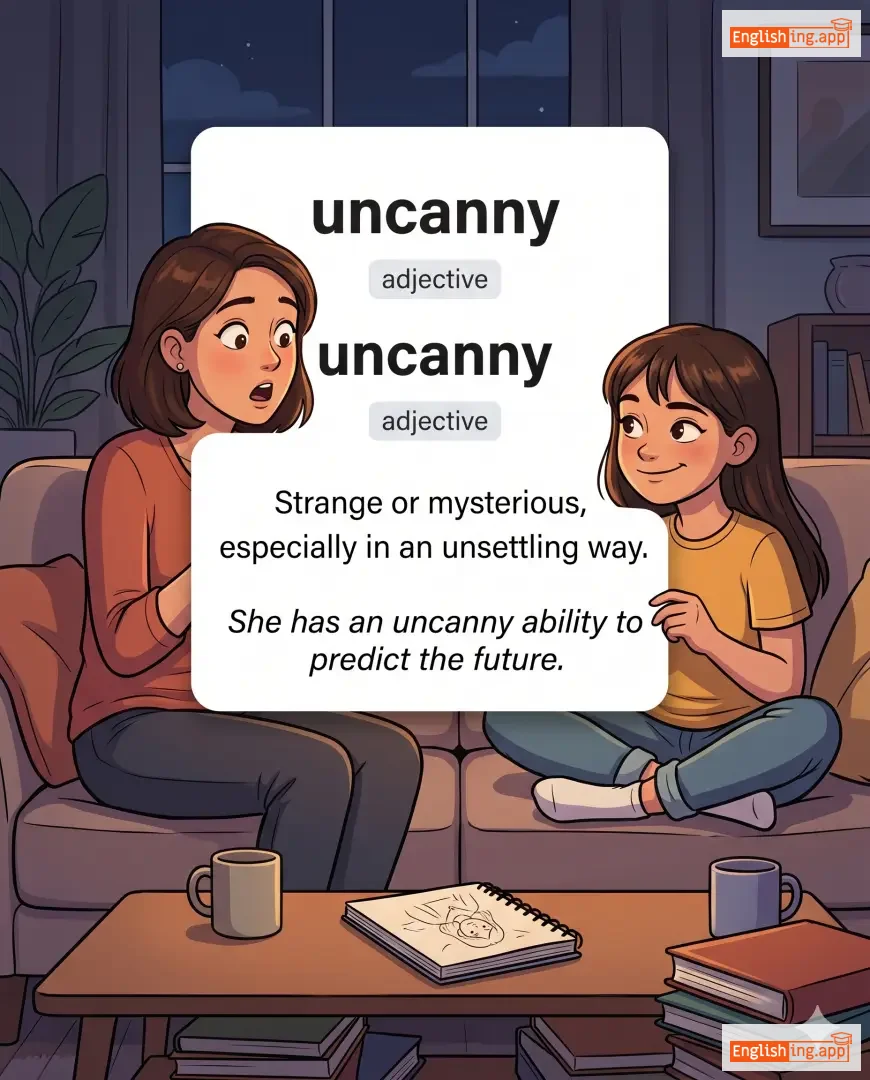
uncanny definition card — visual illustration of the meaning
adjective
/ʌnˈkæni/
不気味 (bukimi)

Strange or mysterious, especially in an unsettling way.

"She has an uncanny ability to predict the future."

"彼女は未来を予測する不気味な能力を持っている。" (kanojo wa mirai o yosoku suru bukimi na nōryoku o motte iru.)
adjective
/ʌnˈbraɪdld/
抑制のない (yokusei no nai)

Uncontrolled and unrestrained.

"The protesters showed unbridled enthusiasm for change."

"抗議者は変革に対して抑えきれない熱意を示しました。" (Kougisha wa henka ni taishite osaekirenai netsui o shimeshimashita.)
adjective
/ʌnˈbreɪkəbəl/
壊れたり損傷したりできない; とても強くて耐久性がある (kowaretari sonshō shitari dekinai; totemo tsuyokute taikyū-sei ga aru)

not able to be broken or damaged; very strong and durable

"Their friendship formed an unbreakable bond."

"彼らの友情は壊れない絆を形成しました。" (karera no yūjō wa kowarenai kizuna o keisei shimashita.)
adjective
/ʌnˈblʌʃɪŋ/
恥知らずな; 図々しい (haji shirazu na; zu zu shii)

showing no shame or embarrassment; boldly shameless

"He told the unblushing lie without any hesitation."

"彼はためらうことなく無恥な嘘をついた。" (Kare wa tamerau koto naku muchina uso o tsuita.)
adjective
/ʌnˈbaɪəst/
偏見のない (henken no nai)

Not showing prejudice; impartial and fair.

"The report gave an unbiased view of the situation."

"レポートは状況の偏りのない見解を示しました。" (Repōto wa jōkyō no henken no nai kenka o shimeshimashita.)
adjective
/ˌʌnbɪˈliːvɪŋ/
信じない (shinjinaide)

Not willing or able to believe; skeptical or doubtful

"She gave him an unbelieving look when he claimed to have met a celebrity."

"彼が有名人に会ったと主張したとき、彼女は彼に信じない目を向けた。" (Kare ga yuumeijin ni atta to shucho shita toki, kanojo wa kare ni shinjinaide me wo muketa.)
adjective
/ˌʌnbɪˈliːvəbəl/
信じられない (shinjirarenai)

impossible to believe; extremely surprising or remarkable

"The magician's performance was absolutely unbelievable."

"魔法使いのパフォーマンスは絶対に信じられなかった。" (Mahoutsukai no pafōmansu wa zettai ni shinjirarenakatta.)
noun
/ˌʌnbɪˈliːf/
不信 (fushin)

A lack of belief, especially in religious faith.

"His heart was full of doubt and unbelief."

"彼の心は疑いと不信で満たされていました。" (Kare no kokoro wa utagai to fushin de mitasarete imashita.)
adjective
/ˌʌnbɪˈkʌmɪŋ/
不適切 (futekisetsu)

Not proper or appropriate for a person; unsuitable.

"His rude behavior was unbecoming of a leader."

"彼の無礼な態度はリーダーとして不適切だった。" (Kare no burei na taido wa riidaa toshite futekisetsu datta.)
adjective
/ʌnˈbiːtən/
負けなし; 敗北なし (makenashi; haiboku nashi)

not defeated; having never lost; undefeated

"The team remains unbeaten this season."

"そのチームは今シーズン無敗です。" (Sono chīmu wa kon shīzun muhai desu.)
adjective
/ʌnˈbeərəbl/
耐え難い (taeganai)

Too difficult or unpleasant to endure.

"The heat was unbearable in the afternoon."

"午後の暑さは耐え難かった。" (Gogo no atsusa wa taeganakatta.)
adjective
/ʌnˈbæləns/
不均衡な; 不安定な (fukin-kō na; fuantei na)

not balanced; lacking stability or equilibrium; mentally unstable

"The unbalanced table kept wobbling."

"不均衡なテーブルは揺れ続けていた。" (Fukin-kō na tēburu wa yure tsudzukete ita.)
adjective
/ˌʌnəˈweər/
無自覚; 知らない; 気づかない (muzikaku; shiranai; kidzukanai)

not knowing or realizing; having no knowledge of something

"She was completely unaware of the danger."

"彼女はその危険に完全に気づいていなかった。" (Kanojo wa sono kiken ni kanzen ni kidzuite inakatta.)
adjective
/ˌʌnəˈvɔɪdəbl/
避けられない (sakerarenai)

Impossible to avoid or prevent.

"Delays were unavoidable due to heavy rain."

"大雨のため、遅れは避けられないものでした。" (ōame no tame, okure wa sakerarenai mono deshita.)
adjective
/ˌʌnəˈveɪləbəl/
利用できない (riyō dekinai)

Not able to be obtained, reached, or used; not present or accessible.

"The manager was unavailable to take calls during the meeting."

"マネージャーは会議中に電話に出られませんでした。" (Manejā wa kaigichuu ni denwa ni deraremasen deshita.)
noun
/ˌʌnəˌveɪləˈbɪləti/
利用不可 (riyou fuka)

The state of being not available or not accessible.

"The unavailability of the manager caused a delay in the project."

"マネージャーの不在がプロジェクトの遅延を引き起こした。" (Mane-ja- no fuzai ga purojekuto no chien o hikiokoshita)
adjective
/ˌʌnəˈteɪnəbl/
達成不可能な (tassei fukanou na)

impossible to achieve, reach, or accomplish

"For many, becoming a professional athlete remains an unattainable dream."

"多くの人にとって、プロのアスリートになることは依然として達成不可能な夢です。" (Ooku no hito ni totte, puro no asuriito ni naru koto wa izen toshite tassei fukanou na yume desu.)
adjective
/ˌʌnəˈʃʊəd/
自信のない (jishin no nai)

Lacking confidence or certainty.

"She gave an unassured answer during the interview."

"彼女は面接で自信のない答えをしました。" (Kanojo wa mensetsu de jishin no nai kotae o shimashita.)
adjective
/ˌʌnəˈsjuːmɪŋ/
控えめな (hikaeme na)

Not pretentious or arrogant; modest.

"Despite his success, he remained unassuming and humble."

"成功にもかかわらず、彼は控えめで謙虚なままでした。" (Seikou ni mo kakawarazu, kare wa hikaeme de kenkyo na mamadeshita.)
adjective
/ˌʌnəˈsweɪdʒd/
解消されていない (kaishou sareteinai)

Not made less intense or relieved; unrelieved.

"His grief remained unassuaged despite the passage of time."
"彼の悲しみは時間が経っても解消されていなかった。" (Kare no kanashimi wa jikan ga tattemo kaishou sareteinakatta.)
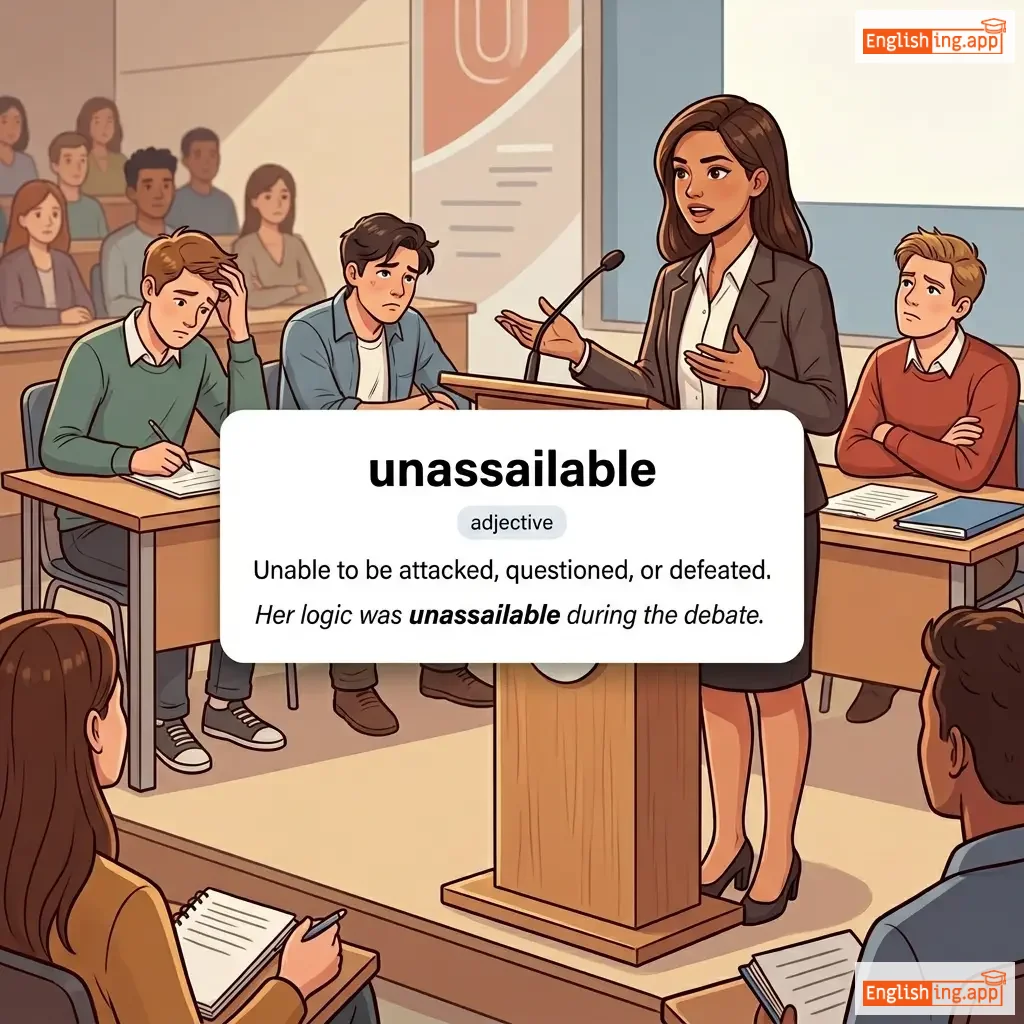
unassailable definition card — visual illustration of the meaning
adjective
/ˌʌnəˈseɪləbl/
反論できない (hanron dekinai)

Unable to be attacked, questioned, or defeated.

"Her logic was unassailable during the debate."

"彼女の論理は討論中に反論できないものでした。" (Kanojo no ronri wa tōron-chū ni hanron dekinai mono deshita.)
adjective
/ʌnˈɑːrmd/
非武装 (hibuso)

Not equipped with or carrying weapons

"The police found the suspect unarmed during the search."

"警察は捜索中に容疑者が武装していないことを発見した。" (Keisatsu wa sousaku-chuu ni yougisha ga busou shiteinai koto wo hakken shita.)
verb
/ʌnˈɑːrm/
武装解除する (busou kaijo suru)

to remove weapons from someone or to deprive of means of attack or defense

"The soldiers were ordered to unarm the prisoners."

"兵士たちは囚人の武装を解除するよう命じられた。" (Heishitachi wa shuujin no busou o kaijo suru you meijirareta)
noun
/ˈtʌrɪt/
大きな塔や建物の上にある小さな塔 (ookina to ya tatemono no ue ni aru chiisana tou)

A small tower on top of a larger tower or building, often used in castles or fortifications.

"The castle was guarded by soldiers stationed in the turret."

"城はタレットに駐留している兵士によって守られていた。" (Shiro wa toretto ni chūryū shiteiru heishi ni yotte mamorarete ita.)
noun
/ˈtjuːtərʃɪp/
指導 (shidō)

The office or position of a tutor; guidance or instruction given by a tutor.

"He thrived under the tutorship of his mentor."
"彼はメンターの指導のもとで成功した。" (Kare wa mentā no shidō no moto de seikō shita.)
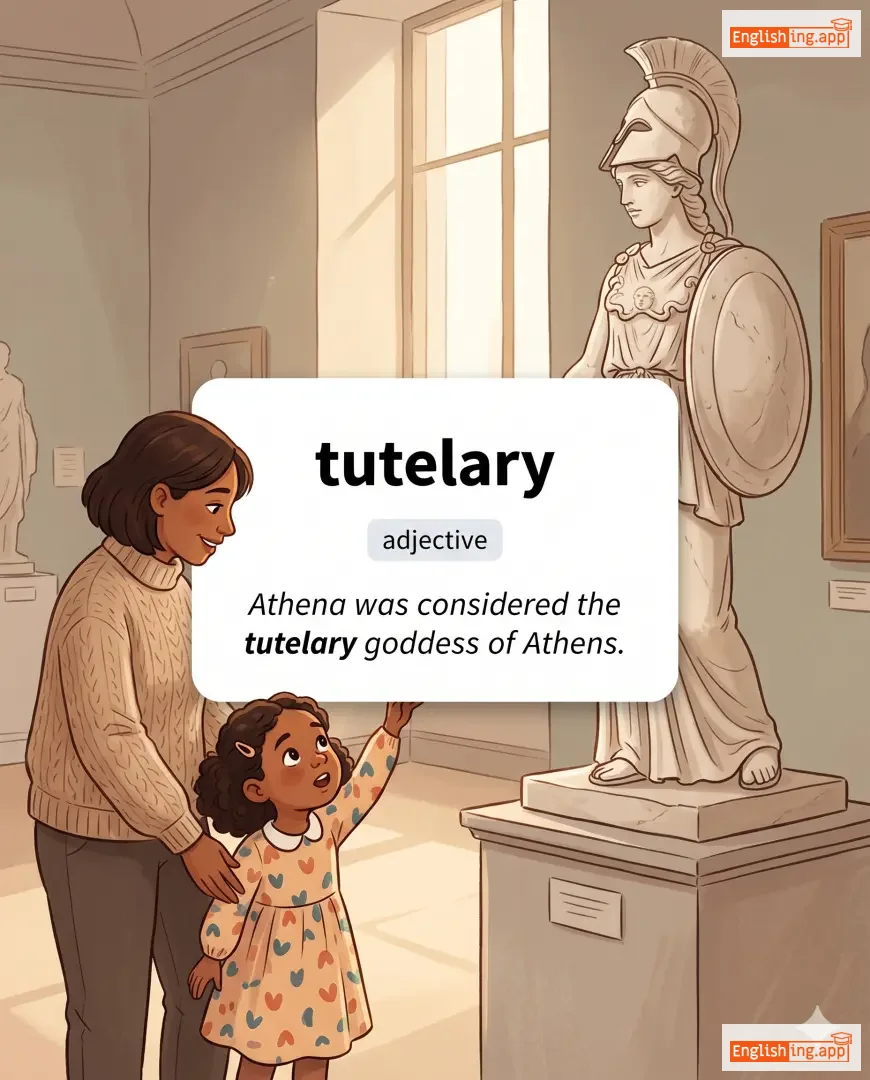
tutelary definition card — visual illustration of the meaning
adjective
/ˈtjuːtɪləri/
守護神 (shugoshin)

Relating to or serving as a guardian or protector, often used for deities or spirits.

"Athena was considered the tutelary goddess of Athens."

"アテナはアテネの守護神と見なされていました。" (Atena wa Atene no shugoshin to minasarete imashita.)
adjective
/ˈtjuːtɪlɑːr/
守護的 (shugodēki)

Serving as a guardian or protector.

"The tutelar spirit of the forest was believed to protect travelers."

"森の守護霊は旅行者を守ると信じられていました。" (Mori no shugorei wa ryokōsha o mamoru to shinjirarete imashita.)
noun
/ˈtjuːtɪlɪdʒ/
指導 (shidou)

The act of guarding, protecting, or guiding; instruction or teaching.

"She studied painting under the tutelage of a famous artist."

"彼女は有名なアーティストの指導の下で絵を学びました。" (Kanojo wa yuumei na aatisuto no shidou no moto de e o manabimashita.)
noun
/ˈtɜːrtl/
(kame)

A slow-moving reptile with a hard shell that lives in water or on land

"The turtle slowly crossed the sandy beach."

"カメは砂浜をゆっくり横切った。" (Kame wa sunahama o yukkuri yokogitta)
noun
/ˈtɜːnˌəʊvə/
売上高 (uriagedaka)

the amount of business conducted during a particular period, or the rate at which employees leave a company

"The company reported a high turnover in its sales department."

"会社は販売部門で高い売上高を報告しました。" (Kaisha wa hanbai bumon de takai uriagedaka wo houkoku shimashita.)
adjective
/ˈtɜːrnkiː/
ターンキー (taanki)

ready for immediate use; a complete product or solution

"The company provides turnkey solutions for small businesses."

"その会社は小規模なビジネス向けのターンキーソリューションを提供しています。" (Sono kaisha wa shokibo na bijinesu muke no taanki soriushon wo teikyō shiteimasu.)
noun
/ˈtɜːr.naʊt/
参加者数 (sankasha suu)

the number of people who attend or participate in an event or activity

"The turnout at the rally was impressive, with thousands showing up."

"集会の参加者数は印象的で、何千人もの人々が参加しました。" (Shukai no sankasha suu wa inshouteki de, nansen nin mono hitobito ga sankashimashita.)