वोकैबुलरीज

इंग्लिश वोकैबुलरी डिस्कवर, लर्न और मास्टर करें

noun
/ˌtɜːrməˈnɑːlədʒi/
विशेष शब्दावली (vishesh shabdavali)

the set of technical or special words used in a particular subject

"Medical terminology can be difficult for new students to understand."

"मेडिकल टर्मिनोलॉजी नए छात्रों के लिए समझना मुश्किल हो सकता है।" (Medical terminology naye chatron ke liye samajhna mushkil ho sakta hai.)
noun
/ˈtɜːrmɪnəs/
अंतिम स्थान (antim sthan)

the final point or end of something, especially the final station on a railway line

"The train finally arrived at the terminus after a long journey."

"लंबी यात्रा के बाद ट्रेन अंततः टर्मिनस पर पहुंची।" (Lambi yatra ke baad train antatah terminus par pahiunchi.)
noun
/tɜːmz/
शर्तें (sharten)

plural of term; conditions or rules in a contract or agreement

"The terms of the agreement are clearly outlined in the contract."

"समझौते की शर्तें अनुबंध में स्पष्ट रूप से उल्लिखित हैं।" (Samjhaute ki sharten anubandh mein spasht roop se ullikhit hain.)
noun
/təˈreɪn/
भूमि (bhumi)

a stretch of land, especially with regard to its physical features

"The soldiers had to cross rough terrain during the mission."

"सैनिकों को मिशन के दौरान कठिन भूमि को पार करना पड़ा।" (Sainikon ko mission ke dauran kathin bhumi ko paar karna pada.)
noun
/ˈterəpɪn/
एक प्रकार की छोटी ताजे पानी की कछुआ (ek prakar ki chhoti taje pani ki kachhua)

a small freshwater turtle, especially one found in North America

"The terrapin slowly crawled into the pond."

"टेरेपिन धीरे-धीरे तालाब में घुसा।" (Terrapin dheere-dheere talab mein ghusa.)
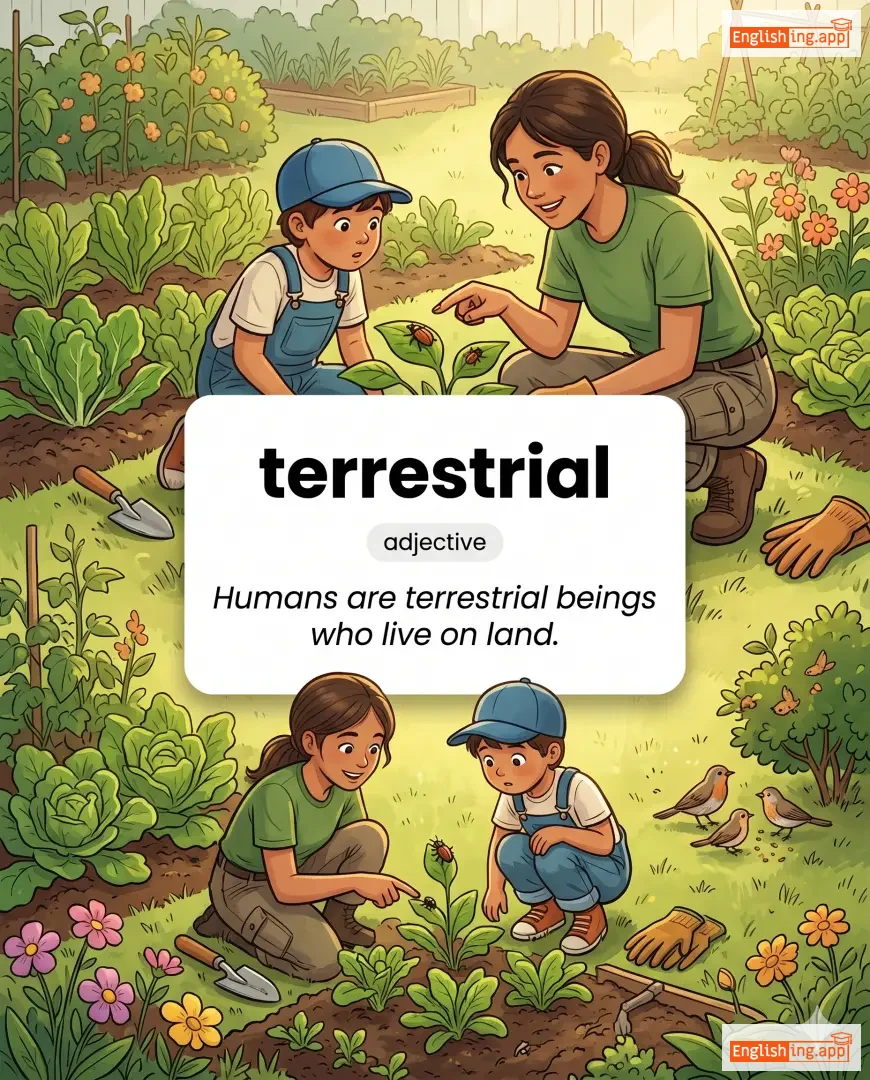
terrestrial definition card — visual illustration of the meaning
adjective
/təˈrɛstriəl/
स्थलीय (sthaliya)

Relating to the Earth or land as opposed to the sea or air; living or growing on land.

"Humans are terrestrial beings who live on land."

"मानव स्थलीय प्राणी हैं जो भूमि पर रहते हैं।" (Manav sthaliya prani hain jo bhumi par rehte hain.)
adjective
/ˈtɛrɪbəl/
खराब (terebal)

extremely bad or unpleasant

"The food at that restaurant was terrible."

"उस रेस्टोरेंट का खाना बहुत खराब था." (us restorent ka khana bahut kharab tha)
adverb
/ˈtɛrəbli/
भयानक तरीके से (bhayanak tareeke se)

to a very great or extreme degree; very badly or unpleasantly

"He felt terribly sad after hearing the news."

"उसने समाचार सुनने के बाद भयानक तरीके से दुखी महसूस किया।" (Usne samachar sunne ke baad bhayanak tareeke se dukhi mehsoos kiya.)
adjective
/təˈrɪfɪk/
शानदार (shandaar)

extremely good or excellent; very great or intense

"The concert last night was absolutely terrific."

"कल रात का कंसर्ट बिल्कुल शानदार था।" (Kal raat ka concert bilkul shandaar tha.)
verb
/ˈtɛrəˌfaɪ/
डराना (darna)

To cause someone to feel extreme fear.

"The loud thunder terrified the children."

"तेज तूफान ने बच्चों को डराया।" (Tez toofan ne bachon ko daraya.)
adjective
/ˌtɛrɪˈtɔːriəl/
क्षेत्रीय (kshetriya)

Relating to the ownership or control of land or territory.

"The two countries had a territorial dispute over the island."

"दो देशों के बीच द्वीप को लेकर क्षेत्रीय विवाद था।" (Do deshon ke beech dweep ko lekar kshetriya vivaad tha.)
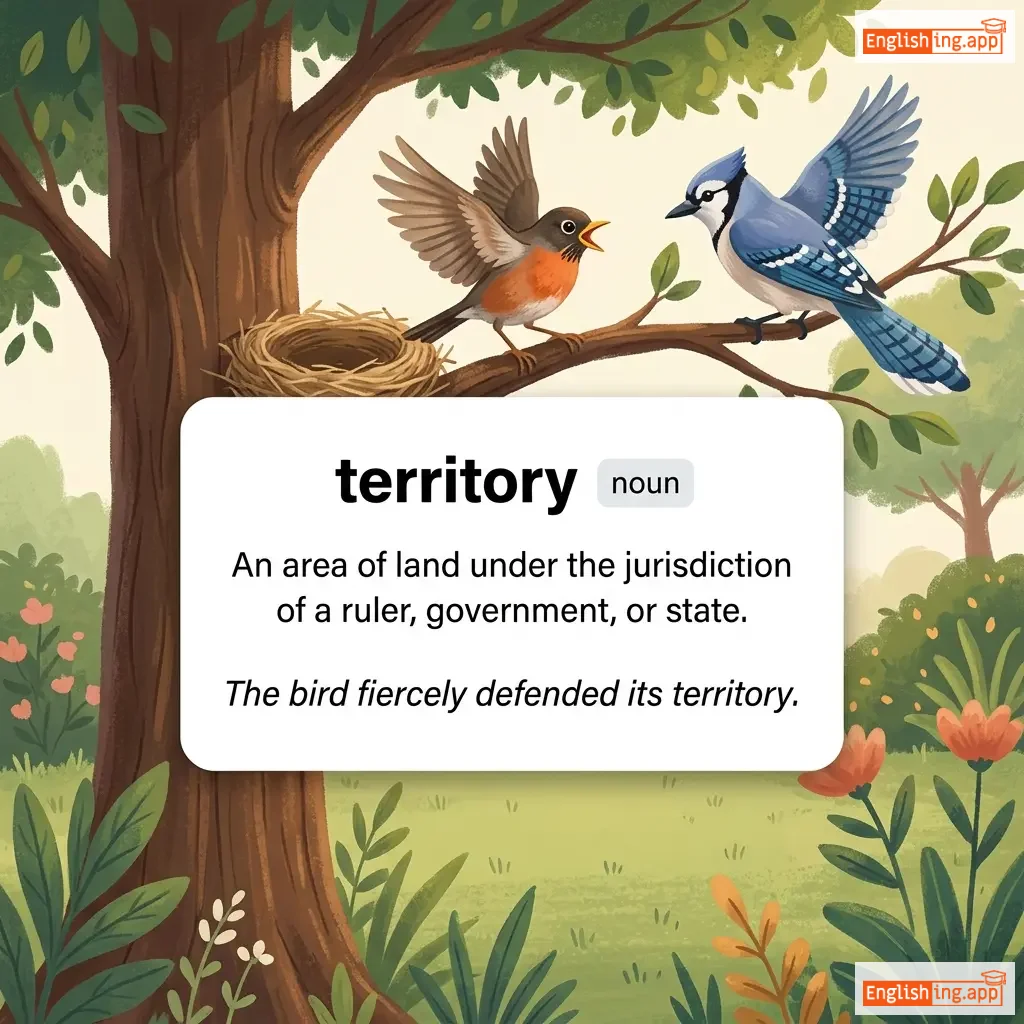
territory definition card — visual illustration of the meaning
noun
/ˈtɛrɪˌtɔːri/
क्षेत्र (kshetra)

An area of land under the jurisdiction of a ruler, government, or state.

"The bird fiercely defended its territory."

"पक्षी ने अपनी क्षेत्र की जोरदार रक्षा की।" (Pakshi ne apni kshetra ki jordaar raksha ki.)
noun
/ˈtɛrər/
आतंकी भय (aankki bhay)

Extreme fear or dread.

"The villagers fled in terror during the attack."

"गांववाले हमले के दौरान आतंक में भाग गए।" (Gaamwale hamle ke dauran atank mein bhag gaye.)
noun
/ˈtɛrərɪzəm/
आतंकवाद (aantankvaad)

the use of violence or threats to intimidate or coerce, especially for political purposes

"Terrorism is a serious threat to global peace and security."

"आतंकवाद वैश्विक शांति और सुरक्षा के लिए एक गंभीर खतरा है।" (Aantankvaad vaishwik shanti aur suraksha ke liye ek gambheer khatra hai.)
noun
/ˈtɛrərɪst/
आतंकी (aantki)

a person who uses violence or threats to intimidate or coerce, especially for political purposes

"The terrorist was arrested by the police after the attack."

"आतंकी को हमले के बाद पुलिस ने गिरफ्तार किया।" (Aantki ko hamle ke baad pulis ne giraftaar kiya.)
adjective
/tɜːrs/
संक्षिप्त (sankshipt)

brief and to the point; sparing in the use of words

"His reply was terse and ended the conversation quickly."

"उसकी प्रतिक्रिया संक्षिप्त थी और उसने जल्दी से बातचीत समाप्त कर दी।" (uski pratikriya sankshipt thi aur usne jaldi se baatcheet samaapt kar di.)
3️⃣

tertiary

adjective
/ˈtɜːrʃieri/

third in order, rank, or level

"He is pursuing his tertiary education at the university."

adjective
/ˈtɛsəleɪtɪd/
आकृति युक्त (aakriti yukt)

arranged in a pattern of repeated shapes fitting together without gaps

"The tessellated floor was made of colorful tiles arranged in perfect symmetry."

"टेसलेटीड फर्श रंगीन टाइल्स से सुसज्जित था, जो परिपूर्ण सममिति में व्यवस्थित थे।" (tessellated farsh rangeen tiles se susajjit tha, jo paripurn sammiti mein vyavasthit the.)
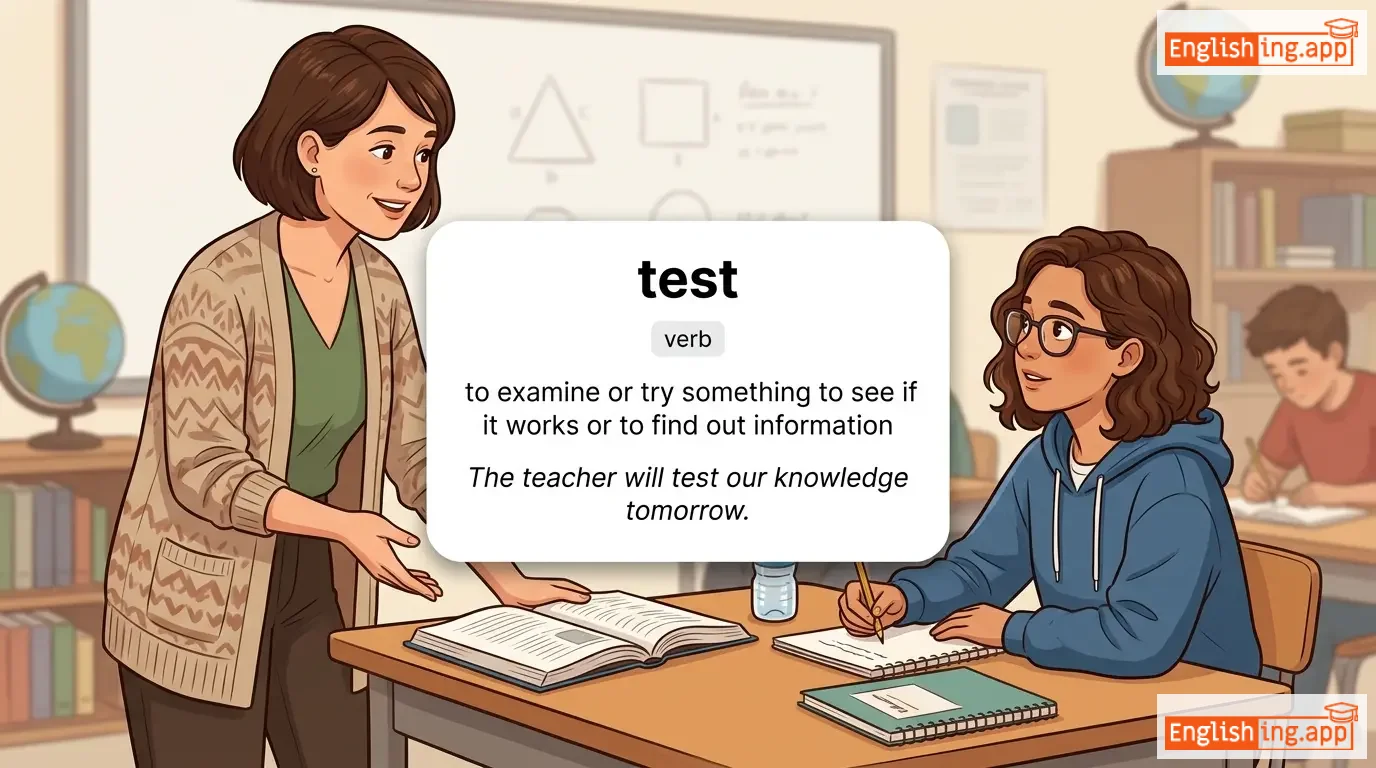
test definition card — visual illustration of the meaning
noun
/tɛst/
परीक्षा (pariksha)

a procedure intended to establish the quality, performance, or reliability of something

"The test results will determine whether the treatment is effective."

"परीक्षा के परिणाम यह निर्धारित करेंगे कि उपचार प्रभावी है या नहीं।" (Pariksha ke parinaam yah nirdharit karenge ki upchaar prabhavi hai ya nahi.)
noun
/ˈtɛstəmənt/
वसीयत / प्रमाण (vasiayat / praman)

a person's will; or strong evidence of something

"His success is a testament to his hard work and dedication."

"उसकी सफलता उसकी कठिन मेहनत और समर्पण का प्रमाण है।" (uski safalta uski kathin mehnat aur samarpan ka praman hai.)
noun
/ˈtɛsteɪtər/
वसीयतकर्ता (vaseeyatkartaa)

a person who has made a will

"The lawyer read the will of the deceased testator."

"वकील ने मृत वसीयतकर्ता की वसीयत पढ़ी।" (vakil ne mrt vaseeyatkartaa ki vaseeyat padhi.)
verb
/ˈtɛstəfaɪ/
गवाही देना (gawahi dena)

to make a statement or declaration under oath or to give evidence

"She was called to testify in court about the accident."

"उसे अदालत में दुर्घटना के बारे में गवाही देने के लिए बुलाया गया था।" (Use adalat mein durghatna ke baare mein gawahi dene ke liye bulaya gaya tha.)
noun
/ˌtɛstɪˈmoʊniəl/
प्रशंसापत्र (prashansapatra)

A formal statement testifying to someone's character, qualifications, or the quality of a product or service.

"The company shared a glowing testimonial from a satisfied customer."

"कंपनी ने एक संतुष्ट ग्राहक से एक प्रशंसापत्र साझा किया।" (Company ne ek santusht grahak se ek prashansapatra saanjha kiya.)
testimonials definition card — visual illustration of the meaning
noun
/ˌtɛstɪˈməʊnɪəlz/
साक्षात्कार, प्रशंसा पत्र (saakshaatkaar, prashansa patra)

Written or spoken statements of praise or recommendation from clients or customers.

"Positive testimonials can enhance a company's reputation."

"सकारात्मक साक्षात्कार एक कंपनी की प्रतिष्ठा बढ़ा सकते हैं।" (Sakaraatmak saakshaatkaar ek company ki pratishtha badha sakte hain.)
noun
/ˈtɛstəˌmoʊni/
गवाही (gavaahi)

A formal statement given in a court of law or evidence supporting a fact.

"Her testimony in court helped convict the criminal."

"उसकी गवाही ने अदालत में अपराधी को दोषी ठहराने में मदद की।" (Uski gavaahi ne adalat mein apradhi ko doshi thahrane mein madad ki.)
noun
/ˈtɛstɪŋ/
परीक्षण (parikshan)

the process of assessing or evaluating something, often by trying it out

"The testing of the new software is still ongoing."

"नई सॉफ़्टवेयर का परीक्षण अभी भी चल रहा है।" (Nayi software ka parikshan abhi bhi chal raha hai.)
adjective
/ˈtɛsti/
चिड़चिड़ा (chichida)

Easily irritated or annoyed.

"He became testy when asked the same question repeatedly."

"वह बार-बार एक ही सवाल पूछे जाने पर चिढ़ गए।" (Vah baar-baar ek hi sawaal poochhe jaane par chid gaye.)
verb
/ˈtɛðər/
बाँधना (bandhna)

To tie an animal with a rope or chain so it cannot move far.

"The farmer tethered the goat to a post."

"किसान ने बकरी को एक खंभे से बाँध दिया।" (Kisan ne bakri ko ek khambhe se bandh diya.)
noun
/tɛkst/
पाठ (paath)

a written or printed work or passage, especially a book or document

"The teacher asked us to read the text on page 50."

"शिक्षक ने हमें पृष्ठ 50 पर पाठ पढ़ने को कहा।" (Shikshak ne humein pusta 50 par paath padhne ko kaha.)
noun
/ˈtɛkstbʊk/
पाठ्यपुस्तक (pathyapustak)

a book used for studying a subject in school or college

"She bought a new biology textbook for her class."

"उसने अपनी कक्षा के लिए एक नया जीवविज्ञान पाठ्यपुस्तक खरीदी।" (Usne apni kaksha ke liye ek naya jeevvigyan pathyapustak kharidi.)
noun
/ˈtek.staɪl/
कपड़ा (kapda)

a type of cloth or woven fabric made by knitting or weaving fibers

"Bangladesh is famous for its high-quality textile industry."

"बांगलादेश अपनी उच्च गुणवत्ता वाले वस्त्र उद्योग के लिए प्रसिद्ध है।" (Bangladesh apni uchch gunwatta wale vastra udyog ke liye prasiddh hai.)
noun
/ˈtɛkstʃər/
बनावट (banavat)

the way something feels when you touch it; the quality of a surface or substance

"The fabric has a soft and smooth texture."

"कपड़े की बनावट नरम और चिकनी है।" (Kapde ki banavat narm aur chikni hai.)
conjunction
/ðæn/
से ज्यादा (se zyada)

used to introduce the second element in a comparison

"She is taller than her brother."

"वह अपने भाई से लंबी है।" (Wah apne bhai se lambi hai.)
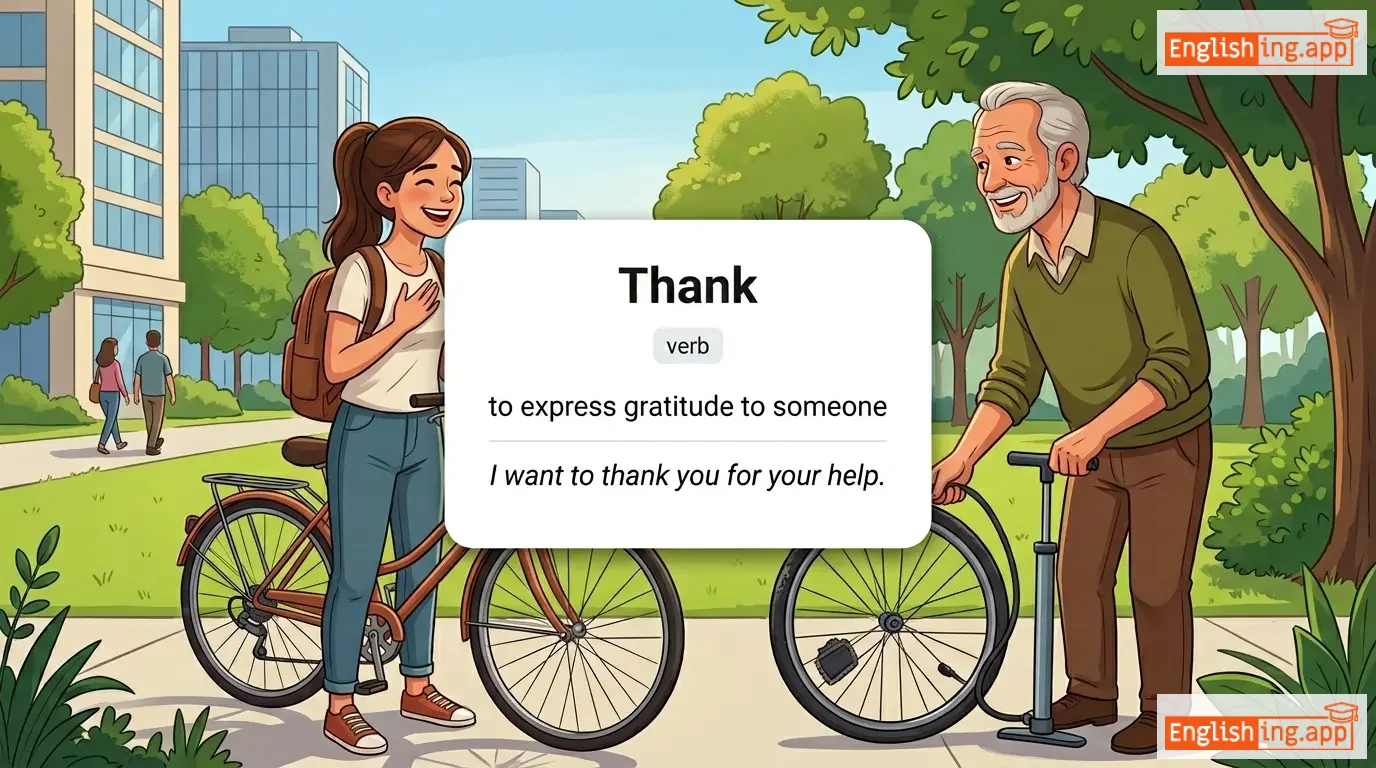
Thank definition card — visual illustration of the meaning
verb
/θæŋk/
धन्यवाद कहना (dhanyavaad kehna)

to express gratitude to someone

"I want to thank you for your help."

"मैं आपकी मदद के लिए धन्यवाद कहना चाहता हूँ।" (Main aapki madad ke liye dhanyavaad kehna chahta hoon.)
adjective
/ˈθæŋk.fəl/
आभारी; कृतज्ञ (aabhari; krutagnya)

pleased and relieved; expressing gratitude; appreciative

"I am thankful for all your help and support."

"मैं आपकी मदद और समर्थन के लिए आभारी हूँ।" (main aapki madad aur samarthan ke liye aabhari hoon.)
adverb
/ˈθæŋkfəli/
आभारी रूप से (aabhari roop se)

used to express relief or gratitude

"Thankfully, she arrived just in time for the meeting."

"आभारी रूप से, वह मीटिंग के लिए समय पर पहुँच गई।" (Aabhari roop se, vah meeting ke liye samay par pahunch gayi.)
noun
/θæŋks/
धन्यवाद (dhanyavaad)

an expression of gratitude

"Thanks for helping me with the project."

"प्रोजेक्ट में मदद करने के लिए धन्यवाद।" (Project mein madad karne ke liye dhanyavaad.)
noun
/ˈθæŋksˌɡɪvɪŋ/
धन्यवाद दिवस (dhanyavaad divas)

an annual holiday in the US for giving thanks, celebrated with a meal

"We spent Thanksgiving dinner with our family."

"हमने थैंक्सगिविंग डिनर अपने परिवार के साथ बिताया।" (Hamne Thanksgiving dinner apne parivar ke saath bitaya.)
pronoun
/ðæt/
यह (yah)

used to identify a specific person or thing observed or heard

"That is my book on the table."

"यह मेरी किताब है जो मेज पर रखी है।" (Yah meri kitaab hai jo mej par rakhi hai.)
noun
/ˈθɔːməˌtɜrdʒɪst/
चमत्कारी व्यक्ति (chamatkari vyakti)

A worker of miracles or magician.

"The thaumaturgist amazed the audience with his tricks."

"चमत्कारी व्यक्ति ने अपने करतबों से दर्शकों को हैरान कर दिया।" (Chamatkari vyakti ne apne kartabon se darshako ko hairan kar diya.)
verb
/θɔː/
पिघलना (pighalna)

to melt or cause to melt after being frozen

"The ice began to thaw in the sun."

"बर्फ सूरज में पिघलने लगी।" (Baraf sooraj mein pighalne lagi.)
adverb
/ˌðeərˈwɪð/
उसके साथ; (uske saath)

together with that; in addition to that

"He handed me the contract and the pen therewith."

"उसने मुझे अनुबंध और कलम उसके साथ दिया।" (usne mujhe anubandh aur kalam uske saath diya.)
noun
/ˈθiːsɪs/
थीसिस (thesis)

A long piece of writing on a particular subject, usually for a degree at a university.

"She spent two years writing her doctoral thesis."

"उसने अपनी डॉक्टोरल थीसिस लिखने में दो साल बिताए।" (Usne apni doctoral thesis likhne mein do saal bitaye.)
pronoun
/ðiːz/
ये (ye)

used to refer to things or people that are near or present

"These are my friends."

"ये मेरे दोस्त हैं।" (Ye mere dost hain.)
adjective
/θɜrd/
तीसरा (teesra)

constituting number three in a sequence

"She finished in third place."

"वह तीसरे स्थान पर finish हुई।" (Wah teesre sthaan par finish hui.)
thermogenesis definition card — visual illustration of the meaning
noun
/ˌθɜː.məʊˈdʒen.ɪ.sɪs/
ताप उत्पादन प्रक्रिया (taap utpadan prakriya)

The process of heat production in living organisms, often associated with burning calories and energy expenditure.

"Spicy foods can enhance thermogenesis and calorie burning."

"मसालेदार खाद्य पदार्थ थर्मोजेनेसिस और कैलोरी जलाने को बढ़ा सकते हैं।" (masaledar khadya padarth thermogenesis aur calorie jalane ko badha sakte hain.)
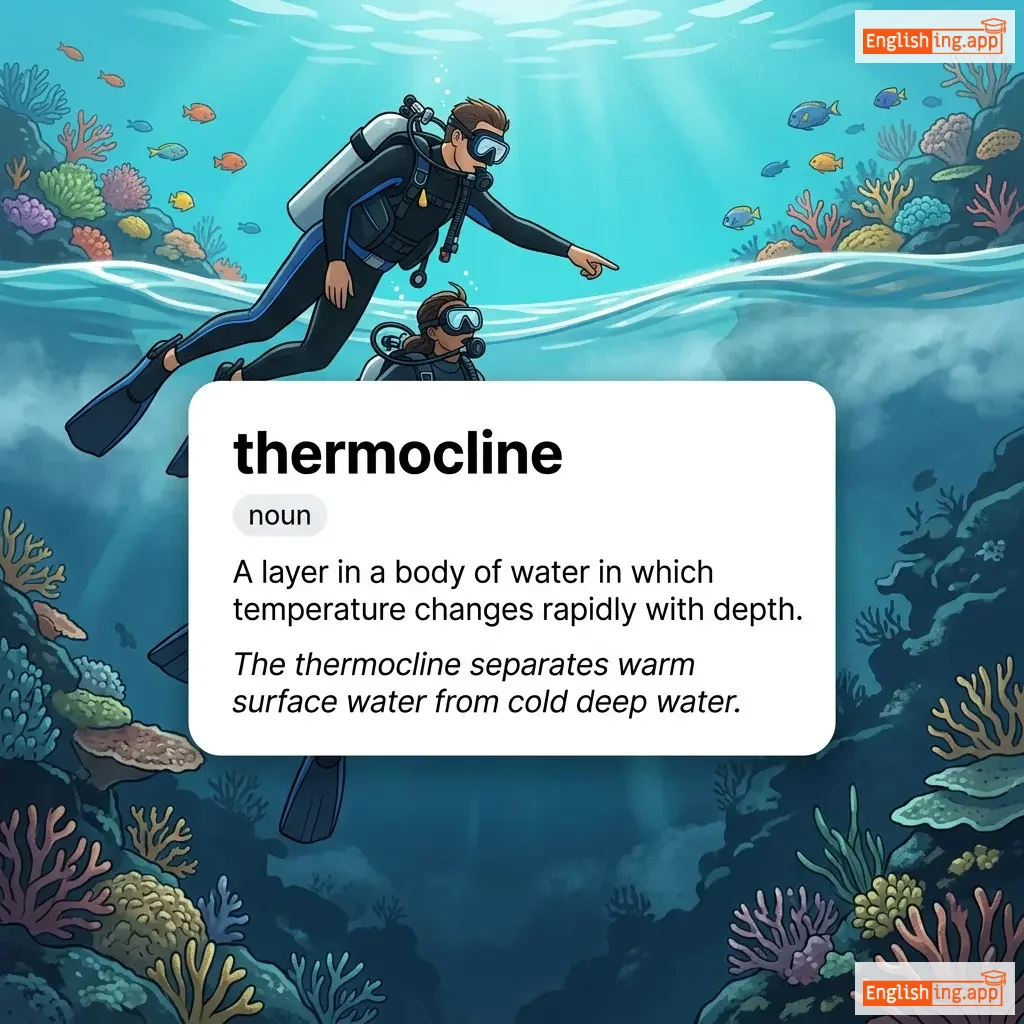
thermocline definition card — visual illustration of the meaning
noun
/ˈθɝː.moʊ.klaɪn/
थर्मोक्लाइन (thermokline)

A layer in a body of water in which temperature changes rapidly with depth.

"The thermocline separates warm surface water from cold deep water."

"थर्मोक्लाइन ऊष्ण सतह के पानी को ठंडे गहरे पानी से अलग करता है।" (Thermokline ushna satah ke paani ko thande gahre paani se alag karta hai.)
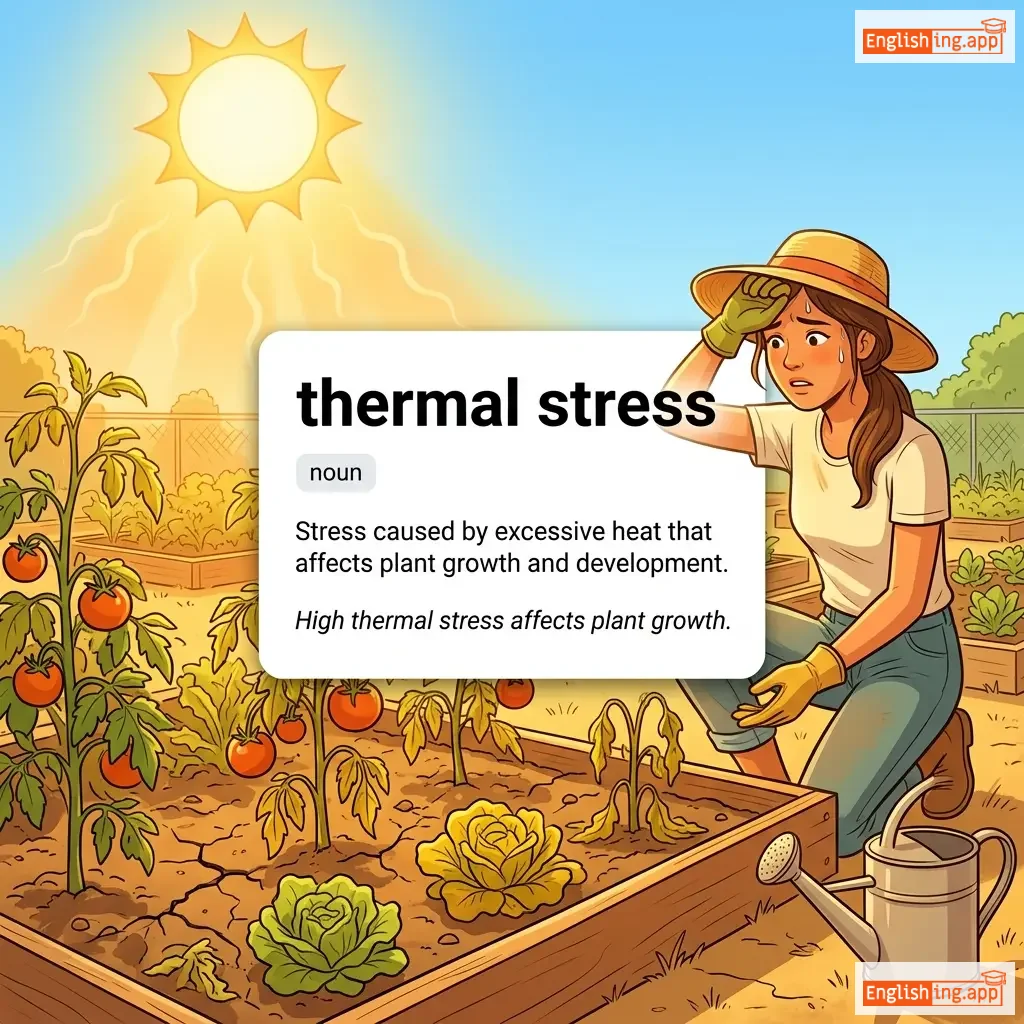
thermal stress definition card — visual illustration of the meaning
noun
ˈθɜː.məl stres
थर्मल तनाव (thermal tanav)

Stress caused by excessive heat that affects plant growth and development.

"High thermal stress affects plant growth."

"हाई थर्मल स्ट्रेस पौधों की वृद्धि को प्रभावित करता है।" (High thermal stress podhon ki vruddhi ko prabhavit karta hai.)
adjective
/ˈθɜːrməl/
थर्मल (thermal)

Related to heat or temperature.

"She wore a thermal jacket to stay warm in winter."

"वह सर्दियों में गर्म रहने के लिए एक थर्मल जैकेट पहने हुए थी।" (Vah sardiyaaon mein garam rehne ke liye ek thermal jacket pehane huye thi.)
conjunction
/ðɛəˈfɔː/
इसलिए (thairfor)

for that reason; because of that

"She was tired; therefore, she went to bed early."

"वह थकी थी; इसलिए उसने जल्दी बिस्तर पर चली गई।" (vah thaki thi isliye usne jaldi bistar par chali gayi)