
語彙集

英単語辞書 | 単語の意味、定義、例文

eulogy definition card — visual illustration of the meaning
noun
/ˈjuːlədʒi/
弔辞 (chouji)

A speech or piece of writing that praises someone, especially after their death.

"Her brother delivered a heartfelt eulogy at the funeral."
"彼女の兄は葬式で感動的な弔辞を述べました。" (Kanojo no ani wa soushiki de kandouteki na chouji o nobemashita.)
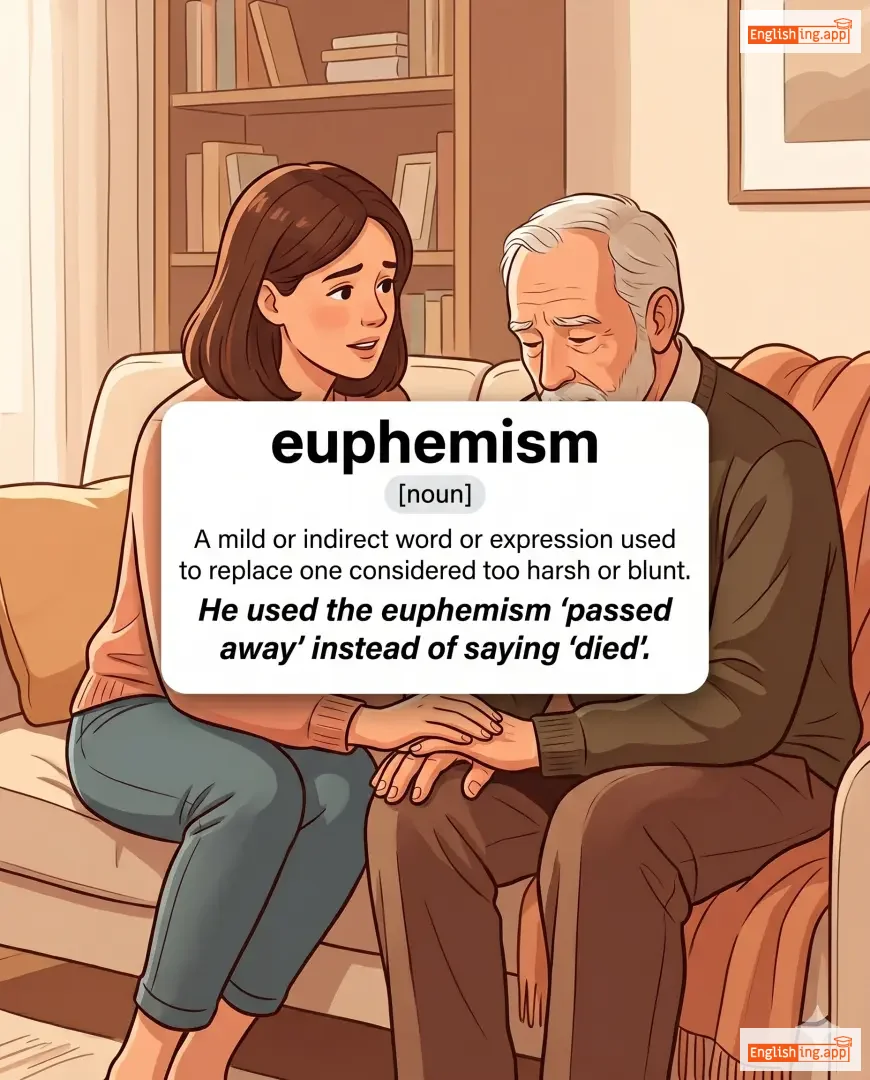
euphemism definition card — visual illustration of the meaning
noun
/ˈjuːfəmɪzəm/
婉曲語 (wankyokugo)

A mild or indirect word or expression used to replace one considered too harsh or blunt.

"He used the euphemism 'passed away' instead of saying 'died'."

"彼は「亡くなった」という代わりに「逝った」という婉曲語を使った。" (Kare wa 'nakunatta' to iu kawari ni 'itta' to iu wankyokugo o tsukatta.)
adjective
/juːˈfoʊniəs/
耳に心地よい音 (mimi ni kokochi yoi oto)

Pleasing to the ear; having a sweet sound.

"The poet's euphonious language made the verse a delight to read."

"詩人のユーフォニアスな言葉は詩を読む喜びに変えました。" (Shijin no yūfoniasu na kotoba wa shi o yomu yorokobi ni kaemashita.)
noun
/ˈjuːfəni/
ユーフォニー (yuufonii)

The quality of being pleasing to the ear, especially through harmonious combination of words.

"The orator's speech was full of euphony and rhythm."
"演説者のスピーチはユーフォニーとリズムで満ちていた。" (Enzetsusha no supīchi wa yuufonii to rizumu de michite ita.)
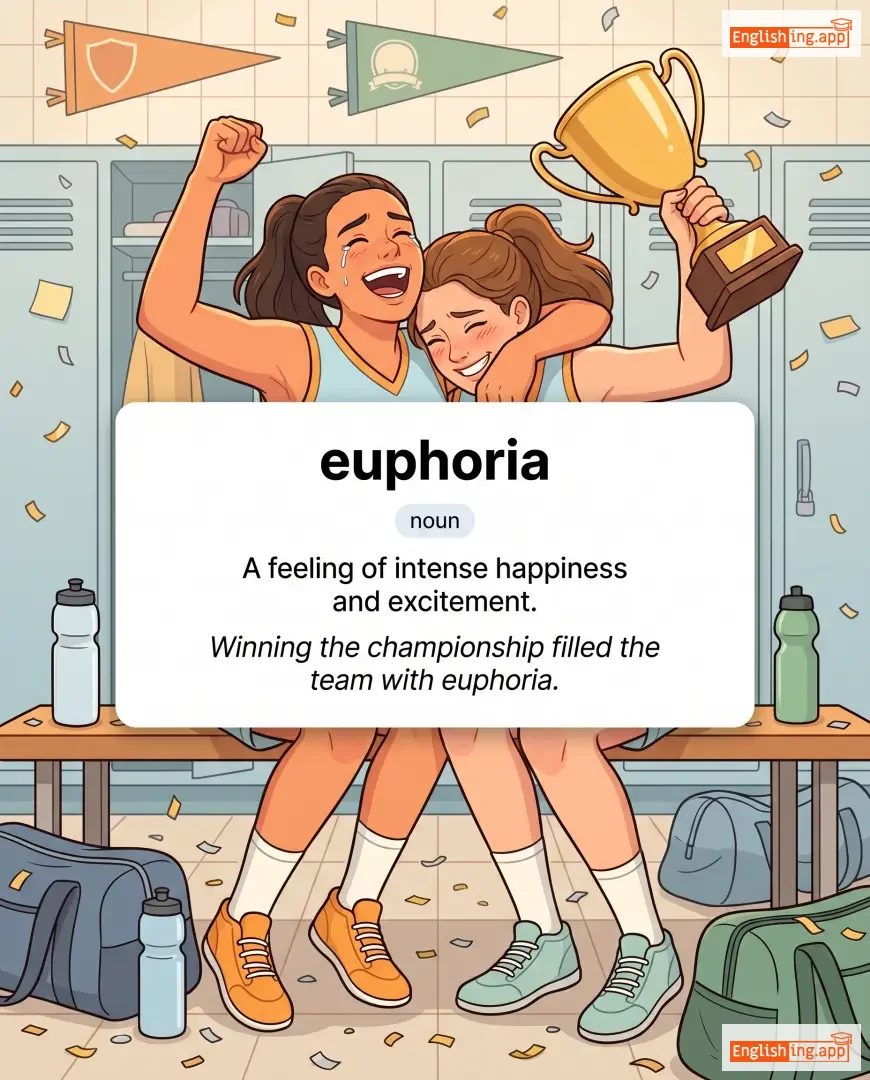
euphoria definition card — visual illustration of the meaning
noun
/juːˈfɔːriə/
幸福感 (koufukukan)

A feeling of intense happiness and excitement.

"Winning the championship filled the team with euphoria."

"チャンピオンシップを優勝すると、チームは幸福感で満たされました。" (Chanpionship wo yūshō suru to, chīmu wa kōfukukan de mitasaremashita.)
adjective
/juːˈfɔːrɪk/
幸福感に満ちた (kōfukukan ni michita)

Characterized by or feeling intense excitement and happiness.

"The fans were euphoric after their team's victory."

"チームが勝った後、ファンは幸福感に満ちていた。" (Chīmu ga katta ato, fan wa kōfukukan ni michite ita.)
exclamation
/juˈriːkə/
ユーレカ! (Yureka!)

An exclamation used to express a sudden discovery or realization.

"When the solution finally came to him, he shouted, 'Eureka!'"

"解決策がついに彼に浮かんだとき、彼は叫んだ。 'ユーレカ!'" (Kaiketsu-saku ga tsuini kare ni ukanda toki, kare wa sakenda. 'Yureka!')
adjective
/ˌjʊərəˈpiːən/
ヨーロピアン (Yōropian)

Relating to Europe or its people.

"She studied European history at university."
"彼女は大学でヨーロッパの歴史を学びました。" (Kanojo wa daigaku de Yōroppa no rekishi o manabimashita.)
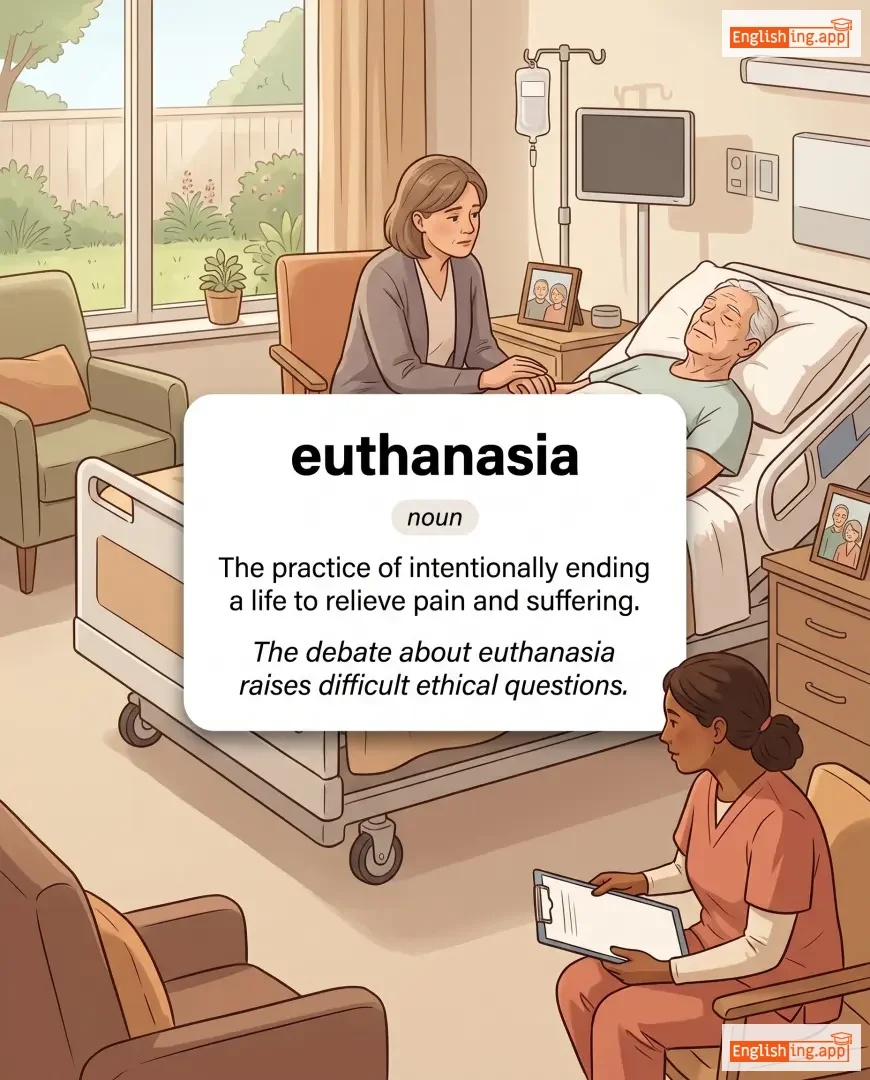
euthanasia definition card — visual illustration of the meaning
noun
/ˌjuːθəˈneɪʒə/
安楽死 (anraku shi)

The practice of intentionally ending a life to relieve pain and suffering.

"The debate about euthanasia raises difficult ethical questions."
"安楽死についての議論は、難しい倫理的な問題を提起します。" (Anraku shi ni tsuite no giron wa, muzukashii rinriteki na mondai wo teiki shimasu.)
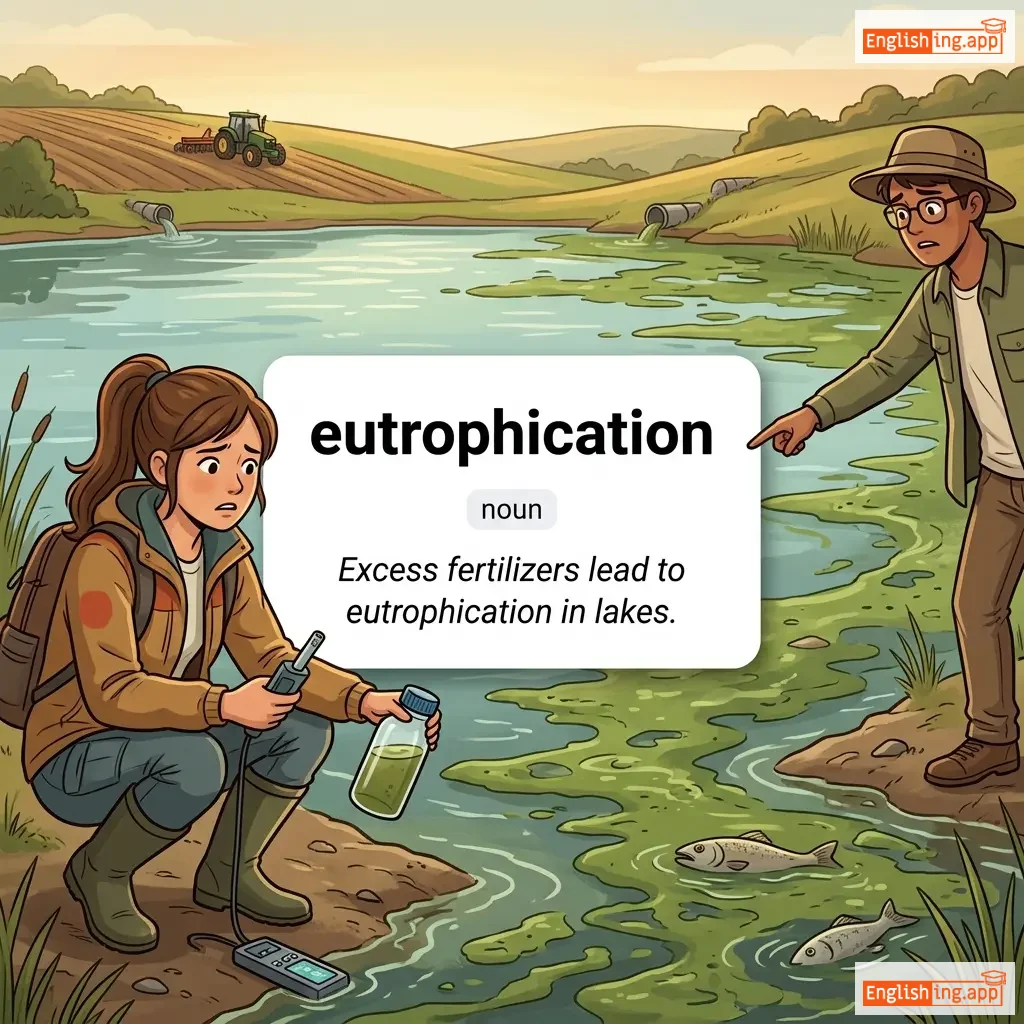
eutrophication definition card — visual illustration of the meaning
noun
/juːˌtrɑː.fɪˈkeɪ.ʃən/
湖やその他の水域における栄養素の過剰 (mizuumi ya sonota no suiiki ni okeru eiyōso no kajō)

Excessive richness of nutrients in a lake or other body of water, frequently due to runoff from the land, which causes a dense growth of plant life and death of animal life from lack of oxygen.

"Excess fertilizers lead to eutrophication in lakes."

"過剰な肥料は湖におけるユートロフィケーションを引き起こします。" (Kajōna hiryō wa mizuumi ni okeru yūtorofikēshon o hikiokoshimasu.)
verb
/ɪˈvækjueɪt/
避難する (hinan suru)

To remove people from a dangerous place to safety.

"The residents were ordered to evacuate the building after the fire alarm."

"火災警報後、住民は建物から避難するよう命じられました。" (Kasai keihou go, jumin wa tatemono kara hinan suru you meijiraremashita.)
verb
/ɪˈveɪd/
回避する (kaihi suru)

To escape or avoid something, especially by cleverness or trickery.

"He tried to evade the question by changing the subject."

"彼は話題を変えることで質問を回避しようとした。" (Kare wa wadai o kaeru koto de shitsumon o kaihi shiyō to shita.)
verb
/ɪˈvæljueɪt/
評価する (hyoukasuru)

To assess or judge the value, quality, or significance of something.

"The teacher will evaluate the students’ projects tomorrow."
"教師は明日学生のプロジェクトを評価します。" (Kyoushi wa ashita gakusei no purojekuto wo hyoukasuru.)
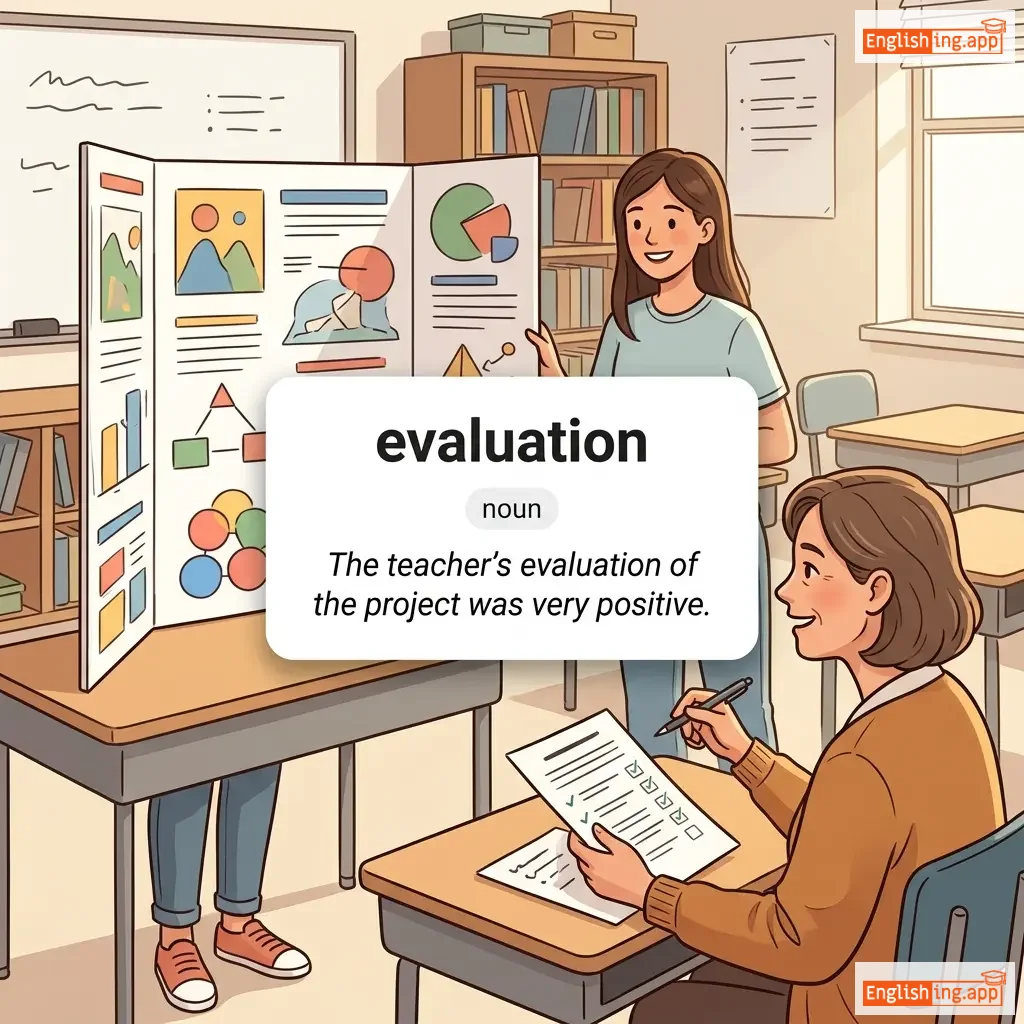
evaluation definition card — visual illustration of the meaning
noun
/ɪˌvæljʊˈeɪʃən/
評価 (hyouka)

The process of assessing or judging the value, quality, or importance of something.

"The teacher’s evaluation of the project was very positive."
"教師のプロジェクトの評価は非常に肯定的でした。" (Kyoushi no purojekuto no hyouka wa hijou ni kouteki deshita.)
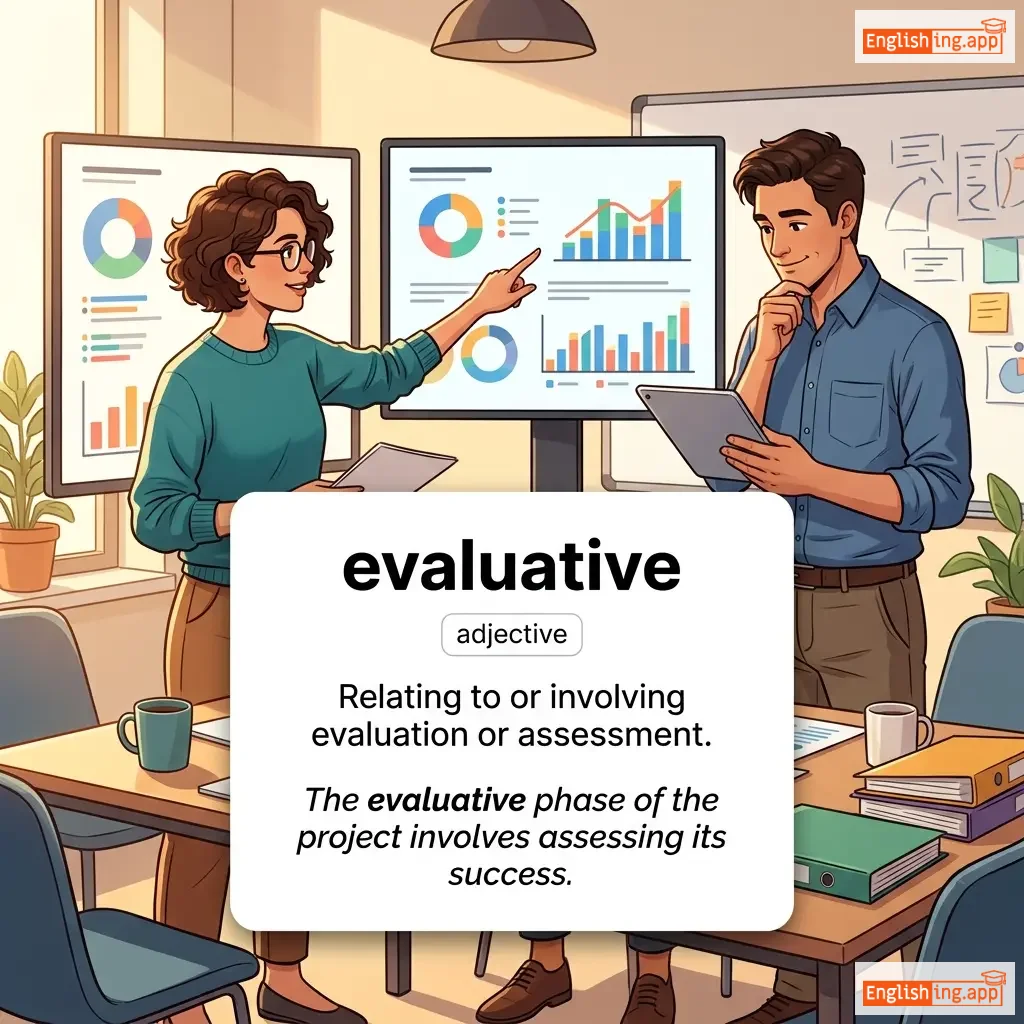
evaluative definition card — visual illustration of the meaning
adjective
/ɪˈvæljʊətɪv/
評価的 (hyoukateki)

Relating to or involving evaluation or assessment.

"The evaluative phase of the project involves assessing its success."

"プロジェクトの評価段階は、その成功を評価することを含みます。" (Purojekuto no hyoukadankai wa, sono seikou wo hyoukasuru koto wo fukumimasu.)
verb
/ˌɛvəˈnɛs/
消える (kieru)

To disappear gradually; to fade away.

"The mist began to evanesce as the sun rose higher."

"霧は太陽が高く昇るにつれて消え始めた。" (Kiri wa taiyō ga takaku noboru ni tsurete kiehajimeta.)
adjective
/ˌɛvəˈnɛsənt/
儚い (hakanai)

Quickly fading or disappearing; lasting for only a very short time.

"The beauty of the sunset was evanescent, fading within minutes."

"夕日の美しさは儚く、数分で消えてしまった。" (Yūhi no utsukushisa wa hakanaku, sūfun de kiete shimatta.)
adjective
/ˌiːvænˈdʒɛlɪkəl/
福音主義 (fukuin shugi)

Relating to the Christian gospel, especially the teachings that emphasize personal faith and the authority of the Bible.

"She grew up in an evangelical church community."

"彼女は福音主義の教会コミュニティで育ちました。" (Kanojo wa fukuin shugi no kyōkai komyuniti de sodachimashita.)
noun
/ɪˈvændʒəlɪst/
伝道師 (dendōshi)

A person who seeks to convert others to the Christian faith, especially by public preaching.

"The evangelist traveled across the country spreading his message."
"伝道師は全国を旅して自分のメッセージを広めていました。" (Dendōshi wa zenkoku o tabishite jibun no messēji o hiromete imashita.)
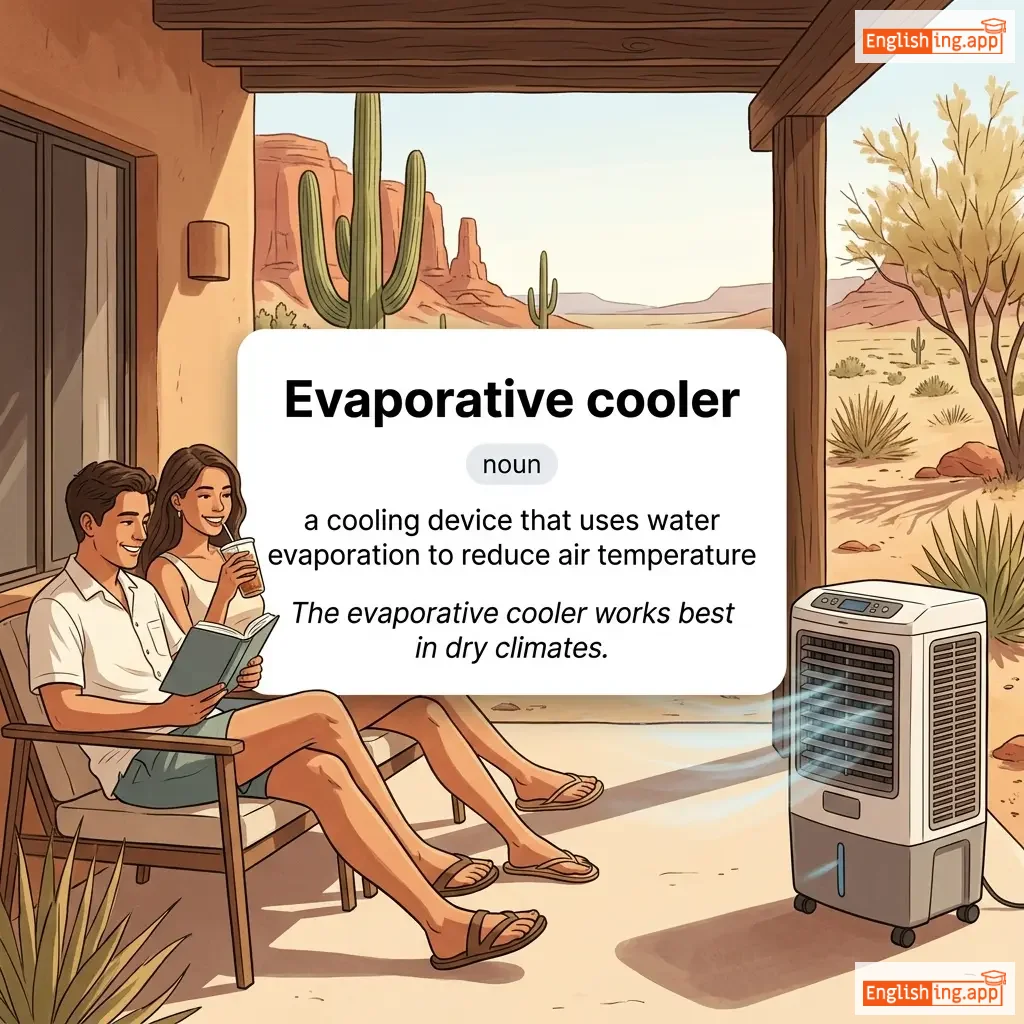
Evaporative cooler definition card — visual illustration of the meaning
noun
/ɪˈvæp.ər.ə.tɪv ˈkuː.lər/
蒸発冷却器 (jōhatsu reikyaku ki)

a cooling device that uses water evaporation to reduce air temperature

"The evaporative cooler works best in dry climates."

"蒸発冷却器は乾燥した気候で最も効果的に機能します。" (jōhatsu reikyaku ki wa kansō shita kikō de mottomo kōka-teki ni kinō shimasu)
evasion definition card — visual illustration of the meaning
noun
/ɪˈveɪʒən/
回避 (kaibi)

The act of avoiding something, especially by cleverness or trickery.

"He was arrested for tax evasion."
"彼は税金逃れで逮捕された。" (Kare wa zeikin nogare de taiho sareta.)
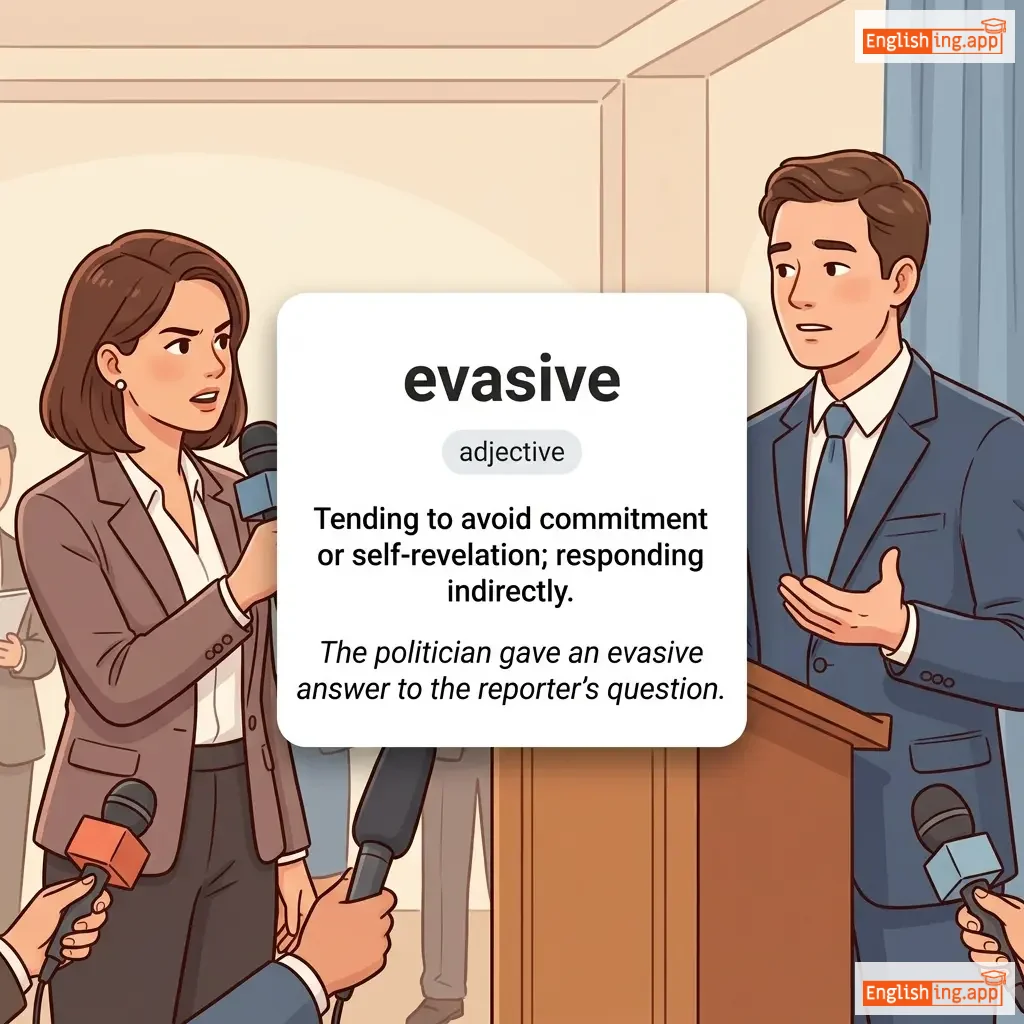
evasive definition card — visual illustration of the meaning
adjective
/ɪˈveɪsɪv/
回避的な (kaibiteki na)

Tending to avoid commitment or self-revelation; responding indirectly.

"The politician gave an evasive answer to the reporter's question."

"政治家は記者の質問に対して回避的な答えをしました。" (Seijika wa kisha no shitsumon ni taishite kaibiteki na kotae o shimashita.)
adjective, adverb
/ˈiː.vən/
平らな (tairana)

flat or smooth; equal in degree or amount; used to emphasize something surprising

"The road was surprisingly even after the storm."

"嵐の後、道路は驚くほど平坦でした。" (Arashi no ato, douro wa odoroku hodo tairan deshita.)
adjective
/ˌiːvənˈhændɪd/
公平な (kouhei na)

Fair and impartial; showing no bias or favoritism.

"The judge was praised for her evenhanded approach to the case."
"その裁判官は、公平なアプローチでその事件を扱ったことで称賛されました。" (Sono saiban-kan wa, kouhei na apurouchi de sono jiken wo atsukatta koto de shousan saremashita.)
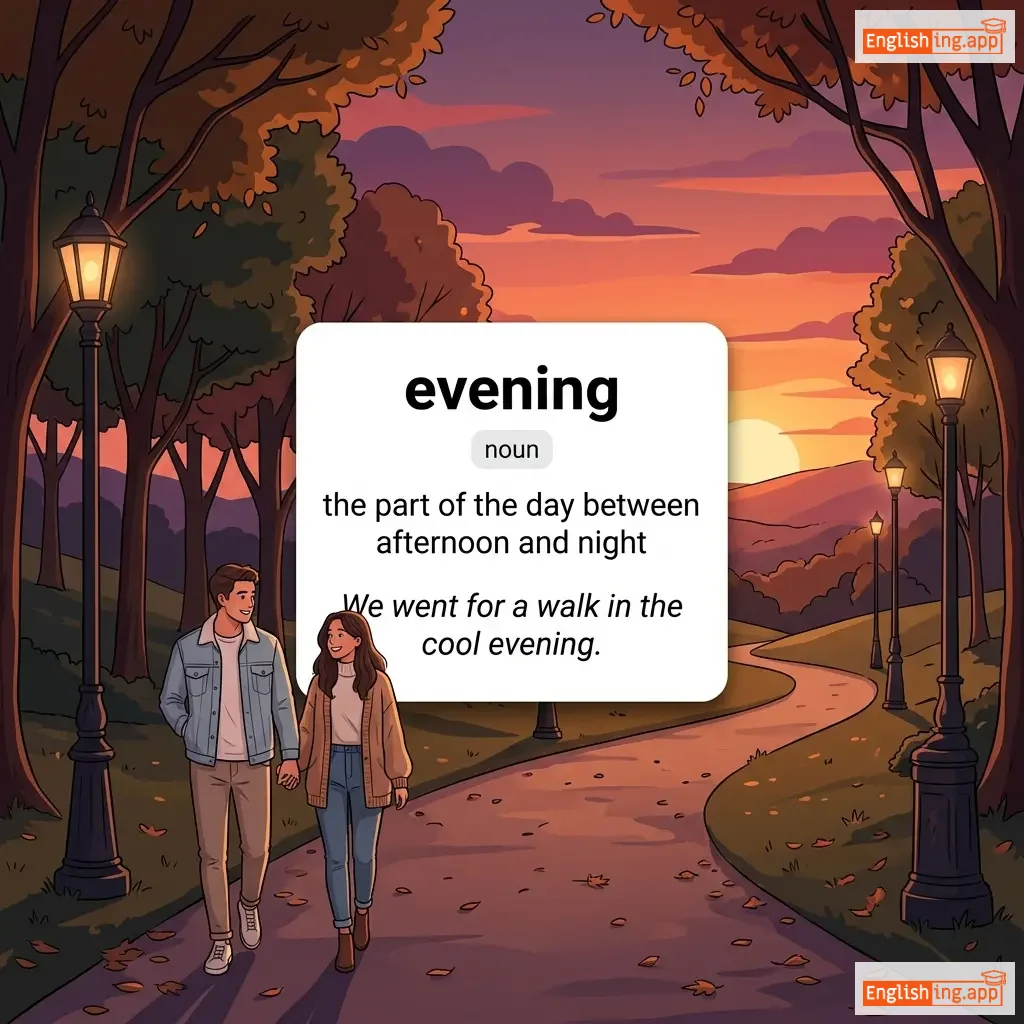
evening definition card — visual illustration of the meaning
noun
/ˈiːv.nɪŋ/
夕方 (yūgata)

the part of the day between afternoon and night

"We went for a walk in the cool evening."

"私たちは涼しい夕方に散歩に行きました。" (Watashitachi wa suzushī yūgata ni sanpo ni ikimashita.)
event definition card — visual illustration of the meaning
noun
/ɪˈvent/
出来事 (dekigoto)

something that happens, especially something important

"The concert was the biggest event of the year."
"コンサートは今年最大の出来事でした。" (Konsāto wa kotoshi saidai no dekigoto deshita.)
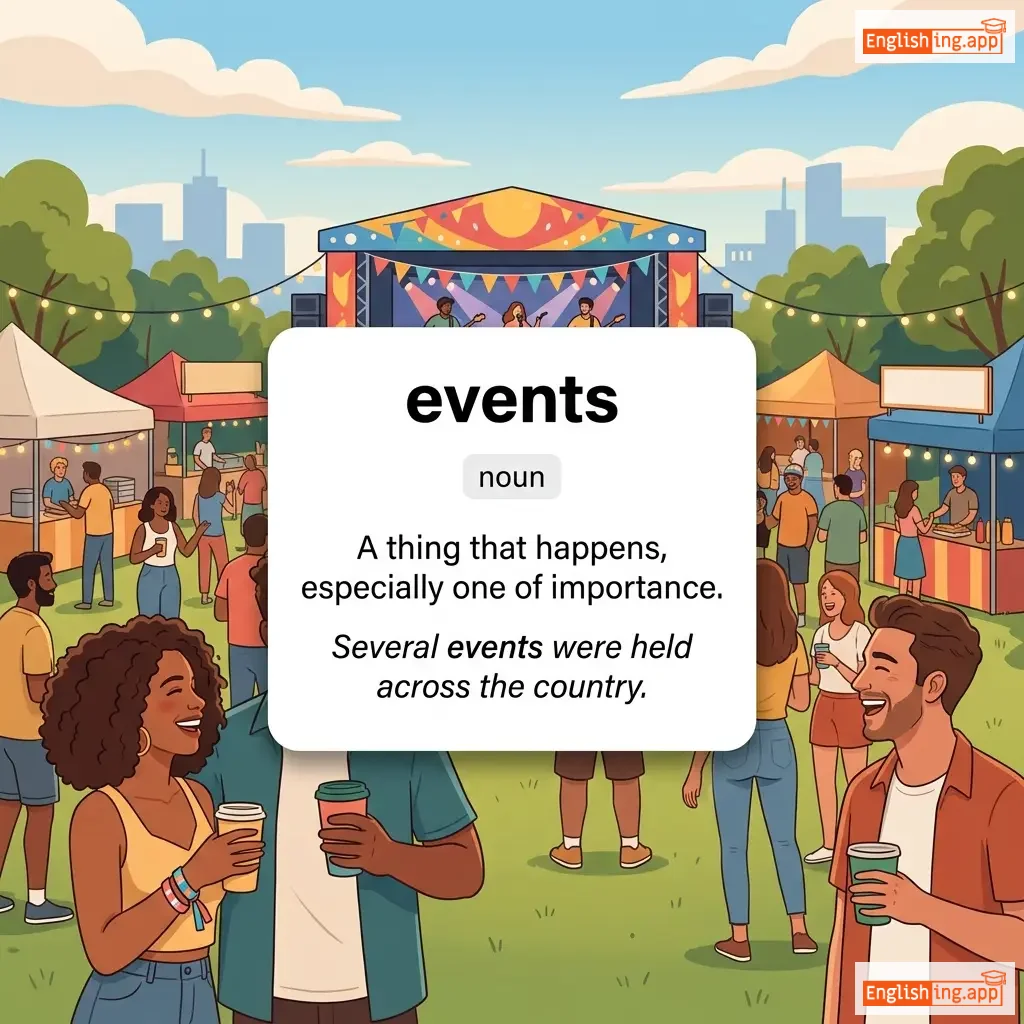
events definition card — visual illustration of the meaning
noun
ɪˈvɛnts
イベント (ibento)

A thing that happens, especially one of importance.

"Several events were held across the country."

"国内でいくつかのイベントが開催されました。" (Kokunai de ikutsuka no ibento ga kaisai saremashita.)
adjective
/ɪˈvɛntʃuəl/
最終的 (saishū-teki)

Happening at the end of a process or as the final result.

"His hard work led to his eventual success."

"彼の努力は最終的な成功に繋がった。" (Kare no doryoku wa saishū-teki na seikō ni tsunagatta.)
adverb
/ɪˈven.tʃu.ə.li/
結局 (kekkyoku)

in the end, especially after a long delay or series of problems

"He eventually finished his degree after many challenges."

"彼は多くの挑戦の後、結局学位を取得しました。" (Kare wa ōku no chōsen no ato, kekkyoku gakui o shutsuryoku shimashita.)
adverb
/ˈev.ər/
今まで (ima made)

at any time; always; continuously

"Have you ever been to London?"

"ロンドンに行ったことがありますか?" (Rondon ni itta koto ga arimasu ka?)
adjective
/ˈevər ˈlæstɪŋ/
永遠の; 永続的な; (eien no; eizokuteki na)

eternal; permanent; enduring forever

"Their love is ever-lasting and will never fade."
"彼らの愛は永遠で、決して色あせることはありません。" (karera no ai wa eien de, kesshite iroaseru koto wa arimasen.)
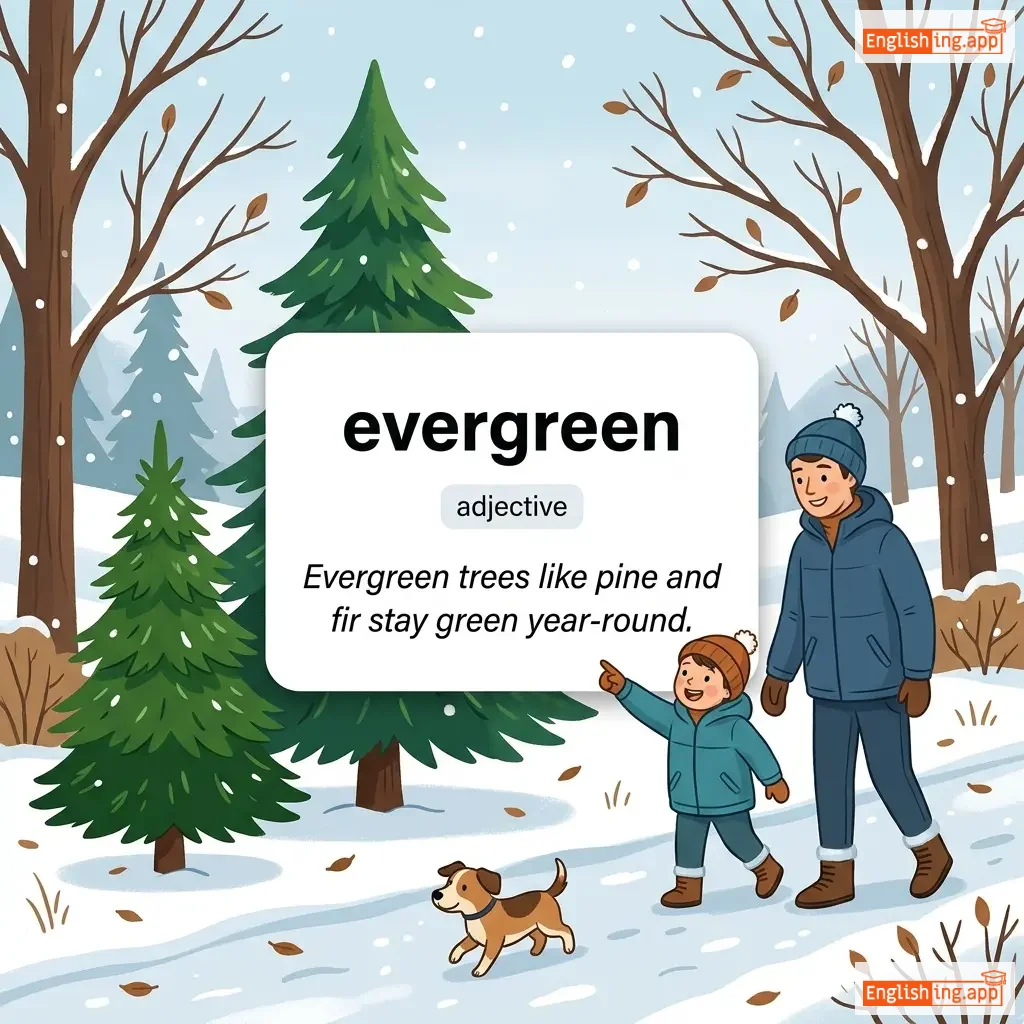
evergreen definition card — visual illustration of the meaning
adjective
/ˈɛv.ə.ɡriːn/
常緑 (jōryoku)

Remaining green and functional throughout the year; not shedding leaves seasonally.

"Evergreen trees like pine and fir stay green year-round."

"松やモミの木のような常緑樹は一年中緑を保ちます。" (Matsu ya momi no ki no yō na jōryokujū wa ichinenjū midori wo tamochimasu.)
adjective
/ˌɛvərˈlæstɪŋ/
永遠の (eien no)

Lasting forever or for an indefinitely long time.

"The poet wrote about his everlasting love for nature."

"詩人は自然に対する永遠の愛について書きました。" (Shijin wa shizen ni taisuru eien no ai ni tsuite kakimashita.)
verb
/ɪˈvɜːrt/
外向きにひっくり返す (soto-muki ni hikkurikaesu)

To turn inside out or outward.

"The surgeon had to evert the eyelid during the procedure."

"外科医は手術中にまぶたをひっくり返さなければなりませんでした。" (Geka-i wa shujutsu-chū ni mabuta o hikkurikasanakereba narimasen deshita.)
Every definition card — visual illustration of the meaning
determiner
/ˈɛvri/
すべて (subete)

used to refer to all members of a group without exception

"She reads every book she can find."

"彼女は見つけたすべての本を読んでいます。" (Kanojo wa mitsuketa subete no hon o yondeimasu.)
pronoun
/ˈɛvribɒdi/
(minna)

all people; everyone

"Everybody enjoyed the party."

"皆がパーティーを楽しんでいました。" (Minna ga pātii o tanoshinde imashita.)
adjective
/ˈɛvrideɪ/
日常 (nichijou)

common or ordinary; occurring daily

"These shoes are perfect for everyday use."

"これらの靴は日常使いに最適です。" (Korera no kutsu wa nichijou tsukai ni saiteki desu.)
pronoun
/ˈɛvrɪwʌn/
みんな (minna)

every person; all people

"Everyone must bring their own lunch."

"みんな自分のランチを持ってこなければならない。" (Minna jibun no ranchi o mottekonakereba naranai.)
pronoun
/ˈɛvrɪθɪŋ/
すべて (subete)

all things; the whole lot

"He packed everything in his suitcase."

"彼はすべてをスーツケースに詰め込んだ。" (Kare wa subete o sūtsukēsu ni tsumekonda.)
adverb
/ˈɛv.ri.wɛər/
どこでも (dokodemo)

in or to all places

"Tourists can be seen everywhere in the city during summer."

"夏の間、観光客は都市のどこでも見かけることができます。" (Natsu no aida, kankōkyaku wa toshi no dokodemo mikakeru koto ga dekimasu.)
verb
/ɪˈvɪkt/
立ち退かせる (tachinokaseru)

To expel someone from a property, usually by legal process.

"The landlord decided to evict the tenants for not paying rent."
"家主は家賃未払いでテナントを立ち退かせることに決めました。" (Iyanushi wa yachin mibaraide tenant wo tachinokaseru koto ni kimemashita.)
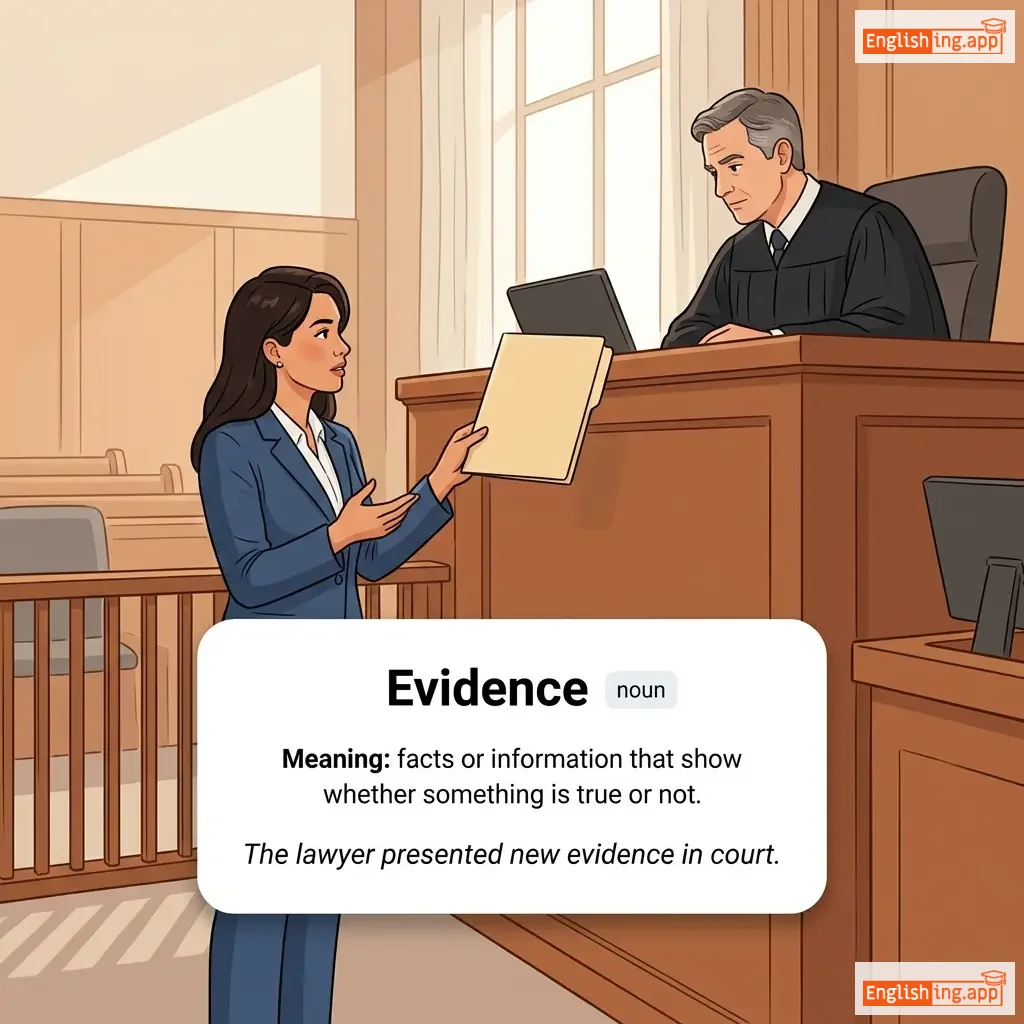
Evidence definition card — visual illustration of the meaning
noun
/ˈɛv.ɪ.dəns/
証拠 (shōko)

facts or information that show whether something is true or not

"The lawyer presented new evidence in court."

"弁護士は法廷で新しい証拠を提出しました。" (Bengoshi wa hotei de atarashī shōko o teishutsu shimashita.)
evident definition card — visual illustration of the meaning
adjective
/ˈɛvɪdənt/
明白 (meihaku)

clearly seen or understood; obvious

"It was evident that she was upset."

"それは彼女が動揺していることが明らかでした。" (Sore wa kanojo ga dōyō shite iru koto ga akiraka deshita.)
adjective
/ˌɛvɪˈdɛnʃəl/
証拠の (shōko no)

relating to or providing evidence

"The lawyer presented evidential support for her claims."
"弁護士は彼女の主張に対する証拠のサポートを提供しました。" (Bengoshi wa kanojo no shuchō ni taisuru shōko no sapōto o teikyō shimashita.)
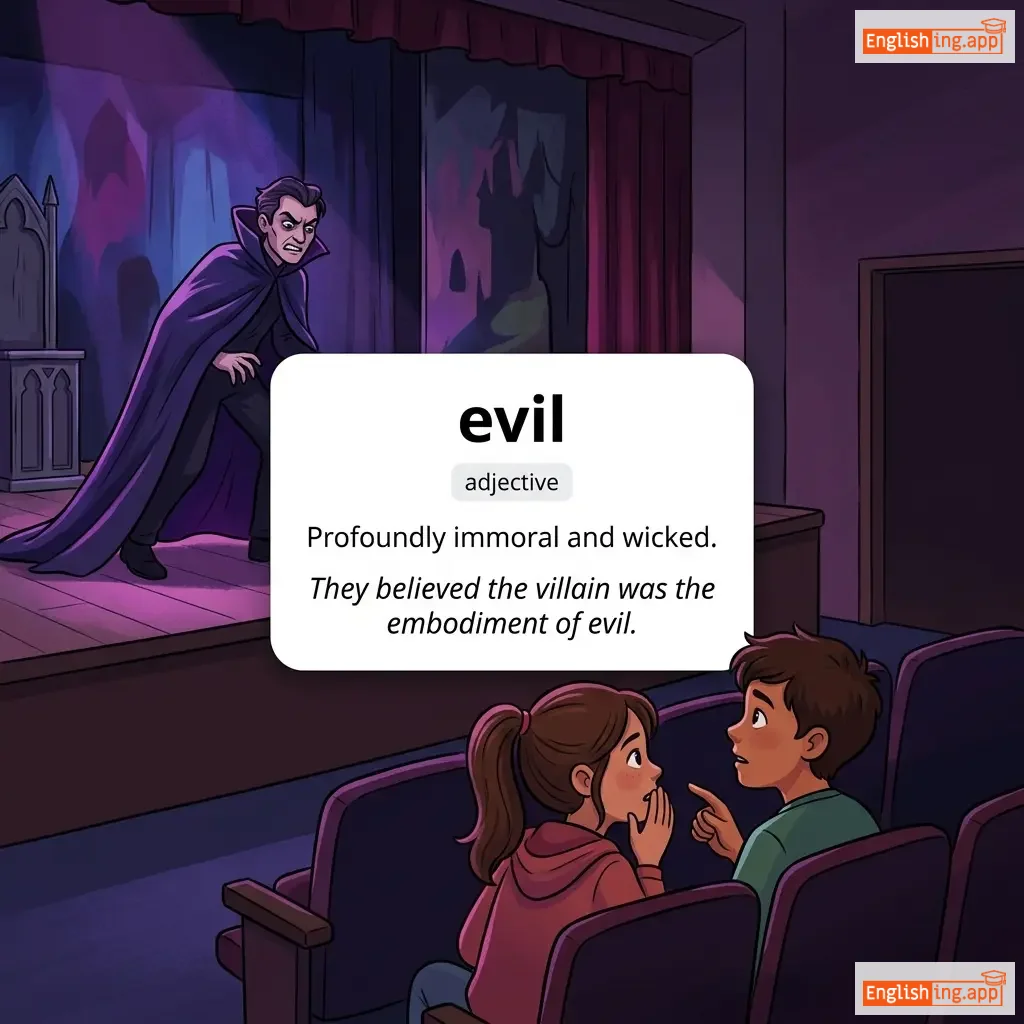
evil definition card — visual illustration of the meaning
adjective
/ˈiːvəl/
邪悪 (jaaku)

Profoundly immoral and wicked.

"They believed the villain was the embodiment of evil."
"彼らは悪役が邪悪の具現であると信じていた。" (Karera wa akuyaku ga jaaku no gugen de aru to shinjite ita.)
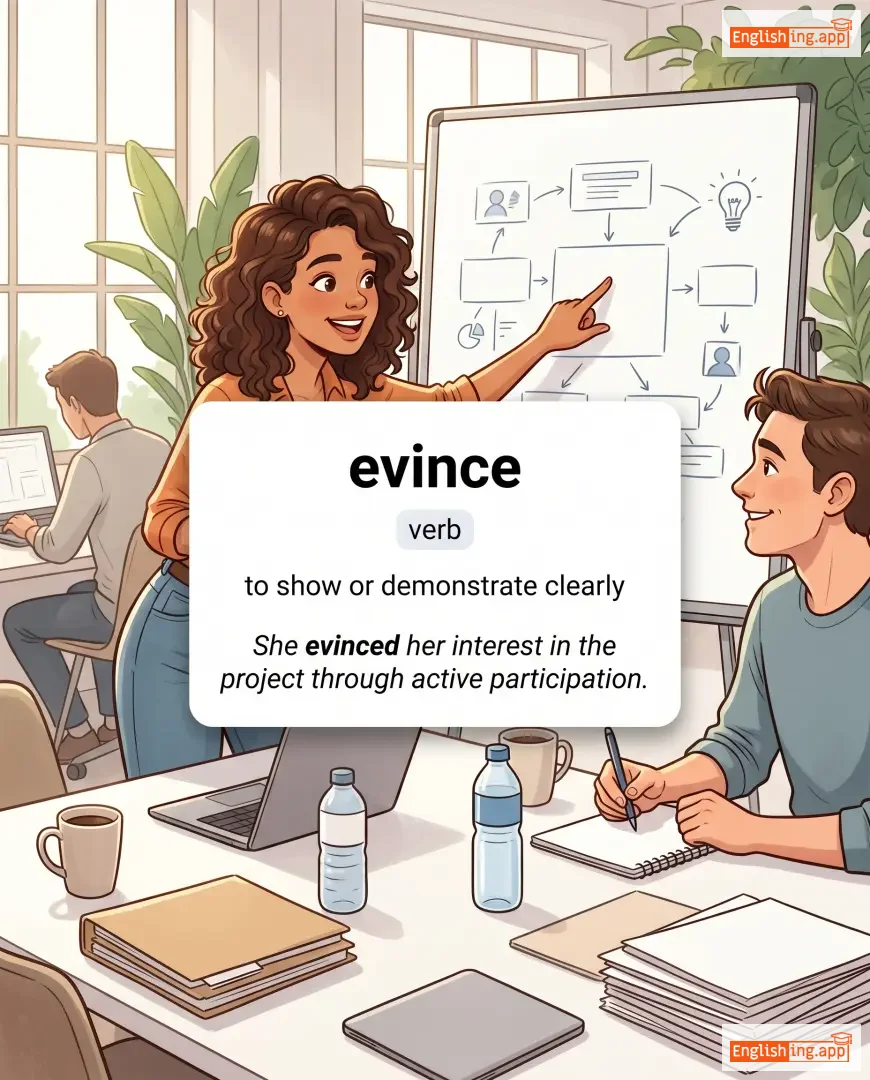
evince definition card — visual illustration of the meaning
verb
/ɪˈvɪns/
示す (shimesu)

to show or demonstrate clearly

"She evinced her interest in the project through active participation."

"彼女は積極的な参加を通じてそのプロジェクトに対する関心を示した。" (Kanojo wa sekkyokuteki na sanka wo toshite sono purojekuto ni taisuru kanshin wo shimeshita.)
verb
/ɪˈvɪsəˌreɪt/
臓器を取り除く、破壊する (zōki o torinozoku, hakai suru)

to remove the internal organs of; to deprive of essential content

"The critics eviscerated the movie for its weak storyline."
"批評家たちはその映画の弱いストーリーラインに対して破壊しました。" (Hihyōka-tachi wa sono eiga no yowai sutōrīrain ni taishite hakai shimashita.)
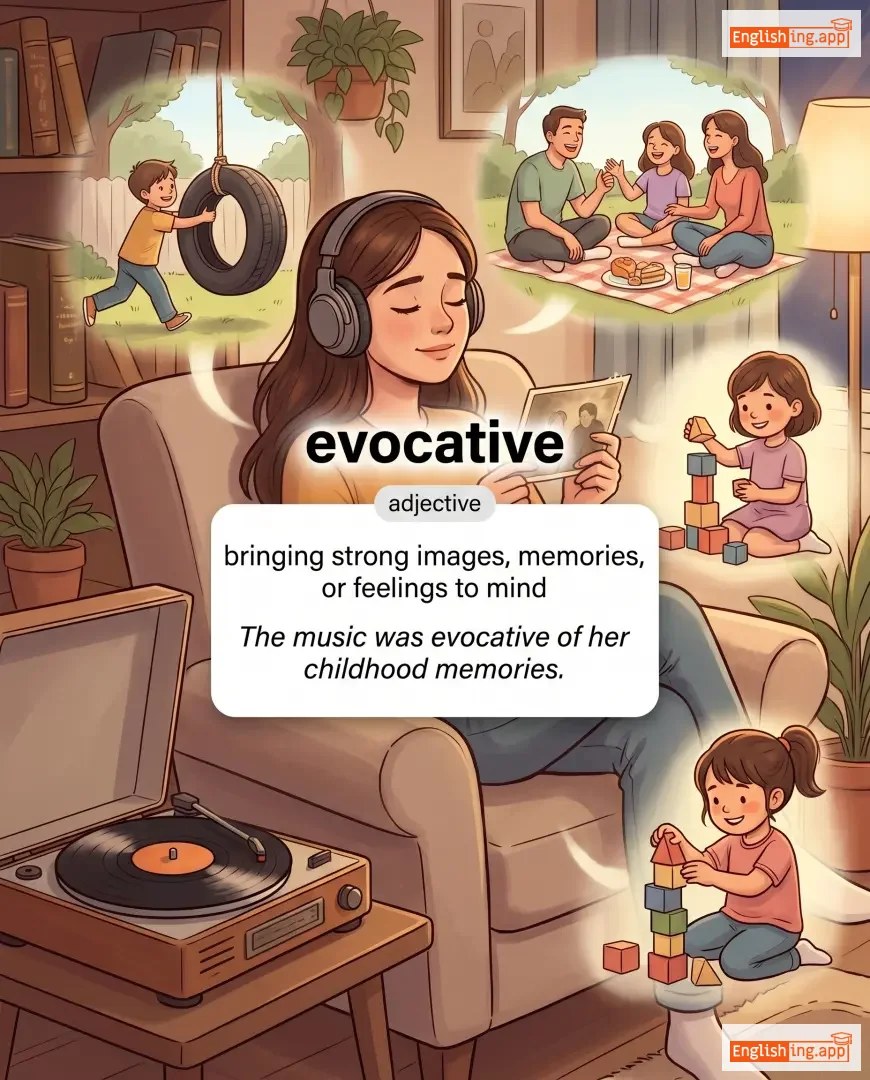
evocative definition card — visual illustration of the meaning
adjective
/ɪˈvɒkətɪv/
呼び起こす (yobikokosu)

bringing strong images, memories, or feelings to mind

"The music was evocative of her childhood memories."

"その音楽は彼女の子供時代の記憶を呼び起こしました。" (Sono ongaku wa kanojo no kodomojidai no kioku o yobikokoshimashita.)
verb
/ɪˈvoʊk/
呼び起こす (yobikokosu)

to bring a feeling, memory, or image into the mind

"The old song evoked memories of her childhood."

"その古い歌は彼女の子供時代の思い出を呼び起こしました。" (Sono furui uta wa kanojo no kodomojidai no omoide o yobikokoshimashita.)
noun
/ˌɛvəˈluːʃən/
進化 (shinka)

the gradual development of something, especially from a simple to a more complex form

"The theory of evolution explains how species change over time."

"進化論は、種が時間とともにどのように変化するかを説明しています。" (Shinkaron wa, shu ga jikan to tomo ni dono you ni henka suru ka wo setsumei shiteimasu.)