語彙集

英単語辞書 | 単語の意味、定義、例文

verb
/ɪkˈskluːd/
除外する (jogai suru)

To deliberately leave out or prevent someone or something from being included.

"The list excludes temporary workers."

"リストは臨時労働者を除外しています。" (Risutowa rinji rōdōsha o jogai shiteimasu.)
adjective
/ɪkˈskluːdɪd/
除外された; 追放された (jogai sareta; tsuihō sareta)

not included; left out; barred from participation

"He felt excluded from the group activities and conversations."

"彼はグループ活動や会話から除外されたと感じていた。" (Kare wa gurūpu katsudō ya kaiwa kara jogai sareta to kanjite ita.)
noun
/ɪkˈskluːʒən/
排除 (haijo)

The process or state of being left out or denied access.

"The policy led to the exclusion of certain groups."

"その政策は特定のグループの排除を招いた。" (Sono seisaku wa tokutei no gurūpu no haijo o manaita.)
adjective
/ɪkˈskluːsɪv/
特定の人物、グループ、またはエリアに制限された; 他の人と共有しない (tokutei no jinbutsu, gurūpu, matawa eria ni seigen sareta; hoka no hito to kyōyū shinai)

restricted to a particular person, group, or area; not shared with others

"The hotel offers exclusive access to a private beach."

"ホテルはプライベートビーチへのエクスクルーシブなアクセスを提供します。" (Hoteru wa puraibēto bīchi e no ekusukurūshibu na akusesu o teikyō shimasu.)
adverb
/ɪkˈskluːsɪvli/
独占的に (dokusenteki ni)

only; not shared with others

"This service is available exclusively to premium members."

"このサービスはプレミアムメンバーのみが利用できます。" (Kono sābisu wa puremiamu menbā nomi ga riyō dekimasu.)
verb
/ɛkˈskɔːrieɪt/
厳しく批判する (kibishiku hihan suru)

To strongly criticize someone; to denounce severely.

"The critic excoriated the film for its poor script."

"批評家はその映画の悪い脚本を厳しく批判しました。" (Hihyōka wa sono eiga no warui kyakuhon o kibishiku hihan shimashita.)
noun
/ɪkˈskrɛsəns/
異常な成長 (ijō na seichō)

An abnormal outgrowth or lump, often considered unattractive.

"The building was considered an excrescence on the landscape."

"その建物は風景の中で異常な成長と見なされました。" (Sono tatemono wa fūkei no naka de ijō na seichō to minasaremashita.)
verb
/ɪkˈskriːt/
排泄する (haisetsu suru)

to eliminate waste matter from the body

"Humans excrete carbon dioxide through breathing."

"人間は呼吸を通じて二酸化炭素を排出します。" (Ningen wa kokyū o tōjite ni sankatanso o haishutsu shimasu.)
noun
/ɪkˈskriːʃən/
排泄 (haisetsu)

the process of eliminating waste matter from the body

"Excretion is vital for maintaining a healthy body."

"排泄は健康な体を維持するために不可欠です。" (Haisetsu wa kenkou na karada o iji suru tame ni fukaketsu desu.)
verb
/ɪkˈskruːʃieɪt/
苦しめる (kurushimeru)

to cause intense pain or suffering

"The injury excruciated him with unbearable pain."

"その怪我は彼を耐え難い痛みに苦しめました。" (Sono kega wa kare wo taegatai itami ni kurushimemashita.)
adjective
/ɪkˈskruːʃieɪtɪŋ/
耐えられない痛み (taerarenai itami)

causing extreme physical or mental pain

"She was in excruciating pain after the accident."

"彼女は事故の後、耐えられない痛みを感じていた。" (Kanojo wa jiko no ato, taerarenai itami o kanjite ita.)
exculpate definition card — visual illustration of the meaning
verb
/ˈɛkskʌlpeɪt/
免罪する (menzai suru)

to show or declare that someone is not guilty of wrongdoing

"The lawyer worked hard to exculpate his client."

"弁護士はクライアントを無罪にするために懸命に働いた。" (Bengoshi wa kuraianto o muzai ni suru tame ni kenmei ni hataraita.)
noun
/ɪkˈskɜːʒən/
遠足 (ensoku)

A short journey or trip, especially one taken for leisure or educational purposes.

"The students went on an excursion to the national museum."

"学生たちは国立博物館への遠足に行きました。" (Gakutō-tachi wa kokuritsu hakubutsukan e no ensoku ni ikimashita.)
adjective
/ɪkˈskɜːsɪv/
逸脱した (itsudatsu shita)

Tending to digress or wander; moving away from the main subject.

"His excursive lecture left the students confused about the main topic."

"彼の逸脱した講義は、学生たちを主題について混乱させました。" (Kare no itsudatsu shita kougi wa, gakuseitachi wo shudai ni tsuite konran sasemashita.)
adjective
/ɪkˈskjuːzəbl/
許容可能な (kyoryō kanō na)

Able to be forgiven or justified.

"Her mistake was excusable given the circumstances."

"彼女の間違いは状況を考慮すれば許容可能でした。" (Kanojo no machigai wa jōkyō o kōryo sureba kyoryō kanō deshita.)
verb
/ɪkˈskjuːz/
許す, 言い訳 (yurusu, iiwake)

to forgive someone for doing something wrong or to justify an action

"Please excuse my lateness; there was heavy traffic."

"遅れてすみません、渋滞がひどかったです。" (Okurete sumimasen, jūtai ga hidokatta desu.)
execrable definition card — visual illustration of the meaning
adjective
/ˈeksɪkrəbl/
ひどい (hidoi)

Extremely bad or unpleasant.

"The movie was so execrable that many people left the theater early."

"その映画はひどすぎて、多くの人々が早く映画館を出て行きました。" (Sono eiga wa hido sugite, ōku no hitobito ga hayaku eigakan o dete ikimashita.)
verb
/ˈeksɪkreɪt/
憎む (nikumu)

To feel or express great loathing or hatred for something.

"The community execrated the corrupt politician."

"コミュニティは腐敗した政治家を憎んだ。" (Komyuniti wa fuhai shita seijika o nikunda.)
noun
/ˌɛksɪˈkreɪʃən/
呪い (noroi)

An act of cursing or denouncing someone or something with hatred.

"The dictator’s name was spoken with execration after his fall."

"独裁者の名前は、彼の転落後に呪いの言葉と共に言われました。" (Dokusai-sha no namae wa, kare no tenraku-go ni noroi no kotoba to tomoni iwaremashita.)
execute definition card — visual illustration of the meaning
verb
/ˈɛksɪkjuːt/
実行する (jikkou suru)

To carry out a plan, order, or action; to perform or put into effect.

"The company plans to execute its new strategy next year."

"その会社は来年、新しい戦略を実行する予定です。" (Sono kaisha wa rainen, atarashī senryaku wo jikkou suru yotei desu.)
noun
/ˌɛksɪˈkjuːʃən/
実行、遂行 (jikkou, suikou)

the act of carrying out a plan, order, or legal sentence

"The success of a project depends on its proper execution."

"プロジェクトの成功はその適切な実行に依存します。" (Purojekuto no seikō wa sono tekisetsuna jikkō ni izon shimasu.)
noun
/ˌɛksɪˈkjuːʃənər/
処刑人 (shokeinin)

A person who carries out a death sentence by execution.

"The executioner prepared the gallows for the condemned prisoner."

"処刑人は死刑囚のために絞首台を準備した。" (Shokeinin wa shikeishuu no tame ni koushutai wo junbi shita.)
executive definition card — visual illustration of the meaning
noun/adjective
/ɪɡˈzɛkjətɪv/
経営幹部 (keiei kanbu)

A person with senior managerial responsibility in a business; relating to the execution of plans or laws.

"She works as an executive in a multinational company."

"彼女は多国籍企業でエグゼクティブとして働いています。" (Kanojo wa takokuseki kigyō de eguzekutibu to shite hataraiteimasu.)
noun
/ɪɡˈzɛkjətər/
遺言執行者 (yigon shikkōsha)

A person appointed to carry out the terms of someone's will after their death.

"The executor managed the estate according to the deceased’s wishes."

"遺言執行者は故人の意志に従って財産を管理しました。" (Yigon shikkōsha wa kojin no ishi ni shitagatte zaisan o kanri shimashita.)
noun
/ˌɛksəˈdʒiːsɪs/
注解 (chūkai)

A critical explanation or interpretation of a text, especially a religious scripture.

"The professor gave a detailed exegesis of the biblical passage."

"教授は聖書の一節の詳細な注解を提供した。" (Kyojū wa seisho no issetsu no shōsai na chūkai o teikyō shita.)
noun
/ɪɡˈzɛmplɑːr/
模範 (mohan)

A model or pattern to be copied or imitated.

"She is an exemplar of kindness and generosity."
"彼女は親切と寛大さの模範です。" (Kanojo wa shinsetsu to kandai sa no mohan desu.)
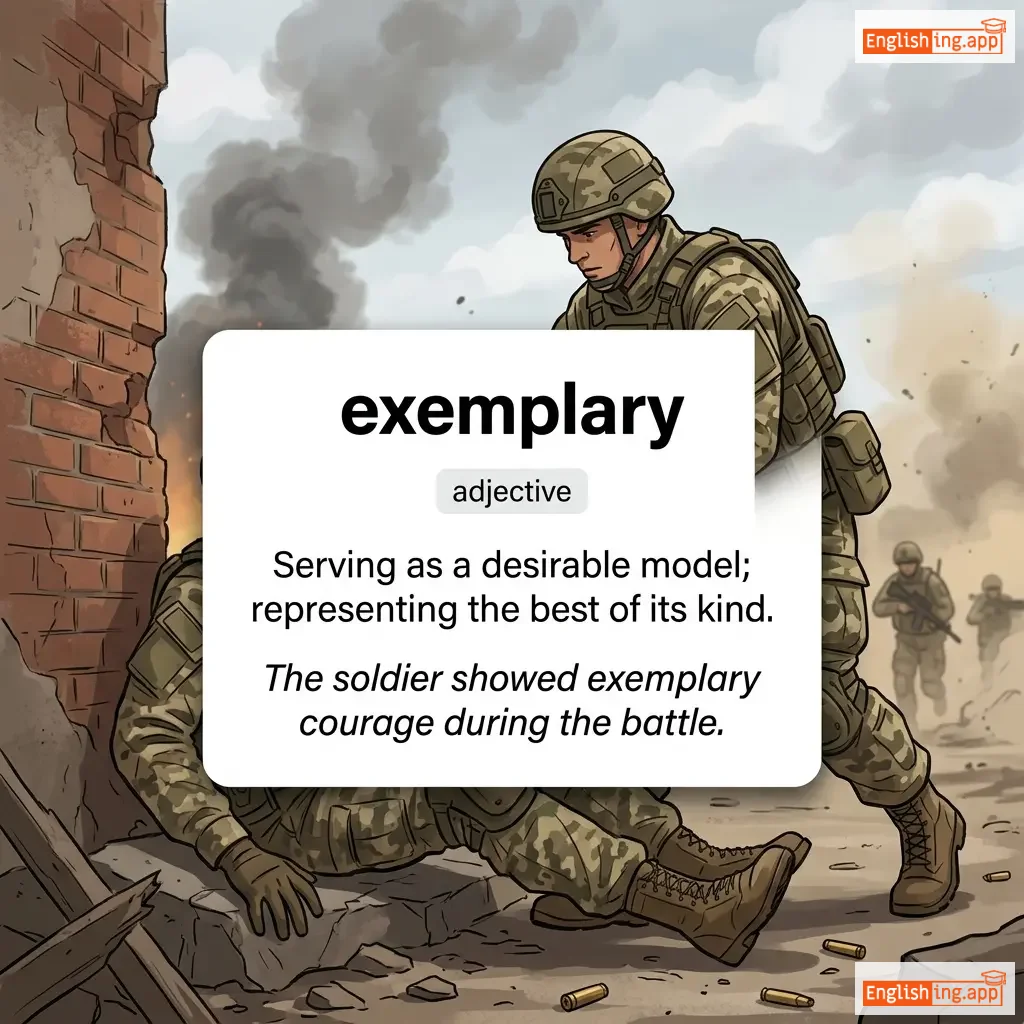
exemplary definition card — visual illustration of the meaning
adjective
/ɪɡˈzɛmpləri/
模範的な (mohanteki na)

Serving as a desirable model; representing the best of its kind.

"The soldier showed exemplary courage during the battle."
"兵士は戦闘中に模範的な勇気を示しました。" (Heishi wa sentō-chū ni mohan-teki na yūki o shimeshimashita.)
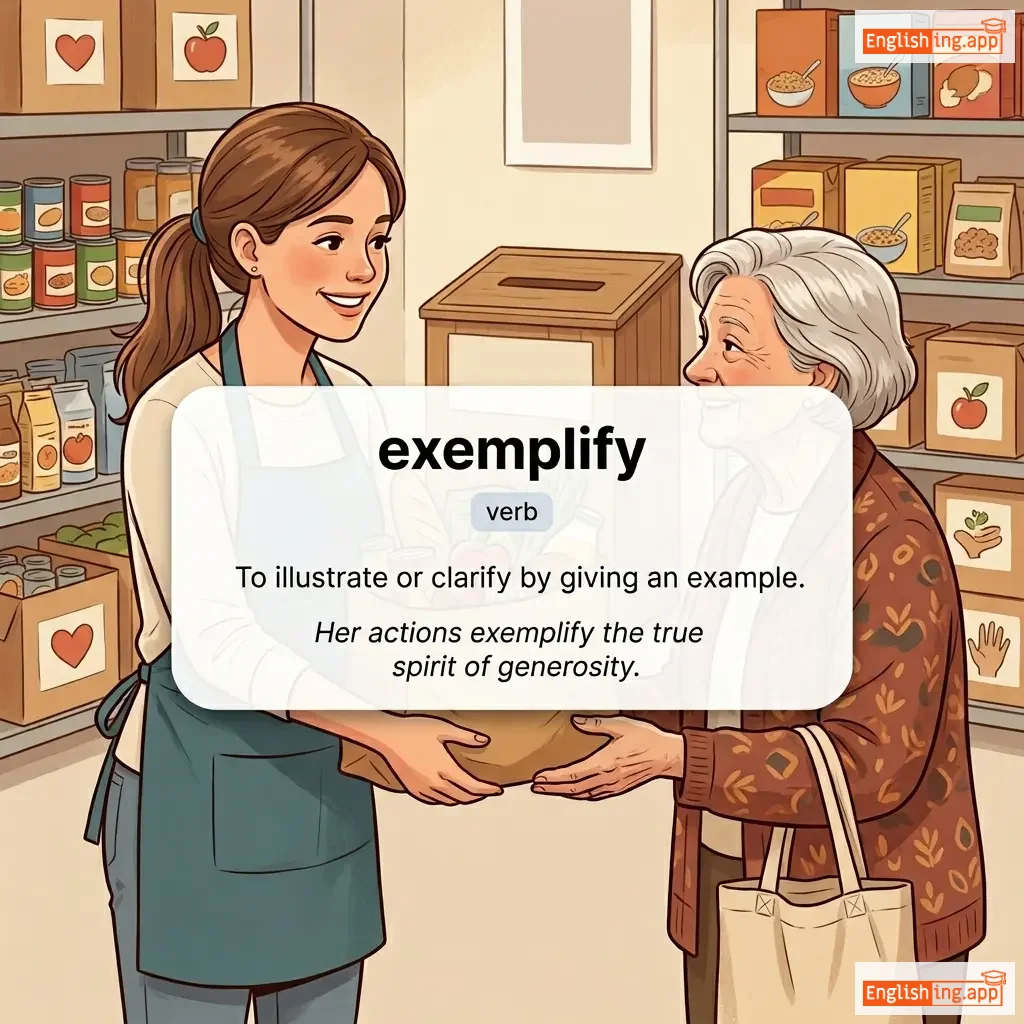
exemplify definition card — visual illustration of the meaning
verb
/ɪɡˈzɛmplɪfaɪ/
例を挙げて説明する (rei wo agete setsumei suru)

To illustrate or clarify by giving an example.

"Her actions exemplify the true spirit of generosity."

"彼女の行動は、寛大さの真の精神を例示しています。" (Kanojo no kōdō wa, kandai-sa no shin no seishin o reiji shiteimasu.)
adjective, verb
/ɪɡˈzɛmpt/
免除 (menjo)

Free from an obligation or liability imposed on others.

"Students with high grades are exempt from the final exam."
"優秀な成績を収めた学生は、最終試験を免除されます。" (Yūshū na seiseki o osameta gakusei wa, saishū shiken o menjo saremasu.)
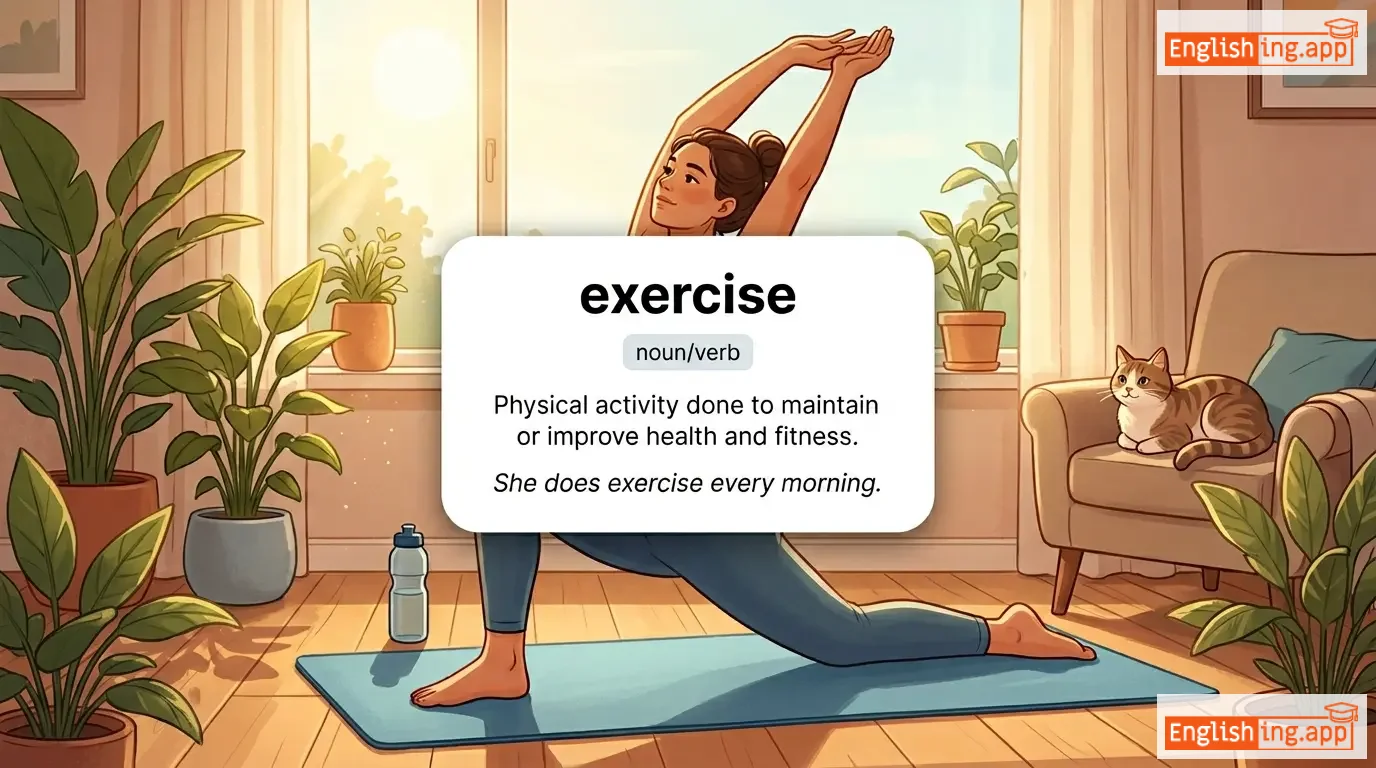
exercise definition card — visual illustration of the meaning
noun/verb
/ˈɛksərsaɪz/
運動 (undou)

Physical activity done to maintain or improve health and fitness.

"She does exercise every morning."

"彼女は毎朝運動をします。" (kanojo wa mai asa undou wo shimasu.)
exert definition card — visual illustration of the meaning
verb
/ɪɡˈzɜːrt/
努力する (doryoku suru)

to apply effort, force, or influence

"He had to exert himself to finish the project on time."
"彼はプロジェクトを時間通りに終わらせるために努力しなければなりませんでした。" (Kare wa purojekuto o jikan-dōri ni owaraseru tame ni doryoku shinakereba narimasen deshita.)
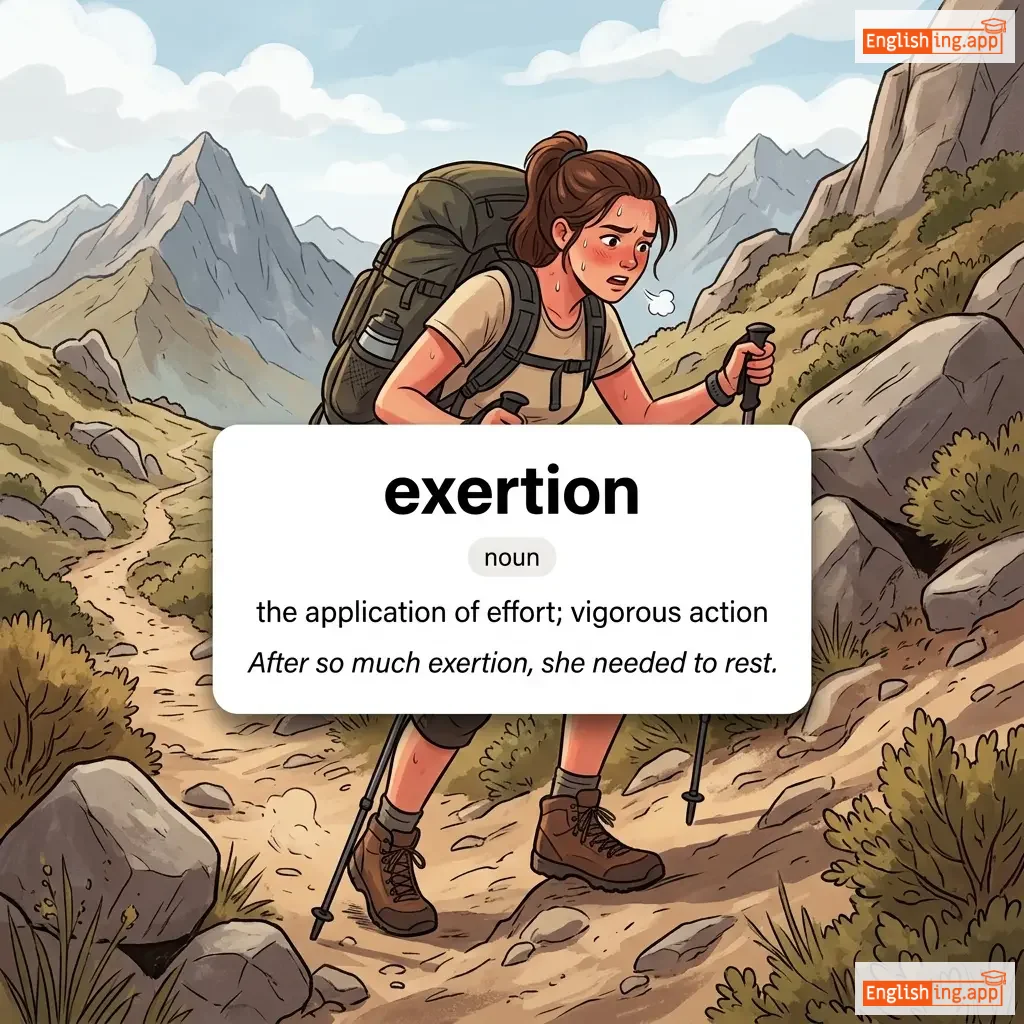
exertion definition card — visual illustration of the meaning
noun
/ɪɡˈzɜːrʃən/
努力 (doryoku)

the application of effort; vigorous action

"After so much exertion, she needed to rest."
"これほどの努力の後、彼女は休む必要があった。" (Kore hodo no doryoku no ato, kanojo wa yasumu hitsuyō ga atta.)
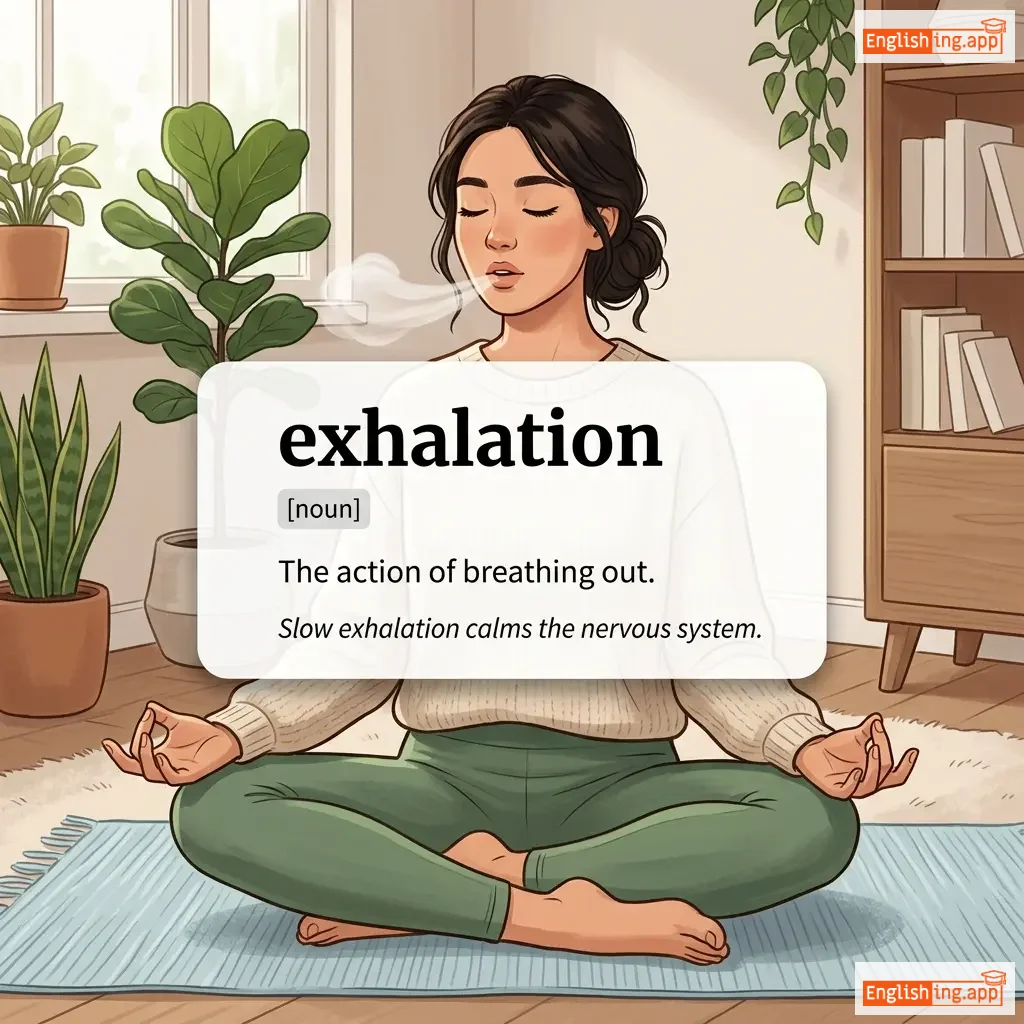
exhalation definition card — visual illustration of the meaning
noun
/ˌɛks.həˈleɪ.ʃən/
息を吐くこと (iki wo haku koto)

The action of breathing out.

"Slow exhalation calms the nervous system."

"ゆっくりした息を吐くことは神経系を落ち着かせます。" (Yukkuri shita iki wo haku koto wa shinkei-kei wo ochitsukasemasu.)
verb
/ɛksˈheɪl/
息を吐く (iki wo haku)

to breathe out air from the lungs

"She slowly exhaled after holding her breath."

"彼女は息を止めた後、ゆっくりと息を吐き出した。" (Kanojo wa iki wo tometa ato, yukkuri to iki wo haki dashita.)
verb
/ɪɡˈzɔːst/
疲れさせる (tsukaresaseru)

to tire out completely; to use up resources

"The long journey exhausted the children."
"長い旅が子供たちを疲れさせた。" (Nagai tabi ga kodomotachi o tsukaresaseta.)
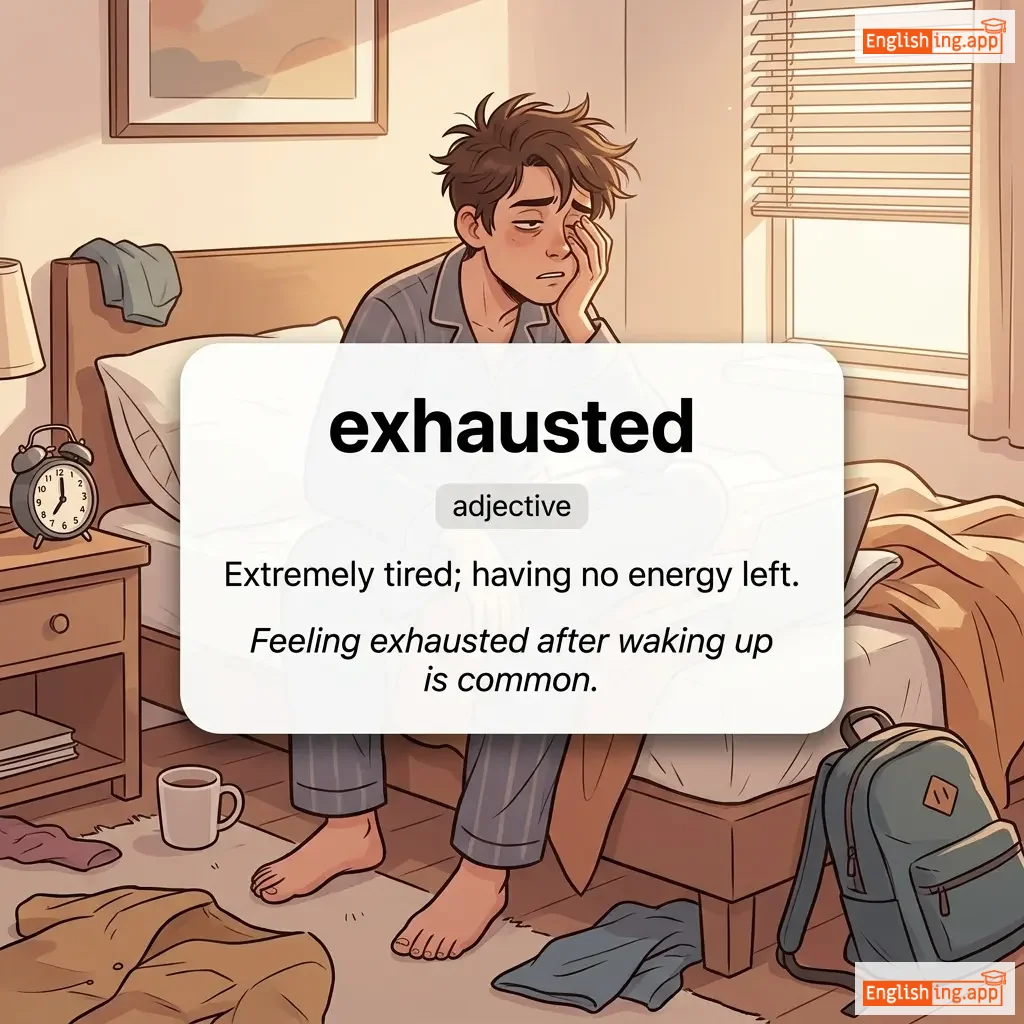
exhausted definition card — visual illustration of the meaning
adjective
/ɪɡˈzɔː.stɪd/
疲れ果てた (tsukare hateta)

Extremely tired; having no energy left.

"Feeling exhausted after waking up is common."

"目が覚めた後に疲れ果てたと感じるのはよくあることです。" (me ga sameta ato ni tsukare hateta to kanjiru no wa yoku aru koto desu)
adjective
/ɪɡˈzɔːstɪbəl/
使い果たせる (tsukaihataseru)

able to be used up completely; not infinite

"Coal and oil are exhaustible resources."
"石炭と石油は使い果たせる資源です。" (Sekitan to sekiyu wa tsukaihataseru shigen desu.)
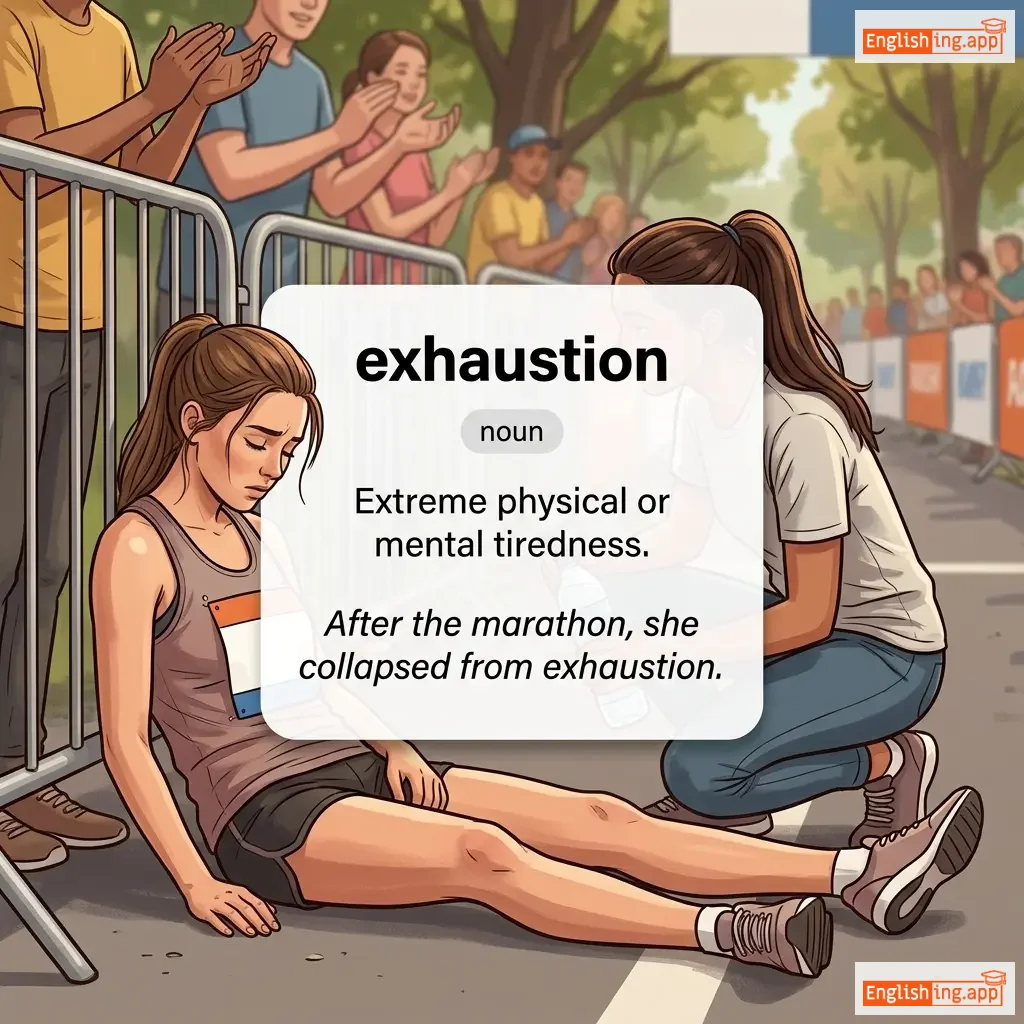
exhaustion definition card — visual illustration of the meaning
noun
/ɪɡˈzɔːstʃən/
疲労 (hirou)

Extreme physical or mental tiredness.

"After the marathon, she collapsed from exhaustion."

"マラソンの後、彼女は疲労で倒れました。" (Marason no ato, kanojo wa hirou de taoremashita.)
adjective
/ɪɡˈzɔːstɪv/
包括的で完全な (hōkatsuteki de kanzen na)

Fully comprehensive and including all possibilities.

"The report provides an exhaustive analysis of the issue."
"その報告書は問題に関する包括的な分析を提供します。" (Sono hōkokusho wa mondai ni kansuru hōkatsuteki na bunseki o teikyō shimasu。)
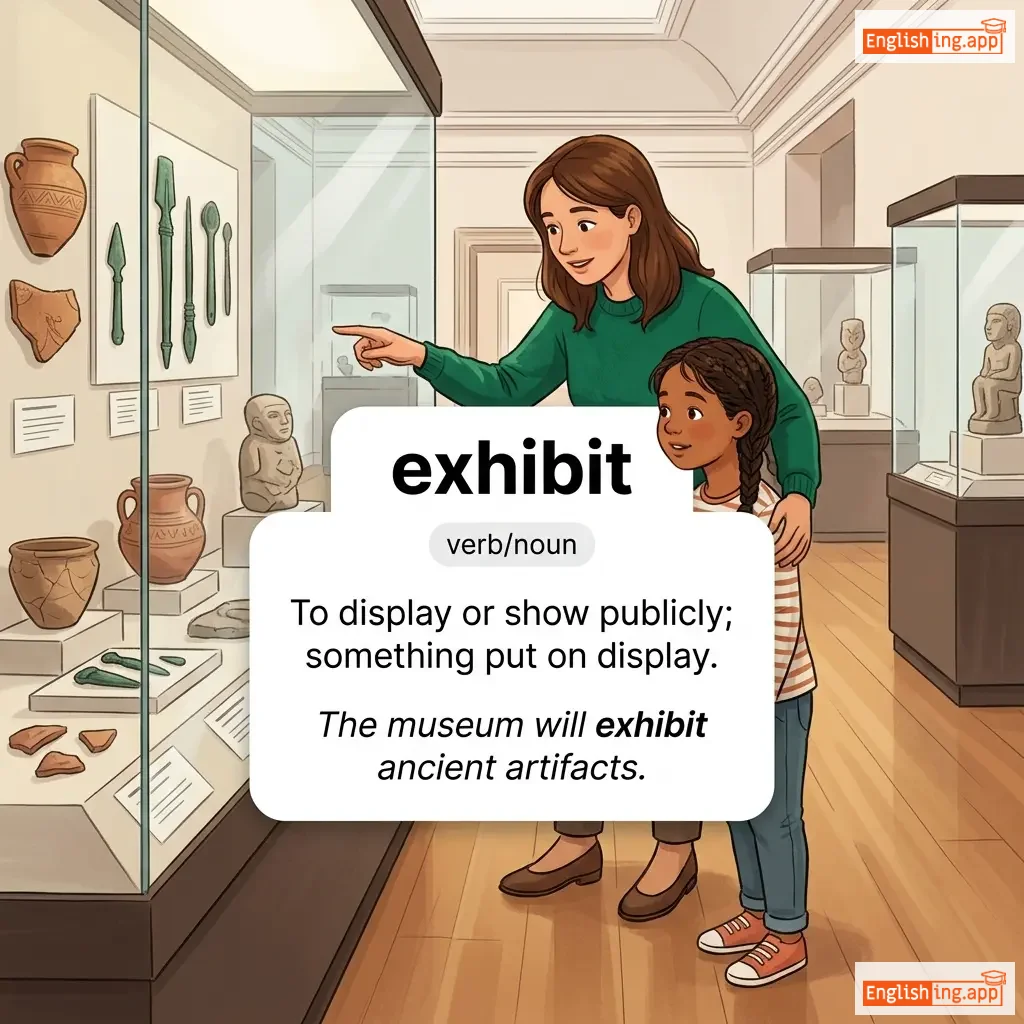
exhibit definition card — visual illustration of the meaning
verb/noun
/ɪɡˈzɪbɪt/
展示する (tenji suru)

To display or show publicly; something put on display.

"The museum will exhibit ancient artifacts."

"博物館は古代の遺物を展示する予定です。" (Hakubutsukan wa kodai no ibutsu wo tenji suru yotei desu.)
noun
/ˌɛksɪˈbɪʃən/
展示会 (zenshikai)

a public display of works of art, products, or other items of interest

"The art exhibition attracted thousands of visitors."

"アート展示会は何千人もの来場者を魅了しました。" (Aato zenshikai wa nan-sen nin mo no raijō-sha o miryō shimashita.)
verb
/ɪɡˈzɪləreɪt/
興奮させる (koufun saseru)

To make someone feel very happy, animated, or excited.

"The mountain view exhilarated the travelers."

"山の景色は旅行者を興奮させました。" (Yama no keshiki wa ryokō-sha o kōfun sasemashita.)
adjective
/ɪɡˈzɪləreɪtɪd/
興奮した (koufun shita)

feeling very happy, animated, or elated

"She felt exhilarated after finishing the marathon."

"彼女はマラソンを終えた後、とても興奮していた。" (Kanojo wa marason o oeta ato, totemo koufun shite ita.)
adjective
/ɪɡˈzɪləreɪtɪŋ/
興奮させる (koufun saseru)

Making someone feel very excited, happy, or thrilled.

"Skydiving was the most exhilarating experience of his life."

"スカイダイビングは彼の人生で最も興奮する経験でした。" (Sukaidaibingu wa kare no jinsei de mottomo kōfun suru keiken deshita.)
exhilaration definition card — visual illustration of the meaning
noun
/ɪɡˌzɪl.əˈreɪ.ʃən/
興奮または喜び (koufun mata wa yorokobi)

A feeling of excitement, happiness, or elation.

"The feeling of exhilaration after a roller-coaster ride is amazing."
"ジェットコースターの後のエクスヒラレーションの感覚は素晴らしいです。" (Jettokosutaa no ato no ekusuhirareeshon no kankaku wa subarashii desu.)
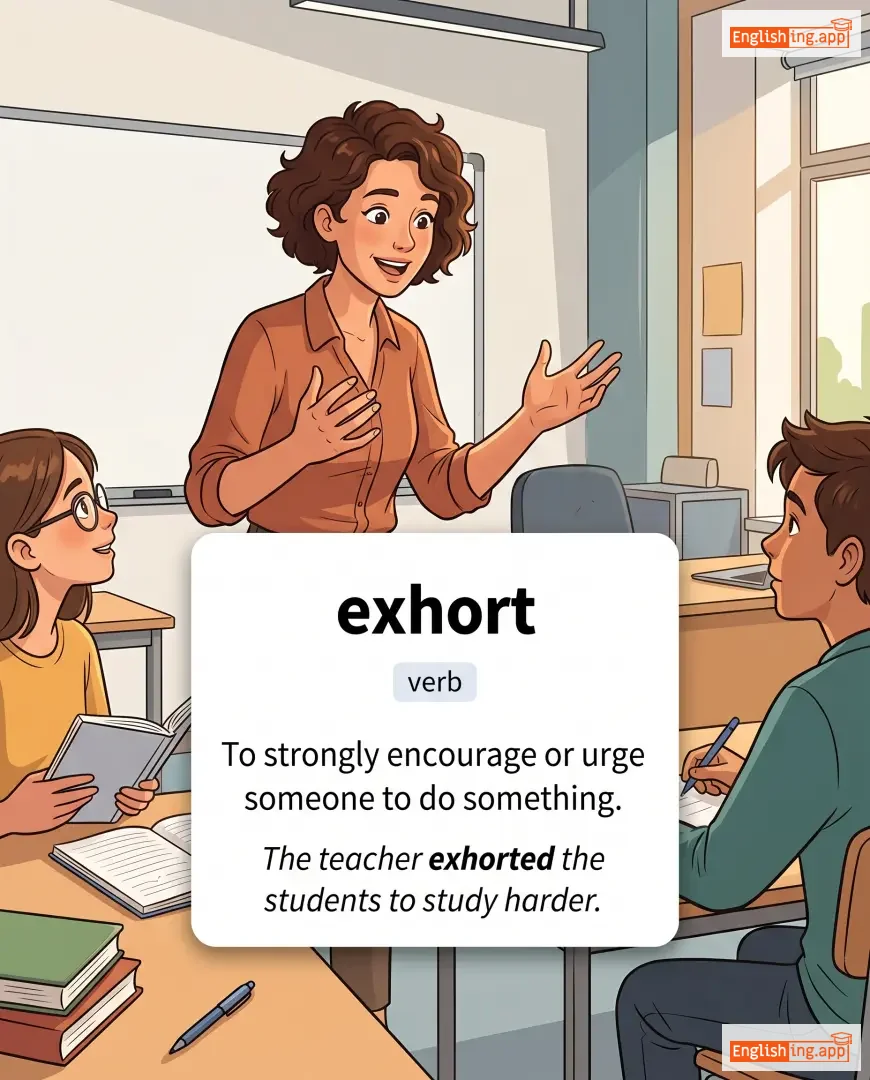
exhort definition card — visual illustration of the meaning
verb
/ɪɡˈzɔːrt/
促す (unagasu)

To strongly encourage or urge someone to do something.

"The teacher exhorted the students to study harder."

"教師は学生にもっと一生懸命勉強するように促しました。" (Kyoushi wa gakusei ni motto isshoukenmei benkyou suru you ni unagashimashita.)
verb
/ɛksˈhjuːm/
発掘する (hakkutsu suru)

to dig out something buried, especially a body from the ground

"The archaeologists decided to exhume the ancient remains."
"考古学者たちは古代の遺物を発掘することに決めました。" (Kōkogakusha-tachi wa kodai no ibutsu o hakkutsu suru koto ni kimemashita.)
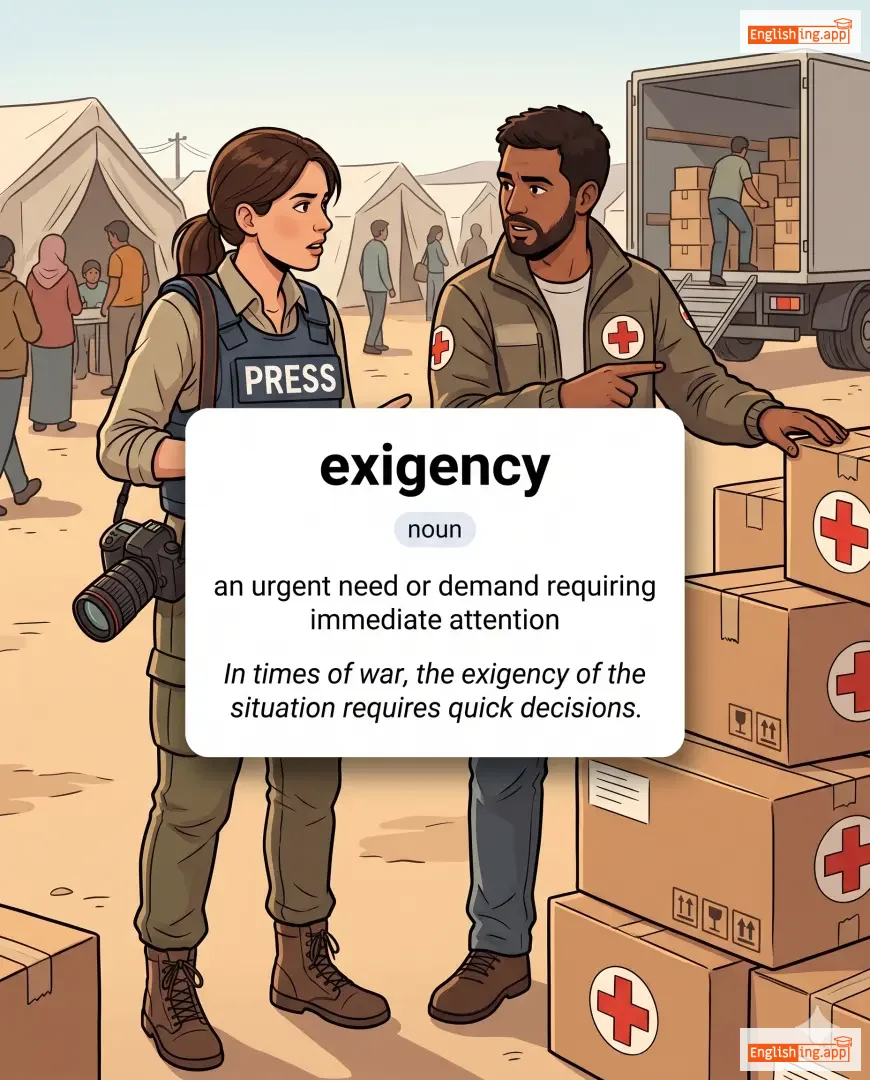
exigency definition card — visual illustration of the meaning
noun
/ˈɛksɪdʒənsi/
緊急の必要性 (kinkyu no hitsuyosei)

an urgent need or demand requiring immediate attention

"In times of war, the exigency of the situation requires quick decisions."

"戦争の時、状況の緊急の必要性は迅速な決定を要求する。" (Sensō no toki, jōkyō no kinkyu no hitsuyōsei wa jinsoku na kettei o yōkyū suru.)
adjective
/ˈɛksɪdʒənt/
緊急 (kinkyuu)

demanding immediate action or attention; urgent

"The patient’s exigent condition required immediate surgery."

"患者の緊急状態は即時の手術を必要としました。" (Kanja no kinkyuu joutai wa sokushi no shujutsu wo hitsuyou to shimashita.)
noun
/ˌɛksɪˈɡjuːɪti/
不足 (fusoku)

the quality of being scanty or meager in amount

"The exiguity of resources made the project difficult to complete."

"資源の不足がプロジェクトを完了するのを難しくしました。" (Shigen no fusoku ga purojekuto o kanryō suru no o muzukashiku shimashita.)