
語彙集

英単語辞書 | 単語の意味、定義、例文

escalation definition card — visual illustration of the meaning
noun
ˌes.kəˈleɪ.ʃən
急激な増加; 上昇。 (kyūgeki na zōka; jōshō)

A rapid increase; a rise.

"The escalation of production costs impacts profitability."

"生産コストの増加は収益性に影響を与えます。" (Seisan kosuto no zōka wa shūekisei ni eikyō o ataemasu.)
noun
/ˈɛskəpeɪd/
冒険 (bōken)

an adventurous, exciting, or reckless act

"Their summer escapade included camping and mountain climbing."

"彼らの夏の冒険にはキャンプと山登りが含まれていました。" (Karera no natsu no bōken ni wa kyampu to yama nobori ga fukumarete imashita.)
Escape definition card — visual illustration of the meaning
🏃‍♂️

Escape (eskeipu)

verb
/ɪˈskeɪp/
逃げる (nigeru)

To break free from confinement or control; to get away.

"The prisoner tried to escape from jail."

"囚人は刑務所から逃げようとした。" (Shuujin wa keimusho kara nigeyou to shita.)
verb
/ɪsˈtʃuː/
避ける (sakeru)

to deliberately avoid or abstain from something

"She chose to eschew junk food for a healthier diet."

"彼女は健康的な食事のためにジャンクフードを避けることを選びました。" (Kanojo wa kenko-teki na shokuji no tame ni janku fudo o sakeru koto o erabimashita.)
verb
/ˈɛskɔrt/
付き添う (tsukisou)

to accompany someone; to guide or protect while going somewhere

"The guard escorted the visitor to the office."

"ガードは訪問者をオフィスにエスコートしました。" (Gaado wa hōmonsha wo ofisu ni esukōto shimashita.)
noun
/ɪˈskʌtʃən/
家族の紋章が描かれた盾 (kazoku no monshō ga egakareta tate)

a shield or emblem bearing a coat of arms

"The family crest was displayed on the escutcheon above the fireplace."

"家族の紋章は暖炉の上の盾に展示されていた。" (Kazoku no monshō wa danro no ue no tate ni tenji sarete ita.)
esoteric definition card — visual illustration of the meaning
adjective
/ˌɛsəˈtɛrɪk/
秘教的 (hikyou teki)

intended for or understood by only a small number of people with special knowledge

"The professor gave an esoteric lecture on ancient philosophy."

"教授は古代哲学に関する秘教的な講義を行いました。" (Kyouju wa kodai tetsugaku ni kansuru hikyou teki na kougi wo okonai mashita.)
adjective
/ɪˈspeʃəl/
特別な (tokubetsu na)

Particularly remarkable or significant; distinguished from others

"This is an especial opportunity you should not miss."

"これは見逃せない特別な機会です。" (Kore wa minogasenai tokubetsu na kikai desu.)
adverb
/ɪˈspɛʃəli/
特に (toku ni)

Used to single out one person, thing, or situation over all others.

"I love all kinds of fruit, especially mangoes."

"私はすべての種類の果物が好きですが、特にマンゴーが好きです。" (Watashi wa subete no shurui no kudamono ga suki desu ga, toku ni mango ga suki desu.)
noun
/ˈɛspiənɑːʒ/
スパイ活動 (supai katsudou)

The practice of spying or using spies to gather secret information, usually for political or military purposes.

"The agent was arrested on charges of espionage against the state."

"そのエージェントは国家に対するスパイ活動の容疑で逮捕されました。" (Sono eejento wa kokka ni taisuru supai katsudou no yougi de taiho saremashita.)
verb
/ɪˈspaʊz/
支持する (shiji suru)

To adopt or support a cause, belief, or way of life.

"She espoused the philosophy of nonviolence throughout her career."

"彼女はキャリアを通じて非暴力の哲学を支持していました。" (Kanojo wa kyaria o tsūjite hibōryoku no tetsugaku o shiji shiteimashita.)
noun
/ɛˌspriː də ˈkɔːr/
チームスピリット (chīmusupiritto)

A feeling of pride, fellowship, and loyalty shared by members of a group.

"The team's esprit de corps was evident in their cooperative effort."

"チームのスピリットは、彼らの協力的な努力に明らかに現れていた。" (Chīmu no supiritto wa, karera no kyōryokuteki na doryoku ni akiraka ni arawarete ita.)
verb
/ɪˈspaɪ/
見る (miru)

To catch sight of or notice something, especially from a distance.

"From the hilltop, she espied a small village in the valley."

"丘の頂上から、彼女は谷間に小さな村を見つけました。" (Oka no chōjō kara, kanojo wa tani ma ni chiisana mura o mitsukemashita.)
noun
/ˈɛskwaɪər/
エスクワイア (esukuwia)

A title of respect often used after a man's name, especially for lawyers in the United States.

"John Smith, Esquire, will be representing the client in court."

"ジョン・スミス、エスクワイア、は法廷でクライアントを代表する予定です。" (Jon Sumisu, Esukuwia, wa hōtei de kuraianto o daihyō suru yotei desu.)
essay definition card — visual illustration of the meaning
noun
/ˈɛseɪ/
エッセイ (essei)

A short piece of writing on a particular subject.

"She wrote an essay about climate change."

"彼女は気候変動についてのエッセイを書きました。" (Kanojo wa kikō hendō ni tsuite no essei o kakimashita.)
noun
/ˈɛsəns/
本質 (honshitsu)

The intrinsic nature or indispensable quality of something that determines its character.

"The essence of democracy is freedom of speech."

"民主主義の本質は言論の自由です。" (Minshu shugi no honshitsu wa genron no jiyū desu.)
adjective
/ɪˈsɛnʃəl/
必要不可欠 (hitsuyō fukaketsu)

Absolutely necessary; extremely important.

"Water is essential for life."

"水は生命にとって必要不可欠です。" (Mizu wa seimei ni totte hitsuyō fukaketsu desu.)
adverb
/ɪˈsɛnʃəli/
本質的に (honshitsuteki ni)

Used to emphasize the basic or fundamental nature of something.

"The two plans are essentially the same."

"その2つの計画は本質的に同じです。" (Sono futatsu no keikaku wa honshitsuteki ni onaji desu.)
verb
/ɪˈstæblɪʃ/
設立する (setsuritsu suru)

To set up, create, or bring into existence something on a firm basis.

"The company plans to establish a new office in Dhaka."
"その会社はダッカに新しいオフィスを設立する予定です。" (Sono kaisha wa Dāka ni atarashī ofisu o setsuritsu suru yotei desu.)
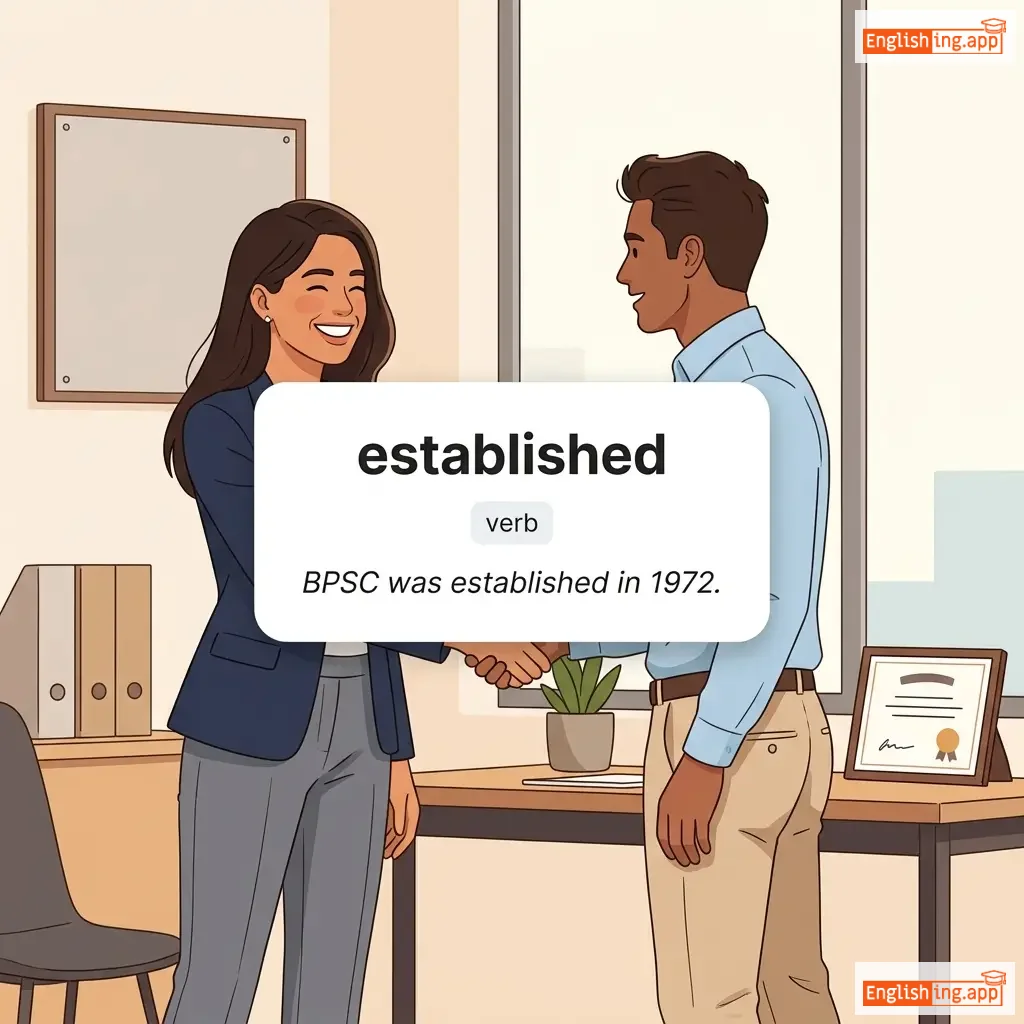
established definition card — visual illustration of the meaning
verb
ɪˈstæb.lɪʃt
設立された (setsuritsusareta)

Set up on a firm or permanent basis; having existed for a long time and therefore recognized.

"BPSC was established in 1972."

"BPSCは1972年に設立されました。" (BPSC wa 1972-nen ni setsuritsu saremashita.)
noun
/ɪˈstæblɪʃmənt/
設立 (setsuritsu)

An organization, business, or system; the act of setting something up.

"The restaurant is a new establishment in town."

"レストランは町の新しい設立です。" (Resutoran wa machi no atarashī setsuritsu desu.)
noun
/ɪˈsteɪt/

A large area of land, property, or possessions owned by someone, often including a big house.

"The family owned a large estate in the countryside."

noun/verb
/ɪˈstiːm/
尊敬 (sonkei)

Respect and admiration, typically for a person.

"She is held in high esteem by her colleagues."

"彼女は同僚から高く評価されています。" (Kanojo wa dōryō kara takaku hyōka sareteimasu.)
adjective
/ɪˈstiːmd/
尊敬される (sonkei sareru)

respected and admired; held in high regard

"He is an esteemed professor at the university."

"彼は大学で尊敬されている教授です。" (Kare wa daigaku de sonkei sarete iru kyōju desu.)
adjective
/ɛsˈθɛtɪk/
美的 (biteki)

Concerned with beauty or the appreciation of beauty.

"The building’s esthetic design attracted many visitors."

"その建物の美的なデザインは多くの訪問者を引き寄せました。" (Sono tatemono no biteki na dezain wa ooku no hōmonsha o hikiyose mashita.)
estimable definition card — visual illustration of the meaning
adjective
/ˈɛstɪməbl/
尊敬すべき (sonkei subeki)

Worthy of great respect.

"Her estimable achievements inspired the whole community."

"彼女の尊敬に値する業績はコミュニティ全体にインスピレーションを与えました。" (Kanojo no sonkei subeki gyōseki wa komyuniti zentai ni insupirēshon o ataemashita.)
verb
/ˈɛstɪˌmeɪt/
見積もる (mitsumoru)

To roughly calculate or judge the value, number, quantity, or extent of something.

"The engineer estimated the cost of the project at $5 million."

"エンジニアはプロジェクトのコストを500万ドルと見積もりました。" (Enjinia wa purojekuto no kosuto o 500-man doru to mitsumorimashita.)
adjective
/ˈɛstɪmeɪtɪd/
見積もりの (mitsumori no)

roughly calculated or judged; an approximate value or amount

"The estimated cost of the project is five million dollars."

"そのプロジェクトの見積もりコストは500万ドルです。" (Sono purojekuto no mitsumori kosuto wa gohyakuman dorā desu.)
verb
/ɪˈstreɪndʒ/

to cause someone to no longer be close or affectionate; to alienate

"His constant criticism began to estrange him from his friends."

adjective
/ɪˈstreɪndʒd/
疎遠 (soen)

no longer close or affectionate with someone; alienated

"She felt estranged from her family after the long dispute."

"彼女は長い争いの後、家族と疎遠に感じた。" (Kanojo wa nagai arasoi no ato, kazoku to soen ni kanjita.)
noun
/ˈɛstjʊəri/
河口 (kakou)

the tidal mouth of a large river, where the tide meets the stream

"The city is located near the estuary of the river."

"その都市は川の河口の近くにあります。" (sono toshi wa kawa no kakou no chikaku ni arimasu.)
abbreviation
/ɛtˈsɛtərə/
など (nado)

Used to indicate additional, similar items in a list that are not mentioned.

"The shop sells fruits, vegetables, dairy, etc."

"店では果物、野菜、乳製品などが販売されています。" (Mise de wa kudamono, yasai, nyūseihin nado ga hanbai sareteimasu.)
adverb
/ɛtˈsɛtərə/
その他 (sonota)

used at the end of a list to indicate that other similar items are included

"She bought apples, oranges, bananas, etcetera from the market."

"彼女は市場でリンゴ、オレンジ、バナナ、その他を買いました。" (Kanojo wa ichiba de ringo, orenji, banana, sonota wo kaimashita.)
verb
/ɛtʃ/
刻む (kizamu)

to cut or carve a design onto a surface

"The artist etched her initials into the glass."

"アーティストはガラスに自分のイニシャルを刻みました。" (Ātisuto wa garasu ni jibun no inisharu o kizamimashita.)
adjective
/ɪˈtɜːrnəl/
永遠 (eien)

lasting or existing forever; without end

"They pledged their eternal love for each other."

"彼らはお互いに永遠の愛を誓いました。" (Karera wa otagai ni eien no ai o chikaimashita.)
ethereal definition card — visual illustration of the meaning
adjective
/ɪˈθɪəriəl/
天上の (tenjō no)

extremely delicate, light, or airy; heavenly or otherworldly

"The dancer moved with an ethereal grace that captivated the audience."

"ダンサーはイセリアルな優雅さで動き、観客を魅了しました。" (Dansā wa iserial na yūgasa de ugoki, kankyaku o miryō shimashita.)
noun
/ˈɛθɪk/
倫理 (rinri)

a set of moral principles, especially ones relating to a particular group, system, or profession

"He has a strong work ethic and always meets deadlines."

"彼は強い労働倫理を持っており、常に締め切りを守ります。" (Kare wa tsuyoi rōdō rinri o motte ori, jō ni shimekiri o mamorimasu.)
ethical definition card — visual illustration of the meaning
adjective
/ˈɛθɪkəl/
倫理的 (rinriteki)

relating to moral principles or the right and wrong behavior

"The company follows strict ethical standards in its business practices."

"その会社はビジネス慣行において厳格な倫理基準を守っています。" (Sono kaisha wa bijinesu kankou ni oite genkaku na rinri kijun wo mamotteimasu.)
noun
/ˈɛθɪks/
倫理 (rinri)

moral principles that govern a person's behavior or the conduct of an activity

"Business ethics require companies to act fairly and responsibly."
"ビジネス倫理は、企業に公平かつ責任を持って行動することを求めます。" (Bijinesu rinri wa, kigyō ni kōhei katsu sekinin o motte kōdō suru koto o motomemasu.)
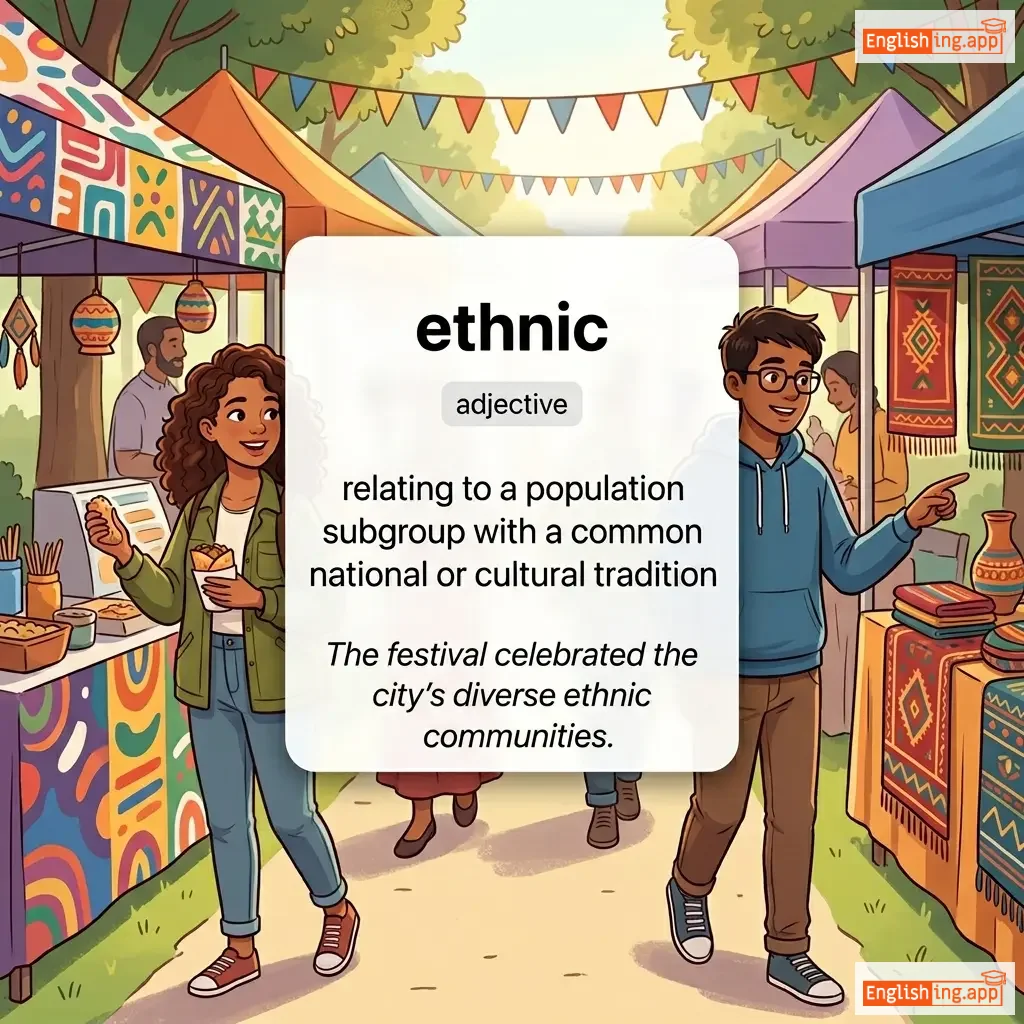
ethnic definition card — visual illustration of the meaning
adjective
/ˈɛθnɪk/
民族的 (minzokuteki)

relating to a population subgroup with a common national or cultural tradition

"The festival celebrated the city's diverse ethnic communities."
"フェスティバルは都市のさまざまな民族のコミュニティを祝いました。" (Fesutibaru wa toshi no samazama na minzoku no komyuniti o iwaimashita.)
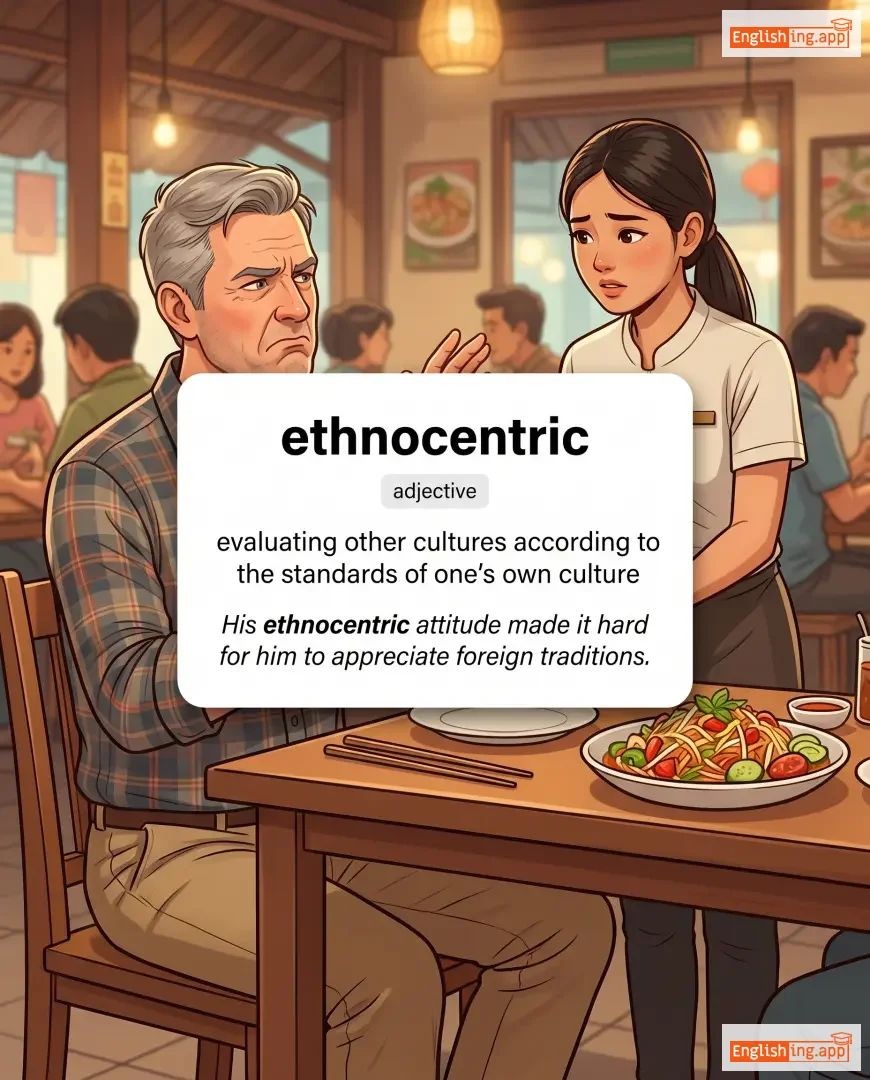
ethnocentric definition card — visual illustration of the meaning
adjective
/ˌeθ.noʊˈsen.trɪk/
エスノセントリック (esunosentorikku)

evaluating other cultures according to the standards of one's own culture

"His ethnocentric attitude made it hard for him to appreciate foreign traditions."

"彼のエスノセントリックな態度は、外国の伝統を評価するのを難しくしました。" (Kare no esunosentorikku na taido wa, gaikoku no dentō o hyōka suru no o muzukashiku shimashita.)
noun
/ɛθˈnɒlədʒi/
民族学 (minzokugaku)

the study of the characteristics of different peoples and the differences and relationships between them

"She specialized in ethnology to better understand cultural diversity."

"彼女は文化的多様性をよりよく理解するために民族学を専門にしていた。" (Kanojo wa bunkateki tayōsei o yori yoku rikai suru tame ni minzokugaku o senmon ni shite ita.)
ethos definition card — visual illustration of the meaning
noun
/ˈiːθɒs/
エトス (etos)

the characteristic spirit, values, or beliefs of a community, culture, or organization

"The company’s ethos emphasizes innovation and customer service."
"その会社のエトスは、革新と顧客サービスを強調しています。" (Sono kaisha no etosu wa, kakushin to kokyaku sābisu o kyōchō shiteimasu.)
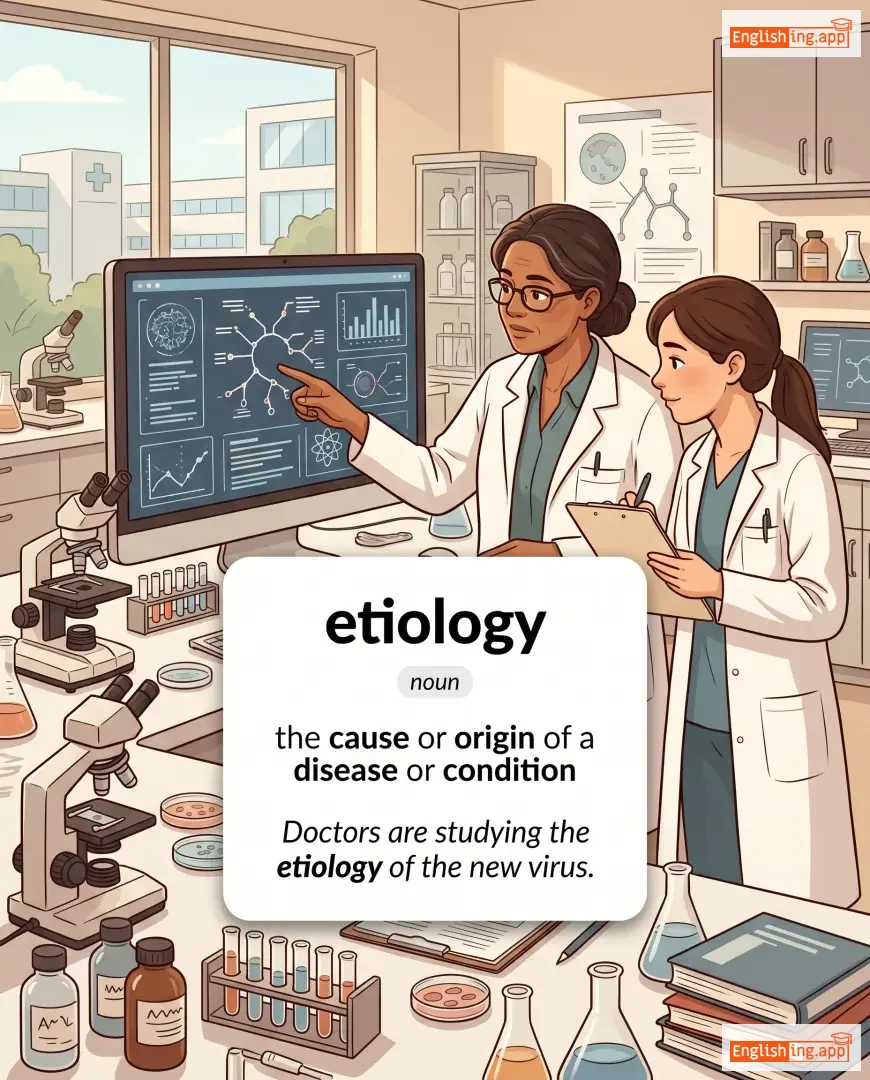
etiology definition card — visual illustration of the meaning
noun
/ˌiː.tiˈɒ.lə.dʒi/
病因学 (byōingaku)

the cause or origin of a disease or condition

"Doctors are studying the etiology of the new virus."

"医師たちは新しいウイルスの病因学を研究しています。" (Ishitachi wa atarashī uirusu no byōingaku o kenkyū shiteimasu.)
noun
/ˈet.ɪ.kət/
エチケット (echiketto)

the customary code of polite behavior in society or among members of a particular profession

"Proper etiquette requires standing when a lady enters the room."
"適切なエチケットは、女性が部屋に入るときに立ち上がることを求めます。" (tekisetsu na echiketto wa, josei ga heya ni hairu toki ni tachiagaru koto o motomemasu.)
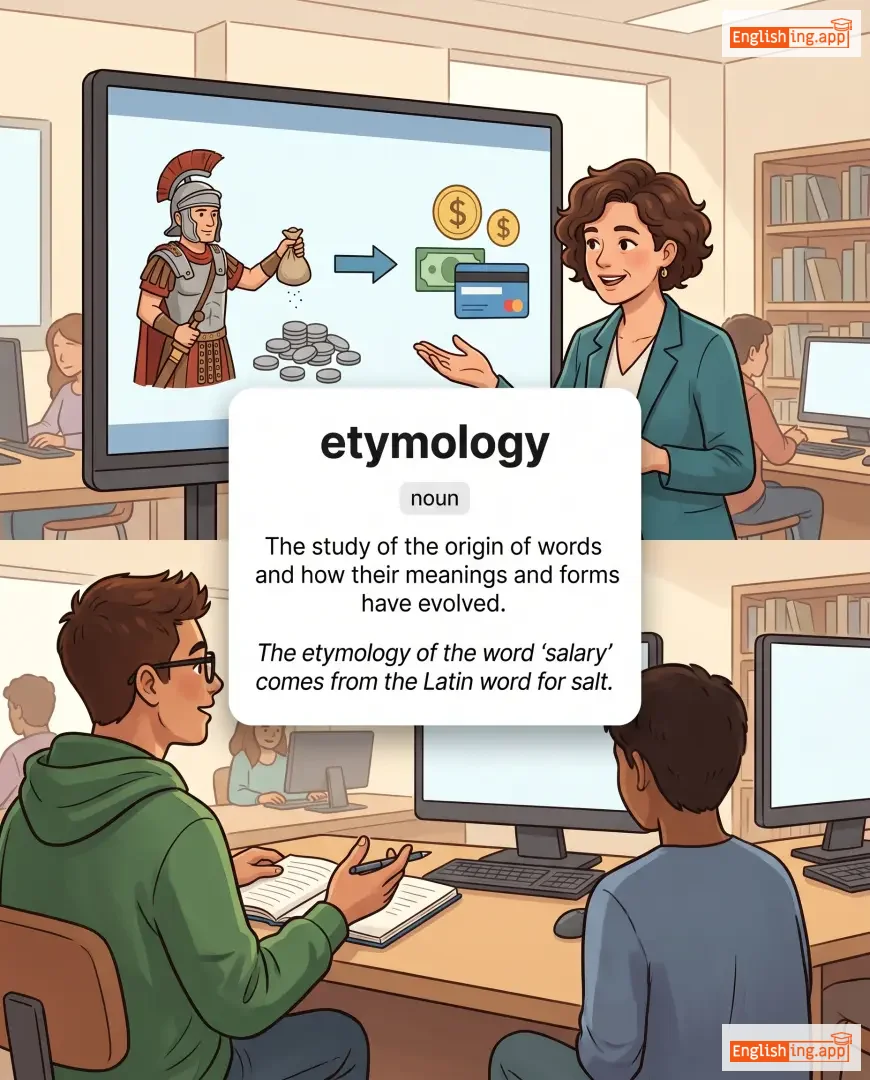
etymology definition card — visual illustration of the meaning
noun
/ˌɛtɪˈmɒlədʒi/
語源学 (gogen-gaku)

The study of the origin of words and how their meanings and forms have evolved.

"The etymology of the word 'salary' comes from the Latin word for salt."

"'給与'という言葉の語源は、ラテン語の塩を意味する言葉から来ています。" ('Kyūyo' to iu kotoba no gogen wa, raten-go no shio o imi suru kotoba kara kiteimasu.)
adjective
/juːˈdʒɛnɪk/
優生学的 (yūseigakuteki)

Relating to or aiming at improving the genetic quality of a population.

"In the early 20th century, some scientists supported eugenic policies."
"20世紀初頭、一部の科学者は優生学的な政策を支持した。" (20 seiki shotō, ichibu no kagakusha wa yūseigakuteki na seisaku o shiji shita.)
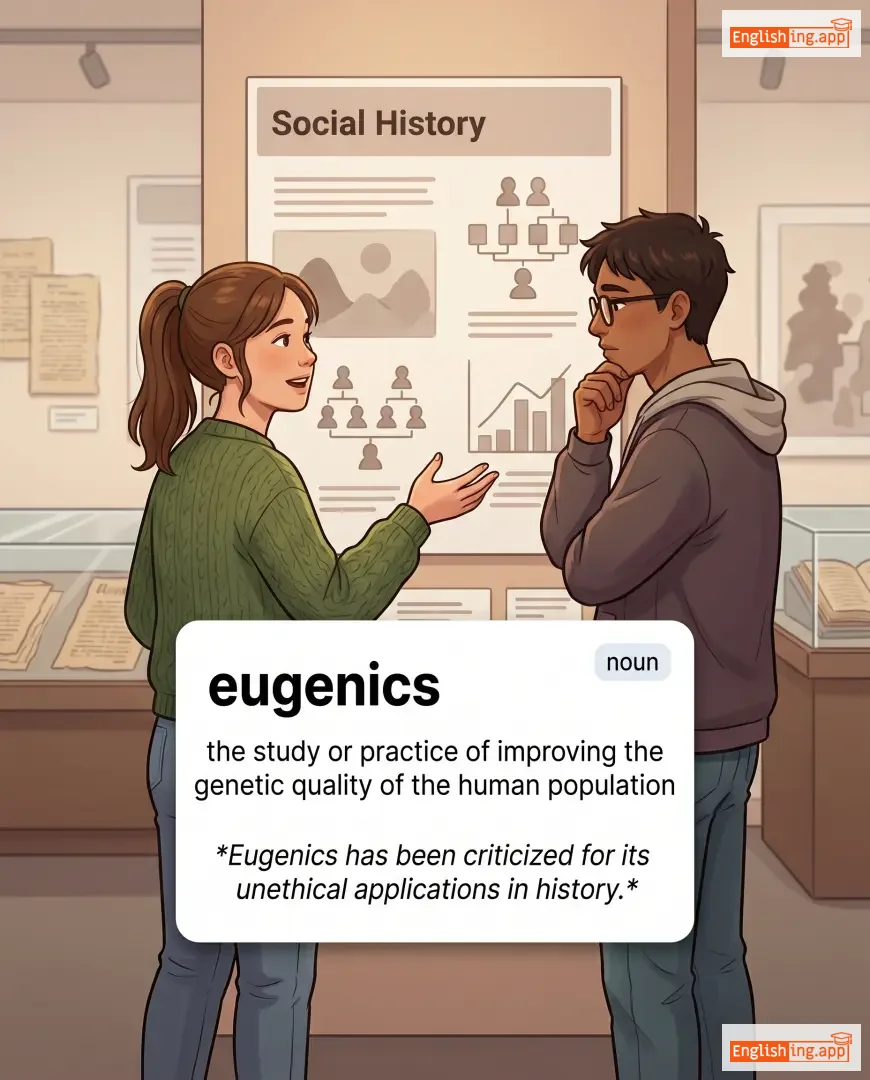
eugenics definition card — visual illustration of the meaning
noun
/juːˈdʒen.ɪks/
優生学 (yūseigaku)

the study or practice of improving the genetic quality of the human population

"Eugenics has been criticized for its unethical applications in history."

"優生学は歴史的にその非倫理的な応用について批判されてきました。" (Yūseigaku wa rekishiteki ni sono hinrinteki na ōyō ni tsuite hihan sarete kimashita.)
adjective
/ˌjuːləˈdʒɪstɪk/
賛辞の (sanchi no)

Expressing praise or admiration, often formally.

"The speaker gave a eulogistic account of the leader’s achievements."

"スピーカーはリーダーの業績について賛辞の言葉を述べました。" (Supīkā wa rīdā no gyōseki ni tsuite sanchi no kotoba o nobemashita.)
verb
/ˈjuːləˌdʒaɪz/
讃える (tataeru)

To praise highly in speech or writing, especially in honor of someone who has died.

"They gathered to eulogize their beloved teacher."

"彼らは愛する先生を称賛するために集まりました。" (Karera wa aisuru sensei o tataeru tame ni atsumarimashita.)