語彙集

英単語辞書 | 単語の意味、定義、例文

noun
/ɪnˈdʒɔɪmənt/
楽しみ (tanoshimi)

the state or process of taking pleasure or satisfaction in something

"She felt great enjoyment while reading her favorite book."

"彼女はお気に入りの本を読んでいるとき、大きな楽しみを感じた。" (Kanojo wa okiniiri no hon o yonde iru toki, ookina tanoshimi o kanjita.)
verb
/ɛnˈkɪndl/
火をつける、感動させる (hi o tsukeru, kandō saseru)

to set on fire or inspire strong emotion

"The speech enkindled hope in the audience."

"スピーチは観客に希望を灯しました。" (Supīchi wa kankyaku ni kibō o tomoshimashita.)
verb
/ɪnˈlɑːrdʒ/
広げる (hirogeru)

to make something bigger or increase in size

"They decided to enlarge their house."

"彼らは家を広げることに決めました。" (Karera wa ie o hirogeru koto ni kimemashita.)
verb
/ɪnˈlaɪtən/
幸福 (koufuku)

to give someone greater knowledge or understanding about a subject or situation

"The teacher tried to enlighten the students about ancient history."

"彼女は賞を受け取ったとき、幸せを隠すことができませんでした。" (Kanojo wa shō o uketotta toki, shiawase o kakusu koto ga dekimasen deshita.)
adjective
/ɪnˈlaɪ.tənd/
啓蒙された; 精神的に目覚めた; 賢い; (keimou sareta; seishinteki ni mezameta; kashikoi)

having or showing a rational, modern outlook; having spiritual knowledge or understanding

"The enlightened teacher shared wisdom with all her students."

"啓蒙された教師は、すべての生徒と知恵を共有しました。" (Keimou sareta kyoushi wa, subete no seito to chie wo kyoyu shimashita.)
verb
/ɪnˈlɪst/
登録する (touroku suru)

to join or sign up, especially for military service; to secure someone's support or help

"He decided to enlist in the army after graduation."

"彼は卒業後に軍隊に入隊することに決めました。" (Kare wa sotsugyō go ni guntai ni nyūtai suru koto ni kimemashita.)
verb
/ɪnˈlaɪvən/
活気づける (kakki zukeru)

to make something more lively, interesting, or cheerful

"Her jokes helped enliven the dull meeting."

"彼女の冗談は退屈な会議を活気づける手助けをした。" (Kanojo no jodan wa taikutsuna kaigi o kakki zukeru tedasuke o shita.)
noun
/ˈɛnmɪti/
敵意 (teki)

a feeling of hostility, hatred, or opposition

"There was a long history of enmity between the two families."

"二つの家族の間には長い敵意の歴史がありました。" (Futatsu no kazoku no aida ni wa nagai teki no rekishi ga arimashita.)
verb
/ɪˈnəʊbəl/
高貴にする (kōki ni suru)

to give someone a noble rank or to elevate in dignity or honor

"His selfless actions ennobled his character in the eyes of others."

"彼の自己犠牲的な行動は、他の人々の目に彼の人格を高めました。" (Kare no jiko giseiteki na kōdō wa, hoka no hitobito no me ni kare no jin'kaku o takamemashita.)
noun
/ˈɒnwiː/ or /ˈɑːnwiː/
退屈 (taikutsu)

A feeling of boredom, listlessness, or dissatisfaction arising from lack of excitement.

"After weeks of doing nothing, he sank into a deep sense of ennui."

"何もせずに数週間後、彼は深い退屈に沈んだ。" (Nani mo sezu ni suushukan go, kare wa fukai taikutsu ni shizunda.)
noun
/ɪˈnɔːrmɪti/
巨大さ (kyodasa)

The extreme scale, seriousness, or extent of something perceived as bad or morally wrong.

"The enormity of the crime shocked the entire community."

"犯罪の巨大さはコミュニティ全体を驚かせました。" (Hanzai no kyodasa wa komyuniti zentai o odorokasemashita.)
adjective
/ɪˈnɔːrməs/
巨大な (kyodaina)

Extremely large in size, amount, or degree.

"They built an enormous stadium in the city."

"彼らは街に巨大なスタジアムを建設しました。" (Karera wa machi ni kyodaina sutajiamu o kensetsu shimashita.)
adjective/adverb
/ɪˈnʌf/
十分 (jūbun)

as much or as many as required

"We have enough food for everyone."

"私たちは皆のために十分な食べ物があります。" (Watashitachi wa mina no tame ni jūbun na tabemono ga arimasu.)
verb
/ɪnˈkwaɪər/
尋ねる (tazuneru)

to ask for information about something

"He enquired about the train schedule."

"彼は列車の時刻表について尋ねました。" (Kare wa ressha no jikokuhyou ni tsuite tazunemashita.)
verb
/ɪnˈreɪdʒ/
怒らせる (okoraseru)

To make someone extremely angry.

"His unfair remarks enraged the audience."

"彼の不公平な発言が観客を怒らせた。" (Kare no fukōhei na hatsugen ga kankyaku o okorashita.)
verb
/ɪnˈræptʃər/
魅了する (miryō suru)

To fill someone with great delight or joy.

"The beautiful music enraptured the audience."
"美しい音楽は観客を魅了しました。" (Utsukushī ongaku wa kankyaku o miryō shimashita.)
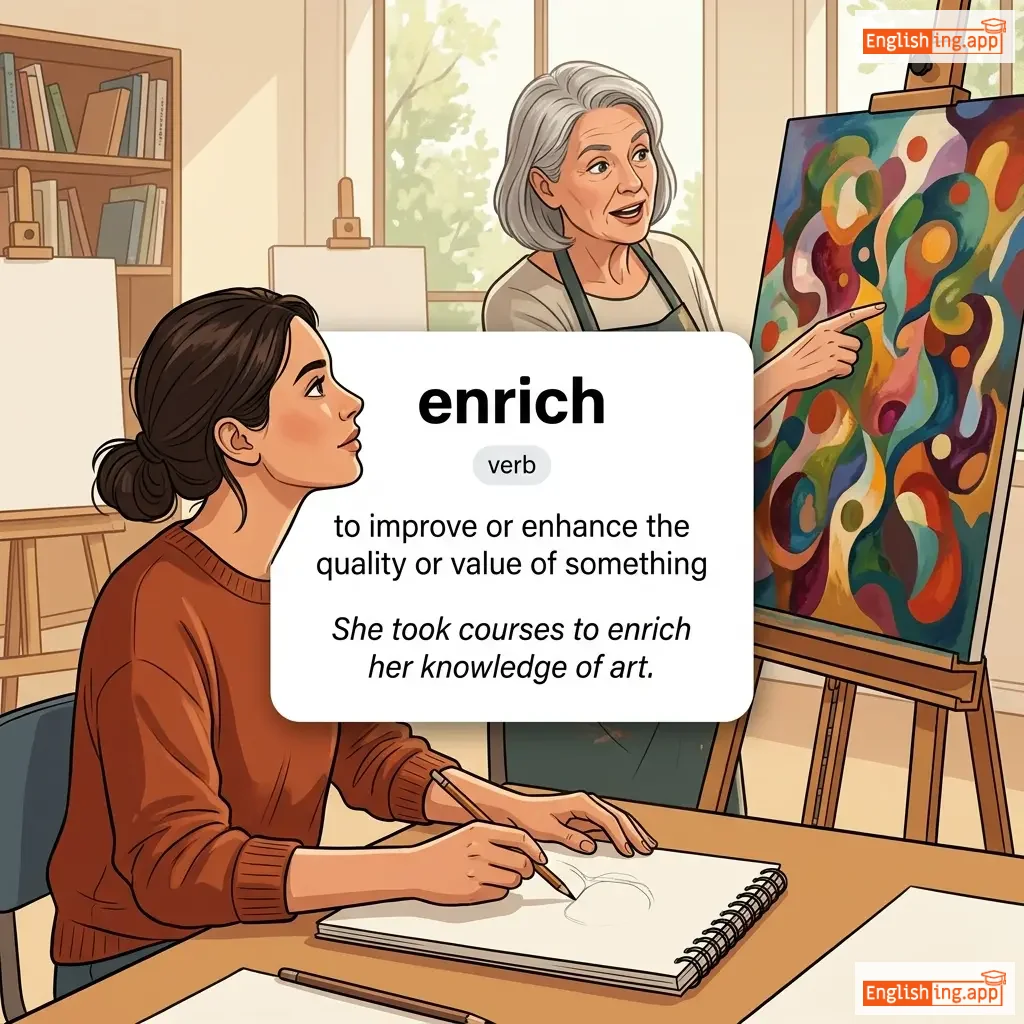
enrich definition card — visual illustration of the meaning
verb
/ɪnˈrɪtʃ/
豊かにする (yutakani suru)

to improve or enhance the quality or value of something

"She took courses to enrich her knowledge of art."
"彼女は芸術の知識を豊かにするためにコースを受講しました。" (Kanojo wa geijutsu no chishiki o yutakani suru tame ni koosu o jukou shimashita.)
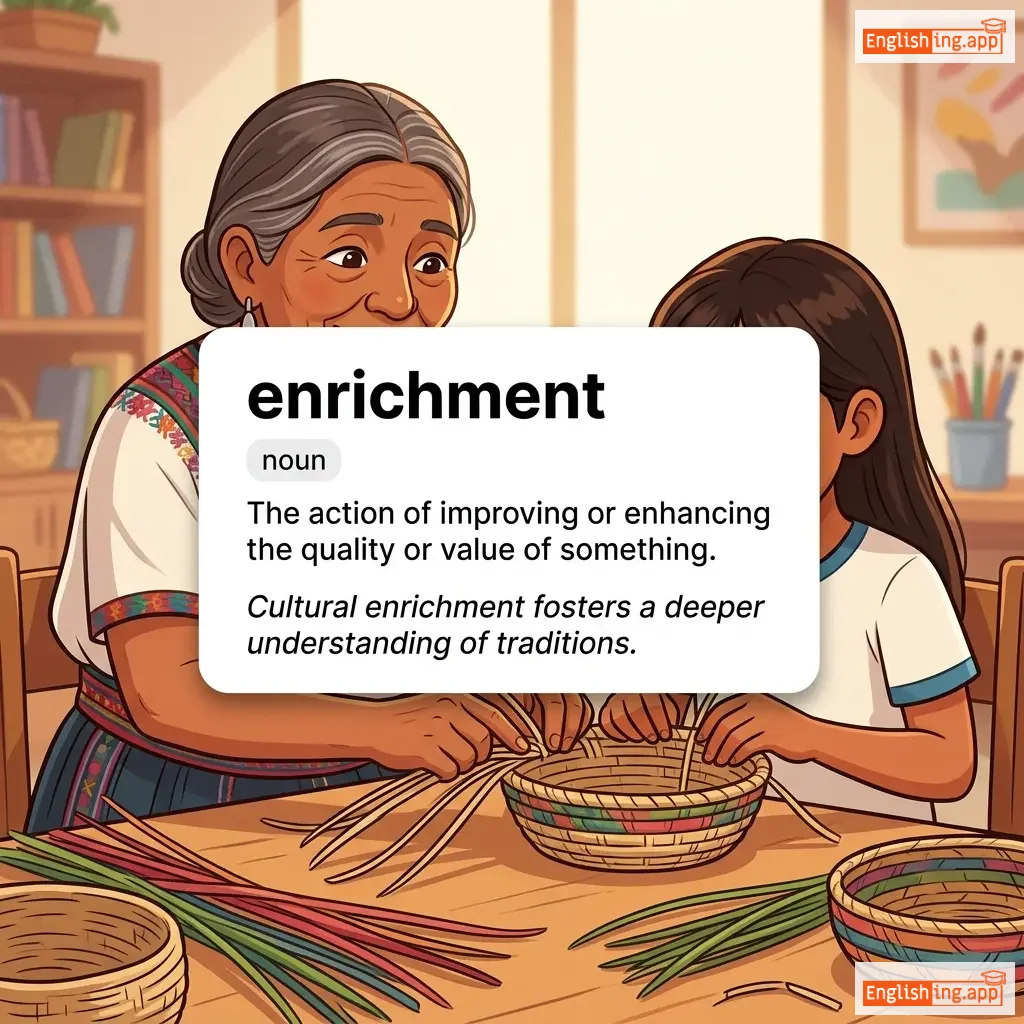
enrichment definition card — visual illustration of the meaning
noun
/ɪnˈrɪtʃ.mənt/
豊かさ (yutakasa)

The action of improving or enhancing the quality or value of something.

"Cultural enrichment fosters a deeper understanding of traditions."

"文化的な豊かさは伝統への深い理解を促進します。" (Bunkateki na yutakasa wa dentō e no fukai rikai o sokushin shimasu.)
verb
/ɪnˈroʊl/
登録する (touroku suru)

To officially register or sign up for a course, program, or membership

"She decided to enrol in a language course to improve her skills."

"彼女はスキルを向上させるために語学コースに登録することに決めた。" (Kanojo wa sukiru o koujou saseru tame ni gogaku kōsu ni tōroku suru koto ni kimeta.)
verb
/ɪnˈroʊl/
登録する (tōroku suru)

to officially join or register in a school, course, or organization

"He decided to enroll in a computer programming course."

"彼はコンピュータプログラミングのコースに登録することを決めました。" (Kare wa konpyūta puroguramingu no kōsu ni tōroku suru koto o kimemashita.)
verb
/ɪnˈskɒns/
快適に座る, 隠れる (kaiteki ni suwaru, kakureru)

to settle comfortably or securely in a place; to hide or shelter firmly

"She ensconced herself in a cozy armchair by the fireplace."

"彼女は暖炉のそばの快適な椅子に座り込んだ。" (Kanojo wa danro no soba no kaiteki na isu ni suwarikonda.)
noun
/ɒnˈsɒmbəl/
アンサンブル, グループ (ansanburu, gurūpu)

a group of things or people viewed as a whole, especially performers in music or theater

"The theater ensemble gave a spectacular performance."

"劇場のアンサンブルは素晴らしいパフォーマンスをしました。" (Gekijou no ansanburu wa subarashii pafōmansu o shimashita.)
verb
/ɪnˈʃraɪn/
何かを神聖または重要として保存または敬う (nanika o shinsei matawa jūyō toshite hozon matawa uyamau)

to preserve or cherish something as sacred or important

"The constitution enshrines the right to freedom of speech."

"憲法は言論の自由の権利を保護しています。" (Kenpō wa genron no jiyū no kenri o hogo shiteimasu.)
noun
/ˈɛnsaɪn/
(ki)

A flag or standard, especially a military or naval one indicating nationality; also a junior officer in the navy or coast guard.

"The ship raised its national ensign before leaving the harbor."

"その船は港を出る前に国旗を掲げました。" (Sono fune wa minato o deru mae ni kokki o kake mashita.)
verb
/ɪnˈsnɛər/
罠にかける (wana ni kakeru)

to catch or trap, often by trickery or deceit

"The hunter ensnared the rabbit with a net."

"ハンターはネットでウサギを捕まえました。" (Hantā wa netto de usagi o tsukamaemashita.)
verb
/ɪnˈsjuː/
結果として起こる (kekka to shite okoru)

to happen as a result or consequence

"After the argument, silence ensued."

"議論の後、沈黙が続いた。" (Giron no ato, chinmoku ga tsuduita.)
verb
/ɪnˈʃʊər/
確実にする (kakujitsu ni suru)

To make certain that something will happen or be the case.

"Please ensure that the door is locked before you leave."
"出発前にドアが閉まっていることを確認してください。" (Shuppatsu mae ni doa ga shimatte iru koto o kakunin shite kudasai.)
verb
/ɪnˈteɪl/

to involve something as a necessary or inevitable part or consequence

"The job will entail a lot of travel across the country."

🕸️

entangle

verb
/ɪnˈtæŋɡəl/

to become twisted together or caught in something; to involve in difficulties

"The fish got entangled in the net."

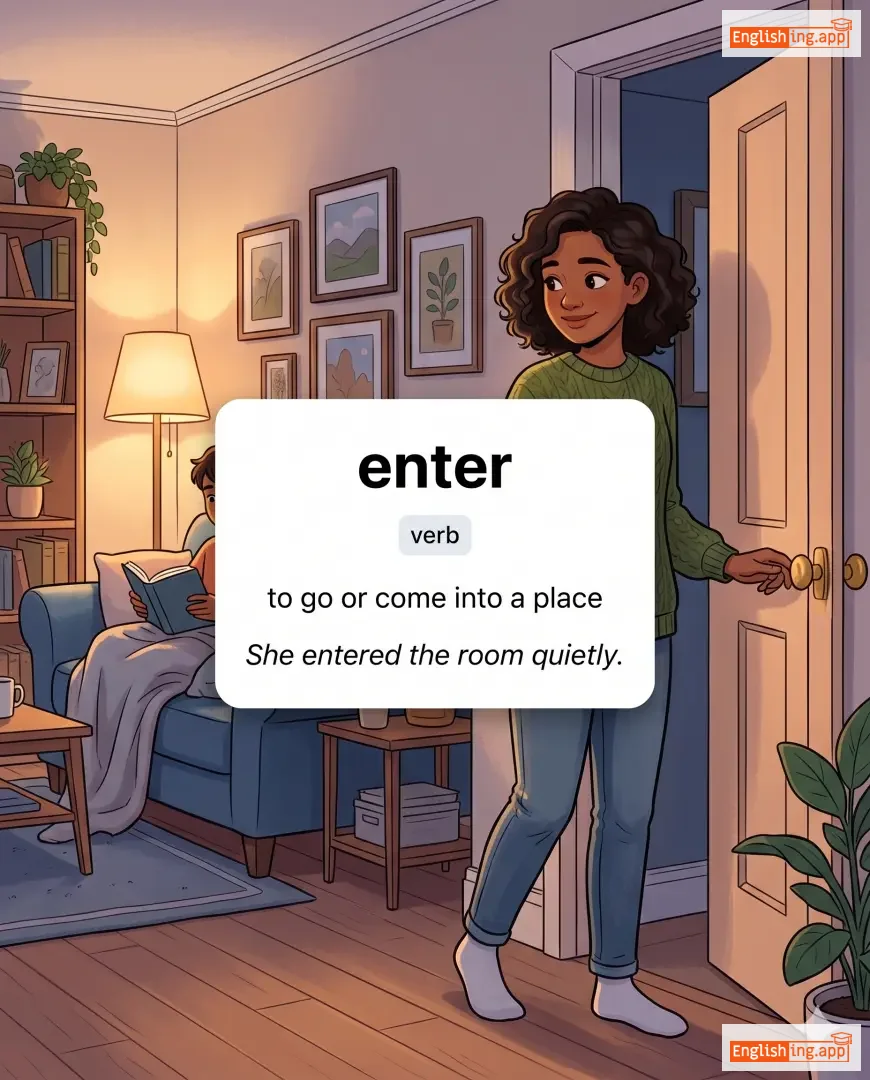
enter definition card — visual illustration of the meaning
verb
/ˈɛntər/
入る (hairu)

to go or come into a place

"She entered the room quietly."

"彼女は静かに部屋に入った。" (Kanojo wa shizuka ni heya ni haitta.)
noun
/ˈɛntərˌpraɪz/
企業 / 事業 (kigyō / jigyō)

a business or company; a project or undertaking that requires effort and initiative

"The new enterprise aims to create sustainable energy solutions."

"新しい企業は、持続可能なエネルギーソリューションを作成することを目指しています。" (Atarashī kigyō wa, jizoku kanō na enerugī sorūshon o sakusei suru koto o mezashiteimasu.)
adjective
/ˈɛntərˌpraɪzɪŋ/
企業家精神のある (kigyōka seishin no aru)

showing initiative and resourcefulness; willing to take risks to achieve success

"She is an enterprising young entrepreneur."

"彼女は企業家精神のある若い起業家です。" (Kanojo wa kigyōka seishin no aru wakai kigyōka desu.)
verb
/ˌɛntərˈteɪn/

to provide amusement, enjoyment, or hospitality to others

"The comedian entertained the audience with his jokes."

adjective
/ˌɛntərˈteɪnɪŋ/
面白い (omoshiroi)

providing amusement or enjoyment

"The comedian gave an entertaining performance."

"コメディアンは面白いパフォーマンスを披露しました。" (Komedian wa omoshiroi pafōmansu wo hirō shimashita.)
noun
/ˌɛntərˈteɪnmənt/
エンターテインメント (entāteinmento)

something that amuses, pleases, or diverts

"The concert was a great source of entertainment."

"コンサートは素晴らしいエンターテインメントの源でした。" (Konsāto wa subarashī entāteinmento no minamoto deshita.)
verb
/ɪnˈθrɔːl/
魅了する (miryō suru)

To captivate or hold someone’s full attention.

"The magician’s performance enthralled the audience."

"マジシャンのパフォーマンスは観客を魅了した。" (Majishan no pafōmansu wa kankyaku o miryō shita.)
verb
/ɪnˈθrɔːl/
魅了する (miryō suru)

to captivate or hold someone’s attention completely

"The magician’s tricks enthralled the children."
"マジシャンのトリックは子供たちを魅了しました。" (Majishan no torikku wa kodomotachi o miryō shimashita.)
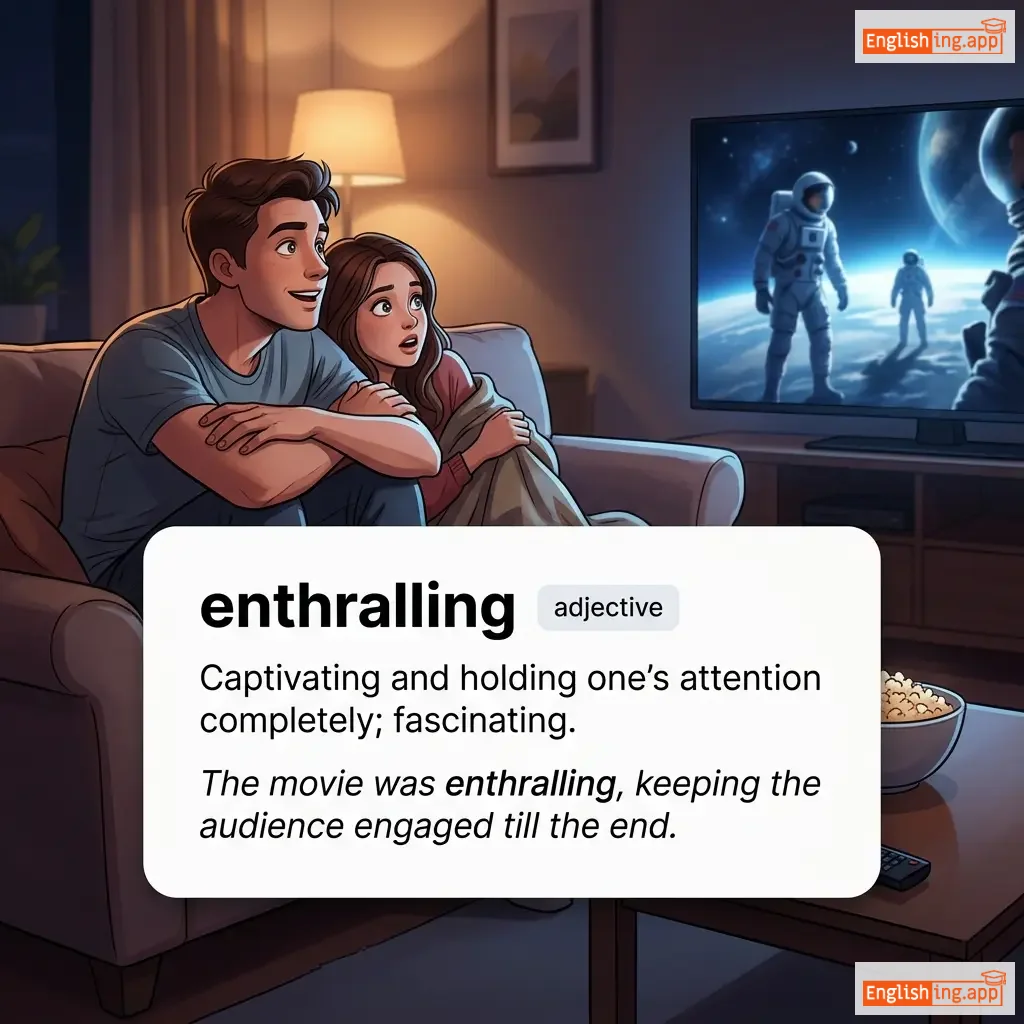
enthralling definition card — visual illustration of the meaning
adjective
/ɪnˈθrɔː.lɪŋ/
魅力的 (miryokuteki)

Captivating and holding one's attention completely; fascinating.

"The movie was enthralling, keeping the audience engaged till the end."

"その映画は魅力的で、観客は最後まで引き込まれていました。" (sono eiga wa miryokuteki de, kankyaku wa saigo made hikikomarete imashita.)
verb
/ɪnˈθroʊn/
戴冠する (daikan suru)

to install someone on a throne or to give someone high status

"The king was enthroned in a grand ceremony."

"王は大きな儀式で即位しました。" (Ō wa ōkina gishiki de sokui shimashita.)
verb
/ɪnˈθjuːz/
興奮させる (kōfun saseru)

to express excitement or admiration

"She enthused about her trip to Italy."

"彼女はイタリア旅行について興奮して話していました。" (Kanojo wa Itaria ryokō ni tsuite kōfun shite hanashite imashita.)
noun
/ɪnˈθjuːziæzəm/
熱意 (netsui)

intense and eager enjoyment, interest, or approval

"His enthusiasm for teaching inspired his students."

"彼の教育に対する熱意は、学生たちに影響を与えました。" (Kare no kyoiku ni taisuru netsui wa, gakuseitachi ni eikyo o ataemashita.)
noun
/ɪnˈθuziæst/
熱狂的なファン (nekkyouteki na fan)

a person who is very interested in a particular activity or subject

"He is a football enthusiast and watches every match."
"彼はサッカーenthusiastで、毎試合見ています。" (Kare wa sakka enthusiast de, mai shiai miteimasu.)
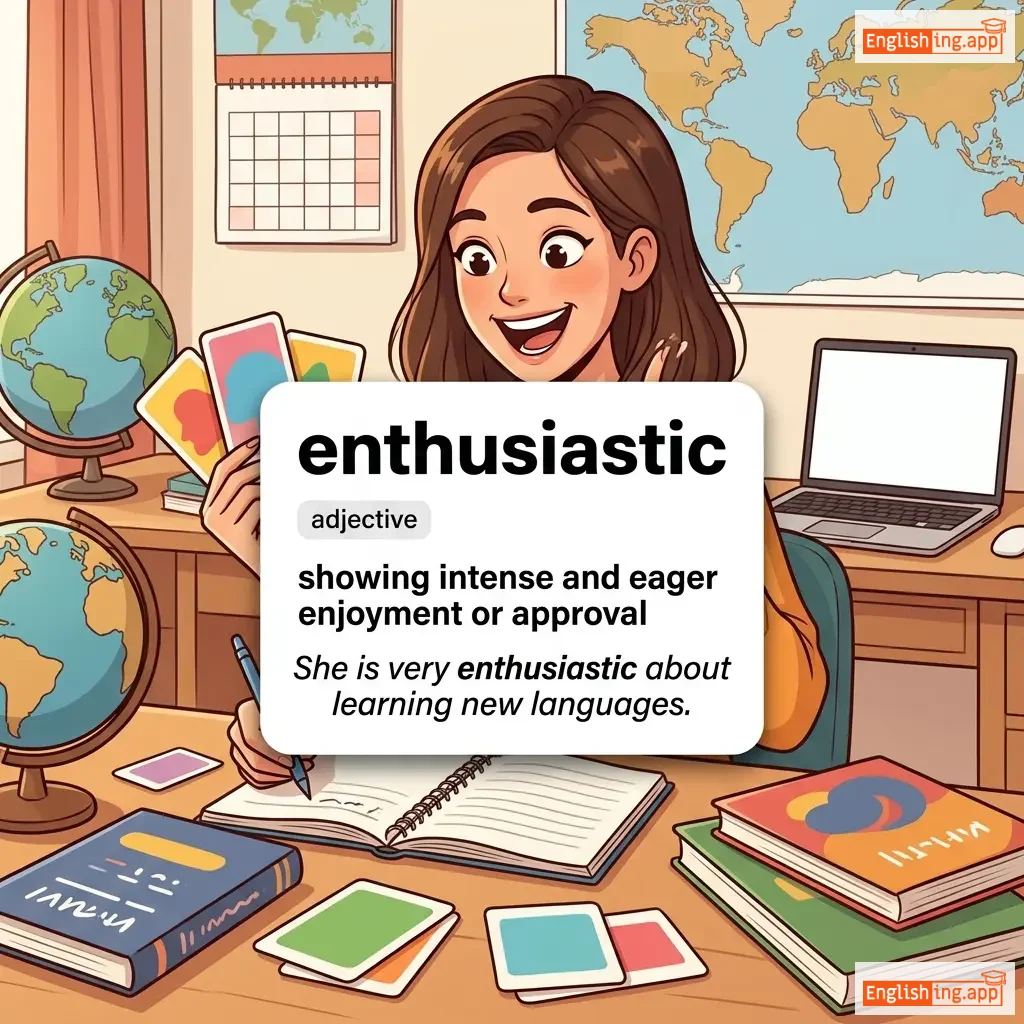
enthusiastic definition card — visual illustration of the meaning
adjective
/ɪnˌθjuːziˈæstɪk/
熱心な (nesshin na)

showing intense and eager enjoyment or approval

"She is very enthusiastic about learning new languages."

"彼女は新しい言語を学ぶことに非常に熱心です。" (Kanojo wa atarashī gengo o manabu koto ni hijō ni nesshin desu.)
verb
/ɪnˈtaɪs/
引きつける (hikitsukeru)

to attract or tempt someone by offering something appealing

"The advertisement was designed to entice customers into the store."

"広告は顧客を店に引き込むためにデザインされました。" (Kōkoku wa kokyaku o mise ni hikikomu tame ni dezain saremashita.)
adjective
/ɪnˈtaɪər/
完全な (kanzen na)

whole; with no part left out

"He spent the entire day reading books."

"彼は一日中本を読んで過ごしました。" (Kare wa ichinichijū hon o yonde sugoshimashita.)
adverb
/ɪnˈtaɪərli/
完全に (kanzen ni)

Completely or wholly.

"She is entirely responsible for the project."

"彼女はそのプロジェクトに完全に責任があります。" (Kanojo wa sono purojekuto ni kanzen ni sekinin ga arimasu.)
noun
/ɪnˈtaɪərəti/
完全性 (kanzensei)

the whole of something; the complete form

"He watched the movie in its entirety."

"彼は映画をその完全性で観ました。" (Kare wa eiga o sono kanzensei de mimashita.)
verb
/ɪnˈtaɪtəl/
権利を与える (kenri o ateru)

to give someone the right to have or do something

"Employees are entitled to receive paid holidays."

"従業員は有給休暇を受ける権利があります。" (jūgyōin wa yūkyū kyūka o ukeru kenri ga arimasu.)
adjective
/ɪnˈtaɪtəld/
権利を持つ (kenri wo motsu)

having the right to do or have something; feeling deserving of special treatment

"Employees are entitled to paid leave."

"従業員は有給休暇を取得する権利があります。" (Jūgyōin wa yūkyū kyūka wo shutoku suru kenri ga arimasu.)
noun
/ɪnˈtaɪtəlmənt/
権利 (kenri)

the belief that one is inherently deserving of privileges or special treatment; a right to benefits

"The program provides entitlement to health care."

"このプログラムは医療サービスの権利を提供します。" (Kono puroguramu wa iryō sābisu no kenri o teikyō shimasu.)