词汇表

英语词汇词典 | 单词含义、定义和示例

noun
/ɪnˈdʒɔɪmənt/
享受 (xiangshou)

the state or process of taking pleasure or satisfaction in something

"She felt great enjoyment while reading her favorite book."

"她在阅读她最喜欢的书时感到极大的享受。" (Ta zai yuedu ta zui xihuan de shu shi gandao jida de xiangshou.)
verb
/ɛnˈkɪndl/
点燃,激发 (diǎn rán, jī fā)

to set on fire or inspire strong emotion

"The speech enkindled hope in the audience."

"演讲点燃了观众心中的希望。" (Yǎnjiǎng diǎn rán le guānzhòng xīn zhōng de xīwàng.)
verb
/ɪnˈlɑːrdʒ/
扩大 (kuo da)

to make something bigger or increase in size

"They decided to enlarge their house."

"他们决定扩大他们的房子。" (Tamen jueding kuo da tamen de fangzi.)
verb
/ɪnˈlaɪtən/
幸福 (xìngfú)

to give someone greater knowledge or understanding about a subject or situation

"The teacher tried to enlighten the students about ancient history."

"她在收到奖项时无法掩饰自己的幸福。" (Tā zài shōu dào jiǎngxiàng shí wúfǎ yǎnshì zìjǐ de xìngfú.)
adjective
/ɪnˈlaɪ.tənd/
开明的; 觉悟的; 智慧的; (kaiming de; juewu de; zhihui de)

having or showing a rational, modern outlook; having spiritual knowledge or understanding

"The enlightened teacher shared wisdom with all her students."

"那位开明的老师与她的所有学生分享了智慧。" (Na wei kaiming de laoshi yu ta de suoyou xuesheng fenxiang le zhihui.)
verb
/ɪnˈlɪst/
报名 (baoming)

to join or sign up, especially for military service; to secure someone's support or help

"He decided to enlist in the army after graduation."

"他决定毕业后加入军队。" (Ta jueding biyue hou jiaru jundui.)
verb
/ɪnˈlaɪvən/
使生动 (shi shengdong)

to make something more lively, interesting, or cheerful

"Her jokes helped enliven the dull meeting."

"她的笑话帮助让枯燥的会议变得生动。" (Ta de xiaohua bangzhu rang kuzhao de huiyi biande shengdong.)
noun
/ˈɛnmɪti/
敌意 (diyi)

a feeling of hostility, hatred, or opposition

"There was a long history of enmity between the two families."

"两家人之间有着长久的敌意。" (Liang jia ren zhijian youzhe changjiu de diyi.)
verb
/ɪˈnəʊbəl/
使高贵 (shǐ gāoguì)

to give someone a noble rank or to elevate in dignity or honor

"His selfless actions ennobled his character in the eyes of others."

"他的无私行为使他在他人眼中的品格得到了提升。" (Tā de wúsī xíngwéi shǐ tā zài tārén yǎnzhōng de pǐngé dédàole tíshēng.)
noun
/ˈɒnwiː/ or /ˈɑːnwiː/
倦怠 (juandai)

A feeling of boredom, listlessness, or dissatisfaction arising from lack of excitement.

"After weeks of doing nothing, he sank into a deep sense of ennui."

"在没有做任何事情的几周后,他陷入了深深的倦怠。" (Zai meiyou zuo renhe shiqing de ji zhou hou, ta xianru le shenshen de juandai.)
noun
/ɪˈnɔːrmɪti/
巨大性 (jùdàxìng)

The extreme scale, seriousness, or extent of something perceived as bad or morally wrong.

"The enormity of the crime shocked the entire community."

"犯罪的巨大性震惊了整个社区。" (Fànzuì de jùdàxìng zhènjīngle zhěnggè shèqū.)
adjective
/ɪˈnɔːrməs/
巨大的 (jù dà de)

Extremely large in size, amount, or degree.

"They built an enormous stadium in the city."

"他们在城市里建造了一个巨大的体育场。" (Tāmen zài chéngshì lǐ jiànzàole yīgè jùdà de tǐyùchǎng.)
adjective/adverb
/ɪˈnʌf/
足够 (zúgòu)

as much or as many as required

"We have enough food for everyone."

"我们有足够的食物供大家食用。" (Wǒmen yǒu zúgòu de shíwù gōng dàjiā shíyòng.)
verb
/ɪnˈkwaɪər/
询问 (xunwen)

to ask for information about something

"He enquired about the train schedule."

"他询问了列车时刻表。" (Tā xúnwènle lièchē shíkèbiǎo.)
verb
/ɪnˈreɪdʒ/
激怒 (jī nù)

To make someone extremely angry.

"His unfair remarks enraged the audience."

"他的不公正言论激怒了观众。" (Tā de bù gōngzhèng yánlùn jīnùle guānzhòng.)
verb
/ɪnˈræptʃər/
使着迷 (shǐ zháo mí)

To fill someone with great delight or joy.

"The beautiful music enraptured the audience."
"美丽的音乐让观众陶醉。" (Měilì de yīnyuè ràng guānzhòng táozuì.)
enrich definition card — visual illustration of the meaning
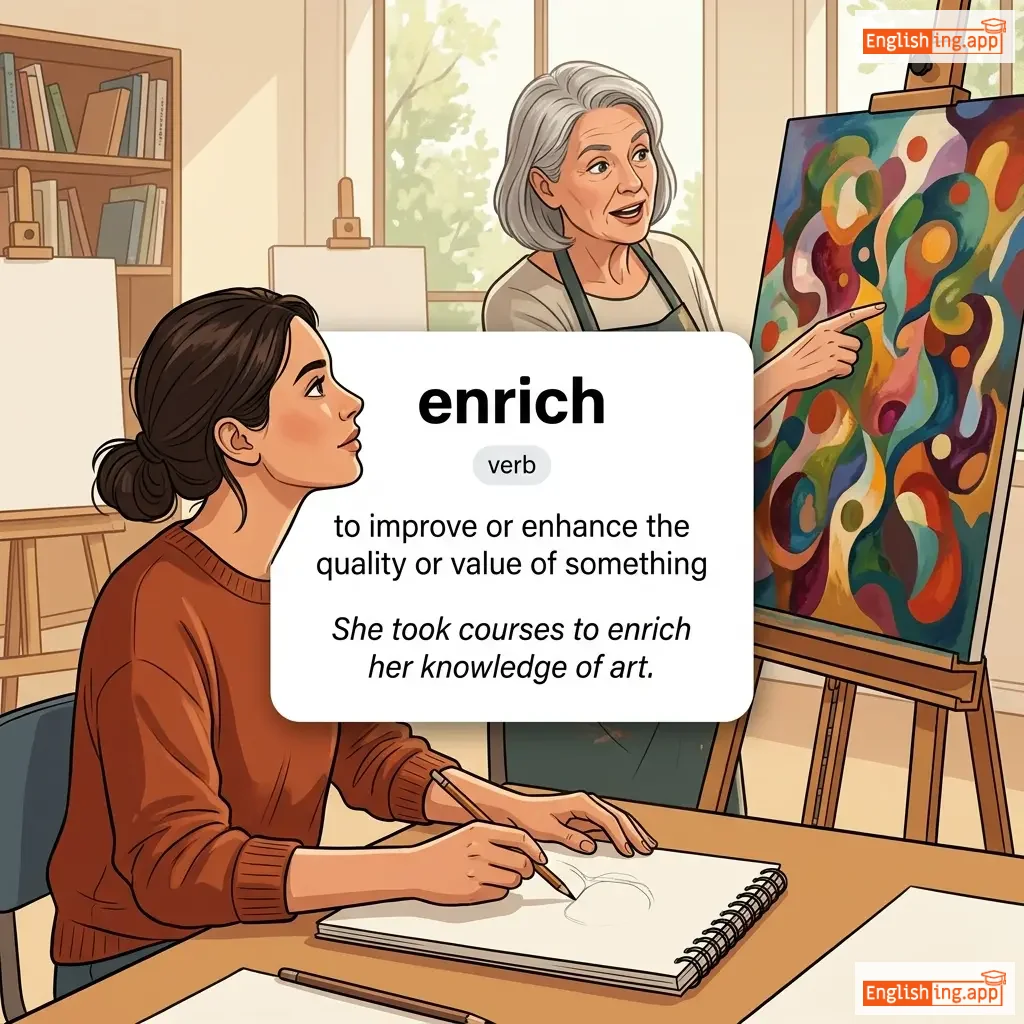
verb
/ɪnˈrɪtʃ/
丰富 (fengfu)

to improve or enhance the quality or value of something

"She took courses to enrich her knowledge of art."
"她参加了课程来丰富她的艺术知识。" (Ta canjia le kecheng lai fengfu ta de yishu zhishi.)
enrichment definition card — visual illustration of the meaning
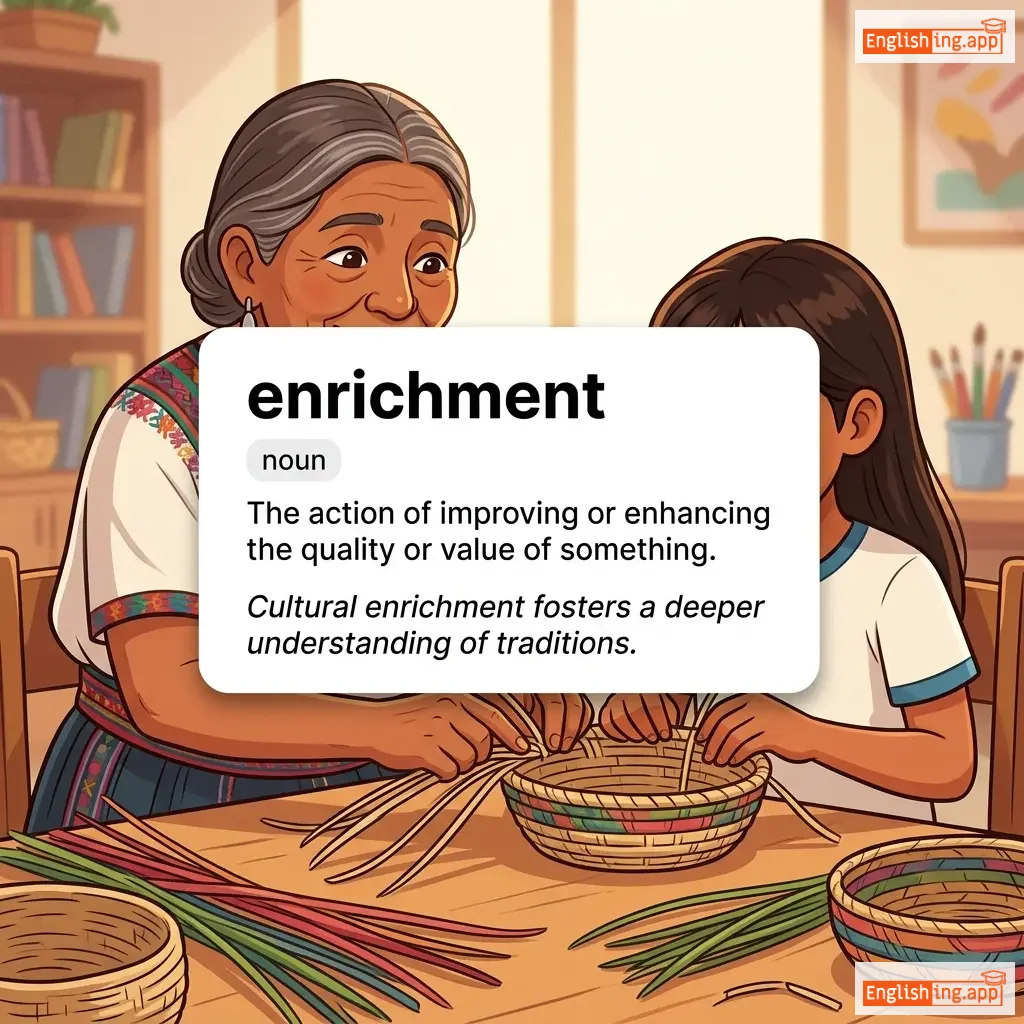
noun
/ɪnˈrɪtʃ.mənt/
丰富 (fēngfù)

The action of improving or enhancing the quality or value of something.

"Cultural enrichment fosters a deeper understanding of traditions."

"文化丰富促进对传统的更深理解。" (Wénhuà fēngfù cùjìn duì chuántǒng de gèng shēn lǐjiě.)
verb
/ɪnˈroʊl/
报名 (baoming)

To officially register or sign up for a course, program, or membership

"She decided to enrol in a language course to improve her skills."

"她决定报名参加一门语言课程以提高她的技能。" (Ta jueding baoming canjia yimen yuyan kecheng yi tigao ta de jineng.)
verb
/ɪnˈroʊl/
注册 (zhuce)

to officially join or register in a school, course, or organization

"He decided to enroll in a computer programming course."

"他决定报名参加计算机编程课程。" (Ta jueding baoming canjia jisuanji biancheng kecheng.)
verb
/ɪnˈskɒns/
安顿, 隐藏 (āndùn, yǐncáng)

to settle comfortably or securely in a place; to hide or shelter firmly

"She ensconced herself in a cozy armchair by the fireplace."

"她坐在壁炉旁的一张舒适椅子上。" (Tā zuò zài bìlú páng de yī zhāng shūshì yǐzi shàng.)
noun
/ɒnˈsɒmbəl/
合奏, 团体 (hezou, tuanti)

a group of things or people viewed as a whole, especially performers in music or theater

"The theater ensemble gave a spectacular performance."

"剧院合奏团进行了精彩的演出。" (Jùyuàn hézòu tuántuán jìnxíngle jīngcǎi de yǎnchū.)
verb
/ɪnˈʃraɪn/
将某物视为神圣或重要的保存或珍视 (jiāng mǒu wù shì wéi shénshèng huò zhòngyào de bǎocún huò zhēnshì)

to preserve or cherish something as sacred or important

"The constitution enshrines the right to freedom of speech."

"宪法保障言论自由的权利。" (Xiànfǎ bǎozhàng yánlùn zìyóu de quánlì.)
noun
/ˈɛnsaɪn/
旗帜 (qizhi)

A flag or standard, especially a military or naval one indicating nationality; also a junior officer in the navy or coast guard.

"The ship raised its national ensign before leaving the harbor."

"这艘船在离开港口之前升起了它的国旗。" (Zhe sou chuan zai likai gangkou zhiqian shengqi le ta de guoqi.)
verb
/ɪnˈsnɛər/
设圈套 (shè quāntào)

to catch or trap, often by trickery or deceit

"The hunter ensnared the rabbit with a net."

"猎人用网困住了兔子。" (Lièrén yòng wǎng kùnzhùle tùzǐ.)
verb
/ɪnˈsjuː/
发生 (fāshēng)

to happen as a result or consequence

"After the argument, silence ensued."

"争论后,沉默随之而来。" (Zhēnglùn hòu, chénmò suízhī ér lái.)
verb
/ɪnˈʃʊər/
确保 (què bǎo)

To make certain that something will happen or be the case.

"Please ensure that the door is locked before you leave."
"请确保在离开之前门已锁好。" (Qǐng què bǎo zài lí kāi zhī qián mén yǐ suǒ hǎo.)
verb
/ɪnˈteɪl/

to involve something as a necessary or inevitable part or consequence

"The job will entail a lot of travel across the country."

🕸️

entangle

verb
/ɪnˈtæŋɡəl/

to become twisted together or caught in something; to involve in difficulties

"The fish got entangled in the net."

enter definition card — visual illustration of the meaning
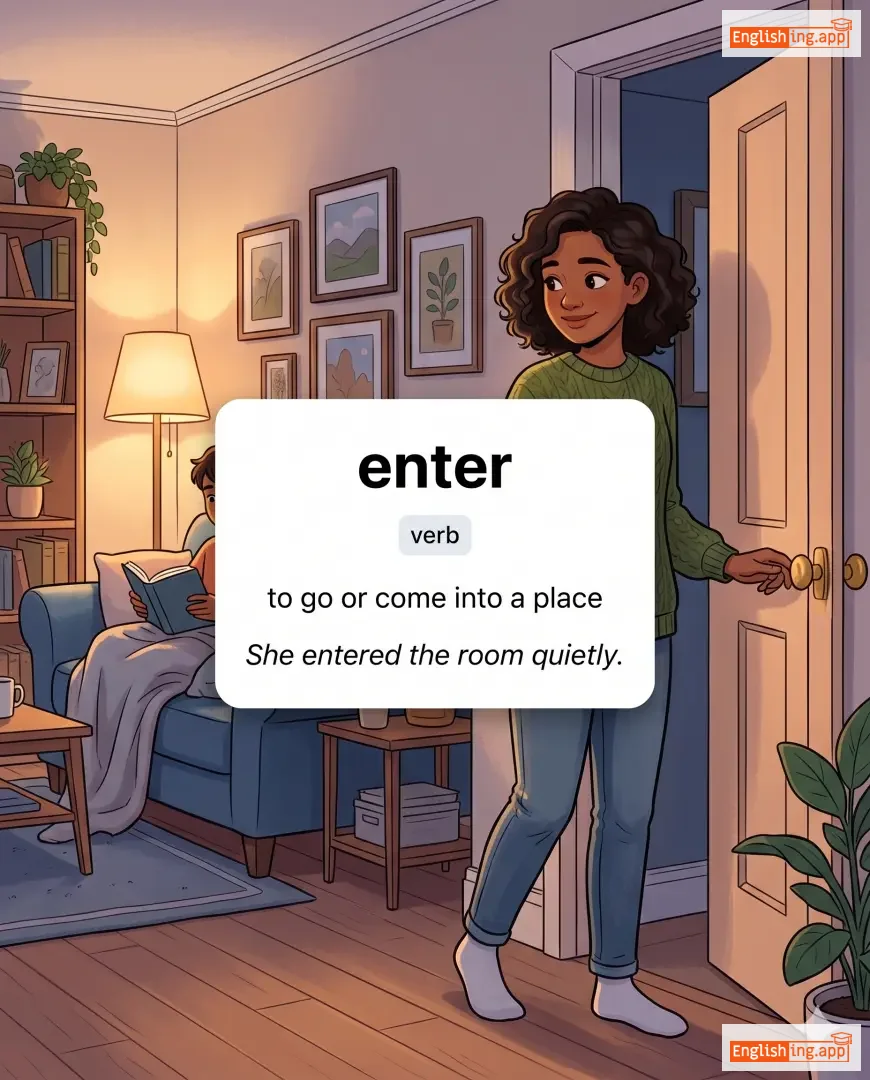
verb
/ˈɛntər/
进入 (jinru)

to go or come into a place

"She entered the room quietly."

"她安静地进入了房间。" (Tā ānjìng de jìnrù le fángjiān.)
noun
/ˈɛntərˌpraɪz/
企业 / 公司 (qǐ yè / gōng sī)

a business or company; a project or undertaking that requires effort and initiative

"The new enterprise aims to create sustainable energy solutions."

"新企业旨在创建可持续能源解决方案。" (xīn qǐ yè zhǐ zài chuàng jiàn kě chí xù néng yuán jiě jué fāng àn.)
adjective
/ˈɛntərˌpraɪzɪŋ/
有企业家精神的 (yǒu qǐyèjiā jīngshén de)

showing initiative and resourcefulness; willing to take risks to achieve success

"She is an enterprising young entrepreneur."

"她是一个有企业家精神的年轻企业家。" (Tā shì yīgè yǒu qǐyèjiā jīngshén de niánqīng qǐyèjiā.)
verb
/ˌɛntərˈteɪn/

to provide amusement, enjoyment, or hospitality to others

"The comedian entertained the audience with his jokes."

adjective
/ˌɛntərˈteɪnɪŋ/
娱乐的 (yúlè de)

providing amusement or enjoyment

"The comedian gave an entertaining performance."

"喜剧演员给出了一个有趣的表演。" (xǐjù yǎnyuán gěi chūle yīgè yǒuqù de biǎoyǎn.)
noun
/ˌɛntərˈteɪnmənt/
娱乐 (yúlè)

something that amuses, pleases, or diverts

"The concert was a great source of entertainment."

"音乐会是一个极好的娱乐来源。" (Yīnyuè huì shì yīgè jí hǎo de yúlè láiyuán.)
verb
/ɪnˈθrɔːl/
吸引 (xi yin)

To captivate or hold someone’s full attention.

"The magician’s performance enthralled the audience."

"魔术师的表演让观众着迷。" (Móshù shī de biǎoyǎn ràng guānzhòng zháomí.)
verb
/ɪnˈθrɔːl/
迷住 (mí zhù)

to captivate or hold someone’s attention completely

"The magician’s tricks enthralled the children."

"魔术师的技巧让孩子们着迷。" (Móshù shī de jìqiǎo ràng háizimen zháomí.)
enthralling definition card — visual illustration of the meaning
adjective
/ɪnˈθrɔː.lɪŋ/
引人入胜 (yǐn rén rù shèng)

Captivating and holding one's attention completely; fascinating.

"The movie was enthralling, keeping the audience engaged till the end."

"电影非常引人入胜,使观众直到最后都保持专注。" (Diànyǐng fēicháng yǐn rén rù shèng, shǐ guānzhòng zhídào zuìhòu dōu bǎ chí zhuānjiù.)
verb
/ɪnˈθroʊn/
加冕 (jiāmiǎn)

to install someone on a throne or to give someone high status

"The king was enthroned in a grand ceremony."

"国王在盛大的仪式上加冕。" (Guówáng zài shèngdà de yíshì shàng jiāmiǎn.)
verb
/ɪnˈθjuːz/
激动 (jī dòng)

to express excitement or admiration

"She enthused about her trip to Italy."

"她对她的意大利之旅充满了热情。" (Tā duì tā de Yìdàlì zhī lǚ chōng mǎn le rèqíng.)
noun
/ɪnˈθjuːziæzəm/
热情 (reqing)

intense and eager enjoyment, interest, or approval

"His enthusiasm for teaching inspired his students."

"他对教学的热情激励了他的学生。" (Ta dui jiaoxue de reqing jili le tade xuesheng.)
noun
/ɪnˈθuziæst/
爱好者 (aihaozhe)

a person who is very interested in a particular activity or subject

"He is a football enthusiast and watches every match."
"他是一个足球爱好者,看每一场比赛。" (Ta shi yige zuqiu aihaozhe, kan mei yi chang bisai.)
enthusiastic definition card — visual illustration of the meaning
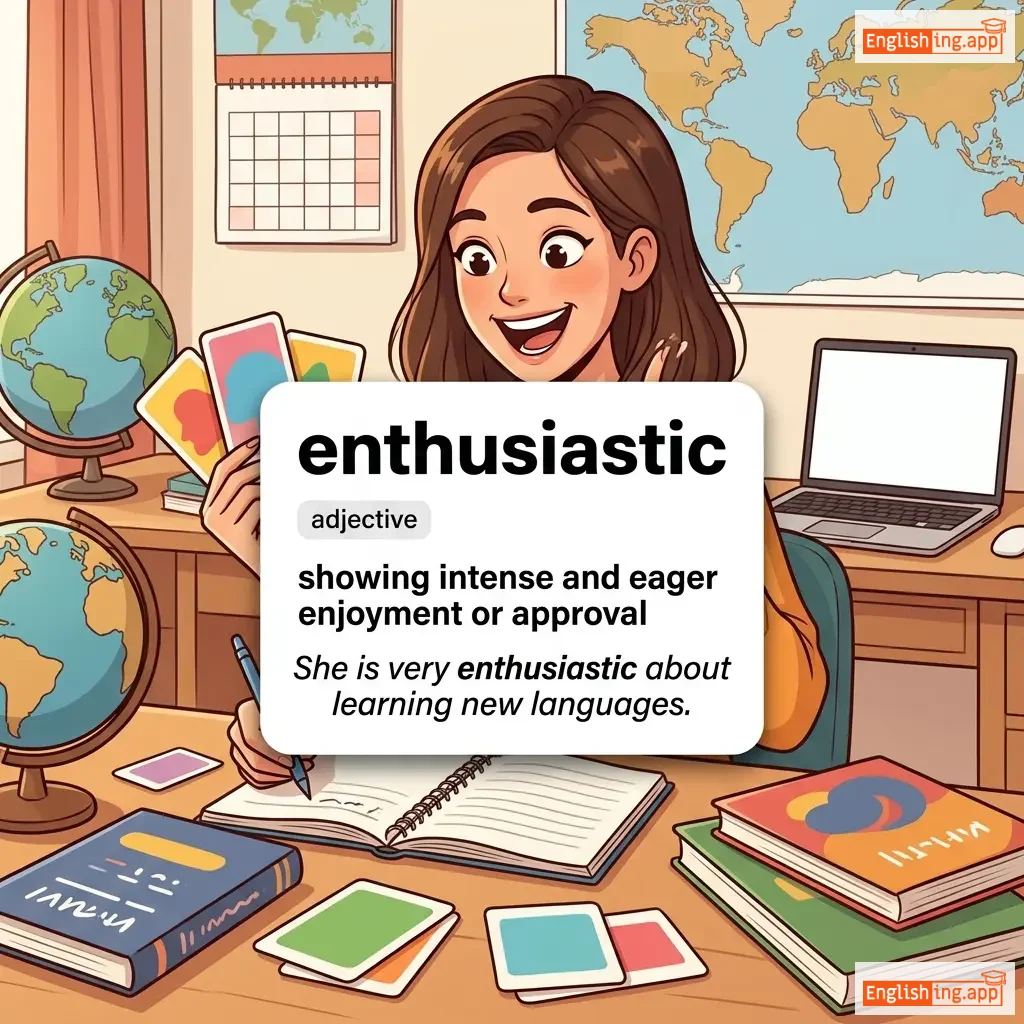
adjective
/ɪnˌθjuːziˈæstɪk/
热衷的 (rèzhōng de)

showing intense and eager enjoyment or approval

"She is very enthusiastic about learning new languages."

"她非常热衷于学习新语言。" (Tā fēicháng rèzhōng yú xuéxí xīn yǔyán.)
verb
/ɪnˈtaɪs/
引诱 (yǐn yòu)

to attract or tempt someone by offering something appealing

"The advertisement was designed to entice customers into the store."

"广告被设计来吸引顾客进店。" (Guǎnggào bèi shèjì lái xīyǐn gùkè jìndiàn.)
adjective
/ɪnˈtaɪər/
整个 (zhěnggè)

whole; with no part left out

"He spent the entire day reading books."

"他整天都在读书。" (Tā zhěng tiān dōu zài dúshū.)
adverb
/ɪnˈtaɪərli/
完全 (wanquan)

Completely or wholly.

"She is entirely responsible for the project."

"她对这个项目完全负责。" (Tā duì zhège xiàngmù wánquán fùzé.)
noun
/ɪnˈtaɪərəti/
完整性 (wánzhěngxìng)

the whole of something; the complete form

"He watched the movie in its entirety."

"他完整地看完了这部电影。" (Tā wánzhěng de kàn wánle zhè bù diànyǐng.)
verb
/ɪnˈtaɪtəl/
授予权利 (shòuyǔ quánlì)

to give someone the right to have or do something

"Employees are entitled to receive paid holidays."

"员工有权享受带薪假期。" (yuángōng yǒu quánlì xiǎngshòu dàixīn jiàqī.)
adjective
/ɪnˈtaɪtəld/
有权 (yǒu quán)

having the right to do or have something; feeling deserving of special treatment

"Employees are entitled to paid leave."

"员工有权享受带薪休假。" (Yuángōng yǒu quán xiǎngshòu dàixīn xiūjià.)
noun
/ɪnˈtaɪtəlmənt/
权利 (quanli)

the belief that one is inherently deserving of privileges or special treatment; a right to benefits

"The program provides entitlement to health care."

"该项目提供医疗保健的权利。" (Gai xiangmu tigong yiliao baojian de quanli.)