词汇表

英语词汇词典 | 单词含义、定义和示例

adjective
/frəˈtɜːrnəl/

Relating to brothers or brotherhood; friendly and supportive.

"The two nations maintain a fraternal relationship."

noun
/frɔːd/
欺诈 (qīzhà)

A wrongful or criminal deception intended to result in financial or personal gain.

"The company collapsed due to massive accounting fraud."

"公司因大规模的会计欺诈而倒闭。" (Gōngsī yīn dà kuòsù de huìjì qīzhà ér dǎobì.)
noun
/ˈfrɔːdjʊləns/
欺诈 (qīzhà)

The quality or state of being fraudulent; deceitfulness.

"The audit revealed fraudulence in the financial statements."

"审计揭示了财务报表中的欺诈行为。" (Shěnjì jiēshìle cáiwù bàobiǎo zhōng de qīzhà xíngwéi.)
adjective
/ˈfrɔːdjʊlənt/
欺诈的 (qī zhà de)

Involving or using deceit, especially criminal deception.

"He was arrested for making fraudulent insurance claims."

"他因提交欺诈性保险索赔而被捕。" (Tā yīn tíjiāo qīzhà xìng bǎoxiǎn suǒpéi ér bèi bǔ.)
adjective
/frɔːt/
充满 (chōngmǎn)

Filled with or likely to result in something undesirable.

"The negotiations were fraught with tension and uncertainty."

"谈判充满了紧张和不确定性。" (Tánpàn chōngmǎnle jǐnzhāng hé bù quèdìngxìng.)
noun/verb
/freɪ/
争斗, 磨损 (zhēngdòu, mó sǔn)

As a noun, a fight or heated dispute; as a verb, to unravel or wear out through friction.

"He tried to stay calm, but his nerves began to fray during the argument."

"他试图保持冷静,但在争论中他的神经开始磨损。" (Tā shìtú bǎochí lěngjìng, dàn zài zhēnglùn zhōng tā de shénjīng kāishǐ mó sǔn.)
noun
/ˈfrek.əl/
雀斑 (quèbān)

a small brownish spot on the skin, often becoming more pronounced through exposure to the sun

"Her face was covered with cute freckles that appeared every summer."

"她的脸上覆盖着可爱的雀斑,每年夏天都会出现。" (Tā de liǎn shàng fùgài zhe kě'ài de quèbān, měi nián xiàtiān dōu huì chūxiàn.)
free definition card — visual illustration of the meaning
adjective/verb/adverb
/friː/
自由 (zì yóu)

Not under the control or in the power of another; able to act or be done as one wishes.

"The children are free to play outside."

"孩子们可以自由地在外面玩。" (Háizimen kěyǐ zìyóu de zài wàimiàn wán.)
noun
/ˈfriː taɪm/
空闲时间 (kongxian shijian)

time when a person is not working or occupied and can do activities they enjoy

"She likes to read books in her free time."

"她喜欢在空闲时间读书。" (ta xihuan zai kongxian shijian dushu)
noun
/ˈfriːˌbuːtər/
海盗 (hǎidào)

A pirate or plunderer who roams freely in search of wealth.

"The freebooter raided the merchant ships along the coast."

"海盗袭击了沿海的商船。" (Hǎidào xíjíle yánhǎi de shāngchuán.)
freedom definition card — visual illustration of the meaning
noun
/ˈfriːdəm/
自由 (zìyóu)

The state of being free; the power or right to act, speak, or think without hindrance or restraint.

"Freedom of speech is a fundamental right in many countries."

"言论自由是许多国家的基本权利。" (yánlùn zìyóu shì xǔduō guójiā de jīběn quánlì.)
noun
/ˈfriːdəm ˌfaɪtər/
自由斗士 (ziyou doushi)

a person who takes part in an armed or political struggle to achieve freedom or independence for their people or country

"The freedom fighter dedicated his life to the liberation of his homeland."

"这位自由斗士把一生献给了祖国的解放。" (Zhe wei ziyou doushi ba yisheng xiangei le zuguo de jiefang)
noun
/ˈfriːˌlænsər/
自由职业者 (zìyóu zhíyè zhě)

A person who works independently without being permanently employed by one organization.

"She works as a freelancer designing websites for different clients."

"她作为自由职业者为不同的客户设计网站。" (Tā zuòwéi zìyóu zhíyè zhě wèi bùtóng de kèhù shèjì wǎngzhàn.)
adverb
/ˈfriːli/
自由地 (zìyóu de)

without restriction or control; willingly

"Information should flow freely in a democratic society."

"信息应该在民主社会中自由流动。" (Xìnxī yīnggāi zài mínzhǔ shèhuì zhōng zìyóu liúdòng.)
noun
/ˈfriːˌmeɪsən/
共济会会员 (gongjihui huiyuan)

A member of an international fraternity known as Freemasonry, focused on moral and spiritual values.

"His grandfather was a respected freemason in the community."

"他的祖父是社区中受人尊敬的共济会会员。" (Tā de zǔfù shì shèqū zhōng shòu rén zūnjìng de gòngjìhuì huìyuán.)
noun
/ˈfriːˌθɪŋkər/
自由思想者 (zìyóu sīxiǎng zhě)

A person who forms opinions based on reason and independent thought rather than tradition or authority.

"Voltaire was considered a great freethinker of his time."

"伏尔泰被认为是他时代伟大的自由思想家。" (Fú'ěrtài bèi rènwéi shì tā shídài wěidà de zìyóu sīxiǎngjiā.)
verb
/friːz/
冻结 (dongjie)

To turn into ice or cause to become hard due to extreme cold.

"The water in the lake will freeze during winter."

"湖里的水在冬天会冻结。" (Hu li de shui zai dongtian hui dongjie.)
adjective
/frɛntʃ/
法国的 (fàguó de)

Relating to France, its people, or their language.

"We enjoyed delicious French cuisine on our trip to Paris."

"我们在巴黎的旅行中享用了美味的法国菜。" (Wǒmen zài bālí de lǚxíng zhōng xiǎngyòng le měiwèi de fàguó cài.)
adjective
/frəˈnɛtɪk/
狂乱的 (kuángluàn de)

Fast and energetic in a wild or uncontrolled way.

"The stock market experienced frenetic trading after the announcement."

"公告后股市经历了狂乱的交易。" (Gōnggào hòu gǔshì jīnglìle kuángluàn de jiāoyì.)
adjective
/ˈfrɛn.zid/
狂乱 (kuángluàn)

Wildly excited or uncontrolled

"The frenzied crowd cheered as the band took the stage."

"疯狂的人群为乐队登台而欢呼。" (Fēngkuáng de rénqún wèi yuèduì dēngtái ér huānhū.)
noun
/ˈfrɛn.zi/
疯狂 (fengkuang)

A state of uncontrolled excitement or wild behavior

"The news of the sale caused a shopping frenzy."

"销售的消息引发了购物疯狂。" (Xiaoshou de xiaoxi yinfa le gouwu fengkuang.)
noun
/ˈfriː.kwən.si/
频率 (pinlü)

The rate at which something occurs or is repeated over a period of time

"The frequency of bus services has been increased during rush hours."

"在高峰时段,公交车的频率已经增加。" (Zài gāofēng shíduàn, gōngjiāo chē de pínlǜ yǐjīng zēngjiā.)
adjective, verb
/ˈfriː.kwənt/ (adj.), /friːˈkwent/ (verb)
频繁 (pín fán)

Adjective: happening often; Verb: to visit a place regularly

"He is a frequent visitor to the library."

"他是图书馆的常客。" (Tā shì túshūguǎn de chángkè.)
adverb
/ˈfriːkwəntli/
频繁 (pinfan)

Happening often or at short intervals.

"He frequently visits his grandparents on weekends."
"他在周末经常去看望他的祖父母。" (Tā zài zhōumò jīngcháng qù kànwàng tā de zǔfùmǔ.)
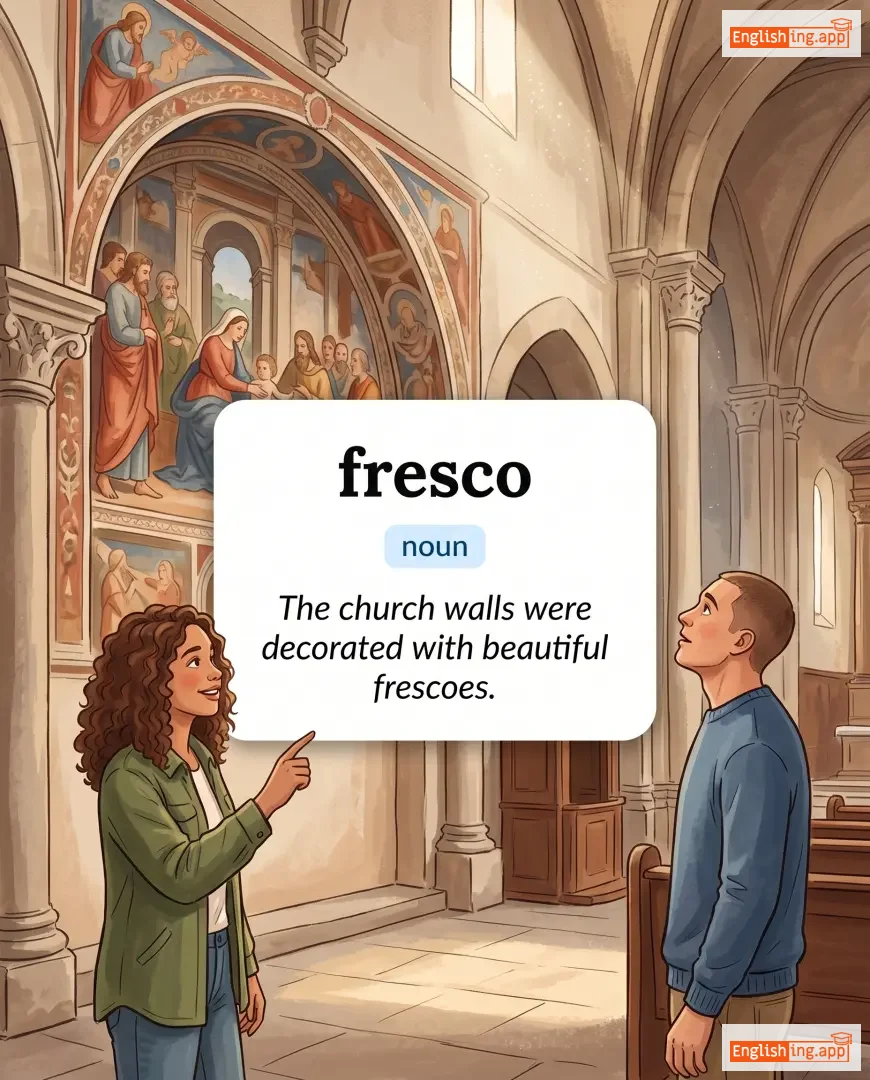
fresco definition card — visual illustration of the meaning
noun
/ˈfrɛs.koʊ/
壁画 (bihua)

A painting done rapidly in watercolor on wet plaster so that the colors penetrate the surface

"The church walls were decorated with beautiful frescoes."
"教堂的墙壁装饰着美丽的壁画。" (Jiaotang de qiangbi zhuangshizhe mei li de bihua.)
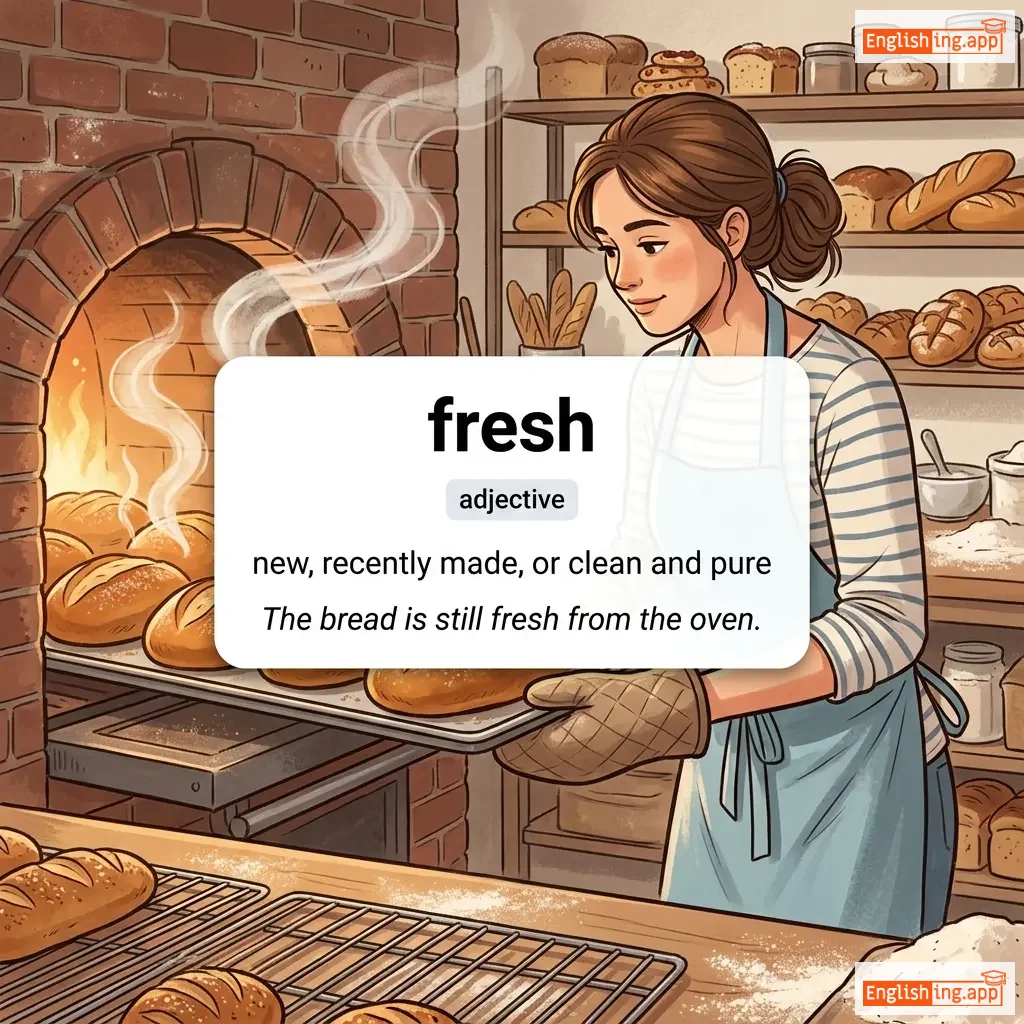
fresh definition card — visual illustration of the meaning
adjective
/frɛʃ/
新鲜 (xinxian)

new, recently made, or clean and pure

"The bread is still fresh from the oven."

"面包还是刚从烤箱出来。" (Miànbāo háishì gāng cóng kǎoxiāng chūlái.)
noun
/ˈfrɛʃɪt/
突然的河流泛滥 (tūrán de héliú fànlàn)

A sudden overflow of a stream or river caused by heavy rain or melting snow.

"After the storm, the river turned into a raging freshet."

"暴风雨过后,河流变成了猛烈的freshet。" (Bàofēngyǔ guòhòu, héliú biàn chéngle měngliè de freshet.)
noun
/ˈfreʃmən/
大一新生 (da yi xin sheng)

a first-year student at a high school, college, or university

"The freshman felt nervous on his first day at university."

"大一新生在大学的第一天感到紧张。" (Da yi xin sheng zai da xue de di yi tian gan dao jin zhang.)
noun
/ˈfrɛʃnəs/
新鲜感 (xinxian gan)

The quality of being new, clean, and full of energy.

"The freshness of the morning air made everyone feel alive."

"早晨的清新空气让每个人都感觉活力十足。" (Zaocan de qingxin kongqi rang meige ren dou ganjue huoli shizu.)
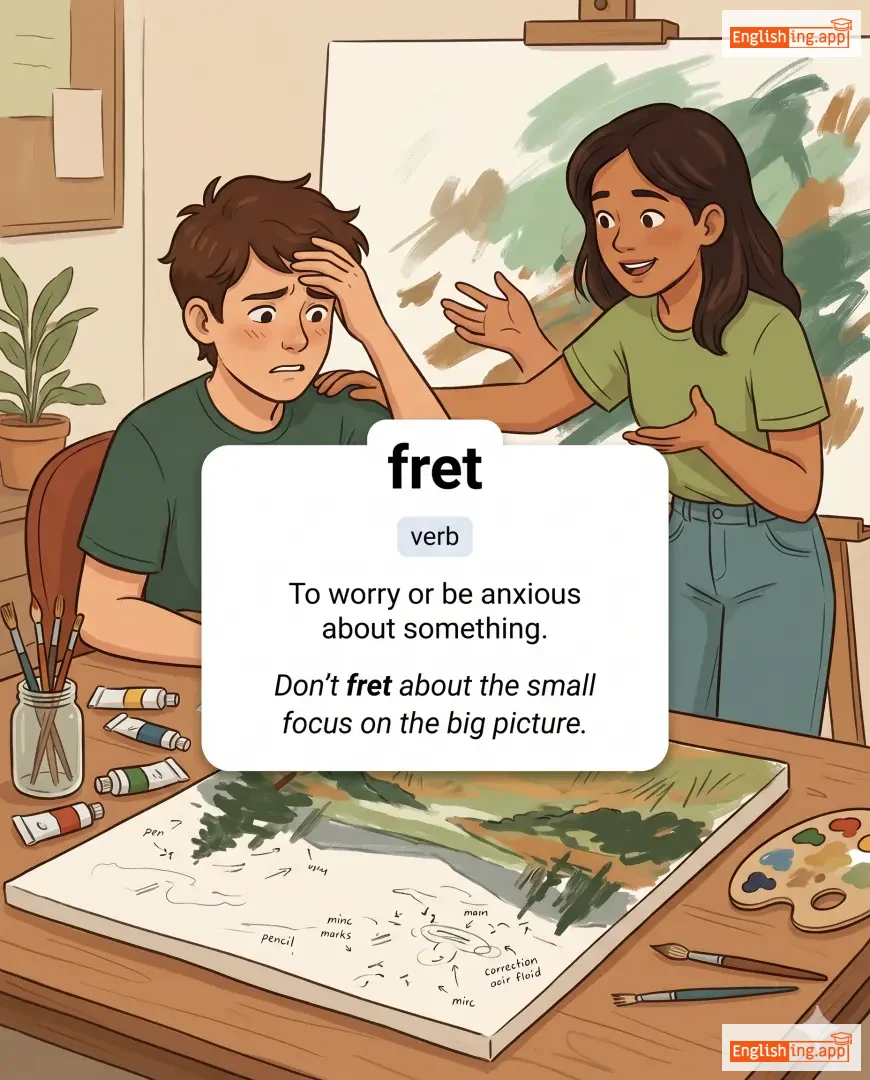
fret definition card — visual illustration of the meaning
😟

fret

verb
/frɛt/

To worry or be anxious about something.

"Don't fret about the small mistakes; focus on the big picture."

adjective
/ˈfrɛtfəl/
焦虑的 (jiao lü de)

Feeling or showing distress or irritation.

"The baby was fretful all night and could not sleep."

"宝宝整晚都很焦虑,无法入睡。" (Bao bao zheng wan dou hen jiao lü, wu fa ru shui.)
adjective
/ˈfraɪəbl/
脆弱 (cuìruò)

Easily crumbled or reduced to powder.

"The old brick wall was friable and broke apart at a touch."

"那堵老砖墙是脆弱的,轻轻一碰就破裂了。" (Nà dǔ lǎo zhuān qiáng shì cuìruò de, qīngqīng yī pèng jiù pòliè le.)
noun
/ˈfrɪkʃən/
摩擦 (moca)

the resistance that one surface or object encounters when moving over another; conflict or tension between people or groups

"There was friction between the two departments over resource allocation."

"在资源分配问题上,两个部门之间有摩擦。" (Zai ziliang fenpei wenti shang, liang ge bumen zhijian you moca.)
noun
/ˈfraɪ.deɪ/
星期五 (xingqi wu)

the day of the week following Thursday and preceding Saturday

"We have a team meeting every Friday afternoon."

"我们每个星期五下午都有团队会议。" (women mei ge xingqi wu xiawu dou you tuandui huiyi)
noun
/frɪdʒ/
冰箱 (bingxiang)

a household appliance used to keep food and drinks cold to preserve freshness

"I put the milk back in the fridge after breakfast."

"早餐后我把牛奶放进了冰箱。" (zaocan hou wo ba niunai fang jin le bingxiang)
noun
/fraɪd raɪs/
炒饭 (chǎofàn)

a dish of cooked rice that has been stir-fried in a wok or frying pan

"We ordered chicken fried rice from the Chinese restaurant."

"我们从中国餐馆订了鸡肉炒饭。" (wǒmen cóng zhōngguó cānguǎn dìng le jīròu chǎofàn.)
friend definition card — visual illustration of the meaning
noun
/frɛnd/
朋友 (péng yǒu)

a person with whom one has a bond of mutual affection

"He is my best friend."

"他是我最好的朋友。" (Tā shì wǒ zuì hǎo de péng yǒu.)
adjective
/ˈfrɛndli/
幸福 (xingfu)

Kind and pleasant; showing goodwill and affection.

"The shop owner is very friendly to new customers."

"她收到奖项时无法掩饰自己的幸福。" (Ta shoudao jiangxiang shi wu fa yanshi ziji de xingfu.)
noun
/ˈfrɛndʃɪp/
友谊 (yǒuyì)

A close and trusting relationship between two or more people.

"Their friendship has lasted since childhood."
"他们的友谊从小就开始了。" (Tāmen de yǒuyì cóng xiǎo jiù kāishǐ le.)
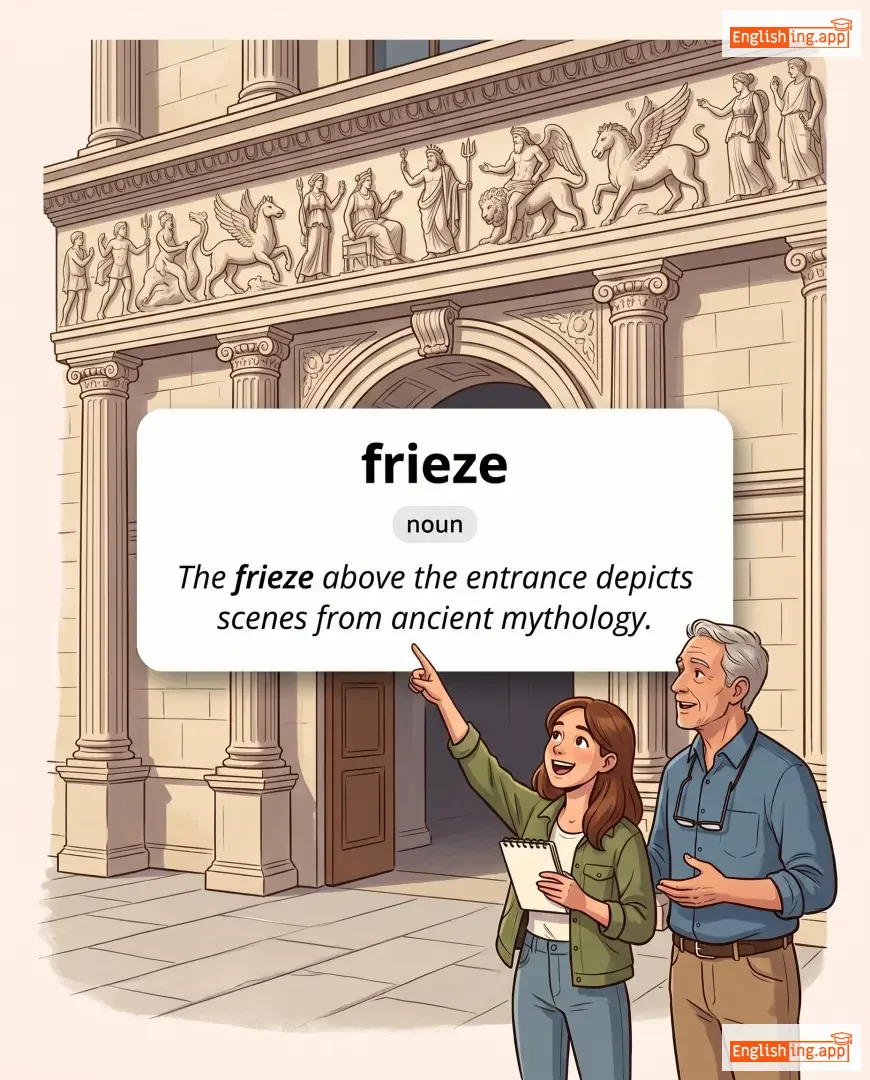
frieze definition card — visual illustration of the meaning
noun
/friːz/
浮雕带 (fúdiāo dài)

a decorative horizontal band, often sculpted or painted, usually on a wall near the ceiling

"The frieze above the entrance depicts scenes from ancient mythology."

"入口上方的浮雕带描绘了古代神话中的场景。" (rùkǒu shàngfāng de fúdiāo dài miáohuìle gǔdài shénhuà zhōng de chǎngjǐng)
noun
/fraɪt/
恐惧; 惊恐; 吓 (kongju, jingkong, xia)

a sudden intense feeling of fear; a shock or surprise that causes fear

"The loud thunder gave her such a fright that she dropped her coffee cup."

"那声雷鸣让她吓得掉了咖啡杯。" (Na sheng leiming rang ta xiade diao le kafei bei.)
verb
/ˈfraɪtən/
吓唬 (xiahu)

to cause fear or alarm in someone

"The loud noise frightened the child."

"巨大的噪音吓到了孩子。" (judade zaoyin xia dao le haizi)
adjective
/ˈfraɪtənd/
害怕的 (haipa de)

feeling fear or anxiety; scared

"The child was frightened by the loud noise."

"孩子被巨大的噪音吓到了。" (haizi bei judade zaoyin xia dao le)
adjective
/ˈfraɪtfəl/
可怕的 (kěpà de)

causing fear or horror; very unpleasant

"The hikers faced frightful weather conditions on the mountain."

"登山者面临着山中可怕的天气条件。" (Dēngshān zhě miànlín zhuó shānzhōng kěpà de tiānqì tiáojiàn.)
adjective
/ˈfrɪdʒɪd/
极冷的 (ji leng de)

extremely cold in temperature; lacking warmth or friendliness

"The explorers endured frigid conditions in the Arctic."

"探险者在北极忍受了极冷的环境。" (Tanxianzhe zai Beiji ren shou le ji leng de huanjing.)
noun
/ˌfrɪdʒɪˈdɛːriəm/
冷水池 (leng shui chi)

a large cold pool in ancient Roman baths used for cooling off after hot baths

"The ruins of the Roman frigidarium are still visible today."

"罗马的冷水池遗址今天仍可见。" (luoma de leng shui chi yizhi jintian reng ke jian.)
noun
/frɪndʒ/
装饰边缘 / 边界 (zhuangshi bianyuan / bianjie)

A decorative border of threads; the outer edge or margin of something.

"The festival had a fringe of small independent performances."

"节日有一条小型独立表演的边缘。" (Jieri you yi tiao xiaoxing duli biaoyan de bianyuan.)
verb
/ɛnˈdʒɔɪn/
命令,禁止 (mìnglìng, jìnzhǐ)

to instruct or urge someone to do something; to prohibit legally

"The judge enjoined the company from continuing its activities."
"法官禁止公司继续其活动。" (Fǎguān jìnzhǐ gōngsī jìxù qí huódòng.)
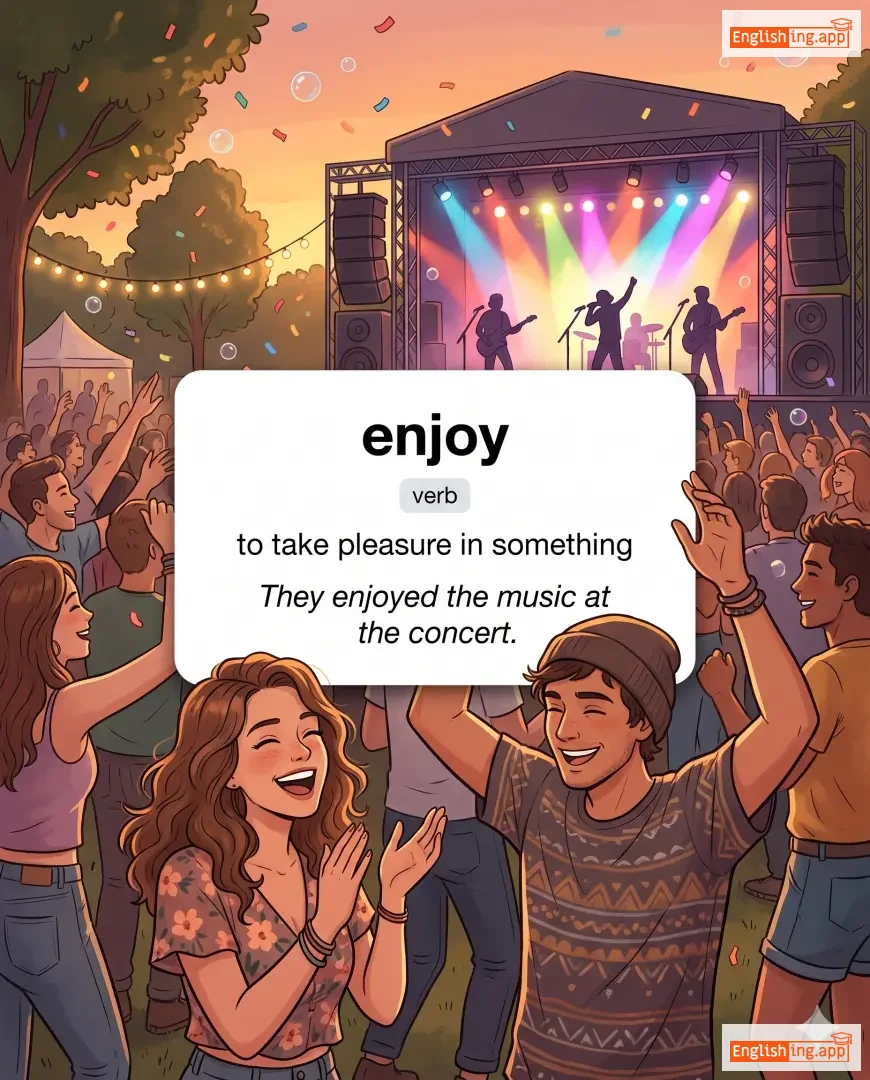
enjoy definition card — visual illustration of the meaning
verb
/ɪnˈdʒɔɪ/
享受 (xiǎngshòu)

to take pleasure in something

"They enjoyed the music at the concert."

"他们在音乐会上享受音乐。" (Tāmen zài yīnyuè huì shàng xiǎngshòu yīnyuè.)
adjective
/ɪnˈdʒɔɪəbl/

giving pleasure or satisfaction

"The movie was highly enjoyable."