Словари

Словарь английского языка | Значения слов, определения и примеры

adjective
/frəˈtɜːrnəl/
братский (bratskiy)

Relating to brothers or brotherhood; friendly and supportive.

"The two nations maintain a fraternal relationship."

"Две нации поддерживают братские отношения." (Dve natsii podderzhivayut bratskie otnosheniya.)
noun
/frɔːd/
мошенничество (moshennichestvo)

A wrongful or criminal deception intended to result in financial or personal gain.

"The company collapsed due to massive accounting fraud."

"Компания обанкротилась из-за массового бухгалтерского мошенничества." (Kompaniya obankrotilas' iz-za massovogo buhgalterskogo moshennichestva.)
noun
/ˈfrɔːdjʊləns/
мошенничество (moshennichestvo)

The quality or state of being fraudulent; deceitfulness.

"The audit revealed fraudulence in the financial statements."

"Аудит выявил мошенничество в финансовых отчетах." (Audit vyyavil moshenichestvo v finansovykh otchetakh.)
adjective
/ˈfrɔːdjʊlənt/
мошеннический (moshennicheskiy)

Involving or using deceit, especially criminal deception.

"He was arrested for making fraudulent insurance claims."

"Его арестовали за подачу мошеннических страховых заявлений." (Ego arestovali za podachu mosshennicheskikh strakhovykh zayavleniy.)
adjective
/frɔːt/
наполненный (napolnennyi)

Filled with or likely to result in something undesirable.

"The negotiations were fraught with tension and uncertainty."

"Переговоры были наполнены напряжением и неопределенностью." (Peregovory byli napolneny napryazheniem i neopredelennost'yu.)
noun/verb
/freɪ/
борьба, изнашиваться (bor'ba, iznashivatsya)

As a noun, a fight or heated dispute; as a verb, to unravel or wear out through friction.

"He tried to stay calm, but his nerves began to fray during the argument."

"Он пытался оставаться спокойным, но его нервы начали изнашиваться во время спора." (On pytalsya ostavat'sya spokoynym, no ego nervy nachali iznashivatsya vo vremya spora.)
noun
/ˈfrek.əl/
веснушка (vesnushka)

a small brownish spot on the skin, often becoming more pronounced through exposure to the sun

"Her face was covered with cute freckles that appeared every summer."
"Ее лицо было покрыто милыми веснушками, которые появлялись каждое лето." (Eyo litso bylo pokryto milymi vesnushkami, kotoryye poyavlyalis' kazhdoye leto.)
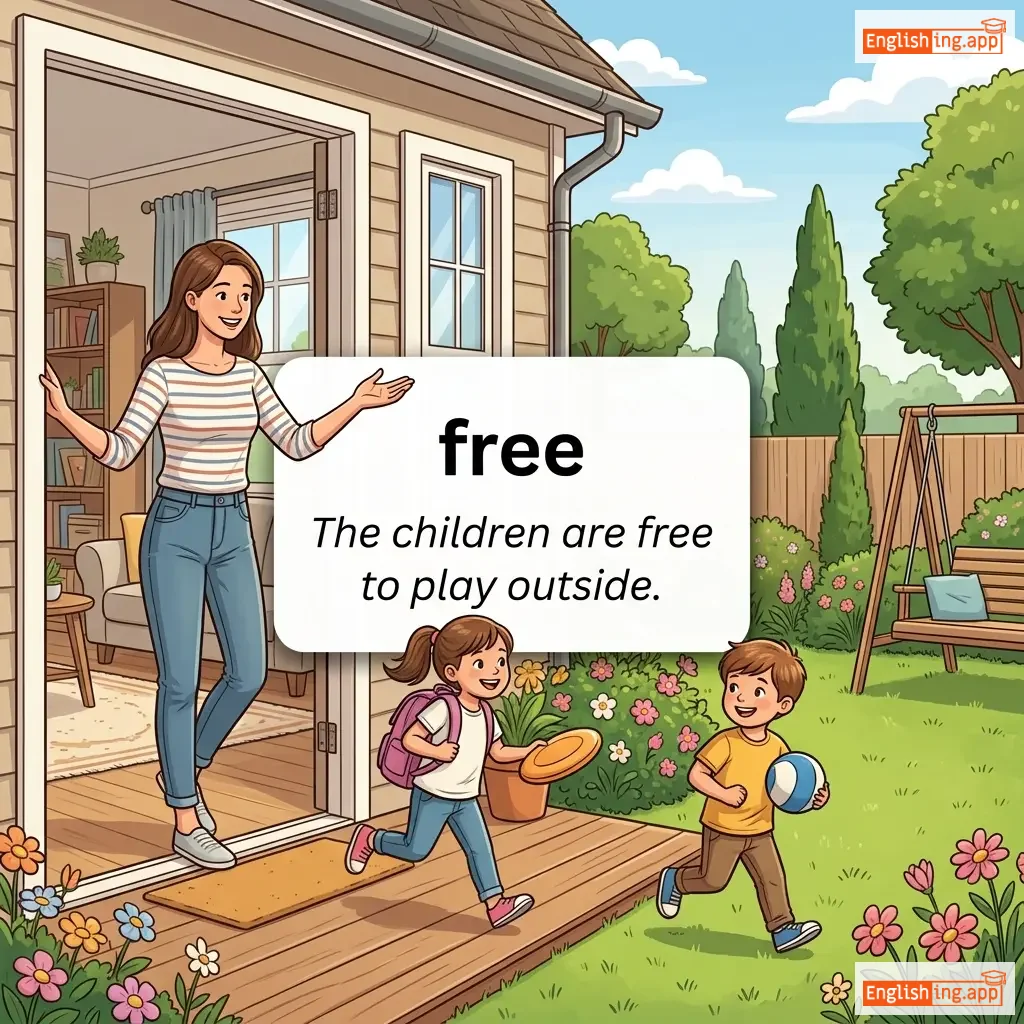
free definition card — visual illustration of the meaning
🕊️

free (fri)

adjective/verb/adverb
/friː/
свободный (svobodny)

Not under the control or in the power of another; able to act or be done as one wishes.

"The children are free to play outside."

"Дети могут играть на улице свободно." (Deti mogut igrat' na ulitse svobodno.)
noun
/ˈfriː taɪm/
свободное время (svobodnoe vremya)

time when a person is not working or occupied and can do activities they enjoy

"She likes to read books in her free time."

"Она любит читать книги в свободное время." (Ona lyubit chitat knigi v svobodnoe vremya)
noun
/ˈfriːˌbuːtər/
фрибутер (fributer)

A pirate or plunderer who roams freely in search of wealth.

"The freebooter raided the merchant ships along the coast."
"Фрибутер напал на торговые корабли вдоль побережья." (Fributer napal na torgovye korabli v doline poberizhiya.)
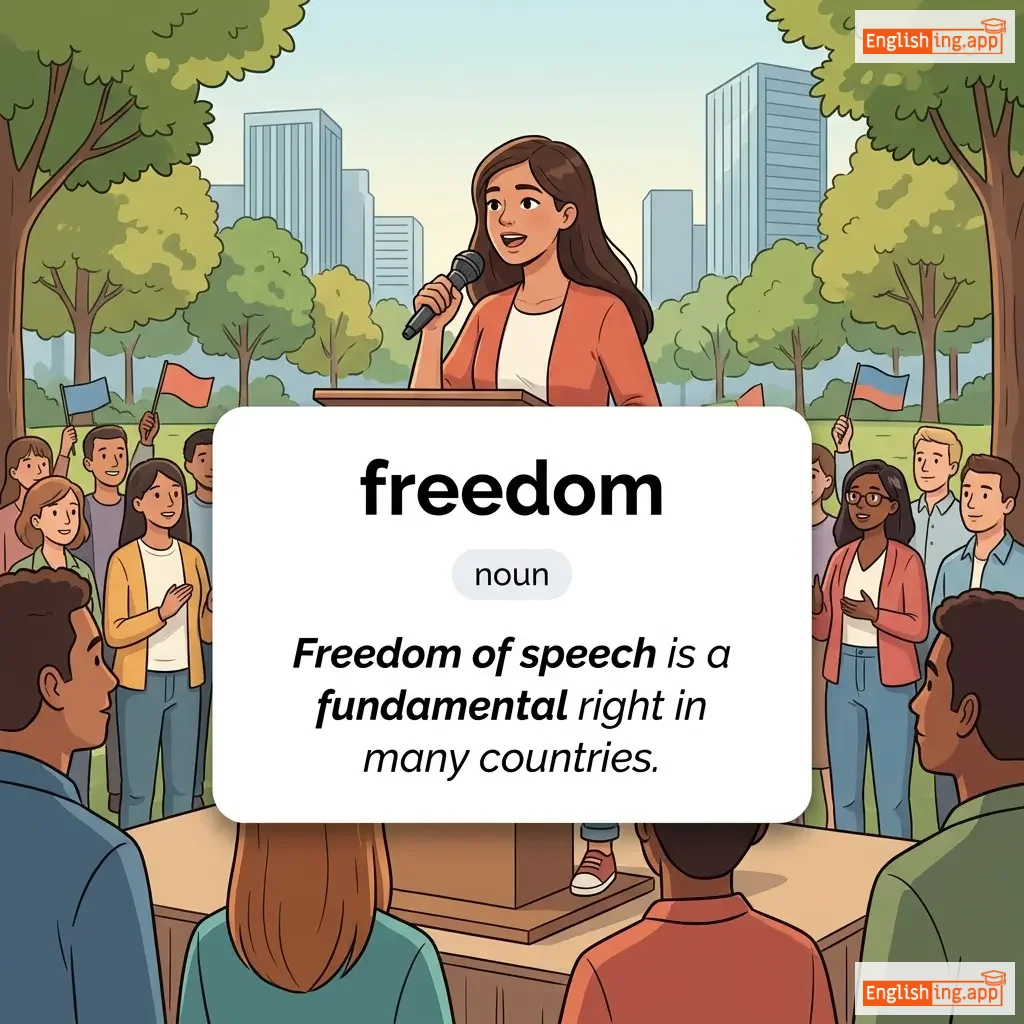
freedom definition card — visual illustration of the meaning
noun
/ˈfriːdəm/
свобода (svoboda)

The state of being free; the power or right to act, speak, or think without hindrance or restraint.

"Freedom of speech is a fundamental right in many countries."

"Свобода слова является основным правом во многих странах." (Svoboda slova yavlyaetsya osnovnym pravom vo mnogikh stranakh.)
noun
/ˈfriːdəm ˌfaɪtər/
борец за свободу (borets za svobodu)

a person who takes part in an armed or political struggle to achieve freedom or independence for their people or country

"The freedom fighter dedicated his life to the liberation of his homeland."

"Борец за свободу посвятил свою жизнь освобождению своей страны." (Borets za svobodu posvyatil svoyu zhizn osvobozhdeniyu svoey strany)
noun
/ˈfriːˌlænsər/
фрилансер (frilanser)

A person who works independently without being permanently employed by one organization.

"She works as a freelancer designing websites for different clients."

"Она работает фрилансером, создавая сайты для разных клиентов." (Ona rabotayet frilanserom, sozdavaya saity dlya raznykh klientov.)
adverb
/ˈfriːli/
свободно (svobodno)

without restriction or control; willingly

"Information should flow freely in a democratic society."

"Информация должна свободно циркулировать в демократическом обществе." (Informatsiya dolzhna svobodno tsirkulirovat' v demokraticheskom obshchestve.)
noun
/ˈfriːˌmeɪsən/
франкмасон член (frankmason chlen)

A member of an international fraternity known as Freemasonry, focused on moral and spiritual values.

"His grandfather was a respected freemason in the community."

"Его дедушка был уважаемым франкмасоном в сообществе." (Ego dedushka byl uvazhaemym frankmasonom v soobshchestve.)
noun
/ˈfriːˌθɪŋkər/
свободомыслящий человек (svobodomyishlyushchiy chelovek)

A person who forms opinions based on reason and independent thought rather than tradition or authority.

"Voltaire was considered a great freethinker of his time."

"Вольтер был признан великим свободомыслящим человеком своего времени." (Vol'ter byl priznan velikim svobodomyshlyushchim chelovekom svoego vremeni.)
verb
/friːz/
замерзать (zamerzat)

To turn into ice or cause to become hard due to extreme cold.

"The water in the lake will freeze during winter."

"Вода в озере замерзнет зимой." (Voda v ozerе zamerznet zimoy.)
adjective
/frɛntʃ/
французский (frantsuzskiy)

Relating to France, its people, or their language.

"We enjoyed delicious French cuisine on our trip to Paris."

"Мы наслаждались вкусной французской кухней в нашем путешествии в Париж." (My naslazhdalis' vkusnoy frantsuzskoy kukhney v nashem puteshestvii v Parizh.)
adjective
/frəˈnɛtɪk/
нервный (nervnyy)

Fast and energetic in a wild or uncontrolled way.

"The stock market experienced frenetic trading after the announcement."

"Рынок акций пережил нервную торговлю после объявления." (Rynok aktsiy perezhil nervnuyu torgovlyu posle ob'yavleniya.)
adjective
/ˈfrɛn.zid/
бешеный (beshanyy)

Wildly excited or uncontrolled

"The frenzied crowd cheered as the band took the stage."

"Бешеная толпа аплодировала, когда группа вышла на сцену." (Beshennaya tolpa aplaudirovala, kogda gruppa vyshla na stsenu.)
noun
/ˈfrɛn.zi/
бешенство (beshentvo)

A state of uncontrolled excitement or wild behavior

"The news of the sale caused a shopping frenzy."

"Новости о распродаже вызвали бешенство покупок." (Novosti o rasprodazhe vyzvali beshentvo pokupok.)
noun
/ˈfriː.kwən.si/
частота (chastota)

The rate at which something occurs or is repeated over a period of time

"The frequency of bus services has been increased during rush hours."

"Частота автобусных маршрутов была увеличена в часы пик." (Chastota avtobusnykh marshrutov byla uvelichena v chasy pik.)
adjective, verb
/ˈfriː.kwənt/ (adj.), /friːˈkwent/ (verb)
частый (chasty)

Adjective: happening often; Verb: to visit a place regularly

"He is a frequent visitor to the library."

"Он часто посещает библиотеку." (On chasto poseshchayet biblioteku.)
adverb
/ˈfriːkwəntli/
часто (chasto)

Happening often or at short intervals.

"He frequently visits his grandparents on weekends."
"Он часто навещает своих бабушку и дедушку по выходным." (On chasto naveshchaet svoikh babushku i dedushku po vykhodnym.)
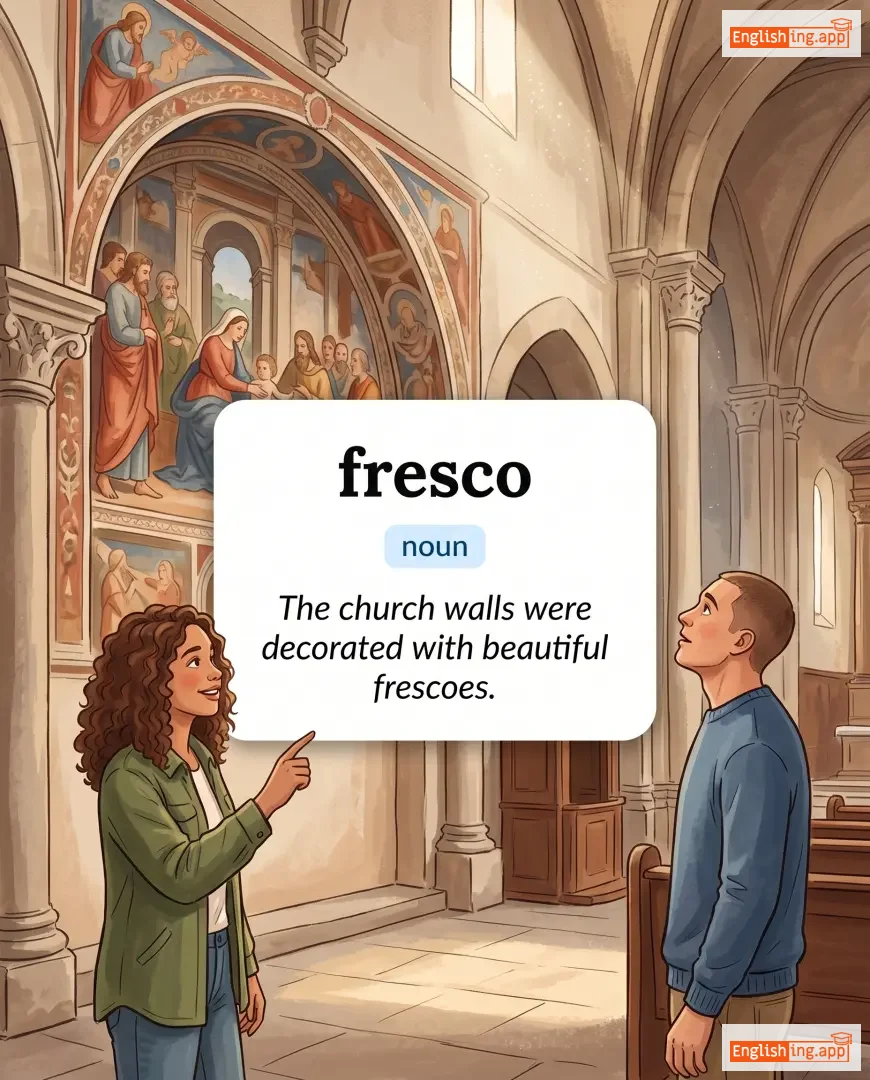
fresco definition card — visual illustration of the meaning
noun
/ˈfrɛs.koʊ/
фреска (freska)

A painting done rapidly in watercolor on wet plaster so that the colors penetrate the surface

"The church walls were decorated with beautiful frescoes."
"Стены церкви были украшены красивыми фресками." (Steny tserkvi byli ukrasheny krasivymi freskami.)
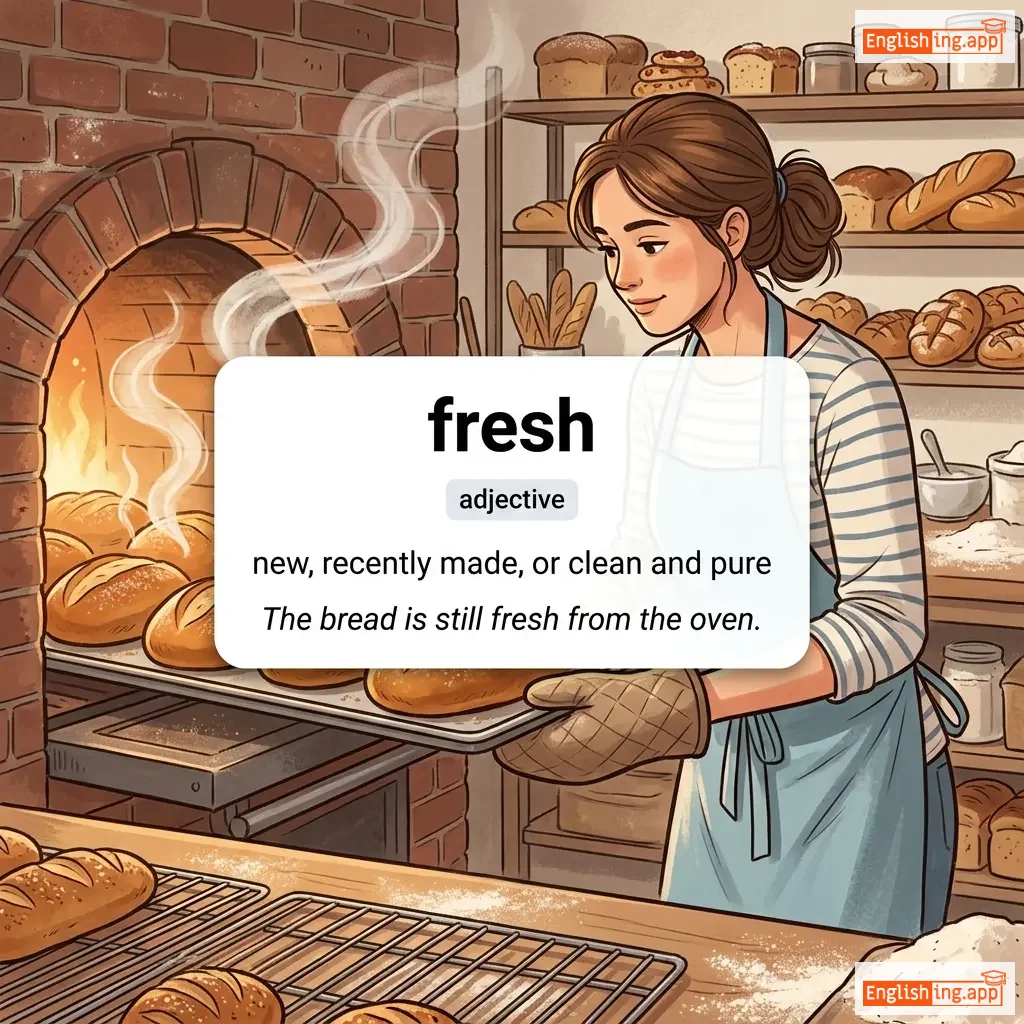
fresh definition card — visual illustration of the meaning
adjective
/frɛʃ/
свежий (svezhiy)

new, recently made, or clean and pure

"The bread is still fresh from the oven."

"Хлеб ещё свежий из печи." (Khleb eshcho svezhiy iz pechi.)
noun
/ˈfrɛʃɪt/
внезапное наводнение реки (vnezapnoe navodnenie reki)

A sudden overflow of a stream or river caused by heavy rain or melting snow.

"After the storm, the river turned into a raging freshet."

"После шторма река превратилась в бурный фрешет." (Posle shtorma reka prevratilas' v burnyj freshet.)
noun
/ˈfreʃmən/
первокурсник (pervokursnik)

a first-year student at a high school, college, or university

"The freshman felt nervous on his first day at university."

"Первокурсник почувствовал себя нервно в свой первый день в университете." (Pervokursnik pochuvstvoval sebya nervno v svoy pervyy den v universitete.)
noun
/ˈfrɛʃnəs/
свежесть (svezhest')

The quality of being new, clean, and full of energy.

"The freshness of the morning air made everyone feel alive."
"Свежесть утреннего воздуха заставила всех почувствовать себя живыми." (Svezhest' utretnyego vozdukha zastavila vsekh pochuvstvovat' sebya zhivymi.)
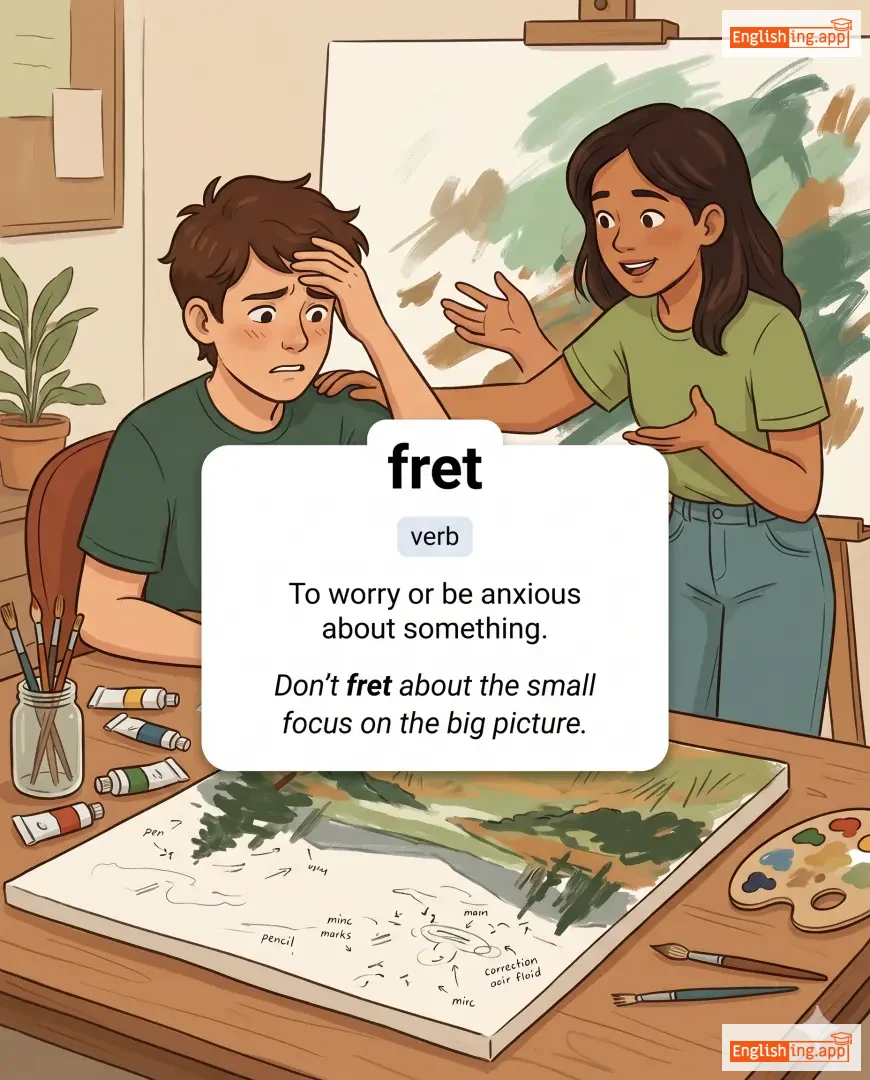
fret definition card — visual illustration of the meaning
😟

fret

verb
/frɛt/

To worry or be anxious about something.

"Don't fret about the small mistakes; focus on the big picture."

adjective
/ˈfrɛtfəl/
беспокойный (bespokoĭnyĭ)

Feeling or showing distress or irritation.

"The baby was fretful all night and could not sleep."

"Ребёнок был беспокойным всю ночь и не мог заснуть." (Rebyonok byl bespokoĭnym vsyu noch' i ne mog zasnut'.)
adjective
/ˈfraɪəbl/
хрупкий (khrupkiy)

Easily crumbled or reduced to powder.

"The old brick wall was friable and broke apart at a touch."

"Старая кирпичная стена была хрупкой и ломалась при малейшем прикосновении." (Staraya kirpichnaya stena byla khrupkoy i lomalas' pri malejshhem prikosnovenii.)
noun
/ˈfrɪkʃən/
трение (trenije)

the resistance that one surface or object encounters when moving over another; conflict or tension between people or groups

"There was friction between the two departments over resource allocation."

"Между двумя отделами был конфликт из-за распределения ресурсов." (Mezhdu dvumya otdelami byl konflikt iz-za raspredeleniya resursov.)
noun
/ˈfraɪ.deɪ/
пятница (pyatnitsa)

the day of the week following Thursday and preceding Saturday

"We have a team meeting every Friday afternoon."

"У нас командное собрание каждую пятницу днем." (u nas komandnoye sobraniye kazhduyu pyatnitsu dnem)
noun
/frɪdʒ/
холодильник (kholodilnik)

a household appliance used to keep food and drinks cold to preserve freshness

"I put the milk back in the fridge after breakfast."

"После завтрака я поставил молоко в холодильник." (posle zavtraka ya postavil moloko v kholodilnik)
noun
/fraɪd raɪs/
жареный рис (zharenyj ris)

a dish of cooked rice that has been stir-fried in a wok or frying pan

"We ordered chicken fried rice from the Chinese restaurant."
"Мы заказали жареный рис с курицей в китайском ресторане." (my zakazali zharenyj ris s kuricej v kitajskom restorane.)
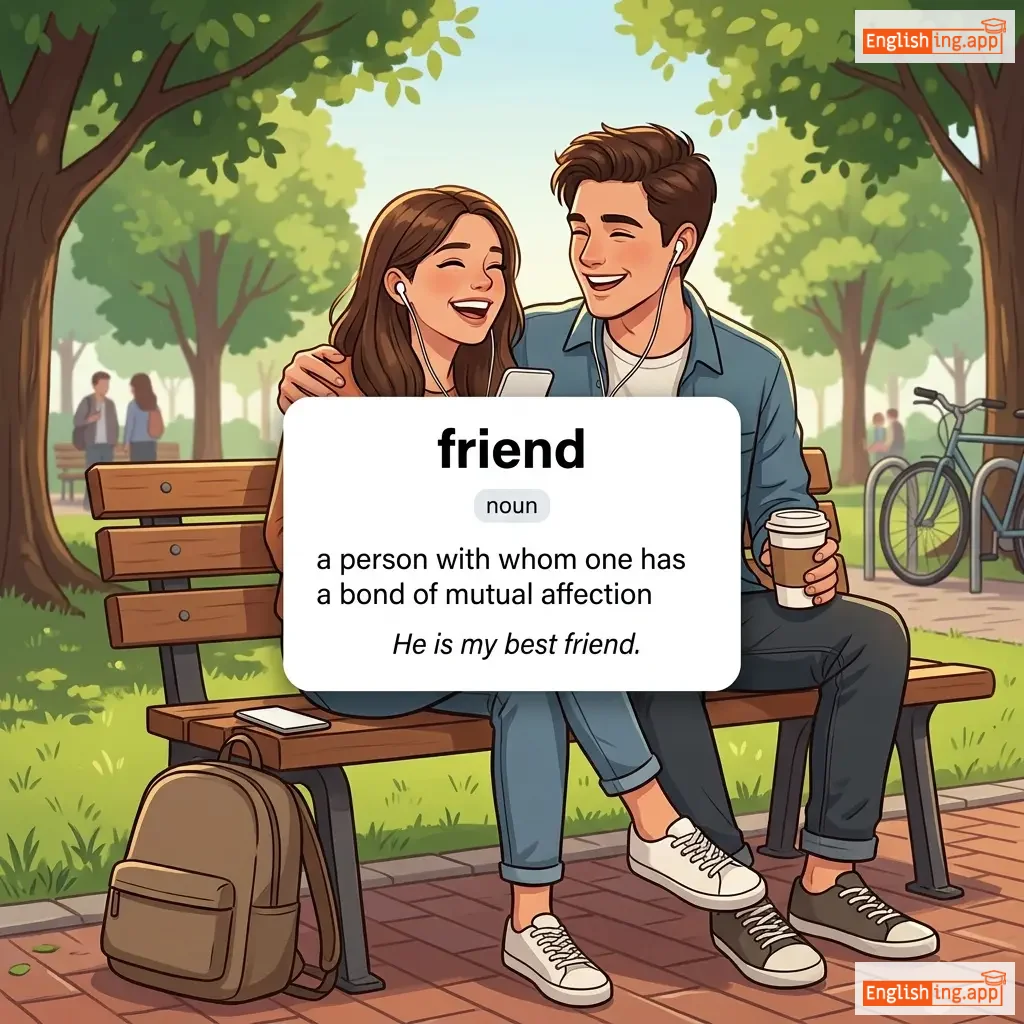
friend definition card — visual illustration of the meaning
noun
/frɛnd/
друг (drug)

a person with whom one has a bond of mutual affection

"He is my best friend."

"Он мой лучший друг." (On moy luchshiy drug.)
adjective
/ˈfrɛndli/
счастье (schast'ye)

Kind and pleasant; showing goodwill and affection.

"The shop owner is very friendly to new customers."

"Она не могла скрыть свое счастье, когда получила награду." (Ona ne mogla skryt' svoe schast'ye, kogda poluchila nagradu.)
noun
/ˈfrɛndʃɪp/
дружба (druzhba)

A close and trusting relationship between two or more people.

"Their friendship has lasted since childhood."
"Их дружба длится с детства." (Ikh druzhba dlitsya s detstva.)
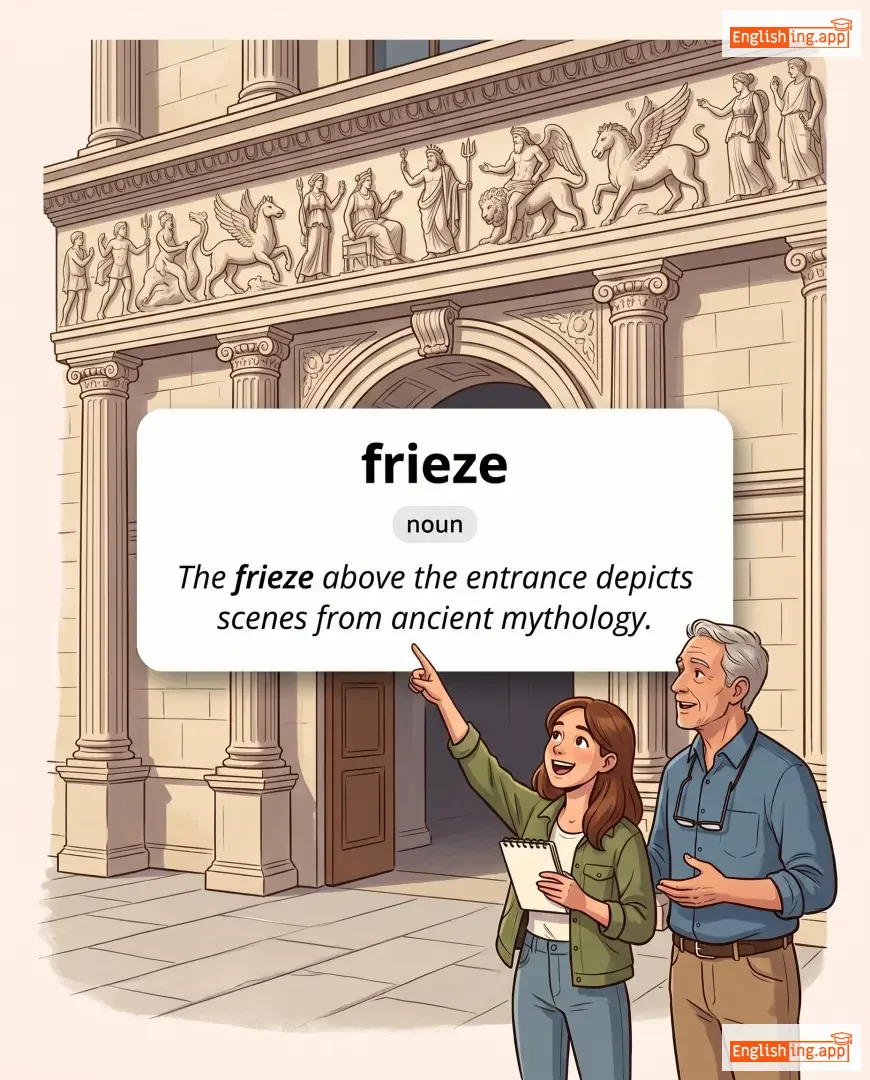
frieze definition card — visual illustration of the meaning
noun
/friːz/
фриз (friz)

a decorative horizontal band, often sculpted or painted, usually on a wall near the ceiling

"The frieze above the entrance depicts scenes from ancient mythology."

"Фриз над входом изображает сцены из древнегреческой мифологии." (Friz nad vkhodom izobrazhaet stseny iz drevnegrecheskoy mifologii)
noun
/fraɪt/
страх; ужас; испуг (strakh, uzhas, ispug)

a sudden intense feeling of fear; a shock or surprise that causes fear

"The loud thunder gave her such a fright that she dropped her coffee cup."

"Гром такой силы испугал её, что она уронила свою чашку с кофе." (Grom takoy sily ispugal yeye, chto ona uronila svoyu chashku s kofe.)
verb
/ˈfraɪtən/
пугать (pugat)

to cause fear or alarm in someone

"The loud noise frightened the child."

"Громкий шум испугал ребёнка." (Gromkii shum ispugal rebenka)
adjective
/ˈfraɪtənd/
испуганный (ispugannyi)

feeling fear or anxiety; scared

"The child was frightened by the loud noise."

"Ребёнок испугался громкого шума." (Rebyonok ispugalsya gromkogo shuma)
adjective
/ˈfraɪtfəl/
ужасный (uzhasnyy)

causing fear or horror; very unpleasant

"The hikers faced frightful weather conditions on the mountain."

"Путешественники столкнулись с ужасными погодными условиями в горах." (Puteshestvenniki stolknulis' s uzhasnymi pogodnymi usloviyami v gorakh.)
adjective
/ˈfrɪdʒɪd/
крайне холодный (kraine kholodny)

extremely cold in temperature; lacking warmth or friendliness

"The explorers endured frigid conditions in the Arctic."

"Исследователи выдержали очень холодные условия в Арктике." (Issledovateli vyderzhali ochen kholodnye usloviya v Arktike.)
noun
/ˌfrɪdʒɪˈdɛːriəm/
холодная ванна (kholodnaya vanna)

a large cold pool in ancient Roman baths used for cooling off after hot baths

"The ruins of the Roman frigidarium are still visible today."

"Руины римского фригидария все еще видны сегодня." (Ruinы rimskogo frigidiariya vse eshche vidny segodnya.)
noun
/frɪndʒ/
декоративная кайма / край (dekorativnaya kayma / kray)

A decorative border of threads; the outer edge or margin of something.

"The festival had a fringe of small independent performances."

"На фестивале был край с маленькими независимыми выступлениями." (Na festivale byl kray s malen'kimi nezavisimi vystupleniyami.)
verb
/ɛnˈdʒɔɪn/
приказывать, запрещать (prikazyvat', zapreshchat')

to instruct or urge someone to do something; to prohibit legally

"The judge enjoined the company from continuing its activities."
"Судья запретил компании продолжать свою деятельность." (Sudiya zapretil kompanii prodolzhat' svoyu deyatel'nost'.)
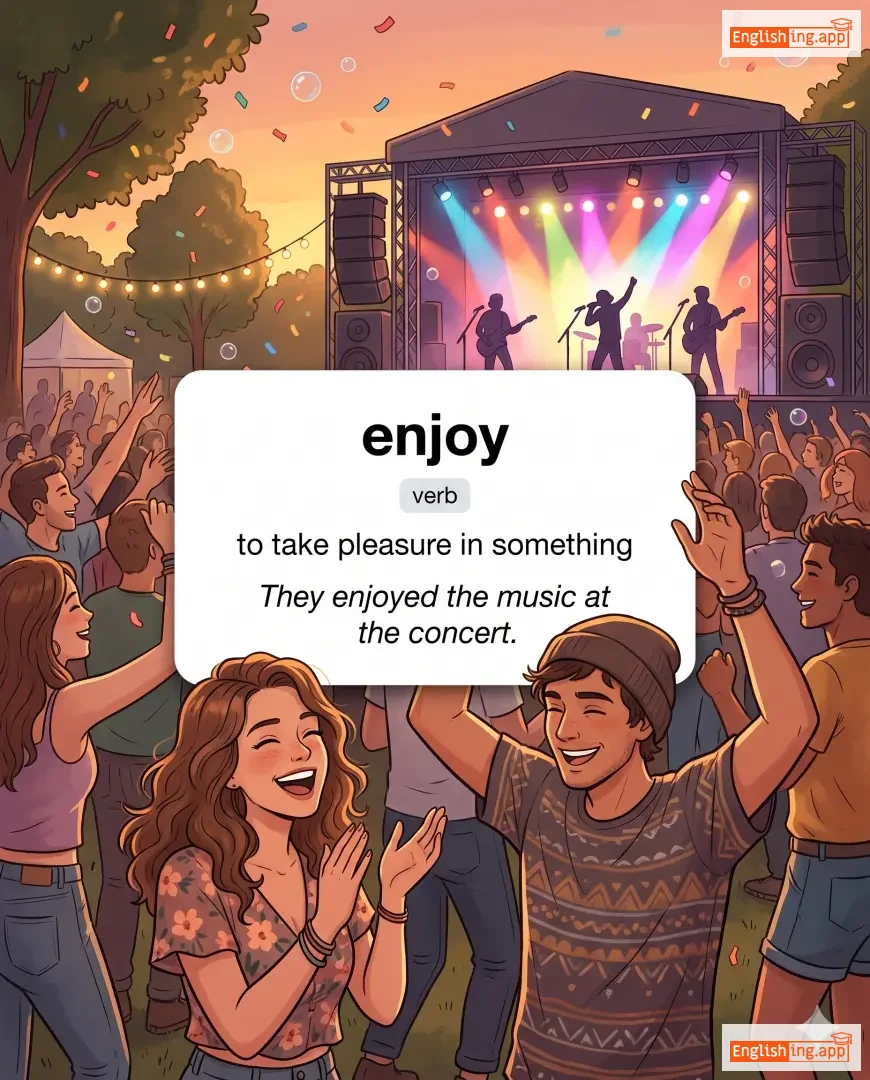
enjoy definition card — visual illustration of the meaning
verb
/ɪnˈdʒɔɪ/
наслаждаться (naslazhdat'sya)

to take pleasure in something

"They enjoyed the music at the concert."

"Они наслаждались музыкой на концерте." (Oni naslazhdalis' muzykoy na koncerte.)
adjective
/ɪnˈdʒɔɪəbl/

giving pleasure or satisfaction

"The movie was highly enjoyable."