Словари

Словарь английского языка | Значения слов, определения и примеры

noun
/ˈɛntəti/
сущность (sushchnost)

something that exists as a single and complete unit; an organization or being

"The new company will operate as a separate legal entity."
"Новая компания будет работать как отдельная юридическая сущность." (Novaya kompaniya budet rabotat' kak otdelnaya yuridicheskaya sushchnost'.)
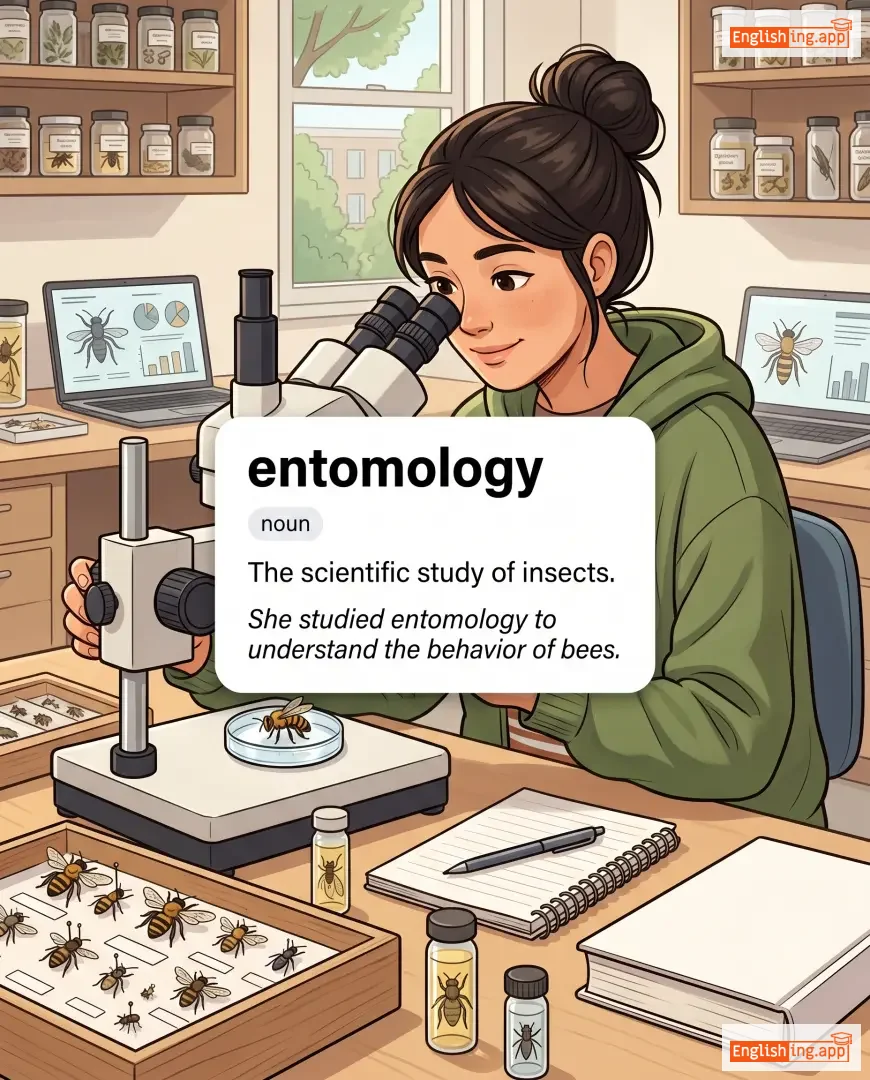
entomology definition card — visual illustration of the meaning
noun
/ˌɛntəˈmɒlədʒi/
энтомология (entomologiya)

The scientific study of insects.

"She studied entomology to understand the behavior of bees."

"Она изучала энтомологию, чтобы понять поведение пчел." (Ona izuchala entomologiyu, chtoby ponyat' povedeniye pchel.)
noun
/ˈɒntʊrɑːʒ/
свита (svita)

A group of people attending or surrounding an important person.

"The celebrity arrived with her entourage of assistants and bodyguards."

"Знаменитость пришла со своей свитой помощников и телохранителей." (Znamenitost' prishla so svoey svitoy pomoshchnikov i telokhraniteley.)
noun
/ˈɛntrəns/
вход (vkhod)

A place of entering; an entry point.

"They waited at the main entrance of the building."

"Они ждали у главного входа в здание." (Oni zhdyali u glavnovo vkhozhda v zdanie.)
verb
/ɪnˈtræp/

To catch or trick someone into a difficult situation.

"The police tried to entrap the criminal with false evidence."

verb
/ɪnˈtriːt/
умолять (umolyat)

To ask earnestly or beg someone to do something.

"She entreated him to stay a little longer."

"Она умоляла его остаться немного дольше." (Ona umolyala ego ostatsya nemnogo dolshe.)
noun
/ɪnˈtriːti/
мольба (molba)

An earnest or humble request or plea.

"She made an entreaty for peace during the heated argument."

"Она сделала мольбу о мире во время напряженной дискуссии." (Ona sdelala mol'bu o mire vo vremya napryazhennoy diskussii.)
noun
/ˈɒntreɪ/ (UK), /ˈɑːntreɪ/ (US)
основное блюдо (osnovnoe blyudo)

The main course of a meal (US); the right to enter or access (formal).

"The restaurant’s signature steak was served as the main entree."

"Подписной стейк ресторана был подан как основное блюдо." (Podpisnoi steik restorana byl podan kak osnovnoe blyudo.)
verb
/ɪnˈtrɛntʃ/
укрепить (ukrepit')

To establish something so firmly that it is difficult to change.

"The company entrenched its position in the market through innovation."

"Компания укрепила свою позицию на рынке через инновации." (Kompaniya ukrepila svoyu pozitsiyu na rynke cherez innovatsii.)
adjective
/ɪnˈtrɛntʃt/
укоренившийся (ukorenyvshiysya)

Firmly established and unlikely to change.

"Corruption is deeply entrenched in the system."

"Коррупция глубоко укоренилась в системе." (Korruptsiya gluboko ukorenilas v sisteme.)
Entrepreneur definition card — visual illustration of the meaning
noun
/ˌɒntrəprəˈnɜːr/ (UK), /ˌɑːntrəprəˈnɝː/ (US)
предприниматель (predprinimatel')

A person who starts and runs a business, taking on financial risks in the hope of profit.

"The young entrepreneur launched a successful tech startup."

"Молодой предприниматель запустил успешный технологический стартап." (Molodoy predprinimatel' zapustil uspesnyy tekhnologicheskiy startap.)
entrepreneurial definition card — visual illustration of the meaning
adjective
/ˌɒn.trə.prəˈnɜː.ri.əl/
предпринимательский (predprinimatel'skiy)

Having the characteristics of an entrepreneur; showing initiative and willingness to undertake new ventures.

"Her entrepreneurial mindset led to the launch of a successful startup."

"Ее предпринимательское мышление привело к запуску успешного стартапа." (Eyo predprinimatel'skoe myshlenie privelo k zapusku uspeshnogo startapa.)
noun
/ˈɛntri/
вход (vkhod)

the act of going into a place, or permission to go in

"Entry to the museum is free on Fridays."

"Вход в музей бесплатный по пятницам." (Vkhod v muzey besplatnyy po pyatnitsam.)
verb
/ɪnˈtwaɪn/
сплетать (spletat)

to twist or wind together; to become closely connected or involved

"The vines entwine around the old fence."

"Вьющиеся растения обвивают старый забор." (V'yushchiesya rasteniya obviyut staryy zabor.)
verb
/ɪˈnjuːməˌreɪt/
перечислять (perechisljat)

to mention things one by one; to list or count

"She enumerated the reasons for her decision."
"Она перечислила причины своего решения." (Ona perechislila prichiny svoego resheniya.)
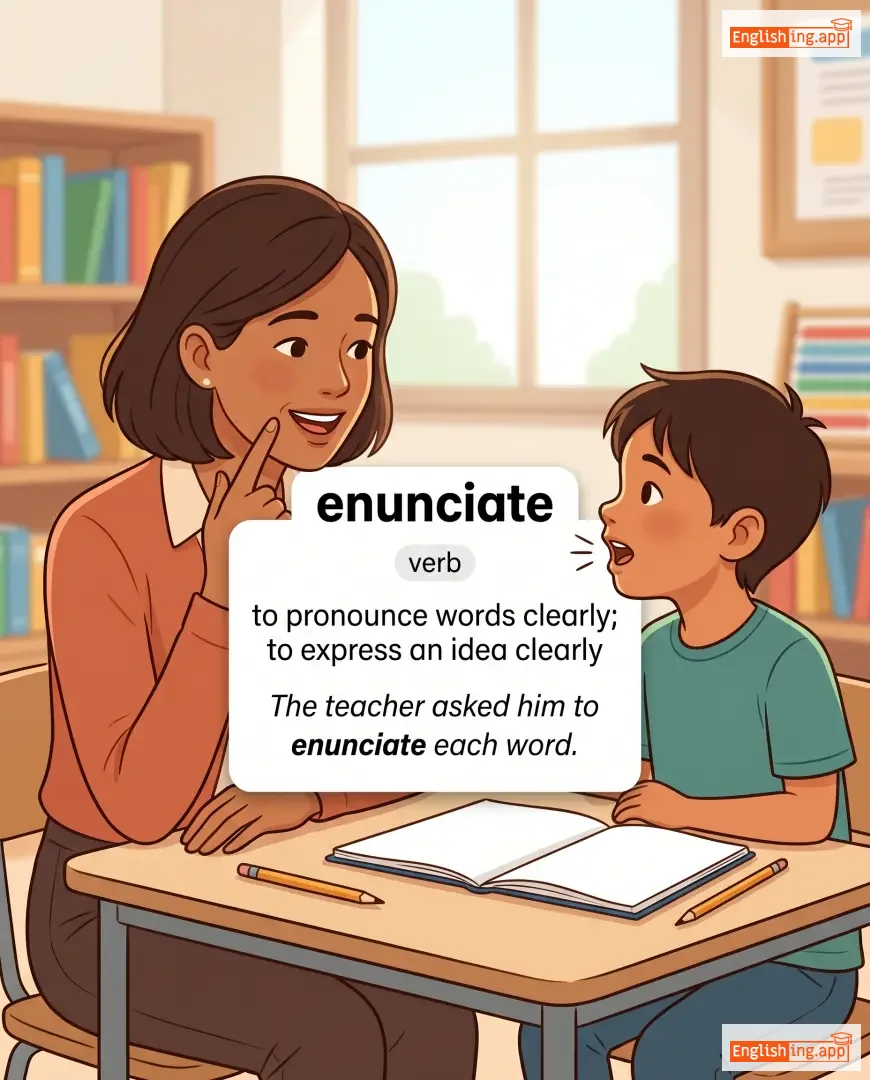
enunciate definition card — visual illustration of the meaning
verb
/ɪˈnʌnsieɪt/
произносить чётко (proiznosit' chotko)

to pronounce words clearly; to express an idea clearly

"The teacher asked him to enunciate each word."
"Учитель попросил его чётко произнести каждое слово." (Uchitel' poprosil ego chotko proiznesti kazhdoe slovo.)
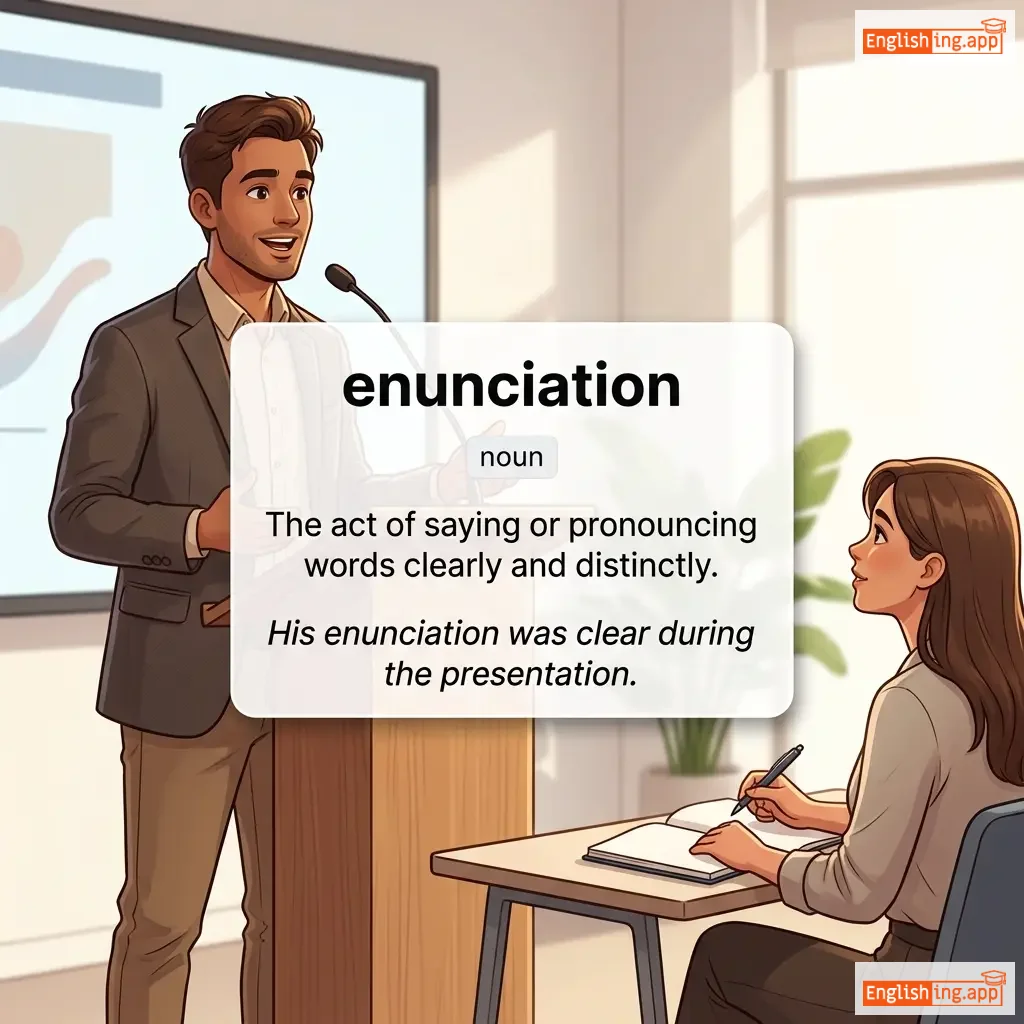
enunciation definition card — visual illustration of the meaning
noun
/ɪˌnʌn.siˈeɪ.ʃən/
выражение, чёткое произношение (vyrazhenie, chyotkoe proiznoshenie)

The act of saying or pronouncing words clearly and distinctly.

"His enunciation was clear during the presentation."

"Его энунциация была ясной во время презентации." (Ego enuntsiatsiya byla yasnoy vo vremya prezentatsii.)
noun
/ˈɛnvəloʊp/
конверт (konvert)

a flat paper container used to enclose a letter or document

"She sealed the letter in an envelope and posted it."

"Она запечатала письмо в конверт и отправила его." (Ona zapechatala pis'mo v konvert i otpravila ego.)
adjective
/ˈen.vi.ə.bəl/
завидный (zavidnyy)

causing envy; desirable

"Her success was enviable among her peers."

"Её успех был завидным среди коллег." (Yeyo uspekh byl zavidnym sredi kolleg.)
adjective
/ˈen.vi.əs/
завистливый; ревнивый (zavistlivyy; revnivyy)

feeling or showing envy; jealous

"She felt envious of her friend's new car."

"Она почувствовала зависть к новой машине своей подруги." (Ona pochuvstvovala zavist' k novoy mashine svoey podrugi.)
verb
/ɪnˈvaɪərən/
окружать (okruzhat')

to surround or enclose; to encircle

"Mountains environ the small valley."
"Горы окружают маленькую долину." (Gory okruzhayut malen'kuyu dolinu.)
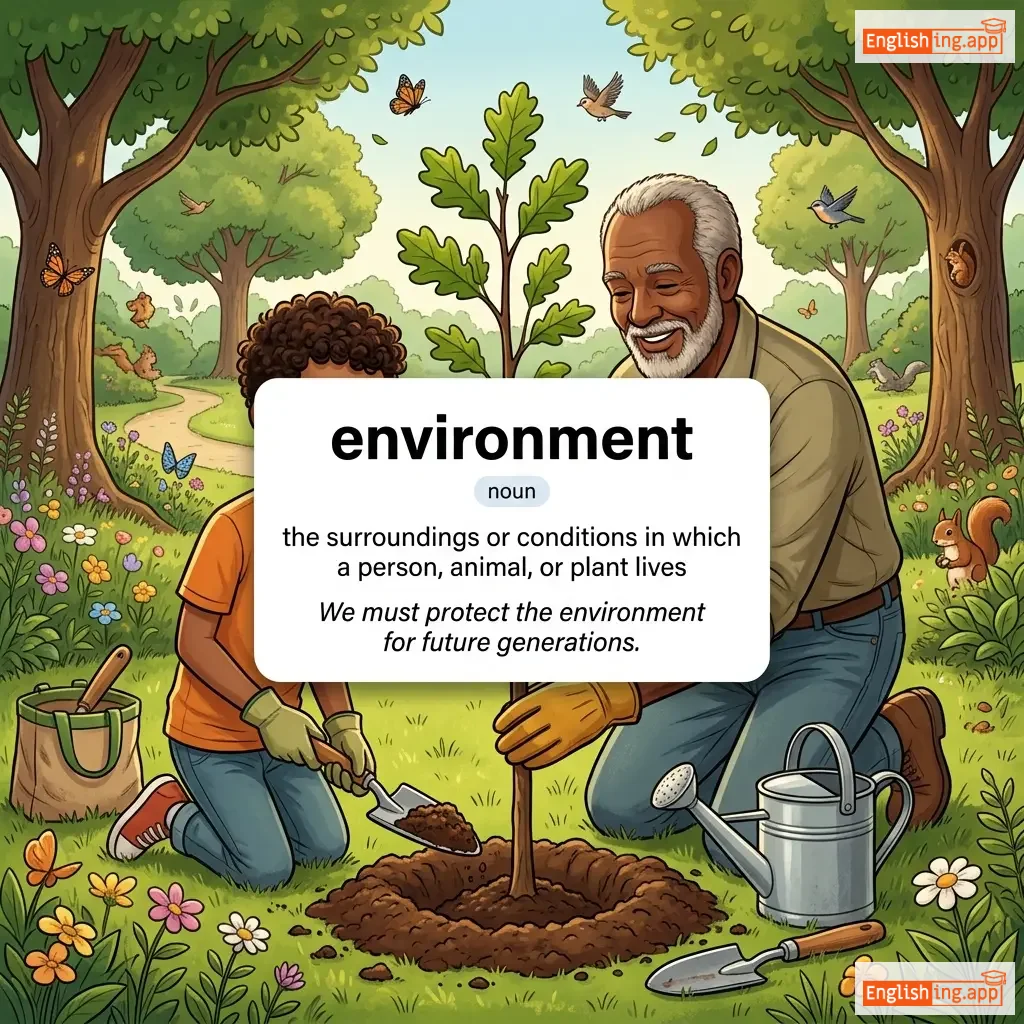
environment definition card — visual illustration of the meaning
noun
/ɪnˈvaɪrənmənt/
окружающая среда (okruzhayushchaya sredu)

the surroundings or conditions in which a person, animal, or plant lives

"We must protect the environment for future generations."
"Мы должны защищать окружающую среду для будущих поколений." (My dolzhny zashchishchat' okruzhayushchuyu sredu dlya budushchikh pokoleniy.)
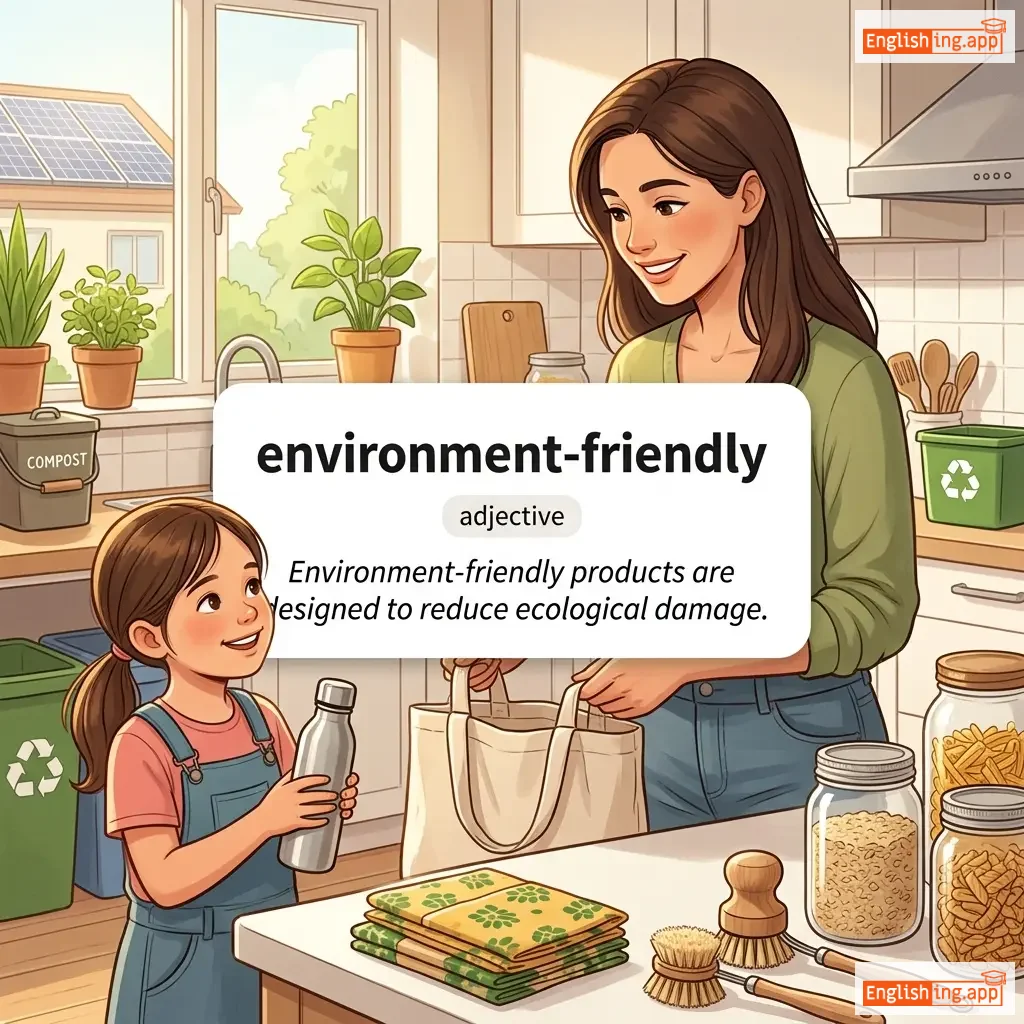
environment-friendly definition card — visual illustration of the meaning
adjective
/ɪnˈvaɪrənmənt ˈfrɛndli/
экологически чистый (ekologicheski chisty)

Designed or produced in a way that causes minimal harm to the environment, often using sustainable materials and processes that reduce ecological impact.

"Environment-friendly products are designed to reduce ecological damage."

"Экологически чистые продукты разрабатываются для уменьшения экологического ущерба." (Ekologicheski chisty produkty razrabatyvayutsya dlya umen'sheniya ekologicheskogo ushcherba.)
adjective
/ɪnˌvaɪrənˈmɛntl/
экологический (ekologicheskiy)

relating to the natural world and the impact of human activity on its condition

"The company adopted new policies to reduce environmental damage."
"Компания приняла новые политики для снижения экологического ущерба." (Kompaniya prinyala novye politiki dlya snizheniya ekologicheskogo uscherba.)
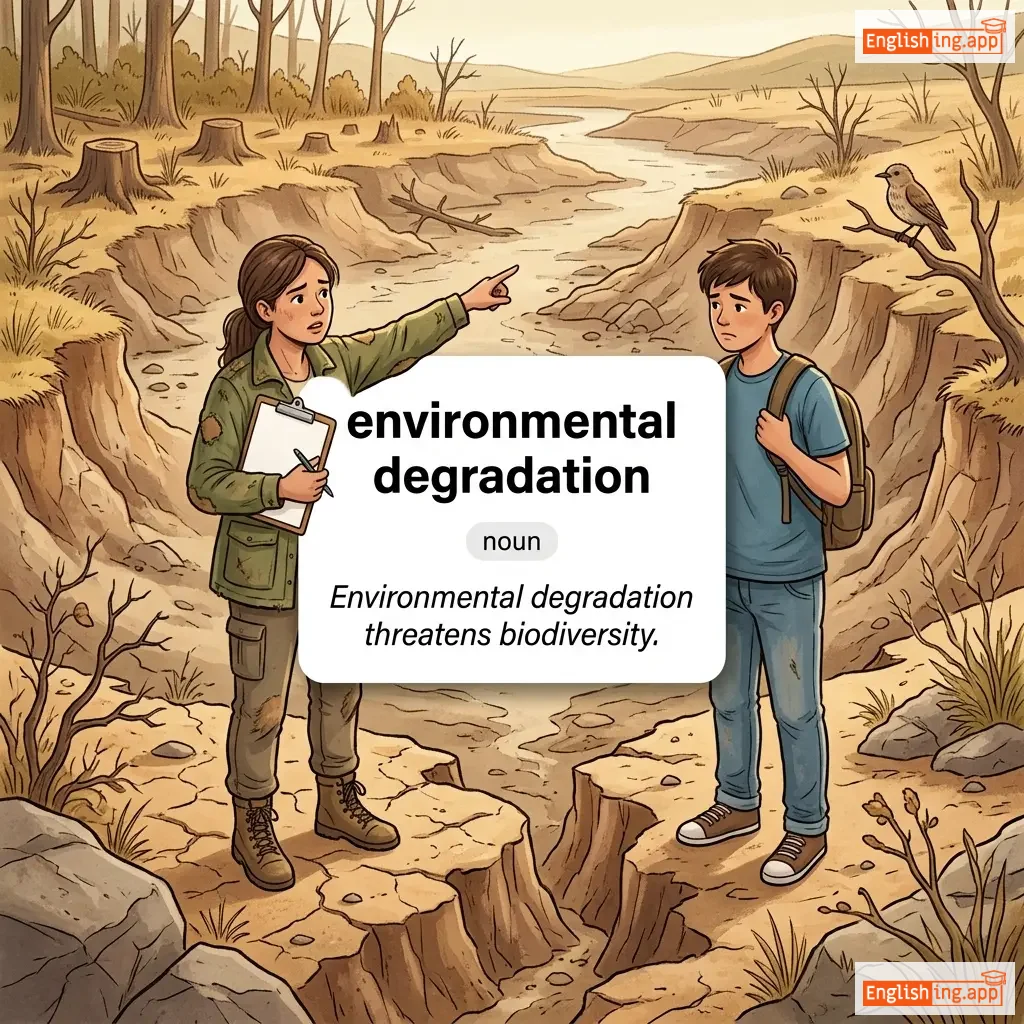
environmental degradation definition card — visual illustration of the meaning
noun
ɪnˌvaɪrənˈmɛntəl ˌdɛɡrəˈdeɪʃən
экологическое разрушение (ekologicheskoe razrushenie)

The deterioration of the environment through depletion of resources and destruction of ecosystems.

"Environmental degradation threatens biodiversity."
"Экологическое разрушение угрожает биологическому разнообразию." (Ekologicheskoe razrushenie ugrozhayet biologicheskomu raznoobraziyu.)
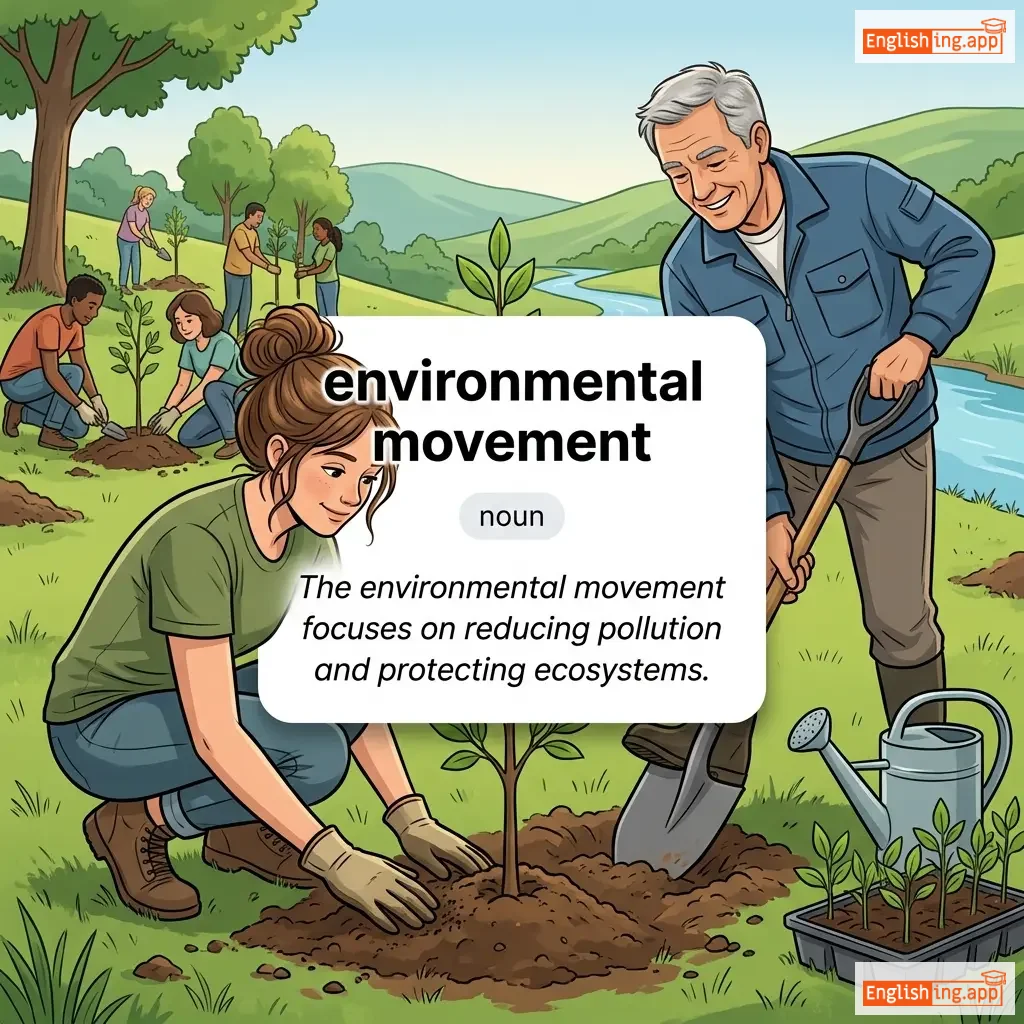
environmental movement definition card — visual illustration of the meaning
noun
/ɪnˌvaɪrənˈmɛntəl ˈmuːvmənt/
экологическое движение (ekologicheskoe dvizhene)

A social or political movement aimed at protecting the environment and promoting sustainable practices through advocacy, education, and policy changes.

"The environmental movement focuses on reducing pollution and protecting ecosystems."
"Экологическое движение сосредоточено на сокращении загрязнения и защите экосистем." (Ekologicheskoe dvizhene sosredotocheno na sokrashchenii zagriazneniya i zashchite ekosistem.)
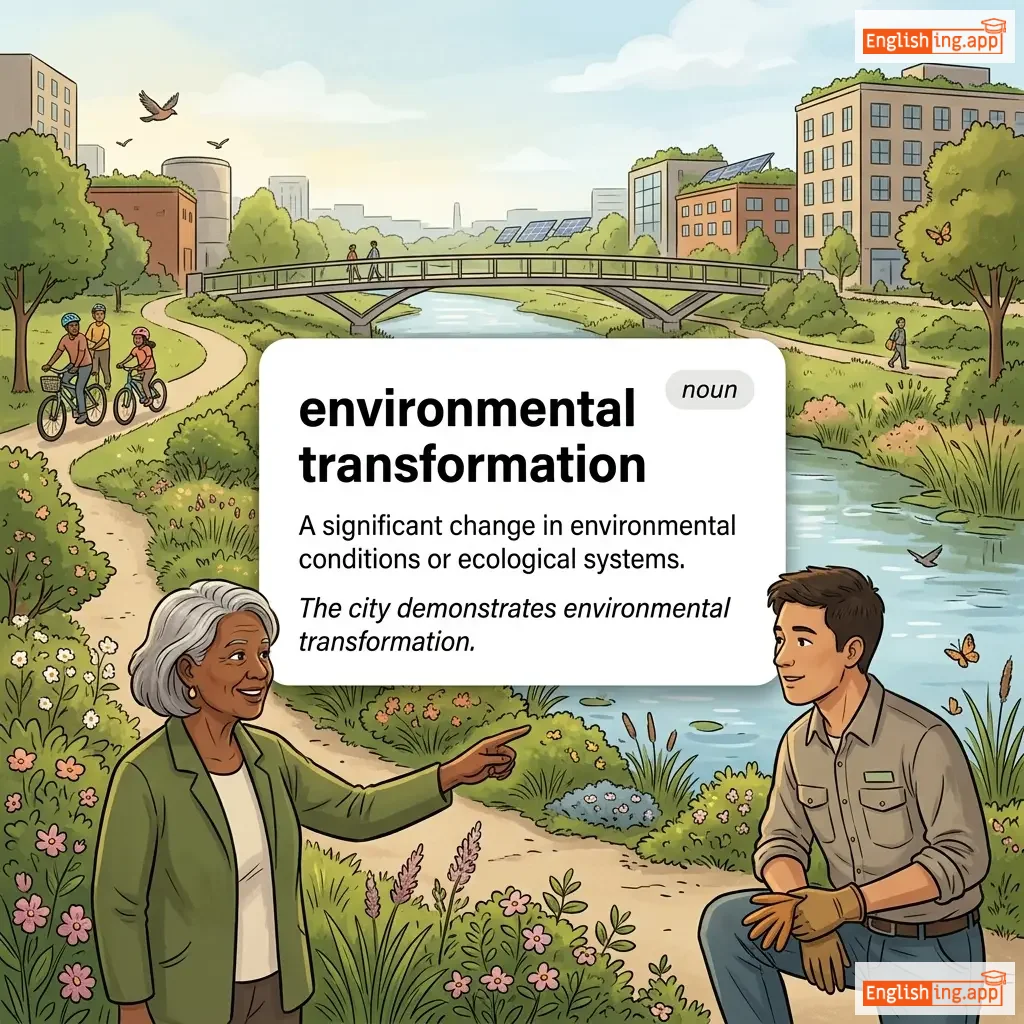
environmental transformation definition card — visual illustration of the meaning
noun
ɪnˌvaɪ.rənˈmen.təl ˌtræns.fəˈmeɪ.ʃən
экологическая трансформация (ekologicheskaya transformatsiya)

A significant change in environmental conditions or ecological systems.

"The city demonstrates environmental transformation."

"Город демонстрирует экологическую трансформацию." (Gorod demonstiruet ekologicheskuyu transformatsiyu.)
verb
/ɪnˈvɪʒən/
представлять (predstavlyat)

to imagine or picture something in the future; to visualize a possibility or goal

"She envisions a world where everyone has equal access to education."
"Она представляет мир, где каждый имеет равный доступ к образованию." (Ona predstavlyaet mir, gde kazhdyy imeyet ravnyy dostup k obrazovaniyu.)
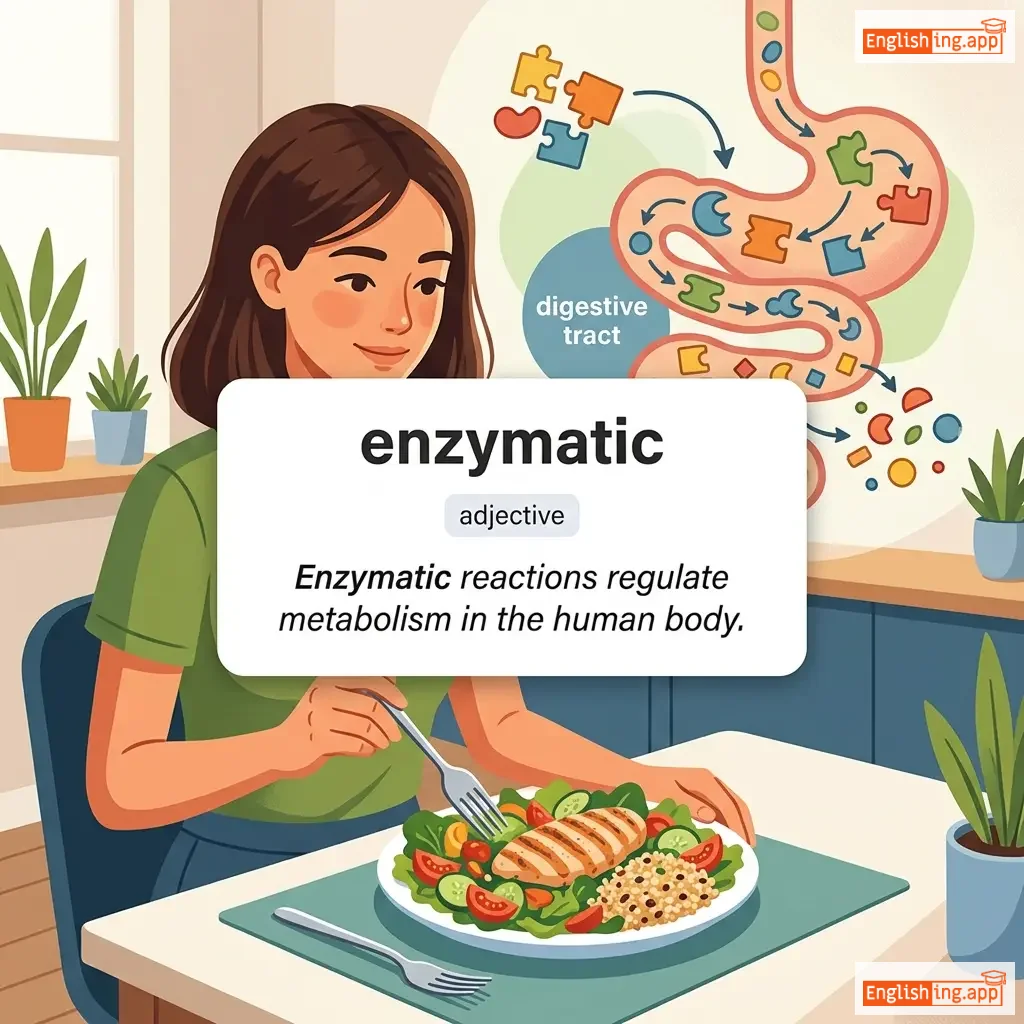
enzymatic definition card — visual illustration of the meaning
adjective
/ˌen.zɪˈmæt.ɪk/
связанный с ферментами (svyazannyy s fermentami)

Relating to or involving enzymes, which are proteins that catalyze biochemical reactions in living organisms.

"Enzymatic reactions regulate metabolism in the human body."

"Энзиматические реакции регулируют обмен веществ в человеческом теле." (Enzimaticheskiye reaktsii regulyuyut obmen veshchestv v chelovecheskom tele.)
noun
/ˈiːən/
эон (eon)

an indefinitely long period of time; an age

"Dinosaurs lived millions of years ago, in a different eon."

"Динозавры жили миллионы лет назад, в другой эоне." (Dinozavry zhili milliony let nazad, v drugom eone.)
noun
/ˈɛpəlɛt/
погоны (pogony)

An ornamental shoulder piece on a garment, especially on the coat or jacket of a military uniform.

"The general’s uniform had a golden epaulet on each shoulder."

"У униформы генерала были золотые погоны на каждом плече." (U uniformy generala byli zolotye pogony na kazhdom pleche.)
noun
/ˈɛpəlɛt/
наплечник (naplechkin)

A variant spelling of epaulet, also meaning a shoulder ornament, especially on military uniforms.

"The officer’s epaulette shone brightly under the sunlight."
"Эполет офицера ярко блестел на солнце." (Epolete ofitserа yarko blestel na solntse.)
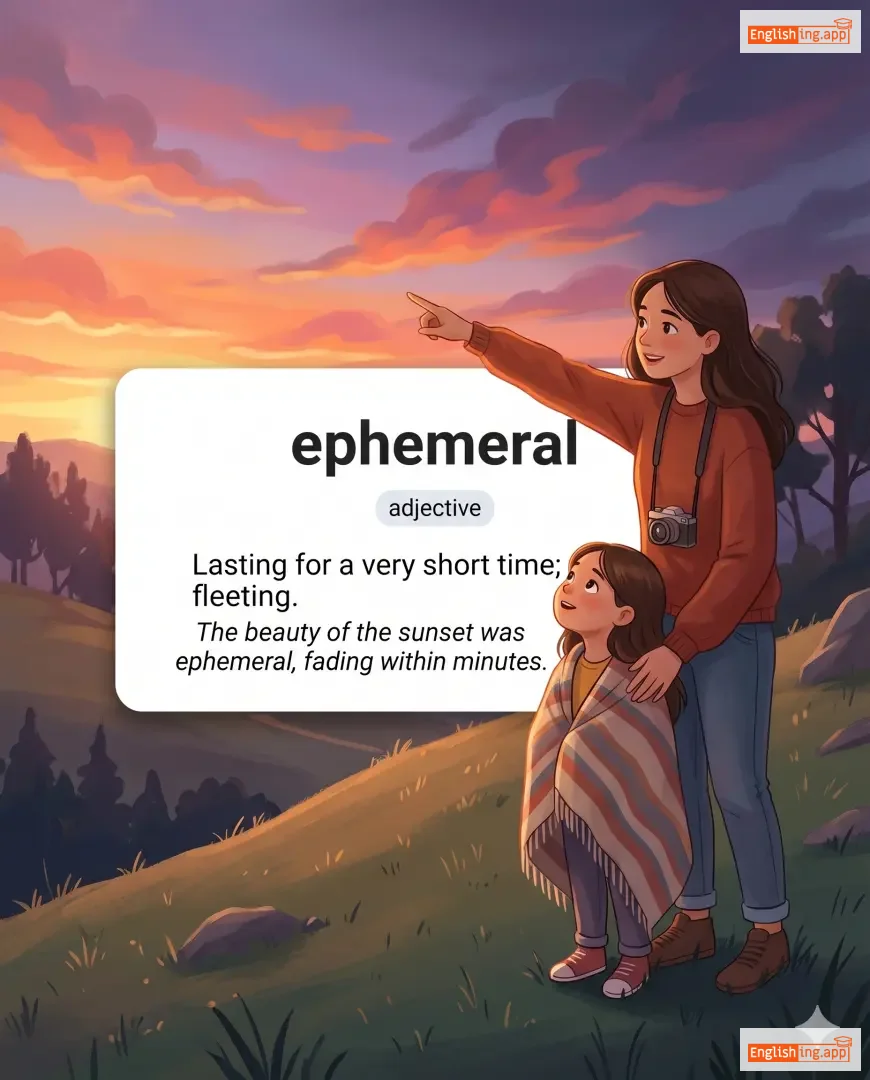
ephemeral definition card — visual illustration of the meaning
adjective
/ɪˈfɛmərəl/
мимолетный (mimoletnyy)

Lasting for a very short time; fleeting.

"The beauty of the sunset was ephemeral, fading within minutes."

"Красота заката была мимолетной, исчезнув за несколько минут." (Krasota zakata byla mimoletnoy, ischezla za neskol'ko minut.)
noun, adjective
/ˈɛpɪk/
эпопея (epopeya)

A long narrative poem or story about heroic deeds; also used to describe something grand or impressive.

"The Iliad is considered one of the greatest epics of ancient literature."

"Илиада считается одним из величайших эпосов древней литературы." (Iliada schitayetsya odnim iz velikikh eposov drevney literatury.)
noun
/ˈɛpɪkjʊr/
гурман (gurman)

A person who enjoys fine food and drink, often with refined taste.

"As an epicure, she always sought out the finest restaurants in the city."

"Как гурман, она всегда искала лучшие рестораны города." (Kak gurman, ona vsegda iskala luchshiye restorany goroda.)
adjective
/ˌɛpɪkjʊˈriːən/
эпикурейский (epikureyskiy)

relating to the enjoyment of fine food, drink, and luxury

"The chef prepared an epicurean feast for the guests."

"Шеф-повар приготовил эпикурейский банкет для гостей." (Shef-povar prigotovil epikureyskiy banket dlya gostey.)
noun
/ˈɛpɪˌsaɪkl/
эпициклический круг (epiciklicheskiy krug)

a small circle whose center moves around the circumference of a larger one, used in ancient astronomy

"The concept of the epicycle was used to explain planetary motion."

"Концепция эпицикла использовалась для объяснения движения планет." (Kontseptsiya epitsikla ispol'zovalas' dlya ob'yasneniya dvizheniya planet.)
noun
/ˌɛpɪˈsaɪklɔɪd/
эпициклоид (epicikloid)

a curve traced by a point on the circumference of a circle that rolls around the outside of another circle

"The mathematician demonstrated how to draw an epicycloid."

"Математик показал, как нарисовать эпициклоид." (Matematik pokazal, kak narisovat' epitsikloid.)
noun
/ˌɛpɪˈdɛmɪk/
счастье (schastye)

a widespread occurrence of an infectious disease in a community at a particular time

"The flu epidemic affected thousands of people in the city."

"Она не могла скрыть своего счастья, когда получила награду." (Ona ne mogla skryt' svoego schast'ya, kogda poluchila nagradu.)
noun
/ˌɛpɪˈdɜːrmɪs/
внешний слой кожи (vneshniy sloy kozhi)

the outer layer of cells covering the body of an organism, especially the skin

"The epidermis protects the body from harmful bacteria."

"Эпидермис защищает тело от вредных бактерий." (Epidermis zashchishchaet telo ot vrednykh bakteriy.)
noun
/ˈɛpɪɡræm/
эпиграмма (epigramma)

A short, witty saying or poem that expresses an idea in a clever way.

"Oscar Wilde was famous for his sharp epigrams."

"Оскар Уайлд был знаменит своими острыми эпиграммами." (Oscar Uayld byl znamenit svoimi ostryimi epigrammami.)
noun
/ˈɛpɪˌlɔːɡ/
эпилог (epilog)

A section at the end of a book, play, or speech that serves as a conclusion.

"The author included an epilogue to explain what happened to the characters later."

"Автор добавил эпилог, чтобы объяснить, что произошло с персонажами позже." (Avtor dobavil epilog, chtoby ob'yasnit', chto proizošlo s personazhami pozhe.)
epiphany definition card — visual illustration of the meaning
noun
/ɪˈpɪfəni/
озарение (ozareniye)

A sudden realization or insight into the essence of something.

"During meditation, she had an epiphany about her life purpose."

"Во время медитации она испытала озарение относительно цели своей жизни." (Vo vremya meditatsii ona ispyitala ozareniye otnositel'no tseli svoey zhizni.)
noun
/ˈɛpɪsoʊd/
эпизод (epizod)

An event or part of a story, or one installment in a series.

"The last episode of the drama was watched by millions."

"Последний эпизод драмы посмотрели миллионы." (Posledniy epizod dramy posmotreli milliony.)
adjective
/ˌɛpɪˈsɒdɪk/
эпизодический (epizodicheskiy)

Happening occasionally or in separate parts; related to episodes.

"Her interest in art was episodic, coming and going over the years."

"Её интерес к искусству был эпизодическим, он приходил и уходил с годами." (Eyo interes k iskusstvu byl epizodicheskim, on prikhodil i ukhodil s godami.)
noun
/ɪˌpɪstəˈmɒlədʒɪst/
эпистемолог (epistemolog)

A scholar or expert who studies the nature, sources, and limits of knowledge.

"The epistemologist debated how humans can truly know anything with certainty."
"Эпистемолог спорил о том, как люди могут действительно узнать что-то с уверенностью." (Epistemolog sporyl o tom, kak lyudi mogut deystvitel'no uznat' chto-to s uverennost'yu.)
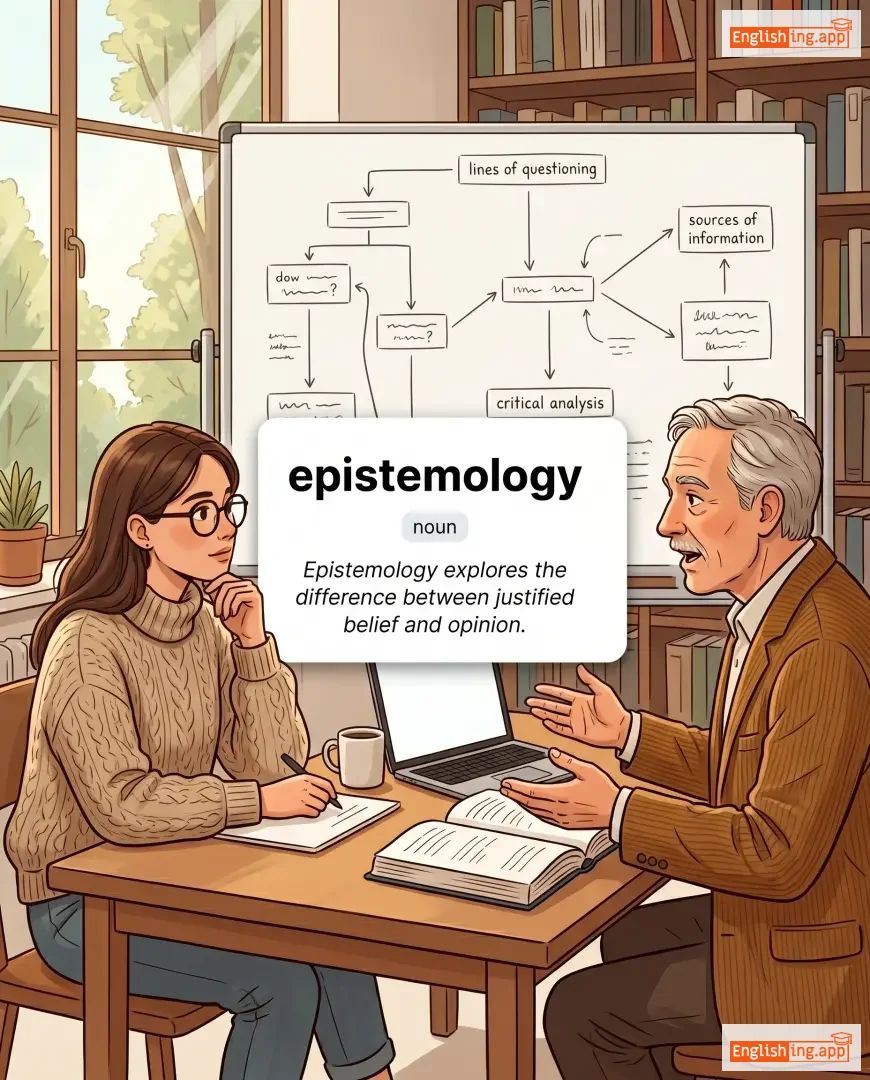
epistemology definition card — visual illustration of the meaning
noun
/ɪˌpɪstəˈmɒlədʒi/
эпистемология (epistemologiya)

The branch of philosophy that studies the nature, origin, and scope of knowledge.

"Epistemology explores the difference between justified belief and opinion."

"Эпистемология исследует различие между оправданной верой и мнением." (Epistemologiya issleduet razlichiye mezhdu opravdannoy veroy i mneniyem.)
noun
/ɪˈpɪsəl/
послание (poslanie)

A letter, especially a formal or didactic one; often used for letters in the New Testament.

"He wrote a long epistle to his friend about his travels."

"Он написал своему другу длинное послание о своих путешествиях." (On napisal svoemu drugu dlinnoe poslanie o svoikh puteshestviyakh.)
adjective
/ɪˈpɪstələri/
эпистолярный (epistoliarnyy)

Related to the writing of letters; expressed in or through letters.

"The novel is written in an epistolary style, consisting of letters between characters."

"Роман написан в эпистолярном стиле, состоящем из писем между персонажами." (Roman napisan v epistoljarnom stile, sostoyashchem iz pisej mezhdu personazhami.)
noun
/ˈɛpɪtɑːf/
эпитафия (epitafiya)

A short text written on a tombstone in memory of the deceased.

"The gravestone bore an epitaph honoring the soldier’s bravery."

"На надгробии была эпитафия, почитающая мужество солдата." (Na nadgrobiye byla epitafiya, pochitayushchaya muzhestvo soldata.)