Словари

Словарь английского языка | Значения слов, определения и примеры

escalation definition card — visual illustration of the meaning
noun
ˌes.kəˈleɪ.ʃən
быстрое увеличение; рост. (bystroe uvelichenie; rost)

A rapid increase; a rise.

"The escalation of production costs impacts profitability."

"Эскалация производственных затрат влияет на прибыльность." (Eskalatsiya proizvodstvennykh zatrat vliyayet na pribylnost'.)
noun
/ˈɛskəpeɪd/
приключение (priklyuchenie)

an adventurous, exciting, or reckless act

"Their summer escapade included camping and mountain climbing."

"Их летние приключения включали кемпинг и восхождение на гору." (Ikh letnie priklyucheniya vklyuchali kemping i voskhozhdeniye na goru.)
Escape definition card — visual illustration of the meaning
🏃‍♂️

Escape (eskeip)

verb
/ɪˈskeɪp/
убегать (ubegat')

To break free from confinement or control; to get away.

"The prisoner tried to escape from jail."

"Uznik popytalsya ubezhat' iz tyur'my." (Uznik popytalsya ubezhat' iz tyur'my.)
verb
/ɪsˈtʃuː/
избегать (izbegat')

to deliberately avoid or abstain from something

"She chose to eschew junk food for a healthier diet."

"Она решила избегать фастфуда ради более здоровой диеты." (Ona reshila izbegat' fastfuda radi bolee zdorovoi diety.)
🚶‍♂️

escort (ɛskɔrt)

verb
/ˈɛskɔrt/
сопровождать (soprovozhdat)

to accompany someone; to guide or protect while going somewhere

"The guard escorted the visitor to the office."

"Охранник сопроводил посетителя в офис." (Okhrannik soprovodil posetitelia v ofis.)
noun
/ɪˈskʌtʃən/
щит с гербом или эмблемой (shchit s gerbom ili emblemoj)

a shield or emblem bearing a coat of arms

"The family crest was displayed on the escutcheon above the fireplace."

"Семейный герб был изображен на щите над камином." (Semejnyj gerb byl izobrazhen na shchite nad kaminom.)
esoteric definition card — visual illustration of the meaning
adjective
/ˌɛsəˈtɛrɪk/
эзотерический (ezotericheskiy)

intended for or understood by only a small number of people with special knowledge

"The professor gave an esoteric lecture on ancient philosophy."

"Профессор прочитал эзотерическую лекцию по древней философии." (Professor prochital ezotericheskuyu lektsiyu po drevney filosofii.)
adjective
/ɪˈspeʃəl/
особенный (osobennyi)

Particularly remarkable or significant; distinguished from others

"This is an especial opportunity you should not miss."

"Это особая возможность, которую не следует упускать." (Eto osobaya vozmozhnost', kotoruyu ne sleduet upuskat'.)
adverb
/ɪˈspɛʃəli/
особенно (osobenno)

Used to single out one person, thing, or situation over all others.

"I love all kinds of fruit, especially mangoes."

"Я люблю все виды фруктов, особенно манго." (Ya lyublyu vse vidy fruktov, osobenno mango.)
noun
/ˈɛspiənɑːʒ/
шпионаж (shpionazh)

The practice of spying or using spies to gather secret information, usually for political or military purposes.

"The agent was arrested on charges of espionage against the state."

"Агент был арестован по обвинению в шпионаже против государства." (Agent byl arestovan po obvineniyu v shpionazhe protiv gosudarstva.)
verb
/ɪˈspaʊz/
поддерживать (podderzhivat')

To adopt or support a cause, belief, or way of life.

"She espoused the philosophy of nonviolence throughout her career."

"Она поддерживала философию ненасилия на протяжении всей своей карьеры." (Ona podderzhivala filosofiyu nenasiliya na protyazhenii vsey svoey kar'yery.)
noun
/ɛˌspriː də ˈkɔːr/
дух команды (dukh komandy)

A feeling of pride, fellowship, and loyalty shared by members of a group.

"The team's esprit de corps was evident in their cooperative effort."

"Дух команды был очевиден в их совместных усилиях." (Dukh komandy byl ocheviden v ikh sovmestnykh usiliyakh.)
verb
/ɪˈspaɪ/
увидеть (uvidet)

To catch sight of or notice something, especially from a distance.

"From the hilltop, she espied a small village in the valley."

"С вершины холма она увидела маленькую деревню в долине." (S vershiny kholma ona uvidela malen'kuyu derevnyu v doline.)
noun
/ˈɛskwaɪər/
Эсквайр (eskvayr)

A title of respect often used after a man's name, especially for lawyers in the United States.

"John Smith, Esquire, will be representing the client in court."

"Джон Смит, Эсквайр, будет представлять клиента в суде." (Dzhon Smit, Eskvayr, budet predstavlyat' kliyenta v sude.)
essay definition card — visual illustration of the meaning
noun
/ˈɛseɪ/
эссе (esse)

A short piece of writing on a particular subject.

"She wrote an essay about climate change."

"Она написала эссе о изменении климата." (Ona napisala esse o izmenenii klimata.)
noun
/ˈɛsəns/
суть (sut)

The intrinsic nature or indispensable quality of something that determines its character.

"The essence of democracy is freedom of speech."

"Суть демократии заключается в свободе слова." (Sut' demokratii zaklyuchayetsya v svobode slova.)
adjective
/ɪˈsɛnʃəl/
необходимый (neobkhodimy)

Absolutely necessary; extremely important.

"Water is essential for life."

"Вода необходима для жизни." (Voda neobkhodima dlya zhizni.)
adverb
/ɪˈsɛnʃəli/
существенно (sushchestvenno)

Used to emphasize the basic or fundamental nature of something.

"The two plans are essentially the same."

"Эти два плана по существу одинаковы." (Eti dva plana po sushchestvu odinakovy.)
verb
/ɪˈstæblɪʃ/
установить (ustanovit')

To set up, create, or bring into existence something on a firm basis.

"The company plans to establish a new office in Dhaka."
"Компания планирует открыть новый офис в Дакке." (Kompaniya planirovat otkryt' novyi ofis v Dakke.)
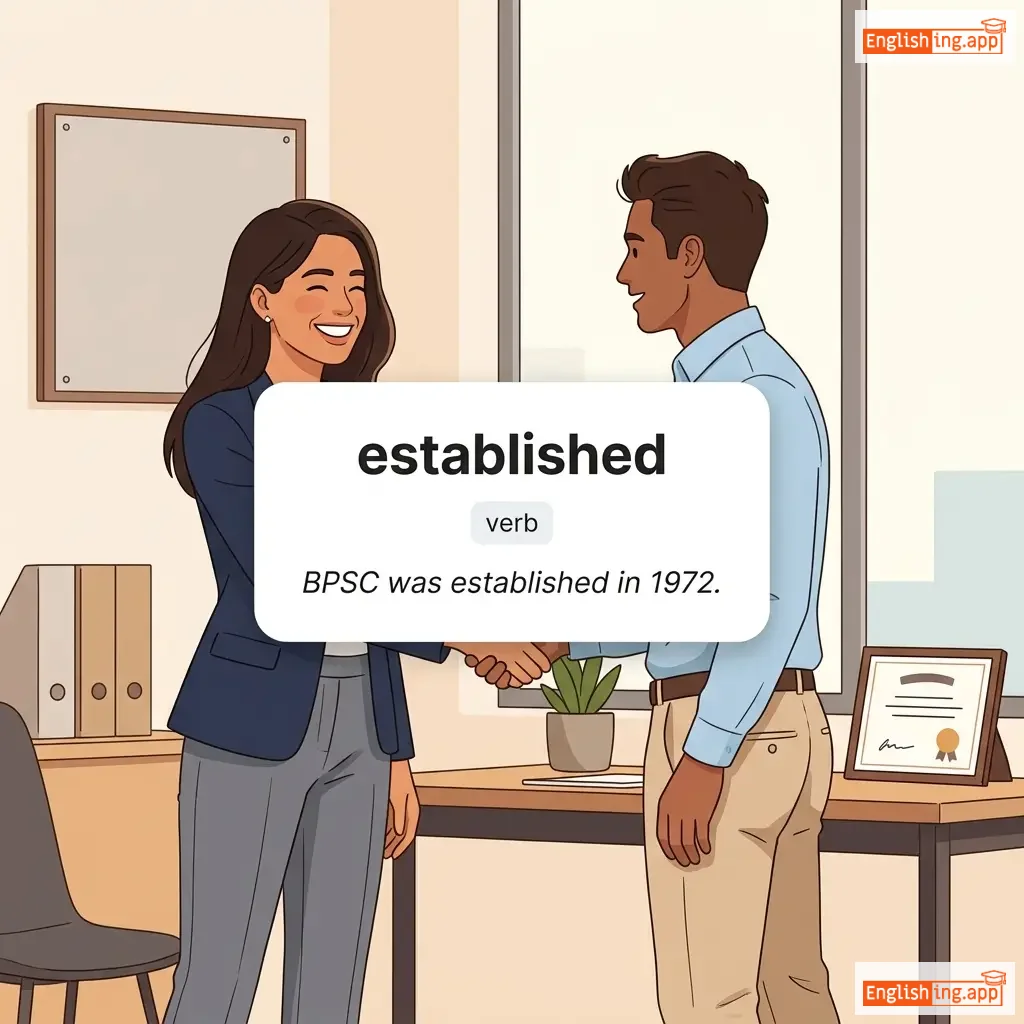
established definition card — visual illustration of the meaning
verb
ɪˈstæb.lɪʃt
учреждён (uchrezhdyon)

Set up on a firm or permanent basis; having existed for a long time and therefore recognized.

"BPSC was established in 1972."

"BPSC был учреждён в 1972 году." (BPSC byl uchrezhdyon v 1972 godu.)
noun
/ɪˈstæblɪʃmənt/
учреждение (uchrezhdenie)

An organization, business, or system; the act of setting something up.

"The restaurant is a new establishment in town."

"Ресторан — это новое учреждение в городе." (Restoran — eto novoe uchrezhdenie v gorode.)
noun
/ɪˈsteɪt/
имение (imenie)

A large area of land, property, or possessions owned by someone, often including a big house.

"The family owned a large estate in the countryside."

"Семья владела большим поместьем в сельской местности." (Semya vladela bolshim pomestem v selskoy mestnosti)
noun/verb
/ɪˈstiːm/
почтение (pochtienie)

Respect and admiration, typically for a person.

"She is held in high esteem by her colleagues."

"Она очень уважаема своими коллегами." (Ona ochen' uvajayema svoimi kollegami.)
adjective
/ɪˈstiːmd/
уважаемый (uvazhaemyy)

respected and admired; held in high regard

"He is an esteemed professor at the university."

"Он является уважаемым профессором в университете." (On yavyayetsya uvazhaemym professorom v universitete.)
adjective
/ɛsˈθɛtɪk/
эстетический (esteticheskiy)

Concerned with beauty or the appreciation of beauty.

"The building’s esthetic design attracted many visitors."

"Эстетический дизайн здания привлек много посетителей." (Esteticheskiy dizayn zdaniya privlek mnogo posetiteley.)
estimable definition card — visual illustration of the meaning
adjective
/ˈɛstɪməbl/
достойный (dostoyny)

Worthy of great respect.

"Her estimable achievements inspired the whole community."

"Её достойные достижения вдохновили всё сообщество." (Eyo dostoynye dostizheniya vdokhnovili vsyo soobshchestvo.)
verb
/ˈɛstɪˌmeɪt/
оценивать (otsenivat)

To roughly calculate or judge the value, number, quantity, or extent of something.

"The engineer estimated the cost of the project at $5 million."

"Инженер оценил стоимость проекта в 5 миллионов долларов." (Inzhener otsenil stoimost' proekta v 5 millionov dollarov.)
adjective
/ˈɛstɪmeɪtɪd/
оцененный (otsenennyy)

roughly calculated or judged; an approximate value or amount

"The estimated cost of the project is five million dollars."

"Оценочная стоимость проекта составляет пять миллионов долларов." (Otsenochnaya stoimost' proyekte sostavlyaet pyat' millionov dollarov.)
verb
/ɪˈstreɪndʒ/

to cause someone to no longer be close or affectionate; to alienate

"His constant criticism began to estrange him from his friends."

adjective
/ɪˈstreɪndʒd/
отчужденный (otchuzhdennyj)

no longer close or affectionate with someone; alienated

"She felt estranged from her family after the long dispute."

"Она чувствовала себя отчужденной от своей семьи после долгого спора." (Ona chuvstvovala sebya otchuzhdennoj ot svoej sem'i posle dolgogo spora.)
noun
/ˈɛstjʊəri/
устье реки (ust'e reki)

the tidal mouth of a large river, where the tide meets the stream

"The city is located near the estuary of the river."

"Город находится рядом с устьем реки." (Gorod nakhoditsya ryadom s ust'em reki.)
abbreviation
/ɛtˈsɛtərə/
и так далее (i tak dalee)

Used to indicate additional, similar items in a list that are not mentioned.

"The shop sells fruits, vegetables, dairy, etc."

"Магазин продает фрукты, овощи, молочные продукты и так далее." (Magazin prodayot frukty, ovochi, molochnye produkty i tak dalee.)
adverb
/ɛtˈsɛtərə/
и так далее (i tak daleye)

used at the end of a list to indicate that other similar items are included

"She bought apples, oranges, bananas, etcetera from the market."

"Она купила яблоки, апельсины, бананы и так далее на рынке." (Ona kupila yabloki, apelsiny, banany i tak daleye na rynke.)
verb
/ɛtʃ/
гравировать (gravirovat')

to cut or carve a design onto a surface

"The artist etched her initials into the glass."

"Художник выгравировал свои инициалы на стекле." (Khudozhnik vyggraviroval svoi initsialy na stekle.)
adjective
/ɪˈtɜːrnəl/
вечный (vechnyy)

lasting or existing forever; without end

"They pledged their eternal love for each other."

"Они поклялись в своей вечной любви друг другу." (Oni poklyalis' v svoey vechnoy lyubvi drug drugu.)
ethereal definition card — visual illustration of the meaning
adjective
/ɪˈθɪəriəl/
эфирный (efirny)

extremely delicate, light, or airy; heavenly or otherworldly

"The dancer moved with an ethereal grace that captivated the audience."

"Танцовщица двигалась с эфемерной грацией, которая захватывала аудиторию." (Tantsovshchitsa dvigalas' s efemernoy gratsiyey, kotoraya zakhvatyvala auditoriyu.)
noun
/ˈɛθɪk/
этика (etika)

a set of moral principles, especially ones relating to a particular group, system, or profession

"He has a strong work ethic and always meets deadlines."

"У него сильная трудовая этика, и он всегда выполняет сроки." (U nego sil'naya trudovaya etika, i on vsegda vypolnyaet sroki.)
ethical definition card — visual illustration of the meaning
adjective
/ˈɛθɪkəl/
этический (eticheskiy)

relating to moral principles or the right and wrong behavior

"The company follows strict ethical standards in its business practices."

"Компания придерживается строгих этических норм в своей коммерческой практике." (Kompaniya priderzhivayetsya strogykh eticheskikh norm v svoey kommercheskoy praktike.)
noun
/ˈɛθɪks/
этика (etika)

moral principles that govern a person's behavior or the conduct of an activity

"Business ethics require companies to act fairly and responsibly."
"Деловая этика требует от компаний действовать честно и ответственно." (Delovaya etika trebuyet ot kompaniy deystvovat' chestno i otvetstvenno.)
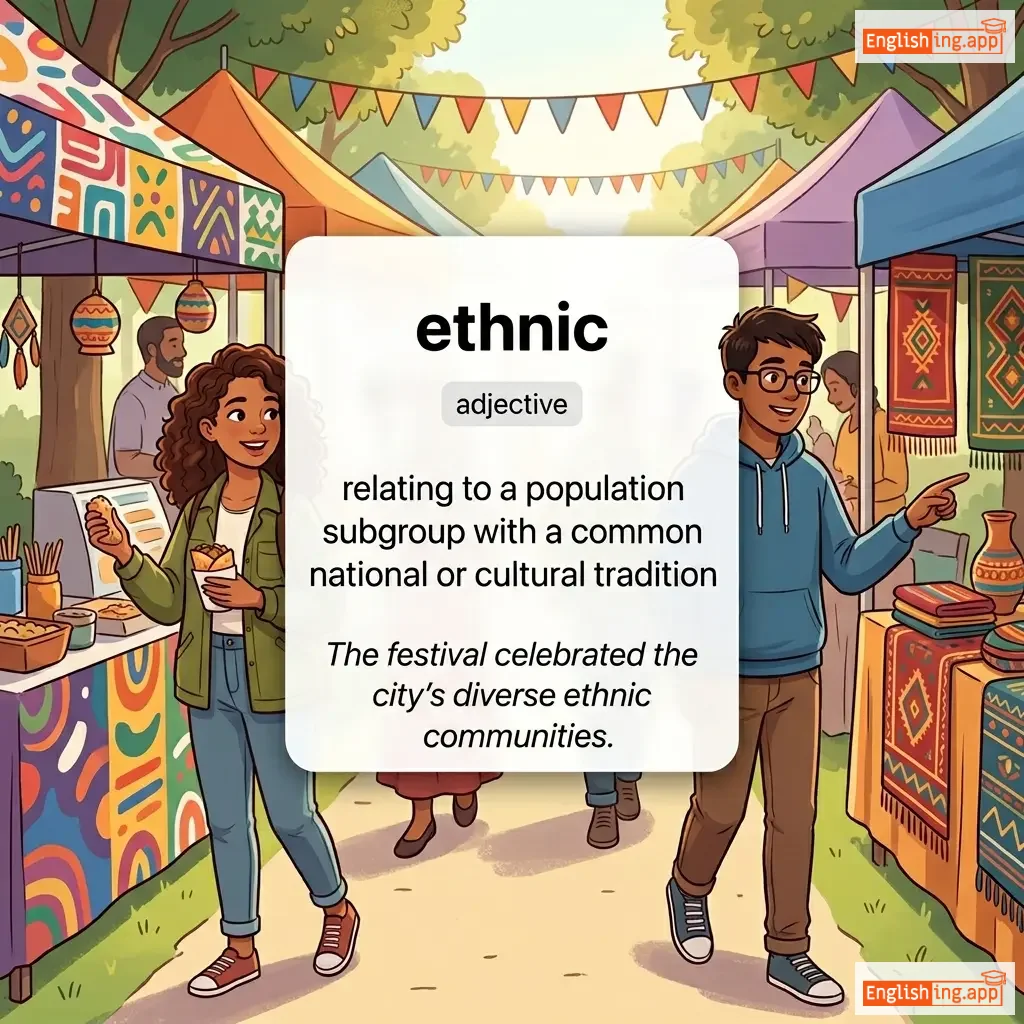
ethnic definition card — visual illustration of the meaning
adjective
/ˈɛθnɪk/
этнический (etnicheskij)

relating to a population subgroup with a common national or cultural tradition

"The festival celebrated the city's diverse ethnic communities."

"Фестиваль отметил разнообразие этнических общин города." (Festival otmetil raznoobrazie etnicheskikh obshchin goroda.)
ethnocentric definition card — visual illustration of the meaning
adjective
/ˌeθ.noʊˈsen.trɪk/
этноцентричный (etnocentrichnyy)

evaluating other cultures according to the standards of one's own culture

"His ethnocentric attitude made it hard for him to appreciate foreign traditions."

"Его этноцентричный взгляд мешал ему оценить традиции других стран." (Yego etnocentrichnyy vzglyad meshal emu otsenit' traditsii drugikh stran.)
noun
/ɛθˈnɒlədʒi/
этнология (etnologia)

the study of the characteristics of different peoples and the differences and relationships between them

"She specialized in ethnology to better understand cultural diversity."

"Она специализировалась по этнологии, чтобы лучше понять культурное разнообразие." (Ona spetsializirovalas' po etnologii, chtoby luchshe ponyat' kul'turnoe raznoobrazie.)
ethos definition card — visual illustration of the meaning
noun
/ˈiːθɒs/
этос (etos)

the characteristic spirit, values, or beliefs of a community, culture, or organization

"The company’s ethos emphasizes innovation and customer service."

"Этос компании подчеркивает инновации и обслуживание клиентов." (Etos kompanii podcherkivayet innovatsii i obsluzhivanie klientov.)
etiology definition card — visual illustration of the meaning
noun
/ˌiː.tiˈɒ.lə.dʒi/
этиология (etilogiya)

the cause or origin of a disease or condition

"Doctors are studying the etiology of the new virus."

"Врачи изучают этиологию нового вируса." (Vrachi izuchayut etiologyu novogo virusa.)
noun
/ˈet.ɪ.kət/
этикет (etiket)

the customary code of polite behavior in society or among members of a particular profession

"Proper etiquette requires standing when a lady enters the room."
"Правильный этикет требует вставать, когда дама входит в комнату." (Pravil'nyy etiketa trebuyet vstavat', kogda dama vkhodit v komnatu.)
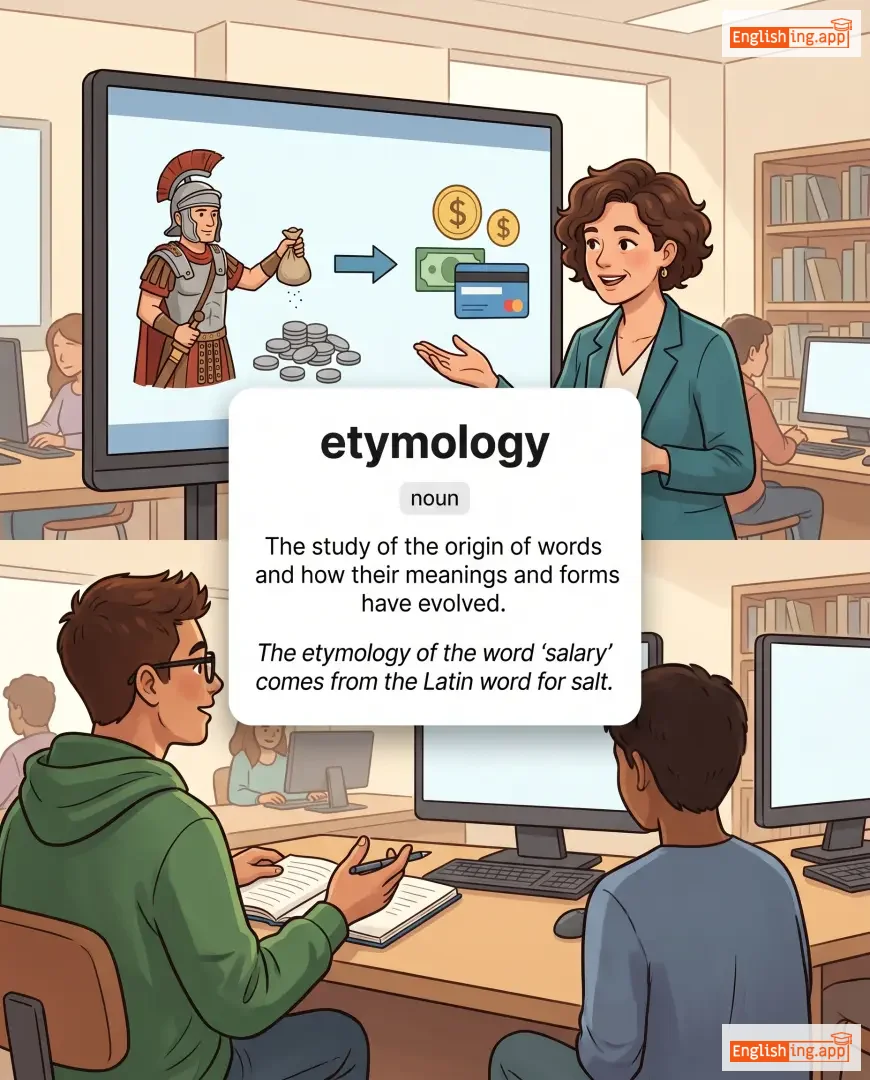
etymology definition card — visual illustration of the meaning
noun
/ˌɛtɪˈmɒlədʒi/
этимология (etimologiya)

The study of the origin of words and how their meanings and forms have evolved.

"The etymology of the word 'salary' comes from the Latin word for salt."

"Этимология слова 'зарплата' происходит от латинского слова для соли." (Etimologiya slova 'zarplata' proiskhodit ot latinskogo slova dlya soli.)
adjective
/juːˈdʒɛnɪk/
евгенический (evgenicheskiy)

Relating to or aiming at improving the genetic quality of a population.

"In the early 20th century, some scientists supported eugenic policies."

"В начале 20-го века некоторые ученые поддерживали евгеническую политику." (V nachale 20-go veka nekotorye uchenye podderzhivali evgenicheskuyu politiku.)
eugenics definition card — visual illustration of the meaning
noun
/juːˈdʒen.ɪks/
евгеника (evgenika)

the study or practice of improving the genetic quality of the human population

"Eugenics has been criticized for its unethical applications in history."

"Евгеника была подвергнута критике за свои неэтичные применения в истории." (Yevgenika byla podvergnuta kritike za svoi neetichnye primeneniya v istorii.)
adjective
/ˌjuːləˈdʒɪstɪk/
хвалебный (khvalebny)

Expressing praise or admiration, often formally.

"The speaker gave a eulogistic account of the leader’s achievements."

"Оратор дал восхвалительный отчет о достижениях лидера." (Orator dal voskhvalitel'nyy otchet o dostizheniyakh lidera.)
verb
/ˈjuːləˌdʒaɪz/
хвалить (khalit)

To praise highly in speech or writing, especially in honor of someone who has died.

"They gathered to eulogize their beloved teacher."

"Они собрались, чтобы восхвалить своего любимого учителя." (Oni sobralis', chtoby voskhvalit' svoego lyubimogo uchitelya.)