Словари

Словарь английского языка | Значения слов, определения и примеры

eulogy definition card — visual illustration of the meaning
noun
/ˈjuːlədʒi/
похвальная речь (pohval'naya rech')

A speech or piece of writing that praises someone, especially after their death.

"Her brother delivered a heartfelt eulogy at the funeral."
"Её брат произнес трогательную похвальную речь на похоронах." (Yeyo brat proyaznës trogatelnuyu pokhval'nuyu rech' na pokhoronakh.)
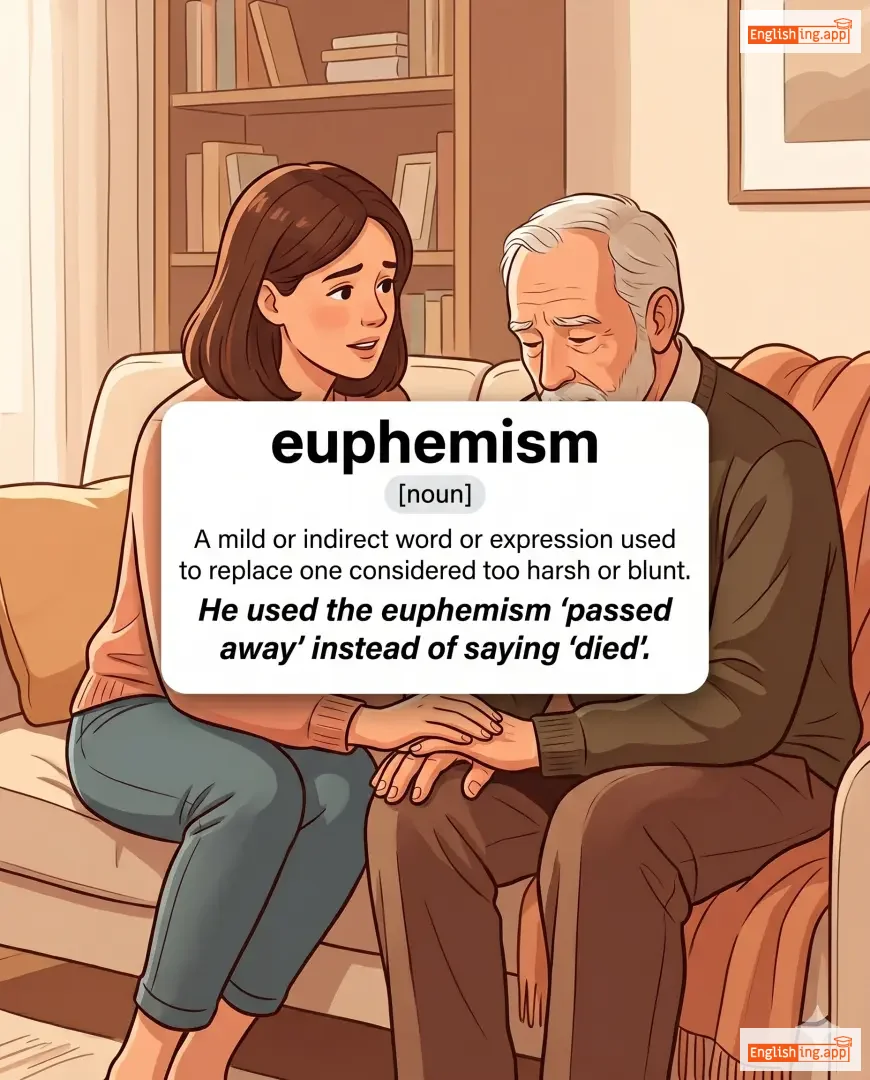
euphemism definition card — visual illustration of the meaning
noun
/ˈjuːfəmɪzəm/
эвфемизм (evfemizm)

A mild or indirect word or expression used to replace one considered too harsh or blunt.

"He used the euphemism 'passed away' instead of saying 'died'."

"Он использовал эвфемизм 'ушел' вместо того, чтобы сказать 'умер'." (On ispol'zoval evfemizm 'ushel' vmesto togo, chtoby skazat' 'umer'.)
adjective
/juːˈfoʊniəs/
звучащий гармонично (zvuchashchiy garmonichno)

Pleasing to the ear; having a sweet sound.

"The poet's euphonious language made the verse a delight to read."

"Эвфонический язык поэта сделал стихотворение приятным для чтения." (Evfonicheskiy yazyk poeta sdelal stikhotvoreniye priyatnym dlya chteniya.)
noun
/ˈjuːfəni/
эуфония (eufoniya)

The quality of being pleasing to the ear, especially through harmonious combination of words.

"The orator's speech was full of euphony and rhythm."
"Речь оратора была полна эйфонии и ритма." (Rech' oratora byla polna eufonii i ritma.)
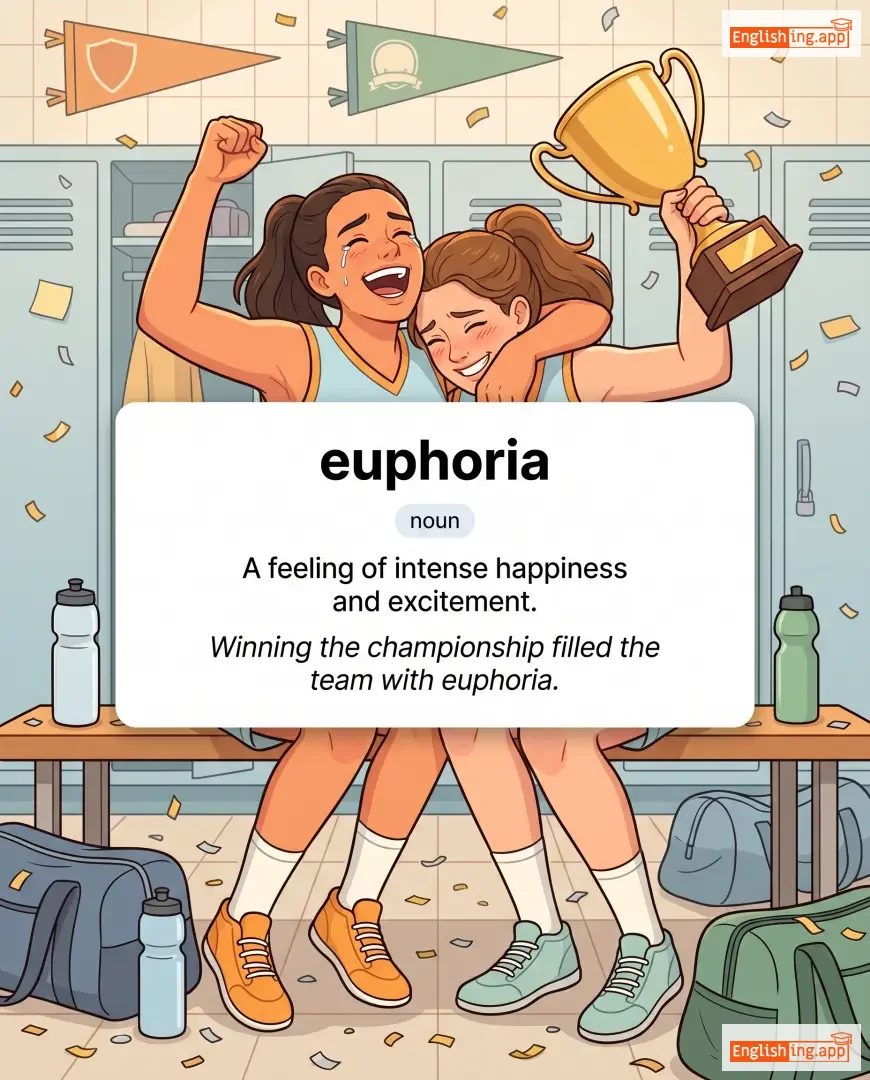
euphoria definition card — visual illustration of the meaning
noun
/juːˈfɔːriə/
эйфория (eyforiya)

A feeling of intense happiness and excitement.

"Winning the championship filled the team with euphoria."

"Победа в чемпионате наполнила команду эйфорией." (Pobeda v chempionate napolnila komandu eyforiey.)
adjective
/juːˈfɔːrɪk/
эйфорический (eyforicheskiy)

Characterized by or feeling intense excitement and happiness.

"The fans were euphoric after their team's victory."

"Фанаты были эйфоричны после победы своей команды." (Fanaty byli eyforichny posle pobedy svoey komandy.)
exclamation
/juˈriːkə/
Эврика! (Evrika!)

An exclamation used to express a sudden discovery or realization.

"When the solution finally came to him, he shouted, 'Eureka!'"

"Когда решение, наконец, пришло к нему, он закричал: 'Эврика!'" (Kogda reshenie, nakonec, prishlo k nemu, on zakrichal: 'Evrika!')
adjective
/ˌjʊərəˈpiːən/
европейский (yevropeyskiy)

Relating to Europe or its people.

"She studied European history at university."
"Она изучала европейскую историю в университете." (Ona izuchala yevropeyskuyu istoriya v universitete.)
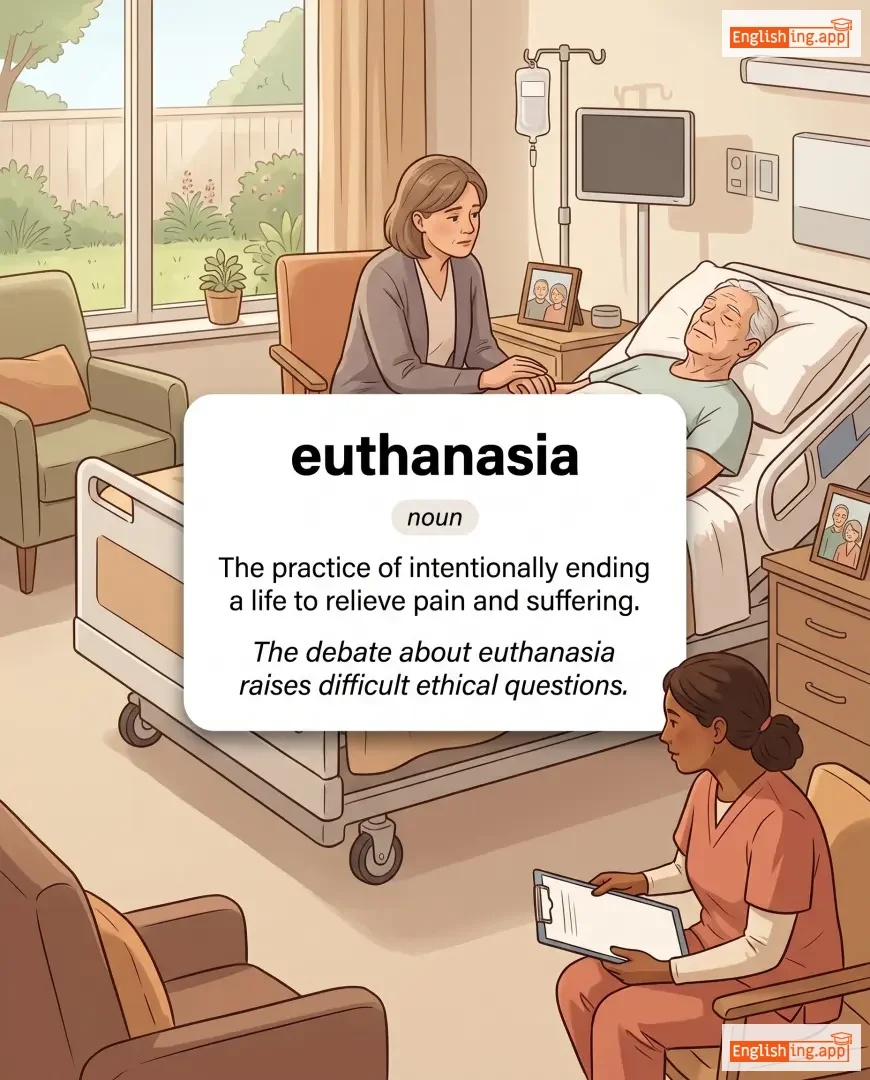
euthanasia definition card — visual illustration of the meaning
noun
/ˌjuːθəˈneɪʒə/
активное эвтаназия (aktivnoe evtanaziya)

The practice of intentionally ending a life to relieve pain and suffering.

"The debate about euthanasia raises difficult ethical questions."
"Дебаты об эвтаназии поднимают сложные этические вопросы." (Debaty ob evtanazii podnimayut slozhnye eticheskie voprosy.)
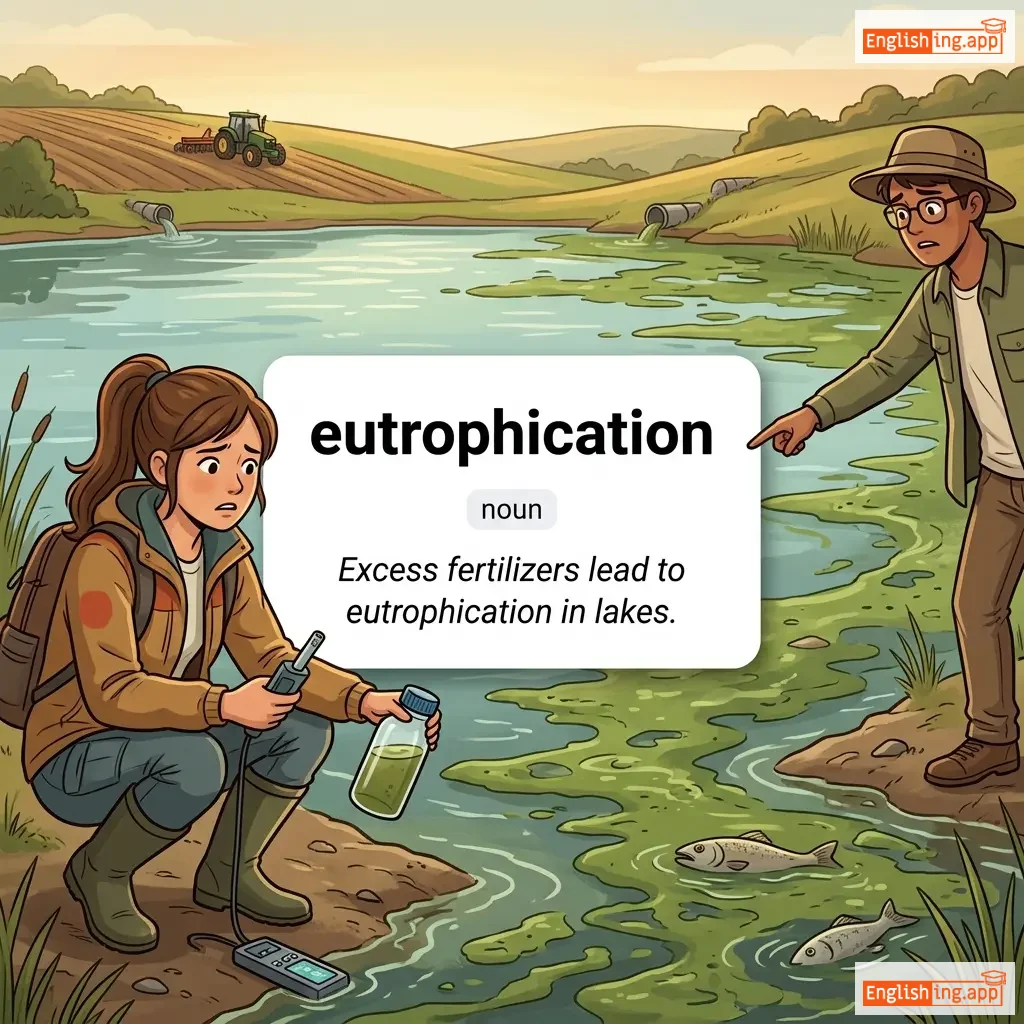
eutrophication definition card — visual illustration of the meaning
noun
/juːˌtrɑː.fɪˈkeɪ.ʃən/
избыточное содержание питательных веществ в озере или другом водоеме (izbytochnoe soderzhanie pitatel'nykh veshchestv v ozerie ili drugom vodoyeme)

Excessive richness of nutrients in a lake or other body of water, frequently due to runoff from the land, which causes a dense growth of plant life and death of animal life from lack of oxygen.

"Excess fertilizers lead to eutrophication in lakes."

"Избыточные удобрения приводят к эвтрофикации в озерах." (Izbytochnye udobreniya privodyat k eutfikatsii v ozerakh.)
verb
/ɪˈvækjueɪt/
эвакуировать (evakuirovat)

To remove people from a dangerous place to safety.

"The residents were ordered to evacuate the building after the fire alarm."

"Жителей попросили эвакуировать здание после срабатывания пожарной тревоги." (Zhiteley poprosili evakuirovat zdanije posle srabotki pozharnoy trevogi.)
verb
/ɪˈveɪd/
уклоняться (uklonyatsya)

To escape or avoid something, especially by cleverness or trickery.

"He tried to evade the question by changing the subject."

"Он пытался уклониться от вопроса, изменив тему." (On pytalsya uklonit'sya ot voprosa, izmeniv temu.)
verb
/ɪˈvæljueɪt/
оценить (otsenit)

To assess or judge the value, quality, or significance of something.

"The teacher will evaluate the students’ projects tomorrow."
"Учитель оценит проекты студентов завтра." (Uchitel' otsenit proekty studentov zavtra.)
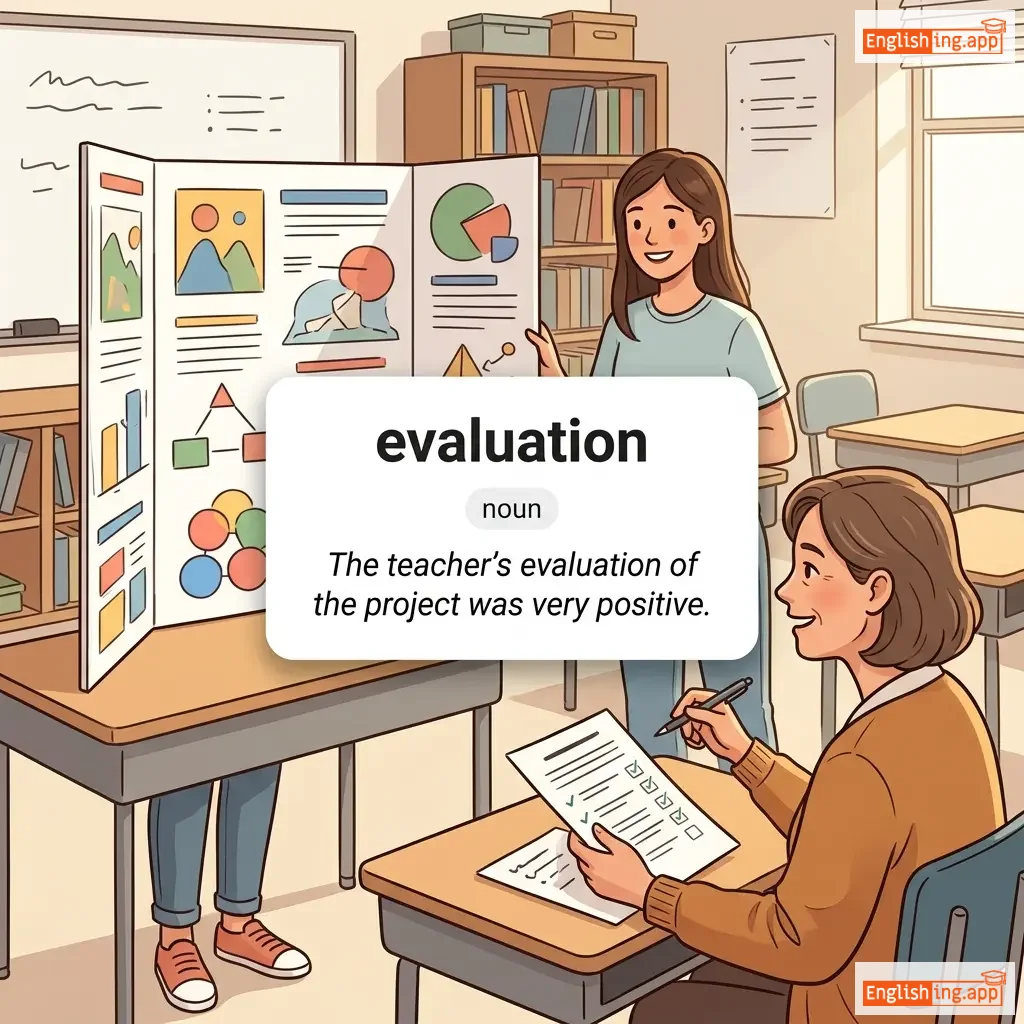
evaluation definition card — visual illustration of the meaning
noun
/ɪˌvæljʊˈeɪʃən/
оценка (otsenka)

The process of assessing or judging the value, quality, or importance of something.

"The teacher’s evaluation of the project was very positive."
"Оценка проекта учителем была очень положительной." (Otsenka proyektu uchitelem byla ochen' polozhitel'noy.)
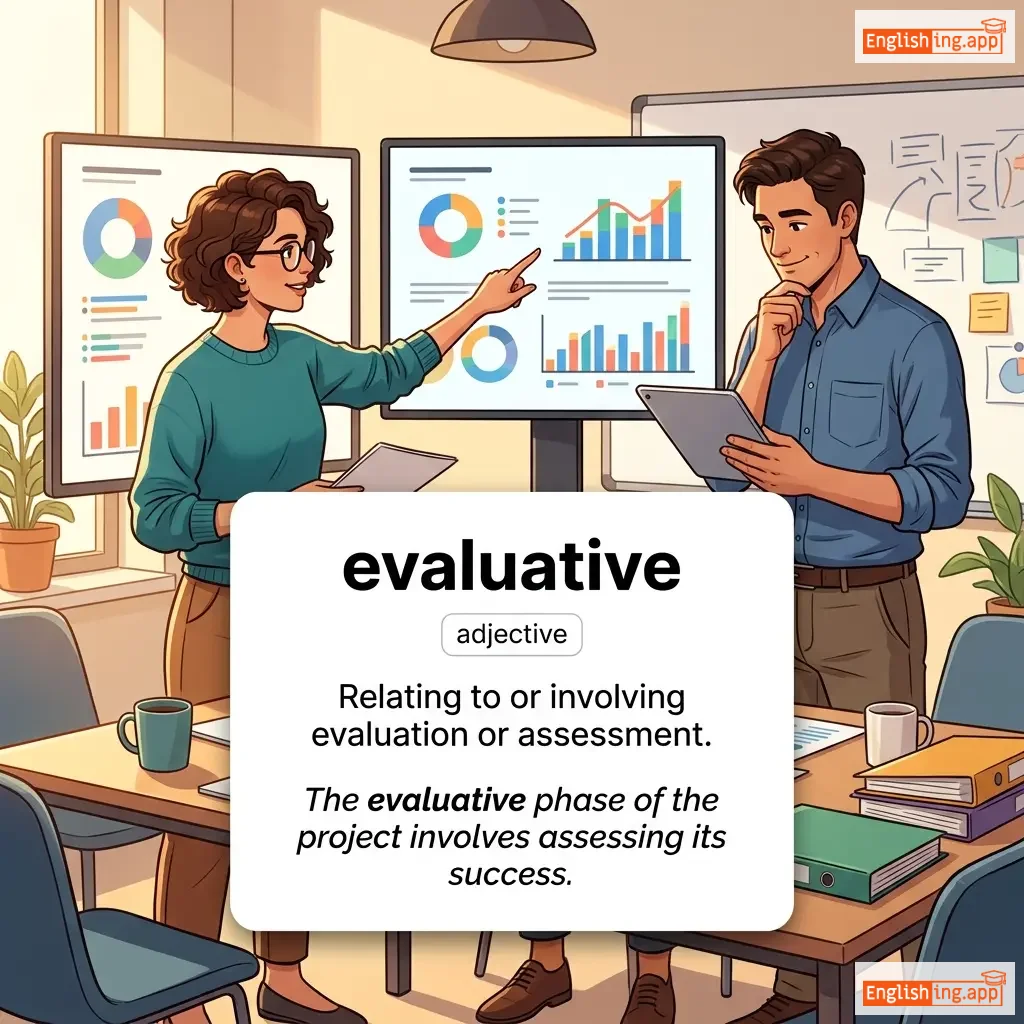
evaluative definition card — visual illustration of the meaning
adjective
/ɪˈvæljʊətɪv/
оценочный (otsenochniy)

Relating to or involving evaluation or assessment.

"The evaluative phase of the project involves assessing its success."

"Оценочная фаза проекта включает в себя оценку его успеха." (Otsenochnaya faza proyeka vklyuchayet v sebya otsenku yego uspekha.)
verb
/ˌɛvəˈnɛs/
тускнеть (tusknet')

To disappear gradually; to fade away.

"The mist began to evanesce as the sun rose higher."

"Туман начал исчезать, когда солнце поднималось выше." (Tuman nachal ischezat', kogda solntse podnimalsya vyshe.)
adjective
/ˌɛvəˈnɛsənt/
мимолетный (mimoletnyj)

Quickly fading or disappearing; lasting for only a very short time.

"The beauty of the sunset was evanescent, fading within minutes."

"Красота заката была мимолетной, исчезнувшей через несколько минут." (Krasota zakata byla mimoletnoy, ischeznuvshey cherez neskol'ko minut.)
adjective
/ˌiːvænˈdʒɛlɪkəl/
евангельский (evangelskiy)

Relating to the Christian gospel, especially the teachings that emphasize personal faith and the authority of the Bible.

"She grew up in an evangelical church community."

"Она выросла в евангельской церковной общине." (Ona vyrosla v evangelskoj tserkovnoj obshchine.)
noun
/ɪˈvændʒəlɪst/
евангелист (evangelist)

A person who seeks to convert others to the Christian faith, especially by public preaching.

"The evangelist traveled across the country spreading his message."

"Евангелист путешествовал по всей стране, распространяя свое послание." (Evangelist puteshestvoval po vsei strane, rasprostranyaya svoe poslanie.)
noun
/ɪˈvæp.ər.ə.tɪv ˈkuː.lər/
испарительный охладитель (isparitelnyy okhladitel)

a cooling device that uses water evaporation to reduce air temperature

"The evaporative cooler works best in dry climates."

"Испарительный охладитель работает лучше всего в сухом климате." (Isparitel'nyy okhladitel' rabotayet luchshe vsego v sukhom klimaty)
evasion definition card — visual illustration of the meaning
noun
/ɪˈveɪʒən/
уклонение (uklonenie)

The act of avoiding something, especially by cleverness or trickery.

"He was arrested for tax evasion."
"Его арестовали за уклонение от уплаты налогов." (Ego arestovali za uklonenie ot uplaty nalogov.)
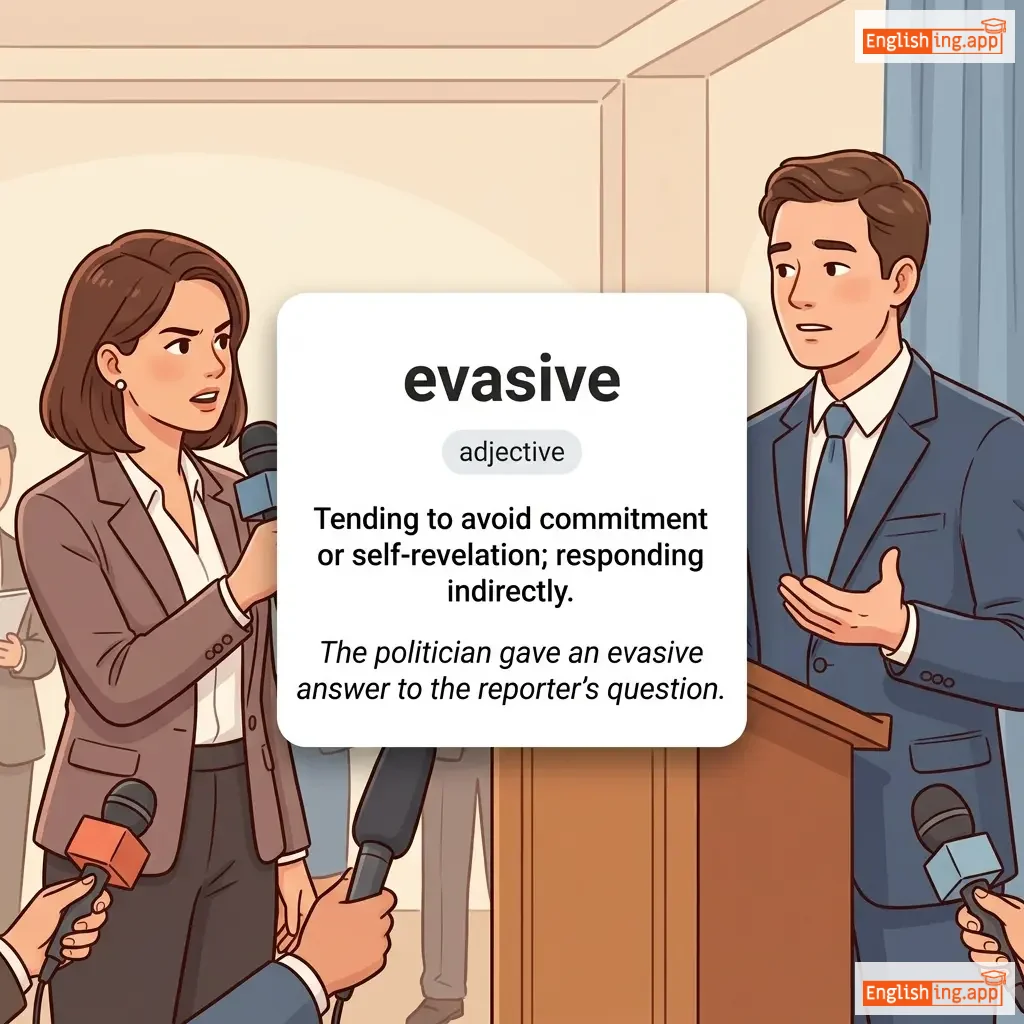
evasive definition card — visual illustration of the meaning
adjective
/ɪˈveɪsɪv/
уходящий от ответа (ukhodyashchiy ot otveta)

Tending to avoid commitment or self-revelation; responding indirectly.

"The politician gave an evasive answer to the reporter's question."

"Политик дал уклончивый ответ на вопрос репортера." (Politik dal uklonchivyy otvet na vopros reportera.)
adjective, adverb
/ˈiː.vən/
ровный (rovny)

flat or smooth; equal in degree or amount; used to emphasize something surprising

"The road was surprisingly even after the storm."

"Дорога была удивительно ровной после бури." (Doroga byla udivitel'no rovnoi posle buri.)
adjective
/ˌiːvənˈhændɪd/
беспристрастный (bespristrastny)

Fair and impartial; showing no bias or favoritism.

"The judge was praised for her evenhanded approach to the case."
"Судью похвалили за её беспристрастный подход к делу." (Sud'yu pokhvalili za yeye bespristrastnyy podkhod k delu.)
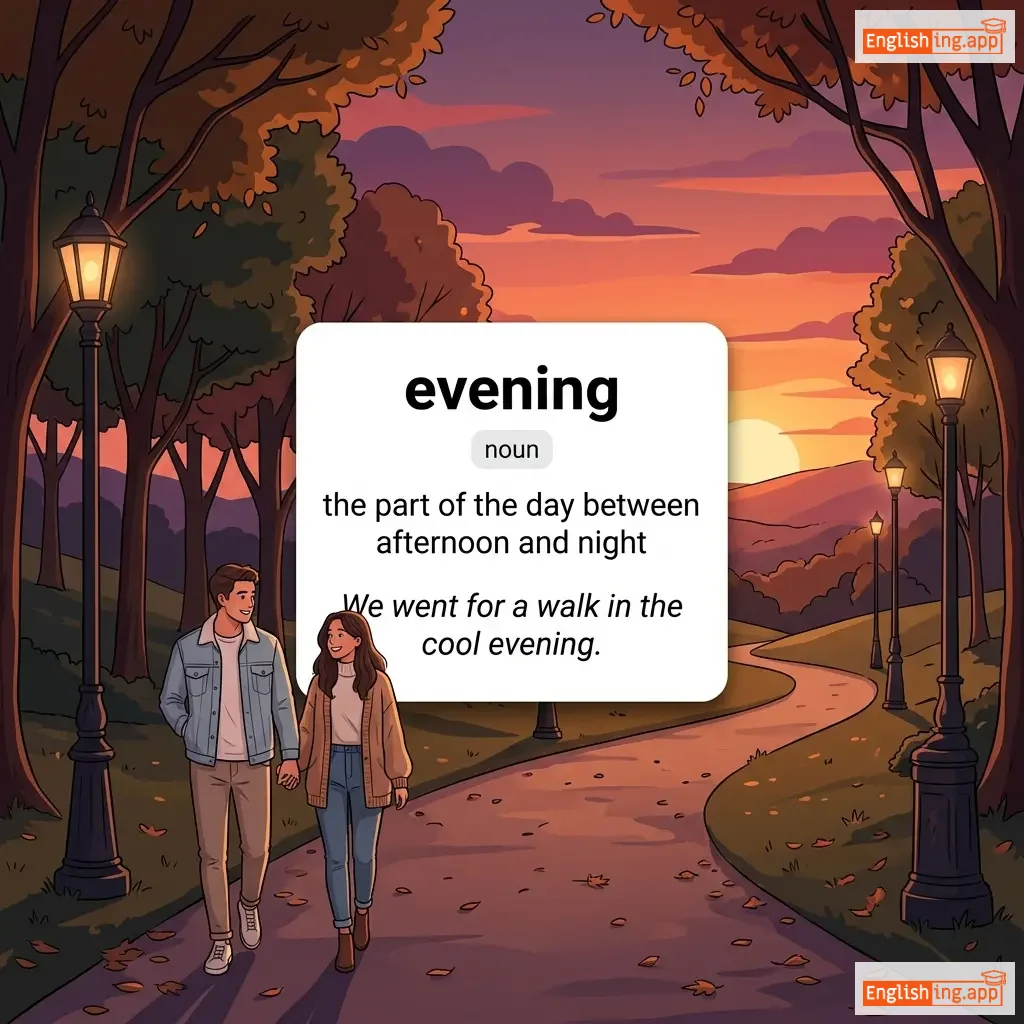
evening definition card — visual illustration of the meaning
noun
/ˈiːv.nɪŋ/
вечер (vecher)

the part of the day between afternoon and night

"We went for a walk in the cool evening."

"Мы пошли на прогулку в прохладный вечер." (My poshli na progulku v prokhladnyy vecher.)
event definition card — visual illustration of the meaning
noun
/ɪˈvent/
событие (sobytiye)

something that happens, especially something important

"The concert was the biggest event of the year."
"Концерт был самым большим событием года." (Kontsert byl samym bol'shim sobytiyem goda.)
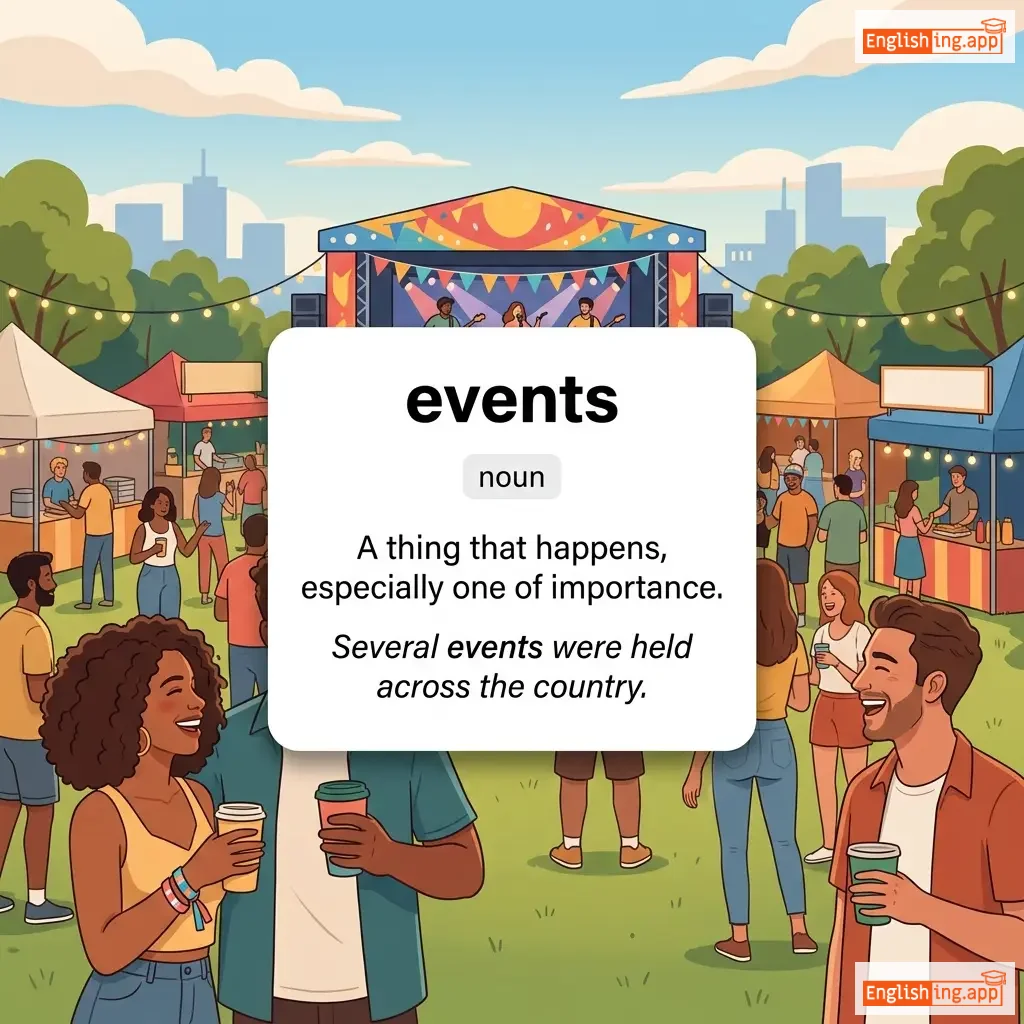
events definition card — visual illustration of the meaning
noun
ɪˈvɛnts
события (sobytiya)

A thing that happens, especially one of importance.

"Several events were held across the country."

"По всей стране прошло несколько событий." (Po vsei strane proshlo neskol'ko sobytiy.)
adjective
/ɪˈvɛntʃuəl/
окончательный (okontchatel'nyy)

Happening at the end of a process or as the final result.

"His hard work led to his eventual success."

"Его упорный труд привел к его окончательному успеху." (Ego upornyy trud privel k yego okonchatelnomu uspekhu.)
adverb
/ɪˈven.tʃu.ə.li/
в конце концов (v kontse kontsov)

in the end, especially after a long delay or series of problems

"He eventually finished his degree after many challenges."

"Он в конце концов закончил свою степень после множества трудностей." (On v kontse kontsov zakonchil svoju stepen posle mnozhestva trudnostej.)
adverb
/ˈev.ər/
когда-либо (kogda-libo)

at any time; always; continuously

"Have you ever been to London?"

"Ты когда-нибудь был в Лондоне?" (Ty kogda-libo byl v Londone?)
adjective
/ˈevər ˈlæstɪŋ/
вечный; постоянный; (vechnyy; postoyannyy)

eternal; permanent; enduring forever

"Their love is ever-lasting and will never fade."
"Их любовь вечна и никогда не исчезнет." (ikh lyubov' vechna i nikogda ne ischeznet.)
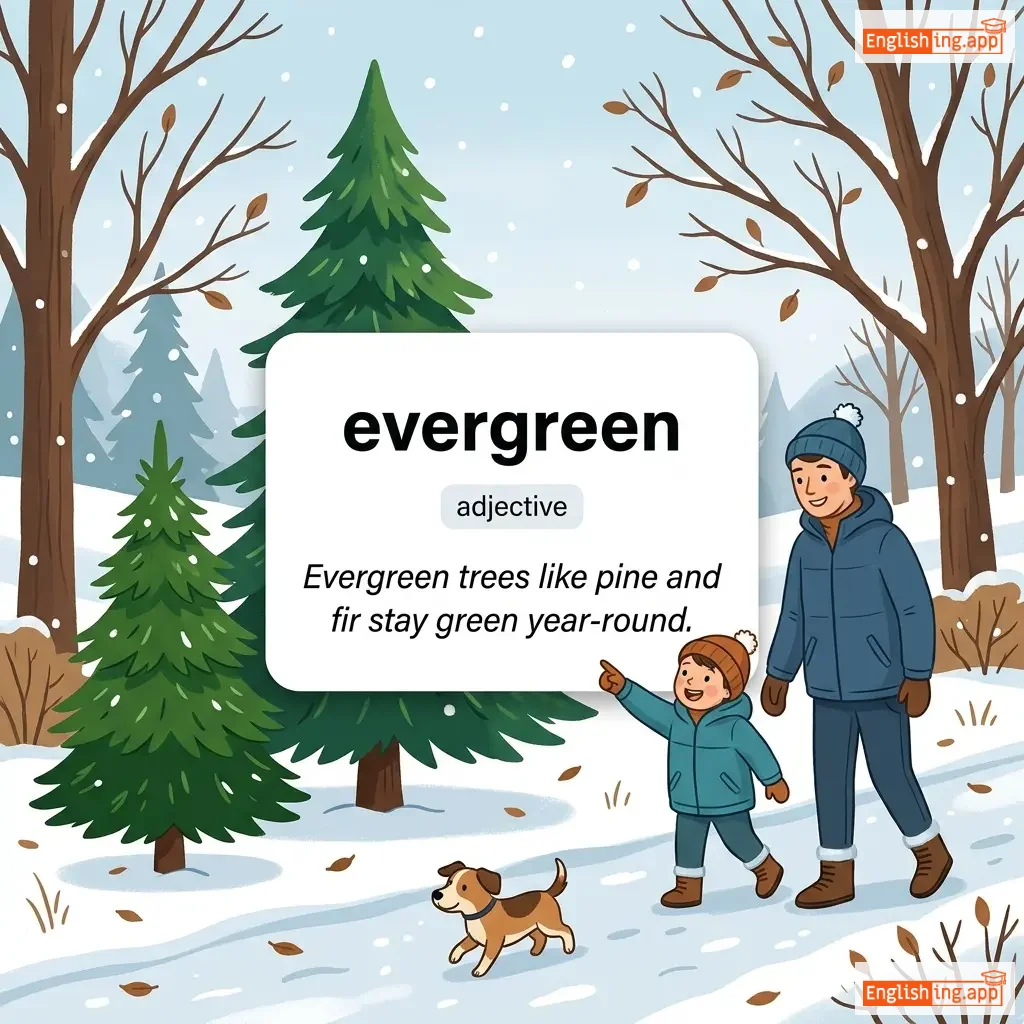
evergreen definition card — visual illustration of the meaning
adjective
/ˈɛv.ə.ɡriːn/
вечнозеленый (vechnozelenyy)

Remaining green and functional throughout the year; not shedding leaves seasonally.

"Evergreen trees like pine and fir stay green year-round."

"Вечнозеленые деревья, такие как сосна и ель, остаются зелеными круглый год." (Vechnozelenye derev'ya, takie kak sosna i yel', osta'yutsya zelyonymi kruglyy god.)
adjective
/ˌɛvərˈlæstɪŋ/
вечный (vechniy)

Lasting forever or for an indefinitely long time.

"The poet wrote about his everlasting love for nature."

"Поэт писал о своей вечной любви к природе." (Poet pisal o svoey vechnoy lyubvi k prirode.)
verb
/ɪˈvɜːrt/
повернуть наружу (povernut' naruzhu)

To turn inside out or outward.

"The surgeon had to evert the eyelid during the procedure."

"Хирург должен был повернуть веко во время операции." (Khirurg dolzhen byl povernut' veko vo vremya operatsii.)
Every definition card — visual illustration of the meaning
determiner
/ˈɛvri/
каждый (kazhdyy)

used to refer to all members of a group without exception

"She reads every book she can find."

"Она читает каждую книгу, которую может найти." (Ona chitayet kazhduyu knigu, kotoruyu mozhet nayti.)
pronoun
/ˈɛvribɒdi/
все (vse)

all people; everyone

"Everybody enjoyed the party."

"Все наслаждались вечеринкой." (Vse naslazhdalis vecherinkoy.)
adjective
/ˈɛvrideɪ/
ежедневный (ezhednevnyy)

common or ordinary; occurring daily

"These shoes are perfect for everyday use."

"Эти туфли идеальны для ежедневного использования." (Ety tufli ideal'ny dlya ezhednevnovo ispol'zovaniya.)
pronoun
/ˈɛvrɪwʌn/
все (vse)

every person; all people

"Everyone must bring their own lunch."

"Все должны принести свой обед." (Vse dolzhny prinesti svoi obed.)
pronoun
/ˈɛvrɪθɪŋ/
всё (vsyo)

all things; the whole lot

"He packed everything in his suitcase."

"Он упаковал всё в свой чемодан." (On upakovalsya vsyo v svoy chemodan.)
adverb
/ˈɛv.ri.wɛər/
везде (vezde)

in or to all places

"Tourists can be seen everywhere in the city during summer."

"Летним днем туристы могут быть замечены везде в городе." (Letnim dnyom turisty mogut byt' zamecheny vezde v gorode.)
verb
/ɪˈvɪkt/
выселять (vyselyat)

To expel someone from a property, usually by legal process.

"The landlord decided to evict the tenants for not paying rent."
"Арендодатель решил выселить арендаторов за неуплату аренды." (Arendodatel' reshil vyselit' arendatorov za neuplatu arendy.)
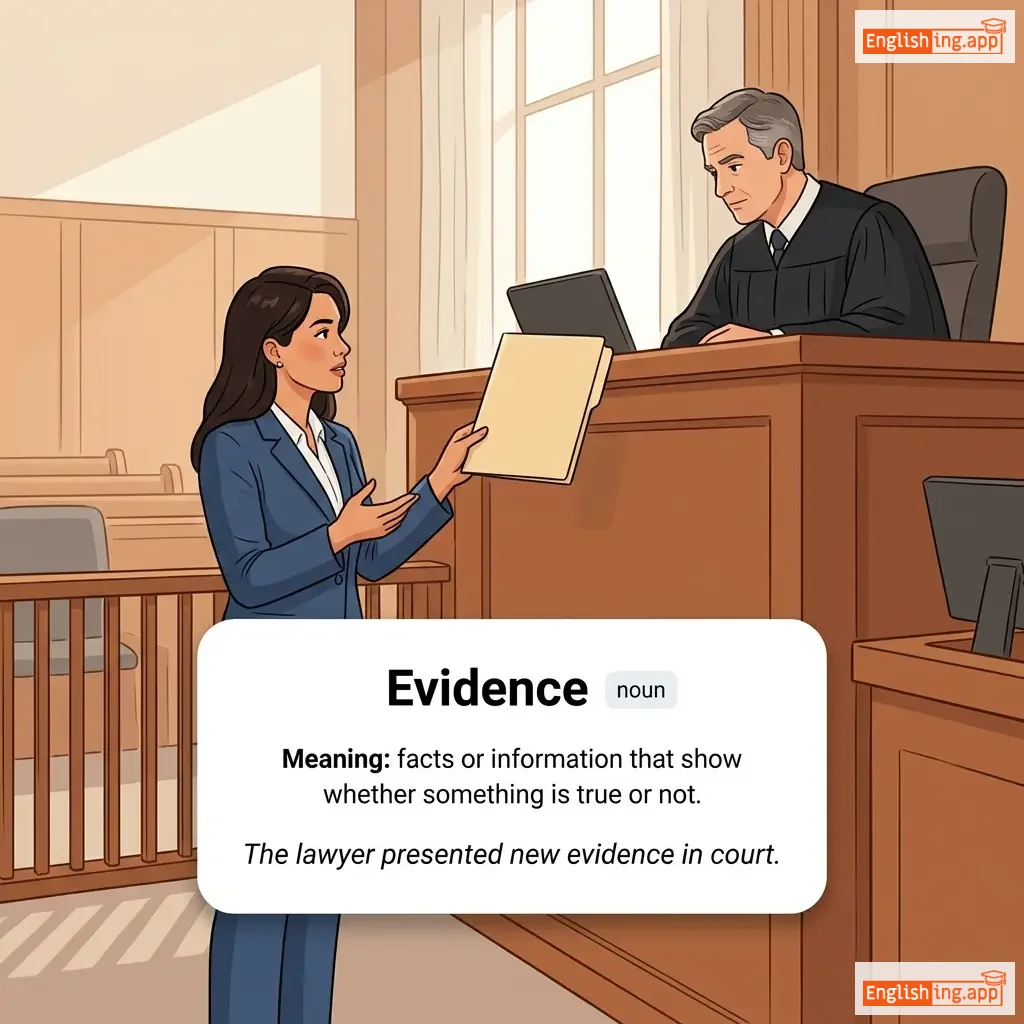
Evidence definition card — visual illustration of the meaning
noun
/ˈɛv.ɪ.dəns/
доказательство (dokazatel'stvo)

facts or information that show whether something is true or not

"The lawyer presented new evidence in court."

"Адвокат представил новые доказательства в суде." (Advokat predstavil novye dokazyvatel'stva v sude.)
evident definition card — visual illustration of the meaning
adjective
/ˈɛvɪdənt/
очевидный (ochevidnyy)

clearly seen or understood; obvious

"It was evident that she was upset."

"Было очевидно, что она расстроена." (Bylo ochevidno, chto ona rasstroena.)
adjective
/ˌɛvɪˈdɛnʃəl/
доказательный (dokazatel'nyi)

relating to or providing evidence

"The lawyer presented evidential support for her claims."
"Адвокат представил доказательную поддержку для её претензий." (Advokat predstavil dokazatel'nuyu podderzhku dlya yeë pretenzii.)
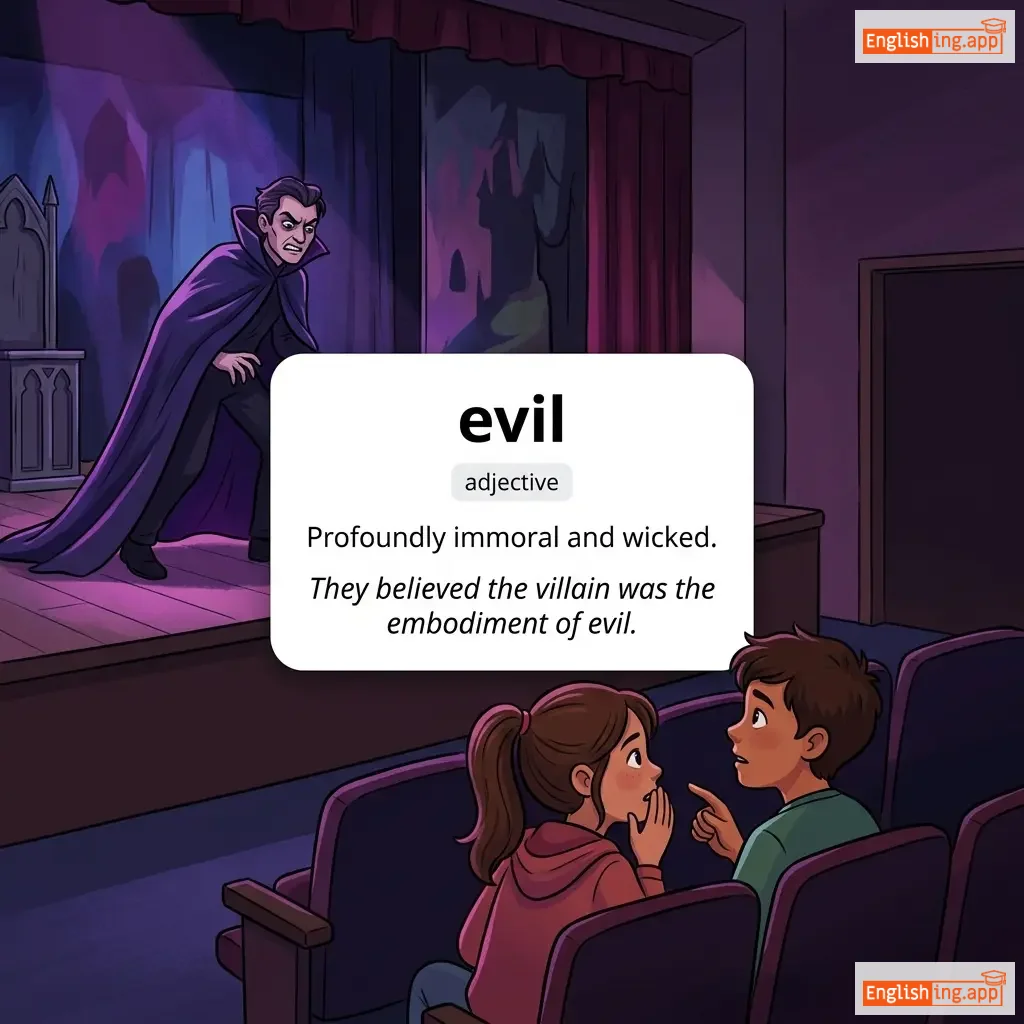
evil definition card — visual illustration of the meaning
adjective
/ˈiːvəl/
злой (zloy)

Profoundly immoral and wicked.

"They believed the villain was the embodiment of evil."

"Они верили, что злодей был олицетворением зла." (Oni verili, chto zlodey byl olitsetvoreniem zla.)
evince definition card — visual illustration of the meaning
verb
/ɪˈvɪns/
демонстрировать (demonstrirovat)

to show or demonstrate clearly

"She evinced her interest in the project through active participation."

"Она продемонстрировала свой интерес к проекту через активное участие." (Ona prodemonstrirovala svoi interes k proyektu cherez aktivnoe uchastie.)
verb
/ɪˈvɪsəˌreɪt/
эвиссериировать, уничтожать (evissierirovat, unichtozhat)

to remove the internal organs of; to deprive of essential content

"The critics eviscerated the movie for its weak storyline."
"критики уничтожили фильм из-за его слабой сюжетной линии." (kritiki unichtozhili film iz-za ego slabyj syuzhetnyj linii.)
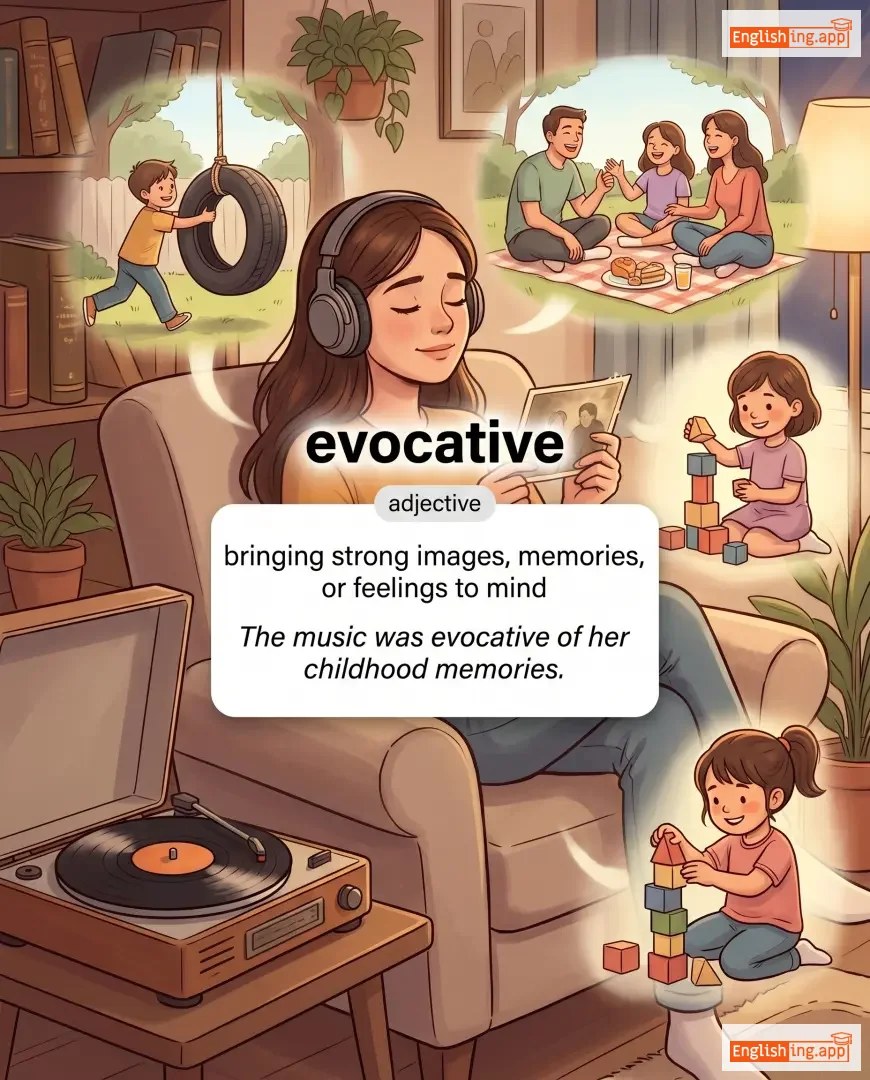
evocative definition card — visual illustration of the meaning
adjective
/ɪˈvɒkətɪv/
вызывающий воспоминания (vyzyvayushchiy vospominaniya)

bringing strong images, memories, or feelings to mind

"The music was evocative of her childhood memories."

"Музыка вызвала её воспоминания о детстве." (Muzyka vyzvala yeyo vospominaniya o detstve.)
verb
/ɪˈvoʊk/
вызывать (vyzyvat)

to bring a feeling, memory, or image into the mind

"The old song evoked memories of her childhood."

"Старая песня вызвала воспоминания о её детстве." (Staraya pesnya vyzvala vospominaniya o yey detstve.)
noun
/ˌɛvəˈluːʃən/
эволюция (evolyutsiya)

the gradual development of something, especially from a simple to a more complex form

"The theory of evolution explains how species change over time."

"Теория эволюции объясняет, как виды изменяются с течением времени." (Teoriya evolyutsii ob'yasnyaet, kak vidy izmenyayutsya s techeniyem vremeni.)