Словари

Словарь английского языка | Значения слов, определения и примеры

adjective
/ɛɡˈzɪɡjuəs/
меньше (men'she)

small in amount; scanty or inadequate

"They survived on exiguous rations during the journey."

"Они выжили на скудных пайках во время путешествия." (Oni vyzhili na skudnykh paykakh vo vremya puteshestviya.)
noun
/ˈɛksaɪl/
изгнание (izgnanie)

the state of being forced to live in a foreign country, often for political reasons

"After the coup, the former leader was forced into exile."

"После переворота бывший лидер был вынужден уйти в изгнание." (Posle perevorota byvshiy lider byl vynuzhden uiti v izgnanie.)
verb
/ɪɡˈzɪst/
существовать (sushchestvovat)

to have actual being; to be real or present

"Dinosaurs no longer exist on Earth."

"Динозавры больше не существуют на Земле." (Dinozavry bol'she ne sushchestvuyut na Zemle.)
noun
/ɪɡˈzɪstəns/
существование (sushchestvovanie)

The state of being alive or having real presence.

"The existence of life on other planets is still uncertain."

"Существование жизни на других планетах всё ещё неясно." (Sushchestvovanie zhizni na drugikh planetakh vsyo yeshcho neyashchno.)
existential definition card — visual illustration of the meaning
adjective
/ˌɛɡzɪˈstɛnʃəl/
экзистенциальный (ekzistentsial'nyj)

Relating to human existence, often concerning meaning or purpose of life.

"She went through an existential crisis during her midlife."
"Она пережила экзистенциальный кризис в середине своей жизни." (Ona perezhila ekzistentsial'nyj krizis v seredine svoej zhizni.)
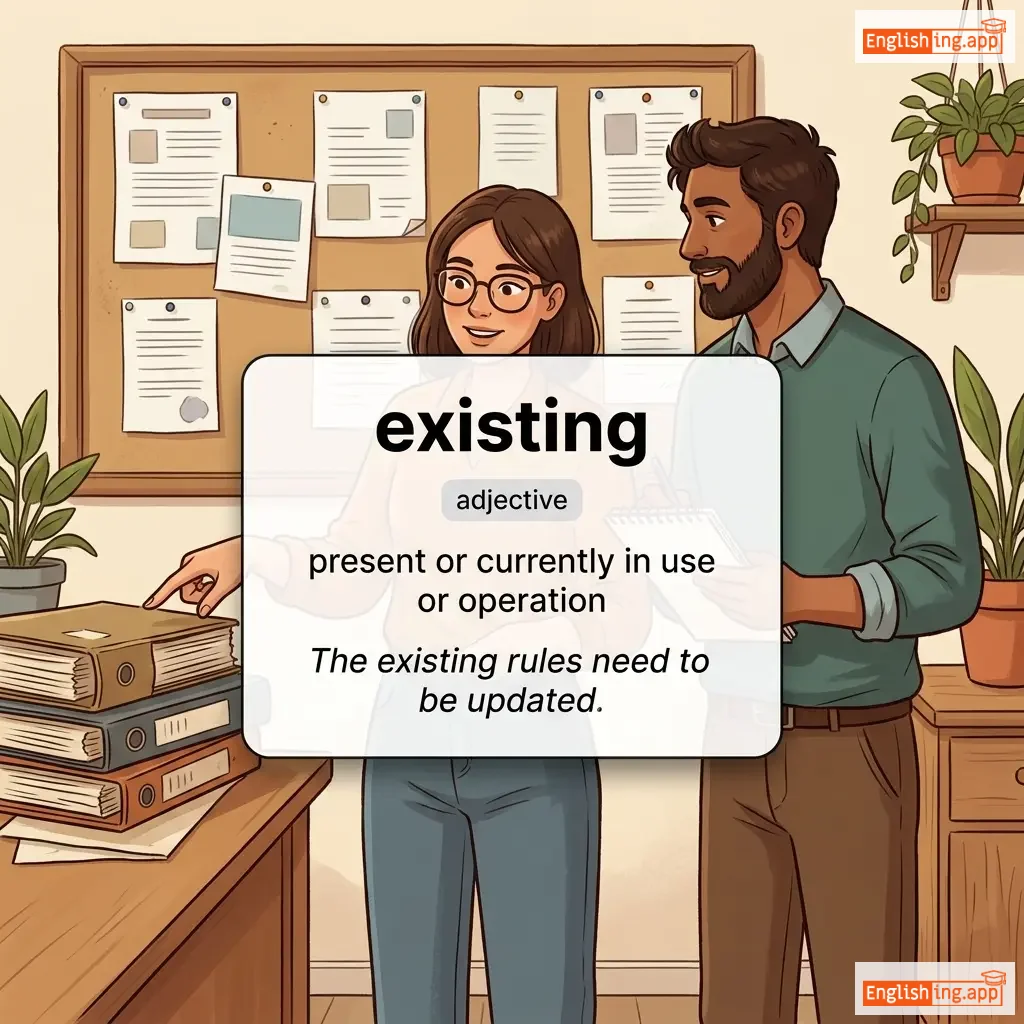
existing definition card — visual illustration of the meaning
adjective
/ɪɡˈzɪstɪŋ/
существующий (sushchestvuyushchiy)

present or currently in use or operation

"The existing rules need to be updated."

"Существующие правила должны быть обновлены." (Sushchestvuyushchie pravila dolzhny byt' obnavleny.)
noun/verb
/ˈɛɡzɪt/
выход (vykhod)

A way out of a place; the act of leaving.

"He quickly found the nearest exit during the fire drill."

"Он быстро нашел ближайший выход во время тренировки по пожарной безопасности." (On bystro nashel blizhayshiy vykhod vo vremya trenirovki po pozharnoy bezopasnosti.)
noun
/ˈɛksədəs/
исход (iskhod)

A mass departure of people from a place.

"There was a sudden exodus of workers after the strike began."

"После начала забастовки произошел резкий исход рабочих." (Posle nachala zabastovki proizohel rezkiy iskhod rabochikh.)
verb
/ɪɡˈzɒnəreɪt/
оправдать (opravdat)

To clear someone from blame or accusation.

"The court exonerated her from all charges."

"Суд освободил ее от всех обвинений." (Sud osvobodil ee ot vsekh obvinienii.)
exoplanet definition card — visual illustration of the meaning
noun
ˈɛksəʊˌplænɪt
планета, которая вращается вокруг звезды за пределами солнечной системы (planeta, kotoraya vrashchayetsya vokrug zvezdy za predelami solnechnoy sistemy)

A planet that orbits a star outside the solar system.

"Astronomers have discovered thousands of exoplanets in the last decade."

"Астрономы обнаружили тысячи экзопланет в последнем десятилетии." (Astronomy obnaruzhili tysyachi ekzoplanet v poslednem desyatiletii.)
noun
/ɪɡˈzɔːrbɪtəns/
эксцессы (ekstsessy)

The quality of being excessive, unreasonable, or going beyond proper limits.

"The exorbitance of the hotel's prices shocked the tourists."

"Эксцессивность цен в отеле шокировала туристов." (Ekstsessivnost' tsen v otele shokirovala turistov.)
exorbitant definition card — visual illustration of the meaning
adjective
/ɪɡˈzɔːrbɪtənt/
чрезмерный (chrezmernij)

Unreasonably high or excessive, especially in cost or amount.

"They charged an exorbitant fee for a simple service."

"Они взяли чрезмерную плату за простую услугу." (Oni vzyali chrezmernuju platu za prostuju uslugu.)
exorcise definition card — visual illustration of the meaning
verb
/ˈeksɔːrsaɪz/
изгонять (izgonyat)

To drive out an evil spirit or bad influence through rituals or prayers.

"The priest was called to exorcise the spirit from the house."

"Священник был вызван, чтобы изгнать духа из дома." (Svyashchennik byl vyzvan, chtoby izgnat' dukha iz doma.)
adjective
/ɪɡˈzɑːtɪk/
экзотический и привлекательный (ekzoticheskiy i privlekatel'nyy)

Unusual and attractive because it is from a foreign place or culture.

"The garden was filled with exotic plants from tropical countries."

"Сад был заполнен экзотическими растениями из тропических стран." (Sad byl zapolnen ekzoticheskimi rasteniyami iz tropicheskikh stran.)
expand definition card — visual illustration of the meaning
verb
/ɪkˈspænd/
расширять (rasshiryat)

To increase in size, number, or importance.

"The company plans to expand its operations into new markets."

"Компания планирует расширять свои операции на новые рынки." (Kompaniya planiruet rasshiryat svoi operatsii na novye rynki.)
expanded definition card — visual illustration of the meaning
verb
ɪkˈspændɪd
расширенный (rasshirennyy)

Made or become larger or more extensive.

"Expanded opportunities in education can transform lives."
"Расширенные возможности в образовании могут изменить жизни." (Rasshirennye vozmozhnosti v obrazovanii mogut izmenit' zhizni.)
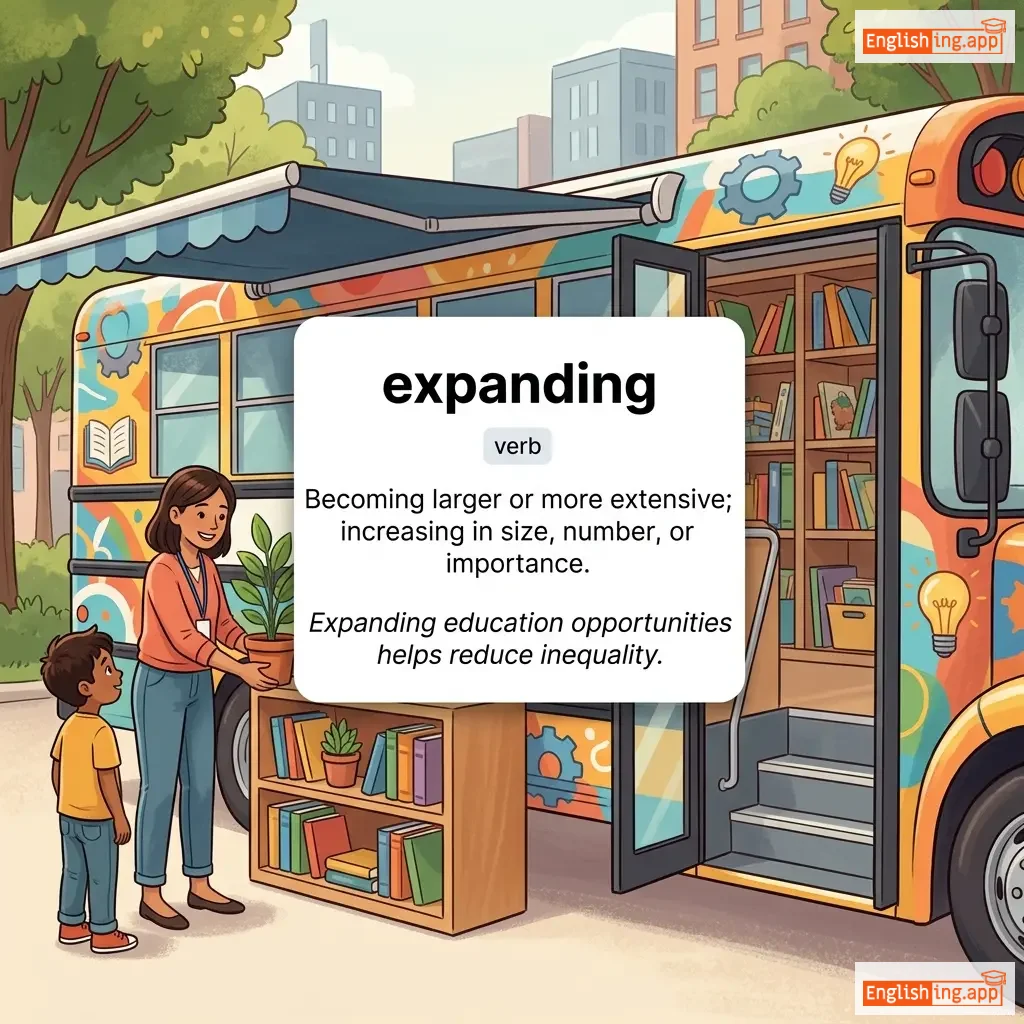
expanding definition card — visual illustration of the meaning
verb
ɪkˈspændɪŋ
расширять (rasshiryat')

Becoming larger or more extensive; increasing in size, number, or importance.

"Expanding education opportunities helps reduce inequality."

"Расширение образовательных возможностей помогает уменьшить неравенство." (Rasshiryeniye ob-razovatel'nykh voz-mozh-nostey po-mog-a-yet um-en'shit' ne-ra-ven-stvo.)
noun
/ɪkˈspæns/
широкая площадь (shirokaya ploshchad)

a wide, open area of land, sea, or sky

"The desert is a vast expanse of sand and rock."

"Пустыня — это огромная площадь песка и камней." (Pustynya — eto ogromnaya ploshchad peska i kamney.)
expansion definition card — visual illustration of the meaning
noun
/ɪkˈspænʃən/
расширение (rasshirenie)

the action of becoming larger, more extensive, or widespread

"The company announced its expansion into new markets."

"Компания объявила о расширении на новые рынки." (Kompaniya ob'yavila o rasshirenii na novye rynki.)
adjective
/ɪkˈspænsɪv/
обширный (obshirny)

covering a wide area or having a wide range of ideas or emotions

"They enjoyed the expansive view from the hilltop."
"Они наслаждались обширным видом с вершины холма." (Oni naslazhdalis' obshirnym vidom s vershiny kholma.)
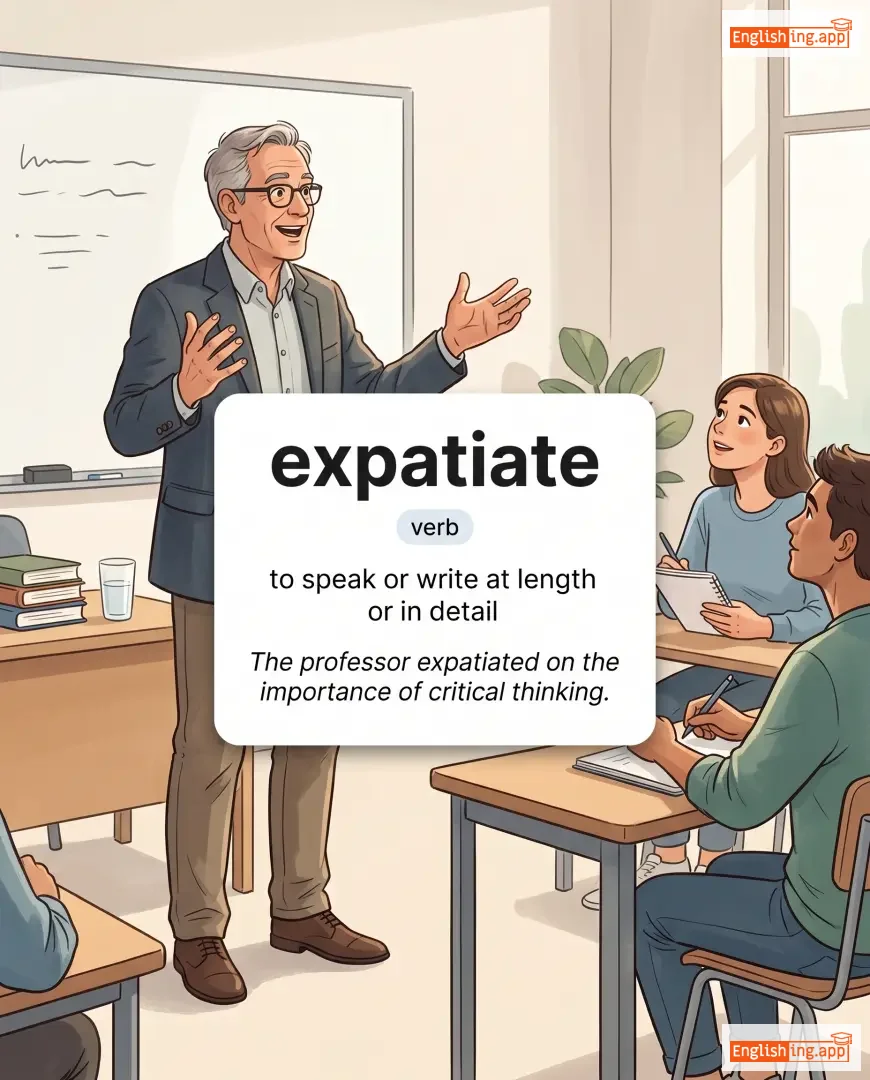
expatiate definition card — visual illustration of the meaning
verb
/ɪkˈspeɪʃiˌeɪt/
говорить или писать подробно (govorit' ili pisat' podrobno)

to speak or write at length or in detail

"The professor expatiated on the importance of critical thinking."
"Профессор экспатировал о важности критического мышления." (Professor eksapitiral o vazhnosti kriticheskogo myshleniya.)
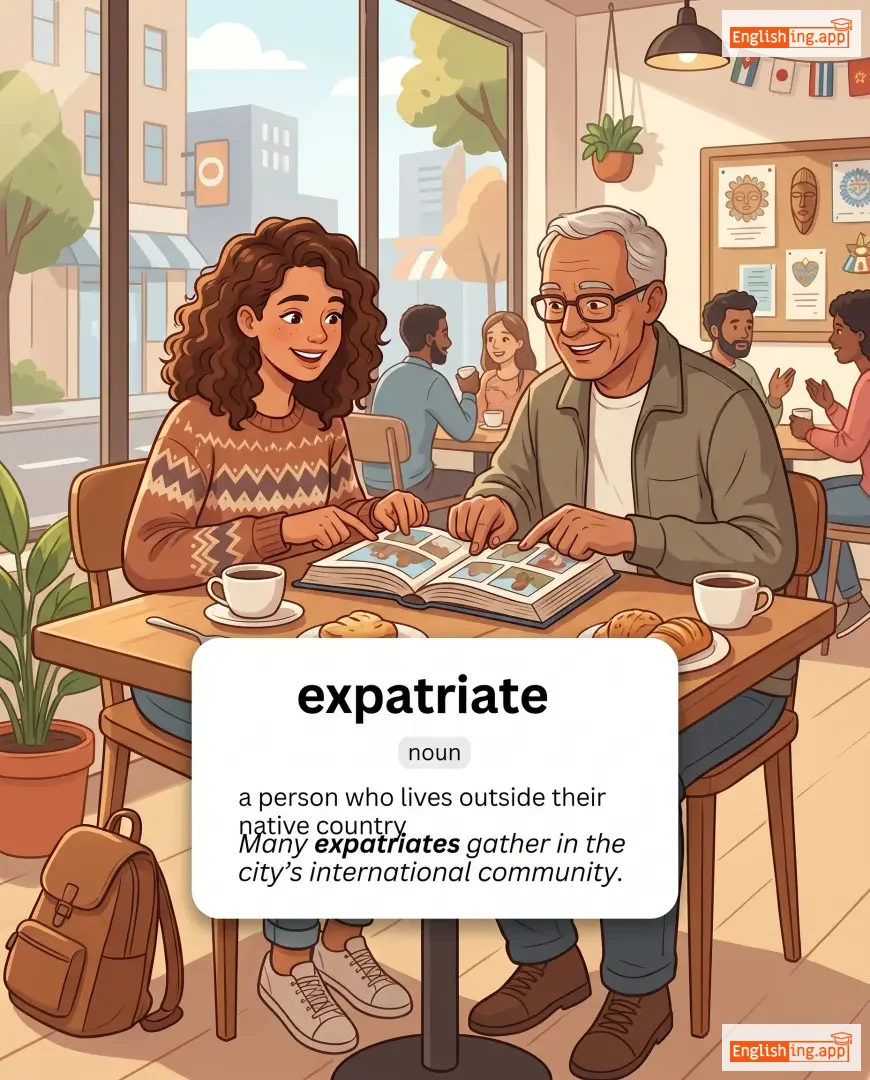
expatriate definition card — visual illustration of the meaning
noun
/ɛkˈspeɪtriət/
экспатриант (eksatriant)

a person who lives outside their native country

"Many expatriates gather in the city’s international community."

"Множество экспатриантов собираются в международном сообществе города." (Mnozhestvo eksapriantov sobirayutsya v mezhdunarodnom soobshchestve goroda.)
expect definition card — visual illustration of the meaning
verb
/ɪkˈspɛkt/
ожидать (ozhidayt)

to believe that something will happen or that someone will arrive; to anticipate

"I expect the package to arrive tomorrow."

"Я ожидаю, что пакет прибудет завтра." (Ya ozhidayu, chto paket pribudet zavtra.)
noun
/ɪkˈspɛktənsi/
ожидание (ozhidanie)

the state of expecting something; anticipation or likelihood

"There was a sense of expectancy in the room before the results were announced."

"В комнате был дух ожидания перед тем, как были объявлены результаты." (V komnate byl dukh ozhidaniya pered tem, kak byli ob'yavleny rezul'taty.)
noun
/ˌɛkspɛkˈteɪʃən/
ожидание (ozhidanie)

a strong belief that something will happen or be the case

"The students had high expectations for their exam results."

"Студенты имели высокие ожидания от своих результатов экзаменов." (Studenty imeli vysokiye ozhidaniya ot svoikh rezul'tatov ekzamenov.)
expected definition card — visual illustration of the meaning
adjective
/ɪkˈspɛktɪd/
ожидаемый (ozhidayemyy)

regarded as likely to happen; anticipated

"The expected results were better than we thought."

"Ожидаемые результаты были лучше, чем мы думали." (Ozhidayemyye rezul'taty byli luchshe, chem my dumali.)
verb
/ɪkˈspɛktəreɪt/
отхаркивать (otharkivat)

to cough up and spit out mucus from the throat or lungs

"The patient began to expectorate thick mucus."

"Пациент начал отхаркивать густую слизь." (Patsiyent nachal otharkivat' gustuyu sliz'.)
noun
/ɪkˈspiːdiənsi/
оппортунизм (opportunizm)

the quality of being convenient and practical despite possibly being improper or immoral

"He acted out of political expediency rather than principle."

"Он действовал из политического оппортунизма, а не из принципа." (On deystvoval iz politicheskogo opportunizma, a ne iz printsipa.)
adjective
/ɪkˈspiːdiənt/
целесообразный (tselesoobrazny)

suitable or convenient for achieving a particular end, sometimes at the expense of morality

"It was expedient to take the shortcut despite the risks."

"Было целесообразно воспользоваться коротким путем, несмотря на риски." (Bylo tselesobrno vospol'zovatsya korotkim putyom, nesmotrya na riski.)
expedite definition card — visual illustration of the meaning
verb
/ˈɛkspəˌdaɪt/
ускорить (uskorit)

to make a process or action happen more quickly

"The company promised to expedite the delivery of the package."

"Компания пообещала ускорить доставку посылки." (Kompanija poobeshchala uskorit dostavku posylki.)
noun
/ˌɛkspəˈdɪʃən/
экспедиция (ekspeditsiya)

a journey made for a particular purpose, often exploration or research

"They went on a scientific expedition to the Arctic."
"Они отправились в научную экспедицию в Арктику." (Oni otpravilis' v nauchnuyu ekspeditsiyu v Arktiku.)
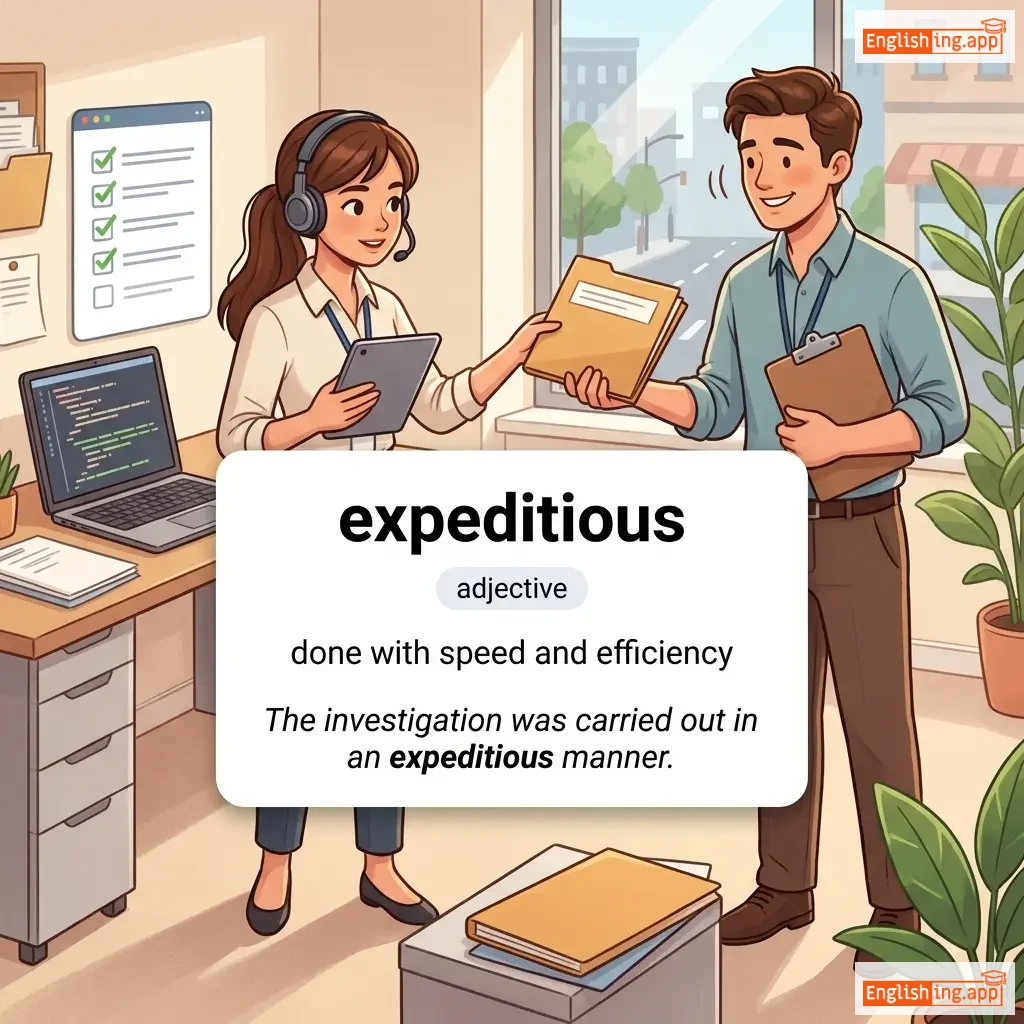
expeditious definition card — visual illustration of the meaning
adjective
/ˌɛkspəˈdɪʃəs/
быстрый и эффективный (bystryy i effektivnyy)

done with speed and efficiency

"The investigation was carried out in an expeditious manner."

"Расследование было проведено быстро и эффективно." (Rassledovanie bylo provedeno bystro i effektivno.)
adverb
/ˌɛkspəˈdɪʃəsli/
быстро и эффективно (bystro i effektovno)

in a quick and efficient manner

"The application was processed expeditiously."

"Заявка была обработана быстро и эффективно." (Zayavka byla obrabotana bystro i effektovno.)
verb
/ɪkˈspɛl/
исключить (isklyuchit)

to officially force someone to leave a place or organization

"The student was expelled from school for misconduct."

"Студент был исключен из школы за плохое поведение." (Student byl is-lyuchyon iz shkoly za plokhoje povy-denie.)
expend definition card — visual illustration of the meaning
verb
/ɪkˈspɛnd/
тратить (tratit)

to use up or spend resources such as time, money, or energy

"She expended a lot of energy preparing for the presentation."

"Она потратила много энергии, готовясь к презентации." (Ona potratila mnogo energii, gotovias' k prezentatsii.)
expenditure definition card — visual illustration of the meaning
noun
/ɪkˈspɛndɪtʃər/
расходы (raskhody)

the act of spending money or using resources

"The government reduced its expenditure on defense."

"Правительство сократило свои расходы на оборону." (Pravitel'stvo sokratilo svoi raskhody na oboronu.)
Expense definition card — visual illustration of the meaning
noun
/ɪkˈspɛns/
расход (rakhod)

the cost of something; money spent

"Traveling abroad can be a major expense."

"Путешествия за границу могут быть значительными расходами." (Puteshestviya za granitsu mogut byt' znachitelnymi raskhodami.)
adjective
/ɪkˈspɛnsɪv/
дорогой (ekspensiv)

costing a lot of money

"That car is too expensive for me to buy."

"Эта машина слишком дорогая, чтобы я мог её купить." (Eta mashina slishkom dorogaya chtoby ya mog eyo kupit)
noun/verb
/ɪkˈspɪəriəns/
счастье (schastye)

knowledge or skill gained through involvement in or exposure to something over time

"She gained valuable experience while working abroad."

"Она не могла скрыть своего счастья, когда получила награду." (Ona ne mogla skryt' svoego schast'ya, kogda poluchila nagradu.)
adjective
/ɪkˈspɪəriənst/
опытный (opytnyy)

having knowledge or skill in a particular field gained through experience

"She is an experienced teacher who knows how to handle difficult students."

"Она опытный учитель, который знает, как справляться с трудными студентами." (Ona opytnyy uchitel', kotoryy znayet, kak spravlyat'sya s trudnymi studentami.)
experiencing definition card — visual illustration of the meaning
verb
/ɪkˈspɪəriənsɪŋ/
переживать (perezhivat)

Encountering or undergoing an event or occurrence.

"The travelers are experiencing the thrill of adventure."

"Путешественники переживают острые ощущения от приключений." (Puteshestvenniki perezhivayut ostryye oshchushcheniya ot priklyucheniy.)
noun/verb
/ɪkˈsperɪmənt/
эксперимент (eksperiment)

a test or trial carried out to discover something or prove an idea

"The scientist conducted an experiment on plant growth."

"Učenyy provodil eksperiment po rostu rastenij." (Uchenyy provodil eksperiment po rostu rastenij.)
adjective
/ɪkˌsperɪˈmentl/
экспериментальный (eksperimiental'nyi)

based on untested ideas or techniques; relating to experiments or testing

"The scientists developed an experimental drug to treat cancer."
"Учёные разработали экспериментальное лекарство для лечения рака." (Uchyonye razrabotali eksperimental'noye lekarstvo dlya lecheniya raka.)
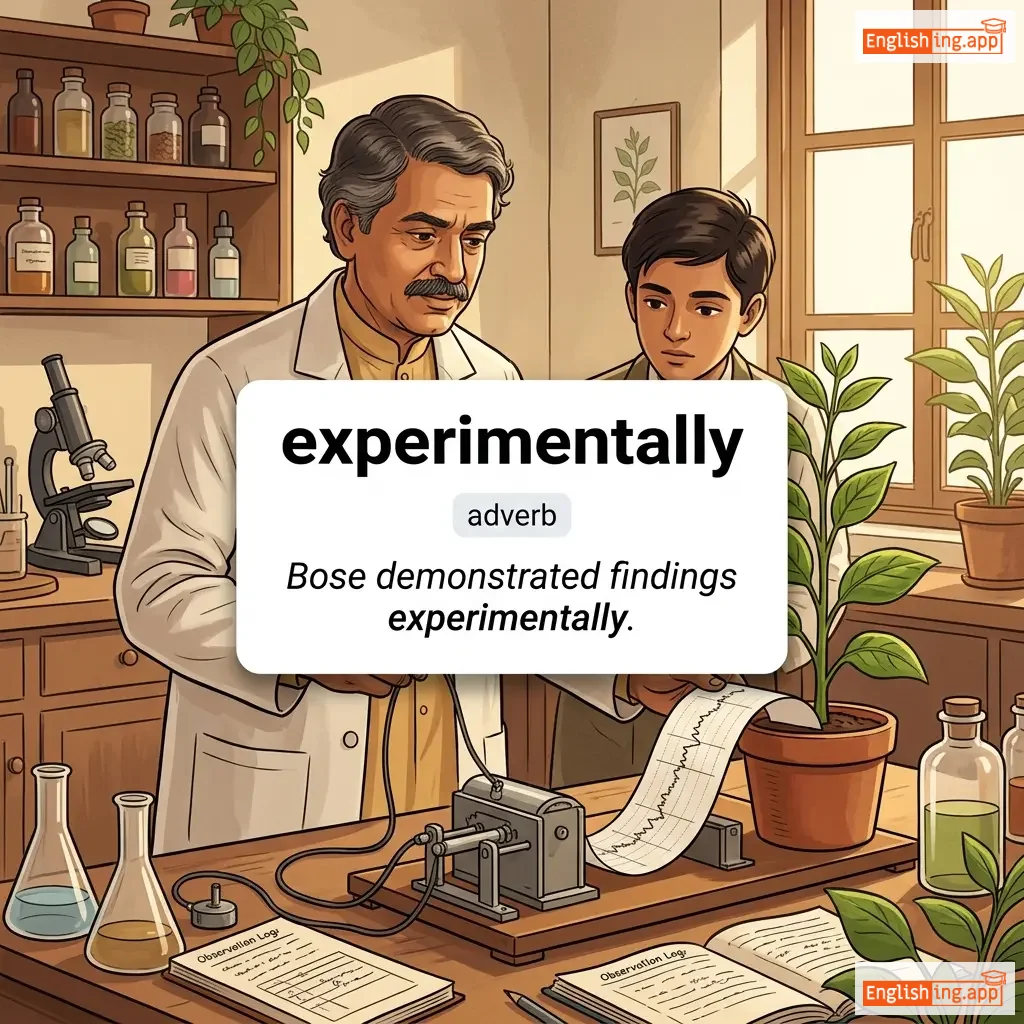
experimentally definition card — visual illustration of the meaning
adverb
ɪkˌsperɪˈmentəli
экспериментально (eksperimental'no)

In a way that is based on or derived from experiment and observation rather than theory.

"Bose demonstrated findings experimentally."
"Бозе продемонстрировал результаты экспериментально." (Boze proyemonstiroval rezul'taty eksperimental'no.)
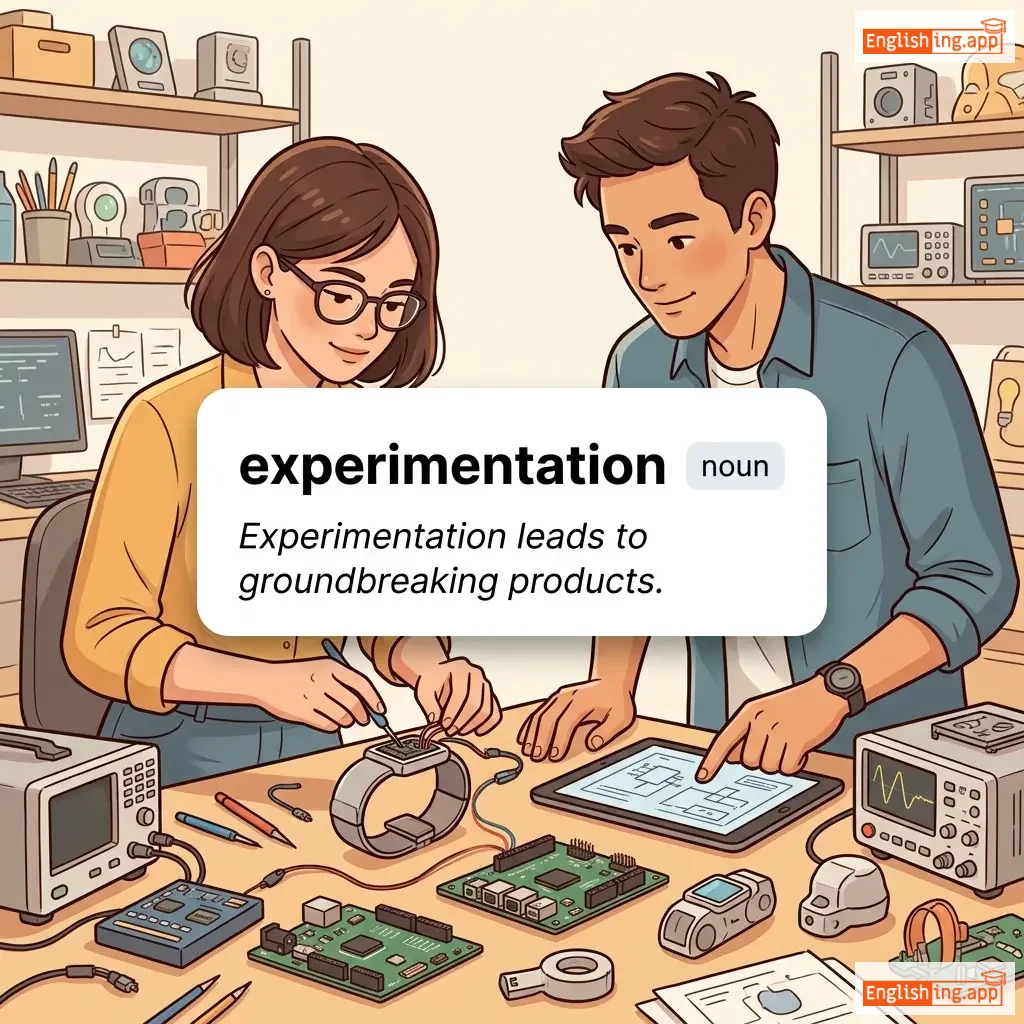
experimentation definition card — visual illustration of the meaning
noun
/ɪkˌsperɪˈmɛnteɪʃən/
экспериментирование (eksperimentirovanie)

The process of performing a scientific procedure to make a discovery, test a hypothesis, or demonstrate a known fact.

"Experimentation leads to groundbreaking products."

"Экспериментация ведет к революционным продуктам." (Eksperimentatsiya vedet k revolyutsionnym produktam.)
noun/adjective
/ˈekspɜːt/
эксперт (ekspert)

a person who has a lot of knowledge or skill in a particular area

"He is an expert in computer programming."

"Он эксперт в программировании компьютеров." (On ekspert v programmirovanii komp'yuterov.)
expertise definition card — visual illustration of the meaning
noun
/ˌɛkspərˈtiːz/
экспертиза (ekspertiza)

specialized knowledge or skill in a particular field

"Her expertise in data analysis is highly valued."
"Её экспертиза в анализе данных высоко ценится." (Yeyo ekspertiza v analize dannykh vysoko tsenitsya.)
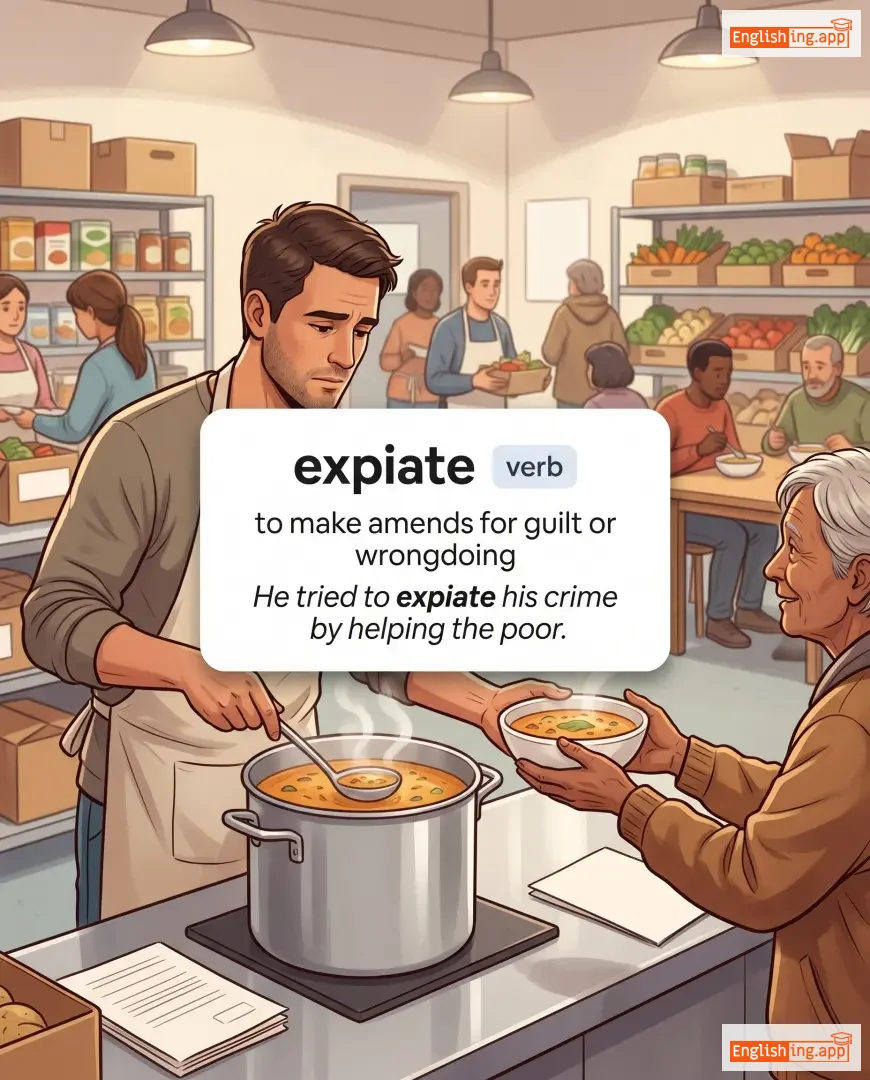
expiate definition card — visual illustration of the meaning
verb
/ˈɛkspieɪt/

to make amends for guilt or wrongdoing

"He tried to expiate his crime by helping the poor."

verb
/ɪkˈspaɪər/
истечь (istech)

to come to an end, especially a period of validity or life

"My passport will expire next month."
"Мой паспорт истечет в следующем месяце." (Moy pasport istechet v sleduyushchem mesyatse.)
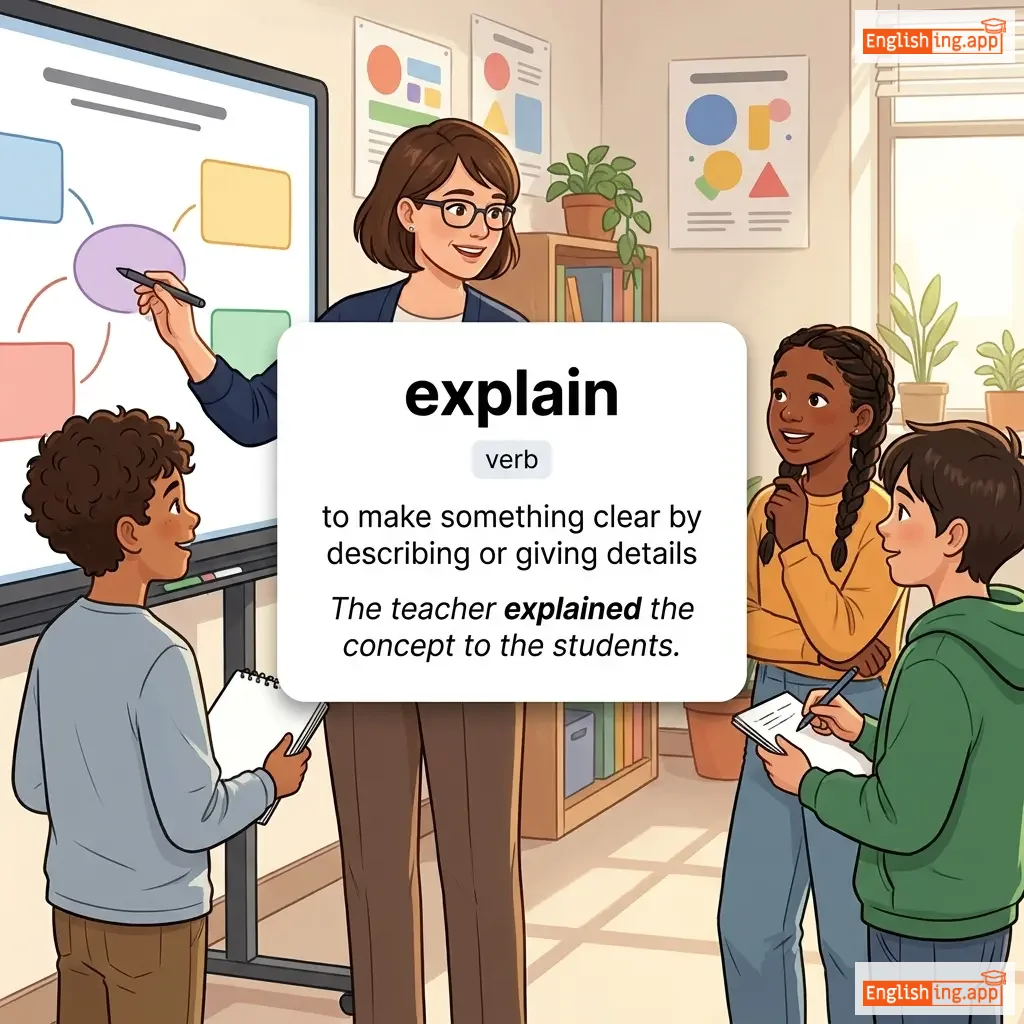
explain definition card — visual illustration of the meaning
verb
/ɪkˈspleɪn/
объяснять (ob'yasnyat')

to make something clear by describing or giving details

"The teacher explained the concept to the students."

"Учитель объяснил концепцию студентам." (Uchitel' ob'yasnil kontseptsiyu studentam.)