Словари

Словарь английского языка | Значения слов, определения и примеры

noun
/ˌekspləˈneɪʃən/
объяснение (ob'yasneniye)

a statement or account that makes something clear

"The teacher gave a clear explanation of the theory."

"Учитель дал четкое объяснение теории." (Uchitel' dal chetkoye ob'yasneniye teoryi.)
noun
/ˈɛksplətɪv/
ругательство (rugatel'stvo)

a word or phrase used as an exclamation, often offensive or profane

"He shouted an expletive when he dropped the hammer on his foot."

"Он выкрикнул ругательство, когда уронил молоток на ногу." (On vykriknul rugatel'stvo, kogda uronil molotok na nogu.)
adjective
/ˈɛksplɪkəbəl/
объяснимый (obyasnimyy)

able to be explained or understood

"His sudden anger was explicable given the stressful situation."
"Его внезапный гнев был объясним, учитывая стрессовую ситуацию." (Ego vnezapnyy gnev byl ob'yasnim, uchityvaya stressovuyu situatsiyu.)
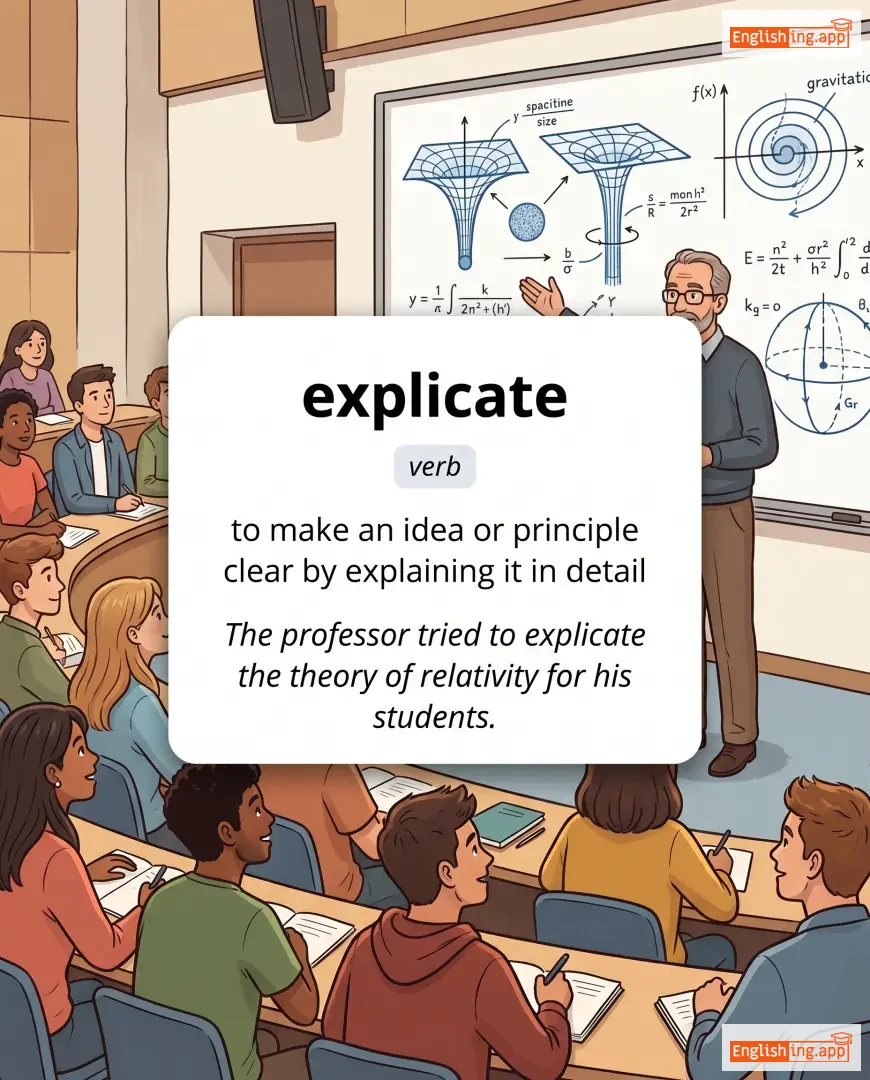
explicate definition card — visual illustration of the meaning
verb
/ˈɛksplɪkeɪt/
объяснять (ob'yasnyat')

to make an idea or principle clear by explaining it in detail

"The professor tried to explicate the theory of relativity for his students."

"Профессор попытался объяснить теорию относительности своим студентам." (Professor popytalsya ob'yasnit' teoryu otnositel'nosti svoim studentam.)
noun
/ˈɛksplɪkeɪtər/
толкователь (tolkovatel)

a person who explains or interprets something in detail

"The critic served as an explicator of the poet’s complex works."
"Критик выступал в роли объяснителя сложных работ поэта." (Kritik vystupal v roli ob'yasnitelya slozhnykh rabot poet.)
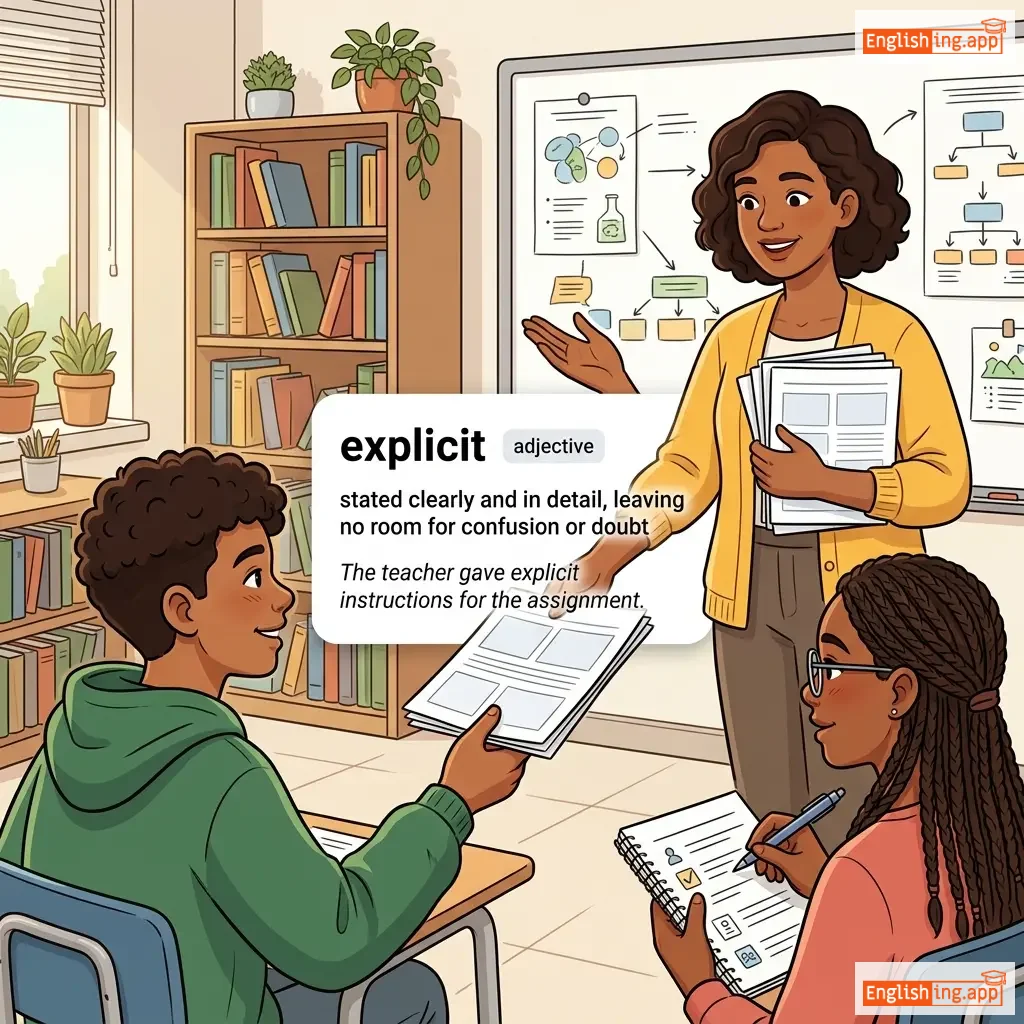
explicit definition card — visual illustration of the meaning
adjective
/ɪkˈsplɪsɪt/
явный (yavny)

stated clearly and in detail, leaving no room for confusion or doubt

"The teacher gave explicit instructions for the assignment."

"Учитель дал явные указания для задания." (Uchitel' dal yavnye ukazaniya dlya zadaniya.)
adverb
/ɪkˈsplɪsɪtli/
явно (yavno)

in a clear and detailed manner, leaving no room for confusion or doubt

"The instructions were explicitly written to avoid any confusion."

"Инструкции были написаны явно, чтобы избежать путаницы." (Instruktsii byli napisheny yavno, chtoby izbezhat' putanitsy.)
verb
/ɪkˈsploʊd/
взрываться (vzryvatsya)

to burst or shatter violently and noisily as a result of rapid combustion or pressure

"The bomb exploded in the middle of the street."

"Бомба взорвалась посреди улицы." (Bomba vzorvalas' posredi ulitsy.)
verb, noun
/ɪkˈsplɔɪt/
эксплуатировать / использовать (ekspluatirovat' / ispol'zovat')

to make full use of and derive benefit from (a resource); to use someone unfairly for one’s own advantage

"The company was accused of exploiting child labor."
"Компания была обвинена в эксплуатации детского труда." (Kompaniya byla obvinenna v ekspluatatsii detskogo truda.)
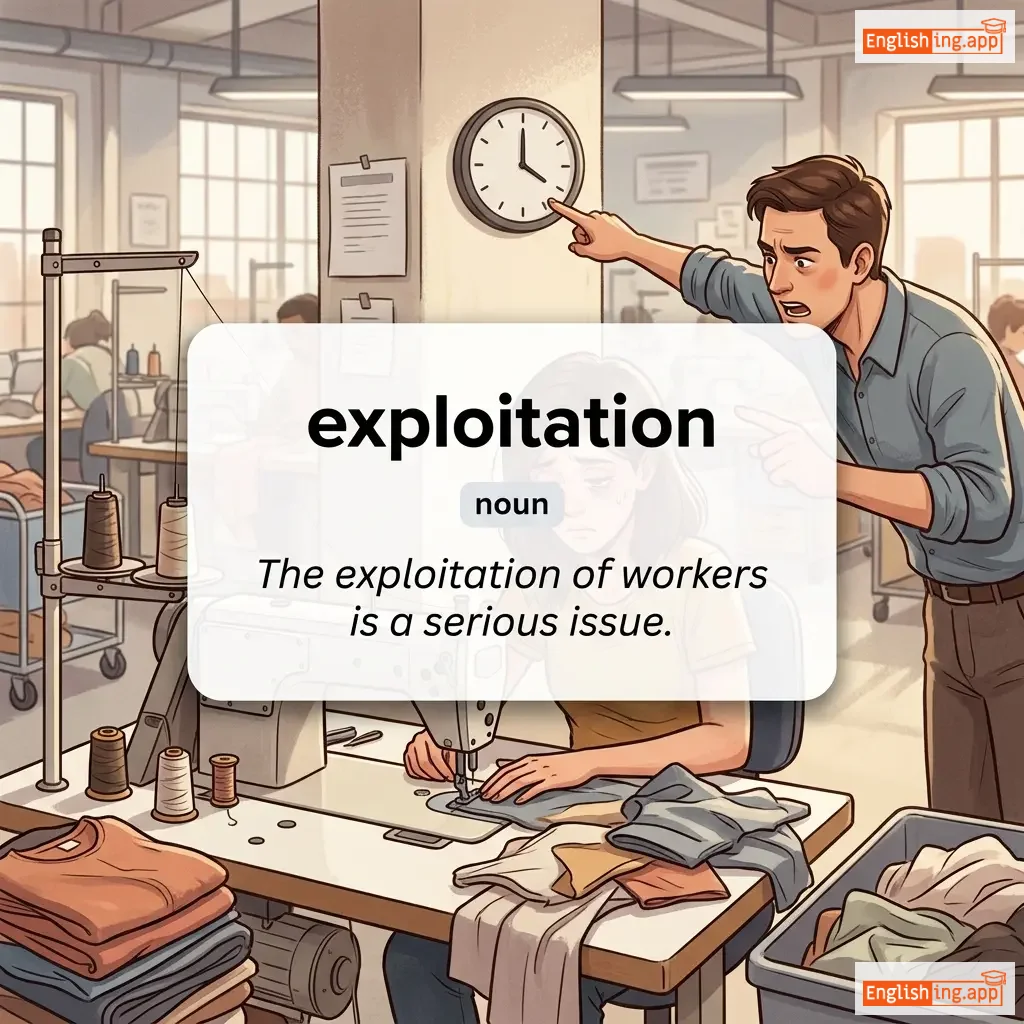
exploitation definition card — visual illustration of the meaning
noun
/ˌeksplɔɪˈteɪʃən/
эксплуатация (ekspluatatsiya)

the action or fact of treating someone unfairly in order to benefit from their work; the use of resources for profit

"The exploitation of workers is a serious issue."

"Эксплуатация работников — это серьезная проблема." (Ekspluatatsiya rabotnikov — eto seryoznaya problema.)
adjective
/ɪkˈsplɔɪtətɪv/
эксплуататорский (eksploitatorskiy)

making use of a situation or people unfairly and unethically for one's own advantage

"The workers protested against the exploitative practices of the factory."

"Рабочие протестовали против эксплуатационных практик фабрики." (Rabochiye protestovali protiv eksployatatsionnykh praktiki fabbriki.)
noun
/ˌekspləˈreɪʃən/
исследование (issledovaniye)

the action of traveling through or studying an area to learn more about it

"Space exploration has expanded our understanding of the universe."

"Космическое исследование расширило наше понимание Вселенной." (Kosmicheskoe issledovaniye rasshirilo nashe ponimaniye Vselennoj.)
explore definition card — visual illustration of the meaning
verb
/ɪkˈsplɔːr/
исследовать (issledovat)

to travel through or study something in order to learn more about it

"They decided to explore the forest together."
"Они решили исследовать лес вместе." (Oni reshili issledovat' les vmeste.)
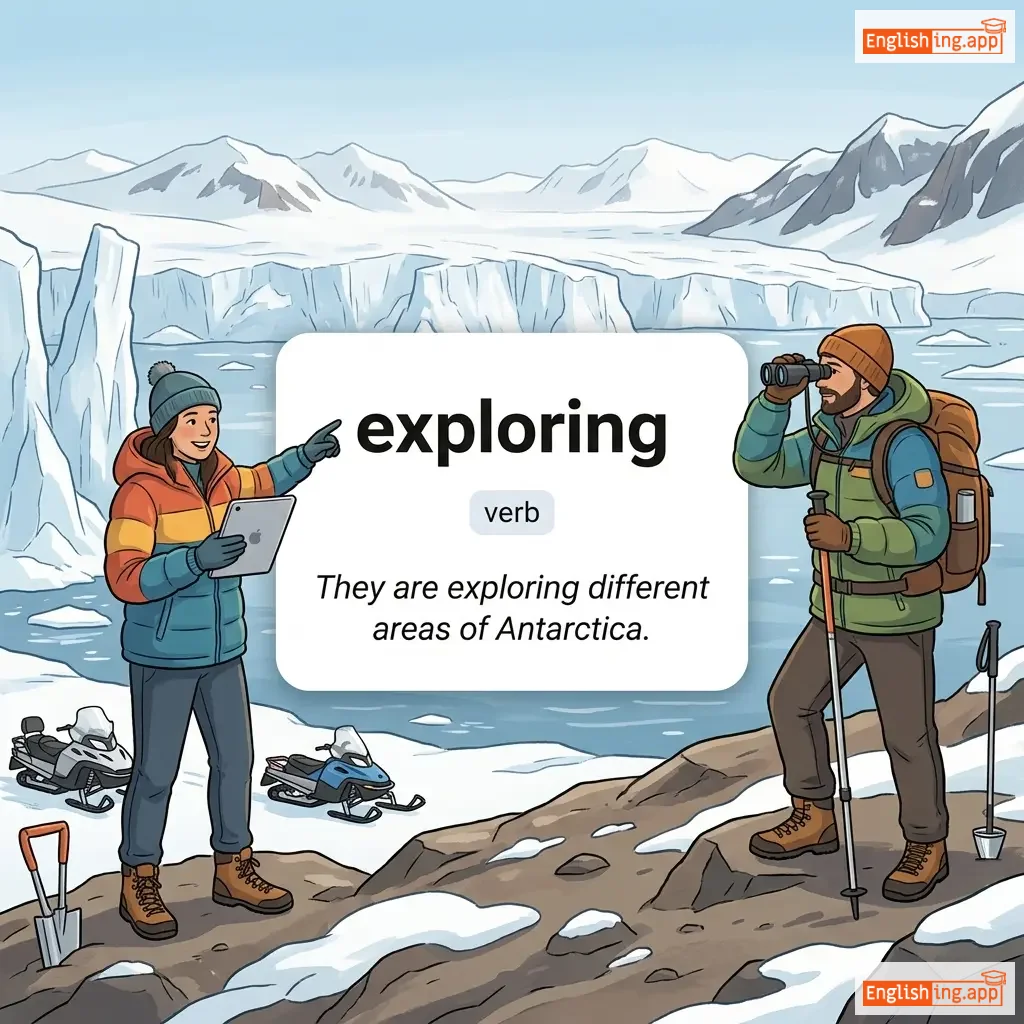
exploring definition card — visual illustration of the meaning
verb
/ɪkˈsplɔːrɪŋ/
исследовать (issledovat)

Investigating or studying thoroughly; searching into or ranging over for the purpose of discovery.

"They are exploring different areas of Antarctica."

"Они исследуют различные области Антарктиды." (Oni issleduyut razlichnye oblasti Antarktidy.)
noun
/ɪkˈsploʊʒən/
взрыв (vzryv)

a violent burst or release of energy, often causing damage and noise

"The explosion shook the entire neighborhood."

"Взрыв потряс весь район." (Vzryv potryas ves' rayon.)
adjective
/ɪkˈsploʊsɪv/
взрывчатый (vzrivchaty)

able to cause an explosion; likely to burst out suddenly

"The situation became explosive after the argument."

"Ситуация стала взрывчатой после спора." (Situatsiya stala vzryvchatoy posle spora.)
noun
/ɪkˈspoʊnənt/
экспонент (eksponent)

a person who supports, promotes, or explains an idea; in math, a symbol denoting power

"She is a leading exponent of modern dance."
"Она ведущий экспонент современного танца." (Ona vedushchij eksponent sovremennogo tantsa.)
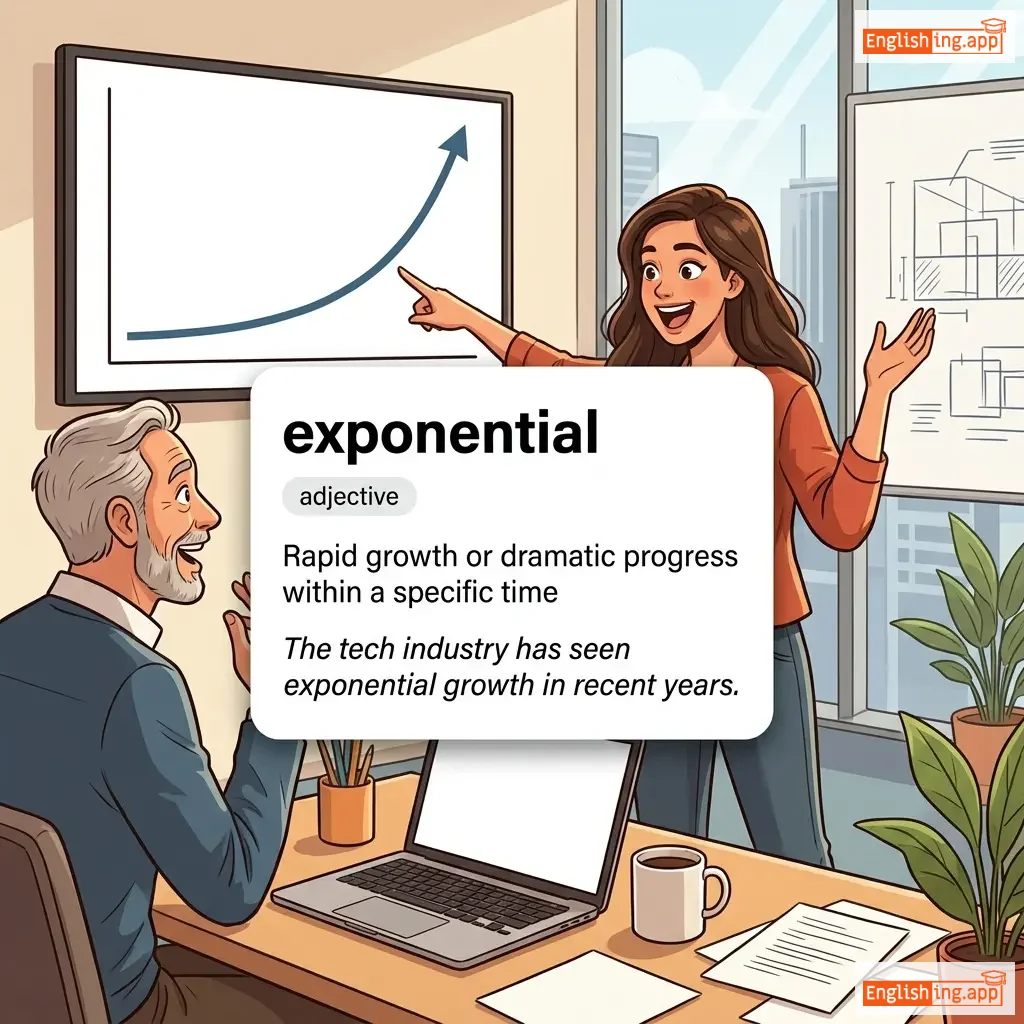
exponential definition card — visual illustration of the meaning
adjective
/ˌɛk.spəˈnɛn.ʃəl/
экспоненциальный (eksponentsial'nyy)

Rapid growth or dramatic progress within a specific time

"The tech industry has seen exponential growth in recent years."

"Технологическая отрасль пережила экспоненциальный рост в последние годы." (Tekhnologicheskaya otrasl' perezhila eksponentsial'nyy rost v poslednie gody.)
exponentially definition card — visual illustration of the meaning
adverb
ˌekspəˈnenʃəli
экспоненциально (eksponentsial'no)

At a rapidly increasing rate; growing or expanding very quickly and intensely.

"Internet adoption is growing exponentially worldwide."

"Принятие интернета растет экспоненциально по всему миру." (Priyatie interneta rastet eksponentsial'no po vsemu miru.)
export definition card — visual illustration of the meaning
verb
/ˈekspɔːt/
экспортировать (eksportirovat')

to send goods or services to another country for sale

"Bangladesh exports garments to many countries."

"Бангладеш экспортирует текстиль в многие страны." (Bangladesh eksportiruet tekstil' v mnogie strany.)
expose definition card — visual illustration of the meaning
verb
/ɪkˈspoʊz/
раскрывать (raskryvat)

to reveal or uncover something hidden

"The journalist tried to expose the corruption scandal."

"Журналист попытался раскрыть коррупционный скандал." (Zhurnalist popytalsya raskryt' korrupcionnyj skandal.)
noun
/ˌekspəˈzɪʃən/
объяснение / выставка (ob'yasneniye / vystavka)

a detailed explanation or a large public exhibition

"The scientist gave a clear exposition of the theory."
"Учёный дал ясное объяснение теории." (Uchyonnyy dal yasnoye ob'yasneniye teorii.)
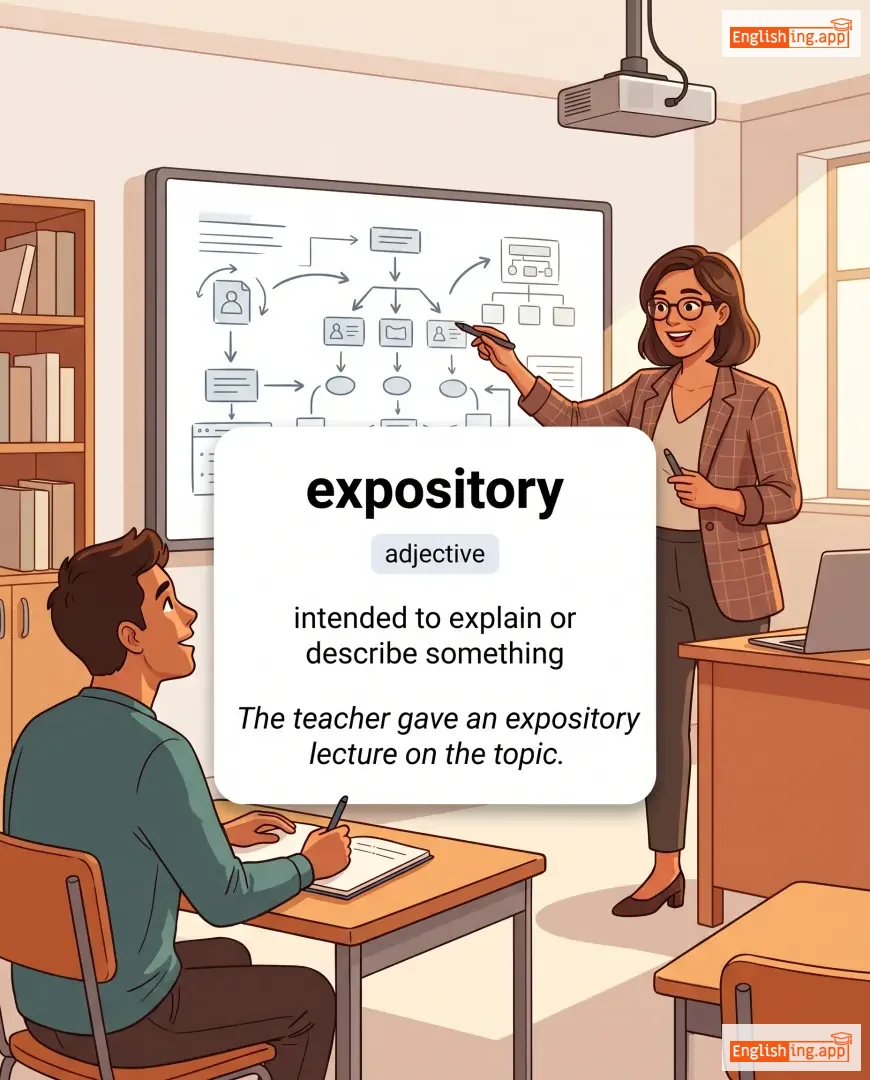
expository definition card — visual illustration of the meaning
adjective
/ɪkˈspɒzɪtəri/
пояснительный (poyasnitel'nyy)

intended to explain or describe something

"The teacher gave an expository lecture on the topic."

"Учитель дал пояснительную лекцию по этой теме." (Uchitel' dal poyasnitel'nuyu lektsiyu po etoy teme.)
verb
/ɪkˈspɒstjʊleɪt/
выражать несогласие (vyrʐatʲ nesoglasije)

to express strong disapproval or disagreement

"She expostulated with her friend about the risky decision."

"Она выразила недовольство своим другом по поводу рискованного решения." (Ona vyrazil nedovol'stvo svoim drugom po povodu riskovannogo resheniya.)
noun
/ɪkˌspɒstjʊˈleɪʃən/
протест (protest)

the act of expressing protest or disagreement

"His expostulation against the unfair rules was ignored."

"Его протест против несправедливых правил был проигнорирован." (Yego protest protiv nespravedlivykh pravil byl proignorirovann.)
noun
/ɪkˈspəʊʒər/
экспозиция (ekspozitsiya)

the state of being exposed to contact with something, especially harmful

"Prolonged exposure to the sun can damage your skin."

"Длительное воздействие солнечного света может повредить вашу кожу." (Dlitel'noe vozdeystvie solnechnogo sveta mozhet povredit' vashu kozhu.)
verb
/ɪkˈspaʊnd/
разъяснять (razyasnyat')

to present and explain in detail

"The professor expounded the theory in simple terms."

"Профессор подробно изложил теорию простыми словами." (Professor podrobno izlozhil teoriyu prostymi slovami.)
express definition card — visual illustration of the meaning
verb
/ɪkˈsprɛs/
выражать (vyrazhat)

to convey a thought, feeling, or idea in words, actions, or other forms

"She expressed her gratitude with a warm smile."
"Она выразила свою благодарность тёплой улыбкой." (Ona vyrazilas' svoi blagodarnost' tyoploi ulybkoi.)
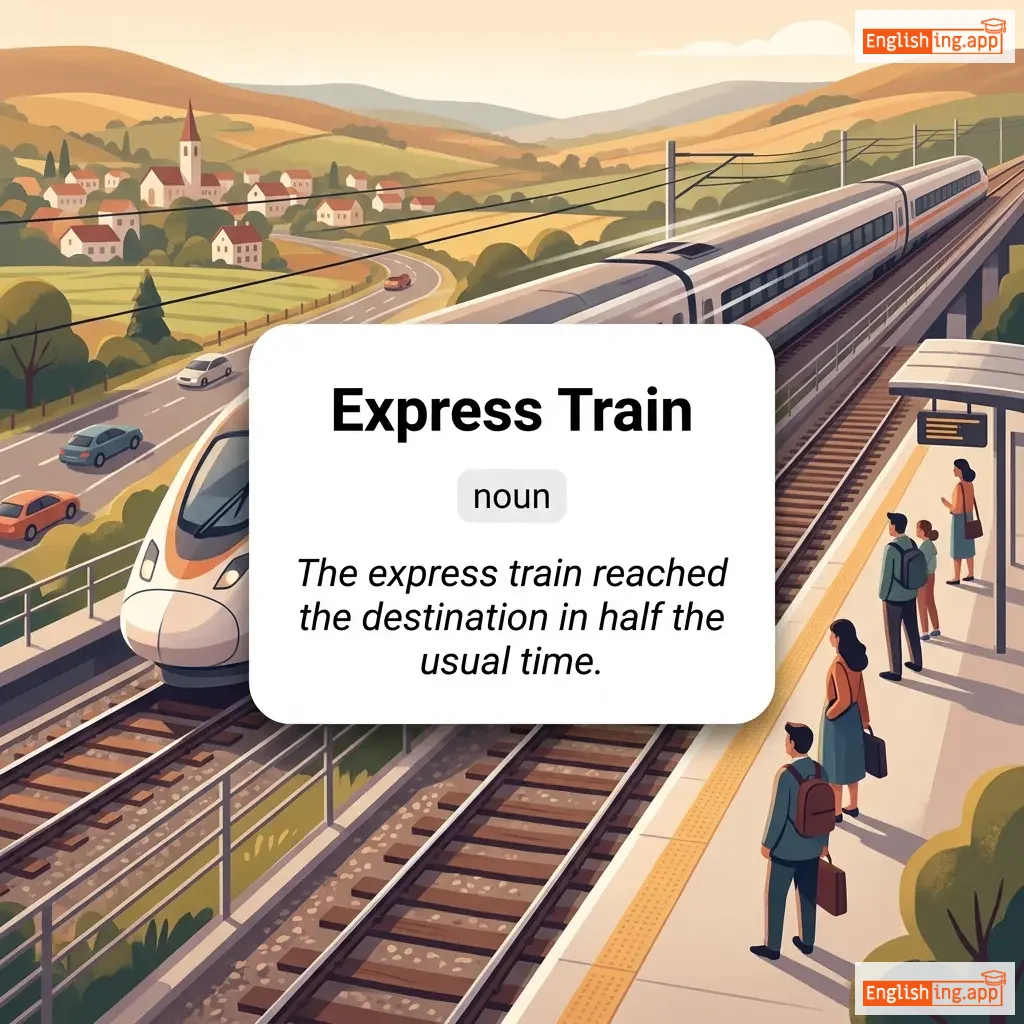
Express Train definition card — visual illustration of the meaning
noun
/ɪkˈspres treɪn/
экспресс поезд (ekspress poezd)

a fast train that travels between major stations with few or no intermediate stops

"The express train reached the destination in half the usual time."

"Экспресс достиг конечной станции в половину обычного времени." (Ekspress dostig konechnoy stantsii v polovinu obychnogo vremeni.)
noun
/ɪkˈsprɛʃən/
выражение (vyrazhenie)

the act of putting thoughts or feelings into words, actions, or facial gestures

"His facial expression showed surprise."

"Его выражение лица показало удивление." (Ego vyrazhenie litsa pokazalo udivlenie.)
adjective
/ɪkˈsprɛsɪv/
выразительный (vyrazitel'nyy)

Effectively conveying thought or feeling.

"Her eyes were so expressive that no words were needed."

"Её глаза были настолько выразительными, что слова были не нужны." (Eyo glaza byli nastol'ko vyrazitel'nymi, chto slova byli ne nuzhny.)
verb
/ɛksˈproʊprieɪt/
экспроприировать (ekspropriiravat)

To take property from its owner, especially by authority or for public use.

"The government decided to expropriate the land for a new highway."
"Правительство решило экспроприировать землю для нового шоссе." (Pravitel'stvo reshilo ekspropriirivat' zemlyu dlya novogo shosse.)
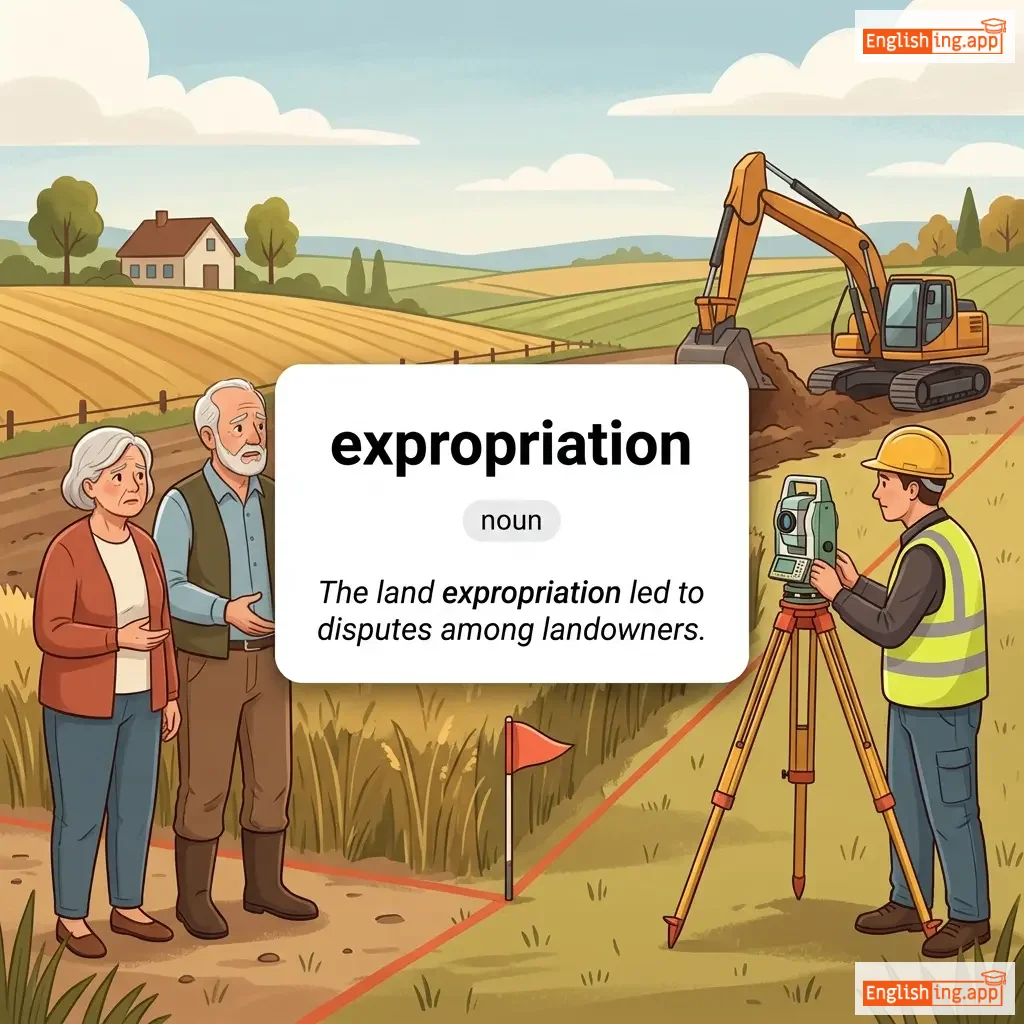
expropriation definition card — visual illustration of the meaning
noun
/ɪkˌsprəʊ.priˈeɪ.ʃən/
экспроприация (ekspropriatsiya)

The act of government taking private property, also known as confiscation, nationalization, or seizure.

"The land expropriation led to disputes among landowners."

"Экспроприация земли привела к спорам среди землевладельцев." (Ekspropriatsiya zemli privela k sporam sredi zemlevladel'tsev.)
noun
/ɪkˈspʌlʃən/
исключение (isklyucheniye)

The act of forcing someone to leave a place, especially a school or country.

"His constant misbehavior led to his expulsion from school."

"Его постоянное плохое поведение привело к исключению из школы." (Yego postoyannoye plokhoye povedeniye privedlo k iskluchenyu iz shkoly.)
verb
/ɪkˈspʌndʒ/
стереть (stereet)

To erase or remove completely, often something unwanted.

"He managed to expunge the embarrassing memory from his mind."

"Ему удалось стереть позорное воспоминание из его разума." (Emu udalos' steret' pozornoe vospominanie iz ego razuma.)
verb
/ˈekspərˌɡeɪt/
цензурировать (tsenzurirovat)

To remove offensive or objectionable parts from a text or speech.

"The publisher decided to expurgate the novel before reprinting it."

"Издатель решил цензурировать роман перед повторным изданием." (izdatel reshil tsenzurirovat roman pered povtornym izdaniem)
exquisite definition card — visual illustration of the meaning
adjective
/ɪkˈskwɪzɪt/
изысканный (izyskanny)

Extremely beautiful, delicate, or finely made.

"The bride wore an exquisite gown made of silk."
"Невеста носила изысканное шелковое платье." (Nevesta nosila izyskannoe shelkovoe plat'e.)
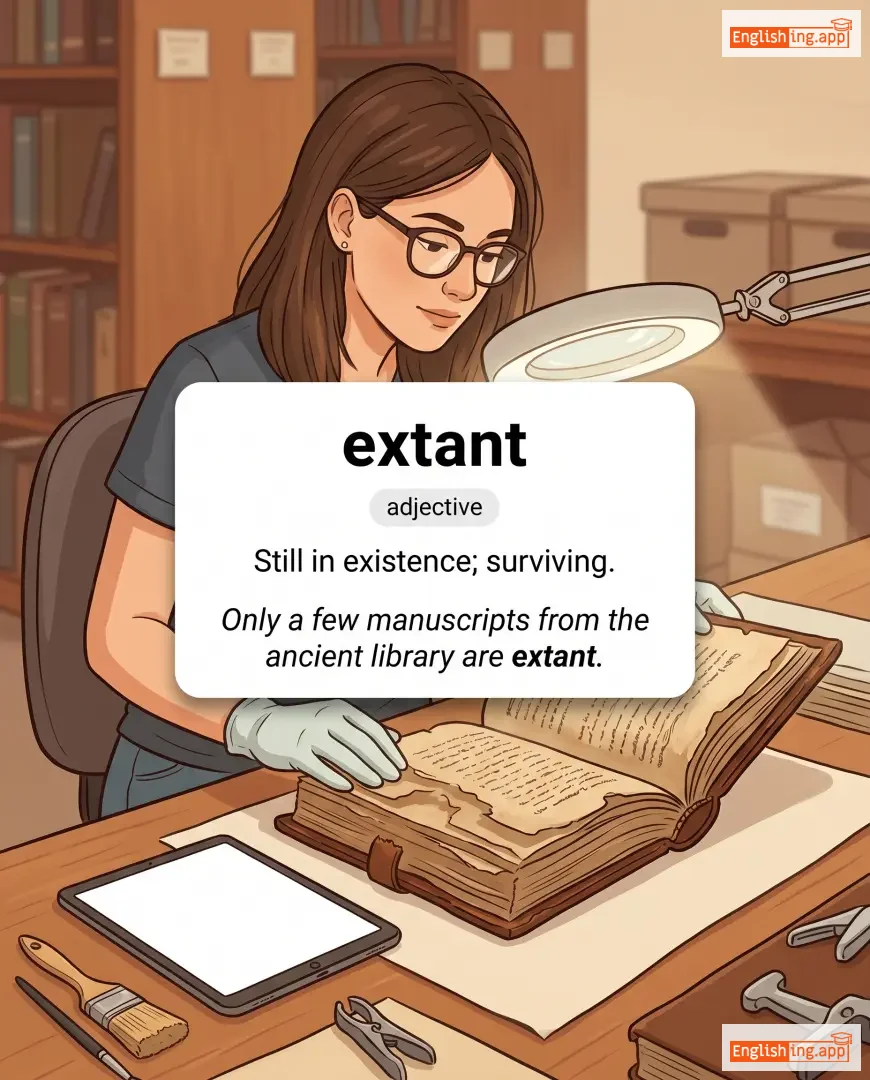
extant definition card — visual illustration of the meaning
adjective
/ˈɛkstənt/
существующий (sushchestvuyushchiy)

Still in existence; surviving.

"Only a few manuscripts from the ancient library are extant."
"Только несколько манускриптов из древней библиотеки существуют до сих пор." (Tol'ko neskol'ko manuskriptov iz drevney biblioteki sushchestvuyut do sikh por.)
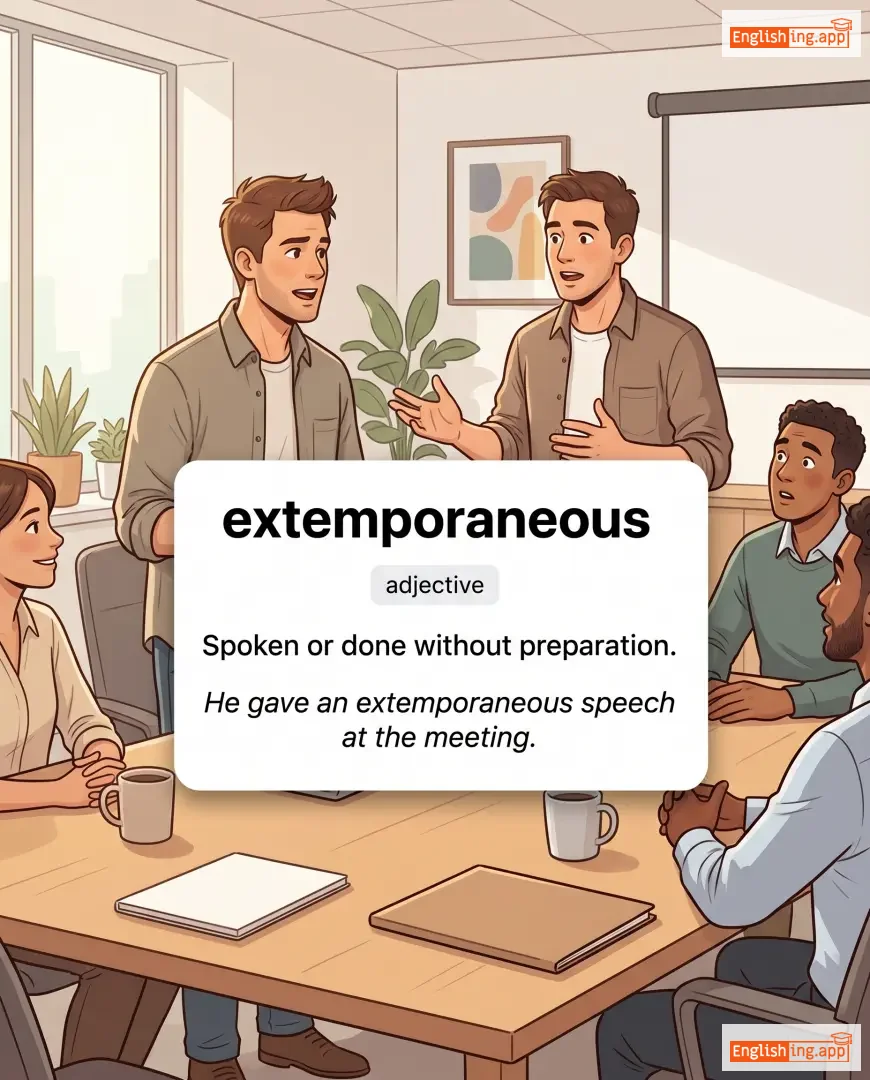
extemporaneous definition card — visual illustration of the meaning
adjective
/ɪkˌstɛmpəˈreɪniəs/
произнесено без подготовки (proizneseno bez podgotovki)

Spoken or done without preparation.

"He gave an extemporaneous speech at the meeting."

"Он произнес спонтанную речь на встрече." (On proiznes spontannuyu rech' na vstreche.)
adverb
/ɪkˈstɛmpəri/
импровизированно (improvizirovanno)

Spoken or done without preparation; impromptu.

"She recited the poem extempore in class."

"Она прочитала стихотворение импровизированно на уроке." (Ona prochitala stikhotvorenie improvizirovanno na uroke.)
verb
/ɪkˈstɛmpəraɪz/
импровизировать (improvizirovat')

To speak or perform without preparation; improvise.

"The actor had to extemporize when he forgot his lines."
"Актеру пришлось импровизировать, когда он забыл свои реплики." (Aktoru prishlos' improvizirovat', kogda on zabyl svoi repliki.)
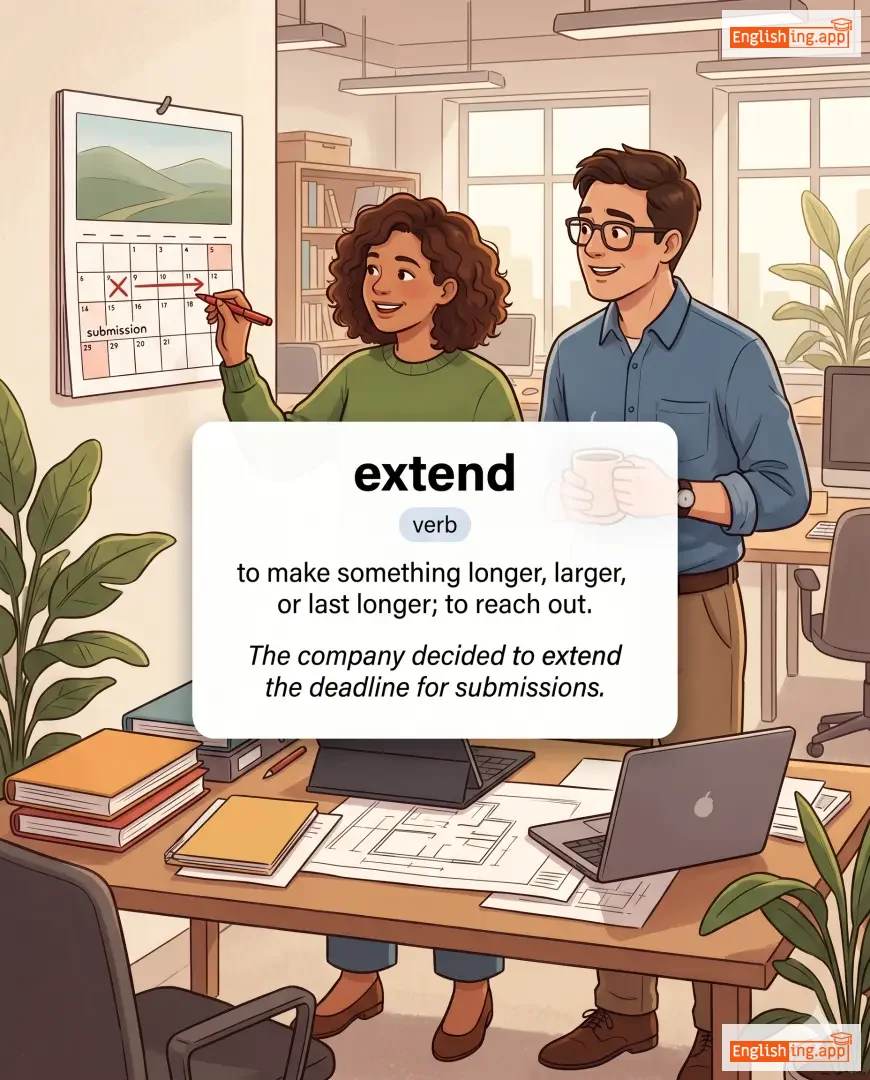
extend definition card — visual illustration of the meaning
verb
/ɪkˈstɛnd/
продлить (prodlyit)

to make something longer, larger, or last longer; to reach out.

"The company decided to extend the deadline for submissions."

"Компания решила продлить срок подачи заявок." (Kompaniya reshilas' prodylt' srok podachi zayavok.)
adjective
/ɪkˈstendɪd/
расширенный (rasshirennyy)

longer or larger than usual; continuing for a longer time

"They took an extended vacation in Europe this summer."

"Они провели расширенный отпуск в Европе этим летом." (Oni proveli rasshirennyy otpusk v Yevrope etim letom.)
adjective
/ɪkˈstɛnsəbl/
расширяемый (rasshiryayemy)

able to be extended; capable of expansion.

"The software is designed to be extensible with new features."

"Программное обеспечение спроектировано так, чтобы его можно было расширять новыми функциями." (Programmnoye obespecheniye sproyektirovano tak, chtoby ego mozhno bylo rasshiryat' novymi funktsiyami.)
noun
/ɪkˈstɛnʃən/
удлинение (udlinenie)

a part that is added to something to make it longer or bigger; an increase in time.

"She asked for an extension on her assignment deadline."

"Она попросила продление срока для своей работы." (Ona poprosila prodlenie sroka dlya svoey raboty.)
adjective
/ɪkˈstɛnsɪv/
обширный (obshirnyy)

covering a large area or involving a lot; wide in range.

"The museum has an extensive collection of ancient artifacts."

"В музее есть обширная коллекция древних артефактов." (V muzee yest' obshirnaya kollektsiya drevnikh artefaktov.)
adverb
/ɪkˈstɛnsɪvli/
широко (shiroko)

in a thorough or wide-ranging manner

"She traveled extensively across Europe for her research."

"Она путешествовала широко по Европе для своего исследования." (Ona puteshestvovala shiroko po Yevrope dlya svoego issledovaniya.)
noun
/ɪkˈstɛnsər/
разгибатель мышцы (razgibatel myshcy)

a muscle that serves to extend or straighten a limb or part of the body.

"The extensor muscles in the arm help straighten the elbow."

"Разгибательные мышцы в руке помогают выпрямить локоть." (Razgibatel'nye myshcy v ruke pomogayut vypryamit' lokot'.)
noun
/ɪkˈstɛnt/
степень (stepen)

the area, degree, or scope of something

"The extent of the damage was greater than expected."

"Степень ущерба была больше, чем ожидалось." (Stepen' uscherba byla bol'she, chem ozhidalos'.)
verb
/ɪkˈstɛnjueɪt/
смягчить (smyagchit)

to make an offense, fault, or situation seem less serious by providing an excuse or explanation

"The lawyer tried to extenuate his client's actions by highlighting his difficult childhood."

"Адвокат пытался смягчить действия своего клиента, подчеркивая его трудное детство." (Advokat pytalsya smyagchit' deystviya svoego kliyenta, podcherkivaya ego trudnoe detstvo.)