Vocabulaires

Découvrez, apprenez et maîtrisez le vocabulaire anglais

noun
/ˌekspləˈneɪʃən/
explication (explication)

a statement or account that makes something clear

"The teacher gave a clear explanation of the theory."

"L'enseignant a donné une explication claire de la théorie." (L'enseignant a donne une explication claire de la theorie.)
noun
/ˈɛksplətɪv/
gros mot (gros mot)

a word or phrase used as an exclamation, often offensive or profane

"He shouted an expletive when he dropped the hammer on his foot."

"Il a crié un gros mot lorsqu'il a laissé tomber le marteau sur son pied." (Il a crié un gros mot lorsqu'il a laissé tomber le marteau sur son pied.)
adjective
/ˈɛksplɪkəbəl/
explicable (explicable)

able to be explained or understood

"His sudden anger was explicable given the stressful situation."

"Sa colère soudaine était explicable compte tenu de la situation stressante." (Sa colère soudaine était explicable compte tenu de la situation stressante.)
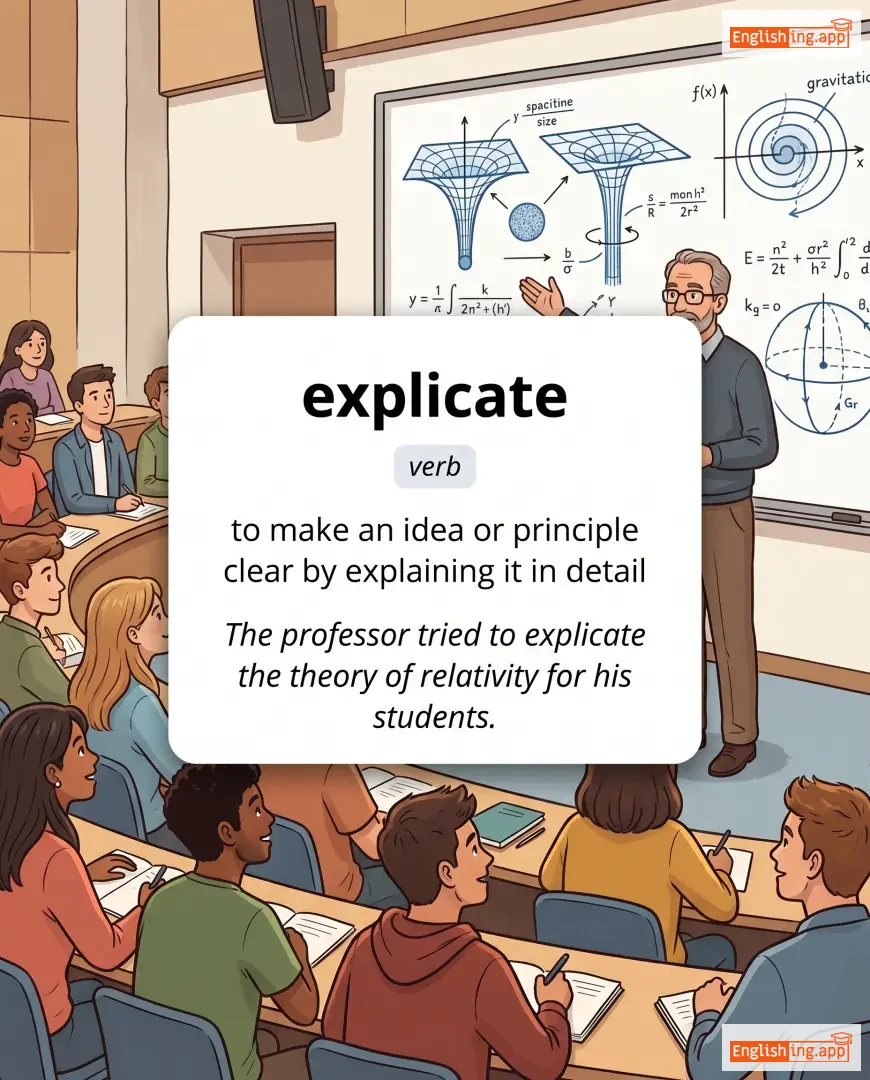
explicate definition card — visual illustration of the meaning
verb
/ˈɛksplɪkeɪt/
expliquer (expliquer)

to make an idea or principle clear by explaining it in detail

"The professor tried to explicate the theory of relativity for his students."

"Le professeur a essayé d'expliquer la théorie de la relativité à ses étudiants." (Le professeur a essayé d'expliquer la théorie de la relativité à ses étudiants.)
noun
/ˈɛksplɪkeɪtər/
explicateur (explicateur)

a person who explains or interprets something in detail

"The critic served as an explicator of the poet’s complex works."

"Le critique a servi d'explicateur des œuvres complexes du poète." (Le critique a servi d'explicateur des oeuvres complexes du poete.)
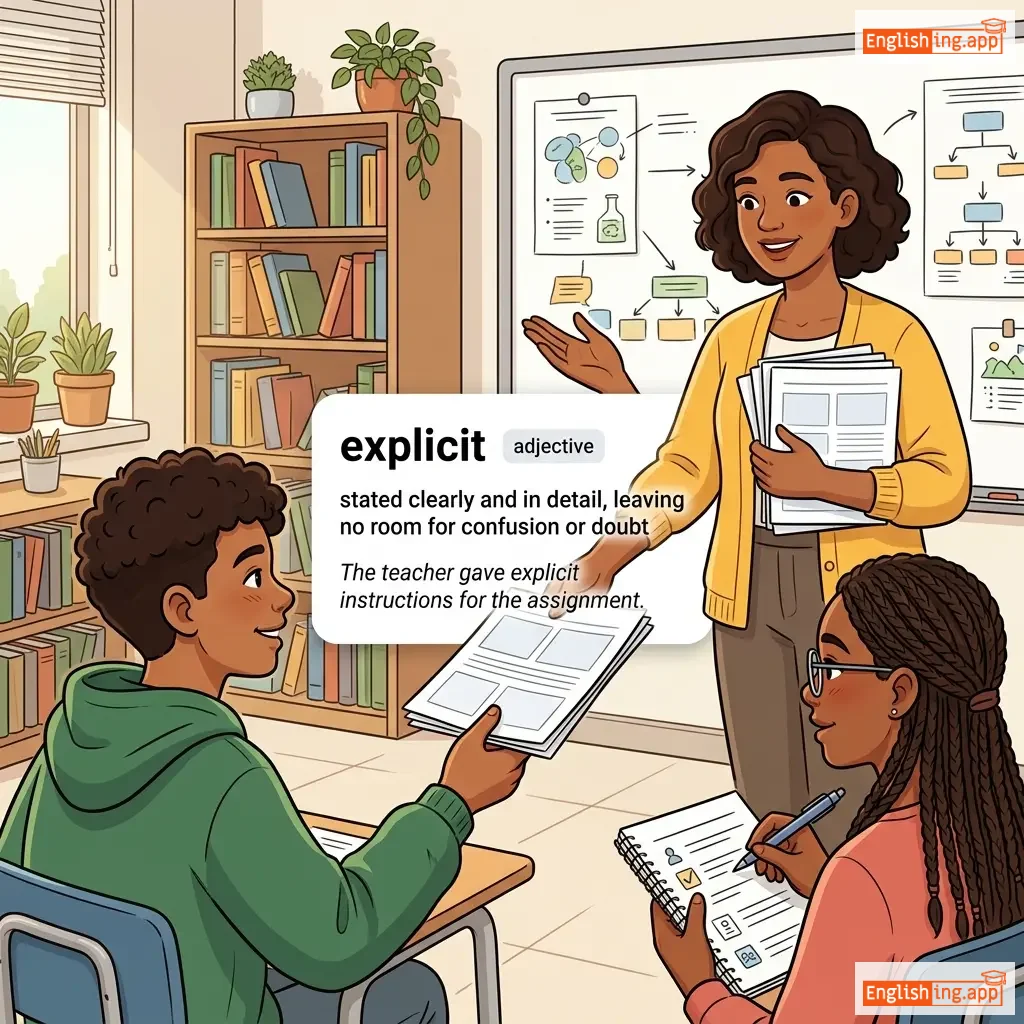
explicit definition card — visual illustration of the meaning
adjective
/ɪkˈsplɪsɪt/
explicite (explicite)

stated clearly and in detail, leaving no room for confusion or doubt

"The teacher gave explicit instructions for the assignment."

"Le professeur a donné des instructions explicites pour l'exercice." (Le professeur a donné des instructions explicites pour l'exercice.)
adverb
/ɪkˈsplɪsɪtli/
explicitement (explicitement)

in a clear and detailed manner, leaving no room for confusion or doubt

"The instructions were explicitly written to avoid any confusion."

"Les instructions ont été écrites explicitement pour éviter toute confusion." (Les instructions ont été écrites explicitement pour éviter toute confusion.)
verb
/ɪkˈsploʊd/
exploser (exploser)

to burst or shatter violently and noisily as a result of rapid combustion or pressure

"The bomb exploded in the middle of the street."

"La bombe a explosé au milieu de la rue." (La bombe a explosé au milieu de la rue.)
verb, noun
/ɪkˈsplɔɪt/
exploiter / utiliser (exploiter / utiliser)

to make full use of and derive benefit from (a resource); to use someone unfairly for one’s own advantage

"The company was accused of exploiting child labor."

"La société a été accusée d'exploiter le travail des enfants." (La société a été accusée d'exploiter le travail des enfants.)
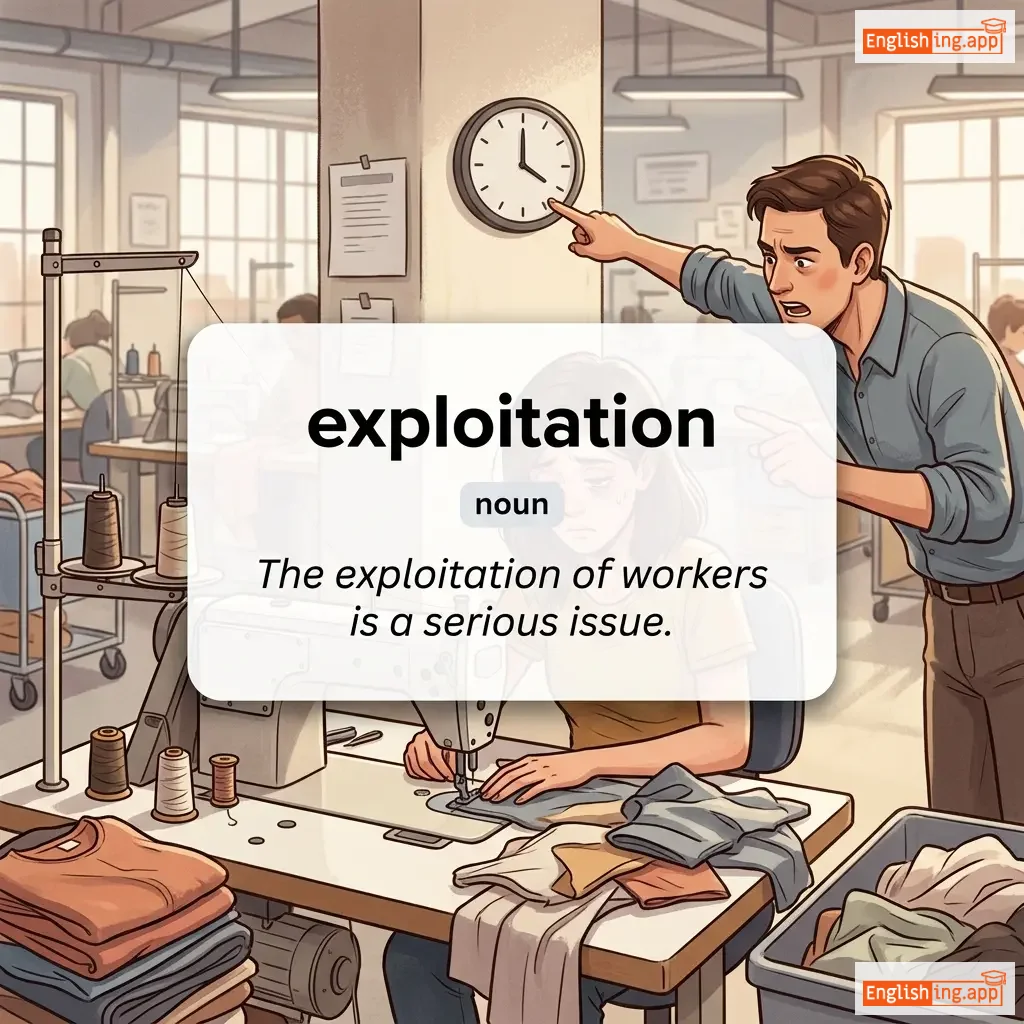
exploitation definition card — visual illustration of the meaning
noun
/ˌeksplɔɪˈteɪʃən/
exploitation (exploitation)

the action or fact of treating someone unfairly in order to benefit from their work; the use of resources for profit

"The exploitation of workers is a serious issue."

"L'exploitation des travailleurs est un problème grave." (L'exploitation des travailleurs est un problème grave.)
adjective
/ɪkˈsplɔɪtətɪv/
exploitant (exploitant)

making use of a situation or people unfairly and unethically for one's own advantage

"The workers protested against the exploitative practices of the factory."

"Les travailleurs ont protesté contre les pratiques exploitantes de l'usine." (Les travailleurs ont protesté contre les pratiques exploitantes de l'usine.)
noun
/ˌekspləˈreɪʃən/
exploration (exploration)

the action of traveling through or studying an area to learn more about it

"Space exploration has expanded our understanding of the universe."

"L'exploration spatiale a élargi notre compréhension de l'univers." (L'exploration spatiale a elargi notre comprehension de l'univers.)
explore definition card — visual illustration of the meaning
verb
/ɪkˈsplɔːr/
explorer (explorer)

to travel through or study something in order to learn more about it

"They decided to explore the forest together."

"Ils ont décidé d'explorer la forêt ensemble." (Ils ont décidé d'explorer la forêt ensemble.)
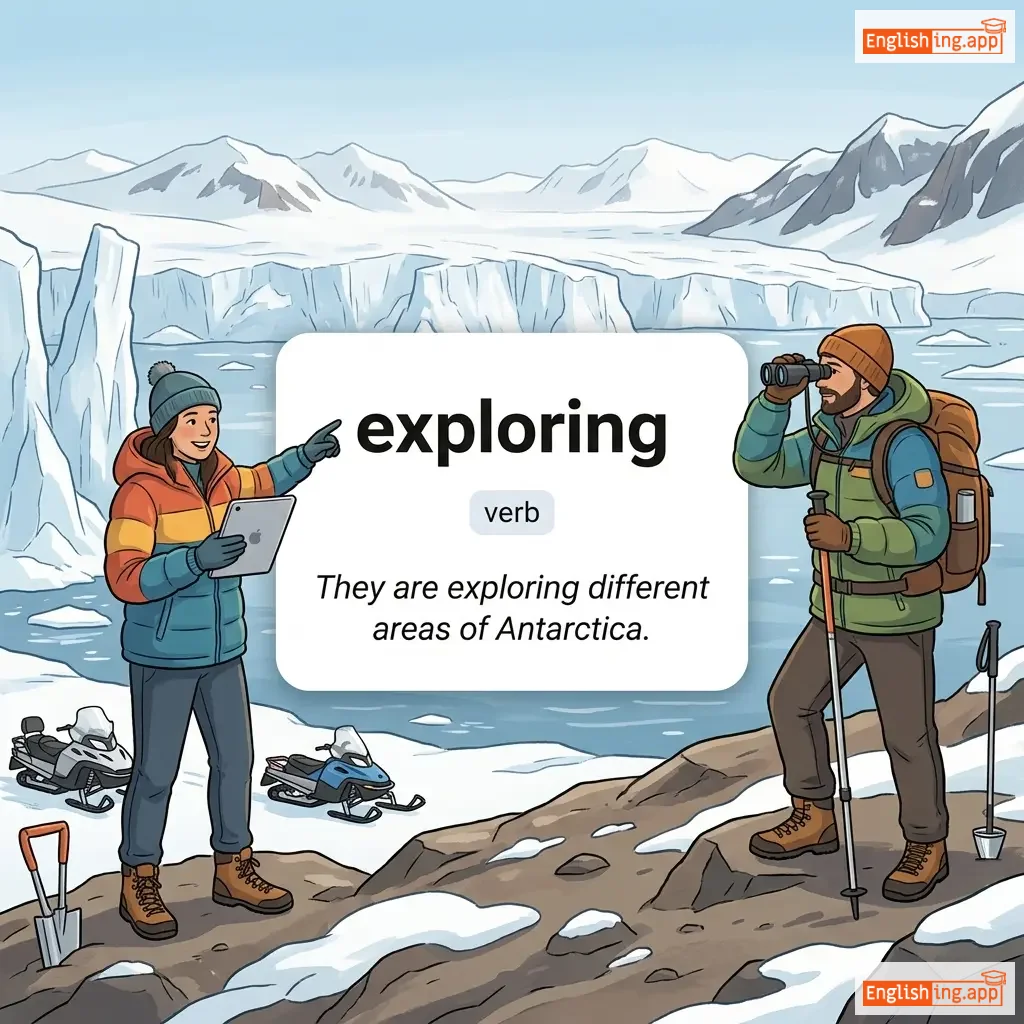
exploring definition card — visual illustration of the meaning
verb
/ɪkˈsplɔːrɪŋ/
explorer (explorer)

Investigating or studying thoroughly; searching into or ranging over for the purpose of discovery.

"They are exploring different areas of Antarctica."

"Ils explorent différentes régions de l'Antarctique." (Ils explorent différentes régions de l'Antarctique.)
noun
/ɪkˈsploʊʒən/
explosion (explosion)

a violent burst or release of energy, often causing damage and noise

"The explosion shook the entire neighborhood."

"L'explosion a secoué tout le quartier." (L'explosion a secoue tout le quartier.)
adjective
/ɪkˈsploʊsɪv/
explosif (explosif)

able to cause an explosion; likely to burst out suddenly

"The situation became explosive after the argument."

"La situation est devenue explosive après la dispute." (La situation est devenue explosive après la dispute.)
noun
/ɪkˈspoʊnənt/
exposant (exposant)

a person who supports, promotes, or explains an idea; in math, a symbol denoting power

"She is a leading exponent of modern dance."

"Elle est une des principales exposantes de la danse moderne." (Elle est une des principales exposantes de la danse moderne.)
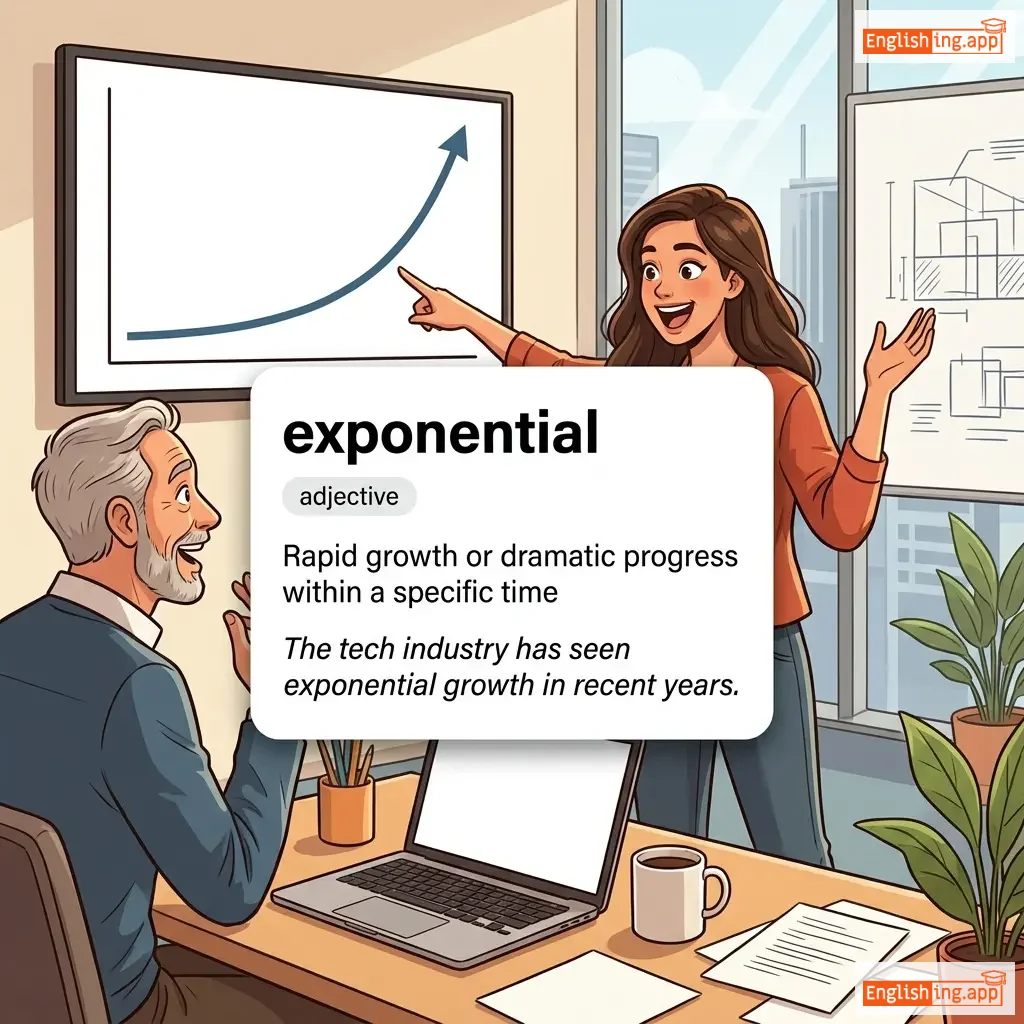
exponential definition card — visual illustration of the meaning
adjective
/ˌɛk.spəˈnɛn.ʃəl/
exponentiel (exponentiel)

Rapid growth or dramatic progress within a specific time

"The tech industry has seen exponential growth in recent years."

"L'industrie technologique a connu une croissance exponentielle ces dernières années." (L'industrie technologique a connu une croissance exponentielle ces dernieres annees.)
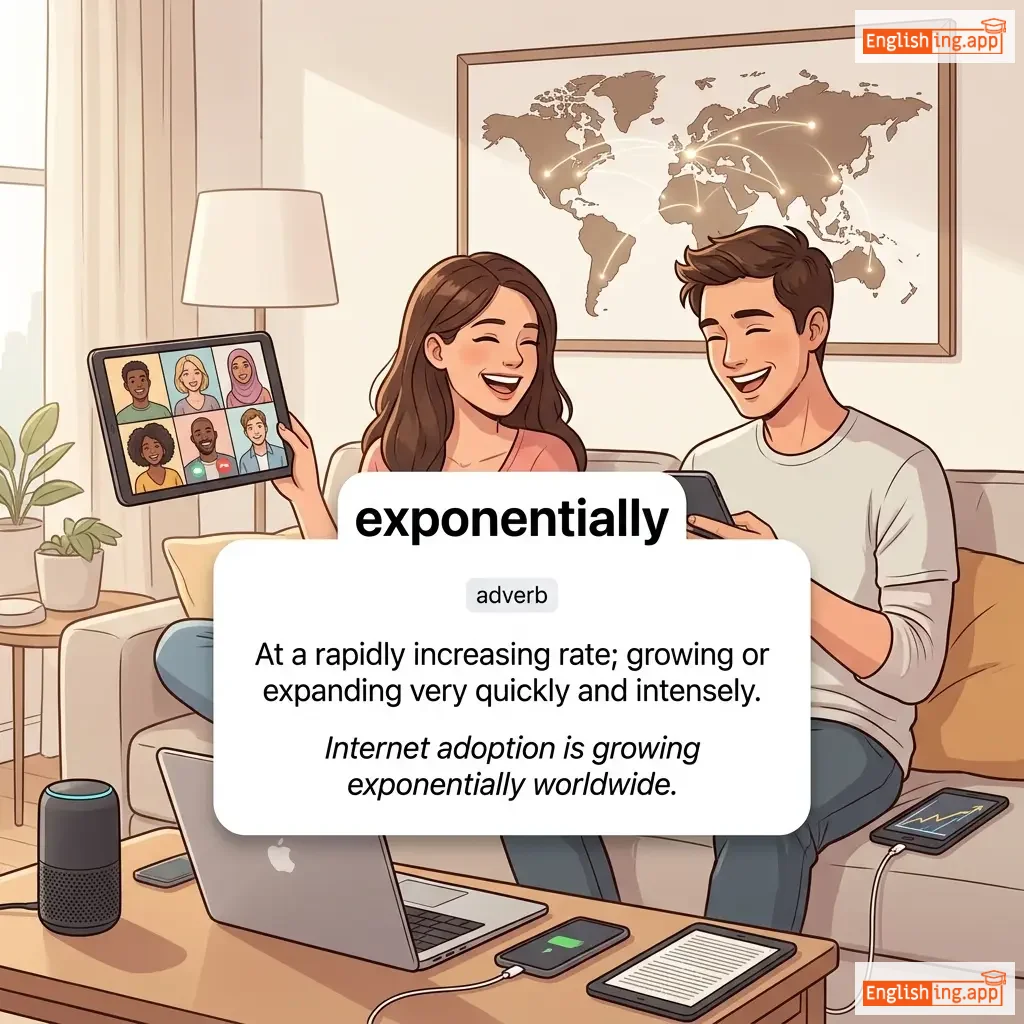
exponentially definition card — visual illustration of the meaning
adverb
ˌekspəˈnenʃəli
exponentiellement (exponentiellement)

At a rapidly increasing rate; growing or expanding very quickly and intensely.

"Internet adoption is growing exponentially worldwide."

"L'adoption d'Internet croît de manière exponentielle dans le monde entier." (L'adoption d'Internet croît de manière exponentielle dans le monde entier.)
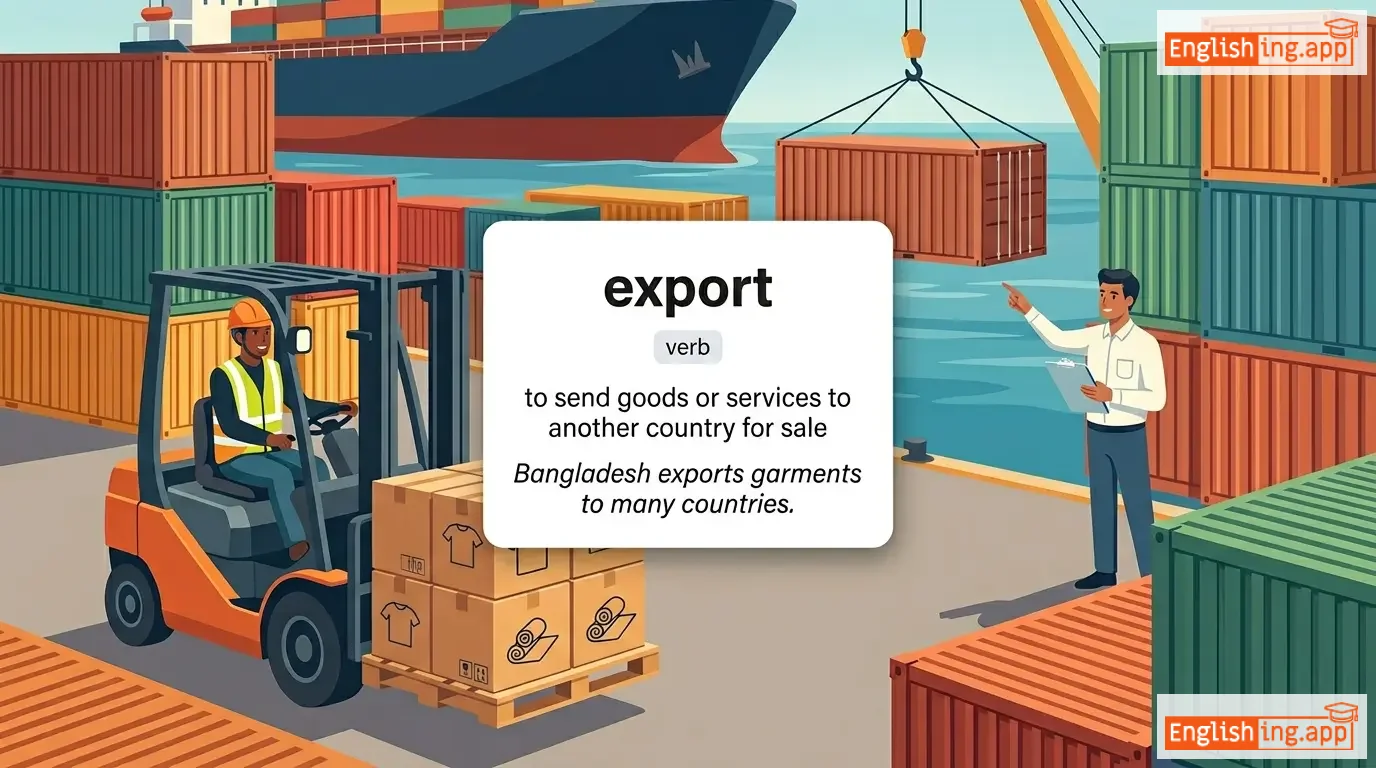
export definition card — visual illustration of the meaning
verb
/ˈekspɔːt/
exporter (exporter)

to send goods or services to another country for sale

"Bangladesh exports garments to many countries."

"Le Bangladesh exporte des vêtements dans de nombreux pays." (Le Bangladesh exporte des vêtements dans de nombreux pays.)
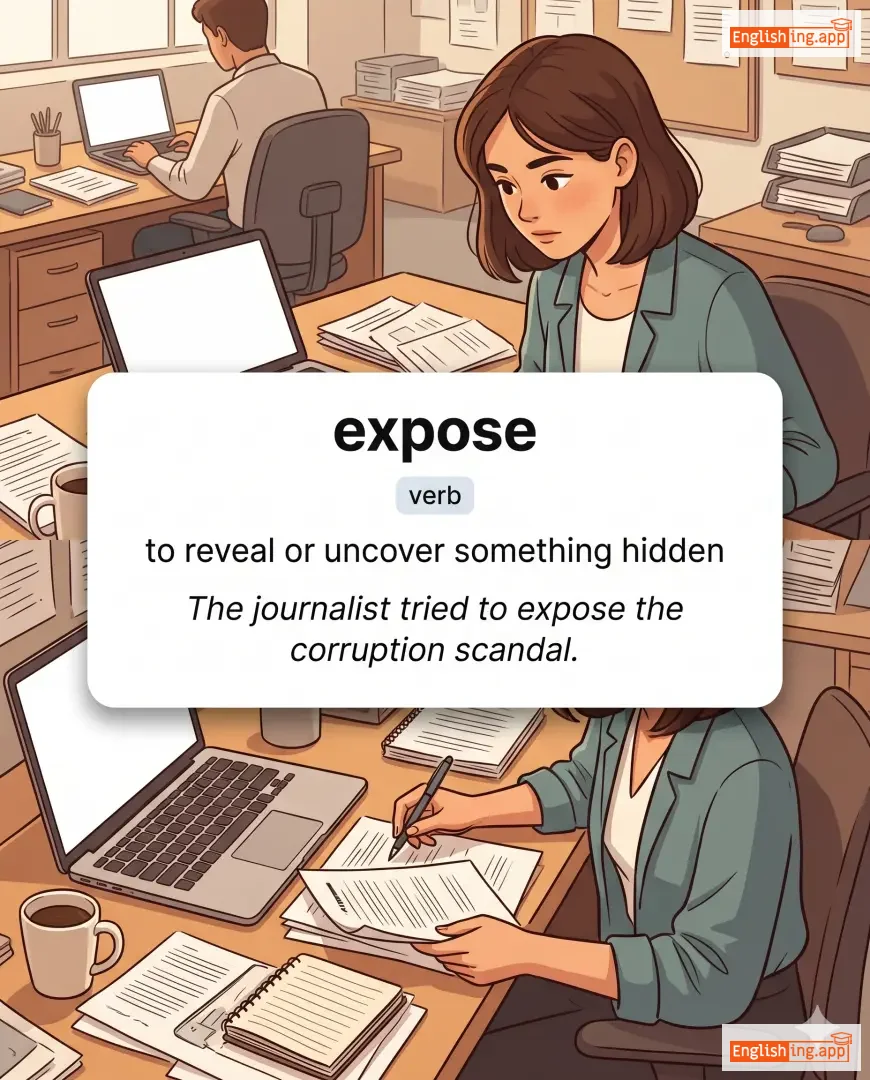
expose definition card — visual illustration of the meaning
verb
/ɪkˈspoʊz/
exposer (exposer)

to reveal or uncover something hidden

"The journalist tried to expose the corruption scandal."

"Le journaliste a essayé d'exposer le scandale de corruption." (Le journaliste a essayé d'exposer le scandale de corruption.)
noun
/ˌekspəˈzɪʃən/
exposition (exposition)

a detailed explanation or a large public exhibition

"The scientist gave a clear exposition of the theory."

"Le scientifique a donné une explication claire de la théorie." (Le scientifique a donne une explication claire de la theorie.)
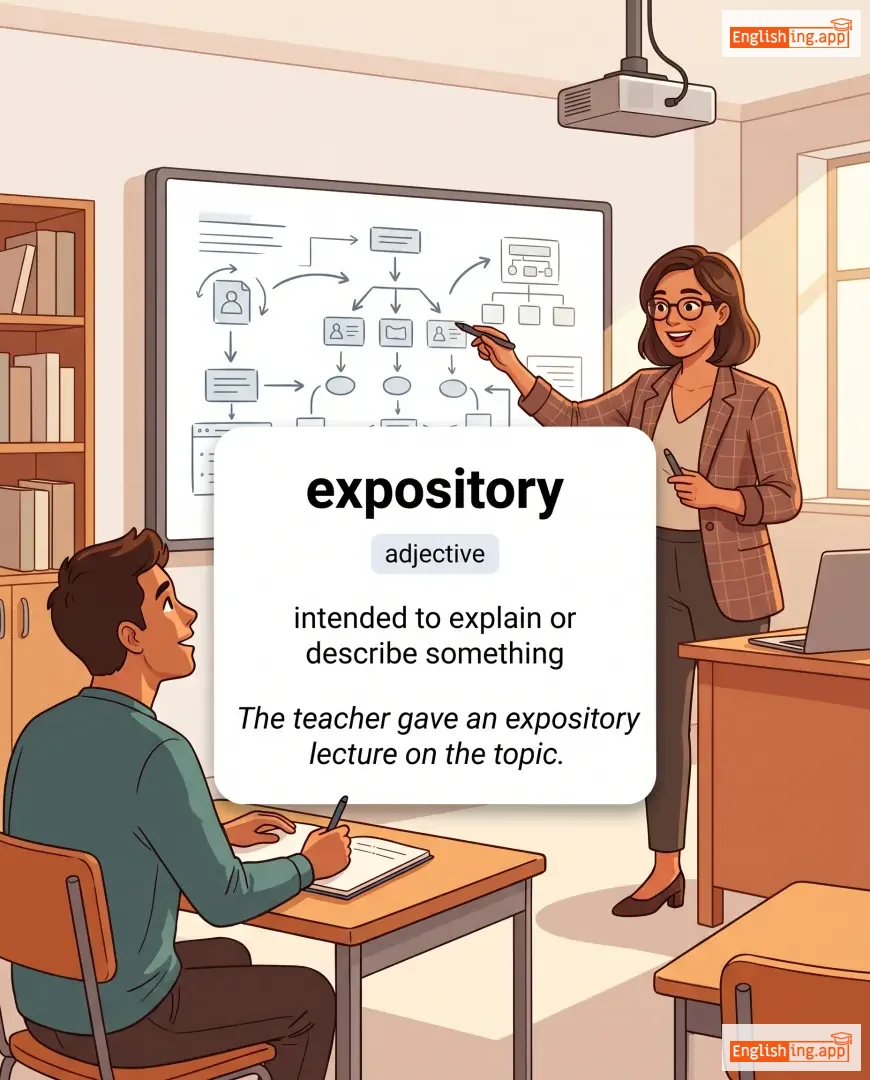
expository definition card — visual illustration of the meaning
adjective
/ɪkˈspɒzɪtəri/
expositif (expositif)

intended to explain or describe something

"The teacher gave an expository lecture on the topic."

"Le professeur a donné une conférence expositive sur le sujet." (Le professeur a donné une conférence expositive sur le sujet.)
verb
/ɪkˈspɒstjʊleɪt/
exprimer un désaccord (exprimer un désaccord)

to express strong disapproval or disagreement

"She expostulated with her friend about the risky decision."

"Elle s'est opposée à son ami au sujet de la décision risquée." (Elle s'est opposée à son ami au sujet de la décision risquée.)
noun
/ɪkˌspɒstjʊˈleɪʃən/
protestation (protestation)

the act of expressing protest or disagreement

"His expostulation against the unfair rules was ignored."

"Sa protestation contre les règles injustes a été ignorée." (Sa protestation contre les règles injustes a été ignorée.)
noun
/ɪkˈspəʊʒər/
exposition (exposition)

the state of being exposed to contact with something, especially harmful

"Prolonged exposure to the sun can damage your skin."

"Une exposition prolongée au soleil peut endommager votre peau." (Une exposition prolongee au soleil peut endommager votre peau.)
verb
/ɪkˈspaʊnd/
expliquer en détail (expliquer en detail)

to present and explain in detail

"The professor expounded the theory in simple terms."

"Le professeur a exposé la théorie en termes simples." (Le professeur a exposé la théorie en termes simples.)
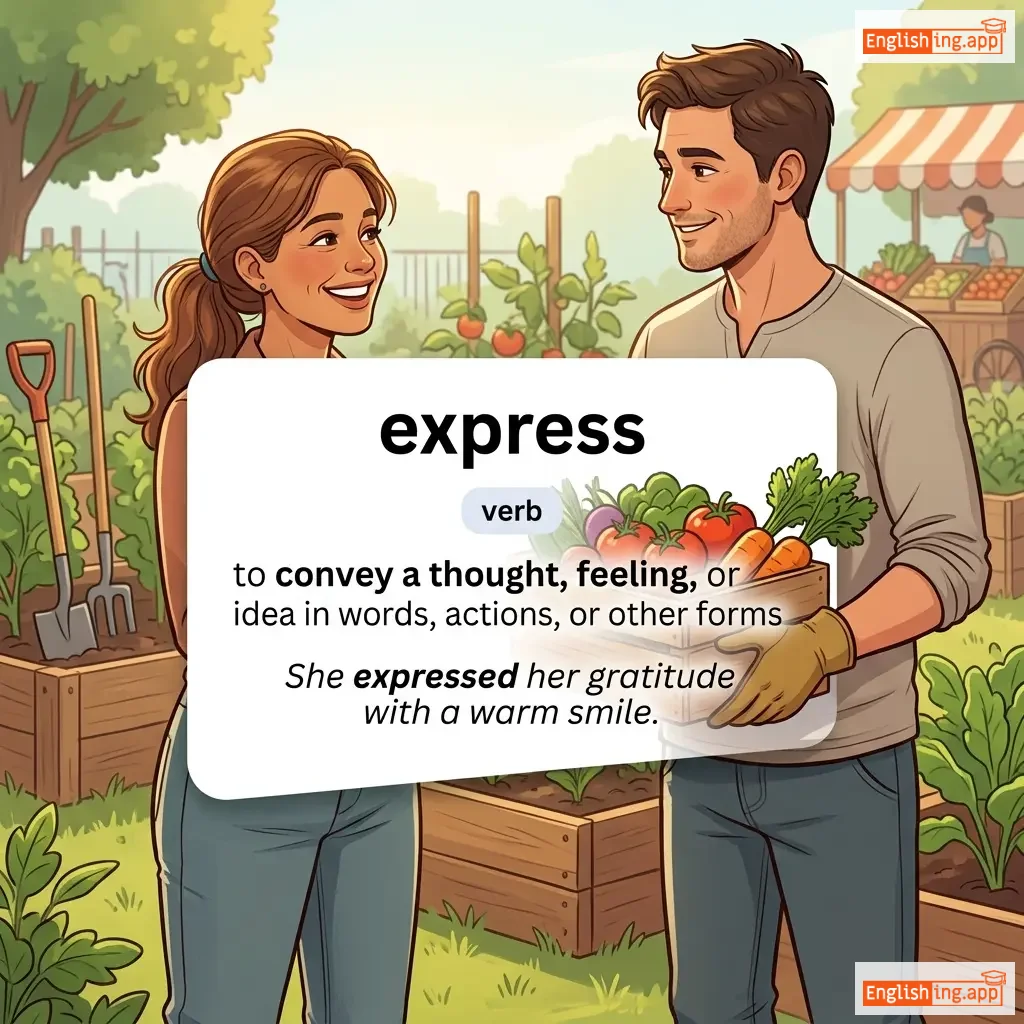
express definition card — visual illustration of the meaning
verb
/ɪkˈsprɛs/
exprimer (exprimer)

to convey a thought, feeling, or idea in words, actions, or other forms

"She expressed her gratitude with a warm smile."

"Elle a exprimé sa gratitude avec un sourire chaleureux." (Elle a exprimé sa gratitude avec un sourire chaleureux.)
noun
/ɪkˈspres treɪn/
train express (train express)

a fast train that travels between major stations with few or no intermediate stops

"The express train reached the destination in half the usual time."

"Le train express a atteint sa destination en moitié moins de temps habituel." (Le train express a atteint sa destination en moitié moins de temps habituel.)
noun
/ɪkˈsprɛʃən/
expression (expression)

the act of putting thoughts or feelings into words, actions, or facial gestures

"His facial expression showed surprise."

"L'expression de son visage montrait de la surprise." (L'expression de son visage montrait de la surprise.)
adjective
/ɪkˈsprɛsɪv/
expressif (expressif)

Effectively conveying thought or feeling.

"Her eyes were so expressive that no words were needed."

"Ses yeux étaient tellement expressifs qu'aucun mot n'était nécessaire." (Ses yeux étaient tellement expressifs qu'aucun mot n'était nécessaire.)
verb
/ɛksˈproʊprieɪt/
exproprier (eksproprier)

To take property from its owner, especially by authority or for public use.

"The government decided to expropriate the land for a new highway."

"Le gouvernement a décidé d'exproprier la terre pour une nouvelle autoroute." (Le gouvernement a décidé d'exproprier la terre pour une nouvelle autoroute.)
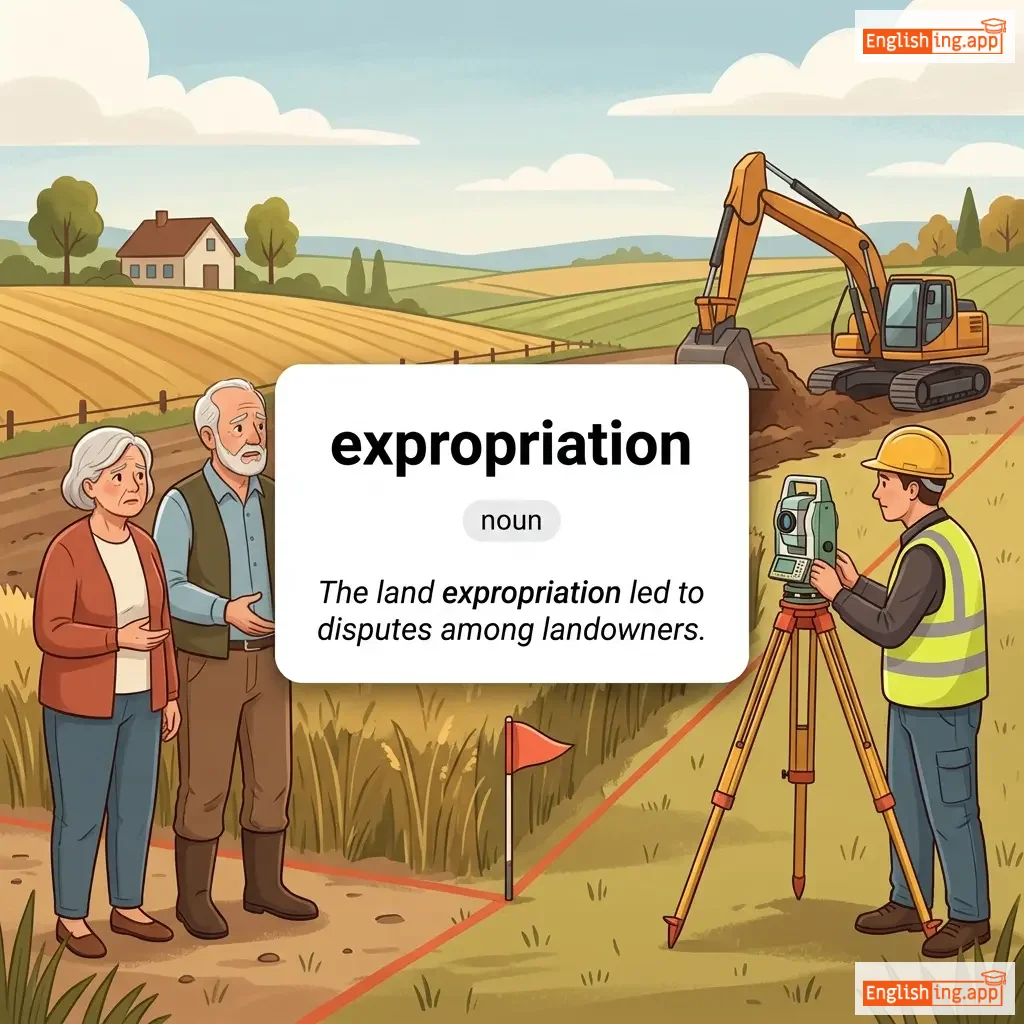
expropriation definition card — visual illustration of the meaning
noun
/ɪkˌsprəʊ.priˈeɪ.ʃən/
expropriation (expropriation)

The act of government taking private property, also known as confiscation, nationalization, or seizure.

"The land expropriation led to disputes among landowners."

"L'expropriation des terres a entraîné des disputes entre les propriétaires fonciers." (L'expropriation des terres a entraine des disputes entre les proprietaires fonciers.)
noun
/ɪkˈspʌlʃən/
expulsion (expulsion)

The act of forcing someone to leave a place, especially a school or country.

"His constant misbehavior led to his expulsion from school."

"Son comportement constant a conduit à son expulsion de l'école." (Son comportement constant a conduit à son expulsion de l'école.)
verb
/ɪkˈspʌndʒ/
effacer (effacer)

To erase or remove completely, often something unwanted.

"He managed to expunge the embarrassing memory from his mind."

"Il a réussi à effacer le souvenir embarrassant de son esprit." (Il a réussi à effacer le souvenir embarrassant de son esprit.)
verb
/ˈekspərˌɡeɪt/
expurger (expurger)

To remove offensive or objectionable parts from a text or speech.

"The publisher decided to expurgate the novel before reprinting it."

"L’éditeur a décidé d’expurger le roman avant de le réimprimer." (lediteur a decide de expurger le roman avant de le reimprimer)
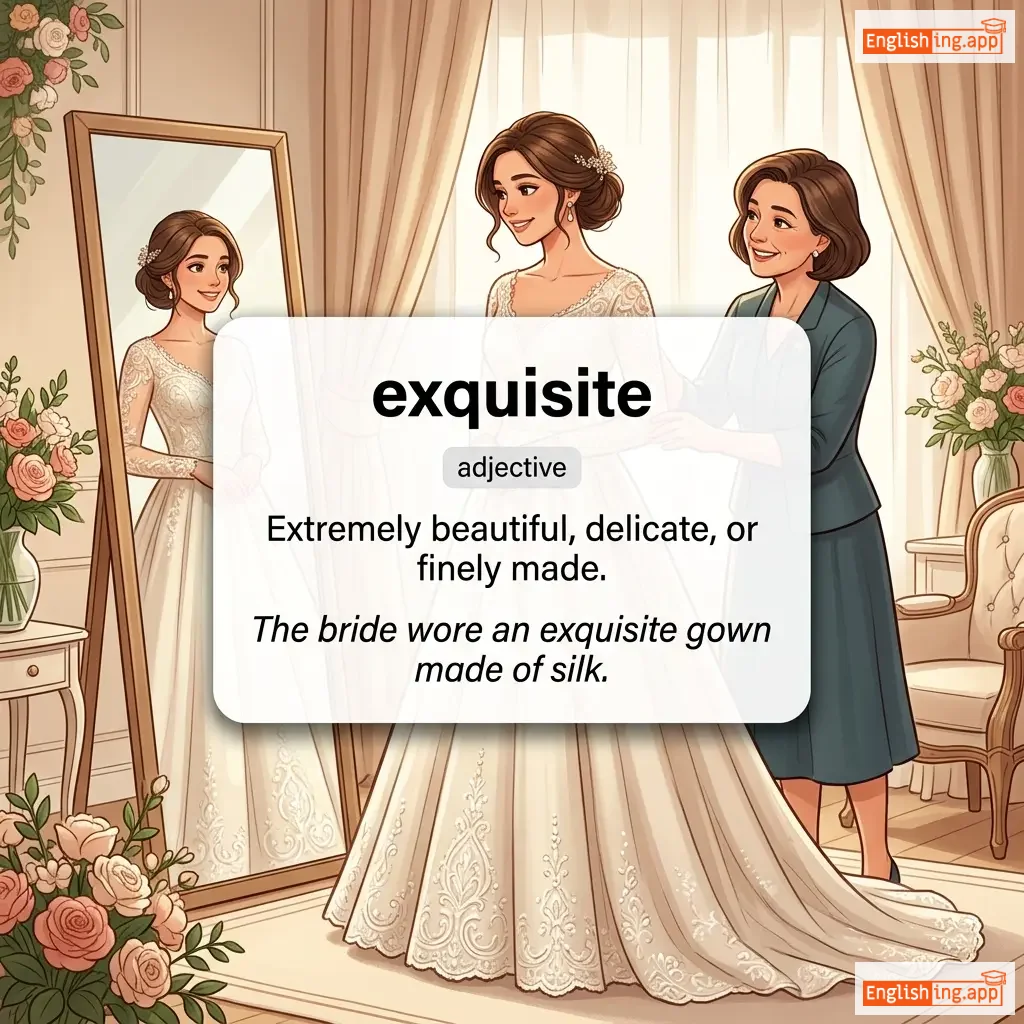
exquisite definition card — visual illustration of the meaning
adjective
/ɪkˈskwɪzɪt/
exquis (ekswee)

Extremely beautiful, delicate, or finely made.

"The bride wore an exquisite gown made of silk."

"La mariée portait une robe exquise en soie." (La mariee portait une robe exquise en soie.)
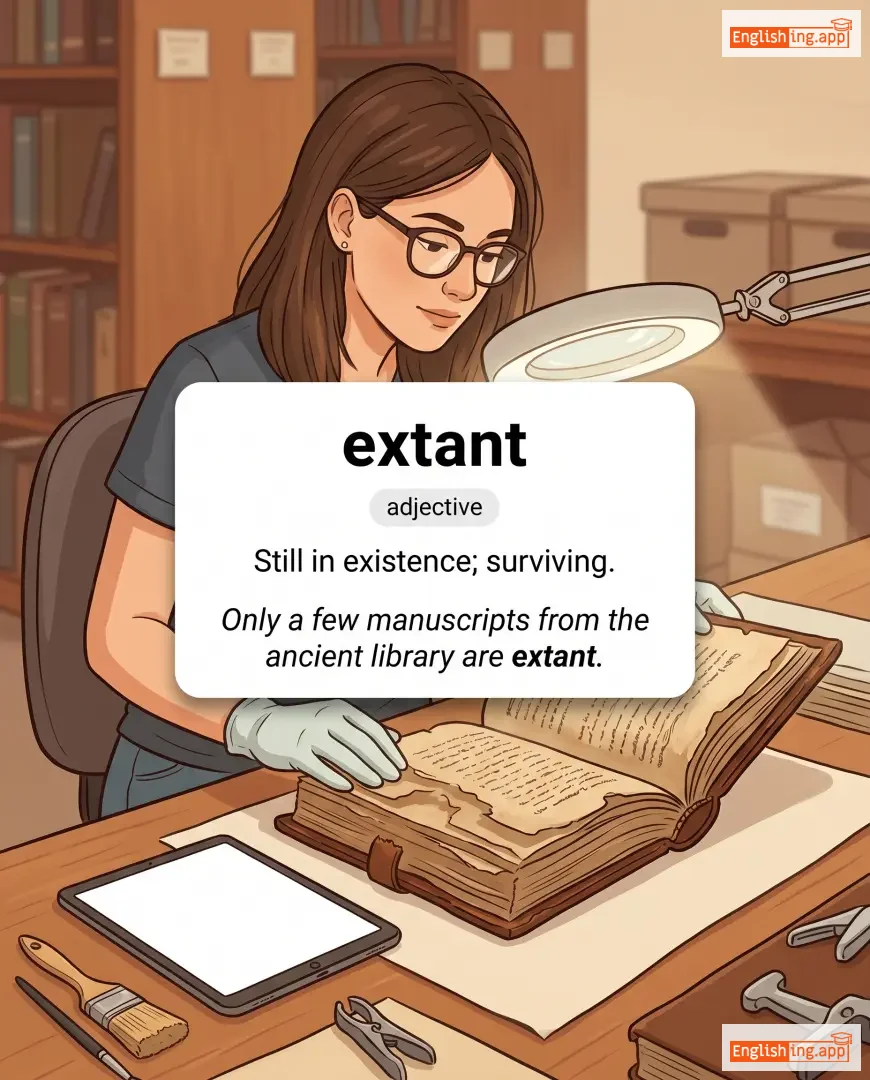
extant definition card — visual illustration of the meaning
adjective
/ˈɛkstənt/
existent (existent)

Still in existence; surviving.

"Only a few manuscripts from the ancient library are extant."

"Seules quelques manuscrits de l'ancienne bibliothèque sont encore existants." (Seules quelques manuscrits de l'ancienne bibliothèque sont encore existants.)
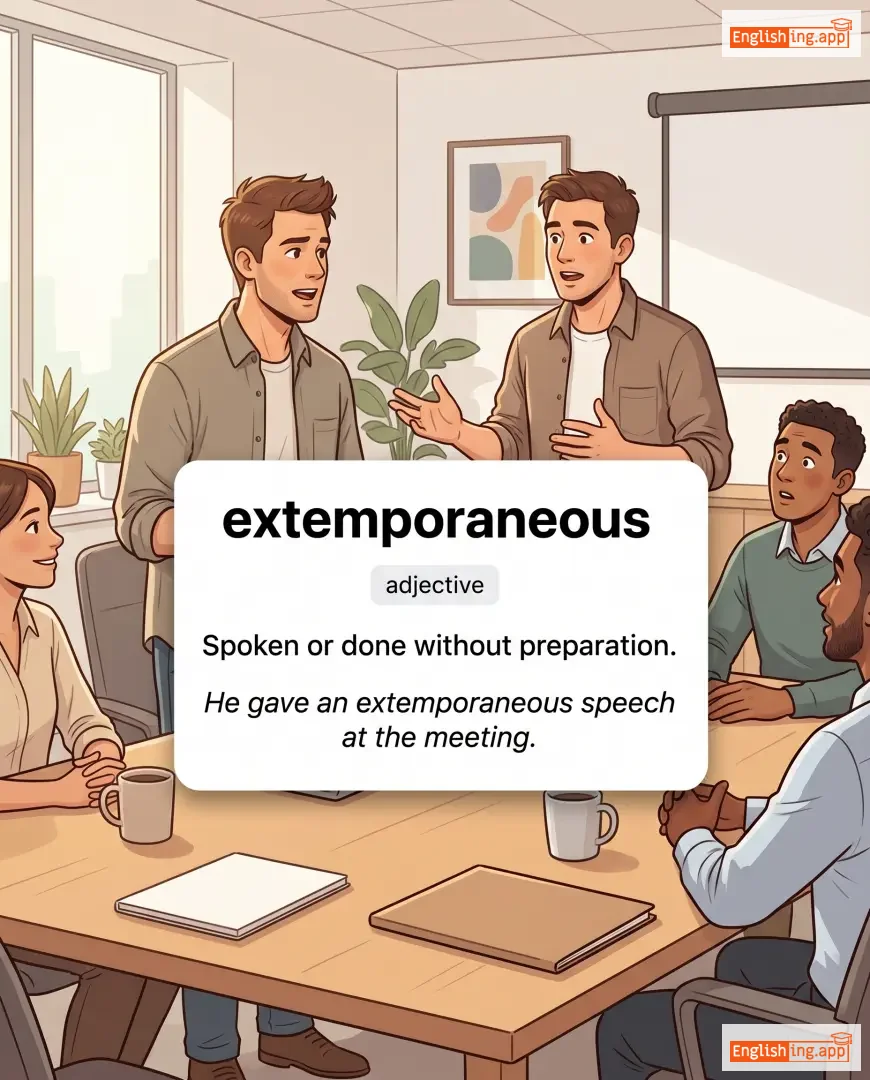
extemporaneous definition card — visual illustration of the meaning
adjective
/ɪkˌstɛmpəˈreɪniəs/
dit sans préparation (di san preparasyon)

Spoken or done without preparation.

"He gave an extemporaneous speech at the meeting."

"Il a fait un discours extemporané lors de la réunion." (Il a fe un discours extemporane lor de la reunion.)
adverb
/ɪkˈstɛmpəri/
sans préparation (sans preparation)

Spoken or done without preparation; impromptu.

"She recited the poem extempore in class."

"Elle a récité le poème sans préparation en classe." (Elle a recité le poème sans préparation en classe.)
verb
/ɪkˈstɛmpəraɪz/
improviser (improviser)

To speak or perform without preparation; improvise.

"The actor had to extemporize when he forgot his lines."

"L'acteur a dû improviser lorsqu'il a oublié ses répliques." (L'acteur a dû improviser lorsqu'il a oublié ses répliques.)
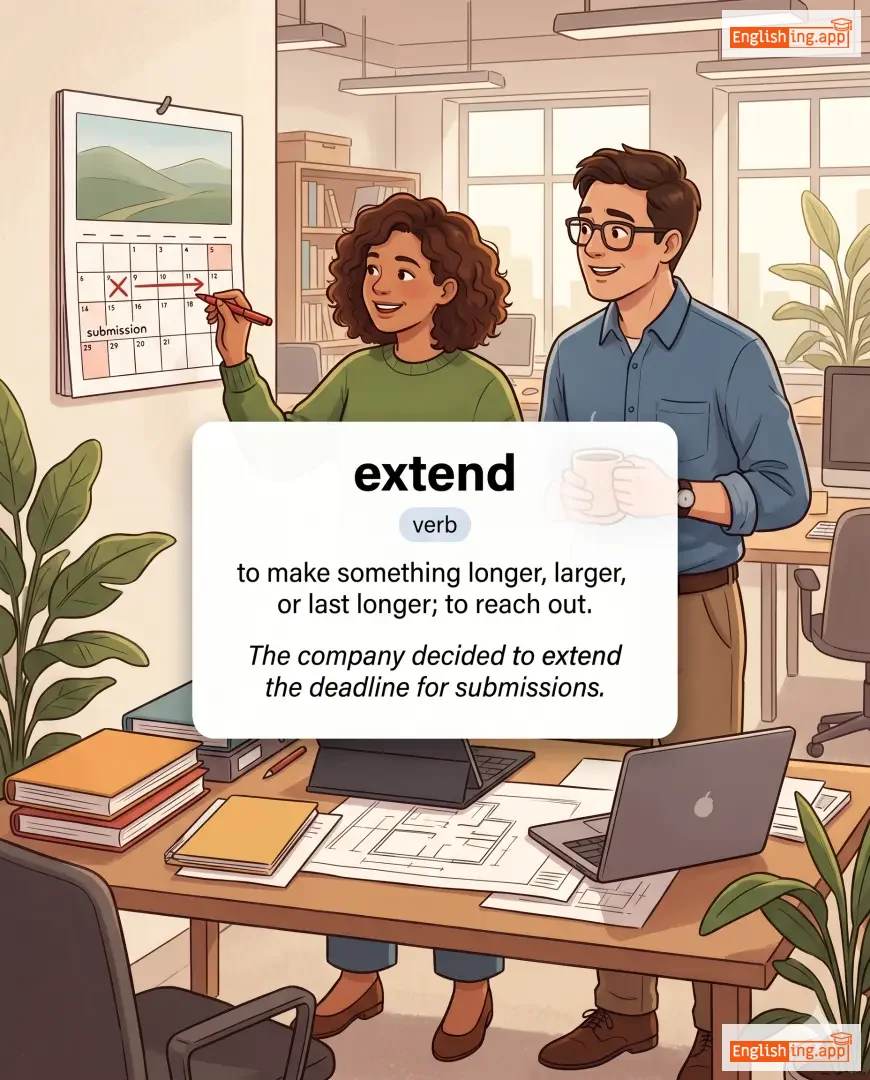
extend definition card — visual illustration of the meaning
verb
/ɪkˈstɛnd/
étendre (etendre)

to make something longer, larger, or last longer; to reach out.

"The company decided to extend the deadline for submissions."

"L'entreprise a décidé de prolonger la date limite pour les soumissions." (L'entreprise a decide de prolonger la date limite pour les soumissions.)
adjective
/ɪkˈstendɪd/
étendu (etendu)

longer or larger than usual; continuing for a longer time

"They took an extended vacation in Europe this summer."

"Ils ont pris des vacances prolongées en Europe cet été." (Ils ont pris des vacances prolongées en Europe cet été.)
adjective
/ɪkˈstɛnsəbl/
extensible (extensible)

able to be extended; capable of expansion.

"The software is designed to be extensible with new features."

"Le logiciel est conçu pour être extensible avec de nouvelles fonctionnalités." (Le logiciel est conçu pour être extensible avec de nouvelles fonctionnalités.)
noun
/ɪkˈstɛnʃən/
extension (extension)

a part that is added to something to make it longer or bigger; an increase in time.

"She asked for an extension on her assignment deadline."

"Elle a demandé une extension pour la date limite de son devoir." (Elle a demande une extension pour la date limite de son devoir.)
adjective
/ɪkˈstɛnsɪv/
étendu (etendu)

covering a large area or involving a lot; wide in range.

"The museum has an extensive collection of ancient artifacts."

"Le musée possède une collection étendue d'artefacts anciens." (Le musée possède une collection étendue d'artefacts anciens.)
adverb
/ɪkˈstɛnsɪvli/
de manière extensive (de maniere extensive)

in a thorough or wide-ranging manner

"She traveled extensively across Europe for her research."

"Elle a voyagé de manière extensive à travers l'Europe pour ses recherches." (Elle a voyage de maniere extensive a travers l'Europe pour ses recherches.)
noun
/ɪkˈstɛnsər/
muscle extenseur (muscle extenseur)

a muscle that serves to extend or straighten a limb or part of the body.

"The extensor muscles in the arm help straighten the elbow."

"Les muscles extenseurs du bras aident à redresser le coude." (Les muscles extenseurs du bras aident à redresser le coude.)
noun
/ɪkˈstɛnt/
étendue (etendue)

the area, degree, or scope of something

"The extent of the damage was greater than expected."

"L'étendue des dégâts était plus grande que prévu." (L'etendue des degats etait plus grande que prevu.)
verb
/ɪkˈstɛnjueɪt/
excuser (excuser)

to make an offense, fault, or situation seem less serious by providing an excuse or explanation

"The lawyer tried to extenuate his client's actions by highlighting his difficult childhood."

"L'avocat a essayé d'excuser les actions de son client en mettant en lumière son enfance difficile." (L'avocat a essayé d'excuser les actions de son client en mettant en lumière son enfance difficile.)