語彙集

英単語辞書 | 単語の意味、定義、例文

noun
/ˌekspləˈneɪʃən/
説明 (setsumei)

a statement or account that makes something clear

"The teacher gave a clear explanation of the theory."

"先生は理論を明確に説明しました。" (Sensei wa riron o meikaku ni setsumei shimashita.)
noun
/ˈɛksplətɪv/
罵声 (bakei)

a word or phrase used as an exclamation, often offensive or profane

"He shouted an expletive when he dropped the hammer on his foot."

"彼はハンマーを足に落としたときに罵声をあげました。" (Kare wa hanmā o ashi ni otoshita toki ni bakei o agemashita.)
adjective
/ˈɛksplɪkəbəl/
説明可能な (setsumei kanō na)

able to be explained or understood

"His sudden anger was explicable given the stressful situation."
"彼の突然の怒りは、ストレスの多い状況を考慮すれば説明可能だった。" (Kare no totsuzen no ikari wa, sutoresu no ōi jōkyō o kōryo sureba setsumei kanō datta.)
explicate definition card — visual illustration of the meaning
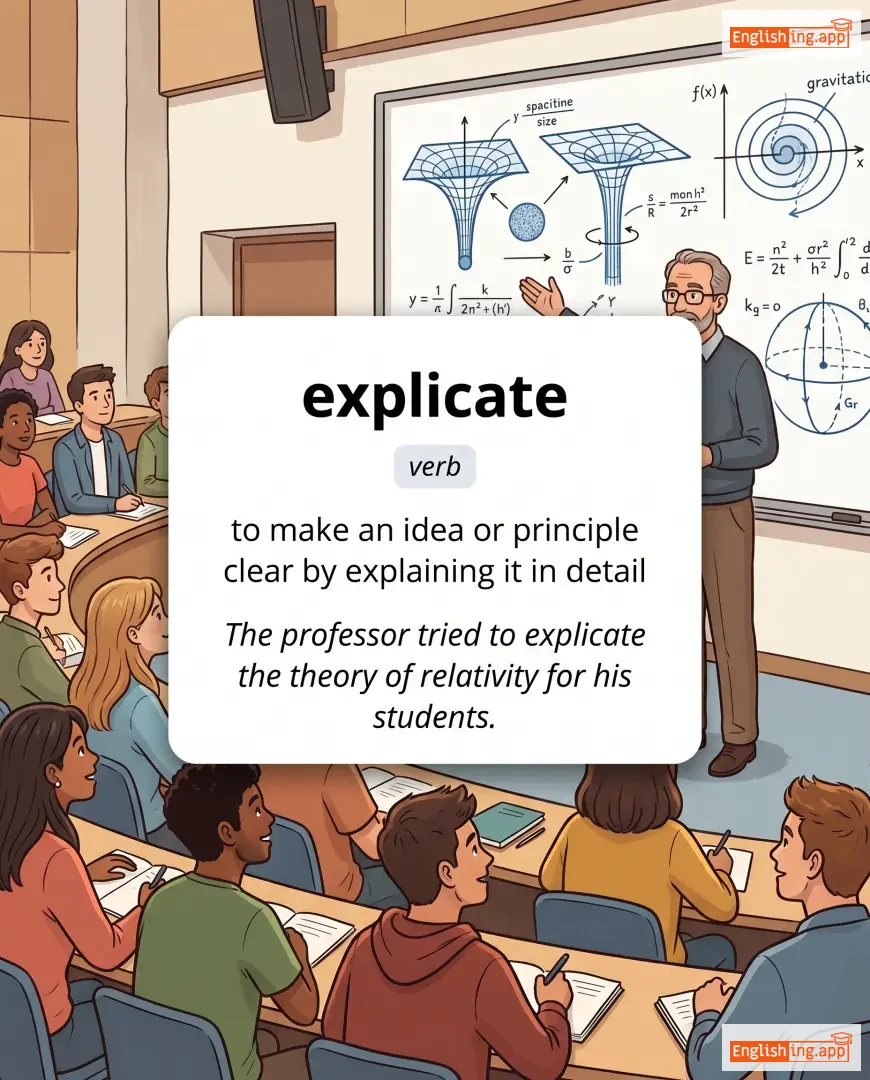
verb
/ˈɛksplɪkeɪt/
説明する (setsumei suru)

to make an idea or principle clear by explaining it in detail

"The professor tried to explicate the theory of relativity for his students."

"教授は学生たちに相対性理論を説明しようとしました。" (Kyōju wa gakusei-tachi ni sōtaisei riron o setsumei shiyō to shimashita.)
noun
/ˈɛksplɪkeɪtər/
解説者 (kaisetsusha)

a person who explains or interprets something in detail

"The critic served as an explicator of the poet’s complex works."
"批評家は詩人の複雑な作品の解説者として務めました。" (Hihyōka wa shijin no fukuzatsu na sakuhin no kaisetsusha toshite tsutomemashita.)
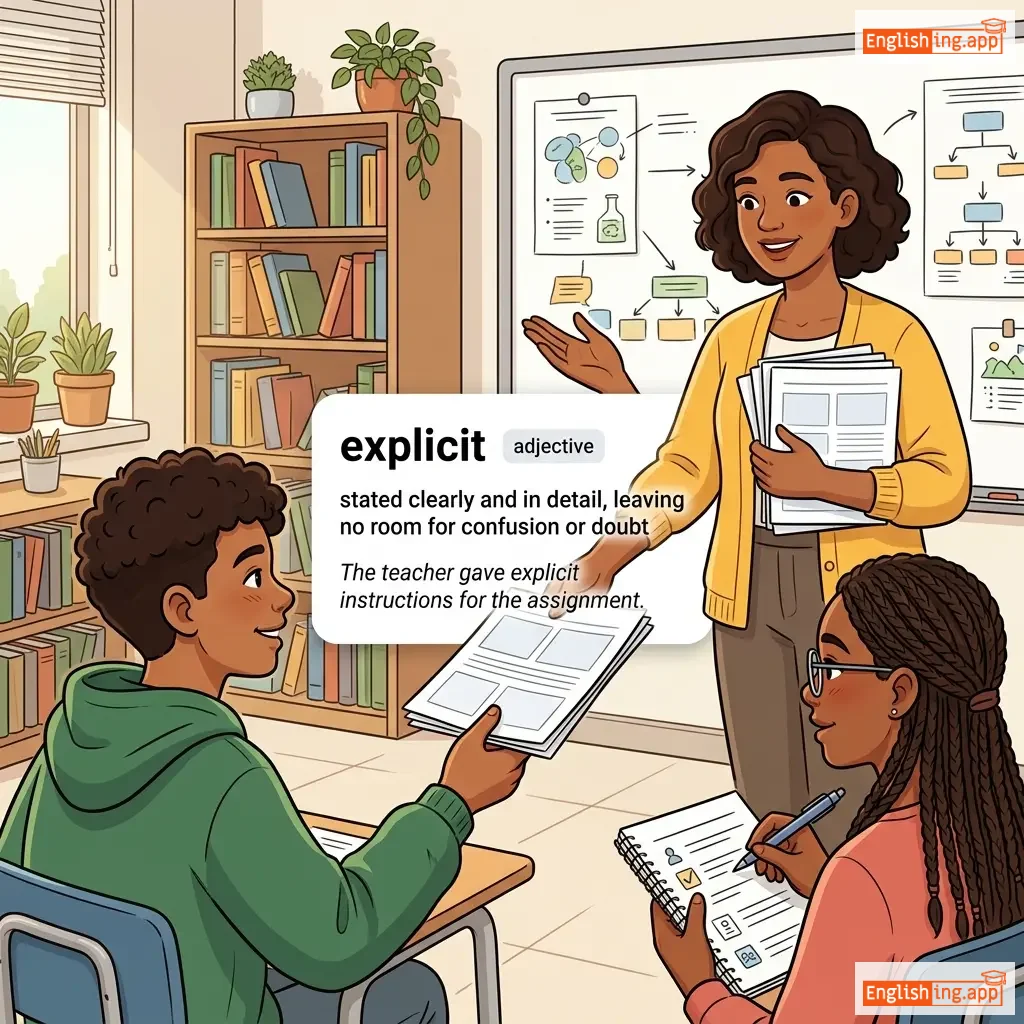
explicit definition card — visual illustration of the meaning
adjective
/ɪkˈsplɪsɪt/
明確な (meikaku na)

stated clearly and in detail, leaving no room for confusion or doubt

"The teacher gave explicit instructions for the assignment."

"先生は課題のために明確な指示を出しました。" (Sensei wa kadai no tame ni meikaku na shiji wo dashimashita.)
adverb
/ɪkˈsplɪsɪtli/
明確に (meikaku ni)

in a clear and detailed manner, leaving no room for confusion or doubt

"The instructions were explicitly written to avoid any confusion."

"指示は明確に書かれており、混乱を避けるためです。" (Shiji wa meikaku ni kakarete ori, konran o sakeru tame desu.)
verb
/ɪkˈsploʊd/
爆発する (bakuhatsu suru)

to burst or shatter violently and noisily as a result of rapid combustion or pressure

"The bomb exploded in the middle of the street."
"爆弾は通りの真ん中で爆発しました。" (Bakudan wa toori no mannaka de bakuhatsu shimashita.)
⚒️

exploit

verb, noun
/ɪkˈsplɔɪt/

to make full use of and derive benefit from (a resource); to use someone unfairly for one’s own advantage

"The company was accused of exploiting child labor."

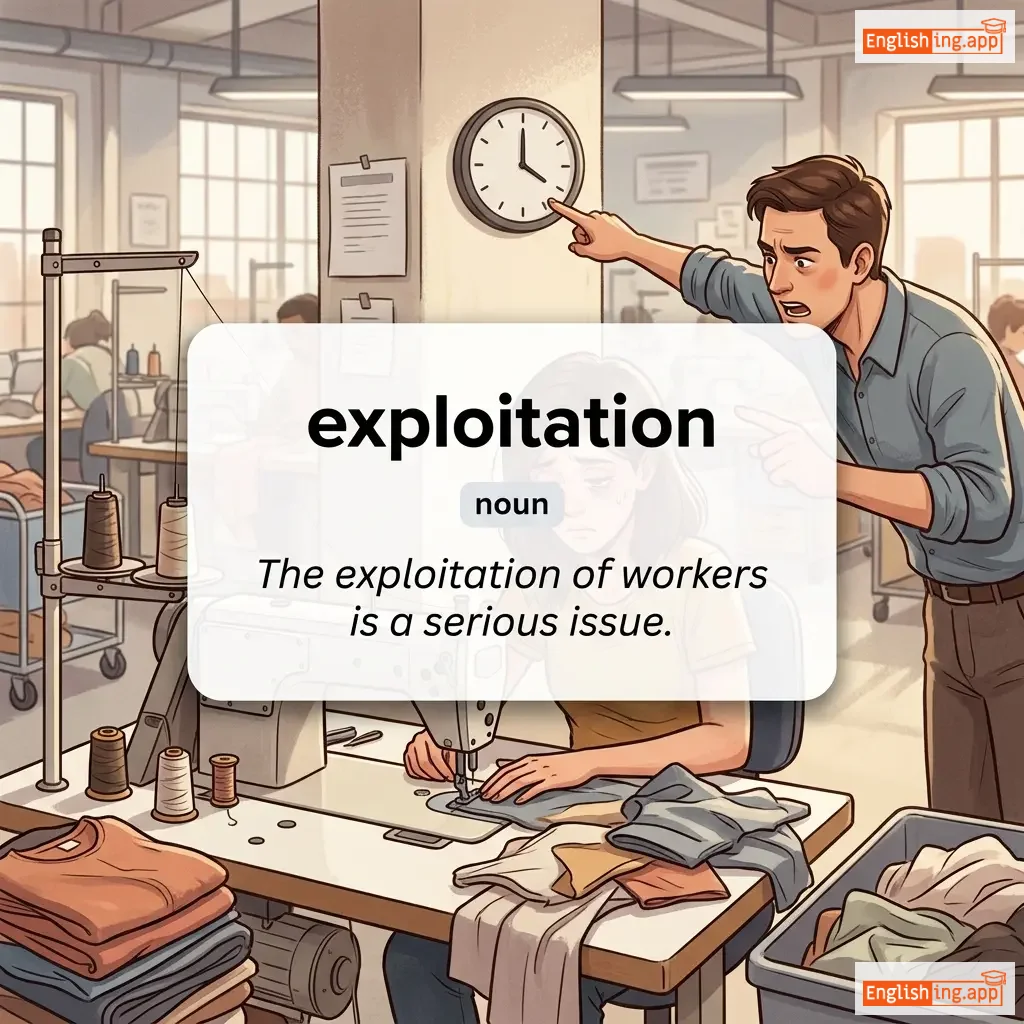
exploitation definition card — visual illustration of the meaning
noun
/ˌeksplɔɪˈteɪʃən/
搾取 (sakushu)

the action or fact of treating someone unfairly in order to benefit from their work; the use of resources for profit

"The exploitation of workers is a serious issue."

"労働者の搾取は深刻な問題です。" (Rōdōsha no sakushu wa shinkokuna mondai desu.)
adjective
/ɪkˈsplɔɪtətɪv/
搾取的な (sakushuteki na)

making use of a situation or people unfairly and unethically for one's own advantage

"The workers protested against the exploitative practices of the factory."

"労働者たちは工場の搾取的な行動に抗議した。" (Rōdō-sha-tachi wa kōjō no sakushuteki na kōdō ni kōgi shita.)
noun
/ˌekspləˈreɪʃən/
探査 (tansa)

the action of traveling through or studying an area to learn more about it

"Space exploration has expanded our understanding of the universe."

"宇宙探査は私たちの宇宙に対する理解を広げました。" (Uchū tansa wa watashitachi no uchū ni taisuru rikai o hirogemashita.)
explore definition card — visual illustration of the meaning
verb
/ɪkˈsplɔːr/
探検する (tanken suru)

to travel through or study something in order to learn more about it

"They decided to explore the forest together."
"彼らは一緒に森を探検することに決めました。" (Karera wa issho ni mori wo tanken suru koto ni kimemashita.)
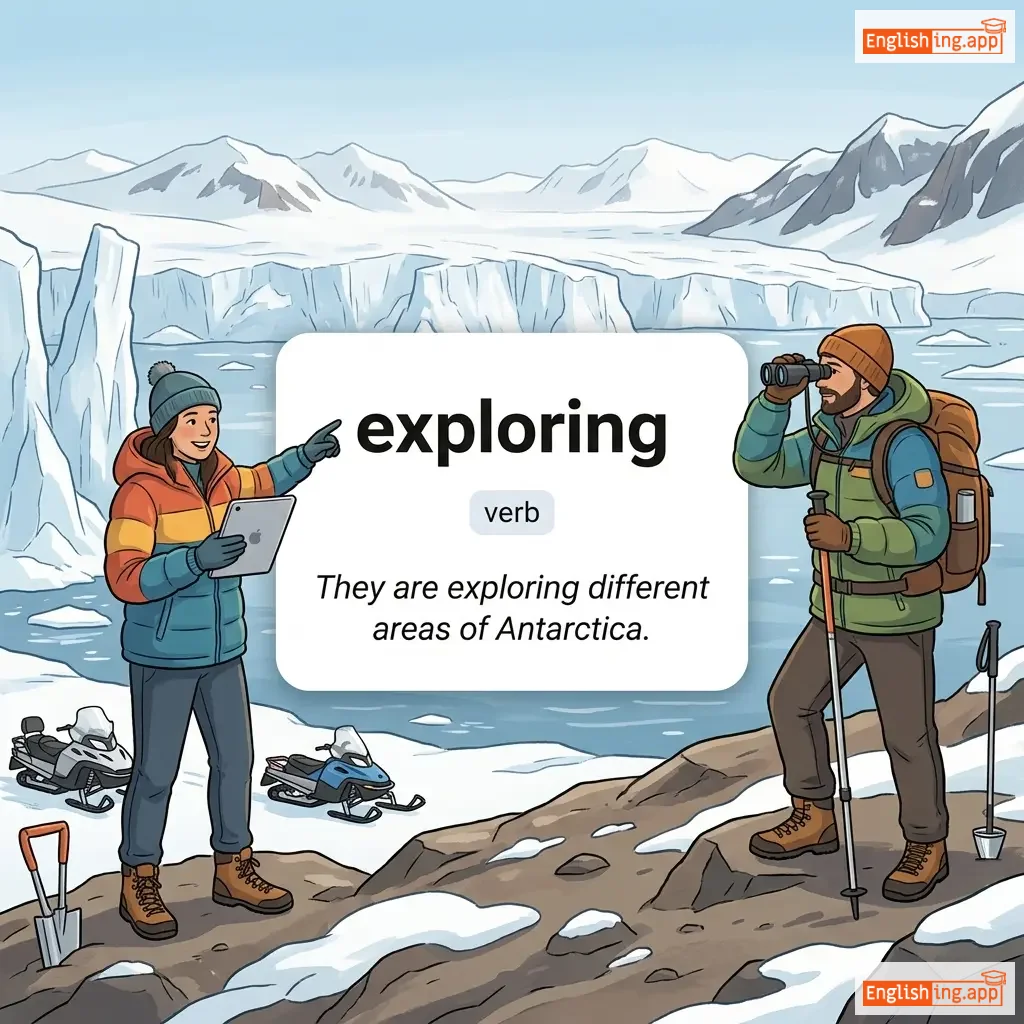
exploring definition card — visual illustration of the meaning
verb
/ɪkˈsplɔːrɪŋ/
探査する (tansa suru)

Investigating or studying thoroughly; searching into or ranging over for the purpose of discovery.

"They are exploring different areas of Antarctica."

"彼らは南極のさまざまな地域を探査しています。" (Karera wa nankyoku no samazama na chiiki o tansa shiteimasu.)
noun
/ɪkˈsploʊʒən/
爆発 (bakuhatsu)

a violent burst or release of energy, often causing damage and noise

"The explosion shook the entire neighborhood."

"爆発は近隣一帯を揺さぶった。" (Bakuhatsu wa kinrin ittai wo yusabutta.)
adjective
/ɪkˈsploʊsɪv/
爆発的 (bakuhatsuteki)

able to cause an explosion; likely to burst out suddenly

"The situation became explosive after the argument."

"議論の後、状況は爆発的になった。" (Giron no ato, jōkyō wa bakuhatsuteki ni natta.)
noun
/ɪkˈspoʊnənt/
指数 (shisū)

a person who supports, promotes, or explains an idea; in math, a symbol denoting power

"She is a leading exponent of modern dance."
"彼女は現代舞踏の先駆者です。" (Kanojo wa gendai butō no senkusha desu.)
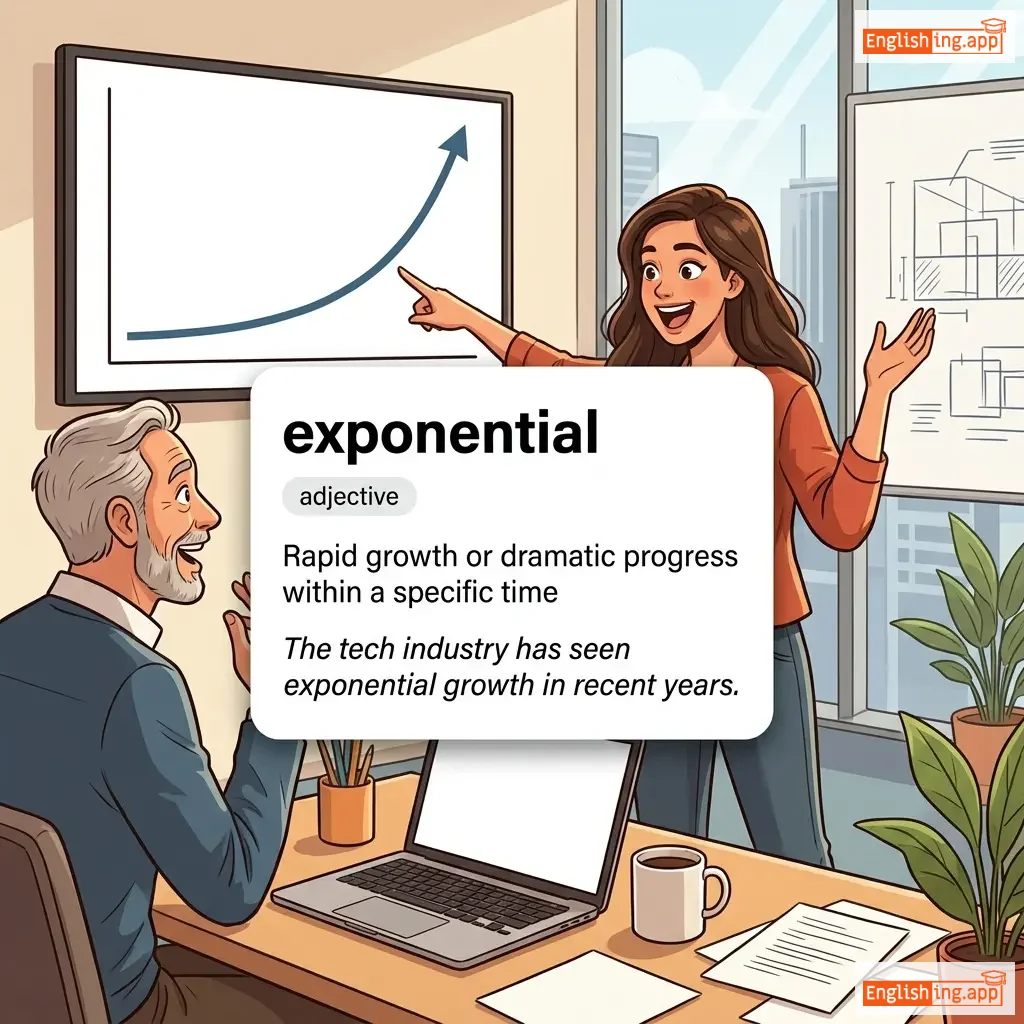
exponential definition card — visual illustration of the meaning
adjective
/ˌɛk.spəˈnɛn.ʃəl/
指数関数的 (shisū kansū teki)

Rapid growth or dramatic progress within a specific time

"The tech industry has seen exponential growth in recent years."

"テクノロジー業界はここ数年で指数関数的な成長を遂げています。" (Tekunorojī gyōkai wa koko sūnen de shisū kansū-teki na seichō o toge teimasu.)
exponentially definition card — visual illustration of the meaning
adverb
ˌekspəˈnenʃəli
指数的に (shisū-teki ni)

At a rapidly increasing rate; growing or expanding very quickly and intensely.

"Internet adoption is growing exponentially worldwide."

"インターネットの採用は世界中で指数的に増加しています。" (Intānetto no saiyō wa sekaijū de shisū-teki ni zōka shiteimasu.)
export definition card — visual illustration of the meaning
verb
/ˈekspɔːt/
輸出する (yushutsu suru)

to send goods or services to another country for sale

"Bangladesh exports garments to many countries."

"バングラデシュは多くの国に衣料品を輸出しています。" (Banguradesh wa ōku no kuni ni iryōhin o yushutsu shiteimasu.)
expose definition card — visual illustration of the meaning
verb
/ɪkˈspoʊz/
暴露する (bōroku suru)

to reveal or uncover something hidden

"The journalist tried to expose the corruption scandal."

"ジャーナリストは腐敗スキャンダルを暴露しようとした。" (Jānarisuto wa fuhai sukyandaru o bakuro shiyō to shita.)
noun
/ˌekspəˈzɪʃən/
説明 / 展覧会 (setsumei / tenrankai)

a detailed explanation or a large public exhibition

"The scientist gave a clear exposition of the theory."
"科学者は理論を明確に説明しました。" (Kagakusha wa riron o meikaku ni setsumei shimashita.)
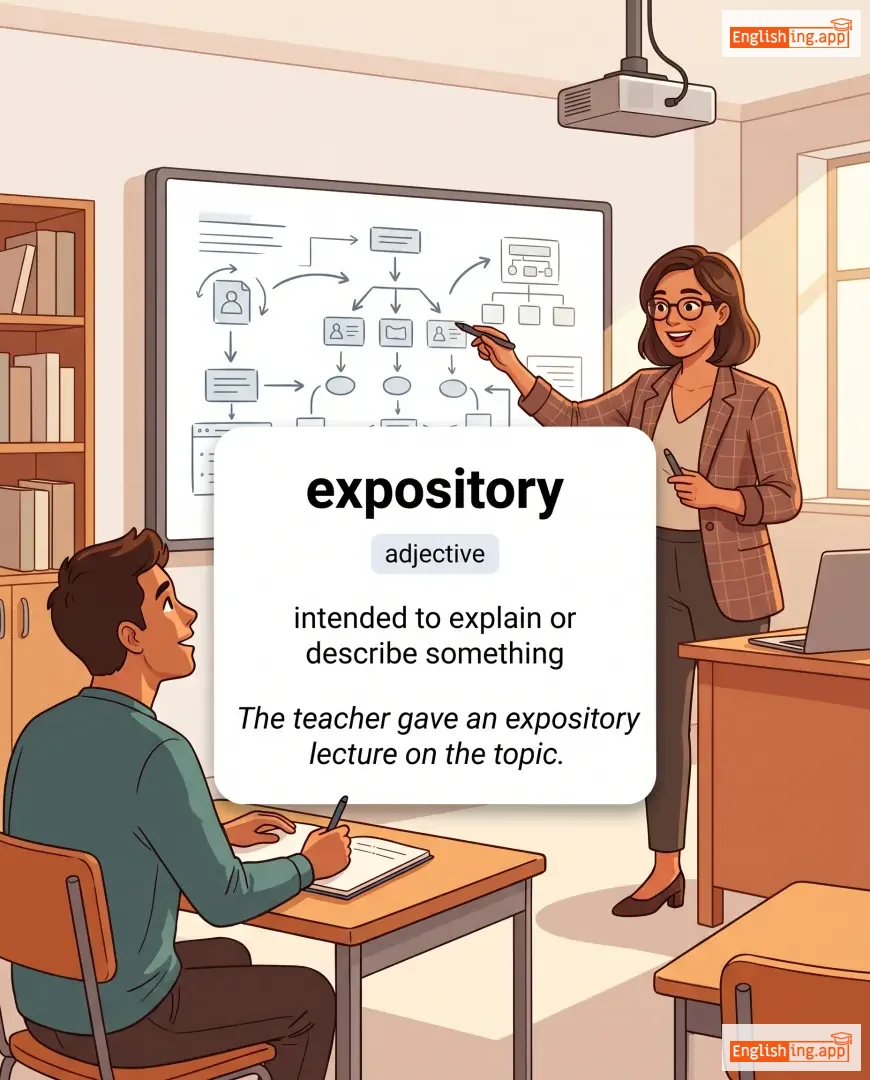
expository definition card — visual illustration of the meaning
adjective
/ɪkˈspɒzɪtəri/
説明的 (setsumeiteki)

intended to explain or describe something

"The teacher gave an expository lecture on the topic."

"先生はそのトピックについて説明的な講義をしました。" (Sensei wa sono topikku ni tsuite setsumeiteki na kōgi o shimashita.)
verb
/ɪkˈspɒstjʊleɪt/
反対する (hantai suru)

to express strong disapproval or disagreement

"She expostulated with her friend about the risky decision."

"彼女は友人に対してリスクのある決定について反対しました。" (Kanojo wa yūjin ni taishite risuku no aru kettei ni tsuite hantai shimashita.)
noun
/ɪkˌspɒstjʊˈleɪʃən/
抗議 (kōgi)

the act of expressing protest or disagreement

"His expostulation against the unfair rules was ignored."

"不公平なルールに対する彼の抗議は無視されました。" (Fukōhei na rūru ni taisuru kare no kōgi wa mushi saremashita.)
noun
/ɪkˈspəʊʒər/
曝露 (bakuro)

the state of being exposed to contact with something, especially harmful

"Prolonged exposure to the sun can damage your skin."

"長時間太陽に曝されると、肌にダメージを与えることがあります。" (Choujikan taiyou ni hakusare ru to, hada ni dameeji wo ataeru koto ga arimasu.)
verb
/ɪkˈspaʊnd/
詳しく説明する (kuwashiku setsumei suru)

to present and explain in detail

"The professor expounded the theory in simple terms."
"教授は簡単な言葉で理論を詳しく説明しました。" (Kyouju wa kantan na kotoba de riron o kuwashiku setsumei shimashita.)
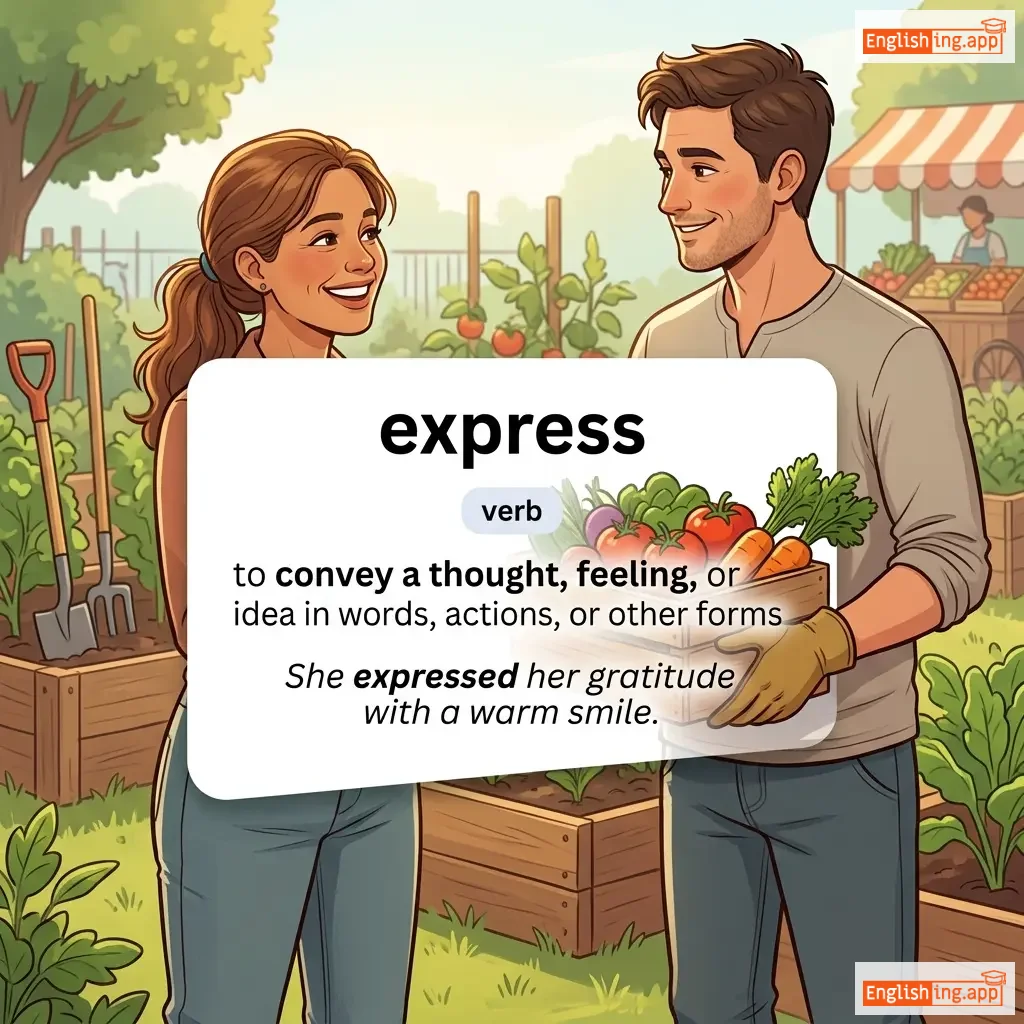
express definition card — visual illustration of the meaning
verb
/ɪkˈsprɛs/
表現する (hyougensuru)

to convey a thought, feeling, or idea in words, actions, or other forms

"She expressed her gratitude with a warm smile."

"彼女は温かい笑顔で感謝の気持ちを表現しました。" (Kanojo wa atatakai egao de kansha no kimochi wo hyougen shimashita.)
noun
/ɪkˈspres treɪn/
エクスプレス列車 (ekusupuresu ressha)

a fast train that travels between major stations with few or no intermediate stops

"The express train reached the destination in half the usual time."

"エクスプレス・トレインは通常の半分の時間で目的地に到着しました。" (Ekusupuresu torein wa tsuujou no hanbun no jikan de mokutekichi ni touchakushimashita.)
noun
/ɪkˈsprɛʃən/
表現 (hyougen)

the act of putting thoughts or feelings into words, actions, or facial gestures

"His facial expression showed surprise."

"彼の顔の表情は驚きを示していた。" (Kare no kao no hyoujou wa odoroki o shimeshite ita.)
adjective
/ɪkˈsprɛsɪv/
表現力豊かな (hyougenryoku yutakana)

Effectively conveying thought or feeling.

"Her eyes were so expressive that no words were needed."

"彼女の目はとても表現力豊かで、言葉は必要なかった。" (Kanojo no me wa totemo hyougenryoku yutakade, kotoba wa hitsuyou nakatta.)
verb
/ɛksˈproʊprieɪt/
収用する (shūyō suru)

To take property from its owner, especially by authority or for public use.

"The government decided to expropriate the land for a new highway."
"政府は新しい高速道路のために土地を収用することを決定した。" (Seifu wa atarashī kōsokudōro no tame ni tochi o shūyō suru koto o kettei shita.)
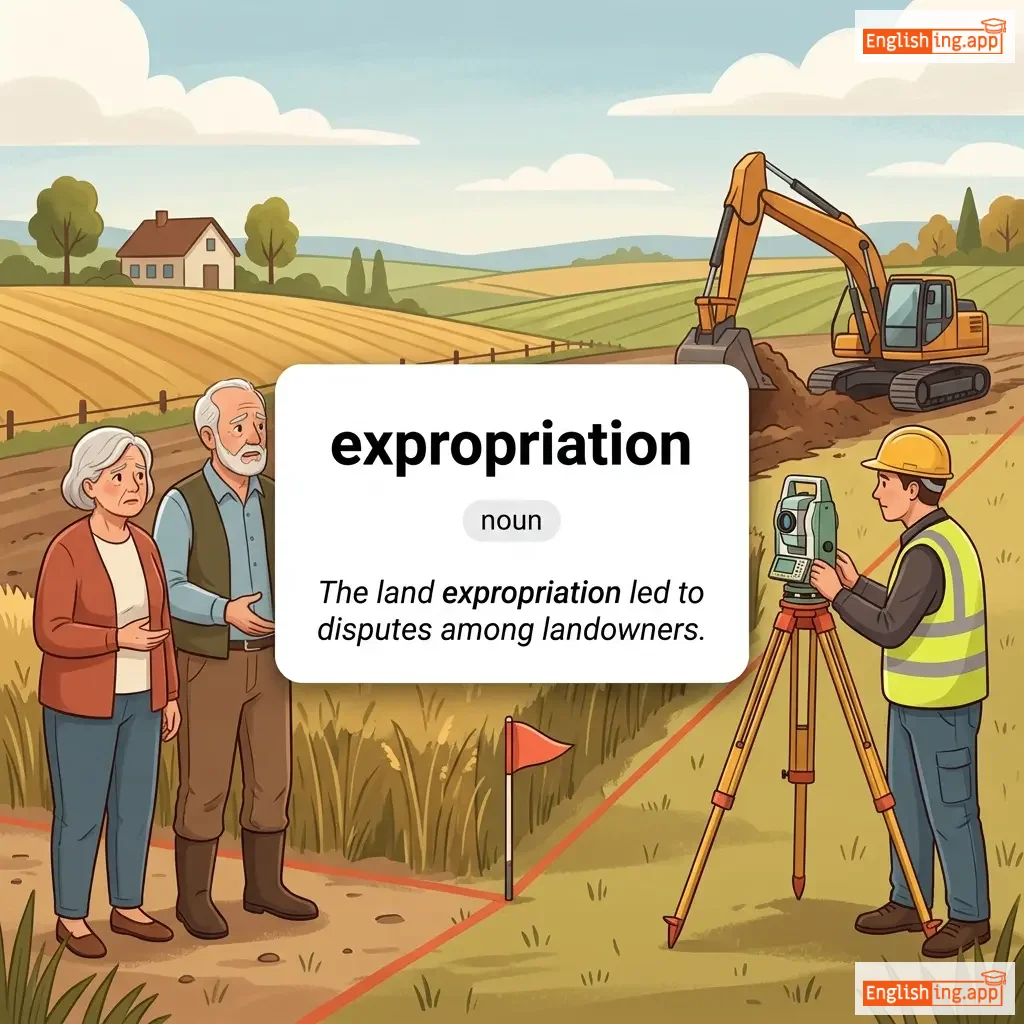
expropriation definition card — visual illustration of the meaning
noun
/ɪkˌsprəʊ.priˈeɪ.ʃən/
収用 (shūyō)

The act of government taking private property, also known as confiscation, nationalization, or seizure.

"The land expropriation led to disputes among landowners."

"土地の収用は土地所有者間で争いを引き起こしました。" (Tochi no shūyō wa tochi shoyūsha kan de arasoi o hikiokoshimashita.)
noun
/ɪkˈspʌlʃən/
退学 (taigaku)

The act of forcing someone to leave a place, especially a school or country.

"His constant misbehavior led to his expulsion from school."

"彼の絶え間ない悪い行動は、学校からの退学につながった。" (Kare no taemai nai warui kōdō wa, gakkō kara no taigaku ni tsunagatta.)
verb
/ɪkˈspʌndʒ/
削除 (sakujo)

To erase or remove completely, often something unwanted.

"He managed to expunge the embarrassing memory from his mind."

"彼は恥ずかしい記憶を心から消し去ることに成功しました。" (Kare wa hazukashī kioku o kokoro kara keshi-saru koto ni seikō shimashita.)
verb
/ˈekspərˌɡeɪt/
削除する (sakujosuru)

To remove offensive or objectionable parts from a text or speech.

"The publisher decided to expurgate the novel before reprinting it."

"出版社は再版前に小説を削除することにした。" (shuppansha wa saihan mae ni shosetsu o sakujosuru koto ni shita)
exquisite definition card — visual illustration of the meaning
adjective
/ɪkˈskwɪzɪt/
精緻な (seichina)

Extremely beautiful, delicate, or finely made.

"The bride wore an exquisite gown made of silk."
"花嫁は絹の精緻なドレスを着ていました。" (Hanayome wa kinu no seichina doresu o kite imashita.)
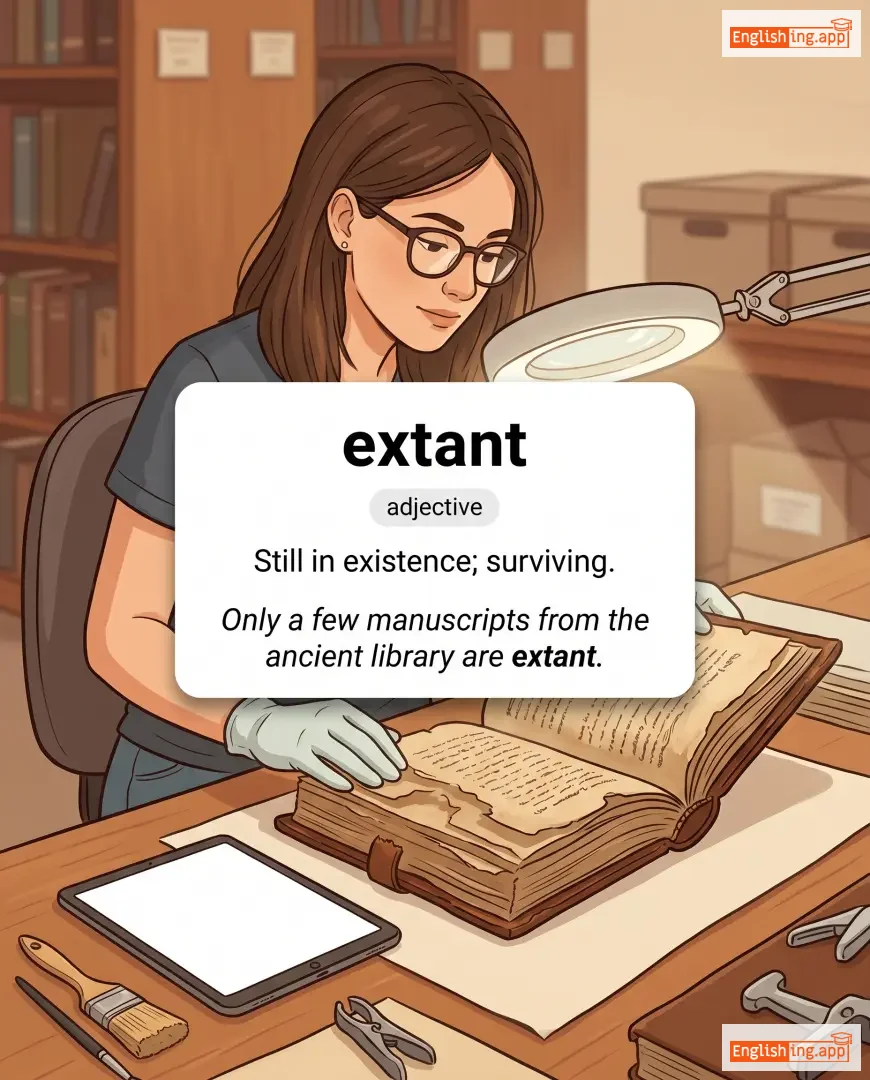
extant definition card — visual illustration of the meaning
adjective
/ˈɛkstənt/
現存する (genzon suru)

Still in existence; surviving.

"Only a few manuscripts from the ancient library are extant."
"古代の図書館からのわずかな手稿が現存しています。" (Kodai no toshokan kara no wazukana shugō ga genzon shiteimasu.)
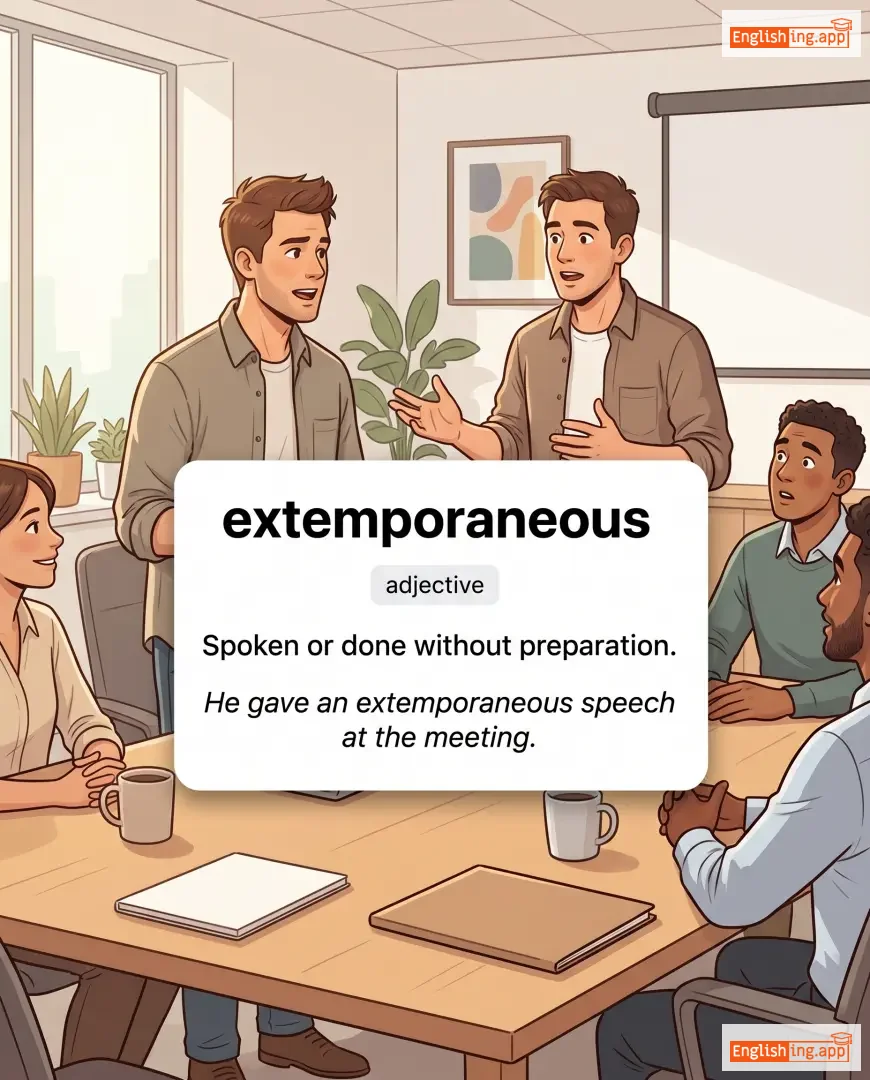
extemporaneous definition card — visual illustration of the meaning
adjective
/ɪkˌstɛmpəˈreɪniəs/
準備なしで行う (junbi nashi de okonau)

Spoken or done without preparation.

"He gave an extemporaneous speech at the meeting."

"彼は会議で即興のスピーチをしました。" (Kare wa kaigi de sokkyou no supīchi o shimashita.)
adverb
/ɪkˈstɛmpəri/
即興で (jikou de)

Spoken or done without preparation; impromptu.

"She recited the poem extempore in class."

"彼女はクラスで即興で詩を朗読しました。" (Kanojo wa kurasu de jikou de shi wo roudoku shimashita.)
verb
/ɪkˈstɛmpəraɪz/
即興する (sokkyou suru)

To speak or perform without preparation; improvise.

"The actor had to extemporize when he forgot his lines."
"俳優はセリフを忘れたとき、即興で演技をしなければなりませんでした。" (Haiyū wa serifu o wasureta toki, sokkyō de engi o shinakereba narimasen deshita.)
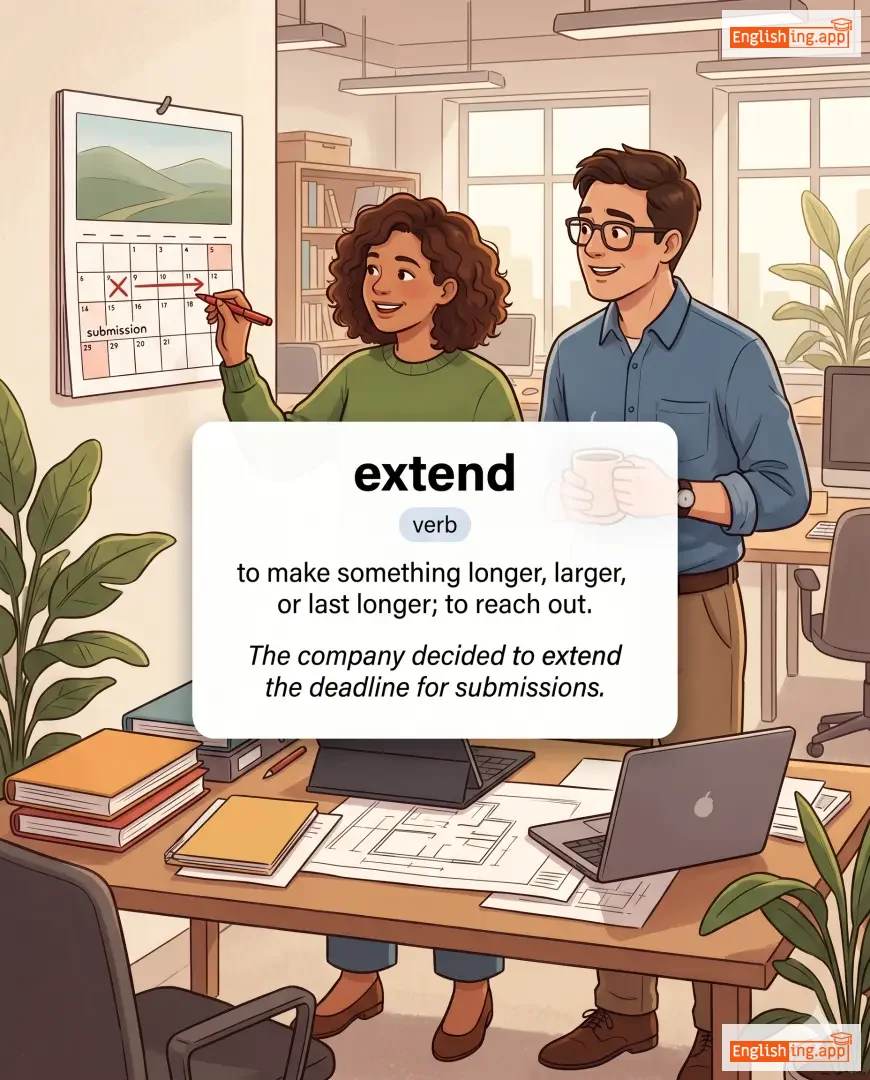
extend definition card — visual illustration of the meaning
verb
/ɪkˈstɛnd/
拡張する (kakuchou suru)

to make something longer, larger, or last longer; to reach out.

"The company decided to extend the deadline for submissions."

"その会社は提出期限を延長することを決定しました。" (Sono kaisha wa teishutsu kigen o enchou suru koto o kettei shimashita.)
adjective
/ɪkˈstendɪd/
拡張された (kakuchou sareta)

longer or larger than usual; continuing for a longer time

"They took an extended vacation in Europe this summer."

"彼らは今夏、ヨーロッパで拡張された休暇を過ごしました。" (Karera wa konnatsu, Yōroppa de kakuchō sareta kyūka o sugoshimashita.)
adjective
/ɪkˈstɛnsəbl/
拡張可能 (kakuchou kanou)

able to be extended; capable of expansion.

"The software is designed to be extensible with new features."

"そのソフトウェアは新しい機能で拡張可能なように設計されています。" (Sono sofutowea wa atarashī kinō de kakuchō kanō na yō ni sekkei sareteimasu.)
noun
/ɪkˈstɛnʃən/
拡張 (kakuchou)

a part that is added to something to make it longer or bigger; an increase in time.

"She asked for an extension on her assignment deadline."

"彼女は課題の締め切り延長をお願いしました。" (Kanojo wa kadai no shimekiri enchou wo onegaishimashita.)
adjective
/ɪkˈstɛnsɪv/
広範囲な (kōhan'i na)

covering a large area or involving a lot; wide in range.

"The museum has an extensive collection of ancient artifacts."

"博物館には古代のアーティファクトの広範なコレクションがあります。" (Hakubutsukan ni wa kodai no ātofakuto no kōhan na korekushon ga arimasu.)
adverb
/ɪkˈstɛnsɪvli/
広範囲に (kouhani ni)

in a thorough or wide-ranging manner

"She traveled extensively across Europe for her research."

"彼女は研究のためにヨーロッパを広範囲に旅行しました。" (Kanojo wa kenkyuu no tame ni Yooroppa wo kouhani ni ryokou shimashita.)
noun
/ɪkˈstɛnsər/
伸展筋 (shinten kin)

a muscle that serves to extend or straighten a limb or part of the body.

"The extensor muscles in the arm help straighten the elbow."

"腕の伸展筋は肘をまっすぐにするのを助けます。" (Ude no shinten kin wa hiji o massugu ni suru no o tasukemasu.)
noun
/ɪkˈstɛnt/
範囲 (han'i)

the area, degree, or scope of something

"The extent of the damage was greater than expected."

"損害の範囲は予想以上でした。" (Songai no han'i wa yosō ijō deshita.)
verb
/ɪkˈstɛnjueɪt/
軽減する (keigen suru)

to make an offense, fault, or situation seem less serious by providing an excuse or explanation

"The lawyer tried to extenuate his client's actions by highlighting his difficult childhood."

"弁護士は、クライアントの難しい幼少期を強調して彼の行動を軽減しようとしました。" (Bengoshi wa, kuraianto no muzukashii youshouki o kyouchou shite kare no koudou o keigen shiyou to shimashita.)