
語彙集

英単語辞書 | 単語の意味、定義、例文

evolutionary definition card — visual illustration of the meaning
adjective
/ˌɛvəlʊˈʃɛnəri/

relating to or characterized by evolution, especially in terms of gradual development or change

"The company has adopted an evolutionary approach to its product development."
verb
/ɪˈvɑːlv/

to develop gradually, especially into a more complex or advanced state

"Over time, the company evolved into a global brand."

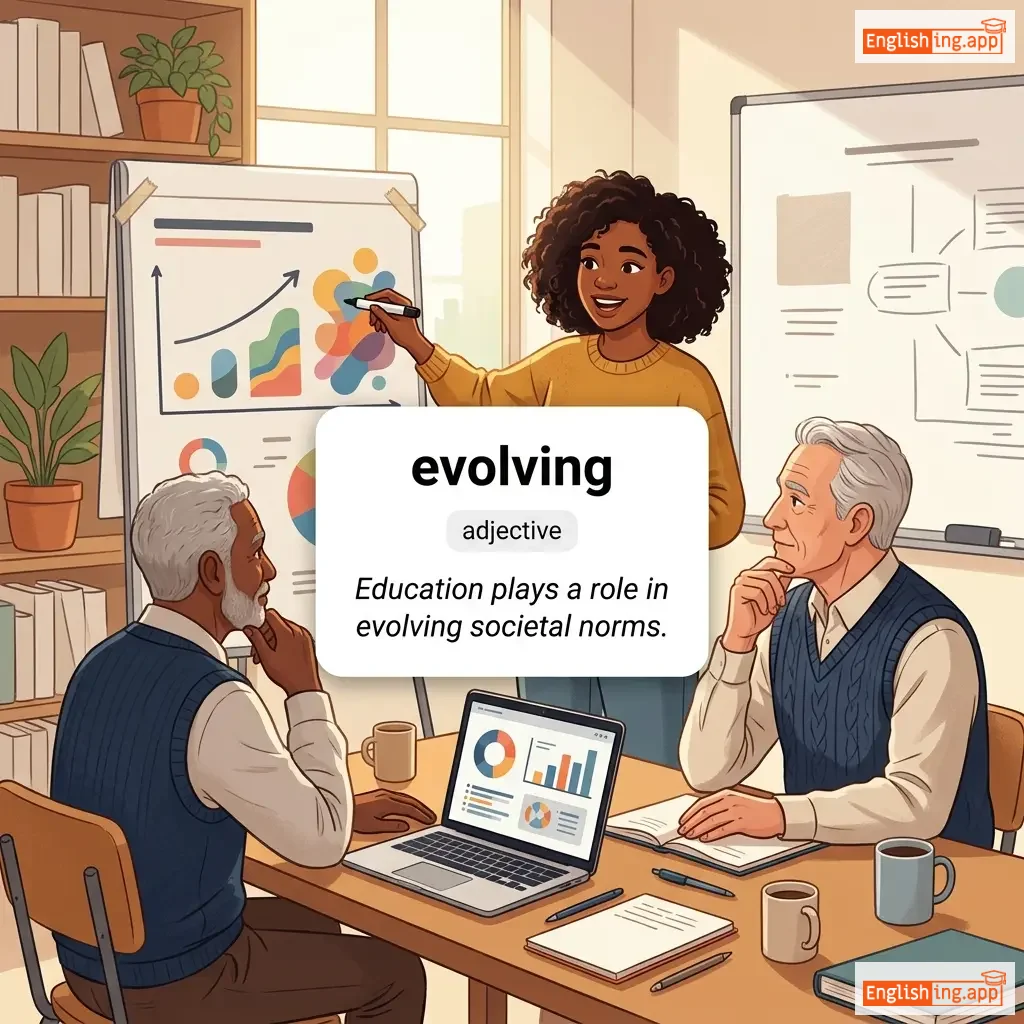
evolving definition card — visual illustration of the meaning
adjective
ɪˈvɒlvɪŋ
進化する (shinka suru)

Developing gradually, especially from a simple to a more complex form; changing and developing.

"Education plays a role in evolving societal norms."

"教育は社会的規範の進化において役割を果たします。" (Kyouiku wa shakaiteki kihann no shinka ni oite yakuwari wo hatashimasu.)
noun
/juː/
雌羊 (mesu hitsuji)

a female sheep

"The ewe gave birth to two lambs in the spring."

"その雌羊は春に二匹の子羊を産みました。" (Sono mesu hitsuji wa haru ni nihiki no kohitsuji o umimashita.)
noun
/ˈjuːər/
水差し (misashi)

a large jug with a wide mouth, especially used in the past for carrying water

"The servant filled the ewer with fresh water."
"使用人は水差しに新鮮な水を注ぎました。" (Shiyōnin wa misashi ni shinsen na mizu o sosogimashita.)
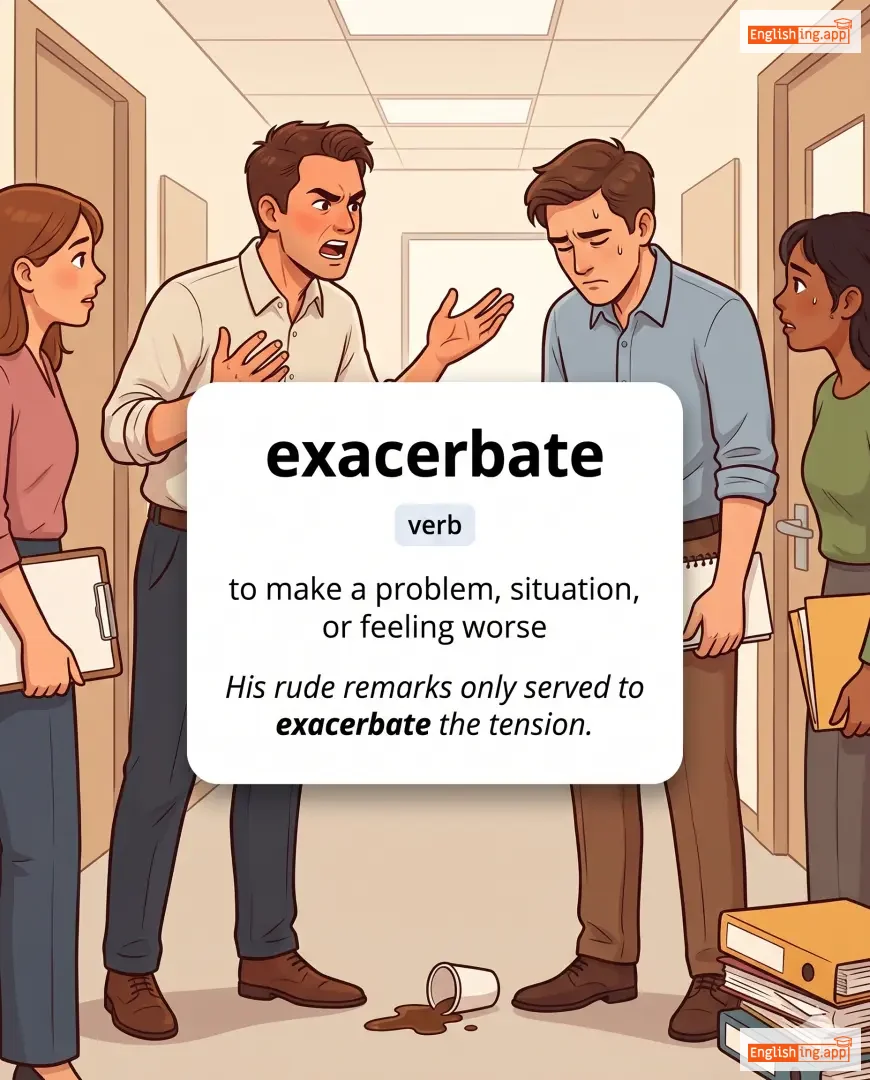
exacerbate definition card — visual illustration of the meaning
verb
/ɪɡˈzæsərˌbeɪt/
悪化させる (akka saseru)

to make a problem, situation, or feeling worse

"His rude remarks only served to exacerbate the tension."
"彼の失礼なコメントは、緊張を悪化させるだけだった。" (Kare no shitsurei na komento wa, kinchou wo akka saseru dake datta.)
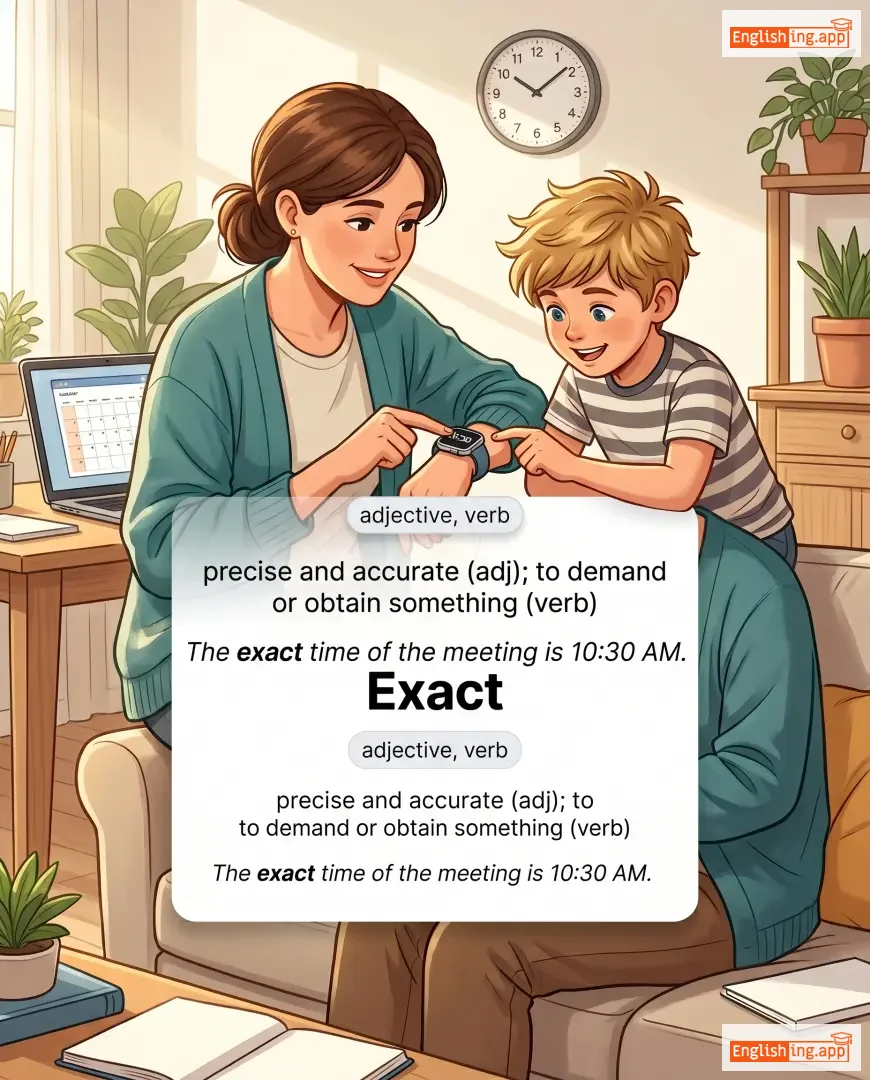
Exact definition card — visual illustration of the meaning
adjective, verb
/ɪɡˈzækt/
正確 (seikaku)

precise and accurate (adj); to demand or obtain something (verb)

"The exact time of the meeting is 10:30 AM."

"会議の正確な時間は10:30 AMです。" (Kaigi no seikaku na jikan wa 10:30 AM desu.)
adjective
/ɪɡˈzæktɪŋ/
厳格な (genkaku na)

demanding a lot of effort, attention, or precision

"She is known for her exacting standards in design."

"彼女はデザインにおける厳格な基準で知られています。" (Kanojo wa dezain ni okeru genkaku na kijun de shirareteimasu.)
noun
/ɪɡˈzækʃən/
強制徴収 (kyousei choushuu)

the act of demanding or obtaining something, especially unfairly

"The peasants suffered under the king's heavy exactions."
"農民たちは王の重い強制徴収の下で苦しんだ。" (Noumintachi wa ou no omoi kyousei choushuu no shita de kurushinda.)
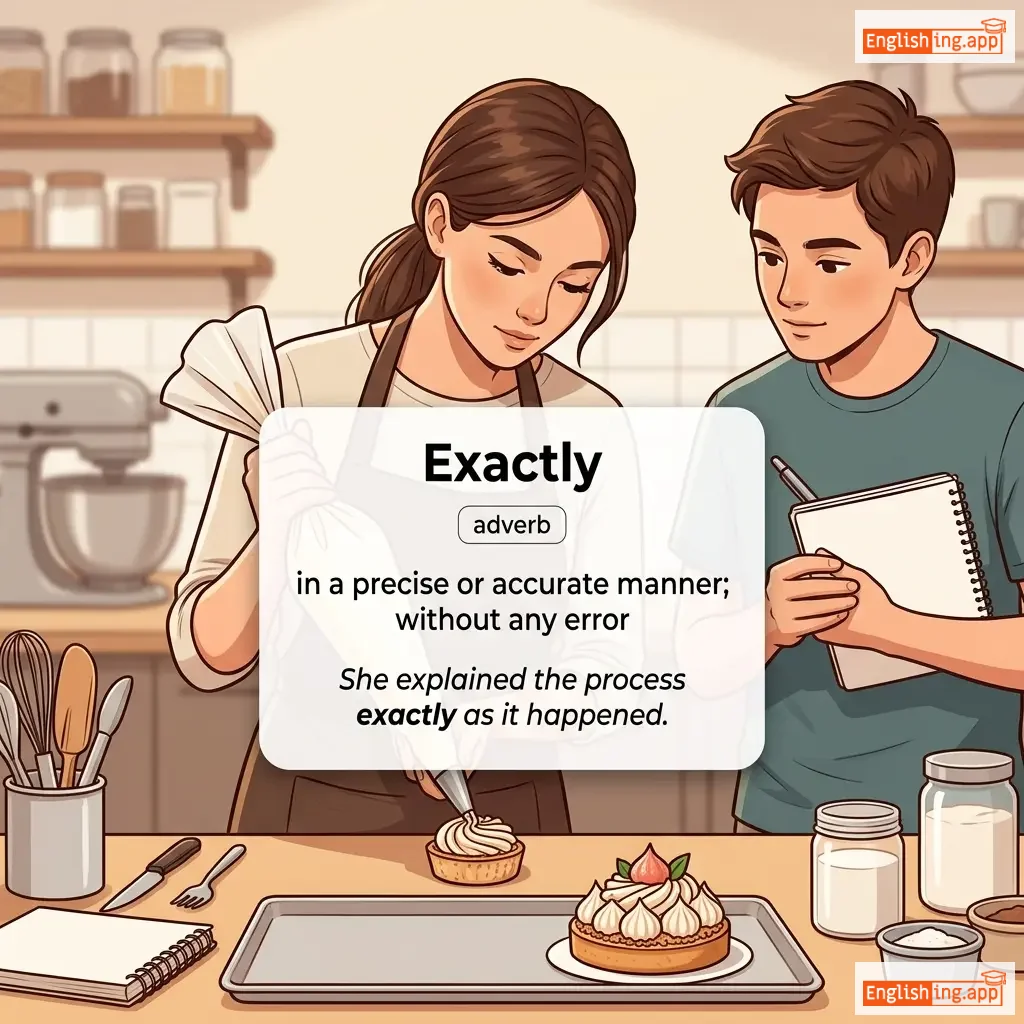
Exactly definition card — visual illustration of the meaning
adverb
/ɪɡˈzæktli/
正確に (seikaku ni)

in a precise or accurate manner; without any error

"She explained the process exactly as it happened."

"彼女はプロセスを正確に説明しました。" (Kanojo wa purosesu o seikaku ni setsumei shimashita.)
verb
/ɪɡˈzædʒəˌreɪt/
誇張する (kochou suru)

to describe something as better, worse, or more important than it really is

"He tends to exaggerate his achievements."

"彼は自分の業績を誇張しがちだ。" (kare wa jibun no gyouseki o kochou shigachi da.)
noun
/ɪɡˌzædʒ.əˈreɪ.ʃən/
誇張 (kocho)

a statement that represents something as better or worse than it really is

"His story about the fish he caught was clearly an exaggeration."
"彼が捕まえた魚についての話は明らかに誇張だった。" (Kare ga tsukamaeta sakana ni tsuite no hanashi wa akiraka ni kocho datta.)
🙌

exalt

verb
/ɪɡˈzɔːlt/

to praise highly or raise in rank, honor, or power

"The community exalted the teacher for his dedication."

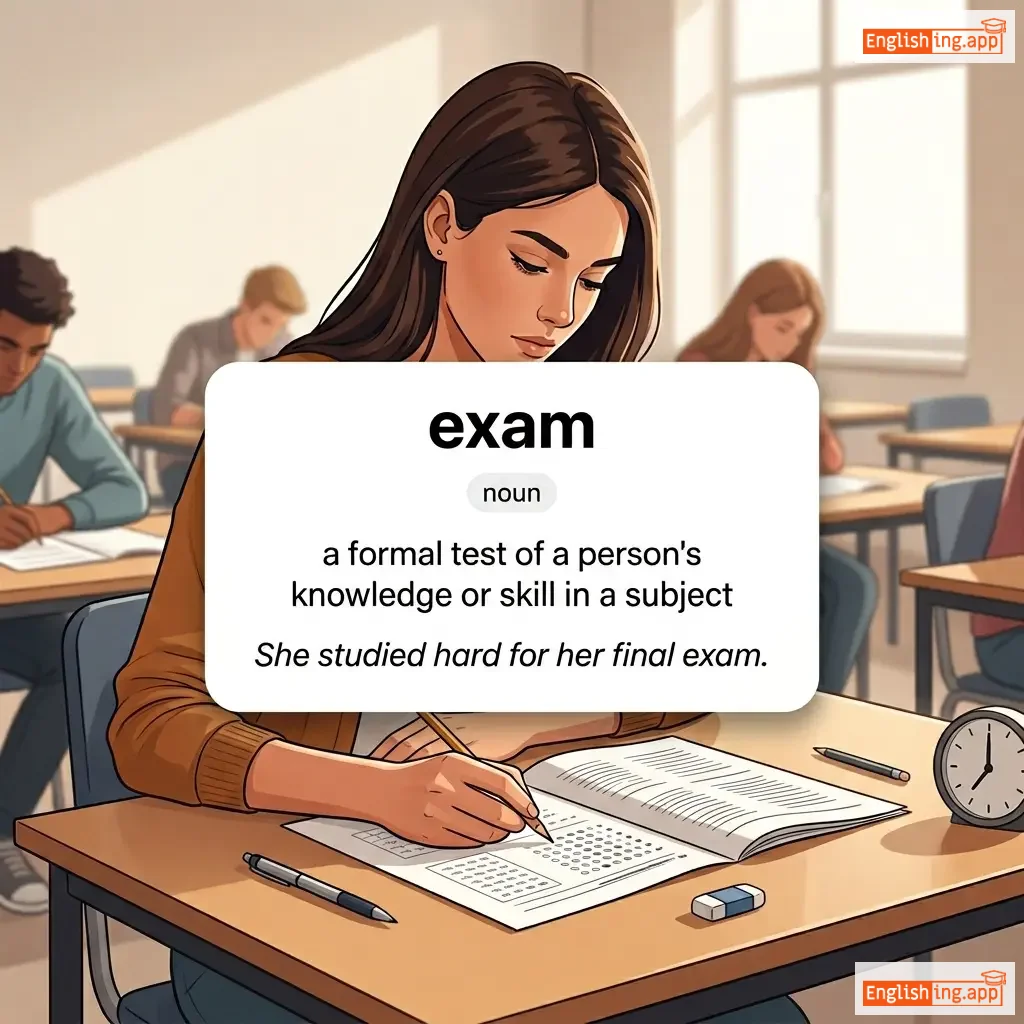
exam definition card — visual illustration of the meaning
noun
/ɪɡˈzæm/
試験 (shiken)

a formal test of a person's knowledge or skill in a subject

"She studied hard for her final exam."

"彼女は最終試験のために一生懸命勉強した。" (Kanojo wa saishū shiken no tame ni isshōkenmei benkyō shita.)
noun
/ɪɡˌzæm.ɪˈneɪ.ʃən/
試験 (shiken)

a formal test of knowledge or ability

"She is preparing for her final examination."
"彼女は最終試験の準備をしています。" (Kanojo wa saishū shiken no junbi o shiteimasu.)
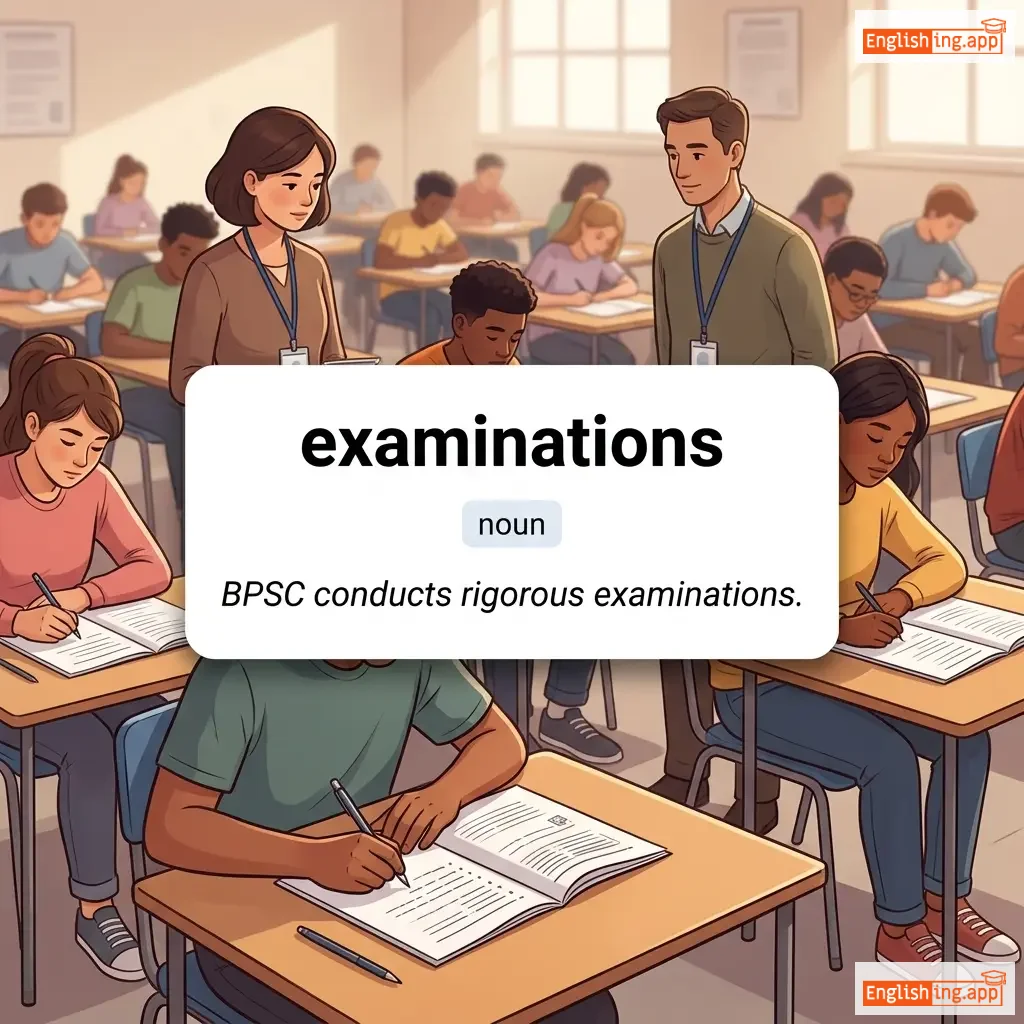
examinations definition card — visual illustration of the meaning
noun
ɪɡˌzæm.ɪˈneɪ.ʃənz
試験 (shiken)

A detailed inspection or investigation; a formal test of a person's knowledge or proficiency.

"BPSC conducts rigorous examinations."
"BPSCは厳格な試験を実施します。" (BPSC wa gengaku na shiken o jisshi shimasu.)
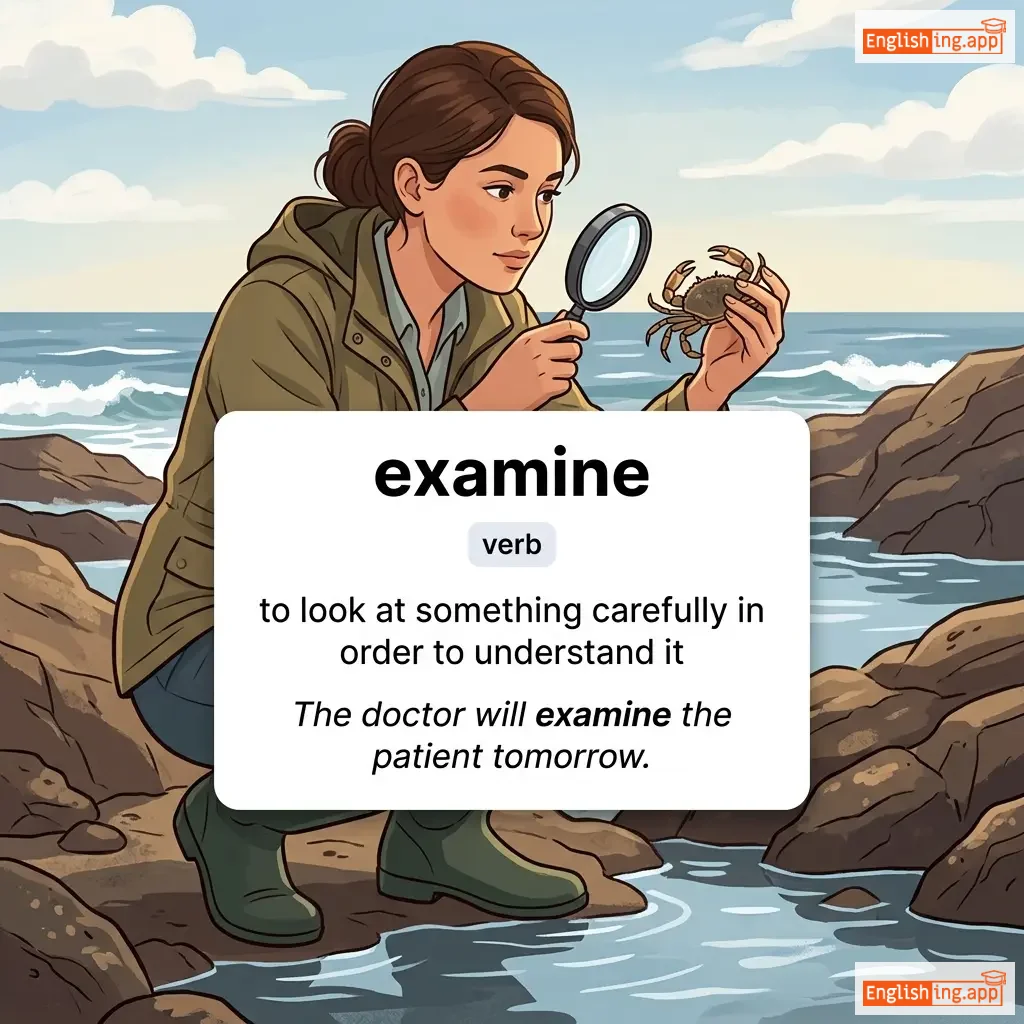
examine definition card — visual illustration of the meaning
verb
/ɪɡˈzæm.ɪn/
幸福 (kōfuku)

to look at something carefully in order to understand it

"The doctor will examine the patient tomorrow."

"彼女は賞を受け取ったとき、幸せを隠せませんでした。" (Kanojo wa shō o uketotta toki, kōfuku o kakusemasen deshita.)
noun
/ɪɡˌzæm.ɪˈniː/
受験者 (juken-sha)

a person who is being tested in an examination

"Each examinee was given two hours to complete the test."

"各受験者には試験を完了するために2時間が与えられました。" (Kaku juken-sha ni wa shiken o kanryou suru tame ni 2 jikan ga ataeraremashita.)
noun
/ɪɡˈzæmɪnər/
試験官 (shikenkkan)

A person who tests or inspects knowledge, skills, or qualifications

"The examiner reviewed each student's answer sheet carefully."

"試験官は各学生の答案用紙を注意深く確認した。" (Shikenkkan wa kaku gakusei no touan youshi wo chuibukaku kakunin shita)
example definition card — visual illustration of the meaning
noun
/ɪɡˈzɑːm.pəl/
(rei)

a thing or person regarded as a model to be followed or avoided

"He is a good example of a hardworking student."

"彼は勤勉な学生の良い例です。" (Kare wa kinben na gakusei no yoi rei desu.)
verb
/ɪɡˈzæspəˌreɪt/
いらだたせる (iradataseru)

to irritate or annoy intensely

"His constant complaints began to exasperate his coworkers."

"彼の絶え間ない不満は同僚をいらだたせ始めた。" (Kare no taemanai fuman wa doryo o iradatasemeta.)
adjective
/ɪɡˈzæspəˌreɪtɪd/
非常にいらいらした (hijou ni iraira shita)

greatly annoyed or irritated

"She gave him an exasperated look after his repeated mistakes."
"彼女は繰り返しのミスの後、彼に非常にいらいらした視線を送った。" (Kanojo wa kurikaeshi no misu no ato, kare ni hijou ni iraira shita shisen wo okutta.)
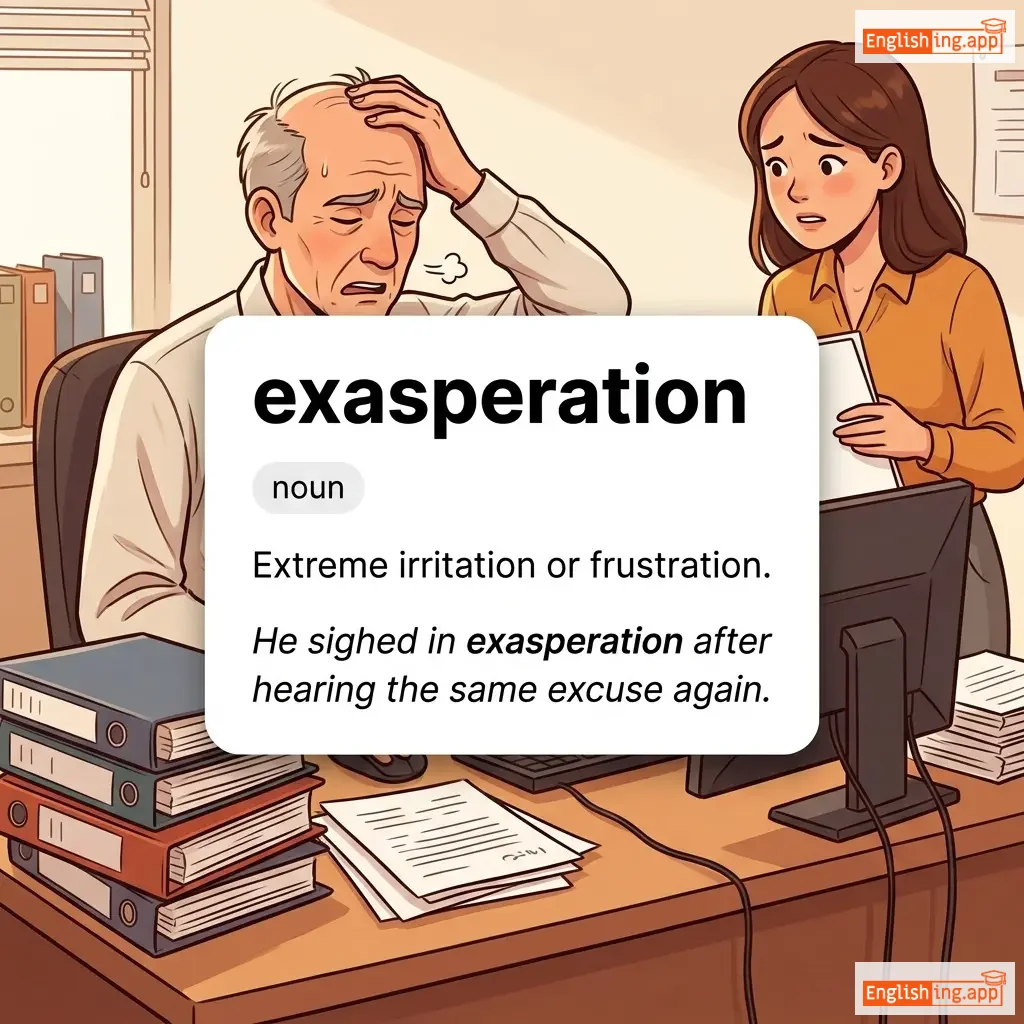
exasperation definition card — visual illustration of the meaning
noun
ɪɡˌzæs.pəˈreɪ.ʃən
苛立ち (iradachi)

Extreme irritation or frustration.

"He sighed in exasperation after hearing the same excuse again."

"彼は同じ言い訳をまた聞かされて、苛立ちのあまりため息をついた。" (Kare wa onaji iiwake o mata kikasarete, iradachi no amari tameiki o tsuita.)
verb
/ˈɛkskəˌveɪt/
幸せ (shiawase)

to dig out or remove earth carefully, often for building or archaeological purposes

"The workers excavated the site to prepare for construction."

"彼女は賞を受け取ったとき、自分の幸せを隠すことができませんでした。" (Kanojo wa shō o uketotta toki, jibun no shiawase o kakusu koto ga dekimasen deshita.)
verb
/ɪkˈsiːd/
超える (koeru)

to go beyond a limit or expectation

"The athlete exceeded everyone's expectations by winning the gold medal."

"アスリートは金メダルを獲得することで皆の期待を超えました。" (Asurīto wa kin medaru o kakutoku suru koto de mina no kitai o koemashita.)
adjective
/ɪkˈsiːdɪŋ/
過剰な; 超越した (kajō na; chōetsu shita)

going beyond; surpassing; extremely

"The project was completed with exceeding excellence."

"プロジェクトは極めて優れた成果で完了しました。" (Purojekuto wa kiwamete sugureta seika de kanryou shimashita.)
verb
/ɪkˈsɛl/
優れる (sugureru)

to be exceptionally good at or proficient in an activity or subject

"She always tries to excel in her studies."

"彼女はいつも勉強で優れた成果を上げようとしています。" (Kanojo wa itsumo benkyō de sugureta seika o ageyō to shiteimasu.)
noun
/ˈɛksələns/
卓越 (taketsu)

the quality of being outstanding or extremely good

"The school is known for its academic excellence."

"その学校は学術的な卓越性で知られています。" (Sono gakkō wa gakujutsuteki na taketsu-sei de shirareteimasu.)
noun
/ˈɛksələnsɪ/
閣下 (kakka)

a title of honor for people of high rank, especially ambassadors or governors

"His Excellency the Ambassador attended the ceremony."

"大使閣下は式典に出席しました。" (Taishi kakka wa shikiten ni shusseki shimashita.)
adjective
/ˈɛksələnt/
優れた (sugureta)

extremely good; outstanding

"The food at this restaurant is excellent."

"このレストランの料理は優れています。" (Kono resutoran no ryōri wa sugureteimasu.)
preposition/conjunction
/ɪkˈsɛpt/
除いて (nozoite)

not including; other than

"Everyone was invited except John."

"全員が招待されましたが、ジョンを除いて。" (Zen'in ga shoutai saremashita ga, Jon o nozoite.)
noun
/ɪkˈsɛpʃən/
例外 (reiwai)

A case or instance that does not follow a general rule.

"Every rule has an exception."

"すべての規則には例外があります。" (Subete no kisoku ni wa reiwai ga arimasu.)
adjective
/ɪkˈsɛpʃənəbl/
受け入れられない (ukeirarenai)

Open to objection; causing disapproval.

"His rude remarks were considered exceptionable by everyone present."
"彼の無礼な発言は、出席していた全員にとって不適切だと見なされた。" (Kare no burei na hatsugen wa, shusseki shite ita zen'in ni totte futekisetsu da to minasareta.)
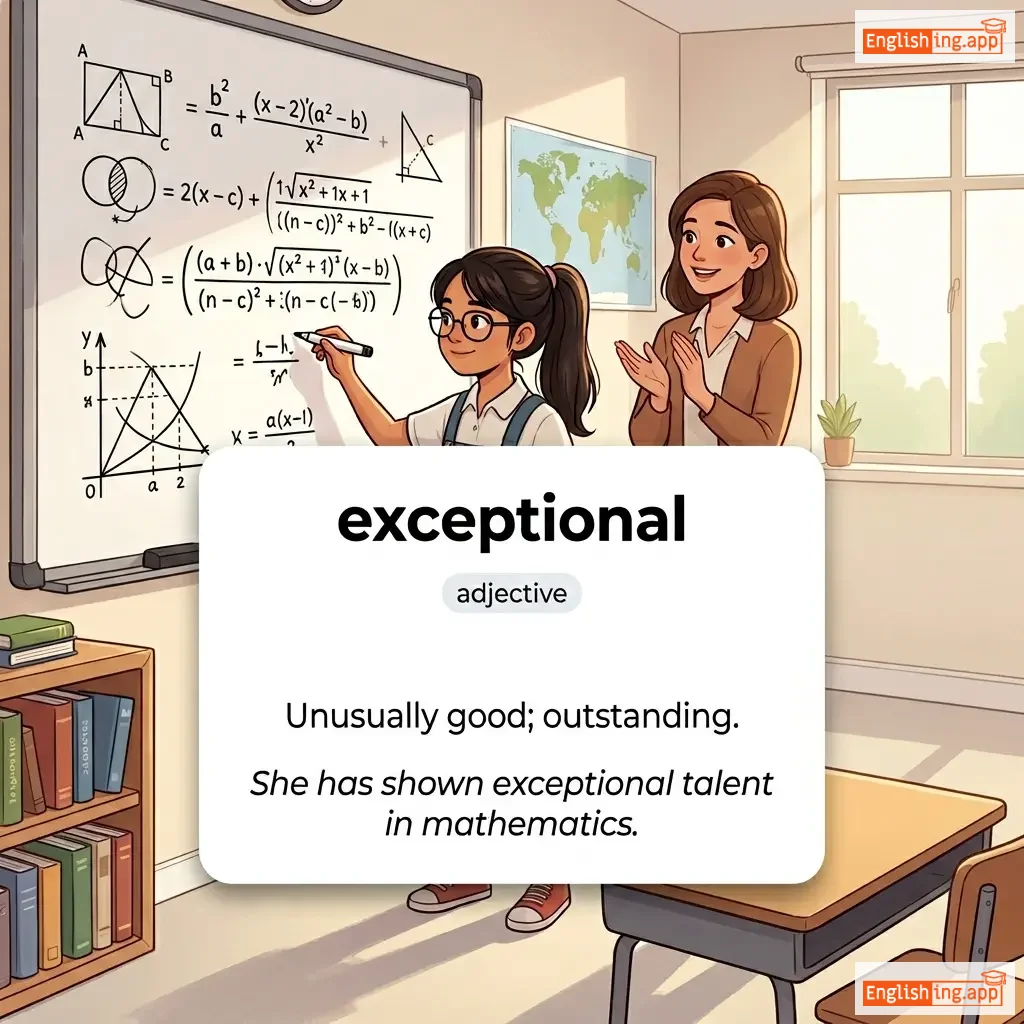
exceptional definition card — visual illustration of the meaning
adjective
/ɪkˈsɛpʃənl/
並外れた (hamorareta)

Unusually good; outstanding.

"She has shown exceptional talent in mathematics."

"彼女は数学において並外れた才能を示しました。" (Kanojo wa suugaku ni oite hamorareta sainou o shimeshimashita.)
noun
/ˈɛksɜːrpt/
抜粋 (batsui)

A short portion taken from a text, film, or piece of music.

"The teacher read an excerpt from the novel."

"先生は小説から一節を読みました。" (Sensei wa shousetsu kara issetsu o yomimashita.)
noun
/ɪkˈsɛs/
過剰 (kajo)

An amount more than necessary, permitted, or desirable.

"Too much sugar can lead to excess weight gain."
"過剰な砂糖は体重増加を引き起こす可能性があります。" (Kajō na satō wa taijū zōka o hikiokosu kanōsei ga arimasu.)
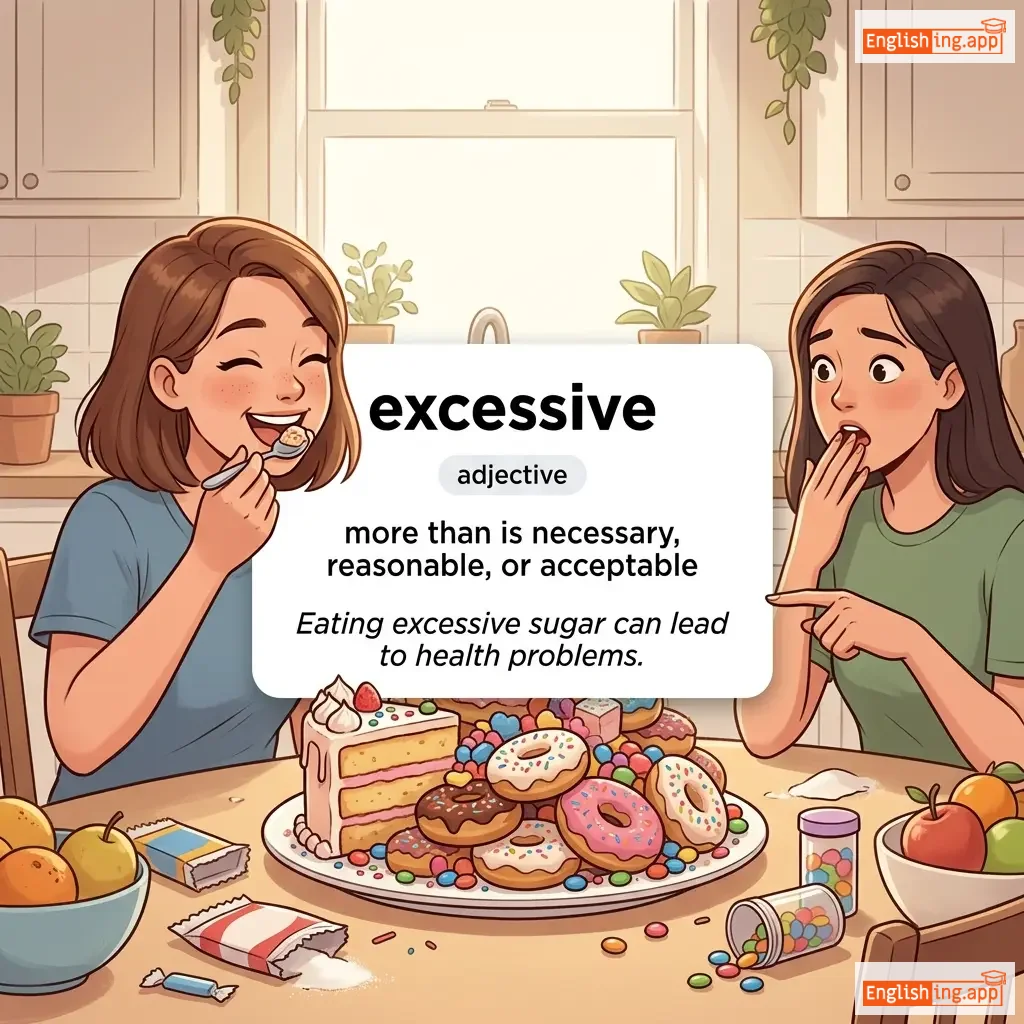
excessive definition card — visual illustration of the meaning
adjective
/ɪkˈsɛsɪv/
過度 (kado)

more than is necessary, reasonable, or acceptable

"Eating excessive sugar can lead to health problems."

"過剰な砂糖の摂取は健康問題を引き起こす可能性があります。" (Kajou na satou no sesshu wa kenko mondai o hikiokosu kanousei ga arimasu.)
excessive strain definition card — visual illustration of the meaning
adjective + noun
এক্সেসিভ স্ট্রেইন
過度のストレス (kado no sutoresu)

An amount of physical pressure or stress that is more than what is normal or acceptable.

"Excessive strain on fingers can cause musculoskeletal issues."

"指に過度のストレスがかかると、筋骨格の問題を引き起こす可能性があります。" (Yubi ni kado no sutoresu ga kakaru to, kinkokkaku no mondai o hikiokosu kanousei ga arimasu.)
Exchange definition card — visual illustration of the meaning
verb
/ɪksˈtʃeɪndʒ/
交換 (koukan)

To give something and receive something in return.

"They exchanged gifts during the festival."

"彼らは祭りの間に贈り物を交換しました。" (Karera wa matsuri no aida ni okurimono o koukan shimashita.)
noun
/ɪksˈtʃɛkər/
国庫 (koku-ko)

The treasury of a state or country.

"The government announced new measures to improve the exchequer."

"政府は国庫を改善するための新しい措置を発表しました。" (seifu wa kokko wo kaizen suru tame no atarashī sochi wo happyou shimashita.)
verb
/ˈɛkˌsaɪz/
切除する (sessuru)

to cut out or remove completely, often by surgery

"The surgeon excised the tumor successfully."

"外科医は腫瘍を成功裏に切除しました。" (Geka-i wa shuyō o seikōri ni sesshō shimashita.)
noun
/ɪkˈsɪʒən/
切除 (seshu)

the act of cutting something out, especially by surgical removal

"The excision of the infected tissue prevented further complications."

"感染した組織の切除により、さらなる合併症が防止されました。" (Kansen shita soshiki no seshu ni yori, sara naru gappeishou ga boushi saremashita.)
adjective
/ɪkˈsaɪtəbl̩/
興奮しやすい (koufun shiyasui)

easily excited or emotionally aroused

"The child was excitable and laughed at every small thing."

"その子供は興奮しやすく、何でも小さなことで笑っていた。" (Sono kodomo wa koufun shiyasuku, nandemo chiisana koto de waratte ita.)
noun
/ˌɛksaɪˈteɪʃən/
興奮 (kōfun)

a state of great excitement or the process of stimulating activity

"The news created great excitation among the fans."

"そのニュースはファンの間で大きな興奮を引き起こしました。" (Sono nyūsu wa fan no aida de ōkina kōfun o hikiokoshimashita.)
verb
/ɪkˈsaɪt/
興奮させる (koufun saseru)

to cause strong feelings of enthusiasm or eagerness

"The idea of traveling abroad excites her."
"海外旅行のアイデアが彼女を興奮させる。" (Kaigai ryokou no aidea ga kanojo o koufun saseru.)
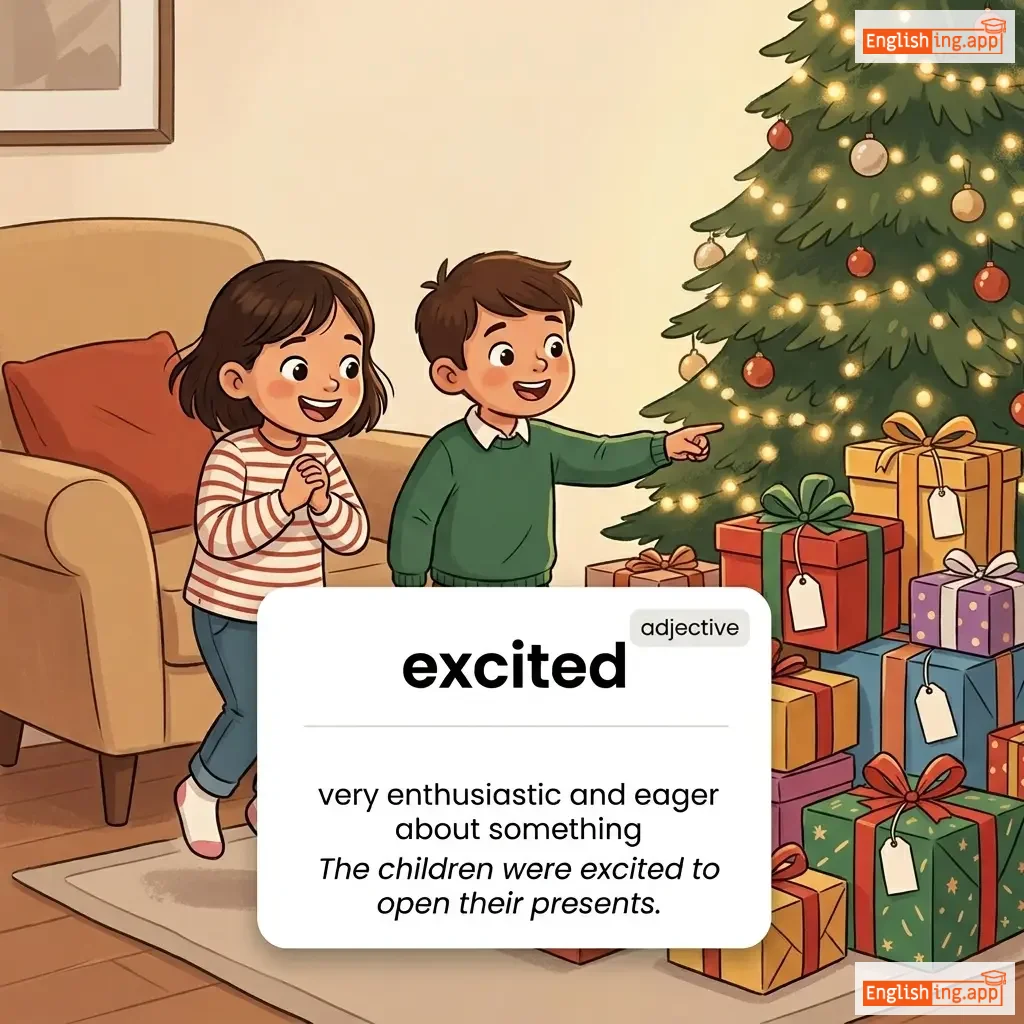
excited definition card — visual illustration of the meaning
adjective
/ɪkˈsaɪtɪd/
興奮した (koufun shita)

very enthusiastic and eager about something

"The children were excited to open their presents."

"子供たちはプレゼントを開けるのを楽しみにして興奮していました。" (Kodomotachi wa purezento o akeru no o tanoshimi ni shite koufun shite imashita.)
noun
/ɪkˈsaɪtmənt/
興奮 (koufun)

a feeling of great enthusiasm and eagerness

"There was a lot of excitement before the concert began."

"コンサートが始まる前に多くの興奮がありました。" (Konsāto ga hajimaru mae ni ōku no kōfun ga arimashita.)
exciting definition card — visual illustration of the meaning
adjective
/ɪkˈsaɪtɪŋ/
ワクワクする (wakuwaku suru)

Causing great enthusiasm and eagerness.

"The movie was so exciting that I watched it twice."

"その映画はとてもエキサイティングで、私はそれを二回見ました。" (Sono eiga wa totemo ekisaitingu de, watashi wa sore o nikai mimashita.)
verb
/ɪkˈskleɪm/
叫ぶ (sakebu)

to cry out suddenly in surprise, strong emotion, or excitement

"She exclaimed with joy when she saw the gift."

"彼女はプレゼントを見て喜びの声を上げた。" (Kanojo wa purezento o mite yorokobi no koe o ageta.)
noun
/ˌɛkskləˈmeɪʃən/
感嘆 (kantan)

A sudden cry or remark expressing strong emotion or surprise.

"She let out an exclamation of joy when she heard the news."

"彼女はそのニュースを聞いて、喜びの感嘆を漏らしました。" (Kanojo wa sono nyūsu o kiite, yorokobi no kantan o morashimashita.)