
词汇表

英语词汇词典 | 单词含义、定义和示例

evolutionary definition card — visual illustration of the meaning
adjective
/ˌɛvəlʊˈʃɛnəri/

relating to or characterized by evolution, especially in terms of gradual development or change

"The company has adopted an evolutionary approach to its product development."
verb
/ɪˈvɑːlv/

to develop gradually, especially into a more complex or advanced state

"Over time, the company evolved into a global brand."

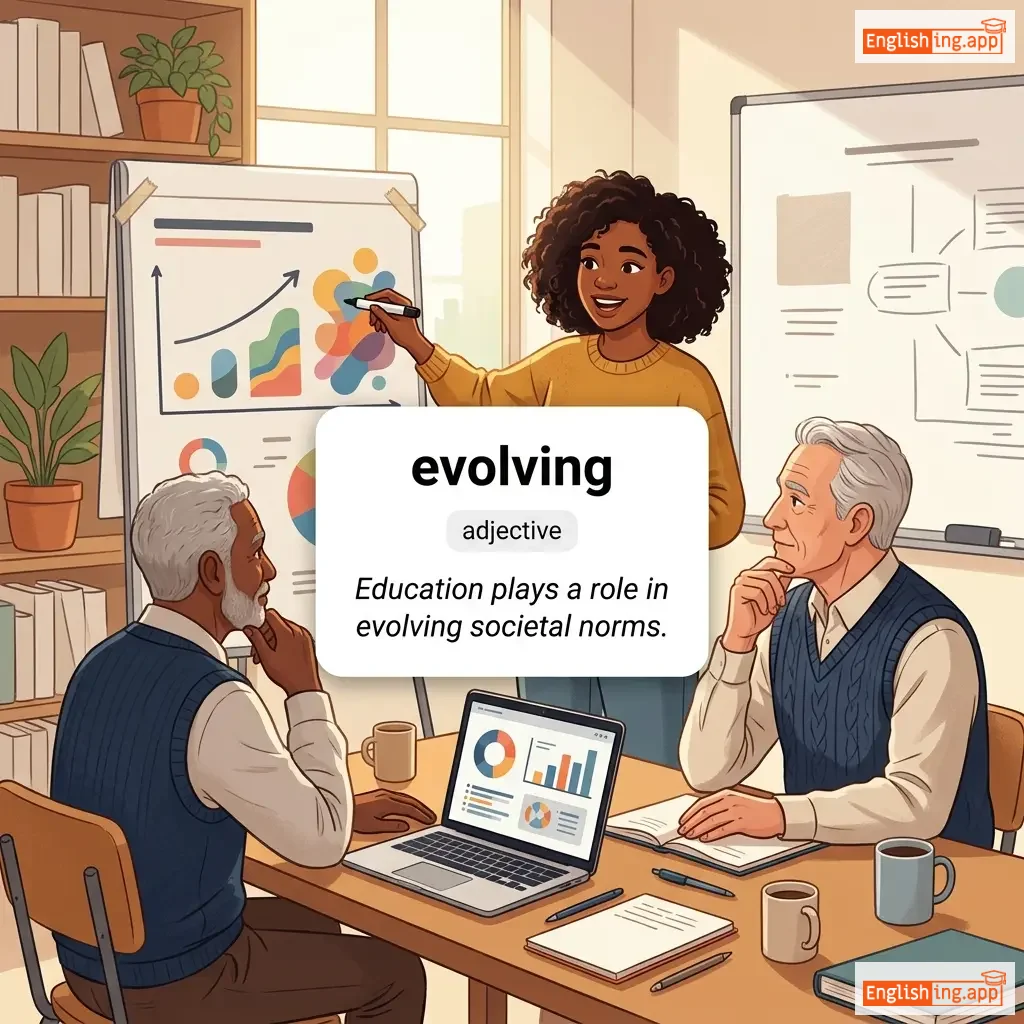
evolving definition card — visual illustration of the meaning
adjective
ɪˈvɒlvɪŋ
演变的 (yǎnbiàn de)

Developing gradually, especially from a simple to a more complex form; changing and developing.

"Education plays a role in evolving societal norms."

"教育在社会规范的演变中发挥着作用。" (Jiàoyù zài shèhuì guīfàn de yǎnbiàn zhōng fāhuī zhuó zuòyòng.)
noun
/juː/
母羊 (mu yang)

a female sheep

"The ewe gave birth to two lambs in the spring."

"母羊在春天生下了两只小羊。" (Mu yang zai chun tian sheng xia le liang zhi xiao yang.)
noun
/ˈjuːər/
水罐 (shuǐguàn)

a large jug with a wide mouth, especially used in the past for carrying water

"The servant filled the ewer with fresh water."
"仆人把水罐装满了新鲜的水。" (Púrén bǎ shuǐguàn zhuāng mǎnle xīnxiān de shuǐ.)
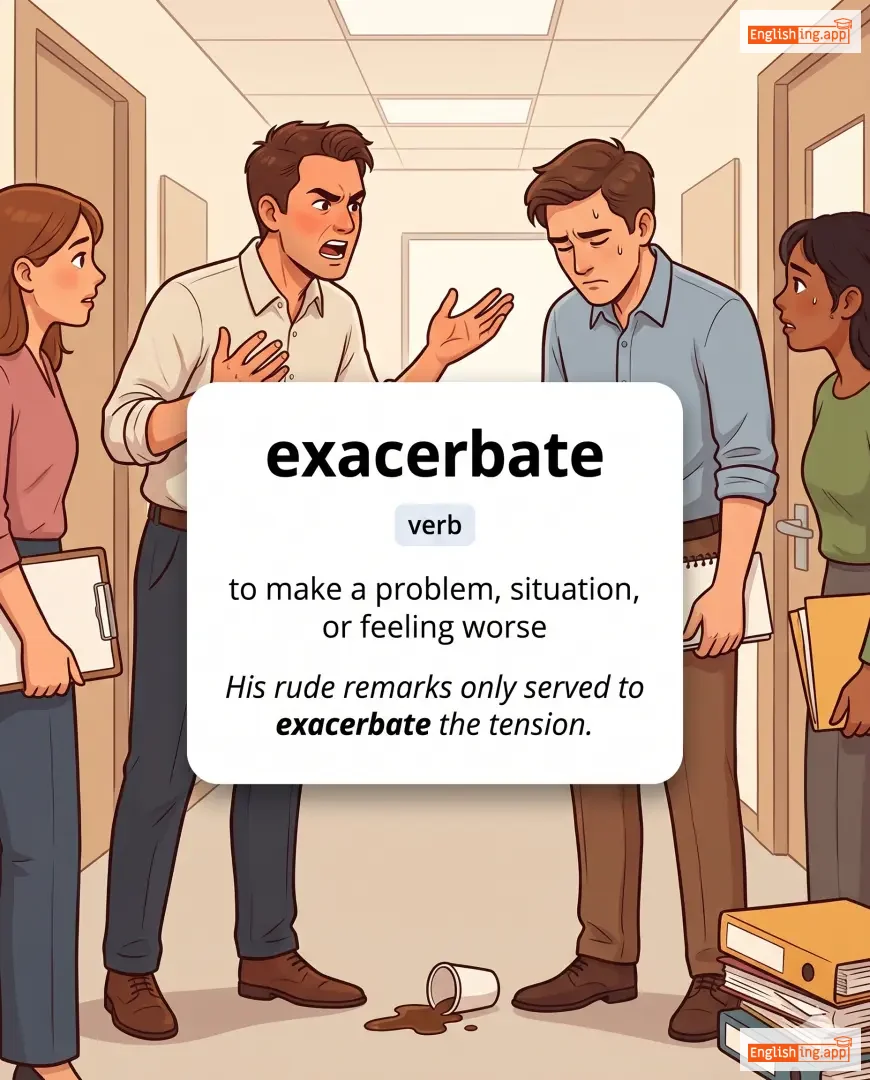
exacerbate definition card — visual illustration of the meaning
verb
/ɪɡˈzæsərˌbeɪt/
恶化 (èhuà)

to make a problem, situation, or feeling worse

"His rude remarks only served to exacerbate the tension."

"他的粗鲁言论只会加剧紧张局势。" (Tā de cūlǔ yánlùn zhǐ huì jiājù jǐnzhāng júshì.)
Exact definition card — visual illustration of the meaning
adjective, verb
/ɪɡˈzækt/
精确的 (jingque de)

precise and accurate (adj); to demand or obtain something (verb)

"The exact time of the meeting is 10:30 AM."

"会议的确切时间是10:30 AM。" (Huiyi de jueque shijian shi 10:30 AM.)
adjective
/ɪɡˈzæktɪŋ/
苛刻的 (kēkè de)

demanding a lot of effort, attention, or precision

"She is known for her exacting standards in design."

"她因其苛刻的设计标准而闻名。" (Tā yīn qí kēkè de shèjì biāozhǔn ér wénmíng.)
noun
/ɪɡˈzækʃən/
敲诈 (qiaozha)

the act of demanding or obtaining something, especially unfairly

"The peasants suffered under the king's heavy exactions."
"农民在国王的沉重敲诈下受苦。" (Nongmin zai guowang de chenzhong qiaozha xia shouku.)
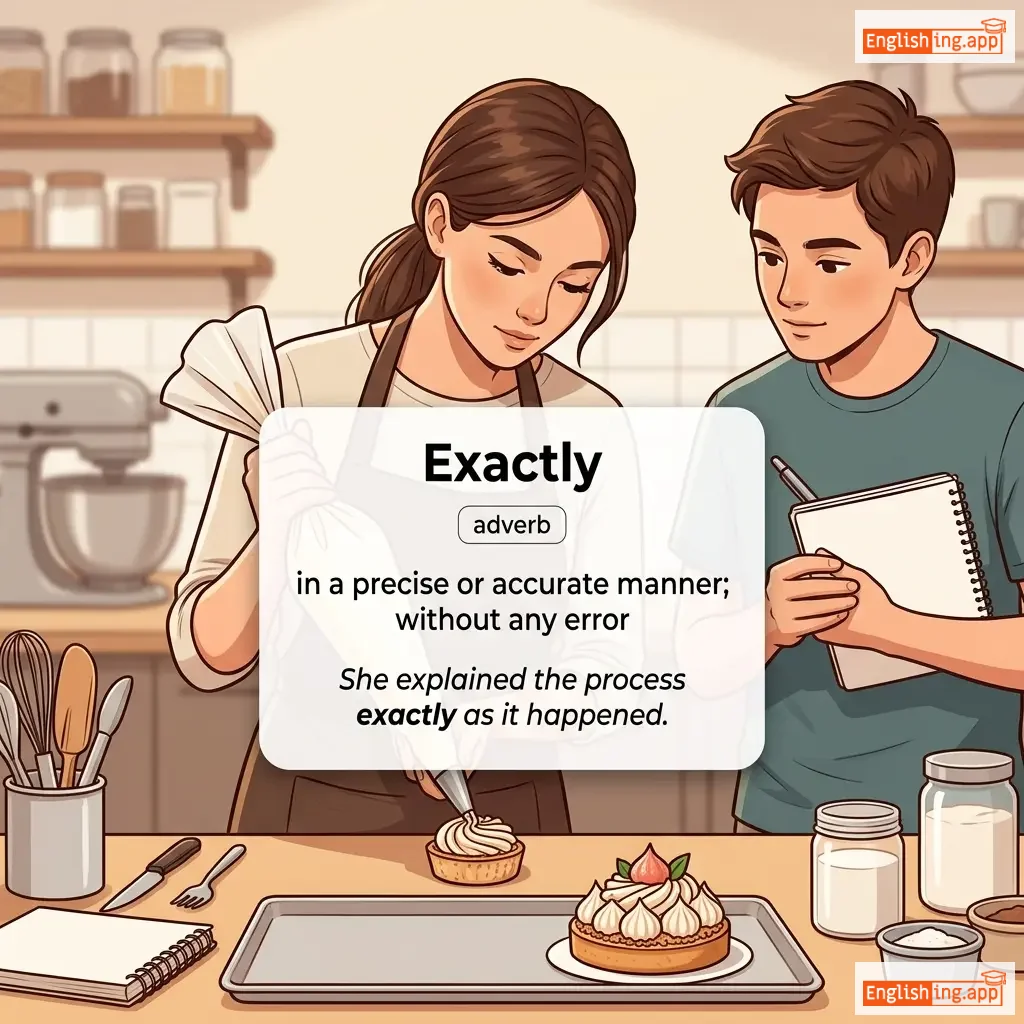
Exactly definition card — visual illustration of the meaning
adverb
/ɪɡˈzæktli/
精确地 (jīngquè de)

in a precise or accurate manner; without any error

"She explained the process exactly as it happened."

"她解释了过程,完全按照发生的方式。" (Tā jiěshìle guòchéng, wánquán ànzhào fāshēng de fāngshì.)
verb
/ɪɡˈzædʒəˌreɪt/
夸大 (kuada)

to describe something as better, worse, or more important than it really is

"He tends to exaggerate his achievements."

"他倾向于夸大自己的成就。" (ta qingxiang yu kuada ziji de chengjiu.)
noun
/ɪɡˌzædʒ.əˈreɪ.ʃən/
夸张 (kuazhang)

a statement that represents something as better or worse than it really is

"His story about the fish he caught was clearly an exaggeration."
"他关于他抓到的鱼的故事显然是夸张的。" (Tā guānyú tā zhuā dào de yú de gùshì xiǎnrán shì kuāzhāng de.)
🙌

exalt

verb
/ɪɡˈzɔːlt/

to praise highly or raise in rank, honor, or power

"The community exalted the teacher for his dedication."

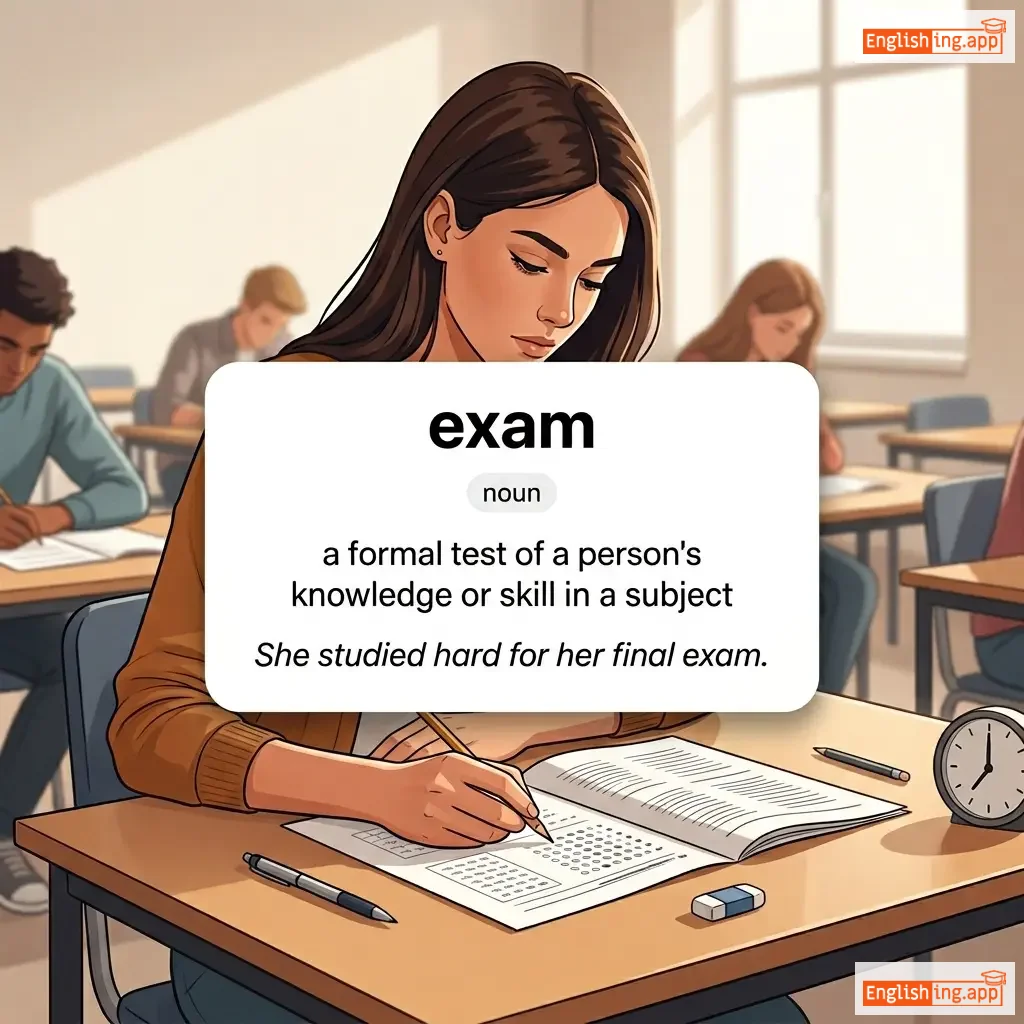
exam definition card — visual illustration of the meaning
noun
/ɪɡˈzæm/
考试 (kaoshi)

a formal test of a person's knowledge or skill in a subject

"She studied hard for her final exam."

"她为了最后的考试努力学习。" (Tā wèile zuìhòu de kǎoshì nǔlì xuéxí.)
noun
/ɪɡˌzæm.ɪˈneɪ.ʃən/
考试 (kaoshi)

a formal test of knowledge or ability

"She is preparing for her final examination."
"她正在为她的期末考试做准备。" (Tā zhèngzài wèi tā de qīmò kǎoshì zuò zhǔnbèi.)
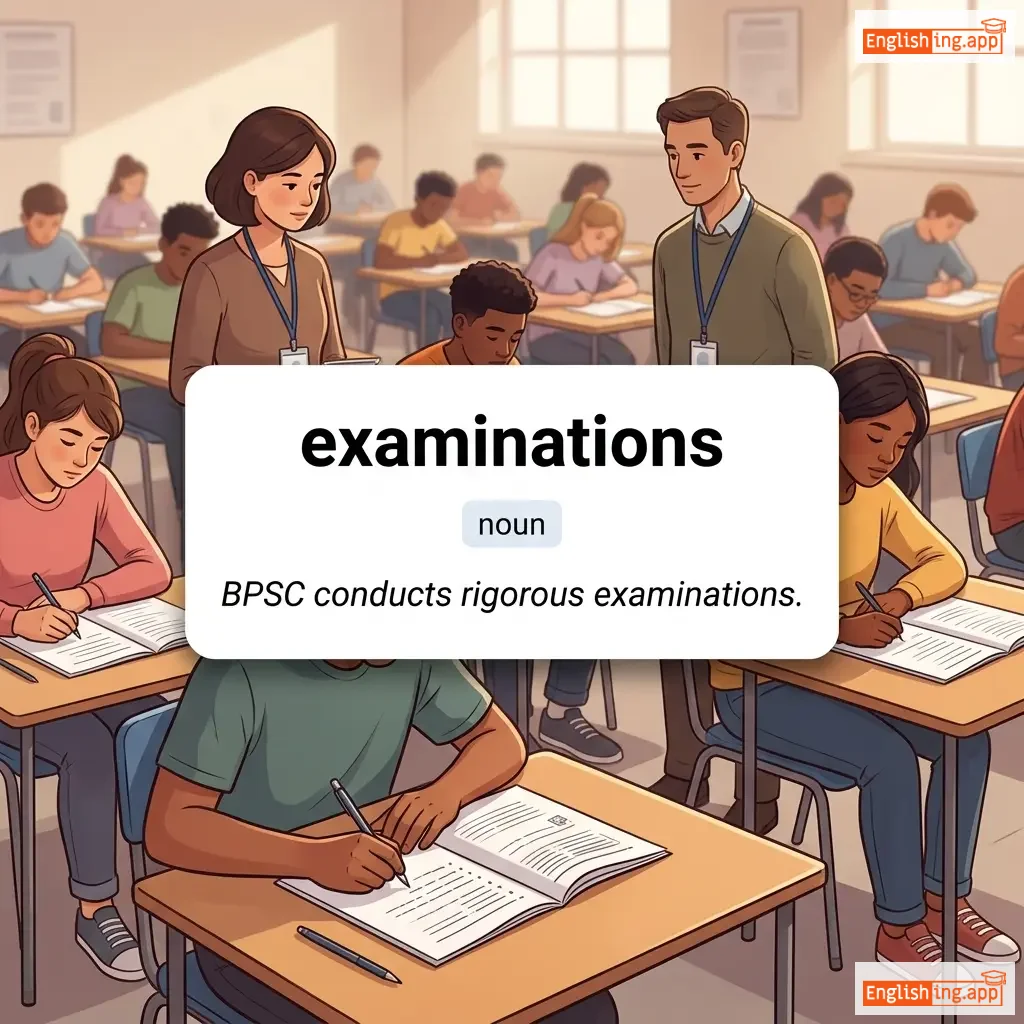
examinations definition card — visual illustration of the meaning
noun
ɪɡˌzæm.ɪˈneɪ.ʃənz
考试 (kaoshi)

A detailed inspection or investigation; a formal test of a person's knowledge or proficiency.

"BPSC conducts rigorous examinations."
"BPSC 进行严格的考试。" (BPSC jinxing yángé de kaoshi.)
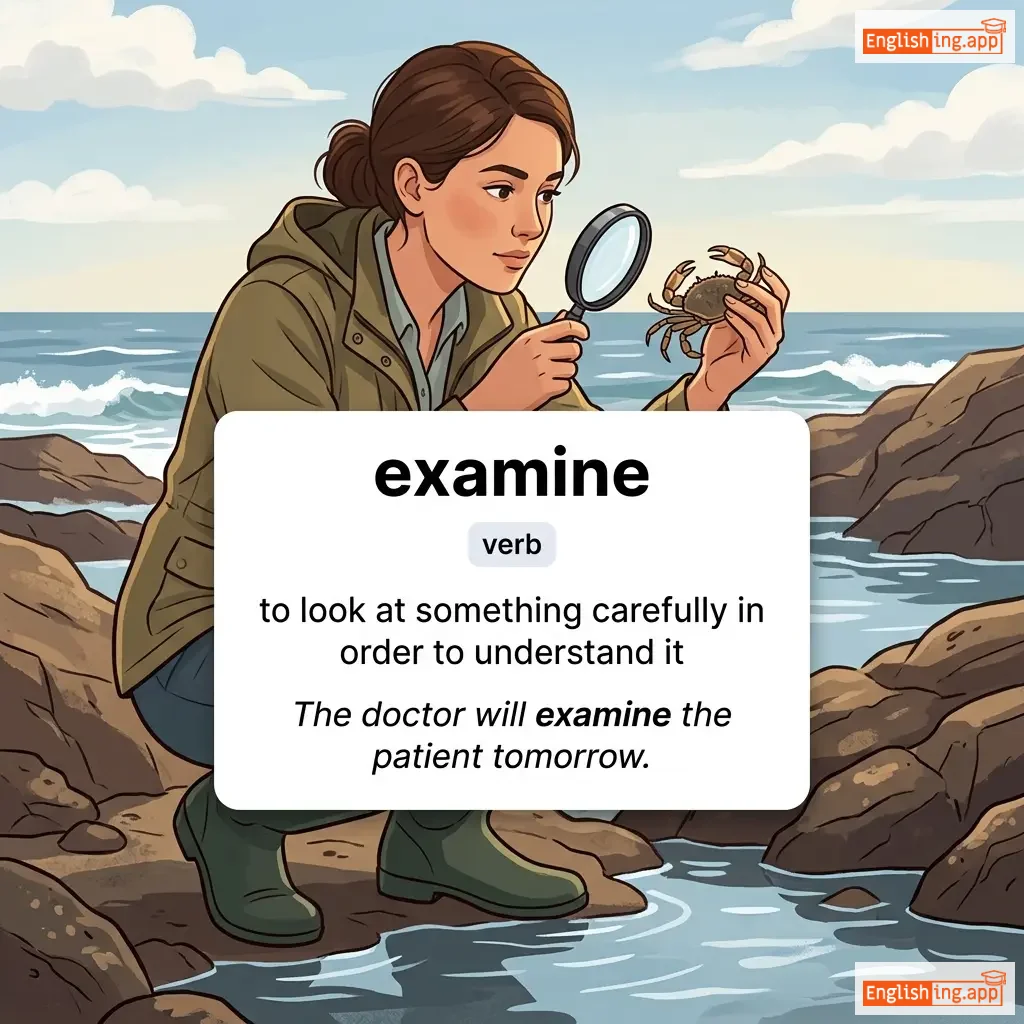
examine definition card — visual illustration of the meaning
verb
/ɪɡˈzæm.ɪn/
幸福 (xìng fú)

to look at something carefully in order to understand it

"The doctor will examine the patient tomorrow."

"当她收到奖项时,她无法掩饰自己的幸福。" (Dāng tā shōu dào jiǎng xiàng shí, tā wú fǎ yǎn shì zì jǐ de xìng fú.)
noun
/ɪɡˌzæm.ɪˈniː/
考生 (kaosheng)

a person who is being tested in an examination

"Each examinee was given two hours to complete the test."

"每个考生都有两小时来完成考试。" (Měi gè kǎoshēng dōu yǒu liǎng xiǎoshí lái wánchéng kǎoshì.)
noun
/ɪɡˈzæmɪnər/
考官 (kaoguan)

A person who tests or inspects knowledge, skills, or qualifications

"The examiner reviewed each student's answer sheet carefully."

"考官仔细检查了每个学生的答题纸。" (Kaoguan zixi jiancha le meige xuesheng de dati zhi)
example definition card — visual illustration of the meaning
noun
/ɪɡˈzɑːm.pəl/
例子 (lìzi)

a thing or person regarded as a model to be followed or avoided

"He is a good example of a hardworking student."

"他是一个勤奋学生的好例子。" (Tā shì yīgè qínfèn xuéshēng de hǎo lìzi.)
verb
/ɪɡˈzæspəˌreɪt/
激怒 (jinu)

to irritate or annoy intensely

"His constant complaints began to exasperate his coworkers."

"他不断的抱怨开始让同事恼火。" (Ta buduan de baoyuan kaishi rang tongshi naohuo.)
adjective
/ɪɡˈzæspəˌreɪtɪd/
非常恼火 (feichang naohuo)

greatly annoyed or irritated

"She gave him an exasperated look after his repeated mistakes."
"在他的重复错误后,她给了他一个非常恼火的眼神。" (Zai ta de chongfu cuowu hou, ta gei le ta yi ge feichang naohuo de yanshen.)
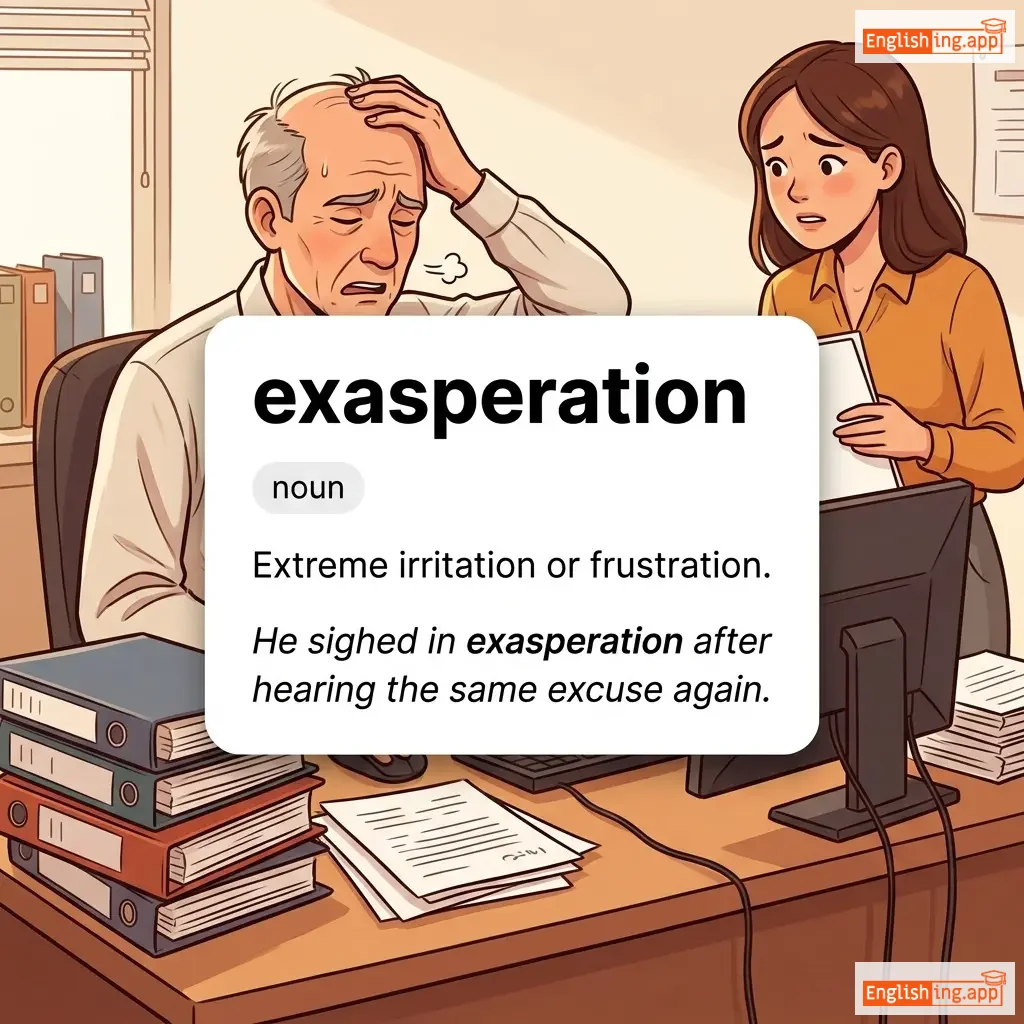
exasperation definition card — visual illustration of the meaning
noun
ɪɡˌzæs.pəˈreɪ.ʃən
恼怒 (eksasperayshun)

Extreme irritation or frustration.

"He sighed in exasperation after hearing the same excuse again."

"他在再次听到同样的借口后,因恼怒而叹了口气。" (ta yin zai ci ting dao tong yang de jie kou er chong man nao nu de tan le kou qi)
verb
/ˈɛkskəˌveɪt/
幸福 (xingfu)

to dig out or remove earth carefully, often for building or archaeological purposes

"The workers excavated the site to prepare for construction."

"她在收到奖项时,无法掩饰她的幸福。" (Tā zài shōudào jiǎngxiàng shí, wúfǎ yǎnshì tā de xìngfú.)
verb
/ɪkˈsiːd/
超越 (chaoyue)

to go beyond a limit or expectation

"The athlete exceeded everyone's expectations by winning the gold medal."

"运动员通过赢得金牌超越了每个人的期望。" (Yundongyuan tongguo yingde jinpai chaoyue le meigeren de qiwang.)
adjective
/ɪkˈsiːdɪŋ/
过度的; 超越的 (guòdù de; chāoyuè de)

going beyond; surpassing; extremely

"The project was completed with exceeding excellence."

"该项目以极高的卓越完成。" (Gāi xiàngmù yǐ jí gāo de zhuóyuè wánchéng.)
verb
/ɪkˈsɛl/
表现突出 (biǎoxiàn túchū)

to be exceptionally good at or proficient in an activity or subject

"She always tries to excel in her studies."

"她总是尽力在学习中表现突出。" (Tā zǒng shì jìnlì zài xuéxí zhōng biǎoxiàn túchū.)
noun
/ˈɛksələns/
卓越 (zhuóyuè)

the quality of being outstanding or extremely good

"The school is known for its academic excellence."

"这所学校因其学术卓越而闻名。" (Zhè suǒ xuéxiào yīn qí xuéshù zhuóyuè ér wénmíng.)
noun
/ˈɛksələnsɪ/
阁下 (gé xià)

a title of honor for people of high rank, especially ambassadors or governors

"His Excellency the Ambassador attended the ceremony."

"阁下大使参加了仪式。" (Gé xià dàshǐ cānjiāle yíshì.)
adjective
/ˈɛksələnt/
优秀 (yōuxiù)

extremely good; outstanding

"The food at this restaurant is excellent."

"这家餐厅的食物非常优秀。" (Zhè jiā cāntīng de shíwù fēicháng yōuxiù.)
preposition/conjunction
/ɪkˈsɛpt/
除了 (chu le)

not including; other than

"Everyone was invited except John."

"每个人都被邀请,除了约翰。" (Mei ge ren dou bei yao qing, chu le Yuehan.)
noun
/ɪkˈsɛpʃən/
例外 (liwai)

A case or instance that does not follow a general rule.

"Every rule has an exception."

"每个规则都有例外。" (měi gè guīzé dōu yǒu lìwài.)
adjective
/ɪkˈsɛpʃənəbl/
不可接受的 (bù kě jiē shòu de)

Open to objection; causing disapproval.

"His rude remarks were considered exceptionable by everyone present."
"他的粗鲁评论被在场的每个人视为不可接受。" (Tā de cūlǔ pínglùn bèi zài chǎng de měi gè rén shì wéi bù kě jiē shòu de.)
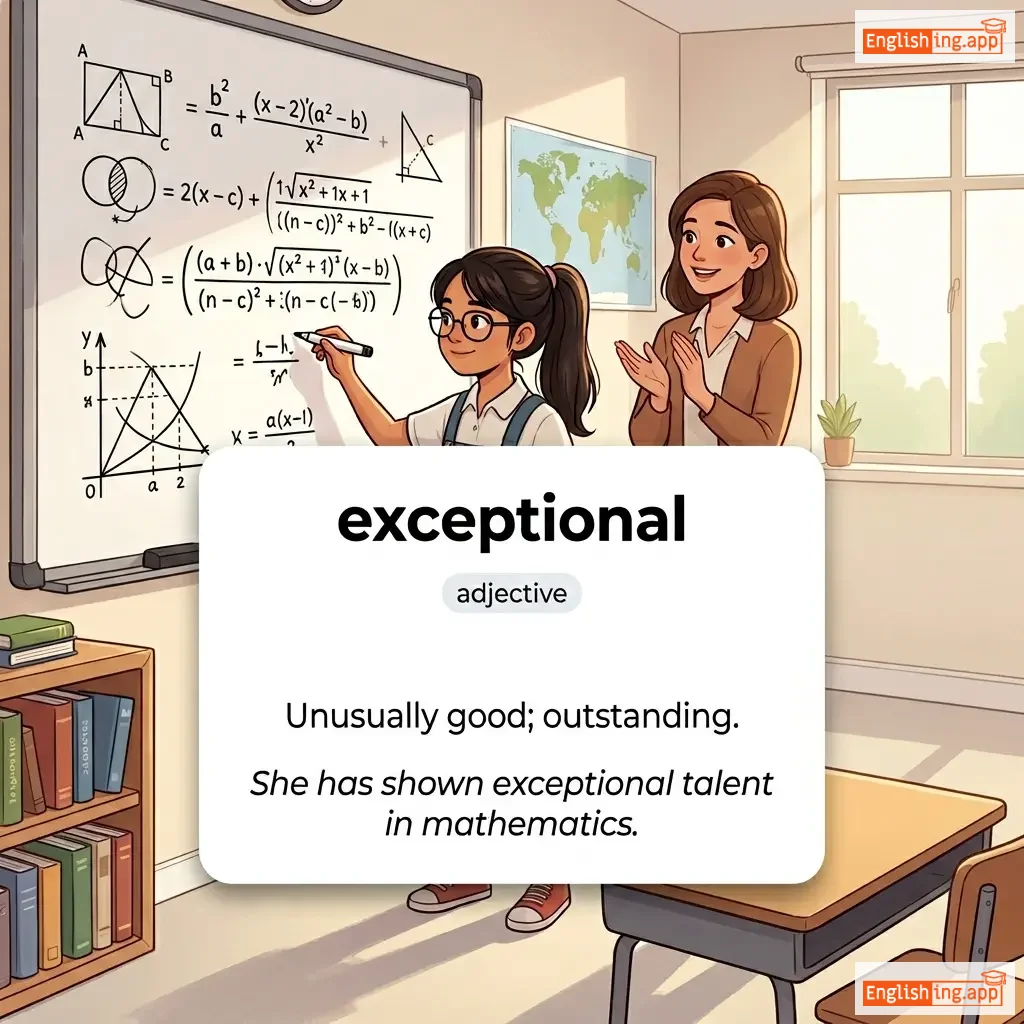
exceptional definition card — visual illustration of the meaning
adjective
/ɪkˈsɛpʃənl/
卓越 (zhuóyuè)

Unusually good; outstanding.

"She has shown exceptional talent in mathematics."

"她在数学方面展现了卓越的才能。" (Tā zài shùxué fāngmiàn zhǎnxiànle zhuóyuè de cáinéng.)
noun
/ˈɛksɜːrpt/
摘录 (zhailu)

A short portion taken from a text, film, or piece of music.

"The teacher read an excerpt from the novel."

"老师读了小说中的一段摘录。" (Laoshi dule xiaoshuo zhong de yi duan zailu.)
noun
/ɪkˈsɛs/
过量 (guo liang)

An amount more than necessary, permitted, or desirable.

"Too much sugar can lead to excess weight gain."
"过多的糖分可能会导致超重。" (Guo duo de tang fen ke neng hui dao zhi chao zhong.)
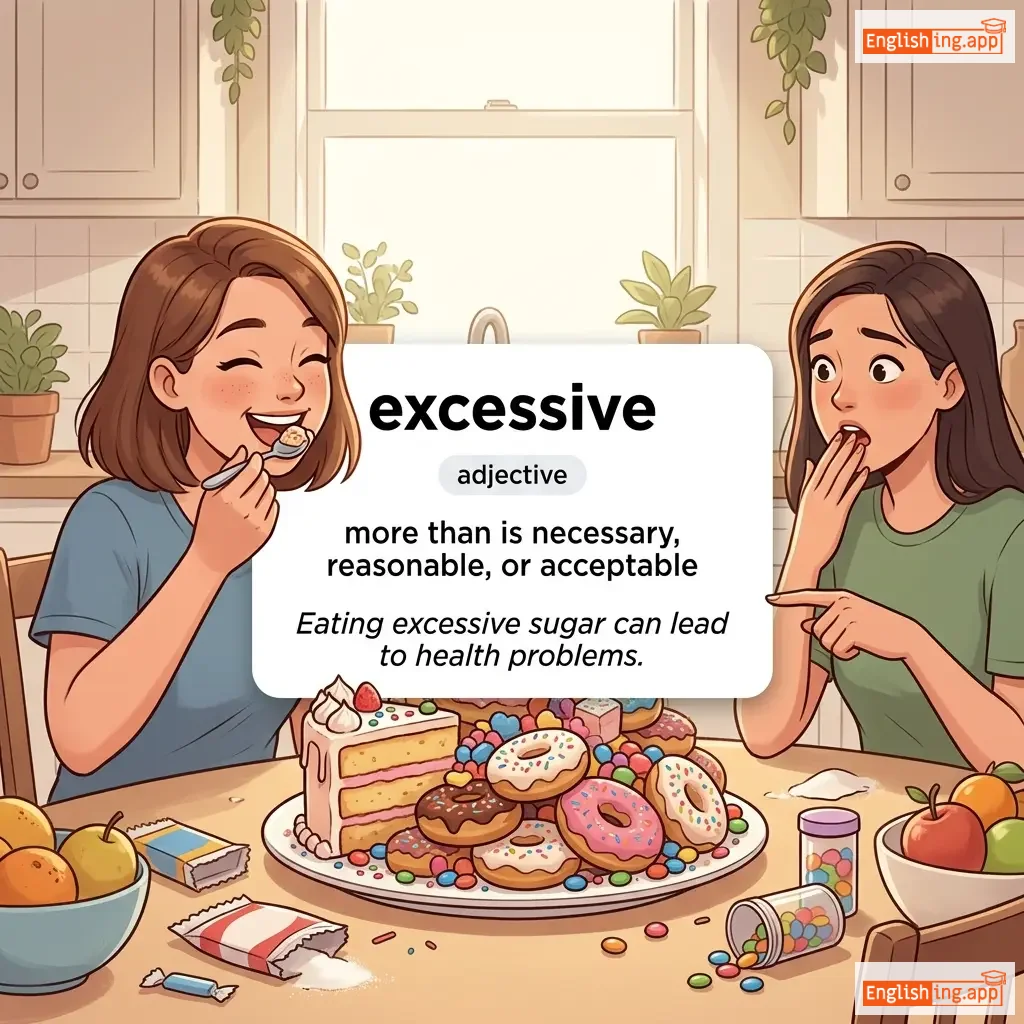
excessive definition card — visual illustration of the meaning
adjective
/ɪkˈsɛsɪv/
过度 (guò dù)

more than is necessary, reasonable, or acceptable

"Eating excessive sugar can lead to health problems."

"过多的糖分摄入可能导致健康问题。" (Guò duō de táng fèn shè rù kě néng dǎo zhì jiàn kāng wèn tí.)
excessive strain definition card — visual illustration of the meaning
adjective + noun
এক্সেসিভ স্ট্রেইন
过度的压力 (guòdù de yālì)

An amount of physical pressure or stress that is more than what is normal or acceptable.

"Excessive strain on fingers can cause musculoskeletal issues."

"手指上的过度压力可能导致肌肉骨骼问题。" (Shǒuzhǐ shàng de guòdù yālì kěnéng dǎozhì jīròu gǔgé wèntí.)
Exchange definition card — visual illustration of the meaning
verb
/ɪksˈtʃeɪndʒ/
交换 (jiaohuan)

To give something and receive something in return.

"They exchanged gifts during the festival."

"他们在节日期间交换了礼物。" (Tāmen zài jiérì qījiān jiāohuànle lǐwù.)
noun
/ɪksˈtʃɛkər/
国库 (guó kù)

The treasury of a state or country.

"The government announced new measures to improve the exchequer."

"政府宣布了新的措施,以改善国库。" (zhèngfǔ xuānbùle xīn de cuòshī, yǐ gǎishàn guó kù.)
verb
/ˈɛkˌsaɪz/
切除 (qiēchú)

to cut out or remove completely, often by surgery

"The surgeon excised the tumor successfully."

"外科医生成功地切除了肿瘤。" (Wàikē yīshēng chénggōng de qiēchúle zhǒngliú.)
noun
/ɪkˈsɪʒən/
切除 (qiechu)

the act of cutting something out, especially by surgical removal

"The excision of the infected tissue prevented further complications."

"切除感染的组织防止了进一步的并发症。" (Qiechu ganran de zizhi fangzhi le jinyibu de bingfazheng.)
adjective
/ɪkˈsaɪtəbl̩/
易激动的 (yì jīdòng de)

easily excited or emotionally aroused

"The child was excitable and laughed at every small thing."

"这个孩子很容易激动,对每个小事都笑。" (Zhège háizi hěn róngyì jīdòng, duì měi gè xiǎo shì dōu xiào.)
noun
/ˌɛksaɪˈteɪʃən/
兴奋 (xīngfèn)

a state of great excitement or the process of stimulating activity

"The news created great excitation among the fans."

"这条新闻在球迷中引起了极大的兴奋。" (Zhè tiáo xīnwén zài qiúmí zhōng yǐnqǐle jí dà de xīngfèn.)
verb
/ɪkˈsaɪt/
使兴奋 (shǐ xīngfèn)

to cause strong feelings of enthusiasm or eagerness

"The idea of traveling abroad excites her."
"出国旅行的想法让她感到兴奋。" (Chūguó lǚxíng de xiǎngfǎ ràng tā gǎndào xīngfèn.)
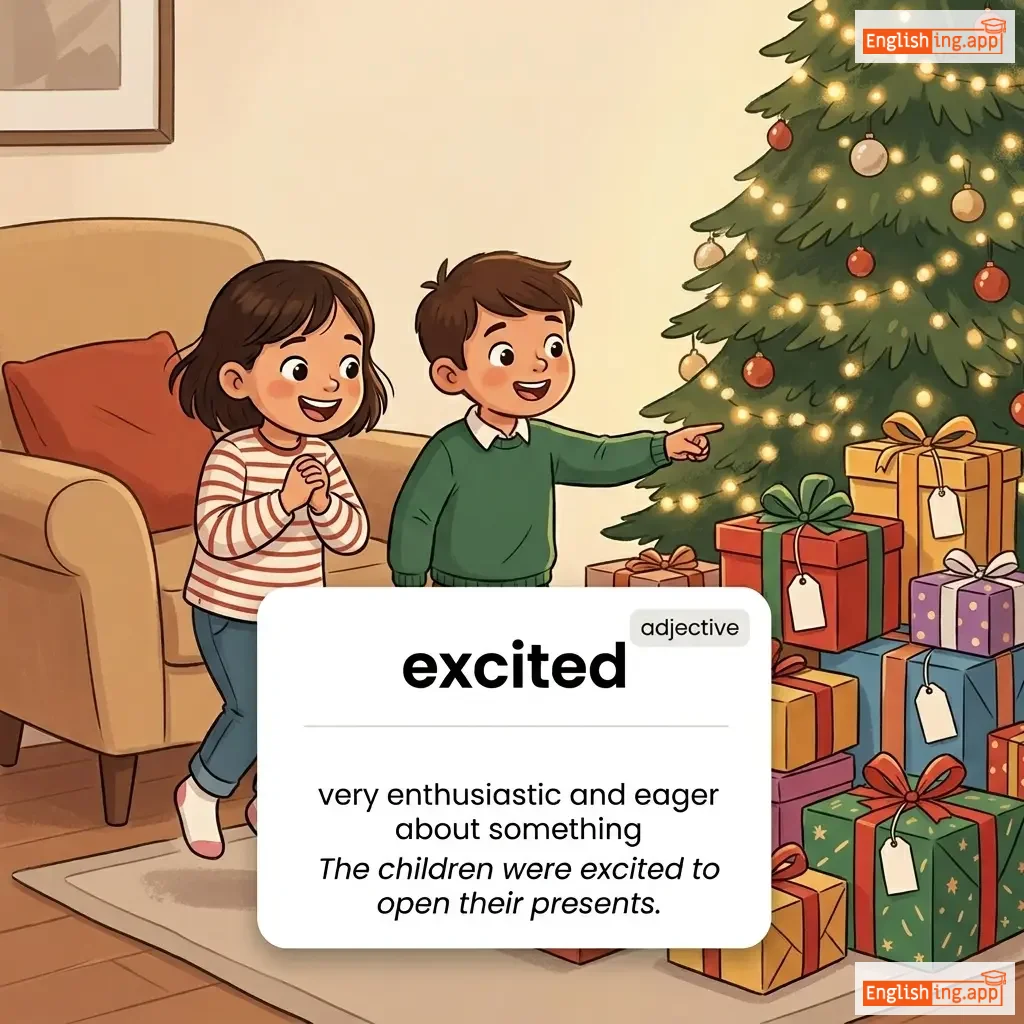
excited definition card — visual illustration of the meaning
adjective
/ɪkˈsaɪtɪd/
兴奋的 (xīngfèn de)

very enthusiastic and eager about something

"The children were excited to open their presents."

"孩子们迫不及待地打开了他们的礼物。" (Háizimen pò bù jí dài de dǎkāi le tāmen de lǐwù.)
noun
/ɪkˈsaɪtmənt/
兴奋 (xīngfèn)

a feeling of great enthusiasm and eagerness

"There was a lot of excitement before the concert began."

"音乐会开始前有很多兴奋。" (Yīnyuè huì kāishǐ qián yǒu hěn duō xīngfèn.)
exciting definition card — visual illustration of the meaning
adjective
/ɪkˈsaɪtɪŋ/
令人兴奋的 (lìng rén xīngfèn de)

Causing great enthusiasm and eagerness.

"The movie was so exciting that I watched it twice."

"这部电影如此令人兴奋,我看了两遍。" (Zhè bù diànyǐng rúcǐ lìng rén xīngfèn, wǒ kànle liǎng biàn.)
verb
/ɪkˈskleɪm/
呼喊 (hūhǎn)

to cry out suddenly in surprise, strong emotion, or excitement

"She exclaimed with joy when she saw the gift."

"她看到礼物时高兴地叫了出来。" (Tā kàn dào lǐwù shí gāoxìng de jiào le chūlái.)
noun
/ˌɛkskləˈmeɪʃən/
感叹 (gǎntàn)

A sudden cry or remark expressing strong emotion or surprise.

"She let out an exclamation of joy when she heard the news."

"当她听到这个消息时,她发出了喜悦的感叹。" (Dāng tā tīng dào zhège xiāoxī shí, tā fāchūle xǐyuè de gǎntàn.)