词汇表

英语词汇词典 | 单词含义、定义和示例

verb
/ɪkˈskluːd/
排除 (paichu)

To deliberately leave out or prevent someone or something from being included.

"The list excludes temporary workers."

"该列表排除了临时工。" (Gāi lièbiǎo páichúle línshí gōng.)
adjective
/ɪkˈskluːdɪd/
被排除; 被孤立 (bei paichu; bei guli)

not included; left out; barred from participation

"He felt excluded from the group activities and conversations."

"他感到被排除在小组活动和对话之外。" (Ta gandao bei paichu zai xiaozu huodong he duihua zhihou.)
noun
/ɪkˈskluːʒən/
排斥 (paichi)

The process or state of being left out or denied access.

"The policy led to the exclusion of certain groups."

"该政策导致某些群体被排斥。" (Gai zhengce daozhi moxie qunti bei paichi.)
adjective
/ɪkˈskluːsɪv/
仅限于特定的人、团体或区域;不与他人共享 (jǐn xiàn yú tèdìng de rén, tuántǐ huò qūyù; bù yǔ tārén gòngxiǎng)

restricted to a particular person, group, or area; not shared with others

"The hotel offers exclusive access to a private beach."

"酒店提供专属通往私人海滩的通道。" (Jiǔdiàn tígōng zhuānshǔ tōngwǎng sīrén hǎitān de tōngdào.)
adverb
/ɪkˈskluːsɪvli/
专门 (zhuānmén)

only; not shared with others

"This service is available exclusively to premium members."

"此服务仅限于高级会员。" (Cǐ fúwù jǐn xiàn yú gāojí huìyuán.)
verb
/ɛkˈskɔːrieɪt/
严厉批评 (yanli piping)

To strongly criticize someone; to denounce severely.

"The critic excoriated the film for its poor script."

"评论家因影片的糟糕剧本而严厉批评了该片。" (Pinglun jia yin yingpian de zaogao juben er yanli piping le gai pian.)
noun
/ɪkˈskrɛsəns/
异常生长 (yìcháng shēngzhǎng)

An abnormal outgrowth or lump, often considered unattractive.

"The building was considered an excrescence on the landscape."

"这座建筑被认为是景观中的一种异常生长。" (Zhè zuò jiànzhú bèi rènwéi shì jǐngguān zhōng de yī zhǒng yìcháng shēngzhǎng.)
verb
/ɪkˈskriːt/
排泄 (paixie)

to eliminate waste matter from the body

"Humans excrete carbon dioxide through breathing."

"人类通过呼吸排出二氧化碳。" (Renlei tongguo huxi paichu eryanghuatan.)
noun
/ɪkˈskriːʃən/
排泄 (paixie)

the process of eliminating waste matter from the body

"Excretion is vital for maintaining a healthy body."

"排泄对保持健康的身体至关重要。" (Paixie dui baochi jiankang de shenti zhiguang zhongyao.)
verb
/ɪkˈskruːʃieɪt/
折磨 (zhe mo)

to cause intense pain or suffering

"The injury excruciated him with unbearable pain."

"伤害让他经历了无法忍受的疼痛。" (Shanghai rang ta jingli le wufa renshou de tengtong.)
adjective
/ɪkˈskruːʃieɪtɪŋ/
剧烈的 (jùliè de)

causing extreme physical or mental pain

"She was in excruciating pain after the accident."

"她在事故后痛苦不堪。" (Tā zài shìgù hòu tòngkǔ bùkān.)
exculpate definition card — visual illustration of the meaning
verb
/ˈɛkskʌlpeɪt/
辩解 (biànjiě)

to show or declare that someone is not guilty of wrongdoing

"The lawyer worked hard to exculpate his client."

"律师努力工作,为他的客户辩解。" (Lǚshī nǔlì gōngzuò, wèi tā de kèhù biànjiě.)
noun
/ɪkˈskɜːʒən/
短途旅行 (duǎn tú lǚxíng)

A short journey or trip, especially one taken for leisure or educational purposes.

"The students went on an excursion to the national museum."

"学生们去了国家博物馆进行了一次短途旅行。" (Xuéshēngmen qùle guójiā bówùguǎn jìnxíngle yīcì duǎn tú lǚxíng.)
adjective
/ɪkˈskɜːsɪv/
偏离主题的 (pianli zhutime de)

Tending to digress or wander; moving away from the main subject.

"His excursive lecture left the students confused about the main topic."

"他的偏离主题的讲座让学生们对主要话题感到困惑。" (Tā de piānlí zhǔtí de jiǎngzuò ràng xuéshēngmen duì zhǔyào huàtí gǎndào kùnhuò.)
adjective
/ɪkˈskjuːzəbl/
可原谅的 (kě yuánliàng de)

Able to be forgiven or justified.

"Her mistake was excusable given the circumstances."

"考虑到情况,她的错误是可以原谅的。" (Kǎolǜ dào qíngkuàng, tā de cuòwù shì kě yuánliàng de.)
verb
/ɪkˈskjuːz/
原谅, 借口 (yuánliàng, jièkǒu)

to forgive someone for doing something wrong or to justify an action

"Please excuse my lateness; there was heavy traffic."

"请原谅我迟到;有很多交通。" (Qǐng yuánliàng wǒ chídào; yǒu hěn duō jiāotōng.)
execrable definition card — visual illustration of the meaning
adjective
/ˈeksɪkrəbl/
可憎的 (kě zēng de)

Extremely bad or unpleasant.

"The movie was so execrable that many people left the theater early."

"这部电影糟糕透顶,以至于许多人早早就离开了影院。" (Zhè bù diànyǐng zāogāo tòudǐng, yǐ zhì yú xǔduō rén zǎo zǎo jiù líkāi le yǐngyuàn.)
verb
/ˈeksɪkreɪt/
痛恨 (tòng hèn)

To feel or express great loathing or hatred for something.

"The community execrated the corrupt politician."

"社区谴责了腐败的政治家。" (Shèqū qiǎnzé le fǔbài de zhèngzhìjiā.)
noun
/ˌɛksɪˈkreɪʃən/
诅咒 (zǔzhòu)

An act of cursing or denouncing someone or something with hatred.

"The dictator’s name was spoken with execration after his fall."

"独裁者的名字在他倒台后带着诅咒被提起。" (Dúcáizhě de míngzì zài tā dǎotái hòu dàizhe zǔzhòu bèi tíqǐ.)
execute definition card — visual illustration of the meaning
verb
/ˈɛksɪkjuːt/
执行 (zhíxíng)

To carry out a plan, order, or action; to perform or put into effect.

"The company plans to execute its new strategy next year."

"公司计划在明年执行其新战略。" (Gōngsī jìhuà zài míngnián zhíxíng qí xīn zhànlüè.)
noun
/ˌɛksɪˈkjuːʃən/
执行,实施 (zhíxíng, shíshī)

the act of carrying out a plan, order, or legal sentence

"The success of a project depends on its proper execution."

"项目的成功取决于其正确的执行。" (Xiàngmù de chénggōng qùjué yú qí zhèngquè de zhíxíng.)
noun
/ˌɛksɪˈkjuːʃənər/
刽子手 (guì zǐ shǒu)

A person who carries out a death sentence by execution.

"The executioner prepared the gallows for the condemned prisoner."

"刽子手为被定罪的囚犯准备了绞刑架。" (Guì zǐ shǒu wèi bèi dìngzuì de qiúfàn zhǔnbèile jiǎo xíng jià.)
executive definition card — visual illustration of the meaning
noun/adjective
/ɪɡˈzɛkjətɪv/
执行官 (zhíxíngguān)

A person with senior managerial responsibility in a business; relating to the execution of plans or laws.

"She works as an executive in a multinational company."

"她在一家跨国公司担任执行官。" (Tā zài yījiā kuàguó gōngsī dānrèn zhíxíngguān.)
noun
/ɪɡˈzɛkjətər/
遗嘱执行人 (yízhǔ zhíxíngrén)

A person appointed to carry out the terms of someone's will after their death.

"The executor managed the estate according to the deceased’s wishes."

"遗嘱执行人根据已故者的意愿管理财产。" (Yízhǔ zhíxíngrén gēnjù yǐgù zhě de yìyuàn guǎnlǐ cáichǎn.)
noun
/ˌɛksəˈdʒiːsɪs/
注释 (zhushi)

A critical explanation or interpretation of a text, especially a religious scripture.

"The professor gave a detailed exegesis of the biblical passage."

"教授对圣经章节进行了详细的注释。" (Jiàoshòu duì shèngjīng zhāngjié jìnxíngle xiángxì de zhùshì.)
noun
/ɪɡˈzɛmplɑːr/
典范 (dianfan)

A model or pattern to be copied or imitated.

"She is an exemplar of kindness and generosity."
"她是善良和慷慨的典范。" (Ta shi shanliang he kangkai de dianfan.)
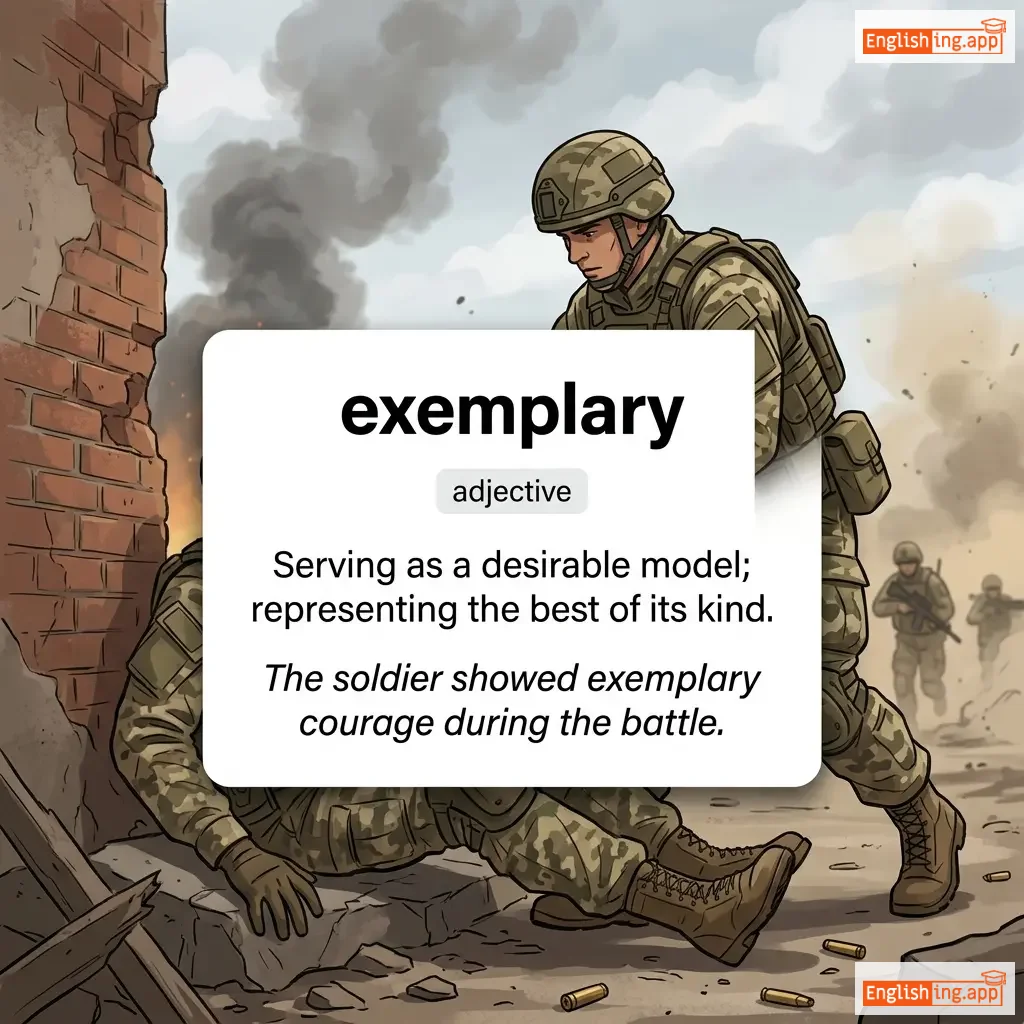
exemplary definition card — visual illustration of the meaning
adjective
/ɪɡˈzɛmpləri/
典范的 (dianfan de)

Serving as a desirable model; representing the best of its kind.

"The soldier showed exemplary courage during the battle."

"士兵在战斗中表现出了典范的勇气。" (Shìbīng zài zhàndòu zhōng biǎoxiàn chūle diǎnfàn de yǒngqì.)
exemplify definition card — visual illustration of the meaning
verb
/ɪɡˈzɛmplɪfaɪ/
通过例子阐明 (tōngguò lìzi chǎnmíng)

To illustrate or clarify by giving an example.

"Her actions exemplify the true spirit of generosity."

"她的行为体现了真正的慷慨精神。" (Tā de xíngwéi tǐxiànle zhēnzhèng de kāngkǎi jīngshén.)
adjective, verb
/ɪɡˈzɛmpt/
免除 (miǎnchú)

Free from an obligation or liability imposed on others.

"Students with high grades are exempt from the final exam."
"成绩优异的学生可以免除期末考试。" (Chéngjī yōuyì de xuéshēng kěyǐ miǎnchú qīmò kǎoshì.)
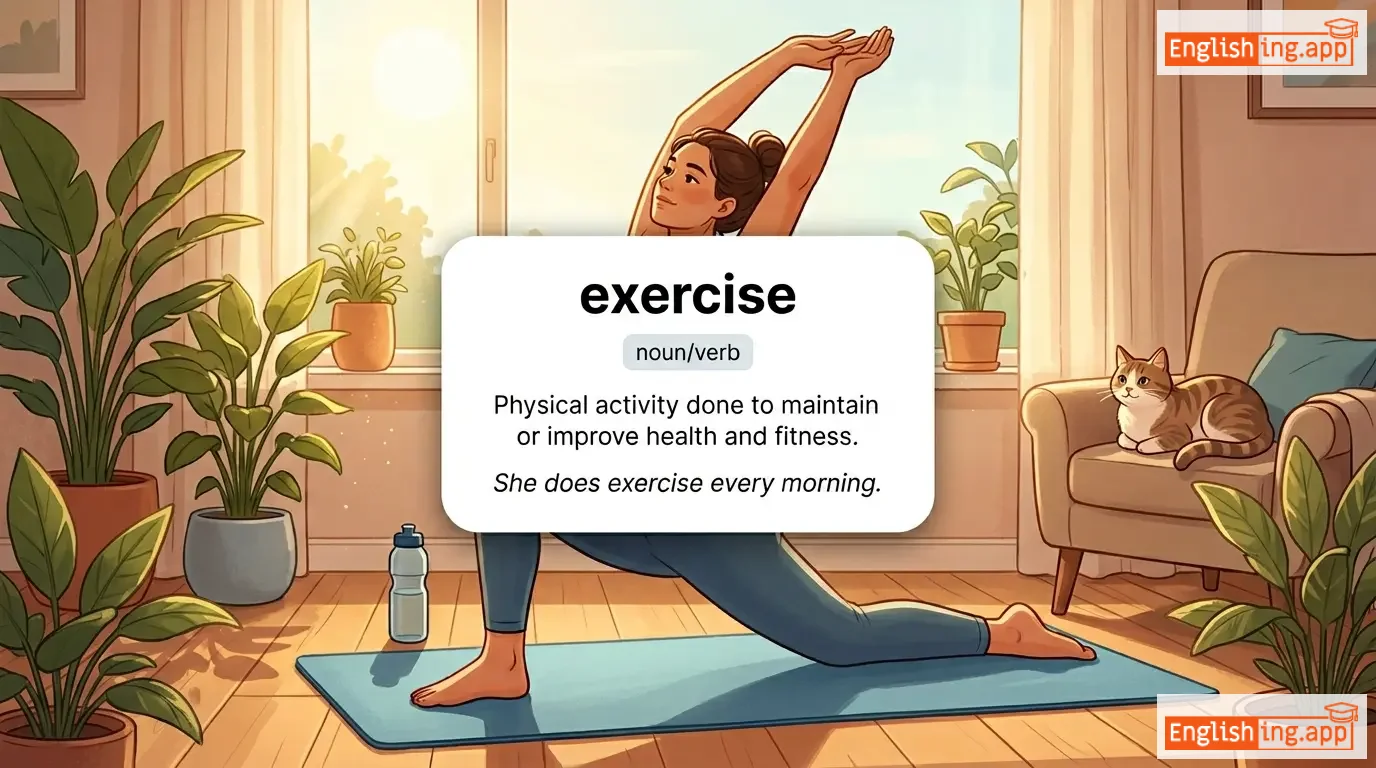
exercise definition card — visual illustration of the meaning
noun/verb
/ˈɛksərsaɪz/
锻炼 (duànliàn)

Physical activity done to maintain or improve health and fitness.

"She does exercise every morning."

"她每天早晨锻炼。" (ta mei tian zao chen duan lian.)
exert definition card — visual illustration of the meaning
verb
/ɪɡˈzɜːrt/
施加 (shijia)

to apply effort, force, or influence

"He had to exert himself to finish the project on time."
"他必须努力工作才能按时完成项目。" (Tā bìxū nǔlì gōngzuò cáinéng ànshí wánchéng xiàngmù.)
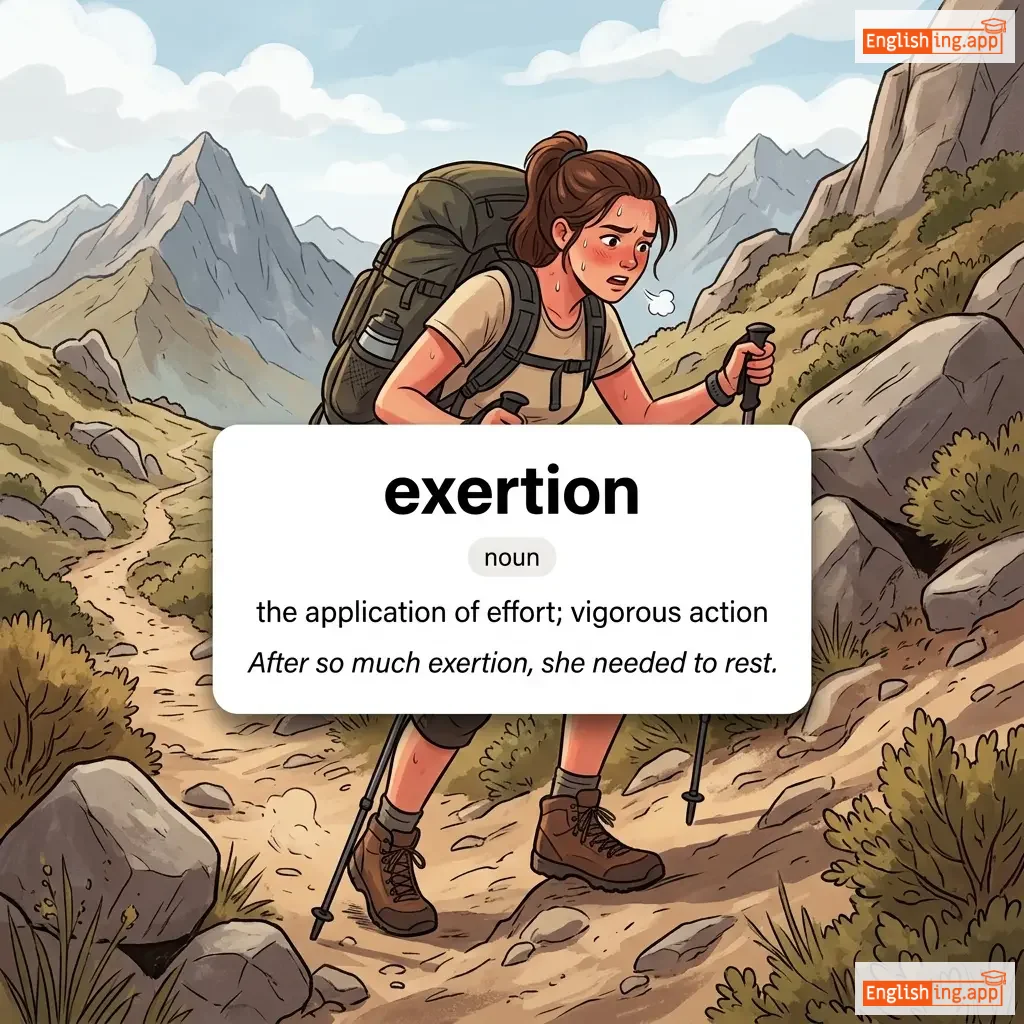
exertion definition card — visual illustration of the meaning
noun
/ɪɡˈzɜːrʃən/
努力 (nǔlì)

the application of effort; vigorous action

"After so much exertion, she needed to rest."

"经过这么多努力,她需要休息。" (Jīngguò zhème duō nǔlì, tā xūyào xiūxí.)
exhalation definition card — visual illustration of the meaning
noun
/ˌɛks.həˈleɪ.ʃən/
呼气 (hūqì)

The action of breathing out.

"Slow exhalation calms the nervous system."

"缓慢的呼气使神经系统平静。" (huǎn màn de hū qì shǐ shén jīng xì tǒng píng jìng.)
verb
/ɛksˈheɪl/
呼气 (huqi)

to breathe out air from the lungs

"She slowly exhaled after holding her breath."

"她屏住呼吸后慢慢地呼气。" (Ta pingzhu huxi hou manman de huqi.)
verb
/ɪɡˈzɔːst/
耗尽 (hàojìn)

to tire out completely; to use up resources

"The long journey exhausted the children."
"长时间的旅行耗尽了孩子们的精力。" (Cháng shíjiān de lǚxíng hào jìnle háizimen de jīnglì.)
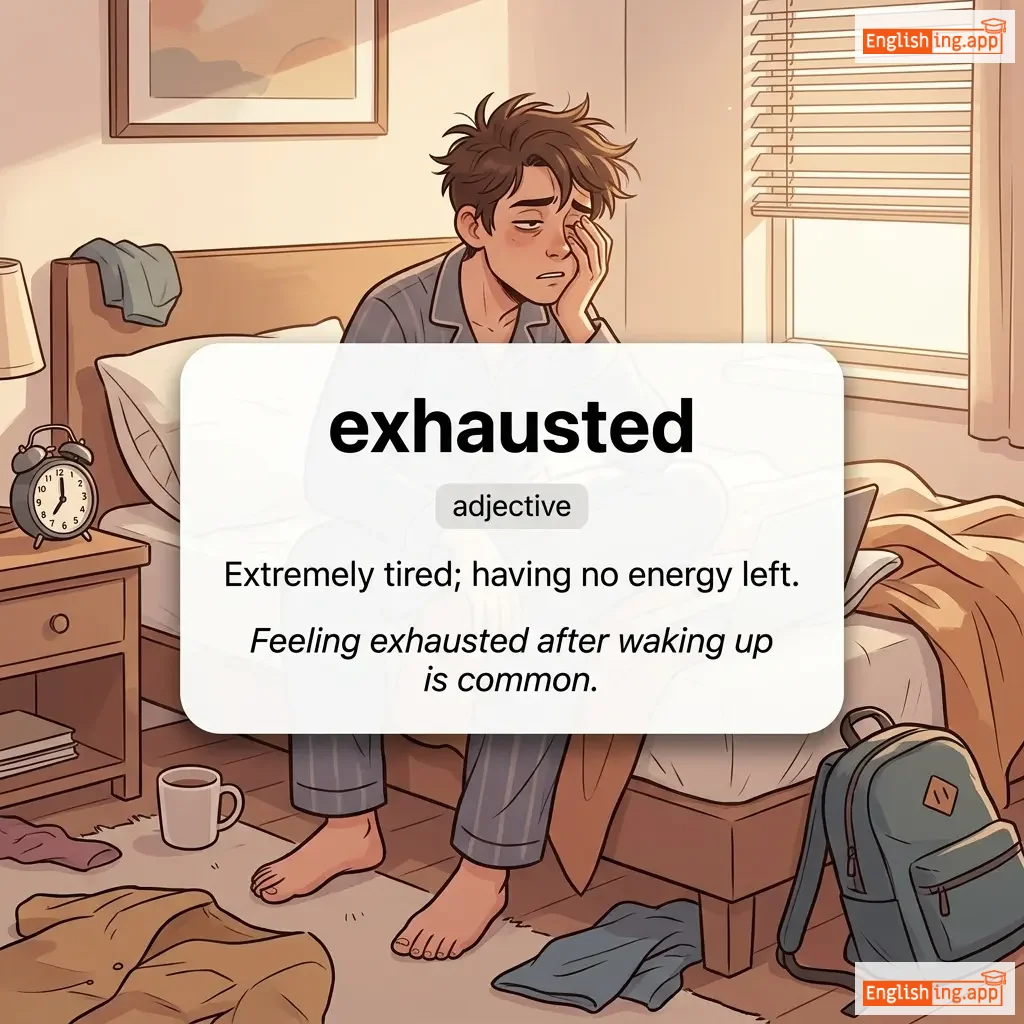
exhausted definition card — visual illustration of the meaning
adjective
/ɪɡˈzɔː.stɪd/
筋疲力尽 (jin pi li jin)

Extremely tired; having no energy left.

"Feeling exhausted after waking up is common."

"醒来后感到筋疲力尽是很常见的。" (xing lai hou gan dao jin pi li jin shi hen chang jian de)
adjective
/ɪɡˈzɔːstɪbəl/
可消耗 (kě xiāo hào)

able to be used up completely; not infinite

"Coal and oil are exhaustible resources."
"煤炭和石油是可消耗的资源。" (Méitàn hé shíyóu shì kě xiāo hào de zīyuán.)
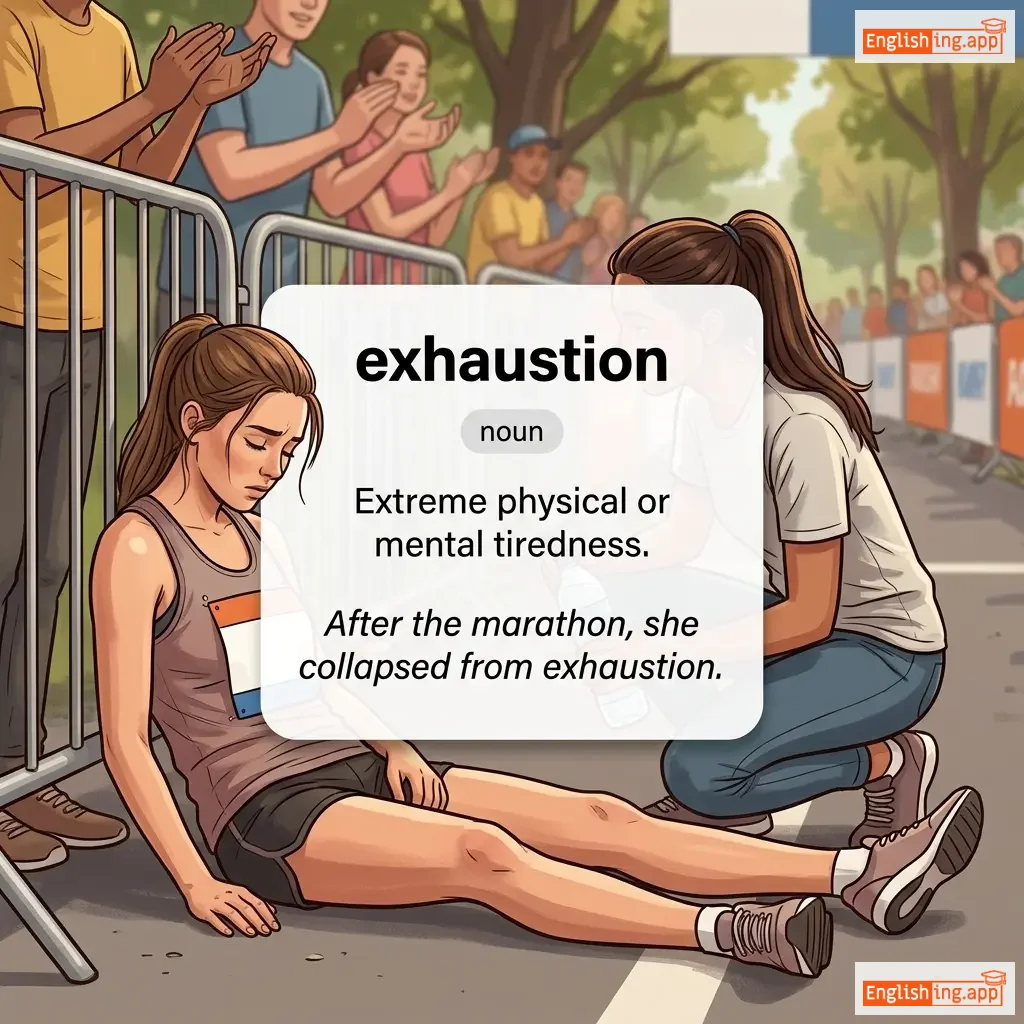
exhaustion definition card — visual illustration of the meaning
noun
/ɪɡˈzɔːstʃən/
疲劳 (piliao)

Extreme physical or mental tiredness.

"After the marathon, she collapsed from exhaustion."

"马拉松后,她因疲劳倒下了。" (Mala song hou, ta yin pilao daoxia le.)
adjective
/ɪɡˈzɔːstɪv/
全面且完整 (quánmiàn qiě wánzhěng)

Fully comprehensive and including all possibilities.

"The report provides an exhaustive analysis of the issue."

"报告提供了该问题的全面分析。" (Bàogào tígōngle gāi wèntí de quánmiàn fēnxi。)
exhibit definition card — visual illustration of the meaning
verb/noun
/ɪɡˈzɪbɪt/
展出 (zhǎnchū)

To display or show publicly; something put on display.

"The museum will exhibit ancient artifacts."

"博物馆将展出古代文物。" (Bówùguǎn jiāng zhǎnchū gǔdài wénwù.)
noun
/ˌɛksɪˈbɪʃən/
展览 (zhanlan)

a public display of works of art, products, or other items of interest

"The art exhibition attracted thousands of visitors."

"艺术展览吸引了成千上万的参观者。" (Yishu zhanlan xiqinle chengqian shangwan de canguanzhe.)
verb
/ɪɡˈzɪləreɪt/
激动 (jīdòng)

To make someone feel very happy, animated, or excited.

"The mountain view exhilarated the travelers."

"山脉的景色让旅行者兴奋。" (Shānmài de jǐngsè ràng lǚxíng zhě xīngfèn.)
adjective
/ɪɡˈzɪləreɪtɪd/
兴奋的 (xīngfèn de)

feeling very happy, animated, or elated

"She felt exhilarated after finishing the marathon."

"她在完成马拉松后感到非常兴奋。" (Tā zài wánchéng mǎlāsōng hòu gǎndào fēicháng xīngfèn.)
adjective
/ɪɡˈzɪləreɪtɪŋ/
令人振奋的 (lìng rén zhènfèn de)

Making someone feel very excited, happy, or thrilled.

"Skydiving was the most exhilarating experience of his life."

"跳伞是他一生中最令人振奋的经历。" (Tiàosǎn shì tā yīshēng zhōng zuì lìng rén zhènfèn de jīnglì.)
exhilaration definition card — visual illustration of the meaning
noun
/ɪɡˌzɪl.əˈreɪ.ʃən/
兴奋或快乐 (xīngfèn huò kuàilè)

A feeling of excitement, happiness, or elation.

"The feeling of exhilaration after a roller-coaster ride is amazing."

"过山车后的兴奋感真是不可思议。" (Guò shānchē hòu de xīngfèn gǎn zhēnshi bùkě sīyì.)
exhort definition card — visual illustration of the meaning
verb
/ɪɡˈzɔːrt/
督促 (dū cù)

To strongly encourage or urge someone to do something.

"The teacher exhorted the students to study harder."

"老师督促学生们更努力地学习。" (Lǎoshī dū cù xuéshēngmen gèng nǔlì de xuéxí.)
verb
/ɛksˈhjuːm/
掘出 (juéchū)

to dig out something buried, especially a body from the ground

"The archaeologists decided to exhume the ancient remains."
"考古学家决定挖掘古老的遗骸。" (Kǎo gǔ xué jiā juédìng wā jué gǔ lǎo de yí hái.)
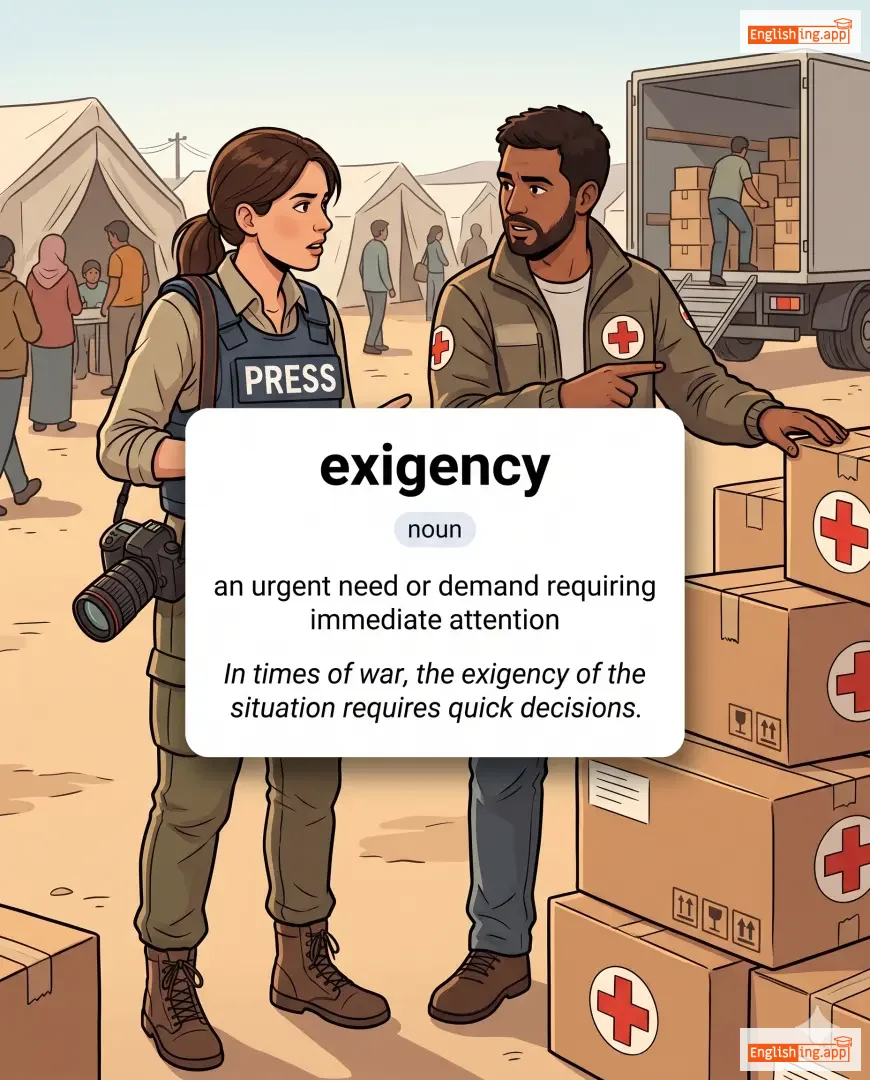
exigency definition card — visual illustration of the meaning
noun
/ˈɛksɪdʒənsi/
紧急需求 (jinji xuqiu)

an urgent need or demand requiring immediate attention

"In times of war, the exigency of the situation requires quick decisions."

"在战争时期,局势的紧急需求需要迅速的决策。" (Zài zhànzhēng shíqī, júshì de jǐnjí xūqiú xūyào xùnsù de juécè.)
adjective
/ˈɛksɪdʒənt/
紧急 (jinji)

demanding immediate action or attention; urgent

"The patient’s exigent condition required immediate surgery."

"病人的紧急情况需要立即进行手术。" (Bingren de jinji qingkuang xuyao lijishi jinxing shoushu.)
noun
/ˌɛksɪˈɡjuːɪti/
匮乏 (kuì fá)

the quality of being scanty or meager in amount

"The exiguity of resources made the project difficult to complete."

"资源的匮乏使得项目完成变得困难。" (Zīyuán de kuì fá shǐdé xiàngmù wánchéng biàn dé kùnnán.)