
词汇表

英语词汇词典 | 单词含义、定义和示例

eulogy definition card — visual illustration of the meaning
noun
/ˈjuːlədʒi/
悼词 (daoci)

A speech or piece of writing that praises someone, especially after their death.

"Her brother delivered a heartfelt eulogy at the funeral."
"她的哥哥在葬礼上发表了感人的悼词。" (Ta de gege zai zangli shang fabiao le ganren de daoci.)
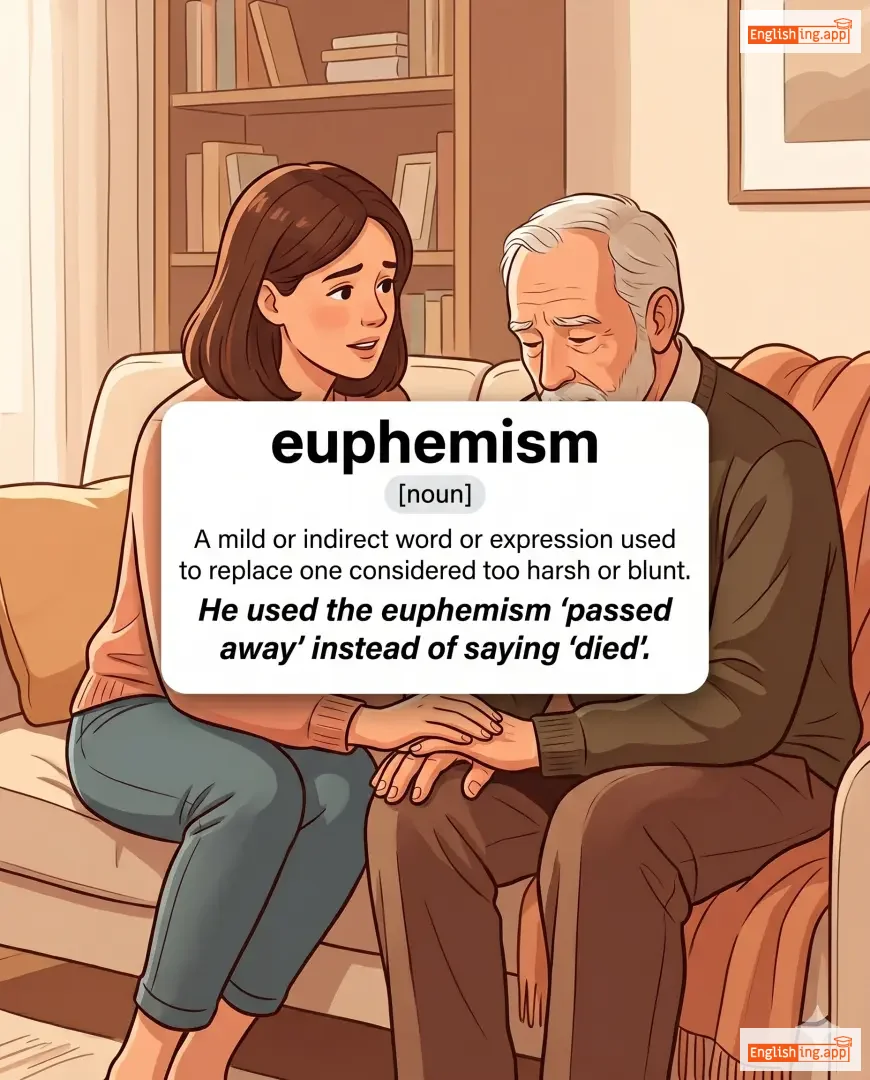
euphemism definition card — visual illustration of the meaning
noun
/ˈjuːfəmɪzəm/
委婉语 (weiwanyu)

A mild or indirect word or expression used to replace one considered too harsh or blunt.

"He used the euphemism 'passed away' instead of saying 'died'."

"他用了'去世'这一委婉语,而不是直接说'死了'。" (Tā yòngle 'qùshì' zhè yī wěiwǎn yǔ, ér bùshì zhíjiē shuō 'sǐle'.)
adjective
/juːˈfoʊniəs/
悦耳的声音 (yue'er de shēngyīn)

Pleasing to the ear; having a sweet sound.

"The poet's euphonious language made the verse a delight to read."

"诗人的优美语言使这首诗成为一种阅读的享受。" (Shīrén de yōuměi yǔyán shǐ zhè shǒu shī chéngwéi yī zhǒng yuèdú de xiǎngshòu.)
noun
/ˈjuːfəni/
和谐的音调 (hexie de yintiao)

The quality of being pleasing to the ear, especially through harmonious combination of words.

"The orator's speech was full of euphony and rhythm."
"演讲者的演讲充满了和谐的音韵和节奏。" (Yǎnjiǎng zhě de yǎnjiǎng chōngmǎnle héxié de yīnyùn hé jiézòu.)
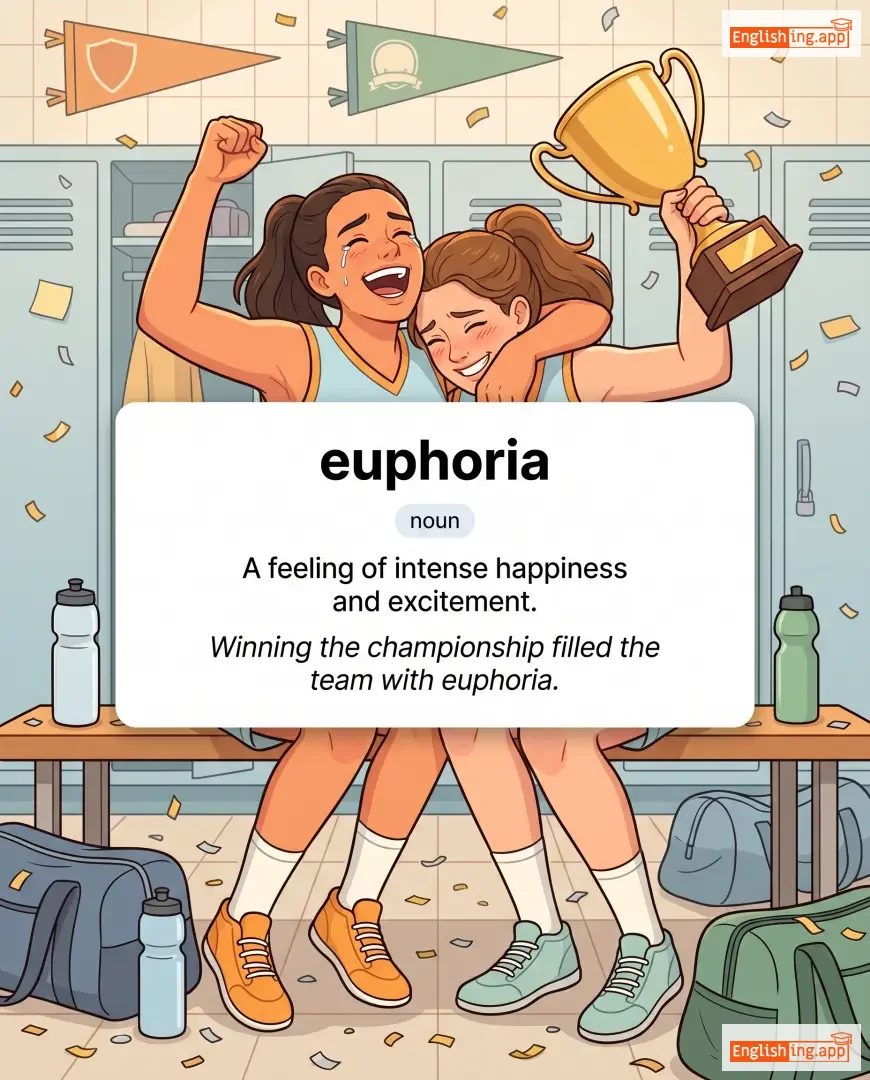
euphoria definition card — visual illustration of the meaning
noun
/juːˈfɔːriə/
极度的幸福 (jídu de xìngfú)

A feeling of intense happiness and excitement.

"Winning the championship filled the team with euphoria."

"赢得冠军让队伍充满了幸福感。" (Yíngdé guànjūn ràng duìwǔ chōngmǎnle xìngfú gǎn.)
adjective
/juːˈfɔːrɪk/
欣快的 (xīnkuài de)

Characterized by or feeling intense excitement and happiness.

"The fans were euphoric after their team's victory."

"球迷们在他们队伍获胜后欣快不已。" (Qiúmímen zài tāmen duìwǔ huòshèng hòu xīnkuài bù yǐ.)
exclamation
/juˈriːkə/
尤里卡! (Yourika!)

An exclamation used to express a sudden discovery or realization.

"When the solution finally came to him, he shouted, 'Eureka!'"

"当解决方案最终浮现在他脑海中时,他喊道:'尤里卡!'" (Dāng jiějué fāng'àn zuìzhōng fúxiàn zài tā nǎohǎi zhōng shí, tā hǎn dào: 'Yóulíkǎ!')
adjective
/ˌjʊərəˈpiːən/
欧洲的 (Ouzhou de)

Relating to Europe or its people.

"She studied European history at university."
"她在大学学习了欧洲历史。" (Ta zai daxue xuexi le Ouzhou lishi.)
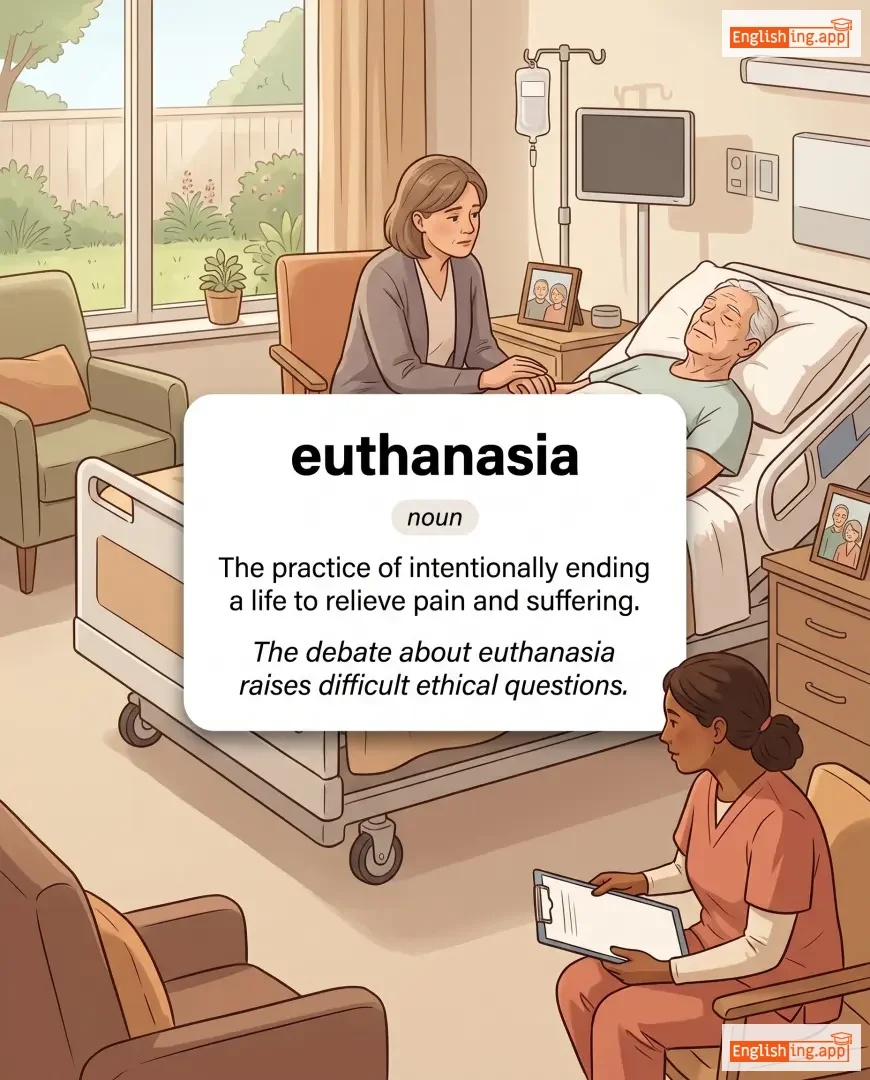
euthanasia definition card — visual illustration of the meaning
noun
/ˌjuːθəˈneɪʒə/
安乐死 (ān lè sǐ)

The practice of intentionally ending a life to relieve pain and suffering.

"The debate about euthanasia raises difficult ethical questions."
"关于安乐死的辩论提出了困难的伦理问题。" (Guānyú ānlè sǐ de biànlùn tíchūle kùnnán de lúnlǐ wèntí.)
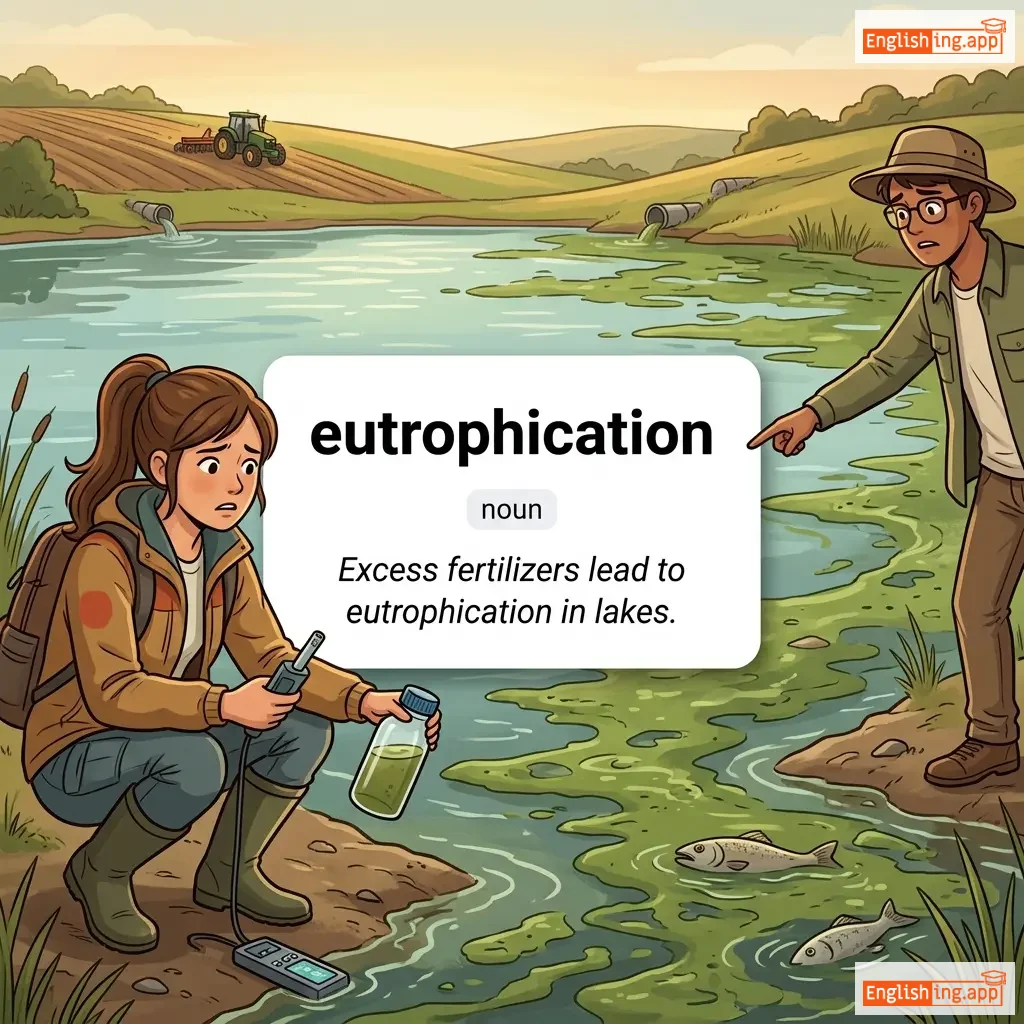
eutrophication definition card — visual illustration of the meaning
noun
/juːˌtrɑː.fɪˈkeɪ.ʃən/
湖泊或其他水体中过多的营养物质 (hupō huò qítā shuǐtǐ zhōng duō shēng de yíngyǎng wùzhì)

Excessive richness of nutrients in a lake or other body of water, frequently due to runoff from the land, which causes a dense growth of plant life and death of animal life from lack of oxygen.

"Excess fertilizers lead to eutrophication in lakes."

"过多的肥料导致湖泊中的优氮化。" (Guò duō de féiliào dǎozhì húpō zhōng de yōu tán huà.)
verb
/ɪˈvækjueɪt/
撤离 (che li)

To remove people from a dangerous place to safety.

"The residents were ordered to evacuate the building after the fire alarm."

"火警响后,居民们被命令撤离大楼。" (Huo jing xiang hou, juminmen bei mingling cheli da lou.)
verb
/ɪˈveɪd/
回避 (huíbì)

To escape or avoid something, especially by cleverness or trickery.

"He tried to evade the question by changing the subject."

"他通过换话题来回避问题。" (Tā tōngguò huàn huàtí lái huíbì wèntí.)
verb
/ɪˈvæljueɪt/
评估 (pinggu)

To assess or judge the value, quality, or significance of something.

"The teacher will evaluate the students’ projects tomorrow."
"老师明天将评估学生的项目。" (Laoshi mingtian jiang pinggu xuesheng de xiangmu.)
evaluation definition card — visual illustration of the meaning
noun
/ɪˌvæljʊˈeɪʃən/
评估 (pinggu)

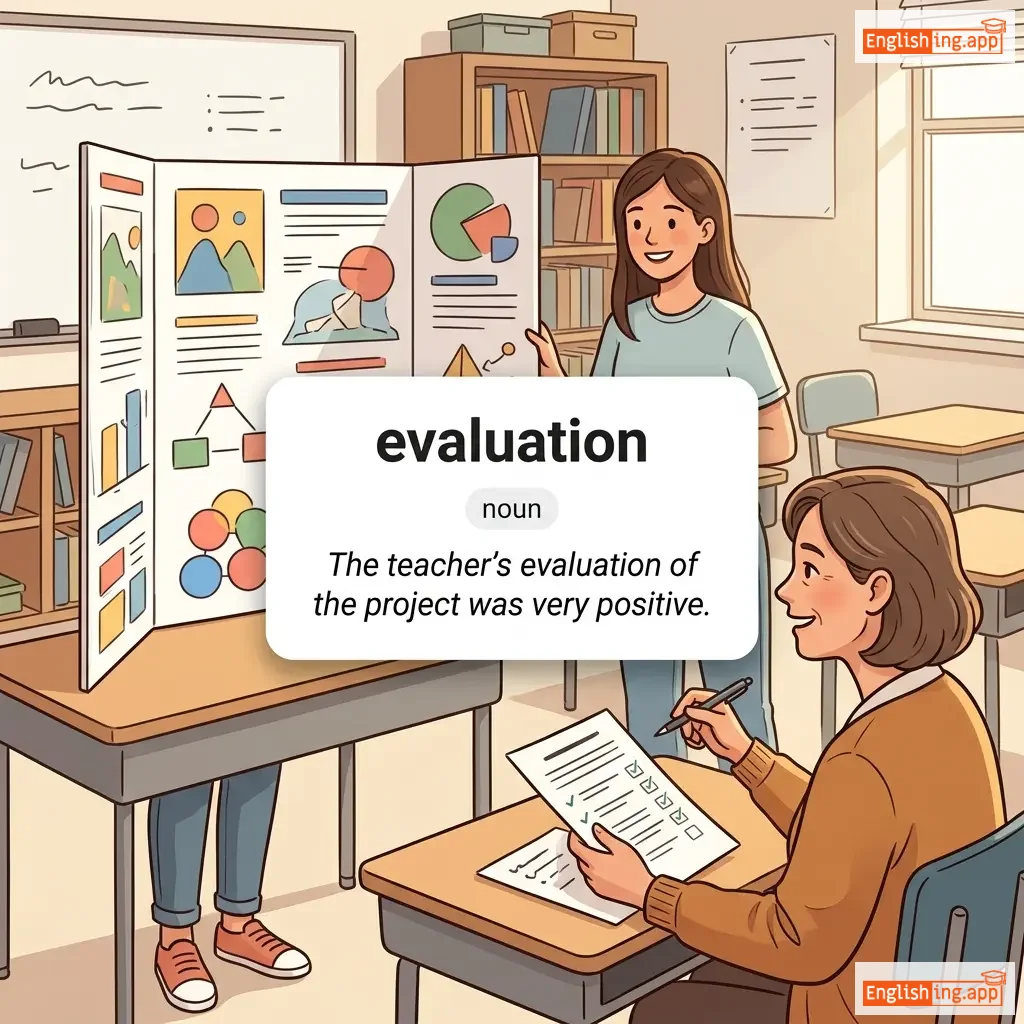
The process of assessing or judging the value, quality, or importance of something.

"The teacher’s evaluation of the project was very positive."
"老师对项目的评估非常积极。" (Lǎoshī duì xiàngmù de pínggū fēicháng jījí.)
evaluative definition card — visual illustration of the meaning
adjective
/ɪˈvæljʊətɪv/
评估的 (pínggū de)

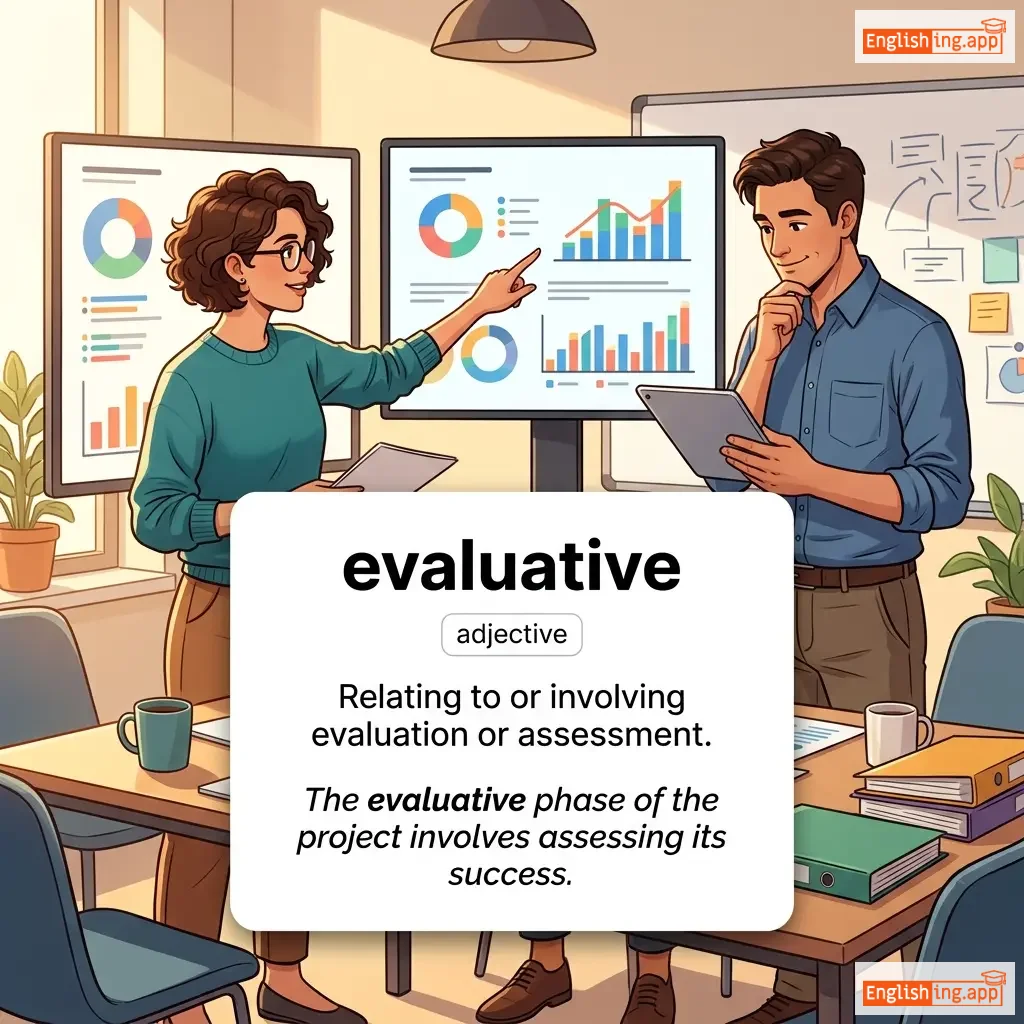
Relating to or involving evaluation or assessment.

"The evaluative phase of the project involves assessing its success."

"项目的评估阶段包括评估其成功。" (Xiàngmù de pínggū jiēduàn bāokuò pínggū qí chénggōng.)
verb
/ˌɛvəˈnɛs/
逐渐消失 (zhújiàn xiāoshī)

To disappear gradually; to fade away.

"The mist began to evanesce as the sun rose higher."

"雾气在太阳升高时开始逐渐消失。" (Wùqì zài tàiyáng shēnggāo shí kāishǐ zhújiàn xiāoshī.)
adjective
/ˌɛvəˈnɛsənt/
短暂的 (duǎnzàn de)

Quickly fading or disappearing; lasting for only a very short time.

"The beauty of the sunset was evanescent, fading within minutes."

"夕阳的美丽是短暂的,在几分钟内消失了。" (Xīyáng de měilì shì duǎnzàn de, zài jǐ fēnzhōng nèi xiāoshī le.)
adjective
/ˌiːvænˈdʒɛlɪkəl/
福音派 (fúyīn pài)

Relating to the Christian gospel, especially the teachings that emphasize personal faith and the authority of the Bible.

"She grew up in an evangelical church community."

"她在一个福音派教会社区长大。" (Tā zài yīgè fúyīn pài jiàohuì shèqū zhǎngdà.)
noun
/ɪˈvændʒəlɪst/
传教士 (chuánjiàoshì)

A person who seeks to convert others to the Christian faith, especially by public preaching.

"The evangelist traveled across the country spreading his message."
"传教士旅行穿越全国,传播他的消息。" (Chuánjiàoshì lǚxíng chuānyuè quánguó, chuánbò tā de xiāoxi.)
Evaporative cooler definition card — visual illustration of the meaning
noun
/ɪˈvæp.ər.ə.tɪv ˈkuː.lər/
蒸发冷却器 (zhēngfā lěngquè qì)

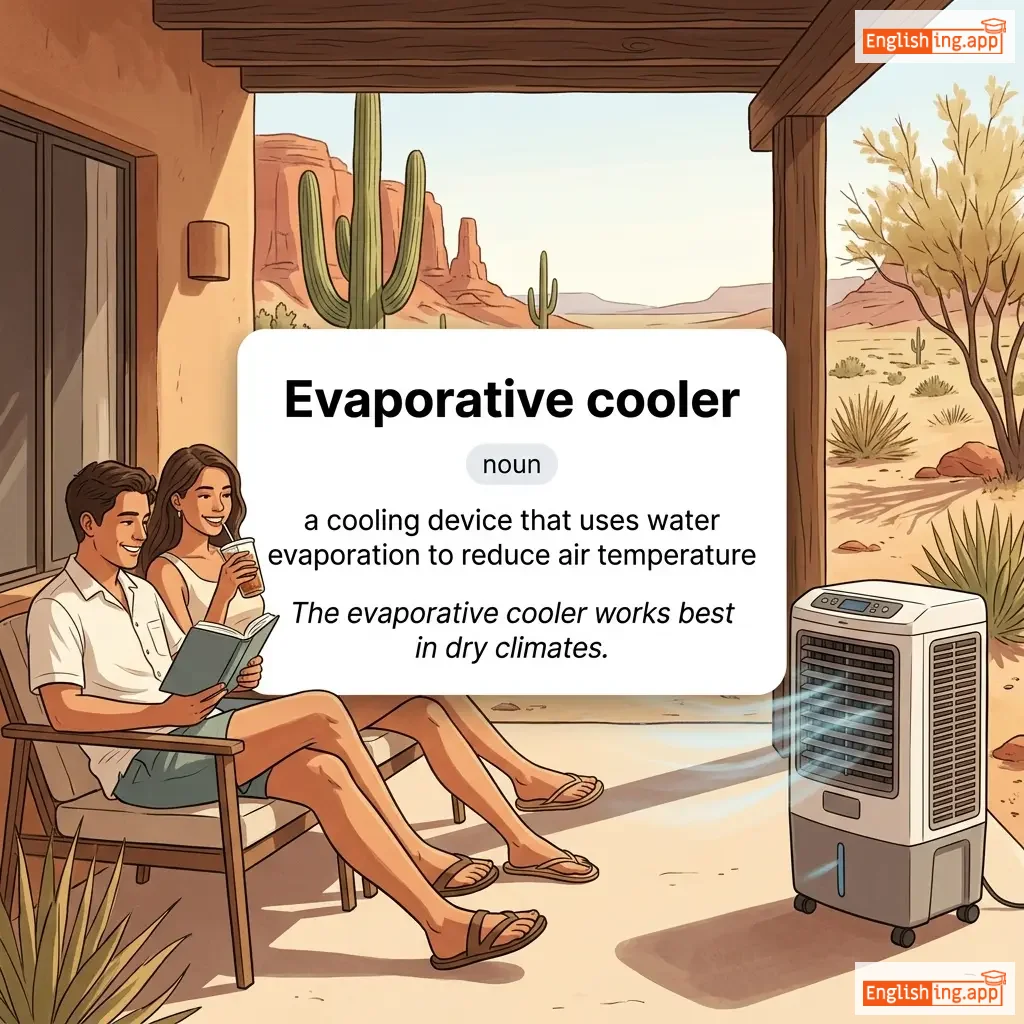
a cooling device that uses water evaporation to reduce air temperature

"The evaporative cooler works best in dry climates."

"蒸发冷却器在干燥的气候中效果最好。" (zhēngfā lěngquè qì zài gānzào de qìhòu zhōng xiàoguǒ zuì hǎo)
evasion definition card — visual illustration of the meaning
noun
/ɪˈveɪʒən/
逃避 (táobì)

The act of avoiding something, especially by cleverness or trickery.

"He was arrested for tax evasion."
"他因逃税被逮捕。" (Tā yīn táoshuì bèi dàibǔ.)
evasive definition card — visual illustration of the meaning
adjective
/ɪˈveɪsɪv/
回避的 (huíbì de)

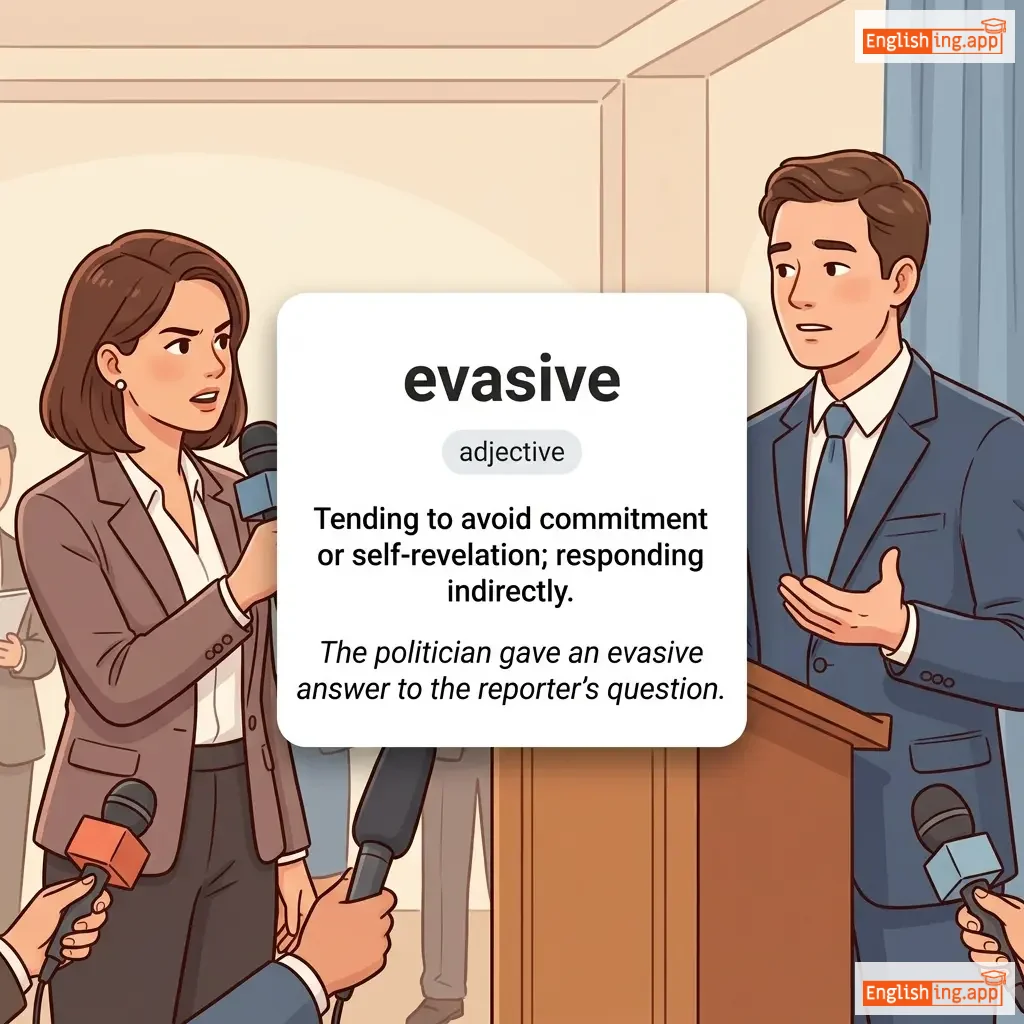
Tending to avoid commitment or self-revelation; responding indirectly.

"The politician gave an evasive answer to the reporter's question."

"政治家对记者的问题给出了回避的回答。" (Zhèngzhìjiā duì jìzhě de wèntí gěi chūle huíbì de huídá.)
adjective, adverb
/ˈiː.vən/
平坦 (pingtan)

flat or smooth; equal in degree or amount; used to emphasize something surprising

"The road was surprisingly even after the storm."

"道路在暴风雨后出奇的平整。" (Daolu zai baofengyu hou chuqi de pingzhen.)
adjective
/ˌiːvənˈhændɪd/
公正无私 (gongzheng wusi)

Fair and impartial; showing no bias or favoritism.

"The judge was praised for her evenhanded approach to the case."
"法官因其公正无私的案件处理方式而受到赞扬。" (Faguanzhen yinqi gongzheng wusi de anjian chuli fangshi er shoudao zanyang.)
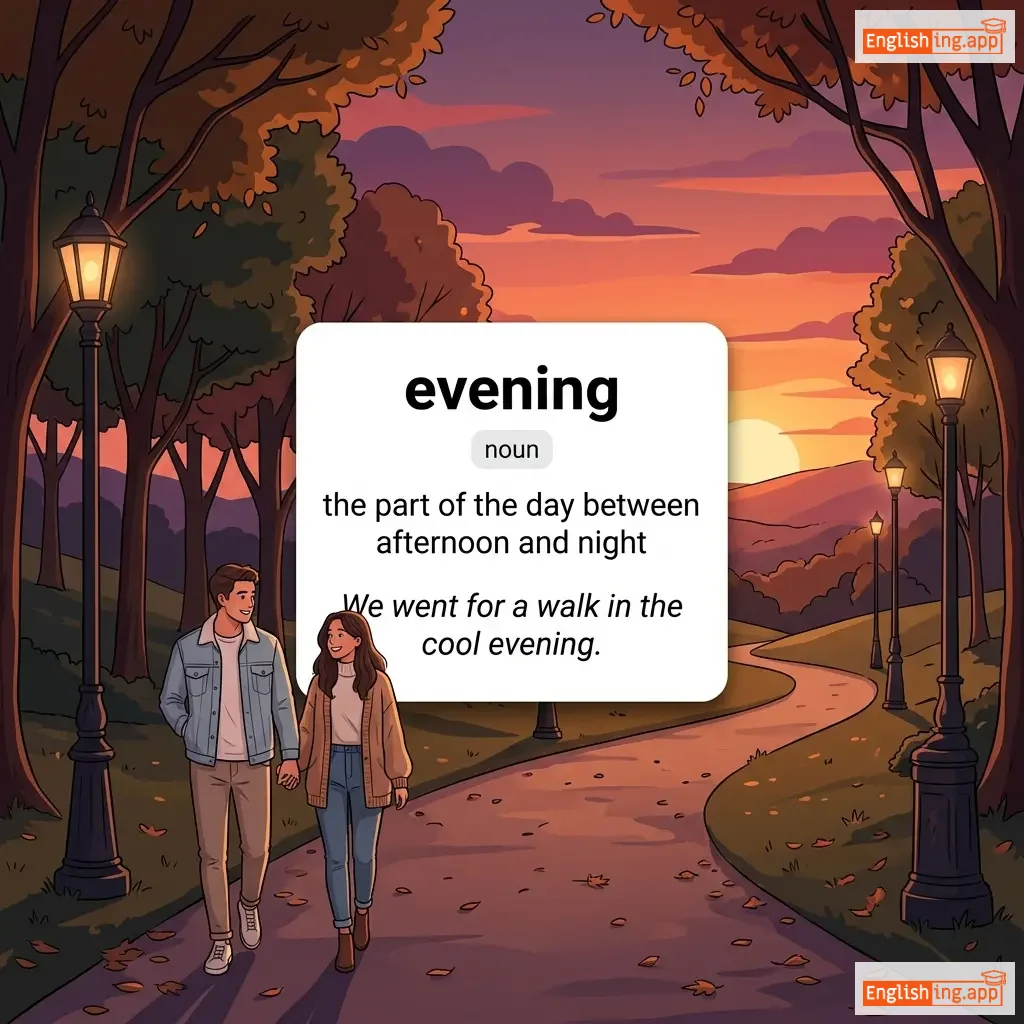
evening definition card — visual illustration of the meaning
noun
/ˈiːv.nɪŋ/
晚上 (wǎnshàng)

the part of the day between afternoon and night

"We went for a walk in the cool evening."

"我们在凉爽的晚上去散步。" (Wǒmen zài liángshuǎng de wǎnshàng qù sànbù.)
event definition card — visual illustration of the meaning
noun
/ɪˈvent/
事件 (shìjiàn)

something that happens, especially something important

"The concert was the biggest event of the year."
"音乐会是今年最大的事件。" (Yīnyuè huì shì jīnnián zuìdà de shìjiàn.)
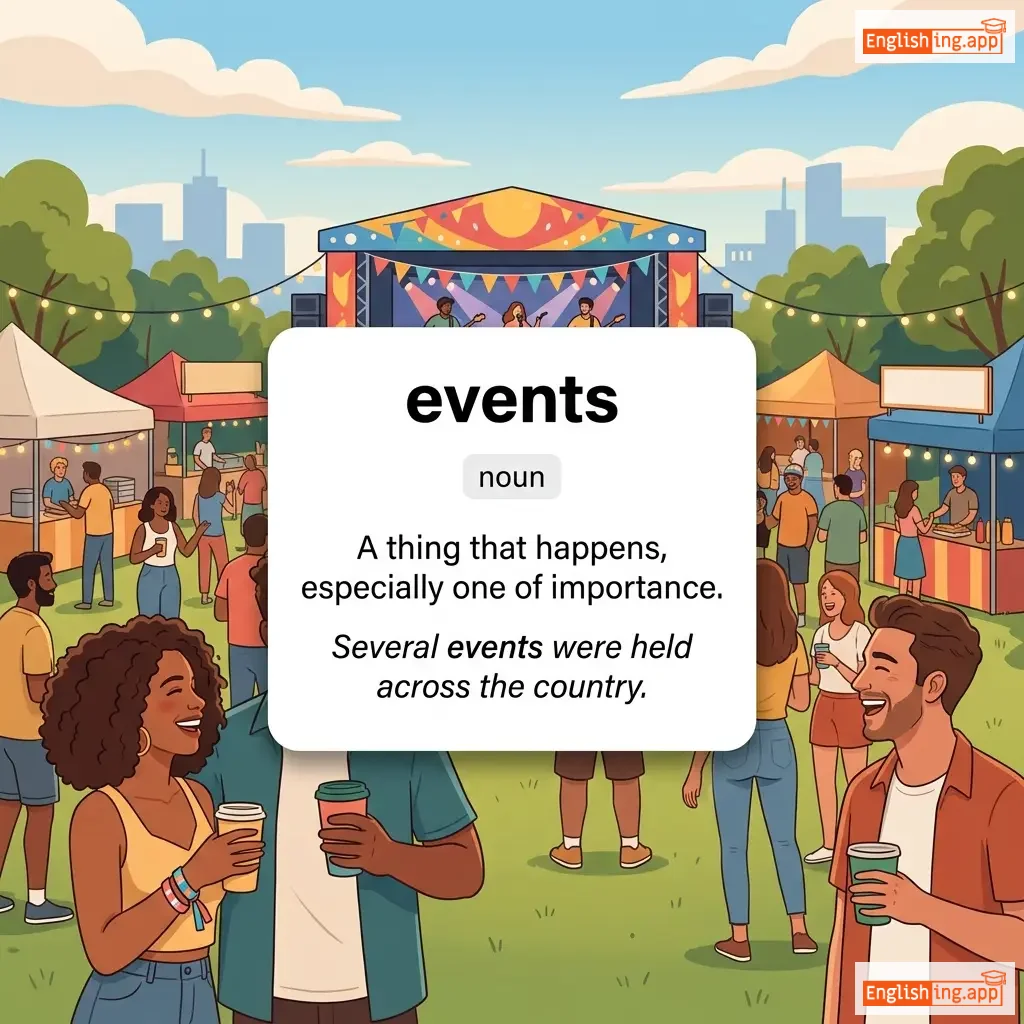
events definition card — visual illustration of the meaning
noun
ɪˈvɛnts
事件 (shìjiàn)

A thing that happens, especially one of importance.

"Several events were held across the country."

"全国范围内举行了几个事件。" (Quánguó fànwéi nèi jǔxíngle jǐ gè shìjiàn.)
adjective
/ɪˈvɛntʃuəl/
最终 (zuìzhōng)

Happening at the end of a process or as the final result.

"His hard work led to his eventual success."

"他的努力工作导致了他的最终成功。" (Tā de nǔlì gōngzuò dǎozhì le tā de zuìzhōng chénggōng.)
adverb
/ɪˈven.tʃu.ə.li/
最终 (zuìzhōng)

in the end, especially after a long delay or series of problems

"He eventually finished his degree after many challenges."

"他在许多挑战后最终完成了他的学位。" (Tā zài xǔduō tiǎozhàn hòu zuìzhōng wánchéngle tā de xuéwèi.)
adverb
/ˈev.ər/
曾经 (céngjīng)

at any time; always; continuously

"Have you ever been to London?"

"你曾经去过伦敦吗?" (Nǐ céngjīng qùguò Lúndūn ma?)
adjective
/ˈevər ˈlæstɪŋ/
永恒的; 持久的; (yǒnghéng de; chíjiǔ de)

eternal; permanent; enduring forever

"Their love is ever-lasting and will never fade."
"他们的爱是永恒的,永不褪色。" (tāmen de ài shì yǒnghéng de, yǒng bù tuìsè.)
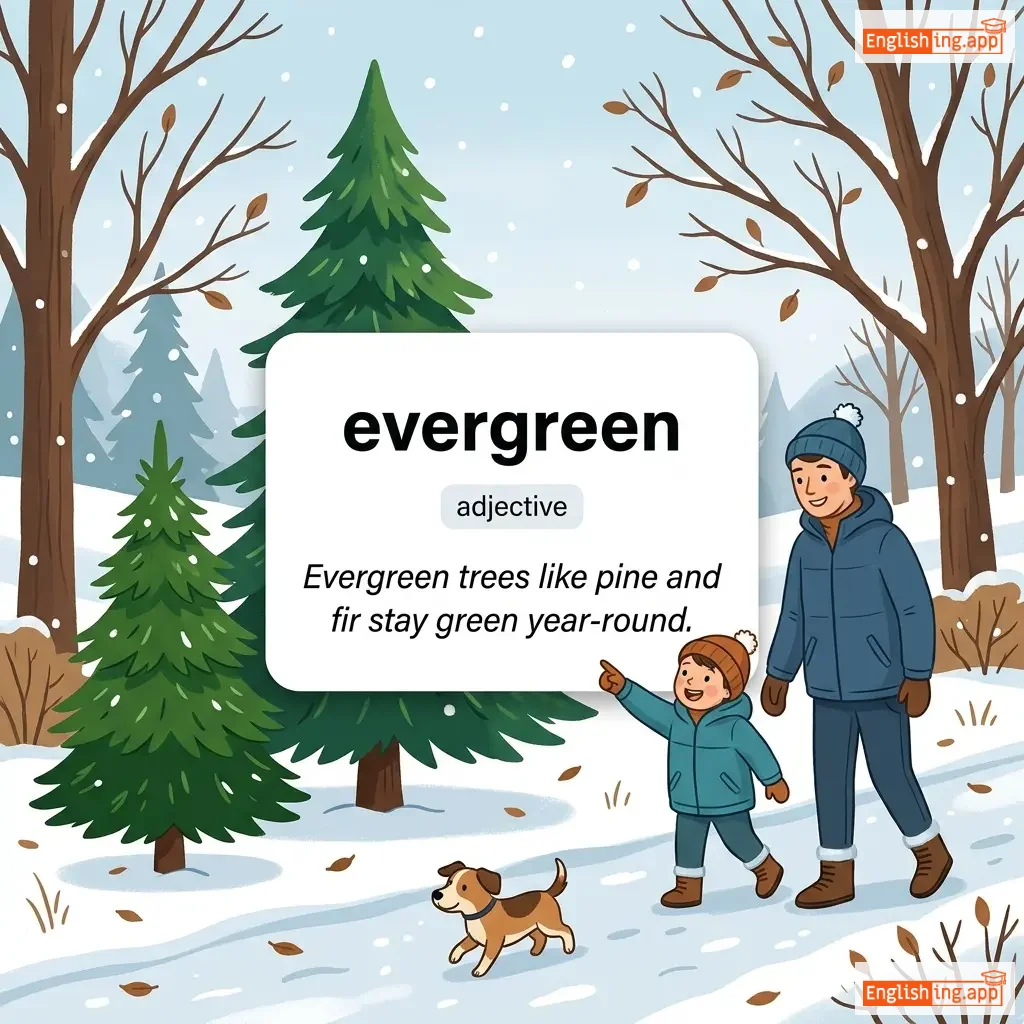
evergreen definition card — visual illustration of the meaning
adjective
/ˈɛv.ə.ɡriːn/
常绿 (chánglǜ)

Remaining green and functional throughout the year; not shedding leaves seasonally.

"Evergreen trees like pine and fir stay green year-round."

"常绿树木如松树和冷杉树全年保持绿色。" (Cháng lǜ shùmù rú sōng shù hé lěng shān shù quán nián bǎo chí lǜsè.)
adjective
/ˌɛvərˈlæstɪŋ/
永恒的 (yǒnghéng de)

Lasting forever or for an indefinitely long time.

"The poet wrote about his everlasting love for nature."

"诗人写下了他对大自然永恒的爱。" (Shīrén xiěxià le tā duì dàzìrán yǒnghéng de ài.)
verb
/ɪˈvɜːrt/
翻转向外 (fānzhuǎn xiàng wài)

To turn inside out or outward.

"The surgeon had to evert the eyelid during the procedure."

"外科医生在手术过程中必须翻转眼睑。" (Wàikē yīshēng zài shǒushù guòchéng zhōng bìxū fānzhuǎn yǎnjiǎn.)
Every definition card — visual illustration of the meaning
determiner
/ˈɛvri/
每个 (měi gè)

used to refer to all members of a group without exception

"She reads every book she can find."

"她读了她能找到的每一本书。" (Tā dúle tā néng zhǎodào de měi yī běn shū.)
pronoun
/ˈɛvribɒdi/
大家 (dàjiā)

all people; everyone

"Everybody enjoyed the party."

"大家都享受了派对。" (Dàjiā dōu xiǎngshòu le pàiduì.)
adjective
/ˈɛvrideɪ/
日常 (richang)

common or ordinary; occurring daily

"These shoes are perfect for everyday use."

"这些鞋子非常适合日常使用。" (Zhèxiē xiézi fēicháng shìhé rìcháng shǐyòng.)
pronoun
/ˈɛvrɪwʌn/
每个人 (měi gèrén)

every person; all people

"Everyone must bring their own lunch."

"每个人都必须带自己的午餐。" (Měi gèrén dōu bìxū dài zìjǐ de wǔcān.)
pronoun
/ˈɛvrɪθɪŋ/
一切 (yí qiè)

all things; the whole lot

"He packed everything in his suitcase."

"他把所有东西都装进了他的行李箱。" (Tā bǎ suǒyǒu dōngxī dōu zhuāng jìnle tā de xínglǐ xiāng.)
adverb
/ˈɛv.ri.wɛər/
到处 (dàochù)

in or to all places

"Tourists can be seen everywhere in the city during summer."

"在夏天,游客们可以在城市的各个地方看到。" (Zài xiàtiān, yóukèmen kěyǐ zài chéngshì de gège dìfāng kàn dào.)
verb
/ɪˈvɪkt/
驱逐 (quzhu)

To expel someone from a property, usually by legal process.

"The landlord decided to evict the tenants for not paying rent."

"房东决定因未支付租金而驱逐租户。" (Fangdong jueding yin wei zhifu zujin er quzhu zuhuzhe.)
Evidence definition card — visual illustration of the meaning
noun
/ˈɛv.ɪ.dəns/
证据 (zhèngjù)

facts or information that show whether something is true or not

"The lawyer presented new evidence in court."

"律师在法庭上提交了新的证据。" (lǜshī zài fǎtíng shàng tíjiāo le xīn de zhèngjù.)
evident definition card — visual illustration of the meaning
adjective
/ˈɛvɪdənt/
显而易见 (xian eryijian)

clearly seen or understood; obvious

"It was evident that she was upset."

"显然她很生气。" (Xianran ta hen shengqi.)
adjective
/ˌɛvɪˈdɛnʃəl/
证据的 (zhèngjù de)

relating to or providing evidence

"The lawyer presented evidential support for her claims."
"律师为她的诉求提供了证据支持。" (Lǜshī wèi tā de sùqiú tígōngle zhèngjù zhīchí.)
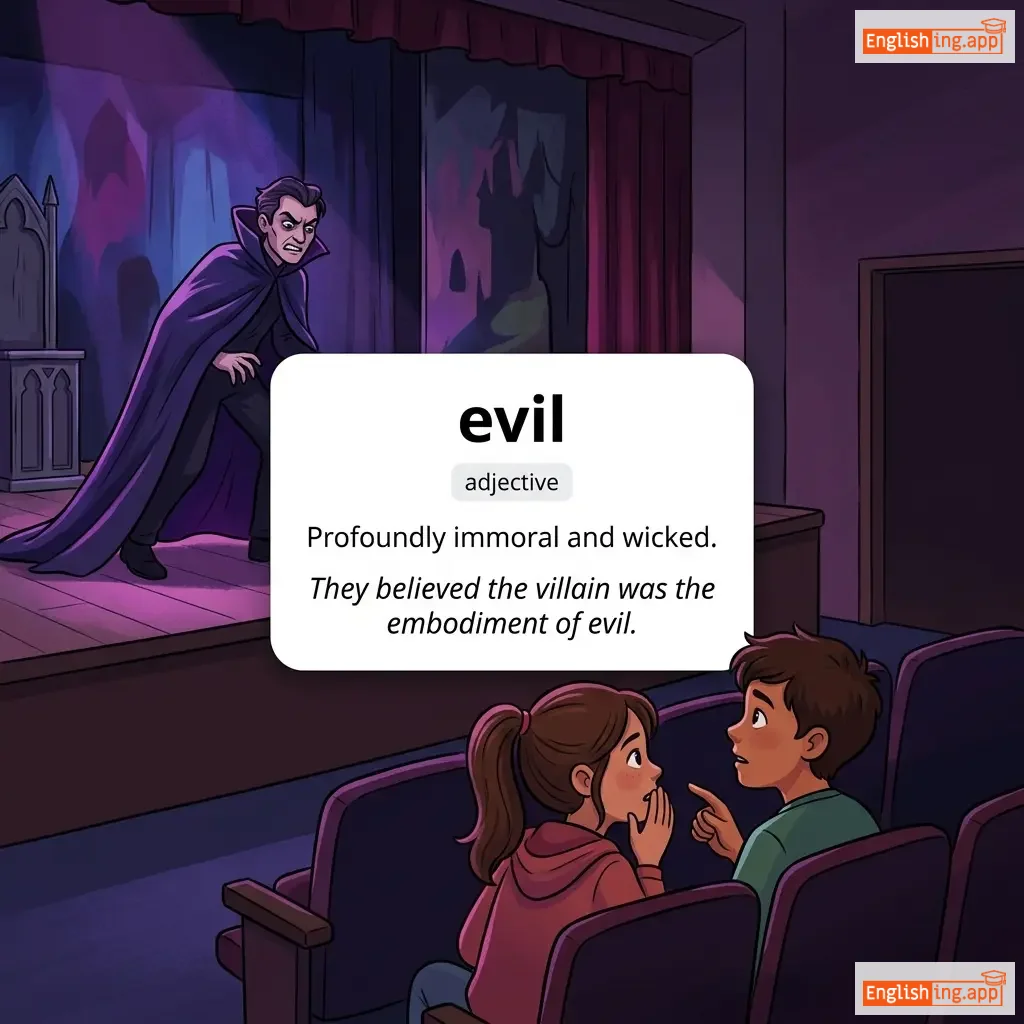
evil definition card — visual illustration of the meaning
adjective
/ˈiːvəl/
邪恶 (xiee)

Profoundly immoral and wicked.

"They believed the villain was the embodiment of evil."

"他们相信反派是邪恶的化身。" (Tāmen xiāngxìn fǎnpài shì xié'è de huàshēn.)
evince definition card — visual illustration of the meaning
verb
/ɪˈvɪns/
展示 (zhanshi)

to show or demonstrate clearly

"She evinced her interest in the project through active participation."

"她通过积极参与展示了对该项目的兴趣。" (Ta tongguo jiji canyu zhanshi le dui gai xiangmu de xingqu.)
verb
/ɪˈvɪsəˌreɪt/
取出内脏,摧毁 (qǔchū nèizàng, cuīhuǐ)

to remove the internal organs of; to deprive of essential content

"The critics eviscerated the movie for its weak storyline."

"评论家因为电影的弱剧情而摧毁了电影。" (Pínglùn jiā yīnwèi diànyǐng de ruò jùqíng ér cuīhuǐ le diànyǐng.)
evocative definition card — visual illustration of the meaning
adjective
/ɪˈvɒkətɪv/
唤起的 (huàn qǐ de)

bringing strong images, memories, or feelings to mind

"The music was evocative of her childhood memories."

"这段音乐唤起了她的童年回忆。" (Zhè duàn yīnyuè huàn qǐle tā de tóngnián huíyì.)
verb
/ɪˈvoʊk/
唤起 (huànqǐ)

to bring a feeling, memory, or image into the mind

"The old song evoked memories of her childhood."

"那首老歌唤起了她童年的回忆。" (Nà shǒu lǎo gē huànqǐ le tā tóngnián de huíyì.)
noun
/ˌɛvəˈluːʃən/
进化 (jinhua)

the gradual development of something, especially from a simple to a more complex form

"The theory of evolution explains how species change over time."

"进化论解释了物种如何随着时间变化。" (Jinhua lun jiexi le wuzhong ruhe suizhe shijian bianhua.)